Posts Tagged ‘Mystery-Suspense’

And the last late reviews from February of 2013.

*****
the little bookroom eleanor farjeonThe Little Bookroom by Eleanor Farjeon ~ 1955
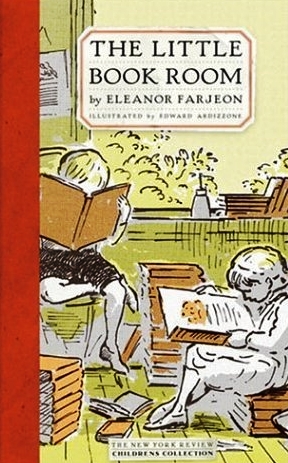
This edition: New York Review Books, 2003. Hardcover. ISBN: 978-1-590170-489. 336 pages.

My rating: 8/10

A collection of twenty-seven delicately written fairy tales. Aimed at the younger crowd, but possibly more suited to real appreciation by adults. A few are slight, gentle and – in the very best sense of the word – childish, but others are rich in their imagery and complexity. The stories were selected by Eleanor Farjeon herself, and are deliciously and perfectly illustrated by the one and only Edward Ardizzone. Rumer Godden’s Afterword is a lovingly worded compliment to the author.

My own pretty well grown children are sadly long past the stage of being read to, but I am keeping this one close by both for personal pleasure and perhaps to one day share with as yet theoretical grandchildren.
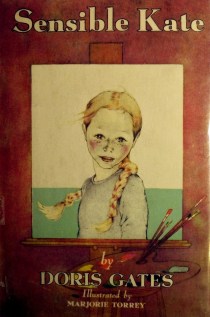
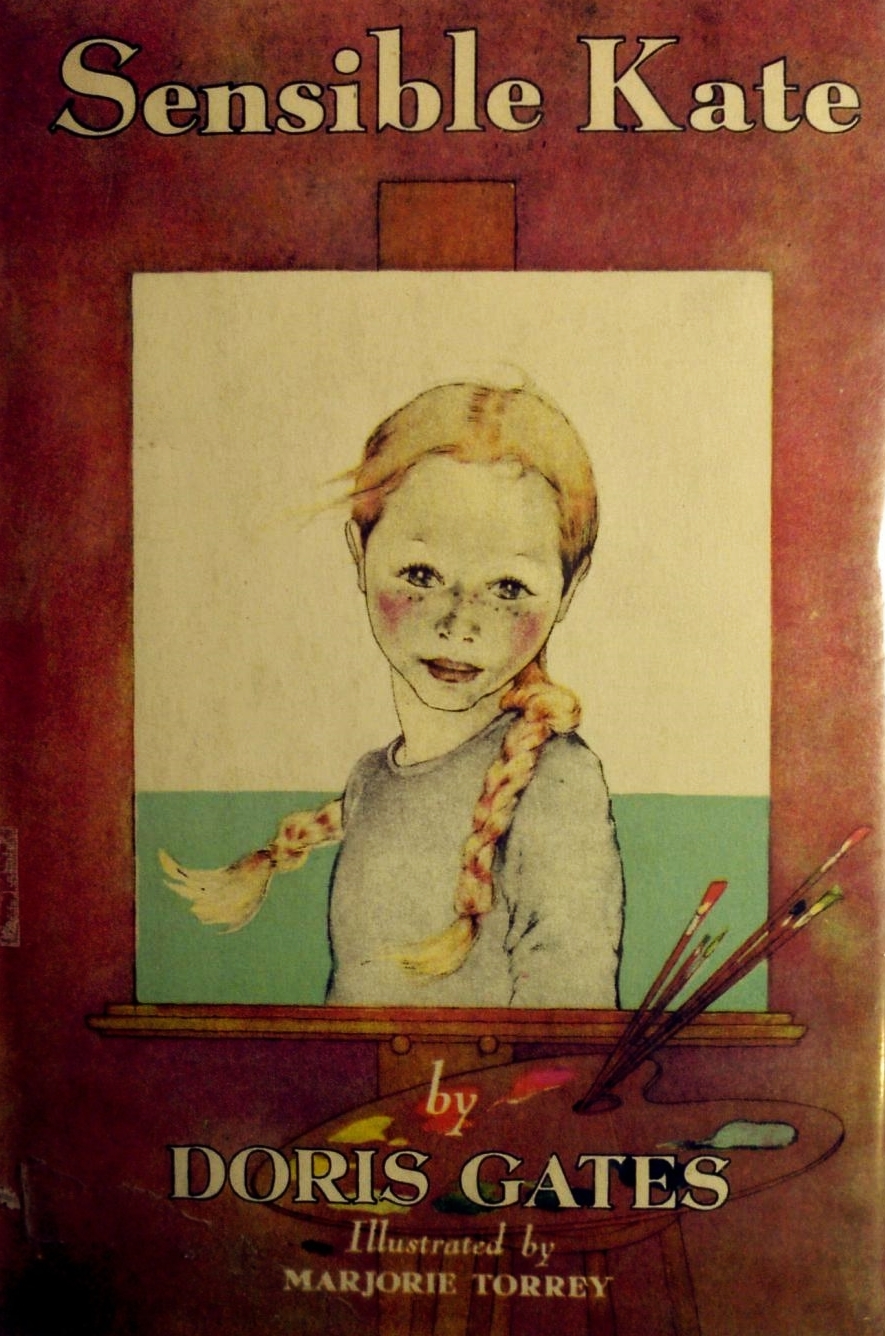
sensible kate doris gatesSensible Kate by Doris Gates ~ 1943

This edition: Viking Press, 1969. Hardcover. 189 pages.

My rating: 6/10

Doris Gates is perhaps best known for her Newbery Award runner-up children’s novel Blue Willow, as well as the widely read Little Vic, both viewed as important early examples of “realistic problem fiction” for young readers, not a genre I am particularly fond of as a rule, but which is perfectly acceptable when the characters and their story are over-emphasized over the “problem”. Doris Gates gets a pass; these are “real” novels no matter how they’re categorized.

Sensible Kate was Gates’ third novel, and it is a pleasant example of children’s literature of its era, with the young heroine facing her rather daunting challenges with good expectations of positive outcomes. The Kate of the novel is a likeable girl, flawed enough to be realistic, but with a solid core of goodness which makes her most appealing.

Kate has been an orphan as long as she can remember, and has been cared for by various “shiftless” relatives since babyhood. Now the relatives have decided to move out of the state, and they have decided to turn Kate over to the county relief office. Kate is placed as a foster child with an elderly couple, The Tuttles, and she soon makes herself beloved of them and many others whom she meets, including a young married couple, both artists, who are the very reverse of sensible in their daily affairs, and who are most appreciative of Kate’s practical talents.

A sweet but never saccharine story, with some interesting characters and scenarios which lift it a little over the average for its vintage and genre. Possibly one might pick up on the lightest shade of Anne of Green Gables, what with the red-haired heroine being an orphan and going off to live with an elderly couple, but the parallel ends right there. Kate is most certainly no Anne, and her creator has not attempted to model her so.
people who knock on the door patricia highsmithPeople Who Knock on the Door by Patricia Highsmith ~ 1983
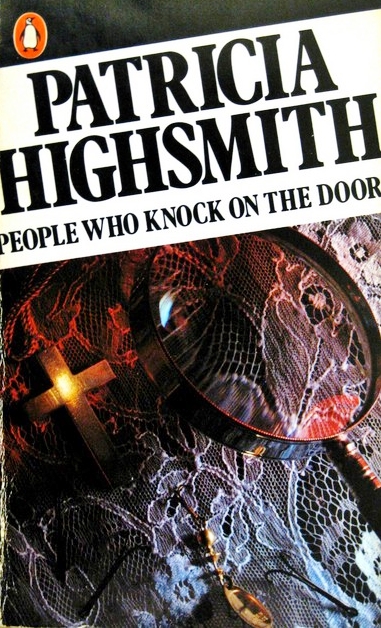
This edition: Penguin, 1983. Paperback. ISBN: 0-14-006741-8. 356 pages.

My rating: 6.5/10

A rather unusual book, a noir almost-thriller with some odd twists, including a subplot involving a teenage girl’s abortion. Despite its date of publication, it seems to be set in the 1950s, and has a decidedly vintage feel to it. This is the first Patricia Highsmith book I’ve ever read, though I’ve seen several of the movie adaptations of her work, Hitchcock’s Strangers on a Train, and of course the Venetian-set Talented Mr. Ripley, so the dark psychological elements in this one came as no surprise.

Here we have a normal middle-class family, the Aldermans, with an insurance-salesman father, stay-at-home mother volunteering a few days a week at a children’s hospital, and teenagers Arthur and younger Robbie. Arthur is getting ready to go to college, has a satisfactorily active love life, and he is poised to get on with his life when his whole world takes a sickening lurch.

Robbie falls ill with a mysterious infection and is suddenly on the verge of death. The doctors turn away in dismissal – the boy is going to die –  but Mr. Armstrong refuses to give up hope, and prays diligently to God for a miracle. Robbie recovers, and the previously un-religious father is so moved by the experience that he embraces religion and joins a highly evangelistic Christian sect. Mrs. Armstrong and Arthur view this at first with mildly perturbed eyes, but Robbie fully embraces his father’s new-found faith, with eventual horrifying consequences.

A can’t-look-away, exceedingly uncomfortable depiction of a dysfunctional family and its twisted disintegration, with none of the characters completely faultless, including our pseudo-hero Arthur, the closest thing to a chief protagonist in this tense tale.

 the wedding of zein tayeb salihThe Wedding of Zein by Tayeb Salih ~ 1968

This edition: New York Review Books, 2009. Softcover. ISBN: 978-1-59017-342-8. 120 pages.

My rating: 7/10

Two short stories and a short novella – the title story – by the late Sudanese writer Tayeb Salih, set in the country around the northern Nile .

The Doum Tree of Wad Hamid speaks to the importance of tradition, and to the quiet resistance of the people of the Sudanese country to outside influences.

A Handful of Dates concerns a young boy who becomes aware for the first time of the realities of rich and poor, and the role his grandfather has played in a neighbour losing his inheritance.

The Wedding of Zein concerns an unlikely hero, a physically deformed “village idiot” (for want of a better term), who insistently falls in love with one after another village maiden, only to be disappointed as they always marry someone else. Imagine then the shock of everyone when it is announced that Zein has at last found a prospective wife, and an unexpectedly wise and beautiful one at that.

This book gives a diverting glimpse into an unfamiliar world, and the stories are told with clarity and understated, rather sly humour. A short but worthwhile collection.
Read Full Post »

the secret of chimneys agatha christie 1The Secret of Chimneys by Agatha Christie ~ 1925. This edition: Pan, 1968. Paperback. 223 pages.

My rating: 6/10

Setting: Briefly in Africa, with most of the action taking place in the stately English country house, “Chimneys”.

Detection by: SUPERINTENDENT BATTLE of Scotland Yard and various international colleagues; ANTHONY CADE and several aristocratic acquaintances.

Final Body Count: 3 in this narrative; more in the background story.

Method(s) of Death: SINGLE PISTOL SHOT x 3

100 Word Plot Summary:

Anthony Cade, international adventurer, comes into a double commission to deliver a politically sensitive Herzoslovakian manuscript of memoirs and a bundle of blackmailing letters to England. Both appear to be in high demand and swap hands several times; two men are shot, and the diplomatic and aristocratic guests at stately country home “Chimneys” are embroiled in multiple mysteries. Hidden identities, a violent revolutionary society, an accomplished jewel thief, a fabulous diamond, coded letters, secret passages and misleading clues… Can anyone be trusted? Is anyone really who they appear to be? And who does beautiful young widow Virginia Revel really love?

*****

The dead bodies are a side plot to this thriller, written, one suspects, with tongue firmly in cheek. What with a butler named Tredwell, an Inspector Badgworthy, and a bumbling politician, one George Lomax – not to mention a stay at the posh Blitz Hotel in London – the author appears to have been having a lot of innocent fun with this one. Another thriller versus an out-and-out murder mystery, for though we have a number of violently killed bodies by the end of the saga, the other players view the deceased with cold speculation versus shocked emotion.
What a busy plot it is, too. Political intrigue and revolution in fictional Balkan state Herzoslovakia! A commoner queen brutally massacred by a mob along with her royal spouse; a missing prince (or two?); sensitive political memoirs; an aristocratic Englishwoman’s blackmailing letters; a master jewel thief and a missing diamond of fabulous worth; untold reserves of oil (in Herzoslovakia) just waiting for development; several bullet-riddled corpses of swarthy foreigners; and a stately English country home much used to hosting diplomatic gatherings. Drop in several lovely ladies of impeccable breeding and soothing manner, and a thrillingly handsome young man just off the boat from Africa acting as courier to the papers in question, and stir well.

Moments of truly humorous farcical writing made me smile with delight, but this was tempered by the many jaw-dropping racial slurs. These were aimed at everyone under the sun not a true-blue upper-class Conservative Brit, but were extra heavy regarding those of Jewish heritage, as well as the broadly categorized Balkan/Italian/swarthily foreign “dagos” of various nationalities who do all of the heavy lifting in the background story.

Did I enjoy this story? Well yes, I did, in a general sense. It had its moments. But very much a product of its time. Very vintage.

I’m more than ready to move on from this rather ridiculous romp. What about a cozy village murder mystery? Luckily the next one up is just that, The Murder of Roger Ackroyd.

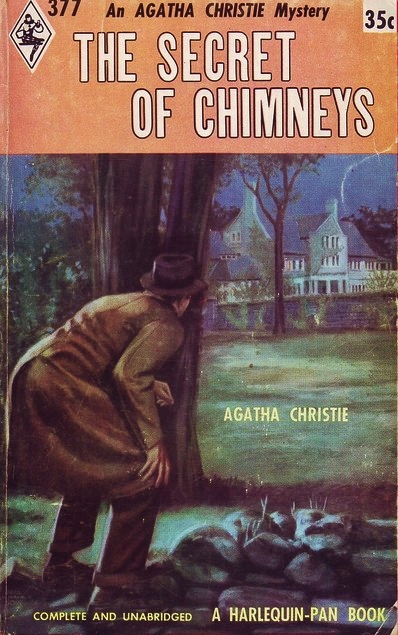
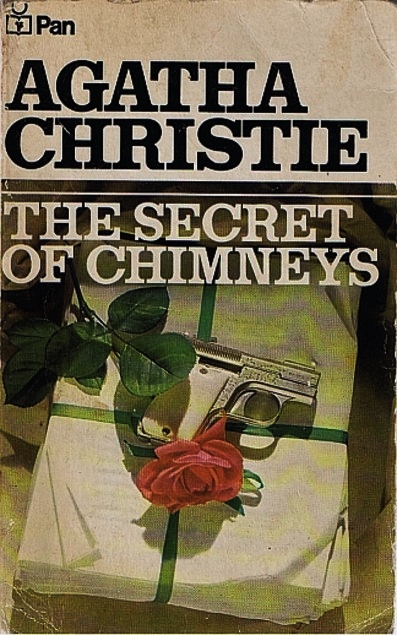
The cover gallery for The Secret of Chimneys is respectably diverse, and perhaps just a little bit misleading on occasion. Let’s take a look…

Second-string male lead Bill Eversleigh and the lovely Virginia Revel investigate midnight noises in the libray at Chimneys. Take note of the traditional weapon for confronting country house burglars - a fireplace poker, and Mrs. Revel's frothy negligée.

This first edition cover features second-string male lead Bill Eversleigh and the lovely Virginia Revel investigating midnight noises in the library at Chimneys. Take note of the traditional weapon for confronting country house burglars – a fireplace poker – and Mrs. Revel’s frothy negligée.

Our possible hero Anthony Cade, one would assume, and his first glimpse of Chimneys. A shot in the night is heard!

Our possible hero Anthony Cade, one would assume, and his first glimpse of Chimneys. A shot is heard in the night!

Something appears to be bothering the beautiful woman - is this Virginia? Could it be the menacing blood-red hand, the calling card of a murderous secret society?? "No comment" on the diamond and the rose.

Something appears to be bothering the beautiful woman on this cover – is this Virginia? And what could it be?! Perhaps the menacing blood-red hand, calling card of a murderous secret society?? “No comment” on the diamond and the rose.

Ah - here we have a classic cover containing key story elements, and a clue or two.

Ah – here we have a classic cover containing key story elements, and a clue or two. Nice composition.

This French cover is possibly my favourite, in a purely eye-catching sense. But I'm rather confused as to who this ghostly woman is supposed to be. The deceased Queen Varaga, perhaps? And is she holding a bouquet of roses? Hmmm...

This French cover is possibly my favourite, in a purely eye-catching sense. But I’m rather confused as to who this ghostly woman is supposed to be. The deceased Queen Varaga, perhaps? And is she holding a rose? Hmmm…

Read Full Post »

thunder on the right mary stewart 1Thunder on the Right by Mary Stewart ~ 1957. This edition: Hodder Paperbacks (Coronet), 1974. Paperback. ISBN: 0-340-02219-1. 255 pages.

My rating: 4/10

Omigosh. This book. Words (almost) fail me. 110% gothic romance, and absolutely bizarre in plot and execution. Luckily I’ve been on something of a Mary Stewart binge recently, and this came along as book number six; if it was number one or two I doubt I would have had the heart to continue.

I try my hardest, in reviewing anything in the mystery-suspense line, to not include any spoilers, but, in this case, all bets are off. Consider yourself forewarned!

This one starts off promisingly enough. Jennifer Silver, 22-year-old daughter of the Bullen Professor of Music at Oxford, is ethereally lovely (of course!) and rather at loose ends, despite recent years at art school. She sits in the dining room of her hotel in the French Pyrenees, tucking into a most delectable-sounding repast. She is thrilled to be in France again – she has visited in the past – and is looking forward with anticipation to her planned reunion with her half-French older cousin, who, widowed not long after her marriage, is convalescing from a recent illness in a nearby convent. More than merely convalescing; Gillian has sought solace in religion, and is thinking of becoming a nun, much to Jennifer’s not-so-secret dismay. But something isn’t quite right in a larger sense, and Jennifer sits and mulls over her cousin’s situation with increasing unease. Why have her chatty letters suddenly stopped? Tomorrow Jennifer will be going to the Convent of Notre-Dame-des-Orages to meet Gillian, but she’s not quite sure what she’ll find. (Cue foreboding music. Oh, and a love theme, for here appears a prince on a white charger. Figuratively speaking. The real horse shows up later.)

For who should appear but a figure from Jennifer’s past. Up pops handsome Stephen Masefield, an old student of Professor Silver’s.  Jennifer has dallied with Stephen in Oxford days, and he has long cherished a secret passion for the lovely Jenny despite her mother’s brusque dismissal of his courtship, all unbeknownst to the innocent maiden. Stephen comes with an intriguing past, and is dashingly handsome despite his slight limp from an old war wound (this is all taking place post World War II, in the mid 1950s or thereabouts) as well as exceedingly talented, both in music and as a skilled amateur artist.

Lots of details, yes, I know. But every single one of them matters in the upcoming narrative, for this is an exceedingly busy story, chock full of details affecting details, and coincidences and lucky (or unlucky) juxtapositions of people and events. I’ll cut to the chase, if I may, and give the barest outline of the action to follow.

Jennifer goes to the convent, meets a sinister Spanish nun dressed in a silken habit and sporting a flashing ruby-encrusted cross, and is informed that her cousin was indeed in residence, but that she has died and is buried in the convent graveyard. Something about an automobile accident, and crawling up to the convent gates after midnight, and devoted nursing and a sudden decline… Jennifer is in shock and visits the grave, where a glimpse of a bouquet of gentians sets off a train of speculation in her mind. Perhaps Gillian is still alive, and a mystery woman is buried in her place…?!

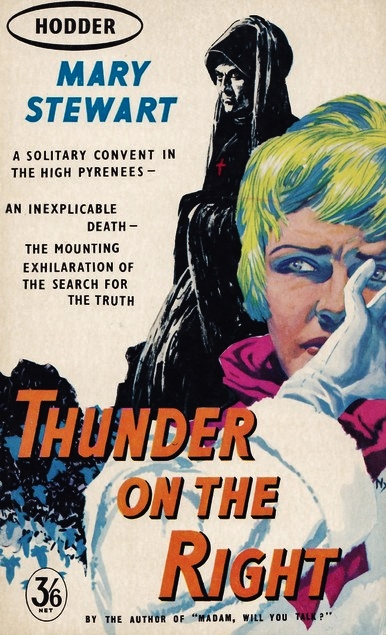
Beware the nun! An older paperback cover which captures the mood so very well.

Beware the nun! An older paperback cover which captures the mood so very well.

The plot convolutes on its merry way, involving a rare form of colour blindness (Gillian would not have been able to identify gentians as her favourite flower – she cannot distinguish blue), a beautiful young novice who nursed Gillian, a stunningly gorgeous local youth dashing about on a wicked stallion, the aforementioned sinister Spanish nun, the extremely old, kind and blind Mother Superior who is unaware of the fact that the Spanish nun, her bursar, is filling the convent with war-looted treasures (solid gold fittings, altar pieces by El Greco, jewelled statues, etcetera), a local smuggler in cahoots with said nun, a vitally crucial letter found tucked behind a picture – this coincidence put me off the story early on – absolutely contrived! – midnight forays by everyone generally ending in eavesdropping on startling conversations, a mystery woman in a mountain cottage, multiple thunderstorms (“thunder on the right” – aha!), a landslide, a flash flood, a slender rock bridge over a ravine, the heroine’s habit of delicately fainting at crucial moments, Stephen’s multiple heroic accomplishments – mastering the wild stallion! hand-to-hand combat skills! great kissing! – on and on and on we go.

The girl in the mountain hut is Gillian; the little novice goes off with her handsome horseman; the evil nun and the smuggler meet their comeuppances; the woman buried in the nunnery garden is the criminal alluded to in casual conversation early in the story. Jennifer is passionately kissed not only by her dashing swain, but by the testosterone-drenched smuggler, who manages to keep his carnal urges on a high boil even while fleeing for his life when the predictable dénouement occurs.

Moments of lovely writing – Mary Stewart does excel at her descriptions – and snippets of humour here and there did not make up for the messy, too-busy, coincidence-heavy plot. Jennifer is the most unbelievable of all of the Mary Stewart heroines I’ve met so far – the others have been very likeable – and I found her utterly annoying. The whole thing was too full of heaving bosoms – can even a nun have a heaving bosom? Well, yes, apparently – and surging stallions and heavily gothic settings.  Too much!

I have been soothing myself with a return to sedate O. Douglas, and am now reading Eliza for Common with relief. Thunder on the Right has rattled me badly, coming as it did after Mary Stewart’s rather more excellent My Brother Michael, which I have yet to review. I liked that one a whole lot more.

Thunder on the Right was apparently the author’s least favourite of her novels, and I can see why. Here are her own words, courtesy of the excellent Mary Stewart Novels website:

From Contemporary Authors, Vol. 1, 1967

Ms. Stewart once claimed Thunder on the Right as her least favorite novel. “I detest that book. I’m ashamed of it, and I’d like to see it drowned beyond recovery. It’s overwritten. It was actually the second book I wrote, and for some strange reason I went overboard, splurged with adjectives, all colored purple.”

I’m glad I read it, though, if only to contrast with the rest of the author’s works. It is indeed interesting to see her development as a writer over the course of her career. I’m only read six of the novels so far, and I’m definitely seeing a pattern of evolution. Very interesting. I intend to continue to explore the vividly painted, action-packed worlds of Mary Stewart, though I may have to take a bit of a break to regain my equilibrium after this latest foray.

Read Full Post »

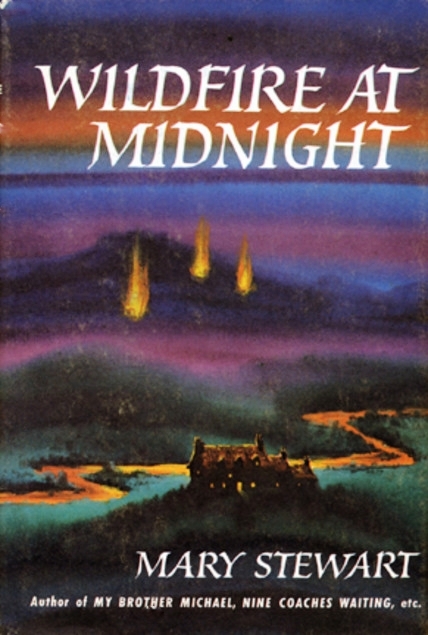
wildfire at midnight paperback dj mary stewart 001Wildfire at Midnight by Mary Stewart ~ 1956. This edition: Hodder, 1970. Paperback. ISBN: 0-340-01945-X. 224 pages.

My rating: 6/10

From the dust jacket of the original edition, 1956:

Most people came to the Isle of Skye to climb the jagged peaks of Blaven or fish the many sparkling streams. Gianetta Brooke came to forget Nicholas Drury—the husband she had painfully divorced. The discovery that Nicholas numbered among the guests at the small inn was the first sign that hers was not to be a typical holiday . . .

Then Gianetta learned that on the treacherous slopes of Blaven, murder had been done . . . and although she had missed the first act of an eerie, unearthly crime, the murderer was to strike again and again before the finale was enacted on the mist-laden mountain—a finale that has Gianetta face-to-face with a madman.

My thought early on while reading Wildfire at Midnight, my fourth recent Mary Stewart read, was “Well here’s something a bit different!” This one is not so much a romance as an out-and-out suspense thriller/murder mystery. Not one, but three people meet their very unpleasant demises in this dark little tale of misplaced devotion. What romance is included is sketchy at best, and telegraphed broadly from very early on.

Beautiful London model Gianetta Drury – Janet, to her intimates – is feeling in need of a break from her busy life. It’s spring of 1953, and the city is getting ready for Queen Elizabeth II’s Coronation ceremony, and, as the excitement builds, so does Janet’s stress. Her career is at its peak; she hobnobs with the rich and famous on a daily basis; life is a constant whirl – but all she really wants is to get away from it all, to relax in some country peace and quiet, far from those who recognize her lovely face.

So off she hies herself to the remote and beautiful Isle of Skye in Scotland, to what she thinks will be a restful retreat. Tea and scones by a glowing peat fire, gentle walks in the heather, gazing at the mountains in the mild Scottish mist…

Ha! You just know this isn’t going to work out as planned, especially when the first person Janet meets as she checks into her hotel is a prominent actress, one Marcia Maling, settled in complete with luxurious convertible and handsome chauffeur. An assortment of fishermen and amateur climbers are also in residence, including famous mountaineer Ronald Beagle, and, to top it off, who should wander in but Janet’s ex. Nicholas Drury, a celebrated author, is visiting Skye to gather local colour for his next bestseller. He is sulkily broody and exceedingly handsome, and Janet’s heart skips a beat when she sees him again, though both pretend to be strangers to each other for the benefit of their fellow guests.

Tension is in the air, and Janet is very tuned in to it, though she is shocked to discover that one of the reasons for the brittle atmosphere is the unsolved murder of a local teenager on her eighteenth birthday just a week or two earlier. The young woman was found with her throat slit on a roaring bonfire halfway up the looming local mountain, Blaven, and though there is a likely suspect, there has been no arrest. (Not yet.)

Two more gruesome murders are on the horizon, with every person in the hotel soon becoming suspect; Janet’s dreamy retreat is now a living nightmare. Who can she really trust? And why is Nicholas taunting her so constantly, and popping up when least expected?

As usual, the physical setting of the story is described with vivid detail. Another nice touch is the ongoing radio broadcasts of Coronation preparations and updates of the ongoing attempt to climb Mount Everest playing in the background; the mountaineers in the group are glued to the radio, and massive bonfire piles are being built to fire on Coronation eve…

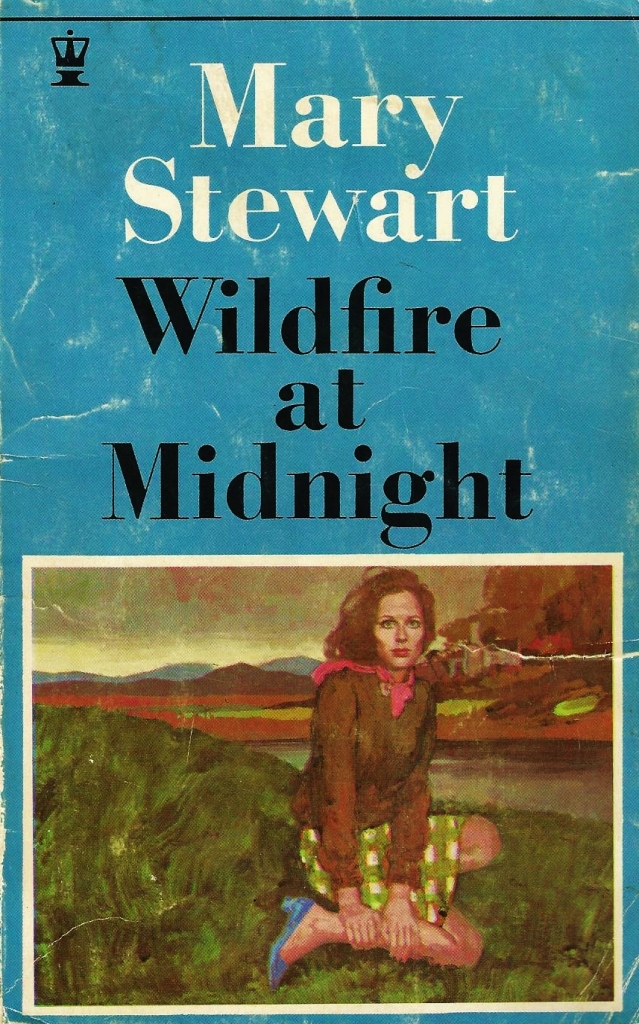
Wildfire at Midnight - dust jacket illustration, first edition, 1956.

Wildfire at Midnight – dust jacket illustration, first edition, 1956. Isn’t this great? Much more mood-inducing and appropriate than the various depictions of the scantily clad heroine which most succeeding covers feature.

Here’s my summing-up opinion on Wildfire at Midnight.

While it started off well, and has its moments of deep appeal, the superficial characterizations of every single one of the characters – including our heroine – made this an ultimately less-than-completely-stellar read. The first murder was shocking; the second decidedly unexpected; and the third de trop – just too much to believe. (Plus I really liked that third victim!) And the heroine keeps wandering about in a downright silly manner, considering that there’s a diabolical killer at large. She wanders out alone, or with this gentleman or that into remote corners of the glen, just asking for something nasty to happen.

And it does.

The predictable final chase scene involves both a quivering bog and a craggy mountainside, plus bonus blinding mist. The unmasked murderer is totally creepy (and I guessed the identity correctly), but the far-fetched motive is tissue thin.

Well, acceptable reading for a drizzly October evening, and it was decidedly atmospheric throughout. A keeper, for sure, but of the “so bad it’s good” variety! Definitely dated, this very vintage one, but with some merits too, mostly regarding the fabulous depiction of place, and the real-life events playing out in the background, which become the most believable part of the fictional tale. I loved the image of the characters gathered ’round the radio, waiting for news of the Everest attempt, while their own safe little world is under threat from an unknown assassin!

And here’s a rather grand review, including an excerpt from the story:

Romantic Armchair Traveller Review: Wildfire at Midnight

Read Full Post »

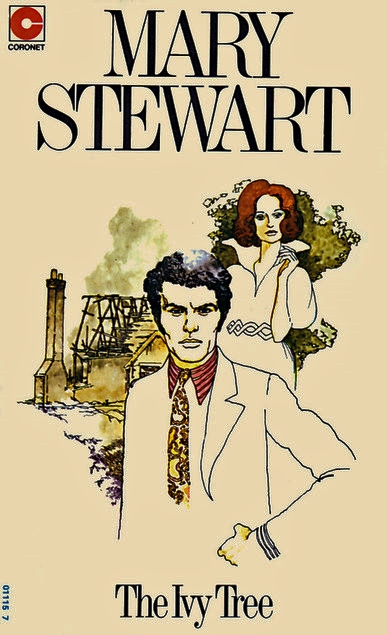
the ivy tree mary stewartThe Ivy Tree by Mary Stewart ~ 1961. This edition: Coronet, 1975. Paperback. ISBN: 0-340-01115-7 319 pages.

My rating: 7.5/10

This was my third Mary Stewart romantic thriller read in the last few weeks, and it was perhaps my favourite to date. Where This Rough Magic (1964) was set in exotic Corfu and referenced the English theatre world, Shakespeare’s Tempest, Communist politics in Albania, and a passionately fast-developing love affair between the heroine and a brooding hero-type, and Airs Above the Ground (1965) was set in the Austrian Alps and concerned itself with a complicated plot involving a happily married heroine, her two male companions, and a group of circus performers, The Ivy Tree is a much more sedate and personality driven story, and much more concerned with psychology rather than straight-out action as in the other two tales.

In this tale of family and inheritance and underhand plotting, the reader is never quite sure who is telling the truth, and what is really going on. The threads of the story wind about this way and that until the tapestry takes shape and the true picture emerges near the end. Told (as are the other two stories) in first person narration by the key female character, we are not quite sure if she is indeed the heroine in the accepted sense, for her actions are unreliable and her inner dialogue frequently less than frank with the reader. And though there were occasional credibility gaps in this story – as in the others – by and large it was an intriguingly detailed mystery.

Here is the basic plot outline, from the flyleaf of a 1962 edition:

Mary Grey had come from Canada to the land of her forebears: Northumberland, where Hadrian built his wall nearly 2000 years ago. As she leaned against the sun-warmed stones, savoring the ordered, spare beauty of England’s northern fells, the silence was shattered by a single name hurled, as it were, like an epithet:

“ANNABEL!”

And there stood one of the angriest, most threatening  young men Mary had ever seen. His name was Connor Winslow, and from his spate of words Mary discovered that he thought she was his cousin–a girl supposedly dead these past eight years. Alive, she would be heiress to an inheritance Con determined to have for himself…

Thus begins the story of an impersonation fraught with the perils of treading present depths without the buoyancy of an innocent past. To it, Mrs. Stewart brings her remarkable ability to create atmosphere be it joyous, brooding, or terrifying. And with her acknowledged talent for characterization, she delineates sharply the savage, ruthless, half-sardonical Con; his drab half-sister, Lisa, firm only in her dedication to Con and his wishes; arrogant Matthew Windlow, a failing tyrant, by tyrant nonetheless where his family was concerned; the ebullient, sometimes rebellious Cousin Julie; and Adam Forrest, the reserved owner of neighboring Forrest Hall,  now a widower, but eight years before, inextricably tied to a hysterical, neurotic wife and tormented by his love for Annabel.

With admirable skill, Mary Stewart practices the full scale of uncertainty while developing a theme embellished with the rich overtones of atmosphere and characterization.

That’s the basic outline, but the story itself is even more complex than this summary would indicate. Though some of the characters – including the true love interest of the heroine – never received much more than a superficial characterization, many of the others were nicely portrayed, showing realistic complexities of good and bad, and delving into motivations, and justifying contradictory behaviours in a most believable way.

Josephine Tey’s Brat Farrar was an obvious inspiration, and the author openly acknowledges that, giving the novel to her characters as a guidebook to their own planned deception; I enjoyed the parallels, as Brat Farrar is one of my favourite Teys (if there can be such a thing – I do love every single one of Josephine Tey’s too-few novels), and Stewart’s take-off of it was different enough to hold my interest.

I won’t say much else; this is a novel that rewards coming to it without too much foreknowledge of the crucial details of the plot.

The “what bugged me” bits were similar to the other Mary Stewarts I’ve just read: a too-convenient disposal of the “bad” character(s), with a rather too-rushed and too-neat conclusion. There were some fairly major holes in the story, and readerly questions left unanswered; I am thinking that one must just put up with this tendency of the author’s and enjoy the enjoyable bits regardless, but it does stop me from rating the books higher on my personal scale.

Last thought: well done. I will be reading this one again; I enjoyed it.

The Ivy Tree was read and reviewed for Mary Stewart Reading Week , September 15th to 21st, celebrating the author’s long career and her 97th birthday on September 17th, 2013. Mary Stewart Reading Week was initiated and hosted by Gudrun’s Tights.

Read Full Post »

airs above the ground mary stewartAirs Above the Ground by Mary Stewart ~ 1965 . This edition: Mill-Morrow, 1965. Hardcover 286 pages.

My rating: 7/10

This was my second title tackled in honour of Mary Stewart Reading Week , September 15th to 21st, which celebrates the author’s long career and her 97th birthday on September 17th. (MSRW was conceived and hosted by Mary Stewart fan Anbolyn of the excellent book blog Gudrun’s Tights.)

Carmel Lacy is the silliest woman I know, which is saying a good deal. The only reason I was having tea with her at Harrods on that wet Thursday afternoon was that when she rang me up she had been so insistent that it had been impossible to get out of; and besides, I was so depressed anyway that even tea with Carmel Lacy was preferable to sitting alone at home in a room that still seemed to be echoing with that last quarrel with Lewis. That I had been entirely in the right, and that Lewis had been insufferably, immovably, furiously in the wrong was no particular satisfaction, since he was now in Stockholm, and I was still her in London, when by rights we should have been lying on a beach together in the Italian sunshine, enjoying the first summer holiday we had been able to plan together since our honeymoon two years ago. The fact that it had rained almost without ceasing ever since he had gone hadn’t done anything to mitigate his offense; and when, on looking up “Other People’s Weather” in the Guardian each morning, I found Stockholm enjoying a permanent state of sunshine, and temperatures somewhere in the seventies, I was easily able to ignore reports of a wet, thundery August in southern Italy and concentrate steadily on Lewis’s sins and my own grievances…

So when definitely-silly-but-self-indulgently-manipulative Carmel, scenting trouble in Vanessa’s married paradise, drops a seemingly casual comment that she has just seen Lewis in a newsreel clip about a tragic circus fire in Austria, Vanessa is completely floored – Lewis is supposed to be in Sweden, and she has a properly postmarked note from him to prove it, dated the same day as the Austrian incident. She manages to save face by some on-the-fly fabricating, and when Carmel asks Vanessa to accompany her (Carmel’s) nineteen-year-old son Timothy on a flight to Vienna to visit with his father – the Lacys are divorced and not really on speaking terms, hence the difficulties in arranging the travels of their son – Vanessa decides to go along with the plan to find out just what Lewis is up to. Particularly when her own covert perusal of that newsreel shot shows Lewis with his arm around a very beautiful young girl…

It just so happens that Timothy’s visit to his father is not as it seems either, and when he and Vanessa bury their initial resentment at being saddled with each other, they swap information and decide to team up in order to track down the errant Lewis, and allow Timothy to pursue his primary goal in visiting Austria, which is actually to gain an entry of some sort into the stable area of the famed Spanish Riding School. For Timothy is horse-mad, and longs to forge a career among the Lipizzaners, while Vanessa just happens to be a qualified veterinarian, spinning her wheels more than a bit as she has, in era-correct style, put her promising personal career on indefinite hold due to her marriage to the enigmatic, oft-travelling Lewis.

Vanessa and Timothy form one of the most downright adorable platonic couples I’ve come across in my many years of reading; Mary Stewart is on a decidedly playful roll in this novel as she sends them on their bantering way together.

We also have a small family circus full of accomplished artistes, some fabulous horsemen and horsewomen – one of whom happens to be the girl in the newsreel footage, bitter wartime and personal histories, tragedy, intrigue, romance, hidden identities, mysterious packages, jewels (or is that “jewels”?), large quantities of cocaine, brooding mysterious Eastern Europeans, beautiful (and valuable) horses, struggling aristocrats, amazing alpine scenery (described in long-winded detail by our author), a castle, a cog railway, close calls beyond count, threats and violence and brandished pistols and REVENGE. (Am I missing anything?!)

I truly loved most of this unlikely tale, and in particular the three-way relationship between Vanessa and her two male companions. I loved that the heroine was married, and that the mutual affection and physical attraction between her and her husband was portrayed in such a positive way, though I didn’t love the lack of spousal communication from Lewis’s end. But this was redeemed by Vanessa’s forthright dealing with the situations she found herself in, and her cool head and steady hand throughout.

I found myself completely bemused by Lewis’s actual occupation; I ended the story with a great big question mark floating up there in the air above my head, but I waved it away because by that time it didn’t really matter. There was a completely unlikely and over-the-top (pun intended) chase scene across castle rooftops, with the good characters escaping death by mere centimetres and the bad guys meeting their inevitable comeuppance. Oh, and a twist on the maiden-on-the-railway-track scenario, with a suitably last-moment rescue. The horse bits were reasonably well-written, though the Great Big Equine Secret was easy to guess and exceedingly improbable; my willing suspension of disbelief bobbled seriously around that bit, and, along with the rooftop chase scene, knocked my rating down a few points.

All in all, a very diverting vintage read, showing its age throughout, but enjoyable nevertheless. This one will stay on the shelf, though I suspect quite some time will pass before I feel the urge to read it again.

Read Full Post »

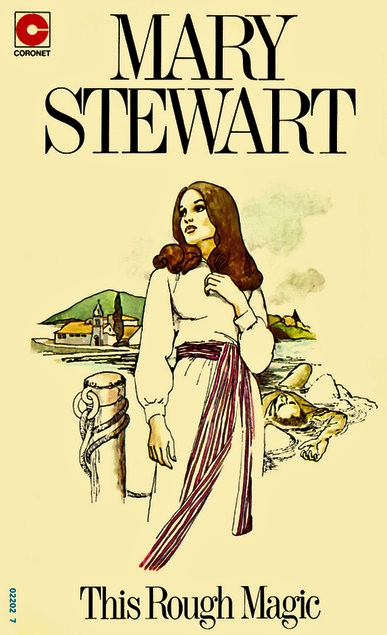
TThis Rough Magic Mary Stewart Coronet paperbackhis Rough Magic by Mary Stewart ~ 1964. This edition: Coronet, 1974. Paperback. ISBN: 0-340-02202-7. 255 pages.

My rating: 6/10

I haven’t read Mary Stewart for absolutely years and years, and now I remember why. This book was so full of action and plot twists that it was positively exhausting! In a mostly good way, but by golly, I had to pay attention.

I have collected a number of Mary Stewart novels in the past few years, as part of the personal circulating library I maintain and continually add to for my housebound elderly mother, but for some reason I have not dipped into them myself, perhaps because I rather overdid it on them in my teen years, and somehow felt I had moved on.

The Mary Stewart Reading Week , September 15th to 21st, celebrating the author’s long career and her 97th birthday which is actually today, September 17th, has been planned and hosted by a fellow book blogger whose site I greatly enjoy, Anbolyn of the intriguingly named Gudrun’s Tights. I share so many of the same tastes as Anbolyn, I was thereby moved to give Mary Stewart another go in honour of this occasion. I’ve just finished This Rough Magic, am well started on Airs Above the Ground (early impression – excellent – I’m really loving this one), and expect to tackle The Ivy Tree next, and possibly Touch Not the Cat, if I can squeeze it into my travelling bag. We’re about to head out on a week-long driving adventure in our very small vintage sports car, so paperbacks are the order of the day, and TNTC is a hefty hardcover, so it might not be allowed.

So here is a quick rundown on This Rough Magic. The clock is ticking loudly this morning, and I need to soon be up and away from the computer. so I’ll see if I can keep it short and to the point. (I do tend to run on…) My husband is in the kitchen making waffles, a special treat though a rather complicated production – he is skilled at a very few particular items, excellent waffles being one of them – but is not the most efficient of cooks, so I have a bit of time. Let’s see what I can do.

A not much more than mediocre London actress, our heroine and first person narrator, Lucy Waring, is “resting” at her wealthy-by-marriage older sister’s villa on the Greek Island of Corfu. Basking in the sunshine and catching up on news with her beloved sister (who is, incidentally, happily very pregnant with her third child), the sting of the ignominious ending of Lucy’s first big theatrical role is fading fast. And there is a lot to catch up on. A neighbouring villa is temporary home to a certain Godfrey Manning, a wealthy world traveller, author and photographer, who is writing a book about Corfu, while the venerable and famous Julian Gale, a noted Shakespearian actor, is reclusively resident in the rather derelict Castello dei Fiori, accompanied by his son Max, an accomplished composer.

The first inkling that there may be troublesome events brewing to disturb Lucy’s peaceful holiday is when she takes a solitary swim in the bay, and has an initially terrifying encounter with a people-friendly dolphin. She makes the shore, realizes that the dolphin is merely trying to play, and ventures back into the water with him, when her joy at the dolphin’s advances turn to horror as she realizes that someone is shooting at it with a silenced rifle. Catching a glimpse of a figure in the woods above the bay, she storms up to confront the suspected gunman, only to be rudely rebuffed by Max Gale. He denies any knowledge of any shooting, and sneers at Lucy’s allegations, accusing her of being overly dramatic. She comes away feeling that she’s come off poorly in the encounter, which is depressing as she greatly admires Max’s father, and had rather wanted any encounters with the Gale family to be good ones.

The next dramatic thing that happens is the tragic loss at sea of her sister’s maid’s twin brother while out on a nighttime sail with the enigmatic Godfrey Manning, followed soon after by Lucy’s shocking discovery of a drowned body, which she at first thinks is the brother, but who turns out to be a local fisherman rumoured to be involved in the local side industry of smuggling to the nearby closed Communist country of Albania.

Ah, yes, for this is the 1960s, and Communism and the Cold War are at their full-blown peak; something one has to remember when considering the following plot twists and turns.

Lucy tenaciously goes on her way familiarizing herself with Corfu and meeting the locals. She makes friends with Sir Julian, and is casually courted rather by the über-self-confident Godfrey, but does not seem to be making much headway with the glowering and still-hostile Max.

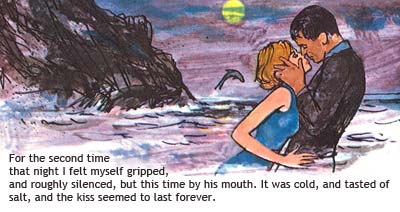
Until, that is, a midnight encounter involving the dolphin, a fabulous diamond ring, and a passionate embrace (page 101) while hip-deep in the phosphorescent sea. Now we’re cooking with gas, as the saying goes, and the action really picks up.

Smugglers, Communist spies, murderers, counterfeit money, mad motorcycle rides, burning kisses, and secrets galore are all involved from here on in; the ending is shockingly explosive (literally) while the heroes and heroines escape relatively unscathed and the bad guys are suitably knocked down to size.

Wow! That was exhausting just to read. <Fanning myself with book.>

But here’s the kicker. Did I really like this book?

Parts of it, definitely. I loved the author’s intelligence and the offhand way she assumes her readers are as literate as she is; continual snippets of quotation pop up both in the chapter headings and throughout the narrative; I caught some and suspect there were others that flew by me. I liked the heroine’s matter-of-fact assessment of her own skills as an actress, and her blunt description of her not-quite-stellar career; I enjoyed her voice for the early part of the story, before she became embroiled in the inevitable romantic entanglements later on.  I enjoyed many of the author’s descriptive passages; she very obviously has experienced and/or intimately researched her setting.

But other parts, particularly towards the end as the suspense builds, I don’t like so much. We can see the passionate response to the brooding mystery man coming from a long, long way away; methinks the lady falls too fast and too hard; her previous self-assessment and obvious sophistication in the ways of the world make her impulsive abandonment of good sense hard to stomach.

The action sequences I found to be overworked and more than slightly unbelievable; the dolphin bits as well as the motorcycle ride and the subsequent cat-and-mouse escapades with the murderous criminal mastermind of the slightly implausible mystery. The whole Tempest connection is overworked (in my opinion) and played out beyond its initial appeal as a clever “hook”. The aging actor’s save-the-day performance was absolutely no surprise to me at all; I suspect that this would pop up at some point, and by golly, how right I was. The convenient demise of the bad guy was too convenient, tidying things up just a bit too suddenly and, if I dare say, too appropriately. The God-like hand of the author is very evident in the dénouement; she might as well have tied a bow on this one; it was decidedly wrapped up at the end! The whole political element continued to confuse me even after I reread key points – such as they were – I felt that it was sketchy all the way through.

I did however enjoy reading the story; it helped a lot to have undertaken it as part of a participatory event, and I will be interested to read others’ thoughts on This Rough Magic, if anyone chooses to read it for the Mary Stewart Reading Week. (Returning to add that I see a few others have indeed done so – excellent!) The good bits were very good; the other bits were acceptable if viewed through “I’m reading a vintage book” lenses; I can see why Mary Stewart is beloved of so many readers, even though I cannot count myself among one of her true fans, at least not quite yet. I am looking forward to reading more of her titles; I feel, after reading This Rough Magic, that the author’s work has more to offer than it at first appears.

Onward then, to Airs Above the Ground, and The Ivy Tree, my other two Mary Stewart Reading Week choices.

Oh – edited to add something – what a find! – several delicious illustrations from the Mary Stewart Novels BlogSpot. I found these when looking for an illustration of my particular copy’s cover; my book is who-knows-where, as I’ve been away from the computer and my desk for eight days, so I am trying to cheat on having to find it to scan it myself.

Enjoy!

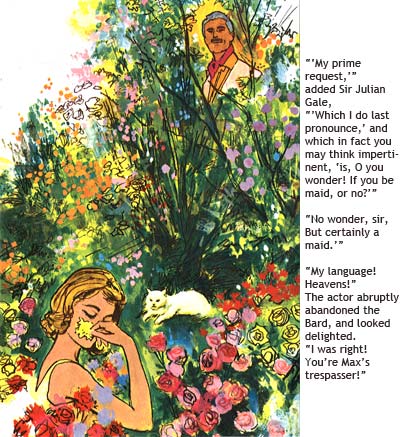
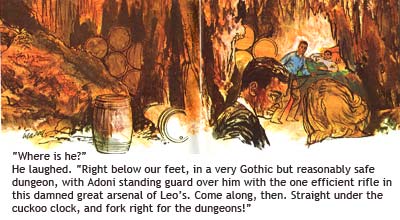
This Rough Magic Mary Stewart Illustration 1A Cover Literary Guild ReviewThis Rough Magic Mary Stewart Illustration 1This Rough Magic Mary Stewart Illustration 2This Rough Magic Mary Stewart Illustration 3

Read Full Post »

Hosted by Gudrun’s Tights (Seeking the Good in Literature and Life), Mary Stewart Reading Week is now underway.

Pick up an old favourite or a new-to-you novel by the venerable Mary Stewart (truly venerable, as she’s turning 97 tomorrow – Tuesday, September 17th), and share your thoughts with everyone by posting and/or linking HERE .

Read Full Post »

the man in the brown suit agatha christie 8

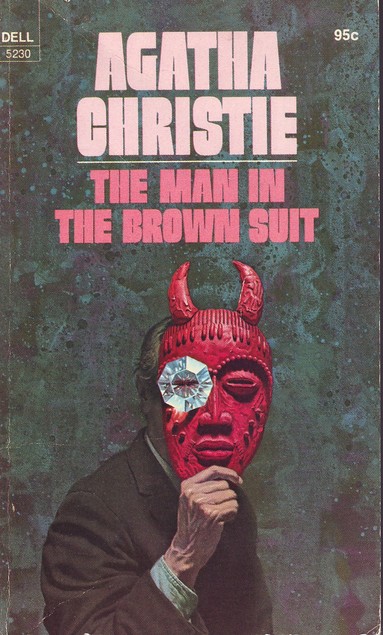
The paperback cover of my high school era copy. The mask and faceted diamond are an interesting depiction; neither appears in the story so we’ll have to assume that their presence is purely symbolic.

The Man in the Brown Suit by Agatha Christie ~ 1924. This edition: Dell, 1974. Paperback. ISBN: 440-05230. 223 pages.

My Rating: 8.5/10

Setting: London; the steamship Kilmorden Castle en route to Africa; South Africa; Rhodesia.

Detection by: MISS ANNE BEDDINGFELD; the strong, silent and slightly mysterious COLONEL RACE makes a first appearance.

Final Body Count: 2

Method(s) of Death: FALLING UNDER A TRAIN; STRANGLING

100 Word Plot Summary:

Newly orphaned archaeologist’s daughter Anne Beddingfeld is off to see the world. After witnessing a gruesome and fatal “accident”, following a suspected murderer, and finding a mysterious clue on a scrap of paper, Anne sets sail for South Africa. Sinister happenings ensue, but her newly acquired paternalistic protector, Sir Eustace, will surely see that she comes to no permanent harm. But which of the two masterful men sharing the voyage, Colonel Race and the elusive Man in the Brown Suit, can she trust? Who strangled the dancer Nadina back in England? And what about that film canister of raw diamonds?

*****

This is another thriller versus a simple murder-mystery story. While there are two suspicious deaths, one of which is an undeniably hands-on murder (a celebrated dancer is strangled in an empty English country house), the focus of the action is not so much on the details of that death, but rather of a much larger picture involving a mysterious master criminal, two young Englishmen possibly unjustly charged with diamond theft from a Kimberley mine, a rather sketchily described African political conflict, and the impetuous adventures of one Anne Beddingfeld as she seeks to discover the true identity of the seemingly sinister “Man in the Brown Suit”.

The story opens with a short Parisian episode, with a celebrated Russian dancer, Nadina, being visited in her dressing room.

The dancer stretched out a languid hand, but at the sight of the name on the card, Count Sergius Paulovitch, a sudden flicker of interest came into her eyes.

“I will see him. The maize peignoir, Jeanne, and quickly. And when the Count comes, you may go.”

Bien, Madame.”

Jeanne brought the peignoir, an exquisite wisp of corn-coloured chiffon and ermine. Nadina slipped into it, and sat smiling to herself, while one long white hand beat a slow tattoo on the glass of the dressing table.

The Count was prompt to avail himself of the privilege accorded to him – a man of medium height, very slim, very elegant, very pale, extraordinarily weary. In feature, little to take hold of, a man difficult to recognize again if one left his mannerisms out of account. He bowed over the dancer’s hand with exaggerated courtliness.

“Madame, this is a pleasure indeed.”

So much Jeanne heard before she went out, closing the door behind her. Alone with her visitor, a subtle change came over Nadina’s smile.

“Compatriots though we are, we will not speak Russian, I think,” she observed.

“Since we neither of us know a word of the language, it might be as well,” agreed her guest…

The two go on to discuss the imminent retirement of their joint employer, a master criminal known only as “The Colonel”. About to be cut adrift without his direction, Nadina in particular is fomenting a scheme to ensure her future well-being and wealth; the Count warns her of the dangers of double-crossing such a clever man; and on that note we embark on the main narrative.

Young (twentyish) Anne Beddingfeld introduces herself in Chapter Two; she is writing in her diary, and it is in this diarist’s voice that half of the story is told. The other half is told by a certain Sir Eustace Pedlar, writing in turn in his diary; a parallel tale emerges as Anne and Sir Eustace find themselves sharing a voyage to South Africa, and then a train journey to Rhodesia.

Anne has been left rather suddenly orphaned by her archeologist father’s sudden death; her father’s solicitor offers her a temporary home, and so she finds herself in London, rather at loose ends. Witnessing the tragic death of a man in the Underground – he steps backward off the edge of the platform just as a train is coming in – Anne notes that the bystander who professes to be a doctor is rather quite professionally going through the dead man’s pockets. When a slip of paper flutters to the ground, Anne picks it up, and, following investigation of the clue it gives her, ends up a passenger on a steamship bound for South Africa.

Here Anne’s natural charm and appealing appearance bring her several benevolent protectors, in the form of wealthy Mrs. Blair, the strong, silent, and very manly Colonel Race, and a jocular British M.P., Sir Eustace Pedlar, who is travelling to South Africa to investigate some vague political situation; something about labour unrest, which has an improbable part to play in the latter stages of the story. And protectors it appears are needed, as Anne is thrown into repeated contact with a belligerent and dangerous young man, who seeks refuge in Anne’s cabin one night, hides from a searcher, and leaves without explanation and minus some blood from an apparent fresh wound. He reappears in the guise of one of Sir Eustace’s secretaries, but not much secretarying appears to be happening, and Anne begins to suspect that he is instead an escaping murderer, fleeing England after strangling a woman (later identified as the dancer Nadina) in Sir Eustace’s unoccupied country mansion, Mill House.

Much activity ensues, before all becomes clear and the identity of “The Colonel” is determined and the details of the Mill House murder revealed. Oh, yes, there are also quantities of uncut diamonds floating about, first appearing in a film canister dropped through Anne’s transom one night early in her journey. These are the object of a number of increasingly desperate searches, but Anne cleverly manages to keep their location suppressed until the crucial moment.

This is a rather fun story to read; Anne’s travels are described in vivid detail, and understandably so, as they are taken from the real-life, ten-month, round-the-world journey which Agatha Christie and her husband took in 1922 , travelling in the entourage of British businessman Major Belcher to South Africa, and onwards to Australia, New Zealand, Hawaii, Canada and back to Britain.

There is abundant romance, predictable as the sun rising, and a lavish amount of melodrama. Anne is buffeted about but always manages to rise up in one piece; she is threatened, assaulted, kidnapped, tied up, lured into falling off a cliff (over the brink of Victoria Falls, no less!), and shot at, before finding true love and lasting happiness in a suitably exotic locale.

Though the reader is expected to take a lot of the shaky plot on faith, the writer obviously had a grand time developing her rambunctiously improbable tale; this was one of Agatha Christie’s favourites among her early stories, “more fun” to write (according to her autobiography) than her detective novels. It shows. The Man in the Brown Suit was one of the first Christies I read, and it remains one of my sentimental favourites, though I notice my sympathy for Anne’s romantic yearnings has lessened a bit, perhaps because I am now well out of my teens!

On to our cover gallery.

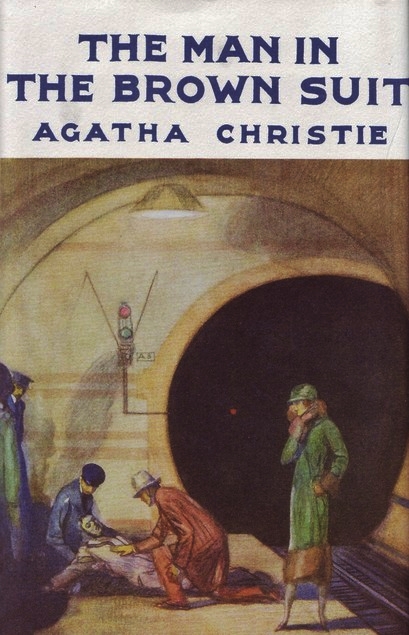
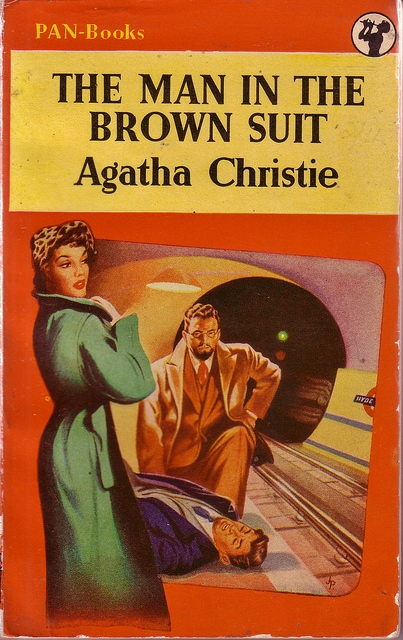
An early edition dustjacket, showing the incident which starts Anne on her merry way. Glaring error: Anne has black hair in the narrative; she looks pretty fair in this picture!

An early edition dust jacket, showing the incident which starts Anne on her merry way. Illustrator’s error: Anne has a mane of long black hair in the narrative; she looks pretty fair in this picture, don’t you think? (Or, on second glance, perhaps that is a fur collar?)

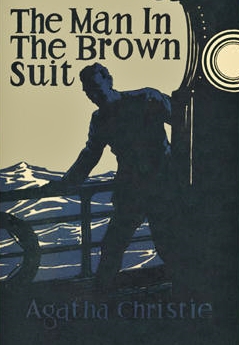
Another early dust jacket, this one circa 1926. Suitably mysterious!

Another early dust jacket, this one circa 1926. Suitably mysterious!

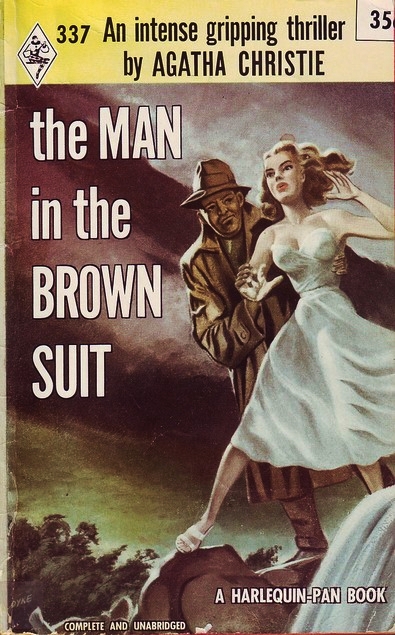
Not quite sure what this illustration is depicting; obviously the Victoria Falls episode, but the details don't match the incident as described by the author. (Plus her hair is all wrong.) But in that dress, who's to notice a mere detail like hair colour, nudge nudge wink wink?!

Not quite sure what this illustration is depicting; obviously the Victoria Falls episode, but the details don’t match the incident as described by the author. (Plus her hair is all wrong.) But in that dress, who’s to notice a mere detail like hair colour, nudge nudge wink wink?!

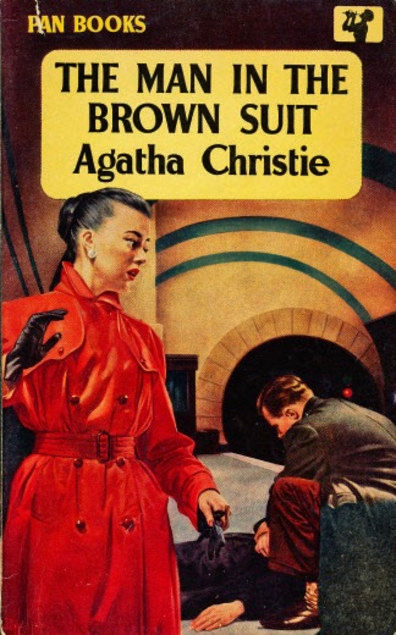
This one appears to be illustrated by someone who actually read the book. Anne is depicted in her London phase, hair (of the correct shade) dragged back unflatteringly in order to minimize her attractiveness as a courtesy to her reluctant hostess.

This one appears to be illustrated by someone who actually read the book. Anne is depicted in her London phase, hair (of the correct shade) dragged back unflatteringly in order to minimize her attractiveness as a courtesy to her reluctant hostess.

The illustrator did a good job with the mysterious brown-suited man, but bobbled (yet again!) on the heroine's hair colour.

The illustrator did a good job with the mysterious brown-suited man – who incidentally looks a lot like one of my in-laws during a gently regrettable bearded phase some years ago – with Anne showing a suitably shocked countenance. Not quite sure on the hair; it might be right; can’t really tell, so the artist gets a pass.

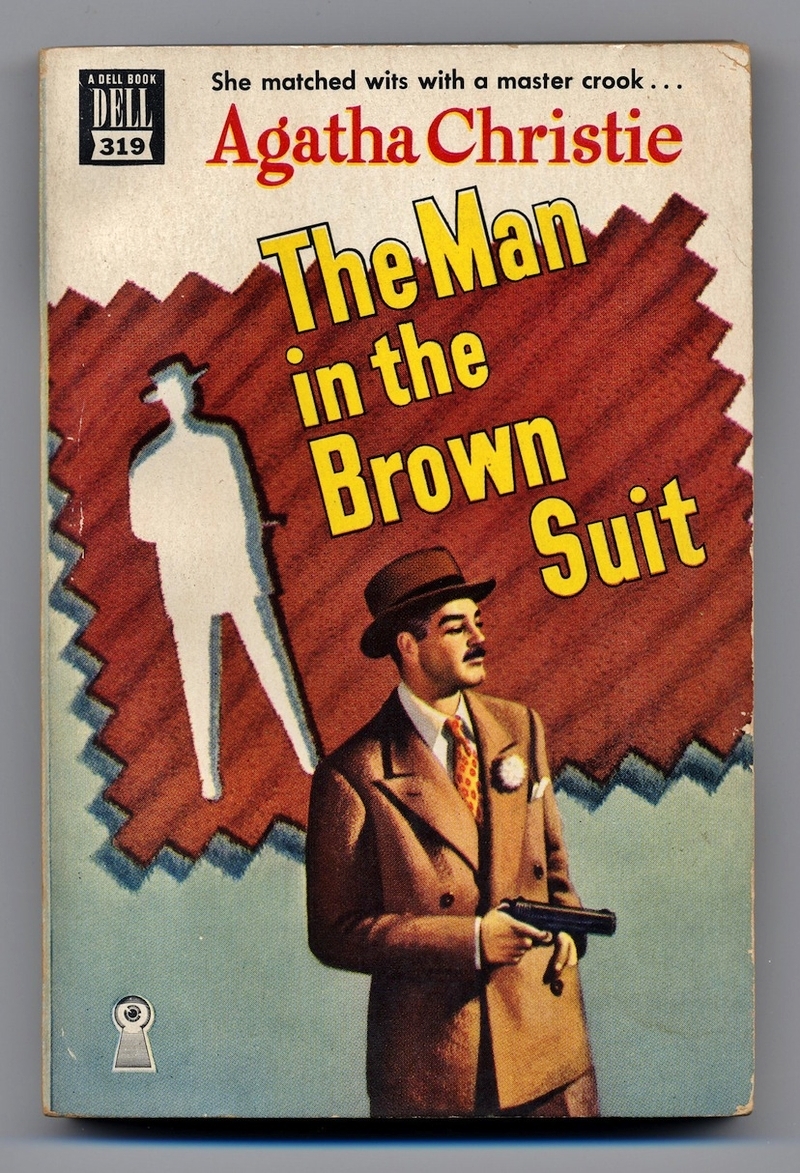
I like this one - a bit different, isn't it? Nice bit of graphic design.

I quite like this one – a bit different, isn’t it? Nice bit of vintage cover graphic design.

Read Full Post »

Tthe murder on the links agatha christie 1he Murder on the Links by Agatha Christie ~ 1923. This edition: Dell, 1967. Paperback. 224 pages.

My Rating: 7.5/10

Setting: Mostly in the vicinity of Merlinville, France, at the estate of expatriate English millionaire Mr. Renauld.

Detection by: HERCULE POIROT with continual accompaniment and occasional assistance by CAPTAIN HASTINGS. A fellow detective, MONSIEUR GIRAUD of the Paris Sûreté, is in official charge of the case; he and Poirot despise each other instantly.

Final Body Count: 2

Method(s) of Death: STABBING – both times with a paper knife made from airplane wire. (But all may be not as it as first seems.)

100 Word Plot Summary:

Hercule Poirot receives a panicked letter from an English millionaire living in France: “For God’s sake, come!” Poirot and Hasting hasten to France, but arrive mere hours after Mr. Renauld’s stabbed corpse is found, in a half-dug grave on the unfinished golf course next to his estate. Mrs. Renauld is found bound and gagged in her bedroom; two bearded thugs are the suspects. But why can’t they be tracked? Why was the dead man’s son secretly in the neighbourhood that night? And what is the connection with a number of beautiful women who continually pop up, including Hastings’ latest crush?

*****

The author hits her stride with this excellent murder mystery, packed as full of red herrings as a 1920s’ millionaire’s wall safe is of banknotes. (Or secret documents.) And yes, this time we are dallying with a millionaire, albeit a very dead one, with a suitably convoluted past.

Captain Hastings and Hercule Poirot, after forging a friendship while jointly dealing with The Mysterious Affair at Styles, are now sharing a London flat. Hastings is acting as a private secretary to a M.P., while Poirot employs himself as a private detective, chasing down lost lap dogs and stolen pearls for the wealthy dowager classes. Neither is particularly content with the status quo, so when a letter comes from a certain wealthy financier, Mr Renauld, formerly of England, Canada and Chile, now residing in France, referring to his life being in danger and a secret that he possesses, and begging for Poirot’s immediate aid, the bait is taken.

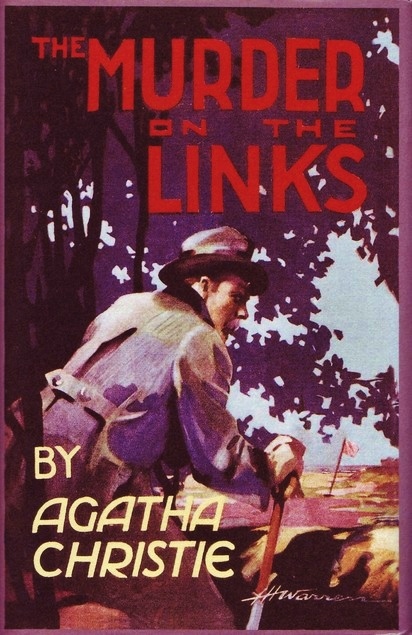
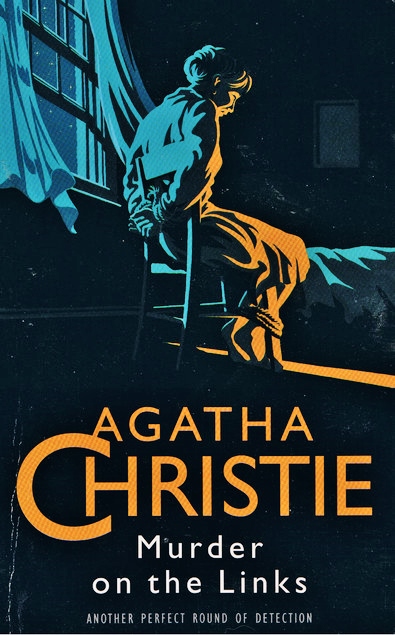
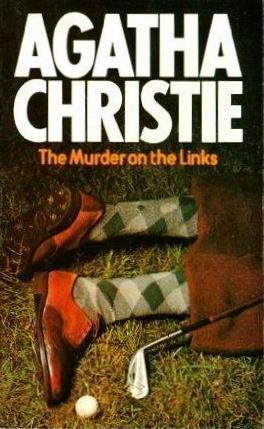
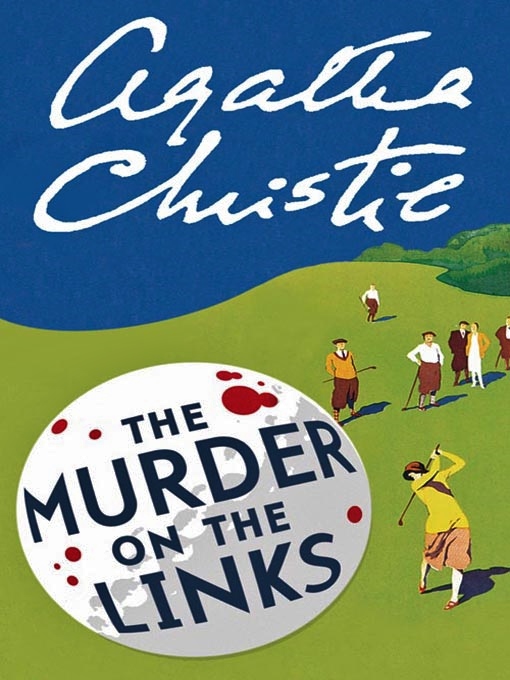
Across the Channel they go, only to find that they are mere hours too late. Mr. Renault is already dead, stabbed and left to die in a partially dug grave on the golf course under construction next to his country estate. (And, or the record, the site of the murder is the only connection this story has to golf in any way, shape or form. Please ignore all of the lurid paperback covers one will find with the body dressed in plus fours, or with a golf club or golf balls or any such nonsense. No one has played on the course yet! It is under construction! The title picks up on the most minor element of the story; careless illustrators assume something which isn’t in the story.)

Where was I? Oh, yes. The plot.

So: Mr Renauld is dead; his wife has been found tied and gagged in their bedroom. She claims that two bearded men tied her up and abducted her husband, and at first the story seems plausible, especially after Mrs. Renault faints in an excess of emotion after viewing her husband’s body. But there are just a few loose ends. Where did the bearded men come from, and where have they vanished to? What is the “secret” referred to in the letter to Poirot, and by the abductors? What part did the Renauld’s son Jack play in the events of the day leading up to the murder? Why is the elegantly mysterious neighbour’s beautiful daughter so anxious? Who was really dallying with the lovely young acrobat whom Hastings has already met back in England, and who shows up most unexpectedly at the site of the murder? And what’s all this about a SECOND body???!

The characters in general are not particularly sympathetic or memorable; the victim(s) and the criminal(s) appear as stereotyped set pieces, included merely to move the puzzle along. The egotistical French detective, Monsieur Giraud, pops in and out to sneer at Poirot and muddle the clues, but I could not even bring myself to dislike or scorn him; he just “was”, as manufactured a plot element as the murdered man, himself merely a lay figure labelled “the body”. The person I liked the most here was Poirot himself; I came away from this story with an increased appreciation both for his intelligence and his sense of humour. Hastings appears even more of a buffoon in this novel than he did in the Styles case; his actions in several cases act in direct opposition to the true murderer being discovered, at least in the short term. His romantic impulses were in full bloom throughout; only Poirot’s continual gentle mockery kept them in perspective to the reader, if not to Hastings himself.

Agatha Christie in this, only her third mystery novel, creates a most convoluted plot. She provides all of the needed clues, holding nothing back, but it will be a clever reader who guesses the true solution before the big reveal at the end. I had read this novel several times in the past, but even then could not quite get it sorted out until the final events, when my memory revived and I said to myself, “Of course!” Click, click, click, and it all makes a completed picture.

Final analysis: a strong puzzle mystery, well thought out, and an enjoyable light read ninety years after its first appearance.

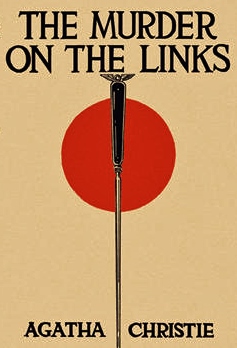
Elegantly simple is this first edition cover from 1923.

Elegantly simple is this first edition cover from 1923. (And not a golf ball in sight!)

This is another 1920s' cover, nicely indicative of the plot within.

This is another 1920s’ cover, nicely indicative of the plot within, though I have my qualms about that flag on the golf course; it really shouldn’t be there, considering that the links are still under construction, and no one is golfing there yet.

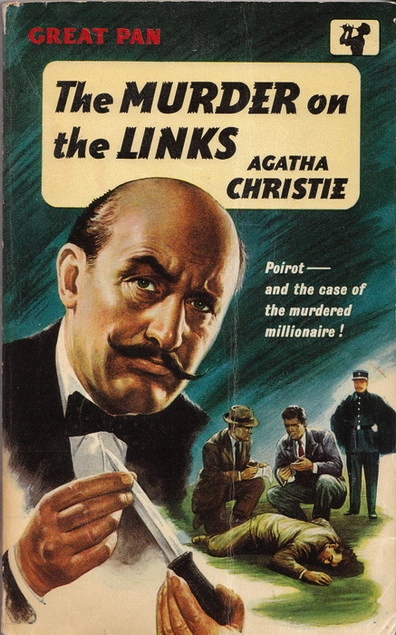
Jumping ahead several decades, this paperback cover at least does not include a golf ball. Our brilliant detective features prominently, little grey cells working furiously, one would assume from his serious expression.

Jumping ahead several decades, this paperback cover at least does not include a golf ball. Our brilliant detective features prominently, little grey cells working furiously, or so one would assume from his serious expression. My only major issue with this one is the dagger itself; in the story it is a letter opener made of airplane wire, a war souvenir. Check out the first cover for what it might really look like.

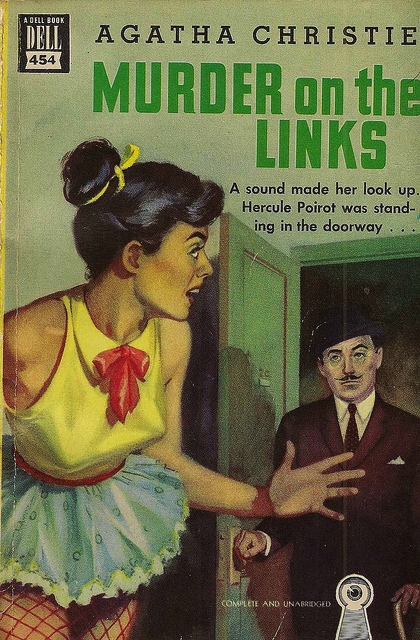
Ooh, la, la! Poirot confronts one of the beautiful women who so abundantly decorate the story. This particular one is Hastings' acrobatic charmer. I am rather uneasy about the era-correct authenticity of that stage costume, but I doubt it was a strong consideration with the artist; he was more interested in the physical attributes of the girl in question, don't you think?

Ooh, la, la! Poirot confronts one of the beautiful women who so abundantly decorate the story. This particular one is Hastings’ acrobatic charmer. I am rather uneasy about the era-correct authenticity of that stage costume, but I doubt it was a strong consideration with the artist; he was more interested in the physical attributes of the girl in question, don’t you think?

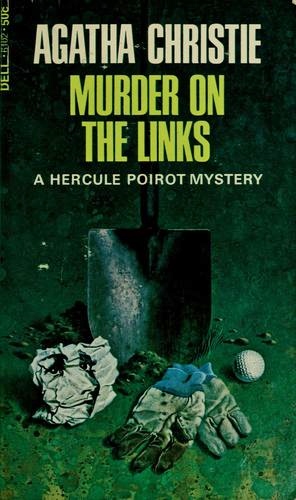
A nice collection of clues presented here, in this still more recent (1970s, perhaps) paperback cover.

A nice collection of clues presented here, in this still more recent (1960s, perhaps) paperback cover.

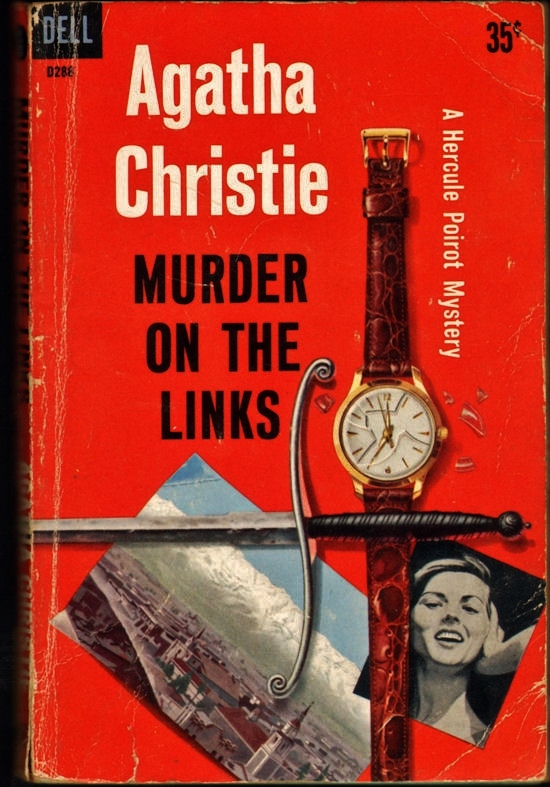
A modern cover illustration, very classy in its detailed simplicity, and focussing on a key plot element which other cover illustrators have seemingly ignored until now.

A modern cover illustration, very classy in its simplicity, and focussing on a key plot element which other cover illustrators have seemingly ignored until now. (There’s no gag, though – my only complaint. Details, details!)

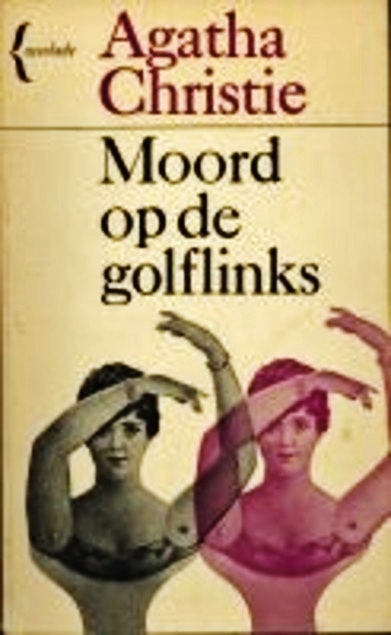
And here, as a sort of cover illustration bonus, is a Dutch cover illustration. This is a very clever one indeed, and the cover designer picked up on a major clue, which you will appreciate once you've finished the story. Very nice, and possibly y favourite cover of all, right up there with the simple dagger of the first edition pictured at the start of this cover art gallery.

And here, as a bonus, is a Dutch cover illustration. This is quite clever, and the illustrator picked up on a major clue, which you will appreciate once you’ve finished the story. Very nice, and possibly one of my favourites, right up there with the simple dagger of the first edition pictured at the start of this cover art gallery.

And here, at the bottom of the collection, is an entry for the Hall of Cover Illustration Shame. A completely wrong depiction of the scenario and the corpse. Maddening!

Now for an entry for the Hall of Cover Illustration Shame. A completely wrong depiction of the scenario and the corpse. Maddening!

And this contemporary illustration, which gets it completely wrong as well. The only thing the least bit appropriate is the period attire, but otherwise the picture is completely foreign to the novel. Boo, hiss.

Also shameful is this contemporary illustration, which gets it completely wrong as well. The only thing the least bit appropriate is the period attire, but otherwise the picture is completely foreign to the novel. Boo, hiss.

Read Full Post »

« Newer Posts - Older Posts »