Posts Tagged ‘Canadian Book Challenge 6’

419 by Will Ferguson ~ 2012. This edition: Viking, 2012. Hardcover. First Edition. ISBN: 978-0-670-06471-7. Winner: 2012 Giller Prize, for best Canadian novel or short story collection published in English. 399 pages.

My rating: 8/10. Quite a lot better than I had anticipated. Ferguson’s last few efforts have left me mildly disappointed, but this new novel encouragingly shows that he is still growing as a writer. I haven’t yet read any of the other Giller Prize nominees, but 419‘s win a few nights ago no longer seems so far-fetched. This is a well-written and ambitiously plotted novel, and the writer exceeded my personal expectations this time around. I didn’t love this book, but I did like it – very much. Though I do have more than a few critiques, some of which I’ll address below.

*****

I like being pleasantly surprised, and this book did just that. I’d read quite a few reviews, and I’d heard that it was nominated for the Giller, but I wasn’t particularly eager to delve in, as I’d earlier found Will Ferguson’s last book, Canadian Pie, disappointing. It felt rather repetitive, with some of what seemed like reworked material from earlier books, though some bits were excellent entertainment, as always.

But the distinctive cover of 419 caught my eye on the “New Books” display as I was heading out of the library on Tuesday evening, so I impulsively stopped and added it to my pile. When I got to car, I heard the announcement on CBC that Ferguson had indeed just won the $50,000 Giller for 419, and I mentally shuffled it to the top of my to-read pile, and started it that same night.

I found the narrative initially confusing, as the author has a number of different storylines on the go from page one, but it soon started to jell, though I didn’t ever shake the feeling that I occasionally had too many windows open on my mental computer screen.

The first lines, the literal importance of which become clear later on, are suitably foreboding and mysterious:

Would you die for your child?

This is the only question a parent needs to answer; everything else flows from this. In the kiln-baked emptiness of thorn-bush deserts. In mangrove swamps and alpine woods. In city streets and snowfalls. It is the only question that needs answering…

And we are suddenly at a car accident scene in a snowy Canadian city. Then in a sweltering African airport. In a mangrove swamp with a fisherman and his son. Back to Canada as a family learns of their father’s sudden death. Africa. Canada. Africa. Canada. What’s the connection here?

Longer stretches of narrative are interspersed with mysterious vignettes, as the stage is set for the characters’ and events’ inevitable connections and intertwinings, and separate strands start to stand out.

  • In Calgary, a retired school teacher has died in a troubling car accident. Was it an accident, or something more sinister? A daughter seeks the truth, and justice.
  • In the same city, a police investigator tries to determine the truth about that death, and others, as he mulls over his own personal future.
  • In Nigeria, a self-confident young man haunts the internet cafés, sending out thousands of tempting emails, waiting for the inevitable but rare “bite”.
  • From peaceable beginnings in a fisherman’s family on the Niger Delta, a young boy becomes a man, moving into a vastly changed world as multinational companies start to extract the oily treasure hidden under the dense mangrove swamps.
  • A mysterious scar-faced young woman stumbles through the sub-Saharan desert, hiding a secret and searching for a refuge as yet unknown.
  • In Lagos City, a crime lord plays his victims like an obscene stage director, evil but ultimately doomed himself.

The plot is driven by the ubiquitous presence of the infamous Nigerian internet scam, the titular “419”, so named for the number of the article of the Nigerian Criminal Code dealing with fraud, which turns out to be a key – but not the only – plot element.

419 is a total departure from Ferguson’s usual shtick of out-and-out parody, folksy anecdotes, and very Canadian self-mockery, but there are still abundant traces of the “old” Ferguson throughout. Though the subject matter is often starkly tragic, there are laugh-out-loud moments of rather twisted humour, as here on an African road ferrying a tanker trunk filled with stolen fuel:

Nnamdi was gripping the wheel, eyes on the road, barely blinking, barely breathing. His first time driving.

“Speed up,” said Joe. “A baby crawls faster.”

Nnamdi swallowed down his nervousness, pushed a little harder on the accelerator.

“And don’t swerve for goats like that,” Joe said. “Go through them. It’s the only way. We can hose off the grill later…”

All in all, a blackly comedic suspense novel, but not to be taken too seriously, Giller Prize or not.

The reader absolutely must suspend personal disbelief, and here I give away a bit of a plot spoiler. (Though not more so than any of the other reviews I’ve read.)

What is the likelihood of a modern, middle class, apparently well-educated family being so totally unaware of the sophisticated nature of internet fraud? I could buy into the innocence of the father – sort of – because obviously people do fall for these scams or they could not continue to proliferate, and I know how trusting certain individuals can be, but the naïveté of the adult children, one an apparently financially savvy businessman, tests the reader’s credulity a little too far. The revenge element, the reverse fraud, the involvement of the now highly pregnant Saharan girl – these plot twists, and numerous others, had me shaking my head as the story reached its conclusion.

Viewed as a semi-farcical novel, the flaws of logic smooth out and the “hang on a minute” moments are much more forgivable, but I didn’t ever get the feeling that this was the Big Important Serious Novel that some mainstream reviewers have made it out to be. Sure, there are some serious elements, and those lend poignancy to the tale, but to me it seems just another diversionary read, to be consumed with a certain gusto and set back on the shelf among all of the other well-wrought entertainments of the semi-serious sort.

With this in mind, recommended.

Good job, Mr. Ferguson, and congratulations on your prize.

Read Full Post »

Let the Day Perish by Christian Petersen ~ 1999. This edition: Beach Holme Publishing, 1999. First Edition. Softcover. ISBN: 0-88878-400-7. 136 pages.

My rating: 9/10. Strong, vivid and eloquent. “Beautifully crafted”  and “Powerful” may have become clichéd descriptions, but they apply in their most sincere sense to these punchy short stories.

*****

From the back cover:

Christian Petersen beautifully reins in the confusion and displacement of a diminishing band of men facing the daily spectre of an unforgiving land, men enslaved to the grind of the sawmill, hunkered on bar stools, high in the saddle of a John Deere, or wild behind the wheel speeding down dirt roads to the Fraser. Here are fathers, brothers, lovers in search of forsaken children, bygone loves, and memories long faded in the wash of fast-running streams and firelight. Here are the unpardoned, raging against what they might have been, what they are now, and where their paths have led them. Yet Petersen’s characters hollow out a quiet dignity, gentle in the silent truth that they are small in the face of pain – and of change.

Regional literature set in areas familiar to the reader is difficult to view in perspective. I find that I am often so caught up in nodding in recognition of places and people that a crucial distance is hard to maintain in attempting to judge merit of story and style. And this is a very local collection of stories, by a writer who closely shares my own experience of time and place in his formative years, growing up in Quesnel in the 1960s and 70s, leaving the Cariboo for a time, and eventually resettling in Williams Lake, where he has worked (is still working?) as a probation officer. He is obviously a keen observer of local “types” – they are instantly recognizable – but he looks past the superficial surface of the stereotypes to the turmoil within.

A quotation on the opening page gives a clue to the content within:

If a story is not to be about love or fear, then I think it must be about anger.

  • The Look of the Lightning, The Sound of the Birds ~ Diane Schoemperlen

Love, fear and anger are all represented here in their deepest intensity.

A very readable collection of stories, definitely for British Columbians familiar with the Cariboo-Chilcotin settings, and with a broader appeal to universal emotions which should resonate with readers everywhere.

  • Heart Red Monaco ~ Two unlikely friends search for some kind of meaning in their treading-water lives.
  • The Next Nine Hundred Years ~ Vignettes of “working at the mill.”
  • Horseshoes ~ Two brothers: rivalry, conflict and resolution.
  • Come Evening ~ A day with one of the fringe-dwelling “troopers” of Williams Lake.
  • Scout Island ~ From her house overlooking the nature reserve, a horse trainer deals with “getting by”, and a troubling situation initiated by her young son and her elderly great-aunt.
  • Country Boys ~ The brutal world of the high school bully, his victims and, ultimately, his tormenters.
  • Taseko ~ A boy goes moose hunting in the Chilcotin with his father and his father’s friend.
  • Let the Day Perish ~ Life, love and death on the ranch.
  • This is How It Is ~ A divorced father yearns for his young daughter.
  • Thibeau’s Crossing ~ Betrayal changes everything in a peaceful valley.
  • Charity ~ A sincere Baptist Church minister gives in to passion with far-reaching consequences.
  • Men’s Wear (after a fashion) ~ The venerable owner of the town’s “upper crust” men’s wear store is challenged by changed times, and undergoes an epiphany. Great ending note to this collection – left me smiling. Nice to quit on a high point; some of these stories (though not all) were dark.

Petersen has also written a mystery novel, Outside the Line (2009), and another collection of short stories, All Those Drawn to Me (2010). He is currently working on another book, a novel. I will be watching for it. Keep an eye out for this author. This first collection is excellent.

Read Full Post »

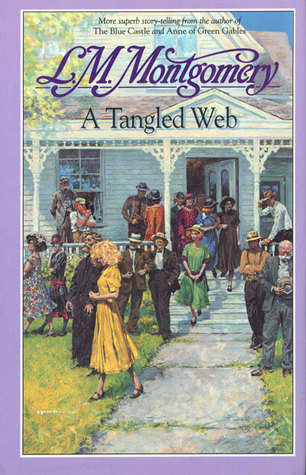
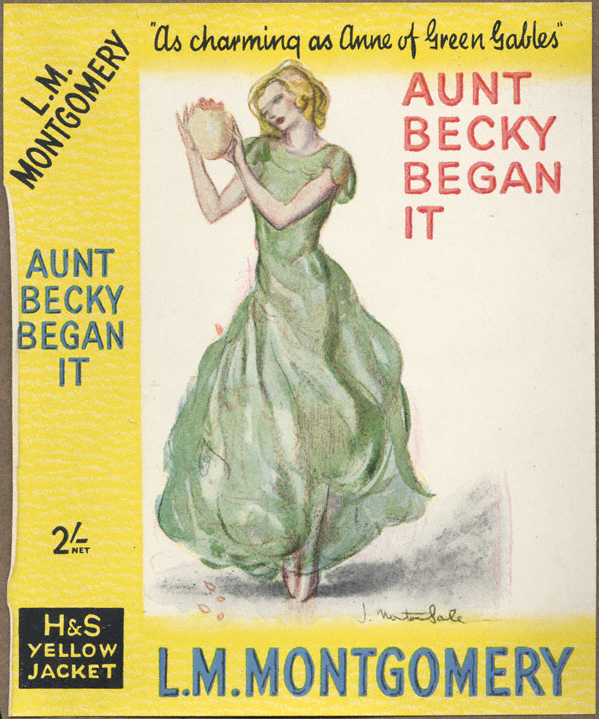
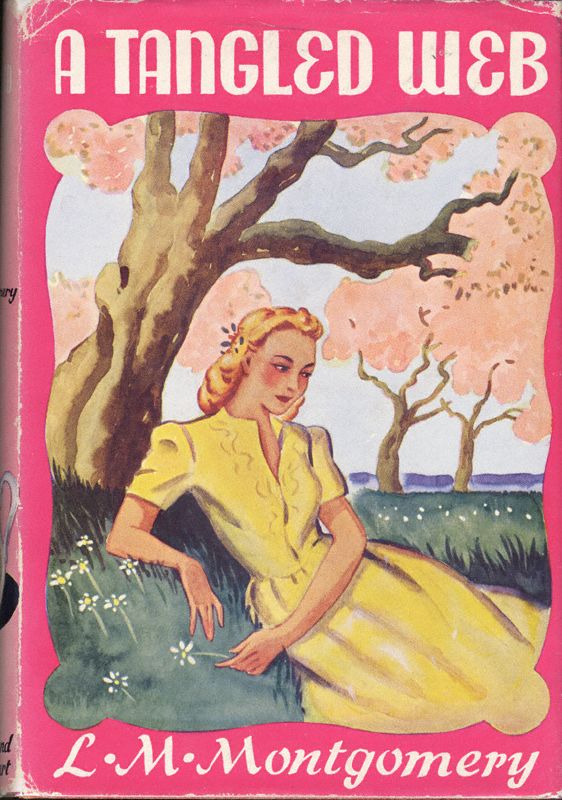
A Tangled Web by L.M. Montgomery ~ 1931. This edition: McClelland and Stewart, 1989. Hardcover. ISBN: 0-7710-6160-9. 306 pages.

My rating: 5/10. This one had its moments, but the confusing set-up, generally unlikable characters, hasty and improbable resolutions to various conflicts and romances, and jaw-dropping (in the most offensive way) final few lines kept me from enjoying it to the full. I would not recommend it.

*****

I am very ready to move on with this novel, so this will be the briefest of reviews. (Coming back to add that it got rather long after all. But it was fast to write, so that counts for soomething.) For more, visit the Goodreads page. I am in the minority with my distaste for this book, but it really left me quite cold. I might re-read it at some point far in the future, but right now all I want to do is return it to the library and wipe it from my brain.

Opinionated, critical, near-death Aunt Becky has called a clan meeting – a “levee” – to discuss who of her vast extended family will inherit a prized hand painted jug, brought from Holland as a marital gift several generations before. She proceeds to read her own obituary and lay out some cutting critiques of everyone present as one last demonstration of her emotional hold over the intertwined Dark and Penhallow families.

She dies soon after, and the reading of her will is attended in full family force. But Aunt Becky has one last trick up her sleeve. There will be a waiting period of a year before the heir to the jug is revealed, and in the meantime, everyone had better be on their best behaviour, or risk losing their chance to inherit.

Something like sixty family intermarriages between the two clans have created a complicated network of relatives and in-laws, and the author tosses us in head first. It took quite a few chapters before I had any sense of who was who, and, it was more work than it was ultimately worth – lay this one down at your peril! I did that and had to start all over again to reacquaint myself with the vast cast of characters.

  • Joscelyn Dark has been estranged from her husband Hugh since their marriage night; only Aunt Becky has been privy to the reason why. What happened that night?
  • Sweet Gay Penhallow is engaged to Noel Gibson, but her vampish flapper cousin Nan has decided to steal Noel away. Roger Penhallow has been secretly in love with Gay for years – should he seize this chance to step in?
  • Orphaned, illegitimate youngster Brian Dark is the abused chore boy on his strict uncle’s farm; even his pet kitten does not escape his uncle’s wrath. Will justice prevail?
  • Peter Penhallow has been off roaming the world, but he surprises everyone, including himself, by falling head over heels in love with his childhood enemy Donna Dark, who has been married and widowed in the meantime. Does Donna return his passion?
  • Margaret Penhallow is a mild, plain-featured, un-sought-after old maid who has one great wish. Will she ever achieve it?
  • The two Sam Darks, Big and Little, are cousins who have lived together in harmony for thirty years. Why have they parted ways over a silly little statue and a ginger cat?

There are more situations brewing and boiling over, but those are the main threads, and the resolutions are a long time in coming in this ambitiously-plotted story.

My impression of the whole thing was that it was a mile wide and an inch deep; there was very little chance to get to know any of the characters, and I found myself annoyed at all of them, except perhaps wee innocent Brian, and quietly good Roger.

The final few sentences of the story were what sealed this novel’s fate with me; the author includes a completely gratuitous and blatantly racist and misogynist exchange between the newly reconciled Sam Darks. I will include it here for you to read for yourself. I’ve whited it out just below; highlight it to read it if you feel the desire. They are speaking of Little Sam’s nude statue of Aurora, “Goddess of the Dawn”, which was the original reason for their quarrel.

“What you bin doing to that old heathen immidge of yours?” demanded Big Sam, setting down half drunk his cup of militant tea with a thud.

“Give her a coat of bronze paint,” said Little Sam proudly. “Looks real tasty, don’t it? Knew you’d be sneaking home some of these long-come-shorts and thought I’d show you I could be consid’rate of your principles.”

“Then you can scrape it off again,” said Big Sam firmly. “Think I’m going to have an unclothed nigger sitting up there? If I’ve gotter be looking at a naked woman day in and day out, I want a white one for decency’s sake.”

The End

Yeah. The end for me, too. This is Lucy Maud at her very worst. I won’t dismiss her many other works, because some of them are beautifully written and deeply moving, but this one bothered me in more ways than one, and the ending passage disgusted me, “consider the times” or not.

Read Full Post »

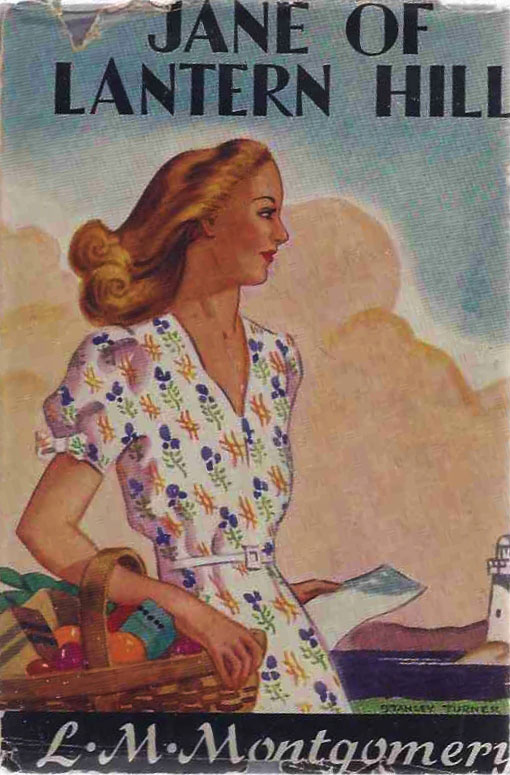
Jane of Lantern Hill by L.M. Montgomery ~ 1937. This edition: Bantam Books (Seal), 1989. Paperback. ISBN: 0-7704-2314-0. 217 pages.

My rating: 8/10. Jane Victoria Stuart is one of the more likeable young heroines in Lucy Maud Montgomery’s repertoire. Great gaps in believability here and there, but overall an engaging tale for romantic souls from youth (say 12-ish) to adult.

*****

Jane Victoria Stuart is eleven years old, and for eight of those years, the years she can remember, she has lived in a huge mansion in Toronto with her extremely wealthy, emotionally frigid grandmother and her delicately beautiful, weak-willed mother. As far as she knows her father is dead. He is never mentioned, except in snidely allusive references by her grandmother to “Victoria’s” tainted ancestry as demonstrated by her “low” tastes – a desire to cook and fraternize with the housekeeper in the warmly cozy kitchen, and a friendship with the young maid-of-all-work in the boarding house next door.

Grandmother makes no secret of her distaste for Jane Victoria – every creature comfort is provided but emotional needs go unfulfilled. Jane, as she secretly calls herself in defiance of her grandmother’s preferred Victoria, shares a deep love with her mother, but open demonstrativeness is impossible – even a glance or a motherly caress is deeply resented by bitter and jealous grandmother, who clings to her own daughter with fierce possessiveness.

The days go by uneventfully, and the future stretches forth relentlessly, until a chance taunt by a schoolmate reveals a secret which has been hidden from Jane by her grandmother and mother. Her father is not dead, but very much alive, and her mother is neither widowed or divorced but rather in a limbo of estrangement, unable to move either forward or back in the restricted social life engineered by the household matriarch.

Jane confronts her mother with the news and asks if it is true, and in one of her rare human moments Grandmother apologizes to Jane for keeping the secret for so long. But now that you know, consider him as dead, she orders Jane, and Jane solemnly and willingly agrees – this man who has abandoned her and made her mother so miserable is best forgotten.

Imagine Jane’s dismay when a letter comes soon after from Prince Edward Island, requesting Jane’s presence at her father’s summer residence over the summer holidays. With great trepidation Jane sets off into the unknown and greatly dreaded wider world.

Needless to say, everything works out, and happy endings abound. But before we get to them there are a number of little dramas which must be worked through, some more unbelievably than others.

A really nice heroine, practical and earnest and well-deserving of the good things which eventually come her way. Give this one to your pre-teen daughters, but don’t forget to read it yourself; mildly melodramatic and ultimately very satisfying.

Might make a good read-aloud, for ages maybe 8 and up. Marital troubles and divorce are central plot themes, as is emotional abuse by Jane’s grandmother, but these are necessary to the building of tension in the storyline. Rather reminiscent of Frances Hodgson Burnett’s A Little Princess in mood, I thought, including the improbable (but most satisfactory) way everything clicks into place in the end. No loose threads – all neat and tidy! Jane would approve.

Disney made a movie of this one a few years back, which I’ve not seen, but apparently it departs wildly from the original story and is not recommended by aficionados of the book.

Read Full Post »

The Blue Castle by L.M. Montgomery ~ 1926. This edition: McClelland-Bantam (Seal), 1988. ISBN: 0-7704-2315-9. Paperback. 218 pages.

My rating: After reading Kilmeny of the Orchard, an easy 10, but stepping back a bit, for general comparison to other novels of this vintage and genre (I’m thinking D.E. Stevenson here, I must admit, because I’ve been discovering her light romantic novels these past few months) how about a nice solid 8/10. Will that do, Blue Castle fans? I did enjoy re-reading this one, after a hiatus of many years.

*****

Though often referred to as one of Lucy Maud Montgomery’s “forgotten” books, the internet abounds with reviews – its page on Goodreads – The Blue Castle  alone has over one thousand reviews, and seven thousand plus ratings. It scores an extremely respectable 4.22/5. This is a well-loved book!

Anything I say here would be superfluous to the discussion; I know others have covered this ground before, often with great eloquence and passionate approval. I’ll put forward my opinion nevertheless.

Montgomery’s stories tend to be full of stuffy matriarchs and patriarchs making life miserable for their cowed extended families; the worm turning sets the narrative in motion and has the reader cheering for the underdog; if all goes well we come to the end with a better appreciation for what makes everyone in that fictional little world tick. The Blue Castle is no exception; it follows the pattern perfectly, and with satisfying results. This story almost defines the comfort read, and I suspect that is how most of its advocates use it, to administer a little boost of fantasy and happy ending to real lives fraught – and whose life is completely free of these? – with anxiety and sadness.

*****

Valancy Stirling is having her twenty-ninth birthday, and her level of depression couldn’t be much lower. Living with her emotionally distant mother and whiny, elderly Cousin Stickles, Valancy’s days are a repetitive round of dusting and duty jobs; the attic chests overflow with the quilts the three have spent their countless hours piecing together, and every moment of Valancy’s time must be accounted for and justified.

Idleness was a cardinal sin in the Stirling household. When Valancy had been a  child she had been made to write down every night, in a small, hated, black notebook, all the minutes she had spent in idleness that day. On Sundays her mother made her tot them up and pray over them.

But Valancy has an even more insistent woe. In a world which values a woman by her achievement of a “good” marriage, Valancy is a confirmed spinster. No man has so much as looked at her with interest, and as her unvoiced desire for love increases with the years, so does her drabness and depression. Valancy is very much on the shelf, an unwanted piece of merchandise, and her large extended family, from her own bullying mother, to her perennially teasing rich bachelor Uncle Benjamin, to her gorgeous, patronizing, engaged-to-be-married cousin Olive, don’t let her forget it for a second.

Valancy’s only escape is into daydreams of a fantasy life.

Valancy, so cowed and subdued and overridden and snubbed in real life, was wont to let herself go rather splendidly in her day-dreams. Nobody in the Stirling clan, or its ramifications, suspected this, least of all her mother and Cousin Stickles. They never knew that Valancy had two homes–the ugly red brick box of a home, on Elm Street, and the Blue Castle in Spain. Valancy had lived spiritually in the Blue Castle ever since she could remember. She had been a very tiny child when she found herself possessed of it. Always, when she shut her eyes, she could see it plainly, with its turrets and banners on the pine-clad mountain height, wrapped in its faint, blue loveliness, against the sunset skies of a fair and unknown land. Everything wonderful and beautiful was in that castle. Jewels that queens might have worn; robes of moonlight and fire; couches of roses and gold; long flights of shallow marble steps, with great, white urns, and with slender, mist-clad maidens going up and down them; courts, marble-pillared, where shimmering fountains fell and nightingales sang among the myrtles; halls of mirrors that reflected only handsome knights and lovely women–herself the loveliest of all, for whose glance men died. All that supported her through the boredom of her days was the hope of going on a dream spree at night. Most, if not all, of the Stirlings would have died of horror if they had known half the things Valancy did in her Blue Castle.

For one thing she had quite a few lovers in it. Oh, only one at a time…At twelve, this lover was a fair lad with golden curls and heavenly blue eyes. At fifteen, he was tall and dark and pale, but still necessarily handsome. At twenty, he was ascetic, dreamy, spiritual. At twenty-five, he had a clean-cut jaw, slightly grim, and a face strong and rugged rather than handsome. Valancy never grew older than twenty-five in her Blue Castle, but recently–very recently–her hero had had reddish, tawny hair, a twisted smile and a mysterious past.

Aha! That last lover has a counterpart in the real world, who shall soon be introduced. In the tradition of all romantic novels, something is about to happen.

In Valancy’s case, the immediate something is her independent decision to go secretly to a doctor for a consultation about her increasingly severe heart pains, which she has kept hidden from her overbearing family. She can’t go to the family doctor, as word would soon be out, so she decides instead to consult old Dr. Trent, a noted heart specialist who lives in the same (fictional) Ontario town of Deerwood as the Stirling clan.

Dr. Trent doesn’t say much during the examination, and while Valancy waits for his return to the consulting room, a phone call sends the doctor rushing away on another emergency. Valancy goes home no more enlightened as to her condition than she was before the appointment, but some weeks later a letter comes from Dr. Trent. He is sorry that he had to leave her hanging, but he has some bad news for her. Miss Sterling has an incurable heart condition, and could die at any moment. She might last a year at most, with extreme care and good luck. In the meantime, avoid all exertion and strong sentiment, and hope for the best. (Those of you with keen eyes will spot a clue in this paragraph. It’s there in the book, too.)

The diagnosis of imminent death sends Valancy over the edge. With nothing to lose, she immediately starts to voice the many thoughts regarding her relatives which she has kept hidden all these years. They are taken aback at mousy little Valancy’s sudden outspokenness. Not sure how to handle her, they retreat into enclaves to murmur “Crazy!”, but by and large they back off and observe her with startled eyes, an improvement of sorts from the previous incessant teasing.

Valancy then goes one further. She decides to move in with a childhood friend who has been a victim of circumstance (summer job away from home, love affair, illegitimate baby which only lives for a year etc.) and is now dying of “consumption” (tuberculosis). The good people of Deerfield have distanced themselves from the sad fate of Cissy Abel, especially since her father just happens to be the town drunk, “Roaring Abel”. The only person who has shown any sympathy for poor Cissy is another social outcast, the mysterious Barney Snaith, who is a reclusive type who lives alone on an island in nearby Lake Mistawis, showing up occasionally to beat around town in his decrepit old car in the company of Abel.

Valancy has only seen Barney twice before, but has been intrigued by his oddly handsome appearance and devil-may-care attitude. Wonder if that means anything? What do you think, dear fellow readers?

So that’s the set-up. (And oops, I forgot to mention that Valancy’s only other emotional outlet in her long, dreary twenty-nine years, other than her Blue Castle daydreams, has been reading the works of a certain John Foster, who writes romantically about the wonders of the natural world. Valancy has whole passages of his works memorized; she has been surreptitiously reading his books for years, as often as she can smuggle them from the sympathetic librarian and past her eagle-eyed mother.)

Poor Cissy dies. The Deerwood townspeople, influenced by the Stirling clan who have decided they need to regularize Valancy’s move to the Abel home by rallying round her, hypocritically show up in great force for the funeral. With Cissy dead and buried, Valancy is now rather at loose ends, and, to prevent having to return to her stifling old life, she comes up with an audacious idea.

And here I will leave you. I’m sure you will be able to make some good guesses as to what happens next. Or maybe not!

*****

Super-sentimental, but with a goodly leaven of outspoken criticism of societal and moral hypocrisies. Valancy speaks out and we cheer her on, wondering only that it took her so long to cast off the shackles of manners to do so. No, that’s not quite right. Valancy stays terribly polite; she merely exposes the sugar-coated – and sometimes blatantly naked – rudeness of the other people who have been immune to comment because of their aggressive superiority.

The plot has some cute twists and turns, and a not very surprising (but perfectly fitting) “surprise” ending.

Valancy’s island cabin to me is much more of a daydream ideal than her lavish Blue Castle in Spain; I sighed a bit over the thought of a cozy, tiny house on an island, with no need to earn an income or worry about the drains,  or deal with obnoxious neighbours or bossy family members (not saying that I have either – oh no! – but Valancy has had them, in spades, so my pleasure in her escape was purely vicarious in that aspect) – anyway – the vision of her island idyll is pure comfortable fantasy and I wish I could go there occasionally in real life versus merely through the escape of reading.

A more mature book in many ways than the earlier novels featuring Anne, Emily and the residents of Avonlea and other P.E.I. environs. It is often mentioned that this was written “for adults”, but there is nothing objectionable which a teen of today couldn’t handle; I’d say age range twelve and upwards would be just right. Definitely a “romance novel”, and could be classified as something of a “girls’/women’s book”,  though the men in my life have read and enjoyed it for the humour and the gently diverting story. Happy ending, in the best fairytale tradition.

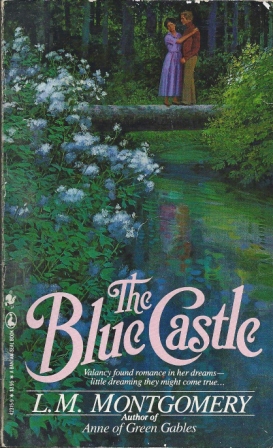
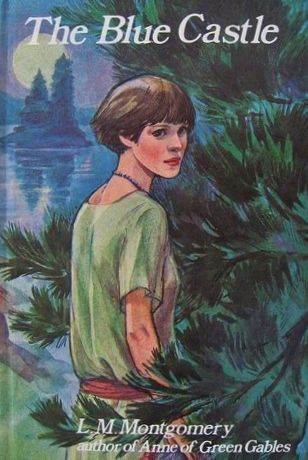
And check out this Pinterest page, which I stumbled upon while searching out a picture of the probably fictional Grey Slosson car which Barney drives. Some lovely images collected here which I thought added greatly to this quite charming novel. And look at this lovely cover illustration, found on that page. I thought this was much better than that on the cover of my own paperback copy!

Blue Castle Images – Valancy’s World

Read Full Post »

Kilmeny of the Orchard by L.M. Montgomery ~ 1910. This edition: Ryerson Press, 1968. 5th Canadian Printing. Hardcover. 256 pages.

My rating: 3/10. (And I’m being generous.)

*****

Boo, hiss.

I’m going to say this straight away. I did not like this book. If it were authored by anyone other than the iconic Lucy Maud Montgomery, it would already be in the box out in the porch, heading for the charity shop next trip to town. As it is, I will keep it just because I do like complete collections of things, and I have many (most?) of L.M. Montgomery’s other novels and short story collections, but I will not be re-reading it any time soon, if ever.

Oh, this book is so dismal, in so many ways.

Here I extend an apology to those of you who love this story, and see it as a sweet fairytale, and are able to accept it as a product of the time it was written in. That’s all well and good, and I often do the same, but in this case I look at the author in question, see that this novel was published two years after Anne of Green Gables – which is a very different (and much better) book in every conceivable way – and shake my head at the author. How could she?!

In the interests of full disclosure, I did read a number of reviews before I tackled this story, and I was prompted to read this for the Canadian Book Challenge by these two bloggers, Nan at Letters From a Hill Farm, and Christine at The Book Trunk.

Letters From a Hill Farm Review – Kilmeny of the Orchard

The Book Trunk Review – Kilmeny of the Orchard

Nan and Christine between them eloquently present the “for” and “against” arguments, and I was truly curious to see in which camp I would make my home.

Nan, Kilmeny’s all yours.

Hi there, Christine. Is there room for me by your fire?!

Spoilers follow. If you want to read and judge for yourself without my input stop here.

*****

“Kilmeny looked up with a lovely grace,
        But nae smile was seen on Kilmeny’s face;
        As still was her look, and as still was her ee,
        As the stillness that lay on the emerant lea,
        Or the mist that sleeps on a waveless sea.
        .   .   .   .   .   .   .   .   .   .   .   .   .
        Such beauty bard may never declare,
        For there was no pride nor passion there;
        .   .   .   .   .   .   .   .   .   .   .   .   .
        Her seymar was the lily flower,
        And her cheek the moss-rose in the shower;
And her voice like the distant melodye
        That floats along the twilight sea.”

                                  — _The Queen’s Wake_
                                                 JAMES HOGG

Wonderfully promising start with a quote from James Hogg’s narrative poem about the lovely Kilmeny who spends seven years in fairy land and comes back mutely unable to tell what she has seen. So far, so good.

And the first few chapters are quite promising as well. We meet a young man, Eric Marshall, as he graduates from college one glorious springtime day, and we nod and smile at Montgomery’s flowery description of the scene.

The sunshine of a day in early spring, honey pale and honey sweet, was showering over the red brick buildings of Queenslea College and the grounds about them, throwing through the bare, budding maples and elms, delicate, evasive etchings of gold and brown on the paths, and coaxing into life the daffodils that were peering greenly and perkily up under the windows of the co-eds’ dressing-room.

A young April wind, as fresh and sweet as if it had been blowing over the fields of memory instead of through dingy streets, was purring in the tree-tops and whipping the loose tendrils of the ivy network which covered the front of the main building.  It was a wind that sang of many things, but what it sang to each
listener was only what was in that listener’s heart.  To the college students who had just been capped and diplomad by “Old Charlie,” the grave president of Queenslea, in the presence of an admiring throng of parents and sisters, sweethearts and friends, it sang, perchance, of glad hope and shining success and high achievement.  It sang of the dreams of youth that may never be quite fulfilled, but are well worth the dreaming for all that. God help the man who has never known such dreams–who, as he leaves his alma mater, is not already rich in aerial castles, the proprietor of many a spacious estate in Spain.  He has missed his birthright.

And here’s our young hero:

Eric Marshall, tall, broad-shouldered, sinewy, walking with a free, easy stride, which was somehow suggestive of reserve strength and power, was one of
those men regarding whom less-favoured mortals are tempted seriously to wonder why all the gifts of fortune should be showered on one individual.  He was not only clever and good to look upon, but he possessed that indefinable charm of personality which is quite independent of physical beauty or mental ability.
He had steady, grayish-blue eyes, dark chestnut hair with a glint of gold in its waves when the sunlight struck it, and a chin that gave the world assurance of a chin.  He was a rich man’s son, with a clean young manhood behind him and splendid prospects before him.  He was considered a practical sort of fellow, utterly guiltless of romantic dreams and visions of any sort.

Eric has decided to join his father in the family retail business – his father is a successful department store mogul – much to the dismay of Eric’s older cousin, Dr. David Baker, who feels Eric’s talents would be better used if he were to pursue a law degree. But Eric nobly holds out that his father’s occupation is good enough for him. What a good son, I thought. Attaboy!

But before Eric can settle into his life in business, he receives a letter from a close friend who is working as a teacher on Prince Edward Island. The friend has fallen ill, and must take a leave of absence from his position. Will Eric please come and take over the school for the last part of the term?

Eric happily agrees, and off he goes to the Island. He is much taken by the beauty of the setting, and by the quaint friendliness of the natives. The only jarring note is struck one evening when he sees an elderly man and a young man together.

Eric surveyed them with some curiosity.  They did not look in the least like the ordinary run of Lindsay people.  The boy, in particular, had a distinctly foreign appearance, in spite of the gingham shirt and homespun trousers, which seemed to be the regulation, work-a-day outfit for the Lindsay farmer lads.  He
had a lithe, supple body, with sloping shoulders, and a lean, satiny brown throat above his open shirt collar.  His head was covered with thick, silky, black curls, and the hand that hung down by the side of the wagon was unusually long and slender. His face was richly, though somewhat heavily featured, olive
tinted, save for the cheeks, which had a dusky crimson bloom. His mouth was as red and beguiling as a girl’s, and his eyes were large, bold and black.  All in all, he was a strikingly handsome fellow; but the expression of his face was sullen, and he somehow gave Eric the impression of a sinuous, feline creature basking in lazy grace, but ever ready for an unexpected spring.

The other occupant of the wagon was a man between sixty-five and seventy, with iron-gray hair, a long, full, gray beard, a harsh-featured face, and deep-set hazel eyes under bushy, bristling brows.  He was evidently tall, with a spare, ungainly figure, and stooping shoulders.  His mouth was close-lipped and
relentless, and did not look as if it had ever smiled.  Indeed, the idea of smiling could not be connected with this man–it was utterly incongruous.  Yet there was nothing repellent about his face; and there was something in it that compelled Eric’s attention.

Eric shrugs and moves on. That evening, his landlord fills him in on the story. The elderly man Thomas Gordon, a local farmer, and the boy is an Italian orphan whose mother died at his birth. His father immediately deserted and has not been seen since. He was raised up by the Gordons, bachelor Thomas and his spinster sister Janet, but nature is apparently proving stronger than nurture.

“Anyhow, they kept the baby.  They called him Neil and had him baptized same as any Christian child. He’s always lived there.  They did well enough by him.  He was sent to school and taken to church and treated like one of themselves.  Some folks think they made too much of him.  It doesn’t always do with that kind, for ‘what’s bred in bone is mighty apt to come out in flesh,’ if ‘taint kept down pretty well.  Neil’s smart and a great worker, they tell me.  But folks hereabouts don’t like him.  They say he ain’t to be trusted further’n you can see him, if as far… 

Later this same evening, Eric goes for a walk and stumbles upon an old orchard, trees in full bloom. Wandering through the fragrant dusk, he hears the delicate strains of a violin, and, tracing them to their source, startles a lovely young maiden playing ethereal and perfectly in-tune music among the apple trees. Eric thinks she’s the most beautiful thing he’s ever seen, and eagerly approaches her but the girl gasps in terror and flees, uttering not a word or a sound.

More investigation reveals that this is the mysterious Kilmeny Gordon, niece of the afore-mentioned Thomas and Janet Gordon, and house mate of Italianate Neil. She lives in seclusion and seldom appears in public; apparently she is mute, and also is cursed by being an illegitimate child. Her mother was married to a man, Ronald Fraser, whose first wife was mistakenly thought to be dead; when the first wife showed up very much alive. Ronald abandoned wife number two and went off with wife number one, to die “of a broken heart” shortly thereafter. Kilmeny is born  into an atmosphere of grief and resentment, and has been unable to speak since birth, though apparently her “organs of speech” are normal enough. Kilmeny’s mother is quite a piece of work – sullen and angry at her sad fate, she takes it out on everyone in the family, and I can’t help but think her death, which has occurred three years prior to the opening of the story, was probably a huge relief to all concerned.

I’m going to condense the rest of the story, though you can probably figure out what happens next.

Neil is already in love with Kilmeny. Eric falls in love with her and dismisses the prior claim of the shifty Italian fellow. Kilmeny communicates through the strains of her violin music (Neil, also innately musically gifted by his inborn heritage, apparently only had to show her how to hold the bow and her vast natural ability did the rest) and by writing on a slate hung around her neck. The courtship proceeds with Eric marvelling at this luscious find – a pure, innocent, beautiful girl – all his! Oh, go slow, do not frighten the shy little thing! – and with Kilmeny totally in awe of this handsome, obviously noble, manly man from another world.

And oh yes, the locals all call Eric “Master”, presumably because of his schoolmaster role, but it sounds a little odd in daily conversation, as if it should be accompanied (and it often is) by forelock tugging of the peasant-before-nobility type.

Eric is predictably infatuated with Kilmeny, and persists in haunting the orchard in her company, until his landlady mentions that perhaps it would be nice if Eric would go to Kilmeny’s guardians and mention his interest. “Never thought of that!” says Eric (I’m paraphrasing) and off he goes to immediately win over the dour and suspicious Gordons with his shining goodness and innate nobility. (Neil glowers in the corner.)

What else? Let’s see. Oh – Kilmeny wonders at why Eric is so taken with her – “I’m so ugly!” she moans – oops, sorry – writes on her slate. Turns out that she has never looked in a mirror in her whole eighteen years – her mother broke them all in a fit of pique after her abandonment, and Janet and Thomas have never thought to replace them.

Eric proposes, because despite Kilmeny’s “great affliction” he can’t wait to get his hands on this delectable young creature. Kilmeny refuses him. Scritch, scritch, scritch -“I will only marry you if I gain the power of speech!”

Eric calls in his old friend Dr. Baker, who examines Kilmeny and decides, along with her aunt and uncle, that her affliction has been caused by her mother’s trauma, visited in some mysterious way upon the newborn babe. If a great surge of desire to speak were to come over Kilmeny, she would at long last be able to utter! But as this doesn’t seem likely to happen, Kilmeny and Eric decide to part.

Both mope around, until Eric, unable to withstand the desire to see his love one more time, ventures into the orchard. He passes sullen Neil, building a fence. He sees Kilmeny, and is overcome with grief and sorrow at his imminent loss. Kilmeny sees him, and she sees something else – the hot-blooded Italian is coming up behind Eric with axe upraised!

Do I need to go on?

Voice is achieved. Neil drops the axe in horrified remorse and promptly leaves the Island, removing himself permanently from the picture, to the relief of absolutely everyone. (Poor Neil. He is the one sympathetic character in this whole thing.) The engagement is back on. Eric’s father sees Kilmeny and is immediately smitten with his son’s bucolic sweetheart. Birds sing, etc. etc. etc. and the curtain sweeps shut.

*****

There are so many objectionable elements to this melodrama. The characters are impossibly stereotyped, and the situations are contrived to the nth degree.

What was all the nonsense about Neil and his ethnic “stain”? He was raised from babyhood as a member of the family, but his demotion from Kilmeny’s foster “brother” to merely an inconvenient hired boy is swift and brutal, with no visible consequences except to Neil himself. The xenophobic comments regarding Neil’s heritage come straight from the author, via the mouths of her characters. Nowhere is there any indication that this is a plot device, except for one or two mentions that Neil’s perpetual sullenness is a reaction to the way he is viewed and treated by everyone else in his community. Damned from birth, and by birth.

And poor Kilmeny – she too is damned by birth. Because of her mother’s “sin” – rejection of her dying father’s request for a reconciliation, plus a poor marital choice – the innocent baby is doomed by some supernatural power to muteness. That doesn’t make any sort of sense whatsoever, but all of the characters meekly accept it as a viable reason and a fair enough fate.

Eric’s infatuation with the virginal Kilmeny, and his desire to teach her about love and the world is more than a little creepy, as is his willingness to abandon her because of her “affliction”. I mean, the girl has everything – unearthly beauty, musical ability approaching genius, and perfect (if tiny) handwriting! What’s a mere voice matter when she has so many other sterling qualities and delicious possibilities to offer?

The whole thing creeped me out, and I’m hard pressed to find any excuse for Lucy Maud Montgomery’s authorial sloppiness and moral negligence in this particular effort. It did remind me of some of the more forgettable of her short stories, so all I can think is that she popped it off one thoughtless day and sent it out into the world and had it accepted because of the previous excellence and best-sellerism of Anne of Green Gables and Anne of Avonlea.

Not recommended.

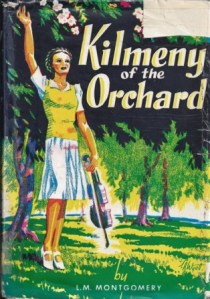
Oh – one more thing. What is with that awful cover, pictured way above? Kilmeny looks dressed for 1940s’ tennis, but for the improbable shoes. This novel was set in horse and buggy times, dear illustrator – it was originally published in 1910! And she looks like a sturdy, athletic Nordic blond – in the book she is a delicately featured, blue-eyed, black-haired, “fairy child”. Apparently a cover illustration with only a tenuous relation to the text within is not a modern phenomenon.

Read Full Post »

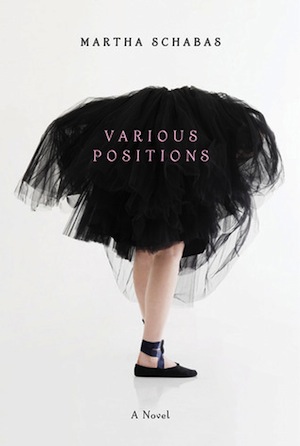
Various Positions by Martha Schabas ~ 2011. This edition: Farrar Straus Giroux, 2012. Hardcover. ISBN: 978-0-374-38086-1. 325 pages.

My rating: 5/10. Reasonably readable, but left me feeling queasy.

*****

Well, my last review was of a sensitive coming-of-age novel set in the late 1930s, Maureen Daly’s deliciously sensuous Seventeenth Summer. I have just read the contemporary counterpart, young Torontonian Martha Schabas’ highly praised (and seemingly as often highly damned) first novel concerning a fourteen-year-old facing a similar turning point in her life. The two heroines couldn’t be more similar in their focus on themselves and their emerging womanhood, or more different in their morals and actions.

“It was like sex was in everything,” writes Martha Schabas in her deeply unsettling first novel, “lodged in men’s heads and drowning in women’s bodies.” The thought is given to Georgia, a 14-year-old student at the Royal Toronto Ballet Academy, whose increasingly fraught and confusing reactions to her own burgeoning sexuality lead her into a horribly inappropriate and dangerous interaction with the academy’s artistic director. Schabas is unforgiving in her examination of the way sex and ballet collide, often with terrible consequences for the young women who are too innocent to comprehend the nature of the forces they are trafficking in. No lazy moralist, Schabas lays bare the misunderstandings and insensitivities on all sides: the well-meaning adults who want nothing more than to help Georgia in large part end up making things much worse. The great Japanese filmmaker Akira Kurosawa once said that being an artist means never averting your eyes. Schabas, to her enduring credit, resolutely refuses to do just that.

Steven. W. Beattie, Quill & Quire, November 14, 2011

First off, though I’ve tagged this story with a “dance” designation, it isn’t really about ballet. The dance academy background does allow for the extreme focus of the characters on themselves, their bodies, and the brutal competition between young teens to be better in every nuance than their peers, which is actively encouraged by the adults in charge of these fragile egos encased in steel-strong musculature tightly strung on still-growing bones and covered by the freshly dewy skin of early adolescence.

And though it’s also tagged “young adult”, and was found on the teen shelves at the library, I’m thinking it’s not really a story for many younger teens, even though the main character is just fourteen. There are very graphic passages describing pornography, and the pages of this deeply disturbing story are soaked in sex. Actual sex between teens, and the forbidden sexual yearnings between adolescents and adults. The student-teacher crush has doubtless existed since time immemorial, and has been frowned upon with very good reason. Outwardly repressed young Georgia is a seething mass of inner emotional conflicts, which find vent in the most inappropriate ways possible.

Here follow loads of spoilers.

Fourteen year old Georgia Slade is the daughter of an upper class, outwardly successful but deeply dysfunctional family. Her father Lawrence is a cold, emotionally distant psychiatric doctor who openly sneers at Georgia’s ballet fixation; her mother Lena is a much-younger university lecturer who became involved with Dr. Slade while in a student-professor position; their affair was the cause of Dr. Slade’s first marriage break-up. Lena is teetering on the edge of a mental and emotional breakdown; the marriage is fragile as eggshells and cold as ice. There is a vibrant, scholarly, Mediterranean first wife in the background, and a university student older stepsister, who turn out to be the most empathetic and likeable members of Georgia’s dreadful little world.

Georgia lives her life on a knife-edge, playing peacemaker and go-between at home, and carefully navigating the increasingly complicated waters of her school world. Everything there is all about peer pressure and implied and actual sexual relations; Georgia frigidly refuses to participate in any of the games, but is nonetheless very aware of the avid stares of the boys and the casual cruelty of the girls. The only place she can let down is in ballet class, though let down is perhaps an inapt term – Georgia’s quest for control and perfection have taken her to the head of her class, and her teacher recommends an audition with the prestigious Royal Ballet Academy.

Georgia passes her audition, and breathes a sigh of relief. Surely here there will be less focus on sex and more on the purity of the dance. To her dismay, the dancers are decidedly interested in all the usual teen girl preoccupations, including boys and sex. And Georgia now comes into contact with the cruelly demanding but physically attractive Roderick Allen, senior instructor and choreographer at the school.

As the dancers are pushed hard to achieve their highest potential, Roderick’s classes take on a special importance to Georgia. Every look, every fleetingly necessary placement touch from her instructor is analyzed and brooded upon, until she convinces herself that she and Roderick are involved in an unspoken mutual relationship. How best to bring it out into the open?

Georgia’s newly awakened curiosity about the possibilities of a sexual relationship with a much older man lead her – where else? – to the internet, where she discovers the pornographic permission for all sorts of illicit relationships. Looking at the poses of the nubile young women on her computer, Georgia is inspired to take similar self-portraits of herself. She prints these off, wraps them in her underwear, and, after confronting her instructor in his office with a passionate advance, slips the photos into his desk drawer.

Meanwhile a subplot has been going on regarding one of the other dancers. Not quite as slender as her peers, Chantal has been brought to tears by the comments of Roderick and the sneers of the inevitable clique of mean girls in the class. Georgia, in a mood of commiseration, decides to help Chantal out, and gives her advice on how best to starve herself to lose weight, information Georgia has used in her own turn to maintain her stick-thin dancer’s figure. Turns out Georgia has had a long-time obsession with Gelsey Kirkland, hardly a healthy role model, for all her undeniable talent and ethereal beauty.

Chantal comes back to school from Christmas break a mere skeleton of her former self; she is checked into an eating disorders clinic, and her parents talk of suing the Dance Academy. Roderick is pinpointed as the esteem-breaker of the students, and is under investigation on this matter when the photos of Georgia come to light, dramatizing the situation even further.

Roderick loses his job, and only avoids criminal prosecution by Georgia’s confession that she has made all the advances. Her parents separate, with Lena and Georgia moving to an apartment. Rejecting her stepsister’s caring advice, Georgia alienates herself from the one normal member of her family. She willingly surrenders her virginity to an old classmate at a drunken house party, and we find ourselves not really caring if her sexual inhibitions are fixed by this or not. Georgia leaves the Academy, and the last we see of her, she is auditioning for a place in yet another ballet school, along with none other than the very anorexic girl she previously “helped” into a hospital room.

There’s other stuff as well, but I think this is enough to give a broad picture of this dramatic little novel. What a soap opera!

*****

What are my conclusions regarding this one?

Well, first off, I’m not terribly bothered by all the sex. Teens, even those as young as (and often younger than) fourteen, think about, talk about, and (hide your eyes!) even have sex. We have no grounds to get all huffy and pretend that it’s not going on, because it is. It went on back in Maureen Daly’s time, it went on in my teenage years – and though I was one of the late bloomers myself, I had ears and eyes – nothing in Various Positions was all that shocking, seen it all before – and by golly, they’re still doing it today, albeit much more openly and possibly more inventively than in the immediately previous generations.

For every sexually precocious teen there are lots of more conservatively minded ones; from observing my own teen children’s friends and acquaintances I see the whole array, and I’m not seeing anything terribly worrisome – good sense is there in abundance, and our up and coming generation is fine and pure as gold in many ways.

Are the striving dancers painted as too competitive and cruel? No, not at all. My teen daughter has been heavily involved in dance for the last twelve years, and I’ve been privy to some shocking displays by the most sweetly innocent-looking creatures you can imagine. Again, this is not the norm – there is a wide range – but it certainly exists.

Anorexia and bulimia are still the elephants in the room; good teachers and studios deal openly with those issues, but the onus on private behaviour and how far to go does lie with the individuals. Dance, especially at the more advanced levels, can be a cruelly competitive world, especially if the career track is a possibility and a goal, and there are many pitfalls for even the best-nurtured teen in navigating that particular labyrinth. Bodies do matter tremendously, particularly in ballet, and the stick insects are still in vogue, thanks to Balanchine’s long reaching influence and his preference for the sylph-like form.

My biggest quibble was that I just did not like the character of Georgia. Even allowing for her dreadful home life, she made all the wrong choices, right up until the last pages. What was this obviously very bright, talented and focussed child thinking? Not just about the sexual thing with her teacher, but everything in her personal life seemed to have a serious kink. I’m not quite sure if this was deliberate, or if we’re supposed to understand the whys and wherefores and make allowances.

Martha Schabas certainly has writing talent, but I have some qualms at how she’s used it here. First novels are notoriously autobiographical, and much is made of the fact that Ms. Schabas seriously studied ballet herself, until being asked to leave the National Ballet School at age fifteen because of problems with her feet. While a number of critics have breathlessly gasped – and I here paraphrase – “How bold and daring! A courageous debut!” – I see instead perhaps something of an infatuation with the titillation of the sexual adventures of a Canadian Lolita-ballerina.

Would I give this book to my own sixteen-year-old dancer daughter? I had originally checked it out for her – she asked me to pick her up some interesting books, and this one looked like an easy winner. I read it and then offered it to her, and she asked what it was about, glanced through it and shrugged it off. “Too mainstream, too pop-fiction,” she said. “Too drama-queen for me.”

*****

And for the final word, to balance my rather dismissive review, here is Angela Hickman’s National Post review, from July 5, 2011, found here.

When Martha Schabas was five years old, she took her first ballet class, kicking off a decade of intense training and dreams of becoming a ballerina. Then, at 15, she was kicked out of the National Ballet School’s summer program for having bad feet — her arch wasn’t pronounced and she had a low instep. “I just didn’t fit into the ideal,” she says. “That very precise balletic ideal.”

Although she quit ballet after that, Schabas has now returned to the National Ballet School in her debut novel, Various Positions. Despite its setting and the balletic ambitions of Georgia, the 14-year-old central character, Schabas didn’t set out to write a ballet novel. Initially Georgia was older, but as Schabas started to dig into the issues of feminism that interested her, she says the character just started getting younger.

“I wanted to write about some facet of being a young woman in our so-called third wave feminist climate,” she says. From there, she adds, it made sense to place Georgia in a context that she was familiar with.

The novel opens in the middle of an unexplained disaster, with Georgia arriving at the ballet school in the morning and discovering it is closed for the day. Georgia feels responsible, but we don’t know what happened, which sets up a sense of dark uncertainty and unease that carries forward throughout the novel. After the initial scene, the story rewinds to the beginning before bringing us back to the steps of the school with a full understanding of what it is Georgia has done, and continuing forward into the aftermath.

But Schabas takes her time setting up Georgia’s life — her parents’ dysfunctional marriage, her idolization of her stepsister Isabel, and her all-consuming love of ballet. When Georgia is accepted into the National Ballet School, it is as if her life is just beginning. She wasn’t happy at her previous public school, where sex was starting to tint the air around her in a way she didn’t understand or like, and ballet seemed like a perfect escape from that.

“She starts off with this idea that she will pursue this very asexual, pre-adulthood aesthetic form of ballet, and that will be her means of staking out her own parameters for her body and for power,” Schabas says. “And then the real world slowly starts to seep back in: she’s inundated by ordinary, healthy teenage girls who have an interest in sex; she’s starting to piece together information about her parents’ marriage; she’s studying men on the subway and realizes that, you know, ‘I made a mistake. Ballet is not separate from sex. The two must go together because sex is in everything.’ ”

The tension between the body and power and sex propel the story forward as it climbs toward the crescendo you know is coming. When Georgia ties ballet and sex together, she begins to see her teacher, Roderick, as a sexual person; she also assumes he sees her the same way. Georgia becomes acutely aware of each time Roderick touches her or notices her, and she becomes fixated on the idea that if she can work out what Roderick wants, he can propel her career.

“When she’s pursuing Roderick in a sexual way, it’s more about getting at the heart of what it means to be a woman for her, and also a woman as a dancer,” Schabas say. “So the two things get conflated.”

Georgia is a dancer at a very high level, and her connection to her body and its movement is pronounced. In a way, Schabas says, Georgia tries to understand the world through her body, which means that every touch and movement takes on other dimensions. Georgia’s physicality means that she doesn’t just think about doing things, she does them, often without a thought about consequences.

“I think a lot of these issues haven’t really been written about much before,” Schabas says. “The idea that [Georgia] actually looks up porn and tries to recreate porn, thinking that this is OK. She actually pieces information together and thinks ‘This is a pretty logical way to pursue what I want to get.’ That can seem outrageous on the one hand, but at the same time, when we look at the millions of mixed messages that we send young women and … the idea of sexuality and the public sphere, maybe she’s a bit of a whistle-blower calling us on the real implications of our values.”

Much like the heroines of classical ballets, after the action, Georgia is left powerless, and it’s devastating to watch her grapple with what happened and then to be unable to take responsibility for what she did.

“Horrible things happen to ballet heroines and they die and go mad – it’s the mad, bad, sad thing – but [they] are ultimately victimized,” Schabas says. “In a way it’s Georgia who’s victimized by something of her own perpetration.”

Read Full Post »

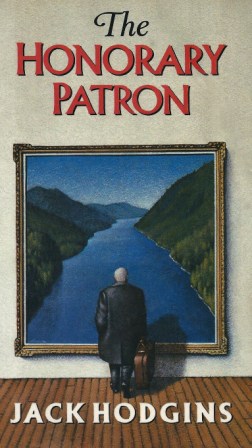
The Honorary Patron by Jack Hodgins ~ 1987. This edition: McClelland and Stewart, 1989. Paperback. ISBN: 0-7710-4190-X. 413 pages.

My rating: 6.5/10. You’ve got to be in the mood to fully appreciate Hodgin’s rather cumbersome playfulness in this one. I guess I’m not quite in the right frame of mind. It was pretty good, and I smiled my way through, but I can’t see myself picking this one up again any time soon. Still a keeper, for a few years hence. Bottom or top shelf – not in the premium placings.

*****

If you liked Timothy Findley’s Not Wanted on the Voyage, or anything by Robertson Davies, you’ll probably look on The Honorary Patron with interest. I think the genre here might be what is termed “magical realism”. Everything is based firmly on solid ground, but the farcical bits go way over the top, tipping the reader off early on that this is not simply an amusing narrative, but something much more playful and far-flying. I get the feeling that Jack Hodgins had a wonderfully self-indulgent time writing this one, and there are more than few cunning digs at his native Vancouver Island and the residents thereof. (Unloading some old baggage, eh, Jack?) But he keeps just this side of spitefulness, so it’s all good.

Not-quite-elderly Professor Jeffrey Crane is settled comfortably into life as a Canadian expatriate in his adopted habitat of Zürich. He has a solid reputation as an accomplished art lecturer, a respectable retirement income from his university teaching days and his still-popular television series, and looks forward to an unbroken future of gentle walks in the park, trips into the countryside to visit his landlady’s family, and long hours spent napping in the sun at his favourite rooftop cafe.

All of this is threatened by the sudden tempestuous arrival of a very-much-alive ghost from the past, his Canadian ex-lover Elizabeth Argent, who bursts in on Jeffrey as he sits up in said cafe, searching frantically for his shoes – which he always kicks off, a running gag throughout the book – so he can escape. He is captured, and thoroughly subdued by vibrant Elizabeth, who has sought Jeffrey out to convince him to come back to Vancouver Island and act as the Honorary Patron of the newly minted Pacific Coast Festival of the Arts. A few speeches, a lot of nodding and smiling, a chance to revisit old haunts, what’s to worry about, Jeffrey?

As it turns out, there are many surprises waiting for the Professor on his long-abandoned home grounds. The coastal rainforest is crawling with old secrets nurtured and embellished, ready for revelation, and unanticipated new situations which Jeffrey, exceedingly unprepared, steps into with bizarre results.

Hodgins paints this picture with a palette brimful of colour and dazzle, using a combination of wildly broad strokes and occasionally the most delicate of detailing where his attention is focussed momentarily.

Does it work? Well, sort of. The Honorary Patron is a bit of a forgotten book, though it did win an award or two – Commonwealth Writers’ Prize for Best Book in the Caribbean and Canada, 1988, for starters. Hodgins is a good writer, no quibbles about that, but I wouldn’t recommend this as a place to begin in exploring his body of work. Spit Delaney’s Island would be my personal recommendation, and then see where (and if) you go from there.

Read Full Post »

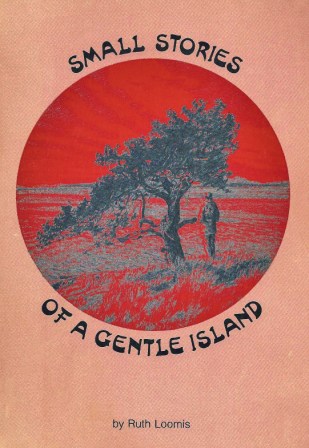
Small Stories of a Gentle Island by Ruth Loomis ~ 1986. This edition: Reflections, Ladysmith, British Columbia, 1986. Illustrated by Carol Evans. Softcover. ISBN: 0-9692570-0-7. 96 pages.

My rating: 7.5/10. I enjoy re-reading up this slight volume of memoirs every few years, and I suspect it will always remain in my permanent collection of British Columbia books. I do wish it were a bit longer; many of the stories stop short, leaving the reader yearning for more. Ruth Loomis doubtless has a fount of knowledge and stories of this area; I would be thrilled to read a longer, more in-depth volume going into more detail. A very personal memoir, this one, and one almost feels as if one were eavesdropping on a private conversation. Well done.

*****

In 1952, young and newly married Ruth Loomis moved with her husband from bustling Seattle to small Pylades Island in the Strait of Georgia, between Vancouver Island and mainland British Columbia. Here an alternative lifestyle moved from dream to reality. A home and garden were established, two babies born, and the challenges and joys of a life intimately connected with the sea and nature were embraced.

Time moved on, and twenty years later the marriage dissolved and the island was left behind. This was shortly followed by the tragic death of Ruth’s eldest daughter, and, after trying to cope with her multiple sorrows by immersing herself in the busy mainland world, Ruth decided to go back to the island alone.

She lived there until 1985, when she left for the last time. Pylades was sold, and Ruth moved to Vancouver Island. This book is a collection of reminiscences and a loving farewell to the dream and the reality.

A slender volume, only ninety-six pages, but it captures the essence of one woman’s thoughts and feelings about a very unique time and place. Having recently returned from a Vancouver Island visit, and after having leaned on the railings of the ferry crossing the Strait, yearning romantically for a chance to explore those wave-surrounded rocky isles glimpsed all too briefly in the ship’s swift passage, I sought out this book on my return. The smell of sea and cedar seem to waft from its pages, among other evocative aromas.

The Gulf Islands are famous for their free spirits and willing experimenters with various relaxants and hallucinogens, and it is apparent from this memoir that Ruth was no exception; some of the vignettes are very much tinted with a haze of unreality, though most are straightforward stories. There is a strong vein of melancholy and sorrow throughout, though it is balanced by remembrances of joy and healing.

In her Introduction, Ruth says

I survived, discovering that life has a healing balm alongside its searing forces. I needed time, time to feel my past dissolve into the present. That love of now Pylades gave, with its interplay of seasons and sea-life. The fantasy that I controlled my life vanished. I became interested in the essence of creation, slowly realizing I was not separate but part of it. Others occasionally came to this gentle island who needed time too, whether a few hours, days or months which Pylades gave.

The stories follow a chronological path, from 1957 to 1986, allowing brief and vivid glimpses of moments now lost in time. Along with the poignancy and the regrets there is plenty of humour and thoughtful musing. This is a slender little volume, an hour or two’s reading, but the stories stay in one’s head long after the book is put back on the shelf.

The Visitor ~ 1957

Butter Money ~ 1959

Today, Tomorrow and the Brother ~ 1961

Fog ~ 1968

Five Days of Nina ~ 1970

Appointment with God ~ 1974

Squatters ~ 1975

Susanne ~ 1978

Mushrooms and the Renaissance Man ~ 1979

Play with the Dolphin ~ 1980

Eagles ~ 1984

The Last Season ~ 1985

B.C. readers, keep an eye out for this one in secondhand book stores. If you find it, open it up and spend a few minutes in Ruth’s lost world, and perhaps give it a home on your own shelves among other records of our past.

A postscript. We were curious about the eventual fate of Pylades Island, and did a bit of internet research. Pylades was on the market again  in 2009, and a lot comprising half of the island, with Ruth’s derelict old home on it, had just sold for something like $2,400,000. I hope Ruth profited to a like degree upon her departure. Here are several picture taken at the time of that sale. Dream away!

Read Full Post »

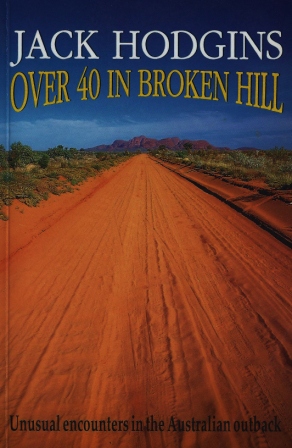
Over 40 in Broken Hill by Jack Hodgins ~ 1992. This edition: McClelland and Stewart, 1992. Softcover. ISBN: 0-7710-4192-6. 197 pages.

My rating: 8.5/10. Unpretentious and good-humoured, without stooping to farce. Jack can, as needed, poke a bit of fun at himself, but he keeps his self-respect and extends that regard to others.

*****

This is a book without a Great Big Purpose, which is too often rare in a travel book, into which category this work mainly falls. Over 40 is a rather elegantly presented account of two writers on the loose in Australia. One, Australian novelist Roger McDonald, is researching his next book, a non-fiction account of the politics and conflicts between New Zealand and Australian sheep shearers working the vast outback flocks, and the other is our own British Columbian Jack, tagging along with his friends and colleague for the four-week trip.

Jack finds himself taking notes throughout the journey, and ends by writing his own account of the fascinating people and unique places the two encounter. Quirky, often humorous, fair-minded and very readable. I enjoyed this travel memoir.

Jack Hodgins is well-known in B.C. literary circles for his fiction, from his now-iconic short story collection Spit Delaney’s Island in 1976 to his most recent novel, The Master of Happy Endings in 2010. Over 40 in Broken Hill was something of a departure from the fictional norm of this author, but it worked for me.

I’ve read a number of this author’s works over the years, and think very highly of his distinctive style. (He reminds me a bit of Robertson Davies, but without the aura of intellectual snobbery that Davies sometimes projects.) I am not alone in this regard, as Jack Hodgins was awarded an Order of Canada in 2010 for his lifetime contribution to Canadian literature. An author well worth exploring, if you are not already familiar with him.

Side note: The “40” referred to in the title has a double meaning. Think age, and then think degrees Celsius. There is a chapter midway through the book that clarifies the reference most engagingly.

Read Full Post »

« Newer Posts - Older Posts »