My World: Six Boxes

I have just finished sorting my mother’s things in preparation for her move from the hospital, where she has been since a nasty spill in mid-July, to a single room in the complex care wing of her small city’s old age home. (Er, I guess that would be “seniors’ village”; that’s what this one calls itself.)

Not counting her clothes, her belongings fill six small boxes.

This has been an emotional summer in so many ways, and I am trying to muster up some cheerfulness because that is what Mom most needs to see from me; my inner self is howling like a baby.

I’m glad she didn’t die; the facility she is going to will provide stellar care – we have another family member and several friends living there, and are personal friends with several staffers – one of the nicer things about having grown up near a smaller community (the city proper has a population of 10,000 people, though the service area is closer to 30,000); Mom herself states that she is more ready to make the move; there is no way she will ever be able to manage living in her own home, what with her physical limitations and increasing frailty.

But still.

Six boxes.

Eighty-eight years of life; so many accomplishments; so much work done. All passed; all put behind her. All that is left is her memories, and six small boxes.

Sob.

There, doesn’t that sound melancholy?! Onward and upward, that’s the theme I need to embrace. It’ll be a far cry better than the hospital, is what Mom reminded me today, and she said something about there being a certain freedom in stripping oneself of all those things; it’s down to essentials from here on in. Oh, and to remember to go through my shelves one more time, and to pack her up a box or two of books, and to keep my eyes open for new reading for her.

Comfort in books is something my mom knows a lot about, and she’s more than passed that down to me. And with that thought, I’ll sign off for tonight. It will all be okay. But just for tonight, I’m sad.

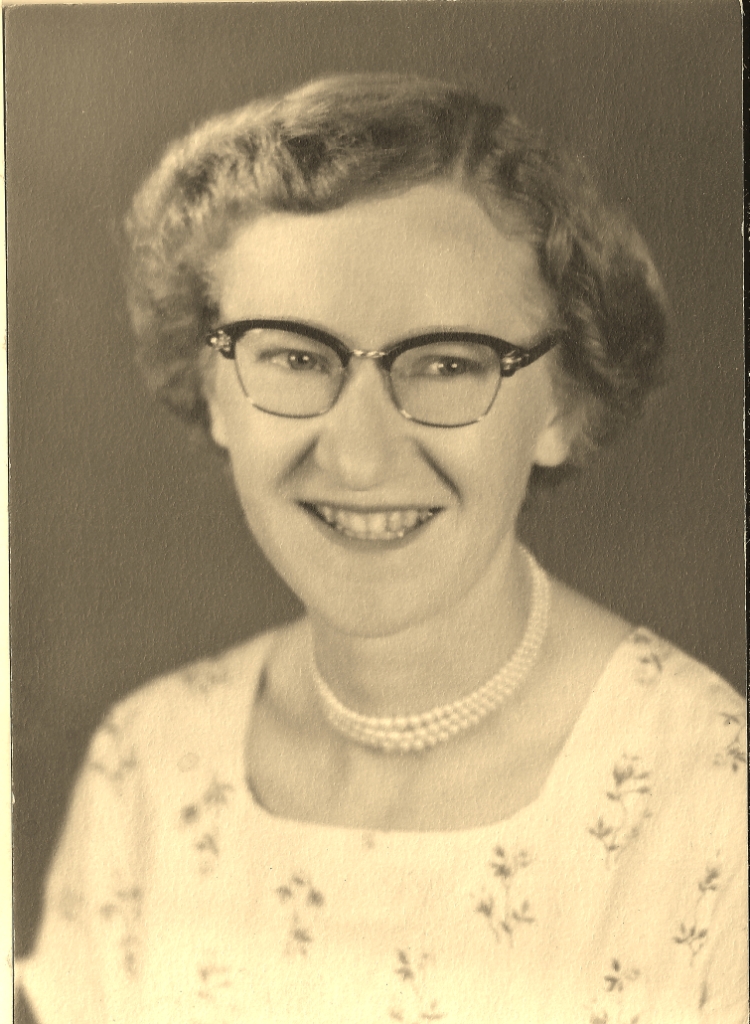
My mom in 1959. Portrait taken in Reedley, California, just before her marriage and move to British Columbia.

My mom in 1959. Portrait taken in Reedley, California, just before her marriage and move to British Columbia. One of the photos I’ve scanned and enlarged to put in the “treasure box” just outside her room; a reminder to herself and those around her of the vital and still-young person hidden behind the elderly mask.

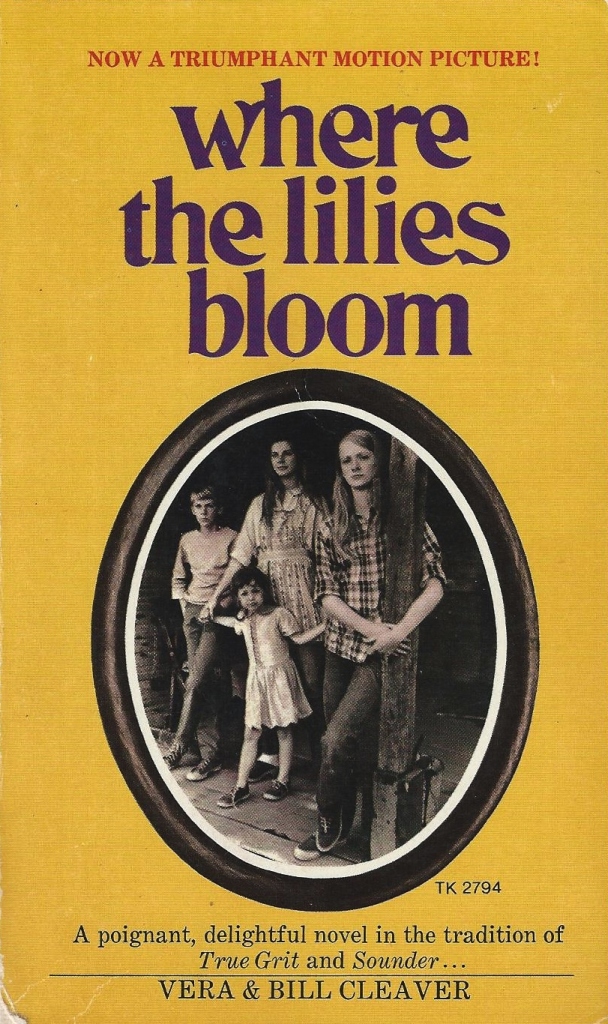
where the lilies bloom vera bill cleaver 001Where the Lilies Bloom by Vera and Bill Cleaver ~ 1969. This edition: Scholastic, 1974. Paperback. 175 pages.

My rating: Oh, gosh. This is a hard one. The writing is unique and enjoyable to read; the heroine’s voice is individualistic and uniquely portrayed. But the plot is where I held my head in agony. I get that this is a book aimed at the children’s/teens’ market, and therefore perhaps to be expected to be slightly simplified, but the plot was so full of holes that I kept stopping and going “What…???!!!” But the poignant bits were genuinely heartbreaking, and the story as a whole just might have happened. Just maybe…

Okay, I need to commit myself to a rating. How about an 8/10, with reservations. If a bit better developed and with more attention to plausibility, this one could well have been worth a 9 or even a 10 from me.

This is basically one of those bleak Appalachian stories all about abject poverty and fiercely stubborn people living in various degrees of squalor among fabulous natural beauty. And, predictably, we are taken behind the superficial vision of “dirty hillbillies” to see into the glorious nobility of the characters’ souls.

I am sincere in putting forth a rather cynical generalization of this type of fiction, which was abundant in the 1960s and 1970s, at least in the juvenile novels I was finding in my school library. There seemed to be a certain trend to showing all of the dreary details in kid-lit, with an amazingly strong hero, or, more frequently, a heroine, overcoming all sorts of obstacles and ending the book staring off into the gleaming sunrise (metaphorically speaking) of a better future. Hyper-realism combined with a fairytale ending. (“Did we play upon your deepest emotions, young reader? Well, here’s a nice resolution to make it all better.”) However, as the next development in youth fiction of the 1970s, 1980s and beyond was of brutally unrelieved bleak endings, I guess the “happy” fabrications are a mite easier to handle.

So here we have a family of five people living in a tired shack on twenty acres of share-cropped land in North Carolina’s Great Smoky Mountains. Widowed Roy Luther, patriarch of the family, is seriously ailing. About to die, in fact. Before he does, in a heart-rending episode, he makes his four children promise that they will bury him in a hand-dug grave, not inform anyone of his demise, and take care of each other. They are not to accept charity from anyone, and the eldest daughter, eighteen-year-old Devola, described as “cloudy-headed” (quite obviously mentally handicapped to a certain degree), beautiful in appearance and childishly happy in nature, is not to marry the wicked landlord, one Kiser Pease, who is actively pursuing her.

Fourteen-year-old Mary Call Luther is our narrator, and the heroine of this dramatic novel of survival.

Roy Luther has made me promise him some things:

When the time comes, which he hopes will be in his sleep, I am to let him go on as quietly as he can, without any wailing or fussing. I am not to call any doctor or allow anyone else to call one. If it happens at night I am to wait until morning before I tell the others: I am not to send for the preacher or undertaker. The preacher has a mighty voice in these mountains but he expects to be paid for his wisdom. And the undertaker, for all his hushed, liquid speakings of how paltry his tariff will be, can be ill-humoured and short-tempered when the time comes to divvy up as we found out in the case of Cosby Luther, my maternal parent, who died of the fever four years ago.

So it is that Roy Luther has requisitioned me to give him a simple, homemade burial when the time comes. After I am sure his heart and breathing have stopped, I am to wrap him in an old, clean sheet and take him to his final resting place, which will be within a stand of black spruce up on Old Joshua. We have not talked about how I am to get him there. Were you to ask Roy Luther it would shame him to have to say aloud that it will have to be in Romey’s wagon and he’d have to say what for me to do with the feet which will surely drag because the vehicle is but a toy.

Quite a charge for a fourteen-year-old; as Devola is incapable of taking charge, and the other children are even younger than Mary Call. Brother Romey is only ten, and smallest sister Ima Dean six.

From the tragedy of a slowly dying father, the story turns to farce with the discovery of Kiser Pease in a state of sickness alone in his house; the siblings decide to try some home remedies out on him, immersing him in a bathtub full of stewed onions to break his fever. Holding Kiser hostage in his weakened state, Mary Call forces him to sign a paper giving the Luthers the title to their farm, which he does with surprising meekness.

Roy Luther lingers on, and the children turn to wildcrafting to make grocery money.  Wildcrafting, for those unfamiliar with the concept, is the gathering of wild plants, generally for medicinal purposes. The Appalachians are a rich hunting ground for this purpose – ginseng, goldenseal, witch hazel and mayapple are just a few of the wild herbs fetching high prices at the drug store in the nearby settlement.

Roy dies and is buried by Mary and Romey in the most brutally poignant episode in this emotional little story; I swear a tear or two formed in my own eyes as I read this part. But the children soldier on, pretending to everyone that their father is still alive, and preparing as best they can for the fast-approaching cold time.

Disaster after disaster strikes the diminished family; winter is barely survived; but with spring a series of unlikely events brings a positive conclusion of sorts to this saga of endurance.

All in all, a decent enough fiction for the pre-teen to adult readership. Abandon your sense of disbelief at the first page, and just let yourself go; it’s the easiest way to get through this one, believe me.

If presenting this to your children as a novel study or social studies curriculum supplement, there are some truly interesting features in the story. The wildcrafting parts are based on fact, and would, to my mind, be the most valuable episodes to emphasize and research further. As for Appalachian life, I am of the opinion that this is a highly dramatized version. There is no real sense of a specific time period; one could assume the story is set in some time from the 1940s up until the 1950s or 60s. There is electricity, radios, freezers, cars, and tractors, but people are still farming with mules as well, and ignorance and superstition are rampant.

I have mixed feelings about this now-classic drama. Some parts are strong and beautifully written; other elements, such as the aforementioned shaky plotting, leave me at a complete loss.

I will be watching for other titles by this husband-and-wife team. I’ve recently read a later novel of theirs, Hazel Rye, and found it intriguing. Like Where the Lilies Bloom, a bit “light” despite the serious themes addressed, but with a certain charm and appeal, and containing passages that stay with one long after the book is reshelved.

Where the Lilies Bloom was also made into a movie in 1974, which I have not seen. The stills included in this copy of the novel show a rather inspired casting, going by appearances alone, though it appears that the movie plot differs somewhat from that of the book. The actress playing Mary Call Luther, Julie Gholson, looks perfect for her role, and the other children appear suitably cast as well. If you’ve seen this movie, or, better yet, read the story, I’d be interested in your own reactions.

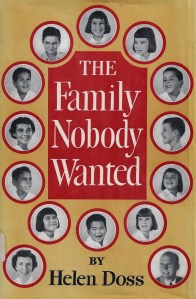
the family nobody wanted doss 1 001The Family Nobody Wanted by Helen Doss ~ 1954. This edition: Little, Brown & Company, 23rd printing. Hardcover. 267 pages.

My rating: 6/10

Well, this was an interesting read, and I’m still trying to decide what my personal reactions really are.

On the surface it is a simple feel-good memoir about a young childless couple adopting twelve children in the 1940s and 1950s, but there are deeper currents to the tale, especially from a half-century later perspective. In particular, there is a damning sub-text of racial intolerance which is very much a part of why and how this family came together.

I didn’t yearn for a career, or maids, or a fur coat, or a trip to Europe. All in the world I wanted was a happy, normal little family. Perhaps, if God could arrange it, Carl and I could have a boy first, and after that, a little girl.

God didn’t arrange it.

In fact, as our doctor regretfully informed us, Carl and I couldn’t have any children of our own. No children, no sticky fingerprints on the woodwork, no childish tears and laughter, no small beds in the other bedroom. Just barren, empty years, stretching aimlessly into a lonely future…

So Helen’s husband Carl, driven to distraction by his wife’s continual bemoaning of her barren future, suggests that they adopt a baby. Helen loves the idea, and the two optimistically prepare a room and trot off to the nearest orphanage, where they learn that it isn’t quite as simple as all that. Most of the babies in the orphanage were simply not available, being only in temporary care, or waiting for relations to take them in, and the adoption agencies which are the next resort are not particularly helpful either. Helen and Carl are informed that waiting lists are years long, and that each baby must match its potential parents perfectly in ethnic makeup and family background. And of course the parents must be financially stable, as well as sterling characters in all other aspects.

Carl and Helen are sure their characters are good, but the money thing is definitely an issue, and the waiting list situation seems cruelly stressful. So they set aside their ideas of forming a family and instead decide to pursue other interests. Both enroll in college, Helen to study literature and writing, and Carl to pursue a long-held dream to become a Methodist minister. And then, miraculously, one more attempt at adoption through an agency results in a beautiful blue-eyed baby boy. Helen is ecstatic; Carl more reserved. They can barely feed themselves, so this new addition is a challenge in more ways than one.

Young Donny thrives and grows, and all is well for a while, until Helen starts to brood over the loneliness of the only child. “If only he could have a little sister…” But another child is an impossibility, declares everyone they contact. “Just be happy you managed to get the one.” Unless, of course, they would consider a mixed race child. Lots of those were languishing in adoptive limbo, and, three years after Donny’s adoption, Filipino-Chinese-English-French Laura joins the family. And, only two months later, frail and sickly Susan, undesirable because of her weak constitution and a tumorous red birthmark on her face.

Helen is still thrilled, though she finds three children something of a challenge, but all three thrive, and Helen starts thinking again. Maybe just one more, a brother for Donny…

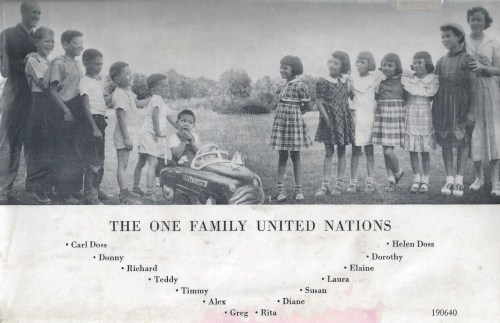
Eventually, with increasingly strident resistance from Carl, Helen collects a round dozen of children, six boys and six girls. She writes about the family’s experiences, and the tragedy of mixed race children being seen as undesirable by families otherwise desperate to adopt a baby; even though the Filipino, Chinese, Korean, Japanese, Malayan, Burmese, Spanish, French and American Indian children she and Carl eventually acquire are accepted by family and neighbours, a constant refrain is “As least they aren’t Negro!” Carl and Helen do attempt to adopt a part-black child from a German orphanage, child of black American GI father and a German mother, but the transaction is strangled by red tape; their families and friends are loudly vocal in their relief, and one of the most passionate chapters in the book strongly condemns this attitude, and addresses the degrees of racism inherent in American society, and its effect on innocent children along with its part in much greater societal ills.

Helen and Carl come across as truly sincere in their attitudes that colour means nothing, and that human is human; Helen starts writing articles about their “United Nations” family, and the Dosses catch popular attention, being interviewed, photographed and featured on radio and television, as a kind of shining example of American acceptance and tolerance, though in reality the very existence of their family group has come about through blatant American racial discrimination. These are, after all, the children that nobody wanted.
the family nobody wanted helen doss 2 001

The book ends only twelve years after that first baby, Donny, is adopted, and the tone is happily optimistic, but there are undertones that perhaps all may not be so well in future. Carl is a reluctant participant in the continual enlargement of the Doss family, though he is very willing to tout its benefits for interviewers; Helen persists in collecting children in the face of Carl’s outright “No more” plea, time and time again. The news that the Doss marriage ends in divorce in 1966, twelve years after the publishing of this bestselling book, comes as no surprise, though it is sad; one hopes that the children – some at that time well into adulthood, one must admit –  weathered their family breakup with a minimum of trauma, though one doubts that would completely be the case.

Knowing several cross-culturally adopted children who now, as adults, are seeking diligently to reconnect with their birth parents’ heritage, I wonder what happened to those twelve children as they grew up, and what they each personally made of their inclusion in this unique family, and of the publicity which their parents’ outspoken willingness to discuss their adoptive choices attracted.

I do think, both from the tone of Helen Doss’s memoir, and from other reports on the Doss family I read on the internet, that their intentions were, once they started adopting, only the best. And, also, I do tend to think that children deserve a loving family versus being institutionalized, and that if the only fit possible is cross-cultural, so be it. If it were more widely accepted (as it wasn’t in the 1940s and 1950s) then at least the “novelty factor” would not be such an issue.

I’ve tagged this post with a “religion” designation, because it is also very apparent that Helen and Carl Doss were motivated in a great part by their Christian faith. Carl Doss is quoted as saying that

…The whole idea of Christianity is radical (a)nd the whole idea of democracy is radical.  Think how really it is to say that all men are created equal, and that all men are brothers – and that the individual is important!

Conflicted as Carl seems to be by his wife’s acquisition of child after child, once they are brought into the family he apparently embraces his fatherhood fully, being as full of latent paternal affection as he is of “radical” Christian ideals.

A thought-provoking memoir, and, as I said, a bit uncomfortable to consider more deeply, given that a whole lot must have been left out. Though I was interested and pleased to see that Helen Doss was very frank about her own motivations of needing children to “complete” her idea of true womanly fulfillment; the ideal of a happy, multi-racial family group seemed to develop as her circumstances changed.

I did my usual look-around the web, and was interested to see how highly this book was rated on Goodreads; a large number of people apparently read and loved it in their school years; the reviews are by and large quite glowing.

It is very readable, and provides a truly fascinating (though superficial) glimpse into the mid-20th Century’s social dilemmas and attitudes towards both adoption and racial and interracial societal division lines. It is also frequently very funny; Helen Doss’s anecdotes of her children’s doing are downright adorable, and well targeted at the sentimental readers who have obviously embraced it as a “sweet tale”. It is a sweet tale; it is also an indictment of the bitter evils of racial discrimination; and a strong advocate of true Christian behaviour; and a revealing portrait of a marriage not without deep personal conflicts, despite its publically positive façade.

For more on the Doss family, these links will be good starting points.

Helen Doss – Obituary

Adoption Topics – The Family Nobody Wanted
the man in the brown suit agatha christie 8

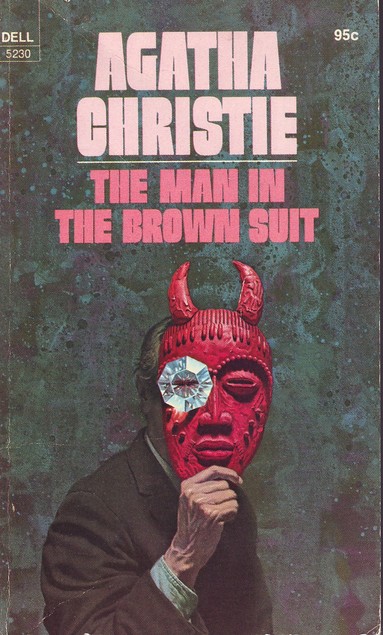
The paperback cover of my high school era copy. The mask and faceted diamond are an interesting depiction; neither appears in the story so we’ll have to assume that their presence is purely symbolic.

The Man in the Brown Suit by Agatha Christie ~ 1924. This edition: Dell, 1974. Paperback. ISBN: 440-05230. 223 pages.

My Rating: 8.5/10

Setting: London; the steamship Kilmorden Castle en route to Africa; South Africa; Rhodesia.

Detection by: MISS ANNE BEDDINGFELD; the strong, silent and slightly mysterious COLONEL RACE makes a first appearance.

Final Body Count: 2

Method(s) of Death: FALLING UNDER A TRAIN; STRANGLING

100 Word Plot Summary:

Newly orphaned archaeologist’s daughter Anne Beddingfeld is off to see the world. After witnessing a gruesome and fatal “accident”, following a suspected murderer, and finding a mysterious clue on a scrap of paper, Anne sets sail for South Africa. Sinister happenings ensue, but her newly acquired paternalistic protector, Sir Eustace, will surely see that she comes to no permanent harm. But which of the two masterful men sharing the voyage, Colonel Race and the elusive Man in the Brown Suit, can she trust? Who strangled the dancer Nadina back in England? And what about that film canister of raw diamonds?

*****

This is another thriller versus a simple murder-mystery story. While there are two suspicious deaths, one of which is an undeniably hands-on murder (a celebrated dancer is strangled in an empty English country house), the focus of the action is not so much on the details of that death, but rather of a much larger picture involving a mysterious master criminal, two young Englishmen possibly unjustly charged with diamond theft from a Kimberley mine, a rather sketchily described African political conflict, and the impetuous adventures of one Anne Beddingfeld as she seeks to discover the true identity of the seemingly sinister “Man in the Brown Suit”.

The story opens with a short Parisian episode, with a celebrated Russian dancer, Nadina, being visited in her dressing room.

The dancer stretched out a languid hand, but at the sight of the name on the card, Count Sergius Paulovitch, a sudden flicker of interest came into her eyes.

“I will see him. The maize peignoir, Jeanne, and quickly. And when the Count comes, you may go.”

Bien, Madame.”

Jeanne brought the peignoir, an exquisite wisp of corn-coloured chiffon and ermine. Nadina slipped into it, and sat smiling to herself, while one long white hand beat a slow tattoo on the glass of the dressing table.

The Count was prompt to avail himself of the privilege accorded to him – a man of medium height, very slim, very elegant, very pale, extraordinarily weary. In feature, little to take hold of, a man difficult to recognize again if one left his mannerisms out of account. He bowed over the dancer’s hand with exaggerated courtliness.

“Madame, this is a pleasure indeed.”

So much Jeanne heard before she went out, closing the door behind her. Alone with her visitor, a subtle change came over Nadina’s smile.

“Compatriots though we are, we will not speak Russian, I think,” she observed.

“Since we neither of us know a word of the language, it might be as well,” agreed her guest…

The two go on to discuss the imminent retirement of their joint employer, a master criminal known only as “The Colonel”. About to be cut adrift without his direction, Nadina in particular is fomenting a scheme to ensure her future well-being and wealth; the Count warns her of the dangers of double-crossing such a clever man; and on that note we embark on the main narrative.

Young (twentyish) Anne Beddingfeld introduces herself in Chapter Two; she is writing in her diary, and it is in this diarist’s voice that half of the story is told. The other half is told by a certain Sir Eustace Pedlar, writing in turn in his diary; a parallel tale emerges as Anne and Sir Eustace find themselves sharing a voyage to South Africa, and then a train journey to Rhodesia.

Anne has been left rather suddenly orphaned by her archeologist father’s sudden death; her father’s solicitor offers her a temporary home, and so she finds herself in London, rather at loose ends. Witnessing the tragic death of a man in the Underground – he steps backward off the edge of the platform just as a train is coming in – Anne notes that the bystander who professes to be a doctor is rather quite professionally going through the dead man’s pockets. When a slip of paper flutters to the ground, Anne picks it up, and, following investigation of the clue it gives her, ends up a passenger on a steamship bound for South Africa.

Here Anne’s natural charm and appealing appearance bring her several benevolent protectors, in the form of wealthy Mrs. Blair, the strong, silent, and very manly Colonel Race, and a jocular British M.P., Sir Eustace Pedlar, who is travelling to South Africa to investigate some vague political situation; something about labour unrest, which has an improbable part to play in the latter stages of the story. And protectors it appears are needed, as Anne is thrown into repeated contact with a belligerent and dangerous young man, who seeks refuge in Anne’s cabin one night, hides from a searcher, and leaves without explanation and minus some blood from an apparent fresh wound. He reappears in the guise of one of Sir Eustace’s secretaries, but not much secretarying appears to be happening, and Anne begins to suspect that he is instead an escaping murderer, fleeing England after strangling a woman (later identified as the dancer Nadina) in Sir Eustace’s unoccupied country mansion, Mill House.

Much activity ensues, before all becomes clear and the identity of “The Colonel” is determined and the details of the Mill House murder revealed. Oh, yes, there are also quantities of uncut diamonds floating about, first appearing in a film canister dropped through Anne’s transom one night early in her journey. These are the object of a number of increasingly desperate searches, but Anne cleverly manages to keep their location suppressed until the crucial moment.

This is a rather fun story to read; Anne’s travels are described in vivid detail, and understandably so, as they are taken from the real-life, ten-month, round-the-world journey which Agatha Christie and her husband took in 1922 , travelling in the entourage of British businessman Major Belcher to South Africa, and onwards to Australia, New Zealand, Hawaii, Canada and back to Britain.

There is abundant romance, predictable as the sun rising, and a lavish amount of melodrama. Anne is buffeted about but always manages to rise up in one piece; she is threatened, assaulted, kidnapped, tied up, lured into falling off a cliff (over the brink of Victoria Falls, no less!), and shot at, before finding true love and lasting happiness in a suitably exotic locale.

Though the reader is expected to take a lot of the shaky plot on faith, the writer obviously had a grand time developing her rambunctiously improbable tale; this was one of Agatha Christie’s favourites among her early stories, “more fun” to write (according to her autobiography) than her detective novels. It shows. The Man in the Brown Suit was one of the first Christies I read, and it remains one of my sentimental favourites, though I notice my sympathy for Anne’s romantic yearnings has lessened a bit, perhaps because I am now well out of my teens!

On to our cover gallery.

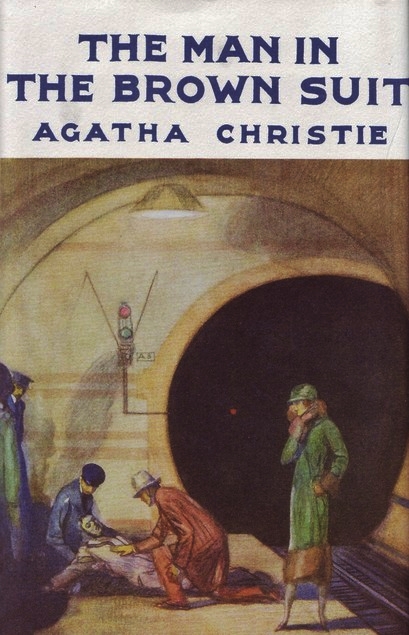
An early edition dustjacket, showing the incident which starts Anne on her merry way. Glaring error: Anne has black hair in the narrative; she looks pretty fair in this picture!

An early edition dust jacket, showing the incident which starts Anne on her merry way. Illustrator’s error: Anne has a mane of long black hair in the narrative; she looks pretty fair in this picture, don’t you think? (Or, on second glance, perhaps that is a fur collar?)

Another early dust jacket, this one circa 1926. Suitably mysterious!

Another early dust jacket, this one circa 1926. Suitably mysterious!

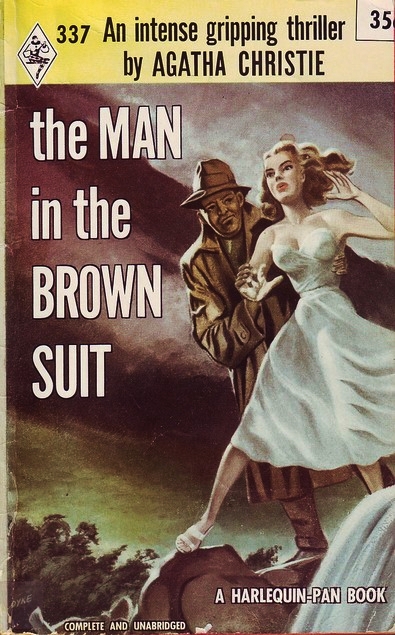
Not quite sure what this illustration is depicting; obviously the Victoria Falls episode, but the details don't match the incident as described by the author. (Plus her hair is all wrong.) But in that dress, who's to notice a mere detail like hair colour, nudge nudge wink wink?!

Not quite sure what this illustration is depicting; obviously the Victoria Falls episode, but the details don’t match the incident as described by the author. (Plus her hair is all wrong.) But in that dress, who’s to notice a mere detail like hair colour, nudge nudge wink wink?!

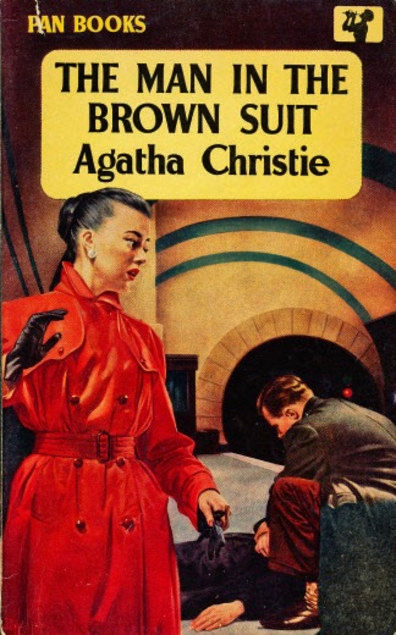
This one appears to be illustrated by someone who actually read the book. Anne is depicted in her London phase, hair (of the correct shade) dragged back unflatteringly in order to minimize her attractiveness as a courtesy to her reluctant hostess.

This one appears to be illustrated by someone who actually read the book. Anne is depicted in her London phase, hair (of the correct shade) dragged back unflatteringly in order to minimize her attractiveness as a courtesy to her reluctant hostess.

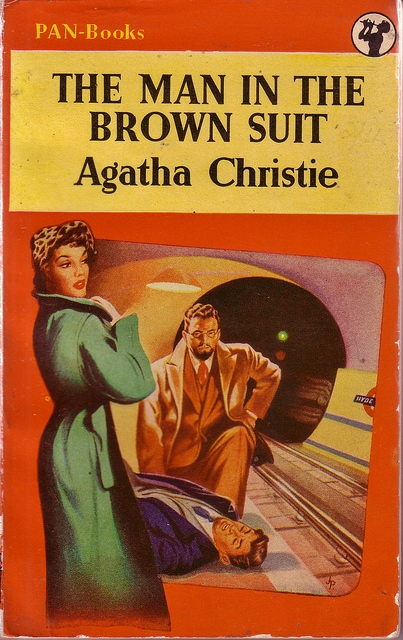
The illustrator did a good job with the mysterious brown-suited man, but bobbled (yet again!) on the heroine's hair colour.

The illustrator did a good job with the mysterious brown-suited man – who incidentally looks a lot like one of my in-laws during a gently regrettable bearded phase some years ago – with Anne showing a suitably shocked countenance. Not quite sure on the hair; it might be right; can’t really tell, so the artist gets a pass.

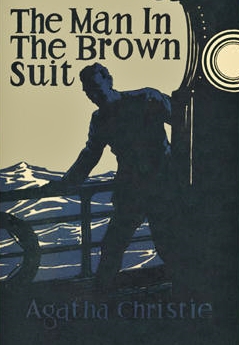
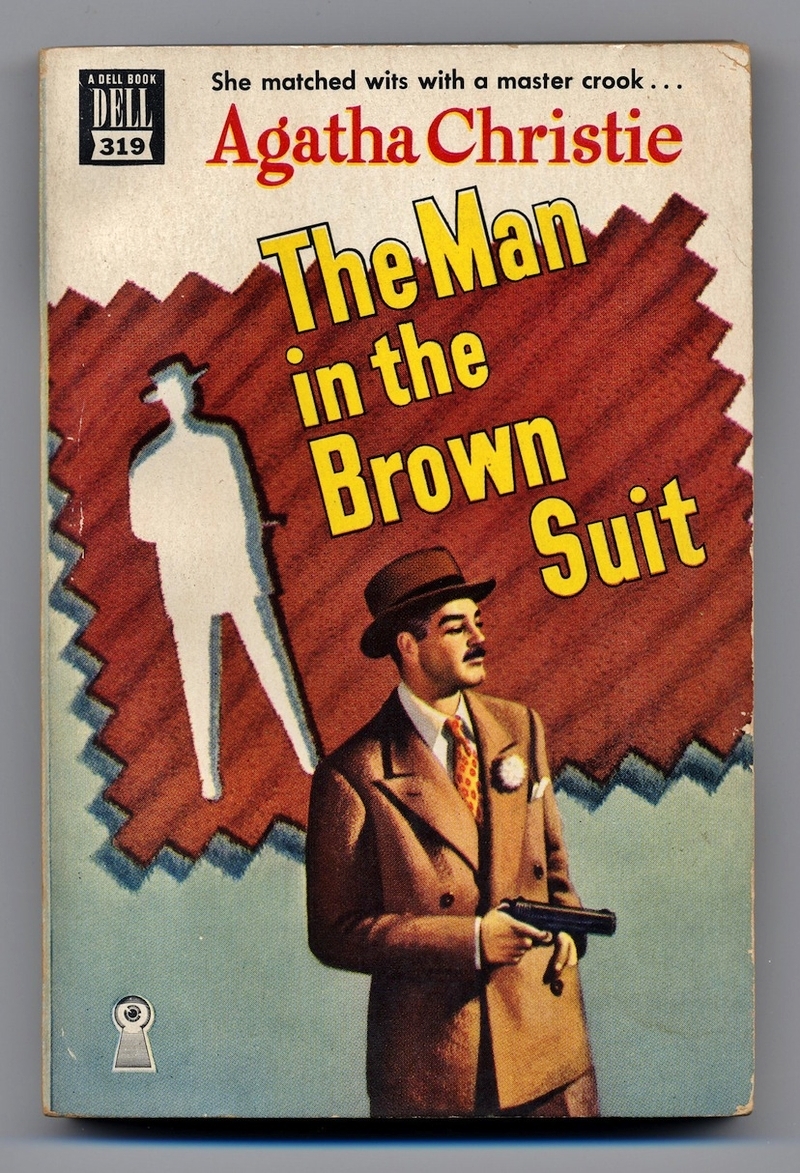
I like this one - a bit different, isn't it? Nice bit of graphic design.

I quite like this one – a bit different, isn’t it? Nice bit of vintage cover graphic design.

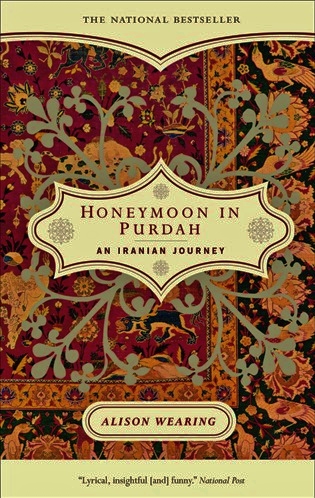
honeymoon in purdah alison wearingHoneymoon in Purdah: An Iranian Journey by Alison Wearing ~ 2000. This edition: Vintage Canada, 2001. Softcover. ISBN: 0-676-97362-0. 319 pages.

My rating: 9.5/10

In 1995, a decade and a half after the revolution which resulted in the deposition of the Shah and the establishment of the Islamist fundamentalist government led by Ayatollah Khomeini, a young Canadian woman and her male partner entered Iran on tourist visas. Their official reason: a honeymoon journey. The not so official reason: for Alison Wearing, the chance to explore a country and culture vilified in the Western world as impossibly backwards and more than slightly dangerous for touristing. For her partner Ian, Iran is a second-choice destination. He really wanted to go to Bulgaria, but a fear of travelling alone and, one suspects, Alison’s more focussed drive and tenacious personality, have resulted in this joint trip.

Before taking this trip together … we would spend hours poring over maps, planning long, arduous treks through desolate corners of the earth or road trips across continents.

The only problem was my strong belief in travel as a solitary pursuit. And Ian’s fear of travelling alone… We settled on Iran because it was the only place I couldn’t imagine going on my own. And for a whole stack of other reasons that had nothing to do with our relationship.

The year before we met, I had made my fifth trip to Yugoslavia. I went, in part, to visit friends trapped in the middle of war, but also because the media’s portrait of the place – full of barbarians and void of humanity – made the world seem unlivable. I refused to believe that such a place of unalloyed evil truly existed, that that was the end of the story. I went because I believed that there had to be more. And because I like to look for saints where there are said to be demons.

Iran became our destination for the same reason.

I’m going to share a major spoiler here, one that comes part way through the book. (I don’t feel particularly bound to keep this a secret; it is something of a “first line” in many of the internet reviews I’ve read.)

I have a confession to make. Ian isn’t my husband. We aren’t even lovers, just friends. We forged a marriage certificate just before leaving Montreal using photocopies of his brother and sister-in-laws document, and that is what we are using to get ourselves into hotels. Most proprietors don’t ask and of those that do, two have scrutinized the paper very seriously while holding it upside down, so we needn’t have worried so much about its appearance of authenticity. The thing we should have worried about, perhaps, is the effect that photocopying and whiting out of names on a marriage certificate might have had. By the time Ian and I had reached Iran, his brother’s marriage had collapsed.

So Ian, my fussy, gay roommate and I are romping around Iran quite illegally. And not altogether happily, if only because our interests are not as parallel as we had grown to believe. He is primarily concerned with dead things (history, buildings, wars), and I primarily with living things. Sometimes I find myself wishing he would evaporate, which isn’t to say I don’t still find him endearing. It’s just that our differences have become painfully obvious under this desert light…

So that is the explanation of the double entendre title of this exceedingly revealing (yet not quite forthcoming) travel memoir. The author has been rattling around the world quite independently for some time already, a seasoned traveller indeed. But this trip called out for a partnership, because of the difficulties inherent in a woman attempting to move about unchaperoned by a male relative in a very strictly policed, Islamic fundamentalist country. It is doubtful that, alone, Alison would ever have been permitted to cross the border, with only “tourist” as her declared motivation. A honeymoon journey, while raising some eyebrows, is accepted as a valid excuse, especially when Alison, whenever necessary, willingly dons full traditional garb: manteau, headscarf, and all-enveloping chaador.A woman in a chador mixed with modern dress underneath.

First of all, there is no such thing as “wearing” a chaador. There is only “managing to keep one on.” And I don’t say this as a frustrated novice, but as an observer of scores of women who have been dressing with it most of their lives.

The chaador is a living, wriggling entity, whose preferred habitat is the floor. Any woman trying to cover herself is not only fighting the true nature of the fabric, but also gravity, which has been in cahoots with the chaador since the beginning of time. The moment the chaador is on, wrapped in just the right way, covering all the right things, it begins its dogged descent, squirming along the sleek surface of the hair, hoping to make a clean leap to the neck, where it can secure a foothold for its plummet off the shoulders. An astonishing portion of the wearer’s energy and concentration goes into minimizing the creature’s progress, herding it back into position around her face, leashing it to her fingers and fists, or clamping its skin between her teeth. It doesn’t enjoy being corralled in this way. Thus the constant wrestling. The creature prefers damp, humid surroundings and feeds on sweat.

The literal translation of chaador is “tent”, but from my own camping experience this seems a poor translation. The sack-shaped coat and scarf I have on right now are the tent. The chaador thrown overtop feels more like the fly.

Alison Wearing fully embraces the experience of going – literally – undercover in Iran. Though she is deliciously sarcastic and witty throughout, she is also good-spirited and gracefully positive, describing her impressions on every aspect of her travels from the clothes to the food to the various characters she encounters to her long-suffering travelling companion Ian, whom, incidentally,  we don’t really get to know, aside from a few brief vignettes here and there. It is rather as if Alison has chosen to shield Ian from examination, focussing instead on her own emotional and physical journey. It would be most interesting to read a parallel account of the Iranian episode from Ian’s point of view; one suspects his inner voice would consist predominantly of one long, high-pitched scream, triggered by Alison’s continuous flittings off and nonchalant eventual returns: Ian seems to (understandably) spend much of his Iranian time in a state of high anxiety. Alison must have been an utterly exhausting partner for their five months “honeymoon” in Iran.

All criticism aside of the self-indulgence of relatively well-heeled Western travellers sightseeing in troubled Eastern countries – and Alison addresses this dichotomy in her narrative numerous times – this book is an excellent example of a modern travel memoir. It opens a window into a very different culture, and it educates and informs as much as it amuses. And it is very amusing. And poignant, and heart-rending, and – this goes without saying – thought provoking. Well done, Alison Wearing.

Many years have passed since Alison took her Iranian journey and wrote about it so wonderfully well. In the meantime she has married, had a son, and pursued numerous other interests, including the successful production and performance of a one-person stage show based on her childhood, adolescence and young womanhood, much of it centered around the situation of her father’s “coming out” as a gay man – albeit one with a wife and three children – in the 1970s, in conservative Peterborough, Ontario. Confessions of a Fairy’s Daughter is Alison’s second memoir, published just this year, some thirteen years after her first book. I am looking forward to reading it with anticipation; I had thought to add it to my Christmas wish list, but I suspect I will acquire it long before then.

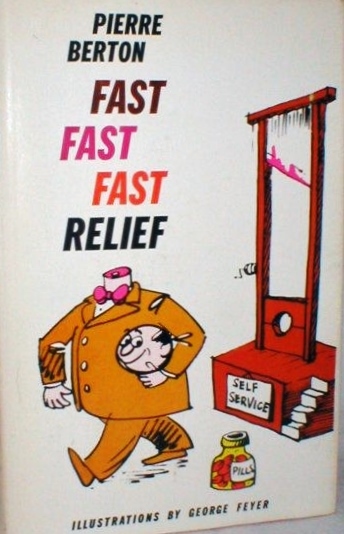
fast fast fast relief pierre berton 1Fast Fast Fast Relief by Pierre Berton ~ 1962. This edition: McClelland and Stewart, 1962. Hardcover. 185 pages.

My rating: 7.5/10

Pierre Berton, Canadian popular historian extraordinaire, began his career as a prolific and well-regarded newspaper columnist. After reading and enjoying an earlier collection of his newspaper articles, 1959’s Just Add Water and Stir , I was happy to acquire a similar 1962 collection. It has lived up to expectation, in providing a widely varied, and, for the most part, smoothly readable collection of serious essays, biographical sketches, social commentary, and satirical fabrications.

Highlights of the collection to me were a series of short, completely serious, “current affairs” articles highlighting social injustices, a number of lyrical essays describing the joys of country life, and a rather goofy collection of humorous short-short stories, extra-heavy on the satire. Of these last, The Waiting Room (Wesbrook Frayme, car racing ace, dies in a crash, gets to Heaven and is shocked to find out that his widow has married twice again; his wife and her other two spouses all appear to confound Wesbrook’s assumptions about his marriage and his wife’s mourning process) and Shakespeare Revises a Play (the Bard of Avon has his work worked over in a most Hollywood-like manner; in his first draft of Hamlet, Ophelia is thirty-two, and the ending involves lovers wandering off hand-in-hand into the sunset; the producer and director have other ideas), are particularly delightful.

A collection worthy of keeping on the night table for dipping into; an ideal guest room book for your fellow Canadian avid readers, especially those appreciative of Berton’s wry, thought-provoking, and occasionally just-plain-silly and boisterous tone.

All in all, over forty short pieces, plus an extensive and most interesting foreword by the author. Comic cartoon-like illustrations by George Feyer are an added touch.

Pure vintage Canadiana, and a good reminder of why Pierre Berton was so highly regarded for so many decades. His more than competent journalistic work brilliantly foretells his subsequent success as a writer of popularly accessible historical books.

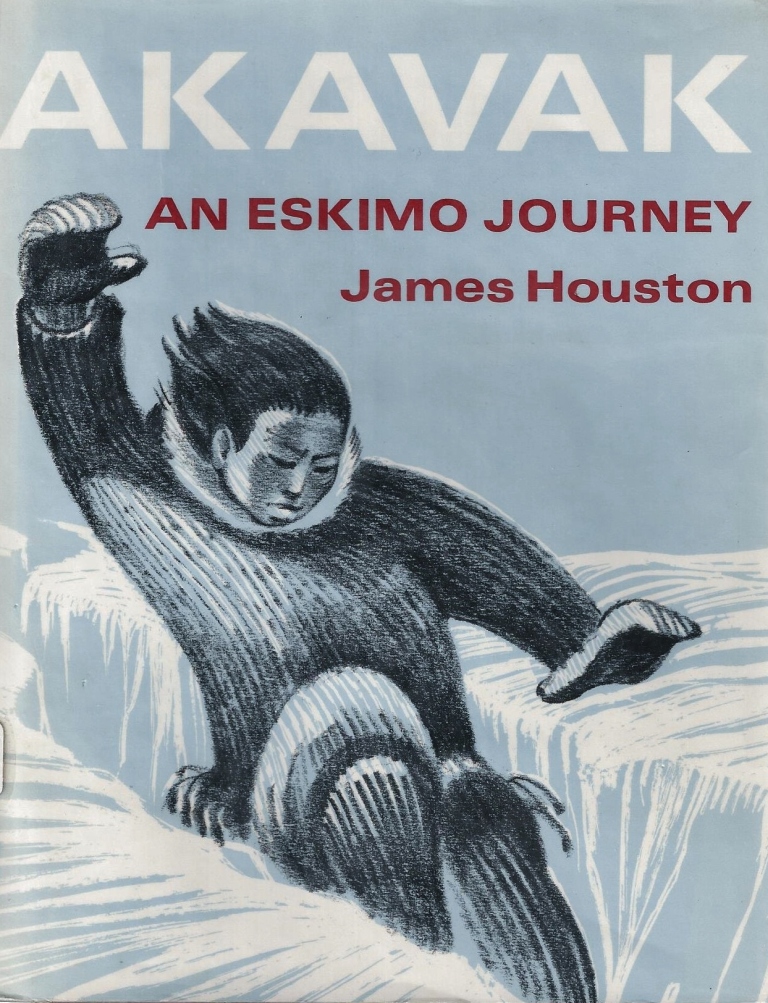
akaval james houston cover 1 001Akavak: An Eskimo Journey by James Houston ~ 1968. This edition: Longmans Canada Limited, 1968. Hardcover. 80 pages.

My rating: 8.5/10

Akavak is a slight but punchy short novel from Canadian artist and writer James Houston. Akavak was Houston’s fourth published fictional work, preceded by the award-winning Tikta’liktak in 1965, as well as The Eagle Mask (1966) and The White Archer (1967). Aimed at a youth readership, Houston’s short juvenile novels garnered high praise for their depictions of pre-European contact  Eskimo (as the Inuit were called at that time) and Indian (First Nations) life. Houston went on to write and illustrate a number of other juvenile adventure novels, most set in contemporary times, as well as several ambitious and well-received adult novels, all set in the North, and frequently featuring strong Inuit and First Nations characters.

In Akavak, a fourteen-year-old Inuit boy (Akavak) is asked to accompany his grandfather on a perilous journey along the coastline in order to fulfill the elderly man’s final wish, to see his beloved brother one more time before it is too late. Warned by his father that though Grandfather is still a master traveller and skilled hunter he occasionally shows flawed judgement due to his great age, Akavak must assess his grandfather’s moods and instructions as the journey proceeds, and find tactful ways to prevent the old man from putting himself and Akavak in danger.

At first the journey goes well, but soon a series of increasingly serious disasters threatens the expedition, and Akavak’s and Grandfather’s very survival; Akavak must finally take the lead and make some difficult decisions. The two ultimately attain their destination, but the ending of the story is bittersweet.

akavak james houston illust 2 001Well depicted details of traditional Inuit skills, as well as a compelling storyline make this novel a good read-alone or read-aloud for primary and intermediate grades, and it will work well as part of a Canadian/Arctic/Inuit Life social studies/humanities unit. The novel is set pre-European-contact (or perhaps in an isolated location); while there is a slightly educational tone to a few of the author’s explanations of customs or habits, the story is very respectful of Inuit culture without over-emphasizing its “exotic” nature to readers not of the North.

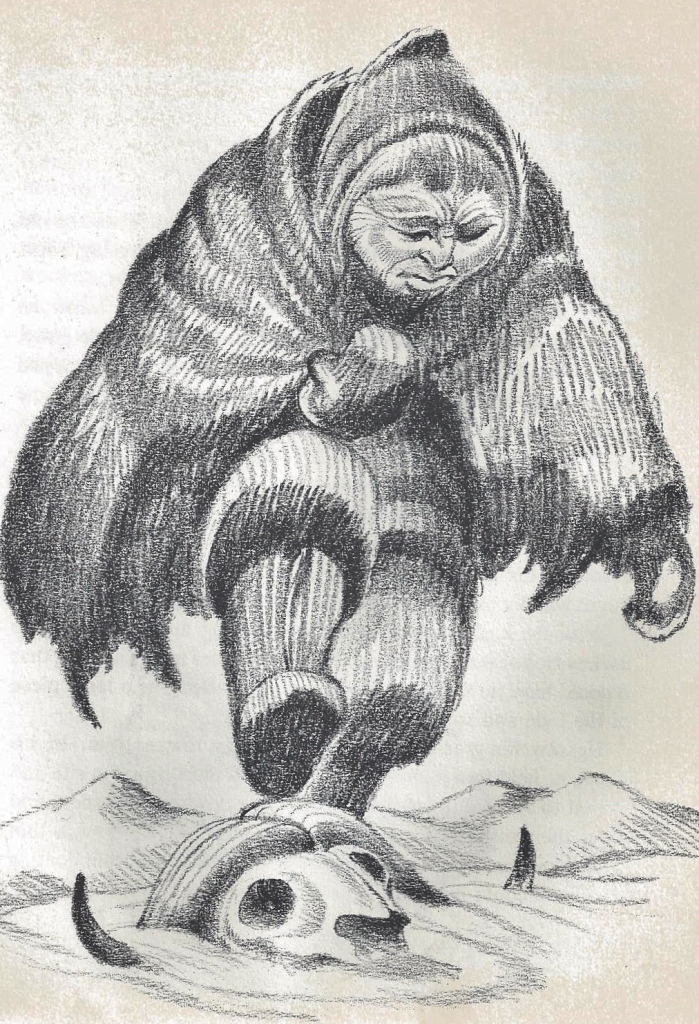
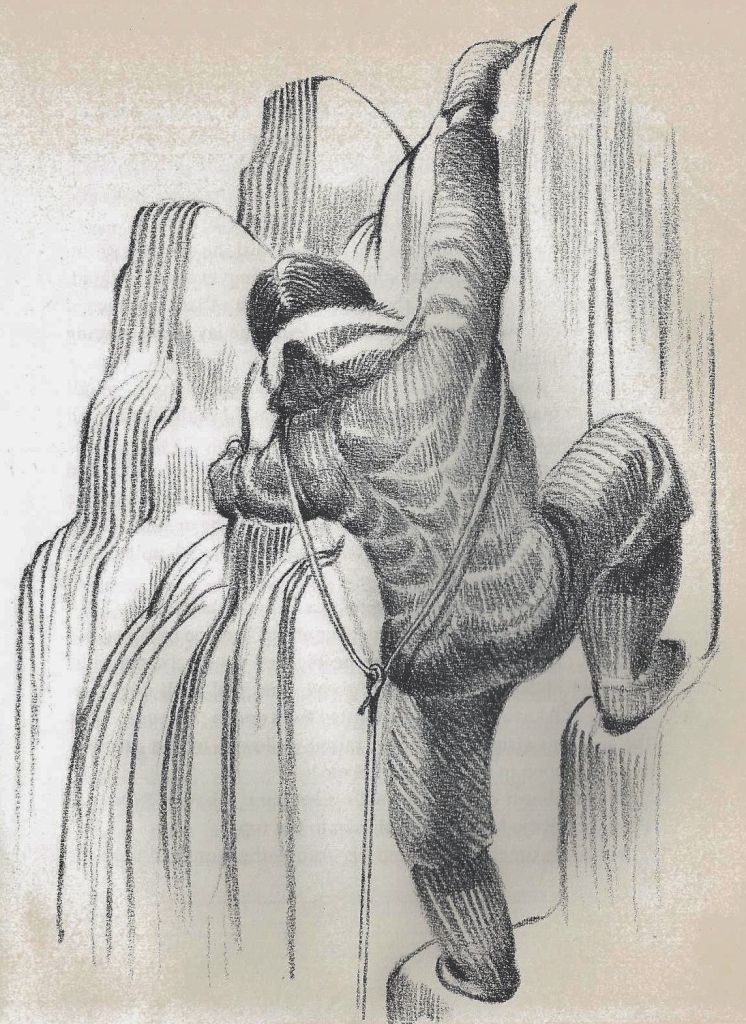
James Houston was a talented artist; while not meaning to downplay the vigorous story, I have to say that for me the illustrations are perhaps the best part of this short novel. Simplistic charcoal drawings, they brilliantly capture mood and movement, and are detailed enough to provide a clear picture of the places and people of Houston’s dramatic tale.

akavak james houston illust 1 001The story itself provides not much in the way of surprises; the adventuring pair overcome their frequent setbacks with predictable success. There is a very real sense of the peril that they find themselves in; Houston, though allowing the titular hero to attain his goal in the end, never guarantees a happy ending to any of the incidents he depicts, adding a dash of plausibility to a highly dramatized adventure story.

I would think that ages 8 to 12 or so would enjoy this story as a read-alone; add a few years onto each end of that range if using as a read-aloud. There are no chapter breaks, but I would suggest that it be broken into perhaps three or four sections if reading aloud, though an ambitious and well-seasoned narrator with an attentive audience could probably pull it off in less.

Akavak has been continually reprinted in numerous editions throughout the years, and so should be fairly easy to find in most Canadian library systems, or through the second-hand book trade.

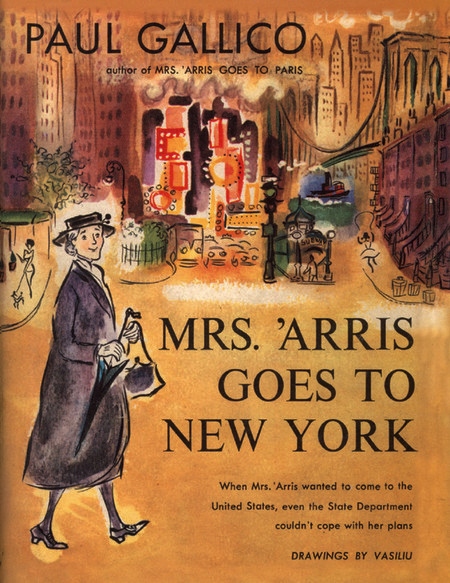
mrs harris goes to new york paul gallico 4 001Mrs Harris Goes to New York by Paul Gallico ~ 1959. Alternate title: Mrs ‘Arris Goes to New York. This edition: Penguin, 1984. Paperback. ISBN: 0-14-001943-X. 168 pages.

My rating: 6/10

Cute story, but much too much “tell” versus “show”. And I suspect that unless you’ve already read the first Mrs Harris saga, you’ll be rather at sea as to why we’re supposed to be so fully on her side. In other words, it screams “SEQUEL!”

In the second installment of what would eventually be a four book series, sixty-one year old London charlady Mrs Ada Harris undertakes another major journey, and another major quest. (Mrs Harris Goes to Paris, her first journey and quest, to Paris for the purchase of an exquisite Dior party dress, is one of author Paul Gallico’s best-loved light novels.)

This time around it is the United States of America looming as the golden goal; the quest is to return an abandoned and neglected young boy to his ex-American soldier father. Luckily, coincidences again merge to bring the almost magical Mrs Harris’s plans to glorious fruition, though not without some glorious glitches here and there.

Eight-year-old Henry Brown has been fostered out by his feckless mother after her first wartime marriage to Henry’s father ended in divorce, and because her prospective second husband refused to have another man’s child under his roof. For a while all went well, with regular child support payments coming through, but eventually the monthly cheque ceased coming, and no one could trace the boy’s mother. She had obviously moved without leaving a forwarding address. It was then that Mrs Harris and her good friend Mrs Butterfield began to hear disturbing sounds coming from the flat sandwiched between their two independent domiciles. Young Henry was being regularly beaten and abused; he appeared increasingly pinched and obviously hungry; his uncomplaining endurance and sweet, unsoured nature under the burden of his sad fate endeared him to the two grandmotherly ladies, and they often mulled over just what could be done.

Then one day Mrs Harris had a brainwave. What about Henry’s American father?! If there was some way to notify him about his child’s plight, surely he would effect an immediate rescue? One small problem existed: no one knew exactly where Henry’s father now was. The child is, effectively, an orphan.

And then marvelous fate steps in. One day, at an employer’s flat, Mrs Harris stumbles upon what she considers a message from the heavens.

Left to herself, Mrs Harris then indulged in one of her favourite pastimes, which was the reading of old newspapers. One of her greatest pleasures when she went to the fishmonger’s was to read two-year-old pages of the Mirror lying on the counter and used for wrapping.

Now she picked up a page of a newspaper called The Milwaukee Sentinel, eyed the headline ‘Dominie Seduced Schoolgirl in Hayloft’, enjoyed the story connected therewith, and thereafter leafed through the other pages of the same instrument until she came to one labelled ‘Society Page’, on which she found many photographs of young brides, young grooms-to-be, and young married couples.

Always interested in weddings, Mrs Harris gave these announcements more undivided attention, until she cam upon one which caused her little eyes almost to pop out of her head, and led her to emit a shriek, ‘Ruddy gor’blimey – it’s ‘im! It’s happened! I felt it in me bones that something would.’

There among the wedding announcements is one for a Mr George Brown, described as an ex-soldier who had been stationed in England, and referring to the fact that this was Mr Brown’s second attempt at nuptials. What a brilliant flash of serendipitous luck this was! This must be young Henry’s father, for isn’t the groom’s father’s name also Henry Brown? And wouldn’t the little British-American baby have obviously been named after his paternal grandfather?

The wheels of Mrs Harris’s single-minded focus are suddenly set turning. If only there was a way to deliver young Henry to his father, then surely paternal love would instantly overwhelm the man, and he would cleave unto his dear son and rescue him from his current awful situation. And there is a possibility of actually bringing this about, for Mrs Harris is herself shortly to depart for a trip to America!

You see, another of her clients is the wife of a movies-and-television company director, and, upon a sudden promotion, the couple are to return to the States to allow Mr Schreiber to take on his new duties. Mrs Schrieber, a sweetly dithery, rather ineffectual, and continuously gently worried lady, is thrown into a state of absolute panic at the thought of having to establish a new household in New York, one which will require her to manage a number of domestic helpers, and to continually entertain her husband’s entertainment industry movers and shakers, and more than a few movie and music stars. What will she do? Could, would, will Mrs Harris come along, just for a few months, to help establish the Schrieber’s new ménage? Mrs Harris takes a deep breath and hesitatingly agrees, after arranging that her good friend Mrs Butterworth accompany the party; Mrs Butterworth being a skilled cook, and a definite asset to Mrs Schrieber during the “finding her legs” New York debut.

Now what if there was some way to smuggle young Henry aboard the bustling ocean liner Ville de Paris, ferry him across the sea, and reunite him with his father? Once they’re all in New York, surely a quick trip to Milwaukee will be easy to arrange…

If this seems to good to be true, of course it is. But the unlikely escapade starts off exceedingly well. Henry, a bright young lad, plays along most willingly, and his two sponsors get him on board and manage to keep his presence under wraps until mid-Atlantic, when it becomes apparent that getting the child off the boat at Ellis Island may prove something more of a challenge, what with stringent American customs and immigration officials examining every set of incoming papers with fine tooth combs and such. As for papers, young Henry possesses none. Gulp!

Ah, but again, kind fate steps in. Sharing the journey is a certain French diplomat whom Mrs Harris came to know well during her Paris stay. He and Mrs Harris have renewed their mutually affectionate acquaintance while on the journey, incidentally giving Mrs Schrieber something of a shock when she finds her Tourist Class charlady ensconced at the chief table at the First Class Captain’s Dinner Party. Gallantly stepping up when appealed to, the Ambassador temporarily adopts Henry as his grandson, and the latest disaster is averted. However, getting the child back from Washington, DC, where he has accompanied his “grandfather”, proves to be a bit more complicated…

And on and on it goes. Mrs Harris forges ahead, comes upon calamity, regroups (usually with the assistance od some random person completely won over by her twinkling eyes and sterling nature, etcetera) and trots along until the next hurdle pops up. Her creator treats us to occasional moments of musing, and throws a moral or two in as well for good measure, and to appeal to our sentimental natures. The ending is, predictably, a happy one, though not quite as Mrs Harris has envisioned it to be from her earlier altruistic schemings.

A light and completely impossible fairy tale is this one, though it touches upon some serious issues – child abuse, social class structure, discrimination, and the follies of celebrity worship. The Dior dress shows up again, with a rather good discussion of its symbolic significance. Mrs Harris is allowed the grace to realize that her impulsiveness is not always wise; in a real world she’d have been slapped down long ago, but because this is fiction of a particularly fluffy type she gets not just a pass but a promotion. Oh, and there is the teasing promise of a love affair for our Mrs Harris, too, setting things up, no doubt, for book number three.

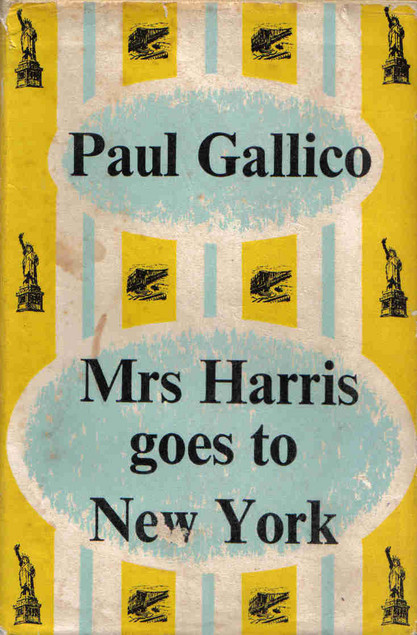
An understated early (possibly first?) edition dust jacket.

An understated early (possibly first?) edition dust jacket.

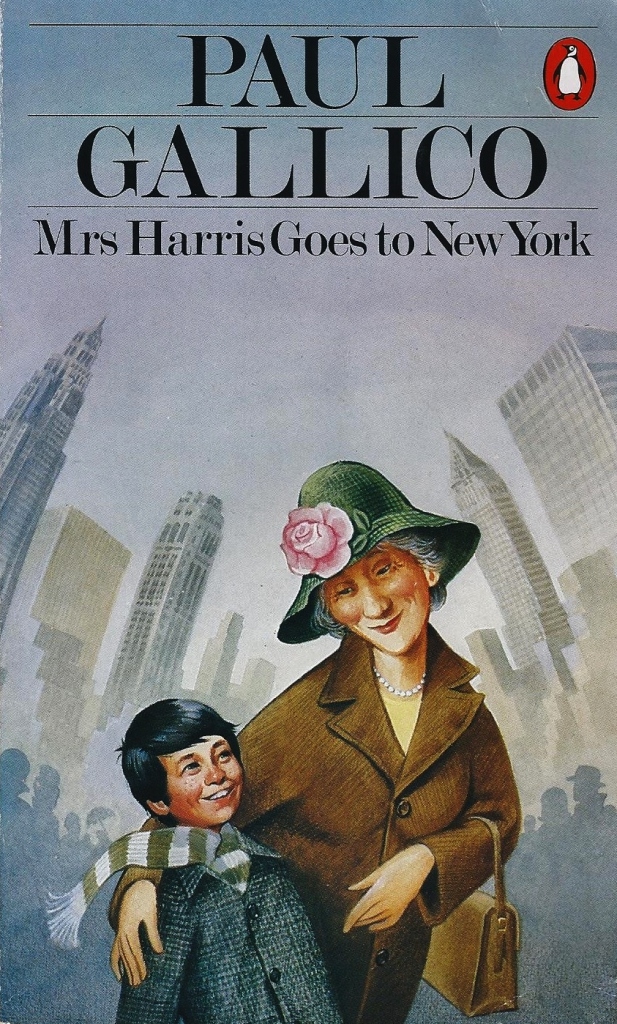
Here we have an overly elderly Mrs Harris (she's only sixty-one, for goodness sake!) plus her charming young protégé.

Here we have an overly elderly Mrs Harris (she’s only sixty-one, for goodness sake!) plus her charming young protégé.

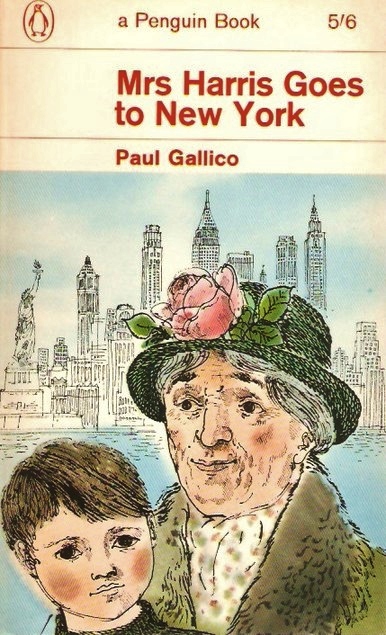
And my favourite of the lot. I wish I had this copy! It's apparently illustrated, too.

And my favourite of the lot. I wish I had this copy! It’s apparently illustrated, too.

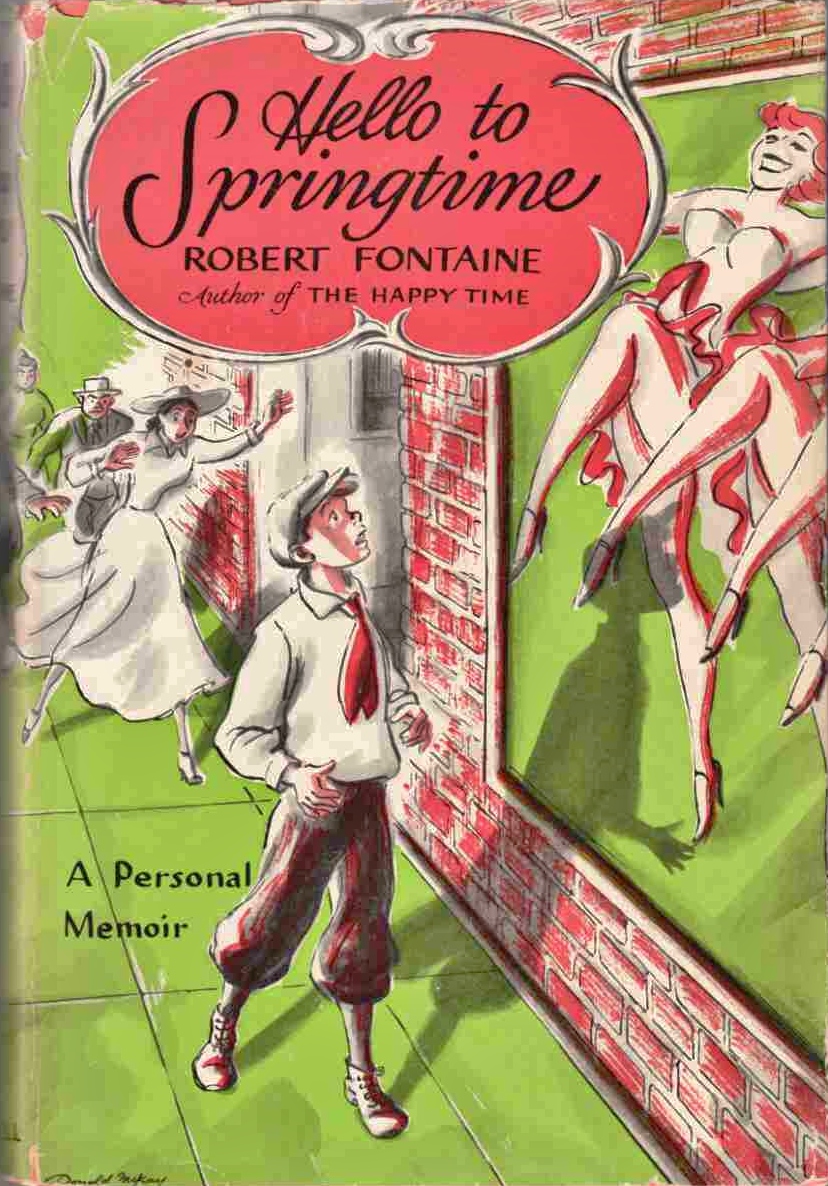
hello to springtime robert fontaineHello to Springtime: A Personal Memoir by Robert Louis Fontaine ~ 1955. This edition: Thomas Y. Crowell, 1955. Hardcover. 246 pages.

My rating: 8/10

As those of you who have been following my blog for any length of time will know, I have fondness for memoirs, particularly those of never-been-famous “regular people” or now-forgotten public figures. Their personal stories are always fascinating, and, if well-written – as they frequently are –  wonderfully readable for their occasional poignancy and frequent humour. The glimpses back into times gone by and their unique perspectives on historical events are an added attraction. Hello to Springtime is a good example of this particular biographical niche.

Robert Louis Fontaine was a minor celebrity in his time. Born in 1911, he was a working journalist, a best-selling author of short stories and novels, a public speaking humourist, and an occasional actor.

At the tender age of three, Robert Fontaine accompanied his mother and father by train from Massachusetts to Ontario, where his father had been offered the position of conductor and first violinist of an Ottawa vaudeville theatre. From snippets of memory, from looking at old photographs,  and from the accounts of his parents, Robert pieces together a child’s-eye account of the highlights of that trip, and of the years which came after. As his memories solidify, the book progresses into fully formed, detailed anecdotes of the strange and wonderful world of boyhood and adolescence.

Robert tells of his bemused response to the celebration on the streets of Ottawa at the end of the Great War, and of his increasing awareness that life was not simply the ever-present Mama and the away-much-of-the-evening Papa, and listening to the strains of violin practice coming from his father’s room, and playing in the street. It soon broadened to include school, and the usual childhood friends and enemies, as well as beloved and feared teachers, and, inevitably, the maddening but adorable charms of the opposite sex. As well, the Fontaine family was an extended one, and a number of Robert’s relations were French Canadian; visits from various aunts and uncles gave plenty of scope for humorous remembrance in later years.

Just before his final year of junior college, Robert and his family returned to the United States; the increasing popularity of “talking pictures” and the subsequent demise of the vaudeville and music hall phenomenon left his father scrambling for employment; the Canadian days were over.

The author was a strongly opinionated man; he holds forth with vigour on a wide array of topics, from the paradoxical moral standards governing young people and sex, to the evils of compulsory schooling, the complications of organized religion, and the various foolishnesses of civilized society in general. Often didactic in tone, Fontaine’s laying down of the law as he sees it is neatly tempered by his cheerful willingness to poke fun at himself; I was never truly offended by his rather outrageous pronouncements, but found myself frequently (though not invariably) in complete accord.

My initial mild enjoyment steadily increased as the narrative progressed and I became more and more caught up in Robert Fontaine’s reminiscences of his early youth and teenage years, and in his anecdotes about his family. I turned the last page with gentle regret; I could happily have kept going. An insidiously appealing read, this one.

Robert Louis Fontaine is perhaps best remembered for his connection to a popular 1952 feature film, The Happy Time, based on his 1945 fictionalized memoir of the same title. The Happy Time was made into a successful stage musical in 1968. Incidents in all three versions of The Happy Time are also detailed in Hello to Springtime; the author assures us in the forward that “these are the facts”.

I am also in possession of one of Fontaine’s best selling fictional novels, based on the antics of one of his actual relations, 1953’s My Uncle Louis. This was among my late father’s books, and I recall reading it as a teenager with not much enthusiasm; I remember thinking it rather silly. After my enjoyment of Hello to Springtime, I am now keen to revisit My Uncle Louis with fresh eyes. Perhaps the several decades of life which have gone by since that first reading will bring me to a new appreciation. We shall see.

While I wouldn’t recommend that you immediately run out and search for Hello to Springtime, I would encourage you to give it a whirl if it crosses your path, especially if you, like me, enjoy these glimpses into the past via good-humoured personal memoirs.

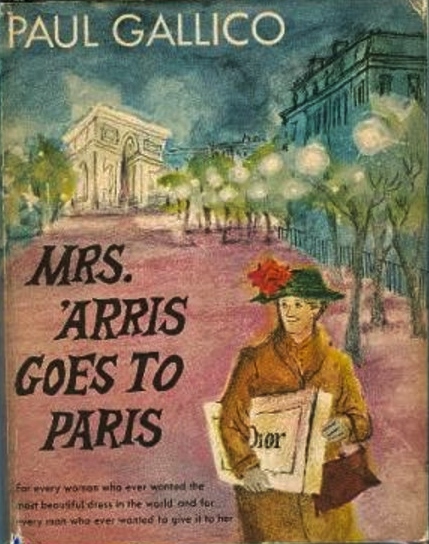
mrs 'arris goes to paris paul gallico 2 001Mrs. ‘Arris Goes to Paris by Paul Gallico ~ 1958. Originally published as Flowers for Mrs. Harris, and alternatively titled Mrs. Harris Goes to Paris. This edition: International Polygonics, Ltd., 1989.  Softcover. ISBN: 1-55882-021-3. 157 pages.

My rating: 7.5/10

I’d read this before, long ago in junior high school – I have a memory of sitting reading it at one of the small round tables tucked in the back of the library early in my Grade 8 year, my refuge from the crowded cafeteria at lunch hour – and at least once in the years since then, and the re-read brought me no new revelations. A decidedly sweet (just this side of saccharine) novella. “Charming”, and “Adult fairy tale”, two terms beloved of this minor classic’s many reviewers, suit it well.

*****

The small, slender woman with apple-red cheeks, graying hair, and shrewd, almost naughty little eyes sat with her face pressed against the cabin window of the BEA Viscount morning flight from London to Paris. As with a rush and a roar the steel bird lifted itself from the runway and the wheels, still revolving, began to retract into its belly, her spirits soared aloft with it. She was nervous, but not at all frightened, for she was convinced that nothing could happen to her now. Hers was the bliss of one who knew that at last she was off upon the adventure at the end of which lay heart’s desire.

London charwoman Mrs. Ada Harris is bound upon a great adventure, ten British pounds and a stunning one thousand four hundred American dollars tucked safely into her shabby imitation leather handbag, along with the return half of a round-trip ticket to Paris. What could she be up to?

We are soon to find out, when Mrs. Harris firmly directs her Parisian taxi driver to transport her with the utmost speed and efficiency to the Avenue Montaigne; more specifically, to the House of Christian Dior. Mrs. Harris is about to buy herself A Dress.

Now, how, do you ask, can a 1950s’ London charwoman, billing herself out at a modest three shillings an hour – roughly the equivalent, at the exchange rate of the time, to a little under fifty American cents – manage to come up with the incredible amount needed to purchase an original Dior creation? And, most urgently, you must be wondering why?!?

The how (this is a “fairy tale”, don’t forget) is quite easily explained by our author. There was a substantial win on the football pools; that got Mrs. Harris a quarter of the way to her goal. Scrimping and saving, going without her beloved weekly movies and occasional visits to the pub and cutting down on her lavish consumption of tea took her to the halfway point. A disastrous attempt at gambling on the dog races was a setback, but Mrs Harris soldiered on. It took her three years, but she did it; the cash is in hand. Now for the dress.

But, again, why a Dior dress? What on earth could be possessing this humble woman in setting her aspirations on such a worthlessly extravagant item? Well, it all goes back to a little incident at one of her employers’ houses, a certain fashionable and extremely wealthy Lady Dant.

Opening up Lady Dant’s closet in the discharge of her tidying up duties, Mrs. Harris discovers something marvelous. Not one, but two astonishing garments, the like of which she has never seen in real life before, though she has sighed briefly and appreciatively over such creations in the discarded fashion magazines which frequently have come her way. And she’s always loved beautiful things, though that love has hitherto only expressed itself through the more readily accessible medium of flowers; the geraniums she grows with such marvelous success, and the cast-off bouquets which come her way and which she nurses along until the vestige of any beauty is completely faded.

But now as she found herself before the stunning creations hanging in the closet she found herself face to face with a new kind of beauty – an artificial one created by the hand of man the artist, but aimed directly and cunningly at the heart of woman…There was no rhyme or reason for it; she would never wear such a creation; there was no place in her life for one. Her reaction was purely feminine. She saw it and she wanted it dreadfully…

Oops, there goes Paul Gallico expounding on the childishly weak nature of femininity again, a tendency he demonstrates fairly frequently, and which annoyed me so much in another one of his folksily frothy novellas, 1962’s Coronation. But steeling myself, and soldiering on, I allow myself to be caught up in the saga of Mrs. Harris and her Dior dress.

She does indeed reach her goal and attain her wonderful garment – the description of which appealed deeply to my own feminine soul, and left me feeling a yearning-for-loveliness sister to Ada Harris – but while she is going about it she also proceeds to magically make several unlikely friends connected with the House of Dior, and to change several lives, and to generally act as an unlikely catalyst to events beyond her daily sphere. For in Paul Gallico’s fictional world, a heart of gold and a cheeky smile can move mountains, cutting through the sneering superiority of the wealthy and snobbish, and bringing some down-to-earth sensibilities into the most artificially fabricated situations.

Mrs. Harris is our hero(ine) of the moment; her eternal wisdom sees through the superficialities of social class and fancy dress, to the eternal desires for “something higher” trapped within every human soul.

Oh, Paul Gallico. I do enjoy your work, but there is always just a little hesitation in my own occasionally cynical soul which stops me embracing your fables fully…

Mrs. Harris gets a pass, however, and a generous one; the unlikeliness of her quest puts this tale on a plane of its own.

Next up, three more fables concerning our charwoman with a flair for the extraordinary. Gallico followed up the phenomenal success of Mrs. Harris’s Parisian escapade with equally fantastical trips to America, to the British Houses of Parliament, and to Soviet Russia. I haven’t read any of these yet, but I am in possession of two of them, the America and Parliament capers, in the 1967 collection of novellas under one cover, Gallico Magic. My husband read that collection a year or so ago, and finished it off wit the comment that it was a bit much to take all together; he was completely Gallicoed out by the end. I may approach with more caution, judiciously choosing only one or two of the novellas and leaving the others for another time. I will be sure to report back on Mrs. Harris, though. I’m quite curious as to what further tangles she’ll untangle with her golden “common touch”!

Oh – and I can’t leave you without a comment on the edition of Mrs ‘Arris Goes to Paris which I’ve just read. It has to have some of the ugliest illustrations possible inside; an absolutely perfect example of generic illustration lite. I shan’t share; it would be too painful, but a glance at the cover will give you a clue as to the horrors within. As an antidote, and to soothe my own ruffled sensibilities, I include several much kinder covers below. (Query: Who or what is International Polygonics, Ltd., and why did they ruin their otherwise nicely produced edition of this book – good paper, lovely font – with these pedestrian pictures?)

Ah, well. Moving on (at last!),  here are several nice reviews to peruse.

One Minute Book Reviews – Mrs. Harris Goes to Paris

Stuck-in-a-Book – Mrs. Harris Goes to Paris

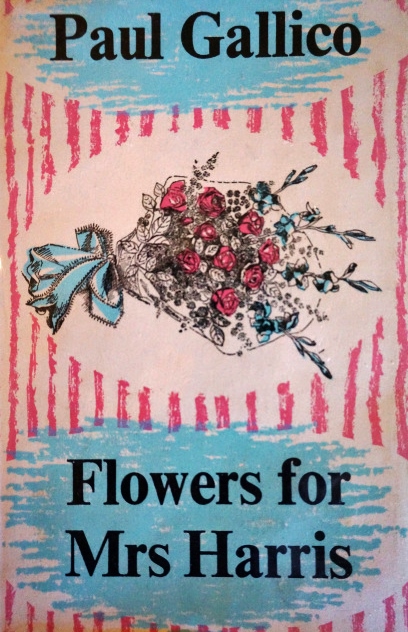
I do believe this is the first edition cover. Understated, but very pleasant.

I do believe this is the 1958 first edition cover. Understated, but very pleasant.

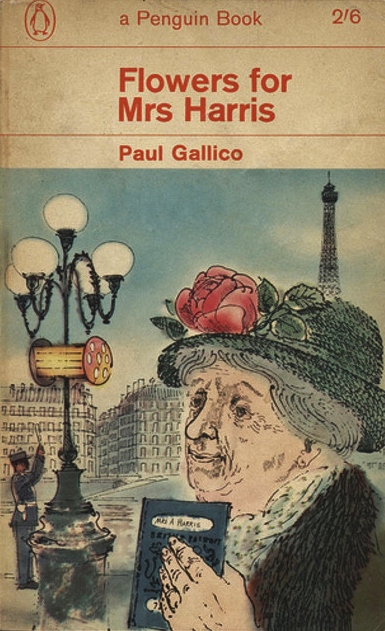
A nice early paperback cover, though Mrs. Harris is perhaps portrayed as a trifle more elderly than she should be; in the book she is a slender lady, capable of fitting into a Dior "floor model" hot off the runway mannequin, and she is also only "approaching her sixties" in age.

A nice early paperback cover, though Mrs. Harris is perhaps portrayed as a trifle more sturdy and elderly than she should be; in the book she is a slender woman, capable of fitting into a Dior “floor model” hot off the runway mannequin, and she is also described as “approaching her sixties” in age. The hat is bang-on, though!

Another early dustjacket, this one from the first American edition. This is my personal favourite; nice example of cover art by an artist who studied the story within.

Another early dust jacket, this one from the first American edition. This is my personal favourite; a great example of cover art by an artist who studied the story within.