??????????????????????

Wild Mullein, Verbascum thapsus. Soda Creek, B.C. July 11, 2014.

A Flower of Mullein


I am too near, too clear a thing for you,

A flower of mullein in a crack of wall,

The villagers half see, or not at all;

Part of the weather, like the wind or dew.

You love to pluck the different, and find

Stuff for your joy in cloudy loveliness;

You love to fumble at a door, and guess

At some strange happening that may wait behind.


Yet life is full of tricks, and it is plain,

That men drift back to some worn field or roof,

To grip at comfort in a room, a stair;

To warm themselves at some flower down a lane:

You, too, may long, grown tired of the aloof,

For the sweet surety of the common air.


Lizette Woodworth Reese ~ Selected Poems, 1926

Verbascum thapsiforme. Macalister, B.C. July 14, 2014.

Verbascum thapsiforme. Hill Farm, Macalister, B.C. July 14, 2014.

??????????????????????

Moth Mullein, Verbascum blattaria albiflorum. Hill Farm, Macalister, B.C. July 14, 2014.

spring2

A most intriguing article here demands further investigation. And I must just add that *I* used to live in Didsbury, too. Well, okay, I must confess that it was not the same Didsbury. Mine was the tiny village in Alberta just north of Calgary, named, one assumes, after the original one referenced here.

Howard Spring – never heard of him until this happy impulse buy of The Houses in Between ( 1951) – I picked it up and put it down a few times while in the bookshop and then decided to go with it. It cost me a lordly two dollars. (Same as a cheapo lottery ticket, and with more chances of winning!)

So far a definite winner. I’m on page 221 of 568 and I have started rationing my reading because I want to spin it out slowly. Luckily life is frantically busy right now so it’s not too hard to put it down as more urgent things call, so it might even last me a few more happy days.

It’s the fictional autobiography of a 99-year-old woman, and is set in Victorian London (the narrator’s first memory is of a visit to the newly opened Crystal Palace) and then at a drawn-from-life Cornish estate. And it is really, really good.

So I feel like I should have heard of Howard Spring before. Am I the only one out of the loop? Or are all of you chuckling at my obliviousness regarding his novels? Is he wonderfully well known in Great Britain, and am I living in Colonial Oblivion regarding his stuff?

According to Wikipedia, Howard Spring was Welsh, and worked as a journalist while also writing a series of increasingly successful novels. All of which, now that I’ve had a taste of his quite engaging style in The Houses, sound terribly intriguing.

That’s all for now! Hoping to be back soon with some bookish posts, once the smoke clears, both literally and figuratively.

Chokingly smoky in the valley this morning from our personal just-around-the-bend forest fire. Like standing in the wrong spot next to a partially smothered bonfire. Lots of ash in the air, too – was painting outside yesterday afternoon and this morning my shelves and cupboard doors which I left out on sawhorses are dusted liberally with bits of charred fir needles carried on the wind from several miles away.

Luckily the paint had already dried fast – no harm done. 🙂

Onward!


To be filed under “There’s always something…” or perhaps “Never a dull moment down on the farm…” , today we had some serious excitement here in our valley. A freight train came through (the rail tracks run through our farm and down the valley, following the Fraser River) and had some brake issues. Sparks from the dragging wheels set a number of fires through our neighbours’ farms and ranches; luckily it just missed us, but it was rather, umm, interesting when we saw the smoke columns, just before the fire crews showed up. (Very quickly, I am happy to say.)

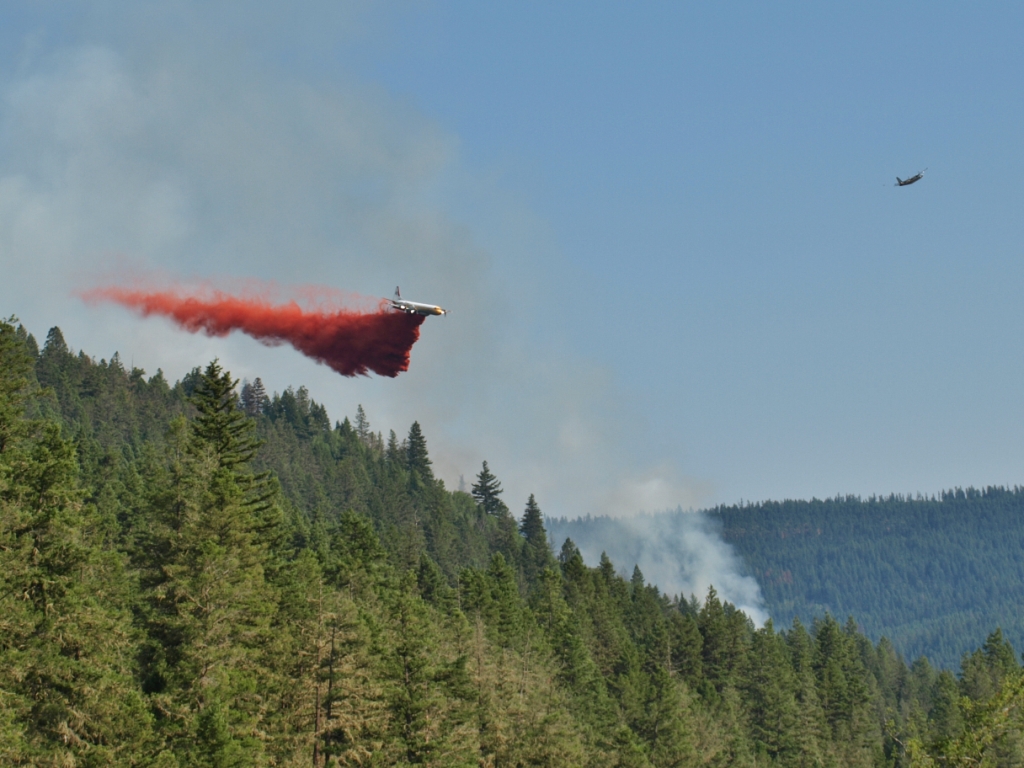
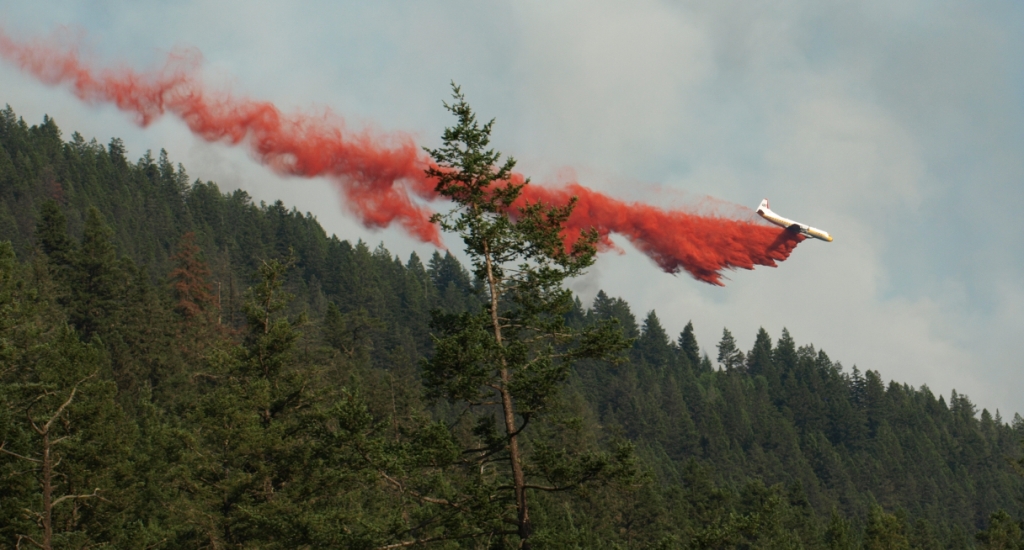
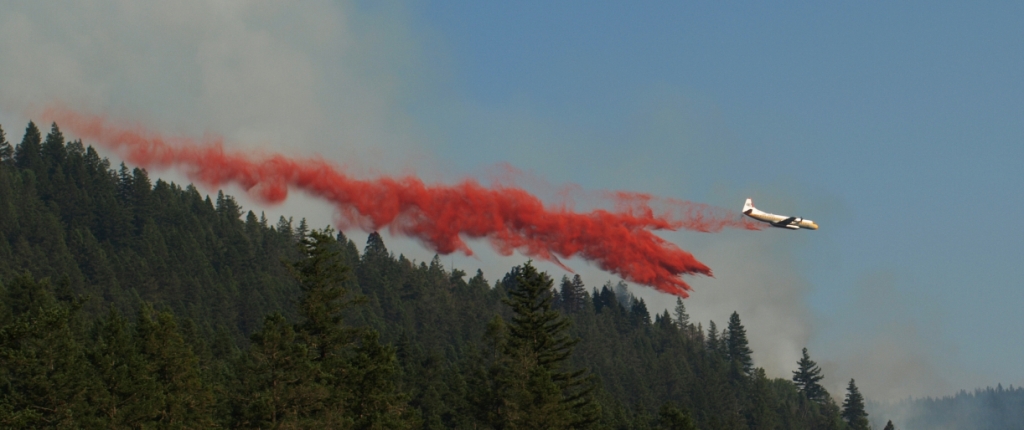
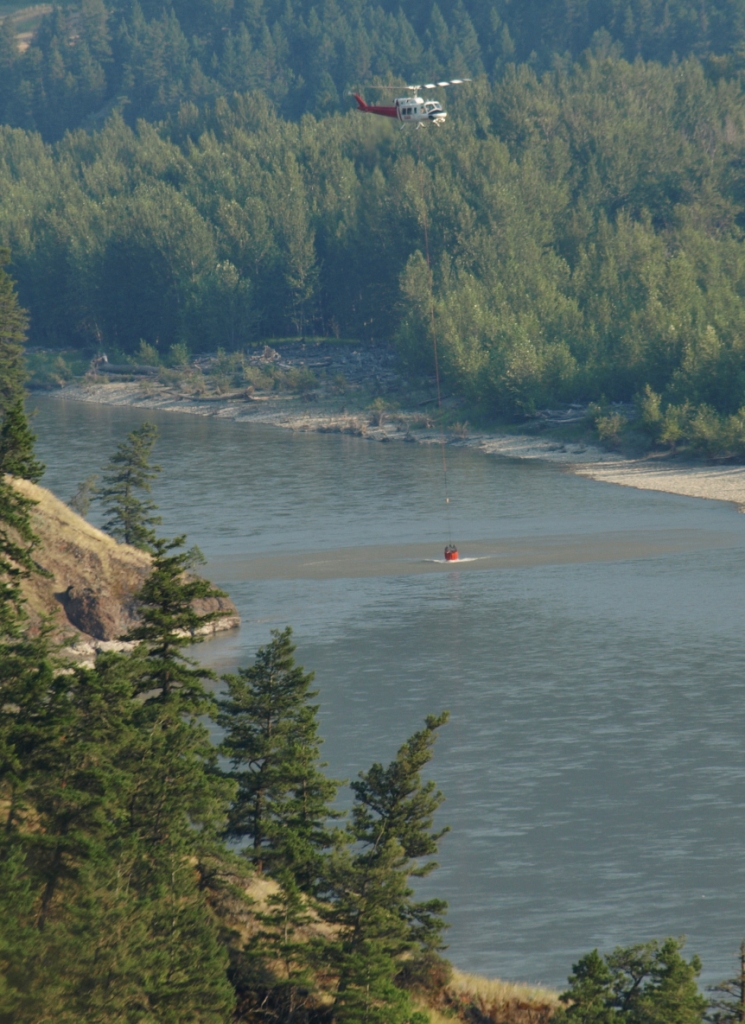
It’s being held at bay this evening, after some seriously intense work by two big retardant bombers and their spotter planes, plus three helicopters with buckets dipping water out of the river. Fingers crossed that the wind doesn’t pick up. Here are a few pictures taken from a neighbour’s lawn a few hours ago, as we stood around watching and formulating “what to take” plans as the trees on the ridge burst into flame, just before the bombers nailed the fire margin on our side.

july 13 2014 fire at soda creek

The “bird dog” plane sets the path for the bomber – you can just see him heading out at the top right of the picture.

???????????????????????????????

Pass after pass after pass…

???????????????????????????????

…for which we are all exceedingly grateful. Our tax dollars at work, as we joked to each other as we watched, but no one’s going to argue about this use of our public funds.

After the bombers left to refill their tanks, the helicopters took over, targetting hot spots.

When the bombers left to refill their tanks, the helicopters took over, targetting hot spots.

And so to bed, to sleep rather lightly, I suspect.

The ground crews were just setting up this evening; they’ll be here for at least a few days until everything is under control. Could still get away if the wind picks up, but we are all below the fire on the slope so feeling pretty good about things, as fires tend to burn “up” the hillsides.

A bit too hot, this particular summer day, don’t you agree?

Edited to add these, sent by a neighbour on the other side of the ridge. Despite the nearness of the flames to the buildings, all people, houses, and livestock are safe. A very close thing, and not over yet.

Ranch buildings shrouded in smoke. Irrigation sprinklers moved to protect structures just visible.

Ranch buildings shrouded in smoke as the flames burn up the hillside. Irrigation sprinklers were moved in to protect structures.

Looking upriver from the south over our valley and the two main fire areas. We are well away to the north, several miles past the furthest smoke column.

Looking upriver from the south over our valley and the two main fire areas. We are safely to the north, past the furthest smoke column. Two neighbour ranches are directly involved, with fires still burning tonight across the railway tracks from the buildings. They won’t be getting too much sleep, I’m afraid…


Oh, dangerous days ahead!

The Summer 2014 issue of the online book review magazine Shiny New Books (“What to Read Next and Why”) is online as of this very morning, and I am happily bouncing from review to review to review, enlarging my “Ooh! That sounds promising!” list to a potentially costly degree.

All very well and good, but I should, instead of spending time gleefully reading about reading on the computer, be loading the car for a spur-of-the-moment road trip which has suddenly materialized. We were supposed to be engaged in a small carpentry project in town this week, but the person we are helping has had to reschedule, leaving us with a chunk of suddenly “free” (well, otherwise unplanned-for – there are really loads of useful things we could/should be doing here on the farm) time.

The weather forecast is for brilliant sunshine, my husband has four days of off-time before he needs to be back at his real job, we have competent house-sitters in residence, the old open-top Spitfire hasn’t yet had a good long run this year after its spring-time tune-up, and mid-week availability of good B&B accommodation looks promising. Golly, what should we do? 😉

One of the lovely things about road-tripping is that it generally includes a fair bit of evening reading, as we are more than ready, after noisy hours in the Spit with the wind in our ears, for some quiet down time. Book choice is one of the toughest parts of packing. Proper road trip books are preferably new-to-us, highly engaging, and not too “heavy”, in the literary if not in the literal sense.

Luckily one recommendation in SNB is already available right here in my house, and Bill Bryson’s One Summer: America 1927,  just released in paperback and intriguingly reviewed by Harriet Devine, is coming along for the ride. My son has just located it (in the substantial hardcover edition, published in 2013) and plunked it down on top of my duffle bag; he read it earlier this year and also gives it words of high praise.

Off we go, fingers crossed that the weather will indeed smile on us, that the car will run smoothly (not always a given, what with its age and wondrous multitude of Little British Car eccentricities), and that we will find a promising bookstore or two en route. Part of the trip will be through previously unexplored territory, and those small towns tucked away off the beaten track sometimes are the very best book-hunting ground of all.

Bye for now! (Wish us luck.)


I recently put myself in the mildly surreal situation of simultaneously reading two very different books set in the same location and covering a similar time period. Luckily they were both so very strongly voiced that I managed to focus on each as it deserved.

The first book, a novel by Gavin Lambert, a British-born author who moved to California in the 1950s and had considerable acclaim as a screenplay writer, was much better than I had anticipated from its cover appearance. The bizarre images of Natalie Wood starring as the titular character in a movie version of the novel and the fulsome blurb shouting out “-the happiest, saddest, sexiest Hollywood novel of all!” were a bit off-putting, but the first page grabbed me and pulled me into the story and never let me go until the nebulous but satisfying conclusion.

The second book was an engaging though fairly workaday movie star autobiography, written by Rosalind Russell with the assistance of a co-author, fellow actress-turned-writer Chris Chase. Published a year after Rosalind Russell’s much too early death from breast cancer, it is a mostly flattering self-portrait with a leavening of self-criticism, which left me with a warm-all-over regard for this very matter-of-fact and very dedicated screen and stage actress, famously “in Hollywood but not of it”, as one of her friends declares in the memoir. Rosalind Russell appears from this account to have had an admirably stable personal life, at least compared to the majority of her Hollywood peers.
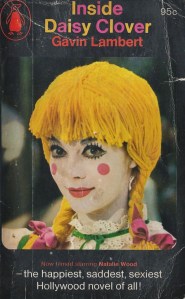
inside daisy clover gavin lambert 1963Inside Daisy Clover by Gavin Lambert ~ 1963. This edition: Penguin, 1966. Paperback. 265 pages.

My rating: 8/10

Thirteen-year-old Daisy Clover, father vanished from her life some years previously, is living a squalid life in a trailer park in rundown Playa del Rey, California with her mentally troubled mother The Dealer (named for her fixation on solitary card games).

Daisy finds joy in saving her nickels and dimes for occasional forays to a recording booth where she unselfconsciously belts out songs with more than a little “rare natural talent”, and she has just purchased the first of what will turn out to be a vast number of notebooks in which she will record her inner thoughts for the next two decades.

Confided to her diary, Daisy has a soberly related sexual awakening assisted along by a certain Milton, an older boy, “quite nice looking, he had muscles and butch hair and good teeth, but also a slight weight problem”, with their relationship consummated on an old, mattress-less brass bed in Milton’s father’s used furniture store, “priced at $25.00 and marked VERY NICE. Dot, dot, dot, dot.”

Daisy turns fourteen on a disastrous day which includes her mother inadvertently setting fire to their home, and it seems that despair is the theme of her young, angst-ridden life, but things are about to take a strange turn. Daisy enters one of her recorded discs (a new recording; all of the old ones having been destroyed in the fire) in a talent contest, and is “discovered” by Magnagram Studios magnate Raymond Swan.

Turns out that not only can our heroine sing like an angel, she can also act like a reincarnation of Mary Pickford (with the added benefit of being able to supplement her performance with vocals), and stardom bursts upon Daisy.

But this is not, of course, without its drawbacks.

Daisy’s patron Mr. Swan and his oddly hot-and-cold wife Melora keep Daisy on the path to ever-increasing fame, and while she finds deep satisfaction in the singing and acting aspect of her new life, being a true artist and all that jazz, the personal cost of her new life is rather brutal.

The Dealer has been whisked off to a mental home and erased from Daisy’s official biography, allowing her to be billed as “The Sensational Singing Orphan” (or something like that – couldn’t find the exact term in my flip-through just now), and Daisy is now under the care of her gosh-awful older sister Gloria, who married some years earlier and scooted out of Playa del Rey without a backward glance. Now that Daisy is a potential movie star, Gloria is very much back in the picture, and Daisy has quite a lot to say in Dear Diary about that development.

The years roll on. Daisy is a definite success as per Mr Swan’s planning and Gloria’s fervent pushing, but then the Star Train derails, when Daisy falls deeply in love with the worst possible prospect for promotional purposes she could come up with.

Once a top notch star, but now fading fast, the much older actor Wade Lewis is now a notoriously self-destructive drunk and a reportedly manipulative lover-of-many, but Daisy ignores the hissing whispers and goes with her emotions. The two find a common ground in their dislike for the lives they lead, and a genuine connection develops. The relationship strikes enough sparks to catch widespread attention, and through Daisy’s bullheaded  insistence a marriage takes place. Too bad Wade’s real sexual interests are not in women, despite his reputation in the gossip columns…

Gosh, what a grand little slice-of-American-life novel, right up there with the smutty California romances and pill-popping exposés of Jacqueline Susann, albeit much better written than anything she pumped out just a few years after Lambert’s Daisy Clover appeared.

A measure of redemption is (predictably) found after the inevitable crash-and-burn of the aging child star, and the ongoing relationship between Daisy and The Dealer adds a poignancy and appeal to what might otherwise be an utterly depressing condemnation of everything that’s wrong with the American Star Machine.

Gavin Lambert turned his novel into a screenplay, though with considerable changes to adapt it to the screen, and the movie Inside Daisy Clover was released in 1966, starring Natalie Wood as Daisy, Christopher Plummer as Mr. Swan, and Robert Redford as Wade (with the character changed, at Redford’s insistence, to vaguely bisexual versus the original completely-homosexual-passing-as-straight).

The movie was, by all accounts, a flop.

But the book most definitely isn’t, and I’ll be keeping an eye out for some of Lambert’s other Hollywood novels, apparently seven in total, as well as a collection of short stories and a number of well-regarded celebrity biographies.

Gavin Lambert was – no surprises here, after finishing Daisy Clover and considering some of its themes – homosexual himself, and his sympathetic and ultimately open portrayal of gay characters was unusual and rather brave for his era.
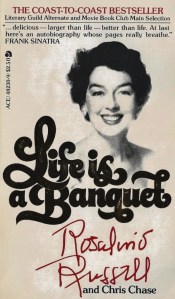
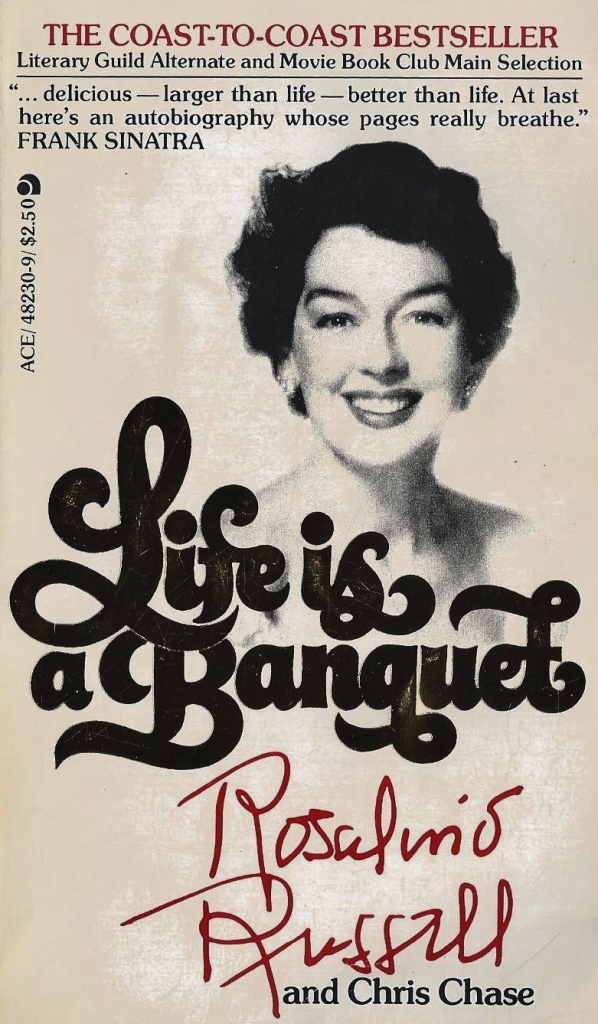
life is a banquet rosalind russell 1977 001Life is a Banquet by Rosalind Russell and Chris Chase ~ 1977. This edition: Ace, 1979. Paperback. ISBN: 0-441-48230-9. 260 pages.

My rating: 7/10

From mince-no-words fiction to slightly airbrushed real life, with this cheerful autobiography set mostly in the early years of Rosalind Russell’s career, but with enough concentration on the decades of the 1950s and 60s to add a supplementary picture of this most unique setting to my concurrent reading of Daisy Clover.

Rosalind Russell was unusual among her peers in that she willingly (by her account) turned her back on Hollywood for a time to return to her roots as a Broadway actress. She then went back to Hollywood, taking along her stellar role of Auntie Mame  from Patrick Dennis’ bestselling book-turned-theatrical production which was one of her outstanding stage performances, and then transitioned gracefully from first-run star to character actress in her later years.

Happily married for thirty-five years (to the same man, of course, making her rather unique in Hollywood circles – meow, meow!), Russell’s description of her relationship with her husband, Frederick Brisson, was downright heart-rending, especially in conjunction with his tribute to her in the book’s introduction.

Rosalind Russell died in 1976, aged 69, after years of struggle with both serious rheumatoid arthritis and breast cancer. Life is a Banquet was published a year after her death.

Though the autobiography is decidedly self-edited, it made me most sympathetic to its writer, not to mention deeply curious about the bits which were glossed over, though none of them appear to be at all scandalous. Rosalind merely kept a ladylike silence over other people’s private business, and obviously chose not to go into salacious detail regarding her own black moments.

Rosalind Russell was a truly beautiful woman – her photographs leave me smiling in admiration of the absolutely lovely composition of her face – those winged eyebrows over those dark, wide-set eyes! – and those sultry eyes show a glint of something else: deep intelligence and a love of laughter. Her well developed sense of humour shines through in this book.

As I mentioned earlier, Life is a Banquet is written in a slightly pedestrian style, and though it was pleasantly engaging and held my interest well, I couldn’t give it a higher rating than a “7” on my personal reading quality scale.

This memoir has left me with a warmly approving regard for its writer, and with a strong desire to watch the movie version of Auntie Mame again, and to seek out some of Rosalind Russell’s other movies, of which there is a large choice, from 1934 to 1971.

I think one might safely say Rosalind Russell was a Star well deserving of that designation in all of the best ways.
 

lovers all untrue norah lofts 1970 001Lovers All Untrue by Norah Lofts ~ 1970. This edition: Doubleday, 1970. Hardcover. 252 pages.

My rating: 7.5/10

Well, this was unexpected. And unexpectedly good.

I quite like what this author does when she turns away from the historical romantic fiction and creative biography she was so much better known for, such as her best-selling depiction of Anne Boleyn in The Concubine, and her somewhat sappy retelling of the Nativity in How Far to Bethlehem?, and lets herself go a bit over-the-top into the realm of domestically set macabre fiction. I’m catching glimmers of a Shirley Jackson-like mindset here, and it’s a treat.

Some time ago I read and was surprised and pleased by another of Norah Lofts’ odd little stories, The Little Wax Doll. Lovers All Untrue will definitely join it on the shelf of keepers. And I am wondering what else the prolific author produced in this style. Time for a bit of delving, I think.

The September, 1970 Kirkus Review call this “a lamplit tale of murder and madness in a Victorian doll house”, and goes on to end its spoiler-laden review (which I refuse to link for that reason) with this perfectly apt recommendation: “A fine horrid tale for matronly secret liberationists.” Yes, indeed, to both of those summations.

The well-off, upper-middle-class Draper family resides in respectable Victorian comfort in a slightly cramped but ever-so-appropriately located, furnished and staffed London house, on Alma Street. The family consists of fifty-year-old Papa (head of a nebulous family business in the City; I don’t think we ever do find out what it exactly is that the firm is all about), the slightly younger Mamma, and daughters 17-year-old Marion and 16-ish Ellen.

Papa is most decidedly the patriarch of the household, and holds unchangeable views as to the proper conduct of the women of his family. Mamma was once a brilliantly talented pianist, but as her more emotional pieces are unsuitably dramatic in her husband’s opinion, she has been squelched into concentrating her musical skills onto mild drawing-room-acceptable sentimental ballads instead of stormy Lizt concertos. Marion, of considerable intellect, has been abruptly withdrawn from the school where she excelled at academics, because Papa Draper felt that the views of the headmistress were unsuitably liberal in the encouragement of young ladies to consider advanced personal and intellectual development and (fatherly shudder) even careers. Ellen is the smiled-upon child, being peaceful, unambitious, and deeply domestic: the epitome of desirable feminine deportment, in Papa’s eyes.

Papa Draper is a marvelous villain, with absolutely no redeeming features, gloriously secure in his masculine superiority.

Mamma, destroyed herself by her husband’s sheer imperviousness to any sort of female ambition, abandons her daughters to their father’s brutally unimaginative plan for their future: he envisions two devoted (and needless to say unmarried) acolytes to his perpetual male glory, with Marion and Ellen functioning as (sexless) adjuncts to their mother in ensuring that domestic comfort is ceaselessly maintained.

Needless to say, despite Papa’s refusal to countenance such a thing, sex relentlessly enters the picture, with Marion in particular proving deeply passionate beneath her stoic exterior. And even mild Ellen and meek Mamma cherish a few secret desires of their own…

Marion seethes quietly under her repression, and breaks out in the expected way, by acquiring a secret (and decidedly lower class) lover with the expected results. However, events take on some dramatic twists and turns, with Marion showing unexpectedly resourceful attempts to free herself from Papa’s grasp. As Mamma recedes ever deeper into her passive state of non-resistance to Papa’s demands, and Ellen feebly attempts to play peacemaker, Marion finds herself (temporarily) committed to a facility for the mentally troubled, where Papa hopes she will find her outrageously forward impulses tamed.

No one in this oddly mesmerizing tale comes out particularly well; even as the nominal heroine Marion is chock full of too-human flaws, and some of her decisions are decidedly cringe-worthy. So her eventual fate is artistically quite perfect, even though it is rather unexpected. The author was brave in her ending; I applauded her decision to not …well…I’m not going to say what she did here with Marion and Ellen and Mamma. Just that it made me quite satisfied, in multiple ways.

Decidedly feminist themes throughout keep us rooting for the downtrodden women while happily hissing at the stupid, stupid men. Bonus points too for introduction of a scheming lesbian, all done up as another period stereotype just as bizarre as that of Papa’s set piece, whom Lofts has a bit of authorial fun with.

All in all, the author did seem to be rather enjoying herself here, with a good deal of humour glinting out from among the velvety shadows of this mildly horrific, darkish little tale.

I’m getting back on the posting pony, after having been tumbled to the ground by recent events, and aren’t I lucky this morning, because look at this! – I found a draft post from mid-May that I never did publish. I think I was going to add a Bill Bryson (I’m a Stranger Here Myself) to the line-up, but I’m sure no one will mind giving my thoughts on Our Mr. Bryson a miss (short verdict: in general, I like his stuff quite a lot), because he’s hardly under-reviewed and I haven’t anything new and stunning to say about his earnestly (relentlessly?) humorous ramblings.

Quickie reviews only, I’m afraid, but operating on the premise that a little something is better than nothing, here we go.

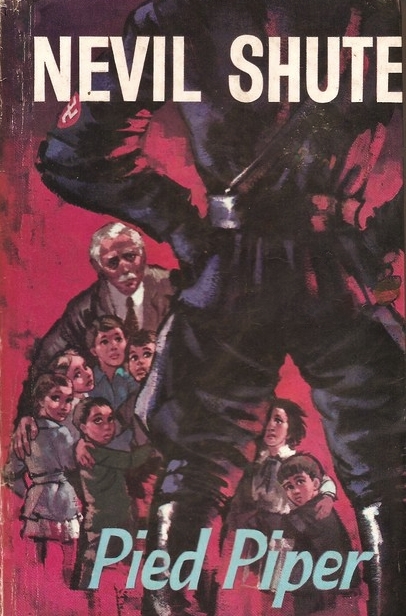
pied piper nevil shutePied Piper by Nevil Shute ~ 1942. This edition: Heinemann, 1962. Hardcover. 303 pages.

My rating: 9/10

A ripping yarn, indeed, and typical of Nevil Shute at his best.

Elderly (70-ish) John Howard, not needed for war-related work due to his age, and mourning the loss of his pilot son in the early days of the Second World War, decides to take a quiet fishing trip to eastern France, despite the menacing activities of the German forces in other parts of Europe. Unwittingly caught out by the swiftness of the unstoppable German invasion, Howard finds himself escorting two young English children in an increasingly desperate attempt to return to England. His entourage increases child by child as he collects various waifs and strays, as well as a young French woman who has an unexpected connection to the Howard family.

The coast is reached, and transport across the Channel seems to be coming together nicely when the local Nazi commander intercepts Howard and accuses him of espionage – a charge which carries a brutal penalty…

A fast-moving story with a slightly unusual cast of characters. The children are mostly believable, and John Howard himself is the epitome of quiet heroism. The invading Nazis are brutish and brutal, in between their attempts at placating the locals by benevolent establishment of soup kitchens and the like; the English who are caught in the turmoil are universally likeable and high-minded; the French locals are mostly portrayed as a combination of bovinely stoic, and (paradoxically) boldly sly.

Pied Piper is rather obviously (and expectedly so given its time of writing) something of a fervent propaganda novel, celebrating as it does the sterling nature of the British Everyman in the face of the Teutonic War Machine, but with enough departure from the clichés here and there to keep it engaging. Nevil Shute brushes over some vital details as he keeps his story moving right along, but those he includes add clarity and verisimilitude to this gripping and very readable tale.

something wholesale eric newbySomething Wholesale by Eric Newby ~1962. This edition (revised 1970 and 1985): Picador, 1985. Softcover. ISBN: 978-0-00-736751-1. 228 pages.

My rating: 6.5/10

Ever since a teaser in the early part of A Short Walk in the Hindu Kush I have been deeply curious as to Eric Newby’s “time in the rag trade”, as he so facetiously terms his years as a apprentice of sorts in the family business, Lane and Newby Limited, a wholesale women’s fashion house situated in London. By the time Eric darkened its door in 1945, after his return to England after a traumatic wartime of special forces service, time on the run from capture, and prison camp incarceration (see Love and War in the Apennines/When the snow comes they will take you away), the once-thriving business was in the first stages of what would prove to be its death throes.

The rationing of cloth was still in effect for some years after the end of the war, and this created serious difficulties for Great Britain’s dress-making firms, but of more serious impact was the resurgence of the very competitive French fashion houses, in particular Dior, whose hyper-feminine New Look (incidentally requiring vast yardages to make up, putting the struggling English firms at a severe logistical disadvantage) was a jaw-dropping success on the 1947 haute couture scene.

As Eric becomes more and more enmeshed in the garment trade – quite literally, as one will learn from the anecdotes in Something Wholesale – he records with a keen eye to detail the absurdities of that arcane world, and the many eccentric characters he came up against, from flirtatious “outsize” models intent on playing under-the-table footsie with the boss’s son (Eric, of course), to various department store buyers, commercial travellers and contract seamstresses.

In general I enjoyed this memoir, though the humour is of the determined type and not particularly funny after a certain point – pseudonymous names such as Throttle and Fumble (a retailer of Lane and Newby’s output), and the Misses Axhead and Stallybrass being examples of the sort of heavy-handed fun which Eric Newby resorts to for much of the book.

But here and there the narrative strikes pure gold, and some bits are sarcastic gems of prose and really quite perfect. And though he refuses to be completely serious for much of the tale, Eric Newby’s ultimately loving depiction of his parents and their dedication to the firm is perhaps the most gentle and poignant aspect of this uneven memoir.

Lane and Newby went down for the third and final time in 1956, winding up its affairs after the death of Eric’s father, but Eric himself stayed employed in the garment business until 1963 – taking off for an occasional expedition during holidays and writing the odd book and magazine article here and there in his spare time – when he finally managed to find full-time employment in a career much more suited to his tale-telling aptitude, journalism.

As those of you who have been followers of L&P for any length of time will perhaps remember, I would occasionally reference my elderly mother who I have supported in various ways, including, quite pertinently to this blog, the provision of vast amounts of reading material; she was a book-a-dayer these past eight years, ever since my father’s death in 2006.

A week ago Sunday morning, June 15th, she called me as usual in the morning; we had a pleasantly normal chat, and I told her that I would be in to see her in a day or two, to drop off yet more books. Later that day, mid-afternoon, my sister called me to tearfully inform me that the nurse at the seniors’ residence had just called her: Mom had quietly passed away during her afternoon nap.

Though Mom was physically extremely frail – hence her residence in a complex care facility these past ten months – her death was absolutely unexpected.

And I find myself quite bereft.

It was not at all a tragedy in any real sense of the word; Mom’s ending was the classic “best way to go”, as everyone tells us, and as we tell each other and ourselves. She was 89; she had had some serious health issues, and a few close calls. Several surgeries. A bad fall last summer, which put her in hospital for months. Several bouts of pneumonia. She had just been put on full-time oxygen.

But still…

So, everyone, call your mother, if you’re lucky enough to have one in your life. Go see her, if you can. Take her some flowers, or take her out to lunch, or just sit and have a chat. If it feels right and the timing works, tell her you love her. Yes, she already knows that. But do it anyway.

Those of you who have also lost your parents, perhaps you will agree that this is such a surreal feeling. This is it. We’re all alone. Orphans, in fact. My goodness. Rather sobering.

Life does indeed go on. The grass grows and needs mowing; the garden needs watering and weeding; the flowers I picked for Mom’s funeral are drooping and are almost ready to be thrown out onto the compost pile. The books I had ready to go in to town for her are still sitting on the kitchen counter; the books I collected from her room along with her other personal belongings are needing to be sorted out and put away. The floor needs sweeping, meals must be made; the food from caring friends is mostly gone. And I am very much able to laugh at jokes, to smile, to be happy much of the time, despite the tremendous sorrow that shadows my days right now.

And books are still good. I know that they brought Mom endless and reliable amusement and interest and comfort; I read right now with a nod to her shade. Nothing too challenging: from the stack I had ready for Mom, Elizabeth Goudge’s The Castle on the Hill, Norah Lofts’ Lovers All Untrue. An E.B. White essay collection, and tonight I think perhaps something from the Margery Sharp shelf.

Back to writing now as well. I have a review to formulate for Shiny New Books; I have things to say about recently read novels; I have loads of catch-up to do on my favourite book bloggers’ sites; I’ve neglected those particular email notifications this past week.

Thanks for listening, everyone. Now, go call your mom!

Mom in 1962, moving to the Cariboo region of British Columbia from central California. She drove up in her beloved Taunus car, Dad's truck is loaded with her furniture and household treasures, and, yes, many boxes of books. I love this picture, especially the totally unsuitable footwear. Mom never did really resign herself to wearing proper winter boots; I swear her feet were cold for the next 50 years!

Mom in January 1962, moving to the Cariboo region of British Columbia from central California. She drove up in her beloved Taunus car. Behind her, Dad’s truck is loaded with her furniture and household treasures, and, yes, many boxes of books. I love this picture, especially the totally unsuitable footwear. Mom never did really resign herself to wearing proper winter boots; I swear her feet were cold for the next 50 years!

Mom and Dad, 1962. At home in the Cariboo.

Mom and Dad, 1962. At home in the Cariboo.

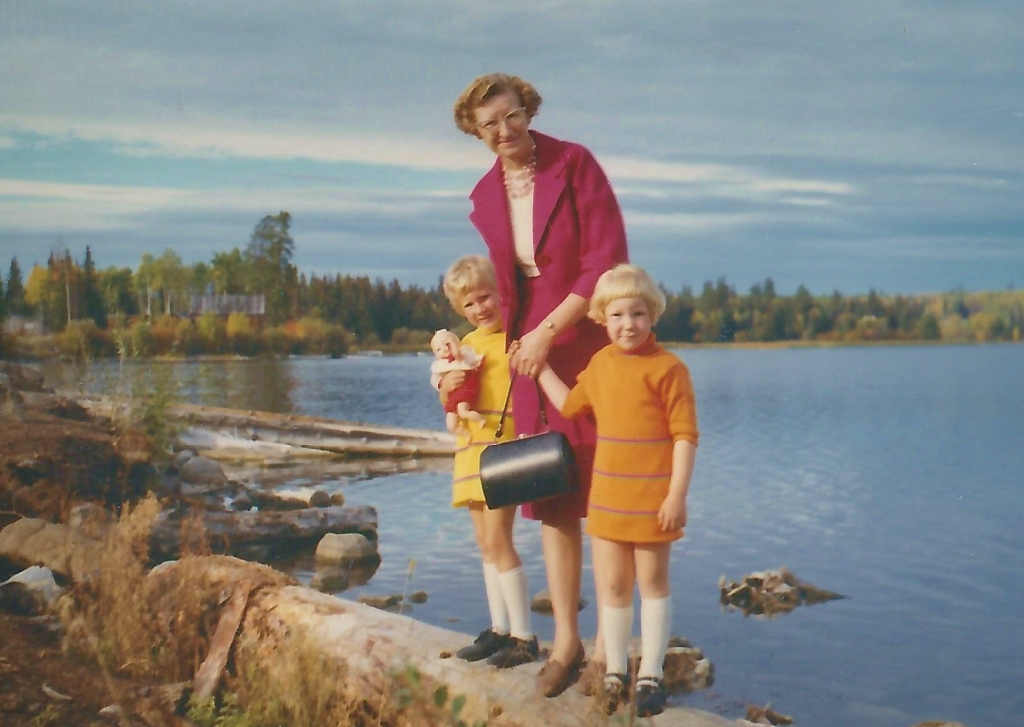
And a few years later, now with children in tow. This looks like we're going Sunday visiting; all dressed up. I'm the one in orange; check out the homemade haircut!

And a few years later, now with children in tow. This looks like we’re going Sunday visiting; all dressed up. I’m the one in orange; check out the homemade haircut!

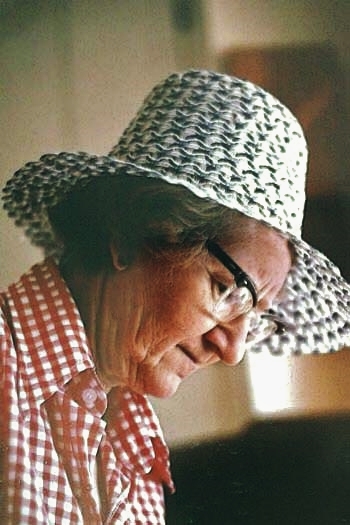
One of my German cousins just sent me this picture. It was taken in the summer of 1981. Mom has just come in from the garden. (I know this because of that distinctive hat; she wore it for years every time she set foot outside between April and October!) She could be shelling peas, or hulling strawberries; that look of concentration and her slight frown is utterly typical. My family tells me I look just the same; our faces share a rather sombre cast which does not necessarily reflect our actually happy mood!

One of my German cousins just sent me this picture, taken in the summer of 1981. Mom has just come in from the garden. (I know this because of that distinctive hat; she wore it every time she set foot outside between April and October.) She could be shelling peas, or hulling strawberries; that look of concentration and her slight frown is utterly typical. My family tells me I look just the same; our faces share a rather sombre cast which does not necessarily reflect our actually happy moods.

Just a few years ago; one of the last photos I have of Mom. She was deeply self-conscious and hated having her photo taken; this one was stealthily snapped from across the room while I was "experimenting" with a new camera lens.

Just a few years ago; one of the last photos I have of Mom. She was deeply self-conscious and hated having her photo taken; this one was stealthily snapped from across the room while I was “experimenting” with a new camera lens.


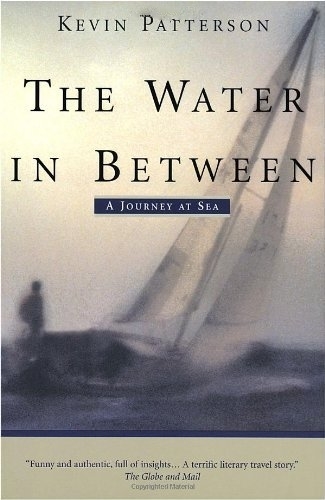
the water in between kevin pattersonThe Water in Between: A Journey at Sea by Kevin Patterson ~ 1999. This edition: Vintage Canada, 2000. Softcover. ISBN: 0-679-31054-1. 289 pages.

My rating: 9.5/10

Breaking the too-long posting silence because this book was too good not to mention. I thoroughly enjoyed it, and its references to Chatwin and Theroux (that would be Bruce and Paul, respectively) have me mulling over just which boxes those authors’ works are tucked away in – I cleared a whole bank of bookshelves to facilitate repainting some time ago, and am starting to get jittery at my lack of easy access to a favourite segment of our personal non-fiction/travel library. (The bookshelves still need their paint, too. Maybe this will trigger a start to that project?)

It seemed at first like just another one of those “Hey, my life was so messed up that I decided to go off and so something completely out of character, and in the meantime I discovered the secret of the universe, and golly, it’s great I kept notes because here I am with this book deal…” things. But it turned quickly into something rather unexpected, a non-adventurous adventure story. And the Great Big Reason for Being – well, that didn’t materialize, though Patterson spent a lot of time (all those becalmed days in the Horse Latitudes) trying to wrap his head around his personal issues, with some success.

So – a young, complete non-sailor, ex-army doctor, desperately unlucky in love and feeling that life is flat, stale and unprofitable, buys a small sailboat on Vancouver Island and sets off across the Pacific heading for Tahiti, accompanied by an experienced sailor, another emotionally desolate man, whose marriage has recently imploded and whose personal life is understandably in tatters. The two of them have never met before, and an instant friendship does not spring to life, nor do they hate each other by the time they reach Hawaii. They just kind of rub along in a very Canadian way, being tactful and not over-sharing, but listening when the other guy has a moment of cathartic release, and (apparently) never, ever giving relationship advice.

Backtracking to the non-adventurous adventure story bit. What I liked – no – LOVED – about Patterson’s saga was that he refused to build up his adventures into anything out of the ordinary. Sure, for him, Manitoba boy, setting out in a sailboat on the ocean was legitimately a leap far beyond the comfort zone, and he talks about that. Quite a lot. But there is a continual pragmatic tone to Patterson’s navel gazing which keeps his musings from straying into that self-indulgent “aren’t-I-wonderful” mode that so very many of his autobiographical-adventure peers seem to default to.

And I learned a lot, completely effortlessly. About small boats, sailing, the Pacific Ocean and its natural and human history.

Kevin Patterson wasn’t afraid to document the squalor of his own life, and the rose-coloured glasses were seldom donned regarding other people’s, either, even those souls residing in the paradisiacal South Sea isles which he finally reached, albeit after a very slow journey.

From Christopher Buckley’s May 28, 2000 New York Times book review:

 “In August of 1994, I bought a 20-year-old ferrocement ketch on the coast of British Columbia. I did this in an effort to distract myself – at the time I was so absorbed in self-pity that my eyes were crossed.” So begins this tale of sailing back and forth across the Pacific by Kevin Patterson, who at the age of 29 found himself loveless, directionless and as sour as Hamlet after three dreary years as a Canadian Army doctor posted to an artillery base in Manitoba…He conceived the idea of refreshing his soul by sailing to Tahiti, that ever-beckoning paradise, never mind that he had never been in a sailboat before and could barely tell a rudder from a bowsprit. Acedia, incompetence and ferrocement – all the makings of a decent sea yarn. Add to those literary skills, wide reading, a decent humanity, humor, a Global Positioning Satellite receiver, a Force 9 gale and you have ”The Water In Between,” a delightful, finely written and, in the end, wise book.

It succeeds against a number of odds. First, there is no longer much novelty left in the genre. The damp, drizzly November-in-my-soul impetus to go to sea has been around since Ishmael started knocking the hats off people he passed. And it’s been over a century now since Joshua Slocum, the grandfather of modern nautical literary types, completed the circumnavigation that resulted in his masterpiece and best seller, ”Sailing Alone Around the World.” All books since on the theme of putting to sea in small sailboats – alone or not – are footnotes to Slocum. Patterson himself freely admits that no one, really, has equaled the old New Englander’s nautical or literary accomplishments…

I highly recommend that you read the rest of this review here; it is a thoughtful and clever summary and analysis of The Water In Between’s unexpectedly deep appeal.

I was myself born and raised in a relatively landlocked part of the world – hundreds of miles from the nearest seacoast – and I’m a dedicated landlubber. Beyond the fringes of the seashore I yearn not to travel; the ocean quite frankly terrifies me. Nothing I read in Patterson’s book has tempted me to revisit this notion. In fact, it has strengthened my resolve not to even toy with the idea of small-boat ocean travel, much as accounts of mountaineering reinforce my desire to stay safely on non-vertical ground.

But it’s absolutely fascinating reading about such exploits, especially when the writer is so articulate. Patterson references all the standard gurus of travel writing and solo adventuring, including a few I’ve not yet read myself, and may well have placed himself among them in a low key but more than competent way by this excellent first work.

Kevin Patterson has since gone on to publish more non-fiction (Outside the Wire: The War in Afghanistan in the Words of its Participants, 2008), a novel (Consumption, 2006),  and a collection of linked short stories (Country of Cold, 2003), and he still practices medicine, as of 2013 in Nanaimo, B.C.