Archive for the ‘1960s’ Category

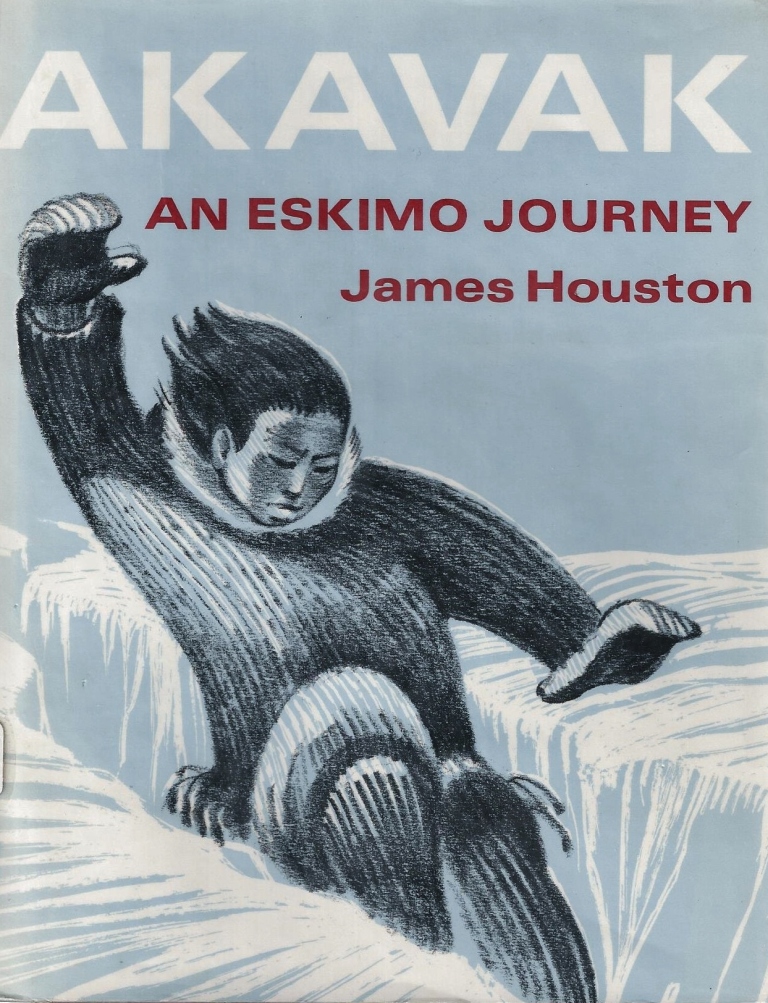
akaval james houston cover 1 001Akavak: An Eskimo Journey by James Houston ~ 1968. This edition: Longmans Canada Limited, 1968. Hardcover. 80 pages.

My rating: 8.5/10

Akavak is a slight but punchy short novel from Canadian artist and writer James Houston. Akavak was Houston’s fourth published fictional work, preceded by the award-winning Tikta’liktak in 1965, as well as The Eagle Mask (1966) and The White Archer (1967). Aimed at a youth readership, Houston’s short juvenile novels garnered high praise for their depictions of pre-European contact  Eskimo (as the Inuit were called at that time) and Indian (First Nations) life. Houston went on to write and illustrate a number of other juvenile adventure novels, most set in contemporary times, as well as several ambitious and well-received adult novels, all set in the North, and frequently featuring strong Inuit and First Nations characters.

In Akavak, a fourteen-year-old Inuit boy (Akavak) is asked to accompany his grandfather on a perilous journey along the coastline in order to fulfill the elderly man’s final wish, to see his beloved brother one more time before it is too late. Warned by his father that though Grandfather is still a master traveller and skilled hunter he occasionally shows flawed judgement due to his great age, Akavak must assess his grandfather’s moods and instructions as the journey proceeds, and find tactful ways to prevent the old man from putting himself and Akavak in danger.

At first the journey goes well, but soon a series of increasingly serious disasters threatens the expedition, and Akavak’s and Grandfather’s very survival; Akavak must finally take the lead and make some difficult decisions. The two ultimately attain their destination, but the ending of the story is bittersweet.

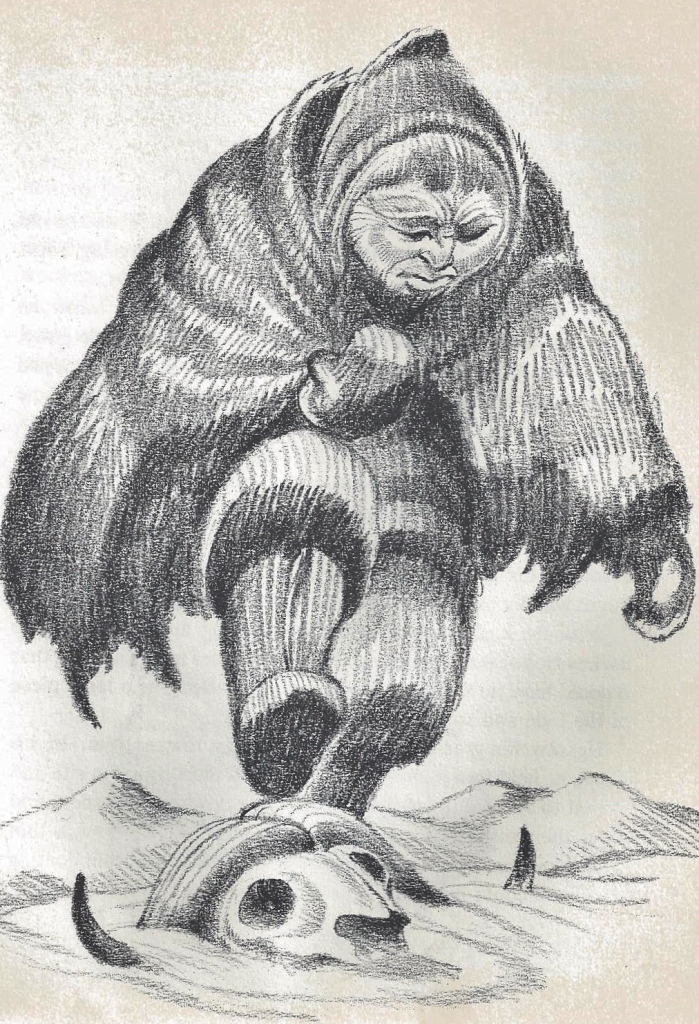
akavak james houston illust 2 001Well depicted details of traditional Inuit skills, as well as a compelling storyline make this novel a good read-alone or read-aloud for primary and intermediate grades, and it will work well as part of a Canadian/Arctic/Inuit Life social studies/humanities unit. The novel is set pre-European-contact (or perhaps in an isolated location); while there is a slightly educational tone to a few of the author’s explanations of customs or habits, the story is very respectful of Inuit culture without over-emphasizing its “exotic” nature to readers not of the North.

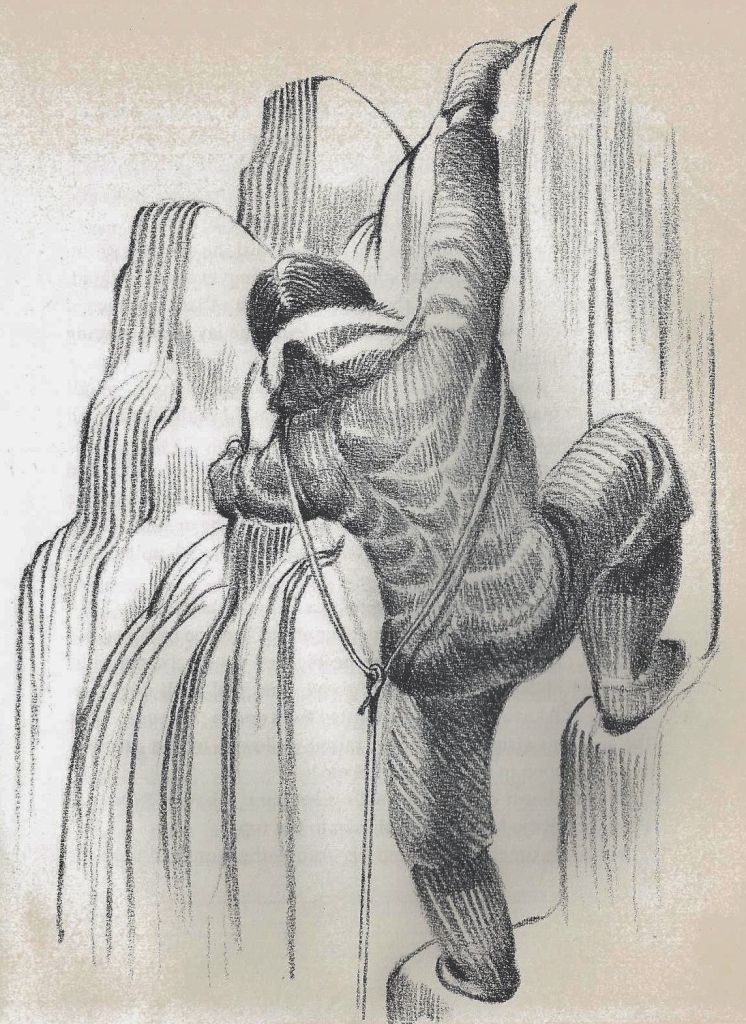
James Houston was a talented artist; while not meaning to downplay the vigorous story, I have to say that for me the illustrations are perhaps the best part of this short novel. Simplistic charcoal drawings, they brilliantly capture mood and movement, and are detailed enough to provide a clear picture of the places and people of Houston’s dramatic tale.

akavak james houston illust 1 001The story itself provides not much in the way of surprises; the adventuring pair overcome their frequent setbacks with predictable success. There is a very real sense of the peril that they find themselves in; Houston, though allowing the titular hero to attain his goal in the end, never guarantees a happy ending to any of the incidents he depicts, adding a dash of plausibility to a highly dramatized adventure story.

I would think that ages 8 to 12 or so would enjoy this story as a read-alone; add a few years onto each end of that range if using as a read-aloud. There are no chapter breaks, but I would suggest that it be broken into perhaps three or four sections if reading aloud, though an ambitious and well-seasoned narrator with an attentive audience could probably pull it off in less.

Akavak has been continually reprinted in numerous editions throughout the years, and so should be fairly easy to find in most Canadian library systems, or through the second-hand book trade.

Read Full Post »

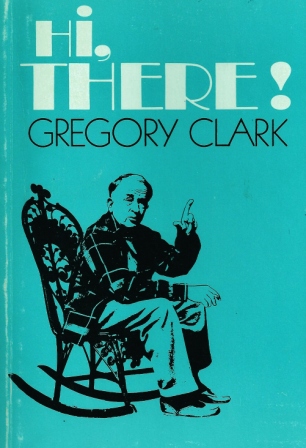
hi, there! gregory clark 001Hi, There! by Gregory Clark ~ 1963. This edition: McGraw Hill-Ryerson, 1968. Softcover. ISBN: 0-7700-6026-9. 228 pages.

My rating: 9/10. There is absolutely nothing to dislike – well, aside from, if one wants to get really nit-picky, the odd era-typical comment, such as Mr. Clark referring to his wife and presumably at least one daughter in a paternally misogynistic way as “my women” – and much to like.

This was one of my father’s books; I remember buying him other Gregory Clark titles as birthday and Father’s Day gifts; I am now wondering just where those might have ended up, as Hi, There! has piqued my interest; I’d happily read more of these pleasant (though possibly just a bit dramatized) memoirs.

These are short, 4 to 5 page, mostly humorous, meticulously well-written anecdotes and essays on various low-key topics, from winter driving (a truly Canadian focus of interest) to neighbourhood feuds to amusing encounters with all sorts of people, including a carload of bank robbers disguised as a wedding party.

Gregory Clark has a stellar backstory as an extremely well-regarded journalist. He was the recipient of both the Order of the British Empire and the Order of Canada for his war reporting, as well as receiving the Stephen Leacock Award for Humour for his collection entitled War Stories.

From The Canadian Journalism Foundation biography:

Greg Clark – Journalist 1892-1977

It was once said that in the years leading into the Second World War, more Canadians would recognize Greg Clark on the street than the prime minister or the movie hero of the day.

During the 1930s, Greg Clark was the most widely read writer in Canada, crafting features for the Star Weekly with cartoonist Jimmie Frise. His popularity continued through the late 1940s and into the early 1960s as a writer and most notably back-page columnist, for Weekend Magazine.

Nineteen books of Greg Clark’s writings, ranging from everyday life to the horrors of war, have been published. His output of stories about real people living real lives was phenomenal.

Craig Ballantyne, editorial director of Weekend Magazine, once described Clark as “a man so Canadian that no other land could possibly have produced him.” [Ernest] Hemingway, in 1920, called him the best writer at the Toronto Star.

Clark entered journalism in 1911 at the Toronto Star, where he worked for 34 years before joining the Montreal Standard, which later developed into Weekend Magazine.

He is often remembered as a columnist, but his feature and column work had been forged by years of front-page reporting. He covered the Moose River mining disaster, royal coronations, papal coronations, the death of FDR, and the founding of the UN, to name a few. He was a [frequently frontline] war correspondent in World War II, after serving in WWI, which he entered as a private and left as a major.

His contributions to journalism are many, but his most important is what his work can show other journalists about storytelling excellence. All Clark’s writings, from columns to hard front-page news, are guides to how journalists should tell stories that interest and inform readers.

His writings are real life with human touches. They have been described as “rapid, full of rhythm, unimpeded by digression.” His work was positive in the darkest situations, while still laying out the full facts and describing reality. This is an approach worth study in a time when the public feels journalism is far too negative…

More glowing biographies are here:

4th Canadian Mounted Rifles – Biography of Capt. Gregory Clark

Gregory Clark. Perhaps now a forgotten author in this new century? Fellow Canadians, remember the name for your used book store explorations; you might be very well pleased to make his acquaintance.

Read Full Post »

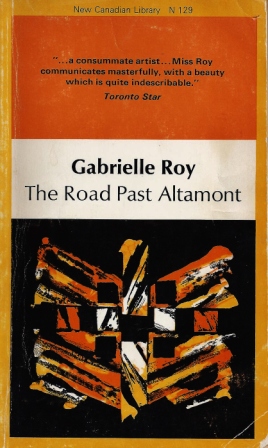
the road past altamont gabrielle roy 001The Road Past Altamont by Gabrielle Roy ~ 1966. Published in French as La Route d’Altamont. This edition: New Canadian Library, 1976. Translated and with an Introduction by Joyce Marshall. Paperback. ISBN: 0-7710-9229-6. 146 pages.

My rating: 10/10.

It has been a while since I read much of Gabrielle Roy, but my recent discovery of Enchanted Summer reminded me of how much I enjoyed her writing in summers long past. For to me Gabrielle Roy is best read in summer, on those sunny days that invariably follow the solstice; something about her delicacy of expression and lightness of touch belongs to the stillness of summer afternoons, and to times of repose in green shade.

I came to The Road Past Altamont with high hopes; they were met in full. And, too, very personal feelings were stirred by these anecdotes of generations of (mostly) women, and their ways of dealing with the passing of time and the separation of the generations in a very real sense, as my own almost-grown children are poised for their journeys into the wider world, and my own elderly mother for her withdrawal from it.

The Road Past Altamont is an assemblage of four connected, chronologically ordered short stories, or, rather, vignettes. The central character is Christine, youngest daughter of a Manitoban francophone family. Readers of Gabrielle Roy will remember Christine from Street of Riches, in which she is the narrator of a similar collection of vignettes. Christine is an autobiographical character, based on Gabrielle Roy, and Christine’s memories and responses are, one must therefore speculate, Gabrielle’s.

In the first story in The Road Past Altamont, My Almighty Grandmother, six-year-old Christine is sent, at her grandmother’s request, to visit for part of the summer in a rural Manitoba village. Christine is at first sulky and reluctant, informing Grandmother upon arrival that, “I’m going to be bored here…I’m sure of it. It’s written in the sky.” Grandmother takes up the challenge at once, and Christine, though she does frequently succumb to the lassitude of hot summer afternoons, ends up with a strong love and admiration for her still-capable grandmother, who is slowly being relegated to the status of “poor old Mémère” by the rest of her large family of descendants. To Christine’s amazed delight, Grandmother makes her a doll from odds and ends, scraps of cloth, leather and yarn; even weaving a tiny hat. While the two work, Grandmother muses on the ironies of growing old.

“That is what life is, if you want to know… a mountain made of housework. It’s a good thing you don’t see it at the outset; if you did you mightn’t risk it, you’d balk. But the mountain only shows itself as you climb it. Not only that, no matter how much housework you do in your life, just as much remains for those who come after you. Life is work that’s never finished. And in spite of that, when you’re shoved into a corner to rest, not knowing what to do with your ten fingers, do you know what happens? Well, you’re bored to death; you may even miss the housework. Can you make anything out of that?”

… She grumbled on so that I dozed, leaning against her knees, my doll in my arms, and saw my grandmother storm into Paradise with a great many things to complain about. In my dream God the Father, with his great beard and stern expression, yielded his place to Grandmother, with her keen, shrewd, far-seeing eyes. From now on it would be she, seated in the clouds, who would take care of the world, set up wise and just laws. Now all would be well for the poor people on earth.

For a long time I was haunted by the idea that it could not possibly be a man who made the world. But perhaps an old woman with extremely capable hands.

In The Old Man and the Child, Christine is a few years older. Grandmother has died, and Christine’s deep unhappiness about losing her is salved by her new acquaintance with an elderly neighbour several streets over from her own. Monsieur Sainte-Hilaire sees Christine fall while walking gingerly on her newest passion, a pair of stilts; he picks her up and dusts her off and sends her on her way buoyed by his admiration for her tenacity and agility. Christine basks in his admiration; the two become close friends. As the hot, hot summer proceeds – one of the hottest and driest in living memory – Monsieur Saint-Hilaire and Christine hatch a plan together, a visit to the great inland ocean, Lake Winnipeg, which Christine has never seen, and which the old man yearns for, having spent much time beside it in his long-ago youth. Against her better judgement, Christine’s mother gives permission for the long day’s excursion.

At length the old man asked me, “Are you happy?”

I was undoubtedly happier than I had ever been before, but, as if it were too great, this unknown joy held me in a state of intense astonishment. I learned later on, of course, that this is the very essence of joy, this astonished delight, this sense of revelation at once so simple, so natural, and yet so great that one doesn’t quite know what to say of it, except, “Ah, so this is it.”

All my preparations had been useless; everything surpassed my expectations, this great sky, half cloudy and half sunlit, this incredible crescent of beach, the water, above all its boundless expanse, which to my land-dweller’s eyes, accustomed to parched horizons, must have seemed somewhat wasteful, trained as we were to hoard water. I could not get over it. Have I, moreover, ever got over it? Does one ever, fundamentally, get over a great lake?

In The Move, Christine is eleven, and has made unlikely friends with Florence, whose father, among his other odd jobs, often works as a mover, driving a team of horses and a huge cart, trundling the sad possessions of the poor of the city from one dismal home to another. At this time the team of horses is itself becoming an anomaly, as technology has largely replaced them with the internal combustion engine. Christine is fascinated by concept of moving house; she has never personally experienced it, other than the temporary removals of holidays and such.

To take one’s furniture and belongings, to abandon a place, close a door behind one forever, say good-by to a neighbourhood, this was an adventure of which I knew nothing; and it was probably the sheer force of my efforts to picture it to myself that made it seem so daring, heroic and exalted in my eyes.

“Aren’t we ever going to move?” I used to ask Maman.

“I certainly hope not,” she would say. “By the grace of God and the long patience of your father, we are solidly established at last. I only hope it is forever.”

She told me that to her no sight in the world could be more heartbreaking, more poignant even, than a house moving.

“For a while,” she said, “it’s as if you were related to the nomads, those poor souls who slip along the surface of existence, putting their roots down nowhere. You no longer have a roof over your head. Yes indeed, for a few hours at least, it’s as if you were drifting on the stream of life.”

Poor Mother! Her objections and comparisons only strengthened my strange hankering. To drift on the stream of life! To be like the nomads! To wander through the world! There was nothing in any of this that did not seem to me like complete felicity.

Since I myself could not move, I wished to be present at someone else’s moving and see what it was all about…

Christine sneaks away early one morning to accompany Florence and her father on one of their jobs; she comes home devastated; it is not the joyful experience she had imagined. Mourning to her mother that the view from the seat of the wagon is not as she had imagined it to be, Maman realizes with dismay that Christine is one of the yearning ones; one who will always be looking for new horizons…

“You too then!” she said. “You too will have the family disease, departure sickness. What a calamity!”

Then, hiding my face against her breast, she began to croon me a sort of song, without melody and almost without words.

“Poor you,” she intoned. “Ah, poor you! What is to become of you!”

It is so much more heart-rending to be the one left than the one leaving, and Maman struggles mightily with the pain of desertion when Christine, now a young woman, breaks it to her that she is about to embark on her long-desired travels, to go to Europe, to explore the greater world. The Road Past Altamont, the last story in the book, is the most delicately poignant, as Christine and Maman drive together across the prairie to visit relatives on the outskirts of the Pembina Hills, the only “mountains” in southern Manitoba. Maman yearns for the hills, but as there is no road into them, she fears she will never walk among them, so when Christine inadvertently take a wrong turn, “just past the village of Altamont”, and ends up in the gentle mountains, her mother’s joy is overwhelming. However, on a return trip, they cannot find the road again, and soon Christine will be gone…

Maman was perhaps close to admitting that she felt herself to be too old to lose me, but there is a time when one can bear to see one’s children go away but after that it is truly as if the last rag of youth were being taken away from us and all the lamps put out. She was too proud to hold me at this price. But how insensitive my lack of assurance made me. I wanted my mother to let me go with a light heart and predict nothing but happy things for me…

Christine goes away, accompanied in her memory by all of the women in her family that came before her, and her mother encourages her in her travels, sharing her own small stories and dreamed-of destinations, which Christine has moved so far beyond. It is only in later years, looking back on that drive together towards the elusive hills, that Christine realizes how gracious her mother was in hiding her own deep pain and in opening her arms wide to let her youngest daughter freely go, unrebuked and encouraged on her way.

*****

A lovely book, and, for me, a timely one. The sensitivity of her observations is surely what has made Gabrielle Roy such a beloved author; her visions hold a lasting appeal, and something of comfort, too, across our varied experiences and all the years between our times.

Read Full Post »

frederica georgette heyer 1Frederica by Georgette Heyer ~ 1965. This edition: Pan, 1968. Paperback. ISBN: 330-20272-3. 330 pages.

My rating: 7.5/10.

This is my fifth ever Georgette Heyer “Regency Romance” title. After bowing to so many recommendations to give the author a try, I must say that I am thoroughly enjoying my explorations of her work. Frederica was, I believe, Heyer’s twenty-ninth Regency novel, in a writing career spanning fifty years, in which she produced a very respectable sixty-plus novels and mystery thrillers.

Here, in Heyer’s own words, is the rather tongue-in-cheek blurb she wrote for the pre-publication promotion of Frederica, at the insistence of her publisher. By this time, in the mid 1960s, the author was a reliable producer of “a book a year”, with a strong contingent of devoted fans clamouring for more.

This book, written in Miss Heyer’s lightest vein, is the story of the adventures in Regency London of the Merriville family: Frederica, riding the whirlwind and directing the storm; Harry, rusticated from Oxford and embarking with enthusiasm on the more perilous amusements pursued by young gentlemen of ton; the divine Charis, too tenderhearted to discourage the advances of her numerous suitors; Jessamy, destined for the Church, and wavering, in adolescent style, between excessive virtue and a natural exuberance of spirits; and Felix, a schoolboy with a passion for scientific experiments. In Frederica, Miss Heyer has created one of her most engaging heroines; and in the Marquis of Alverstoke, a bored cynic who becomes involved in all the imbroglios of a lively family, a hero whose sense of humour makes him an excellent foil for Frederica.

The storyline is as simple as can be. It involves that tried and true pursuit, the husband hunt, and of course its equally vital counterpart, the quest for an acceptable wife.

Frederica, eldest in a family of five recently-orphaned siblings, has, at the advanced age of twenty-four, cheerfully accepted that she is destined for a life of happy spinsterhood. With her oldest brother, Harry, several years her junior, off at Oxford, Frederica is concentrating her energies on her nineteen-year-old sister Charis, who is an adorable young lady, being sweet-natured (though not overly bright), and stunningly beautiful. The little snag is that though the Merrivilles were left with a reasonably adequate income after their late father’s demise, the otherwise desirable Charis will not have much of a marriage portion to accompany her lovely self into a marriage; Frederica is determined to introduce her sister into the highest society and provide her with a chance to attract a high-born (and wealthy) suitor who may overlook her (relative) poverty.

Frederica petitions a remote cousin, Vernon, Marquis of Alverstoke, to sponsor Charis for her London season. Lord Alverstoke, a confirmed cynic and a slightly notorious rake – though forgiven all by fashionable London society out of respect for his massive fortune – is initially dismissive of Frederica’s suggestion, but she so charms him with her candour and sense of humour that he unexpectedly relents and decides to don the mantle of guardian of the Merriville menage for a while, mostly, he tells himself, because his interest in the lovely Charis – a direct competitor in the marriage market to their own daughters – will annoy his snobbish and critical sisters.

Charis does indeed cause a sensation with her loveliness and good nature; suitors reliably materialize, and the story meanders on its way. And we all know who Lord Alverstoke ultimately falls for, don’t we? Though the object of his reluctant devotion remains oblivious, which gives opportunity for the reader to sigh romantically over the reformed rake’s newly awakened and, for the first time in his life, truly heartfelt passion, which – of course! – he cannot share with the woman of his desires, as she shows no signs of reciprocation and would doubtless laugh off any advance…

This novel does rather go on; Georgette Heyer was going through a bout of serious ill health while it was being written and readied for publication, and she stated that though she would have liked to have edited it more strongly and decreased its length, her publisher’s and public’s demands overwhelmed her and she let Frederica go into print as it stood.

It works, though. The characters are interesting, and the dialogue is – overused but apt description – sparkling. The situations Frederica and her two youngest brothers, earnest Jessamy and rambunctious Felix, get themselves into are enjoyably humorous. The period detail is absolutely delicious, and I loved the passing descriptions of dress which Heyer provides, speaking to her readers as though they too were intimately familiar with the fashions of the time period. She informs, but never preaches; this is the type of historical fiction I like the very best. The readers must stretch to take it all in, but the writer assumes her audience is perfectly capable of doing so, and the story moves right along.

Of particular interest were the references to the technological inventions of the day. I was most intrigued by the mention of

… Maillardet’s Automaton … this marvel was a musical lady, who was advertised, rather alarmingly, to perform most of the functions of animal life, and to play sixteen airs upon an organised pianoforte, by the actual pressure of the fingers…

frederica georgette heyer pedestrian curricleAlso the Pedestrian Curricle, a kind of pedal-less precursor to the bicycle, upon which one of the Merriville boys, in company with a steep hill and a canine companion – the boisterous pseudo-“Baluchistan Hound” Lufra –  comes to grief. And then of course there is the ballooning episode which concludes the story with such drama.

A most enjoyable diversion, was cheerful and overwhelmingly good-natured Frederica – book and heroine both – and I savoured every page.

It lost a few points on my personal ratings scale by the rather overdone drama of the ending, which I thought was just a bit over-the-top, is such a criticism can be levelled at a book of this genre.

Looking forward to my next foray in Georgette Heyer’s meticulously depicted Regency world, and to meeting yet more of her dashing heroes and clever heroines.

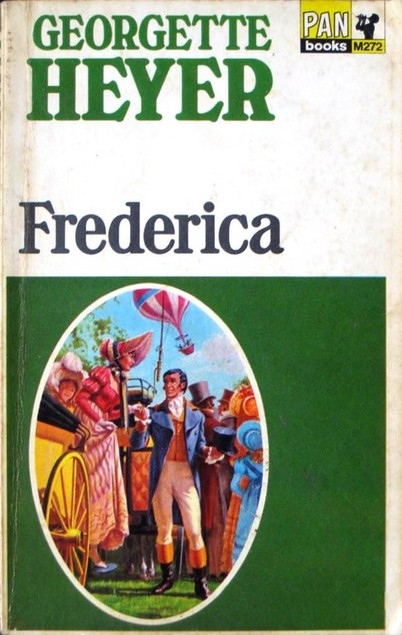
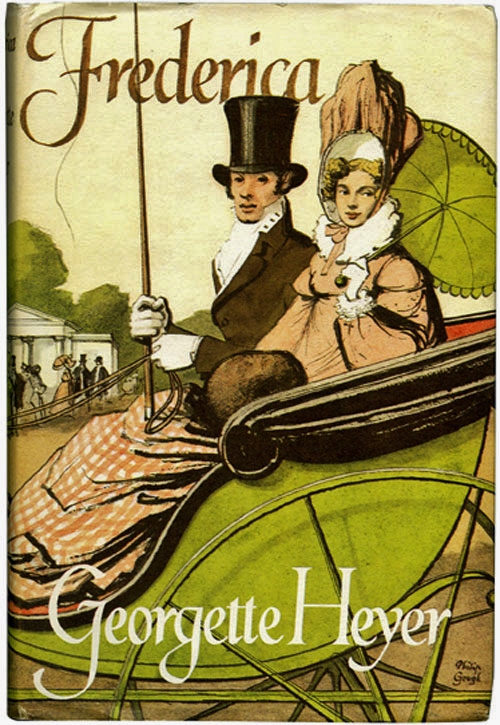
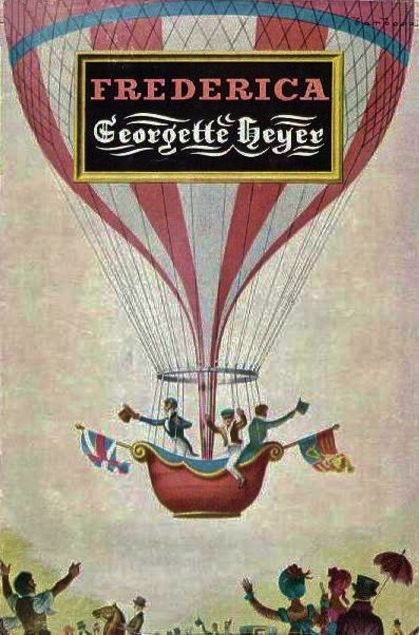
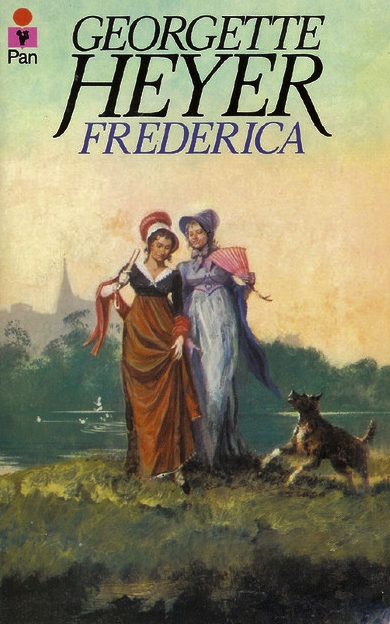
In the meantime, here are some of the covers for Frederica which struck my fancy as I poked about the internet investigating other reviews, of which there are many, most exceedingly enthusiastic.

I liked this cover; it has a decided "period" appeal.

I liked this cover; it has a decided “period” appeal.

And this one, focussed on the dramatic balloon episode which brings the tale to a fitting conclusion.

And this one, focussed on the dramatic balloon episode which brings the tale to a fitting conclusion.

And here we have Frederica and Charis, accompanied by their beloved Lufra. I'm not quite sure about that fan, though; would it have been employed in such a way on a daytime stroll in a London park?

And here we have Frederica and Charis, accompanied by their beloved Lufra. I’m not quite sure about that fan, though; would it have been employed in such a way on a daytime stroll in a London park?

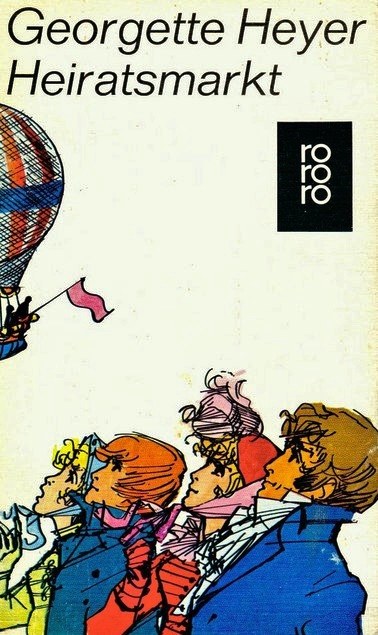
Here's a German cover which caught my eye. (Georgette Heyer was apparently very popular in Germany.)  I really like the strong colours and simplicity of the pen-and-ink treatment of this poster-like illustration.

Here’s a German cover which caught my eye. (Georgette Heyer was apparently very popular in Germany.) I really like the strong colours and the striking simplicity of the pen-and-ink treatment of this poster-like illustration. (“Heiratsmarkt” translates to “Marriage Market”.)

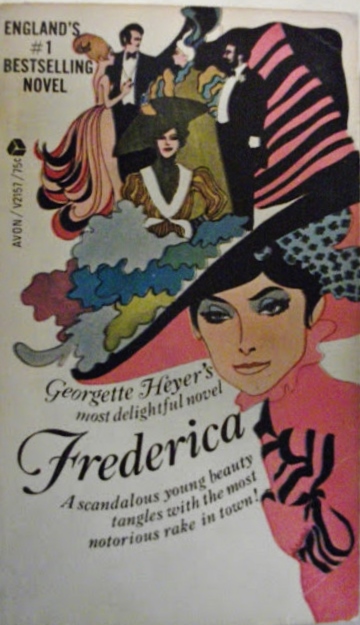
This one is absolutely bizarre, a triumph of misguided misrepresentation.  Who are these people, and why have they strayed from a 1960s costume party onto the cover of a well-mannered Regency-period romance?!

This one is absolutely bizarre, a triumph of misguided misrepresentation. Who are these people, and why have they strayed from a 1960s costume party onto the cover of a well-mannered Regency-period romance?! And who is the “scandalous young beauty” so prominently mentioned? Egads! Did the illustrator read the book? Methinks…NOT.

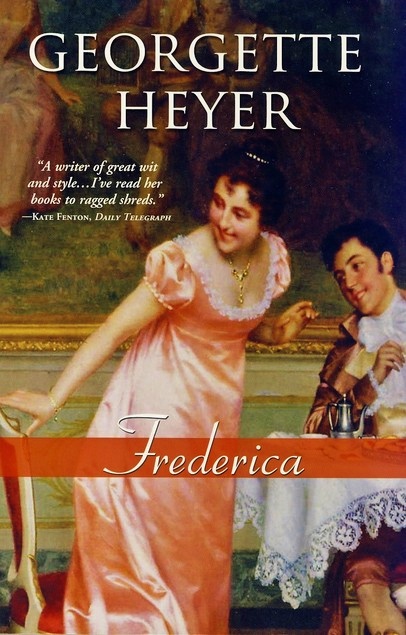
A more current cover from a recent re-release. This one captures the happy tone of the novel wonderfully well, though the featured female does not really fit my mental picture of Frederica herself.

A more current cover from a recent re-release in 2009. This one captures the happy tone of the novel wonderfully well, though the featured female does not really fit my mental picture of Frederica herself.

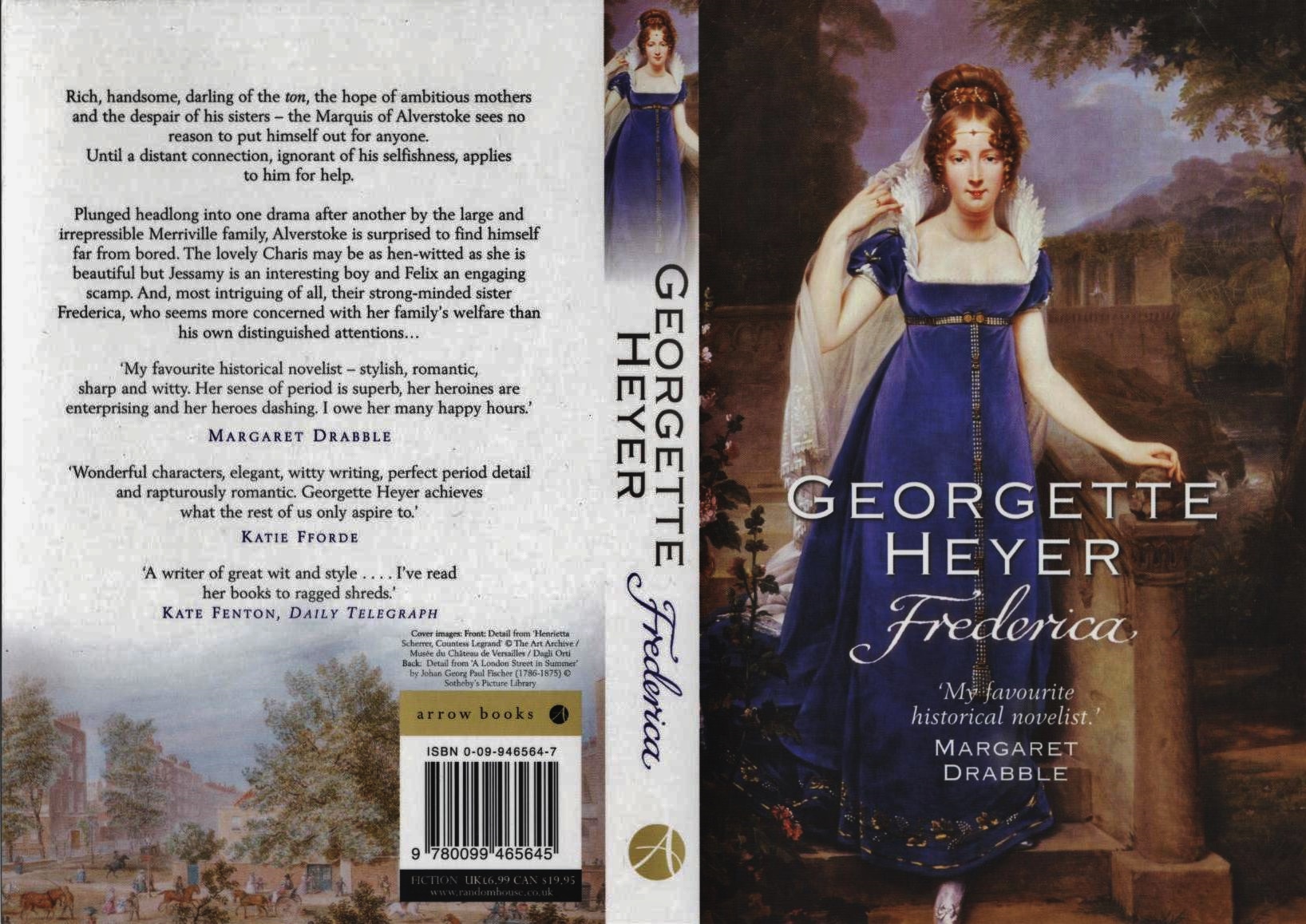
And here is the most recent cover, from 2011. Again, not my mental image of Frederica, but a lovely cover nonetheless.

And here is the most recent cover, from 2011. Again, not my mental image of Frederica, but a lovely cover nonetheless.

Read Full Post »

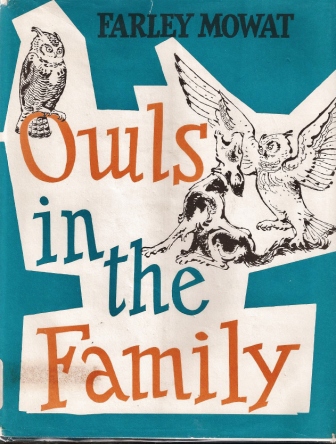
owls in the family farley mowat 001Owls in the Family by Farley Mowat ~ 1961. This edition: Little, Brown & Co., 14th printing. Illustrated by Robert Frankenberg. Hardcover. 107 pages.

My rating: 5/10 as an adult re-read; easily an 8/10 for a juvenile Can-Lit read-alone or read-aloud.

My kids swear I read this to them out loud way back in the murky depths of time; I can’t say that I remember doing so, but we read a lot of books together, so there’s a strong possibility that they are correct. They also say that they loved it, so…? (That has to stand for some sort of a recommendation!)

School teachers love this one, too. Just go ahead and Google “Owls in the Family novel studies”, and then stand back. Generations of Canadian school children have “done” and are still “doing” this slightly fanciful tale, ostensibly about young Farley’s true experiences as a Saskatchewan schoolboy.

Are you catching a slightly cynical tone to my words? I am sad to say that I have something of a love-hate relationship with Farley Mowat. I truly enjoy some of his fictions, and happily read and re-read his famous Lost in the Barrens and The Curse of the Viking Grave all through grade school, though luckily I dodged ever having to do a novel study on either of these; I read them purely for pleasure. But as the years went on, and I became more and more aware of the Canadian literary scene in a much broader sense, I often came across Mowat (in print) laying down the law and making grand pronouncements upon this, that and the other, which in itself is not all that offensive, but for his strident dismissals of other opinions than his own. Grand Old Man of Canadian letters as he may have become, but he is not universally loved in his home country. See this article in Up Here magazine, Farley Mowat: Liar or Saint?, for an interesting discussion of the Mowat paradox.

All of this aside, in looking at his juvenile fiction, Owls in the Family may well be his most beloved and widely read work, perhaps because of its suitability as a read-alone for novice readers, and its affectionate portrayal of an idealized mid-20th Century boyhood on the Canadian prairies.

The gist of the book is that at some point in his youth, the narrator, one Billy (widely accepted to be a stand-in for Farley himself, though why the renaming, none can tell), along with his friends Bruce and Murray, decide that they would like to capture and raise a young Great Horned Owl as a pet. They wander out into the cottonwood groves, find an owls’ nest, and, after a farcical encounter with the mother owl while accompanying one of their teachers on an attempt to photograph the nest and the owlets, conveniently acquire one of the fledglings when a storm knocks the nest down a day or two later.

The boys take their find to Billy’s house, where the young owl, named Wol after Christopher Robin’s companion in the Pooh books, joins an existing menagerie of various creatures such as gophers and white rats. Wol settles in to become one of the family, and is soon joined by a companion, the smaller and much more meek Weeps, rescued by Billy from certain death by torture by two other boys.

Several chapters of various adventures are described – canoeing on the slough, a pet parade gone hilariously awry, various encounters with unsuspecting individuals whom the owls universally upset and oust – until the story’s sudden ending with Billy and his family moving away, leaving the owls under Bruce’s care.

Perhaps I’ve become too cynical in my middle-aged years, but I’m afraid a lot of the humour didn’t raise much more than a reluctant smile this time around. Robbing birds’ nests, shooting crows, finding the neighbour’s cat dead in Wol’s claws – these are examples of the anecdotes we are asked to smile at. A less critical readership will no doubt take it all in stride.

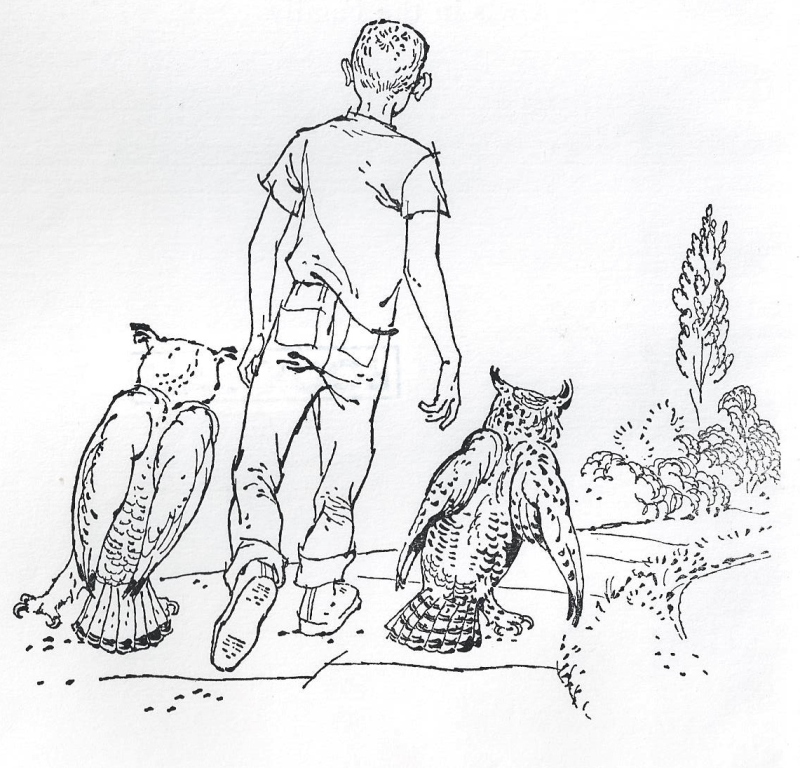
From Farley Mowat's 'Owls in the Family' frontispiece; illustration by Robert Frankenberg.

From Farley Mowat’s ‘Owls in the Family’ frontispiece; illustration by Robert Frankenberg.

The illustrations by Robert Frankenberg are gloriously typical of the best juvenile books of the era, and it is well worth seeking out a copy with the original artwork if sharing this with a young reader, or, for that matter, reading it for yourself. Eleven short chapters and just over one hundred pages make this a fast and easy read-aloud; one could easily knock back three or four chapters at a sitting. Suitable for all ages, as long as one is prepared to discuss some of the more questionable events (no longer perhaps seen as harmless amusement) referred to in the previous paragraph.

I would hesitate to inflict this upon children in the nature of a “novel study”, but it does make an interesting casual read, capturing as it does a very Canadian place in a now long-ago time. Recommended, with the stated personal reservations.

Read Full Post »

a breath of fresh air betty cavanna 001A Breath of Fresh Air by Betty Cavanna ~ 1966. This edition: William Morrow, 1975. Hardcover. 223 pages.

My rating: 4/10.

I had to look back and see how I rated the previous three Betty Cavanna vintage teen novels I reviewed, and I see I gave a 6 to the strongest one, Jenny Kimura, and a 5 to both The Country Cousin and Lasso Your Heart. A Breath of Fresh Air is definitely down a level from these already minor novels, both in plot and execution.

Despite the low rating, this book is already back on the keeper shelf, as it is a decent enough story for a quiet hour or two’s modest diversion.

Seventeen-year-old Brooke Lawrence and her thirteen-year-old brother Peter are reeling from their parents’ announcement that they are getting a divorce. In the staid middle-class circle the family inhabits in quiet Concord, Massachusetts, divorce is still a matter of whispers and concerned glances. Both Brooke and Peter feel horribly stigmatized by their situation, even though everyone (except the two young Lawrences) agrees that they could see the split coming.

Competent Harriet will be better off not saddled with her dreamy and ineffectual husband, Austin, and he in turn will be happier living with (and being supported by) his older sister, who truly appreciates his penchant for tinkering with hopelessly complicated inventions which never quite make it through the patent office to production. For some years now Harriet has taken on the role of family breadwinner with her antique store business, and Austin’s cleaning out of their joint bank account just as she’s written a (bounced) cheque for a stock order is the final straw in a long series of like episodes.

Brooke, “smart and very pretty”, is a scholarship student in her final year of high school at an exclusive girls’ school, and her pride is bruised and her confidence shaken by the failure of her parents’ marriage. She is questioning everything that she once took for granted, including her own budding romantic relationship with the quiet and loyal David Hale.

Brooke’s research project on author Louisa May Alcott, the local historical celebrity, brings the parallels in Brooke’s and Louisa’s lives into focus, and is the sub-theme of A Breath of Fresh Air. Impractical father, driven mother, and a strong desire for self-expression through writing are common grounds, and as Brooke muses over Louisa May Alcott’s teenage decision to eschew romance and marriage, she wonders if she should do the same. David, naturally enough, does not agree, nor does a charismatic Harvard student who pops up out of nowhere to actively pursue the delectable Brooke, and to add a bit of romantic tension to this rather dull story.

The details regarding the antique buying and selling business are the most interesting aspects of this novel, and the related humour relieves the earnest tone; I had to chuckle over Harriet’s classification of some of her casual browsers as “bathroom customers”. The main characters are (aside from Harriet, whom I quite related to) decidedly flat; I never got a sense of any of them being real people; they fulfilled every stereotype of their imposed roles. The plot is predictable and completely unsurprising; Brooke’s final decision regarding her own romantic life is absolutely no epiphany to anyone, including the patient and slightly patronizing David.

As the author did produce something like seventy novels in her prolific career, it seems reasonable that their quality would fluctuate. A Breath of Fresh Air has a potentially interesting theme, but it never really gets off the ground to fulfill that promise.

This “teen novel” is a lightning fast read and good for a momentary diversion, but, sadly, not much more. A period piece of mild interest and mild enjoyment, not bad enough for a toss into the discard box, but not good enough to wholeheartedly recommend either. Cavanna was a competent enough writer for her chosen genre, and I appreciate what she was trying to do with her themed storylines, but this particular story is not one of her best.

Read Full Post »

the shout & other stories robert graves 001The Shout and other stories by Robert Graves ~ 1965. This edition: Penguin, 1978. Paperback. ISBN: 0-14-00.4832-4. 300 pages.

My rating: 7/10.

A generous and widely eclectic sampling of Robert Graves’ short stories and personal anecdotes. While a bit uneven, as might be expected in an anthology spanning some forty years or so of one man’s writing career, but there is enough excellent reading in this book to make it a certain keeper.

The stories are grouped under three broad headings: English Stories, Roman Stories, and Majorcan Stories, but the first and third categories show quite a wide range in style, settings and topics. The three Roman Stories are the tightest grouping, theme-wise.

I enjoyed reading most of these, and came away feeling keen to continue to develop my acquaintanceship with the prolific Robert Graves. I do believe I might be ready to tackle his ambitious I, Claudius. If it is anything like the three Roman Stories in this collection, it will be very good indeed. I’ve been holding out for a better edition, as mine is a fat paperback with a cracked spine and tiny print (these unreliable middle-aged eyes are giving me grief lately), but I think I will dip in and see how it goes. If I like it I’ll upgrade to a physically nicer edition. Anyway, I’m straying off topic. Back to the volume at hand!

*****

From the author’s Introduction:

The first of these stories, The Shout, was written in 1924; and the last, Christmas Truce, in 1962. Most of them, including such improbable ones as Kill Them! Kill Them!, The Whitaker Negroes, Old Papa Johnson and A Toast to Ava Gardner, are true, though occasional names and references have been altered. Nor can I claim to have invented the factual details even of She Landed Yesterday, or An Appointment for Candlemas. In fact, a correspondent who read She Landed Yesterday reproached me for not mentioning the two French copper coins found in the coffin-doll’s pocket; and An Appointment for Candlemas brought members of the revived British witch cult to my door in search of information about flying ointments and such like. Pure fiction is beyond my imaginative range; I fetched back the main elements of The Shout from a cricket-match at Littlemore Asylum, Oxford.

ENGLISH STORIES: A variety of anecdotes and stories, most with some sort of “twist”.

  • The Shout ~ The otherwise seemingly normal resident of an insane asylum claims he has the power of the “terror shout”, which brings madness and even death to anyone within hearing range. Occultish and dark. Not one of my favourites, though it is memorable enough. 7/10.
  • Old Papa Johnson ~ “Old Papa Johnson” was once Crown Agent on Antarctica’s Desolation Island. His solitude is intruded upon by two uninvited guests, with dire consequences. 6/10.
  • Treacle Tart ~ In this short anecdote, eight-year-old Lord Julius Bloodstock unexpectedly descends upon a surprised prep school, but runs afoul of dietary rules, refusing his treacle tart and sparking something of a minor rebellion among the schoolboys. 6/10.
  • The Full Length ~ A portrait artist is asked to paint a picture of a recently deceased young lady whom he’s never seen, and who has never had her photograph taken. His solution is quite clever, and rather improbably lucky. 5/10.
  • Earth to Earth ~ A macabre little tale of an interest becoming an obsession. Dedicated composters, take warning! Queasily humorous; I laughed out loud with horrified glee at the ending. I *hope* this one was not true! This story would be right at home in a Roald Dahl (adult) story collection. 7/10.
  • Period Piece ~ A humorous little tale of a marital misunderstanding. 6/10.
  • Week-End at Cwm Tatws ~ Still channelling Roald Dahl at his darkest, Graves tells the story of a visit to a dentist gone very, very wrong. 6/10.
  • He Went Out to Buy a Rhine ~ A mysterious suicide turns out to have an esoteric explanation. 5/10.
  • Kill Them! Kill Them! ~ A poignant remembrance of a young man killed in the war. 6/10.
  • The French Thing ~ Gloriously funny tale of village life. Beware the vicarage daughter! Unexpected. Loved it. 10/10.
  • A Man May Not Marry His… ~ An odd little theological, medical and ethical debate about the implications of sex change operations. (I think.) 4/10.
  • An Appointment for Candlemas ~ An interview with a modern witch. Cheeky and funny. 8/10.
  • The Abominable Mr. Gunn ~ Memories of a sadistic schoolmaster. 6/10.
  • Harold Vesey at the Gates of Hell ~ An ironic little tale of village life. Nicely done. 7/10.
  • Christmas Truce ~ Christmas in the trenches, World War I. Enlightened commanders from the German and British sides arrange a temporary truce. 10/10.
  • You Win, Houdini! ~ The rise and fall and rise of a crooked minor magician turned army officer. 8/10.

ROMAN STORIES: That would be ancient Rome. These were all humorous in tone, and all excellent.

  • Epics Are Out of Fashion ~ Falling afoul of Emperor Nero is never a healthy idea, especially when one is a poet writing a thinly veiled mockery of that vindictive lord himself… 8/10
  • The Tenement: A Vision of Imperial Rome ~ This was my favourite story in the collection. An episode detailing daily life in ancient Rome. Brilliantly done; very funny, despite the tragic sudden ending! 10/10.
  • The Myconian ~ A provincial visitor from the island of Myconos is made acquainted with the dramatic and sporting diversions of Rome. Another 10/10.

MAJORCAN STORIES: Written during Graves’ long residence in Majorca, Spain.

  • They Say…They Say ~ gossip in the marketplace. 5/10.
  • 6 Valiant Bulls 6 ~ An epistolary episode detailing Spanish bullfighting, from “Margaret” to “Dearest Auntie May”. Not quite sure about this one; didn’t quite hit all its attempted high notes. 6/10.
  • A Bicycle in Majorca ~  The author’s personal anecdotal tale about civil bureaucracy in relation to the importation and retention of his sons’ British bicycles in Spain. Rather good. 8/10.
  • The Five Godfathers ~ Here’s Margaret gushing on to Auntie May again, this time detailing a confusing christening. Sort of amusing, but perhaps not as much as the author intended. 6/10.
  • Evidence of Affluence ~ A tale of revenge. This one works out very well, though I guessed the ending from a long way off. 8/10.
  • God Grant Your Honour Many Years ~ A misunderstanding and a happy resolution. Another amusing personal anecdote, well presented. 8/10.
  • The Viscountess and the Short-Haired Girl ~ A humorous tale of three Spaniards involved as witnesses in a slightly nefarious divorce case. In the end, everyone gets what they want. Complicated, but funny. 9/10.
  • A Toast to Ava Gardner ~ An appreciation of Ava Gardner, whom the author knew personally. Goes off on a divergent tangent or two. Rather sweet. 9/10.
  • The Lost Chinese ~ Another complicated tale, this time of playwrites and mistaken identities. Diverting. 7/10.
  • She Landed Yesterday ~ A nobleman commits suicide after dabbling in the occult. Love, betrayal and wounded pride move the narrative. 9/10.
  • The Whitaker Negroes ~ A horrifying portrait in an Irish antique shop leads back to America, and to a very strange story – part truth, part fable. 9/10.

*****

Note: Robert Graves is also the author of the recently reviewed Antigua, Penny, Puce, which I stumbled upon recently and subsequently found very diverting. A writer of broad range, well worth exploring.

Read Full Post »

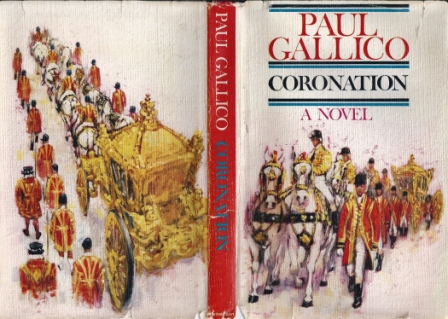
coronation paul gallico 001Coronation by Paul Gallico ~ 1962. This edition: Heinemann, 1962. First edition. Hardcover. 128 pages.

My rating: 6.5/10.

I struggled with this rating. It was a sweet, ultimately upbeat story, and my sentimental side wanted to put it higher, but I couldn’t quite bring myself to do it. The major reason is that while the cover trumpets “A Novel” this slight effort is, in reality, only an extended short story, a novella. The secondary reason is that the characters are so dreadfully clichéd that they never truly came to life for me, though there were glimpses of what made them all tick here and there. Perennially sour and cranky Granny was perhaps the most “real” of them all, the most believable.

A working-class family of five, mother, father, two children and grandmother – the mother’s mother – decide to forego their annual seaside vacation and instead spend their meager holiday savings on a day trip to London to view the Coronation procession of Queen Elizabeth II. By a great stroke of luck, they’ve been put on to a wonderful opportunity: window seats in a grand house situated on Hyde Park Corner, plus a buffet lunch. With champagne. All this for only 10£ each – the tickets were marked down from 25£ – an amazing stroke of luck! What a good thing it was that cousin Bert in London was able to make the bargain purchase through one of his “connections”!

Steel mill shift foreman Will Clagg is bestirred by patriotic pride and a deep affection for his young, beautiful Queen; his wife Violet pictures herself elegantly sipping champagne (which she’s never tasted) like one of the film stars she so idolizes; 11-year-old Johnny, who cherishes a deep ambition to one day become an officer in the British Service, is thrilled to be able to see the massive parade of troops from all corners of the Commonwealth; 7-year-old Gwenny has her own private image of what she’ll see, the fairy-tale princess from one of her storybooks, a personal infatuation about to be fulfilled; Granny, the last hold-out to the proposed excursion, swings into agreement when it is pointed out that she saw the Funeral Procession of the last Queen, Victoria; how fitting that she should see the Coronation Procession of this one. “A living link, you are!” her despised son-in-law cries, and Granny lets herself be swayed.

In to London on the Coronation Special from Sheffield, to join the masses of humanity streaming in from every corner of England, and beyond. But when they finally struggle through the crowds to the address of their front-row-seats-and-champagne-lunch, what greets their shocked and unbelieving eyes is something very different from what they had expected…

Things I Liked About This Story:

Granny – The author creates an unlikeable character, allows us to despise her, and then strips away the surface veneer just for a few moments to allow us to understand the source of her bitterness, after which we are fully on her side. This was a delicately balanced little episode, and Gallico played it just right.

No Miracle – We are expecting some magically positive resolution to the family’s bitter dilemma. We don’t get it. The worst happens. A brave move on the author’s part; he bucks the expected trend.

The Scene – The glimpses of the actual Coronation going on very much in the background of the family’s experiences on the street, as it were. A wonderful depiction of what it musty have been like to be in the crowd of that day. A grand little novella for this reason alone, even without the contrivances – and they were sometimes very contrived – of the sentimental plot.

Will Clagg – Gallico’s tribute to the British Working Class Everyman. Will is decent, hard-working, self-sacrificing, deeply patriotic, deeply paternal, and he loves his wife dearly. Awww, how wonderful! Seriously though, he is a very decent sort, and I liked him thoroughly, saddled as he was with meek and rather silly Violet, her shrewish mother, and rather soppy little Gwenny. Which leads to what I didn’t like about the story.

Things I Didn’t Like About This Story:

The cookie-cutter stereotypes of all of the characters, from wee Gwenny to nasty-but-ultimately-heroic Granny to the policeman at the parade barricade. Every single one was true to the clichéd type we’ve come to expect from that particular place and era; no surprises there at all, though I will admit that Gallico presented his characters well.

The general meekness of every member of the family to their bitter individual disappointments, and the sops which the author created to soothe their woes. Just a little too simplistic, I thought, and the acceptance was too pat. Just a bit. (Says my inner cynic.) Is anyone really that stoic? Little Johnny in particular seemed to be very stiff-upper-lip about, well, everything. A bit of an unnatural child, surely. (But this very stoicism is perfectly suited to Johnny’s ambition of one day being a Noble British Army Officer, I’ll give Gallico that.)

Will’s misogyny towards women. This struck a rather sour note with me. Sure, he loves his wife and the kiddies, and puts up with his sour mother-in-law with good grace, and generally maintains a mild good nature. But Gallico’s little aside near the end of the story, as the family is ordering their meal in the restaurant car, set my teeth on edge.

For all of the fact that Will was a heavy, thick-set, powerful brute of a man who had fought his way up from the ranks of men to command them, he had learned something of the little things that tickled women, an extra ribbon on a dress, or some chintz at a kitchen window. They were not like men, they were more like children. And from the very beginning he had understood that the item which had sold Violet on the whole Coronation scheme and had overcome whatever scruples she might have had, or dissents she could have cooked up, was the champagne, the drink of bubbly advertised with the lunch. He had not, of course, been able to get wholly into her mind and visualize how she saw herself holding the special glass in her hand, the little finger cocked most elegantly, while she contemplated the bubbles rising in the yellow fluid before knocking it back, but he did appreciate that somehow this was to be the focus of the day for her, just that little extra something which sells or captivates a woman.

Well, speaking as a woman, when I read that passage my immediate reaction was “Ouch!” Of course men are above such trivial enjoyments. Being all thrilled at the sight of your name in a minor article in the newspaper is of course something quite different and not nearly as silly as a longed-for taste of champagne, eh Will? Ha!

My husband, who read this book before I did, was completely right, though. He passed it over to me with the comment that it was an enjoyable little story, in a minor sort of key. Which it was. I wouldn’t necessarily recommend it to anyone, but if you come across it, it’s worth the hour or two of reading time it will take, if you are tolerant of deeply sentimental, “proud-to-be-an-Englishman”, and God Save the Queen goings on.

It was rather sweet.

And here are some other reviews, well worth checking out.

Stuck-in-a-Book liked it unreservedly.

Fleur Fisher shared my minor reservations, as did My Porch, but both nodded in appreciation to the good things that I also liked about this little tale.

Read Full Post »

???????????????????????????????I’m not sure what’s going on with my reading this spring; I seem to have gotten stuck among the crinolines, as it were (though only one of the books I’ve read has actually had crinolines in it, this being the just-post-Civil-War Sea Jade), what with my newly discovered fondness for Georgette Heyer’s Regency heroines, and now these two similar but oh-so-different “American gothic” vintage romances. Maybe it’s just that I’ve run out of D.E. Stevensons, which made admirable escape reading through much of March.

April – unbelievable that it’s so close to over already! – has brought its usual share of real life busy-ness, what with being in the plant nursery business, and still providing taxi service to the dancer, and a mountain of paperwork relating to taxes, and even a little bit of lambing, though we’re presently down to a tiny vestige of our former flock, and sometimes I almost forget that they’re out there, what with the more-than-competent teens running things in the barnyard these days.

Spring does seem to have arrived, after dragging her heels rather reluctantly this year, and yesterday brought us a warm wind and the overnight emergence of leaves on the cottonwood trees down by the river – with associated heavenly aroma; the colloquial name for these trees is “Balm of Gilead”, and the fragrance of the sticky sap is indescribably spicy and fresh and green and evocative of every good thing about spring in the country. Our venerable (and almost completely non-productive) apricot tree has blessed us with blossoms this year and yesterday was alive with bees, and (hurray!) the hummingbirds are back. The harbinger of what will become a lively and prolific horde, a lone male Rufous, buzzed through the garden, hovered low to visit the first opening Pulmonaria blooms, and danced in front of the kitchen window, an action which brings forth the lady with the sugar syrup every year.

???????????????????????????????

Amazing that such tiny scraps of feathers and attitude make such long journeys twice a year on their migratory travels, and every year I wonder just how long each individual can survive for. I know we have some of the same birds year to year; how else to explain their immediate presence at the traditional feeder sites before I get the sugar water out, and the buzzing at the one window next to the door where I always emerge with the top-ups through the months when we host our demanding little visitors?

The mosquitoes are here as well, and this less welcome sign of spring was in evidence yesterday. Slapping mosquitoes with potting soil encrusted hands leads to embarrassing smudges on the face and dirt in the hair; luckily I had no human visitors to comment on my disarray! In the evening we built a fire out in the stone ring by our favourite sitting spot on the lawn and ate our supper in a cloud of smoke (welcome because it discouraged the mosquitoes), kept company by the two dogs, the two “barn” cats – big joke, that designation – they are in the house more than occasionally – plus the three “real” house cats, who are glorying in the present situation of open windows unblocked by screens. In and out at will all day long without needing a human hand on the doorknob – feline nirvana!

The teens, careless as only those in the second decade of life can be to the quiet joy of sitting out on a spring evening, were firmly planted in front of their laptops, cruising Facebook and doing whatever else it is that they do when enjoying their non-school-related screen time, though they did remember their filial duties enough (once reminded by loud calls from the father figure) to bring their parents a welcome cup of tea. (It wasn’t that warm out there, even with the fire.)

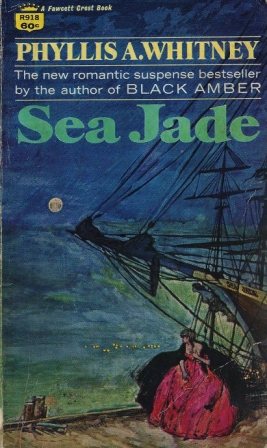
We sat and read until it was too dark to see the words, and I powered through the book I’d grabbed from the “recent acquisitions” pile in the porch, where I’d been going through them and making up a box full for my housebound elderly mother. Mom enjoys the occasional Phyllis A. Whitney, and I’d found an older one with a gorgeously gothic cover illustration, Sea Jade, which didn’t ring a bell as one she’d already read. “I should really try this,” I thought to myself. “Perhaps, like Heyer, Whitney is one of those authors I’ve ignored for too long. Perhaps she too has hidden qualities I’ve foolishly been depriving myself of…”

Short answer: nope.

I almost quit on Sea Jade very early in, but was too lazy to get up and go search for something else; and after a while the sheer awfulness exerted a hypnotizing effect, and I was driven to keep reading by the desire to see how many of the stock gothic romance situations the author was going to put her breathless heroine through. (I lost count.)

Which had me musing this morning on what makes a book a “good” read. Why two such books as these I’ve just read can have so many similarities in plot and character and setting, and why one can be so enjoyable, and one such a blatant mistake. Author’s voice is all I can come up with.

Well, if you made it this far, I’m about to get back on track and discuss some books. Both are vintage gothic romances, with American settings, and both are by accomplished and prolific authors. I found it rather interesting that my favourite was by the lesser-known and less popular author. Margaret Bell Houston is virtually unknown now, while Phyllis A. Whitney is still very much in evidence, both in online discussions and on the shelves of used book stores.

Houston’s gothic was very good indeed; Whitney’s was not. Rather disappointing, as I wanted to like Sea Jade so very much… there are so many Whitneys out there, and she’s so easy to acquire, while Houston’s titles, aside from the book I read, Yonder, are much more elusive.
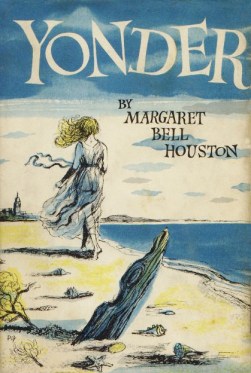
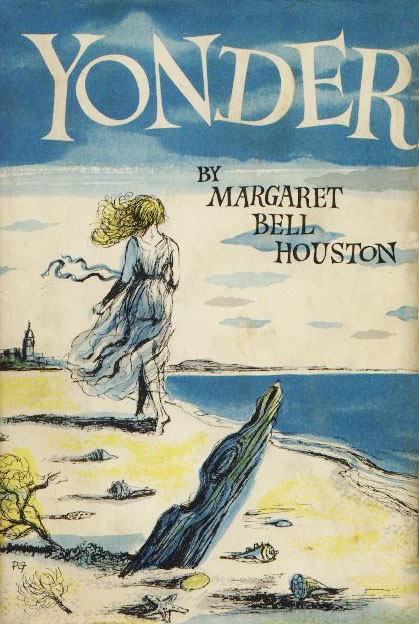
yonder margaret bell houstonYonder by Margaret Bell Houston ~ 1955. This edition: Crown Publishers, Inc., 1955. Hardcover. 242 pages.

My rating: 9/10.

This was one of those rewarding random acquisitions. I was attracted by the eye-catching dust jacket illustration by Paul Galdone, which led me initially to believe that this was a juvenile/teen book. It’s not. (Though any nowadays teen wouldn’t turn a hair at some of the content, which has a decidedly adult theme. Sex and illegitimate babies and so on, not to mention crimes of passion and plenty of psychological drama.)

Olive York, twenty-two years old and recently orphaned by the deaths of her beloved parents in a plane crash on their way to a church convention in California – Olive’s father was a parson – is at a rough point in her life. Her long-time friend-turned-romantic-interest, Dane Carrington, has just married another woman, and, though Olive is a sensible enough girl and does not believe her life is over or anything dramatic like that, she’s looking for a way to move on.

When she’s offered a job as a companion to an emotionally troubled relative of the Carringtons, she’s intrigued both by the vague explanation of Zoé Croome’s “insanity”, and by the descriptions of the Croome family’s estate on a remote Florida key, Yonder Island.

Arriving in an almost-hurricane, the setting is all Proper Gothic Romance, and when we meet the Croome family and their assorted associates, we recognize immediately that here is a group of people with more than a few deep dark secrets. Watch out, Olive!

There’s the immense, handsome, stone-faced and monosyllabic black houseman, Ezra; the white-uniformed nurse Nannine; Judge Croome, family patriarch, forceful and intense but obviously getting rather tired of life; the elder Croome daughter, Joanna, wheelchair bound, even more intense than her father and in charge of the operation of the household and Yonder Island citrus groves; and of course Zoé Croome herself.

Thirty years ago something happened, something that isn’t discussed within the bosom of the family, but which is speculated on by the rest of the neighbourhood at large. Whatever It was has affected Zoé so strongly that her mind has stayed locked in time; she speaks and acts as a young woman, repeating the days of her youth over and over again. “This is the day!” she greets every morning, emphasis on “the” day; obviously a day when something marvelous is about to happen. But what could it possibly be?

Not only is her mind stuck in its groove, but her body is as well. Though a woman of fifty, Zoé looks like a young woman – unaged and of an ethereal beauty. She is “crazy, but not violent”, and a delicate hand is needed in her management. She is constantly looking or someone or something, and if she is locked up she goes wild with self-destructive passion; her bedroom windows are barred to prevent her throwing herself out, as she once attempted to. Olive’s primary job will be to accompany Zoé on her daily meanderings down to the beach, where Zoé collects seashells and gazes longingly at the boats passing by. Occasionally she runs into the waves…

Of course Olive, being a typically forward-thinking person as gothic romance heroines frequently are, is keen to get to the bottom of the many mysteries of Yonder Key, and she is certain she can help Zoé move forward in time and find some sort of personal peace. In this she is strictly forbidden by bossy Joanna to “meddle”, and Ezra threateningly shadows Olive’s every move. Despite this discouragement, Olive persists in putting together Zoé’s back-story, with the increasingly interested assistance of Richard Lowrie, who lives alone in a little house across the island. Richard is working on one of his best-selling books about discoveries made while sailing the world’s seas in his one-man yacht. Richard is a long-time Croome family friend, hence his permission to inhabit his quiet corner of the Key, and is a confidante of both Judge Croome and, in her more lucid moments, Zoé. (Joanna keeps her distance.)

And of course, as Olive starts to investigate and ask awkward questions, things begin to happen.

This was an excellent read. Olive’s voice (the story is told in first person narration) is rather stoic and matter-of-fact, but that was a strength, rather than a weakness; the fantastical elements of the story are rather more believable when presented so dispassionately.  Olive paints vivid pictures of both the world of her own past, and of her new life on Yonder Key. The author has, in general, done well by her heroine in this story, allowing her scope to go about her clichéd path from mystery to resolution with reasonable motivations for everything she does. The romantic interests in Olive’s personal life are very well handled, and, as we discover the secrets of the Croomes, there is a certain plausibility to the tale which allows us to suspend our disbelief in the dramatic scenario which eventually unfolds.

Without going into spoiler mode, because this is a great little book and one which I’d recommend for further investigation to those of you who like a good du Maurier-like suspense novel – and yes, this one deserves to be mentioned in the same breath as the works of Dame Daphne – it is very well done, in a minor key of the genre – I’ll share with you my satisfaction in the ending. The Yonder mystery is solved, and both Zoé and Olive find places of peace after their trials and travails.

I’ll be re-reading this one, I know, as well as looking for other books by the author.

Oh yes, the author. She is (was) Margaret Bell Houston, granddaughter (as every mention of her I can find emphasizes) of Texas soldier and politician Sam Houston, who famously led the state to independence from Mexico in 1836. (“Remember the Alamo”, and namesake of the city of Houston, Texas, etcetera, etcetera.)

Margaret was born in Texas in 1877, and was a published poet at an early age, winning numerous awards for her verse throughout her lifetime. She went on to write short stories, and something like thirteen novels, some of them bestsellers. The one most often mentioned is this one, Yonder, and its more than decent quality makes me immensely curious to explore more of her work. If Yonder is the best thing she produced – it was published in 1955, when the author was 78 years old, and nearing the end of her long life – she died in 1966, at the age of 89 – it must have come from somewhere, and I’m thinking her earlier works would show a similar quality. Yonder is not “high literature” in any sense of the term, but it is a good American light novel.

Is anyone familiar with this author, or any of her other works?

Well, after my satisfaction with Yonder, I picked up Sea Jade with high anticipation. Sadly, I was doomed to disappointment. “Gothic” it was; “good” it was not.

Sea Jade by Phyllis A. Whitney ~ 1964. This edition: Fawcett Crest, 1966. Paperback. Library of Congress Number: 65-12605. 224 pages.sea jade phyllis a whitney 001
My rating: 3/10.

Phyllis A. Whitney. I read her occasionally while in high school, though I can’t remember a thing about any of the books. Seven Tears for Apollo is one that comes to mind; I’ve had that tattered paperback kicking around for a good thirty years, though I haven’t read it recently – for at least twenty of those years. My general impression, when I stop to think about it, is favorable. My mom likes it, and has read it a few times since I’ve been in charge of her reading material; I’ve picked up other Whitney novels – they’re quite  easy to come by – and she’s read them without comment and with every appearance of enjoyment.

But if Sea Jade is typical of Whitney’s work, I think I’ve perhaps personally outgrown this author.

Sea Jade is set in post-Civil War New England, on the shores of the crashing Atlantic, an ocean-side setting it shares with Yonder to some extent. There’s a similiar situation of massive family mansion inhabited by people with secrets, and the heroines of both enter the scene seeking physical and emotional refuge of sorts. In the accepted tradition of the Gothic Tale, both books even start with storms.

The heroine of Sea Jade, young, innocent and oh-so-lovely Miranda Heath, is uddenly desperately poor after the death of her lone surviving parent, a retired sea-captain. Despite an apparent deathbed warning by her father to avoid the Bascomb enclave, Miranda decides to seek help from her father’s old partner, wealthy Captain Bascomb, whom she’s heard so many romantic stories about, and whom she just knows will be happy to act as a surrogate father in her time of need.

It was fitting that I had my first glimpse of the house at Bascomb’s Point during the flash and fury of a violent thunderstorm.

The storm had not yet broken when my train from New York  stopped at the Scots Harbor station. As the conductor helped me to the platform, a gusty October wind whipped at my skirts and mantle. I clasped my portmanteau in one hand and stood looking about me – eagerly and without fear.

My father’s warnings had touched me not at all and my mind was filled with a romantic dream that I fully expected to become a reality. Since my father’s death some months before, the state of ny fortunes had grown very nearly desperate. Unless I threw myself on the charity of friends, I had nowhere to turn. Only Obadiah Bascomb could help me know. He had written to me in response to an appeal of my own, and I had come running, given wings by a sense of adventure, of expectancy, eager to meet the life counterpart of a legend with which I had grown up.

I know how I must have looked that day when I first set foot in the little New England town where my father, my mother, and I were born. Since I am no longer so tenderly, so disarmingly young, I can recall the look of that youthful Miranda Heath as if she were someone else. Slight and slender she was, with fair tendrils of hair, soft and fine, curling across her forehead beneath the peak of her bonnet. Her eyes were tawny brown, with quirked, flyaway brows above them. The wind undoubtedly added to the illusion of her flyaway look; the look of a fey, winged creature straight out of a make-believe world where love and pampering were taken for granted. A creature unaware that she was about to stray into dark regions for which nothing had prepared her…

That’s page one. I’m not sure why I even turned it to page two, but I did, to find much more of the same. Breathless, gushing Miranda goes on to have all the stock adventures of a gothic genre heroine. She’s immediately forced into an unwelcome marriage with the widowed son of Captain Bascombe, in circumstances which completely beggar belief. There are all sorts of family secrets, and of course her husband hates her and wants nothing to do with her, having married her under extreme duress. Dramatic deathbed scenes and mysterious Chinese wives and exotic swords and ill-begotten fortunes feature in the scenario. And there’s an intially-hateful-yet-ultimately-winsome child, a huge black dog named (of course) Lucifer, an unexpected will, a mysterious murder (or two)… In other words, the formula as usual.

The family secret is discovered and the villain is unmasked, and there is a last-minute rescue as the hero snatches the heroine from certain death; his arrival on a clipper ship with all sails set in time to rescue her from a fiery doom is improbable in the utmost. Luckily by the time we’ve made it this far we’re used to the author’s complete lack of attention to detail, and are taking her at her word that it’s all possible. Because she says so, right there in black and white.

Ha. This tale is so silly. Be warned!

The points I left this with were for a certain amount of creativity in the historical bits involving the tea trade and the brief glory of the Yankee clipper ships. And also because the author used every cliché in the romance writer’s book, completely (I’m quite sure) without irony. One of those “so bad it makes everything else look good by contrast” reading experiences – a necessary thing in every reader’s life. Occasionally.

Read Full Post »
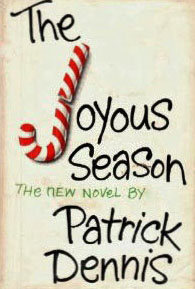
The Joyous SeasonThe Joyous Season by Patrick Dennis ~ 1964. This edition: Harcourt, Brace & World, 1965. Hardcover. 230 pages.

My rating: 9/10.

Ignore the candy cane on the dust jacket, and the internet references you may find to this being a “holiday book.” No, no, no. It is not. Christmas features, but only incidentally. The scope is much broader than that.

“Patrick Dennis,” you’ll possibly be saying to yourself. “Sounds familiar, but ???”

Auntie Mame, darlings!

Ten years after penning his highly successful social satire starring the exuberant Mame and her sedate nephew Patrick, author Edward Tanner – writing under the pseudonym Patrick Dennis – came up with this little  comedic gem. I wasn’t sure what to expect, having only ever previously experienced Mame, but The Joyous Season was absolutely marvelous, and better than I had anticipated. Such a treat!

10-year-old Kerrington – Kerry – is our narrator. He lives in a posh New York apartment with his 6-year-old sister Melissa – Missy – and his parents, both members of the New York “aristocracy”, though his mother’s family is higher up in the strata, and his maternal grandmother never lets his father forget that for a moment. Dad’s a successful architect, and Mom is most definitely one of the ladies-who-lunch, leaving much of the care of her two children to the fifth member of the menage, Lulu.

Lulu’s our nurse. We need a nurse like we need a case of mumps. I mean, hell, I’m ten and eleven twelfths years old and I’ve already smoked over two packs of Tareytons. (They’ve got that extra charcoal filter, you know, for cancer.) Even old Missy can take a bath and get dressed and wipe herself without any help, which is pretty good for six, I guess. But like Mom always said, we can’t go around New York alone because of kidnappers and Dirty Old Men (especially on East Eighty-sixth Street) and types like that. So Lulu drags us across town every day, me to St. Barnaby’s – although she turns me loose at the stationery store so the kids won’t think I’m being hauled around by a nurse at my age – and Missy two blocks further (or farther, whichever it is) to Miss Farthingale’s. Except for that, Lulu hasn’t got much to do except see we go to bed and get up and eat and don’t fight.

Lulu’s quite a character. She’s colored and elderly and has been with us ever since I was born. She’s kind of old fashioned and hates the N.A.A.C.P. and says she doesn’t want to integrate with any white people except Missy and me and that’s only because she gets paid to. Lulu says that after us she needs a rest, if we don’t kill her first, and she wants to retire and move back down South. Gadzeeks, South! I mean I don’t even like Palm Beach, which is supposed to be the next thing to heaven… Give me New York City and keep the rest. Crazy! Anyhow, Lulu tells us real interesting stories and knows every kind of poker there is – except strip – and always lets us have some of her beer and hates Gran’s place in East Haddock almost worse than we do. I mean Lulu is great, even if we don’t need a nurse.

Oh – I forgot one more family member. There’s also Maxl, the incontinent, prone-to-carsickness, full-of-mild-vice dachshund. His escapades run in a kind of sub fusc harmony to the ups and downs of Kerry’s and Missy’s lives, providing a counterpoint to the human drama of this gloriously dramatic tale.

So as the story opens, Kerry, Missy, Lulu and Maxl are reluctantly heading out the door to Gran’s place in East Haddock. Gran is Mom’s mother, and oh boy, is she ever a snooty piece of work! And she’s more or less the reason for the whole darned situation Kerry and Missy are in. To condense greatly, on Christmas morning there was a bit of a situation with Mom and Daddy which saw several kinds of shots fired, much broken glass, some physical violence and some exceedingly blunt words spoken. As a result, Kerr and Missy are poised to become Children of Divorce, much to the delight of meddling Gran. Everyone (except Gran, who openly gloats about the come-uppance of her despised soon-to-be-ex son-in-law) has decided to be Very Civilized About It All, and Not To Make The Children Suffer, but suffering they are indeed, though not perhaps in the way one would expect.

Kerry and Missy, despite all of the adult antics going on in their world, are the epitome of well-adjusted, though no one but Lulu seems to quite get that, and Kerry’s knowing-naive narrative exposes the follies of the grown ups, and New York upper crust society at large, to our appreciative eyes.

Mom is suddenly being courted by her own divorce lawyer, the social-climbing Sam Reynolds, while Daddy is pounced on by the predatory Dorian Glen, a self-invented fashion magazine editor. This gives much glorious scope for satirical commentary, and Kerry is well up to it. His descriptive passages are true works of art, and I found myself wearing a perpetual smile as I willingly gave myself up to the contrivances of the complicated plot.

For example, as this is New York in the 1960s, psychoanalysis is all the rage, and Kerry finds himself saddled with three hours a week with Dr. Epston. The adults in his life just want to ensure that he is coping well, and they are sure that he needs “fixing”, which if nothing else gives Patrick Dennis via Kerry an opportunity to get in some juicy digs at the world of the well-paid New York shrinks.

Dr. Epston’s consulting room is small and dim with a couch to lie on; two easy chairs; Kleenex, for crying into, I guess; a desk and a bookshelf with about a million copies of Tensions in the Metropolitan Adolescent by I. Lorenz Epston. I guess it wasn’t exactly what they call a best seller, but he’s getting rid of the supply bit by bit by making each patient’s family buy a copy (at ten bucks a throw). There are also some pictures on the wall that look like Missy painted them and a framed photograph of Dr. Epston’s three daughters. One is in the upper school at Dalton, one goes to Rudolf Steiner and the littlest one is in the School for Nursery Years – if that gives you some idea of what kind of kids he’s got. They also look like Eskimos. In fact, Dr. Epston’s first question was always, “What are you thinking about right now?” And my answer was always “Eskimos.” But when he’d ask me why, I just couldn’t tell him, because even if he is kind of a boob, I didn’t want to hurt the poor guy’s feelings. So I’d hem and haw and talk about igloos and blubber and wasn’t it interesting that the French spelled Eskimos Esquimaux and like that. So I always got kind of a demerit for being what Dr. Epston called “evasive” (when I was only trying to be polite) and at the end of the first week Mom sent off to Wakefield-Young Books for copies of Nanook of the North and Inyuk and some other suitable reading about the North Pole, when I didn’t care much one way or another.

The first day Dr. Epston made me lie down on the couch and darned if I didn’t drop right off to sleep while he was droning away about trusting him and telling him everything that came into my mind, no matter what. After he woke me up he kept asking me what I was trying to escape from and he wouldn’t believe me when I told him I’d stayed up late the night before watching “The Nurses” (it was all about this dope fiend) and it would have rude to say that also he was kind of a bore. But after that he let me sit up straight in a chair.

And so on, and so on. Kerry certainly does not suffer from lack of things to say; his self-confessed verbosity is what makes this satire such a delight. He’s a truly nice kid, for all the knowingness and the cynical tone he tries to maintain, and his relationship with the volatile Missy is just plain sweet, though they swap sibling-appropriate verbal digs and occasional blows.

Missy is a glorious character in her own right, and it would take me pages and pages to do her proper justice, so I’m not going to even try.

If you liked Auntie Mame, I’ll guarantee that you’ll love The Joyous Season. Highly recommended.

And here, as a bit of a bonus (because I do like to read reviews from the time of publication, and usually try to seek them out to see what those of the time had to say to compare it to my own years-further-on take), is the Kirkus review from October 14, 1965, because it sums things up quite well. I did edit to remove the spoiler; the ending is blatantly given away; that’s such a cheat in a commercial review, don’t you think? Liked the Holden Caulfield reference, because I thought that too, before I ever read the Kirkus review!

The people from the Auntie Mame strata are back under the snickersee of Patrick Dennis. The narrator is 10-year-old Kerrington, scion of a bloodline so inside Society that he yawns at the mere thought. After Daddy’s monumental Christmas hangover, Kerry and his 6-year-old sister, Missy, are slated to become Children of Divorce. Kerry’s prose style would make even a Holden Caulfield blanch, but his reportage is as complete. It seems Mommy and Daddy are going to do the Terribly Civilized bit. The demoniacally wholesome children are taken in on the divorce plans and exposed to the new interests of their wayward parents. Daddy falls victim to a voracious career woman (whose job allows P.D. to vivisect the fashion magazine sub-culture) and Mommy gets stuck with a stuffed shirt (who polarizes the P.D. thunderbolts directed at the nouveau riche). No tribal rite of the East Coast uppercrust, no Southern smarm and no mid-Western gaucherie is sacred … P.D. has picked their milieu to tatters. His full cast of credible caricatures are given dazzlingly funny dialogue. It’s a fair guess that this could easily go the Auntie Mame route — book to play to movie.

I honestly don’t know if this book did ever make it onto stage or screen, but it could well have. All I know is that I’d never heard of it before doing my bit of casual research on the author while reviewing Auntie Mame last year. He was well on my radar as one to watch out for, and when I came across The Joyous Season last week on the bottom shelf of the used book section of a secondhand furniture store in Prince George which I visit every few months “on spec” – for locals, that would be City Furniture right in the core of the scruffy old P.G. downtown on 3rd and Quebec – stacks and stacks of dusty books which I’ve now mined fairly thoroughly but which still contain some occasional vintage “finds” – I grabbed it with a silent shout of glee.

Young Kerry, narrator of the story, could have come across as either cloying or annoying, but Patrick Dennis has nimbly avoided either obnoxious extreme, to create a character whom I found I could completely relate too, after checking my own cynicism at the door, as it were. (Young Kerry’s dialogue occasionally slips to reveal the very adult puppet master handling the authorial strings, but it didn’t matter at all; I was happily and deliberately complicit in my own deception and looked away the few times it happened.)

I liked the likeability of Kerry’s whole family, for though Daddy and Mom were guilty of high tempers and hasty words to each other, they truly came across as loving parents, which was much appreciated; it could so easily have had a sour tone. The in-laws on both sides, and the assorted friends and hangers-on of each of the parents, gave loads of scope for Patrick Dennis to work with; he was bang on the mark with each and every one. Brilliant.

And though I saw the ending coming from just a few pages in, it never ruined things for me to find out I was right. Great “light” escape reading, and definitely a keeper.

I do believe this title is fairly easy to obtain, as it was republished in 2002, and looks to be available as a new softcover through Amazon, or, hopefully, your favourite local bookstore. There are a few vintage copies available through ABE, but these are priced a bit high, up into the $20s and $30s and beyond, so unless you’re a purist and need the original hardcover, I’d say go for the cheapest decent copy you can find, which might well be the 2002 reprint. Or perhaps try the library?

Read Full Post »

« Newer Posts - Older Posts »