Archive for the ‘1950s’ Category

I’m still playing a bit of catch-up with reviews of books I’ve read throughout the year, and didn’t write about right away, but which I want to talk about before I tuck them away. Tonight I’m going to zip off some short reviews of some short easy books, the kind one can read quickly through in a few hours. Lit-light, for those times when you need something undemandingly different from your own possibly bothersome real world.
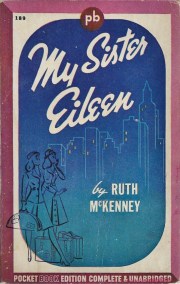
my sister eileen ruth mckenney 001My Sister Eileen by Ruth McKenney ~ 1938.
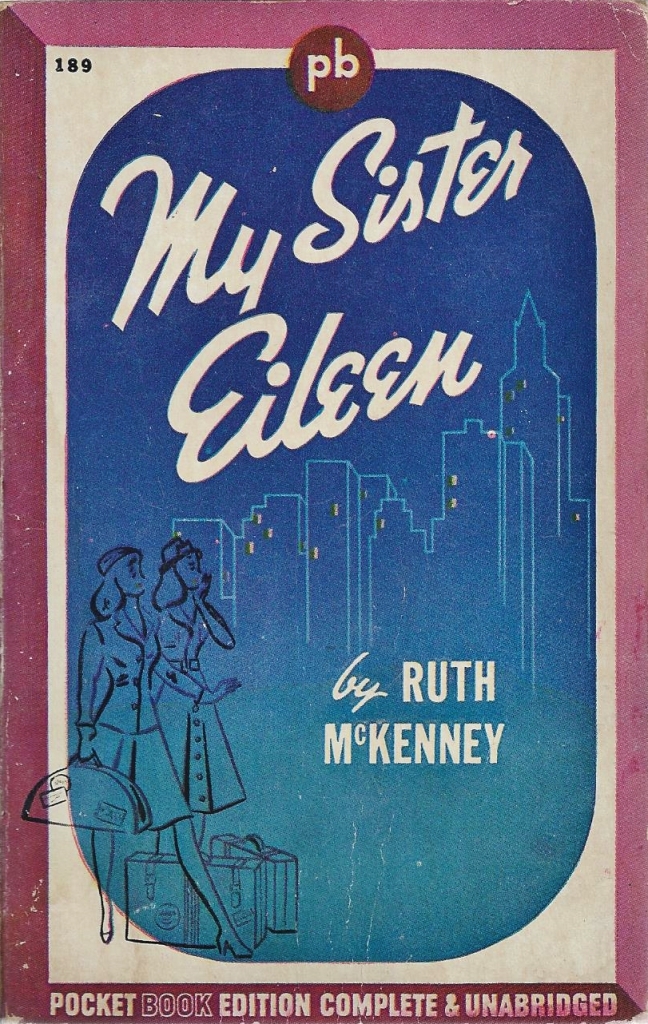
This edition: Pocket Books, 1942. Paperback. 142 pages.

My rating: 7.5/10

This frothy memoir was found among the stacks and stacks of vintage Pocket Books at Kelowna’s Pulp Fiction/Robbie Rare Books. The author was new to me, but a bit of internet research showed that she was a well-known journalist in the 1930s, 40s and 50s, with a sideline in humorous memoir, novel and travel writing. This very book, My Sister Eileen, as much about Ruth as it about her younger sister, is a an absolutely charming autobiographical account of growing up in Indiana and then Ohio, and of the two sisters going off to try their luck in New York City. The memoir caught the attention of the public, and it brought its author popular success, being made first into a Broadway play, then into a movie, and finally, in 1953,  into a very successful – 500 + performances – musical, Wonderful Town, starring Rosalind Russell, with music by Leonard Bernstein. A long way from Ohio, oh yes indeed.

I’m not much for laughing out loud while reading, but Ruth McKenney triggered more than a few giggles, as she and Eileen adventure together through their young girlhood, watching much-too-adult movies from behind the brims of their hats, failing dismally at piano and elocution lessons, being traumatized by summer camp, learning how not to swim with the Red Cross, and having a life-altering encounter with Noel Coward. A French pen pal brings romance into Ruth’s life, or so she supposes. She’s not quite sure because no one can translate his handwriting. First jobs give much scope for both girls broadening their horizons, and while Ruth does well for herself on the staff of a newspaper – printer’s devil at fourteen and onward and upward from there – Eileen struggles with the finer points of waiting tables at a posh tea room. Dreadfully dire beaux, a rather more happy (though short) encounter with Randolph Churchill, in America on a lecture tour, and a shipful of Brazilian future-admirals bring romance in the sisters’ lives.

My only complaint is that this sparkling little book is much too short. But there appear to be others, continuing the story, which I may well be searching out, though they are in much shorter supply than this bestselling first installment.

In later years Ruth McKenney’s life was to take a tragic turn. Her beloved sister was killed in an automobile accident only four days before the stage play inspired by her opened on Broadway, and on Ruth’s 44th birthday her husband committed suicide. She stopped writing, and faded into obscurity. A 2003 interview with Ruth’s daughter, Eileen Bransten, was published in the The New York Times, and gives a brief but lovingly poignant character portrait of this talented and ultimately unlucky woman.
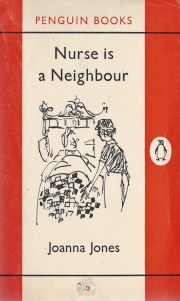
nurse is a neighbour joanna jonesNurse is a Neighbour by Joanna Jones ~ 1958.
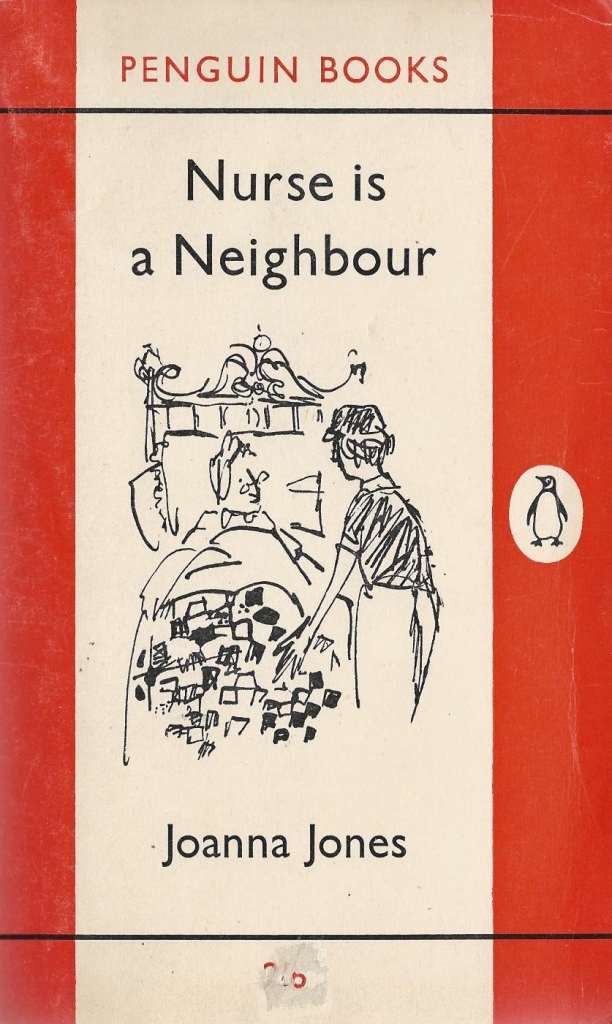
This edition: Penguin, 1961. Paperback. 159 pages.

My rating: 5.5/10.

Crossing the pond to England, we hear from a rural district nurse, Joanna Jones, who tells of her work with a wryly sarcastic tone more than a little reminiscent of Monica Dickens at her most scathing. While not up to Dickens’ stellar level for this type of memoir, the writing here is competent enough to make this a smooth and easy read, and the details of Nurse Joanna’s life prompt us to forgive her frequently critical comments of all those around her.

Joanna has taken over her posting from a long-time Nurse Merrick, who is now well into her eighties, but still active and alert and very much keeping an eye on her young replacement. Nurse Merrick is not beyond giving some good advice when she thinks it needed, and Joanna tries to bear this in good grace, though it obviously rankles just a little now and again. Joanna also brings along to her cottage her elderly mother who is suffering from what seems to possibly be Alzheimer’s Disease (though the term is never used, I’m supposing that it was not in common usage in the 1950s), a progressive dementia which complicates Joanna’s life immensely, though she appears to cope with grace, humour, and much patience.

A very short, very anecdotal memoir, and an interesting glimpse into the state of British health care just as the National Health Program was being implemented; the protests of doctors and not a few patients as to the unwarranted interference of The State into the state of their medical care is rather familiar what with the United States’ “Obamacare” making the news these days.

Nurse is a Neighbour is quite readable, but I thought it was just missing that elusive special appeal which would make it a must-read. Joanna Jones wrote a second book of memoirs, Nurse on the District, and her books were the basis of a now-forgotten 1963 comedy film, Nurse on Wheels. Neither calls out to me for urgent investigation.

So if I wouldn’t go so far as to recommend this book as worthy of seeking out, I will repeat that it was a pleasant short read for a cold autumn afternoon’s tea break, in to warm up after digging in the garden and raking leaves.
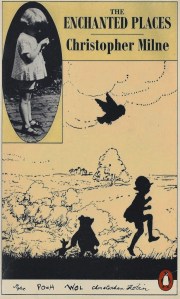
the enchanted places christopher milne 001The Enchanted Places by Christopher Milne ~ 1974.
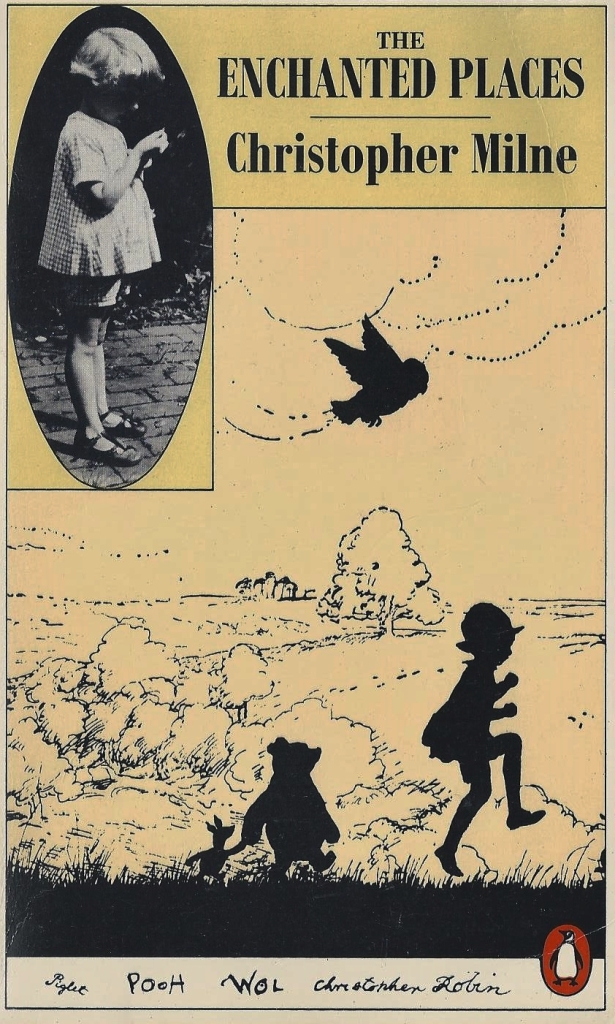
This edition: Penguin, 1976. Paperback. ISBN: 0-14-003449-8. 183 pages.

My rating: 7/10.

I completely missed Winnie-the-Pooh in my own childhood; I can’t recall even being aware of such a character, though I’m sure A.A. Milne’s classic was readily available even in our rural British Columbia ranching community. Early childhood reading consisted mostly of a vast quantities of fairy tales, and of course the ubiquitous Little Golden Books. Beatrix Potter was just barely represented by a single non-Warne edition which consisted of Potter’s immortal text, but someone else’s dreadfully inadequate illustrations. I loved that one for the story alone – oh, brave, foolish Peter! –  and even today could probably reel off the entire thing from memory. But definitely no Pooh, in any way, shape or form.

I remedied that with my own children, of course, but Pooh never really took hold. Grilling them just now as to early childhood favourites, they mentioned Richard Scarry, the Dr. Seuss books, Beatrix Potter (hurray!) and, my daughter’s absolute favourite for a long, long period of her toddlerhood, The Poky Little Puppy. They do remember Pooh, but not with anything like dedicated fondness. Interesting.

Oh well, moving on, then. I myself do remember the Christopher Robin stories from that time of endless reading aloud, and I definitely appreciated the world of the Hundred Acre Wood, so when this memoir by the real Christopher Robin crossed my path, I read it with genuine curiousity.

In this slender volume (I found out later it is but the first of three, the following ones being The Path Through the Trees and The Hollow on the Hill, taking Christopher Milne into his adult years) the memoirist seeks to provide a sort of

…(C)ompanion to the Pooh books. In the first chapters I have attempted a picture of the Milne family life, the family life that both inspired and was subsequently inspired by the books…

For it is very evident from reading Christopher’s reminiscences that his life was indeed greatly influenced by his becoming a very well-known public figure indeed. His parents sought to shelter him from much of the publicity which his fictional counterpart attracted, but Christopher tells of his uneasy awareness that the fatherly gaze was often a bit too analytical for comfort, and then there was that rather awkward provision of new toys with an eye to story development possibilities…

The early half of the book was very much concerned with descriptions of the physical places which inspired the Pooh stories, and I must say that my interest faltered here and there, not being a true-blue devotee, but as Christopher (the real Christopher) grows up and begins to venture out into the broader world, the narrative becomes much more interesting, in an introspective, self-examining sort of way.

A.A. Milne, from Christopher’s restrained yet gently fond description of his father, seems to have been a man with a certain amount of reserve, a certain at-a-distance quality with his young child. He expressed his interest and attention through his writing rather than with much hands-on attention, and one gets the idea that Christopher in later years was very aware of how this had formed his own rather buttoned-up personality. An alone and one would think an occasionally lonely child, was young Christopher. And vaguely troubling is his mother’s insistence on the long locks and feminine attire; she was sorely disappointed that he had not been born a girl, reports Milne, and he muses about her motivations and their effect on his acceptance by his young peers.

I finished this memoir feeling just a little melancholy for that long-ago child’s sake, though it is comforting to see that he did manage to move on and break away from the heavy-though-benevolent burden of his past. I will be looking for the next two memoirs, to find out, in best story-telling tradition, “what happened next.” And, for my upcoming Century of Books, I intend to revisit Pooh himself, with his real-life owner’s story in mind.
Read Full Post »

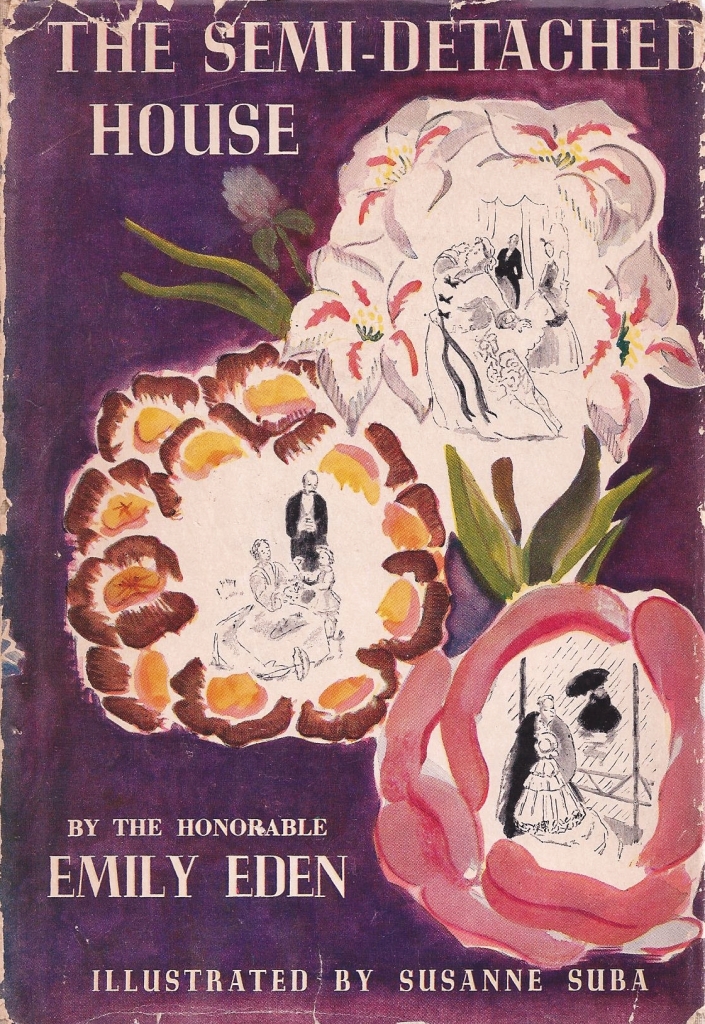
the semi-detached house emily eden 001The Semi-Detached House by Emily Eden ~ 1859.

This edition: Houghton Mifflin, 1948. Illustrated by Susanne Suba. Hardcover. 216 pages.

My rating: 6.5/10

An aristocratic young Lady Chester, Blanche to her intimates, just eighteen and married six months, is bemoaning her husband’s three-month diplomatic assignment in Germany. She has discovered that she is in an “interesting” state of health, and she thinks her husband’s timing could be ever so much better. As well, Lord Chester has taken the advice of Blanche’s doctor and has packed her off to the depths of the suburbs (Dulham), to Pleasance Court, which is in itself quite all right, being a properly fashionable address, but for the smaller semi-detached dwelling at the rear, residence of the decidedly middle-class Hopkinson family. Blanche is a mass of nerves, anticipating all the worst, and dreading meeting her undoubtedly “common” neighbours.

Just across the shared wall, the Hopkinsons are equally as flustered. Rumour has it that the young socialite moving in next door is either the estranged wife of a member of the nobility, or perhaps (shocked hisses) his chère amie. The very respectable Mrs. Hopkinson has barred her shutters, and intends to cut her new neighbour dead.

Luckily both households make a happy acquaintance and quickly become the best of friends, for this is a very friendly novel of manners, and though the gossip flows freely the gossipers are most well-intentioned.

Emily Eden (“The Honorable Emily Eden” as my 1948 edition proudly proclaims) was a great admirer of her predecessor Jane Austen, and deliberately styled her several domestic novels after that literary mentor. Parallels certainly exist, but Emily Eden’s work has a distinctive voice of its own, being gently satirical and full of humorous situations of a time several decades past that of Jane Austen’s fictional world.

A cheerfully fluffy romp, with just the lightest touches of seriousness here and there, and more than a little snobbishness towards the social climbers seeking to scrape acquaintance with the fashionable Chesters. There are love affairs to be sorted out, and the spanking new marriage to be fully settled into, not to mention the excitement of the impending arrival of Blanche’s addition to the English aristocracy.

Nice glimpse at a world familiar to those of us fond of Miss Austen and her compatriots, written by someone who was familiar at first hand with the life described so vivaciously here.

Another novel, The Semi-Attached Couple, preceded this one, and both are succinctly reviewed by Desperate Reader, and by Redeeming Qualities, among others.

The full text of The Semi-Detached House is online for your reading pleasure here, and both novels are available in a Virago double edition as well, though that may now be out of print.

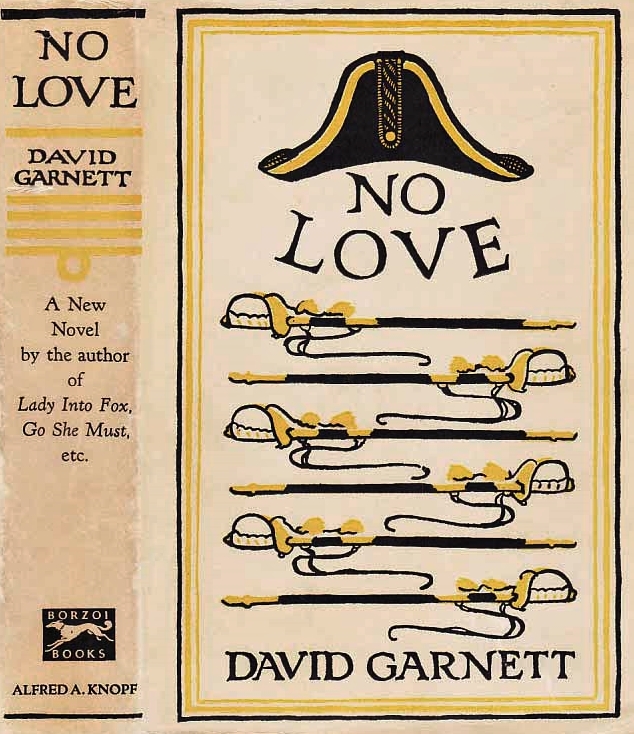
no love david garnett djNo Love by David Garnett ~ 1929.

This edition: Chatto & Windus, 1929. Hardcover. 275 pages.

My rating: 8/10.

What an unexpected and sophisticated novel this one was. I have never read David Garnett before, though of course I have heard quite a lot about Lady Into Fox (which I’m intending to read next year for the Century of Books project) and I now anticipate that reading with even more pleasure, as I  was quite pleased with what I read here. I did an online search to see if I could come up with any other reviews of No Love, but have so far drawn a complete blank, which leaves me rather disappointed. Surely someone else has found this novel worthy of discussion? If you have reviewed it yourself, or know of any others who have, I would be greatly interested to read your thoughts.

When in 1885 Roger Lydiate, the second son of the Bishop of Warrington, and himself a young curate, became engaged to Miss Cross, the marriage was looked on with almost universal disapprobation.

Alice Cross was a very emancipated girl; she was the daughter of the great paleontologist, Norman Cross, the notorious freethinker and friend of Huxley’s, who had poisoned himself deliberately when he was dying of cancer. The poor girl idolised her father’s memory, had been known to justify his suicide in public, and openly maintained, not only the non-existence of God, the non-existence of the human soul, and a rational and mechanistic theory of human consciousness, but also carried the war into the enemy’s country by declaring with her favourite poet Lucretius

Tantum religio potuit suadere malorum.

It was her view, constantly expressed, that it was religion alone that had always prevented the advancement and enlightenment of mankind, that all wars and pestilences could be traced to religious causes, and that but for a mistaken belief in God, mankind would already be living in a condition of almost unimaginable material bliss and moral elevation.

She was, they all said, no wife for a clergyman.

Despite Alice’s “unsuitability”, she and Roger were deeply in love, and they did indeed marry, with Roger ultimately abandoning his curateship and declaring himself an atheist. The Bishop let it be known that he was cutting young Roger out of his will, but what was never known was that he was deeply sympathetic to the young couple, and had quietly given the young bride an astounding ten thousand pounds as a wedding gift.

With this unlooked-for nest egg, the young couple purchased a small island near Chichester, on which was an extensive fruit farm, and settled down to a rural life, and to establishing a home and a new way of life.

There is no happiness and excitement in the lives of a married couple greater than the period when they are choosing themselves a house and moving into it; it is a time far happier than the wedding night or than when children come. A house brings no agony with it; its beauties can be seen at once, whilst both physical love and the children it begets, need time for their beauty to unfold.

Roger and Alice were well suited to each other and their rural occupation, and in time two children were born to them, Mabel and Benedict. Life on the Island proceeded peacefully, until one day in late October, 1897, when Roger rescued a stranded party of boaters and offered them hospitality for the night. These proved to be a certain prominent naval man, Admiral Keltie, his beautiful wife, and their young son Simon, and as the two families felt a certain stirring of mutual attraction, it soon came about that the Kelties purchased a building lot on the island and proceeded to construct a mansion, while between the two families a friendship of sorts developed.

That friendship was soon mixed with a good dose of unspoken jealousy, as the Lydiates see at first hand the extravagance of the wealthy Kelties, and as both husbands cast admiring eyes on the attractions of their neighbour’s spouses. Roger is appreciative of Mrs. Keltie’s cold beauty and brittle wit, while the Admiral is moved by Alice’s obvious intelligence, her deeply passionate nature, and a certain earth-mother quality she exudes.

Simon and Benedict make friends as well, though as they grow up they grow apart, with Simon moving in much more exalted circles, and Benedict going his own quiet way, though the two reconnect time and time again, their meetings often marking the episodes of this narrative.

The novel focusses most strongly on the Lydiate family, and its description of their lives and the changes in their moods and attitudes as the Kelties come and go is beautifully wrought. The years pass, and the Great War sweeps both sons away, but the families remain tenuously connected, however, as Simon and Benedict both have fallen in love with the same woman, and her decision on which one to marry has far-reaching consequences to both families.

This novel appeals on numerous levels, as an exercise in story-telling, as a commentary on the social mores of the time, and as a broader examination of the nature of many different kinds of love. Nicely done, David Garnett. I am looking forward to seeking out and reading more by this author in the years to come.

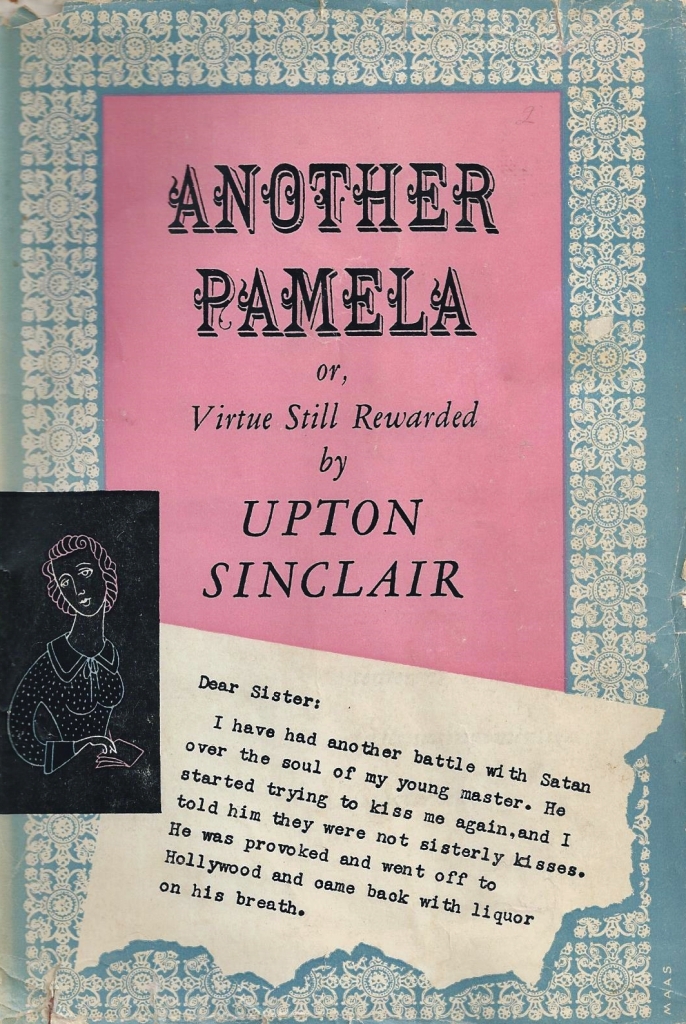
another pamela upton sinclair 001Another Pamela or, Virtue Still Rewarded by Upton Sinclair ~ 1950.

This edition: Viking Press, 1950. Hardcover. 314 pages.

My rating: 7.5/10

And now for something completely different, we move forward in time and to another continent, to this satirical look at social mores in 20th Century California.

Somehow in my travels I have acquired not one but two copies of this slightly obscure novel, a foray into light literature by the famously passionate social activist and best-selling author, Upton Sinclair, perhaps best known for his consciousness-raising, dramatic novel The Jungle.

Having never read Samuel Richardson’s bestselling 1740 epistolary novel, Pamela, about an English serving girl’s trials, tribulations and eventual marriage to the nobleman who tenaciously attempts her seduction, I wasn’t quite sure if I would fully appreciate Upton Sinclair’s parody of the same. It turned out not to matter, as Sinclair helpfully includes generous quotations from the original, having his own heroine read the original as part of her personal development, as she struggles with her own would-be seducer, and the dictates of her conscience and religious upbringing.

Published in 1950, the action of the story is set some years earlier, in the years of the Roaring Twenties, when the fabulously rich of America gave full rein to their imaginative excesses.

The modern Pamela is a child of the early 1900s, being a deeply naïve and (of course!) absolutely lovely young maiden raised in rural poverty in California. She is discovered by a wealthy patroness whose car has broken down in the area of young Pamela’s farm. Upon conversing with Pamela and learning that she is a Seventh Day Adventist with no objection to working on a Sunday (as long as she has Saturday free to devote to her devotions), Mrs. Harris impulsively decides to try the girl out as a parlour maid in her luxurious home, Casa Grande, near Los Angeles.

Pamela is quite naturally overwhelmed by this change in her affairs. Grateful to be able to be sending her pay home to help out her desperately poor family, she is most loquacious in her letters, describing her situation and the other servants and tradespeople she works with, and, increasingly, as she rises in the household hierarchy, the doings of Mrs. Harris herself, who is a lady of many enthusiasms, the main one being the promotion of a rather eclectic form of communism, tweaked to allow for the great disparity between the Harris millions and the theoretical rights of the downtrodden to full equality. (As long as Mrs Harris is not asked to give up her personal comforts, that is.)

And there of course is a “young nobleman” of sorts, one Charles, Mrs Harris’s nephew, a playboy of epic proportions who is completely dependent on his besotted aunt for funds. The Young Master, as Pamela describes him in her letters home, has many vices, not the least of which is his excessive consumption of alcohol, and when Mrs. Harris notices his glances at the lovely Pamela, she encourages the girl to give in to Charles’ pressing invitations to dining out and sightseeing, hoping that this new interest will wean Charles from the demon bottle. (She conveniently turns a blind eye to the possible corruption of her protégé’s morals.)

Charles is decidedly forthcoming; Pamela resists, using her prim and rigid religion as her shield and weapon. Do I need to tell you what happens? Not really, as the title gives the ending away, and as this is a happily satirical tale, we know that Pamela’s eventual fall will be well cushioned.

An enjoyable diversion of a book, with Sinclair getting his digs in at a huge array of social types, all in good fun, with abundant sugar coating the truthful pill within. I wonder if this deserves a “hidden gem” designation? I rather think it does, and I think some of you might find it worthy of a read if you come across it in your travels; it’s an amusingly Americana-ish thing.

Read Full Post »

And the last late reviews from February of 2013.

*****

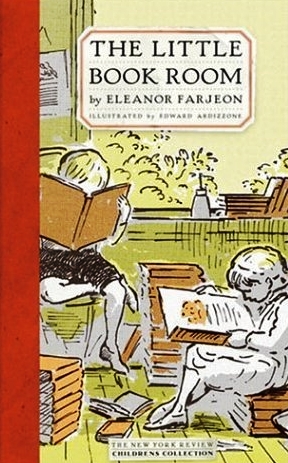
the little bookroom eleanor farjeonThe Little Bookroom by Eleanor Farjeon ~ 1955

This edition: New York Review Books, 2003. Hardcover. ISBN: 978-1-590170-489. 336 pages.

My rating: 8/10

A collection of twenty-seven delicately written fairy tales. Aimed at the younger crowd, but possibly more suited to real appreciation by adults. A few are slight, gentle and – in the very best sense of the word – childish, but others are rich in their imagery and complexity. The stories were selected by Eleanor Farjeon herself, and are deliciously and perfectly illustrated by the one and only Edward Ardizzone. Rumer Godden’s Afterword is a lovingly worded compliment to the author.

My own pretty well grown children are sadly long past the stage of being read to, but I am keeping this one close by both for personal pleasure and perhaps to one day share with as yet theoretical grandchildren.

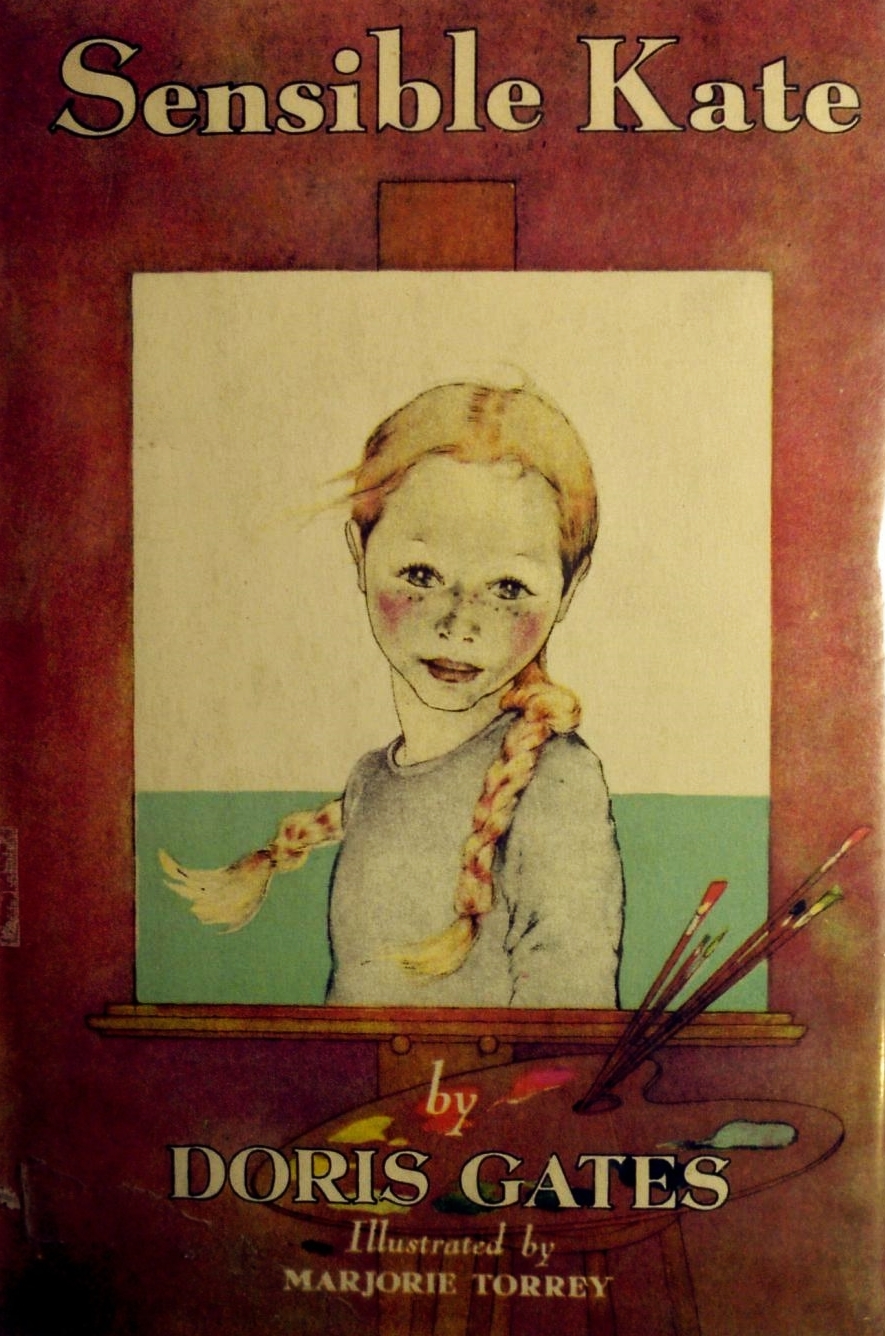
sensible kate doris gatesSensible Kate by Doris Gates ~ 1943

This edition: Viking Press, 1969. Hardcover. 189 pages.

My rating: 6/10

Doris Gates is perhaps best known for her Newbery Award runner-up children’s novel Blue Willow, as well as the widely read Little Vic, both viewed as important early examples of “realistic problem fiction” for young readers, not a genre I am particularly fond of as a rule, but which is perfectly acceptable when the characters and their story are over-emphasized over the “problem”. Doris Gates gets a pass; these are “real” novels no matter how they’re categorized.

Sensible Kate was Gates’ third novel, and it is a pleasant example of children’s literature of its era, with the young heroine facing her rather daunting challenges with good expectations of positive outcomes. The Kate of the novel is a likeable girl, flawed enough to be realistic, but with a solid core of goodness which makes her most appealing.

Kate has been an orphan as long as she can remember, and has been cared for by various “shiftless” relatives since babyhood. Now the relatives have decided to move out of the state, and they have decided to turn Kate over to the county relief office. Kate is placed as a foster child with an elderly couple, The Tuttles, and she soon makes herself beloved of them and many others whom she meets, including a young married couple, both artists, who are the very reverse of sensible in their daily affairs, and who are most appreciative of Kate’s practical talents.

A sweet but never saccharine story, with some interesting characters and scenarios which lift it a little over the average for its vintage and genre. Possibly one might pick up on the lightest shade of Anne of Green Gables, what with the red-haired heroine being an orphan and going off to live with an elderly couple, but the parallel ends right there. Kate is most certainly no Anne, and her creator has not attempted to model her so.

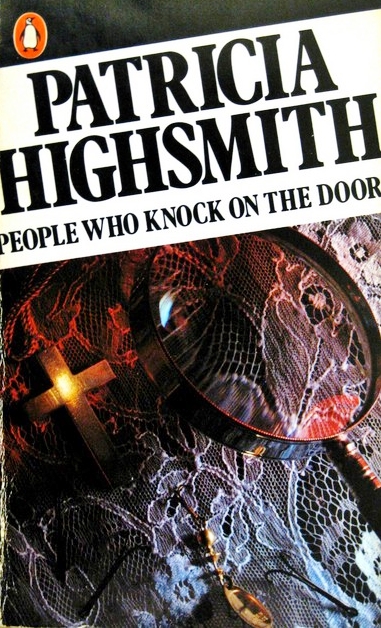
people who knock on the door patricia highsmithPeople Who Knock on the Door by Patricia Highsmith ~ 1983

This edition: Penguin, 1983. Paperback. ISBN: 0-14-006741-8. 356 pages.

My rating: 6.5/10

A rather unusual book, a noir almost-thriller with some odd twists, including a subplot involving a teenage girl’s abortion. Despite its date of publication, it seems to be set in the 1950s, and has a decidedly vintage feel to it. This is the first Patricia Highsmith book I’ve ever read, though I’ve seen several of the movie adaptations of her work, Hitchcock’s Strangers on a Train, and of course the Venetian-set Talented Mr. Ripley, so the dark psychological elements in this one came as no surprise.

Here we have a normal middle-class family, the Aldermans, with an insurance-salesman father, stay-at-home mother volunteering a few days a week at a children’s hospital, and teenagers Arthur and younger Robbie. Arthur is getting ready to go to college, has a satisfactorily active love life, and he is poised to get on with his life when his whole world takes a sickening lurch.

Robbie falls ill with a mysterious infection and is suddenly on the verge of death. The doctors turn away in dismissal – the boy is going to die –  but Mr. Armstrong refuses to give up hope, and prays diligently to God for a miracle. Robbie recovers, and the previously un-religious father is so moved by the experience that he embraces religion and joins a highly evangelistic Christian sect. Mrs. Armstrong and Arthur view this at first with mildly perturbed eyes, but Robbie fully embraces his father’s new-found faith, with eventual horrifying consequences.

A can’t-look-away, exceedingly uncomfortable depiction of a dysfunctional family and its twisted disintegration, with none of the characters completely faultless, including our pseudo-hero Arthur, the closest thing to a chief protagonist in this tense tale.

 the wedding of zein tayeb salihThe Wedding of Zein by Tayeb Salih ~ 1968
This edition: New York Review Books, 2009. Softcover. ISBN: 978-1-59017-342-8. 120 pages.

My rating: 7/10

Two short stories and a short novella – the title story – by the late Sudanese writer Tayeb Salih, set in the country around the northern Nile .

The Doum Tree of Wad Hamid speaks to the importance of tradition, and to the quiet resistance of the people of the Sudanese country to outside influences.

A Handful of Dates concerns a young boy who becomes aware for the first time of the realities of rich and poor, and the role his grandfather has played in a neighbour losing his inheritance.

The Wedding of Zein concerns an unlikely hero, a physically deformed “village idiot” (for want of a better term), who insistently falls in love with one after another village maiden, only to be disappointed as they always marry someone else. Imagine then the shock of everyone when it is announced that Zein has at last found a prospective wife, and an unexpectedly wise and beautiful one at that.

This book gives a diverting glimpse into an unfamiliar world, and the stories are told with clarity and understated, rather sly humour. A short but worthwhile collection.

Read Full Post »

Looking back at my list of books read, February 2013 was obviously a good month for hitting the books, but not quite so good for writing reviews. Playing catch-up, then with a series of short impressions of things I read 9 months or so ago.

In approximate order of reading, here are some of the books not previously reviewed from February of 2013.

*****

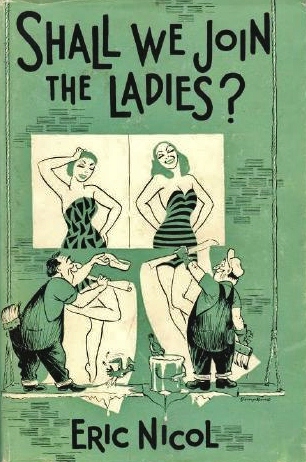
shall we join the ladies eric nicolShall We Join the Ladies? by Eric Nicol ~ 1955

This edition: Ryerson Press, 1965. Hardcover. 110 pages.

My rating: 5/10

I suspect I was sated with Nicol’s particular brand of humour when I read this one immediately after an old favourite, Nicol’s first collection of essays, The Roving I. For I recollect that I was not terribly amused. The mood was hectic, the punchlines groan-inducing. Vintage humour, turned a bit “off” after years of shelf life, perhaps?

A keeper, because it has its moments, and it is Eric Nicol, but not one I am eager to re-read any time soon. Contemporary readers thought much more highly of it, and it won the Leacock Award in 1956.

Canus Humorous thought it was a gem, and I recommend a look at this link if you’d like more detail. Such a thoughtful review that I feel immediately guilty for my faint enthusiasm. I promise I’ll revisit this one and do it more justice. Some day.

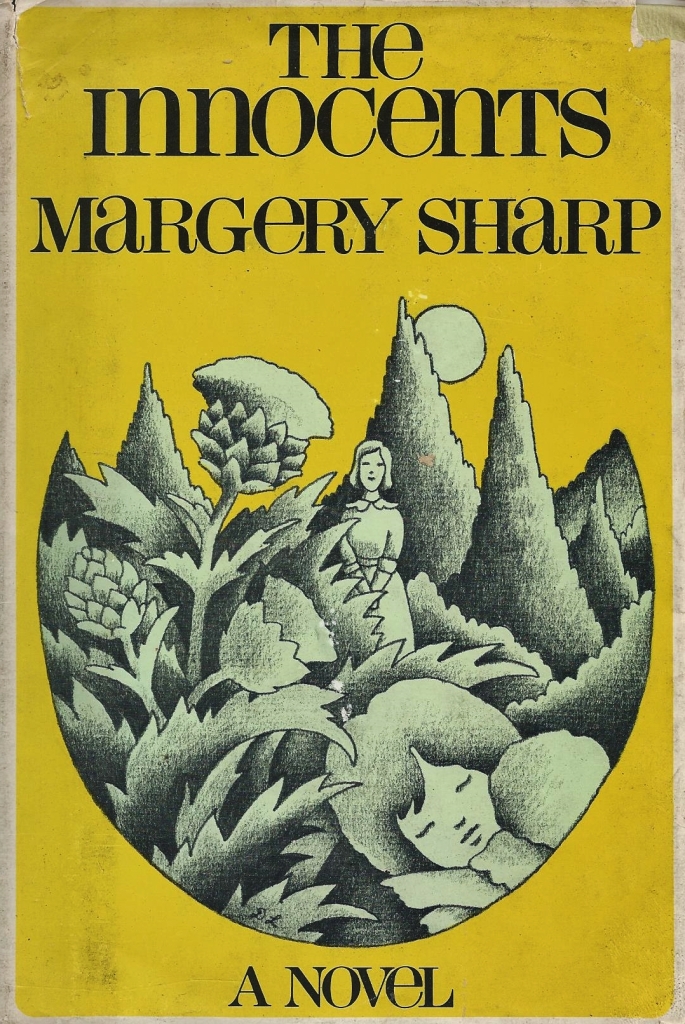
the innocents margery sharp 001The Innocents by Margery Sharp ~ 1972

This edition: Little, Brown & Co., 1972. Hardcover. 183 pages.

My rating: 11/10. I think this may well be my very favourite Margery Sharp, and, as you all may have guessed by now, I am seriously enthusiastic about this author to start with.

This was my second time reading The Innocents; I will be rationing myself to revisiting it, oh, maybe once a year or so, because I don’t want to wear out its already special status in my favourites list. For all of that enthusiasm, this is a very quiet book, one of those minor tales concerning a few people only, with nothing terribly exciting going on within it. But it is a compelling read, and I was completely on the side of the angels right from the get go, though fully cognizant of their failings.

In brief, then.

A middle-aged spinster living in a quiet English village is visited by a younger friend who has married very well indeed, and who is now living in America. It is immediately pre-WW II, and the married couple are hoping to squeeze in a Continental holiday before things cut loose. They are also travelling with their small child, and the unstated purpose of the visit-to-an-old-friend soon becomes clear: they are hoping that they can leave the child in the peace of the country while they continue on their tour.

All is arranged, and spinster and child settle in to a peaceful routine, which quietly turns into a longer-term arrangement as war intervenes and the parents return to America without stopping to collect their child.

Here’s the hook. The young child is very obviously mentally retarded, and though the father suspects this, the beautiful and vivacious mother refuses to even consider that her offspring may be in any way “sub normal”. The child and her caregiver form a deep and complex bond in the ensuing years before the now-widowed mother returns to collect her daughter and return with her to America, to launch into society, as it were, as a charming sidekick to her fashionable mother.

The reality is much different than the dream, and the subsequent events are absolutely heart-rending. The author lets us all suffer along with the brutally dazed child until bringing things to a rather shocking conclusion, which she has already told us about on the very first page.

Margery Sharp is at her caustic best in this late novel. Loved it. A longer review shall one day follow, full of excerpts and much more detail.

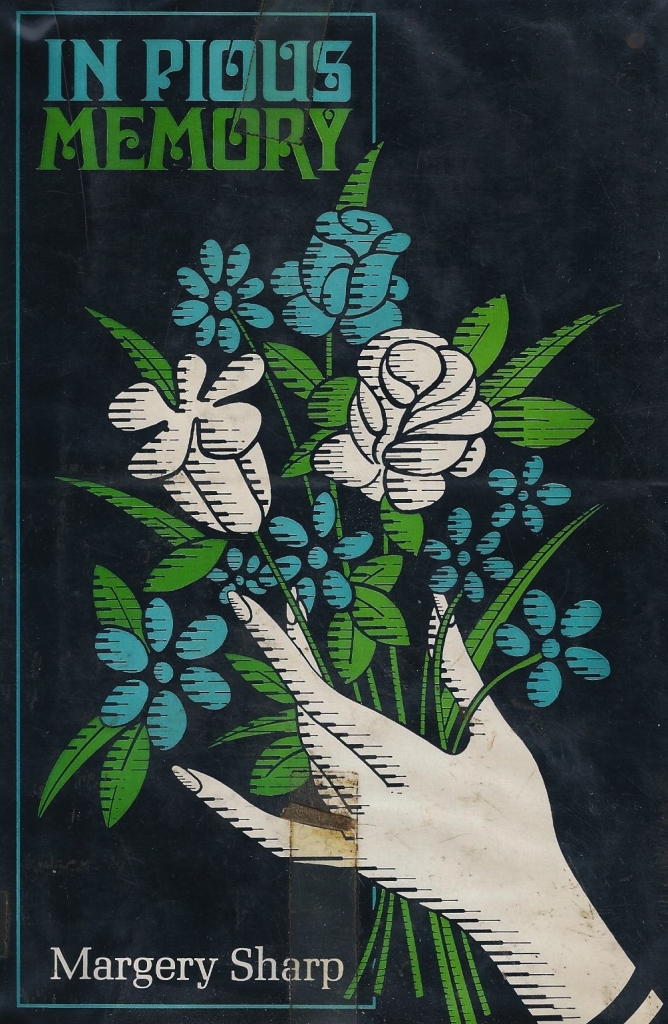
in pious memory margery sharp 001In Pious Memory by Margery Sharp ~ 1967

This edition: Little, Brown & Co., 1967. Hardcover. 184 pages.

My rating: 5/10

Well, then I went on to this slightly earlier novel, and of course it couldn’t even begin to stand up to The Innocents.

An out-and-out farce, this one. Mr. and Mrs. Prelude are in a plane crash in the Swiss Alps, and while Mrs. Prelude escapes relatively unharmed, Mr. Prelude perishes. Or does he? On her return to England, Mrs. Prelude begins to second-guess her hasty identification of what she now isn’t quite sure were her husband’s mortal remains. Sixteen-year-old Lydia sets out on a quest to find her father. Much hilarity ensues.

The whole thing fell rather flat. It seemed forced, and needlessly frenetic, and Margery Sharp’s sly innuendo just plain annoyed me this time around. To be fair, I will be re-reading this one in future, and may then possibly view it with less jaded eyes. I must say that it reminded me strongly of Dodie Smith’s The New Moon with the Old, and my reaction was much the same: reluctant amusement tinged with distaste for the general tone.

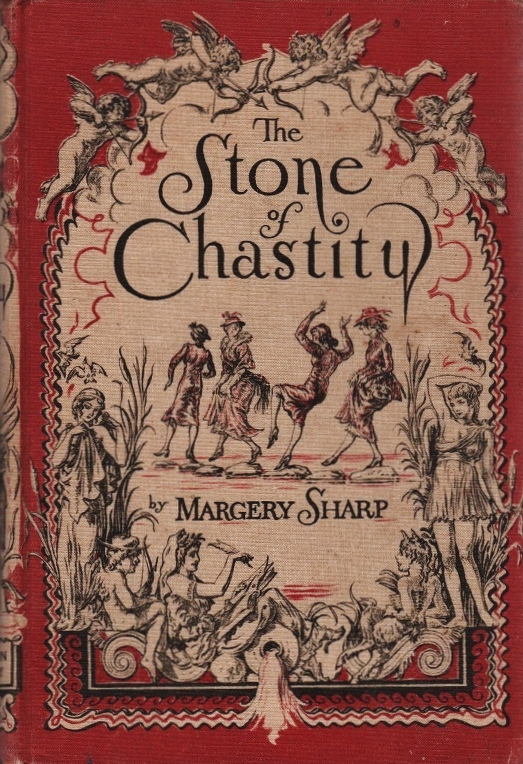
the stone of chastity margery sharpThe Stone of Chastity by Margery Sharp ~ 1940

This edition: The World Publishing Co., 1945. Hardcover. 280 pages.

My rating: 6.5/10

Now going back a few decades, to 1940, and Margery Sharp’s ninth novel, this one pure farce.

In the small gun-room, temporarily converted into a study, Professor Isaac Pounce was even then completing his questionnaire (later to be circulated through the unsuspecting village of Gillenham) on the subject of Chastity…

Professor Pounce is hot on the track of a piece of English folklore. He is looking for a mythical stepping stone which, when trod upon by female persons, will unfailingly support the virgins and toss off the unchaste ignominiously into the gurgling stream. Having a very good idea of where the stone might be, Professor Pounce’s first step in this very scientific study is to send his nephew Nicholas out with a questionnaire to all of the likely young village maidens. Confusion ensues as the rural rustics turn against the snoopy visitors in the Old Manor.

Another one due for a re-read, to savour the full flavour of what Margery Sharp has assembled here. She’s in fine form throughout, and the thing is most readable, though I felt that it wasn’t altogether convincing, even allowing for its obviously satirical intention.

Another snippet, to give you a taste of the flavour of the narrative within:

On the first floor Mrs. Pounce, mother to Nicholas and sister-in-law to the Professor, was lurking in her bedroom afraid to come out. She had appeared at lunch wearing a very nice necklace of scarabs and enamel, and the Professor, cocking an interested eye, had remarked that it was just such trifles – the sight of an English gentlewoman ornamented with seven phallic symbols – that made life so perennially interesting to the folklorist. Mrs. Pounce did not know what a phallic symbol was, and instinct (or perhaps a look in her son’s eye) prevented her asking; but after coffee she quietly sought out a dictionary and took it upstairs. At the moment she was feeling she could never come down again.

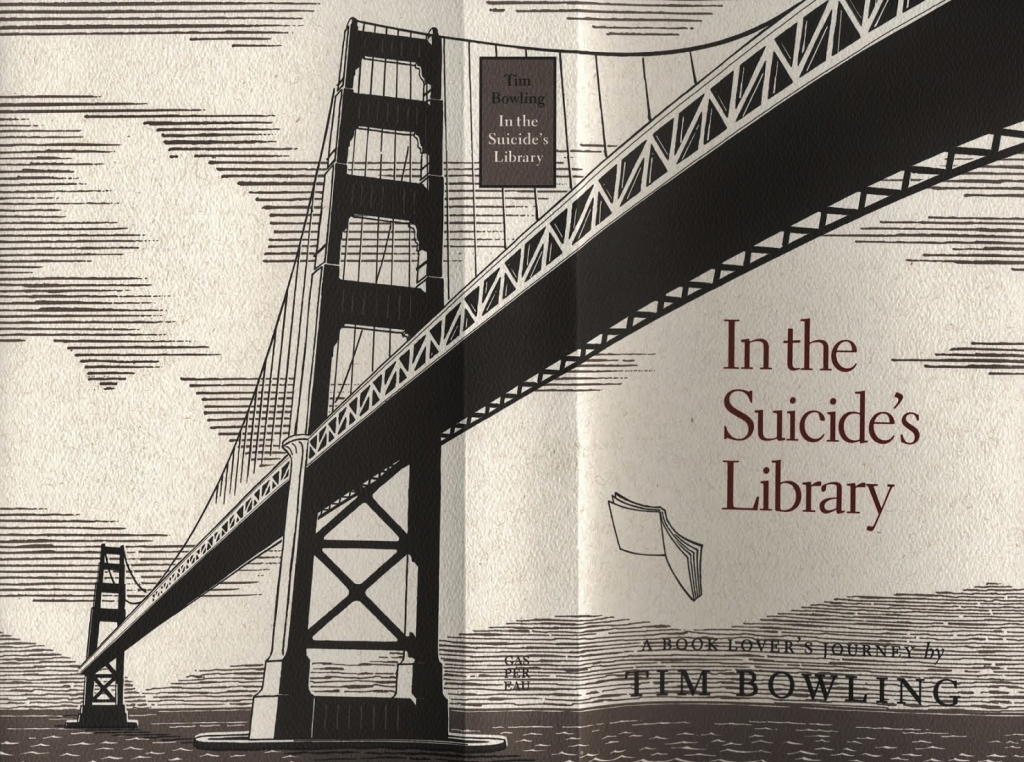
i the suicide's library tim bowling jacketIn the Suicide’s Library by Tim Bowling ~ 2004

This edition: Gaspereau Press, 2010. Softcover.  ISBN: 1-55447-089-7. 320 pages.

My rating: 7/10

And now, changing gears completely to something much more consciously literary.

Is it ever right to steal a book? Tim Bowling, Canadian poet, browsing a university library collection, stumbles upon a copy of poet Wallace Steven’s Ideas of Order, signed on the flyleaf by yet another poet, Weldon Kees, who disappeared mysteriously one day in 1955, with evidence suggesting his suicide by jumping of San Francisco’s Golden Gate Bridge.

As Tim Bowling allows his collector’s lust to suggest certain possibilities to him – would anyone even notice if he “liberated” such a poet’s treasure from its dusty obscurity in the stacks? – his renewed interest in both Wallace Stevens and Weldon Kees leads into a book-length examination of his own life, and the parallels between himself and his predecessors.

The angst of middle age, marriage and parenting are discussed with passionate intensity, as are such things as the relevance of poetry in the world, the desire to own objects, the new importance of the internet to the serious book collector, and much, much more.

Absolutely fascinating, but it does go on and on and on, and I absolutely hated Bowling’s final decision regarding the book, which I cannot share here, as it is the whole point of working through this thing. It made me grumpy for days, and still offends me to think about it.

Has anyone else read this one? What did you think he should have done?

And I must say that this has to be one of the most aesthetically pleasing of the contemporary books I personally own; Gaspereau Press did a fabulous job of the actual production of the physical book. The paper, the fonts, the slipcover and the undercover and the graphic design – absolutely perfect.

Read Full Post »

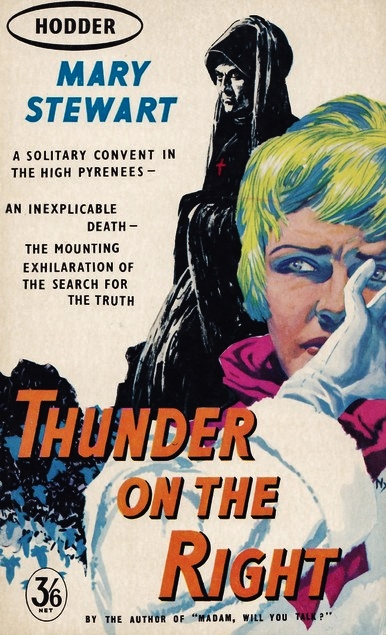
thunder on the right mary stewart 1Thunder on the Right by Mary Stewart ~ 1957. This edition: Hodder Paperbacks (Coronet), 1974. Paperback. ISBN: 0-340-02219-1. 255 pages.

My rating: 4/10

Omigosh. This book. Words (almost) fail me. 110% gothic romance, and absolutely bizarre in plot and execution. Luckily I’ve been on something of a Mary Stewart binge recently, and this came along as book number six; if it was number one or two I doubt I would have had the heart to continue.

I try my hardest, in reviewing anything in the mystery-suspense line, to not include any spoilers, but, in this case, all bets are off. Consider yourself forewarned!

This one starts off promisingly enough. Jennifer Silver, 22-year-old daughter of the Bullen Professor of Music at Oxford, is ethereally lovely (of course!) and rather at loose ends, despite recent years at art school. She sits in the dining room of her hotel in the French Pyrenees, tucking into a most delectable-sounding repast. She is thrilled to be in France again – she has visited in the past – and is looking forward with anticipation to her planned reunion with her half-French older cousin, who, widowed not long after her marriage, is convalescing from a recent illness in a nearby convent. More than merely convalescing; Gillian has sought solace in religion, and is thinking of becoming a nun, much to Jennifer’s not-so-secret dismay. But something isn’t quite right in a larger sense, and Jennifer sits and mulls over her cousin’s situation with increasing unease. Why have her chatty letters suddenly stopped? Tomorrow Jennifer will be going to the Convent of Notre-Dame-des-Orages to meet Gillian, but she’s not quite sure what she’ll find. (Cue foreboding music. Oh, and a love theme, for here appears a prince on a white charger. Figuratively speaking. The real horse shows up later.)

For who should appear but a figure from Jennifer’s past. Up pops handsome Stephen Masefield, an old student of Professor Silver’s.  Jennifer has dallied with Stephen in Oxford days, and he has long cherished a secret passion for the lovely Jenny despite her mother’s brusque dismissal of his courtship, all unbeknownst to the innocent maiden. Stephen comes with an intriguing past, and is dashingly handsome despite his slight limp from an old war wound (this is all taking place post World War II, in the mid 1950s or thereabouts) as well as exceedingly talented, both in music and as a skilled amateur artist.

Lots of details, yes, I know. But every single one of them matters in the upcoming narrative, for this is an exceedingly busy story, chock full of details affecting details, and coincidences and lucky (or unlucky) juxtapositions of people and events. I’ll cut to the chase, if I may, and give the barest outline of the action to follow.

Jennifer goes to the convent, meets a sinister Spanish nun dressed in a silken habit and sporting a flashing ruby-encrusted cross, and is informed that her cousin was indeed in residence, but that she has died and is buried in the convent graveyard. Something about an automobile accident, and crawling up to the convent gates after midnight, and devoted nursing and a sudden decline… Jennifer is in shock and visits the grave, where a glimpse of a bouquet of gentians sets off a train of speculation in her mind. Perhaps Gillian is still alive, and a mystery woman is buried in her place…?!

Beware the nun! An older paperback cover which captures the mood so very well.

Beware the nun! An older paperback cover which captures the mood so very well.

The plot convolutes on its merry way, involving a rare form of colour blindness (Gillian would not have been able to identify gentians as her favourite flower – she cannot distinguish blue), a beautiful young novice who nursed Gillian, a stunningly gorgeous local youth dashing about on a wicked stallion, the aforementioned sinister Spanish nun, the extremely old, kind and blind Mother Superior who is unaware of the fact that the Spanish nun, her bursar, is filling the convent with war-looted treasures (solid gold fittings, altar pieces by El Greco, jewelled statues, etcetera), a local smuggler in cahoots with said nun, a vitally crucial letter found tucked behind a picture – this coincidence put me off the story early on – absolutely contrived! – midnight forays by everyone generally ending in eavesdropping on startling conversations, a mystery woman in a mountain cottage, multiple thunderstorms (“thunder on the right” – aha!), a landslide, a flash flood, a slender rock bridge over a ravine, the heroine’s habit of delicately fainting at crucial moments, Stephen’s multiple heroic accomplishments – mastering the wild stallion! hand-to-hand combat skills! great kissing! – on and on and on we go.

The girl in the mountain hut is Gillian; the little novice goes off with her handsome horseman; the evil nun and the smuggler meet their comeuppances; the woman buried in the nunnery garden is the criminal alluded to in casual conversation early in the story. Jennifer is passionately kissed not only by her dashing swain, but by the testosterone-drenched smuggler, who manages to keep his carnal urges on a high boil even while fleeing for his life when the predictable dénouement occurs.

Moments of lovely writing – Mary Stewart does excel at her descriptions – and snippets of humour here and there did not make up for the messy, too-busy, coincidence-heavy plot. Jennifer is the most unbelievable of all of the Mary Stewart heroines I’ve met so far – the others have been very likeable – and I found her utterly annoying. The whole thing was too full of heaving bosoms – can even a nun have a heaving bosom? Well, yes, apparently – and surging stallions and heavily gothic settings.  Too much!

I have been soothing myself with a return to sedate O. Douglas, and am now reading Eliza for Common with relief. Thunder on the Right has rattled me badly, coming as it did after Mary Stewart’s rather more excellent My Brother Michael, which I have yet to review. I liked that one a whole lot more.

Thunder on the Right was apparently the author’s least favourite of her novels, and I can see why. Here are her own words, courtesy of the excellent Mary Stewart Novels website:

From Contemporary Authors, Vol. 1, 1967

Ms. Stewart once claimed Thunder on the Right as her least favorite novel. “I detest that book. I’m ashamed of it, and I’d like to see it drowned beyond recovery. It’s overwritten. It was actually the second book I wrote, and for some strange reason I went overboard, splurged with adjectives, all colored purple.”

I’m glad I read it, though, if only to contrast with the rest of the author’s works. It is indeed interesting to see her development as a writer over the course of her career. I’m only read six of the novels so far, and I’m definitely seeing a pattern of evolution. Very interesting. I intend to continue to explore the vividly painted, action-packed worlds of Mary Stewart, though I may have to take a bit of a break to regain my equilibrium after this latest foray.

Read Full Post »

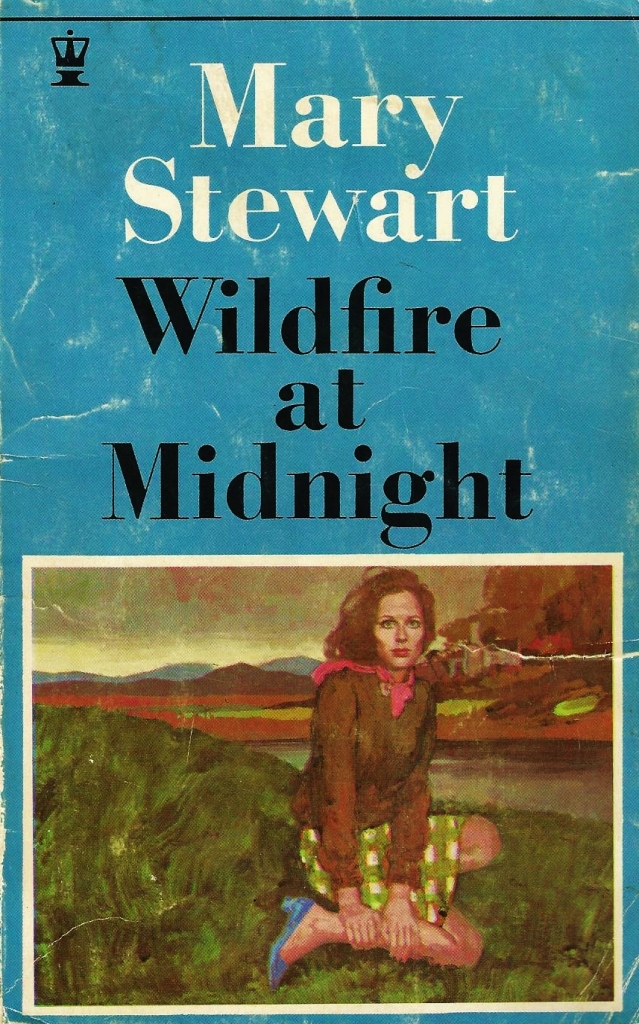
wildfire at midnight paperback dj mary stewart 001Wildfire at Midnight by Mary Stewart ~ 1956. This edition: Hodder, 1970. Paperback. ISBN: 0-340-01945-X. 224 pages.

My rating: 6/10

From the dust jacket of the original edition, 1956:

Most people came to the Isle of Skye to climb the jagged peaks of Blaven or fish the many sparkling streams. Gianetta Brooke came to forget Nicholas Drury—the husband she had painfully divorced. The discovery that Nicholas numbered among the guests at the small inn was the first sign that hers was not to be a typical holiday . . .

Then Gianetta learned that on the treacherous slopes of Blaven, murder had been done . . . and although she had missed the first act of an eerie, unearthly crime, the murderer was to strike again and again before the finale was enacted on the mist-laden mountain—a finale that has Gianetta face-to-face with a madman.

My thought early on while reading Wildfire at Midnight, my fourth recent Mary Stewart read, was “Well here’s something a bit different!” This one is not so much a romance as an out-and-out suspense thriller/murder mystery. Not one, but three people meet their very unpleasant demises in this dark little tale of misplaced devotion. What romance is included is sketchy at best, and telegraphed broadly from very early on.

Beautiful London model Gianetta Drury – Janet, to her intimates – is feeling in need of a break from her busy life. It’s spring of 1953, and the city is getting ready for Queen Elizabeth II’s Coronation ceremony, and, as the excitement builds, so does Janet’s stress. Her career is at its peak; she hobnobs with the rich and famous on a daily basis; life is a constant whirl – but all she really wants is to get away from it all, to relax in some country peace and quiet, far from those who recognize her lovely face.

So off she hies herself to the remote and beautiful Isle of Skye in Scotland, to what she thinks will be a restful retreat. Tea and scones by a glowing peat fire, gentle walks in the heather, gazing at the mountains in the mild Scottish mist…

Ha! You just know this isn’t going to work out as planned, especially when the first person Janet meets as she checks into her hotel is a prominent actress, one Marcia Maling, settled in complete with luxurious convertible and handsome chauffeur. An assortment of fishermen and amateur climbers are also in residence, including famous mountaineer Ronald Beagle, and, to top it off, who should wander in but Janet’s ex. Nicholas Drury, a celebrated author, is visiting Skye to gather local colour for his next bestseller. He is sulkily broody and exceedingly handsome, and Janet’s heart skips a beat when she sees him again, though both pretend to be strangers to each other for the benefit of their fellow guests.

Tension is in the air, and Janet is very tuned in to it, though she is shocked to discover that one of the reasons for the brittle atmosphere is the unsolved murder of a local teenager on her eighteenth birthday just a week or two earlier. The young woman was found with her throat slit on a roaring bonfire halfway up the looming local mountain, Blaven, and though there is a likely suspect, there has been no arrest. (Not yet.)

Two more gruesome murders are on the horizon, with every person in the hotel soon becoming suspect; Janet’s dreamy retreat is now a living nightmare. Who can she really trust? And why is Nicholas taunting her so constantly, and popping up when least expected?

As usual, the physical setting of the story is described with vivid detail. Another nice touch is the ongoing radio broadcasts of Coronation preparations and updates of the ongoing attempt to climb Mount Everest playing in the background; the mountaineers in the group are glued to the radio, and massive bonfire piles are being built to fire on Coronation eve…

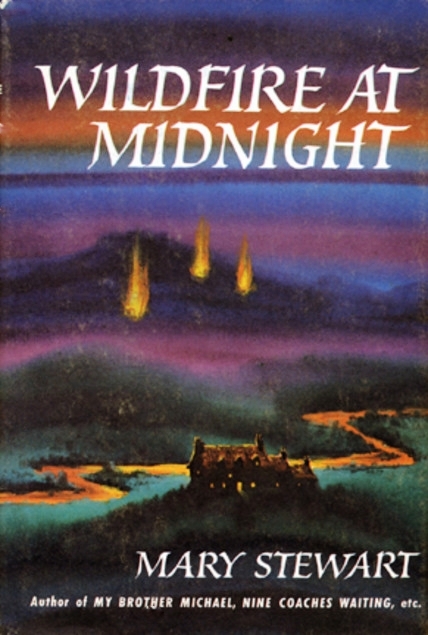
Wildfire at Midnight - dust jacket illustration, first edition, 1956.

Wildfire at Midnight – dust jacket illustration, first edition, 1956. Isn’t this great? Much more mood-inducing and appropriate than the various depictions of the scantily clad heroine which most succeeding covers feature.

Here’s my summing-up opinion on Wildfire at Midnight.

While it started off well, and has its moments of deep appeal, the superficial characterizations of every single one of the characters – including our heroine – made this an ultimately less-than-completely-stellar read. The first murder was shocking; the second decidedly unexpected; and the third de trop – just too much to believe. (Plus I really liked that third victim!) And the heroine keeps wandering about in a downright silly manner, considering that there’s a diabolical killer at large. She wanders out alone, or with this gentleman or that into remote corners of the glen, just asking for something nasty to happen.

And it does.

The predictable final chase scene involves both a quivering bog and a craggy mountainside, plus bonus blinding mist. The unmasked murderer is totally creepy (and I guessed the identity correctly), but the far-fetched motive is tissue thin.

Well, acceptable reading for a drizzly October evening, and it was decidedly atmospheric throughout. A keeper, for sure, but of the “so bad it’s good” variety! Definitely dated, this very vintage one, but with some merits too, mostly regarding the fabulous depiction of place, and the real-life events playing out in the background, which become the most believable part of the fictional tale. I loved the image of the characters gathered ’round the radio, waiting for news of the Everest attempt, while their own safe little world is under threat from an unknown assassin!

And here’s a rather grand review, including an excerpt from the story:

Romantic Armchair Traveller Review: Wildfire at Midnight

Read Full Post »

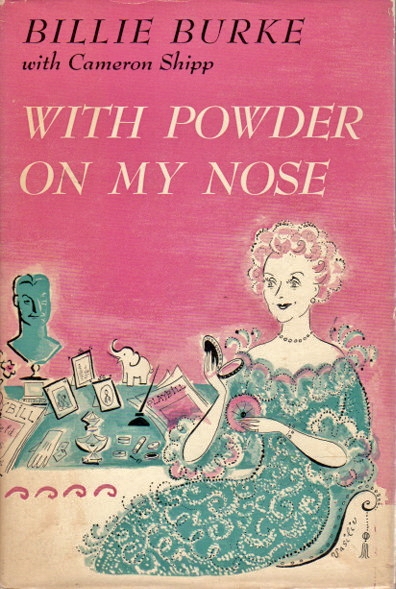
with powder on my nose billie burkeWith Powder on My Nose by Billie Burke ~ 1959. This edition: Coward-McCann, 1959. Second Printing. Adorable pen-and-ink illustrations by Mercia Vasiliu. Hardcover. 249 pages.

My rating: 5/10

Query: If I bought this frothy vintage memoir/feminine advice manual on a whim, does that automatically make it whimsical?

The hardcover books at one of my occasional used book sources – for you locals, Quesnel’s Family Thrift Shop, on Front Street right across from the walking bridge and beside the old Hudson’s Bay building – were on sale at a lovely 75% off, so I naturally indulged myself and collected a small stack of them, including this fluffy thing. I’d browsed it before, but always put it back; I am a bit sorry to say that that instinct was right on target. It was a pleasant diversion, but not one I wold have missed if I had missed it, if you know what I mean.

I originally rated this book at a conservative 4. On second thoughts, I’m upping it to 5. It had its moments, and those were very good. Some genuine gems among the lavish stage jewelry here. Enough so that I will be keeping an eye open for Miss Burke’s 1949 memoir, With a Feather on My Nose. (But I’m not going to a whole lot of trouble to track it down. If it shows up for a few dollars, I will happily snag it. But not going to mortgage the farm to finance it. I haven’t even checked it out on ABE; for all I know it may be cheap and abundant, or, conversely, rare and expensive.)

I must confess that I had no idea who Billie Burke was before I read the flyleaf, where I discovered that she was (in 1959) an elderly actress, and also the widow of the flamboyant Florenz Ziegfeld of, of course, Ziegfeld Follies fame. After finishing the book, I did my usual and put a query into Google, whence I immediately discovered that Miss Burke is very well known indeed, having played Glinda the Good alongside Judy Garland’s Dorothy in MGM’s stunningly successful 1939 musical, The Wizard of Oz.

Born in 1884 (according to Wikipedia; the memoir claims 1886) to American parents then living in England, Billie Burke followed in her comedic-actor (more accurately, a “singing clown with Barnum & Bailey and in Europe”) father’s footsteps and starred in her first Broadway play in 1907, and her first silent movie in 1916. Cast as a fluffy-headed romantic type (“spoony ladies with bird-foolish voices; skitter-wits!”) throughout most of her exceedingly long career (which ended in 1960), Miss Burke had a tremendously faithful following, and indeed worked closely with many of the theatrical and literary greats of her era, including, among numerous others, Will Rogers, Eddy Cantor, and Somerset Maugham (whom Miss Burke confesses she cherished a long-lasting though unspoken romantic crush on). The memoir is stuffed full of famous names, and quite understandably so, considering Miss Burke’s stellar career. (I am quite embarrassed that I’ve never knowingly heard of her; but as Hollywood and Broadway are not my natural forté, all I can say is that I shall meekly continue to live and learn.)

So, the book. It’s memoir-ish, but mostly it’s an advice manual. Billie Burke, a matronly seventy-five at the time of its publishing, had LOTS of advice to share. Her co-writer, Cameron Shipp, accomplished ghost and co writer to various other celebrities, claims in the last chapter (How to Write a Book with Billie Burke) that he merely assembled Miss Burke’s copious notes and transcribed her enthusiastic monologues. He states that much more was left out than included in With Powder on My Nose; one can well believe it, and I wondered if a third memoir was perhaps being hinted at, though one never materialized.

The chapter titles give a hint of the broad range of topics discussed with fervent opinionism by Miss Burke.

With Powder on My Nose – a brief overview of Billie Burke’s career, with some reference to her happy-but-complex marriage to showgirl-surrounded Florenz Ziegfeld.

The Trouble with Women – Billie Burke takes issue with the way women are negatively portrayed in the popular press, and then takes a few feeble swings at the budding feminists she has come across. The trouble referred to is the way that women are trying to – in the author’s opinion – step into men’s shoes. In her opinion, the same can be accomplished by using one’s natural femininity to get one’s way. In her personal experience, and all.

I always said the right things about love and marriage when I was on the stage. That was because I said what good playwrights wrote for me to say. I often said the wrong things to my husband…

Kitchen, Bedroom and Bath – Men love good food, but they love sex more. Always get up early and put your makeup on and do your hair. If he strays, really consider the implications before setting out ultimatums. Forgiveness without reproach can save your marriage. (One suspects that Billie frequently put this into practice herself; Ziegfeld was surrounded by luscious feminine temptation in the shape – pun intended – of the Ziegfeld showgirls, and by all reports continually indulged.) Bathing, preferably with lavish oils and soul-soothing bubbles is one of the secrets of staying attractive – lots and often is the rule here. (I like that last one!)

With a Possum on My Head – Mothers-in-law – how to get along with them; how to be one. Some rather good advice here, mostly along the lines of “Shut up and smile” and “A marriage concerns two people only – don’t butt in”.

Why I Never Married Again – Widowhood. A strong recommendation to remarry if possible; a poignant defense of why she herself didn’t. One of the more serious chapters; authentically heartfelt.

If You Want to Be an Actress… – Advice to those contemplating a similar career. Work and study hard; have a fall-back plan; don’t go to Hollywood. Some very good advice in this chapter, reading from my perspective as a performing arts parent, and perfectly applicable today.

Let’s Face It – Advice on hair and make-up. Take care of yourself, girls, and look at those wrinkles in a strong light, and above all accept your age. (But don’t give in to it!) Don’t dye your hair. The stage is one thing, real life another. Use moisturizer. Don’t plaster your foundation on. Etcetera. Billie Burke looks pretty darned good in all the pictures I’ve seen, not noticeably face-lifted as far as I can tell, so if this (make-up) is your thing, probably worth reading. Over my head, I confess!

How to Steal Up to Ten Dollars and Other Good Advice – Men like to view women as disorganized in general and careless about money in particular. Take advantage of this and pick his pockets and feel free to lie about expenditures. What he doesn’t know won’t hurt him. Etcetera. And other hints on husband taming. The battle between the sexes explained at its vintage best! A bit dated, this chapter. <ahem>

Clothes – and the Shape You’re In – Dressing to accentuate/hide your figure. Dress for your lifestyle; have fun with it; always wear comfortable shoes. There’s no excuse for being flabby, even if you’re not the gal you used to be. Eat a healthy diet. Don’t skip breakfast. Avoid alcohol, or indulge in moderation only. Don’t smoke. TAKE CARE OF YOURSELF!!! Etcetera. (This harks back slightly to the “put your make-up on before your spouse wakes” up advice, but is actually very applicable to everyone, male or female, in any era.)

My Best Advice – a very short chapter, which advises avoiding going to friends and family in a dilemma, as they will tell you what you want to hear. Go to an expert, and then FOLLOW that advice.

Easy Exercise – How to exercise without effort. (Hmmm…) Detailed advice on specific routines. Stand up STRAIGHT, ladies. The importance of posture and presentation.

They – Men, of course. This chapter could be easily expanded into a modern-day bestseller on how to keep “him” happy, in line with other such retro advice manuals. A revealing peek inside Miss Burke’s very feminine mind.

Something Good to Eat – Recipes. From the mouth-watering (“Stuffed Eggplant”) to the sybaritic (“Shrimp Newburg”) to the prosaic (“Whole Wheat Bread”). An enthusiastic promotion of organically grown vegetables; a definite fixation on organ meats (brains, sweetbreads, kidneys, heart, liver), plus a recommendation for gelatin drinks (?).

Going Steady – A bemused chapter on the present day (1959) predilection of the young for “going steady”. Billie Burke thinks they’re missing out on a whole lot of fun…

Dear Mrs. Post: Is It All Right to Be Polite to a Child? – How to talk (politely) to children. Some marvelous advice in this chapter, absolutely timeless.

Un-Birthdays – It’s perfectly fine to lie about your age! (Says Billie.)

When To Tell Your Age – Except, of course, when applying for your Social Security benefits. Billie encourages you to get out there and take advantage of the program. An interesting vignette of a time when such income insurance programs were just coming into their own.

Out of My Head – A short compilation of Billie’s snippets of advice and observation. Examples:

Go to church. You may believe nothing. But at least once a week you can join, if only in silent communication, a lot of hopeful people trying to learn good will.

***

There’s a lot of nonsense written about how money won’t buy happiness. Well, I’ve had a lot of money and a lot of unhappiness at the same time. And I’ve been poor and happy. But the most fun of all was being happy and having money.

So there you have it. A mildly diverting trip down a career film star’s memory lane. Absolutely dated, so read on with a forgiving smile.

Curious? Here’s an interesting link which will tell you more about the author:

Billie Burke – The Real Glinda

Read Full Post »

the family nobody wanted doss 1 001The Family Nobody Wanted by Helen Doss ~ 1954. This edition: Little, Brown & Company, 23rd printing. Hardcover. 267 pages.

My rating: 6/10

Well, this was an interesting read, and I’m still trying to decide what my personal reactions really are.

On the surface it is a simple feel-good memoir about a young childless couple adopting twelve children in the 1940s and 1950s, but there are deeper currents to the tale, especially from a half-century later perspective. In particular, there is a damning sub-text of racial intolerance which is very much a part of why and how this family came together.

I didn’t yearn for a career, or maids, or a fur coat, or a trip to Europe. All in the world I wanted was a happy, normal little family. Perhaps, if God could arrange it, Carl and I could have a boy first, and after that, a little girl.

God didn’t arrange it.

In fact, as our doctor regretfully informed us, Carl and I couldn’t have any children of our own. No children, no sticky fingerprints on the woodwork, no childish tears and laughter, no small beds in the other bedroom. Just barren, empty years, stretching aimlessly into a lonely future…

So Helen’s husband Carl, driven to distraction by his wife’s continual bemoaning of her barren future, suggests that they adopt a baby. Helen loves the idea, and the two optimistically prepare a room and trot off to the nearest orphanage, where they learn that it isn’t quite as simple as all that. Most of the babies in the orphanage were simply not available, being only in temporary care, or waiting for relations to take them in, and the adoption agencies which are the next resort are not particularly helpful either. Helen and Carl are informed that waiting lists are years long, and that each baby must match its potential parents perfectly in ethnic makeup and family background. And of course the parents must be financially stable, as well as sterling characters in all other aspects.

Carl and Helen are sure their characters are good, but the money thing is definitely an issue, and the waiting list situation seems cruelly stressful. So they set aside their ideas of forming a family and instead decide to pursue other interests. Both enroll in college, Helen to study literature and writing, and Carl to pursue a long-held dream to become a Methodist minister. And then, miraculously, one more attempt at adoption through an agency results in a beautiful blue-eyed baby boy. Helen is ecstatic; Carl more reserved. They can barely feed themselves, so this new addition is a challenge in more ways than one.

Young Donny thrives and grows, and all is well for a while, until Helen starts to brood over the loneliness of the only child. “If only he could have a little sister…” But another child is an impossibility, declares everyone they contact. “Just be happy you managed to get the one.” Unless, of course, they would consider a mixed race child. Lots of those were languishing in adoptive limbo, and, three years after Donny’s adoption, Filipino-Chinese-English-French Laura joins the family. And, only two months later, frail and sickly Susan, undesirable because of her weak constitution and a tumorous red birthmark on her face.

Helen is still thrilled, though she finds three children something of a challenge, but all three thrive, and Helen starts thinking again. Maybe just one more, a brother for Donny…

Eventually, with increasingly strident resistance from Carl, Helen collects a round dozen of children, six boys and six girls. She writes about the family’s experiences, and the tragedy of mixed race children being seen as undesirable by families otherwise desperate to adopt a baby; even though the Filipino, Chinese, Korean, Japanese, Malayan, Burmese, Spanish, French and American Indian children she and Carl eventually acquire are accepted by family and neighbours, a constant refrain is “As least they aren’t Negro!” Carl and Helen do attempt to adopt a part-black child from a German orphanage, child of black American GI father and a German mother, but the transaction is strangled by red tape; their families and friends are loudly vocal in their relief, and one of the most passionate chapters in the book strongly condemns this attitude, and addresses the degrees of racism inherent in American society, and its effect on innocent children along with its part in much greater societal ills.

Helen and Carl come across as truly sincere in their attitudes that colour means nothing, and that human is human; Helen starts writing articles about their “United Nations” family, and the Dosses catch popular attention, being interviewed, photographed and featured on radio and television, as a kind of shining example of American acceptance and tolerance, though in reality the very existence of their family group has come about through blatant American racial discrimination. These are, after all, the children that nobody wanted.

the family nobody wanted helen doss 2 001

The book ends only twelve years after that first baby, Donny, is adopted, and the tone is happily optimistic, but there are undertones that perhaps all may not be so well in future. Carl is a reluctant participant in the continual enlargement of the Doss family, though he is very willing to tout its benefits for interviewers; Helen persists in collecting children in the face of Carl’s outright “No more” plea, time and time again. The news that the Doss marriage ends in divorce in 1966, twelve years after the publishing of this bestselling book, comes as no surprise, though it is sad; one hopes that the children – some at that time well into adulthood, one must admit –  weathered their family breakup with a minimum of trauma, though one doubts that would completely be the case.

Knowing several cross-culturally adopted children who now, as adults, are seeking diligently to reconnect with their birth parents’ heritage, I wonder what happened to those twelve children as they grew up, and what they each personally made of their inclusion in this unique family, and of the publicity which their parents’ outspoken willingness to discuss their adoptive choices attracted.

I do think, both from the tone of Helen Doss’s memoir, and from other reports on the Doss family I read on the internet, that their intentions were, once they started adopting, only the best. And, also, I do tend to think that children deserve a loving family versus being institutionalized, and that if the only fit possible is cross-cultural, so be it. If it were more widely accepted (as it wasn’t in the 1940s and 1950s) then at least the “novelty factor” would not be such an issue.

I’ve tagged this post with a “religion” designation, because it is also very apparent that Helen and Carl Doss were motivated in a great part by their Christian faith. Carl Doss is quoted as saying that

…The whole idea of Christianity is radical (a)nd the whole idea of democracy is radical.  Think how really it is to say that all men are created equal, and that all men are brothers – and that the individual is important!

Conflicted as Carl seems to be by his wife’s acquisition of child after child, once they are brought into the family he apparently embraces his fatherhood fully, being as full of latent paternal affection as he is of “radical” Christian ideals.

A thought-provoking memoir, and, as I said, a bit uncomfortable to consider more deeply, given that a whole lot must have been left out. Though I was interested and pleased to see that Helen Doss was very frank about her own motivations of needing children to “complete” her idea of true womanly fulfillment; the ideal of a happy, multi-racial family group seemed to develop as her circumstances changed.

I did my usual look-around the web, and was interested to see how highly this book was rated on Goodreads; a large number of people apparently read and loved it in their school years; the reviews are by and large quite glowing.

It is very readable, and provides a truly fascinating (though superficial) glimpse into the mid-20th Century’s social dilemmas and attitudes towards both adoption and racial and interracial societal division lines. It is also frequently very funny; Helen Doss’s anecdotes of her children’s doing are downright adorable, and well targeted at the sentimental readers who have obviously embraced it as a “sweet tale”. It is a sweet tale; it is also an indictment of the bitter evils of racial discrimination; and a strong advocate of true Christian behaviour; and a revealing portrait of a marriage not without deep personal conflicts, despite its publically positive façade.

For more on the Doss family, these links will be good starting points.

Helen Doss – Obituary

Adoption Topics – The Family Nobody Wanted

Read Full Post »

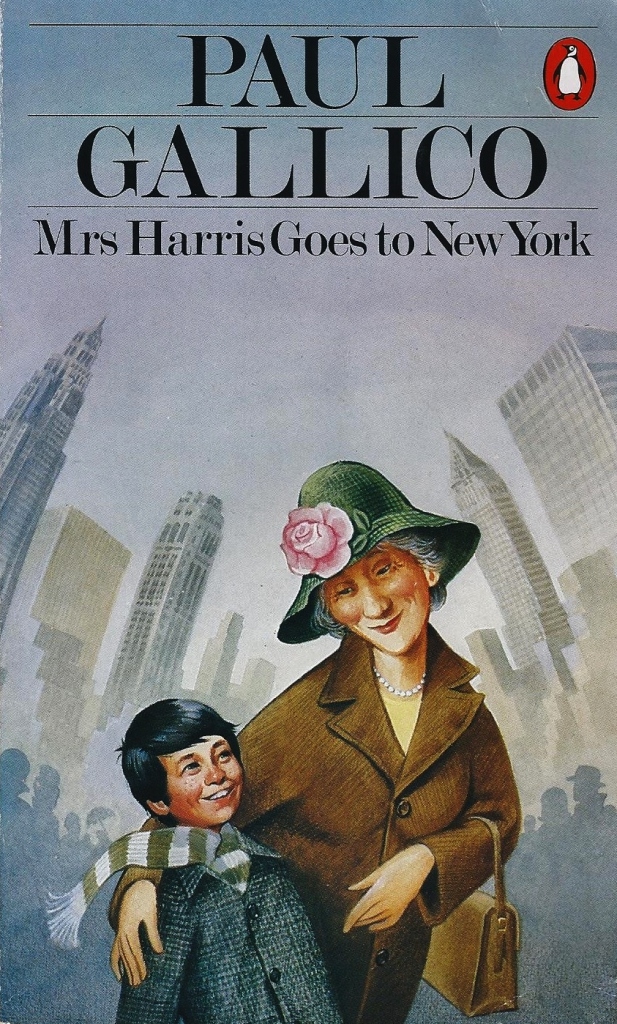
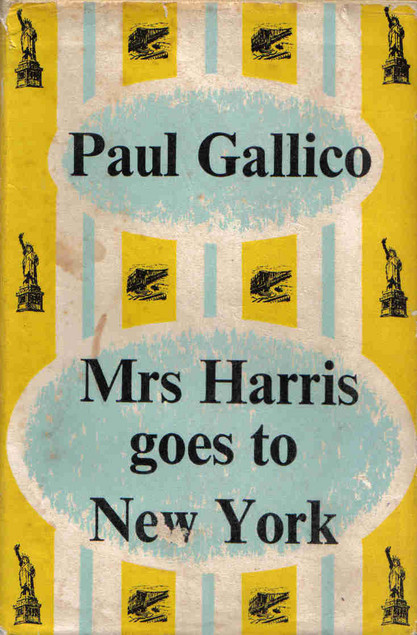
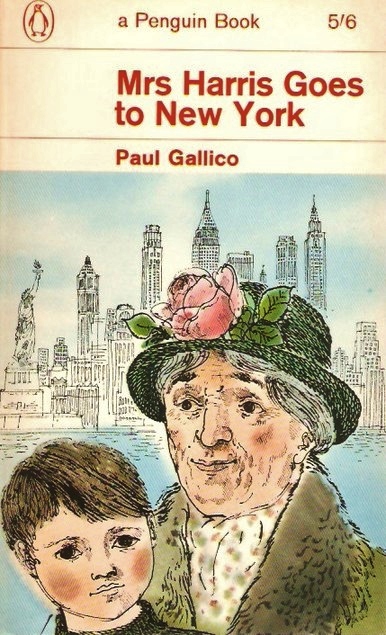
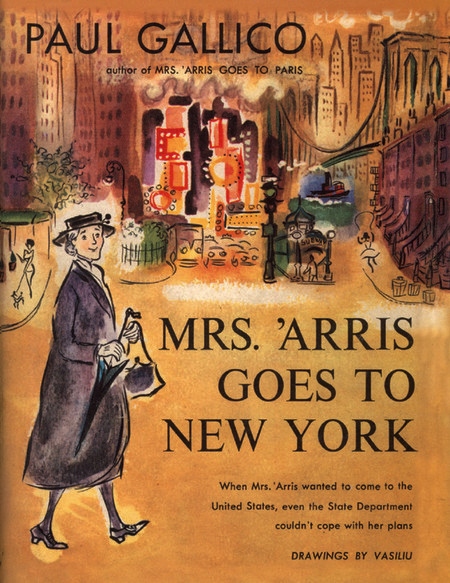
mrs harris goes to new york paul gallico 4 001Mrs Harris Goes to New York by Paul Gallico ~ 1959. Alternate title: Mrs ‘Arris Goes to New York. This edition: Penguin, 1984. Paperback. ISBN: 0-14-001943-X. 168 pages.

My rating: 6/10

Cute story, but much too much “tell” versus “show”. And I suspect that unless you’ve already read the first Mrs Harris saga, you’ll be rather at sea as to why we’re supposed to be so fully on her side. In other words, it screams “SEQUEL!”

In the second installment of what would eventually be a four book series, sixty-one year old London charlady Mrs Ada Harris undertakes another major journey, and another major quest. (Mrs Harris Goes to Paris, her first journey and quest, to Paris for the purchase of an exquisite Dior party dress, is one of author Paul Gallico’s best-loved light novels.)

This time around it is the United States of America looming as the golden goal; the quest is to return an abandoned and neglected young boy to his ex-American soldier father. Luckily, coincidences again merge to bring the almost magical Mrs Harris’s plans to glorious fruition, though not without some glorious glitches here and there.

Eight-year-old Henry Brown has been fostered out by his feckless mother after her first wartime marriage to Henry’s father ended in divorce, and because her prospective second husband refused to have another man’s child under his roof. For a while all went well, with regular child support payments coming through, but eventually the monthly cheque ceased coming, and no one could trace the boy’s mother. She had obviously moved without leaving a forwarding address. It was then that Mrs Harris and her good friend Mrs Butterfield began to hear disturbing sounds coming from the flat sandwiched between their two independent domiciles. Young Henry was being regularly beaten and abused; he appeared increasingly pinched and obviously hungry; his uncomplaining endurance and sweet, unsoured nature under the burden of his sad fate endeared him to the two grandmotherly ladies, and they often mulled over just what could be done.

Then one day Mrs Harris had a brainwave. What about Henry’s American father?! If there was some way to notify him about his child’s plight, surely he would effect an immediate rescue? One small problem existed: no one knew exactly where Henry’s father now was. The child is, effectively, an orphan.

And then marvelous fate steps in. One day, at an employer’s flat, Mrs Harris stumbles upon what she considers a message from the heavens.

Left to herself, Mrs Harris then indulged in one of her favourite pastimes, which was the reading of old newspapers. One of her greatest pleasures when she went to the fishmonger’s was to read two-year-old pages of the Mirror lying on the counter and used for wrapping.

Now she picked up a page of a newspaper called The Milwaukee Sentinel, eyed the headline ‘Dominie Seduced Schoolgirl in Hayloft’, enjoyed the story connected therewith, and thereafter leafed through the other pages of the same instrument until she came to one labelled ‘Society Page’, on which she found many photographs of young brides, young grooms-to-be, and young married couples.

Always interested in weddings, Mrs Harris gave these announcements more undivided attention, until she cam upon one which caused her little eyes almost to pop out of her head, and led her to emit a shriek, ‘Ruddy gor’blimey – it’s ‘im! It’s happened! I felt it in me bones that something would.’

There among the wedding announcements is one for a Mr George Brown, described as an ex-soldier who had been stationed in England, and referring to the fact that this was Mr Brown’s second attempt at nuptials. What a brilliant flash of serendipitous luck this was! This must be young Henry’s father, for isn’t the groom’s father’s name also Henry Brown? And wouldn’t the little British-American baby have obviously been named after his paternal grandfather?

The wheels of Mrs Harris’s single-minded focus are suddenly set turning. If only there was a way to deliver young Henry to his father, then surely paternal love would instantly overwhelm the man, and he would cleave unto his dear son and rescue him from his current awful situation. And there is a possibility of actually bringing this about, for Mrs Harris is herself shortly to depart for a trip to America!

You see, another of her clients is the wife of a movies-and-television company director, and, upon a sudden promotion, the couple are to return to the States to allow Mr Schreiber to take on his new duties. Mrs Schrieber, a sweetly dithery, rather ineffectual, and continuously gently worried lady, is thrown into a state of absolute panic at the thought of having to establish a new household in New York, one which will require her to manage a number of domestic helpers, and to continually entertain her husband’s entertainment industry movers and shakers, and more than a few movie and music stars. What will she do? Could, would, will Mrs Harris come along, just for a few months, to help establish the Schrieber’s new ménage? Mrs Harris takes a deep breath and hesitatingly agrees, after arranging that her good friend Mrs Butterworth accompany the party; Mrs Butterworth being a skilled cook, and a definite asset to Mrs Schrieber during the “finding her legs” New York debut.

Now what if there was some way to smuggle young Henry aboard the bustling ocean liner Ville de Paris, ferry him across the sea, and reunite him with his father? Once they’re all in New York, surely a quick trip to Milwaukee will be easy to arrange…

If this seems to good to be true, of course it is. But the unlikely escapade starts off exceedingly well. Henry, a bright young lad, plays along most willingly, and his two sponsors get him on board and manage to keep his presence under wraps until mid-Atlantic, when it becomes apparent that getting the child off the boat at Ellis Island may prove something more of a challenge, what with stringent American customs and immigration officials examining every set of incoming papers with fine tooth combs and such. As for papers, young Henry possesses none. Gulp!

Ah, but again, kind fate steps in. Sharing the journey is a certain French diplomat whom Mrs Harris came to know well during her Paris stay. He and Mrs Harris have renewed their mutually affectionate acquaintance while on the journey, incidentally giving Mrs Schrieber something of a shock when she finds her Tourist Class charlady ensconced at the chief table at the First Class Captain’s Dinner Party. Gallantly stepping up when appealed to, the Ambassador temporarily adopts Henry as his grandson, and the latest disaster is averted. However, getting the child back from Washington, DC, where he has accompanied his “grandfather”, proves to be a bit more complicated…

And on and on it goes. Mrs Harris forges ahead, comes upon calamity, regroups (usually with the assistance od some random person completely won over by her twinkling eyes and sterling nature, etcetera) and trots along until the next hurdle pops up. Her creator treats us to occasional moments of musing, and throws a moral or two in as well for good measure, and to appeal to our sentimental natures. The ending is, predictably, a happy one, though not quite as Mrs Harris has envisioned it to be from her earlier altruistic schemings.

A light and completely impossible fairy tale is this one, though it touches upon some serious issues – child abuse, social class structure, discrimination, and the follies of celebrity worship. The Dior dress shows up again, with a rather good discussion of its symbolic significance. Mrs Harris is allowed the grace to realize that her impulsiveness is not always wise; in a real world she’d have been slapped down long ago, but because this is fiction of a particularly fluffy type she gets not just a pass but a promotion. Oh, and there is the teasing promise of a love affair for our Mrs Harris, too, setting things up, no doubt, for book number three.

An understated early (possibly first?) edition dust jacket.

An understated early (possibly first?) edition dust jacket.

Here we have an overly elderly Mrs Harris (she's only sixty-one, for goodness sake!) plus her charming young protégé.

Here we have an overly elderly Mrs Harris (she’s only sixty-one, for goodness sake!) plus her charming young protégé.

And my favourite of the lot. I wish I had this copy! It's apparently illustrated, too.

And my favourite of the lot. I wish I had this copy! It’s apparently illustrated, too.

Read Full Post »

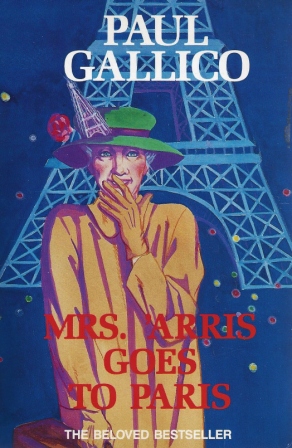
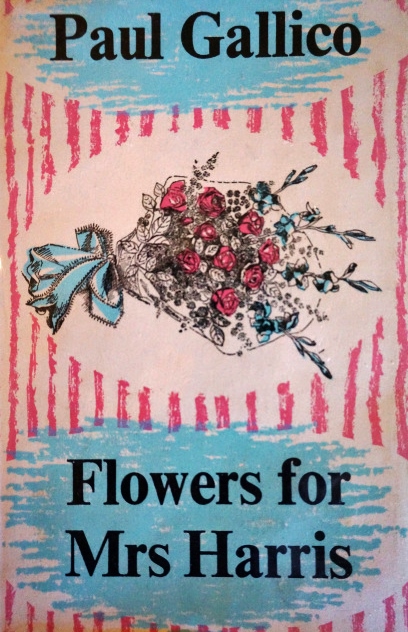
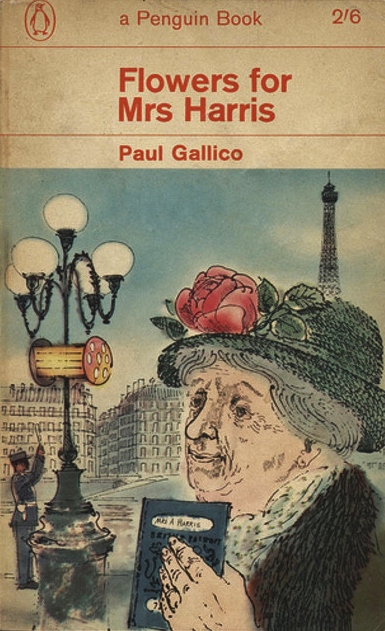
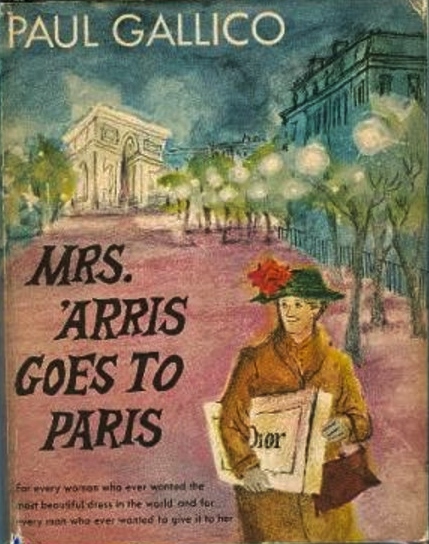
mrs 'arris goes to paris paul gallico 2 001Mrs. ‘Arris Goes to Paris by Paul Gallico ~ 1958. Originally published as Flowers for Mrs. Harris, and alternatively titled Mrs. Harris Goes to Paris. This edition: International Polygonics, Ltd., 1989.  Softcover. ISBN: 1-55882-021-3. 157 pages.

My rating: 7.5/10

I’d read this before, long ago in junior high school – I have a memory of sitting reading it at one of the small round tables tucked in the back of the library early in my Grade 8 year, my refuge from the crowded cafeteria at lunch hour – and at least once in the years since then, and the re-read brought me no new revelations. A decidedly sweet (just this side of saccharine) novella. “Charming”, and “Adult fairy tale”, two terms beloved of this minor classic’s many reviewers, suit it well.

*****

The small, slender woman with apple-red cheeks, graying hair, and shrewd, almost naughty little eyes sat with her face pressed against the cabin window of the BEA Viscount morning flight from London to Paris. As with a rush and a roar the steel bird lifted itself from the runway and the wheels, still revolving, began to retract into its belly, her spirits soared aloft with it. She was nervous, but not at all frightened, for she was convinced that nothing could happen to her now. Hers was the bliss of one who knew that at last she was off upon the adventure at the end of which lay heart’s desire.

London charwoman Mrs. Ada Harris is bound upon a great adventure, ten British pounds and a stunning one thousand four hundred American dollars tucked safely into her shabby imitation leather handbag, along with the return half of a round-trip ticket to Paris. What could she be up to?

We are soon to find out, when Mrs. Harris firmly directs her Parisian taxi driver to transport her with the utmost speed and efficiency to the Avenue Montaigne; more specifically, to the House of Christian Dior. Mrs. Harris is about to buy herself A Dress.

Now, how, do you ask, can a 1950s’ London charwoman, billing herself out at a modest three shillings an hour – roughly the equivalent, at the exchange rate of the time, to a little under fifty American cents – manage to come up with the incredible amount needed to purchase an original Dior creation? And, most urgently, you must be wondering why?!?

The how (this is a “fairy tale”, don’t forget) is quite easily explained by our author. There was a substantial win on the football pools; that got Mrs. Harris a quarter of the way to her goal. Scrimping and saving, going without her beloved weekly movies and occasional visits to the pub and cutting down on her lavish consumption of tea took her to the halfway point. A disastrous attempt at gambling on the dog races was a setback, but Mrs Harris soldiered on. It took her three years, but she did it; the cash is in hand. Now for the dress.

But, again, why a Dior dress? What on earth could be possessing this humble woman in setting her aspirations on such a worthlessly extravagant item? Well, it all goes back to a little incident at one of her employers’ houses, a certain fashionable and extremely wealthy Lady Dant.

Opening up Lady Dant’s closet in the discharge of her tidying up duties, Mrs. Harris discovers something marvelous. Not one, but two astonishing garments, the like of which she has never seen in real life before, though she has sighed briefly and appreciatively over such creations in the discarded fashion magazines which frequently have come her way. And she’s always loved beautiful things, though that love has hitherto only expressed itself through the more readily accessible medium of flowers; the geraniums she grows with such marvelous success, and the cast-off bouquets which come her way and which she nurses along until the vestige of any beauty is completely faded.

But now as she found herself before the stunning creations hanging in the closet she found herself face to face with a new kind of beauty – an artificial one created by the hand of man the artist, but aimed directly and cunningly at the heart of woman…There was no rhyme or reason for it; she would never wear such a creation; there was no place in her life for one. Her reaction was purely feminine. She saw it and she wanted it dreadfully…

Oops, there goes Paul Gallico expounding on the childishly weak nature of femininity again, a tendency he demonstrates fairly frequently, and which annoyed me so much in another one of his folksily frothy novellas, 1962’s Coronation. But steeling myself, and soldiering on, I allow myself to be caught up in the saga of Mrs. Harris and her Dior dress.

She does indeed reach her goal and attain her wonderful garment – the description of which appealed deeply to my own feminine soul, and left me feeling a yearning-for-loveliness sister to Ada Harris – but while she is going about it she also proceeds to magically make several unlikely friends connected with the House of Dior, and to change several lives, and to generally act as an unlikely catalyst to events beyond her daily sphere. For in Paul Gallico’s fictional world, a heart of gold and a cheeky smile can move mountains, cutting through the sneering superiority of the wealthy and snobbish, and bringing some down-to-earth sensibilities into the most artificially fabricated situations.

Mrs. Harris is our hero(ine) of the moment; her eternal wisdom sees through the superficialities of social class and fancy dress, to the eternal desires for “something higher” trapped within every human soul.

Oh, Paul Gallico. I do enjoy your work, but there is always just a little hesitation in my own occasionally cynical soul which stops me embracing your fables fully…

Mrs. Harris gets a pass, however, and a generous one; the unlikeliness of her quest puts this tale on a plane of its own.

Next up, three more fables concerning our charwoman with a flair for the extraordinary. Gallico followed up the phenomenal success of Mrs. Harris’s Parisian escapade with equally fantastical trips to America, to the British Houses of Parliament, and to Soviet Russia. I haven’t read any of these yet, but I am in possession of two of them, the America and Parliament capers, in the 1967 collection of novellas under one cover, Gallico Magic. My husband read that collection a year or so ago, and finished it off wit the comment that it was a bit much to take all together; he was completely Gallicoed out by the end. I may approach with more caution, judiciously choosing only one or two of the novellas and leaving the others for another time. I will be sure to report back on Mrs. Harris, though. I’m quite curious as to what further tangles she’ll untangle with her golden “common touch”!

Oh – and I can’t leave you without a comment on the edition of Mrs ‘Arris Goes to Paris which I’ve just read. It has to have some of the ugliest illustrations possible inside; an absolutely perfect example of generic illustration lite. I shan’t share; it would be too painful, but a glance at the cover will give you a clue as to the horrors within. As an antidote, and to soothe my own ruffled sensibilities, I include several much kinder covers below. (Query: Who or what is International Polygonics, Ltd., and why did they ruin their otherwise nicely produced edition of this book – good paper, lovely font – with these pedestrian pictures?)

Ah, well. Moving on (at last!),  here are several nice reviews to peruse.

One Minute Book Reviews – Mrs. Harris Goes to Paris

Stuck-in-a-Book – Mrs. Harris Goes to Paris

I do believe this is the first edition cover. Understated, but very pleasant.

I do believe this is the 1958 first edition cover. Understated, but very pleasant.

A nice early paperback cover, though Mrs. Harris is perhaps portrayed as a trifle more elderly than she should be; in the book she is a slender lady, capable of fitting into a Dior "floor model" hot off the runway mannequin, and she is also only "approaching her sixties" in age.

A nice early paperback cover, though Mrs. Harris is perhaps portrayed as a trifle more sturdy and elderly than she should be; in the book she is a slender woman, capable of fitting into a Dior “floor model” hot off the runway mannequin, and she is also described as “approaching her sixties” in age. The hat is bang-on, though!

Another early dustjacket, this one from the first American edition. This is my personal favourite; nice example of cover art by an artist who studied the story within.

Another early dust jacket, this one from the first American edition. This is my personal favourite; a great example of cover art by an artist who studied the story within.

Read Full Post »

« Newer Posts - Older Posts »