Archive for the ‘1950s’ Category


Tgreen-knowehe Children of Green Knowe by L.M. Boston ~ 1954. This edition: Faber & Faber, 1962. Illustrations by Peter Boston. Hardcover. 157 pages.

My rating: 7.5/10

A subtle classic of children’s literature, this novel calls one back to the elusive world of imaginative childhood, when all things are possible, and some things are downright magical.

Synopsis cut and pasted in directly from the Green Knowe Wikipedia page, because whomever wrote it did a lovely job of summation of the story set-up:

The Children of Green Knowe is the first of the six books written by Boston about the fictional manor house of Green Knowe. It was a commended runner up for the 1954 Carnegie Medal.

The novel concerns the visit of a young boy, Toseland, to the magical house of Green Knowe. The house is tremendously old, dating from the Norman Conquest, and has been continually inhabited by Toseland’s ancestors, the d’Aulneaux, later Oldknowe or Oldknow, family. Toseland crosses floodwaters by night to reach the house and his great-grandmother, Linnet Oldknow, who addresses him as Tolly.

Over the course of the novel, Tolly explores the rich history of his family, which pervades the house like magic. He begins to encounter what appear to be the spirits of three of his forebears—an earlier Toseland (nicknamed Toby), Alexander, and an earlier Linnet—who lived in the reign of Charles II. These meetings are for the most part not frightening to Tolly; they continually reinforce the sense of belonging that the house embodies. In the evenings, Mrs. Oldknow entertains Tolly with stories about the house and the children who lived and live there. Surrounded by the rivers and the floodwater, sealed within its ancient walls, Green Knowe is a sanctuary of peace and stability in a world of unnerving change.

The encounters of Tolly and his ghostly companions are reminiscent of similar scenes in some of Elizabeth Goudge’s books, being serenely beneficent rather than at all frightening. Though there are a few twists…

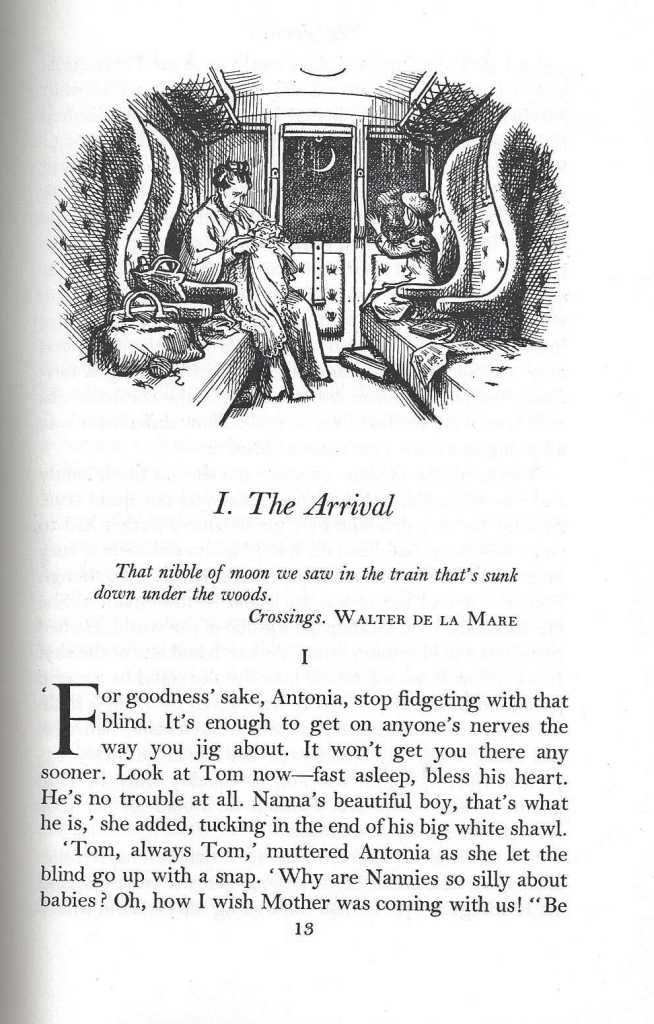
children of green knowe l m boston peter boston 001The full-page and in-text illustrations by Lucy M. Boston’s artist son Peter are intricately detailed in pen-and-ink and scraperboard technique; make sure the copy you share with your child (or read for yourself) has these included; many of the cheaper paperback and some later hardcover editions are missing these.

Perhaps I should have kept this review for closer to Christmas, as that celebration features strongly in one of the most charming incidents in the story.

In a word: Nice.


Read Full Post »

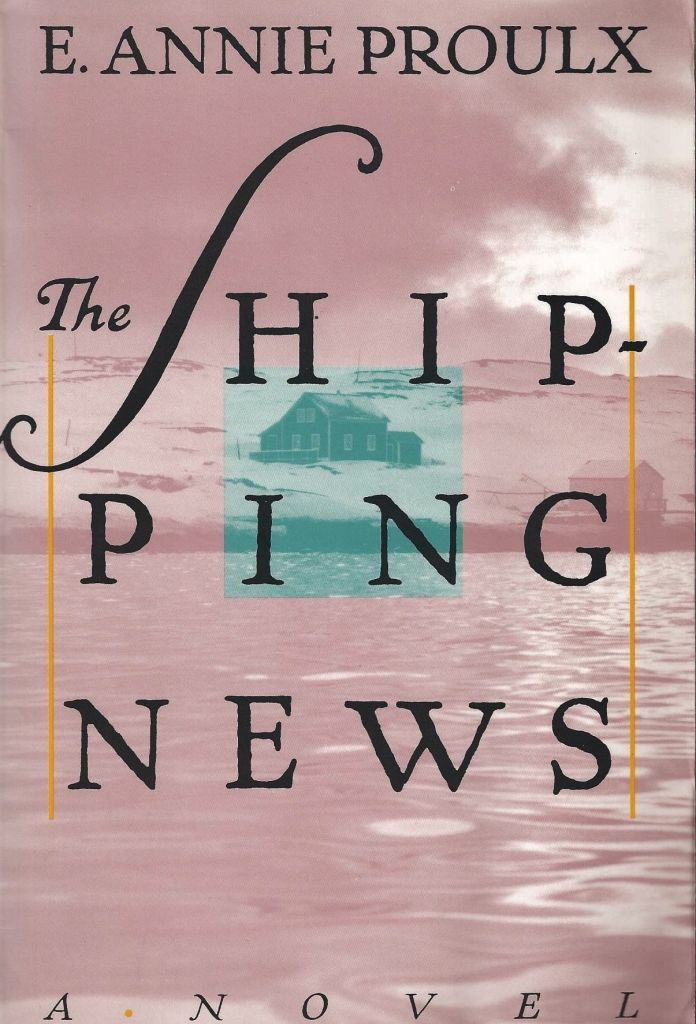
the shipping news e annie proulx 1993 001The Shipping News by E. Annie Proulx ~ 1993. This edition: Scribners, 1993. Softcover. ISBN: 0-684-19337-X. 337 pages.

My rating: 7/10

I’ve finally completely read this Newfoundland-set bestseller, after being defeated only a few chapters in on several previous tries.

What can I say, except that it does get better if one can persevere through the dismal beginning bits, and stumble through the author’s choppy prose until – glory be! – like miraculously deciphering key elements of a foreign language, everything starts to make sudden sense.

Once the cipher was broken, I never looked back, and I ended up rather enjoying this slow-moving tale of the dismal misfit Quoyle and his return to his ancestral Newfoundland roots after the exceedingly well-deserved demise of his sociopathic wife.

Though much of the novel is pure invention – and a good thing too, or there would be no Newfoundlanders left living on The Rock – they’d all be incarcerated for deviant sexual practices, or horribly perished in collisions with the ubiquitous imported moose, or pukingly dead of alcohol poisoning, or, barring all else, simply drowned at sea while a-seeking the vanishing codfish – Proulx catches the distinctive cadence of the regional dialect brilliantly, and her dialogue passages are an absolute joy.

On the negative side of the slate, there’s a completely boring love affair towards the end, all redemptive and meaningful with two sad, spousally-abused people finding each other, which was eye-rolling in its predictable banality. Also an unexpected and artistically over-the-top resurrection of a thought-to-be-deceased mentor figure in our hero Quoyle’s life which I could have happily done without – that bit felt like full-blown farce and jarred, even after all of the many other improbabilities, like the too-mobile ancestral Quoyle family home, and the disgustingly gruesome and never-really-explained fate of a sailor previously met by our hero on the deck of a based-on-reality Dutch-built yacht, once owned (in the story) by Hitler (though in reality the inspirational yacht was supposedly commissioned by Goering – check out this link for a fascinating little side story.)

Quite a mix, this one, of the ridiculous, the sublime, and, on occasion as with all of the details of widespread incestuous child abuse, the just plain distasteful.

Proulx borrows enthusiastically from fact, but never forgets that she is writing fiction, which the reader should also keep in mind throughout.

The internet abounds with reviews and book club discussions and author interviews, so if you’re curious about more detail, go to it. I’ll personally give it an “okay” recommendation, and add that I am quite open to reading some more by this writer, but that I’m not in a terrible rush.

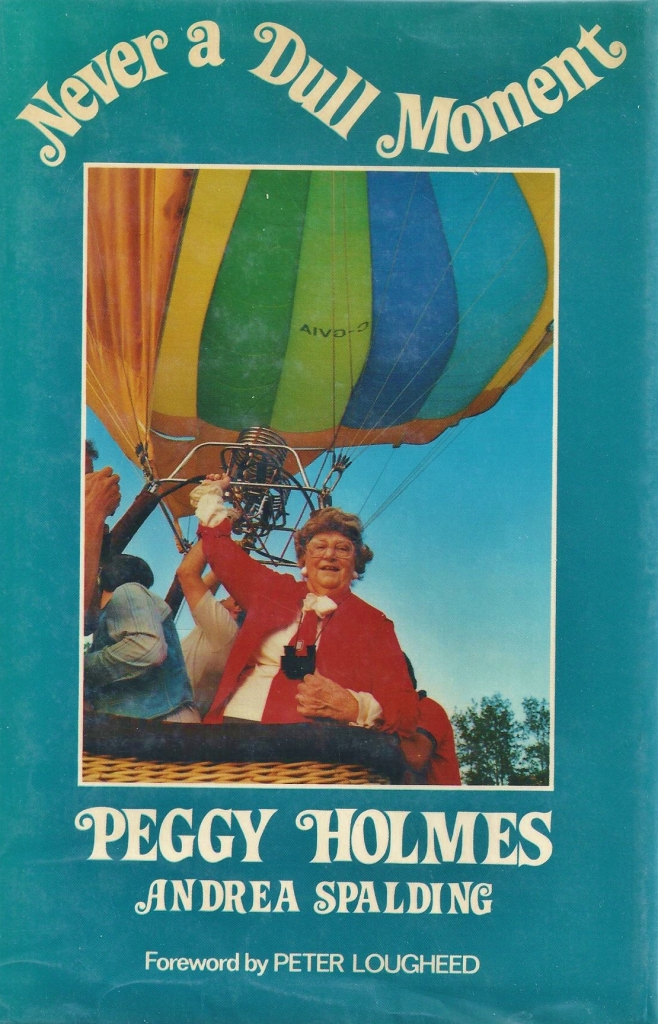
never a dull moment peggy holmes 1984 001Never a Dull Moment by Peggy Holmes ~ 1984. Co-authored by Andrea Spalding. This edition: Collins, 1984. Foreword by Peter Loughheed. Hardcover. ISBN: 0-00-217277-1. 188 pages.

My rating: 7.5/10

Peggy Holmes came to Canada after the Great War as an English war bride, settling on a small northern Alberta homestead with her husband Harry, and trying to make a go of farming under dismal conditions. The couple eventually gave up the farming dream and moved to Edmonton, where Harry became a law court transcriptionist, and Peggy raised her cherished young son, cared for her ailing father, and pursued various jobs in order to earn some extra money in order to keep the household afloat.

This is a lively recounting of Peggy’s long life in the heart of Edmonton. It was written, with the help of computer-literate friend Andrea Spalding, in 1984, when Peggy Holmes was 86. She was inspired to try her hand at memoir after taking a creative writing course, which led to her publishing a first volume of homestead memoirs, It Could Have Been Worse, and working as a highly regarded CBC regional radio broadcaster.

As “good old days” memoirs go, well done and very appealing and readable, though probably of greatest interest to those who are familiar to some degree with the Alberta setting and Edmonton local history. There are many local references.

There was a lot of personal tragedy in Peggy Holmes’ life, including several traumatic miscarriages, the loss of twin newborn girls through a doctor’s incompetence, and her elderly father’s death by suicide, but the tone throughout is pragmatically positive. Peggy Holmes must have been a very interesting lady, and she was certainly an interested one, always up for new experiences, such as the pictured hot air balloon ride when she was 85 years old.

Peggy Holmes wrote three memoirs in total, and I would be pleased to come across the two I don’t have, though I doubt that I will go to extraordinary effort to acquire them.

Peggy Holmes died in Edmonton in 1997, shortly before her one hundredth birthday.

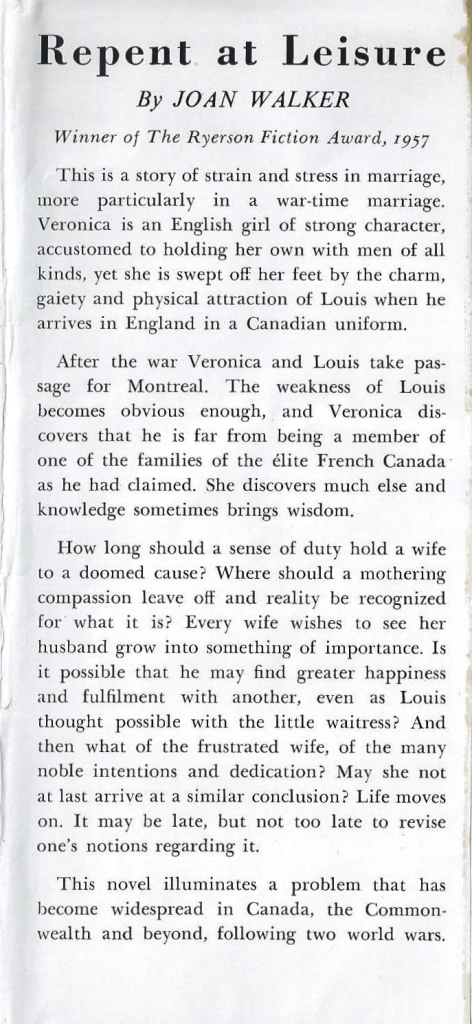
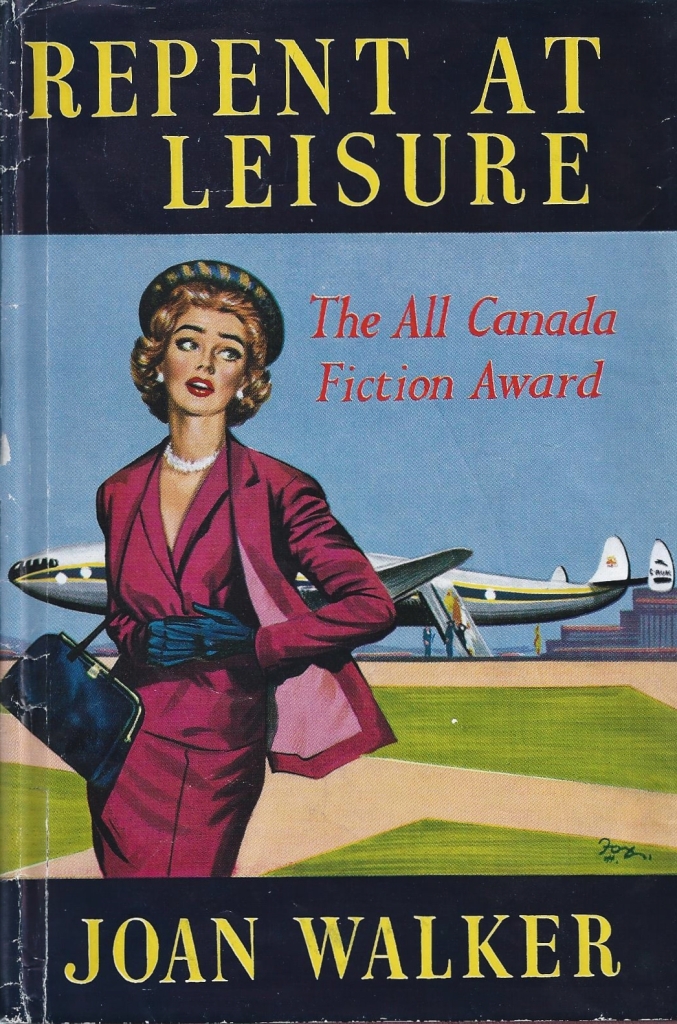
repent at leisure front cover joan walker 001Repent at Leisure by Joan Walker ~ 1957. This edition: The Ryerson Press, 1957. Hardcover. 284 pages.

My rating: 6.5/10

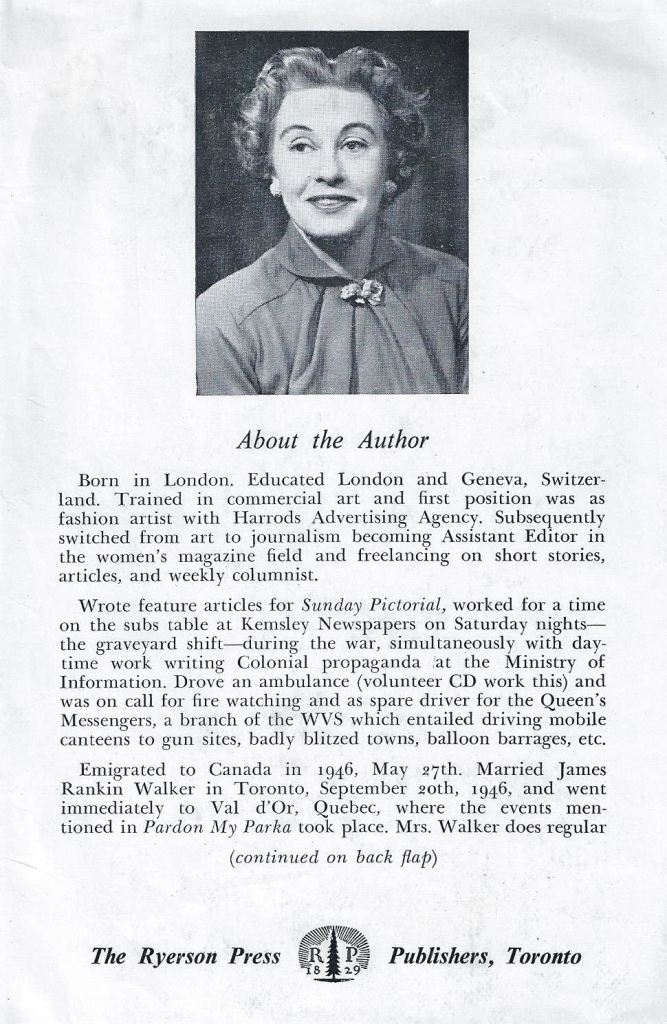
Joan Walker was another English war bride, of a later vintage than Peggy Holmes, coming to Canada in 1946.

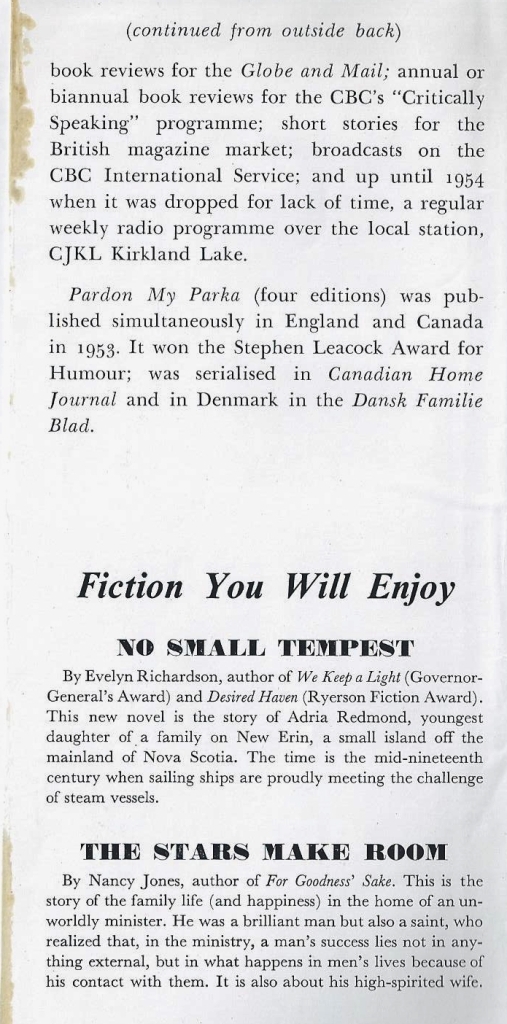
Walker had a background in various sorts of writing, and penned a well-received humorous memoir of her entry in Canadian life, with the Stephen Leacock Award-winning Pardon My Parka in 1953.

Repent at Leisure was Joan Walker’s attempt at writing a “serious” novel, and it is based on her war-bride, culture-shock observances, though it is fictional in its plotting, and not based on her personal marital tale.

Repent at Leisure is acceptably diverting, and I will be definitely be re-reading it in future.

The novel fits well into the “middlebrow women’s fiction” genre of its day, though I wouldn’t go so far as to enthusiastically recommend it. It was distributed in England as well as in Canada, and seems to have been critically well received, receiving the All Canada Fiction Award in its year of publication.

Walker did publish one more full-length book in 1962, a fictional depiction of the life of Richard Sheridan, Marriage of Harlequin. I can find no mention of further full-length works, though Joan Walker apparently continued writing essays and articles for various publications into the 1960s and 70s.

From the front cover illustration I had expected something fairly light-hearted, but the author’s intent seems to have been to write something more serious and dramatic; I can only assume that the cover artist was inspired by the comedic reputation of Pardon My Parka when tackling this new project.

Here are scans of the back cover and flyleaf blurbs from Repent at Leisure, for those of you who are curious about the writer and her work from my brief description.

There are a few copies of this novel on ABE, quite reasonably priced, but, as I’ve already mentioned, I don’t feel it quite worthy of a “must read” recommendation, though there is nothing really wrong with it, either. More of a average-ish period curiosity than a hidden Canadian classic, is my honest opinion.

repent at leisure joan walker flyleaf front 001repent at leisure back cover joan walker 001repent at leisure joan walker flyleaf back001 (2)


Read Full Post »

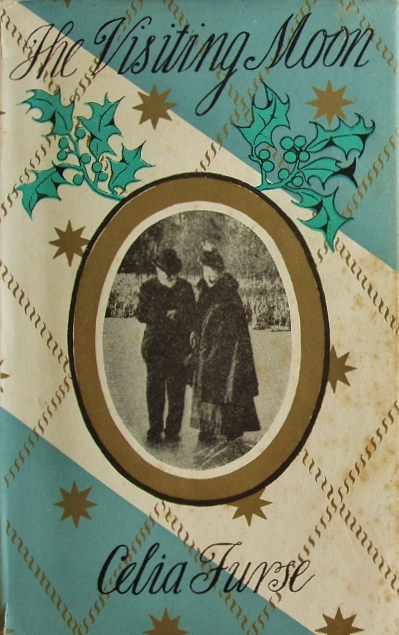
??????????????????????The Visiting Moon by Celia Furse ~ 1956. This edition: Faber & Faber, 1956. Chapter-head illustrations by Charles Stewart. Hardcover. 260 pages.

My rating: 10/10

I will tell the very recent history of how I came across this book here, inspired by the words of a fellow reader who recommended it to me.

On December 3rd, I received a comment on a post from Marijke in Holland, and in it she said:

…There is…one book… and as it is about Christmas and as Christmas is coming, I recommend it hereby “from all my heart”!

In 1966, when I was 22, I stayed for 4 weeks in August at a family in Cheadle, Cheshire, England. I had met them some 10 years before at my aunt’s bed and breakfast in my (then) hometown Nijmegen, where I was doing the washing up, and being a tolk for the family: father, mother and grownup daughter. They had come to Nijmegen because the father had fought in the battle around Nijmegen in the winter of 1944-1945, and he wanted to let his wife and daughter see the place. So I went around with them every day, even to some German places not far from our border, and they invited me to come and stay in England, and I went for the first time when I was 17, after finishing school, and, as I said before, again in 1966. Cheadle is near Manchester and I went there to the antiquarian bookshops, looking for Elizabeth Goudge and Beverley Nichols, and one of the bookshop-owners, a very nice and understanding man said, that when I liked these authors I might like THE VISITING MOON by CELIA FURSE (Faber 1956). I bought the book, merely because of the illustrations, and read it, at home again, in the week before Christmas, fell in love with it, and have read it since that time EVERY YEAR at Christmas. It is stained by candlegrease, because it is always lying under the Christmastree, and it has lost its cover and it is my very very best Christmas-story ever, and when you do not know it, look for it at Amazon or Abe-books immediately!

Celia Furse is the daughter of Sir Henry Newbolt, but that is another story and a very peculiar one indeed…

If you think I can resist a recommendation like this, you don’t know me very well 😉 so of course off I immediately went to ABE and ordered myself a copy from a bookseller in England and with wonderful serendipity it arrived well before Christmas.

What a grand book. I think I can safely add it to the “Hidden Gem” category, and I know it will become a favorite Christmas season re-read, though it is so good that one could pleasurably read in in any of the twelve months.

Lady Margaret Cecilia Newbolt Furse – her pen name a shortened version – writing in 1955 when she was 65 years old, tells of a two-week visit to a large English country home at the turn of the 19th Century. The 11-year-old girl in the story, “Antonia”, or “Tony” as she is called by almost everyone, is a boisterous tomboy of a girl, imaginative and occasionally pensive, and our omnipotent narrator (Celia Furse herself, as we are given confirmation of at the close of the story) follows her through a fortnight, recording the goings-on in a large Victorian household packed with visiting relations, and full of family tradition and local custom.

A detailed and loving remembrance of a moment in time now long past, deeply nostalgic but also wonderfully realistic. This is a charming book, but never sticky-sweet: Antonia/Celia has much too much forthright character for that to be a danger.

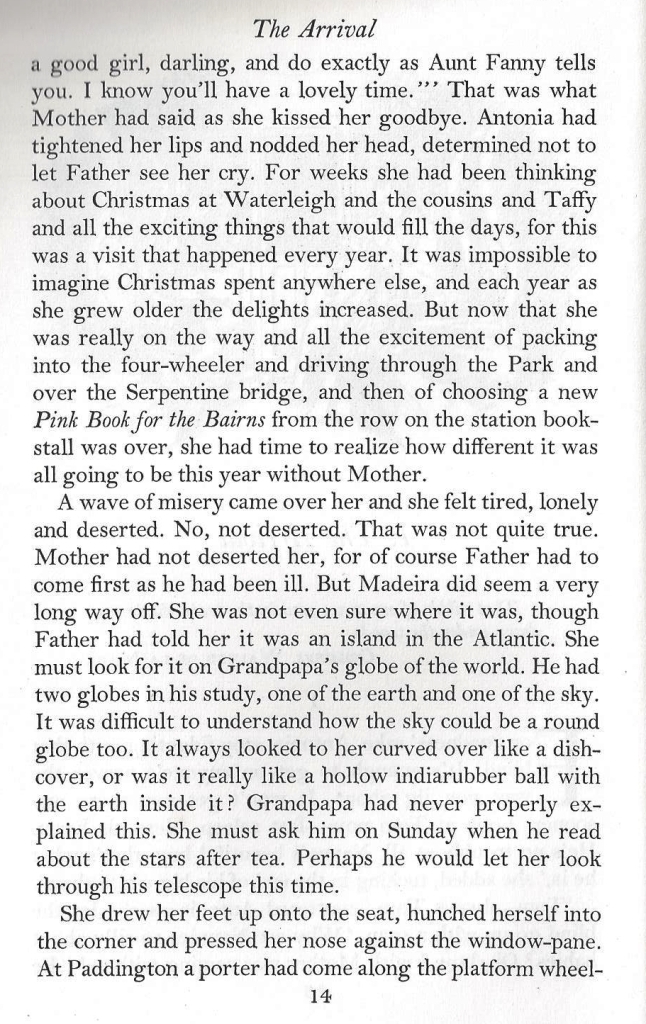
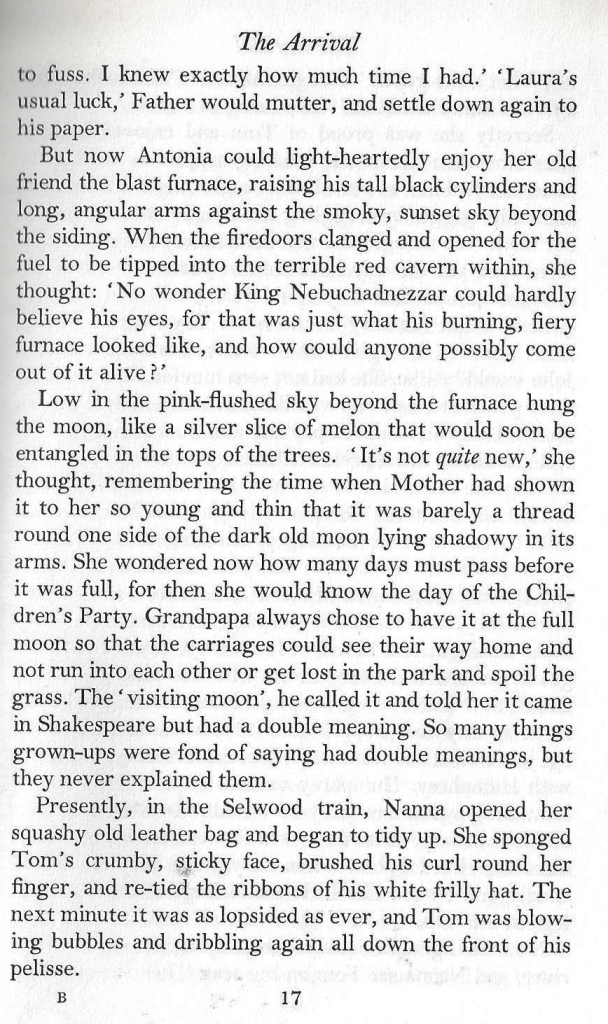
Here are the first 5 pages, so you can sample this for yourself. (Click each page scan to enlarge for reading.)

visting moon celia furse excerpt pg 1 001

visiting moon celia furse excerpt pg 2 001visiting moon celia furse excerpt pg 3 001 (2)visiting moon celia furse excerpt pg  4 001 (2)visiting moon celia furse excerpt pg 5 001

It just gets better and better – a perfect gem of its childhood memoir genre.

Highly recommended, though you may have a bit of a quest getting your hands on it. There are only 9 copies listed this morning on ABE, ranging from $2 US (plus $26 shipping to Canada from the UK, so not such a bargain as all that) to $60 US.

This book cries out for republication – it has Slightly Foxed written all over it – spread the word!

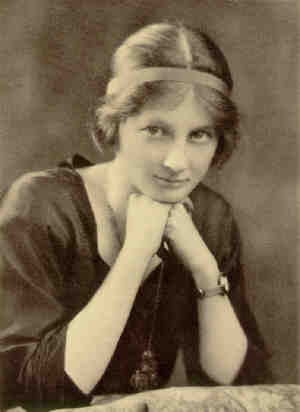
Margaret Cecilia Newbolt as a young woman.

Margaret Cecilia Newbolt as a young woman.

A little more information I picked up while (fruitlessly) looking for more by this writer. The Visiting Moon appears to be Celia Furse’s only published memoir (and what a shame that is, for it is really good), but it seems that she was a lifelong writer, as I did come across mention of her as a minor Edwardian poetess, including this rather twee example, circa 1919, from her only published (apparently, for I could not find mention of any more) book of poetry, The Gift.

The Lamp Flower

by Margaret Cecilia Furse

The campion white
Above the grass
Her lamps doth light
Where fairies pass.

Softly they show
The secret way,
Unflickering glow
For elf and fay.

My little thought
Hath donned her shoe,
And all untaught
Gone dancing too.

Sadly I peer
Among the grass
And seem to hear
The fairies pass.

But where they go
I cannot see,
Too faintly glow
The lamps for me.

My thought is gone
With fay and elf,
We mope alone,
I and myself.

Don’t let this put you off, though, for The Visiting Moon is good strong stuff, with prose much less sentimental than this poetic effort.

Celia Furse’s father was the poet Sir Henry Newbolt, as mentioned by Marijke, and I am most intrigued by his particulars.

I’m sure you will have come across one of his most well-known poems, the ubiquitous “Vitai Lampada”, beloved of Great War propagandists, though Sir Henry came to dislike his early effort greatly, as its lasting popularity eclipsed his later work:

There’s a breathless hush in the Close to-night —
Ten to make and the match to win —
A bumping pitch and a blinding light,
An hour to play and the last man in.
And it’s not for the sake of a ribboned coat,
Or the selfish hope of a season’s fame,
But his Captain’s hand on his shoulder smote
“Play up! play up! and play the game!”

The sand of the desert is sodden red, —
Red with the wreck of a square that broke; —
The Gatling’s jammed and the colonel dead,
And the regiment blind with dust and smoke.
The river of death has brimmed his banks,
And England’s far, and Honour a name,
But the voice of schoolboy rallies the ranks,
“Play up! play up! and play the game!”

This is the word that year by year
While in her place the School is set
Every one of her sons must hear,
And none that hears it dare forget.
This they all with a joyful mind
Bear through life like a torch in flame,
And falling fling to the host behind —
“Play up! play up! and play the game!”

Good strong manly stuff, what?

So here’s a rather salacious tidbit about its writer, and of the household set-up of our Celia Furse, who must have had some sort of inkling that her parents’ marriage was of an unconventional sort. (She does refer in The Visiting Moon to “Tony’s” mother’s “boyish” qualities, which the 11-year-old of the memoir feels she has inherited.)

When Sir Henry Newbolt proposed to his wife, Margaret Duckworth, she was already in love with her lesbian cousin, Ella Coltman. Margaret agreed to marry Henry only if she could continue in her relationship with Ella; Henry agreed and went a bit further, by setting up a ménage à trois with both women, and noting in his diaries the number of times he slept with each one, turn and turn about. This situation lasted out the life of the principles, and seemed reasonably successful for all of them, though there were reported to be some to-be-expected flurries of emotion upon occasion.

On my reading list for 2015: a biography of Sir Henry Newbolt. Luckily there appears to be quite a good one out there, 1997’s Playing the Game, by Susan Chitty.

Isn’t this sort of thing quite wonderful? One thing leads to another, and I know I will never run all of these meandering book-related questings and explorations!

Read Full Post »

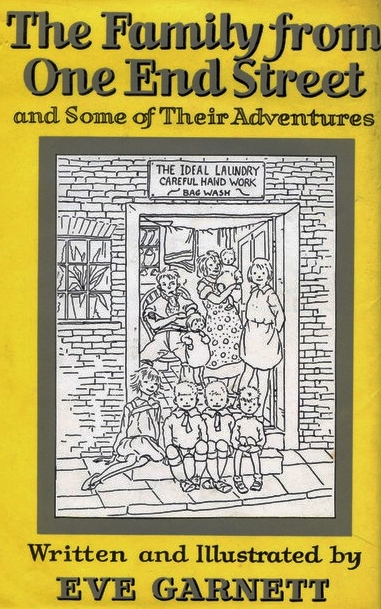
the family from one end street eve garnett 1937The Family From One End Street and Some of Their Adventures by Eve Garnett ~ 1937. This edition: Frederick Muller, 1949. Illustrated by the author. Hardcover. 212 pages.

My rating: 8.5/10

A cheerful period piece of a book, illustrated by the author.

Mrs. Ruggles was a Washerwoman and her husband was a Dustman. “Very suitable, too,” she would say, though whether this referred to Mr. Ruggles himself, or to the fact that they both, so to speak, cleaned up after other people, it was hard to decide…There were a great many Ruggles children – boys and girls, and a baby that was really a boy but didn’t count either way yet.

The seven Ruggles children, from twelve year old Lily Rose doorstepping down through Kate, twins James and John, Josiah (after his father, and both called “Jo” for everyday), Margaret Rosie, and baby William, get into the expected scrapes, and find their way out of them in various ingenious ways.

Anecdotal chapters follow the children in turn, and together give an amusing portrait of between-the-wars London through the eyes of a poor-but-respectable working class family.

Homeschooler “living books” note: Much in the line of Eleanor Estes and Elizabeth Enright, this might well work as a read-aloud to attentive children, or as a good read-alone for thoughtful and competent middle grade and older readers, if they are interested in “family stories” from “long ago.” Nicely complex in structure and vocabulary; developing early readers might have some trouble deciphering some of it, but confident readers should be able to power through.

Charming and diverting, for the problems are quite genuine, the adventures are sometimes poignant (and also frequently quite funny), and they always seem to come right in the end.

Pleasant adult read for its historical interest and distinctive narrative voice. I’ll repeat: this is definitely a period piece.

Wikipedia provides some background context:

Garnett was commissioned to illustrate Evelyn Sharp’s 1927 book The London Child and the work left her “appalled by conditions prevailing in the poorer quarters of the world’s richest city”. She determined to show up some of the evils of poverty and extreme class division in the United Kingdom, especially in contemporary London. To that end she worked on a 40-foot mural at the Children’s House in Bow, completed a book of drawings with commentary called Is It Well With The Child? (1938), and both wrote and illustrated a story book that dealt with the social conditions of the English working class, which was exceptional in children’s literature.

That book, The Family from One End Street, was rejected by several publishers who deemed it “not suitable for the young”, but eventually published by Frederick Muller in 1937. It won the second annual Carnegie Medal from the Library Association, recognising the year’s outstanding children’s book by a British subject. (It beat Tolkien’s The Hobbit among others.) For the 70th anniversary of the Medal, it was named one of the top ten Medal-winning works, selected by a panel to compose the ballot for a public election of the all-time favourite. It is regarded as a classic, having remained in print to the present day.
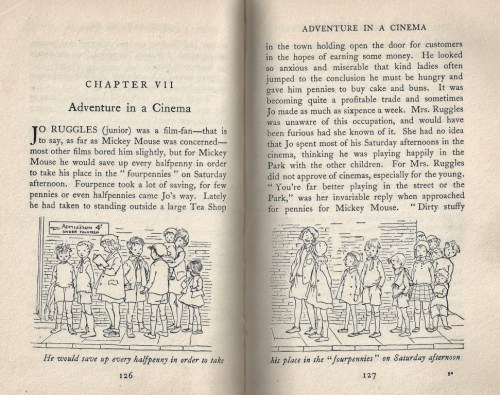
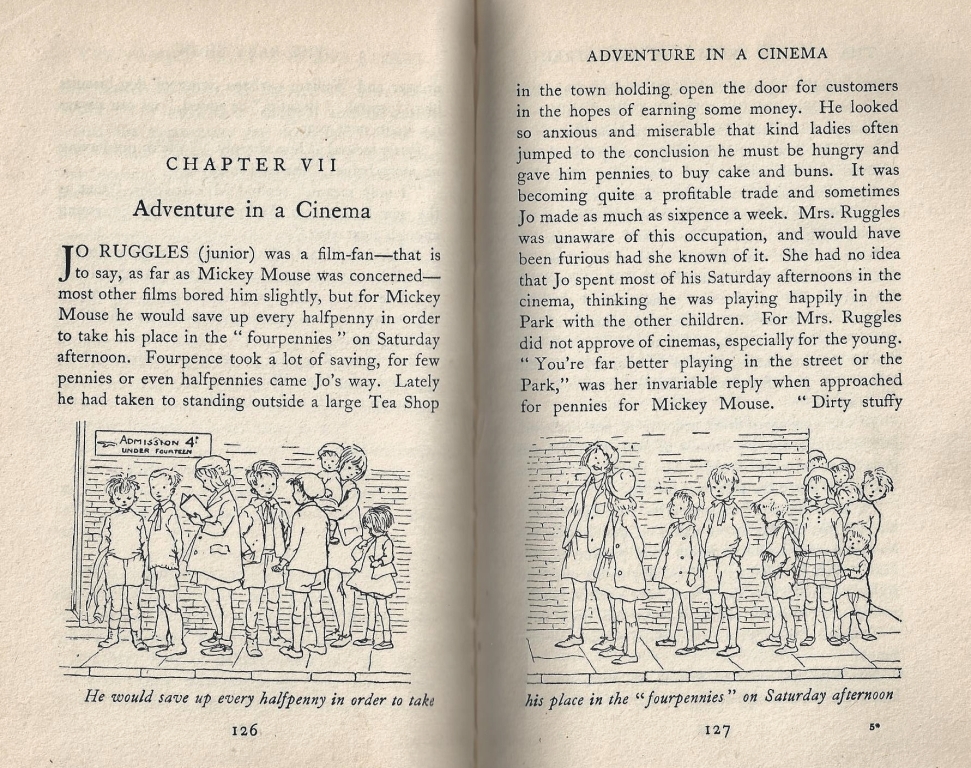
the family from one end street excerpt eve garnett 001

A random page scan from The Family From One End Street, by Eve Garnett, 1937.

little britches ralph moodyLittle Britches: Father and I Were Ranchers by Ralph Moody ~ 1950. This edition: University of Nebraska Press, 1991. Softcover. ISBN: 0-8302-8178-1. 260 pages.

My rating: 7/10

In 1906 the Moody family – Mother, Father, and five children, with Ralph the second oldest at 8 years old – moved from New Hampshire to Colorado, where it was hoped that the clean air and a healthy outdoor life would help Father recover from a lung ailment acquired while working in a dusty woolen mill. This turns out to be galloping tuberculosis, and you just know it’s not going to end well, especially when you note that the sequel to Little Britches is titled Man of the Family.

Gloomy foreboding aside, I’ll return to the installment under discussion. Promised a thriving ranch, the family finds instead a derelict three-room house set on skids in the middle of a cactus-infested field, with not a decent fence or sound outbuilding in sight. They almost head back to New Hampshire then and there, until Mother proclaims, with a sob in her voice, that the Good Lord led them there, and there they shall remain.

Needless to say there are many challenges, but a small and thriving ranch is indeed established, with young Ralph, in the throes of hero worship for the local cowboys he has just encountered, participating to his utmost alongside his competent and hardworking through constantly ailing father.

A diverting enough tale, mostly autobiographical, with some creative license applied by the author. Young Ralph seems to have been a rather accomplished child for an 8-year-old; he excels at everything he tries, though frequently not without a lesson-teaching setback or two. Father is continually having to spank him soundly, and of course (this being an inspirational type tale), young Ralph is grateful for his correction, for naturally Mother and Father know best.

Sometimes a bit preachy, but nevertheless an effortless and engaging read. This book and its sequels, Man of the Family (1951), The Home Ranch (1956), Mary Emma & Company (1961), The Fields of Home (1953), Shaking the Nickel Bush (1962), The Dry Divide (1963) and Horse of a Different Color (1968), were the result of a creative writing course taken by Ralph Moody at the age of 50, and are composite portraits of events and characters from his childhood and later years.

These books are beloved of many “religious-minded” homeschoolers, for their emphasis on moral fortitude and godly behaviour. Though Ralph fell aside from the narrow way many times, he was always able to boost himself back up by his bootstraps, with the help of an occasional inspirational visit to the back of the barn with Dad and a willow switch, or a less-physically-painful session with Mother and the family Bible.

Ralph Moody’s agenda as a writer was simple and sincere. As he said in a 1967 interview in the New York Times Book Review: “My goal in writing is to leave a record of the rural way of life in this country during the early part of the twentieth century, and to point up the values of that era which I feel that we, as a people, are letting slip away from us. ”

Fair enough. Mostly very good, this book, and perhaps I am being overly critical regarding all of the corporal punishment the author so enthusiastically reports.
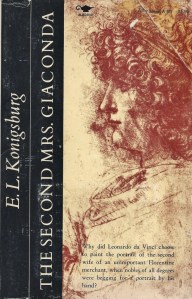
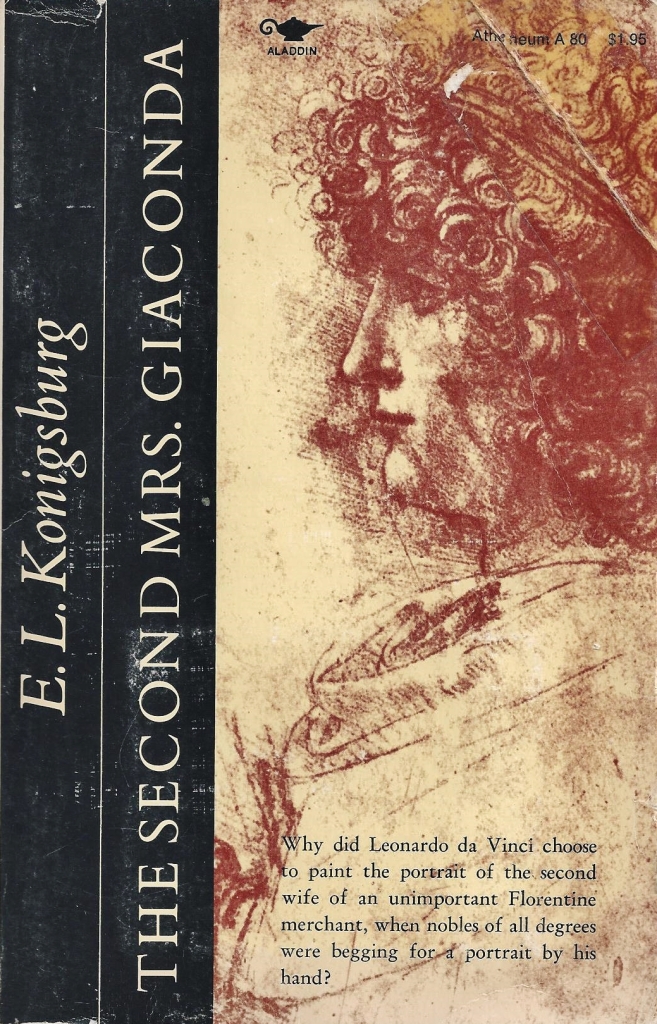
the second mrs giaconda e l konigsburg 001The Second Mrs. Giaconda by E.L. Konigsburg ~ 1975. This edition: Aladdin, 1980. Softcover. ISBN: 0-689-70450-X. 138 pages.

My rating: 4.5/10

Why did Leonardo da Vinci choose to paint the portrait of the second wife of an unimportant Florentine merchant, when nobles of all degrees were begging for a portrait by his hand?

Great question, regarding the enigmatic “Mona Lisa.” Too bad the author never really answers it.

I quite like a lot of Elaine Lobl Konigsburg’s work, for though she was of the “problem novel” school of juvenile writer, her books for the most part contain a lot of humour, and are never preachy. The “educational” bits are generally unobtrusively incorporated into the tale, with the final product being entirely pleasing.

Sadly, The Second Mrs. Giaconda, despite its perennial inclusion on juvenile reading lists due to its Leonardo da Vinci theme, is to my mind something of a dud, being written exclusively in “tell, don’t show” mode. A great shame, because this writer was capable of doing so much more, and the subject is chock full of potential.

The novel gives an overview of life in Renaissance Italy through the eyes of Leonardo da Vinci’s young apprentice Gian Giacomo de’ Caprotti, known to his familiars as Salai. Giacomo/Salai was a real historical personage, and he is mentioned in da Vinci’s journals with intriguing frequency, from his entry into the household as a child of 10, in 1490, to his inclusion as a beneficiary of a house and half of da Vinci’s garden property in da Vinci’s will.

Leonardo da Vinci refers to Salai as a “liar, thief, mule-head, glutton”, and includes mention of his apprentice’s numerous failings, but obviously something happens during their time together to turn the tables completely. What was it? Konigsburg fabricates her version of their joint story referring to da Vinci’s actual journal entries, and in this case her creative license feels forced, as she incorporates Salai’s fancied involvement in all of da Vinci’s personal and professional relationships, in particular with Leonardo’s great patron, the immensely powerful Duke of Milan, and his wife Beatrice d’Este.

None of this has anything to do with the Mona Lisa, and the “second Mrs Giaconda” shows up only very briefly in the very last chapter, with her portrait painted as something of a slap in the face to Beatrice’s jealous sister Isabella, and the whole project completely engineered by the cunning Salai.

Here, courtesy of ever-handy Wikipedia, is some more of a rundown on the plot of this novel. :

The son of a poor shoemaker, Salai is a cutpurse caught in the act by the master, whose grasp and visage he mistakes for the hand and face of God. Leonardo takes him as an apprentice, at no fee, and practically as a servant. Salai remains a scoundrel who moves from petty theft to selling his master’s sketches, and later to selling his audiences.

Princess Beatrice comes to Milan and marries Il Moro, the duke, who had hoped to marry her beautiful older sister Isabella d’Este. He continues to wait on his beautiful mistress Cecilia Gallerani, the subject of a Da Vinci portrait that is already famous. “She’s small and dark and perfectly plain”, Salai says when he first sees Beatrice; when they meet by accident, she is “trying to get the sun to make me blond and beautiful”. They discover a shared taste for mischief. To Leonardo she laments, “Could I but gain my husband’s love, I know that I could disguise this plain brown wrapping.” He asks what she has “to give him that Cecilia has not” and she volunteers her “sense of fun”.

Salai and even Leonardo often visit Beatrice and she becomes the toast of Milan —assisted by the visits. They come to consider her “our duchess” but she does win her husband’s love. Isabella visits and envies her sister for “the intellectuals, the gifted, the skilled craftsmen; the very elements who were drawn naturally to Beatrice.”

Beatrice grows into a political role and becomes a collector of clothing, jewels, etc., and no longer a companion to Salai. She [eventually] conveys insight regarding the master’s talent, and admonishes Salai to take some responsibility for that. To achieve great art, Leonardo needs “something wild, something irresponsible in his work”, and Salai must help.

The merchant Giaconda and his wife appear only in the last of nineteen chapters, visiting the studio during the master’s absence. [In the meantime], Beatrice has approved Leonardo’s The Last Supper and died in childbirth. Milan has been conquered by the French and Leonardo has moved to Mantua. Duchess Isabella of Mantua (sister of Beatrice) has been frustrated for years seeking her portrait by Leonardo, which delights Salai. “Sooner or later she would come to realize that here was one prize that was just out of reach of her jeweled pink fingers.” Spurred by [thoughts of] Beatrice and Isabella, the irresponsible Salai determines to persuade Leonardo to paint Lisa [Giaconda]…*

…and the rest, as they say, is history.

Got all that?

If it all seems a bit flat, despite its convolutions, it is, especially as reported by Konigsburg.  I thought this little historical fiction highly contrived and not particularly interesting, despite its achievement of the Best Book of the Year (1975) for Young Adults Award from the American Library Association.

*All of the quotations in the Wikipedia excerpt are taken from Konigburg’s novel, not Leonardo’s journal.


Read Full Post »

The calendar is on month 12 of the 2014 Century of Books, and much as I wish I could write pages and pages on each of the books already read but yet to be reviewed, I’m afraid it’s not going to happen. I need to start the new year with a clean slate, so this coming week-before-Christmas will see a whole slew of briefest-of-assessment round-up posts. Some of the books noted will be re-reads in the future, and I’ll have to see if I can do better then.

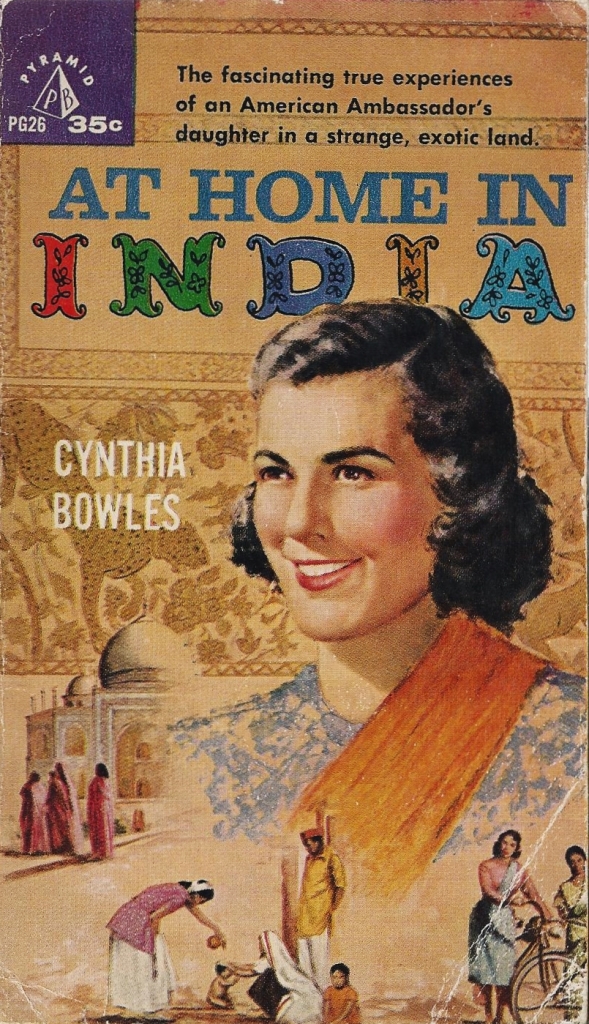
at home in india cynthia bowles 001At Home in India by Cynthia Bowles ~ 1956. This edition: Pyramid, 1959. Paperback. 158 pages.

My rating: 5/10.

“The fascinating true experiences of an American Ambassador’s daughter in a strange, exotic land.”

An American ambassador’s teenage daughter records in earnest detail her experiences of two years in India in the early 1950s. The writing is plodding but the subject has its moments of interest, with much reference to Nehru and Ghandi, and Miss Bowles finds her stride in the later chapters as she stays behind for a few months after the rest of her family’s return to America. Flying solo, the author visits the homes of Indian school friends and does a bit of mild personal research into social programs.

From the back cover, “A Personal Message from Cynthia Bowles”:

I went to India as a young, teen-age girl anxious not so much for knowledge as for the happiness and security which I was reluctantly leaving behind me in Connecticut. Consequently this is not a book of facts and figures. It is the story of what I did in India, of the places I visited, and of the people I came to know. I write because I wish to share, as best I can with you, my experiences in this strange and wonderful land.

And that snippet from young Cynthia tells you all you need to know about her writing  style. Worthy topics of discussion aside, a bit of a bore, really. I doubt I’ll reread this one.

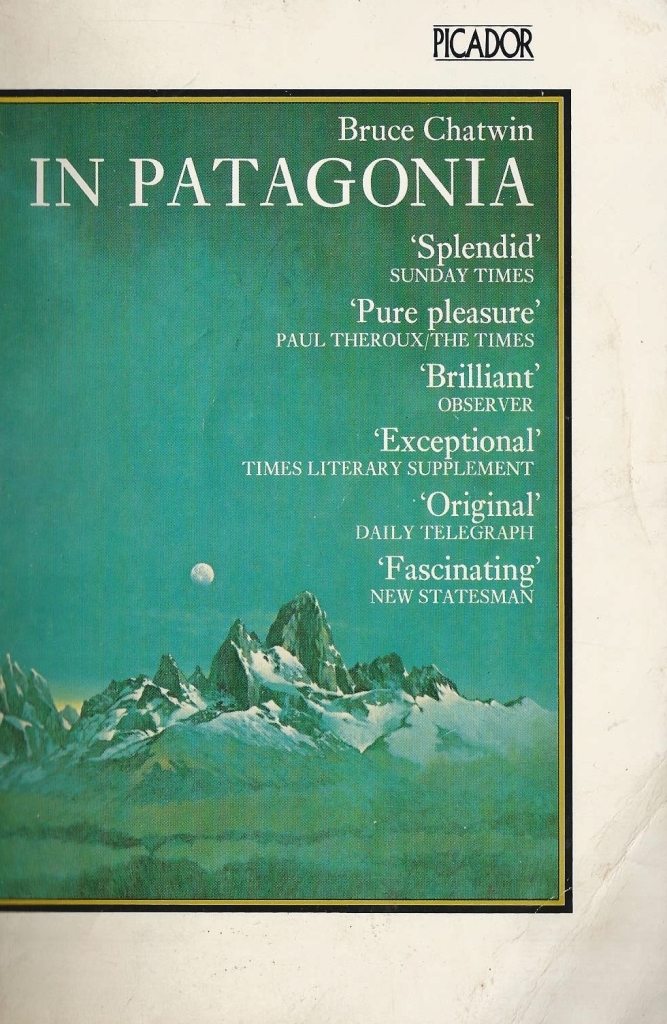
in patagonia bruce chatwin 001In Patagonia by Bruce Chatwin ~ 1977. This edition: Picador, 1979. Paperback. ISBN: 0-330-25644-0. 186 pages.

My rating: 8.5/10

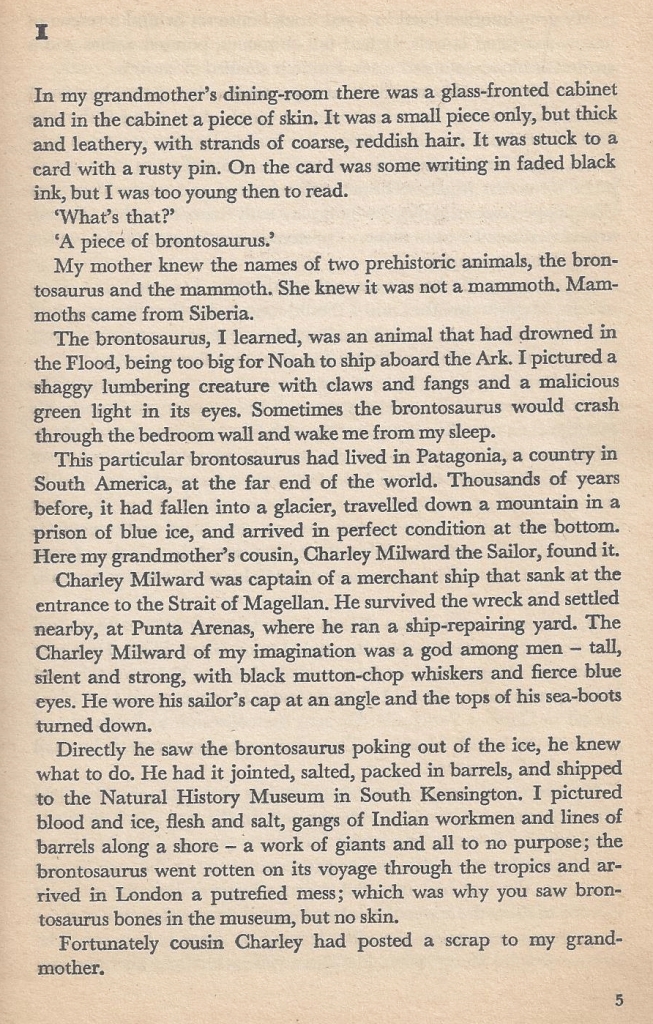
The inveterate traveller, raconteur and ceaseless self-inventor Bruce Chatwin burst onto the travel writing scene in 1977 with this fantastical “documentation” of a quest to the farthest reaches of Patagonia, inspired by a childhood fascination with a strip of mysterious preserved skin in his maternal grandmother’s curio cabinet:

in patagonia bruce chatwin page 1 001

The brontosaurus turns out to be in actuality a mylodon, a giant ice-age era ground sloth, and the specimen in question apparently came (theorizes Chatwin) from a collection of bones, skin and fossilized sloth droppings boxed up for shipment to the British Museum at the end of the 19th Century.

This book defies classification.

Chatwin refused to call himself a travel writer, though his best known books, In Patagonia and its equally quixotic Australia-set counterpart, 1987’s The Songlines, are superficially recordings of actual journeys. Chatwin embellished his tales with a goodly dollop of dramatic invention on occasion, though they read like the cold-sober truth. The many narrative gaps perhaps signal the bits of pure invention, or, just as probably, select bits of actual experience denied the author’s readers for reasons of his own.

Presented in ninety-seven sections, from one-line observations to chapter-length expositions, In Patagonia hits a number of high points, one of which most memorably is a multi-faceted examination of the legendary outlaw triumvirate of  Robert LeRoy Parker, Harry Longabaugh, and Etta Place. The first two are perhaps more famously known by their noms-de-guerre: Butch Cassidy and The Sundance Kid.

Did they really die in a hail of bullets in Bolivia, as pop culture would have it? Chatwin explores the possibilities of their fates in intriguing detail, in between sharply crafted odes to the impossible and brutal beauties of the lands he travels through, and vignette-encounters with the real and historical inhabitants.

Recommended, with the caveat that the best bits may quite well be fiction.

chasing the monsoon alexander frater 001 (2)Chasing the Monsoon by Alexander Frater ~ 1990. This edition: Penguin, 1991. Paperback. ISBN: 0-14-010516-6. 273 pages.

My rating: 10/10

Back in September I read and later glowingly reviewed Alexander Frater’s Beyond the Blue Horizon. I am most pleased to report that Chasing the Monsoon, written four years later, is equally as excellent.

Here is the publisher’s description:

The fascinating and revealing story of Frater’s journey through India in pursuit of the astonishing Indian summer monsoon.

On 20th May the Indian summer monsoon will begin to envelop the country in two great wet arms, one coming from the east, the other from the west. They are united over central India around 10th July, a date that can be calculated within seven or eight days.

Alexander Frater aims to follow the monsoon, staying sometimes behind it, sometimes in front of it, and everywhere watching the impact of this extraordinary phenomenon. During the anxious period of waiting, the weather forecaster is king and a joyful period ensues: there is a period of promiscuity, and scandals proliferate.

Frater’s journey takes him to Bangkok and a cowboy town on the Thai-Malaysian border to Rangoon and Akyab in Burma (where the front funnels up between the mountains and the sea). His fascinating narrative reveals the exotic, often startling, discoveries of an ambitious and irresistibly romantic adventurer.

This doesn’t even begin to describe the scope of this highly likeable book, which is part memoir, part ode to his beloved parents, and part better-than-conventional travelogue.

Frater writes rings around such plodders (by comparison) as Eric Newby, and he comes off as nicer and more relatably human than the über-snarky Paul Theroux, and much more reliable than the skittish Bruce Chatwin.

Good stuff.

Frater is now firmly on my list of writers whose new-to-me books I will purchase without even peeking at the contents.

Highly recommended for those of you who like this sort of thing, especially if you have a high tolerance for occasional (and always pertinent) inclusion of statistics and arcane terminology.

For a quick teaser, here’s page 1:

chasing the monsoon frater excerpt pg 1 001


Read Full Post »

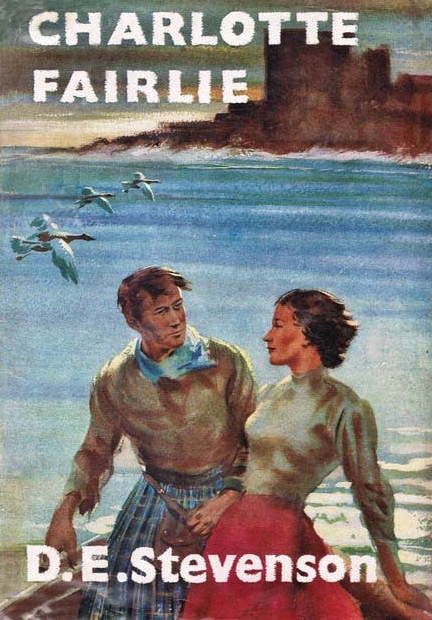
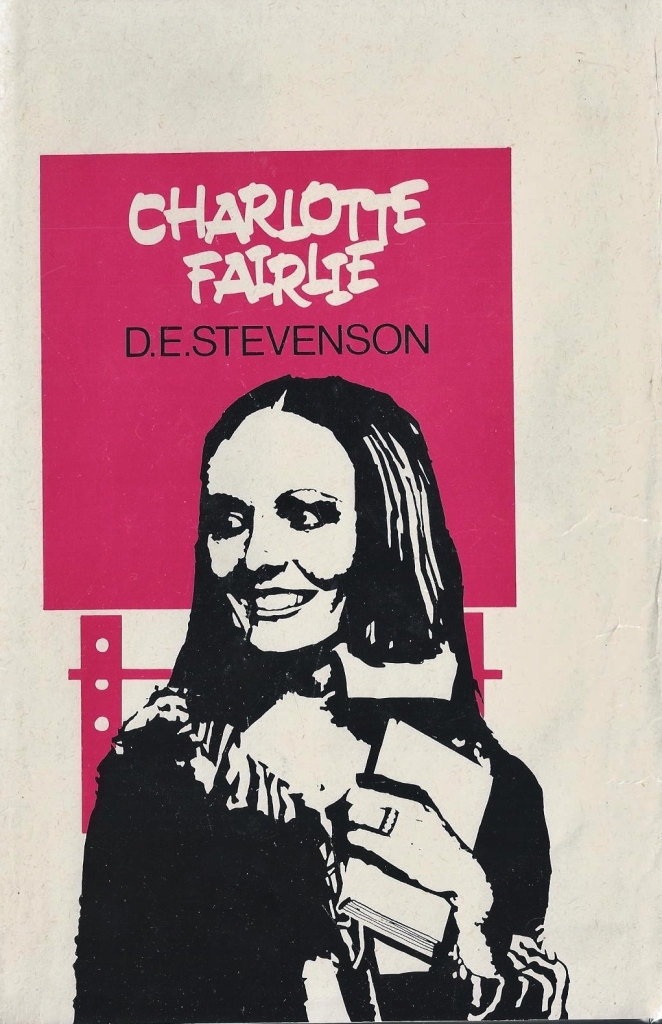
charlotte fairlie dj d e stevenson

An early edition dust jacket illustration. I’m not including mine as it is the 1985 reissue and the jacket illustration is a hideous black, pink and white effort which offends the eye greatly. Well, maybe I will include it, but only at the very bottom. Scroll down if you dare!

December 14, 2014. Thinking some more about Christmas-including books, this novel I read and enjoyed exactly a year ago came to mind. It’s definitely not all about Christmas, but I was most intrigued by the title character’s (and presumably the author’s) thoughts on the “paganism” of many of the socially accepted customs of the time (the 1950s), and her religious musings.

For those of you who didn’t catch this the first time around, and to jog the memories of those of you who are already very familiar with D.E. Stevenson’s novels, here it is again.

Charlotte Fairlie by D.E. Stevenson ~ 1954. Also published as Blow the Wind Southerly and The Enchanted Isle. This edition: Collins, 1985. Hardcover. ISBN: 0-00-222108-X. 320 pages.

My rating: 8.5/10

Casting about on the internet this morning, looking for other opinions, for I wanted to see if my happy reading experience was shared by fellow D.E. Stevenson fans, I was more than a little bemused by the dearth of reviews on this book. I was favourably impressed, and enjoyed it a lot; I assumed others would have as well, and said so. But perhaps I am not looking in quite the right places?

A straightforward plot and a limited cast of characters make for a smooth, fast read. The heroine is a strong-minded, quiet-spoken, wise-beyond-her-years type; I greatly admired her coping skills and judicious use of silence when confronted by difficult situations; a delicious example of letting one’s enemies defeat themselves by running about ever more madly while one remains at the calm eye of the storm saving one’s breath.

Miss Fairlie’s technique reminded me strongly of that of an enigmatic young Dutch man I once spent a summer working under; in his office there hung a small plaque stating: Silence is the only satisfactory substitute for Wisdom. Berndt was both wise and silent; he was one of the most non-committal people I’ve ever come across, but when he had to say something it was always to the point. I think I learned something there, though I seldom put it into practice, being personally of the say-too-much persuasion!

Charlotte Fairlie is a young woman who has made good. Only in her late twenties, she is already the competent headmistress of a respectable girls’ boarding school. She has no family ties but for one disinterested aunt; no romances complicate her emotions. Her one thorn is the senior mathematics teacher at her school, who feels that Miss Fairlie is the devious usurper of a position which should have been her own, and does not hesitate to stir up trouble at every opportunity.

Two of Miss Fairlie’s three hundred students are causing her particular concern. One, Donny Eastwood, stands out as being one of the least bright and most dreamily befuddled children Charlotte has ever had in attendance. Charlotte suspects that there is a hidden intelligence hiding under Donny’s dull façade, and this proves to be the case when Donny perks up greatly upon becoming friends with a new student, one Tessa MacRynne.

Tessa has been living on a secluded Scottish island and having lessons from a governess, rather an anomaly in these times, for the story is set in the early 1950s, and the teaching governess is no longer anything like the norm. Tessa’s lovely, vivacious, American mother has delivered her to the school with something of a regretful attitude; Mrs. MacRynne appears vaguely desirous of confiding something to Miss Fairlie, but in the confusion and business of start-of-term she leaves without divulging, and Charlotte tucks the idea that something is not quite right with the MacRynne household away in the back of her mind.

The Eastwoods and the MacRynnes are decidedly families with “issues”, and Charlotte becomes ever more embroiled in these two students’ personal lives, culminating in a joint visit to Tessa’s island home with Tessa, Donny, and Donny’s two younger brothers, with dramatic consequences for all.

I was surprised by how much I enjoyed this story. While it was absolutely predicable in many ways, there were serious undertones that I found most moving. Charlotte herself is an exceedingly likeable character; I found I was completely taken with her and most sympathetic to the way she rebuilt her life after her father’s rejection of her after his remarriage in her adolescent years. Her own experiences aid her in understanding the woes of her  students, in particular Donny and Tessa, who themselves are bereft of a beloved parent, though Tessa has a loving father to cling to while Donny’s coldly unemotional, widowed father refuses to pander to his daughter’s desperate desire for parental affection. But Charlotte is also shaken to realize that she is not as perceptive as she should be, when one of the four children is tragically involved in what appears to be a suicide attempt while on their Scottish vacation.

I should leave off here, in order to allow those of you who haven’t yet read this book to discover its charms, and its few twists and turns, for yourself. For though there are some dark themes, it is a thoughtful and hopeful story, with a strong element of good humour throughout. And, reading it in December, I was pleased to find that it described several of Charlotte’s Christmases, spent in very different circumstances.

The first is with Charlotte’s Aunt Lydia, a self-indulgent gadabout of a woman, whose Christmas celebrations Charlotte finds vaguely distasteful.

Charlotte… found herself even more out of tunes with the festivities than usual. She had nothing in common with Aunt Lydia’s friends and it did not amuse her to see a group of middle-aged people pulling crackers and wearing paper hats and kissing coyly beneath the mistletoe. In fact she found it revolting… (S)he thought about it seriously: was there any connection between Aunt Lydia’s parties and the “Christmas Spirit?” Was it priggish to be unable to join in the “fun?” She thought of the noise and the laughter and the feasting…and then she thought of the birth of a little baby in a quiet stable… The more Charlotte thought about it the more she became convinced that the orgies of Aunt Lydia and her friends were not Christian at all, but pagan…

The author obviously has this topic on her mind throughout the story, as she comes down hard against the “paganism” of secular Christmas celebrations again during her description of Charlotte’s second Christmas. This time Charlotte has decided to retreat to the depths of the country and spend Christmas alone in contemplation; it is after the turned-tragic Scottish episode, and Charlotte has much thinking to do.

Staying at a quiet country inn. Charlotte spends the week before Christmas taking walks, visiting the church, occasionally talking to the elderly vicar – in one notable exchange detailing her objections to the use of mistletoe because of its Druidic – pagan! – associations, and convincing the vicar to eliminate it from his decorations, though she will allow him to retain the holly(!)

Of her three hundred Christmas cards – delivered to the great astonishment of the villagers who have no idea that their transient visitor is a school headmistress guaranteed a card from every one of her students’ families –  only a few depict the Christmas story, and this seems to Charlotte to be indicative of the increasing loss of the “real” Christmas spirit, the religious significance of the holiday. She muses on about this for some time, and comes to the conclusion that unless one has children, that Christmas is an empty celebration.

…and then she raised her eyes and saw the little church with its lights shining through the stained-glass windows and she realized that there was one child who belonged to everybody… or at least belonged to everybody who would let Him come in. The cloud upon her spirits lifted and quite suddenly she was happy and at peace.

I felt that in these passages the author’s personal feelings and thoughts were made quite clear; she uses her character to make a point she obviously feels very strongly about, and I came away feeling that I had had a glimpse into D.E. Stevenson’s private world under the guise of acquaintanceship with her fictional creation.

Whether one agrees or not with the author’s opinions regarding the paganism of popular Christmas celebrations, it was refreshing to read such a strongly expressed argument; it added a bit of an edge to what otherwise was a mildly interesting set piece: “Christmas in the village.”

Though it does not get much mention among some of D.E. Stevenson’s more popular tales, I personally enjoyed Charlotte Fairlie greatly. A simple story competently told, with enough darkness here and there to let the bright bits really shine.

And here, as threatened, is the just jacket of the 1985 re-issue. While not as Harlequin-romance-y as the kilted hero and shapely heroine depicted on the earlier edition, this one is a bit too avant garde for the 1950s era contents! (Not to mention its sheer ugliness.)

And here, as threatened, is the dust jacket of the 1985 re-issue. While not as Harlequin-romance-y as the kilted hero and shapely heroine depicted on the earlier edition, this one is just a bit too avant garde, in my opinion, for the 1950s-era contents. (Not to mention its sheer ugliness.)

Read Full Post »

I am writing from exile, as it were. My usual “happy place”, as my ever-so-clever and perhaps slightly cynical offspring often call it, is a small room which was once dedicated to the more formal of our homeschooling endeavours. Those students are all grown up now, and over the past few years the schoolroom has turned into a not-very-well-organized office area for yours truly.

It’s really quite lovely in there, with two tall windows overlooking the garden, and lots of bookshelves. The space is (was!) filled by a work table overflowing with stacks of crucial papers (mine) and art supplies (my daughter’s) and mostly empty music CD and computer game cases (my son’s), an ancient oak teacher’s desk – but not of the antique-variety ancient, sad to say, merely of the old, scarred and scuffed sort – and a file cabinet full of the oddest collection of things – an abandoned knitting project from back in 1994 (a wooly sweater for my then-newborn son, who outgrew it long before it was completed), an out-of-order telephone answering machine (even older than the sweater), a stack of my old school report cards from the early 1970s, a small tub of child-proof electric outlet covers and cupboard door latches, the official pedigrees of several horses long since departed for greener (celestial) pastures, a collection of brown paper bags…everything, in fact, except for things-to-be-filed, like receipts and bills and important papers.

The floor in the little room has needed some serious attention for some time – the old linoleum was worn through to the plywood below in the main travel area – and when a recent cold snap which put a sudden stop to outdoor projects had us looking about for a small, manageable, renovation project we zeroed in on this one.

Everything was hastily bundled out of the room and deposited willy-nilly wherever a space could be found. My computer has ended up in a little hallway nook which usually houses the telephone and directories and stacks of incoming mail and such; it’s just large enough to squeeze everything in, and here I sit in a state of some discomfort, pecking away at my keyboard in a much less congenial atmosphere than my private little room.

A (tiny!) room with a view. Note that there is NO SNOW outside the window - very unusual for this part of the world at time of year. Mentioning this should immediately bring the snowflakes drifting down...

Playing about with floor tile patterns in a (tiny!) room with a view. Note that there is NO SNOW outside the window – very unusual for this part of the world at time of year. Mentioning this should immediately bring the snowflakes drifting down…

We’ve ripped up the old floor, replaced a few iffy floor joists and all of the plywood, removed a huge corkboard which took up most of one wall, added wainscoting to another wall, and brought out the paint tins. The new floor tiles are stacked up waiting for the acquisition of a bucket of glue next time I’m in town, and if all goes well I should be back in residence in the next week or so.

The old wooden desk has been relocated and another, larger, more “professional” ex-office steel desk is taking its place; my new view will be out those previously-mentioned windows versus the wall in the corner. I’m not sure what this will do to my concentration level, but I’m thinking it will be a happy psychological development. 🙂

The bookshelves are being relocated, and the stacks of “juveniles” they now contain boxed up for temporary storage; my working library of horticulture books may replace them, or perhaps just another bunch of novels. Not quite sure yet. Books find their own way about, in my experience.

A large grow light stand for the germination of December- and January-sown perennial seeds is planned for the remaining space; the old stand was unceremoniously hauled outside during our last winter’s renovations, and as the plant nursery sabbatical period comes to an end (see Hill Farm Nursery for more on that aspect of my life) indoor early seed-sowing facilities are once again about to be required.

Oh, and the file cabinet is being emptied out, with high hopes that in its new life it will actually be used for its intended purpose – that of holding files. The “cardboard box filing system” which I have been using in the past is apparently going to change. Or so declares my perhaps-too-optimistic husband. 😉 We’ll see. About half of the stuff currently taking up space in the cabinet is his, so he’s hardly innocent of random stashing of “treasures” himself. It’ll be interesting to see what he makes of his stuff, and where it will end up! I have several empty cardboard boxes awaiting his pleasure…

Well, I did promise book notes too, didn’t I? So I think I will tuck a few in here on the end. Minor notes for minor books. These are all from the shelves in the now-ex-schoolroom. I enjoy occasionally reading from the juvenile stacks – well-written books easily cross genre and “intended-age” boundaries.

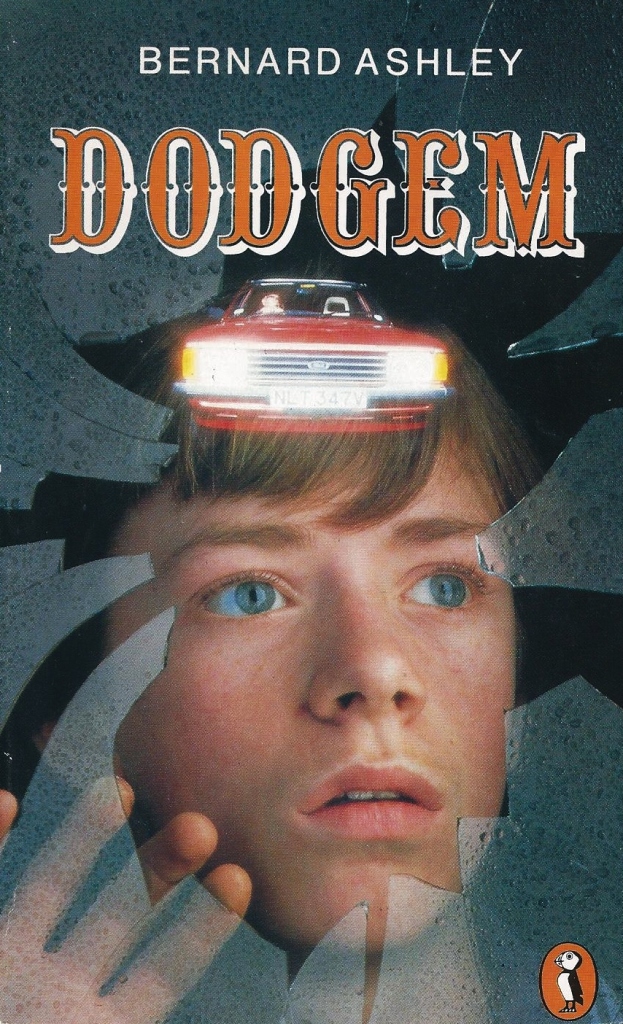
dodgem bernard ashley 001Dodgem by Bernard Ashley ~ 1981. This edition: Puffin, 1983. Paperback. ISBN: 0-1403-1477-6. 222 pages.

My rating: 6.5/10

A better-than-average “problem novel” by ex-headmaster and prolific children’s and young adult fiction writer Bernard Ashley – see his biography here.

Teenage Simon is in trouble with the Child Welfare; he’s been skipping school in order to care for his father, who has been in a state of severe clinical depression since the death of Simon’s mother, a death surrounded by questions, which have torn the small family even further apart in ways which will only become too apparent part way through the novel.

Simon ends up “in care”, and, desperate to return to his father, teams up with the seemingly emotionless Rose in a well-thought-out escape plot which seems at first to be daringly successful.

Decidedly well written and totally engrossing, this short novel, from early in Bernard Ashley’s writing career, was made into an acclaimed 6-episode British television series.

Scenes set in a juvenile care home and in a travelling carnival are excellent in their detail. Despite the young protagonist’s rage against the system which one completely sympathizes with, the adults are given as much time on the page as the teenagers. There is a quite remarkable balance of points-of-view, unusual in this sort of highly-contrived juvenile novel.

This is the only book by Bernard Ashley I’ve yet read, but if the writing quality stays the same in subsequent books he might be worth investigating further for those of you with young teens, or if you are merely open to reading novels targeted at younger-than-adult readers.

*****

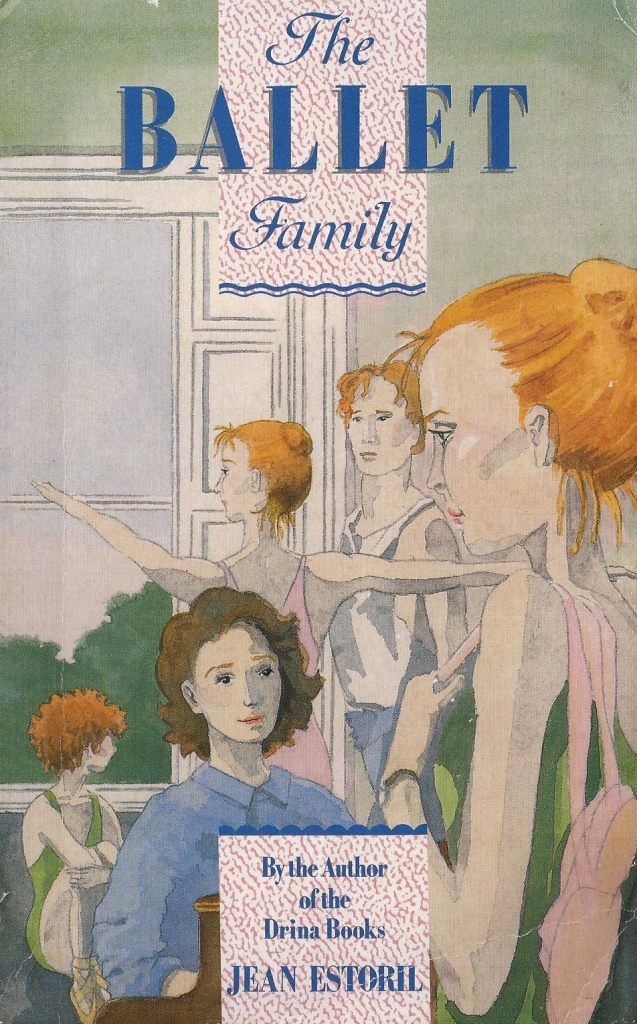
the ballet family jean estorilThe Ballet Family by Jean Estoril ~ 1963. This edition: Macdonald Children’s Books, 1989. Paperback. ISBN: 0-356-16797-6. 176 pages.

My rating: 6/10

Jean Estoril was one of the several pseudonyms of Mabel Esther Allan, a prolific writer of children’s books (Wikipedia reports 130) between 1938 and 1994. The “Jean Estoril” books were all concerned with the world of ballet, most notably a series about an orphaned aspiring dancer, one “Drina” (short for Andrina)  – Ballet for Drina, Drina’s Dancing Year, Drina Dances in Exile, and so on.

I am rather leery of juvenile series books, but in this case I may investigate further, for The Ballet Family, not about the afore-mentioned Drina but instead concerning a group of hyper-talented siblings and their orphaned cousin, is intriguingly good for its sort of thing. Better, in my opinion, than Noel Streatfeild’s ubiquitous (and perhaps over-rated? – others of her books are much, much better, in my humble opinion) Ballet Shoes, which I must confess causes me to grit my teeth here and there.

Mabel Esther Allan studied ballet in her younger years, and it shows, in a good way. The Ballet Family is quite marvellously realistic regarding the dance aspect, aside from the glorious improbability of the initial set-up.

Pelagia, Edward, Anne and Delphine Garland are all dancers and ballet mad. Their mother is a prima ballerina and their father a conductor of the ballet company orchestra.

When their cousin Joan is orphaned she comes down from Lancashire to live with Garlands in London. Confused and lonely, Joan finds it hard to fit in, especially as her cousins are rather wary of her and don’t understand how Joan could survive without knowing anything about ballet!

But Joan does survive and begins to enjoy her new life observing the ups and downs and tears and triumphs of her glamorous cousins.

Pelagia flits in and out of the story, being the eldest and very much concerned with her burgeoning career, Edward is a decent sort with sensible notions, Delphine is a spoiled brat who needs (and thankfully gets) a reality check, but the book is really mostly about middle sister Anne and her difficulties relating to her cousin, whom she finds nothing at all in common with, and whose apparently sullen attitude (she’s really deeply grieving the sudden loss of her beloved mother) precludes friendly girlish chats.

Joan finds her feet in her new life, and astounds the self-centered Garland family by displaying some talents of her own they had no inkling of. Bless the author – Joan does not turn out to be ballerina material – she doesn’t even try to go there, nor do the Garlands ever expect her too, for she is much too “old” to start, in their united opinion – her special talent is in a slightly different area.

A slight book, but very nicely done.

 She Reads Novels gives a glowing recommendation to some of Jean Estoril/Mabel Esther Allan’s books. I think I will be following up on these.

*****

green-knoweThe Children of Green Knowe by L.M. Boston ~ 1954. This edition: Faber & Faber, 1962. Illustrations by Peter Boston. Hardcover. 157 pages.

My rating: 7.5/10

A subtle classic of children’s literature, this novel calls one back to the elusive world of imaginative childhood, when all things are possible, and some things are downright magical.

Synopsis cut and pasted in directly from the Green Knowe Wikipedia page, because whomever wrote it did a lovely job of summation of the story set-up:

The Children of Green Knowe is the first of the six books written by Boston about the fictional manor house of Green Knowe. It was a commended runner up for the 1954 Carnegie Medal.

The novel concerns the visit of a young boy, Toseland, to the magical house of Green Knowe. The house is tremendously old, dating from the Norman Conquest, and has been continually inhabited by Toseland’s ancestors, the d’Aulneaux, later Oldknowe or Oldknow, family. Toseland crosses floodwaters by night to reach the house and his great-grandmother, Linnet Oldknow, who addresses him as Tolly.

Over the course of the novel, Tolly explores the rich history of his family, which pervades the house like magic. He begins to encounter what appear to be the spirits of three of his forebears—an earlier Toseland (nicknamed Toby), Alexander, and an earlier Linnet—who lived in the reign of Charles II. These meetings are for the most part not frightening to Tolly; they continually reinforce the sense of belonging that the house embodies. In the evenings, Mrs. Oldknow entertains Tolly with stories about the house and the children who lived and live there. Surrounded by the rivers and the floodwater, sealed within its ancient walls, Green Knowe is a sanctuary of peace and stability in a world of unnerving change.

The encounters of Tolly and his ghostly companions are reminiscent of similar scenes in some of Elizabeth Goudge’s books, being serenely beneficent rather than at all frightening. Though there are a few twists…

children of green knowe l m boston peter boston 001The full-page and in-text illustrations by Lucy M. Boston’s artist son Peter are intricately detailed in pen-and-ink and scraperboard technique; make sure the copy you share with your child (or read for yourself) has these included; many of the cheaper paperback and some later hardcover editions are missing these.
Perhaps I should have kept this review for closer to Christmas, as that celebration features strongly in one of the most charming incidents in the story.

In a word: Nice.


Read Full Post »

I must do some round-up posts – I have ten months’ worth of miscellaneous stray reads stacked up and begging to be re-shelved, but I don’t feel that I can happily do that until I at least give them a quick summation. Most books worthy of time spent reading them deserve thoughtful posts all to themselves, and I wish I could do that, but life is full of a variety of occupations, and there are still only twenty-four hours in each day.

I’m hoping to clear at least some of the backlog of books-I-read-in-2014-but-haven’t-managed-to-post-about, and at the same time tidy up the Century of Books list. I’m a bit afraid to look at it, but if I check off a few more of the years, I think I may still find that the December 31st goal is within reach. Though perhaps I will need to seek out some shorter tales to fill in the gaps. Didn’t someone who tackled this project a few years ago (Stuck-in-a-Book’s Simon?) resort near year’s end to reading Beatrix Potter for some of those troublesome years? Nice and short, definitely worthy of attention, and conveniently published year-after-year-after-year in a hard-to-fill Century time slot. 😉

Well, here we go. Hang onto your hats, people, for if all goes well the next few days will see a flurry of micro-reviews.

*******

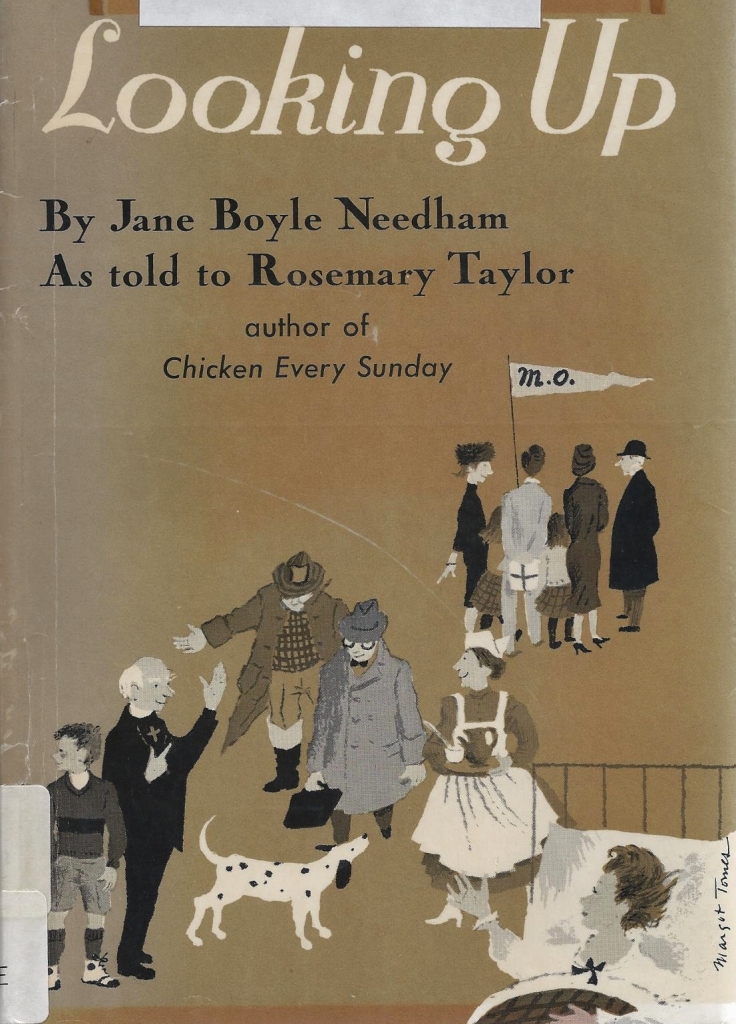
looking up jane boyle needham rosemary taylor 1959 001Looking Up by Jane Boyle Needham, as told to Rosemary Taylor ~ 1959. This edition: G.P. Putnam’s Sons, 1959. Hardcover. 191 pages.

My rating: 7/10

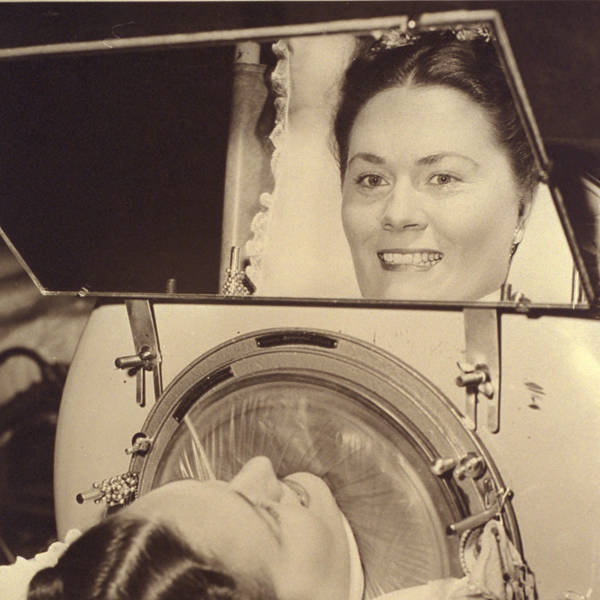
This was a rather unusual memoir, narrated by the author to journalist/memoirist Rosemary Taylor (Chicken Every Sunday, Harem Scare’m) for the very good reason that the subject was paralyzed from the neck down as a result of adult-acquired bulbar (affecting the brainstem) polio in 1949, when she was 27 years old. Jane Needham lived in an iron lung for thirteen years, until dying from complications of gall bladder surgery in 1962.

Looking Up was written when Jane Needham had been in the iron lung for nine years. She was, as she well knew, living on borrowed time. After five years in hospital, Jane Needham decided that she needed to make a concerted effort to provide as “normal” as a home as possible for her three children.

She had been unexpectedly divorced by her husband several years earlier and had with difficulty retained custody of her young children. Her elderly parents liquidated their assets, moved into an apartment, and purchased a house for Jane, the children, and Jane’s round-the-clock private nurses. Unable to breathe on her own, and never regaining more than twinges of movement in her extremities, Jane did create a functional home and proceeded to confound the naysayers who predicted disaster.

Jane Boyle Needham, quite literally "looking up", into the mirror attached to her iron lung, which allowed her to view her world.

Jane Boyle Needham, quite literally “looking up”, into the mirror attached to her iron lung, which allowed her to view her world.

The tone of this book is rather unrelentingly cheerful; one might call it positively inspirational. Jane Boyle Needham comes off as a darned good sport, even when relating her experiences with her rather caddish husband. Perhaps her strong Catholic faith had something to do with this? Towards the latter part of the memoir Jane goes on at great length about the strength her faith has given her, and the spiritual and moral assistance given to her by her parish priests.

Or perhaps the positive tone was partly façade? But Jane does manage to occasionally convey the anger at her fate and the anguish of her spouse’s betrayal; occasionally she is downright cutting, and those bits are a relief, because otherwise this woman’s saintliness and fortitude would be much too good to be true.

This book, something of a bestseller in its time, is a fascinating glimpse into the world of the many polio sufferers whose lives were saved by the invention of the iron lung and various portable breathing apparatus. Every breath was a struggle, brutal physical pain was a constant, and death was ever-present, lurking around the corner. A few moments of electrical outage, and it could be game over, quite literally, unless one had an attendant who could immediately start manual lung compressions.

The chirpy tone of Jane Needham’s narration serves to add piquancy to her tragic fate. She desperately hoped to live long enough to see her children make their way in the world; they would have been still in their teens when she died. I wonder what became of them?

*****


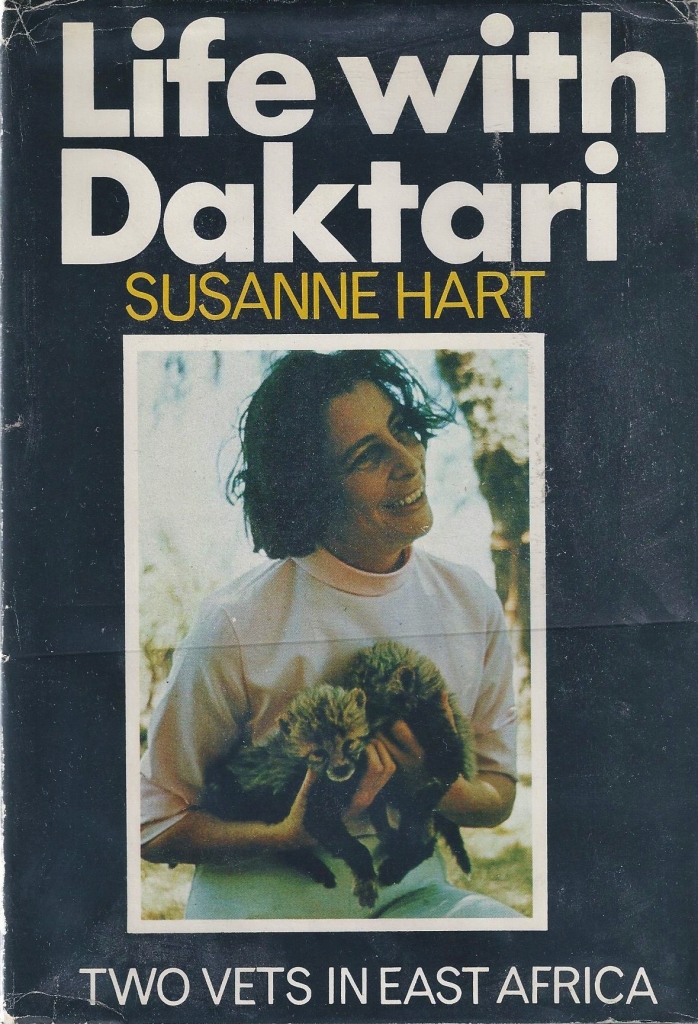
life with daktari susanne hart 1969 001Life with Daktari: Two Vets in East Africa by Susanne Hart ~ 1969. This edition: Bles/Collins, 1969. Hardcover. ISBN: 7138-0234-0. 224 pages.

My rating: 5/10

Susanne Hart (her last name condensed from her second husbands surname, “Harthoorn”) loved animals from her childhood, studied at the Royal Veterinary College in London, England, and qualified as a vet in 1950. She found herself in South Africa newly divorced and with two young children to support, and she set up a thriving domestic animal veterinary clinic. Then she encountered a fellow vet whom she had known in college days, Dr. Toni Harthoorn, and gave up her practice to marry him and join him in Nairobi.

Dr. Harthoorn specialized in working with wild animals, with particular expertise in immobilizing large creatures such as rhinos and elephants to be studied and fitted with radio collars. Susanne found herself becoming involved in her husband’s interests, and the two soon started working as something of a team, though Toni insisted that Susanne preserve a womanly decorum by avoiding the more dangerous situations that their work invariably entailed.

This is an uneven memoir, in that it has a rather hero-worshipping tone to it. Susanne goes on at great length about her second husband’s brilliant technique with wild creatures; the two of them also become acquainted with the famed Adamsons of Born Free fame, Joy and George, and their lion study project.

The animal bits are much the best, and I found the accounts of various encounters with wild and semi-wild creatures quite mesmerizing, but I could have done without the preachy details of Susanne Hart’s vegetarianism and special “health diet”, which she apparently pushed on every one of her acquaintances. She is quite snooty about those who don’t immediately fall in with her notions in this area, and it rather put me off.

I bogged down somewhere around the middle of this promising sounding but ultimately awkwardly written book, and had to force myself to finish it; a rather disappointing state of affairs as I had wanted to like it so very much.

Susanne and Toni were obviously passionate about their life callings, and their impatience with other people who didn’t quite embrace their ideas with full fervour is understandable, but the impression I received was that the reader was rather included with those not really “on side”; there is the faintest hint of patronization in Susanne Hart’s tone, and it left me not at all eager to seek out any of her other memoirs, of which there are something like eight or nine.

Susanne Hart was also active in environmental outreach, and hosted a short-lived television series, Animal Ark, featuring a group of children being introduced to various African creatures. In later years she was deeply involved in an organization assisting African children whose parents had died of AIDS. Susanne Hart was still actively involved in her social charity work when she died in South Africa in 2010, at the age of 83.

Susanne Hart was no doubt an admirable woman in many ways, and I feel rather like a rotter for not liking this memoir more, but there you have it. She annoyed me as much as she informed and entertained me so she gets a generously conditional “5” on my personal rating scale.

*****

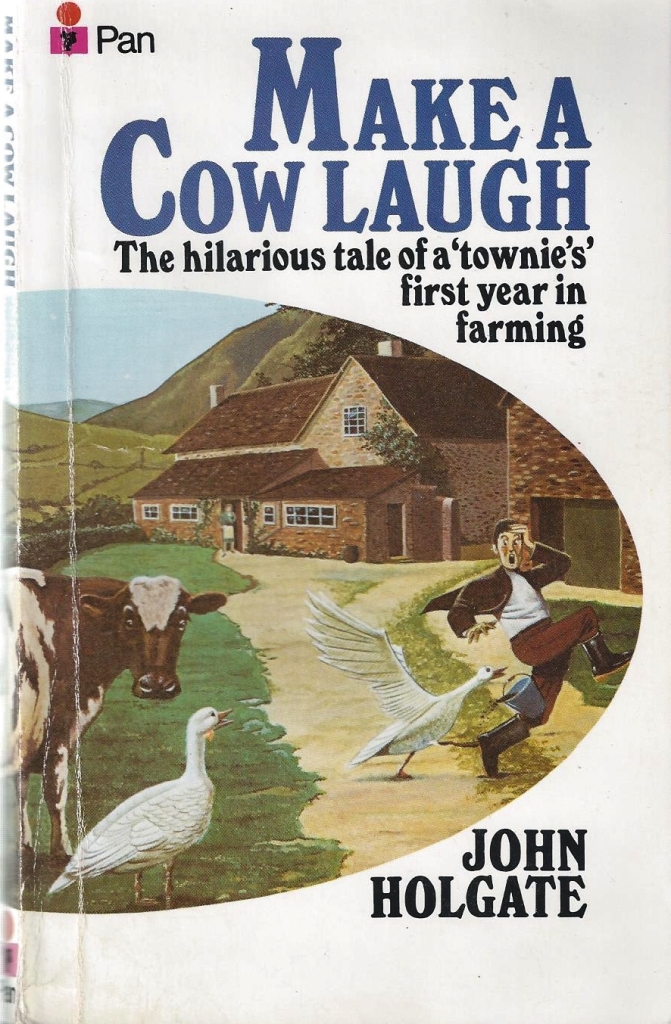
make a cow laugh john holgate 1977 001Make a Cow Laugh: A First Year in Farming by John Holgate ~ 1977. This edition: Pan, 1980. Paperback. ISBN: 0-330-25780-3. 221 pages.

My rating: 8/10

Despite the off-putting front cover blurb – “The hilarious tale of a ‘townie’s’ first year in farming” – I found myself liking this book a lot.

“We moved to the country, and look how stupid we were!” self-mocking memoirs are a dime a dozen, and I almost didn’t pick this one up, but a quick peek at the contents inspired me to give it a go. It rewarded me for my bravery by being quite a nice little neophyte farmer’s tale, and it wasn’t hilarious at all – what a relief! – merely gently amusing.

John Holgate, his wife, and three children – sixteen-year-old son, eight-year-old daughter and four-year-old son – all make the move from city life in London to a 75-acre mixed farm on the Welsh border. Their motivation is rather vague, even to themselves, but upon consideration John Holgate theorizes that it was a collective desire to leave the city for the emotional and aesthetic pleasures of rural life, and the more elemental challenges of “sweat labour” versus the hurly-burly bustle of the city, where he was successfully involved in a standard “career”.

I am ashamed to say that I can’t quite recall what it was that John Holgate actually did in his London life. Or perhaps he didn’t tell us? My husband, who also read and enjoyed the book, can’t remember either, so perhaps it was a deliberate omission. In any event, it doesn’t matter, as the Holgates leave it all behind. They finance the purchase of the farm by selling their city house; money is tight and their subsequent financial struggles are completely believable.

John Holgate is a more than competent writer; his words have a beautifully readable lyrical flow, and he is deeply, quietly funny. His characters are respectfully portrayed – no bumpkins here! – and are utterly recognizable and familiar, even though we live in rural western Canada and the Holgates in far-off Great Britain.

John’s relationship with his eldest son, who completely embraces the rural lifestyle, is a joy to read about. The whole book is a pleasant experience, in fact, and the Holgates come across as being truly nice people, with their share of human flaws, but with the most relatable good intentions.

Not much happens in this memoir – no great disasters, no epiphanies, no real drama. At the end of Year One on the farm, things are plodding along quite nicely. John Holgate has been fortunate in his neighbours; they are keen to rally round when needed, and John has had the deep satisfaction of being able to lend a hand in his turn. Humourous incidents have indeed occurred, but none of them were “hilarious”, and that made me deeply pleased.

John’s personal challenges ring true – spousal squabbles triggered by money stress and culture shock, the physical discomfort caused by moving from a sedentary to a deeply physical working day, the inevitable “second-guessing” of the decision to change one’s lifestyle in such an astounding way, the continual drama of dealing with farm animals – and are seen to be resolved in a sober and very true-to-life way.

I would happily read John Holgate’s subsequent books. He wrote at least two more, On a Pig’s Back and A Sheep’s Eye View, and though I have no strong urge to go to a lot of effort to seek them out, I would be gently pleased to stumble across them on my travels. As I said before, the man can truly write, and a well-phrased, gently humorous, nicely realistic memoir which speaks highly of one’s own lifestyle choice is a desirable thing to have on the shelf.


Read Full Post »

No uniting theme here, unless it is that of gently engaging but not wow-inducing works by quite decent writers, quickly consumed and just as quickly set aside. Nothing really wrong with any of these, but I must admit that I almost forgot I’d not-that-long-ago read them until I unearthed them from one of the book piles mushrooming on my perennially overcrowded desk.

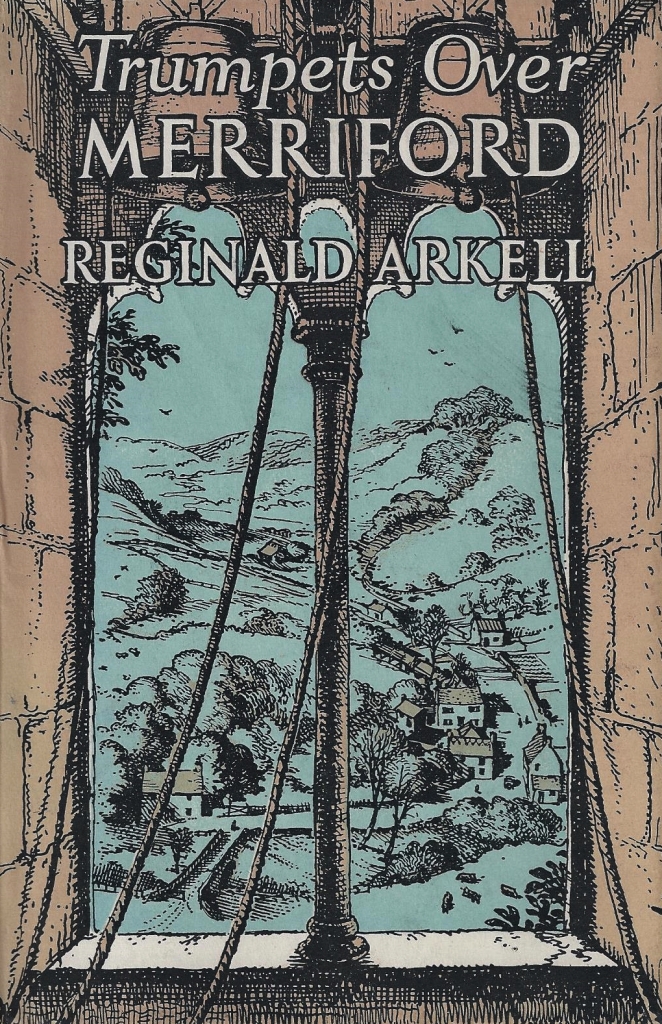
trumpets over merriford reginald arkell 001Trumpets Over Merriford by Reginald Arkell ~ 1955. Published in the United States as The Miracle of Merriford, 1956. This edition: Michael Joseph, 1955. Hardcover. 175 pages.

My rating: 6.5/10

I’d heard of Reginald Arkell before, author of the gardening ode Old Herbaceous and other humorous depictions of English rural life, but this was my first time reading him.

Quick verdict: Quaint. Almost painfully so, in fact, but salvaged by the abundance of good humour and the general likeability of the characters.

It is several years post-World War II, and the tiny English village of Merriford has subsided back into its centuries-old peace. But world affairs keep moving right along, and to prove it Merriford is unexpectedly invaded by a military force from another country. An American Air Force base, strategically located within striking distance of those increasingly pesky Russians, is erected with stunning speed, wiping out farm fields and ancient common grounds with no advance warning.

No more mushroom patch, no more wildflower meadow, just acres of runway and a small city of rambunctious young airmen. Needless to say, the locals are shocked to the core, and react in their various ways. Most find some degree of acceptance, some few are deeply hostile, while others predictably haunt the base gates, hoping to catch the attention of lonely (and well-paid) young men far from home and missing feminine company.

trumpets over merriford illustration reginal arkell js goodall 001The elderly vicar of Merriford takes it all in stride – for he takes the long view, back through the centuries, and an enthusiastic American or two in the here-and-now is no cause for undue alarm – until he is informed by the American work party affixing a warning light to the church steeple that there is something of an emergency concerning the venerable church bells. Or, rather, the bell tower. The support beams are rotten – riddled with wood-worm! – and could tumble down at any time, with dire results to any unlucky congregants in the church below. The vicar orders the bells silenced and the bell tower off limits, and casts about for some way to raise the substantial funds required for repairs, a dauntingly difficult prospect in cash-strapped post-war England.

Meanwhile the vicar’s lovely young housekeeper, the war-orphaned Mary, has caught the eye of one Johnny Fedora, lately of Texas. Mary is much too busy mothering her beloved employer to dally with anyone, let alone one of the forward Americans cheekily camped on her very doorstep, but Johnny is well smitten despite his initial resistance to the charms of rural Britain. He woos the fair Mary with a certain individual style and a noteworthy persistence which eventually brings the vicar round to his side, even if Mary is primly accomplished at keeping her feelings to herself.

Of course there is a charming happy ending, all full of Anglo-American goodwill. Very nice, very sweet. Almost too nice. (But not quite.)

This reminded me quite a lot of similar efforts by Miss Read, though Reginald Arkell writes with considerably more dash, and much more obvious humour. The two also share an illustrator, which served to highlight the resemblance, and I felt that the cheerful line drawings by J.S. Goodall were a marvelous embellishment of a very light sort of village tale.

every living thing james herriot 001Every Living Thing by James Herriot ~ 1992. This edition: McClelland and Stewart, 1993. Paperback. ISBN: 0-7710-4093-8. 374 pages.

My rating: 6/10

Quick verdict: Pleasant enough, but perhaps just a titch too obviously written for the existing fan base.
Between 1970 and 1981 Yorkshire veterinarian James Alfred Wight wrote a number of fantastically successful fictionalized memoirs under the pseudonym James Herriot. Anthologized in compilation volumes, these are All Creatures Great and Small, All Things Bright and Beautiful, and All Things Wise and Wonderful, and their popular success spawned movie and television productions and a thriving tourist industry in Thirsk, Yorkshire, where Wight settled and practiced.

I have read all of them with great enjoyment, and tattered copies remain on our shelves, providing pleasant re-reading for those times when quiet good humour is required. Nominally about the animals the authorial vet comes across in the course of his rounds, the books are at heart most appealing because they are all about human interactions.

Wight/Herriot was a master at capturing the moment; he is one of those writers whose words create vivid snapshots of time and place. The fact that he was fifty years old when he penned the first of his memoirs perhaps leads to their strong appeal. By this time the author had been involved in veterinary medicine for three decades, and his sometimes quite deliberate documentation of the post-war shift of small British farms with their work horses and diverse range of small herds and flocks to a machine-powered, amalgamated, single-enterprise system gives his work a certain importance far beyond the charm of the worked-over anecdotes which comprise them.

When I came across Every Living Thing, I was quite thrilled. Here was a new(ish) work by an author I already held in high regard. And in many ways, the book was well up to par with its predecessors, full of charmingly poignant stories of the animals and people the vet bumps up against.

Some way into the book, though, I started to feel vaguely uncomfortable. Though many of the vignettes are well portrayed, and the glimpses of Wight/Herriot’s family life are most intriguing – he speaks with great feeling about his young children and the joys of their company on his rounds; his son went on to become a vet and his daughter a “human” physician – the book as a whole is slightly unsatisfying. The vignettes are short, frequently unrelated, and often dependent upon one having already read the original books, bringing in references to the best known of the stories and characters of the previous bestsellers.

Preaching, perhaps, mainly to the choir.

For something fairly substantial, 374 reasonably dense pages, Every Living Thing was a very fast read, being smoothly written and engaging. I definitely wouldn’t recommend this as a first experience of James Herriot to one who has not yet read him, but for those who are already fans, the book adds a little something to the other works. Herriot was 72 years old when it was published in 1992, and as he had publically announced back in 1981 that he would no longer be adding to the memoirs, it reads rather like a tacked-on addition to the earlier works, versus a seamless continuation. Not without merit, but a lesser thing, comparatively speaking.

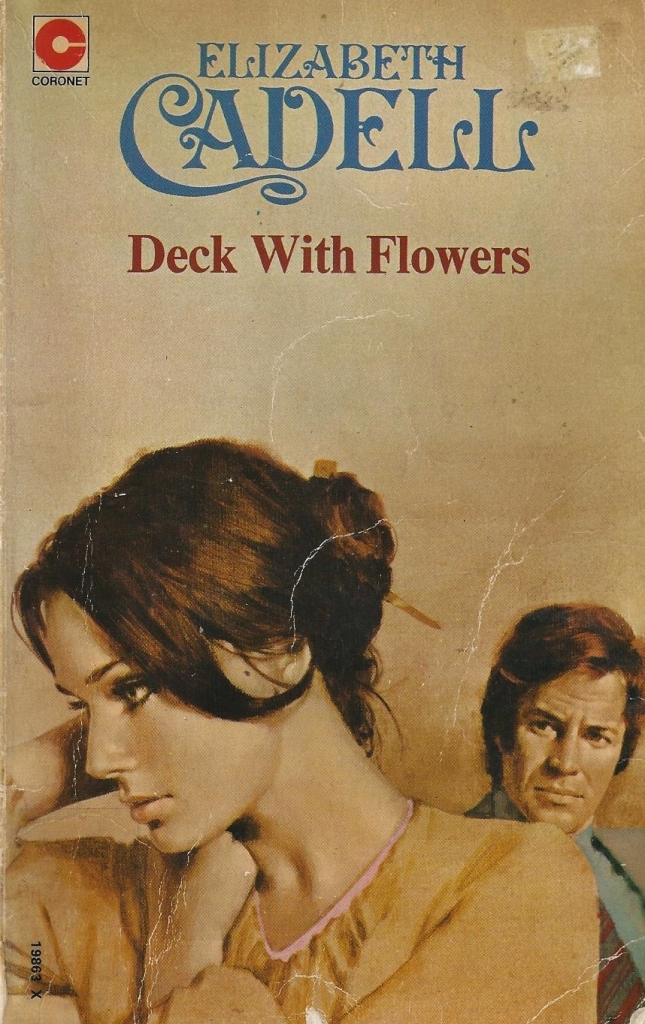
deck with flowers elizabeth cadell 001Deck with Flowers by Elizabeth Cadell ~ 1973. This edition: Coronet, 1976. Paperback. ISBN: 0-340-19863-X. 192 pages.

My rating: 7/10

Quick verdict: Pure fluff, but fun.

I vaguely recall Elizabeth Cadell being ranked with D.E. Stevenson among writers of vintage “women’s fiction” – a designation perhaps even more damning than my beloved mid-20th Century “middlebrow” fiction – but I had not paid too much attention, being at the time still a rank neophyte in the Dessie world, as it were, and not quite convinced of its merits.

Of course, that was then, and this is now, and these days every time I am in a second hand bookstore with even the slightest pretension to an organizational system I do an automatic scan of the appropriate shelves for serendipitous D.E.S. titles. (I’ve found her most frequently in Romance, in Vintage, in Pulp, downright expensively in Collectible, rather surprisingly in Classics, and once in the rather all-embracing Brit Lit.) During one of these generally fruitless scans, this slender paperback caught my eye, with its typically romantic cover and slightly familiar author’s name.

“Oho! What have we here?!” was my immediate response, and a quick scan of the back cover blurb confirmed me in my suspicion that I had stumbled across a classic example of this gentle genre.

Madame Landini’s memoirs promised to be sensational. Rodney, who was publishing them, and Oliver, his literary business agent friend, congratulated themselves on a brilliant coup. But having covered her childhood as a Russian princess, her exile in Paris, and the discovery of her phenomenal voice, the prima donna reached her first husband’s death – ‘man overboard’ – and declared she would write no more.

Rodney suspected that there was more to her change of heart than a display of temperament. He hoped that perhaps Nicola Baird, Madame Landini’s dismissed secretary, could help solve the mystery. But Nicola was beautiful as well as elusive and Rodney found himself becoming romantically entangled with her…

Kirkus is mildly dismissive, and I won’t argue with this 1973 review as it pretty well sums this thing up:

Another soft-centered entertainment of light mystery and lighter romance in London, where Mme. Landini, a once formidable diva, whose autobiography editor Rodney is publishing, literally screeched to a halt in mid-memoir. Some fairly casual sleuthing reveals that Mme. Landini had been spooked by the watch of Nicola, her pretty secretary. And did that have something to do with the disappearance, years ago, of the singer’s husband, who was last seen on shipboard with an armload of flowers? By the time this tangle is gently untangled, Rodney and Nicola have discovered pleasant things about one another and Rodney’s charmingly scatterbrained sister hooks her man. For the lounge library.

Pure chocolate box reading, this was, and quite guiltily delicious as a treat among more wholesome fare.

I thought it not quite up to D.E. Stevenson standard in plotting, at least not that of her best attempts. Though perhaps Cadell is a mite more technically proficient? Deck with Flowers was smooth as smooth, with some grand characters – loved the elderly head of Rodney’s publishing house in particular – but I’ll have to read more examples to be able to pass a fair judgement in this area.

Elizabeth Cadell is an author whom I am as of now adding to my standard look-for list, albeit one of those whose covers I will automatically conceal when reading out in public. 😉

Read Full Post »

Prefacing this sure-to-be-rambling post with this information, for those of you who wonder what I’m actually talking about way down below. As different as can be in time periods and settings, but all at heart clinging to a similar traditional structure, that of the Gothic Romance Novel. The three books under discussion will be:

  • Cousin Kate by Georgette Heyer
  • Tregaron’s Daughter by Madeleine Brent
  • Nine Coaches Waiting by Mary Stewart

All of these are velvety dark, thrillingly romantic (for the most part), highly predictable (ditto), and guiltily enjoyable tales.

Perhaps this won’t be the most sober-minded book discussion, which would indeed be fitting, for these books are not High Literature in any sense of the term, and are therefore free game for a little bit of mild mockery, all in good fun, because I did read them willingly and with general pleasure, though occasionally that pleasure was all about their fulfillment of stereotypical Gothic Romance Scenarios.

I have had recourse to our ever-handy Wikipedia to quickly define the main elements of a proper traditional gothic novel, and by applying the criteria to the books in question we can get a nice overview of how well the authors fulfilled the requirements of this assigned genre.

So, cribbing from the article and adding some of my own descriptive notes to those provided, we generally must have:

  • Virginal Maiden – young, beautiful, pure, innocent, kind, virtuous and sensitive. Usually starts out with a mysterious past, and later discovered that she is the daughter of an aristocratic or noble family.
  • Older, Foolish Woman – who often has charge of or advises the Virginal Maiden, or acts as an Awful Warning due to past errors of judgement, which Virginal Maiden may or may not take into consideration
  • Hero – who may or may not be misrepresented as The Villain for the earlier stages of the plot
  • Tyrant/villain – who may or may not be disguising his (her) True Evil Nature for the earlier stages of the plot. Usually male, occasionally female.
  • The Stupid Servant – acts as comic relief by asking seemingly stupid questions, transitions between scenes, brings news, messenger, moves plot forward. Sometimes takes on form of Humble Social Inferior or Female Friend of Virginal Maiden, well-meaning but ignorant of darker designs of Villain.
  • Ruffians – always under the secret (or not so secret, depending on if he is the Disguised or the Obvious species) control of the Villain
  • Clergy – always weak, usually evil (says Wikipedia, but in more modern gothics I have noticed that the Clergy figure is often absent, being replaced by a Doctor or Lawyer or other Figure of Social Authority, acting under the influence of the Villain)
  • The Setting – The setting of the Gothic Novel is a character in itself. The plot is usually set in a castle, an abbey, a monastery, or some other, usually religious edifice, and it is acknowledged that this building has secrets of its own.
  • And, if I may add to this list, The Secret. There is generally some Great Big Secret which the heroine – er, Virginal Maiden – either sets out to investigate or unwittingly stumbles upon. Sometimes (frequently) The Secret is, of course, that of her own mysterious past.
  • Also added by me: The Forced Marriage. Another common element I’ve noticed in my own perusal of gothics. So many times the heroine faces matrimonial peril, either by being forced to marry the Disguised Hero (who she then realizes she loves in Chapter Ten), or by a Weak Male Character under the control of the Villain, or by the Villain himself.

So, let’s see how these measure up. I’m going to present these in order from my least to most favourite.

Warning: There may well be some significant spoilers here and there, but as the plot twists are all highly predictable by anyone with the least bit of experience with the genre, I doubt if having these confirmed ahead of time will lessen one’s reading pleasure. 😉

Cousin Kate georgette heyer 1968Cousin Kate by Georgette Heyer ~ 1968. This edition: The Bodley Head, 1968. Hardcover. 318 pages.

My rating: 6/10.

Front flyleaf blurb, Bodley Head edition:

Finding that her youthful appearance and the lack of accomplishments caused by a childhood spent following the drum prevent her from securing a position as governess, Kate Malvern, recently orphaned, gratefully accepts an invitation from her unknown aunt Minerva to make her home at Staplewood, the seat of Sir Timothy Broome, Minerva’s elderly and invalid husband.

On arrival at Staplewood, Kate finds herself in beautiful and luxurious surroundings, and is treated by her aunt with a kindness which is regarded by those best acquainted with Minerva with considerable surprise. At first grateful, Kate gradually becomes uneasy, and with the arrival on the scene of Sir Timothy’s nephew, Mr. Phillip Broome, the plot rapidly thickens. Minerva’s motive for bringing Kate to Staplewood is revealed, and her machinations are brought to a dramatic conclusion.

Okay, let’s see how Cousin Kate does on the Elements of Gothic Fiction scale.

  • Virginal Maiden – check! No secrets as to origin, as Kate is legitimately accepted as a family connection. She is an orphan, reasonably young (24), beautiful (“a flower-like countenance”), appears younger than her age, is sexually pure but well aware of the “facts of life” from her experience as a soldier’s daughter, and is definitely kind and sensitive, though she also fearless and well able to stand up for herself in socially awkward situations.  A most promising heroine.
  • Hero – check! Our Hero turns out to be one of the disguised ones, who operates under a cloud of misunderstanding engineered by the Villain, or, in this case, the Villainess.
  • Villainess – check! No mystery here, though it takes a while to reveal her true nature. It is, of course, suspiciously friendly Aunt Minerva.
  • Humble Social Inferior – Moving the plot along is Kate’s old nurse, Mrs Nidd, who bring’s Kate’s need of succour (she’s just been fired from her first job and has little prospect of finding another due to lack of training or experience) to Aunt Minerva, setting things in motion. Mrs Nidd reappears later in the story to aid Kate in unravelling The Secret.
  • Doctor – weak rather than deliberately evil, and under the complete influence of the Villainess, the Doctor plays here merely a supporting role
  • The Setting – It is 1817, mid-Regency. Most of the action occurs at a stately country home, Staplewood, with Aunt Minerva established at the centre of things controlling all of the domestic strings, and separate wings housing the frail Sir Timothy and the family son and heir, beautiful, erratically-mannered Torquil, who is under the fulltime care of the Doctor, for reasons no one is prepared to elaborate on. Mysteriously locked doors, male screams in the night, random shots being fired, a suicide-worthy lake, a lonely country setting leading to easy isolation of characters not wanted to be out in public circulation by the Villainess.
  • The Secret –  Insanity! Torquil’s. Kate has been tagged by the Villainess to be a suitable wife for her mentally unstable son. She (Kate) is to produce a son and heir to the Broome family fortune, after which Torquil will be put into ever-deeper seclusion as his insanity worsens (the Doctor is quite sure it will), and Kate will be allowed to discreetly seek consolation elsewhere.
  • The Forced Marriage – see The Secret.
  • Great Big Climax – Revelation of Secret! Murder! Suicide! Horror-stricken Virginal Maiden flees to arms of Hero! And once all of the details of The Secret are revealed, a blissful future is embarked upon via Glorious Holy Matrimony between the two who have suffered so many setbacks to the progress of their romance through initial misunderstanding and deliberate machinations of the Villainess, who has now had her ultimate comeuppance.

My verdict: While Cousin Kate had its appeal, and was quite nicely written and full of Heyer’s dependably engaging Regency slang. Kate is a likeable enough heroine, but the whole thing dragged on just too long for my interest to be sustained completely; the plot was desperately predictable, and the whole thing became rather depressing, what with its dependence on a mysterious insanity and the ditherings of all those concerned regarding the proper treatment of the sufferer.

The ending is rather brutal, as Heyer fatally disposes of two of her characters under horrific circumstances. The imagination of this reader was boggled regarding the possibility of a happy future for the heroine and hero with that sort of emotional baggage to deal with.

I rated Cousin Kate at 6 because of Heyer’s competent handling of her setting and the quality of her writing. Some serious themes (position of women/class distinctions/treatment of the mentally ill) were touched upon but never thoroughly examined – not really to be expected in this sort of light novel. But for a light novel it had some desperately dark strands.

Hard to classify, really. I know I said “boring” in the header, and that seems to be my ultimate feeling. Rather flat. Heyer could do much better.

tregaron's daughter madeleine brent 1971 001Tregaron’s Daughter by Madeleine Brent ~ 1971. This edition: Doubleday, 1971. Hardcover. 251 pages.

My rating: 7/10. I bumped it down just a bit because of the inclusion of Young Man with Symptoms of Insanity, a plot strand which I found exceedingly annoying for some reason. (Perhaps because a similar character plays a major role in Heyer’s Cousin Kate?)

Flyleaf says:

Excitement, drama and suspense were only part of Cadi Tregaron’s new life. It had been a sunny afternoon when she glanced from the cliff where she sat reading and saw below her in the sea a sight that would change her life.

Set in England and Italy in 1910, this is the story of a young English girl who by accident starts to unravel the unknown elements in her grandmother’s past and is brought by the mystery to the faraway city of Venice. There, among the gondolas and canals, she slowly comes to comprehend the meaning of two strange and puzzling dreams – dreams that seem to hold the an eerie and menacing prophecy of the future.

Elements of Gothic Fiction included:

  • Virginal Maiden – check! Our heroine, Caterina (Cadi), daughter of a half-Italian mother and sturdy Cornish fisherman father, is young (late teens), beautiful, pure, innocent, kind, virtuous and sensitive. And (spoiler alert!) she does turn out to be the descendent of the Italian nobility. No doubt because of this innate blue blood, our heroine has just naturally developed far beyond the expectations of her humble place in the world. Her language is surprisingly upper class (due to the convenient society of a cultured retired governess in the neighbourhood, who has taken the bright young Cadi under her tutorial wing), and she is fluent in Italian (learned from her grandmother), which comes in handy later. And she starts the story off as a half orphan, mother dead some years (fell off a cliff with grandmother in a tragic accident – sob!) and loses her father as well soon after we enter the story, which precipitates the now-fully-orphaned Cadi into the next stage of her saga.
  • Hero – check! This one is the conflicted type, and is disguised (occasionally deliberately) as a villain. Classically gothic  introduction of hero and heroine involving heroine being pulled up onto horse and forced to cling closely to rock-hard-muscled hero as they gallop to rescue of hero’s uncle who is caught in a dangerous current in his borrowed sailboat. (This is the life-changing thing which Cadi saw from the cliff.) Bonus first-meeting episode: as Cadi, her father, and the hero row out to the rescue, the bodice of Cadi’s dress rips, leaving her lily-white skin exposed in a rather delicate area, and causing the hero to take a deep breath and force his gaze away, manfully resisting the surge of testosterone this incident inspires. Predictably, hero’s taciturn silence is misunderstood by heroine – “He thinks I am below his notice!” Oh, no, darling, that ain’t it.
  • Villain – check!  Disguised variety. Cadi’s Italian relation, Count Chiavelli, who is surprisingly warm and welcoming to the little English chit who is apparently going to bump him from both his title and his fortune – unless, of course, she can be enticed into a marriage with the Count’s weak-natured son – shows another side to his nature as this plan fails to advance.
  • Hero’s Sidekick – not at all stupid, though a slight social inferior, the Sidekick keeps things moving by his unexplained presence at key points of the saga. He is eventually assisted in his efforts by Female Friend of Virginal Maiden, as they join forces to assist Hero in rescue of Virginal Maiden from the Villain’s foul clutches.
  • Ruffians – check! The Villain has a full complement of brutish henchmen, but as bad guys in gothic novels are always slightly slower (and much more stupid) than good guys, these particular ruffians are continually foiled by the Hero, Sidekick and Maiden.
  • Lawyers – These People of Social Authority – we have an English and an Italian version – are in general full of good intentions and quite helpful to Heroine, though they are completely hoodwinked by the Villain. I would like to put forward that a too-trusting lawyer = weakness, so this element is included, albeit in a very minor role.
  • The Forced Marriage – The Virgin is pressured to marry the Villain’s weak-willed son, in order for the Villain to get his hands on the fortune the Virgin is coming in for, and also to keep the title in the family.
  • The Setting – Gorgeous settings, full points for those. We start out in a humble cottage in a little Cornish fishing village – towering sea cliffs above it, treacherous currents swirling offshore – progress to turn-of-the-century London as the heroine is adopted by the beneficent and wealthy family whose patriarch she helped save back in chapter one, and end up in Italy in a gloomy Venetian palazzo, with a final nighttime chase scene by boat through mist-shrouded canals.
  • The Secret – Hmmm, aside from the confusion around the true nature of the Hero-disguised-as-Villain, the only other secret of major import was that Granny was almost murdered by the Villain’s sister, and that honestly came as no surprise, being telegraphed strongly right from chapter one. Young Man with Symptoms of Insanity was also something of an obvious twist, and quite wonderfully similar to the same figure as depicted in Cousin Kate. (Do we need to add him to our list of shared elements?)

My verdict: A better-than-average modern gothic, and an excellent first-novel-in-the-genre by – drumroll! – a male author writing under a female pseudonym.

For “Madeleine Brent” was actually Peter O’Donnell, British mystery novel and comic strip writer, and creator of the pop culture character Modesty Blaise.

O’Donnell’s publisher, Ernest Hecht of Souvenir Press, pleased by the success of O’Donnell’s thrillers, asked his author to try his hand at writing gothics under a female pseudonym. The Madeline Brent novels were a decided success, and Peter O’Donnell eventually wrote nine. All are set in the Victorian or immediately post-Victorian era, and feature young women in exotic locations seeking the truth about their identity. O’Donnell’s authorship was kept secret until after the publication of the last one, Golden Urchin (featuring a Caucasian girl raised in isolation from mainstream society among Australian Aborigines), in 1986.

An interesting side-note, this revelation of the gender of the author, and one which sheds some light on the structure of the Tregaron’s Daughter. Do I dedict a technically-minded male slant in – just one example – the inclusion of the details about construction of gondolas which allow them to be operated from one side by a single person?

Great details in the setting throughout, and the action was well maintained. The plot was (predictably) groaningly predictable, but my interest was held despite the lack of surprises. Good job, Mr. O’Donnell!

nine coaches waiting by mary stewart 1958 001Nine Coaches Waiting by Mary Stewart ~ 1958. This edition: Coronet, 1973. Paperback. ISBN: 0-340-01439-3. 317 pages.

My rating: 10/10. Now this is how you write a gothic! Mary Stewart, after her previous year’s rather dire first attempt, 1957’s Thunder on the Right, pulls up her authorial socks and takes another run at the genre, this time succeeding brilliantly.

Chicago Review Press blurb:

A governess in a French château encounters an apparent plot against her young charge’s life in this unforgettably haunting and beautifully written suspense novel. When lovely Linda Martin first arrives at Château Valmy as an English governess to the nine-year-old Count Philippe de Valmy, the opulence and history surrounding her seems like a wondrous, ecstatic dream. But a palpable terror is crouching in the shadows. Philippe’s uncle, Leon de Valmy, is the epitome of charm, yet dynamic and arrogant—his paralysis little hindrance as he moves noiselessly in his wheelchair from room to room. Only his son Raoul, a handsome, sardonic man who drives himself and his car with equally reckless abandon, seems able to stand up to him. To Linda, Raoul is an enigma—though irresistibly attracted to him, she senses some dark twist in his nature. When an accident deep in the woods nearly kills Linda’s innocent charge, she begins to wonder if someone has deadly plans for the young count.

Applying the Gothic Fiction checklist yields some promising results:

  • Virginal Maiden – Check! Our heroine Linda is indeed young, beautiful, pure, innocent, kind, virtuous and sensitive. And orphaned, too, which should really be one of the traits listed alongside young, beautiful, etc. etc. etc. No mysterious past, unless one counts Linda’s own concealment of her French heritage in order to pass for a strictly-English governess as required by her new employer.
  • Older Woman – Check! Elegant Madame de Valmy, who acts as an extra set of eyes and legs for her wheelchair-bound spouse, brings Linda into the household and complicates the plot by her alternating moments of warm we’re-all-women-here-together friendliness and cold putting-the-help-in-her-place slap-downs to our heroine.
  • Hero – Check! We actually have a choice of two Heroes, either or both possibly of the disguised variety, and in the interests of not spoiling the ending for those of you who haven’t read this, I will not say any more. Just that both are perfectly perfect for their chosen roles, and I was up in the air guessing as to which one was going to be the ultimate winner of the lovely Linda’s heart.
  • Villain – Check! The debauched old nobleman now confined to his wheelchair, of course. And he is masterful at disguising his True Evil Nature, though our heroine catches a disturbing gleam in his eye when he looks at his hapless nephew, the young Heir to the Family Fortune who has tied up the riches which the Villain would like to further his own ambitions.
  • The Servants – Linda finds herself associating with several useful servant-figures who fill her in on all the gossip and aid in her attempts to discover why her young charge, The Endangered Heir, is having so many close brushes with death. We have a chatty English housekeeper, who came to France some decades ago, and a sprightly local maid who has rather tragically (but usefully, as he drops some hints which can then be related to the heroine) fallen in love with the Wicked Henchman.
  • Wicked Henchman – One is indeed in residence, and he is secretly under the control of the Villain.
  • The Setting –  Time: The early 1950s. Place: A vast French château, isolated from all neighbours and tucked away in its own private forest among the craggy hills of the High Savoy in France. A steep, narrow, twisting road leads to the château, ideal for those sorts of engineered “accidents” where one’s automobile brakes unexpectedly fail, or where a pedestrian can be “inadvertently” run down on a one-lane bridge over a rushing torrent.
  • The Secret – How far will someone go out of personal and family pride, and for love for a piece of land?

This is one of the very best of Mary Stewart’s romantic suspense novels. Decidedly well written, with abundant clever humour, and an ongoing literary thread as revealed in the title, for the Nine Coaches Waiting reference comes from a rather obscure Renaissance play by Cyril Tourneur, The Revenger’s Tragedy, in which a poor but pure and beautiful young woman is tempted with the luxuries of palace life to yield up her virtue.

The parallels between the Tourneur scenario and the Mary Stewart gothic are not particularly apt, but as a poet’s daughter herself (did I mention that bit? – I don’t think I did) our heroine in the novel is of course a highly imaginative (and literate) type, and the snippets of the play included by Mary Stewart are most intriguing and set the mood of rushed passion and moral unease very well indeed.

Oh, think upon the pleasure of the palace!
Secured ease and state! The stirring meats
Ready to move out of the dishes, that e’en now
Quicken when they are eaten…
Banquets abroad by torchlight! music! sports!
Nine coaches waiting – hurry – hurry – hurry –
Ay, to the devil…

My verdict: Hands down, Nine Coaches Waiting was the best of these three novels, but they all had their moments, and are all nice diversions for those times when one doesn’t want to think too hard, and wishes to recapture those long-ago (for many of us – I know a number of my regular readers are my generational compatriots) days of teenage summer reading, wrapped up in these darkly sensuous – but really quite chaste, kisses being as far as our heroines go – gloriously suspenseful, absolutely predictable romances.

(Ha! Grammar police, sort out that last paragraph. I dare you! It boggles me, rather, but I will let it stand, as a challenge to those of you who would perhaps like to dissect it and see of it actually works.) 😉

Read Full Post »

« Newer Posts - Older Posts »