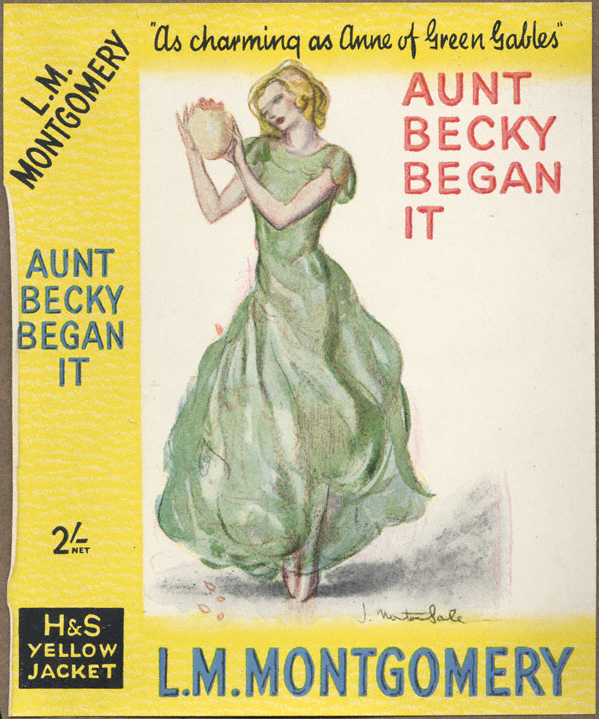
Archive for October, 2012

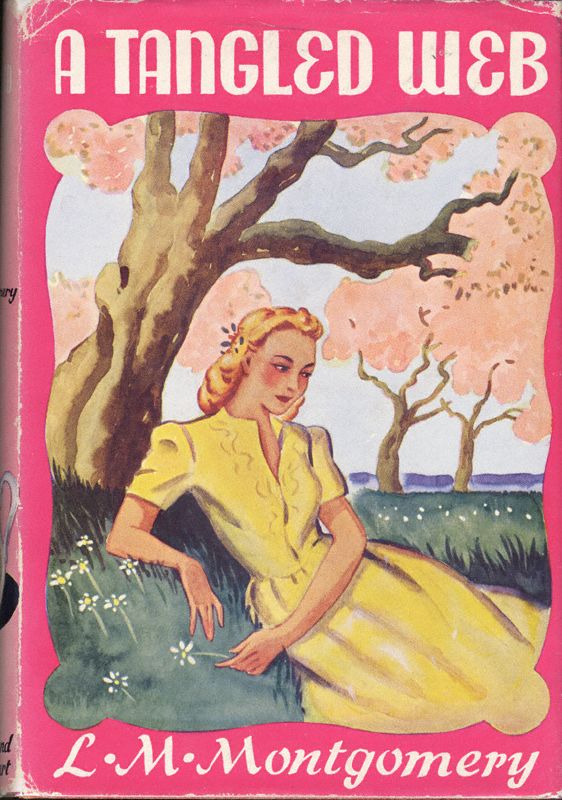
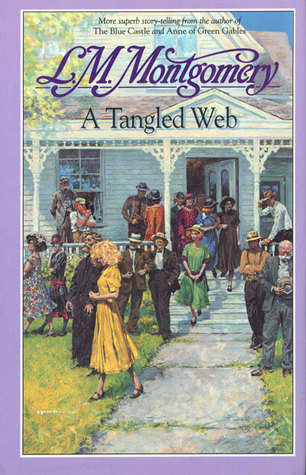
A Tangled Web by L.M. Montgomery ~ 1931. This edition: McClelland and Stewart, 1989. Hardcover. ISBN: 0-7710-6160-9. 306 pages.

My rating: 5/10. This one had its moments, but the confusing set-up, generally unlikable characters, hasty and improbable resolutions to various conflicts and romances, and jaw-dropping (in the most offensive way) final few lines kept me from enjoying it to the full. I would not recommend it.

*****

I am very ready to move on with this novel, so this will be the briefest of reviews. (Coming back to add that it got rather long after all. But it was fast to write, so that counts for soomething.) For more, visit the Goodreads page. I am in the minority with my distaste for this book, but it really left me quite cold. I might re-read it at some point far in the future, but right now all I want to do is return it to the library and wipe it from my brain.

Opinionated, critical, near-death Aunt Becky has called a clan meeting – a “levee” – to discuss who of her vast extended family will inherit a prized hand painted jug, brought from Holland as a marital gift several generations before. She proceeds to read her own obituary and lay out some cutting critiques of everyone present as one last demonstration of her emotional hold over the intertwined Dark and Penhallow families.

She dies soon after, and the reading of her will is attended in full family force. But Aunt Becky has one last trick up her sleeve. There will be a waiting period of a year before the heir to the jug is revealed, and in the meantime, everyone had better be on their best behaviour, or risk losing their chance to inherit.

Something like sixty family intermarriages between the two clans have created a complicated network of relatives and in-laws, and the author tosses us in head first. It took quite a few chapters before I had any sense of who was who, and, it was more work than it was ultimately worth – lay this one down at your peril! I did that and had to start all over again to reacquaint myself with the vast cast of characters.

  • Joscelyn Dark has been estranged from her husband Hugh since their marriage night; only Aunt Becky has been privy to the reason why. What happened that night?
  • Sweet Gay Penhallow is engaged to Noel Gibson, but her vampish flapper cousin Nan has decided to steal Noel away. Roger Penhallow has been secretly in love with Gay for years – should he seize this chance to step in?
  • Orphaned, illegitimate youngster Brian Dark is the abused chore boy on his strict uncle’s farm; even his pet kitten does not escape his uncle’s wrath. Will justice prevail?
  • Peter Penhallow has been off roaming the world, but he surprises everyone, including himself, by falling head over heels in love with his childhood enemy Donna Dark, who has been married and widowed in the meantime. Does Donna return his passion?
  • Margaret Penhallow is a mild, plain-featured, un-sought-after old maid who has one great wish. Will she ever achieve it?
  • The two Sam Darks, Big and Little, are cousins who have lived together in harmony for thirty years. Why have they parted ways over a silly little statue and a ginger cat?

There are more situations brewing and boiling over, but those are the main threads, and the resolutions are a long time in coming in this ambitiously-plotted story.

My impression of the whole thing was that it was a mile wide and an inch deep; there was very little chance to get to know any of the characters, and I found myself annoyed at all of them, except perhaps wee innocent Brian, and quietly good Roger.

The final few sentences of the story were what sealed this novel’s fate with me; the author includes a completely gratuitous and blatantly racist and misogynist exchange between the newly reconciled Sam Darks. I will include it here for you to read for yourself. I’ve whited it out just below; highlight it to read it if you feel the desire. They are speaking of Little Sam’s nude statue of Aurora, “Goddess of the Dawn”, which was the original reason for their quarrel.

“What you bin doing to that old heathen immidge of yours?” demanded Big Sam, setting down half drunk his cup of militant tea with a thud.

“Give her a coat of bronze paint,” said Little Sam proudly. “Looks real tasty, don’t it? Knew you’d be sneaking home some of these long-come-shorts and thought I’d show you I could be consid’rate of your principles.”

“Then you can scrape it off again,” said Big Sam firmly. “Think I’m going to have an unclothed nigger sitting up there? If I’ve gotter be looking at a naked woman day in and day out, I want a white one for decency’s sake.”

The End

Yeah. The end for me, too. This is Lucy Maud at her very worst. I won’t dismiss her many other works, because some of them are beautifully written and deeply moving, but this one bothered me in more ways than one, and the ending passage disgusted me, “consider the times” or not.

Read Full Post »

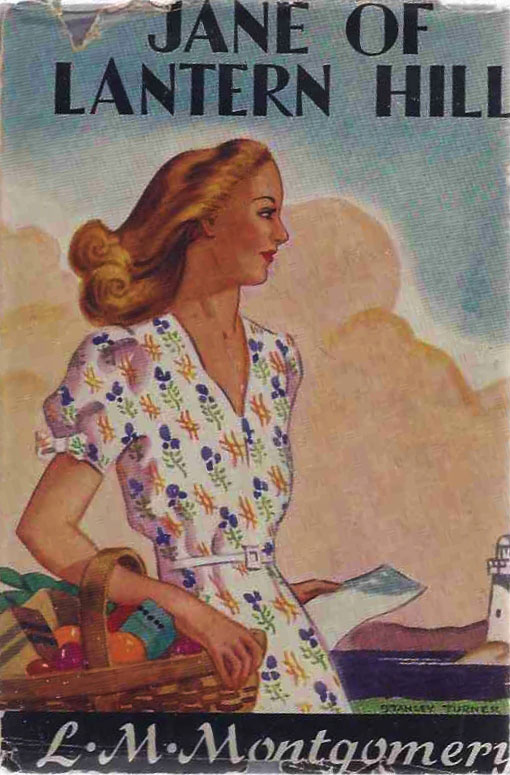
Jane of Lantern Hill by L.M. Montgomery ~ 1937. This edition: Bantam Books (Seal), 1989. Paperback. ISBN: 0-7704-2314-0. 217 pages.

My rating: 8/10. Jane Victoria Stuart is one of the more likeable young heroines in Lucy Maud Montgomery’s repertoire. Great gaps in believability here and there, but overall an engaging tale for romantic souls from youth (say 12-ish) to adult.

*****

Jane Victoria Stuart is eleven years old, and for eight of those years, the years she can remember, she has lived in a huge mansion in Toronto with her extremely wealthy, emotionally frigid grandmother and her delicately beautiful, weak-willed mother. As far as she knows her father is dead. He is never mentioned, except in snidely allusive references by her grandmother to “Victoria’s” tainted ancestry as demonstrated by her “low” tastes – a desire to cook and fraternize with the housekeeper in the warmly cozy kitchen, and a friendship with the young maid-of-all-work in the boarding house next door.

Grandmother makes no secret of her distaste for Jane Victoria – every creature comfort is provided but emotional needs go unfulfilled. Jane, as she secretly calls herself in defiance of her grandmother’s preferred Victoria, shares a deep love with her mother, but open demonstrativeness is impossible – even a glance or a motherly caress is deeply resented by bitter and jealous grandmother, who clings to her own daughter with fierce possessiveness.

The days go by uneventfully, and the future stretches forth relentlessly, until a chance taunt by a schoolmate reveals a secret which has been hidden from Jane by her grandmother and mother. Her father is not dead, but very much alive, and her mother is neither widowed or divorced but rather in a limbo of estrangement, unable to move either forward or back in the restricted social life engineered by the household matriarch.

Jane confronts her mother with the news and asks if it is true, and in one of her rare human moments Grandmother apologizes to Jane for keeping the secret for so long. But now that you know, consider him as dead, she orders Jane, and Jane solemnly and willingly agrees – this man who has abandoned her and made her mother so miserable is best forgotten.

Imagine Jane’s dismay when a letter comes soon after from Prince Edward Island, requesting Jane’s presence at her father’s summer residence over the summer holidays. With great trepidation Jane sets off into the unknown and greatly dreaded wider world.

Needless to say, everything works out, and happy endings abound. But before we get to them there are a number of little dramas which must be worked through, some more unbelievably than others.

A really nice heroine, practical and earnest and well-deserving of the good things which eventually come her way. Give this one to your pre-teen daughters, but don’t forget to read it yourself; mildly melodramatic and ultimately very satisfying.

Might make a good read-aloud, for ages maybe 8 and up. Marital troubles and divorce are central plot themes, as is emotional abuse by Jane’s grandmother, but these are necessary to the building of tension in the storyline. Rather reminiscent of Frances Hodgson Burnett’s A Little Princess in mood, I thought, including the improbable (but most satisfactory) way everything clicks into place in the end. No loose threads – all neat and tidy! Jane would approve.

Disney made a movie of this one a few years back, which I’ve not seen, but apparently it departs wildly from the original story and is not recommended by aficionados of the book.

Read Full Post »

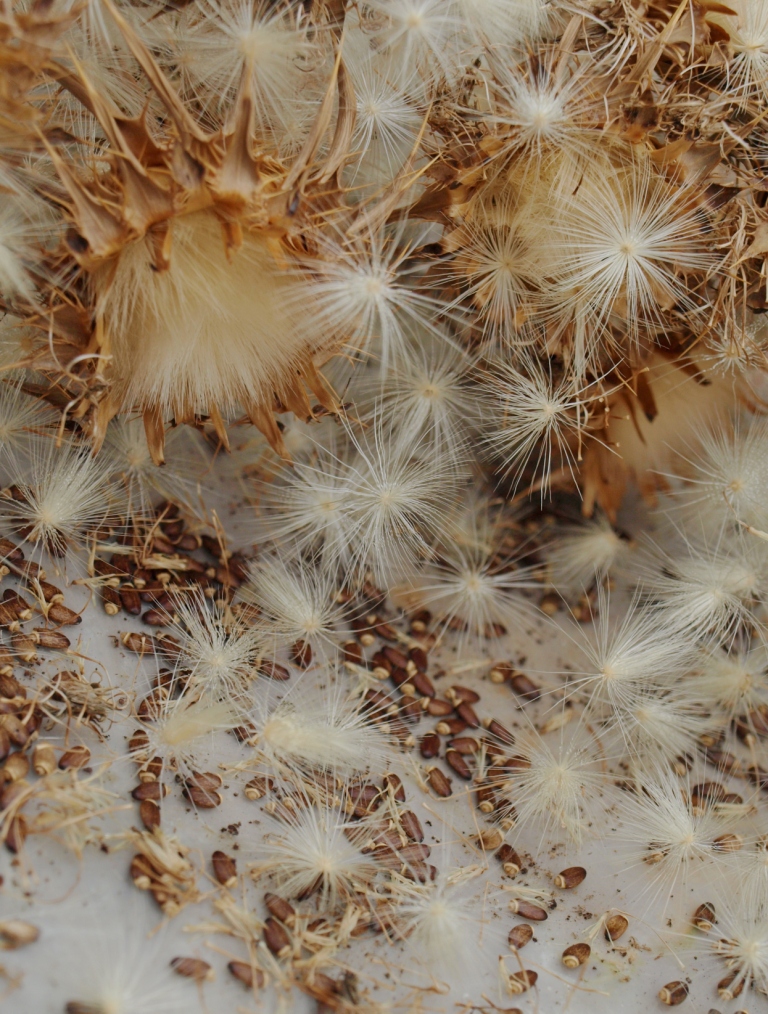
On the outer edge of autumn. October 17, 2012.

Read Full Post »

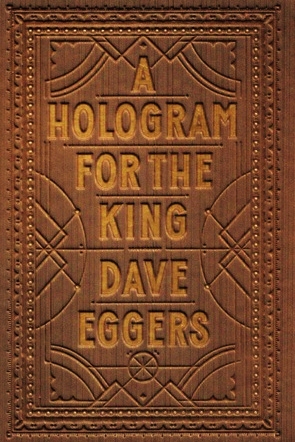
A Hologram for the King by Dave Eggers ~ 2012. This edition: McSweeney’s Books, 2012. First Edition. Hardcover. ISBN: 978-1-936365-74-6. 312 pages.

My rating: 5.5/10. Most of the points are for readability – and  it definitely was that. And half a point for sheer physical gorgeousness – this is a very handsome piece of bookbinding. But I couldn’t rate it any higher – the gaps of logic in the storyline are as wide as the Sahara. Perhaps I am too far removed from the protagonist’s world to fully engage. Or something.

Would I read another book by this author? Sure, I’d give him another chance. From the library, though – wouldn’t shell out any sort of serious cash; feels like too much of a gamble.

*****

Picked up on a whim, this one was an all right light read, but it ultimately felt unmemorable. Just nothing there, like a mirage in the desert – intriguing at first but faded away. It was a very fast read – the prose was spare and clean and raced right along – stylish presentation. I’ve a large number of reviews I want to write piling up, so I thought this might be a good one to cheat on and to borrow someone else’s review of, but looking at some of the mainstream reviews –  The Globe & Mail, New York Times, The Boston Globe  – it appears that my take is in the minority. The “real” reviewers apparently thought this was a deep and important novel. Ah, well. Good thing I’m only a blip in the blog world!

Goodreads has a full range of opinions.

Read Full Post »

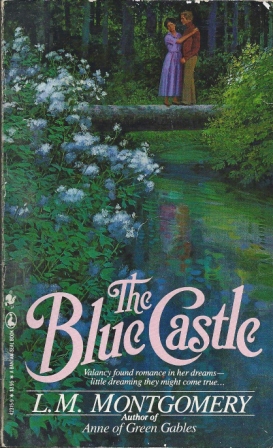
The Blue Castle by L.M. Montgomery ~ 1926. This edition: McClelland-Bantam (Seal), 1988. ISBN: 0-7704-2315-9. Paperback. 218 pages.

My rating: After reading Kilmeny of the Orchard, an easy 10, but stepping back a bit, for general comparison to other novels of this vintage and genre (I’m thinking D.E. Stevenson here, I must admit, because I’ve been discovering her light romantic novels these past few months) how about a nice solid 8/10. Will that do, Blue Castle fans? I did enjoy re-reading this one, after a hiatus of many years.

*****

Though often referred to as one of Lucy Maud Montgomery’s “forgotten” books, the internet abounds with reviews – its page on Goodreads – The Blue Castle  alone has over one thousand reviews, and seven thousand plus ratings. It scores an extremely respectable 4.22/5. This is a well-loved book!

Anything I say here would be superfluous to the discussion; I know others have covered this ground before, often with great eloquence and passionate approval. I’ll put forward my opinion nevertheless.

Montgomery’s stories tend to be full of stuffy matriarchs and patriarchs making life miserable for their cowed extended families; the worm turning sets the narrative in motion and has the reader cheering for the underdog; if all goes well we come to the end with a better appreciation for what makes everyone in that fictional little world tick. The Blue Castle is no exception; it follows the pattern perfectly, and with satisfying results. This story almost defines the comfort read, and I suspect that is how most of its advocates use it, to administer a little boost of fantasy and happy ending to real lives fraught – and whose life is completely free of these? – with anxiety and sadness.

*****

Valancy Stirling is having her twenty-ninth birthday, and her level of depression couldn’t be much lower. Living with her emotionally distant mother and whiny, elderly Cousin Stickles, Valancy’s days are a repetitive round of dusting and duty jobs; the attic chests overflow with the quilts the three have spent their countless hours piecing together, and every moment of Valancy’s time must be accounted for and justified.

Idleness was a cardinal sin in the Stirling household. When Valancy had been a  child she had been made to write down every night, in a small, hated, black notebook, all the minutes she had spent in idleness that day. On Sundays her mother made her tot them up and pray over them.

But Valancy has an even more insistent woe. In a world which values a woman by her achievement of a “good” marriage, Valancy is a confirmed spinster. No man has so much as looked at her with interest, and as her unvoiced desire for love increases with the years, so does her drabness and depression. Valancy is very much on the shelf, an unwanted piece of merchandise, and her large extended family, from her own bullying mother, to her perennially teasing rich bachelor Uncle Benjamin, to her gorgeous, patronizing, engaged-to-be-married cousin Olive, don’t let her forget it for a second.

Valancy’s only escape is into daydreams of a fantasy life.

Valancy, so cowed and subdued and overridden and snubbed in real life, was wont to let herself go rather splendidly in her day-dreams. Nobody in the Stirling clan, or its ramifications, suspected this, least of all her mother and Cousin Stickles. They never knew that Valancy had two homes–the ugly red brick box of a home, on Elm Street, and the Blue Castle in Spain. Valancy had lived spiritually in the Blue Castle ever since she could remember. She had been a very tiny child when she found herself possessed of it. Always, when she shut her eyes, she could see it plainly, with its turrets and banners on the pine-clad mountain height, wrapped in its faint, blue loveliness, against the sunset skies of a fair and unknown land. Everything wonderful and beautiful was in that castle. Jewels that queens might have worn; robes of moonlight and fire; couches of roses and gold; long flights of shallow marble steps, with great, white urns, and with slender, mist-clad maidens going up and down them; courts, marble-pillared, where shimmering fountains fell and nightingales sang among the myrtles; halls of mirrors that reflected only handsome knights and lovely women–herself the loveliest of all, for whose glance men died. All that supported her through the boredom of her days was the hope of going on a dream spree at night. Most, if not all, of the Stirlings would have died of horror if they had known half the things Valancy did in her Blue Castle.

For one thing she had quite a few lovers in it. Oh, only one at a time…At twelve, this lover was a fair lad with golden curls and heavenly blue eyes. At fifteen, he was tall and dark and pale, but still necessarily handsome. At twenty, he was ascetic, dreamy, spiritual. At twenty-five, he had a clean-cut jaw, slightly grim, and a face strong and rugged rather than handsome. Valancy never grew older than twenty-five in her Blue Castle, but recently–very recently–her hero had had reddish, tawny hair, a twisted smile and a mysterious past.

Aha! That last lover has a counterpart in the real world, who shall soon be introduced. In the tradition of all romantic novels, something is about to happen.

In Valancy’s case, the immediate something is her independent decision to go secretly to a doctor for a consultation about her increasingly severe heart pains, which she has kept hidden from her overbearing family. She can’t go to the family doctor, as word would soon be out, so she decides instead to consult old Dr. Trent, a noted heart specialist who lives in the same (fictional) Ontario town of Deerwood as the Stirling clan.

Dr. Trent doesn’t say much during the examination, and while Valancy waits for his return to the consulting room, a phone call sends the doctor rushing away on another emergency. Valancy goes home no more enlightened as to her condition than she was before the appointment, but some weeks later a letter comes from Dr. Trent. He is sorry that he had to leave her hanging, but he has some bad news for her. Miss Sterling has an incurable heart condition, and could die at any moment. She might last a year at most, with extreme care and good luck. In the meantime, avoid all exertion and strong sentiment, and hope for the best. (Those of you with keen eyes will spot a clue in this paragraph. It’s there in the book, too.)

The diagnosis of imminent death sends Valancy over the edge. With nothing to lose, she immediately starts to voice the many thoughts regarding her relatives which she has kept hidden all these years. They are taken aback at mousy little Valancy’s sudden outspokenness. Not sure how to handle her, they retreat into enclaves to murmur “Crazy!”, but by and large they back off and observe her with startled eyes, an improvement of sorts from the previous incessant teasing.

Valancy then goes one further. She decides to move in with a childhood friend who has been a victim of circumstance (summer job away from home, love affair, illegitimate baby which only lives for a year etc.) and is now dying of “consumption” (tuberculosis). The good people of Deerfield have distanced themselves from the sad fate of Cissy Abel, especially since her father just happens to be the town drunk, “Roaring Abel”. The only person who has shown any sympathy for poor Cissy is another social outcast, the mysterious Barney Snaith, who is a reclusive type who lives alone on an island in nearby Lake Mistawis, showing up occasionally to beat around town in his decrepit old car in the company of Abel.

Valancy has only seen Barney twice before, but has been intrigued by his oddly handsome appearance and devil-may-care attitude. Wonder if that means anything? What do you think, dear fellow readers?

So that’s the set-up. (And oops, I forgot to mention that Valancy’s only other emotional outlet in her long, dreary twenty-nine years, other than her Blue Castle daydreams, has been reading the works of a certain John Foster, who writes romantically about the wonders of the natural world. Valancy has whole passages of his works memorized; she has been surreptitiously reading his books for years, as often as she can smuggle them from the sympathetic librarian and past her eagle-eyed mother.)

Poor Cissy dies. The Deerwood townspeople, influenced by the Stirling clan who have decided they need to regularize Valancy’s move to the Abel home by rallying round her, hypocritically show up in great force for the funeral. With Cissy dead and buried, Valancy is now rather at loose ends, and, to prevent having to return to her stifling old life, she comes up with an audacious idea.

And here I will leave you. I’m sure you will be able to make some good guesses as to what happens next. Or maybe not!

*****

Super-sentimental, but with a goodly leaven of outspoken criticism of societal and moral hypocrisies. Valancy speaks out and we cheer her on, wondering only that it took her so long to cast off the shackles of manners to do so. No, that’s not quite right. Valancy stays terribly polite; she merely exposes the sugar-coated – and sometimes blatantly naked – rudeness of the other people who have been immune to comment because of their aggressive superiority.

The plot has some cute twists and turns, and a not very surprising (but perfectly fitting) “surprise” ending.

Valancy’s island cabin to me is much more of a daydream ideal than her lavish Blue Castle in Spain; I sighed a bit over the thought of a cozy, tiny house on an island, with no need to earn an income or worry about the drains,  or deal with obnoxious neighbours or bossy family members (not saying that I have either – oh no! – but Valancy has had them, in spades, so my pleasure in her escape was purely vicarious in that aspect) – anyway – the vision of her island idyll is pure comfortable fantasy and I wish I could go there occasionally in real life versus merely through the escape of reading.

A more mature book in many ways than the earlier novels featuring Anne, Emily and the residents of Avonlea and other P.E.I. environs. It is often mentioned that this was written “for adults”, but there is nothing objectionable which a teen of today couldn’t handle; I’d say age range twelve and upwards would be just right. Definitely a “romance novel”, and could be classified as something of a “girls’/women’s book”,  though the men in my life have read and enjoyed it for the humour and the gently diverting story. Happy ending, in the best fairytale tradition.

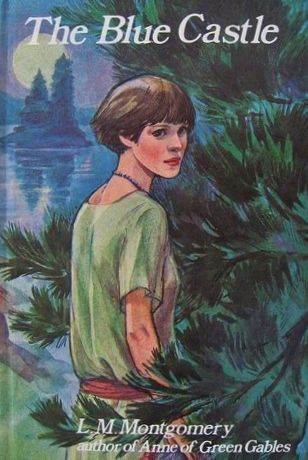
And check out this Pinterest page, which I stumbled upon while searching out a picture of the probably fictional Grey Slosson car which Barney drives. Some lovely images collected here which I thought added greatly to this quite charming novel. And look at this lovely cover illustration, found on that page. I thought this was much better than that on the cover of my own paperback copy!

Blue Castle Images – Valancy’s World

Read Full Post »

Kilmeny of the Orchard by L.M. Montgomery ~ 1910. This edition: Ryerson Press, 1968. 5th Canadian Printing. Hardcover. 256 pages.

My rating: 3/10. (And I’m being generous.)

*****

Boo, hiss.

I’m going to say this straight away. I did not like this book. If it were authored by anyone other than the iconic Lucy Maud Montgomery, it would already be in the box out in the porch, heading for the charity shop next trip to town. As it is, I will keep it just because I do like complete collections of things, and I have many (most?) of L.M. Montgomery’s other novels and short story collections, but I will not be re-reading it any time soon, if ever.

Oh, this book is so dismal, in so many ways.

Here I extend an apology to those of you who love this story, and see it as a sweet fairytale, and are able to accept it as a product of the time it was written in. That’s all well and good, and I often do the same, but in this case I look at the author in question, see that this novel was published two years after Anne of Green Gables – which is a very different (and much better) book in every conceivable way – and shake my head at the author. How could she?!

In the interests of full disclosure, I did read a number of reviews before I tackled this story, and I was prompted to read this for the Canadian Book Challenge by these two bloggers, Nan at Letters From a Hill Farm, and Christine at The Book Trunk.

Letters From a Hill Farm Review – Kilmeny of the Orchard

The Book Trunk Review – Kilmeny of the Orchard

Nan and Christine between them eloquently present the “for” and “against” arguments, and I was truly curious to see in which camp I would make my home.

Nan, Kilmeny’s all yours.

Hi there, Christine. Is there room for me by your fire?!

Spoilers follow. If you want to read and judge for yourself without my input stop here.

*****

“Kilmeny looked up with a lovely grace,
        But nae smile was seen on Kilmeny’s face;
        As still was her look, and as still was her ee,
        As the stillness that lay on the emerant lea,
        Or the mist that sleeps on a waveless sea.
        .   .   .   .   .   .   .   .   .   .   .   .   .
        Such beauty bard may never declare,
        For there was no pride nor passion there;
        .   .   .   .   .   .   .   .   .   .   .   .   .
        Her seymar was the lily flower,
        And her cheek the moss-rose in the shower;
And her voice like the distant melodye
        That floats along the twilight sea.”

                                  — _The Queen’s Wake_
                                                 JAMES HOGG

Wonderfully promising start with a quote from James Hogg’s narrative poem about the lovely Kilmeny who spends seven years in fairy land and comes back mutely unable to tell what she has seen. So far, so good.

And the first few chapters are quite promising as well. We meet a young man, Eric Marshall, as he graduates from college one glorious springtime day, and we nod and smile at Montgomery’s flowery description of the scene.

The sunshine of a day in early spring, honey pale and honey sweet, was showering over the red brick buildings of Queenslea College and the grounds about them, throwing through the bare, budding maples and elms, delicate, evasive etchings of gold and brown on the paths, and coaxing into life the daffodils that were peering greenly and perkily up under the windows of the co-eds’ dressing-room.

A young April wind, as fresh and sweet as if it had been blowing over the fields of memory instead of through dingy streets, was purring in the tree-tops and whipping the loose tendrils of the ivy network which covered the front of the main building.  It was a wind that sang of many things, but what it sang to each
listener was only what was in that listener’s heart.  To the college students who had just been capped and diplomad by “Old Charlie,” the grave president of Queenslea, in the presence of an admiring throng of parents and sisters, sweethearts and friends, it sang, perchance, of glad hope and shining success and high achievement.  It sang of the dreams of youth that may never be quite fulfilled, but are well worth the dreaming for all that. God help the man who has never known such dreams–who, as he leaves his alma mater, is not already rich in aerial castles, the proprietor of many a spacious estate in Spain.  He has missed his birthright.

And here’s our young hero:

Eric Marshall, tall, broad-shouldered, sinewy, walking with a free, easy stride, which was somehow suggestive of reserve strength and power, was one of
those men regarding whom less-favoured mortals are tempted seriously to wonder why all the gifts of fortune should be showered on one individual.  He was not only clever and good to look upon, but he possessed that indefinable charm of personality which is quite independent of physical beauty or mental ability.
He had steady, grayish-blue eyes, dark chestnut hair with a glint of gold in its waves when the sunlight struck it, and a chin that gave the world assurance of a chin.  He was a rich man’s son, with a clean young manhood behind him and splendid prospects before him.  He was considered a practical sort of fellow, utterly guiltless of romantic dreams and visions of any sort.

Eric has decided to join his father in the family retail business – his father is a successful department store mogul – much to the dismay of Eric’s older cousin, Dr. David Baker, who feels Eric’s talents would be better used if he were to pursue a law degree. But Eric nobly holds out that his father’s occupation is good enough for him. What a good son, I thought. Attaboy!

But before Eric can settle into his life in business, he receives a letter from a close friend who is working as a teacher on Prince Edward Island. The friend has fallen ill, and must take a leave of absence from his position. Will Eric please come and take over the school for the last part of the term?

Eric happily agrees, and off he goes to the Island. He is much taken by the beauty of the setting, and by the quaint friendliness of the natives. The only jarring note is struck one evening when he sees an elderly man and a young man together.

Eric surveyed them with some curiosity.  They did not look in the least like the ordinary run of Lindsay people.  The boy, in particular, had a distinctly foreign appearance, in spite of the gingham shirt and homespun trousers, which seemed to be the regulation, work-a-day outfit for the Lindsay farmer lads.  He
had a lithe, supple body, with sloping shoulders, and a lean, satiny brown throat above his open shirt collar.  His head was covered with thick, silky, black curls, and the hand that hung down by the side of the wagon was unusually long and slender. His face was richly, though somewhat heavily featured, olive
tinted, save for the cheeks, which had a dusky crimson bloom. His mouth was as red and beguiling as a girl’s, and his eyes were large, bold and black.  All in all, he was a strikingly handsome fellow; but the expression of his face was sullen, and he somehow gave Eric the impression of a sinuous, feline creature basking in lazy grace, but ever ready for an unexpected spring.

The other occupant of the wagon was a man between sixty-five and seventy, with iron-gray hair, a long, full, gray beard, a harsh-featured face, and deep-set hazel eyes under bushy, bristling brows.  He was evidently tall, with a spare, ungainly figure, and stooping shoulders.  His mouth was close-lipped and
relentless, and did not look as if it had ever smiled.  Indeed, the idea of smiling could not be connected with this man–it was utterly incongruous.  Yet there was nothing repellent about his face; and there was something in it that compelled Eric’s attention.

Eric shrugs and moves on. That evening, his landlord fills him in on the story. The elderly man Thomas Gordon, a local farmer, and the boy is an Italian orphan whose mother died at his birth. His father immediately deserted and has not been seen since. He was raised up by the Gordons, bachelor Thomas and his spinster sister Janet, but nature is apparently proving stronger than nurture.

“Anyhow, they kept the baby.  They called him Neil and had him baptized same as any Christian child. He’s always lived there.  They did well enough by him.  He was sent to school and taken to church and treated like one of themselves.  Some folks think they made too much of him.  It doesn’t always do with that kind, for ‘what’s bred in bone is mighty apt to come out in flesh,’ if ‘taint kept down pretty well.  Neil’s smart and a great worker, they tell me.  But folks hereabouts don’t like him.  They say he ain’t to be trusted further’n you can see him, if as far… 

Later this same evening, Eric goes for a walk and stumbles upon an old orchard, trees in full bloom. Wandering through the fragrant dusk, he hears the delicate strains of a violin, and, tracing them to their source, startles a lovely young maiden playing ethereal and perfectly in-tune music among the apple trees. Eric thinks she’s the most beautiful thing he’s ever seen, and eagerly approaches her but the girl gasps in terror and flees, uttering not a word or a sound.

More investigation reveals that this is the mysterious Kilmeny Gordon, niece of the afore-mentioned Thomas and Janet Gordon, and house mate of Italianate Neil. She lives in seclusion and seldom appears in public; apparently she is mute, and also is cursed by being an illegitimate child. Her mother was married to a man, Ronald Fraser, whose first wife was mistakenly thought to be dead; when the first wife showed up very much alive. Ronald abandoned wife number two and went off with wife number one, to die “of a broken heart” shortly thereafter. Kilmeny is born  into an atmosphere of grief and resentment, and has been unable to speak since birth, though apparently her “organs of speech” are normal enough. Kilmeny’s mother is quite a piece of work – sullen and angry at her sad fate, she takes it out on everyone in the family, and I can’t help but think her death, which has occurred three years prior to the opening of the story, was probably a huge relief to all concerned.

I’m going to condense the rest of the story, though you can probably figure out what happens next.

Neil is already in love with Kilmeny. Eric falls in love with her and dismisses the prior claim of the shifty Italian fellow. Kilmeny communicates through the strains of her violin music (Neil, also innately musically gifted by his inborn heritage, apparently only had to show her how to hold the bow and her vast natural ability did the rest) and by writing on a slate hung around her neck. The courtship proceeds with Eric marvelling at this luscious find – a pure, innocent, beautiful girl – all his! Oh, go slow, do not frighten the shy little thing! – and with Kilmeny totally in awe of this handsome, obviously noble, manly man from another world.

And oh yes, the locals all call Eric “Master”, presumably because of his schoolmaster role, but it sounds a little odd in daily conversation, as if it should be accompanied (and it often is) by forelock tugging of the peasant-before-nobility type.

Eric is predictably infatuated with Kilmeny, and persists in haunting the orchard in her company, until his landlady mentions that perhaps it would be nice if Eric would go to Kilmeny’s guardians and mention his interest. “Never thought of that!” says Eric (I’m paraphrasing) and off he goes to immediately win over the dour and suspicious Gordons with his shining goodness and innate nobility. (Neil glowers in the corner.)

What else? Let’s see. Oh – Kilmeny wonders at why Eric is so taken with her – “I’m so ugly!” she moans – oops, sorry – writes on her slate. Turns out that she has never looked in a mirror in her whole eighteen years – her mother broke them all in a fit of pique after her abandonment, and Janet and Thomas have never thought to replace them.

Eric proposes, because despite Kilmeny’s “great affliction” he can’t wait to get his hands on this delectable young creature. Kilmeny refuses him. Scritch, scritch, scritch -“I will only marry you if I gain the power of speech!”

Eric calls in his old friend Dr. Baker, who examines Kilmeny and decides, along with her aunt and uncle, that her affliction has been caused by her mother’s trauma, visited in some mysterious way upon the newborn babe. If a great surge of desire to speak were to come over Kilmeny, she would at long last be able to utter! But as this doesn’t seem likely to happen, Kilmeny and Eric decide to part.

Both mope around, until Eric, unable to withstand the desire to see his love one more time, ventures into the orchard. He passes sullen Neil, building a fence. He sees Kilmeny, and is overcome with grief and sorrow at his imminent loss. Kilmeny sees him, and she sees something else – the hot-blooded Italian is coming up behind Eric with axe upraised!

Do I need to go on?

Voice is achieved. Neil drops the axe in horrified remorse and promptly leaves the Island, removing himself permanently from the picture, to the relief of absolutely everyone. (Poor Neil. He is the one sympathetic character in this whole thing.) The engagement is back on. Eric’s father sees Kilmeny and is immediately smitten with his son’s bucolic sweetheart. Birds sing, etc. etc. etc. and the curtain sweeps shut.

*****

There are so many objectionable elements to this melodrama. The characters are impossibly stereotyped, and the situations are contrived to the nth degree.

What was all the nonsense about Neil and his ethnic “stain”? He was raised from babyhood as a member of the family, but his demotion from Kilmeny’s foster “brother” to merely an inconvenient hired boy is swift and brutal, with no visible consequences except to Neil himself. The xenophobic comments regarding Neil’s heritage come straight from the author, via the mouths of her characters. Nowhere is there any indication that this is a plot device, except for one or two mentions that Neil’s perpetual sullenness is a reaction to the way he is viewed and treated by everyone else in his community. Damned from birth, and by birth.

And poor Kilmeny – she too is damned by birth. Because of her mother’s “sin” – rejection of her dying father’s request for a reconciliation, plus a poor marital choice – the innocent baby is doomed by some supernatural power to muteness. That doesn’t make any sort of sense whatsoever, but all of the characters meekly accept it as a viable reason and a fair enough fate.

Eric’s infatuation with the virginal Kilmeny, and his desire to teach her about love and the world is more than a little creepy, as is his willingness to abandon her because of her “affliction”. I mean, the girl has everything – unearthly beauty, musical ability approaching genius, and perfect (if tiny) handwriting! What’s a mere voice matter when she has so many other sterling qualities and delicious possibilities to offer?

The whole thing creeped me out, and I’m hard pressed to find any excuse for Lucy Maud Montgomery’s authorial sloppiness and moral negligence in this particular effort. It did remind me of some of the more forgettable of her short stories, so all I can think is that she popped it off one thoughtless day and sent it out into the world and had it accepted because of the previous excellence and best-sellerism of Anne of Green Gables and Anne of Avonlea.

Not recommended.

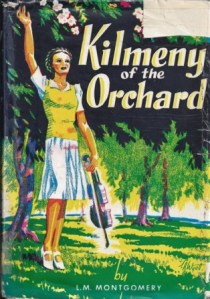
Oh – one more thing. What is with that awful cover, pictured way above? Kilmeny looks dressed for 1940s’ tennis, but for the improbable shoes. This novel was set in horse and buggy times, dear illustrator – it was originally published in 1910! And she looks like a sturdy, athletic Nordic blond – in the book she is a delicately featured, blue-eyed, black-haired, “fairy child”. Apparently a cover illustration with only a tenuous relation to the text within is not a modern phenomenon.

Read Full Post »
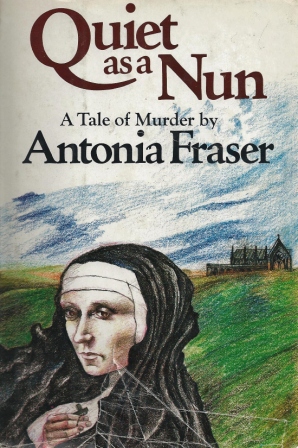
Quiet as a Nun: A Tale of Murder by Antonia Fraser ~ 1977. This edition: Viking Press, 1977. Hardcover. 177 pages.

My rating: 7/10. Not bad at all. I’d definitely read the other mystery novels by this author, and look forward to accumulating the rest of them in my travels, now that I’m on to her, as it were.

*****

Is 1977 “vintage”? Just barely, I suspect, but it was thirty-five years ago – and golly, I remember 1977 clear as a bell – where do the years go? – so I will go ahead and classify it with the oldies.

Antonia Fraser is a well-respected author of scholarly biographies, who branched out into fictional stories with this very novel. From the author’s website:

Since 1969 Antonia Fraser has  written nine acclaimed historical works which have been international  best-sellers.  She began with MARY QUEEN  OF SCOTS (1969) and followed it with CROMWELL: OUR CHIEF OF MEN (1973) and  CHARLES II (1979).  Three books featuring  women’s history came next: THE WEAKER VESSEL: WOMAN’S LOT IN THE SEVENTEENTH  CENTURY (1984); THE WARRIOR QUEENS (1988) and  THE SIX WIVES OF HENRY VIII (1992).  A  study in religious extremism, THE GUNPOWDER PLOT: TERROR AND FAITH IN 1605  (1996) was followed by two books set at the court of Versailles: MARIE  ANTOINETTE: THE JOURNEY (2001) and LOVE AND LOUIS XIV: THE WOMEN IN THE LIFE OF  THE SUN KING (2006).

Antonia  Fraser has also written eight crime novels and two books of short stories  featuring Jemima Shore Investigator.  She  edits the Kings and Queens of England series for Weidenfeld & Nicolson  including her own short illustrated book KING JAMES VI AND I (1974) and the  composite volume KINGS AND QUEENS OF ENGLAND (1975).  She has also edited the following  anthologies: SCOTTISH LOVE POEMS (1974), LOVE LETTERS (1976), HEROES AND  HEROINES (1980) and THE PLEASURE OF READING (1992).

Among  the many awards she has received are the Wolfson Award for History; the James  Tait Black Prize for Biography; the Crimewriters’ Non-Fiction Gold Dagger; the  Franco-British Society Literary Award, and the Norton Medlicott Medallion of  the Historical Association.  She was made  a CBE in 1999.

Antonia Fraser is the eldest child of the Labour politician and prison reformer Lord Longford and the historical biographer Elizabeth Longford. She has six children by her first marriage to Sir Hugh Fraser MP and eighteen grandchildren. She was married to Harold Pinter who died on Christmas Eve 2008.

So that’s the author’s background – rather impressive, so I was expecting great things from this mystery novel. By and large it did not disappoint, though “great” would be an overstatement in reference to this slender diversionary read.

I had hoped for a fairly fast-paced, readable and engaging story, and I had no trouble polishing this one off during the course of one session of lunch break/bedtime/early morning tea break reading. Easy to pick up, easy to put down; the characters stayed fresh and clear in my mind, which is not always the case even during such a short reading span, so that was a point in favour.

From the author’s website:

A nun is dead – her emaciated corpse has been discovered  locked in the tower   of Blessed Eleanor’s  Convent. The tragic consequence of a neurotic young woman committing to a life  of isolation and piety, the inquest concludes. But this young woman held  unusual power over the convent … power she was planning to use.

Jemima Shore tries to keep  her distance from the case, but when her lover cancels their holiday she finds  herself reluctantly getting involved. A violent attack in the dead of night and  another death convinces her that the convent is not the haven of peace it  appears to be. Suspicion and fear hang heavy in the air but how do you solve a  murder no-one will admit happened?

The main character is thirty-something Jemimah Shore, a television investigative reporter who hosts a popular program which touches on various social and cultural topics, and “digs deeper”, hence the tag “Investigator” which has become attached to Jemimah’s name. Widely known through Britain because of her T.V. presence, Jemimah is used to many people from her past reappearing and claiming acquaintance, so she is not terribly surprised when the Mother Superior of her childhood convent school sends her a letter referring in complimentary terms to her present occupation. What does surprise Jemimah is Mother Ancilla’s urgent request that Jemimah visit Blessed Eleanour’s Convent to discuss the recent death of one of Jemimah’s former school companions, who found her vocation and became a nun at the convent after she and Jemimah had parted ways.

Sister Miriam, once the wealthy Rosabelle Powerstock, had apparently died of natural causes, but there is a mystery about her death. Why did she lock herself in the ancient tower attached to the nunnery, and why had she been so insistent that Jemimah be called, before her (Sister Miriam’s) unfortunate demise?

Jemimah is an interesting character, and I thought her a rather admirable private investigator. Cool, calm and collected, thoughtful Jemimah views the world with an eye just the warm side of cynical. No fool, she is well-used to analyzing motivations and actions, and she turns her eye upon herself on occasion with surprising firmness and self-critisism. A non-strident but rock solid feminist, Jemimah gets on with things and has little time or patience for drama in her life, which makes it a bit eye-opening that her romantic involvement is with a firmly married liberal M.P. The relationship is long-lasting and seems stable enough, though we get the strong sense that Jemimah wishes it could be regularized and much more open; it seems well-known among her circle of acquaintances, though the wife of her lover is definitely unenlightened.

The plot itself is a contrived little thing – a missing will, a threat to the convent, and a melodramtically inclined social crusader are all key elements. I figured out the “mystery” almost immediately, though there was a tiny twist at the end which I did not see coming; Jemimah’s reaction was unexpected and made me curious to see what her next mystery will have her doing. (There were eventually ten books in the Jemimah Shore series, written between 1977 and 1995, though and I wonder if that writerly interest is wrapped up; the author’s most recent work is a memoir about her life with the late Harold Pinter, Must You Go?, 2010.)

Thoughtful musings on religion, and the author’s undoubted talent for words raise this novel higher than the plot deserves, to put this first mystery novel nicely into the realm of Patricia Wentworth, and a reasonable compatriot of the slighter works of Margery Allingham, Agatha Christie and Ngaio Marsh. I’ve read much worse.

Read Full Post »

Adventures of a Botanist’s Wife by Eleanor Bor ~ 1952. This edition: Hurst & Blackett Ltd, 1952. First edition. Inscribed by the author. Hardcover. 204 pages.

My rating: 5.5/10. Not a poor book, exactly, but not what I had hoped for, hence the low rating.

*****

A rare disappointment, this book. It had all the hallmarks of a find: rich red and gold vintage hardcover binding, gorgeous maps on front and rear end papers, photographs and line drawings by the author throughout, and an extremely promising first paragraph:

When I married, in 1931, a member of the Indian Forest Service I brought with me as a dowry two table-cloths and a bull terrier. Apart from these possessions I was a portionless bride. As his own contribution, the bridegroom brought with him a large number of books, a torn pink cotton curtain and two spaniels. Also a trouser press used for pressing botanical specimens. And some camp equipment.

How could one resist?

I had hoped for a fairly detailed account of the author’s travels with her husband through the Himalayan foothills, with lots of descriptions of the flora of the region. “Botanist’s Wife”, right? While Eleanor was obviously aware of the natural beauties of the region, she seldom describes the flora in the kind of detail I was hoping for – “a meadow of primula and gentians” is about as much as she ever says, except for a quite detailed description of a Sapria species, a type of carrion-scented flower, which was once used to decorate her bedroom by her native servants, in the mistaken belief that she and her husband, famed Irish-born botanist Norman Loftus Bor, would find it delightful – Norman had raved over a prime specimen earlier in the trip, but the foetid odour of the bloom was not at all pleasant in close quarters!

This “autobiography” does not go into much detail of the sort that makes such accounts so potentially vivid and interesting. It is something of an arm’s length travelogue, with Eleanor often commenting a bit distastefully on the hygiene (or lack thereof) of the natives of the area she happens to be passing through. To be fair, she also comments on their favorable aspects, but it is a very much “we” and “them” account.

Where she unbends the most, and where we see glimpses of her true passion, is when she talks about her beloved pet dogs – a bull terrier and several spaniels – which travelled with her, occasionally on horseback, and required an inordinate amount of special arrangement to feed and care for in a region known for its high incidence of rabies, as well as various toxic plants, predatory animals, and various nasty insects and internal parasites. Having no children, it would appear that Eleanor’s maternal affection was lavished on her pets.

This short memoir’s greatest value is that it is something of an intriguing – albeit limited – picture of the wilderness areas of northern India and southern Tibet in the time between the wars, and into the World War II years, when Norman left the forest service and was engaged in some sort of secret war work which we are never enlightened on.

I found that I had a difficult time fully engaging with the narrative. The writing is quite stilted, and throughout there are numerous very promising beginnings of anecdotes which are left hanging with no resolution or conclusion, resulting in my frequently paging back to see if I’d missed something. I never had – it just wasn’t there.

I suspect the reality of Eleanor’s life was much more interesting and varied than she was able to communicate in this book. She appears to have an excellent relationship with her husband, and numerous long-enduring friends throughout the region of her Indian travels and, indeed, throughout the world. There is a picture of the author standing next to Jon Godden (novelist Rumer Godden’s sister) and two of the “seven kings of Rupa” which is never referred to in the text, though the seven kings themselves are discussed. Was Eleanor a friend of Godden’s, or is this merely a “tourist snapshot”?

Eleanor very wanted to be a published author; she relates that she was continually writing, but hesitated to describe herself as a writer to acquaintances because she had not had anything published.

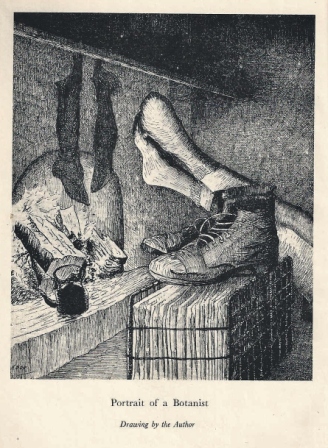
She was also a striving amateur artist; her drawings, six of which are reproduced, are capable but not particularly “good” – they look like the work of a hard-working, conscientious student – much care is taken with detail and cross-hatching, but something is a little off in perspective; they look somehow a bit lifeless.  The lovely end paper maps were drawn and illustrated by Ley Kenyon; Eleanor’s painstakingly stiff drawings suffer by the comparison.

The best and to me the most appealing of Eleanor’s efforts is this illustration used in the book’s frontispiece; it made me smile and soften somewhat in my criticism toward’s her authorial failings. She tried hard and did the best she could. And as this book shows, she did succeed in her quest for publication.

Would I recommend this book?

No, I don’t think I would, unless the reader is specifically interested in the ethnic groups and fast-changing lifestyles of the people of the area during the 1930s and 1940s. The author’s perspective might be a good addition to more detailed observations.

As an autobiography, it is not one of the better memoirs I have read, though I must repeat that it is not a “bad” book; it’s just that I had hoped for so much more. I will likely keep it for its curiousity value, to slip in beside E.H. Wilson’s Naturalist in Western China as an addendum of sorts to his vastly superior work written earlier in the century.

Read Full Post »

Passing of the Third Floor Back by Jerome K. Jerome ~ 1904. This edition: Dodd, Mead & Co., 1928. Hardcover. 186 pages.

My rating: This is one of those complicated-to-rate books. In context with other short story collections of its time, I thought it fairly typical. Not perhaps outstanding, but a solid little group of era-correct (love that term – it comes from the vintage car world, in which I have a tiny involvement) pieces. Did I enjoy them, though, on a purely reading-for-pleasure level? Some yes, others not so much. I thought the short stories herein were reasonably well written – if a bit wordy – and quite moralistic. No doubt as to what we’re supposed to be thinking at the end of each!

So, taking everything into consideration, how about  7/10. I don’t know if I would recommend this small collection as purely pleasure reading suitable for modern tastes, but the stories do possess a certain curiousity value, and several are quite humorous, in an “era-correct” (there, I got to use that again!) sort of way.

*****

Jerome K. Jerome, 1859-1927, is, as you’ll know unless you’ve been residing under a literary rock all your adult days, best-known for his 1889 comic novel, Three Men in a Boat (To Say Nothing of the Dog), still very much in print 123 years after its first publication. This was my own first introduction to this author some years ago, and I found the story mildly diverting. A pleasant memory persisted, so when I chanced upon this book of short stories in a pile of vintage hardcovers on the deliciously over-crowded shelves of At Second Glance in Kamloops, I eagerly added it to my pile of acquisitions.

Apparently the title story, Passing of the Third Floor Back, was made into a quite successful movie in 1935, starring Conrad Veidt. I must admit I’d never heard of it until I did a bit of background research on this book for reasons of this review, but from the Wikipedia article it looks as though Jerome’s story was very much a starting point – the movie plot as described seems nothing like the story I’ve just read, but for the boarding house setting and the idea of the mysterious stranger changing the lives of those about him.

Six stories make up this collection.

Passing of the Third Floor Back ~  A mysterious stranger moves into a squalid boarding house and changes the lives of everyone who comes into contact with him.

The Philosopher’s Joke ~ What if you could go back to your younger days, but still remember everything you’d learned through your maturity? I liked the premise, but found the handling rather awkward. An intriguing idea – very thought-provoking.

The Soul of Nicolas Snyders, or The Miser of Zandam ~ An exchange of souls has predictable results, and a few surprises. Moralistic but smile-provoking.

Mrs. Korner Sins Her Mercies ~ The most purely humorous story of the collection. A clever friend puts an interesting spin on a marital crisis.

The Cost of Kindness ~ A good deed sets off a chain reaction, with very different results than first anticipated. Another humorous piece.

The Love of Ulrich Nebendahl ~ Self-sacrifice taken to the extreme. This was the most serious story of the lot; a rather shocking conclusion, which the author attempts to soften with a Biblical tag.

*****

I am going to leave my review right there – a simple report – so sorry, but I can’t quite bring off a deeper analysis. Limited computer time this week, and so much going on in my real life that my thinking capacity is all used up by the time I sit down to type!

Read Full Post »

I would like to share this post with everyone. From Georgi in Australia, writing on her blog 1001 Children’s Books.

I am so much in agreement with her closing paragraph:

Books are survivors. How many things can you buy from 1905, that is in practically the same condition as when it was printed (bar a tiny tear or a splodge on the title page)? How many things from 1910 have survived? Things fall apart, get thrown away, are destroyed, are dismantled to make something new – they lose their original purpose. Not books. They will sit patiently on a shelf, waiting until someone finds them again, be it in 10 years time or 100 years time. They may be fragile – they are made of paper, after all, but they are  resilient as well. Maybe it’s because they are full of ideas. Ideas can be pretty resilient too.

Well said!

On resilience in the face of fading and splodges.

Read Full Post »

« Newer Posts - Older Posts »