Posts Tagged ‘Vintage’

the long winter john christopherThe Long Winter by John Christopher (pseudonym of Samuel Youd) ~ 1962. Alternate British Title: The World in Winter. This edition: Simon & Schuster, 1962. Hardcover. First American edition. Library of Congress #: 62-12411. 253 pages.

My rating: 7.5/10. This fifty-year-old post-apocalyptic novel was much more gripping than I had expected; the premise of a new ice age is chillingly depicted (pun intended). I thought this one was right up there with John Wyndham’s similarly themed works. I started it last night as a casual bedtime dip-into-and-check-it-out read, and I was quickly hooked and soldiered on until well after midnight to finish it, to my slightly groggy detriment today.

Good period piece and a fine example of the vintage speculative fiction genre, though with the expected true-to-the era misogynist attitudes and opinions. This would make an excellent film, in the right hands.

*****

Andrew Leedon rubbed his hands against the antique Victorian muff-heater Madeleine had given him. She had found it in an antique shop and presented it to him on his birthday, along with a supply of the small charcoal by which it was fueled. But even charcoal had become impossible to obtain, and its brief usefulness, after so many years, was almost at an end. He blew through the small holes on the side and watched the red glow brighten. A chair scraped and he turned his attention back to his fellow readers. He felt pity for them, but it was mixed with envy. The future was a current which soon, very soon now, must drag them down into the maelstrom; for the moment they bobbed like corks in this eddying backwater, but the deep tug of the undersurge was there and none would escape it. Yet they were indifferent. The red-eyed, gray-haired man across the aisle with his pile of volumes on King Arthur – he had always been there, in the same place, with the same books. When the end came to him, in however strange and incalculable a form, it would be irrelevant, as irrelevant as the pneumonia or heart attack or cancer which would otherwise have rendered his seat vacant. Soon all the seats would be vacant together until, as must happen, marauders broke in to rip up the wood and carry away the books that were left for fuel. Some of the rarest books had already gone, to the libraries in Cairo and Accra, in Lagos and Johannesburg, and more would go in the next few weeks; but there would still be enough to draw the mob. The people reading here were not so foolish as to expect a reprieve – for the library of for themselves. It was that he envied.

The main lights were off, conserving electricity. There were only the small reading lights, and, high up, the grayness that filtered in from outside. He thought of Africa; of sunshine, long beaches by a blue ocean, the green of trees and grass …

In the middle of the 20th Century a worldwide environmental catastrophe is occurring: the sun’s radiation is decreasing, and a new ice age is looming in the temperate zones. British television producer Andrew Leedon, happily married with a lovely wife and two young sons, catches a glimmer of the story as it first starts to break, but he, along with everyone else, pays little attention. Even if the predictions are correct, what would a degree or two difference in temperature really mean? Surely nothing to worry about; winters in England might even be more traditionally enjoyable again; skating on the Thames would make a pleasant Christmas diversion…

As the true impact of the swift and ever more severe solar cooling begins to be felt, Andrew’s marriage echoes the collapse of his planet’s future. His wife confesses that she has been continuously unfaithful since the first days of their marriage and is now leaving him for his good friend David Cartwell; as a consolation prize Andrew is thrown together with David’s discarded wife, the gentle Madeleine.

Those fortunate enough to have been able to plan ahead and liquidate their assets are moving towards the equatorial regions; Andrew’s now-estranged wife and sons leave for Nigeria without his initial knowledge. Stubbornly refusing to flee in his turn, Andrew is finally convinced to leave by Madeleine, and with David’s assistance the two obtain seats on one of the last air flights out of England. David himself remains behind, counting on his high position in the government to enable his escape if and when it becomes necessary. But for now he intends to stay and see England through this crisis to the best of his considerable ability.

In Africa, Andrew and Madeleine find themselves immersed in a society very different from that which they know. White-skinned Europeans and Britons are the new working class; their currency is worthless, their academic and professional qualifications ignored. Serving the ruling class Nigerians in the former British colony, the whites scrub toilets and wait tables and prostitute themselves to pick up enough money to eke out a precarious existence. Andrew and Madeleine settle into one of the worst of the slums, until a chance encounter with an African student whom Andrew had patronizingly but kindly treated to a dinner at his club back in the old days in London elevates him socially and professionally by making him a personal assistant.

This turn-about relationship leads to a morally challenging situation, when Andrew is asked to join a Nigerian military expedition force planned to explore England by Hovercraft, to assess the possibility of re-colonizing that now nearly abandoned territory under an African flag.

The first part of this post-apocalyptic tale is, in my opinion, the best-written, where Andrew struggles with the ethics and morality of his own behaviour in this unprecedented crisis, and keenly observes the reactions of those around him. As the novel progresses, and as the conditions in the frozen lands worsen, to martial law, brutal violence by the few elites with guns against the many without, and survival of the fittest by any means, including cannibalism, the story becomes much more intellectually shallow and far distant from the complex inner musings of the earlier days. To be fair, this might echo the increasing callousness of the strong as they jettison their finer feelings to ensure their own continued survival; ethics are a luxury no one can afford to indulge in any more.

The racial situation of blacks versus whites and their role reversals is cleverly presented; the tone remains “white” racially superior though, as the Africans ultimately are undone by their own “inborn” weaknesses, at least in the eyes of the staunchly patriotic Britons defending their frozen homeland.

This is indeed a very British book; the author assumes a strong familiarity with English landmarks and history, and knowledge of London neighbourhoods and architectural and physical features. The narration itself is very stiff-upper-lip, in the best stereotypical tradition.

I thought that Andrew lost some of his credibility as a character towards the latter part of the book; his continual fixation on his personal life while the world itself is crashing down around him strikes a false note.

Or does it? How would you react? Would you focus ever more inward, or would you harden your soul to pursue sheer survival over sentiment?

The ending of this epic is left open and vaguely optimistic, but though we may speculate on Andrew’s future, we are not at all assured that he will even survive, let alone thrive, in the changed world he is struggling to adapt to.

*****

John Christopher was the pseudonym of the late (1922-2012) prolific sci fi and speculative fiction writer Samuel Youd. His best-known works are perhaps the teen/young adult “Tripod Trilogy” concerning an alien invasion of Earth: The White Mountains (1967), The City of Gold and Lead (1968), and The Pool of Fire (1968). I read all three of these some years ago, and though I felt that they were often technically over-simplistic, they were emotionally gripping, thought-provoking and generally memorable.

This is an author worth investigating for the frequent excellence of his creative ideas and his sober examination of human emotional motivations, though his writing can be occasionally uneven, varying in quality even within the same book.

If you are a John Wyndham fan, you will find much to enjoy in John Christopher’s stories. In that case, recommended.

A note: The Long Winter was intended as an adult novel, even though this writer also wrote widely for teens.
Read Full Post »

Mention My Name in Mombasa: The Unscheduled Adventures of an American Family Abroad by Maureen Daly McGivern & William McGivern ~ 1958. This edition: Dodd, Mead & Co., 1958. First Edition. Hardcover. 312 pages.

My rating: 7/10.

*****

This is a most interesting read; a travel memoir with a very 1950s’ feel – not surprising, seeing as it is a 1950s’ book! I enjoyed it.

The authors were literary figures of their time, and the travels herein described were, it seems from a few comments here and there, both to fulfill a personal desire for wanderlust and to collect material for future books, including this one.

If the name Maureen Daly rings a bell, it is most likely because of her extremely successful young adult novel, Seventeenth Summer, written when the author was herself just seventeen, and published in 1942. Some years later we find Maureen married to fellow writer William McGivern, a successful writer of crime-mystery novels (The Big Heat, Rogue Cop, war novel Soldiers of ’44, and almost 20 more) and film and television scriptwriter (Kojak, Adam-12, and Ben Casey, among others). They had their two children along, 6-year-old Megan and 2-year-old Patrick, when they left New York on New Year’s Eve to travel to Paris, the start of their extended travels.

Long, detailed and quite enthralling chapters describe the scenery, culture and especially the unique individuals the McGiverns came into contact with. The tone is a mixture of worldly-wise (but never condescending), travel guide (but merely to lay out the scene), and very 1950s’ American superiority (but innocent of bluster so therefore non-jarring – at least for the most part). The McGiverns were very eager to give credit where it was due regarding the superior aspects of their temporary homes and tourist destinations, which included Paris, and then a stay in the tiny fishing village of Torremolinos near Málaga, Spain, just on the verge of its discovery and development as a winter-tourist hotspot.

Then come several chapters on Spanish bullfighting, bullfighters and the ranches which raise and train the bulls. The tone here is journalistically non-judgemental much of the time; I never did get a grasp of whether the McGiverns were fully behind the “sport”, though from the farcical descriptions of a number of stereotypical bullfight aficionados which graces one of the chapters, I suspect they had marginally more sympathy for the bovine members of that elite yet widely populist pastime.

Next is a short visit (and hence a short chapter) in Gibraltar, where the McGiverns are rather disappointed in the elusiveness of the famous apes. On to Iceland, and a very travel-guide chapter this is, with loads of facts thrown at the reader, interspersed with short vignettes of some of the US Army families living on the vast NATO air base, and native Icelanders who opened their homes to our travellers.

Then comes the most memorable chapter of the book. During World War II, William had served as a US Army gunner in the European campaign, and his platoon had ended up entrenched on the mountainside near the tiny Belgian village of Fraipont, where the local people showed such generosity and warmth to their American allies that William had long planned to return in more peaceful times. Just over ten years later that sentimental visit took place, with the villagers overjoyed to recognize William and welcome his family. A poignant reminder that the war was not all that far in the past when this pilgrimage took place.

Back to Spain, and then a four-day voyage to the Canary Islands, a visit which seems not to have quite met the high expectations of the romance of the name. On to Morocco, where the McGiverns have several pleasant surprises regarding the locals, and then to Nigeria, on the cusp of independence as a full member of the British Commonwealth, after decades of colonial occupation.

A safari to Abadjan on the Ivory Coast and then to Fort Lamy in Chad doesn’t quite go as expected, but there are compensations in the people who the McGiverns meet as they wait for their travel visas to gain approval from the local bureaucracy. This does not happen, so back to Spain, through France, Belgium, and over to Ireland, where the Daly family is waiting to welcome their wayward relative and her family for an extended visit. Several months in Dublin follow, and then the trip is wound up, with a return to New York over a year after the original departure.

In this book there is a strong sense of how good it is to be an American at this point in history, and how welcome the traveller from the U.S.A. both feels and is made to feel; the McGiverns travel in their French-bought Citroën plastered with American flags fore and aft, and seldom seem to meet with a cold shoulder. Quite a change in the ensuing fifty years!

This is a fine book, and a literary time capsule of the post-war era, before things started to go wrong for the U.S.A., politically speaking.

I suspect it may be hard to come by (I ordered mine for a rather large sum from an online rare book dealer, for the Maureen Daly connection) but if your library happens to have a copy hidden in the stacks, or if you chance upon it in a used book store, it is well worth delving into.

Read Full Post »

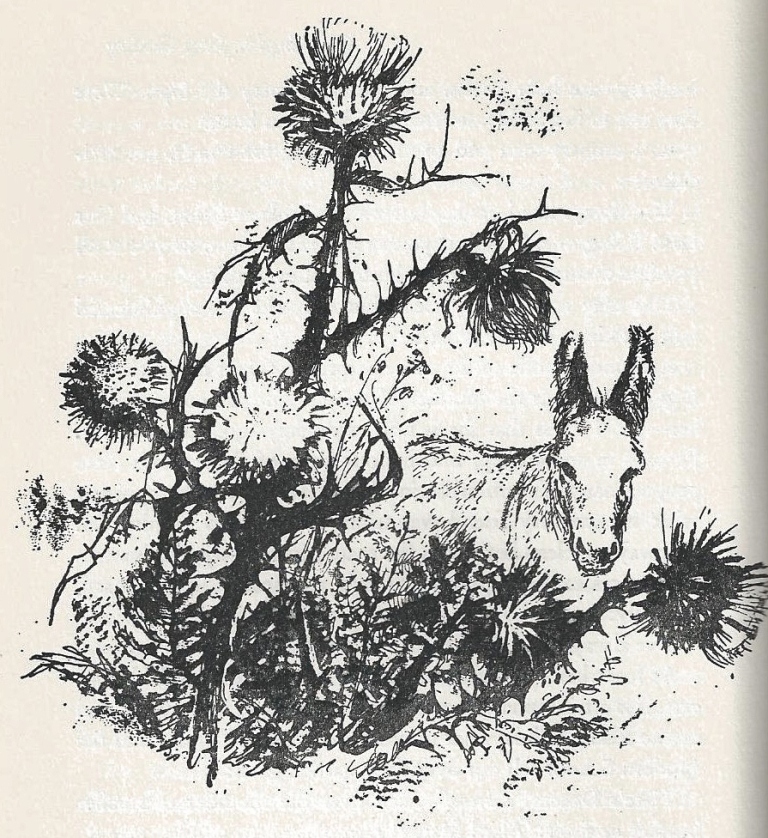
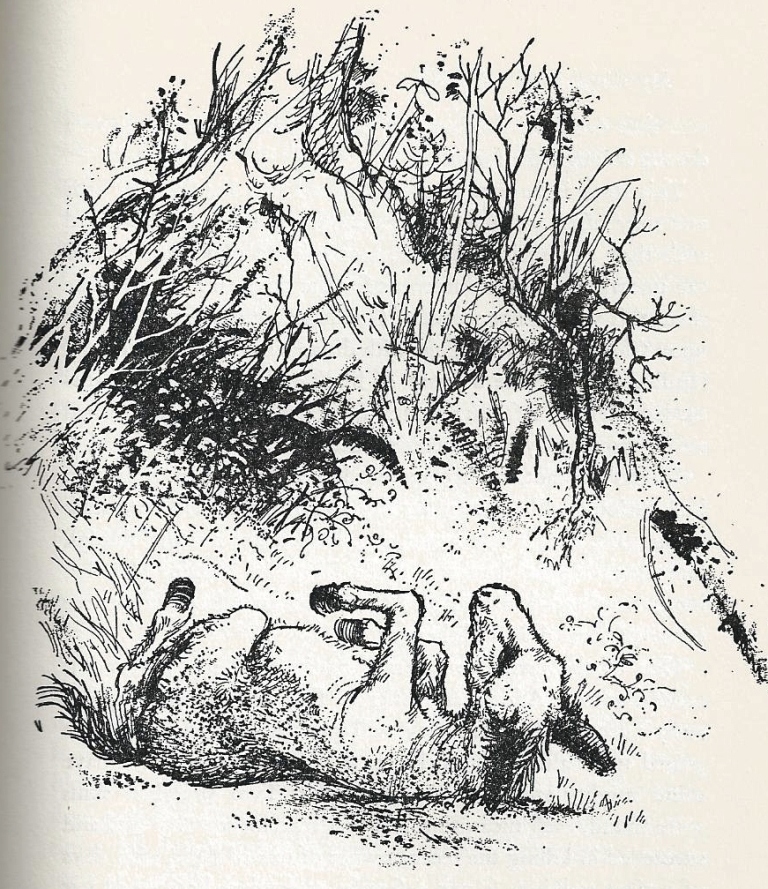
My Kingdom for a Donkey by Doris Rybot ~ 1963. This edition: Hutchinson & Co., 1963. First Edition. Hardcover. Line drawings by Douglas Hall. 128 pages.

My rating: Another unique book which is hard to rate. It’s centered on the author’s pet donkey, Dorcas, with predictable anecdotes about the creature itself, but it also ranges much more broadly into history, philosophy, animal rights and general opinionating by the author.

I liked it. I initially bought the book to give to a donkey-owning friend, but am finding it difficult to make up my mind to let it go just yet. And I love the illustrations. I should send it on its way back out into the world, but I strongly suspect I won’t.

Anyway – rating. I’m thinking 8/10. A slender little volume, but earnestly written, and beautifully sincere. Almost makes you yearn for a donkey of your own. (“Or not!” exclaims my reading-over-the-shoulder daughter, who has spent a number of sessions brushing out the knots in down-the-road Fanny’s woolly coat.)

*****

I’ve been carrying this one around with me for weeks, to the detriment of its rather fragile dustjacket, so I’ll try to pull off a quick review in my little window of time this evening so I can at last leave the poor thing on the shelf.

The author writes:

My own Dorcas is a plump, well-liking donkey. But even I – who can say of her as Sancho Panza said of his ass Dapple, she is the ‘delight of my eyes, my sweet companion’ – even I cannot call her beautiful. She is too like a child’s inexpert drawing, with her head absurdly big for the mouse-brown body that is at the same time neat and clumsy.

Poor grotesque beasts! Whose fault is it that they are as they are? From that day far down the increasing centuries, before the Pyramids, before Abraham, when the first wild ass was haltered and loaded. his kind have been abused, overweighted, beaten, ill-fed, chancily watered; kicks and goads have come their way more often than pats and praise. Little wonder they were reft of their real grace and swiftness to become the stunted toilers that we know, waifs of the world, clowns among horses, a byword for patience and humbleness.

This particular donkey has been acquired to keep the grass down on a small country acreage. She has not been neglected or abused, but instead was deliberately sought out and purchased from a horse dealer who kept the little jenny among a herd of ponies in the New Forest of England’s Hampshire region. Dorcas was a costly acquisition, donkeys apparently being rare and hard to come by in this particular place and time – England in the late 1950s – but the transaction was made and Dorcas soon adapted to her new home.

Dorcas’ new life was in no way harsh or unhappy; her days were filled with peaceful grazing and visits over the fence with many passers-by, occasionally pulling a small cart, being taken for short rides by her owner and visiting children, and, on one memorable occasion, embarrassing her owner mightily by refusing to participate in a horse show in the most public fashion possible, by rooting herself immovably in the show ring as the rest of the participants circled round in perfect form.

Dorcas provided her owner with years of interest and pleasure, mostly by her mere possession and the enjoyment of watching her carry on her natural inclinations and habits.

Doris Rybot tells the tale of Dorcas with the minimum of sentimentality – she sees her donkey and her own role as animal owner and caregiver through pragmatic eyes – but at the same time she speaks most movingly about the treatment of Dorcas’s tribe through the centuries, and expands this to a plea to treat all animals with respect. In between personal anecdotes featuring not only Dorcas but the other animals in her life, Doris retells a number of legends and Biblical stories in which the humble ass takes a prominent part.

An unusual and very heartfelt book, by a writer who has a deep and articulate love of all creatures from the lowliest insect to humankind itself. A hidden gem of a book, which I am quite thrilled (in a quiet way) to have come across.

I’ve done a little bit of background research on Doris Rybot, and have discovered little about her except that she did write at least one other book, It Began Before Noah, and that she also appears as Doris Almon Ponsonby, and that she was born in 1907.

Read Full Post »

The Stars Grow Pale by Karl Bjarnhof ~ 1956. This edition: Penguin, 1960. Translated from the Danish by Naomi Walford. Paperback. 267 pages.

My rating: 7/10.

This early years autobiography left me curious as to the next stage in Bjarnhof’s life. The internet is curiously empty of much information about a man who became a celebrated member of Danish musical and intellectual society.

Desperately bleak in parts; often deeply moving.

*****

This is the story of a boy whose early years were filled with an array of tragic and challenging  issues, not the least of which is his growing blindness. Looking back on his childhood from many years in the future, the tone is stoic yet unsparing of the details of the situation and actions of Karl Bjarnhof’s family and childhood associates, and his own reactions and thoughts.

Karl, from his own self-description, was a stubborn and introspective child, occasionally impulsive, and often unable to explain his own actions or respond emotionally appropriately to the out-reaching of others. The deep love of his parents for their troubled child comes through clearly and poignantly, though Karl does not acknowledge those feelings in so many words in this account.

A gifted mathematician and musician from childhood, though these tendencies were initially dismissed, Karl went on in his adult life to gain international fame and respect as a cellist and organist, and later as a writer and radio broadcaster.

I can’t say I exactly “enjoyed” this autobiography. It immediately pulled me in and kept me enthralled, but it is a painful account to read, and it left me saddened, even knowing that Karl’s persistence in following his inner vision won through, and that he went on to lead a creative and fulfilling adult life. There is a certain understated humour to some of the anecdotes, but much of the book comes across as serious and unsmiling in tone. I suspect that some of the sparingly written vignettes will be etched in my memory for years to come.

Karl Bjarnhof was born in 1889, and died in 1980. His vision faded throughout his childhood and teen years; he became fully blind at the age of nineteen.

From the inner cover of this vintage 1960 Penguin edition:

Karl Bjarnhof in this brilliant autobiographical novel tells the story of a boy marked out from his fellows by the gradual onset of blindness.

The boy himself is not depressed, though other people may make him miserable: the boys in the yard will not play with him because he is too ‘stupid’ to see the ball; his mother nags at him for being ‘peculiar’; his schoolmaster punishes him for not being able to do the sums set on the blackboard. When eventually he is taken to an occulist he is told he has ‘eyes like a hawk’ because while he was waiting for his test he memorized the letters on the chart.

This story is devoid of self-pity or sentimentality. It gives a complete picture of a childhood in a small town in Denmark, with a gallery of unforgettable characters, both comic and pathetic. The book is profoundly moving, and deserves its outstanding success; the Danish book trade awarded the Golden Laurels (for the most outstanding book of the year) to Kark Bjarnhof in 1956 for The Stars Grow Pale; it has been published in nine countries, and was a Book Society Recommendation.

‘The book is a thing of beauty, of tenderness, and, at times, humour; which has, too, a strong adventurous streak.’ – Elizabeth Bowen in the Tatler

‘The sheer beauty of the writing … is exquisite …[The boy’s] world is completely his own, yet Mr. Bjarnhof, by his almost uncanny power of communication, puts the reader right into it.’ – Rumer Godden in the Bookman

From the back cover:

Karl Bjarnhof was born in 1898 in the small town of Vejle in Denmark. His family lived in very moderate circumstances and was hard put to provide proper medical assistance for the boy, who began to go blind at an early age. He has been totally blind for many years.

Bjarnhof’s musical talents and interests were manifest from the very beginning, and he developed into one of Denmark’s best violoncellists, although he no longer performs in public.

He is now known chiefly for his radio work as feature writer, music commentator and quizmaster, and above all for his exceptional talents as radio interviewer. He has been the editor of a Copenhagen newspaper, and has written several novels and numerous feature articles on a wide variety of subjects ranging from music, literature, art and the theatre to the state of the world in general.

The Good Light, published in 1960, continues Karl Bjarnhof’s story. Both books are readily available through ABE.

Though I personally found The Stars Grow Pale an interesting, and often compelling, read, I would hesitate to recommend it unless the reader is a serious collector of rather obscure autobiography, or has a previous interest in Bjarnhof’s early years. Well written, in a distinctive style – or at least well translated with clarity and artistic flair – it is nonetheless a work which may not appeal to the broadest range of readers.

Read Full Post »

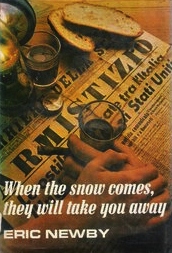
When the snow comes, they will take you away by Eric Newby ~ 1971. This edition: Charles Scribner’s Sons, 1971.  British title: Love and War in the Apennines. Hardcover. ISBN: 684-12486-6. 221 pages.

My rating: 9.5/10. Loses a bit for occasionally awkward phrasing which made me stop and re-read in an attempt to keep the story sorted out. It broke the flow a few times; nothing too serious. Otherwise, a very engaging and sincere memoir.

***** 

I said “sincere” just above, and that is my overall impression of this World War II prisoner-of-war account by the late British travel writer Eric Newby, best known perhaps for his month-long ramble in the Hindu Kush back in 1956. Fourteen years before that famous excursion, Newby was occupied with an even greater adventure after he was interned with his companions in German-occupied Italy after a British Special Forces sabotage mission against a German airfield in Sicily went completely awry.

We were captured off the east coast of Sicily on the morning of the twelfth of August, 1942, about four miles out of the Bay of Catania. It was a beautiful morning. As the sun rose I could see Etna, a truncated cone with a plume of smoke over it like the quill of a pen stuck in a pewter ink-pot, rising out of the haze to the north of where I was treading water.

After being dropped off by a submarine off the Sicilian coast, Newby and five companions had paddled their folbots – portable folding canoes – to the beach, and proceeded to attempt to sneak onto the German airfield and bomb as many of the planes as possible before escaping back to the beach and then a pick-up rendezvous with the sub. Unfortunately for the saboteurs, the Germans were very much on the alert, and the sneak attack ended in a hasty retreat. The canoes sank one by one during the night, leaving the men completely stranded at sea, where they were picked up by Italian fishermen. A year in a rather decent POW camp followed, with numerous unsuccessful escape attempts by various prisoners being attempted, before the Allied-Italian Armistice of 1943 which saw a mass exodus of Allied prisoners and Italian soldiers into the countryside just ahead of advancing German troops.

Eric had unluckily broken his ankle the night before the Armistice, which complicated his movements considerably. Ending up in an Italian hospital, waiting for the inevitable arrival of the Germans, Eric met a young Slovenian woman, Wanda, who initiated a series of language lessons – Italian in exchange for English – which soon led to something more than a disinterested friendly relationship.

When the Germans did show up, Eric was put under guard by Italian policemen, but he managed to escape out of a bathroom window, broken ankle and all, following Wanda’s instructions as to how to find assistance in the town. An underground movement of antifascist/anti-German civilians was mobilizing, and Eric came under their protection and was passed from house to house until his eventual haven in a small mountain village, where he ended up working for a farmer in exchange for shelter and meals.

Wanda kept in occasional contact, mostly by cryptic notes and once by a rare and risky visit, and Eric stayed one step ahead of his potential captors. But as the autumn progressed and the mountain snows began to fall, the period of freedom drew to a close, as it became impossible to hide the presence of Eric and the other temporarily free POWs from the investigative raids of the German patrols.

As the book ends, Eric has been recaptured and is heading to another internment camp, where he will be spending the rest of the war. He and Wanda managed to stay in contact, and were married after the war.

This book is a self-deprecating account of one man’s attempt at maintaining his freedom, though, as Eric himself notes several times, the best thing he could have done both for himself and for the Italian villagers who risked their lives to aid him would have been to surrender. And there was a very real danger to his hosts. Entire families were shot for harbouring fugitives, and though there were numerous people willing to run such a risk, there were others just as eager to turn in both escaped prisoners and those of their neighbours who aided them.

It is also a touching love story, both of a man and a woman who meet and fall in love in most uncongenial circumstances, and of Eric Newby’s deep affection and respect for the Italian peasants who sheltered and fed him at unbelievable risk to themselves and their families.

A sincere and grateful story, written in a modest tone with a good dose of wry humour.

This is one of the recommendations in Noel Perrin’s book about good books, , which I reviewed earlier this year.

I must agree. Highly recommended.

Read Full Post »

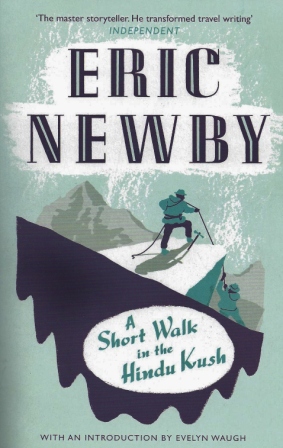
A Short Walk in the Hindu Kush by Eric Newby ~ 1958. This edition: Harper Collins, 2010. Introduction by Evelyn Waugh, Epilogue by Hugh Carless. Softcover. ISBN: 978-0-00-736775-7. 288 pages.

My rating: 8.5/10, after some inner debate. I have decided to overlook the more blatant “Eurocentric” passages, and to view this book as a product of its times, despite a vast change in standards of political correctness in the ensuing fifty-some years since its first publication. Very readable, in a dryly witty British way.

*****

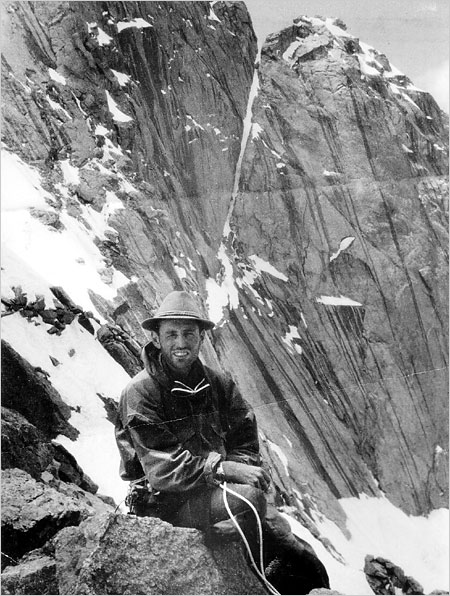
In 1956, 37-year-old Englishman Eric Newby, having received a publisher’s advance to write a travel book, contacted his friend, career diplomat Hugh Carless, and floated the idea of travelling to Afghanistan and trekking in the Hindu Kush mountains, an area where few Europeans had previously ventured. The two decided that the trek should have some definite aim, in part to enable them to request grants from various organizations to assist with expenses, so, without letting their lack of mountaineering experience stand in their way, they decided to focus on ascending 20,000 foot Mir Samir, which had not yet been climbed to its summit.

After a two-day crash course in basic alpine climbing at Snowdonia in Wales, the two felt they were marginally more prepared for the rigours ahead, and the trip was on. Each man brought a certain experience to the expedition.

Newby, though having spent the previous ten years working in his family’s ladies’ fashion business, had strong credentials as an outdoorsman. At the tender age of 19, he had spent time on a four-masted Finnish sailing ship, voyaging from Australia to Europe via Cape Horn, and his eventual book about this experience, The Last Grain Race, was responsible for the publisher’s advance which initiated the Hindu Kush journey. With the start of World War II, Newby served in the famous Black Watch regiment, and was involved in the Special Boat Section, making lightning commando raids on enemy airfields and the like. One of these expeditions went awry, and Newby was captured off Sicily and interned for the rest of the war, barring a brief period of freedom in the Italian mountains, where he met his future wife, a Slovenian village girl, Wanda, who aided him in an escape attempt. This period was also written about, in Love and War in the Apennines, published in North America as When the Snow Comes, They Will Take You Away. (I am currently reading this memoir, and it is fascinating, and helps put Eric Newby the Hindu Kush “explorer” into context.) Wanda wrote her own memoir, Peace and War: Growing Up in Fascist Italy, in 1992. Always strongly and competently athletic, and with a strong sense of humour and a forthright readiness to embrace new experiences, Newby’s intent to venture into the forbidding mountains of a somewhat hostile Afghanistan is more understandable than it appears from his account of the initial decision in A Short Walk, where it appears to be merely a whim of the moment.

Hugh Carless himself, while on one of his official postings in Kabul, had previous experience in the area, and it was his accounts of trekking in the region with Tajik guides which got Newby thinking about the possibilities of a more ambitious expedition. The 31-year-old Carless brought knowledge of local languages and on-the-ground diplomacy to the partnership, as well as a strong inclination to adventure which more than matched Eric Newby’s.

The entire adventure, the “short walk”, lasted only a month, but what a marathon that month was. The book details the trials and tribulations, as well as the rewards, of the journey first to Afghanistan, and then, after engaging local guides, into the mountains. Mir Samir was reached, and the climb attempted, but both Newby and Carless were so weakened by continual dysentery and altitude sickness that they were forced to turn back a mere 700 feet from the summit. (A German party of experienced climbers was the first to reach the summit, only three years later, in 1959.)

After descending Mir Samir, bloodied and bruised, the trekkers continued around the foot of the mountain, as Newby and Carless thought they would like to see it from the “other side”, which entailed the party entering the neighbouring province of Nuristan, to the trepidation of their guides; regional rivalries were intense and deadly, and there was a very real danger of violence to trespassers.

A safe return was made, and the two men were thereby provided with anecdotes for a lifelong series of dinner parties, not to mention a whole book. The guides returned to their normal lives, grateful, one would assume, that the whole darned thing was so quickly over.

Much is made of Newby’s playful, ironic tone in this book, and while I did appreciate the bantering tone, as it made for an enjoyable reading experience on a purely diversionary level, I did continually keep thinking to myself, “Why?” Why risk life and limb, not only of themselves but of their guides, on such a pointless journey? Because it was “there”? That does seem to be the chief motivation set forth in the book, and I am not sure whether learning from the afterword by Hugh Carless, special to the 50th anniversary edition of A Short Walk, that the trip was contrived at least partly in order to have an experience to write a book about, that I am any happier with that reasoning. I suppose it is no different from the contemporary trips in search of material by the likes of Michael Palin and Bill Bryson, and even the revered Paul Theroux. We do tend to love a good traveller’s tale, whether we are fellow adventurers or merely armchair voyeurs.

A Short Walk in the Hindu Kush is often referred to as the book that started that successful genre, but I must differ on that point, as the traveller’s tale form stretches back in popularity to pre-history. Think of The Odyssey, and the Nordic journey tales, and Marco Polo, and the countless accounts since then. This book is a worthy successor of its historical ancestors, but it very much walks in the shadow of what came before, versus branching out in any significant way.

Newby and Carless ultimately come across as being a wee bit arrogant (okay, in Carless’ case, hugely arrogant), with their snide comments on the personal habits of the natives of the area. To balance this they do poke continual fun at themselves, and there are numerous appreciative comments regarding the region and the people, so perhaps it is merely a case of the author being more honest than most in that he records his negative thoughts, rather than submerging them in the interests of political correctness as more modern writers have been trained to do. Whatever my criticism, the fact remains that these two men ventured where few others dared, and, in the face of overwhelming discomfort and very real danger, pushed forward to pursue their stated goals, with a great degree of success.

To sum up, I quite enjoyed reading this book, am eager to read more of Newby’s work, and would happily recommend A Short Walk to others, with the note that it represents the attitudes of the time it was written, and may jar the sensibilities of a more tactful and possibly better educated (in a worldly aware sense) time.

Read Full Post »

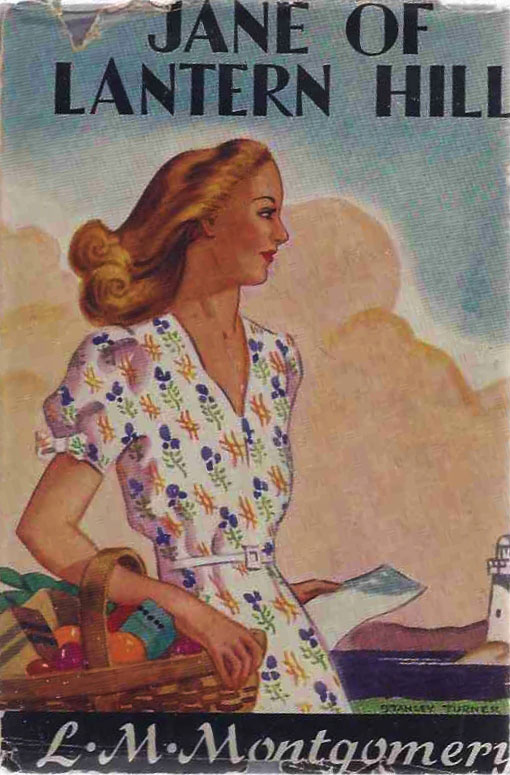
Jane of Lantern Hill by L.M. Montgomery ~ 1937. This edition: Bantam Books (Seal), 1989. Paperback. ISBN: 0-7704-2314-0. 217 pages.

My rating: 8/10. Jane Victoria Stuart is one of the more likeable young heroines in Lucy Maud Montgomery’s repertoire. Great gaps in believability here and there, but overall an engaging tale for romantic souls from youth (say 12-ish) to adult.

*****

Jane Victoria Stuart is eleven years old, and for eight of those years, the years she can remember, she has lived in a huge mansion in Toronto with her extremely wealthy, emotionally frigid grandmother and her delicately beautiful, weak-willed mother. As far as she knows her father is dead. He is never mentioned, except in snidely allusive references by her grandmother to “Victoria’s” tainted ancestry as demonstrated by her “low” tastes – a desire to cook and fraternize with the housekeeper in the warmly cozy kitchen, and a friendship with the young maid-of-all-work in the boarding house next door.

Grandmother makes no secret of her distaste for Jane Victoria – every creature comfort is provided but emotional needs go unfulfilled. Jane, as she secretly calls herself in defiance of her grandmother’s preferred Victoria, shares a deep love with her mother, but open demonstrativeness is impossible – even a glance or a motherly caress is deeply resented by bitter and jealous grandmother, who clings to her own daughter with fierce possessiveness.

The days go by uneventfully, and the future stretches forth relentlessly, until a chance taunt by a schoolmate reveals a secret which has been hidden from Jane by her grandmother and mother. Her father is not dead, but very much alive, and her mother is neither widowed or divorced but rather in a limbo of estrangement, unable to move either forward or back in the restricted social life engineered by the household matriarch.

Jane confronts her mother with the news and asks if it is true, and in one of her rare human moments Grandmother apologizes to Jane for keeping the secret for so long. But now that you know, consider him as dead, she orders Jane, and Jane solemnly and willingly agrees – this man who has abandoned her and made her mother so miserable is best forgotten.

Imagine Jane’s dismay when a letter comes soon after from Prince Edward Island, requesting Jane’s presence at her father’s summer residence over the summer holidays. With great trepidation Jane sets off into the unknown and greatly dreaded wider world.

Needless to say, everything works out, and happy endings abound. But before we get to them there are a number of little dramas which must be worked through, some more unbelievably than others.

A really nice heroine, practical and earnest and well-deserving of the good things which eventually come her way. Give this one to your pre-teen daughters, but don’t forget to read it yourself; mildly melodramatic and ultimately very satisfying.

Might make a good read-aloud, for ages maybe 8 and up. Marital troubles and divorce are central plot themes, as is emotional abuse by Jane’s grandmother, but these are necessary to the building of tension in the storyline. Rather reminiscent of Frances Hodgson Burnett’s A Little Princess in mood, I thought, including the improbable (but most satisfactory) way everything clicks into place in the end. No loose threads – all neat and tidy! Jane would approve.

Disney made a movie of this one a few years back, which I’ve not seen, but apparently it departs wildly from the original story and is not recommended by aficionados of the book.

Read Full Post »

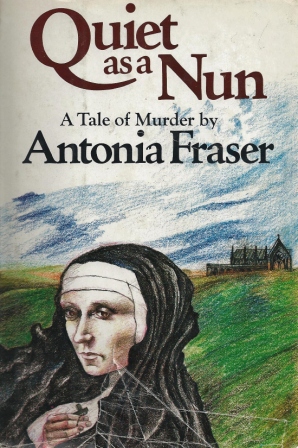
Quiet as a Nun: A Tale of Murder by Antonia Fraser ~ 1977. This edition: Viking Press, 1977. Hardcover. 177 pages.

My rating: 7/10. Not bad at all. I’d definitely read the other mystery novels by this author, and look forward to accumulating the rest of them in my travels, now that I’m on to her, as it were.

*****

Is 1977 “vintage”? Just barely, I suspect, but it was thirty-five years ago – and golly, I remember 1977 clear as a bell – where do the years go? – so I will go ahead and classify it with the oldies.

Antonia Fraser is a well-respected author of scholarly biographies, who branched out into fictional stories with this very novel. From the author’s website:

Since 1969 Antonia Fraser has  written nine acclaimed historical works which have been international  best-sellers.  She began with MARY QUEEN  OF SCOTS (1969) and followed it with CROMWELL: OUR CHIEF OF MEN (1973) and  CHARLES II (1979).  Three books featuring  women’s history came next: THE WEAKER VESSEL: WOMAN’S LOT IN THE SEVENTEENTH  CENTURY (1984); THE WARRIOR QUEENS (1988) and  THE SIX WIVES OF HENRY VIII (1992).  A  study in religious extremism, THE GUNPOWDER PLOT: TERROR AND FAITH IN 1605  (1996) was followed by two books set at the court of Versailles: MARIE  ANTOINETTE: THE JOURNEY (2001) and LOVE AND LOUIS XIV: THE WOMEN IN THE LIFE OF  THE SUN KING (2006).

Antonia  Fraser has also written eight crime novels and two books of short stories  featuring Jemima Shore Investigator.  She  edits the Kings and Queens of England series for Weidenfeld & Nicolson  including her own short illustrated book KING JAMES VI AND I (1974) and the  composite volume KINGS AND QUEENS OF ENGLAND (1975).  She has also edited the following  anthologies: SCOTTISH LOVE POEMS (1974), LOVE LETTERS (1976), HEROES AND  HEROINES (1980) and THE PLEASURE OF READING (1992).

Among  the many awards she has received are the Wolfson Award for History; the James  Tait Black Prize for Biography; the Crimewriters’ Non-Fiction Gold Dagger; the  Franco-British Society Literary Award, and the Norton Medlicott Medallion of  the Historical Association.  She was made  a CBE in 1999.

Antonia Fraser is the eldest child of the Labour politician and prison reformer Lord Longford and the historical biographer Elizabeth Longford. She has six children by her first marriage to Sir Hugh Fraser MP and eighteen grandchildren. She was married to Harold Pinter who died on Christmas Eve 2008.

So that’s the author’s background – rather impressive, so I was expecting great things from this mystery novel. By and large it did not disappoint, though “great” would be an overstatement in reference to this slender diversionary read.

I had hoped for a fairly fast-paced, readable and engaging story, and I had no trouble polishing this one off during the course of one session of lunch break/bedtime/early morning tea break reading. Easy to pick up, easy to put down; the characters stayed fresh and clear in my mind, which is not always the case even during such a short reading span, so that was a point in favour.

From the author’s website:

A nun is dead – her emaciated corpse has been discovered  locked in the tower   of Blessed Eleanor’s  Convent. The tragic consequence of a neurotic young woman committing to a life  of isolation and piety, the inquest concludes. But this young woman held  unusual power over the convent … power she was planning to use.

Jemima Shore tries to keep  her distance from the case, but when her lover cancels their holiday she finds  herself reluctantly getting involved. A violent attack in the dead of night and  another death convinces her that the convent is not the haven of peace it  appears to be. Suspicion and fear hang heavy in the air but how do you solve a  murder no-one will admit happened?

The main character is thirty-something Jemimah Shore, a television investigative reporter who hosts a popular program which touches on various social and cultural topics, and “digs deeper”, hence the tag “Investigator” which has become attached to Jemimah’s name. Widely known through Britain because of her T.V. presence, Jemimah is used to many people from her past reappearing and claiming acquaintance, so she is not terribly surprised when the Mother Superior of her childhood convent school sends her a letter referring in complimentary terms to her present occupation. What does surprise Jemimah is Mother Ancilla’s urgent request that Jemimah visit Blessed Eleanour’s Convent to discuss the recent death of one of Jemimah’s former school companions, who found her vocation and became a nun at the convent after she and Jemimah had parted ways.

Sister Miriam, once the wealthy Rosabelle Powerstock, had apparently died of natural causes, but there is a mystery about her death. Why did she lock herself in the ancient tower attached to the nunnery, and why had she been so insistent that Jemimah be called, before her (Sister Miriam’s) unfortunate demise?

Jemimah is an interesting character, and I thought her a rather admirable private investigator. Cool, calm and collected, thoughtful Jemimah views the world with an eye just the warm side of cynical. No fool, she is well-used to analyzing motivations and actions, and she turns her eye upon herself on occasion with surprising firmness and self-critisism. A non-strident but rock solid feminist, Jemimah gets on with things and has little time or patience for drama in her life, which makes it a bit eye-opening that her romantic involvement is with a firmly married liberal M.P. The relationship is long-lasting and seems stable enough, though we get the strong sense that Jemimah wishes it could be regularized and much more open; it seems well-known among her circle of acquaintances, though the wife of her lover is definitely unenlightened.

The plot itself is a contrived little thing – a missing will, a threat to the convent, and a melodramtically inclined social crusader are all key elements. I figured out the “mystery” almost immediately, though there was a tiny twist at the end which I did not see coming; Jemimah’s reaction was unexpected and made me curious to see what her next mystery will have her doing. (There were eventually ten books in the Jemimah Shore series, written between 1977 and 1995, though and I wonder if that writerly interest is wrapped up; the author’s most recent work is a memoir about her life with the late Harold Pinter, Must You Go?, 2010.)

Thoughtful musings on religion, and the author’s undoubted talent for words raise this novel higher than the plot deserves, to put this first mystery novel nicely into the realm of Patricia Wentworth, and a reasonable compatriot of the slighter works of Margery Allingham, Agatha Christie and Ngaio Marsh. I’ve read much worse.

Read Full Post »

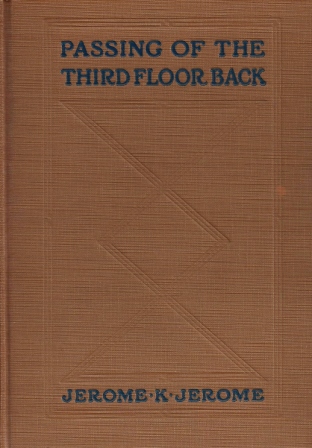
Passing of the Third Floor Back by Jerome K. Jerome ~ 1904. This edition: Dodd, Mead & Co., 1928. Hardcover. 186 pages.

My rating: This is one of those complicated-to-rate books. In context with other short story collections of its time, I thought it fairly typical. Not perhaps outstanding, but a solid little group of era-correct (love that term – it comes from the vintage car world, in which I have a tiny involvement) pieces. Did I enjoy them, though, on a purely reading-for-pleasure level? Some yes, others not so much. I thought the short stories herein were reasonably well written – if a bit wordy – and quite moralistic. No doubt as to what we’re supposed to be thinking at the end of each!

So, taking everything into consideration, how about  7/10. I don’t know if I would recommend this small collection as purely pleasure reading suitable for modern tastes, but the stories do possess a certain curiousity value, and several are quite humorous, in an “era-correct” (there, I got to use that again!) sort of way.

*****

Jerome K. Jerome, 1859-1927, is, as you’ll know unless you’ve been residing under a literary rock all your adult days, best-known for his 1889 comic novel, Three Men in a Boat (To Say Nothing of the Dog), still very much in print 123 years after its first publication. This was my own first introduction to this author some years ago, and I found the story mildly diverting. A pleasant memory persisted, so when I chanced upon this book of short stories in a pile of vintage hardcovers on the deliciously over-crowded shelves of At Second Glance in Kamloops, I eagerly added it to my pile of acquisitions.

Apparently the title story, Passing of the Third Floor Back, was made into a quite successful movie in 1935, starring Conrad Veidt. I must admit I’d never heard of it until I did a bit of background research on this book for reasons of this review, but from the Wikipedia article it looks as though Jerome’s story was very much a starting point – the movie plot as described seems nothing like the story I’ve just read, but for the boarding house setting and the idea of the mysterious stranger changing the lives of those about him.

Six stories make up this collection.

Passing of the Third Floor Back ~  A mysterious stranger moves into a squalid boarding house and changes the lives of everyone who comes into contact with him.

The Philosopher’s Joke ~ What if you could go back to your younger days, but still remember everything you’d learned through your maturity? I liked the premise, but found the handling rather awkward. An intriguing idea – very thought-provoking.

The Soul of Nicolas Snyders, or The Miser of Zandam ~ An exchange of souls has predictable results, and a few surprises. Moralistic but smile-provoking.

Mrs. Korner Sins Her Mercies ~ The most purely humorous story of the collection. A clever friend puts an interesting spin on a marital crisis.

The Cost of Kindness ~ A good deed sets off a chain reaction, with very different results than first anticipated. Another humorous piece.

The Love of Ulrich Nebendahl ~ Self-sacrifice taken to the extreme. This was the most serious story of the lot; a rather shocking conclusion, which the author attempts to soften with a Biblical tag.

*****

I am going to leave my review right there – a simple report – so sorry, but I can’t quite bring off a deeper analysis. Limited computer time this week, and so much going on in my real life that my thinking capacity is all used up by the time I sit down to type!

Read Full Post »

I would like to share this post with everyone. From Georgi in Australia, writing on her blog 1001 Children’s Books.

I am so much in agreement with her closing paragraph:

Books are survivors. How many things can you buy from 1905, that is in practically the same condition as when it was printed (bar a tiny tear or a splodge on the title page)? How many things from 1910 have survived? Things fall apart, get thrown away, are destroyed, are dismantled to make something new – they lose their original purpose. Not books. They will sit patiently on a shelf, waiting until someone finds them again, be it in 10 years time or 100 years time. They may be fragile – they are made of paper, after all, but they are  resilient as well. Maybe it’s because they are full of ideas. Ideas can be pretty resilient too.

Well said!

On resilience in the face of fading and splodges.

Read Full Post »

« Newer Posts - Older Posts »