Posts Tagged ‘Vintage Fiction’

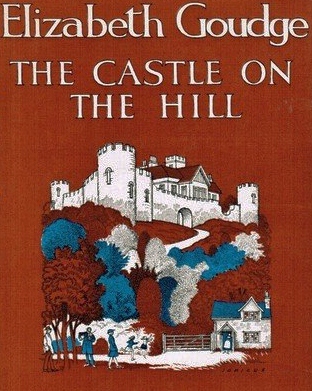
The Castle on the Hill by Elizabeth Goudge ~ 1941. This edition: Coronet, 1975. Paperback. ISBN: 0-340-00396-0. 256 pages.

My rating: 8/10. Rating based on the author’s body of work; I’ve read most of her books, and thought this one was one of the “upper end” in accessibility and lack of long, rambling, philosophical-religious side paths. I enjoyed it.

This is a deeply poignant story, written in the early years of World War II when the outcome was still very much in question, and the author and her fellow countrymen, along with her characters in the novel, were steeling themselves to bravely face their possibly horrific fates under a sea invasion of England. As she penned this novel, Elizabeth Goudge was living in a small country cottage near the village of Marldon, Devonshire with her frail, elderly mother; their days and nights were punctuated by the droning of fighter planes and bombers passing overhead, and the sound of explosions as German bombs exploded in the nearby coastal cities of Torquay and Paignton. Though Marldon itself escaped direct bombing, the inhabitants were extremely aware of their very real danger, and the stresses of living in wartime are very evident in this novel.

*****

Miss Dolores Brown is in a bad place, both literally and figuratively. Her home and source of income, the boarding house she has established in the family home she inherited upon the death of her parents, has been requisitioned by the government for wartime use. A relocation to London and attempts to find a job have proven fruitless; no one much needs or wants a quiet, unassertive forty-year-old woman with only her domestic skills to recommend her. Her friends and relatives are tired of hosting her; she needs to move on. Now news has come that her house and all of her stored possessions have been destroyed in a bombing raid. A train ticket to travel to stay with a relation for a day and a few coins remain between Miss Brown and utter destitution; her predominant emotion is an overwhelming fear of what will happen to her now.

As she sits outwardly proper but inwardly forlorn on a bench in front of the London Free Library, a strain of music catches her ear. Somewhere nearby someone is playing the violin, and Miss Brown rises to find the source of the music, and comes upon Jo Isaacson playing for coins in the street. Miss Brown impulsively puts one of her last shillings in the fiddler’s hat; they have a short exchange, and she goes on her way cheered and encouraged by the brief encounter.

Mr. Isaacson, born in England but musically trained in Leipzig and then settled on the Continent, was once a celebrated musician.  Now fallen on hard times both through his predilection for drinking and the growing persecution of the Jews which forced his flight from Germany, Austria and then Italy, Mr. Isaacson fears that even his old homeland England will reject him next. He has determined to earn a shilling to use in the gas fire in his room to commit suicide; due to Miss Brown’s impetuous generosity, the means to his end is now at hand.

Through a series of coincidences and under the sheltering hand of fate, Jo Isaacson does not use the shilling for his fatal final intention. He ends spending some of it for taking his landlady’s two small children to the train; they are being evacuated to the relative safety of the country. Ending up on the train himself, Mr. Isaacson has set in motion a series of events which will lead to his ultimate attainment of his longed-for place of peace.

In another part of the train, Miss Brown has just met and been taken under the wing of a prosperous historian, Mr. Birley. Mr. Birley has been to London to try to engage a housekeeper for his stately home, Birley Castle, and its household of men: himself, nephews Richard and Stephen, respectively a dashing fighter pilot and an emotionally tormented pacifist conscientious objector, and butler Boulder and gardener Pratt. Not to mention the elderly Alsatian dog Argos, and Steven’s fiery horse, Golden Eagle. But once Miss Brown has unburdened herself of her tale of woe to sympathetic Mr. Birley, he looks at her with calculating surmise. Could she, would she… ?

She certainly could and would. Bucked up by sympathy, a substantial dinner and the prospects of a job, Miss Brown brightens up considerably, and optimistically tackles the daunting task of bringing order to a heedless masculine world.

Meanwhile the two daughters of Mr. Isaacson’s landlady are also on their way to Torhaven, location of Birley Castle, to be billeted with a foster family there, as is Mr. Isaacson himself, who has been taken under the wing of Mr. Holly, the railway guard who discovered him collapsed in the baggage car after the express train left London. Mr. Holly offers him a chance to get settled and find a job “somewhere near the kiddies” – he has mistakenly thought that the children Mr. Isaacson was escorting are his own.

Add in Prunella, the lovely doctor’s daughter who has been the romantic interest of first peaceful Stephen and now exciting Richard, and elderly Mrs. Heather, endlessly smiling inhabitant of the cottage at the Castle gates, and you have all the players assembled on the stage.

Elizabeth Goudge loves to bring her characters together by impossibly convenient coincidence, and this novel is a prime example. The two little girls are billeted at the Castle, and Miss Brown eventually meets Mr. Isaacson; they are united in common memory and relief at each finding at least a temporary haven. Mr. Isaacson is modestly successful as a street musician and music teacher, and Miss Brown has settled nicely into her niche as the housekeeper of the Castle.

Mr. Birley returns to his creative solitude untroubled by household concerns; Stephen prepares for his upcoming hearing to allow him to avoid military service by working at rescue and recovery in the bombed sections of London; Richard comes and goes between missions, dallying with the passionate Prue whenever chance allows; Miss Brown wins over the initially hostile Boulder by her gentle good nature and hard work; Pratt gets on with things much as usual; Mrs. Heather keeps smiling.

Tragedy and turmoil turn this newly peaceful world upside down, and the responses of all concerned show the best qualities that lie buried in everyone to be brought forth under adversity, another favourite Elizabeth Goudge theme.

This condensation leaves out everything that makes this book so appealing: the glimpses into the inner thoughts and deeper motivations of every character involved. Stephen is handled particularly well as he wrestles with his decision to be a non-combatant; his brother and uncle are fiercely and actively patriotic, and though they treat him with respect and affection it is clear that they are impatient rather than understanding of his dilemma.

The character of the quiet and dedicated Miss Brown serves to highlight the divisions and expectations of the class system, soon to be changed forever by the new equality of the war and post-war years. She feels something more than subservient and feudal affection for the Birley family; they however regard her as an appreciated and respected but somehow not-quite-equal being. Miss Brown hides her feelings well; her pride lets her go forward with head held high even when the oblivious Birleys unintentionally disregard her occasional attempts at a deeper friendship.

Mr. Isaacson resolves his feelings of anger towards the world and its unfairness and is able to move onward in his life. (And I would like to mention that I thought he was one of the most awkward characters, as his creator did not seem sure of how she should portray him – he is inconsistent throughout, one moment gruff and earthy, and the next full of academically poetic musings.)

Elizabeth Goudge likes to sort out her couples and pair them off in their proper order. Children are inevitably provided with the best possible homes; damaged marriages are salvaged; family rifts are healed; happy spinsters and bachelors regain their peaceful solitude and worthwhile occupations. The Castle on the Hill runs true to form, but it has much to recommend it in its thoughtful passages and articulate characters. The setting is lovingly described, and most of the characters are fully realized and allowed their chance to show their full and complex humanity.

Given that the book was written in wartime, in the very time that it portrays, it acts as an interesting and quite readable realistic-idealistic period piece. The horrors and tragedies of the war are true to life; the human response of the heroes and heroines is certainly the ideal.

The last few pages have numerous references to the comforts of religion and the role of God in human lives, but this is not at all a “preachy” book.  I thought it was one of the less rambling and more focussed adult novels by this often-underrated writer. I could definitely see shades of some of the characters of Goudge’s most well-known and beloved books, the Damerosehay novels (The Bird in the Tree – 1940, The Herb of Grace – 1948, and The Heart of the Family – 1953) which were written during and after the war years; The Castle on the Hill is something of a dress rehearsal, though it stands alone as a story complete unto itself, with characters whom we never again meet, though their soul sisters and brothers reappear in different guise in her many other books.

Note: I am here including, with some reluctance, the cover shot from the 1975 paperback re-release. The cover at the beginning is from an earlier edition. I am not sure who these illustrated people are supposed to portray; in my opinion they do not represent actual characters of the story, but instead have strayed onto the cover from an Eaton’s mail-order catalogue, Misses and Gents section, circa the polyester era! Quite one of the ugliest covers possible for this book, and not at all indicative of the content. A dire reminder not to judge a book by its outward appearance!

Read Full Post »

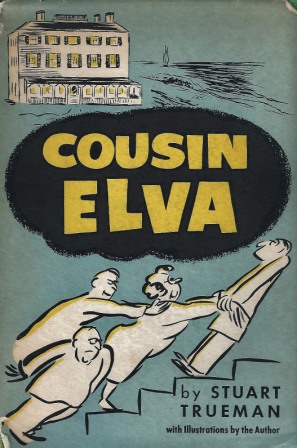
Cousin Elva by Stuart Trueman ~ 1955. This edition: McClelland and Stewart, 1955. First edition. Hardcover. 224 pages.

My rating: This is tough. I almost was going to say un-rateable, but on second thoughts I will give it maybe a 5.5/10. It’s a first book, and the author went on to write many more. There’s nothing really wrong with it, and I did read it with mild enjoyment, but I found it very easy to put down and I had to consciously pick it up and finish it. Probably a keeper, but on the bottom shelf or exiled to the “B”-reads boxes, I’m thinking.

*****

Cousin Elva is a humourous, satirical light novel about a fictional couple, Penelope and Frank Trimble, who purchase a large house in the (also fictional?) community of Quisbis on the Bay of Fundy, and proceed to open a boarding house – “Mr. and Mrs. Trimble’s Tourist Rest Haven”. The only catch is that the house comes with a pre-existing resident, Miss Elva Thwaite, granddaughter of the original owner.

Miss Thwaite, or “Cousin” Elva as she insists on being called, is a blatantly eccentric, sixty-ish,”old maid” who refuses to be put on the shelf, taking an active interest in everyone and everything that crosses her path. She’s also keen to catch herself a man. Hi-jinks ensue as a motley assortment of visitors to Trimble’s Rest Haven fall into Cousin Elva’s clutches.

The humour is, at its best, rather understated and wry, but too often over-the-top farcical. I did enjoy the many regional and Canadian references; those did much to keep me reading when I occasionally got overloaded with the slapstick action.

A well-meaning attempt by an author new to me. The kind of book you perhaps enjoy best when scanning the meagerly stocked shelves at an isolated lakeside cabin in summer. In other words, welcome if you’re fairly desperate for amusement and it’s too far to go to town…

Stuart Trueman (1911-1995) was a Canadian writer from New Brunswick. He won the Steven Leacock Memorial Medal for Humour in 1969. I had never heard of him before picking up this book, but as you can see from his biography he had a long and prolific writing career. I would definitely be interested in reading some of his other work, but only if it was easily obtainable; I don’t think I’d go to a lot of effort to seek it out.

From the New Brunswick Literary Encyclopedia:

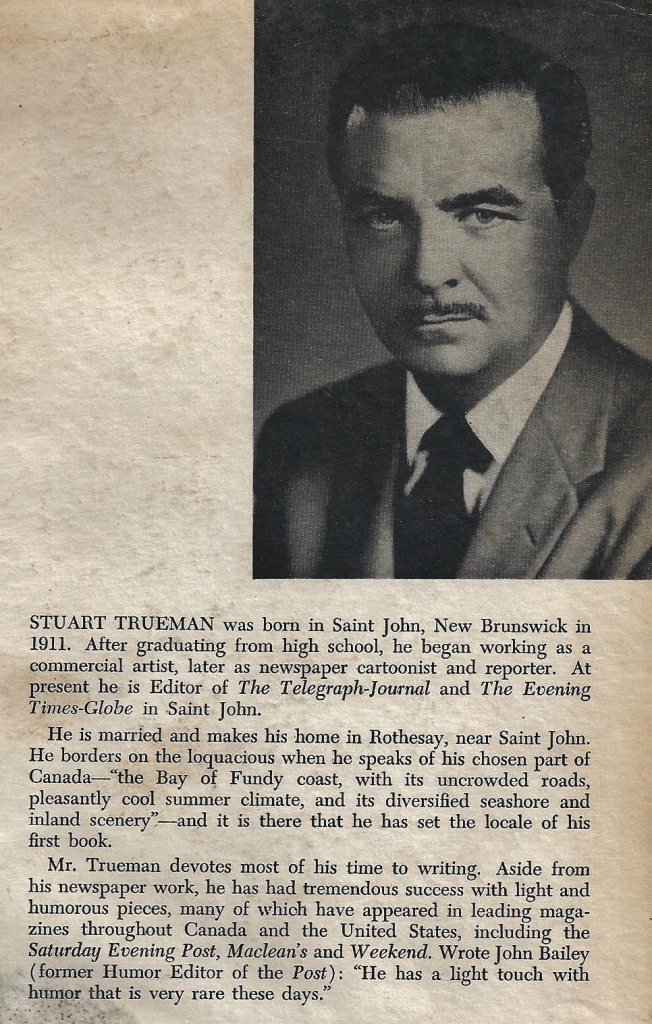
Stuart Trueman (writer, editor, historian,  reporter, cartoonist, and humorist) was born in 1911 in Saint John, New Brunswick,  the son of the late John MacMillan and Annie Mae (Roden) Trueman. He was  the husband of Mildred Kate (Stiles) and a father to Mac and Douglas, his two  sons; he was also a grandfather of four, and a great-grandfather to one.  Growing up, he had two sisters and three brothers, along with a countless  number of friends whom he believed shaped him into the man that he was. He  passed away in his home in Saint John,   New Brunswick, on 25 April 1995  after a period of failing health.

Trueman was known  for being a great representative of journalism, and he garnered a lot of  respect and credibility in all that he accomplished. Straight out of high  school, he started out as a cartoonist and reporter at the Telegraph Journal in Saint    John, where he stayed for forty-two years, later  becoming a sports writer. In 1951, Trueman became the editor-in-chief at the Telegraph Journal and Evening Times Globe, a position that he  would hold for the last twenty years of his working career. Upon retirement in  1971, he remained faithful to the newspapers that he had been involved with and  continued to contribute to weekly columns until 1993. He took writing, journalism,  and public speaking seriously, and had a keen insight into human character. He  was also known for being a stickler for details, always following the journalist’s  obsession with the “who,” “what,” “where,” and “how.”

Trueman was often  referred to as “Mr. New Brunswick”  because of his broad knowledge of the history of this province and of its  scenic and cultural attractions. He wrote many books about New Brunswick, its people, and its unique  history. Along with being a well-known author, Trueman was a part of New Brunswick history.  On 19 May 1932, he and co-worker Jack Brayley interviewed Amelia Earhart at the  Saint John Airport  as she was preparing for her historic flight across the Atlantic.  Another accomplishment for Trueman was when he and Brayley took a trip to Moncton, New    Brunswick, where they discovered an attraction that  many are familiar with today: Magnetic Hill. Trueman’s son Mac said that  despite the fame and development that has built up around Magnetic Hill, it was  always his father’s favourite natural phenomenon. The discovery of Magnetic  Hill gave way to the tourism industry within New Brunswick,  and it continues to be one of New    Brunswick’s most popular attractions.

Trueman published  fourteen books and wrote more than three hundred humorous articles for both  Canadian and American magazines. He thought of these articles as “light pieces,”  and although he never claimed they were funny, he was commonly referred to as a  funny man. One of his greatest accomplishments was winning the Stephen Leacock  Memorial Award for humour in 1969 for his book You’re Only as Old as You Act (1968). Other books Trueman produced  include: Cousin Elva (1955); The Ordeal of John Giles: Being an Account  of his Odd Adventures; Strange Deliverances, etc. as a Slave of the Maliseets (1966); An Intimate History of New  Brunswick (1970); My Life as a  Rose-Breasted Grosbeak (1972); The  Fascinating World of New Brunswick (1973); Ghosts, Pirates and Treasure Trove: The Phantoms that Haunt New  Brunswick (1975); The Wild Life I’ve Led (1976); Tall Tales and True Tales from  Down East: Eerie Experiences, Heroic Exploits, Extraordinary Personalities,  Ancient Legends and Folklore from New Brunswick and Elsewhere in the Maritimes (1979); The Colour of New Brunswick (1981); Don’t Let Them Smell the Lobsters Cooking:  The Lighter Side of Growing Up in the Maritimes Long Ago (1982); Life’s Odd Moments (1984); and Add Ten Years to Your Life: A Canadian  Humorist Looks at Florida (1989). Many of his books include light-hearted  stories that have been adapted from Trueman’s popular columns in the Telegraph Journal, Weekend, and the Saturday Evening Post.

Trueman’s wife,  Mildred, played an important role in his overall success as an author in New Brunswick. She  supported him throughout his career, and the couple collaborated on two  cookbooks: Favourite Recipes from Old New Brunswick Kitchens (1983) and Mildred Trueman’s New Brunswick Heritage Cookbook: With  Age-Old Cures and Medications, Atlantic Fishermen’s Weather Portents and  Superstitions (1986).

Amanda Palmer     St. Thomas University

And here is the author photo and biography from the back cover of Cousin Elva:

Read Full Post »

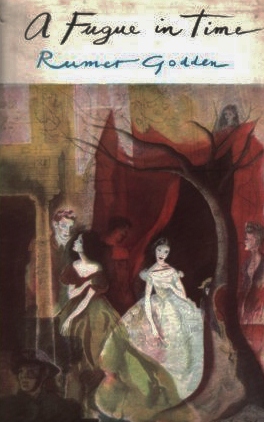
Take Three Tenses: A Fugue in Time by Rumer Godden ~ 1945. This edition: Macmillan, 1976. Hardcover. ISBN: 333-19366-0. 176 pages.

My rating: 6.5/10 for the overall story, 10/10 for the writing. The first rating really should be higher but I am comparing it to its successor, China Court (1958), which used the same idea expanded to five generations, with a much stronger story thread. This one felt a bit experimental, which the author herself notes. It took a few pages to get into the rhythm and figure out all the characters, but after that it was easy to follow, perhaps because I am already very familiar with this author’s use of concurrent and intertwining times in many of her novels. An unusual and ambitious book. Beautifully written.

*****

This book is prime Rumer Godden; an example of why I keep returning to her works time after time; as I’ve mentioned before, even a “poor” Godden is worth the time it takes to read it; her “top end” books are little masterpieces.

Take Three Tenses: A Fugue in Time is, in my opinion, almost a little masterpiece, or perhaps more aptly, the not-quite-finished work of a master artist, still needing a few final touches, but interesting to examine in the context of the artist’s body of work, to get a glimpse into how their mind works. A very experimental piece of work, and decidedly the precursor of the much longer and stronger China Court, which isprobably my favourite Rumer Godden book to date, though I still need to search down a few of her more obscure titles. Though China Court uses the same technique and many similar characters, Take Three Tenses is an entirely different story, except possibly for the theme of the importance of the house itself as a character with a life of its own.

Originally published in 1945, and with the War itself driving much of the story, this novel was reissued in 1975 with this note by the author:

This novel was the first in which I used a theme that has always intrigued me, Dunne’s Experiment With Time, i.e., that time is not consecutive, divided into past, present and future, but that these are all co-existent if only we could see it: if you are in a boat on a river you can only see the stretch on which your boat is travelling – a picnic party on the bank perhaps: a kingfisher diving. What you traversed before, passing willows, a barge tied up, cows in a field, as far as you are concerned, is gone; what lies around the next corner – a lock working, a man fishing – is hidden but, were you up in an aeroplane, you could see all these at once – the willows, the barge, the cows, the picnic party, the diving kingfisher, the lock, the man fishing.

In a Fugue in Time I have taken the part of being up in the aeroplane, seeing three generations of a family at once, all living in a house in London, their stories interweaving, as do themes in a fugue. The difficulty was, of course, not to confuse the reader and it was not until the eighth or ninth try that I found the right way; that it was right seems shown by the fact that, with few exceptions, neither critics nor readers have noticed it, only what Chaucer calls “the thinne subtil kinittinges of thinges”. Some years later I used the same technique with five generations, not three, living in a country house, China Court.

September 1975 R.G.

And from the frontispiece:

…two, three or four simultaneous melodies which are constantly on the move, each going its own independent way. For this reason the underlying harmony is often hard to decipher, being veiled in a maze of passing notes and suspensions…. Often chords are incomplete: only two tones are sounded so that one’s imagination has to fill in the missing third tone.

A SENTENCE DESCRIBING BACH’S FUGUES WRITTEN BY LAWRENCE ABBOT

*****

And for Rolls personally the poem he found:

Home is where one starts from. As we grow older
The world becomes stranger, the pattern more complicated
Of dead and living. Not the intense moment
Isolated, with no before and after,
But a lifetime burning in every moment
And not the lifetime of one man only
But of old stones that cannot be deciphered.
There is a time for the evening under starlight,
A time for the evening under lamplight
(The evening with the photograph album).
Love is most nearly itself
When here and now cease to matter.
Old men ought to be explorers
Here or there does not matter
We must be still and still moving
Into another intensity
For a further union, a deeper communion…
…In my end is my beginning.

T.S. Eliot (East Coker)

*****

Man that is born of a woman has but a short time to live…He cometh up, and is cut down like a flower; he fleeth as it were a shadow, and never continueth in one stay.

Children and the fruit of the womb are a heritage and a gift …. Like as arrows in the hand of a giant even so are the young young children.

THE BOOK OF COMMON PRAYER

*****

The story starts with the disclosure that a house that has been home to a family for almost a century is about to be pulled down as soon as the ninety-nine-year lease is up. The elderly lone occupant, apparently the last survivor of a once flourishing family, Sir Roland (Rolls) Dane, is shocked and appalled at the thought of having to give up his  home.

The house, it seems, is more important than the characters. ‘In me you exist’,’ says the house.

For almost a hundred years, for ninety-nine years, it has enhanced, embraced and sheltered the family, but there is no doubt it can go on without them. “Well” the family might have retorted, “We can go on without you.” There should be no question of retorts nor of acrimony. The house and family are at their best and most gracious together.

The question of their parting had arisen. The lease was up. “And the owners are not prepared to renew,” said Mr. Willoughby, putting his despatch case on the table.

“But they can’t pull down my house!” cried Rolls; but he cried it silently because he was perfectly sensible of the fact that they could and that it was not his house. He was sensible, and at the same time he was outraged. Outraged he said in a voice that was muffled for all its calm, “I don’t want the family to go out of the house.”

The only remaining family was Rolls himself, but Mr. Willoughby could hardly point that out. He wondered what there was slightly unusual about the sentence Rolls had just said, and presently, pondering, h thought it would have been more usual if Rolls had said, “I don’t want the house to go out of the family.” Families possessed houses: not houses the family…

So Rolls reluctantly accepts his fate, and, with his manservant Proutie (himself a life-long devotee of No. 99 Wiltshire Place), slowly starts to prepare for the unthinkable change.

And here the author sets the stage and starts to introduce the many characters whose lives and times make up the story’s “fugue”. We don’t yet know who they are or how they fit in, but their names are teasingly mentioned: Selina, Lark, Verity, Griselda…

In the house the past is present.

It is the only house in the Place that has a plane tree in the garden; for many years a Jewish family lives next door, and every year on the Feast of Tabernacles they would ask for the branches of the tree and built a little Succah on their balcony. All the houses have balconies, long ones across the French doors of the drawing-rooms at the back, and all the balconies have scrolled iron steps that lead down into the garden. The gardens are narrow and long, various in their stages of cultivation and neglect, heavily sooted as well. The gardens have an unmistakable London smell from the closed-in walls, and the earth that is heavy and old, long undisturbed; the smell has soot in it too, and buried leaves, and the ashes of bonfires, and the smell of cat; any child, sent out to play, comes in with the smell; it is part of the memory of Selina and Rolls and the other children and Lark…

The roots of the plane tree are under the house. Rolls likes to fancy sometimes, lately, that the plane tree is himself. ‘Its roots are in the house and so are mine,’ he said. …He flattered himself. The plane tree is more than Rolls, as is another tree of which Rolls is truly a part: it is a tree drawn on parchment, framed and hung over the chest in the hall by the grandfather clock. Selina draws it, marking the Danes in their places as they are born and die, making a demarcation line in red ink for the time they come to live in the house in the autumn of eighteen forty-one.

“We existed before you, you see,” the family might have said to the house; and the house, in its tickings, its rustlings, its creaking as its beams grow hot, grow cold: as its ashes fall in its grates, as its doorbells ring, as the trains in passing underneath it vibrate in its walls, as footsteps run up and down the stairs; as dusters are shaken, carpets beaten, beds turned down and dishes washed; as windows are opened or shut, blinds drawn up, pulled down; as the tap runs and is silent; as the lavatory is flushed; as the piano is played and books are taken down from the shelf, and brushed picked up and then laid down again on the dressing-table, and flowers are arranged in a vase; as the medicine bottle is shaken; as, with infinite delicate care, the spillikins are lifted in the children’s game; as the mice run under the wainscot the house might steadfastly reply, “I know! I know! All the same, in me you exist.”

And against the melodious pattern of the house and its many inhabitants there comes a stronger strain, as the story of the current time appears and plays itself out, with continual references to what lies before and behind. The doorbell rings, and Proutie announces the appearance of an unsuspected great-niece, Grisel Dane, come to England in this early year of the war as a member of a volunteer corps of woman ambulance drivers. Grisel is unhappy in her billet, and has remembered that she has a London relative. Savagely resentful of this disturbance, Rolls refuses to see her, but Grisel is fully as determined a person as her great-uncle, and she moves in to one of the empty bedrooms, determined at first merely to gain some physical comfort in, but soon becoming immersed in her ancestral family’s history for the few months remaining before the move.

Another important family connection also appears, and the inevitable love story plays itself out to the backdrop of the increasing violence of the war. We sense that an inevitable doom of some sort is coming, but we are not sure quite who or what will be lost.

Rumer Godden creates some well-drawn characters among the Danes and their associates. I found Griselda, mother of Rolls and his eight siblings, the most appealing of them all, with her yearnings for a larger world than that which she is trapped in, and her eventual attainment of a rich inner life which compensates in a small way for her over-possessive husband, her long succession of loved and cared-for yet not particularily welcome children, and the continual frustrations of her life as a Victorian upper class woman with strong societal strictures of behaviour to follow.

The strength of this book is in its style rather than its plot or characters; while they are well enough handled, they are secondary to the overall pattern. I almost think that this is intentional on the author’s part, but I was disappointed in her handling of the conclusion; it felt a little too pat; everything came predictably full circle. I fully understand the satisfaction that the author might feel in neatly winding things up, but sometimes a strong, even discordant climax is more memorable to even the most melodious composition than an easily anticipated, repetitive ending phrase.

Highly recommended for Rumer Godden fans, especially if you liked China Court. One of the lesser-known works of this author; I had something of a challenge finding a reasonably priced copy; they’re out there but in nothing like the abundance of many of her other titles.

Read Full Post »

The Benefactress by Elizabeth von Arnim ~ 1901. This edition: Dodo Press, 2012. Softcover. ISBN: 978-1-4099-8059-9. 338 pages.

My rating: 9/10. Or maybe even 9.5? Very good stuff.

I searched out this book on the recommendation of Claire at The Captive Reader, and I am ever so pleased that I did. It was a most delightful read during my recent trip to “The Coast” – Interior British Columbia code for “The Lower Mainland” or “Vancouver”, for you non-Canadians and Easterners. (For of course most of Canada is East of B.C., something we like to smugly tease our friends from Alberta about as they go on about “The West thinks…” this and that, though they rather rudely reply with comments to the effect that the Rocky Mountains were put there for a reason, to keep the eccentric inhabitants of B.C. safely segregated from the rest of Canada!)

My daughter was attending a dance intensive and working with a choreographer; I spent a fair bit of time parked outside her venue waiting for the brief breaks which required sporadic maternal nurturing in the area of rides back to the hotel for showers, food, band aids and sympathy. She was, as happens every summer, feeling the pain of strenuous dancing after relaxing a bit too much over the previous month of home-studio summer break, and, yes, the maternal words “I told you so!” did leave my lips occasionally, but she easily ducked under them – water off a duck’s sweaty little back – we’ve been doing this a long, long time and we both know our roles inside and out and could run this perennial dialogue in our sleep!

The Benefactress was a perfect car-in-parking-lot and hotel room read; just engrossing enough that it was easy to re-enter at a moment’s notice and just complex enough that I could happily mull it over as I crouched meekly in the darkest corner of the dance space waiting for my cues to videotape the completed choreo as it progressed.

I am feeling a bit behind on reviews this week – a minor bobbling as I reach to attain my self-imposed goals. I spent way too much time reading, and driving – the trip to the coast, one-way, takes a good seven hours, not counting stops to refuel and stretch our car-cramped legs. Time out to visit a few secondhand bookstores in the towns we pass through is built into our itinerary; my daughter is the perfect travelling and book-browsing companion and I am relishing this year in her company; our next-to-last dance season together before she moves on to the bigger world of college and work and her ensuing “adult” life.

We’re back home now, with a stack of new-to-us books which I’m gleefully looking forward to exploring and talking about, so I’m going to cheat a bit on this review and refer you straight to Claire. Her take on The Benefactress is spot-on; I don’t feel like I could add to it in any way except to repeat that I loved this book and it was well worth seeking out.  Very highly recommended.

The Benefactress Review from The Captive Reader

Read Full Post »

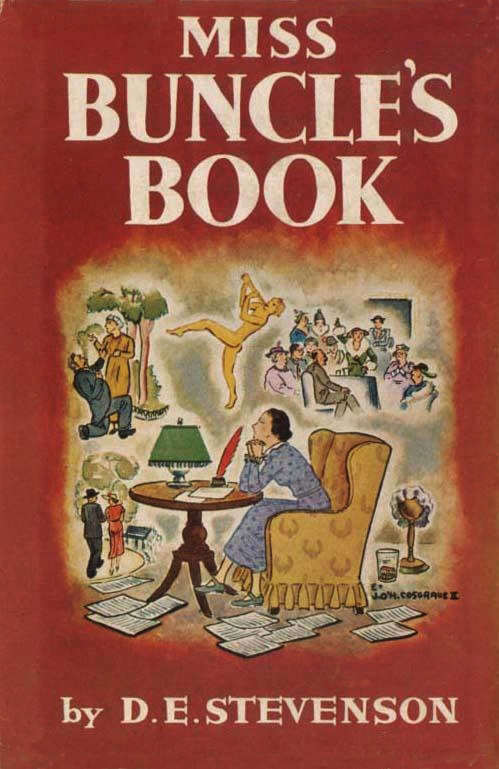
Miss Buncle’s Book by D.E. Stevenson ~ 1934.  This edition: Buccaneer Books, 1983. Hardcover. ISBN: 0-89966-168-8. 224 pages.

My rating: 8/10. A slight work, good for, at most, several evenings’ diversion. I would definitely re-read it after a decent interval, when wanting something “fluff”-ish to take my mind off the frequently depressing nastinesses of the our own 21st century world. Good for what it is – a tale as innocuous and amusing as Miss Buncle’s was intended to be, and not at all “clever”, though, as Miss Buncle herself found, those wishing to project their own imaginations into this simple fairytale could have a field day with hidden meanings, unintended by the author(s), I’m quite certain!

So, after seeing so many enthusiastic reviews of this book (and a few noncommittal “it was okay”s) I did at last manage to track down a library copy. I fall somewhere in between the two camps, but am probably most at home in the “in favour” crowd. I thought the story was light and fun, and I’m going to search out the sequels, Miss Buncle Married and The Two Mrs. Abbots, but I’m in no hurry.  Miss Buncle’s Book was pleasant enough but did not trigger a “must own it” compulsive visit to Amazon and ABE, though I did browse through both hoping to strike a bargain. Not much luck there; inter-library loan it shall be, though I was attracted enough to add D.E.Stevenson to my look-for list for used bookstore shelf scanning. In particular a series of stories concerning a certain “Mrs. Tim”, a soldier’s wife, who seems a good sort to get to know by all reports.

*****

Dowdy, almost-40, kind and peace-loving spinster Miss Barbara Buncle, facing financial difficulties as the dividends from her investments shockingly decrease in the post-WW I years, decides to write a book to gain some spending money. Not having “any imagination”, she draws her characters directly from life, changing only tiny details and, of course, their names. (The village Silverstream becomes Copperfield, Mr Fortnum is now Mr. Mason, Colonel Weatherhead becomes Major Waterfoot, Miss Pretty is Miss Darling, and so on, in a game of renaming by association.) As her tale progresses, she sends her “fictional” friends and neighbours off on some surprising adventures, causing much consternation when the inhabitants of Miss Buncle’s village eventually read the book and recognize themselves.

As the real-life inhabitants of Silverstream-Copperfield meet to decry the parody, and to discover and expose the Judas in their midst, they continually pass over innocuous Miss Buncle, even after she drops broad hints and, in a fit of conscience, even confesses to an unbelieving set of ears. For how could silly Barbara Buncle write even a borrowed epic? She’s not nearly clever enough…

The worm turns with a (mild) vengeance, and Miss Buncle gets the last laugh, as her life takes an unexpecteded turn due to her literary efforts.

Read Full Post »

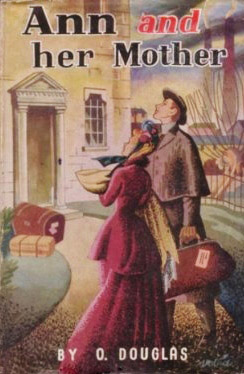
Ann and Her Mother by O. Douglas (pseudonym of Anna Buchan) ~ 1922. This edition: Nelson, circa 1940s. Hardcover. 283 pages.

My rating: 8/10.

This is Anna Buchan’s literary tribute to her beloved mother. The story is almost completely biographical; the author has written it in the form of a fictional conversation between daughter and mother as the daughter is attempting to record the mother’s memoirs. Though a little awkward at times as one shifts between past and present, on the whole it works quite well. I found it a very moving story; the Buchans were a very close family with a strong moral sense and, to leaven that morality, a keen sense of humour.

The family had its share of tragedies, including the deaths of their adored daughter Violet at the age of 5, eldest son William in India of illness at the age of 32, and youngest son Alistair killed in action in France in 1917, aged 22. Anna’s father died suddenly in 1911 at the age of 64, leaving his widow and surviving children Anna, John and James to sincerely mourn his passing.

Ann and Her Mother takes place some years after Reverend John Buchan’s death. Nostalgic flashbacks detail the courtship and marriage of “Ann’s” parents and her father’s establishment as a respected and beloved Scottish Free Church minister, and the childhood of their five children.

A very quiet story, probably best appreciated by those already familiar with Anna Buchan’s more obviously fictional tales, though she was frank in declaring that she was an observational writer and her fictions were drawn very directly from real life and the people she knew. This gives a background setting to the life of the novelist herself, and I recognized the inspirations for many of the incidents and characters portrayed in her other works.

Anna Buchan also wrote about her father’s life in fictionalized form in her novel The Setons.

Read Full Post »

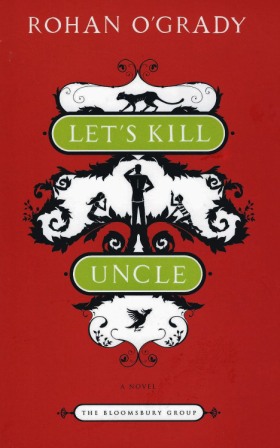
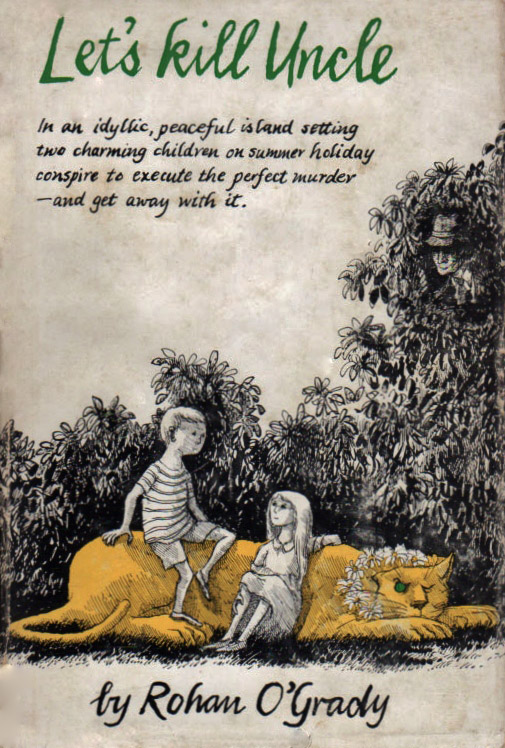
Let’s Kill Uncle by Rohan O’Grady ~ 1963. This edition: Bloomsbury Press, 2011. Softcover. ISBN: 978-1-60819-511-4. 279 pages.

My rating: 7.5/10. Extra points for the creepy and darkly humorous plot, the very thoughtful and poignant musings of Sergeant Coulter, and the grand British Columbia Gulf Island setting, apparently based on the author’s visit to Saltspring Island. (I chuckled at the naming of Benares; shades of Ganges and Vesuvius on Saltspring!) Points off for the cardboard cutout characterizations of most of the characters. Points off for the occasional swearing, which, though mild, felt out-of-place, even if this story was aimed at an adult audience. Extra points for letting the cougar finally ultimately be a cougar, and for letting the villain be purely evil with no redeeming qualities! Far from a flawless effort, but I liked it much more than I didn’t.

*****

You’ll find lots of reviews on this one; its reissue by Bloomsbury a year ago brought it into high profile.

This was a weird little book. I had read quite a few reviews before I ordered it, so I knew what to expect, but heaven help the innocent reader who thought they were picking up a mild children’s tale! Nothing innocent here; chock full of the darkest human flaws and emotions; the humour (of which there is a lot, all intentional) shades from gray to ebony black.

Two 10-year-old children from very different backgrounds are sent to stay on an isolated, and, incidentally, long-childless island. (Every son from the past generation has gone away to war and thus perished, except for one: the island’s Royal Canadian Mounted Police officer, Sergeant Albert Coulter. The bereft parents and grandparents view him with a certain resentment and suspicion making for a bitter underplot.)

Orphaned Barnaby is the heir to a ten million dollar fortune; he is coming to spend the summer with his uncle at a rural retreat. Christie is the sickly daughter of a struggling more-or-less single mother. Her parents are separated; her father is a good-for-nothing drunkard; her selfless mother is working extra hours to pay for Christie’s country holiday with Mrs. Nielsen, the island’s “goat-lady.”

The children meet on the ferry ride to the island; it is hate at first sight, but that doesn’t prevent them ganging up, running wild and wreaking havoc the entire trip. They are gratefully off-loaded, and the first person that makes an impression on them is the local Mountie, Sergeant Coulter. Luckily both children are struck with hero-worship at first sight, and Sergeant Coulter’s calming influence starts their personal transformations from brats to pleasant children.

Turns out that Barnaby’s Uncle Sylvester is not the mild, mannerly and caring man he appears to be. He is a psychotic murderer with a long history of killing for pleasure and profit; Barnaby is pegged as his next victim, and soon Christie is doomed as well. The children are on to him, and unite to plot right back, deciding to strike first to save their lives. Uncle foils them at every turn. Enter a surprise ally, an outlaw cougar, One-Ear, livestock and child killer, who is hiding out in the underbrush. One-Ear tolerates the two children associating with him, sparing their annoying lives only because he can’t afford to draw attention to himself; the three end in working together to act as Nemesis to stop this wickedest of uncles.

Nothing in this story is quite as expected; the ground continually shifts under our feet as we think we know what the author is going to have her characters do and say next; we often predict completely wrong. Sergeant Coulter is one of the most surprising characters. Initially he is a figure of fun, a slightly blustering, generally disregarded, musical-comedy type policeman. But the Sergeant has hidden depths. He writes long letters to his unaware (and happily married) love interest, rips them up and casts them on the waves. He has survived being a prisoner of war, and, in the novel’s very serious thread which runs through all the farcical nonsense of the murder plot, condemns the political forces that send young men away to kill and be killed, destroys innocent civilians, and allow the evil of the Jewish Holocaust to happen. A few incidents involving First Nations people, or, as 1963 lingo describes them, “Indians”, would likely not get past today’s politically correct censors.

There are quite a number of parallel stories going on in this novel; the author competently intertwines them and brings them to their rightful conclusions. A highly moral tale, when all is said and done.

Let’s Kill Uncle has a superficial feel of being a children’s story, and it definitely works on that level as a straightforward if morbidly fantastical adventure, but I finished with the strong feeling that the intended audience was very much the adults, and the message much more sophisticated than the plot description allows for.

The author’s name, Rohan O’Grady, is the pseudonym of June Skinner, a Vancouver writer who published five novels between 1961 and 1970, of which 1963’s Let’s Kill Uncle seems to be the best known. The others are:

  • O’Houlihan’s Jest, 1961.
  • Pippin’s Journal; Or, Rosemary Is for Remembrance, 1962.  (Also published as The Curse of the Montrolfes and The Master of Montrolfe Hall.)
  • Bleak November, 1970. Michael Joseph, London, 1971.
  • The May Spoon, 1981. (Published under the pseudonym A. Carleon.)

Edward Gorey illustrated Let’s Kill Uncle; I regret that the Bloomsbury reprint contains no art except for a rendition of the original cover on the title page.

This is a very hard book to classify. I’m trying to think of another similar book to compare it to; A Series of Unfortunate Events has been suggested as its natural successor, but Let’s Kill Uncle is a much more complex work than the contemporary Lemony Snicket series.

I enjoyed this quick read; it will be even better the second time around. Recommended.

Read Full Post »

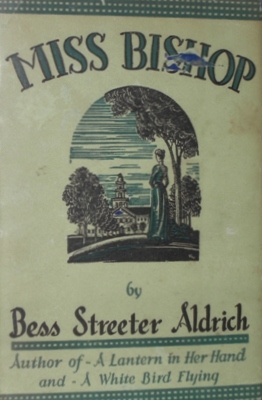
Miss Bishop by Bess Streeter Aldrich ~ 1933. This edition: Grosset & Dunlap, circa 1940s. Hardcover. 337 pages.

My rating: 5.5/10

This book started with such promise, and I raced through the first chapters happily, but as the story passed the midpoint I found I was losing my enthusiasm; something had changed. Now maybe that is just the author’s “genius”, in changing the mood to follow the life-path of the main character, Ella Bishop, from optimistic youth to dreary old age, but somehow I think that is too generous an assessment. I think rather that it is the author’s fault, in retelling her same old story with a different character. I thought that this book was very reminiscent of both A White Bird Flying, and Spring Comes On Forever, sharing the theme that “it is sad but noble to sacrifice your dreams as long as the sacrifice benefits the future generations”.

Miss Ella Bishop is one of the first class of students at the newly established Midwestern College in the growing town of Oak River, in an unspecified mid-western prairie state. The year is 1876, and the mood is of optimism and enthusiasm as progress strides across the prairie, bringing culture and higher education into the hitherto culturally isolated farming communities of the region.

Ella Bishop is that character beloved of novelists, the poor but bright and winsome orphan, or in this case, semi-orphan; Ella’s father has just died, and she and her ineffectual mother are just barely getting by; college fees are, as is the inevitable case in this genre, a challenge to meet. Ella of course does wonderfully well in college and graduates high in her class; she is now well-trained and ready to take on a job as a teacher, the only real choice of profession (other than shop clerk or seamstress) open to a young lady of her generation.

This was the best part of the book, in my opinion. The author captures wonderfully well the heady atmosphere of the new college and its small group of professors and students. The boys and girls attending the school are mostly children of immigrants, proud of their various distinctive heritages while identifying firmly as modern Americans. The glimpses into the homes and lives of the students, and the physical descriptions of the prairie in its state of being transformed into “civilization” are beautifully handled and a joy to read.

But all is not well in Ella Bishop’s world; her youthful optimism is about to take a hit. A bit of a heads-up here: there will be major spoilers in this review. If you are wanting to discover Ella’s trials and tribulations for yourself, it is time to click away. Otherwise, you’re going to get the condensed version of this soap opera of a tale.

Ella graduates and is offered a job teaching grammar at the selfsame college she has just been a student at; gratefully, she accepts; she is now able to support her frail mother, and teaching will do fine as an interesting occupation for the next year or two, until her true vocation comes along.

As well as she liked her teaching, – to have a husband and home and children, – these were better. These were the things for which her healthy young body and warm heart were intended. She knew.

Eventually Ella’s white knight trots into town. She meets young Delbert Thompson, a newly arrived junior partner in the town’s law. All is wonderful; the wedding date is set, the dress is being made, when into Ella’s shiny happy world a small dark shadow comes. An eighteen-year-old cousin has been orphaned and asks to come and stay for a while to get over her grief and plan her next move; young Amy has just found out that she is penniless as well as bereft of her parents. The perfumed note gives us our first inkling of disaster to come; Ella is mildly annoyed at having to give a thought to another body in the house just when she is getting ready to bring a new husband home, but she nobly does the right thing and welcomes Amy with cordiality and grace.

Oh no! Wrong thing to do! Amy is tiny and cute and flirtatious, and soon a circle of other girls’ beaux are attracted like bumbling moths to Amy’s bright little flame. Including Delbert. With the wedding mere weeks away, Amy sets her sights on her cousin’s attractive fiancé. Ella proudly refuses to interfere; the worst happens, and Delbert now “must” marry Amy, as he has fallen into the trap she has set baited with her delectable, willing little body. Off they go, leaving Ella in a state of despair. Going to her mother for comfort, that is denied to her as well, as her self-centered parent is so upset by the situation that Ella ends in burying her own emotions to administer to her mother’s hysteria. Better get used to it, Ella, it’s going to be the pattern of the rest of your sorry life.

Nine months later, in the depths of winter, a foreboding stranger appears, bearing a passionate letter from Delbert. He is on his deathbed; time is short; he begs Ella to come and see him. Off she goes, to find Delbert, as advertised, indeed on his deathbed from some unspecified illness. The highly pregnant Amy is creeping around helplessly; with his dying breath Delbert begs Ella to take Amy home with her and care for her until the child is born. “I’m ever so sorry, Ella, and it was such a mistake, but here we all are, and I’m counting on you…”

And Ella nobly steps up. Amy is rescued once again and brought back into the Bishop fold, where she promptly gives birth to a baby girl before blinking out of life herself a few hours later. And there is Ella, left holding the baby, child of her one true love and her deceptive cousin. What else to do but adopt the child as her own and lavish all her pent-up love on the helpless little thing? She even names the child, ever so predictably, “Hope”.

Ella divides her life into two; in one part she is the dedicated college teacher, loved and respected by students and fellow instructors; in the other she is the devoted surrogate mother to young Hope and the endlessly patient daughter to her increasingly needy mother. Luckily she has picked up a stalwart Danish girl even more selfless than herself to keep the home fires burning and the old lady and young girl cared for while Ella is out working to support them all. Stena has lost her own lover and baby, and is a godsend to the Bishop ménage, so grateful for a roof over her own head that she quickly becomes an indispensable member of the all-female household.

The years roll by, and Ella gets another chance at love when Professor John Stevens arrives to teach English literature. The two hit it off immediately; friendship warms to something much deeper, and all systems are “go” except for one small glitch – the pre-existing Mrs. Stevens, an unattractive, unintellectual, querulous kleptomaniac. Ella and John are tempted to ditch the unlucky Mrs. Stevens and take their true love elsewhere, but both decide to do the right thing, renouncing their passion unrequited. John moves on with his cranky wife, leaving Ella to take comfort in her role as noble teacher:

A flaming torch…meant to light the paths of boys and girls along the rugged way!

I was already teetering a bit about this story but this is where Aldrich finally lost me. The woman is a grammar teacher in a small prairie college. A grammar teacher. Useful enough, and with the power to inspire students to a great degree, but not really of flaming torch importance. Nice that she can embrace her vocation in place of her tragically doomed romantic life, but please. This pushes all of my cynical buttons; I figuratively roll my eyes and wish that Miss Bishop would just hop into bed with the Professor already and get it out of her system. But no, that would betray her pure life and her flaming dedication to her career. (Golly, am I overreacting here? Maybe. I liked Ella so much at the start of the story that I want her to get a bit of fun out of life, I think. But she keeps piling on self-denial after self-denial. She’s getting a bit inhuman in her steadfast nobility.)

The rest of the story I read in a state of “come on, what else can this poor old girl take?” And she does not disappoint.

Hope is duly launched, with several expensive (and ultimately wasted) years of college and a speedy marriage soon after, and Ella feels like she can concentrate on herself at long last. She plans a longed-for trip to Europe with her fellow professors, scrimps and saves, and is ready to go when her already fragile mother finally slips into full-blown dementia. Though the stalwart Stena is perfectly willing to take on full responsibility and encourages Ella to go, Ella decides to abandon her cherished travelling ambition to stay home on the off-chance that her mother will return, even briefly, to a state of lucidity. Doesn’t happen, and Mother Bishop lingers on, to die quietly some years later.

Ella sees one last chance, plans the European trip again, and is poised to go when Hope’s eighteen-year-old daughter Gretchen falls in love with a hopelessly unsuitable older married man. Ella gives over her savings so Gretchen can go to Europe and forget her lover; Gretchen comes back “cured” with an offhand “Thanks, Granny!” and finds a more available man to marry. It is at this point that Ella suddenly realizes that her earning years are coming to an end, and her savings are not what they should be; the expenses of caring for her mother, Stena’s wages, Hope’s college and Gretchen’s trip seemed like worthwhile expenditures at the time but one woman’s resources are decidedly limited.

Another blow falls. A restructuring takes place within the college. The instructors are asked to take a twenty percent pay cut. Ella soldiers on. And then Ella discovers that her bank is in difficulties, and she loses a portion of her meager remaining savings, and finds she will only be able to withdraw twelve percent of the remainder each year. Ella is now seventy, and had hoped to retire in some sort of comfort, but stark reality faces her; she must continue to work to live. “Only three more years,” she tells herself. “I’ll cut back, and scrimp and save, and get by somehow.”

But she won’t even have those three more years. Out-of-the-blue, a note arrives from the college president. Some changes in the faculty are being planned. Just a heads-up, Miss Bishop, that you might want to hand in your resignation before the college board meeting…

Yet again, Ella faces despair.

There was nothing now to look forward to – but death. Death! How little thought she had ever given to it! So full of living, – her hands so filled with duties, – she had existed only day-to-day, doing the hour’s tasks as well as she could.

But wait! – What about the Alumni banquet to close out the school year. Don’t you want to attend one last time, Miss Bishop? Reluctantly Ella decides she will close out her teaching career in style, so off she goes, to be greeted by a packed house and a ceremony of honour to recognize her lifetime of dedication to the college. Suddenly Ella sees her life in whole; the good and the bad laid out together; every sacrifice having its reason in the great scheme of things; her main importance being in furthering the ambitions of the coming generations. Tomorrow she will again be old and poor, but tonight she is being lauded, and that is enough reward…

*****

I found myself getting increasingly cynical, especially as first Hope and then Gretchen acted so selfishly in regards to their foster-mother and grandmother, taking heedlessly what she selflessly offered on the altar of youth’s desires’ (not needs, but desires) coming first. I felt like shaking Miss Bishop – “Be occasionally selfish, you fool!”

This book is lauded as a “salute to dedicated teachers”, and I get that, but by the end my overwhelming emotion was annoyance. And I’m all about “family first” and “sacrificing” for our children, having done my fair share of tamping down of own desires while raising babies and fully embracing the numerous challenges of motherhood, but there is a limit. Miss Bishop went past the reasonable point into martyr territory, and the author lauds her for it. To be fair, Ella herself in her musings at the end of the book recognizes that the larger picture was not evident to her at the time, that she just went on day-to-day, tackling each issue as she needed to, a very realistic assessment of how most of our lives work!

I’ve also heard this story referenced as the “female, American Mr. Chips“. Recently reread that one, too, and cynically thought James Hilton’s opus was a mite overrated, though when I first read it as a teen I mentally filed it as a pleasant enough story. Now, with many more years to my credit, my opinion is that both Mr. Chips and Miss Bishop were a bit too focussed on their school worlds at the expense of their inner lives. The authors excused their protagonists’ narrow lives by lauding their personal sacrifices for their students. Admirable in a way, but excessive, needless sacrifice is cloying in a fictional character after a certain point; the delicate balance between pleasant story and moral tale is compromised.

This is a rather crabby review, but it reflects my feeling in the here and now regarding the book in question. It might well be different at another time in my life! I would like to emphasize that there is much to admire in Aldrich’s writing, and she is highly regarded by many. She’s a great author for capturing the atmosphere of the times she writes about, and I definitely will continue to read her works as they cross my path. However, I think I might need to re-read A Lantern in Her Hand to see if it can restore my cheerfulness in regards to this author’s work. I feel like the über-predictable Miss Bishop rather let me down.

Read Full Post »

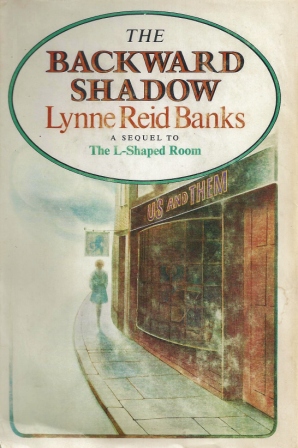
The Backward Shadow by Lynne Reid Banks ~ 1970. This edition: Simon & Shuster, 1970. Hardcover. 246 pages.

This is a failed review; a non-review; an unreview. I have been trying and trying to finish this book, but have found myself at a dead stop in interest level. Maybe during another time in my life? I need to get this off my desk, and off my conscience, so I’m going to shelve it now, along with its prequel, The L-Shaped Room (which I did manage to read and review, hence the presence of the sequel on my to-read list), and with all the sombre Margaret Atwoods et al which I also have trouble getting thrilled about at this point. Life changes; our reading choice ebb and flow and evolve. Someday, perhaps, “Jane Graham’s” tale will be of interest to me, but certainly not now.

It’s not that it’s a “bad” book; there is a certain style and flow to Banks’ writing that is decidedly appealing, and I can see that her heroine might be someone whom the reader could make friends with, if the reader is in that place in their life where they can identify and sympathize with Jane and her endeavours.

In the meantime, here is the flyleaf description, for the record. I fully agree with the facts of this blurb (okay, maybe not the “glowing achievment” bit, but I agree in general), but just can’t get past my personal annoyance at Jane’s irritatingly navel-gazingish personna; I know constant self-examination is a good thing and all, but this gal takes it to a high level. I’m just one person, though – others feel much more enthusiastic! You’ll have to try it for yourself.

Here’s a link to the Goodreads page:

http://www.goodreads.com/book/show/1916493.The_Backward_Shadow

And from the flyleaf:

From the author of the memorable The L-Shaped Room comes this powerful, disturbing, bittersweet sequel – a complete novel by itself, which continues the story of Jane, now living in an English country cottage with her illegitimate child, determined to forge a viable, independent future. She still loves Toby, her past lover but not the father of her child, but she has an obstinate conviction that she must not burden is writing career by saddling him with her situation.

Tough and resilient though Jane is in many respects, the intensity with which she loves her child is not enough to conceal from her the recognition of her essential loneliness in her isolated country life. She resolves to meet the challenges in her own way and, as readers of The L-Shaped Room will remember fondly, Jane’s way is one of honesty, humor, and unsentimental insight.

Rarely in fiction does the sequel to a celebrated novel measure up to its predecessor in impact and originality, but The Backward Shadow is in every way as glowing an achievement as Lynne Reid Bank’s first book…

And here is the Kirkus Reviews take, from 1970:

This is an extension of The L-Shaped Room (better remembered as a film?) in which unwed mother Jane has retired to Surrey with her infant, David, and is still in love with Toby (not his father). Toby comes down from London to see her now and again before he gets attached elsewhere and Jane learns too late that being an independent woman (not in the current sense) has a premium. With Dottie, an old friend, she starts a gift shop which is subsidized by Henry, Dottie’s contact. Before they’re through “the backward shadow” has darkened all their lives: Dottie’s is loneliness; Jane’s is the problem of getting along and bringing up David; Henry’s is “dying well”–which he does, although Jane and Dottie cry a great deal. . . . Essentially it’s a soft-shelled woman’s story–a term which has been discredited rather than the fact. There will be readers.

Read Full Post »

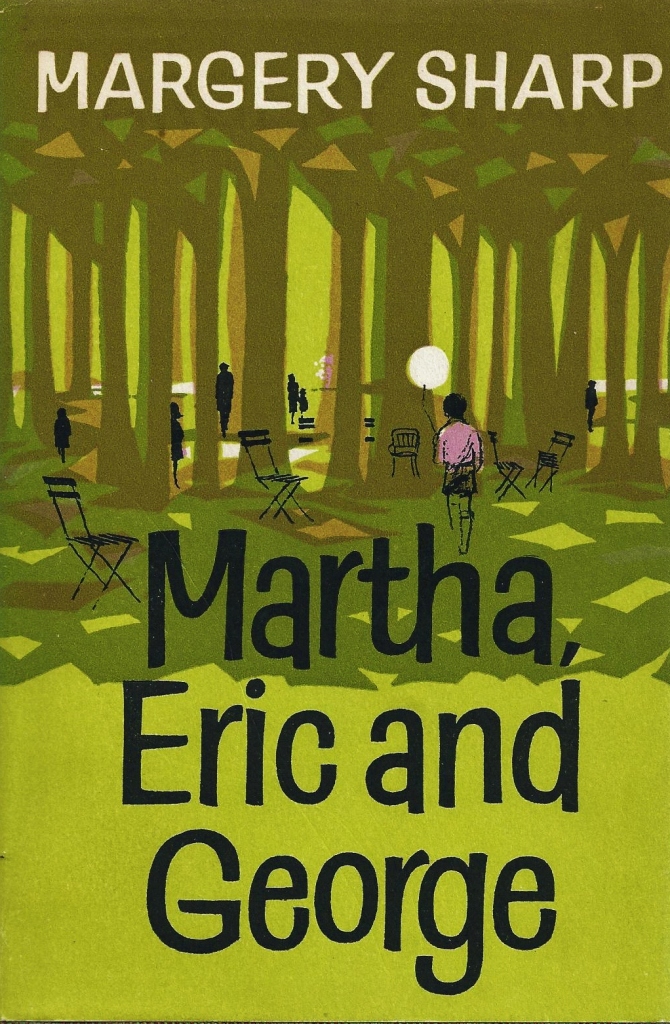
Martha, Eric and George by Margery Sharp ~ 1964. This edition: Collins, 1964. First Edition. Hardcover. 160 pages.

My rating: 9/10

From the flyleaf:

‘Why should it always be the woman,’ asked Martha, ‘who’s landed with the little illegit?’

Putting principle into practice, she thus deposited a two-weeks-old infant on the paternal door-step and returned carefree to her proper business of painting masterpieces: vanishing so successfully, indeed, from the lives of both lover and son, that ten years elapsed before the consequences of her misbehaviour caught up with her…

Why, indeed?

Martha strikes a blow for her sex as she neatly turns the tables on her partner in procreation. Her child, result of a brief dalliance with the illicit pleasures of physical passion (and not to be repeated, as, though most enjoyable,  it makes her too tired to get up early and paint) has safely entered the world. Providing him with a layette, a carry-cot and a recipe for formula, Martha proceeds to take her ex-lover Eric at his word – “I want to shoulder all your burdens for you,” Eric has declared in his (scorned) proposal of marriage – and drops this small burden off on the Parisian doorstep of British expatriate Eric and his doting mother.

Eric Taylor, returning home to lunch, after the French fashion, from his morning’s work at the City of London (Paris branch) Bank, paused as usual outside the concierge’s lodge. The flat occupied by himself and his mother was on the fourth floor; tradespeople in a hurry frequently left parcels below – also Mme Leclerc the concierge seldom troubled to carry up a letter unless she suspected it to contain bad news. The pause at the lodge was part of Eric’s routine, his words ritual.

“Anything for me to take up, Mme Leclerc?”

For once, a rare smile curved the thin lips. Employing all her fine Gallic gifts of drama, irony and concision –

“Apparently yes, monsieur,” replied Mme Leclerc; and issuing burdened from her lodge planted in his arms a carry-cot containing a two-weeks-old infant.

Poor Eric! One does feel for him in his sudden comeuppance, though of course he had no idea that his brief dalliance with Martha had had fruitful results; he did inquire as to Martha’s state once the fling was over, and she brushed him off in typical Martha-manner, so I rather think his disgruntled reaction is justified. If we weren’t clear on the farcical nature of this series before, we certainly get the full picture in this last installment. Eric carries the baby up to his mother, who is, quite naturally, completely blindsided.

Out from the covers pushed a tiny, grasping fist like a very small octopus. The nearest object at hand being Mrs. Taylor’s ring-finger, about it the small octopus twined.

Now it was her turn to be struck dumb. For what seemed like an age, while the clock on the mantelshelf ticked, while on the table the liver-and-bacon congealed, mother and son gazed at each other in equal silence, equal consternation, indeed equal incredulity. (Disbelief: the instinctive, protective human reaction before disaster.) But the small octopus-hand insisted. Mrs. Taylor stooped; pulled a lap of blanket aside; and raised a face white as her son’s.

“Eric!” breathed Mrs. Taylor. “Whose is it?” 

Actually the question was superfluous. It is an accepted if inexplicable fact that an infant during the very first weeks of its existence may show a marked resemblance to one or other parent. In this case, the tiny countenance now revealed was an uncanny, crumpled miniature of Eric’s own. It simply looked much older: an image of Eric in toothless senility. – Not that the latter more than glanced: by this time he was … sure.

“It’s mine all right,” agreed Eric Taylor.

Now Mrs. Taylor surprises us by her reaction. Rather than being appalled by this incontrovertible evidence of her son’s amorous activities, she is instead thrilled to the core “Oh, my darling, it’s a boy!” she cries in delight. And, “Gran’s little treasure!” she croons, to Eric’s deep disgust and abiding dismay. Here we get another glimpse of Margery Sharp’s cynical wit.

The moment was far too delightful to spoil by thinking about Martha, so Mrs. Taylor didn’t. This involved no particular feat of will-power, merely a complete if unconscious surrender to wishful thinking. To possess a grandchild without the encumbrance of a daughter-in-law is many a grandmother’s unadmitted dream. “Dear Anne, dear Lucy, dear Susan!” cry the grandmothers – happy to welcome with small bottles of Chanel No. 5 at Christmas each necessary transmitter of a family face; but even happier to water with easy tears a rose-bush on an early grave…

Certainly Mrs. Taylor didn’t hope Martha was dead, even though she’d never really liked the girl. (In any case, as she’d learned from Mme Leclerc, Martha was obviously alive that morning. It would have had to be a very sudden accident.) Mrs. Taylor simply forgot Martha: indeed, so all-absorbing was the sheer physical pleasure of holding a baby again…

So the stage is set. Martha’s baby, quickly named George, is well provided for. His father becomes very much a background figure; in a turning of tables, the unmarried father takes on a role usually reserved for the mother in such a situation. A figure of mildly ribald amusement among his compatriots, Eric faces social ostracism, and, worse yet, is passed over for his expected promotion. He is no longer seen as quite so “above reproach” to qualify for a higher position in the Bank of London (Paris branch), though fortunately for him there is no thought of terminating his employment entirely.

Martha has returned to England, there to hone her artistic skills and single-mindedly  become an accomplished mistress of her art. Still sponsored and nurtured by paternal Mr. Joyce, Martha’s genuine genius blossoms. Ten years of hard, creative work pass by, and at last Martha is deemed ready to risk a solo exhibition in that mecca of the art world, Paris.

The reunion of Martha and Eric, and young George, fully meets our expectations, but there are a few surprises in store. The ending is delicately poignant; Martha redeems herself, emotionally speaking, by showing that she does have a certain sensitivity hidden by her brusque exterior. A most satisfying conclusion, despite the deathbed scene.

I hugely enjoyed this trilogy. (I still think this should be published as an omnibus; too cruel if you can’t get your hands on the complete set!) Highly recommended for the Margery Sharp fan, or anyone desiring a cleverly satirical literary diversion.

Side note: I love the cover illustration of this edition. Jillian Willet captures perfectly a rather mysterious and moody feeling of foreboding; the child in the foreground (young George?) strides sturdily towards the vaguely menacing figures partially obscured by the park’s trees. The geometric shadowing pays homage to Martha’s vision of the world as a series of shapes; the whole is a deeply satisfying composition.

Read Full Post »

« Newer Posts - Older Posts »