Posts Tagged ‘Mystery-Suspense’

It’s always fascinating to read vintage books aimed at the youth market. The terms “literary snapshots” and “period pieces” apply particularly well to this widely varied genre, though more serious themes tend to be handled in a gentle way, obviously in order to cushion young minds from the harsher realities of the world they live in.

I recently read these two American “juveniles” from the many which have accumulated on our shelves in the past nineteen years of buying books for the younger members of the family, and while neither is an outstanding piece of fiction in any sense of the word, they are both rather interesting in what they have to say about the eras they were written in and about. Footnotes to the period, as it were, which is why I’m including them among the Century of Books fellowship.

*****
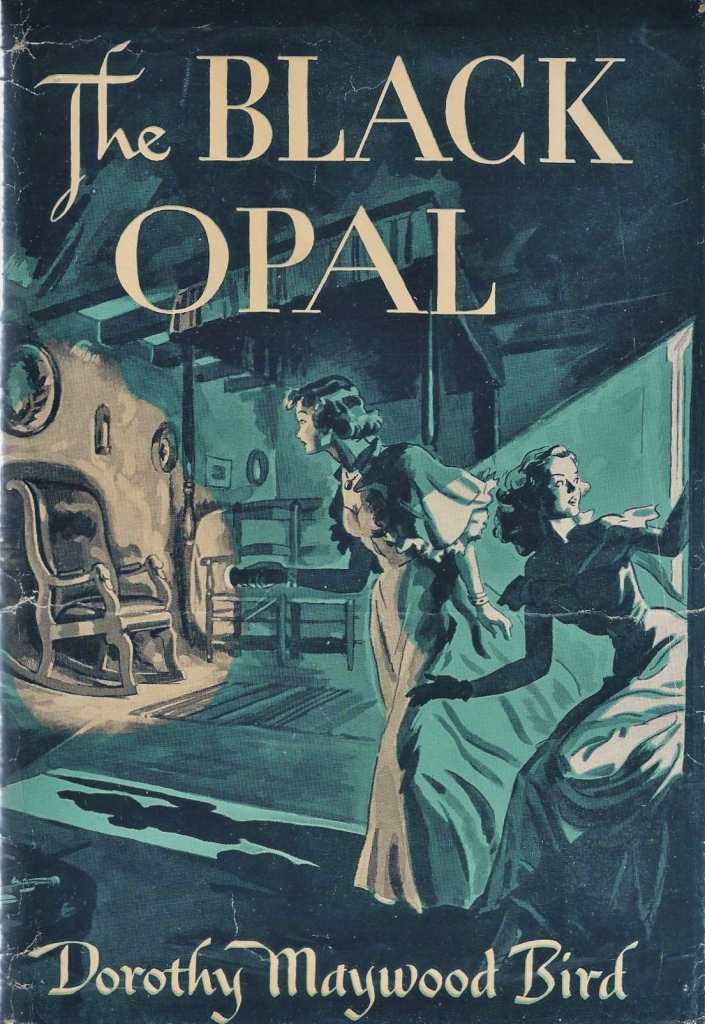
the black opal dorothy maywood bird 001The Black Opal by Dorothy Maywood Bird ~ 1949. This edition: Macmillan, 1962. (Ninth printing.) Hardcover. 202 pages.

My rating: 6/10

Surprisingly likeable was this rather hard to classify light novel, comprised as it was of equal parts college caper, highly contrived mystery, and blossoming romance. All right, maybe not that hard to classify! But the mixture works quite nicely, and the characters are highly appealing, and the whole thing is completely adorable. Decidedly a book aimed at the feminine readership of the junior high schools of its time.

Look, I even found an approving Kirkus review, from October of 1949:

When Laurel went off to the small coeducational college in Michigan which had been her great-great-grandmother’s alma mater, she expected it to be fun — and it was. What she didn’t know was that she would find herself up to the neck in a century old, unsolved murder mystery which was to give her the thrill of establishing the identity of the murdered man and his killer. The mystery theme is well-integrated and companions a satisfying modern college story of dates, term papers and strict house-mothers. There is not only the sinister black opal which Laurel unearths but also the exciting and sparkling diamond with which her One And Only ends the story. Maybe her solution will seem a trifle glib and maybe everything falls in place too smoothly, but no one will care for it is a nice, light entertaining tale with the virtue, highly to be prized, of not following an exact formula.

Laurel Stanwood has decided to do something a bit out of the norm. Instead of going with her high school friends to a college in her native Vermont, Laurel has chosen to attend a school, Colbert College, in far-off Michigan, a decision inspired by the fact that her Great-great-grandmother Caroline Hayes was a student of the precursor to the now co-educational facility, the Colbert Female Seminary, in 1846.

What follows is an absolutely typical account of lively college life. Laurel immediately makes two best friends, and immerses herself in a whirl of activity, where some serious studying is livened up by dramatic football games, campus socials, the ongoing “campus war” between the freshmen/juniors and sophomores/seniors, and some serious battling of the sexes via the two campus newspapers, the Colbert Feminist, under the editorial control of Laurel’s new friend Rue, and the Colbert Iconoclast, presided over by the woman-despising J. Swinton Towne. As an aspiring journalist, Laurel is immediately put to work gathering material for the Feminist; she has high hopes of finding a stunning “scoop” which will allow the Feminist to grind the Iconoclast‘s annoying pretensions to male superiority under its well-clad foot.

Lovely period details abound throughout this book, such as here where the girls are opening their mail at dinner time.

Laurel slit them open with her fork. The first, a circular, ordered her to make reservations at once for that Round-the-World Cruise she’d been eagerly awaiting since before the war. “Lapping waves,” it promised, “soft winds to caress your brow, nights full of wonder.” The second assured her that she could borrow up to three hundred dollars without embarrassing investigation and could pay it back in easy monthly installments. “Why be short?” it demanded. The third looked more hopeful, an expensive ivory envelope addressed in a feminine hand and postmarked Detroit. But the letter inside merely stated that if she planned to invest five hundred and fifty dollars in a genuine blue muskrat coat, she would do well to visit Compere’s Fur Salon first.

“Here’s a card from Mother,” Stacy giggled, “reminding me that if I want my duds to get into the Monday wash I can’t wait till Monday to mail them, and here’s a letter from Kent. Even if I didn’t recognize the scrawl, nobody else would have the nerve to start out ‘Dear Horseface.'”

Laundry sent home by mail for washing, stocking boxes to protect one’s cherished “nylons”, beau parlors to entertain your male guests in, telegrams sent with gay abandon in the same way teens today fire off texts to arrange their dates, having one’s hair washed once a week at the beauty parlor, Sadie Hawkin’s Day dances with both sexes in drag, apple cider socials, and a continual description of the most lovely-sounding clothes are happy period details. Laurel is continually sporting such gems as a “cherry flannel robe”(while filling out her college application form), “white wool gabardine suit” with a white chrysanthemum corsage (to attend a football game), “green silk raincoat” (actually that was Stacy’s, but it sounds quite sharp), “red cambric bolero edged in gold furniture braid” (for dressing up as a Spanish courtier on Sadie Hawkin’s Day), dungarees and sheepskin lined stadium boot (for winter hiking in the snow), a plaid gingham dress giving way to a “heliotrope spun rayon” (dressing for dinner, a must-do in the girl’s dormitory house), a beau’s “electric-blue loafer coat”, a friend’s “magenta taffeta with the bustle” prom dress, and Laurel’s own costume for the high point of the story, prom night topped off by discovery of the “Black Opal” mystery: mist-gray tulle with silver slippers and handbag, and a corsage of forget-me-nots, rosebuds and silver ribbon. Oh, swoon!

The girls, despite their life of strict midnight curfews and beau parlors, are given a wonderful amount of freedom; in most ways they are treated as completely competent adults and are left to sink or swim and make their own decisions in a way that many of the sheltered-but-socially-sophisticated teens of today would be most miffed to asked to do. Failed your Biology exam? Oh, well, guess you should have studied harder! No helicopter-parenting mom or dad in this 1940s’ world is about to confront the Biology prof to demand their pampered offspring’s mark be altered!

The historical murder mystery/mysterious gemstone plot, though prominent in the title and constantly referenced, is a very minor part of this happy little novel, though it forms a uniting thread throughout. It is the least well handled aspect of the book, being utterly predictable, totally fabricated out of unlikely coincidences, and not particularly believable even at its most detailed point. But this I completely forgave, because the rest of the story charmed me completely.

Dorothy Maywood Bird wrote two other similar novels, Granite Harbor and Mystery at Laughing Water, and I would be quietly pleased to get my hands on these at some point, for a little more travelling gently back in time.

*****
the year of the dream jane collier 001The Year of the Dream by Jane Collier ~ 1962. This edition: Funk & Wagnalls, 1962. Hardcover. Illustrated by E. Harper Johnson. 122 pages.

My rating: 4.5/10

This one is aimed at a younger set, the elementary school ages. Another very predictable plot, with rather more cardboardish characters, but again an interesting period piece with some redeeming features.

A middle-class family of five – mother at home baking cookies, father a teacher, thirteen-year-old Dick, twelve-year-old Wendy and younger brother Beanie – have been summering at a lakeside cottage and messing about with rowboats for years. But this year it somehow doesn’t quite satisfy – “If only we had a boat of our own…!” And not just a rowboat, but a proper boat. A cabin cruiser, so Mom can come along and not miss her kitchen(!) – bright red flag, here – first hint of era-correct gender stereotype, but far from the last.

Anyway, it’s decided that this is just a dream, as Dad isn’t exactly wealthy, and even a cheap cabin cruiser would cost thousands to buy. Then a chance conversation puts the family on the track of a derelict boat to be sold as part of an estate settlement. For two thousand dollars they can have it. Lots of work would be needed, but the boat is essentially sound. But where to find the money?

Everyone chips in and the year progresses as the pennies and dollars start to flow into the boat fund. The family decides to holiday at home and put their vacation money in the fund. Dad quits smoking and takes on an evening job, Wendy gives up her riding lessons and takes on babysitting jobs, Dick decides to raise rats to sell for science experiments, and Beanie roams the neighbourhood with his wagon collecting old newspapers to sell for salvage prices – 75 cents per 100 pounds. Even Mom finds something to do – she goes back to work in a law office part time, asking Wendy to step up and help out more at home.

Domestic details of the early sixties include a gee-whiz!-isn’t-it-great! reliance on cake mixes, instant pudding, canned everything, and casseroles of frankfurters and beans. Mom pores over a book called Shipboard Menus, leaving the mechanical and construction details of boat refurbishment up to the menfolk.

The only person not thrilled with the family’s common goal and their pursuit of their dream is Mom’s older sister, Aunt Louise. Louise had raised her younger sister after they were orphaned, and has settled into a prudently conservative spinsterhood. She lives in an apartment above the card and gift shop she has established with persistent self-sacrifice and dogged determination, and though she is the epitome of a self-sufficient woman she is, paradoxically, absolutely livid with Dad for “allowing” Mom to work. Mom, on the other hand, decidedly blossoms as she goes back out into the world, which inspires an interesting line of thought in twelve-year-old Wendy, about who “Mother” really is, and how she appears to herself and to each individual in her family, and what her mother’s own dreams might be, the ones she calmly has put aside to dedicate herself to her family. Inklings of the consciousness-raising going on in the greater world of the 1950s and 60s.

The dream – the cabin cruiser – is tantalizingly close to becoming a reality when catastrophe strikes, as young Beanie is struck and severely injured by a hit-and-run driver as he plods along with a wagonload of newspapers. Everything turns upside down as priorities are instantly re-assessed, with the two older children readjusting their personal ambitions for the boat without a murmur, much to the surprise of the adults in their lives, who have rather assumed that there would be resistance to the idea of letting the dream die.

Expectedly clichéd is the ending, with everyone rallying around and “family comes first” the slogan of the day; my greatest disappointment (from an adult point of view) was the sudden windfall that allowed the dream a new life. Artistically speaking, the sacrifice would have made for a stronger ending, but thinking back to my own juvenile reading days, the happy ending would have been appreciated by my young self, so I’ll let it go.

These sorts of books were a dime a dozen back in my elementary school years, mild dramas with some sort of a message attached, and The Year of the Dream is neither exceptionally good nor dreadfully bad. It’s a very average example of the middle range of juvenile literature of its era, and as such is worthy of a nod of appreciation as it helps to embellish the background against which “better” and more “mature” and “literary” books are set.

**********

I wouldn’t say that Jane Collier’s The Year of the Dream is worth looking for – it’s very much a nonentity of a thing – but for those of you who enjoy “teen girl’s fiction” of the 1940s and early 50s, precursors to the “malt shop” genre, Dorothy Maywood Bird’s three novels may be of some interest.
Read Full Post »

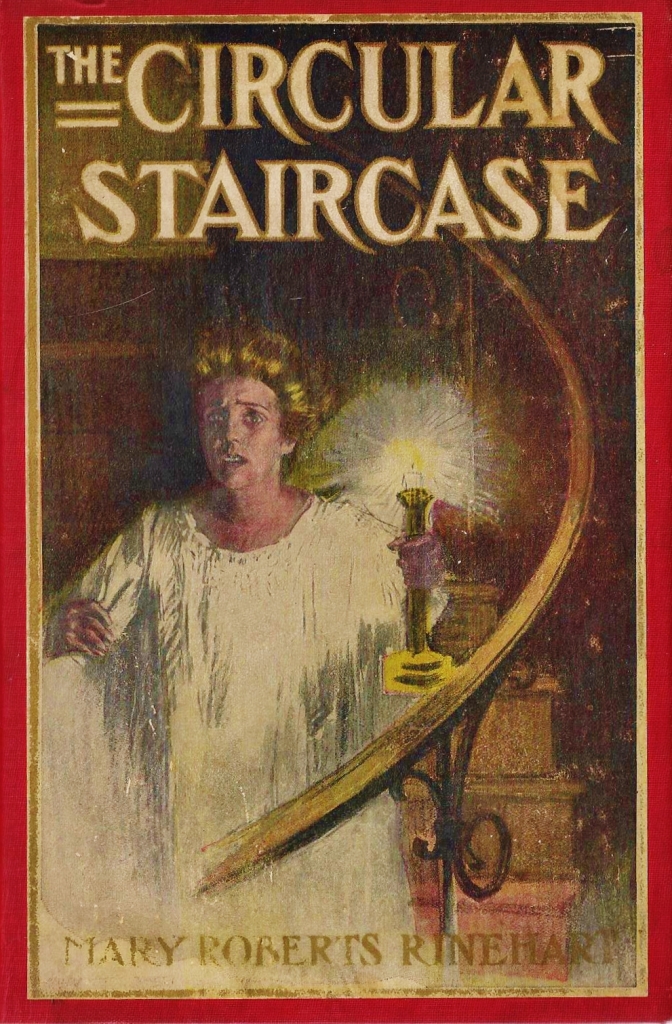
the circular staircase mary roberts rinehart 001The Circular Staircase by Mary Roberts Rinehart ~ 1908. This edition: Grosset & Dunlap, 1908. Hardcover. 362 pages.

My rating: 5.5/10

A decade and a half before Agatha Christie penned her first murder mystery in England, Mary Roberts Rinehart had a stunning success with this book, which established her as bestselling mystery and dramatic fiction writer in North America. It is sometimes claimed that she was the best-paid American author of her time; her book sales were in the millions. So I was looking forward to The Circular Staircase with great anticipation, having read enough of Mary Roberts Rinehart’s work over the years to know that she can indeed spin an engaging tale, usually including a nicely independent and outspoken female lead or two, in keeping with the author’s suffragette and proto-feminist leanings.

And, by and large, The Circular Staircase mostly pleased me, in a low-key way, though it took me absolutely forever to work through. It has an unusual and most engaging narrator, the charmingly independent and opinionated Miss Rachel Innes. It helps with the independent and opinionated character traits that Rachel also seems to be quite wealthy and therefore able to indulge in letting herself speak freely – for who will argue with the lady who pays the bills? She also can be rather high-handed in her dealings with family members and subordinates, though her gently cynical self-mockery keeps us on her side, along with her obvious affection for her adopted niece and nephew and her personal maid Liddy.

This is the story of how a middle-aged spinster lost her mind, deserted her domestic gods in the city, took a furnished house for the summer out of town, and found herself involved in one of those mysterious crimes that keep our newspapers and detective agencies happy and prosperous.  For twenty years I had been perfectly comfortable; for twenty years I had had the window-boxes filled in the spring, the carpets lifted, the awnings put up and the furniture covered with brown linen; for as many summers I had said good-by to my friends, and, after watching their perspiring hegira, had settled down to a delicious quiet in town, where the mail comes three times a day, and the water supply does not depend on a tank on the roof.

Having adopted her orphaned young niece and nephew some thirteen years ago, this summer finds all three of them preparing to settle down in  a rented country house for a few months. Rachel has resigned herself to a disturbance in her long routine in order to indulge the wishes of the younger members of her establishment; she brings along her long-time companion and personal maid, Liddy, against that retainer’s grumbling resistance. Twenty-year-old Gertrude and twenty-four-year old Halsey are expected to flit in and out at will, being popular and well-heeled young people with many friends. Halsey has just purchased an automobile; it will play an important role in the summer of mystery and peril they are all about to embark on.

For Rachel and Liddy are horrified to find, their very first few days in residence, that their idyllic country house has an unsavory reputation among the locals. Belonging to an absent banker, it has been empty for some months, and it turns out that strange noises have been heard and strange lights seen at night. Almost immediately upon arrival Liddy has managed to offend the few servants who were brave enough to take on employment, and Rachel is left servant-less and alone in the house but for jittering Liddy. Luckily she is able to acquire an ally in the person of Thomas.

Liddy wanted to go back to the city at once, but the milk-boy said that Thomas Johnson, the Armstrongs’ colored butler, was working as a waiter at the Greenwood Club, and might come back. I have the usual scruples about coercing people’s servants away, but few of us have any conscience regarding institutions or corporations—witness the way we beat railroads and street-car companies when we can—so I called up the club, and about eight o’clock Thomas Johnson came to see me.  Poor Thomas!

Ah! Note the “Poor Thomas.”

This does not bode well, for Mary Roberts Rinehart in this book is abundantly generous with her broad hints of disaster to come, in what was to become her signature “Had-I-But-Known” mystery writing style. Now this is rather cute when used sparingly, but MMR has her narrator Rachel pop these foreboding hints in way too frequently for readerly comfort. There you are, caught up in the thread of the story, when the insertion of a “HEY! IMPORTANT CLUE COMING RIGHT UP” aside stops you dead in your tracks. Okay then, you think to yourself, what is she talking about? And you tiptoe carefully in to the next few paragraphs, wondering all the while where the clue is hidden. Sometimes it is quite obvious, and you sigh with relieve and get on with things. Other times it is pages – nay, chapters! – ahead, and so many other meaningful asides have been made in the meantime that you are completely lost as to which thing was important to what incident before and what did knowing this have to do with that and on and on and on. Sometimes the clue fails to materialize at all, leading to retrospective confusion as one tries to link it all together, and fails dismally.

And this is what stopped me from loving this book. It is too darned long, and too darned illogical. It had its charms, for certain sure, but it was hard work to keep straight, and it took me well over a week to work through, as I kept putting it down in mild irritation and true confusion and turning to other things much more straight-forward.

Without revealing the mystery of the summer place and its circular staircase (which is really not at that important to the tale in my opinion, and, I thought, something of a red herring supplied by the author) may I just say that the plot involves embezzled money, hidden/mistaken identities (multiple), a wicked doctor, a secret(ish) child, a hidden room, shots fired in the night, and a whole lot of people rushing about and missing their chances to clear important elements of the mystery up by keeping their odd little secrets for just a bit too long. Among other developments I’m already erasing from my short-term memory bank.

Four deaths (at least I think it was four – that bit left me a bit bemused, too – corpses in this novel not always being reliable identified), including that of “poor Thomas” early on, tried my patience severely, mostly because of the generally nonchalant attitude of the survivors. There’s a bit of horror at the thought that “just yesterday a man lay dead right over there  beside the table where the tea tray now sits” but by and large the expected reactions are underplayed. Or overplayed. There’s some of both.

Would I recommend this book? Only to the very patient, and those willing to work through the confusion of the twisty and illogical plot to delight in the witty and self-contained running commentary of our opinionated narrator Rachel.

For further edification, there’s a nice review which echoes my own feelings, from Melody at Redeeming Qualities. (A very cool blog featuring mostly vintage out-of-print books. Take a look around when you’re there – I’ll guarantee that your personal look-for list will get much longer!)

Read Full Post »

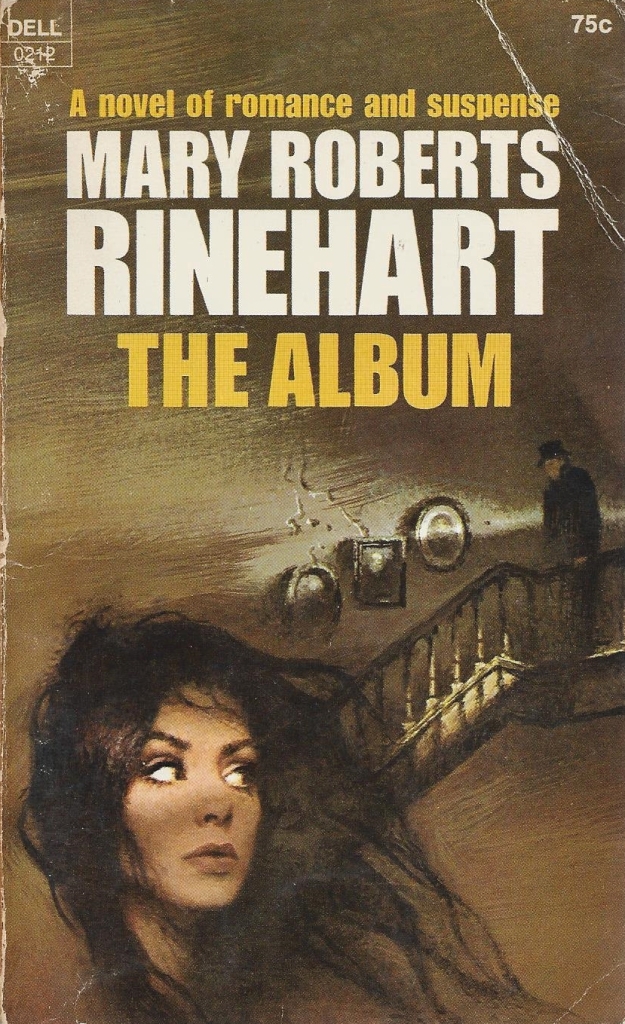
the album mary roberts rinehart pb 001The Album by Mary Roberts Rinehart ~ 1933. This edition: Dell, 1971. Paperback. 311 pages.

My rating: 5/10

There was a lot to like about this convoluted domestic drama, but it almost didn’t get its 5, for it just went on for too darned long. The length was redeemed by its passages of quite decent writing, and by the sweet love story of the narrator, which added an aura of hope to a supremely nasty tale.

So, Mary Roberts Rinehart.

She’s always sort of been there on the fringes of my reading consciousness. I have a handful of her murder mysteries (The Yellow Room, The Episode of the Wandering Knife, The Swimming Pool) which, over a period of years, regularly make the trip in to my mom’s place to provide some light reading for my book-a-day elderly parent. I recently read and reviewed one of her early melodramas, “K”, which I enjoyed, and I’ve just sought out and purchased a vintage hardcover version of her very early (1908) murder mystery, The Circular Staircase, the novel which established her career as a phenomenally best-selling mystery writer long before Agatha Christie entered the game. I once had a very handsome early edition of her very first book, 1906’s The Man in Lower Ten, which I gave away in one of those later-regretted merciless shelf purges; as I poke around exploring Rinehart a little deeper I do so wish I’d kept that one around, though I see it’s not as horribly expensive as it could be to replace if I so wish. Now that I’ve finally started paying attention, it seems that MRR is everywhere.

A case in point is this 1971 reissue of a much earlier novel which I happened upon recently at a local charity book sale. The Album is mostly murder mystery, but it is also the tale of a young woman’s emotional awakening, as the horrifying events she becomes embroiled in shock her into an awareness of her own situation and trigger her to defy the convention of her quiet and dismally unfulfilled life.

The Album was first published as an 8-part serial in The Saturday Evening Post in 1933. I could not find a record of what the author received for this work, but a similar serializations of The Wall in 1936 netted her a cool $65,000; not bad at all for the midst of the Depression! Mary Roberts Rinehart is well-known for being the highest paid writer of her era in the United States; she was hugely popular.

The Album is narrated by 28-year-old Louisa (Lou) Hall, a self-proclaimed “hopeless spinster” living with her widowed mother and a number of household servants – including a full-time chauffeur – in a stately house on a secluded side street of a large American city. The other four residences echo the Hall home in architectural detail and in the quiet wealth of the occupants. In the outside world, things are moving at breakneck speed, but the occupants of Crescent Place live in a manner of a generation before. “Out there” women are happily pursuing careers and enjoying their emancipation from staid Victorian roles; in the Crescent time stands still. The house is the sole female focus; the correct technique of ironing of the damask tablecloths and the micro-management of the servants whilst preserving large portions of the day for such peaceful pursuits as taking tea with like-minded neighbours, pasting pictures in albums, and purely decorative sewing has been elevated to a high art. Matriarchs rule in several of the Crescent Place homes, but whereas the men of the households are at least able to daily escape into the real world to pursue their careers and recreations, the daughters are kept well under the collective maternal thumbs. Though the superficial picture is peaceful, the emotions held in check behind the masks of duty are ever closer to eruption.

One afternoon the peace of the Crescent is shattered – forever, though the residents don’t know that quite yet – by the hysterical screaming of Lou’s next door neighbour. Dutiful spinster daughter Emily Lancaster, slave of an elderly invalid mother, has obviously had a severe shock; she collapses insensibly at Lou’s feet. She has just discovered her mother brutally murdered; five blows from a hatchet have suddenly severed Mrs. Lancaster from her iron grip on the household reins. The window of murderous opportunity was narrow. Mrs Lancaster was alone only for a few moments while Emily was in her bedroom changing her dress and feeding her canary; the second Lancaster daughter was showering and out of hearing; elderly Mr Lancaster was out, the servants were in the kitchen together. No stranger has been observed in the neighbourhood – the collective eyes of the Crescent residents, master and servant alike, are keen to any such intruder. Obviously an inside job, by someone familiar with the Lancaster household’s habits. But who could it have been? The discovery that Mrs Lancaster has been hoarding a small fortune in gold bars under her bed adds a sinister twist, especially when the strongbox key the murdered woman habitually wears around her neck proves to be missing.

More murders and attempted murders follow, and as the list of potential suspects shrinks through sheer attrition, the tabloids go wild with speculation, and dark family secrets are reluctantly revealed.

It is inevitable that Mary Roberts Rinehart is compared to her across-the-Atlantic contemporary, Agatha Christie, and the comparison is apt. Both writers liked to mix romance with their crime; both attempted to write “psychological” thrillers on occasion; both were good at fabricating intricately choreographed plots; both were inconsistent in providing clues to their readers; both loved the hidden identity reveal at the last moment, and the implausible motive.

The Album is a very uneven effort, and the narrator’s continual “if I had but known” refrain starts to grate slightly after the first few instances. Clues are mysteriously hinted at; some are proved to be vitally important while others are mentioned once and never again. The residents of the five houses act in the silliest of ways – first locking up their homes against the mysterious axe murderer and then wandering about alone in the night, which is handy for the furthering of the plot, but fatal for several of the key characters. Secret lives and hidden identities abound, and only in some cases are these fully developed; we are left hanging more than once.

On the plus side are some nicely competent policemen who continually just miss being in the right place at the right time – and who are not held up to scorn by the narrator and author, a pleasant change from the usual bumbling officials – and a creative use of truth serum which reveals key plot points.

The prototypically feminist Mary Roberts Rinehart accompanies her mystery with a strong critique of outmoded views on the roles of women. Both the oppressed daughters and their oppressing elders are held up to the light and analyzed and scolded by their creator for being complicit in their state of being. The daughters get the most sympathy, and are provided (in several cases) the opportunity to move away from their oppression into the light of the modern world; there is no question as to what the author thinks her characters should be doing with their lives.

The novel’s main fault (like this review!) is that it was ultimately just a bit too long. It took forever to get through, and I kept having to set it down because the sheer multitude of detail was getting in the way of my keeping the plot(s) straight in my head.

The murderer and the many secrets were revealed at the end, but by that time I was rather blasé about the whole thing; only my interest in the narrator’s romance and the well-deserved thrill she got from casting off her overbearing mother’s oppressive hand kept me engaged; the crimes faded into the background and the most horrifying details left me yawning.

An interesting read, and one that left me thinking favourably of pursuing more of this writer’s work, though it will definitely be a while before I will willingly read this particular title again. It’s going on the pile to go to town to visit Mom today, and it should keep her occupied for at least a day or two – a definite point in favour!

Read Full Post »

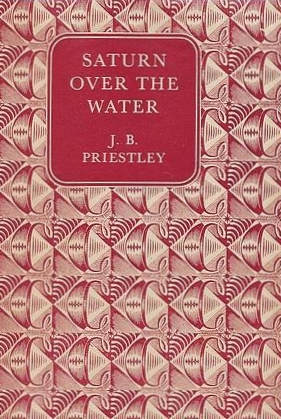
saturn over the water dj cbc j b priestleySaturn Over the Water by J.B. Priestley ~ 1961. This edition: The Companion Book Club, 1961. Hardcover. 255 pages.

My rating: I dunno. This is tough. It was a diverting read, but the ending was just too deus ex machine to swallow whole. What the hey, J.B.? Clairvoyants and psychics save the world at the eleventh hour?! Couldn’t they have stepped in a little earlier, like when the nefarious villains started their evil organization?

Oh. Right. No story.

Let me think. It was amusing in a campy sort of way, plus the hero was a moderately likeable sort. The action scenes were acceptable, though never with a fully developed edge. The women were a stumbling block, but I’ll waive objections to their overwhelming sexiness and sultry beauty because the author allowed them some competences. Okay, mostly that they were just good drivers. (And fireworks-inducing passionate kissers – does that count as a competence? In this novel, apparently so.) But he also made them just plain silly with men. Hm.

Full of goofy racial stereotypes; author Priestley/narrator Tim was particularly hard on the Germans; vestiges of the last war, obviously. And the Russians got some serious needling, too.

So with everything considered, and taking into account the other similar schlock that was being published at the time and the very real spy-versus-spy tenseness of the Cold War political situation, I think I can safely give this one a 7.5/10. Even with the cop-out ending. Because Priestley did an adequate job, and he had a few serious things to say hidden in the nonsense, and I appreciate his willingness to dabble in the genre. And it was rather a fun read, of the “so bad it’s good” school.

*****

So this was something unexpected. J.B. Priestley channels John Wyndham, with a dash of Ian Fleming, and a sprinkling of pure silliness. Here’s our story.

It all began with a call I had from Addenbrooke’s Hospital, Cambridge, where my cousin Isabel was dying of leukemia. The Hospital didn’t say she was dying of course – they never do – but I knew she was and she knew she was. The scientists who enjoy playing about with these filthy bombs tell us it’s all quite safe and have figures to prove it; but before these bombs came along I’d never known anybody who had died of leukemia, whereas now my cousin Isabel was the fourth person I’d known who had died of it.

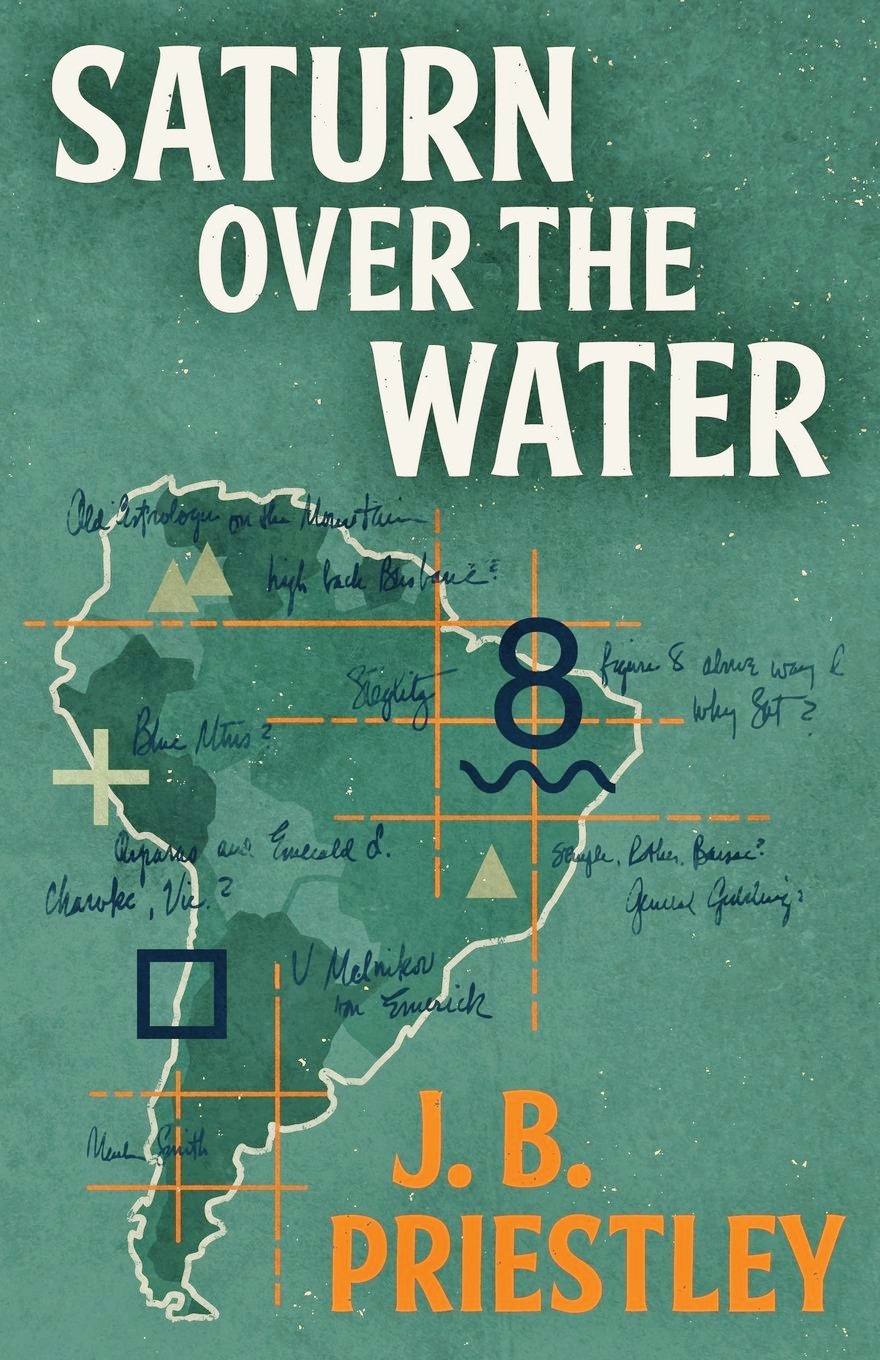
saturn over the water dj 2 j b priestley

This handsome cover depicts Joe’s scribbled clues. Can you read his writing? If not, don’t feel too bad. Tim had trouble too.

Career artist Tim Bedford, standing by Isabel’s bedside, reluctantly takes on a commission for her. Some years ago her husband, Joe Farne, a biochemist, had gone out to Peru to work for the privately owned Arnaldos Institute, where research on various nebulous “beneficial projects” was being carried out. Isabel had stayed in England, because she and Joe were having marital issues, but they’d made up via letter and all was looking up when something disturbing occurred. Joe suddenly left his job at the Institute and vanished, Isabel’s letters started being returned unopened, and no one was able to say where he had gone.

Then another letter from Joe came, but from Chile, not Peru. Three pages of hastily scribbled reassurances that he loved her, and on the last page a collection of cryptic jottings, names and phrases that made no sense to Isabel at all, but that must have some meaning, otherwise why would Joe have sent them?

Could Tim please track Joe down, to see if he was all right, and to explain to him why Isabel herself was unable to come to him, and to give Joe her dying message of love? Well, what could Tim do, especially once he visited Isabel’s lawyer and found that there was a tidy sum of money for expenses at the ready.

Before departing England for South America, Tim does some intital groundwork by tracking down the widow of one of Joe’s fellow scientists at the Institute, and what she tells him gives him pause. Something deeply sinister was going on in Peru, and she urges him to start his search there, to find a clue to Joe’s departure and subsequent popping up several countries over.

Coincidences start to occur thick and fast, as Tim sets off on his quest, soon to encounter a stunning Russian countess, a wealthy English lord, a variety of Communist sympathizers, a beneficent New York art dealer, a Peruvian multimillionaire with a brooding and artistic granddaughter, pseudo-Nazis, evil scientists, corrupt policemen, and a motley crew of shady characters occasionally on his side in the ever-more-pressing race to discover what is going on in not only Peru, but the Emerald Lake in Chile and the Blue Mountains of Australia.

Will Tim find Joe, and incidentally help save the Northern Hemisphere from annihilation by the H-bomb?

Of course he will, and he’ll discover the cryptic meaning of the Wavy Eight symbol, too, and the significance of the mysterious phrase “Saturn Over the Water”. (It’s much more daft than you could ever imagine.)

A true period piece, this one. If you find it in your travels, give it a go. Says me.

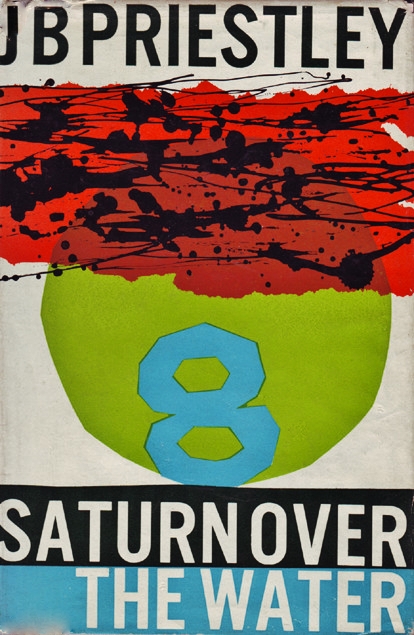
saturn over the water dj j b priestley

Eye-catching first edition dust jacket.

Read Full Post »

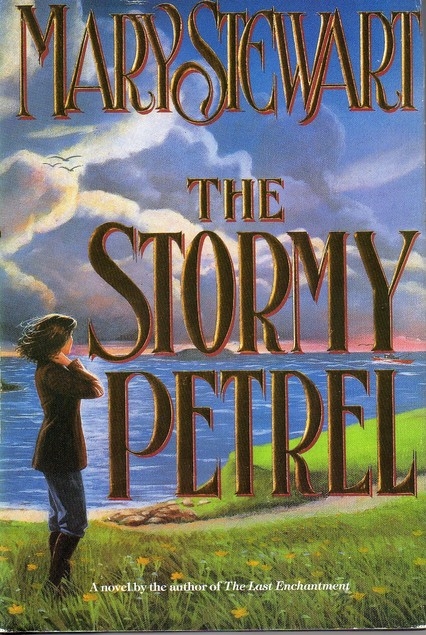
the stormy petrel mary stewartThe Stormy Petrel by Mary Stewart ~ 1991. This edition: William Morrow & Co., 1991. Hardcover. ISBN:  978-0-688-11035-2. 176 pages.

My rating: 8.5/10

Short and refreshingly sweet, this pleasant contemporary romance reads like the author was in a confident and relaxed mood when she dashed it off. It’s smooth and seamless, and a fast and effortless read. I enjoyed it.

Twenty-seven-year-old Cambridge don Rose Fenemore is ready for a break from her busy life; as well as lecturing and tutoring, she is a published poet as well as a writer of popular science fiction – the poetry under her own name, the sci fi under a pseudonym. When she sees an ad for an “ivory tower” retreat, a cottage on a remote Scottish island, she is intrigued enough to convince her physician brother to join her there for a holiday. Crispin is an avid bird watcher and photographer in his rare free time, and he and Rose have a marvelous relationship, each allowing the other plenty of space on their trips together, but also happy companionship when their interests merge.

Off to the tiny (and apparently fictional) isle of Moila, then, where Rose finds a small community of welcoming villagers, a recently renovated seaside cottage, and a stunningly beautiful natural world. Steep cliffs, shingle beaches, a few sandy coves, stands of seagrass and wildflowers, tiny rockbound lochs, a ruined Iron Age stronghold (a “broch”), and an abundant population of seabirds, seals and otters all unite to make Moila a very special place indeed. The finest part of this likeable book is Mary Stewart’s very evident delight in describing all of the previous; if Moila is a fictional place, then it must be based on a reality which the author is very familiar with. Her descriptive prose has the authentic ring, from the scent of the sedums growing on the tumbled stones of the broch to the iniquities of the “Defenders of the Highlands”, the vicious clouds of biting midges which swarm in their thousands when the breeze dies down.

But no sooner has Rose settled into her quaint cottage than things begin to go sideways; her peaceful retreat is suddenly a hive of activity. Rose wakens one night to the sound of someone in her kitchen; and stumbling down to welcome her brother – she assumes he has unexpectedly arrived in the night – she finds a handsome and charming young man making tea as if he owns the place. Which, he claims, he does. Or did. The cottage was apparently his foster parents’, and he has no idea that they have moved away, as he himself has been out of touch in an unspecified location for several years. Many apologies and all the rest, but surely Rose will forgive his unwitting intrusion?

No sooner have Rose and the smooth-talking Ewen made tentative friends over tea than another young man tumbles in out of the rain. This arrival claims he is a camper chased out of his tent by the rising wind; he has seen the lights in the cottage and seeks refuge from the storm. He identifies himself as a visiting geologist, John Parsons, but there is something about the cold and calculating glances the two men exchange which suggests something may be up. Rose sensibly retreats to her room, leaving the two young men to make do as best they can on sofa and floor, and when she awakes to find them gone, she thinks she’s seen the last of them.

She hasn’t.

I admired this heroine. She is most sensible and cool as a cucumber when things begin to tumble down around her ears. She deeply appreciates the place she has found herself in, and her rhapsodies on nature are sincere and unsentimental. She is properly cynical regarding the things that require such a view, and her musings on integrity, artistic and otherwise, are well stated and generally spot on.

A slight novel, with little in the way of true suspense; we never really fear for our capable heroine, as emotionally and physically she proves she is able to fend for herself. The romance aspect is low key as well, but comfortably there; we don’t quite know where our characters are all going to end up, but we’re pretty sure at that last page that their futures bode well.

Bonus portrayals of Rose’s two visiting students, and an intriguing glimpse into Crispin’s world and his “his life-her life” marriage. What the author doesn’t follow up is as telling as what she includes.

Nicely done. Thank you, Mary Stewart.

Read Full Post »

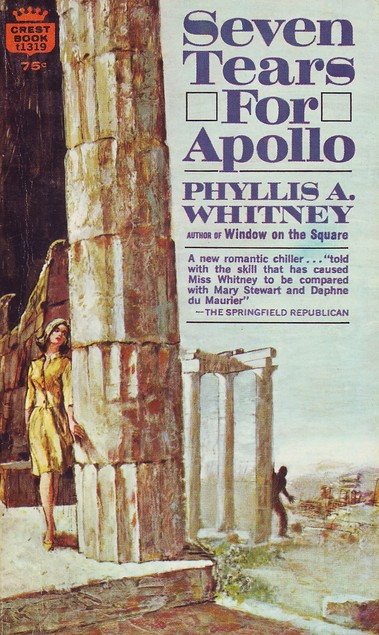
seven tears for apollo phyllis a whitneySeven Tears for Apollo by Phyllis A. Whitney ~ 1963. This edition: Fawcett Crest, 1966. Paperback. 224 pages.

My rating: 5/10

Here’s the back cover blurb on my tattered paperback, relic of one of my high school library’s discard sales way back in the 1970s:

Ever since the sudden, tragic death of her husband, pretty Dorcas Brandt lived in fear. Too many frightening, unexplainable things had begun to happen – the fatal accident to a close friend, the mysterious warnings scrawled on her mirror, her room ransacked.

Dorcas fled to Greece in search of sanctuary. But even on the beautiful island of Rhodes she could never escape the shadows of terror.

Was she just imagining it all?

Had the loss of her husband unhinged her mind?

Or was someone really out to destroy her?

Well, which one of those options would you suppose is the correct one?

If you guessed number three, you’d be bang on target. Dorcas is being persecuted, poor girl, and by a collective at that. Anyone she confides in either openly sneers at her allegations, patronizes her, or steps up the pressure. But why, oh why?

Here’s the story. We start out in the U.S.A., in an unspecified location that might just be New York, or possibly some other major eastern city. Some years back, museum curator’s lovely seventeen-year-old daughter Dorcas made a very bad marriage indeed, to sleek, handsome, half-Greek, half-Italian and all-wrong Gino. He turned out to be deceitful, manipulative, and physically violent; when Dorcas attempts to depart the marriage with baby daughter Beth, one of Gino’s mysterious “friends” pursues her and brings her back, warning her that it would be a very bad idea indeed to cross Gino, as what he owns (inferring Dorcas and Beth) he holds on to. Or else.

Gino’s profession as an art dealer is slightly nebulous but apparently profitable. Dorcas suspects that all of Gino’s transactions are not strictly legal, but she has no real proof, just an uneasy feeling which no one else seems to share, as Gino has a wide circle of influential friends in the arts-and-culture world, including matronly Fernanda, a best-selling author of quirky travel books, who has mothered Gino for years and extends her kindly meant but overbearing patronage to his wife and child.

Now nasty Gino has perished in a plane crash, and Dorcas is attempting to move forward in her life. She’s been having some emotional issues; Gino has had her in a facility for psychological treatment for her alleged neuroses, and Fernanda has been overseeing young Beth’s care. Now, since her widowhood and release from psychiatric care, Dorcas is herself living with Fernanda, acting as Fernanda’s secretary-assistant,  and reacquainting herself with four-year-old Beth. An upcoming trip to the Isle of Rhodes seems to be a positive step for everyone. Fernanda will gather material for her latest book; Dorcas will get a chance to experience Greece and see at first hand the sights that her late father could only dream of; Beth will bond with her mother in the bits in between.

As Dorcas stands in front of the museum copy of a statue of Apollo, steeling herself for the emotional journey she is about to embark upon, tears come to her lovely eyes, as she recalls her first meeting with the man that would become her husband – in front of this very statue, only a few months after her beloved father’s death – and Gino’s mysterious pronouncement that she must weep seven times for Apollo before she could shake the bonds that held her – whatever that had meant, if anything.

Dorcas weeps her way through this novel, with – I’ll give her that – abundant good reason. Gino brutalized her and left her physically traumatized and an emotional wreck; Beth has been virtually adopted by well-meaning Fernanda, with Dorcas’s contact with her daughter being held up as reward for good (meaning calm and rational) behaviour; and people – most notably Fernanda – insist on viewing Dorcas as a bereaved widow, when she is in actuality very relieved to be free of her malicious spouse. Everyone thinks Dorcas is a bit of a mess, and she tends to concur – though with slightly different reasoning.

Lately Dorcas has been finding evidence of a mysterious intruder in her room, with her belongings being ransacked, and a strange symbol being soaped on her mirror, or chalked on the floor – two circles, like the eyes of an owl. What could this mean?! And what is the apparent interest in a cryptic letter Gino had received just before his death, which Dorcas has refused to share with Gino’s associates, and which has now disappeared?

The average reader will be quicker off the mark than lovely, confused, jittering Dorcas. Something is definitely up, and Gino was obviously deeply involved. This trip to Rhodes will no doubt trigger all sorts of happenings. Beware, pretty lady!

The set-up of the novel is fairly promising, though the author drops some immensely broad hints as to what is coming up, first and foremost being that Gino is perhaps not quite as dead as he should be. The cryptic letter is obviously a clue of some sort to Gino’s last uncompleted nefarious transaction. Wee Beth is a perfect pawn, and will no doubt be used at some point to gain her mother’s cooperation by the as-yet-unidentified bad guys. Fernanda’s kindness will have a cost. Markos’s widow will hold a key secret to the affair. And there will be a romantic interest popping up soon. Ah yes, here he is. Johnny Orion, handsome young American schoolteacher, employed by Fernanda to squire her about Rhodes.

When we discover upon reaching Rhodes that the local museum is missing a major piece of ancient sculpture – the head of a boy with a tear on his cheek – we put two and two together. Obviously the Big Dark Secret has something to do with art theft! (At first I thought it might be drug running. But I swear that art theft was my second guess!)

Things get more and more hectic as the tale goes on, until the final dramatic dénouement, which sees our heroine weeping for what we hope will be the very last time.

This story was really not that great, being awkwardly plotted out throughout, and chock full of implausible action scenes and poorly written dialogue. It was head and shoulders better than Sea Jade and Columbella, though, hence its relatively high rating on my personal scale. I’m giving it a pass, at 5, because I think the author tried really hard to create an interesting scenario, and I could tell her heart was in the right place. It’s just too bad that others (Mary Stewart!) have done it so very much better.

Here’s an excellent review which goes into much more detail, plus it has lovely pictures. All of the troubling bits this blogger identified, I completely concur with, and the positive bits, too. Check it out.

Romantic Armchair Traveller – Seven Tears for Apollo

Read Full Post »

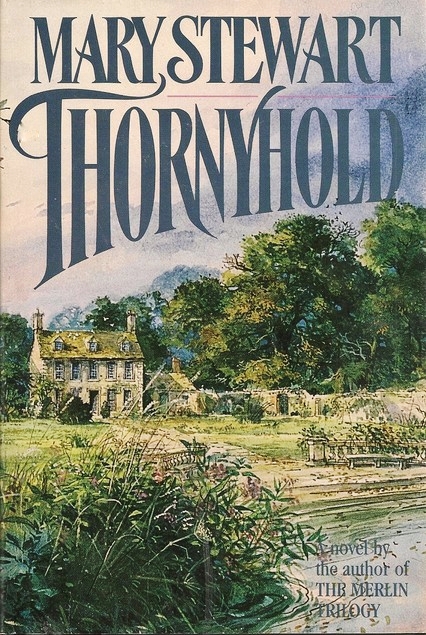
thornyhold dj mary stewartThornyhold by Mary Stewart ~ 1988. This edition: Ballantine/Fawcett Crest, 1989. Paperback. ISBN: 0-449-21712-4. 289 pages.

My rating: 8/10

Three-quarters of this romantic suspense novel was absolutely excellent; the promising plot evaporated just a little disappointingly in the concluding chapters, but on reflection my overall impression is favourable. It’s keeper, and it gets a very decent rating of 8/10 on my personal merit scale.

I do believe I am turning into a Mary Stewart fan; I’m feeling rather ashamed of my prior dismissal of this writer; I’m discovering that she is a more than competent writer; she has full control of her words, and I don’t believe I’ve yet to read an awkward phrase. She can write action scenes in vividly cinematic detail – see any of her romantic-suspense novels written between 1954 and 1976 – and accompany those with lyrical descriptions of the places where the action takes place. In a genre which encompasses some disappointingly sub-par stuff – Phyllis A. Whitney springs to mind for some reason, perhaps because I’ve been reading her this year too, and finding her sadly lacking – Stewart’s prose stands out. It’s not high literature, but it is well done, and most enjoyable to read. So I’m adding Mary Stewart to the shelf beside D.E. Stevenson and Georgette Heyer, as ones to track down, read with pleasure, and keep safe for future re-reads. Thank you, fellow internet book people, for giving me the nudge to explore these writers. You were more than right!

Mary Stewart’s heroines are uniformly well-drawn (so far every book I’ve read by her has been focussed on a leading female character), though they do always seem to share some characteristics. They are always good-looking, instantly attractive to men, and much prone to impulsive behaviour, with expected results. Each one of them does have her own personality, though, her own quirks and talents and weaknesses. The heroines are slightly interchangeable, perhaps – a test of a “stock” character is to imagine him or her in another of the author’s books – I could see Stewart’s young ladies managing quite well wherever they were placed within her fictional settings.

The heroine in Thornyhold is no exception, though the action in this low-key novel is confined to occasional verbal sparring. No drawn knives to avoid, no bullets to dodge, no trains to outrace, no rooftops to clamber over – our author at this point was likely ready to take a bit of an action-scene rest; Thornyhold was published in 1988, when Mary Stewart was a most respectable seventy-two.

Young Geillis – Gilly – Ramsay lives a lonely life, with an oddly assorted pair of parents.

I suppose that my mother could have been a witch if she had chosen to. But she met my father, who was a rather saintly clergyman, and he cancelled her out. She dwindled from a potential Morgan le Fay into an English vicar’s wife, and ran the parish, as one could in those days – more than half a century ago – with an iron hand disguised by no glove at all. She retained her dominance, her vivid personality, a hint of cruelty in her complete lack of sympathy for weakness or incompetence. I had, I think, a hard upbringing.

Gilly grows up; her mother dies, and with the natural mourning there is some relief, for her mother was a difficult person to live under. Gilly abandons her University classes and settles in to housekeep for her father; when he dies in his turn, Gilly is twenty-seven, with no resources to fall back on, and no real idea of what her future holds. Then, lo and behold, on her return from her father’s funeral to the vicarage which she will soon have to vacate, she receives a letter informing her that her godmother, (her older cousin, also Geillis, after whom Gilly has been named) has died and has bequeathed to Gilly a small country house and a very small income. Along with the lawyer’s letter is a note to Gilly from Cousin Geillis, telling her that she will find “everything here that you have most wanted.”

Cousin Geillis was something of a pagan, rejecting the outward trappings of Christianity, which made things just the tiniest bit awkward with her uncle-in-law the vicar. Her neighbours in the country regard her as something of a white witch, with her knowledge of herbalism and her sometimes peculiar behaviour, not to mention her large cat – her familiar? – Hodge. Gilly herself has had occasion to note that her cousin has some unique powers, showing up now and then just when most needed to help her young namesake over emotional hurdles in her life, and on one memorable visit providing Gilly a fleeting glimpse into the future, via crystal ball.

So Gilly steps into the life her cousin has left waiting for her. Needless to say there are some twists in store, chief among them being her cousin’s neighbour, Mrs. Trapp, who seems more at home in Geillis’ house than she should be. She brings Gilly meals, and nags her about finding a certain handwritten notebook she claims Geillis would have wanted her to have, and behind her ready smiles Gilly glimpses a steel-trap disposition which is most unnerving.

And, being a romance, there does in due time appear a man. And because it is a Mary Stewart romance, the man in question is preceded by a charming young son, whom Gilly befriends with no idea at all that the friendship will lead to something much, much more.

There is a certain intensity in the first part of the book which was rather heart-rending; one wonders if some of it is autobiographical? Or perhaps it is just cleverly imagined. The lonesome child Gilly is nicely portrayed, though the tone is carefully unemotional; our narrator telling the story is Gilly herself, some seventy years onward, looking back from her (happy) old age.

With the escalating escapades of scheming Mrs. Trapp, the tale turns towards farce, with the ending sequence – concerning, among other things, a love potion gone awry – striking something of a frivolous note after the emotional seriousness of what has come before.

A well-written book in its way, and one I will no doubt return to when I want something not too challenging to pass an hour or two. Good reading for a waiting room or a journey; easy to pick up and put down; the limited number of characters and the straightforward storyline are easy to keep hold of even with frequent interruptions.

Read Full Post »

the moon-spinners pb cover mary stewartThe Moon-Spinners by Mary Stewart ~ 1962. This edition: Hodder, 1964. Paperback. 264 pages.

My rating: 9/10

I don’t know what it is – perhaps the snowy weather and the early dark evenings – but this book completely hit the spot with me a few nights ago, following through to the next day as I surreptitiously raced to finish it off in between my proper occupations.

Maybe the appeal comes from the sunny setting – the Isle of Crete at Easter, mountains alive with wildflowers – or possibly just the perfectly adorable love interest of our intelligent heroine – he’s slightly mysterious, rather handsome, charming even on his bed of pain, plus he throws himself wholeheartedly into the fray-of-the-moment, particularly if it’s to avenge damage done to his lady-love.

It certainly doesn’t hurt that The Moon-Spinners is quite beautifully written for its genre, in what I’ve come to realize is Mary Stewart’s trademark detailed travelogue style. It assumes a certain degree of intellectual and general knowledge among its readers, and refuses (for example) to reference in-text literary allusions, assuming our familiarity with them, something I always appreciate when done in an appropriate fashion, as a natural part of the narrator’s voice.

The action scenes were relatively short, though no more believable than any of Stewart’s other escapades, and I found I managed to get through them with only a raised eyebrow, not an outright snort of indignation. Let’s see, now. The heroine is attacked once with a knife and once with a fish spear (the spear episode is while in the water, of course, with the heroine scantily attired in her underthings), and she is present while bullets fly about willy-nilly but ultimately harmlessly, and she manages to bring the chief villain to grief at the very end with a spur of the moment intervention. There are two successful murders (well, perhaps more of the lost-my-temper manslaughter-type murders versus deliberate planning) plus at least one attempted murder, all in just the first few days of what was supposed to be a restful botanizing vacation.

Stewart gets the flowers right, and includes a clever Linnaean word-joke or two which I greatly appreciated, being of the horticultural persuasion myself. The whole novel is packed full of heart-racing action and instant romance, which keeps things clipping right along. The side characters – the heroine’s older cousin, the hero’s local-boy sidekick and charming younger brother – are a fabulous addition to the story, and allow for an abundance of humorous repartee. Even the surviving villains are quite a lot of fun, if you’ll forgive my using “fun” in the same breath as “murderous villain”. One is prone to violent loss of temper, the other tiptoes around anything messy with faint disdain – “Well, I’d hate to have to kill you, but you leave me no choice. Oh, better yet, I’ll leave it up to my brutish sidekick here to deal with you. I just don’t want to know!”  Together they make a diverting team, in every sense of the word. The murderees themselves are unlikable thug types, so we don’t shed too many tears at their demise.

What else can I say? Loved it. The best Mary Stewart I’ve read yet, though My Brother Michael comes close. (Must also post some thoughts on that one, some day.)

So, the story.

It was the egret, flying out of the lemon-grove, that started it. I won’t pretend I saw it straight away as the conventional herald of adventure, the white stag of the fairy-tale, which, bounding from the enchanted thicket, entices the prince away from his followers, and loses him in the forest where danger threatens with the dusk. But, when the big white bird flew suddenly up among the glossy leaves and the lemon-flowers, and wheeled into the mountain, I followed it. What else is there to do when such a thing happens on a brilliant April noonday at the foot of the White Mountains of Crete; when the road is hot and dusty, but the gorge is green, and full of the sound of water, and the white wings, flying ahead, flicker in and out of deep shadow, and the air is full of the scent of lemon-blossom?

Lovely young Nicola comes on holiday to a remote village in Crete. Arriving a day early for a planned rendezvous with her cousin, she wanders into the hills and is assaulted by a knife-wielding Greek; he then takes her to a hut in which she finds a wounded Englishman, Mark. Much swearing to secrecy results; the hiding-out is because Mark’s fifteen-year-old brother has been kidnapped by a gang of thugs, one of whom shot Mark and left him for dead; Mark and Greek pal (Lambis) have realized that killer is now out searching for the not-quite-as-dead-as-thought Mark, to finish him off. A deadly game of cat-and-mouse keeps tension high as the various characters dash (or limp) from nook to cranny to shepherd’s bothy to niche-in-rock-cliff to ancient temple.

After spending the night nursing Mark, Nicola reluctantly goes off down to the village, plays all innocent, and sleuths away like mad. The small hotel where she is booked to stay is run by an oddly assorted partnership. One is a local man, Stratos, returned from years away in England with a nest egg which he is investing in the hotel; the other is his English partner, Tony, a fabulous cook , darling – and also bar-man and waiter and general manager. Tony is much given to gushing extravagances of speech; his dialogue is well-peppered with italics. I wonder rather if Mary Stewart is trying to portray something more than personal eccentricity here; if this novel were a few decades older Tony would be the quintessential “catty gay guy” we see so frequently in contemporary chick lit. As it is there are one or two possibly double entendre references to Tony not being the heroine’s type, and her older cousin Frances, a sophisticated type herself, is quite catty in regards to Tony, calling him “Cedric” after the literary Little Lord Fauntleroy.

Anyway, Nicola snoops about, discovers that all is not as it seems in this peaceful little village, identifies the villains, discovers the fate of the kidnapped boy, foils the nefarious plottings of the gang of villains, and finds true love. This takes several hundred pages, but they are filled with incident and description and clever conversation and in general are a pleasure to read. A good read indeed, completely effortless and a fabulous diversion from the onset of the Canadian winter.

Oh, and the “moon-spinners” of the title. I thought at first this was a reference to the Cretan windmills, as these are a feature of almost every one of this novel’s cover illustrations I’ve seen. You know, round, like the moon; spinning, because they’re windmills. But though a windmill features importantly in the narrative – hence the illustrations – the moon-spinners referred to are something quite different. Here is Nicola, telling their story:

They’re naiads – water nymphs. Sometimes, when you’re deep in the countryside, you meet three girls, walking along the hill tracks in the dusk, spinning. They each have a spindle, and onto these they are spinning their wool, milk-white, like the moonlight. In fact, it is the moonlight, the moon itself, which is why they don’t carry a distaff. They’re not Fates, or anything terrible; they don’t affect the lives of men; all they have to do is to see that the world gets its hours of darkness, and they do this by spinning the moon down out of the sky. Night after night, you can see the moon getting less and less, the ball of light waning, while it grows on the spindles of the maidens. Then, at length, the moon is gone, and the world has darkness, and rest, and the creatures of the hillsides are safe from the hunter, and the tides are still . . .

Then, on the darkest night, the maidens take their spindles down to the sea, to wash their wool. And the wool slips from the spindles into the water, and unravels in long ripples of light from the shore to the horizon, and there is the moon again, rising above the sea, just a thin curved thread, re-appearing in the sky. Only when all the wool is washed, and wound again into a white ball in the sky, can the moon-spinners start their work once more, to make the night safe for hunted things . .

Worth reading the book, just for the bits like that. I’m liking Mary Stewart more and more!

One more note. Disney made a 1964 movie based on this novel, starring Hayley Mills. It sounds like “loosely based” is more accurate; descriptions of the Disney production show that the plot diverges widely from Mary Stewart’s crisp thriller. Apparently no expense was spared in the making of the film, which was filmed on location in Crete, with Disney rebuilding a war-damaged village and engaging local people as background players. I’ve not seen it myself, and from the sounds of the plot changes, would not find the Disneyfied version of the story terribly appealing, but I would like to see the physical setting. Has anyone both read the book and seen the film? If so, would love to hear your thoughts!

Read Full Post »

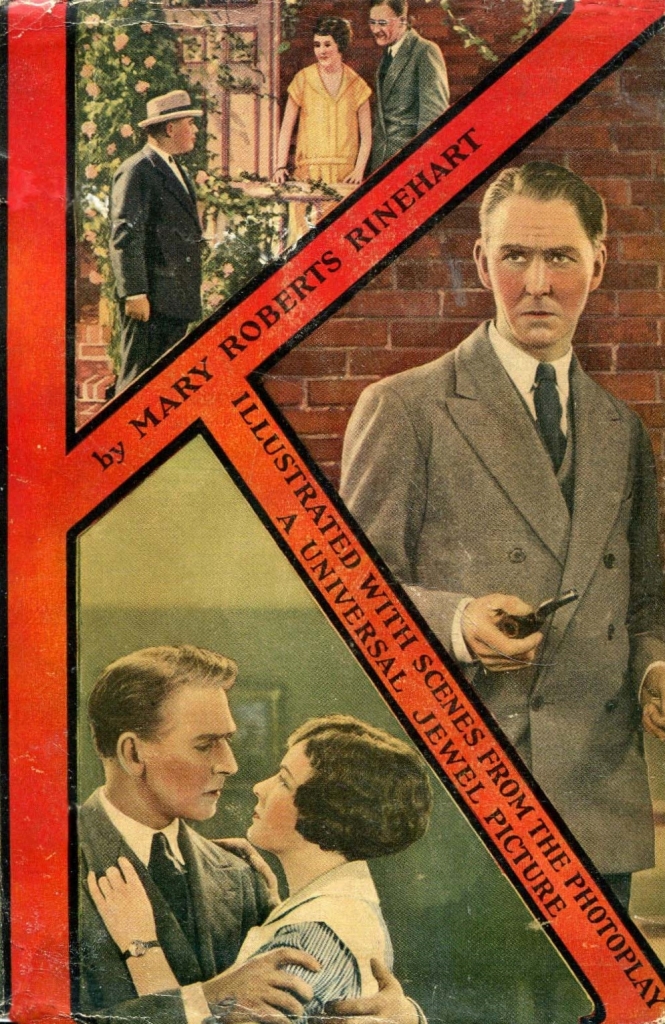
k mary roberts rinehart p

This is not my personal copy, but the dust jacket of an older edition. Apparently “K” was made into a movie at one point.

“K” by Mary Roberts Rinehart ~ 1914. This edition: Blakiston 1944. Hardcover. 407 pages.

My rating: 6.5/10

A melodramatic and exceedingly improbable story of an absolutely perfect heroine – beautiful, morally upright, self-sacrificing, pure through and through – you know the type! – and her three lovers. First is youthful and impetuous Joe, followed by brilliant (and fickle) young surgeon Max, and ultimately (somehow I doubt this will be a spoiler; especially as the cover pictured here completely gives it away) the mysterious “K”.

This vintage read was surprisingly good, considering the ridiculous storyline. The author has a lot to say about roles of women, the roles of marriage and child-bearing in female self-fulfillment, and the hypocrisy of society to those caught out in wrongdoing – the unmarried mother, the bastard child, the alcoholic rich man – and how each is viewed and sometimes excused merely on the basis of social status. How does that old song go? “It’s the same the whole world over, It’s the poor what gets the blame, It’s the rich what gets the pleasure, Ain’t that a blooming’ shame?”

Here we have a lovely young eighteen-year-old girl, Sidney, who decides to turn her back on marriage as offered by the infatuated Joe, and to make a career as a nurse. She is accepted as a probationer, and immediately falls head-over-heels in love with Doctor Max, a brilliant young surgeon whom she has known since childhood, but who has never realized what a lush young thing Sidney is until she pops up under his nose in nurse’s garb. Max is notoriously a lady’s man, with another love interest on the side, so the relationship seems questionable from the start, but Sidney succumbs (partially) to Max’s passionate advances. Her virtue remains intact, however, and she is saved from herself by the intervention of dark horse “K”.

K. Le Moyne – he never gives a first name – shows up one evening at Sidney’s mother’s house to rent a room, and though he is tenaciously reticent about his past, his quiet charm and readiness to help out with a myriad of domestic situations – from nurturing a pet ground squirrel to helping with the cooking – makes him the friend of all.

But what is K hiding? And why does Max reel in shock when the two men finally meet? What are they discussing behind closed doors on their subsequent nightly meetings? Did Sidney really mix up her medications and poison that pathetic young patient? Why is her superior Carlotta (incidentally Max’s main squeeze before Sidney’s entry) so alternately friendly and harsh to Sidney? And where did Joe get that gun?

See? Told you it was melodrama!

The cast of supporting characters is almost more interesting than the interconnected love triangles (quadrangles?) of the main protagonists.

Here we have a couple of middle-aged lovers, one a cook and the other a deaf-and dumb book salesman, communicating by notes to each other as they sit out each evening on the back steps. Another middle-aged spinster goes off to live in sin with a man whose wife is languishing in a mental home; her decision to put herself beyond society’s pale by her last-chance clutching at love is most sympathetically portrayed.

A young woman marries beneath herself socially, to a man with a drinking problem and a history of amorous dalliances; she knows this before she marries, and she knows she doesn’t truly love her husband-to-be, but she goes ahead anyway, to repent at leisure. (Subtext: Is marriage really such a socially desirable state that an intelligent well-off young woman will willingly enter into a questionably wise bond, particularly if love is not there?)

Dr. Ed, Dr. Max’s elder brother, is an old-school practical doctor in contrast to his younger brother’s cutting edge cleverness as a specialized surgeon. Dr. Ed, wiping his scalpel on his pant leg (sterilization dulls the edge, he maintains), proudly admires his brother’s accomplishments, and regards the sacrifice of his own career, his own never-attained wife and family as a worthy price to pay for his brother’s success. Dr. Ed has never married and has spent every penny he’s earned supporting his brilliant brother through medical school; his role in the story is as sort of a benevolent father figure, dispersing wisdom and keeping a high moral standard as an example to his friends and neighbours.

Sidney’s Aunt Harriet is one of my favourites. Long the drab neighbourhood seamstress, Harriet pursues a long-held ambition to design clothes for the local haut monde, and after borrowing money to set herself up, eventually makes it to Paris, from whence she sends engraved circulars to the customers eagerly awaiting her return. I absolutely loved the glimpses of practical yet creative Harriet getting dress-designing inspiration from crocuses in snow, or the colours of the early morning city sunrise. A happy spinster, Harriet, illustrating an independent womanhood and its rewards, in a world which still maintains that marriage and motherhood is a female’s highest calling.

Mary Roberts Rinehart was an exceedingly prolific writer of dramatic novels and mysteries, and a well-known feminist of her time. In “K”, her views on the rights of women come through loud and clear, though mixed rather oddly with this very traditional romance. She does allow her heroine to complete her goal to become a fully fledged nurse, though marriage awaits at the end of her qualification. I rather wonder what the after-story would turn out to be?

Read Full Post »

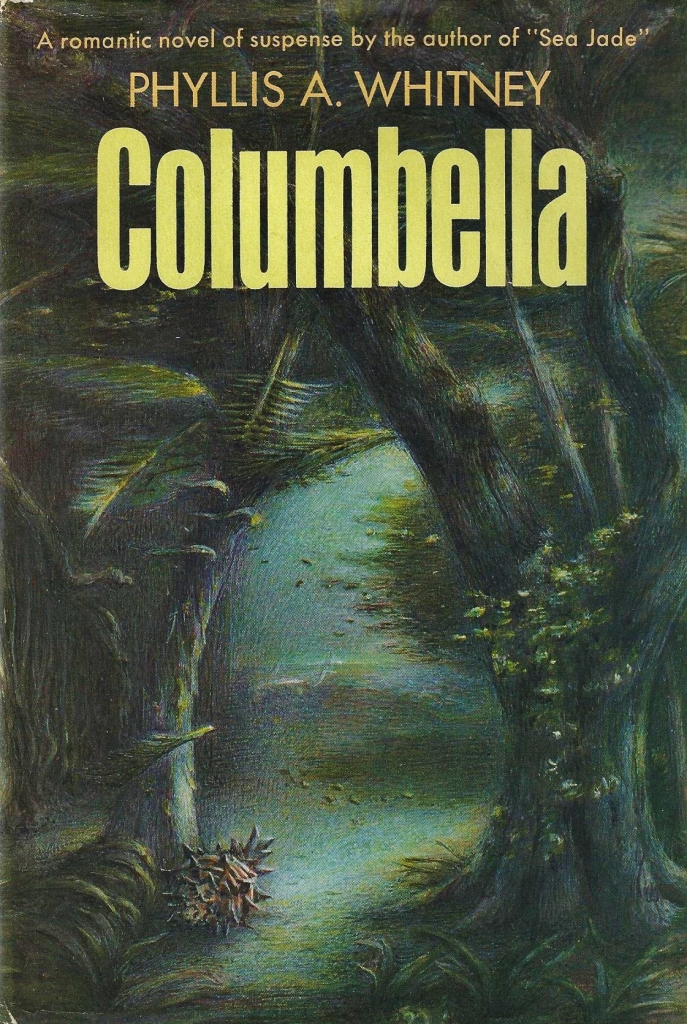
columbella phyllis a whitney 001Columbella by Phyllis A. Whitney ~ 1966. This edition: Doubleday, 1966. Hardcover. 246 pages.

My rating: 3/10

Oh, why did I read this? It was so disappointing. And I have had prior experience with this author – see here  – and went in fully cognizant of what I was about to experience. All I can say then is that hope springs eternal. And that my hope was dashed. Oh, woe!

But don’t you like the mysterious cover illustration, and doesn’t this flyleaf blurb sound promising, for a lightly diverting romantic-suspense thriller type thing?

That was a night of gold and red, with torches flaming on the hilltop and the lights of Charlotte Amalie fanning out around the harbor below. A night of water lily and sweet-smelling cereus. The night of the shell…

Jessica Abbott, fleeing her own past, finds herself the center of a whirlpool of conflict at Hampden House, high on its cliff in the Virgin Islands. She is confronted by Catherine Drew, a woman whose sole purpose is to torment and destroy. Catherine is the wife of a vital, driven man, Kingdon Drew-toward whom Jessica is irresistible drawn. Jessica must defy the beautiful, self-indulgent Catherine, who likes to affect the name of a shell – Columbella. She must fight for the very future of another woman’s child. Above all, she must find the strength to help the man she loves escape the trap Catherine has set for him. Yet each day Catherine seems to mock her in a new way – and win. Until the night of the shell…

Always, the brilliant island sun shines over Hampden House in St. Thomas and over Caprice, the plantation in St. Croix that is crumbling to eerie ruin, guarded by its unicorns. Always the threat of a hurricane looms over this exotic setting, where the past still affects the present.

So. Our lovely heroine Jessica has just lost her own sweet-faced, soft-voiced, utterly poisonous, insidiously controlling mother, and she is seeking to escape her own demons by taking on the role of companion-governess to yet another emotionally-abused girl, the teenage daughter of an architect and the aforementioned Catherine. Jessica falls in love with the hunky, broody Kingdon at first sight, and he himself is overcome with passion for her, which he manfully tamps down until it breaks free of its straining bonds. Lots of scenes of overt jealousy (on Catherine’s part) and apparent dislike (on Kingdon’s part only, for Jessica openly fawns on her employer from the get go) before the two lovers fall into each other’s arms. But there is still that pesky wife…

The final solution is of course a convenient demise – poor Catherine-Columbella! With Kingdon as main suspect, but of course he gets off the hook, thanks to a convenient confession by the true killer, who then is dealt with by the Hand of God (tree falling in a storm, crushing said murderer) and allowing everything to Work Out For The Best.

The best bits in the book were in the details. The setting, St. Thomas in the Virgin Islands, is enthusiastically described, and there are nice touches of verisimilitude in the discussion of the shell-collecting business and the preparation of the specimens for sale.

But the scenarios and the characters – wow! Can something be described as both flat and melodramatic at the same time? If so, our writer has pulled it off. And the passion between Kingdon and Jessica was blush-inducing indeed, but not because of its explicit nature. No, because it was so agonizingly clichéd. I was embarrassed at myself for willingly reading such schlock.

I want to like Phyllis Whitney so very, very much. She has such a promising back story as a writer, and she very obviously goes about her stuff with the best will in the world. She was a bestselling writer in her time, and much beloved by her devoted readers. So I may continue in my occasional investigations of her oeuvre, hoping to find a semi-precious gem or two amidst the very prolific sparkly bits of her vast body of work.

phyllis a whitney bio back dj columbella 001

Read Full Post »

« Newer Posts - Older Posts »