Posts Tagged ‘My World’

Here’s the second installment in my look back at some of the ups and downs, highs and lows, bests and worsts of my personal 2013 reading year.

Yesterday I picked out 10 books which pleased me. These weren’t necessarily the “best” things I read, but they left me with a sincere sense of pleasure.

Today I think I will highlight 10 books (or maybe one or two more) which surprised me by confounding my preconceived expectations in some way. Most of these choices have already been reviewed on the blog, but there are several which I didn’t get around to, so I’ll see if I can link some more detailed discussions when I get to those.

Without further ado, here is the 2013 Round-Up Part 2, of 10+ Most Unexpected Reads. Still to come, 2013 Round-Up Parts 3 and 4, Most Disappointing and Personal Favourites. 

*****

MOST UNEXPECTED READS 2013

In order of publication.

*****
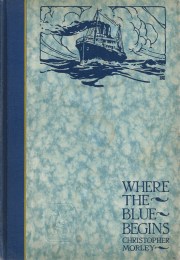
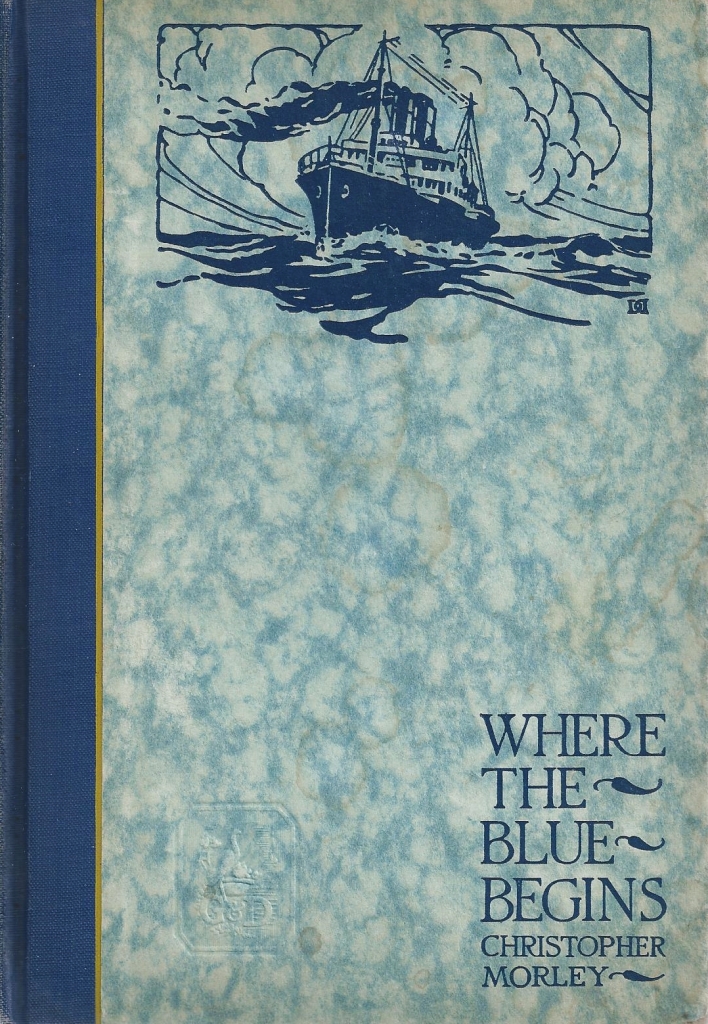
where the blue begins christopher morley cover 0011. Where the Blue Begins     

by Christopher Morley ~ 1922

Gissing lived alone (except for his Japanese butler) in a little house in the country, in that woodland suburb region called the Canine Estates. He lived comfortably and thoughtfully, as bachelors often do. He came of a respectable family, who had always conducted themselves calmly and without too much argument. They had bequeathed him just enough income to live on cheerfully, without display but without having to do addition and subtraction at the end of the month and then tear up the paper lest Fuji (the butler) should see it.

Here we have a decently prosperous, almost middle-aged bachelor, one Gissing, whose private income is just sufficient to allow him a life of leisure, with a country house staffed by a manservant, and scope for mild entertainment and some local travelling. But comfortable though his life is, Gissing is occasionally disturbed by vague yet compelling yearnings to see and understand his purpose in the world. What’s it all about, and what should we do with it, this thing called “Life”? What’s over the next horizon, “where the blue begins”?

Well, nothing here to raise any eyebrows, and certainly nothing to put this on the Most Unexpected list, except for the twist, which is that this is the world as we know it, but it is peopled entirely with anthropomorphized dogs. They walk on two legs, wear clothes, drive motorcars, dwell in houses, but the canine instinct continually makes itself known. Aromas madden these creatures; they occasionally tear off their clothes and run madly through the countryside, to return apologetically to their dwellings when the mood passes. They snap and snarl when taunted, and the pack instinct is strongly present, as Gissing finds to his discomfort when he falls afoul of the status quo and is hunted by a ravening group of his peers.

It’s beyond weird, this whole conceit, but it works surprisingly well, and Morley is obviously enjoying himself thoroughly the whole way through this very odd book.  Where the Blue Begins was a bestseller in its time, and was produced in numerous editions. And yes, this is the Christopher Morley of The Haunted Bookshop and Parnassus on Wheels, and if I was expecting something along those lines when I first picked up Where the Blue Begins, I was soon shaken out of my complacency.
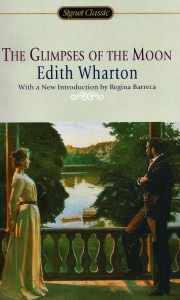
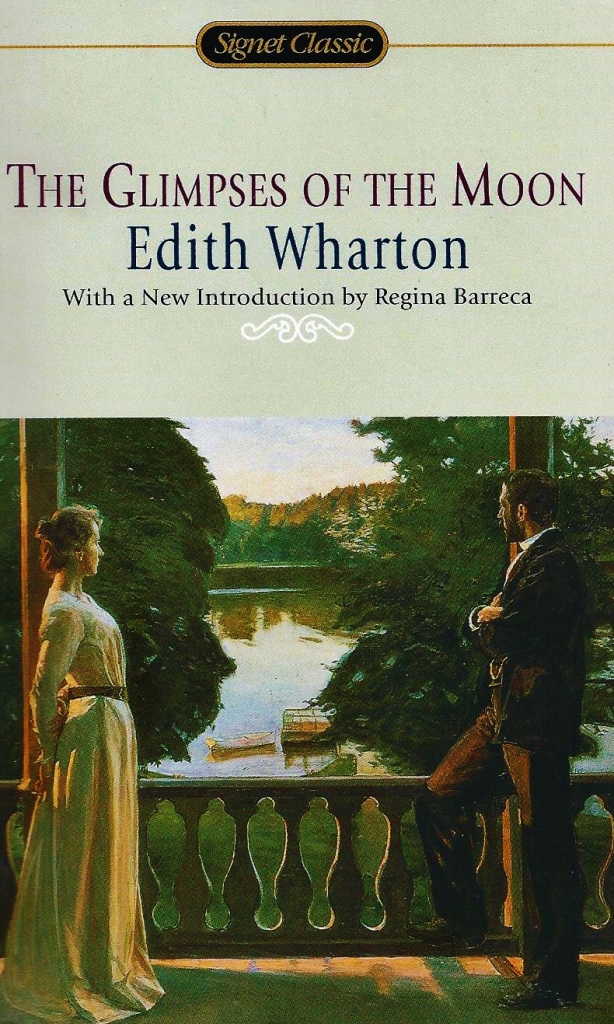
glimpses of the moon edith wharton 0012. The Glimpses of the Moon 

by Edith Wharton ~ 1922

Susy and Nick, bona-fide beautiful people, live by their wits as hangers-on among the idle rich. Susy gets by on her charming personality alone, while Nick is an aspiring writer, but the last thing either wants is a moneyless marriage, so when they find that they have fallen in love with each other, the relationship seems a non-starter from the beginning. Until Susy comes up with a clever plan to seize at least a year of happiness together before they must part to seek wealthier partners.

A playful and frivolous departure for the generally serious Edith Wharton, and one which I mostly enjoyed, especially in the early chapters where Susy dances precariously on the knife blade of dazzling her more dull-witted but well-heeled sponsors into paying for her honeymoon. Susy is the Jazz Age Lily Bart, though her eventual fate is kinder, as befits this much lighter production by an American literary icon.
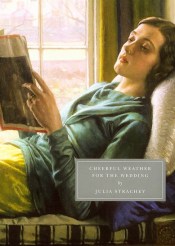
 

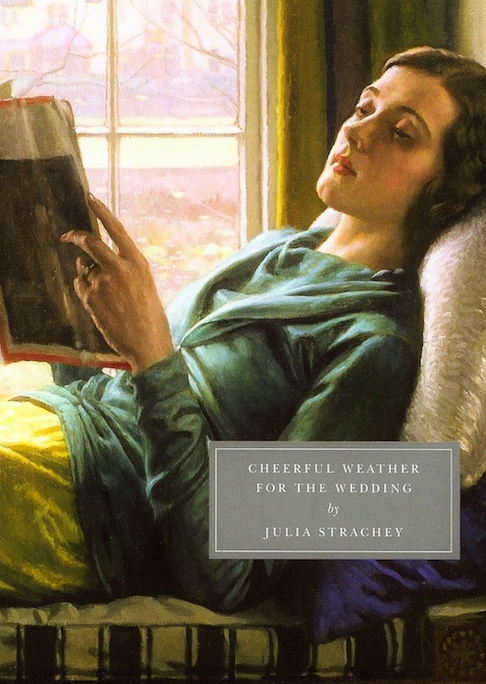
cheerful weather for the wedding julia strachey3. Cheerful Weather for the Wedding

by Julia Strachey ~ 1932

An unexpectedly dark, very short, hard-to-analyze novella which got a lot of attention in the blogosphere earlier this year, due to the recent release of a padded-out film version of the story. The humour which many reviewers identified is definitely there, but I found much pathos as well, though it was of the twisted sort, where one is not quite sure if the author is sneering a bit at her readers for being taken in by the obvious and missing the hidden implications. Confusing response? Well, if so, it fits this odd little book perfectly well.

Dolly Thatcham is getting married in a few hours, and upon meeting her in the opening pages of the book we take a deep breath and hold it for the duration. This book is strung out with tension. Something is going to happen. Something more than a mere marriage ceremony, the veiled implication teases us.

It was as if the drawing-room reappeared in the mirror as a familiar room in a dream reappears, ghostly, significant, and wiped free of all signs of humdrum and trivial existence. Two crossed books lying flat, the round top of a table, a carved lizard’s head on a clock, the sofa-top and its arms, shone in the grey light from the sky outside; everything else was in shadow. The transparent ferns that stood massed in the window showed up very brightly and looked fearful. They seemed to have come alive, so to speak. They looked to have just that moment reared up their long backs, arched their jagged and serrated bodies menacingly, twisted and knotted themselves tightly about each other and darted out long forked and ribboning tongues from one to the other; and all as if under some terrible compulsion … they brought to mind travellers’ descriptions of the jungles in the Congo, – of the silent struggles and strangulations that vegetable life there consists in it seems.

To complete the picture, Dolly’s white face, with its thick and heavily curled back lips, above her black speckled wool frock, glimmered palely in front of the ferns, like a phosphorescent orchid blooming alone there in the twilit swamp.

For five or six minutes, the pale and luminous orchid remained stationary, in the centre of the mirror’s dark surface. The strange thing was the way the eyes kept ceaselessly roaming, shifting, ranging, round and round the room. Round and round again … this looked queer – the face so passive and remote seeming, and the eyes so restless.

The light perhaps caught the mirrored eyes at a peculiar angle, and this might have caused them to glitter so uncomfortably, it seemed even so wildly – irresponsibly, – like the glittering eyes of a sick woman who is exhausted, yet feverish.

This is indeed a bride with a back story.
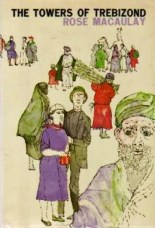
the towers of trebizond 1 rose macaulay4. The Towers of Trebizond

by Rose Macaulay ~ 1956

‘Take my camel, dear,’ said my aunt Dot, as she climbed down from this animal on her return from High Mass.

No doubt many of you are familiar with this quotation of the first line in this iconic and deeply strange fiction. Presented by publishers and numerous reviewers as a light and humorous travel tale, I found that it was no such thing, though there was certainly some humour and more than a little travel involved.

It took me a very long time – weeks – to work my way through The Towers of Trebizond, because I found it exhausting in what it asked of me as a reader to process. But this in no way put me off; it actually intrigued me and made me more and more eager to come to grips with what the author was doing here.

The narrator, Laurie, of ambiguous gender until the very end of the story, is accompanying an aunt and an Anglican priest on a visit to Turkey, with the joint aims of converting Muslims to Christianity (Father Chantry-Pigg), studying the living conditions of the local female populace (Aunt Dot), and writing a travel book (Laurie). Part way through the trip, Father Chantry-Pigg and Aunt Dot disappear, apparently into Soviet Russia, leaving Laurie stranded in more ways than one.

A Billy Graham Crusade and a group of apocalypse-anticipating Seventh-Day Adventists heading for Mount Ararat add an element of farce to the saga, as does Laurie’s acquisition of an ape which Laurie attempts to lead into a more highly evolved human form, at one point attempting to teach it to drive a car, with the expected results.

The internet is crowded with marvelous reviews of this fantastical tale, and I hesitate to choose one for you, so I will leave it up to you to investigate further. Worth reading, but keep your mind open. This is not at all what it at first seems to be.
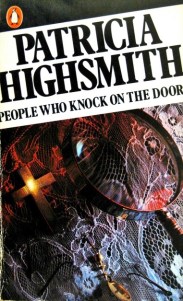
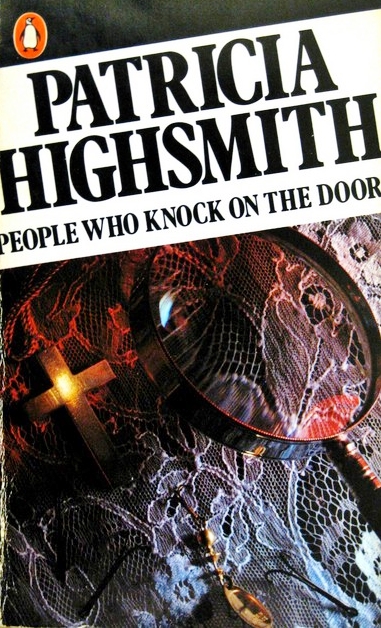
people who knock on the door patricia highsmith5. People Who Knock on the Door 

by Patricia Highsmith ~ 1983

A tense, noir, almost-thriller; a can’t-look-away, exceedingly uncomfortable depiction of a dysfunctional family and its twisted disintegration after two of its members embrace an arcane strain of Christian fundamentalism. None of the characters are particularly likeable or completely faultless, including the pseudo-hero Arthur, eldest son of the family in question, who is the closest thing to a chief protagonist in this tense tale.

Despite its date of publication, it seems to be set in the 1950s, and has a decidedly vintage feel to it. This is the first Patricia Highsmith book I’ve ever read, though I’ve seen several of the movie adaptations of her work, Hitchcock’s Strangers on a Train, and of course the Venetian-set Talented Mr. Ripley, so the dark psychological elements in this were somewhat expected, though the way this one progressed was completely unpredictable to me, hence its inclusion on this list.
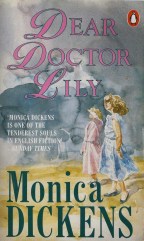
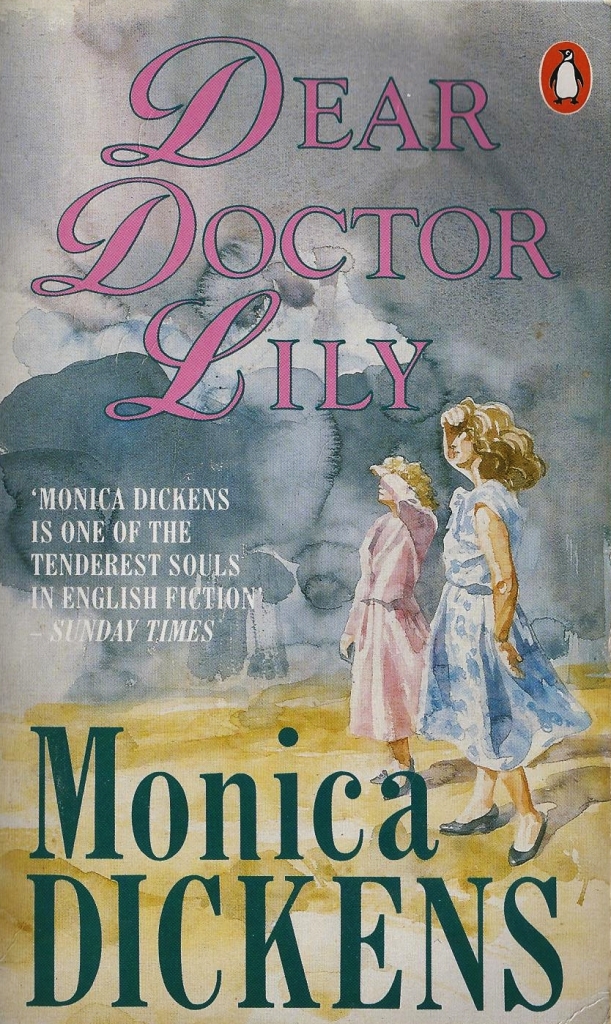
dear doctor lily monica dickens 0016. Dear Doctor Lily

by Monica Dickens ~ 1988

This was one of the last novels of the prolific Monica Dickens, who died in 1992 at the age of 77. Her first book, the best-selling and still in print One Pair of Hands, was published in 1939, and it was followed by at least thirty more, some of which are classics of middlebrow fiction. All of her books are compulsively readable, and Dear Doctor Lily is no exception. I couldn’t look away, much as I occasionally wished to. Its frequent bleakness rather disturbed me; the author definitely has the gloves off here in her vivid descriptions of two very different marriages.

Two English girls meet on a flight to America in the early 1960s. Ida is heading to an American G.I.’s family home; she is going to be married, and her expectations are high that her life will be better than it was in England, even if she has a few inner qualms about her prospective spouse and his true devotion to her. Lily is destined to go a very different direction. She is about to meet the man who will become her lover; her far-off future holds a deeply happy marriage, though she has no inkling of that as yet, just as Ida has no foreboding of her own future abuse at the hands of her brutal spouse, and her desperately squalid future.

This book is all about random encounters, and the inconceivable vagaries of the hand of fate. Rather appropriate from a writer in her seventh decade, come to think of it – Monica Dickens paid attention her whole life to what was going on around her, and Dear Doctor Lily showcases the result of such keenly discriminating observation.

And though I’d love to link a proper  review, I couldn’t find much online beyond the sketchiest of references, so you’ll have to take my word for it that this is a must-read for the Monica Dickens enthusiast, but that it’s definitely not a comfort read. Glimmers of hope and bits of personal redemption keep it out of the totally depressing category, and the writing is, as ever, stellar.
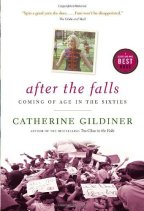
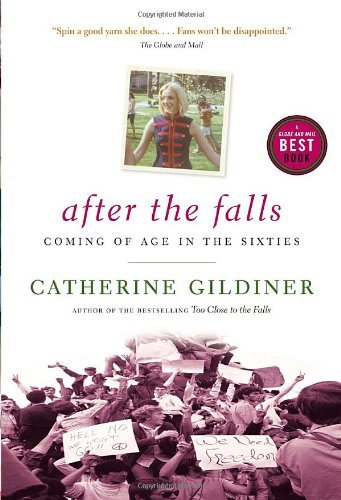
after the falls catherine gildiner7. After the Falls

by Catherine Gildiner ~ 2009

This was a grand year for memoirs, and this one was outstanding and highly unexpected in the direction it went. Toronto psychologist Catherine Gildiner looks back at her adolescence in Buffalo, New York in the 1960s, and her subsequent troubled relationship with a volatile poet and civil rights movement protestor. Outspoken and funny and tragic and compulsively readable. A follow-up to the also-bestselling Too Close to the Falls, which you may already be familiar with, and which is now on my own Must-Read list.
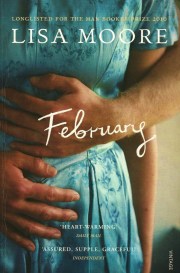
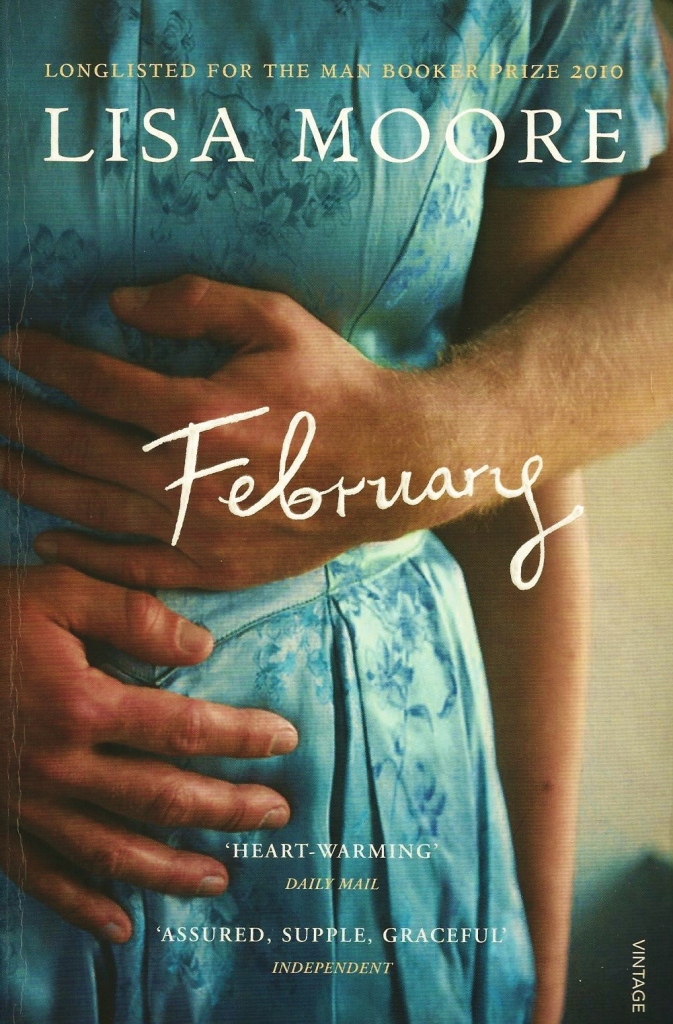
february lisa moore 0018. February

by Lisa Moore ~ 2010

This well researched and absolutely heart-rending historical fiction about Newfoundland’s 1982 Ocean Ranger disaster won this year’s annual C.B.C. Radio Canada Reads contest, and, in my opinion, deserves every bit of praise it got.

February is based on a true Canadian tragedy. On Valentine’s night in 1982, out on the Atlantic Ocean off Newfoundland, the oil drilling rig Ocean Ranger capsized and sank during a violent storm. All eighty-four men on board the rig died in the frigid waters, some apparently within hailing distance of a vessel which was unable to rescue them. The families of the dead learned of the disaster from news accounts on the radio; the oil company made no attempt to notify them. February’s main character Helen O’Mara loses her husband Cal that night. She has three young children and is pregnant with a fourth. Life for all of them becomes indelibly marked by their loss in ways both immediate and not always obvious until many years later.

I generally avoid books which are this desperately emotional, but February surprised me by its enjoyability. Maybe it was the pugnaciously regional voice of the fictional Helen, with its plethora of to-the-point and very funny “Newfie”-isms, or perhaps it was the appealing interviews with the author I was lucky enough to catch on the radio during the Canada Reads debates, but I’m very glad I gave it a chance.
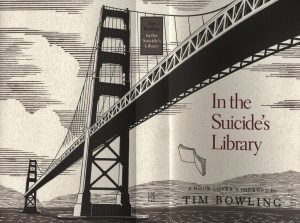
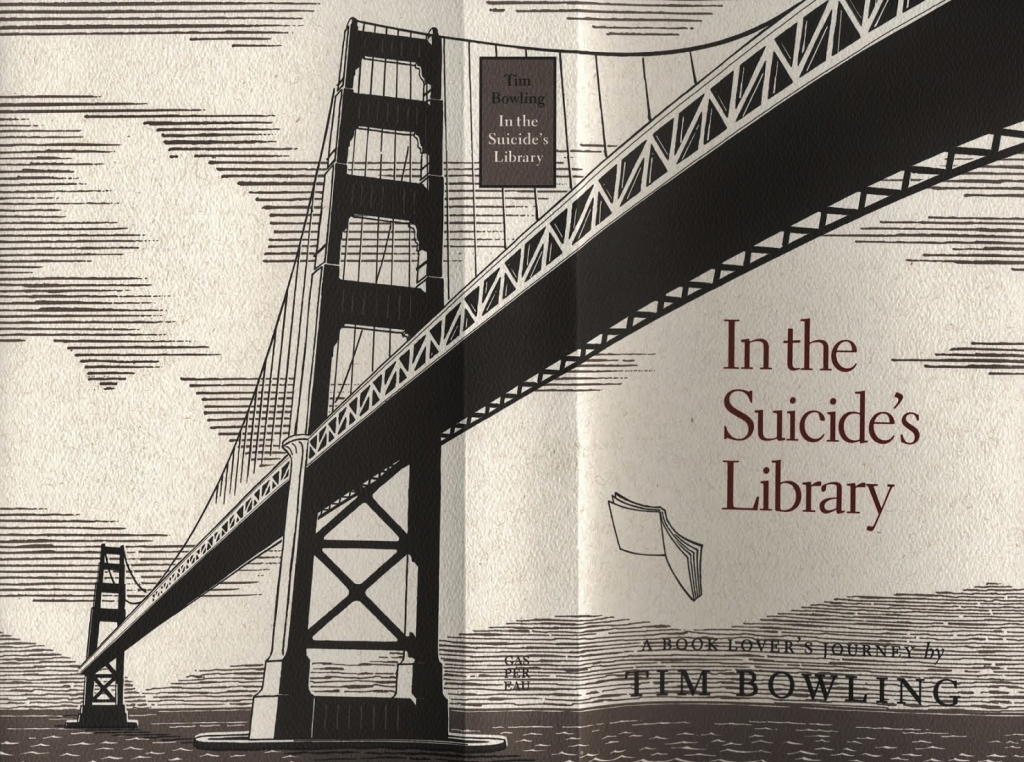
i the suicide's library tim bowling jacket9. In the Suicide’s Library

by Tim Bowling ~ 2010

Is it ever right to steal a book? Tim Bowling, Canadian poet, browsing a university library collection, stumbles upon a copy of poet Wallace Steven’s Ideas of Order, signed on the flyleaf by yet another poet, Weldon Kees, who disappeared mysteriously one day in 1955, with evidence suggesting his suicide by jumping of San Francisco’s Golden Gate Bridge.

Tim Bowling allows his collector’s lust to suggest certain possibilities to him. Would anyone even notice if he “liberated” such a poet’s treasure from its dusty obscurity in the stacks? In the process or worrying this ethical dilemma out, Bowling spins out a book-length ramble about not only Stevens and Kees, but his own personal life.

This book is nothing if not rambling, and it does go on and on and on, and I absolutely hated Bowling’s final decision regarding the book, which I cannot share here, as it is the whole point of working through this thing. It made me grumpy for days, and still offends me to think about it. But I’m glad I sought this literary oddity out, and I’ll be reading it again, and deep down inside I was pleased to have been challenged by my disagreement with certain of Bowling’s opinions. Forgive the cliché, but this one was absolutely thought-provoking.
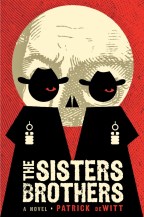
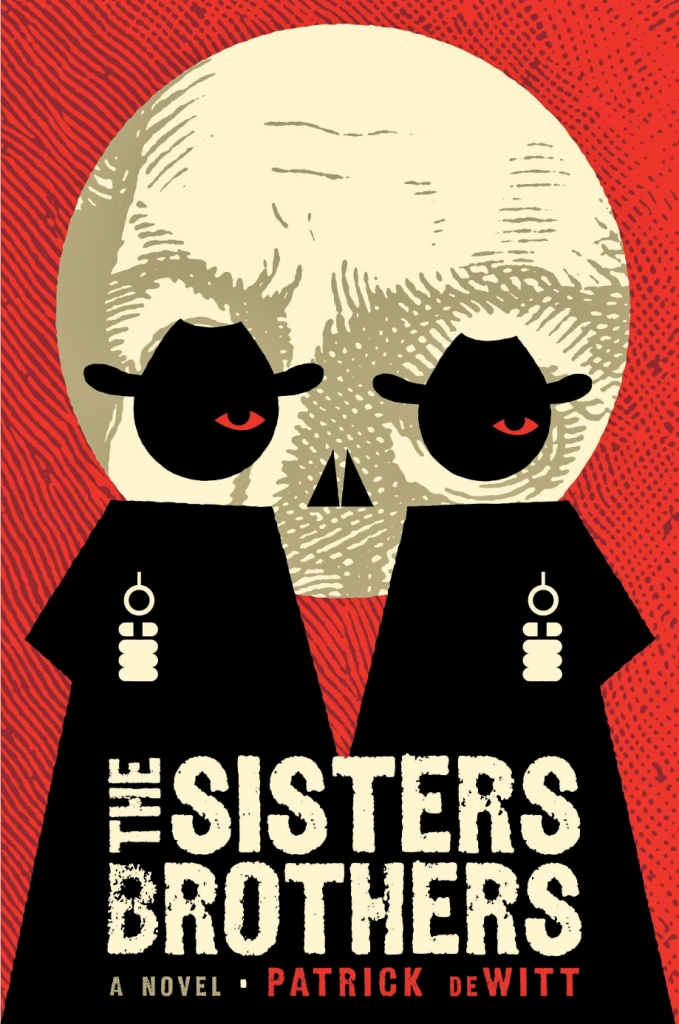
the sisters brothers patrick dewitt10. The Sisters Brothers

by Patrick deWitt ~ 2011

I was a little bit leery about this one to begin with. I’d heard all the hype, and seen it on the Big!New!Books! displays in the mall chain bookstores, and I looked at it from a distance and was all snooty, ’cause I don’t do Westerns or cowboy books, and this screamed that from twenty feet away. But then I heard an excerpt read out loud on the C.B.C., and the very next week one of my friendly used book dealers gave me a pristine copy as a bonus to my substantial purchase. Obviously it was meant to be.

Two brothers, Charlie and Eli Sisters, are employed as hit men in the Gold Rush-era “Old West”. Their quest to end the life of one Hermann Kermit Warm leads to many complications and moral examinations, mostly by narrator Eli. Macabre, cold-blooded and unexpectedly, surrealistically funny. Kudos to the author for the ending; it went a different direction than I’d expected, in a very good way. Loved it. Absolutely brilliant. (But not for the squeamish!)

Here’s a fine review, one of many out there: Tipping My Fedora: The Sisters Brothers 

Bonus Choice # 11

Caitlin Moran Lets It All Hang Out
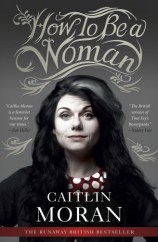
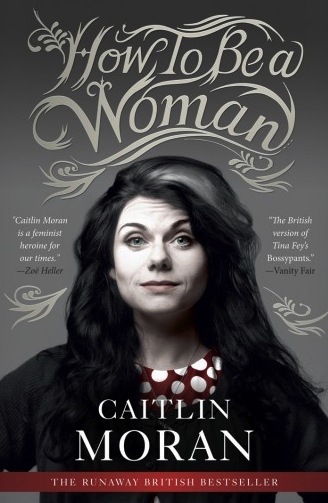
how to be a woman caitlin moranHow to Be a Woman

by Caitlin Moran ~ 2011
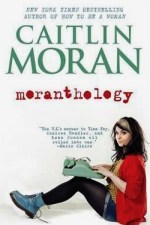
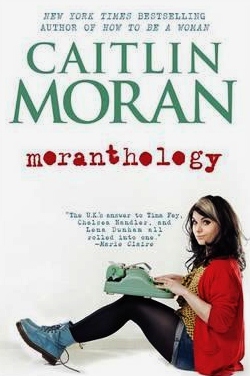
moranthology caitlin moranMoranthology

by Caitlin Moran ~ 2012

Swimming into my awareness early in 2013 was British pop culture critic and memoirist Caitlin Moran. Nothing could have prepared me for her, she’s very much of the “have to experience it for yourself” variety of writer. Mostly I enjoyed my hectic time with Ms. Moran; occasionally she completely freaked me out. She always surprised me, though, both by her vividly expressed opinions, her eager willingness to share the most intimate details of her life, and by the excellent quality of her more serious pieces.

How to Be a Woman ~ Absolutely loved some of it; a few bits appalled me. This writer has no self-edit function! Which makes this high speed, profane, too-much-information rant on the business of being female both deeply engaging and just a bit worrisome to those of us functioning on a less high speed plane of “normal”. Very good, and I enjoyed it. But there are episodes and opinions here and there that triggered the “ick!” response! And she swears. A lot.

Moranthology ~ Caitlin Moran looks back at her childhood and adolescence and skewers her younger self as brutally as she does the pop stars she profiles in this outspoken and slashingly funny collection of articles.

 

*****

Read Full Post »

It’s hard to believe a whole 12 months have raced by since the last Year-End Round-Up List, but the calendar doesn’t lie, and here we are only a few days from a brand new year. Time for a retrospective, then, to clear the decks for the year to come.

Last year I came up with three very broad categories of outstanding books I had read in the previous year: Most Unexpected, Most Disappointing, and Personal Favourites. I will be using the same categories for the books of 2013, though there was some overlap between Most Unexpected and Personal Favourites. I’ve arbitrarily decided which category best fits each book.

And though last year I included only books I had reviewed in full on the blog, this year some will sneak in which I’ve only briefly mentioned. It was a surprisingly hectic year, and I missed writing quite a number of reviews, though the books themselves are too interesting to leave off these retrospective lists. I will link these to other reviews, either by fellow bloggers, or on Goodreads or someplace similar.

Kicking off this week of lists – a most enjoyable aspect of looking back at the year just passed as we head into the longer days and bright promise of the new year – I am adding a fourth category: Books Which Pleased Me 2013. These are books which, as I peruse my list of things read the past twelve months, don’t really fit into the main categories, and which, for the most part, I didn’t write reviews of, but which I nevertheless feel a warm surge of liking for as I come across their titles. These are books which made me happy.

*****

10+ PLEASING BOOKS ~ 2013

In alphabetical order by author.

*****

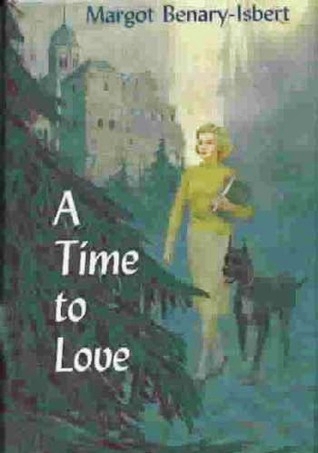
a time to love margot benary isbert1. A Time to Love

by Margot Benary-Isbert ~ 1962

An excellent vintage teenage/young adult historical fiction set in the years just prior to and at the start of World War II. Fifteen-year-old Annegret of the earlier books The Blue Mystery and The Shooting Star goes away to boarding school and becomes very aware that the world beyond the sheltering walls of her family home is fast becoming a dark and dangerous place. A rare story told from the German point of view; very much anti-Hitler but also making clear the conflicted positions of many “common” German people in the years leading up to the war. A thoughtful and even-handed book; a lovely and relatable bildungsroman. The author draws heavily upon her own experiences as a German citizen during the war; worth reading for that element alone, though there is much more here to mull over and to enjoy. Goodreads: A Time to Love

but i wouldn't have missed it for the world peg bracken2. But I Wouldn’t Have Missed It For the World

by Peg Bracken ~ 1973

Long before Martha Stewart’s perfectionist homemaker guidebooks, there was Peg Bracken. Unlike Ms. Stewart, Peg was very much “one of us.” (Does anyone remember the slightly subversive 1970s bestsellers The I Hate to Cook Book, and A Window Over the Sink?) Here Peg sets her sights on the highs and lows of travelling, in a humorous collection of musings, meandering and anecdotes. Some real gems amidst the fluff. I read this while travelling myself, and occasionally laughed out loud at the universal experiences I shared with the author. Feather light and deeply charming, albeit in a dated sort of way. I was just a wee bit taken aback by Peg’s enthusiastic promotion of the lavish purchase of souvenirs – one of my own travelling goals is to come back as lightly laden as possible (books excepted, of course) – but to each her own! Goodreads: But I Wouldn’t Have Missed it for the World 

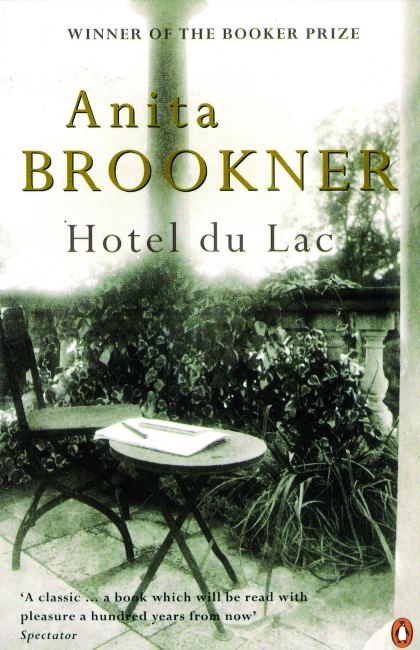
hotel du lac anita brookner3. Hotel du Lac

by Anita Brookner ~ 1984

Shades of Barbara Pym haunt the works of novelist Anita Brookner, whose literary acquaintance I made this year. This subfusc novel of a mysteriously disgraced woman coming to terms with her fate and her future was not exactly Booker Prize material (in my opinion), but it was most readable, and I find myself thinking of its wry heroine, romance novel writer Edith Hope, with real fondness. Blogger Mark Sampson – Free Range Reading: Hotel du Lac – says it well.

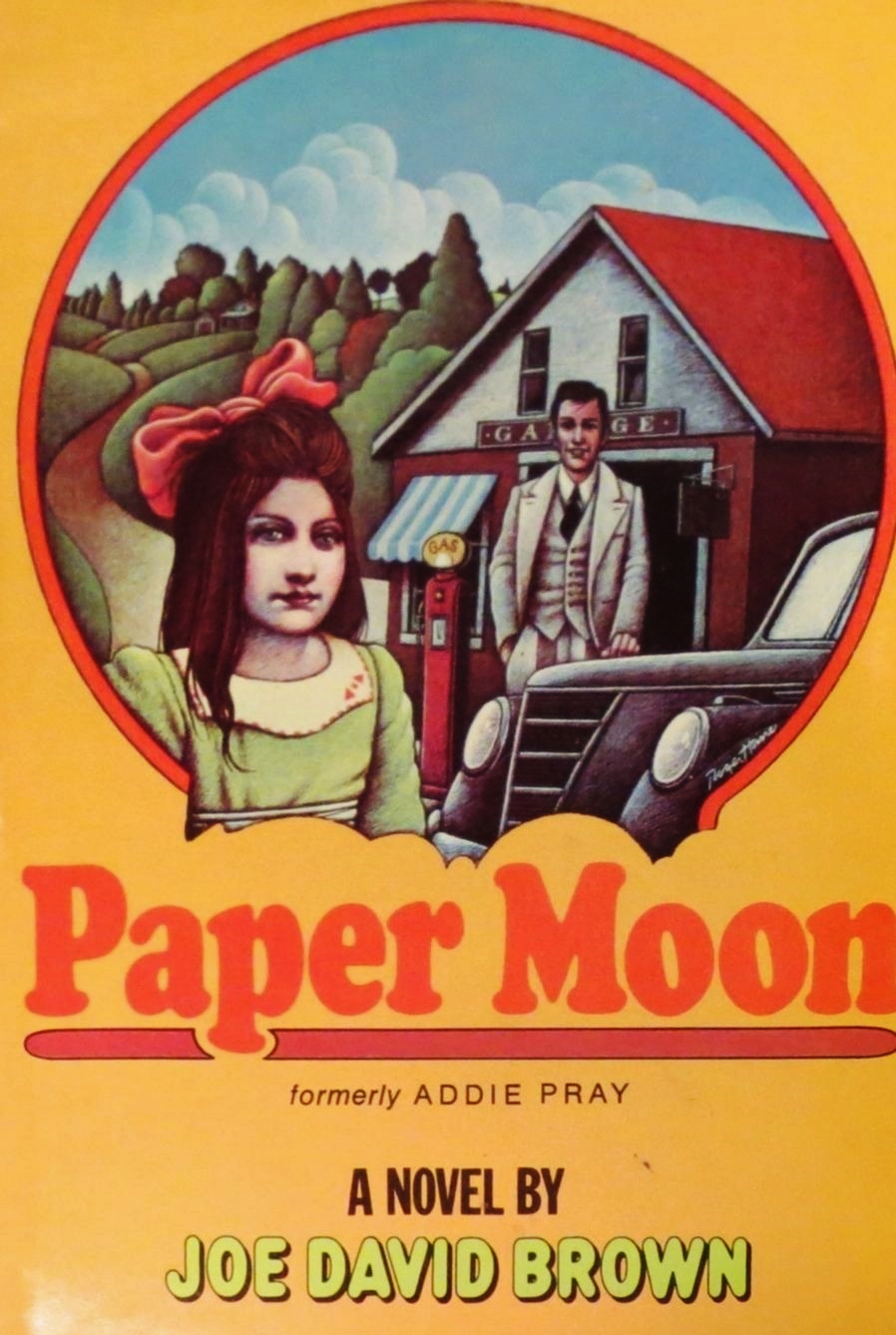
paper moon addie pray joe david brown4. Paper Moon

originally published as Addie Pray

by Joe David Brown ~ 1971

Loved it! Read this one way back in high school in the 1970s, and this re-reading stood up marvellously well. An 11-year-old orphan and her maybe-father develop their talents as small-time con artists as they travel around the south-eastern United States in the darkest years of the Great Depression. Funny and heart-warming but never, ever sloppy. Brilliant. Ignore all the “female Huck Finn” and “sassy young heroine” comments on Goodreads – this tallish tale is something quite unique. You may be familiar with the classic Tatum and Ryan O’Neal hit movie; this book it was based on is even betterGoodreads: Paper Moon 

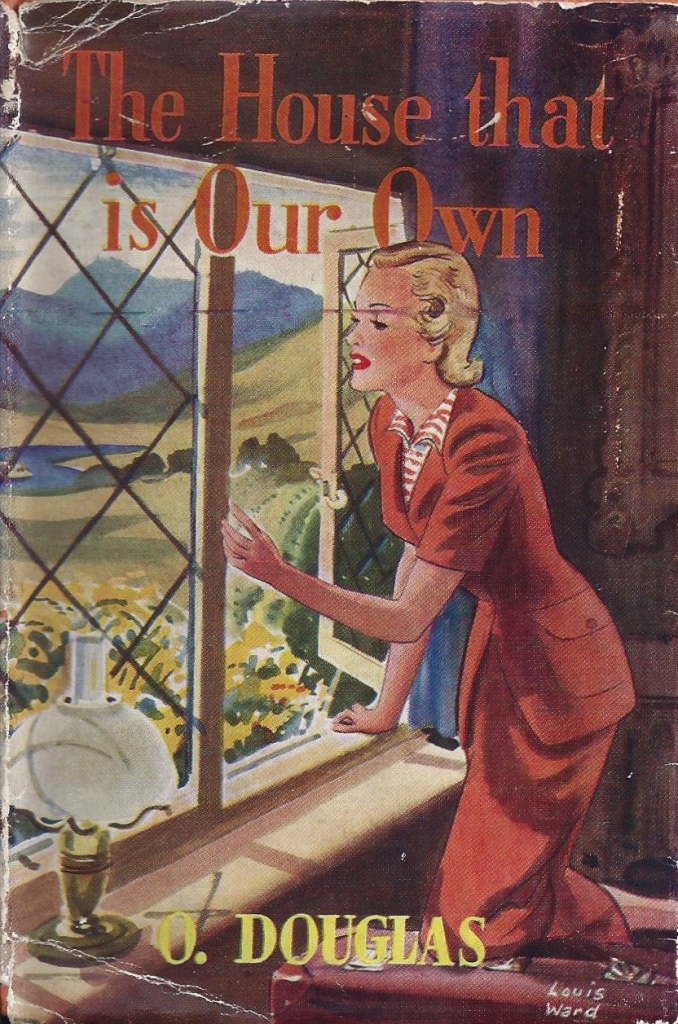
the house that is our own o douglas 0015. The House that is Our Own 

by O. Douglas ~ 1940

Middle-aged, recently-widowed Kitty and independently single, almost-30 Isobel meet at a residential hotel and become firm friends. Their relationship deepens and grows even as they eventually go their separate ways, Kitty to a new flat, and Isobel to a rural Scottish cottage. O. Douglas is always a great pleasure to read, and there is quiet merit in all of her books. Honorable mentions as well to three more O. Douglas books first read in 2013: Pink Sugar (see review), Taken by the Hand, and Eliza for Common. The last two also deserve proper reviews of their own; I know I will be re-reading both in future and hope to expand upon them then.

the grand sophy georgette heyer 26. The Grand Sophy 

by Georgette Heyer ~ 1950

Amazonian Sophy is a surprise visitor to her relations in London, throwing an entire household – aunt, uncle and numerous cousins – into a turmoil it has never known before. Sophy is a born manager of other people for their own good, and here she finds much scope for her personal hobby. By the end of this improbable and frothy Regency tale, set in the early decades of the 19th century, romantic couples are paired off, financial difficulties are sorted out, and Sophy has found true love. What’s not to like? Well, that rather blatantly anti-Semitic moneylender episode, perchance… But dodging that critique with the handy “era correct” excuse, this buoyant tale succeeds at cover-to-cover amusement. Also a lot of fun is another Heyer romance, Devil’s Cub. Pure fluff, but the long dialogue sections are very nicely done with loads of cunning, period-correct language, and much humour. wheels within wheels dervla murphy

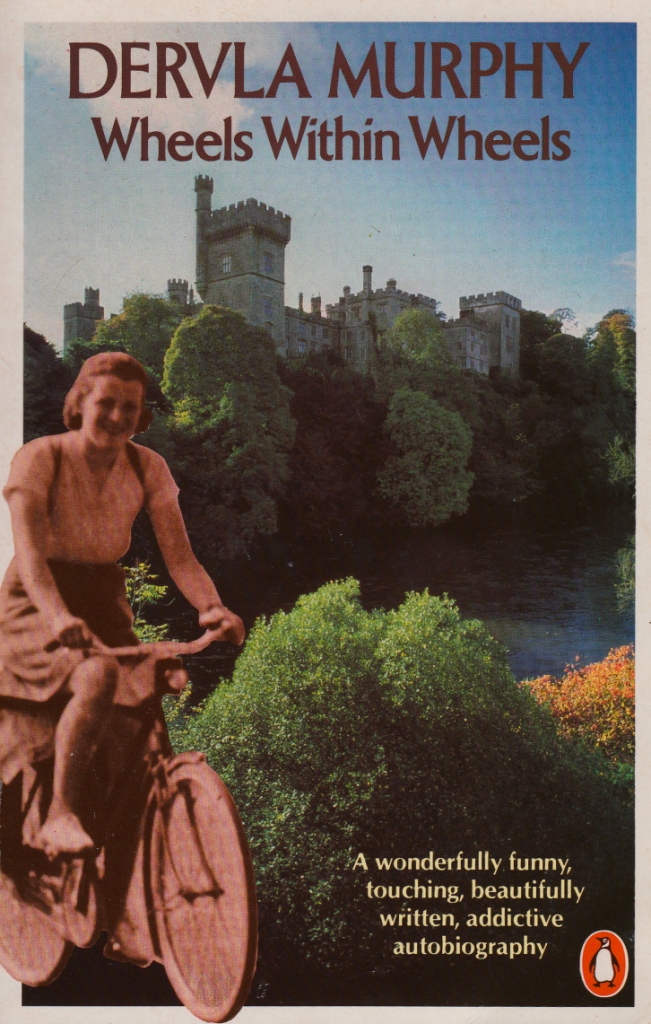
7. Wheels Within Wheels

by Dervla Murphy ~ 1979

Irishwoman Dervla Murphy, after leaving school at the age of fourteen to look after her bedridden mother, dreamed of travelling, and cherished her occasional opportunities for solo bicycle trips. In 1963, at the age of 32, the death of her mother freed her at last to embark upon a truly ambitious journey. Dervla cycled, alone and self-supported, from Ireland to India, where she spent five months volunteering in a refugee camp for Tibetans fleeing the Chinese occupation. Wheels Within Wheels details Dervla’s life before the Indian expedition, and describes the personally challenging years in Ireland which led to her future wanderlust.  An excellent memoir by a fascinating woman. Passionate, opinionated, and frequently very funny. Goodreads: Wheels Within Wheels. And for more on Dervla Murphy’s many subsequent travels and her activities up to the present: Dervla Murphy. com

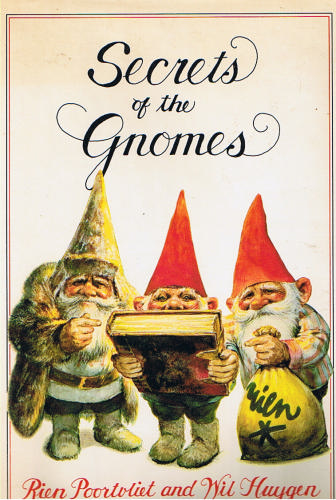
secrets of the gnomes poortvliet huygen 28. Secrets of the Gnomes 

by Rien Poortvliet and Wil Huygen ~ 1981

So much more than just a picture book. An intricately illustrated “travelogue”  about the fantastical world of gnomes. Clever and slyly humorous, with a serious message about caring for our shared world. The artwork is extremely well done. Intriguing and diverting in concept and execution, and decidedly of “adult” interest. Amazon:Secrets of the Gnomes  

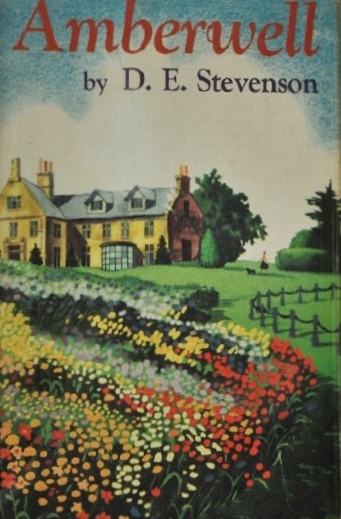
amberwell d e stevenson 29. Amberwell

by D.E. Stevenson ~ 1955

Not quite as fluffy as some of D.E. Stevenson’s novels, this may well be my favourite of hers so far. Amberwell is a family saga of awful parents and quite lovely children, set at a Scottish country estate. One for the re-read and write-about pile, but in the meantime a nicely succinct review may be read here: Pining for the West: Amberwell. And neck and neck with Amberwell for D.E.S. favourite status is this recently-read “serious” novel, Charlotte Fairlie (1954).  A girls’ school headmistress attempts to help some of her students cope with difficult personal situations, and finds her own life much changed as a result. Aka Blow the Wind Southerly and The Enchanted Isle.  

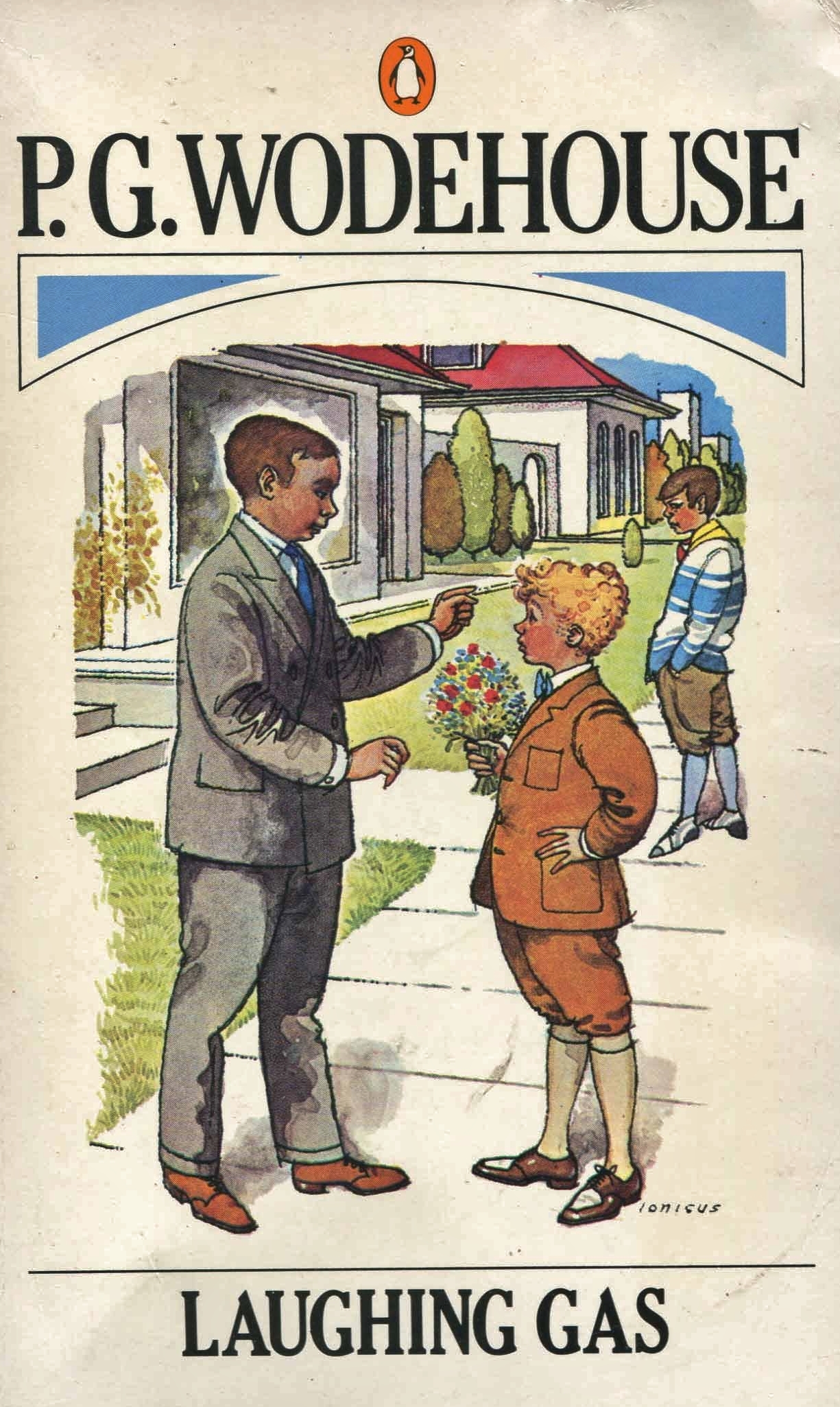
laughing gas p g wodehouse10. Laughing Gas

by P.G. Wodehouse ~ 1936

Deeply silly, as only a Wodehouse epic can be. While visiting Hollywood in order to rescue an alcoholic relation from a suspected entanglement with a gold-digging starlet, the ugly but sincere Earl of Havershot and golden-boy cinema idol Joey Cooley exchange bodies in some weirdly out-of-body way while simultaneously under dentists’ anesthetics. Much hilarity ensues before it all gets sorted out. Though it’s not as grand as Jeeves and Wooster, or even Lord Emsworth, it did make me smile. A proper review here: Vintage Novels: Laughing Gas      

Read Full Post »

Merry Christmas!

Poplar grove - Hill Farm - December 2013

Merry Christmas!

Warmest wishes for a peaceful and happy holiday season to all of you, dear fellow readers,  from our small corner of the world.

Read Full Post »

Happy Canadian Thanksgiving, everyone, no matter where you are!

Out yesterday with the camera to capture a glimpse of autumn in our part of the world – Cariboo-Chilcotin region – interior British Columbia, Canada.

In the nursery beds: Michaelmas daisies, lily and sea kale foliage for contrast. Hill Farm October 13, 2013.

In the nursery beds: Fall asters, with lily and sea kale foliage for contrast.
Hill Farm October 13, 2013.

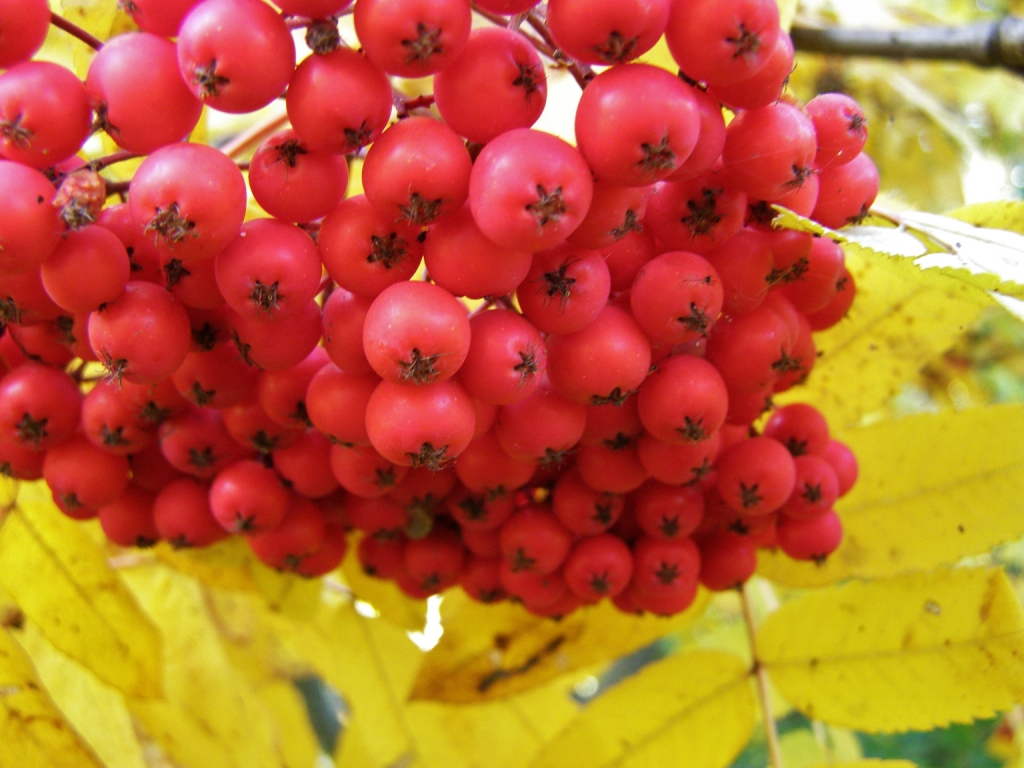
Mountain ash.

Mountain ash.

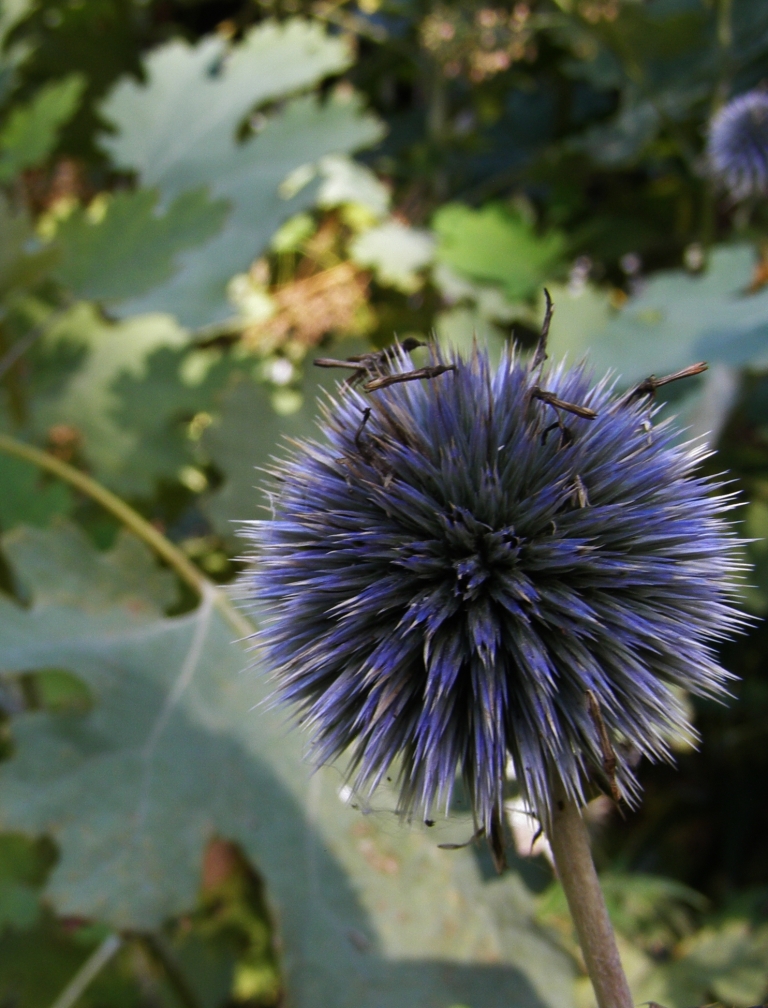
Echinops ritro - Golbe Thistle - with Macleaya cordata - Plume Poppy - foliage in background.

Echinops ritro – Globe Thistle – with Macleaya cordata – Plume Poppy – foliage in background.

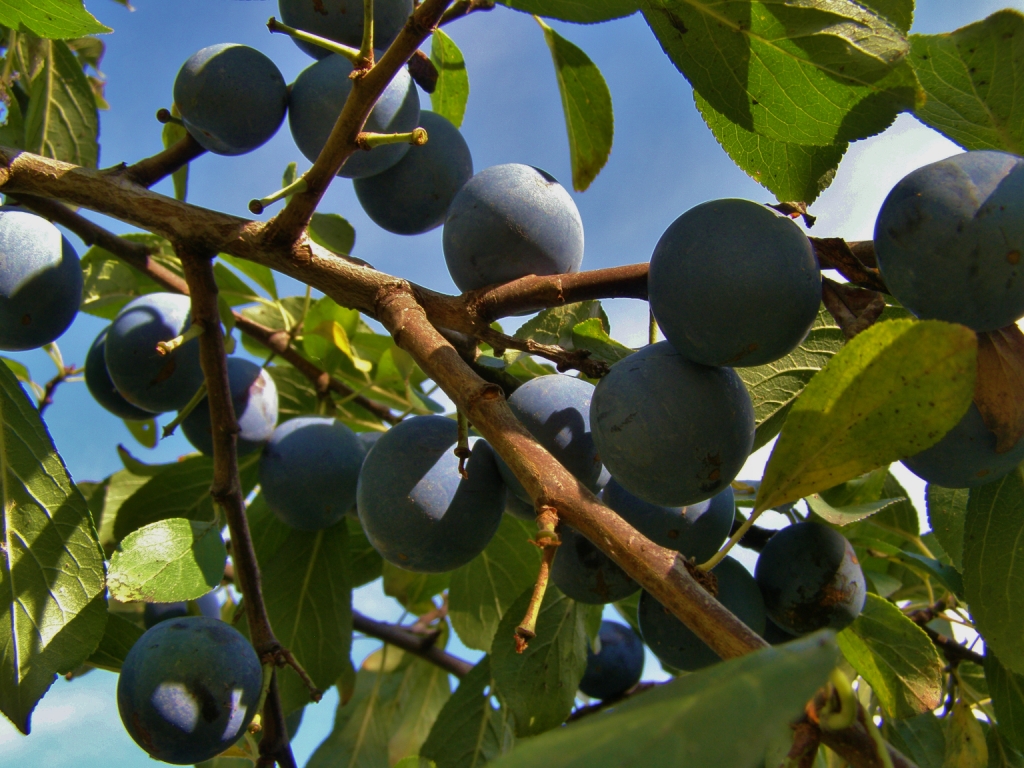
Italian prune plums - this year our small tree was loaded with fruit. Almost over now, but so sweet and worth the long wait for ripening!

Italian prune plums – this year our small tree was loaded with fruit. Almost over now, but so sweet and worth the long wait for ripening!

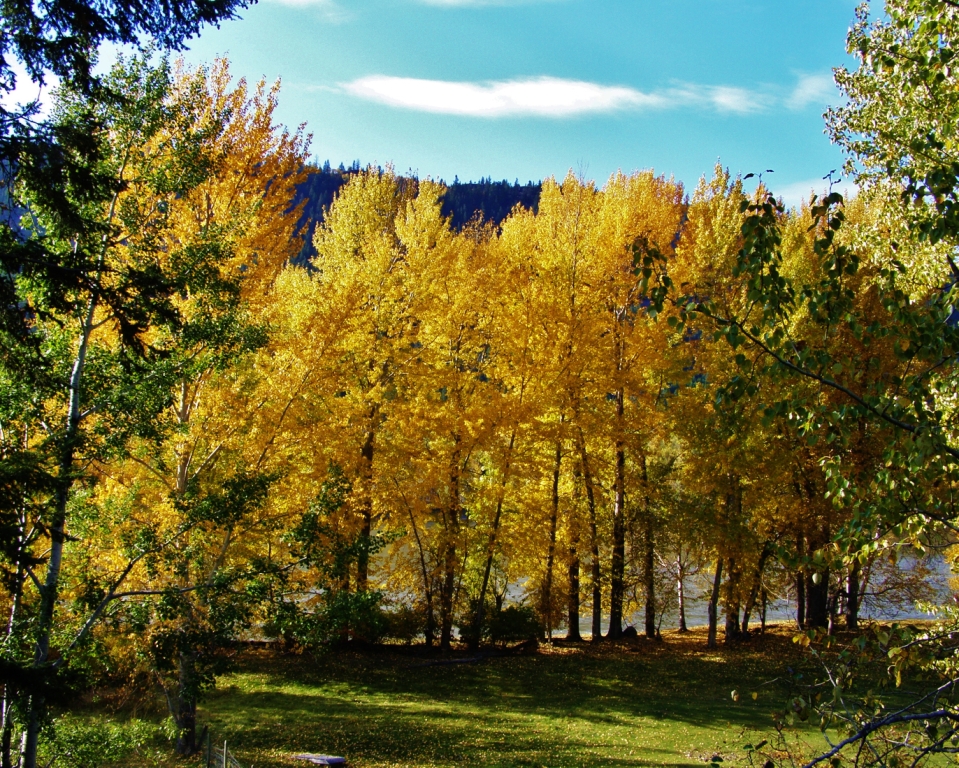
Cottonwood trees beside the Fraser River - our daily view from the edge of the garden.

Cottonwood trees beside the Fraser River – our daily view from the edge of the garden.

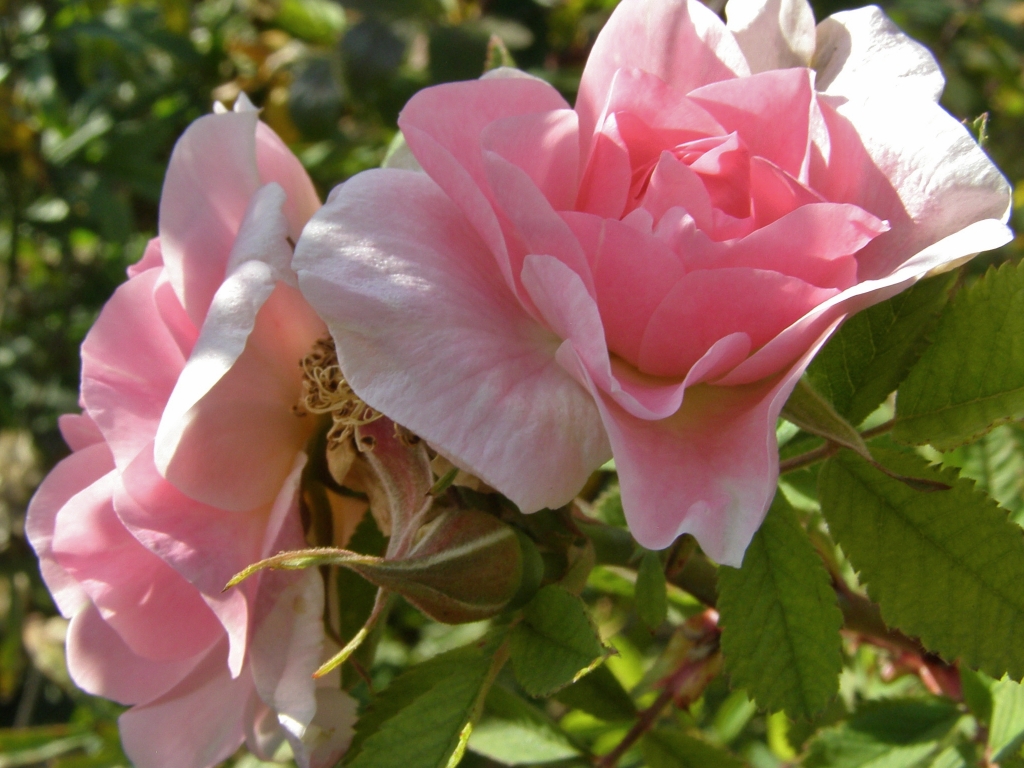
Last roses of summer... Label long lost - no idea which variety this is, but reliably gives us a few late blossoms.

Last roses of summer…
Label long lost – no idea which variety this is, but reliably gives us a few late blossoms.

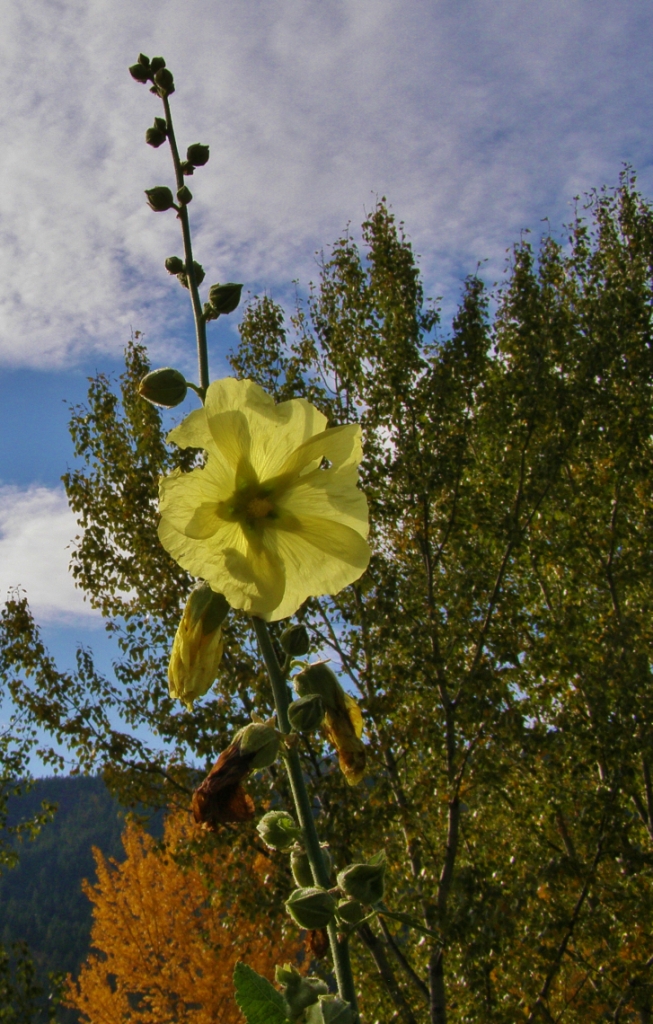
Alcea rugosa - Russian Hollyhock - an endless bloomer, tall stalks reaching for the sky.

Alcea rugosa – Russian Hollyhock – an endless bloomer, tall stalks reaching for the sky.

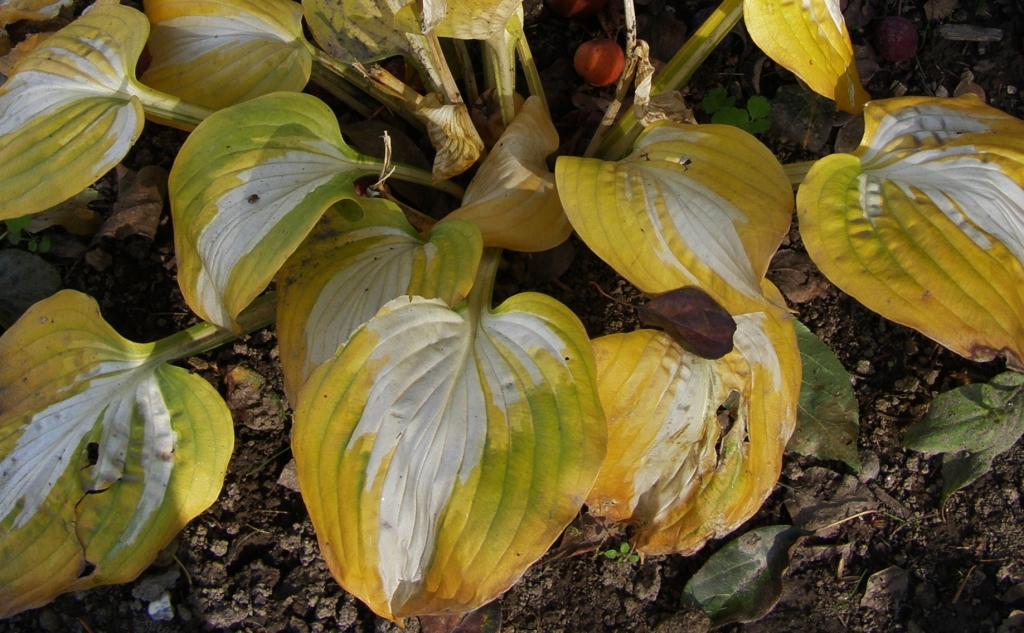
Hosta leaves touched by frost - snapped a picture just before my daughter ruthlessly chopped them down - she's in full garden clean-up mode these days!

Hosta leaves touched by frost – snapped a picture just before my daughter ruthlessly chopped them down – she’s in full garden clean-up mode these days!

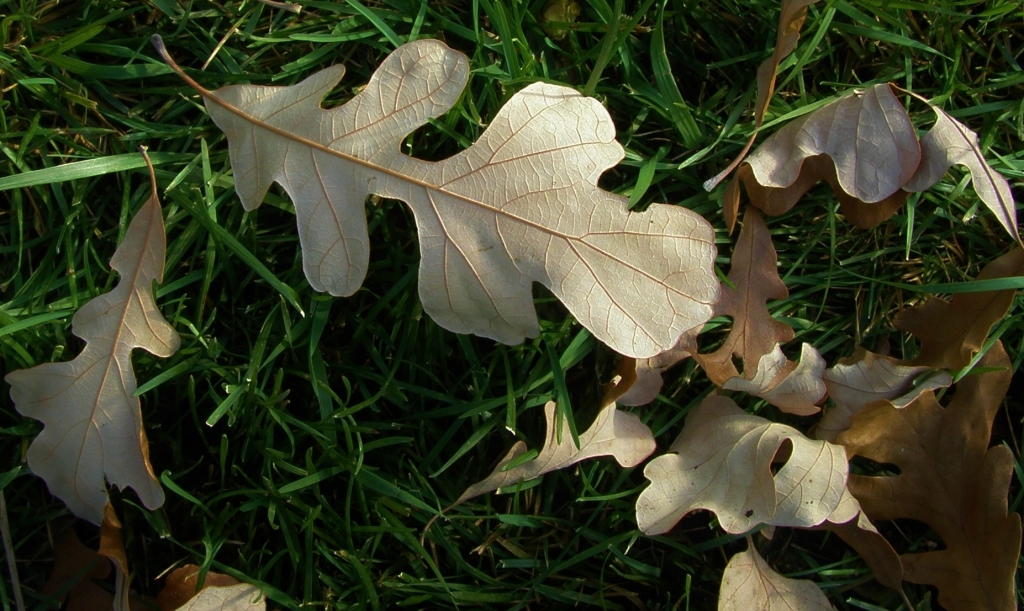
Bur Oak leaves.

Bur Oak leaves.

Velvet-textured and dramatically veined Italian petunia; the plants themselves are leggy and awkward at this time of the year, but the few late blossoms make up for it; a lingering reminder of summer now past.

Velvet-textured and dramatically veined Italian petunia; the plants themselves are leggy and awkward at this time of the year, but the few late blossoms make up for it; a lingering reminder of summer now past.

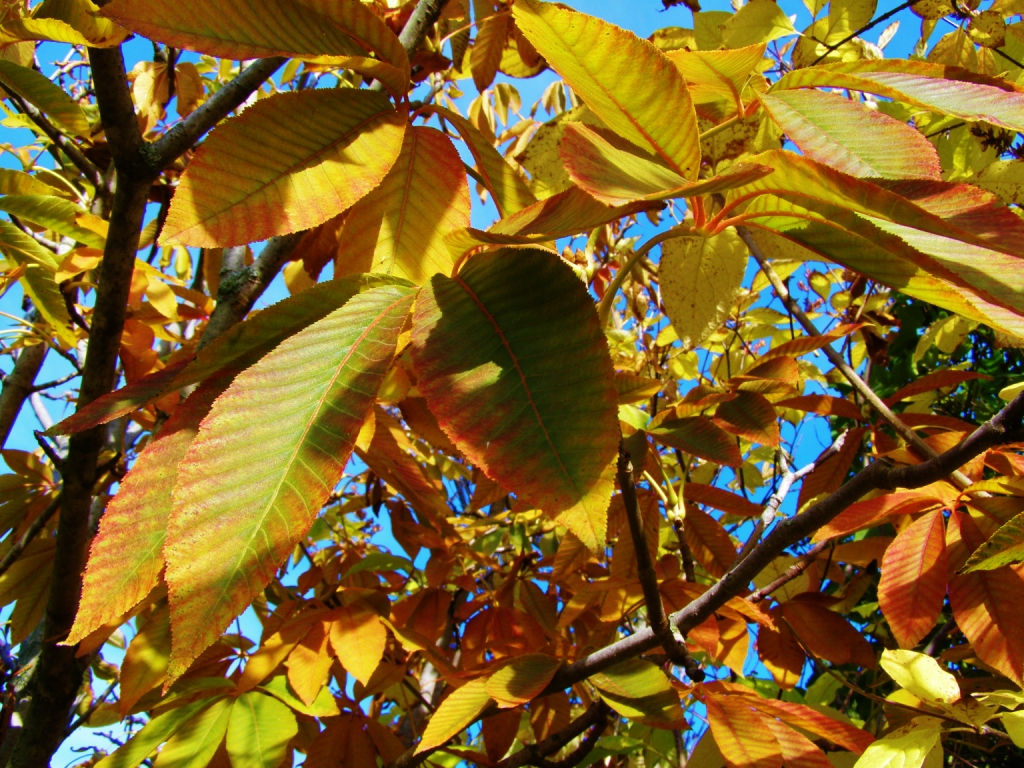
The horse chestnut can't decide which colour it wants to be, so it's trying a bit of everything.

The horse chestnut can’t decide which colour it wants to be, so it’s trying a bit of everything.

Read Full Post »

My World: Six Boxes

I have just finished sorting my mother’s things in preparation for her move from the hospital, where she has been since a nasty spill in mid-July, to a single room in the complex care wing of her small city’s old age home. (Er, I guess that would be “seniors’ village”; that’s what this one calls itself.)

Not counting her clothes, her belongings fill six small boxes.

This has been an emotional summer in so many ways, and I am trying to muster up some cheerfulness because that is what Mom most needs to see from me; my inner self is howling like a baby.

I’m glad she didn’t die; the facility she is going to will provide stellar care – we have another family member and several friends living there, and are personal friends with several staffers – one of the nicer things about having grown up near a smaller community (the city proper has a population of 10,000 people, though the service area is closer to 30,000); Mom herself states that she is more ready to make the move; there is no way she will ever be able to manage living in her own home, what with her physical limitations and increasing frailty.

But still.

Six boxes.

Eighty-eight years of life; so many accomplishments; so much work done. All passed; all put behind her. All that is left is her memories, and six small boxes.

Sob.

There, doesn’t that sound melancholy?! Onward and upward, that’s the theme I need to embrace. It’ll be a far cry better than the hospital, is what Mom reminded me today, and she said something about there being a certain freedom in stripping oneself of all those things; it’s down to essentials from here on in. Oh, and to remember to go through my shelves one more time, and to pack her up a box or two of books, and to keep my eyes open for new reading for her.

Comfort in books is something my mom knows a lot about, and she’s more than passed that down to me. And with that thought, I’ll sign off for tonight. It will all be okay. But just for tonight, I’m sad.

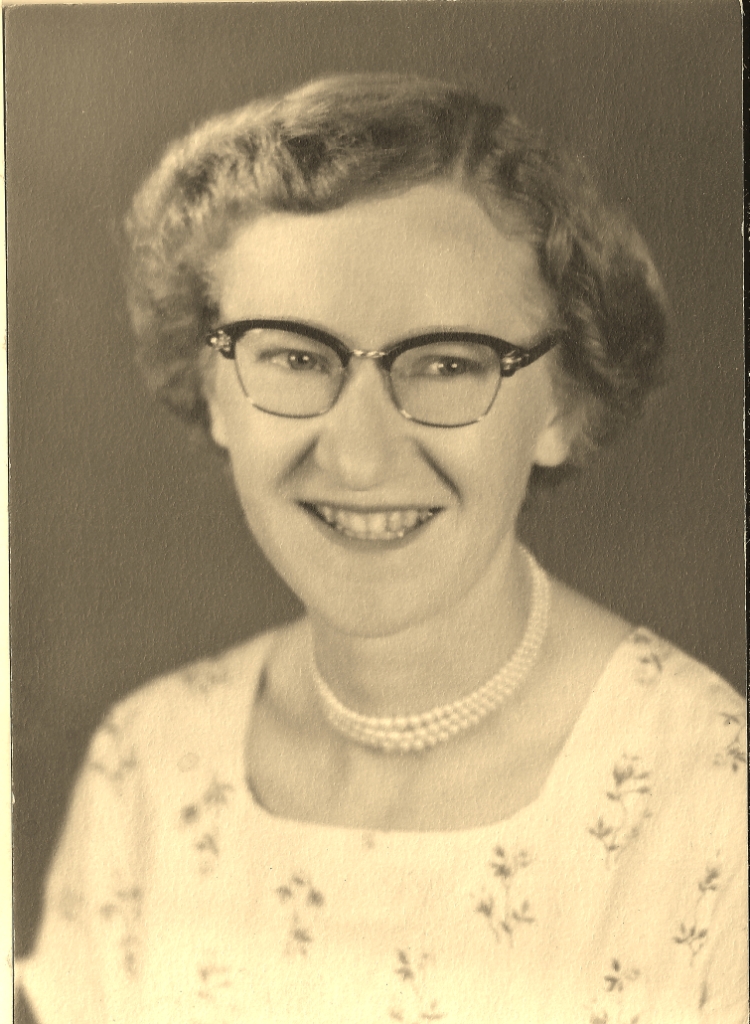
My mom in 1959. Portrait taken in Reedley, California, just before her marriage and move to British Columbia.

My mom in 1959. Portrait taken in Reedley, California, just before her marriage and move to British Columbia. One of the photos I’ve scanned and enlarged to put in the “treasure box” just outside her room; a reminder to herself and those around her of the vital and still-young person hidden behind the elderly mask.

Read Full Post »

Here’s a brief personal note for those of you who have I have come, over the past year or so, to think of as my long-distance friends.

As some of you may know, I am possessed of an elderly mother in frail physical health. She has been managing to live alone in her own house, with assistance from family and drop-in Home Care services, though it was becoming apparent to all of us that this was an increasingly precarious situation.

A week ago Thursday Mom had an early morning tumble. She was unable to get up, and, having struck her head when she landed, somehow did not collect herself enough to make the attempt to push her LifeLine call button which she wears 24/7 for just such a situation. She was on the floor a good five hours before we twigged that there was something wrong – when she missed her regular morning check-in call to me – and by the time we found her she had lost a lot of blood and was hypothermic.

She was ambulanced in to the hospital, warmed up and stitched up and rehydrated and given several units of blood; luckily nothing was broken, though she was very sore and bruised all over. She was coming along reasonably well – sitting up in bed, complaining mildly about the hospital food, and zipping through a book a day, and we were looking into convalescent arrangements for her, when she (not unexpectedly – she’s been rather crackly in the lungs even before her fall) developed pneumonia. She’s now on a course of antibiotics which seems to be helping limit the progression of her infection, but she’s very tired, has no appetite, and is generally not looking very chipper at all. She’s still reading a bit, which is a good sign, but her progress is now just a few pages per day.

Needless to say we are all feeling a bit helpless; we’re at “wait it out” stage right now, to see which way things go. Mom’s had a previous serious bout of pneumonia, but she rallied from that after being given up on by her doctor, so we’re hoping she’ll tough this one out, too. But, realistically, she just might not.

She’s fairly comfortable, has great care in the hospital, and we’re trying to get into a new routine of balancing time at the hospital with the relentless progression of summer jobs on the farm. I am doing a lot of sitting around waiting, and am finding that there is definitely some reading time – blessed books, what a good escape from our worldly woes! – but somehow the focus on writing for the blog is harder to attain.

I have a whole slew of posts started; these will be appearing as I’m able to get them finished off; I do have bits of quiet time here and there and focussing on talking about books is a refreshing change of pace, all things considered.

So that’s where I’m at right now. Things could change at a moment’s notice if Mom has a sudden downturn, or it could be one of those long, prolonged, everything-in-limbo situations. So this post is all I’ll say (at least for now) about the situation; my book posts will likely not reflect much of this, though it will of course be constantly there in my thoughts!

It had looked like this summer would be quiet and uneventful, but life changes in a moment sometimes, setting all of our trivial human plans awry…

Read Full Post »

Inspired by this morning’s post over at Gudrun’s Tights discussing best reads of the year to date, I went ahead and picked out my own personal “Top 5”, but, sadly, could not get my reply to come through. (Apparently the comments have been acting up on the blog; I’m wondering if that’s why I can’t seem to get mine up.) So, since I already typed it all out, here is my list.

Picking a top 5 for the first half of 2013 was easy/hard. I did read some rather outstanding books. A few more than 5, actually, but here are the ones that really stood out.  I’ve only reviewed three of these; the others deserved more review time than I could spare at the time of reading, so they’ll be under more focus in future.

  •  All the Little Live Things (1967) by Wallace Stegner – Two couples at differing points in their lives become neighbours and friends in a rural California setting. The book examines love in various forms – romantic, platonic, parental – as well as the different ways individuals deal with emotional traumas and the brutal realities of too-early deaths. Sounds grim, but it is a hauntingly presented story which I found powerful, thought-provoking and ultimately comforting in its examination of ways of embracing grief and going forward. (Not reviewed yet.)
  • The Joyous Season (1964) by Patrick Dennis – another farcical period-piece (the period in question being 1960s, upper-class New York) by  Auntie Mame‘s author. Two children cope with their parents’ proposed divorce in a very “civilized” way. Mostly humorous, with a truly poignant ending.
  • The Sisters Brothers (2011) by Patrick DeWitt – I missed reading this when it was all the rage a year or two ago, but now I get what all the buzz was about. A rather twisted saga of two brothers employed as contract killers in the 1850s. Very dark, very clever, very funny. (Not reviewed yet. I might not review this one; it has been so popular that it seems a bit pointless to add my words to the many that are already out there. Can I just say that I loved this book, and leave it at that? 😉 )
  • Crewe Train (1926) by Rose Macaulay – a highly unusual, absolutely stoic English girl who has grown up in an isolated Spanish village is brought back to England by her upper-class relations after she is orphaned. The resulting cultural clashes are highly entertaining, and highlight the foibles of “accepted behaviour” in a rather cunning way.
  • Hostages to Fortune (1933) by Elizabeth Cambridge – a quiet domestic drama centered around a doctor’s wife, her marriage, and her motherhood. A keen-eyed examination of a common experience which has many parallels to family life today. The essentials never change.

To answer the other question, regarding weekend plans, oh yes – I do indeed have those! Let’s see…

Yesterday I (unexpectedly!) bought a piano in the big city several hours away; today will be devoted to getting it home. There’s also a huge family reunion going on this weekend just a few miles away; all of my husband’s relations will be convening, so I’ll be cooking for that, and attending, of course, PLUS my elderly mother who is at present incarcerated in the hospital after a bad fall last week (she’s on the mend) will need multiple visits; she’s in the small city an hour away. So driving, talking, cooking, eating – in that order – are my themes for the upcoming long weekend! (Not much reading time, I fear.)

Hope you are all having a good summer. And what have your outstanding reads been this year to date?

Read Full Post »

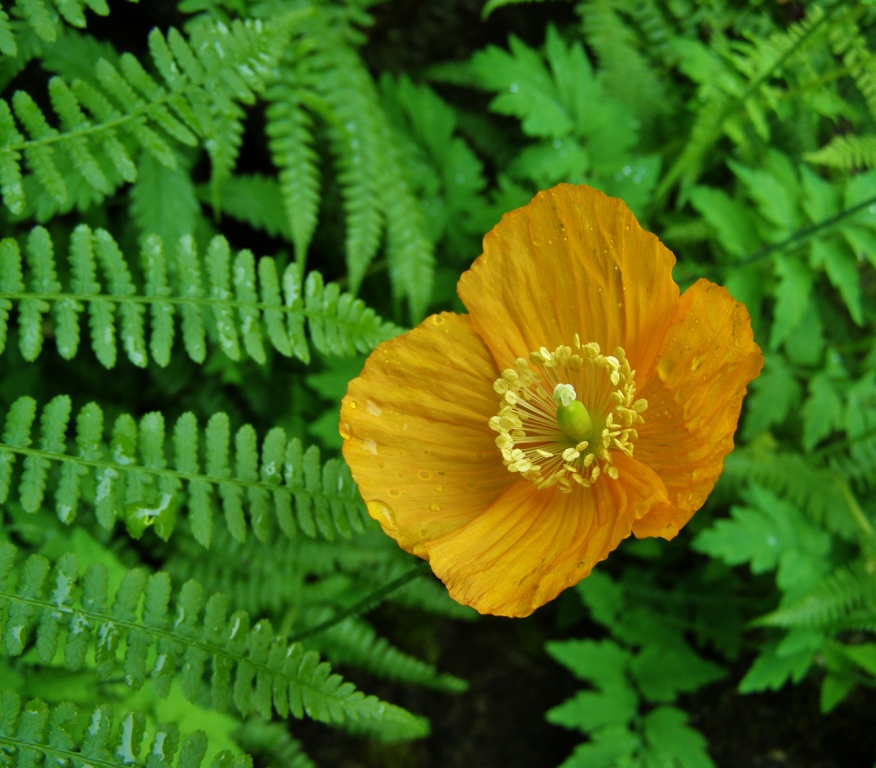
Welsh Poppy, Minter Gardens

Welsh Poppy, Minter Gardens

Minter Gardens, May 29, 2013

Minter Gardens, May 29, 2013

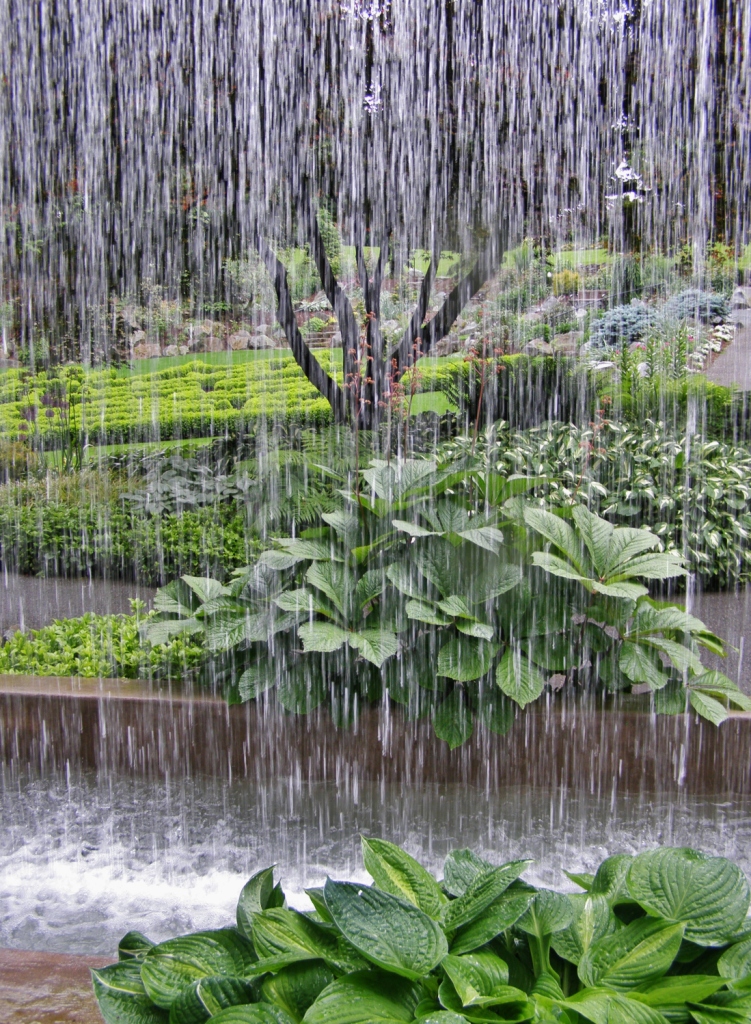
The coolest water feature ever - the "water wall" at Minter Gardens.

The coolest water feature ever – the “water wall” at Minter Gardens.


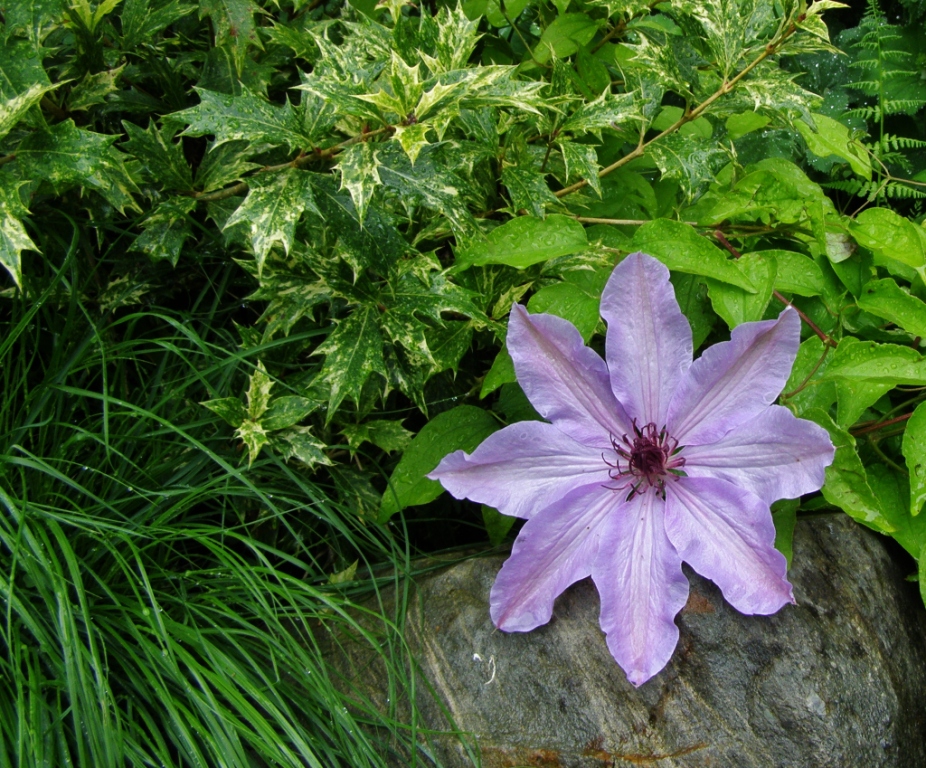
Clematis, holly, grass, rock - Minter Gardens.

Clematis, holly, grass, rock – Minter Gardens.

Gunnera detail, Minter Gardens.

Gunnera detail, Minter Gardens.


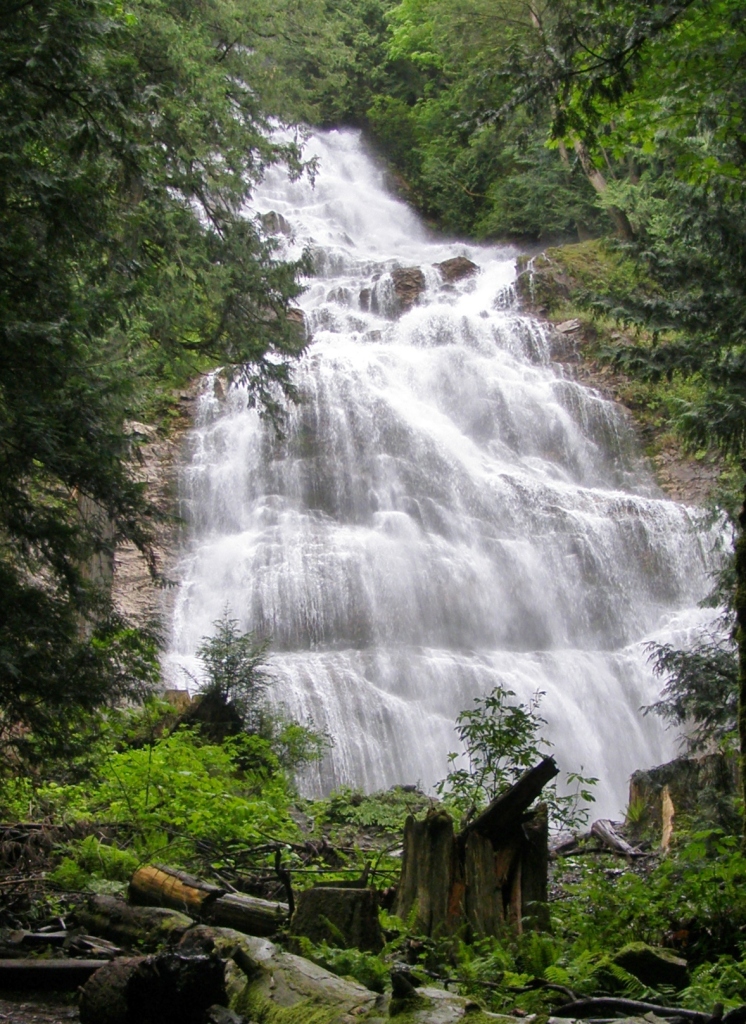
Bridal Veil Falls, near Chilliwack, B.C.

Bridal Veil Falls, near Chilliwack, B.C.

Water power, natural sculpture at the foot of Bridal Falls.

Water power, natural sculpture at the foot of Bridal Falls.

Maidenhair fern, B.C. coastal forest.

Maidenhair fern, B.C. coastal forest.

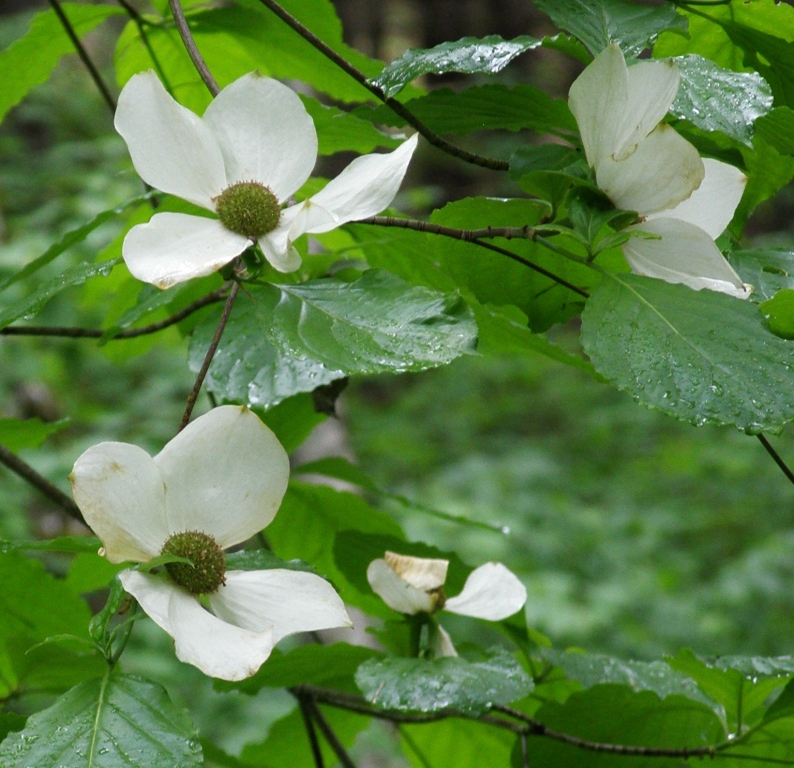
B.C.'s provincial flower, Pacific Dogwood, Cornus nuttallii.

B.C.’s provincial flower, Pacific Dogwood, Cornus nuttallii.

Pacific Dogwood in fir forest, near Alexandra Bridge, Fraser Canyon. May 29, 2013.

Pacific Dogwood in fir forest, near Alexandra Bridge, Fraser Canyon. May 29, 2013.

These dogwood flowers are big, as you can see by my hand holding the branch.

These dogwood flowers are big, as you can see by my hand holding the branch.

Pictures from our recent excursion to the lower mainland. We took time out on our final day to botanize and tourist our way home. Didn’t take too many pictures, but these are a sampling of what we saw in our travels.

Beautiful British Columbia – the clichéd phrase is so very true!

Read Full Post »

Well that was a rather full ten days or so. “Busy” is an understatement. No matter, it’s all been positive stuff, but I am more than ready for a bit of down time today.

I came back from my trip to the lower mainland with an embarrassingly large load of books. Premium hunting grounds were Chilliwack’s The Book Man  and Hope’s Pages . Gloriously eclectic selections; wonderfully friendly and helpful staff. A true pleasure to visit both of these! And the nurseries we stopped at were pretty marvelous, too. I restrained myself there, I’m proud to announce! Only three plants were acquired, among the dozens I coveted.

Without further ado, here’s a list of some of my literary finds, in no particular order:

  • Morley, Christopher – Where the Blue Begins (Because I’m curious about Morley’s work aside from The Haunted Bookshop and Parnassus on Wheels.)
  • Bloom, Ursula – The Quiet Village
  • Taylor, Elizabeth – At Mrs. Lippincote’s (Just finished it this morning. Very good.)
  • Dickens, Monica – Enchantment (Read this in the hotel room one night. One of Dickens’ last novels. Awkward here and there, but definitely readable; reminded me strongly of The Listeners.)
  • Dickens, Monica – The Landlord’s Daughter (And I do believe this almost completes my Monica Dickens adult fiction collection.)
  • Dickens, Monica – The Room Upstairs (A 2nd copy for me, but this one an early hardcover in a nice dj, to replace the tattered paperback I already own.)
  • Dickens, Monica – Flowers on the Grass (Another 2nd copy, but I couldn’t resist the handsome though worn dj. My 1st copy is jacket-less, bent, and more than well-read.)
  • Burnett, Frances Hodgson – T. Tembarom
  • Innes, Dorothy Hammond – What Lands are These? (Because I read and loved her husband’s Harvest of Journeys many years ago; this is something of a companion memoir.)
  • Innes, Hammond – The Land God Gave to Cain
  • Stegner, Wallace – Wolf Willow (Because I was deeply moved by a recent reading of All the Little Live Things, and want to explore this most intriguing author.)
  • Stevenson, D.E. – The House of the Deer
  • Stevenson, D.E. – The Young Clementina (Let’s just say the prices of these last two averaged each other out. 🙂 Darling spouse, if you’re reading this, please don’t inquire!)
  • de la Roche, Mazo – Ringing the Changes (Just because. One for the Canadiana crowd, and because the open-it-up-and-read-a-page test was highly successful.)
  • Powning, Beth – The Hatbox Letters (I vaguely recall this one getting some discussion, though I can’t remember if it was pro or con. I thought perhaps I should add some contemporary fiction to the stack of vintage novels.)
  • Holborn, Hannah – Fierce (Contemporary Canadian.)
  • Hodge, Jane Aiken. The Private World of Georgette Heyer
  • Cran, Marion – The Bedside Marion Cran (It was in the gardening section, looked interesting, and read well when sampled. I have no idea who Marion Cran is/was; one to explore, perhaps.)
  • Young, Andrew – A Prospect of Flowers (A much annotated book about wildflowers, first published in 1945. One for the working bookshelf, and of course for the pleasure of reading it.)
  • Bowen, Elizabeth – The Little Girls
  • Graves, Robert – Antigua, Penny, Puce (Opened it up, read a few pages, and had a hard time tearing myself away. A novel written in 1936, which I’ve never heard of before, though I’m familiar with Graves through his iconic Claudius novels.)
  • Mansfield, Katherine – In a German Pension
  • Macaulay, Rose – Crewe Train
  • Patterson, R.M. – Trail to the Interior (In a pristine first edition, a peace-offering to my long-suffering, book-inundated spouse, who enjoys Patterson and does not yet have this one.)
  • Treneer, Anne – Schoolhouse in the Wind (Found this in the back room of Pages bookstore in Hope, among the “collectibles.” Memoir of Cornwall, published in 1944.)
  • Powell, Anthony – Casanova’s Chinese Restaurant (Who could resist that title? A two-dollar paperback, so hardly an expensive gamble!)
  • Corbett, Elizabeth – A Nice Long Evening
  • Hoban, Russell – Turtle Diary
  • Eden, Dorothy – Waiting for Willa
  • Oppenheim, E. Phillips – Ask Miss Mott (To add to my prized though seldom-read collection of vintage Oppenheim thrillers. I think “dated” describes these well, but I have my weaknesses…)
  • Bromfield, Louis – Mrs. Parkington
  • Leith-Ross, Sylvia – Beyond the Niger
  • Sharp, Margery – Brittania Mews (Something like a 4th copy – I’m not really sensible when it comes to my beloved Margery Sharp – but this one has a handsome dust jacket. “I’m not really a collector, because I read everything I buy,” I said to the owner at Pages. “You’re buying a book for the dust jacket,” he replied. “Face it, you’re a collector!”)

So, a few evenings of reading!

Did I find any prizes? Anything here you’ve read and loved? Or perhaps despised?

Read Full Post »

Well, I made it through a truly challenging week involving having to be in way too many places on much too tight a schedule, and battling a wicked cold to boot. But here I am in Chilliwack, to accompany my daughter who is participating in the annual provincial Performing Arts Festival. We made it to registration with 20 minutes to spare, which was cutting it just a bit fine, but we’re here and she’s got all her stuff in order and we’ve had a late meal and the beds feel pretty comfy in our hotel room. I’m hoping to get some down time while she’s attending workshops, maybe even work on the sadly neglected blog for a bit.

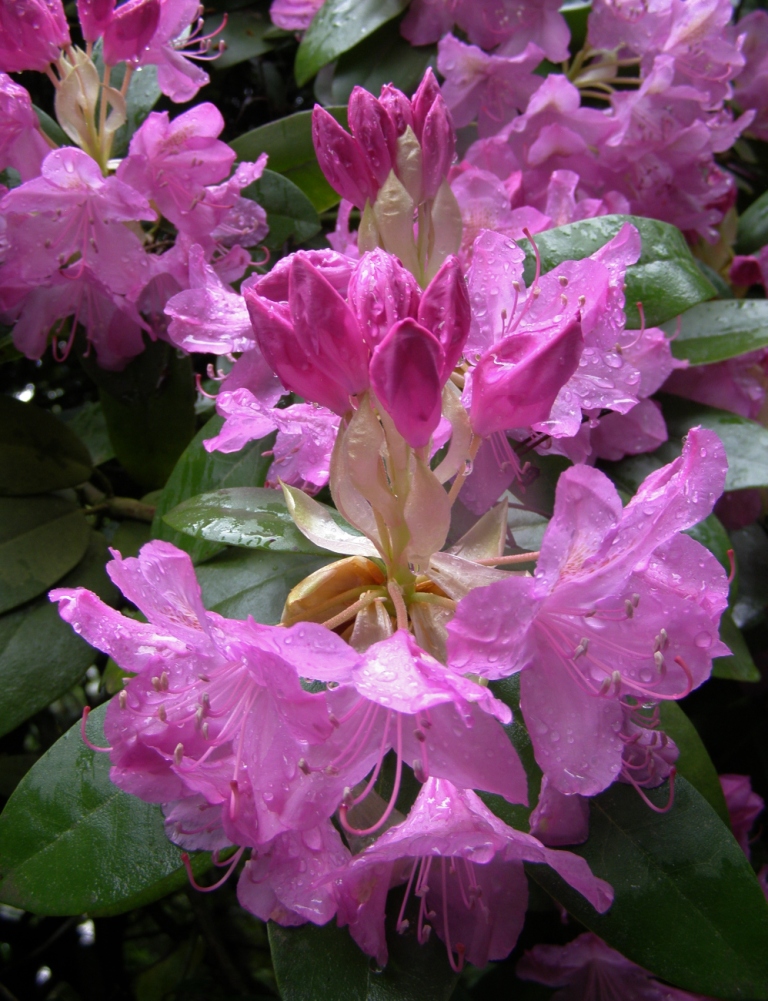
It all feels a bit surreal. This morning I was working like a mad thing in the greenhouses, trying to prepare things to be left under my son’s willing but just slightly disinterested care; tonight I’m far away from it all, and enjoying the glories of the coastal spring. Rhododendrons are in full bloom, among so much else!

I brought three books along, two of them last-minute grabs from the tried-and-true shelf. Rumer Godden’s China Court is one of my favourites, and I’ve also read Monica Dickens’ The Winds of Heaven several times, but neither very recently, so they will be welcome diversions. I’ve also been saving Elizabeth von Arnim’s Elizabeth and Her German Garden for an auspicious time; this might at long last be it.

I understand there is a marvelous bookstore in Chilliwack, The Book Man, and sure enough, in my daughter’s “swag bag” full of goodies and promotional stuff, there is a bookmark with the store info on it. My free-time agenda for tomorrow is taken care of!

That bed is calling, so I’m going to log off now, but I’ll be back shortly, to chat a bit about books. Stand outs recently were The Sisters Brothers by Patrick deWitt, and No Love by David Garnett.

Good night, all.

Read Full Post »

« Newer Posts - Older Posts »