Posts Tagged ‘Memoir’

please don't eat the daisies jean kerr 001Please Don’t Eat the Daisies by Jean Kerr ~ 1957. This edition: Doubleday, 1957. Illustrations by Carl Rose. Hardcover. 192 pages.

My rating: 8/10.

I’ve had this book kicking around for years, as you can see from the sad state of its dust jacket pictured over there on the left (now covered with crinkly, shiny Brodart Just-a-Fold, one of my happier recent personal library improvement initiatives), and I re-read it with pleasure every so often. The only thing keeping it from a 10/10 rating is that it is too darned short; we never really get to settle down into it; it’s over and done with much too soon.

Jean Kerr lightly channels Shirley Jackson (the domestically-focussed SJ of Life Among the Savages versus the darker fictions, I hasten to add) and shines a cheerful and mildly sarcastic light on her own marriage and the goings-on of her four young sons.

Jean was always interested in the theatrical arts, and upon graduation from college, married one of her drama professors, Walter Kerr, who later became a prominent stage and film critic. The Kerrs dabbled in playwriting, producing a series of not terribly successful efforts, but having much more success with writing material for revues.

Jean Kerr did eventually have a hit, with the 1961 Broadway comedy Mary, Mary. She also wrote humorous essays which were published in various periodicals, such as the Ladies’ Home Journal and The Saturday Evening Post. Please Don’t Eat the Daisies is a compilation of these essays, and was followed some years later by other collections: 1960’s The Snake Has All the Lines, 1970’s Penny Candy, and 1978’s How I Got to Be Perfect.

Somewhere in the middle of Daisies, the Kerrs buy a house. Not just any house, but an eccentrically designed and decorated Larchdale, New York mansion formerly owned by a compatriot of Henry Ford, one retired inventor, world traveller and stuff collector, Charles B. King. King incorporated such features into his “fairy tale home” such as carved ceiling beams and a dining room floor made of planks from a retired paddlewheel steam ship, the door of ST. Gabriel’s Church, a clock tower, and a thirty-two bell courtyard carillon (connected to a clock in said clock tower) which played the duet from Carmen every day at noon.

The Kerrs found the house bizarrely irresistible, and persisted in their efforts to buy it from the trustees of the King estate, who could not agree on a reasonable asking price, until a fire destroyed one of the wings, and the price dropped to a level the Kerrs could manage.

For anyone interested in taking a peek at the house of the book, here is a link to an article and a slide show of a tour of the building prepared when Jean Kerr’s sons put the building up for sale in 2003, after it had been in the family for 58 years:

http://larchmontgazette.com/2003/features/20030318kerrhouse.html

Please Don’t Eat the Daisies caught the spotlight in 1960 as it was used as the basis of a romantic-comedy movie by the same name starring David Niven and Doris Day, and then a 1965-67 television sit-com based very loosely on the Kerr ménage and their unique home.

While I enjoy Jean Kerr’s on-page persona as a harassed mother of many (she eventually had six children, including one set of twins) I think my favourite essays in Please Don’t Eat the Daisies are the parodies of literary works. Stephen Vincent Benét’s sombre poem John Brown’s Body is presented as a readers’ theatre piece entitled Don Brown’s Body (starring Mike Hammer and set amongst the gangsters), while Francoise Sagan’s  A Certain Smile inspires Jean Kerr’s brutally funny mockery, Toujours tristesse. These two essays make the book for me; the Kerrs’ revues, if they were anything like these, must have been an absolute joy to attend.

A very clever lady, behind that “I’m just a harried mom who happens to write on the side” literary disguise.


Read Full Post »

my mother in law celeste andrews seton 001My Mother-in-Law by Celeste Andrews Seton ~ 1954. This edition: Michael Joseph, 1954. Hardcover. 239 pages.

My rating: 8/10

Foreword

Jay Gould died at his home at 579 Fifth Avenue, New York, in 1892. During his lifetime he amassed one of the largest fortunes in the United States. It is estimated that at one time his ownership of stocks and bonds in railways covering 18,000 miles of track, transatlantic cables, mining, land and industrial corporations, totaled over a thousand million dollars.

This story is based on the life of Jay Gould’s eldest daughter, Helen Gould Shepard. Her four adopted children agree that this book s an emotional and spiritual image of their foster-mother. They disagree, however, about some of the facts. Helen Anna says that the sweet peas did not win a prize at the flower show – the lilies did. Finley Jay says he doesn’t remember the flower show at all. Louis will not commit himself. Olivia says she is, frankly, a little fuzzy about it, but doesn’t see what difference it makes…

Attracted by its quietly elegant spine decoration, I pulled this slender hardcover off a crowded shelf in one of Vancouver several deluxe emporiums of used tomes, Lawrence Books (on the corner of Dunbar and 41st). Raising an eyebrow slightly at the pencilled price on the inner flyleaf – this is a store that thinks very highly of its dusty treasures, few bargains to be had here – I nevertheless was charmed enough by a few moments leafing through to add it to my small pile of promising finds.

Upon arriving home, My Mother-in-Law gravitated immediately to my bedside table, providing me with several late nights of soothing diversion during a hectic week full of all sorts of frantic activity.

The daughter-in-law who has penned this loving memoir first met her prospective husband while on vacation with her mother in the Adirondacks. Celeste finds the surprisingly accomplished Louis Seton less than forthcoming about his antecedents, but as she is twenty-one and nicely independent she abandons herself to the course of true love, eventually accepting Louis’ marriage proposal in a New York taxi. Only while preparing to break the news of her betrothal to her bemused parents – “Who is this Louis Seton, and why does his name sound vaguely familiar, even though we’ve never come across his parents in our society visits?” – does Louis rather shamefacedly spill the beans.

He is the foster-son of the richest woman in the United States, Helen Gould Shepard, eldest daughter of the incredibly rich “American robber baron” Jay Gould.

All right, then.

Celeste goes to meet her prospective in-laws with more than a little apprehension, and what she finds when she goes to that first afternoon tea is just a bit unnerving. Louis’ mother is, as Louis warns Celeste, perhaps a tiny bit eccentric.  Mother Shepard not only knows her Bible inside and out, she believes in it as the Literal Truth, and is prone to discuss it at any time, and to prescribe passages to memorize, which she will later examine her visitor upon. Celeste is put on the spot and manages to trot out the 23rd Psalm, the only Bible passage she knows by heart. Mother Shepard gently approves, but her mild manner does not mask her keen eye, and Celeste realizes that she had better brush up on her Bible reading, amongst other things.

Mother Shepard approves of Herbert Hoover – there is a huge jigsaw puzzle of his profile in a state of semi-completion in the parlour – and disapproves of communism. She sadly condemns Celeste’s alma mater, Smith College, as a hotbed of communist plotting: “They have parades there. By torchlight. And they don’t believe in God. It’s too bad…”

Celeste is presented with a peacock-feather quill pen and ordered to sign the massive guest book. She is plied with tea and avocado sandwiches, and watches in wonder as Mother Shepard feeds her Pekinese dog, Chinky, as he reclines on a velvet footstool. (Later we are to learn that this Chinky is merely one of a long line of identically named pets; as each expires from the effects of unsuitable diet and lack of exercise, another takes its place; the name stays the same while the actual dogs succeed each other, victims of a benignly intended but ultimately fatal pampering.)

Upon parting Celeste is presented with a huge corsage of white orchids, grown in one of the fabulous Shepard greenhouses, and she stumbles out into the real world feeling like she has been on another planet. But a most cozy and well-upholstered one, though there is something a bit tense in the atmosphere.

Helen Gould Shepard, unable to have children of her own, had adopted four foster children and raised them in her own unique manner. Though her generosity is boundless, the now-adult children are all still just a tiny bit terrified of their benevolent mother, whose ideas on child-rearing included “punishments” of memorizing poetry and foreign languages and operatic passages. Louis is most accomplished in all of these , as Celeste has already discovered, leading her to speculate uneasily upon the “naughtiness” of his childhood…

Though his foster-mother is exceedingly wealthy, Louis himself is not an heir to the Gould fortune, as Jay Gould’s will included a clause regarding the necessity for his ancestors to be “blood-issue”, but there does appear to be a substantial trust fund, easing Celeste and Louis’ setting up housekeeping in the darkest days of the Depression.

Many visits to the various Shepard residences follow in the years to come, and Celeste, while remaining slightly bemused at her mother-in-law’s thought processes, comes to love Mother Shepard deeply and to admire her sincere urges to do good, even while realizing that occasionally Mother Shepard’s philanthropies are subject to whim and arbitrary judgement.

This is an entertaining, kindly humorous and rather unusual memoir. It presents a one-of-a-kind picture of both a unique personality and of a way of life that was exclusive to only a very tiny percentage of the American population – the wealthiest of the exceedingly wealthy – in their specific moment in history.

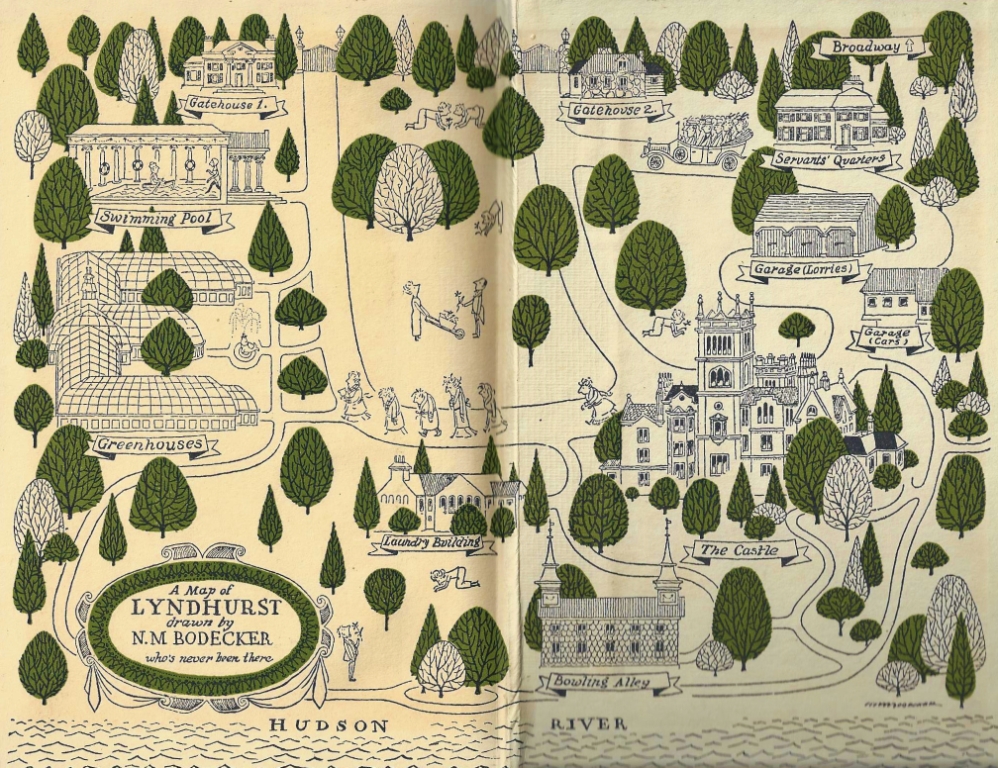
Gorgeous endpaper illustrations show a map of Helen Gould Shepard's favourite "home", the family country estate of Lyndhurst. Small illustrations depict incidents described in the memoir: the nighttime procession of the entire household to see the fabulous night-blooming cereus in the conservatory; grubbing up dandelions in the lawn under Mother Shepard's watchful eye; going to church en masse packed into one of the nine Shepard motorcars; swimming in the Greek-columned pool, watched over by a full-time lifeguard, whose main claim to usefulness was that he had once rescued one of the many Chinkys from a watery death!

The delightful endpaper illustrations show a map of Helen Gould Shepard’s favourite “home”, the family country estate of Lyndhurst. Small illustrations depict incidents described in the memoir: the nighttime procession of the entire household to see the fabulous night-blooming cereus in the conservatory, grubbing up dandelions in the lawn under Mother Shepard’s watchful eye, going to church en masse packed into one of the nine Shepard motorcars, and swimming in the vast Greek-columned pool, watched over by a full-time lifeguard, whose main claim to fame was that he had once rescued one of the many Chinkys from a watery death!

Read Full Post »

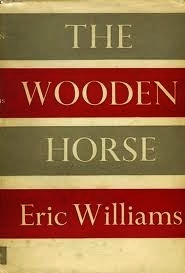
12285312The Wooden Horse by Eric Williams ~ 1949. This edition: Collins, 1949. Hardcover. 256 pages.

My rating: 8.5/10.

It was January when they had first come to Stalag-Luft III, and for the whole of that month the ground was under snow. Snow lay thickly on the roofs of the barracks blocks and gave an air of gaiety to the barbed wire which sparkled and glittered in the sun. Every post carried its cap of crisp, powdery snow, and when the wind blew, the snow drifted up against the coiled wire, softening its gauntness. Escape in this weather was impossible, and when the snow stopped falling the prisoners made a bobsleigh run and cut up their bed-boards to make toboggans. They flooded the football pitch and made an ice rink on which they skated from morning until evening. The camp was pure and clean while the snow lay on the ground, and the air loud with the shouts of the skaters. It was only when the night carts came to empty the aborts that the compound became offensive, and then the air was malodorous and long yellow streaks marked the snow where the carts had been.

When the thaw came the camp was a sea of mud. The packed ice of the toboggan run was the last to melt, and the skating rink was a miniature lake on which a few enthusiasts sailed their home-made yachts. Then that dried up and the football pitch was reconditioned. The goalposts were replaced and the earth dams that had held the water were removed.

With the spring came a renewed interest in escape. Spring is the escaping season…

Royal Air Force Flight Lieutenant Peter Howard, shot down over Germany in 1942, is on his second prison camp. He and fellow officer John Clinton had already tunnelled out of their first camp, Oflag XXI-B, but were recaptured only a few days later. Now they are pondering the possibilities of surreptitiously leaving Stalag-Luft II, the massive internment camp purpose-built and maintained by the Luftwaffe for captured flight crews. (This officers-only camp eventually housed over 10,000 POWs. For an excellent description of Stalag-Luft III, see this extensive Wikipedia article.)

Escaping from Stalag-Luft III had so far been impossible. Built on sandy soil, with distinctly coloured subsoil making disposal of tunnelling debris extremely difficult to disguise, the camp buildings were constructed on pilings, with guard dogs patrolling the compound after dark, and a system of foot patrols and random spotlighting to prevent any prisoner activity under cover of darkness. Due to the prevalence of prisoners attempting to escape by tunnelling, microphones capable of picking up seismographic vibrations had been installed around the perimeter of the camp.

Conditions inside the camp were reputed to be among the most “lavish” in any of the German-run POW camps. Because the detainees were officers, they were not required to perform forced labour under the terms of the Geneva Convention, and were provided with regular Red Cross food and relief parcels, which included cigarettes and toiletries. Many of the POWs were taking correspondence-style university courses, and recreation opportunities within the camp – sports, theatre, music – were well organized and highly attended.

So why even try to escape, and risk being shot? Many of the captured British airmen were quite content to put up with the boredom of being interned, grateful to be in a relatively comfortable camp, but for others the idea of being held in detention was maddening. Their one focus was on getting out and away back to England, from where they could renew their active participation in the war.

films-1950-the-wooden-horse

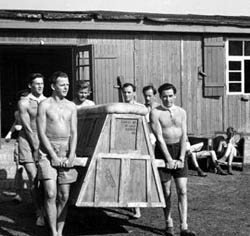
A re-creation of the vaulting horse in the 1950 movie version of the book.

Howard and Clinton come up with an ingenious plan, inspired by the traditional “Trojan Horse”, to start a tunnel close to the perimeter fence and so lessen the distance needed for excavation. They design a wooden vaulting horse, in which at first one and then later two and three men can be hidden and carried, and proceed to establish a regular routine of gymnastic exercises at their chosen tunnel head. With the cooperation and assistance of numerous fellow prisoners, the continuous vaulting, jumping, landing and related calisthenics created enough vibration that the tunneling noise was disguised from the microphones. Bags of excavated sand, made from the cut-off legs of prisoners’ pants, were hung on hooks inside the horse, to be removed and surreptitiously scattered in innocuous locations, and eventually, as it was harder to dispose off without being spotted, in the ceilings of the dormitories.

The Wooden Horse describes the escape plan in great detail, and makes fascinating reading. The ingenuity of the prisoners is admirable, as is the camp organization which coordinated escape attempts. A hidden stockpile of altered clothing, forged papers, German money and condensed food rations was assembled through various efforts, to be allotted to those who had made a plausible case to the Escape Committee.

Howard and Clinton, along with a third officer, Phillip Rowe, are the first and as it turns out, the only prisoners to successfully escape from Stalag-Luft III and to return to their home country. Every other escape attempt, of which there were many, including the famous “Great Escape”  of 1944 documented by writer Paul Brickhill, ended in recapture and, in the case of the Great Escape, execution of many of the escapees.

no111

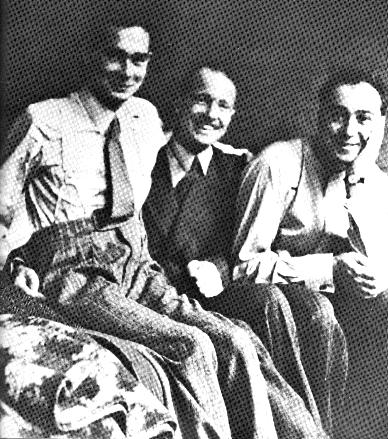
Michael Codner, Oliver Philpot, and Eric Williams

In The Wooden Horse, the fictionalized version of events written by participant Eric Williams, ‘Peter Howard’ is Eric himself,  ‘John Clinton’ is Michael Codner, and ‘Philip Rowe’ is Oliver Philpot. All three men returned to active service after their return to England.

An extremely interesting book, containing as it does such intensive detail concerning life in an officers’ POW camp, and vivid descriptions of life in civilian Germany midway through the war as the men blend in with the population during their journey toward the seaport where they hope to find transport out of the country.

The story is well-told, though events here and there which are really quite dramatic are told in an offhand sort of manner, with the exception of a brutal encounter with a German guard at the very end of the narrative, which stands out by its dramatic and gory details. This incident was later revealed to be fabricated at the request of the book’s publisher, in order to “spice up” the ending. Everything else, though, appears to be quite true.

A must-read for anyone at all interested in World War II history, for its extensive detail and its business-as-usual, “sure-we-did-amazing-things-but-why-all-the-fuss?” tone, keeping that British “stiff upper lip” stereotype nicely polished. What emotion is shown is in the realistic depiction of the nerve-wracking journey across Germany and into occupied Denmark, and the stressful situation at being completely at the mercy of randomly-met strangers who may or may not be willing to pass along information or messages, and any of whom might be in collaboration with the German officials.

All in all, a good read.

Read Full Post »

Three quick reads this past few days ran the gamut from slightly-gosh-awful to thoughtfully-affirmative to poignantly-hilarious. All are deeply imbued with sense of place. Light reading, all three, easy to pick up and put down, though I must confess I read each one straight through. Without further ado, here they are.
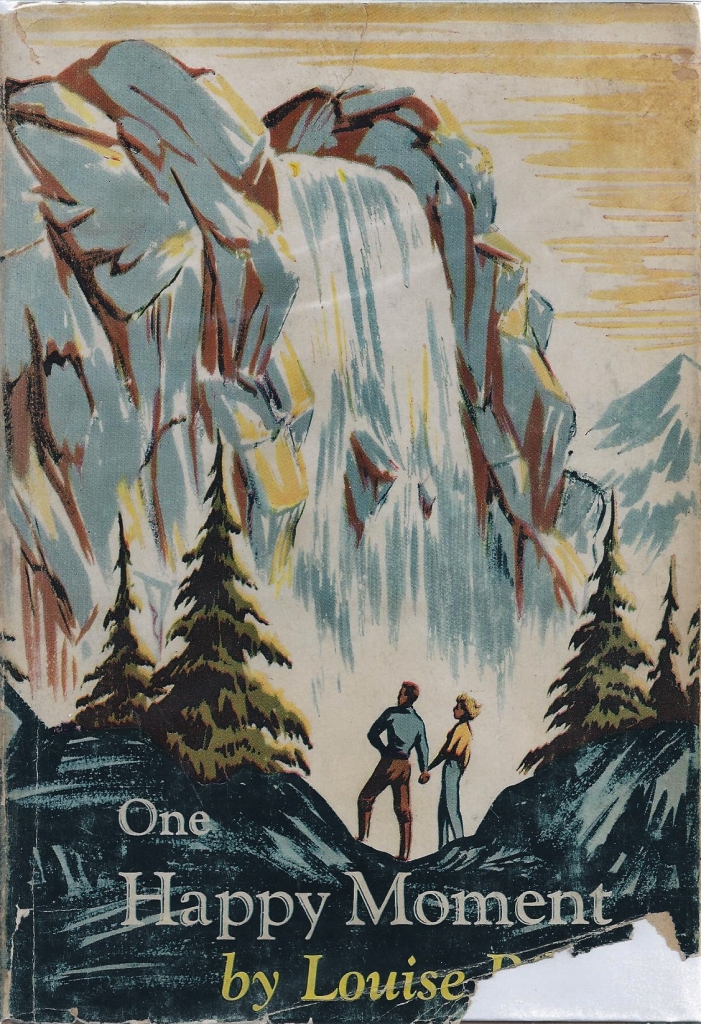
one happy moment dj louise riley 001One Happy Moment by Louise Riley ~ 1951.

This edition: Copp Clark, 1951. Hardcover. 212 pages.

My rating: 4.5/10

I’m glad to have read this obscure Canadian novel, for it made me stop and muse on what makes a style of writing either a hit or a miss with a reader. This one felt awkward to me, stylistically and plot-wise, and even its glowing portrayal of a landscape I have personally known well didn’t quite make up for the clunky prose and the rather cardboard characters. I opened it up prepared to enjoy it; I closed it no longer wondering why this was the author’s only adult novel, and why it (apparently) never made it past that first printing.

She lifted her arms and pulled off her grey felt hat, shaking her head like a young horse, freed from his bridle. She ran to the lakeshore and tossed the hat into the lake, laughing at it as it bobbed primly over the ripples. She tore off the jacket of the grey suit and hesitated about throwing it after the hat. Instead she ran back to her suitcase, snapped it open, and took out a pair of plaid pants and a yellow sweater. Taking a last quick look about her, she pulled down the zipper on her skirt and stepped out of it, kicking it aside. Quickly she unbuttoned her grey blouse and took it off, tossing it on top of the skirt. She pulled her slip over her head and, as she stooped to take off her shoes and stockings, the warm sun felt like a caress on her back. She pulled on yellow knitted socks and heavy shoes. When she was dressed in slacks and yellow sweater, with a scarlet handkerchief knotted around her throat, she pulled the pins out of her fair hair, shook it free, and tied it back with a yellow ribbon.

And in case you didn’t quite catch the symbolism, there’s more.

Into the suitcase Deborah shoved the clothes she had taken off, added a few rocks, hauled the suitcase to the shore, and tossed it into the lake. She watched it sink. Her hat had floated several yards away from the shore, and she waved good-bye to it. Then, slinging her rucksack onto her back, she looked for the path up the mountain side.

The young woman so anxious to dispose of her city clothes – and, by inference, her dull, grey, prim and proper former life – is one Deborah Blair, and she’s about to hike nine miles up a trail to a tourist camp somewhere between Lake Louise and Lake O’Hara, on the Alberta side of the Rocky Mountains.

Her first encounter with another person is an old man just up the trail; he pops out of the bush, startling her greatly, and then proceeds to tell her that he knows she is running away from something, and that she is like a young doe, “…frightened…by a hunter, maybe, out of danger now, taking time to be proud of her speed and to taste her freedom, but still wary, remembering her fright…”

But the mountains will give her sanctuary, he goes on to say, and Deborah parts from him, mulling over what he has said, rehearsing her new role in preparation for meeting her fellow guest camp residents.

These are a motley crew indeed. Evangeline Roseberry is her hostess, an uninhibited, provocative and sultry woman of a certain age. Young ranch hand Slim appears to be very close indeed to his employer, and when Slim is not in attendance the male guests are often to be found in “Vangie’s” cozy cabin. Middle-aged Dr. Thornton is holidaying without his wife and apparently finding his hostess a suitable substitute; downtrodden Mr. Nelson is at the beck and call of his own formidable wife, though he glances hopefully at Vangie’s lush charms when Mrs. Nelson’s focussed gaze is elsewhere, and teenage Sue Nelson cherishes a passion for handsome, red-haired, flashing-eyed yet taciturn geologist Ben Kerfoot. In the kitchen brusque Mrs. Horton reigns supreme, dispensing pithy criticisms to all and sundry along with the bacon and eggs.

Deborah gravitates toward avuncular Dr. Thornton, as nosy Mrs Nelson attempts to probe into “Mrs. Blair’s” past, which appears to be decidedly mysterious, especially when an RCMP officer appears asking questions about why a suitcase with the initials D.B. was found floating in the lake at the bottom of the trail. The plot thickens, with heaving bosoms and flashing eyes from the female contingent all round, and lusty glances and/or darkly passionate glares from the men.

One after another, the people from whom Deborah seeks to hide track her down to her mountain fastness, but she gains strength from the purity of the air and the pristine beauty of the surrounding peaks – not to mention Mrs. Horton’s hearty cooking – and stands up for herself at long last.

Though this novel started out promisingly enough, but ultimately didn’t take me where I hoped it would, and most of that was the fault of the writing, and the lack of a cohesive plot.

Deborah’s vaporings are overplayed, and her flip-flopping between men left me bemused. She is decidedly attracted to both Dr. Thornton and Ben-the-geologist, who in turn steal embraces from whichever woman is present and willing, and, when a manipulative cad from her past appears she mulls over throwing her lot in with his, before the mountain breezes blow some sense into her head. An über-controlling mother appears and is finally confounded, and Deborah prepares to set her sights on making her fortune in Vancouver, being as far away across the continent as she can get from her previous life as a meek librarian in Montreal.

The author was a Calgary librarian and storyteller, and her work with children resulted in the naming of a library branch after her in her native city; the wealthy Riley family was well-known for their philanthropy and social conscience, and Louise by all reports was a fervent advocate for childhood literacy.

Four of Louise Riley’s books were published between 1950 and 1960, the juveniles The Mystery Horse, Train for Tiger Lily, and A Spell at Scoggin’s Crossing, as well as her only adult book, One Happy Moment. Though Train for Tiger Lily received the  Canadian Library Association Children’s Book of the Year Award in 1954, a quick glance into my standard go-to children’s literature reference, Sheila Egoff’s Republic of Childhood, finds that perceptive literary critic dismissing Louise Riley’s juveniles as “insipid and contrived”, which I can sympathise with after reading One Happy Moment. Interesting though it may be in a vintage aspect, this is not in any way inspired writing.

Worth taking a look at is the commentary at Lily Oak Books , where I first heard of One Happy Moment. Lee-Anne’s review is well-considered and thoughtful, and she includes some gorgeous pictures.

My copy of the book is going on the probation shelf; I’ll share it with my mom and then decide if it gets to stay or go. The attractive dust jacket will likely tip the balance. As it arrived in fragile shape, I went ahead and put it into Brodart, and its vintage appeal might be too tempting for me to part with, though the words inside the book are not of the highest rank.
a big storm knocked it over laurie colwin 001A Big Storm Knocked It Over by Laurie Colwin ~ 1993.

This edition: Harper Collins, 1993. Softcover. ISBN: 0-06-092546-9. 259 pages.

My rating: 7/10

Moving right along to the other side of the continent and New England, for this gentle yet slyly cunning novel about love and friendship and transcending unhappy childhoods. It’s also about the terrifying act of bringing a child into the world, and an ode to the possibility of happiness, and our right to seek such out in an often unhappy world.

Does that sound impossibly twee and gaggingly chick lit? Well, it isn’t. (Okay, maybe just the tiniest bit. But it’s easy to get past. I liked this book.)

One Happy Moment has a stellar cover and ho-hum contents; A Big Storm Knocked It Over has a dreadful cover and a well-written inside. Ironically, for the protagonist of Big Storm is a graphic designer employed in the book trade, the blandness of the exterior presentation would not normally have received a second glance from me but for my previous encounter with this author. The late Laurie Colwin – she died suddenly in 1992, before this book was published – was a much-loved columnist for Gourmet magazine and  a bestselling cookbook author, novelist and short story writer. Big Storm was her fifth and last novel.

My first acquaintance with her was some twenty years ago, through Goodbye Without Leaving, about a white ex-backup singer for a black pop band – the token “White Ronette” on the tour bus – and her life after music. I read it just after my son was born, and it struck very close to home; Colwin perfectly captured that “now what?” atmosphere of the ultimate personal change of new motherhood and walking away from your past you, and I was comforted by the parallels between her fictional world and my own. It was also very funny.

In Big Storm, Jane Louise has just married her live-in boyfriend Teddy, and is surprised to find that marriage does indeed change things, even if all that is different is a piece of paper and a ring. We are introduced to an ever-widening circle of co-workers, friends and family, and watch with only slightly bated breath as Jane and Teddy find their new groove.

The gist of the novel is that sometimes family is rotten bad, but that you can always choose your friends. And that babies are quite amazing. And yes, life is terrifying, but if you can find someone to love, who also loves you, it still isn’t all shiny sparkly perfect, but it helps.

I don’t know what else to say. It was good. Not great, but definitely good. And there was a fair bit of to-ing and fro-ing from the countryside to the city, and a lot of emphasis is placed on where you’re from and ancestral homes and the clannishness of small New England towns, so I figure it counts in my vaguely themed geographical surroundings thing I’ve got going in this post.

Laurie Colwin was an interesting person and a more-than-just-good writer. I still feel sad when I think about her too-soon departure from our world.
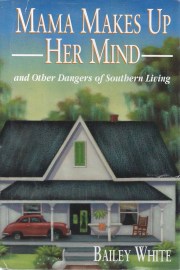
mama makes up her mind bailey white 001Mama Makes Up Her Mind, and Other Dangers of Southern Living by Bailey White ~ 1993.

This edition: Addison Wesley, 1993. Hardcover. ISBN: 0-201-63295-o. 230 pages.

My rating: 9.5/10

The best is last, and what an unexpected book this turned out to be. I had picked it up along with a random selection of others at the Sally Ann one day, thinking it was a light novel suitable for dropping off with my mom for her entertainment, but not really intending to read it myself. (It reminded me of something by Fannie Flagg, from the title and the cover illustration and the blurbs about “absolute delight” and “like sitting on a porch swing.” Look away! my inner voice chirped, because I have to confess that Fannie Flag leaves me utterly cold, though Mom can handle her in well-spaced intervals.)

My husband was between books, picked it up off the stack by the door and chortled his way through it before pressing it on me. I sat down with it over dinner, and looked up two hours later after having read it through in one continuous session. Easy as picking daisies to prance through, this one was. And I must say a laugh or two escaped me as well.

This turned out to be a collection of short – some very short – anecdotes and vignettes, many centered on White’s mother, the “Mama” of the title, and others more concerned with Bailey White herself. They were originally presented on NPR in the United States, with the author reading her own pieces, but they work exceedingly well in print.

Bailey White was born in 1950 and still lives in her rural family home in Thomasville, Georgia. Until her mother’s death at the age of 80 in 1994, the two were close companions. Their joint adventures as  “a widow and a spinster” are the focus of some of these lively vignettes, but Bailey White’s scope is wide and she draws inspiration from a vast range of experiences. Bailey White worked as a Grade One teacher for over twenty years in the Thomasville school she herself attended as child, after returning to Georgia when her eleven-year-old California marriage ended in 1984.

Between the covers of this delectable smorgasbord of a book you will find tales of an antique spyglass, the best movie ever made (Midnight Cowboy, according to Mama), Road Kill (and how to decide if it’s edible), Pictures Not of Cows, an Armageddon of a storm and how prayer proved not all that useful, feral swans, an alligator which bellowed on cue, snakes lethal and benign, Great Big Spiders, the perfect wildflower meadow, how to travel unmolested by men (involving a maternity dress and a fake wedding ring), D.H. Lawrence as a life-saving substitute for The Holy Bible, and tales from the classroom.

And much, much more. Something like fifty little stories are stuffed into this book, and they are, without exception, quite excellent.

Apparently based on real people and incidents, there is likely a bit of embellishment to some of these; they have the well-polished feel of anecdotes often told, but that in no way lessens their deep charm.

Passionate, deeply revealing, kind, maliciously humorous – all of these can and do describe the author’s voice. Loved this.

And to think I almost missed it!

A great quick read for the bedside table, or to tuck into a pocket for a waiting room stint. Or to read at coffee break, or over a solitary lunch. Watch out for those spontaneous moments of glee, though. You might get some odd looks. (Or even get in trouble with your beverage.)

Read Full Post »

land below the wind agnes newton keith

The edition pictured is the more recent reissue of the book. My own paperback copy is too tattered to share; I do need to replace it, as it’s one to keep and re-read.

Land Below the Wind by Agnes Newton Keith ~ 1939. This edition: MacFadden, 1964. Paperback. 270 pages.

My rating: 9/10

I do enjoy an interesting memoir, and, having read several of Agnes Newton Keith’s later accounts of an eventful life, namely Three Came Home (a description of Agnes Keith’s three years in a Japanese prison camp in Borneo with her husband and young son, 1942-45) and Bare Feet in the Palace (everyday and political doings in the Philippines, where her husband worked for the U.N. Food and Agriculture Organization, 1953-56), I have long been on the lookout for her first literary accomplishment, this worldwide bestseller, Land Below the Wind.

I was particularly interested in this memoir because Agnes Keith credits it with helping save her son’s life while in the prison camp in Borneo. The book had been translated into Japanese prior to the war, and the commandant of the camp had read it and greatly enjoyed it, apparently appreciating Agnes Keith’s favourable descriptions of the Asian world. He would occasionally call Agnes into his office and chat with her on things literary, rewarding her with treats for young George – a biscuit, a banana, and on at least one occasion medical supplies normally unavailable to the internees. For this she was labelled a “collaborator” by some of her fellow internees; In Three Came Home, Keith justifies her conciliatory attitude to the Japanese officers as doing the best she could to ensure the survival of her child. So I was rather curious as to what the appeal of Land Below the Wind was, to see what chord it might have struck which was strong enough to influence a prison camp overseer some years later.

Land Below the Wind is indeed a most readable and a happily positive book, a description of Agnes’ introduction to life as the wife of a British civil servant in then-North Borneo (now known as Sabah) in the 1930s, when that country, “seven days by steamer from Singapore and Hong Kong”, was a British Protectorate, and Harry Keith its Conservator of Forests and Director of Agriculture, a position he had already held for ten years when he brought his new American wife out to the tropics with him. After four years living and travelling in North Borneo, one of only twenty or so European women attached to the seventy or so European men in the North Borneo Civil Service (men were not permitted to marry until they had served eight years in their posting, which accounts for the disparity in numbers of the sexes) Agnes published this book, and it became an immediate bestseller, after winning the coveted Atlantic Monthly $5000 Prize for Best Non-Fiction book published in 1939.

The book is entrancing, certainly because of the descriptions of the local residents, the tropical surroundings, the native flora and fauna, and also for its gentle mocking of the delicate social structure built up around the Protectorate bureaucrats and their spouses and unspoken rules of etiquette.

In Sandakan there is a game played with visiting cards. Every married woman has a small card box with her name lettered on it, planted at the entrance to her garden path. Spiders and lizards live in this box and in the wet season a very small snake, so care must be taken in opening the door not to snap off the end of the lizard’s tail or flatten the snake in the hinge. At intervals, among the lizard’s droppings, if you remember to open the box, various cards will appear. These you scrutinize, forget about, and some days later find under the ash tray. You then disinter your own and husband’s cards, stealthily approach the friend’s card box, and offer a return sacrifice to his lizards. The rule as to who drops the first card is as mystifying and inexplicable as the use of a subjunctive clause, and I have never really understood either of them. The rule has something to do with the sex, length of domicile, and matrimonial alliances of the parties involved, but the whole thing is best enjoyed if regarded as a game. The really important rule is to remember that when calling on the person you should not meet him in the flesh.

Sometimes newcomers do not understand about this game, or play it with a different set of rules in the outer world from which they come. this creates an impasse in social relations, for not until the first round of cards can people meet in person. The impasse continues until someone quietly hands the newcomer a printed slip containing the laws of the Medes, the Persians, and the Game of Cards.

North Borneo in the 1930s was a very active place, with lots going on, and constant coming and going both throughout the countryside and to the various islands, and frequent contact with the “outside” world, but there was still enough “first contact” type experience within living memory to give the Europeans the thrill of realizing that their immediate predecessors, instead of being matter-of-factly greeted by the natives as just another lot of government officials, might well have perished under mysterious and tragic circumstances. This was, after all, a country where head-hunters had stalked the hills only a generation ago. People still occasionally disappeared without a trace, and there were corners of the jungle not yet penetrated by Europeans, where traditional culture presumably survived in isolated pockets.

Agnes Newton Keith plays down the Noble White Man and Backwards-and-Possibly-Scary Native scenario, except where to make a point about White Man’s attitudes (good and bad) and fundamental dependence on the good nature of their Native co-workers, fellow officials, and yes, servants and jungle guides and local shopkeepers and business owners. For its era, an even-minded account of life in a relatively newly colonized land, of course from the point of view of one of the colonizers.

An enjoyable book, and though I could easily go on, I will stop here. Agnes Newton Keith was an interesting woman and an accomplished writer, and I enjoy reading her for her sense of humour, readiness to criticize herself when she pulls a real bloomer, and for her deep appreciation and vibrant descriptions of the places she finds herself occupying, whether North Borneo government villa or prison camp grass hut. Good stuff.

Read Full Post »

war stories gregory clarkWar Stories by Gregory Clark ~ 1964. This edition: Ryerson Press, 1968. Softcover. ISBN: 0-7700-6027-7. 171 pages.

My rating: 8/10

Born in 1892 in Toronto, Ontario, Gregory Clark was of perfect age to fight in the Great War, heading to Europe in 1916, at the age of twenty-four. Clark entered the fray as a lieutenant, and exited a major. In the trenches and out of them – Clark received the Military Cross for “conspicuous gallantry” at Vimy Ridge – the young man remembered what he had witnessed, the horror and the gallantry and the moments of respite and delight, to be shared later with his audience of newspaper readers as he took up journalism in the post-war years.

Too old to take active part in World War II, Gregory Clark none the less went overseas once again and pushed his way into the thick of the action, fulfilling a role as a front-line war correspondent, and receiving an Order of the British Empire for his services. Again, his experiences found their way into his short, chatty periodical articles published in the following decades. Clark’s son Murray was killed in action in 1944 while serving with the Regina Rifles, but there is no mention of that personal loss here in War Stories; Clark keeps that particular emotion well buried.

War Stories contains a selection of thirty-eight anecdotes, three to five pages in length, about a wide array of Gregory Clark’s personal experiences. Though the tone throughout  is upbeat and frequently humorous – War Stories won the Leacock award for humour in 1965, which rather surprises me, for funny as these anecdotes sometimes are, there is a sombre tone always present – Clark makes it very clear what his opinions are as to the brutality of what the soldiers and civilians went through.

These stories laud the bravery (and the frequent giddy foolishness) of the farm boys and office clerks and travelling salesmen who find themselves caught up in circumstances beyond their most vivid nightmares, fated to kill and, frequently, be horribly maimed, and wastefully killed, merely because of the circumstance of the time of their birth. Something I noticed is that there is not much sympathy shown here for the soldiers of the “other side”; Clark’s thoughts are ever for his own, and he was reportedly a fiercely protective officer of the men under his charge.

All is not muck and death and destruction though. Interludes of inactivity brought forth pranks and hi-jinks, while there were times of repose behind the lines, time for memorable meals and quiet conversation, and musings on what was going to come after, if there was going to be an after.

An appropriate book for this Remembrance Day weekend, this time of sober reflection. Clark reports the realities, but he persists as well in highlighting the lighter moments, the bits of sanity in a world of war.

A good read.

And a much more eloquent review of this book, well worth a click-over, may be found at Canus Humorous.

Read Full Post »

after the falls catherine gildinerAfter the Falls: Coming of Age in the Sixties by Catherine Gildiner ~ 2009. This edition: Vintage, 2010. Softcover. ISBN: 978-0-307-39823-9. 344 pages.

My rating: 8.5/10

Wow. That was unexpected. I was tidying up some books I’d casually piled on a corner of the couch, sorting out already-read from want-to-read, and I leafed through After the Falls to refresh my memory as to how urgently I wanted to read it, or if it could be put on the maybe-someday pile.

It caught me.

Suddenly I was sitting down, and reading away like a mad thing. Clean-up abandoned, outside chores abandoned, and it’s a good thing the roast was already in the oven or cooking my family’s evening meal would have been abandoned, too. It grew dark. I switched on my reading lamp. I read this thing right through to the end. My afternoon was completely lost. Abandoned pell mell, while I lost myself in a book.

My seduction by After the Falls was so unexpected because I knew when I purchased it that it was a sequel to an earlier volume of memoir by Catherine Gildiner, Too Close to the Falls. I had a vague little plan to get the first book and read it, and then continue on with the second if the first one was indeed as great as everyone seemed to think it was. I wasn’t really thinking about it too much; I’m fairly immune to mainstream rave reviews, having been disappointed by banality too many times.

After the Falls is not banal. It is over-the-top, frequently jaw-dropping (“Did she just say that? Did she really do that?” How much of this is fictionalized???!”), and funny and sarcastic and joyful and heart-breaking and occasionally awkward and sometimes vague as major incidents are brushed over with a single sentence or two (this, the occasional vagueness and awkwardness, lost the 1.5 points in my personal ratings system), and rather contrived here and there, but never no mind those last few criticisms. It is a very readable book, and I happily recommend it. And I’ve elevated the need-to-buy status of the first installment to high on the list, and, having learned that a third volume is coming soon, have earmarked it as a buy immediately book.

So now you’re all wondering – those few of you who haven’t already ridden this particular train – what the darned book is about. Well, the internet is seething with reviews (mostly favourable) so I will cheat this morning and steal the flyleaf blurb. (Must address all the chores I neglected yesterday; must cut this short!) It’s a tiny bit inaccurate – do these blurb writers read the whole thing? or do they just ask for the high points? – but it condenses things reasonably well.

When Cathy McClure is thirteen years old, her parents make the bold decision to move to suburban Buffalo in hopes that it will help Cathy focus on her studies and stay out of trouble. But “normal” has never been Cathy’s forte, and leaving Niagara Falls and Catholic school behind does nothing to quell her spirited nature. As the 1960s dramatically unfold, Cathy takes on many personas — cheerleader, vandal, HoJo hostess, civil rights demonstrator — with the same gusto she exhibited as a child working split shifts in her father’s pharmacy. But when tragedy strikes, it is her role as daughter that proves to be most challenging.

Actually that’s a very lame flyleaf blurb. It doesn’t at all catch the spirit of the memoir. Here’s a much better blurb, from Publisher’s Weekly, November 2010:

At age 12, Gildiner and her family moved from their Niagara Falls home to a Buffalo suburb, leaving behind a family business, smalltown contentment, and the rebellious childhood chronicled in her first memoir, Too Close to the Falls. While her uprooted parents struggle to adjust, Gildiner stumbles in making new friends and edging into puberty. Her restlessness and a fundamentally outspoken and argumentative nature regularly catapult her further than simple teenage trouble, and she frequently fails at the standard American girlhood, often with comic results. The conflicts between the narrator’s individuality and conformity propel her into her first relationship at the same time that the seismic shifts in American society, culture, and politics hit home with ever-increasing force. On the page as in life, comedy, tragedy, and elegy live right on top of each other, and as with most remarkable memoirs, the straightforward, honest voice and perspective are steady even in the most painful moments.

And I’ll link the author’s website, so you can look around there.

Cathy McClure Gildiner – After the Falls

And here is what my blog friend Jenny had to say: Reading the End: After the Falls. Everything she says, I agree with. But I think you should read Chapter 4, because it explains an awful lot about how the memoirist relates to men from that point forward.

The writer also has a blog, Gildiner’s Gospel, which made me late for bed last night, as it was as compulsively readable as her words on paper. Check it out!

One last thing. The memoir is set in the United States, and at the time she writes about, Catherine was an American citizen. She moved to Canada some forty years ago, though, and reports that she is firmly entrenched in Ontario. In my mind she unquestionably deserves the “Canadian” tag I’ve given her.

Highly recommended.

Read Full Post »

I’m still playing a bit of catch-up with reviews of books I’ve read throughout the year, and didn’t write about right away, but which I want to talk about before I tuck them away. Tonight I’m going to zip off some short reviews of some short easy books, the kind one can read quickly through in a few hours. Lit-light, for those times when you need something undemandingly different from your own possibly bothersome real world.

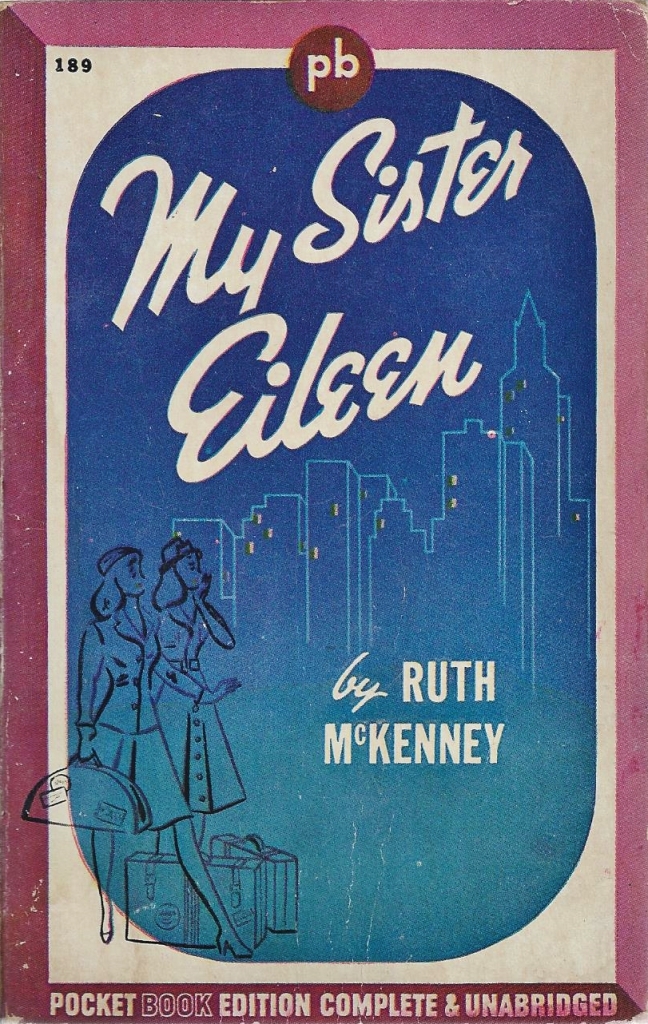
my sister eileen ruth mckenney 001My Sister Eileen by Ruth McKenney ~ 1938.

This edition: Pocket Books, 1942. Paperback. 142 pages.

My rating: 7.5/10

This frothy memoir was found among the stacks and stacks of vintage Pocket Books at Kelowna’s Pulp Fiction/Robbie Rare Books. The author was new to me, but a bit of internet research showed that she was a well-known journalist in the 1930s, 40s and 50s, with a sideline in humorous memoir, novel and travel writing. This very book, My Sister Eileen, as much about Ruth as it about her younger sister, is a an absolutely charming autobiographical account of growing up in Indiana and then Ohio, and of the two sisters going off to try their luck in New York City. The memoir caught the attention of the public, and it brought its author popular success, being made first into a Broadway play, then into a movie, and finally, in 1953,  into a very successful – 500 + performances – musical, Wonderful Town, starring Rosalind Russell, with music by Leonard Bernstein. A long way from Ohio, oh yes indeed.

I’m not much for laughing out loud while reading, but Ruth McKenney triggered more than a few giggles, as she and Eileen adventure together through their young girlhood, watching much-too-adult movies from behind the brims of their hats, failing dismally at piano and elocution lessons, being traumatized by summer camp, learning how not to swim with the Red Cross, and having a life-altering encounter with Noel Coward. A French pen pal brings romance into Ruth’s life, or so she supposes. She’s not quite sure because no one can translate his handwriting. First jobs give much scope for both girls broadening their horizons, and while Ruth does well for herself on the staff of a newspaper – printer’s devil at fourteen and onward and upward from there – Eileen struggles with the finer points of waiting tables at a posh tea room. Dreadfully dire beaux, a rather more happy (though short) encounter with Randolph Churchill, in America on a lecture tour, and a shipful of Brazilian future-admirals bring romance in the sisters’ lives.

My only complaint is that this sparkling little book is much too short. But there appear to be others, continuing the story, which I may well be searching out, though they are in much shorter supply than this bestselling first installment.

In later years Ruth McKenney’s life was to take a tragic turn. Her beloved sister was killed in an automobile accident only four days before the stage play inspired by her opened on Broadway, and on Ruth’s 44th birthday her husband committed suicide. She stopped writing, and faded into obscurity. A 2003 interview with Ruth’s daughter, Eileen Bransten, was published in the The New York Times, and gives a brief but lovingly poignant character portrait of this talented and ultimately unlucky woman.

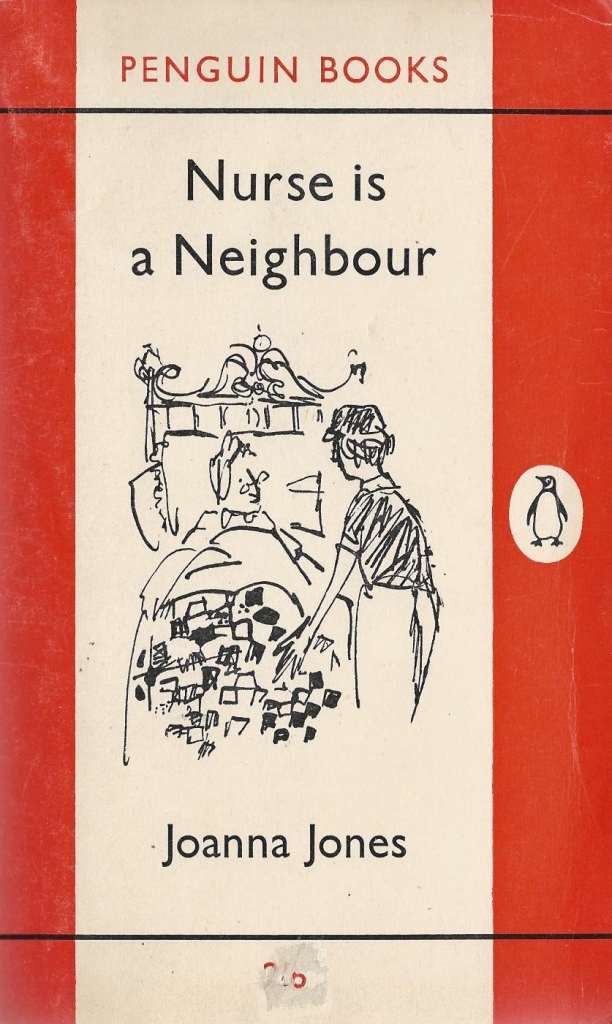
nurse is a neighbour joanna jonesNurse is a Neighbour by Joanna Jones ~ 1958.

This edition: Penguin, 1961. Paperback. 159 pages.

My rating: 5.5/10.

Crossing the pond to England, we hear from a rural district nurse, Joanna Jones, who tells of her work with a wryly sarcastic tone more than a little reminiscent of Monica Dickens at her most scathing. While not up to Dickens’ stellar level for this type of memoir, the writing here is competent enough to make this a smooth and easy read, and the details of Nurse Joanna’s life prompt us to forgive her frequently critical comments of all those around her.

Joanna has taken over her posting from a long-time Nurse Merrick, who is now well into her eighties, but still active and alert and very much keeping an eye on her young replacement. Nurse Merrick is not beyond giving some good advice when she thinks it needed, and Joanna tries to bear this in good grace, though it obviously rankles just a little now and again. Joanna also brings along to her cottage her elderly mother who is suffering from what seems to possibly be Alzheimer’s Disease (though the term is never used, I’m supposing that it was not in common usage in the 1950s), a progressive dementia which complicates Joanna’s life immensely, though she appears to cope with grace, humour, and much patience.

A very short, very anecdotal memoir, and an interesting glimpse into the state of British health care just as the National Health Program was being implemented; the protests of doctors and not a few patients as to the unwarranted interference of The State into the state of their medical care is rather familiar what with the United States’ “Obamacare” making the news these days.

Nurse is a Neighbour is quite readable, but I thought it was just missing that elusive special appeal which would make it a must-read. Joanna Jones wrote a second book of memoirs, Nurse on the District, and her books were the basis of a now-forgotten 1963 comedy film, Nurse on Wheels. Neither calls out to me for urgent investigation.

So if I wouldn’t go so far as to recommend this book as worthy of seeking out, I will repeat that it was a pleasant short read for a cold autumn afternoon’s tea break, in to warm up after digging in the garden and raking leaves.

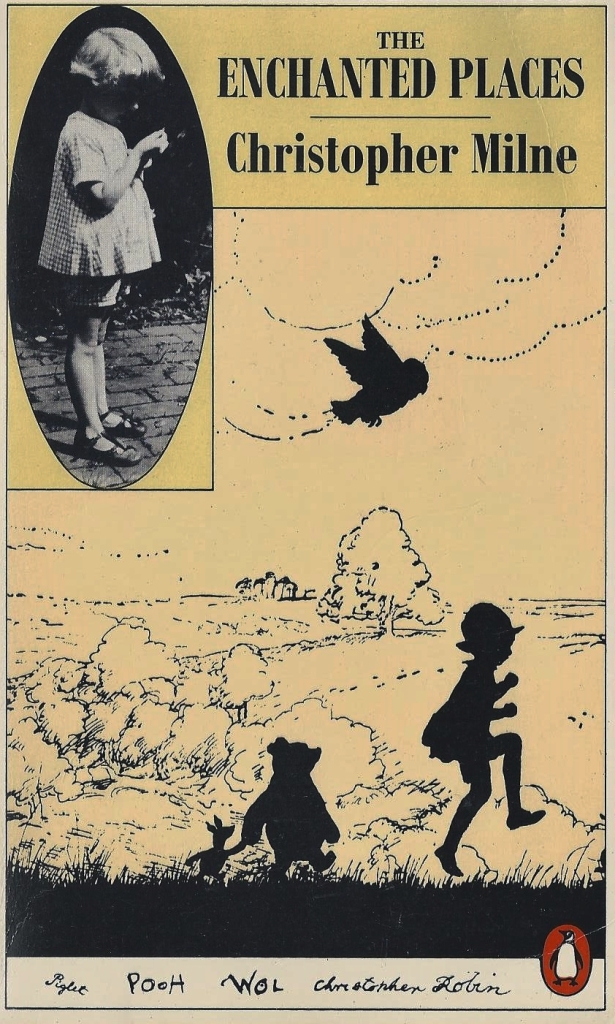
the enchanted places christopher milne 001The Enchanted Places by Christopher Milne ~ 1974.

This edition: Penguin, 1976. Paperback. ISBN: 0-14-003449-8. 183 pages.

My rating: 7/10.

I completely missed Winnie-the-Pooh in my own childhood; I can’t recall even being aware of such a character, though I’m sure A.A. Milne’s classic was readily available even in our rural British Columbia ranching community. Early childhood reading consisted mostly of a vast quantities of fairy tales, and of course the ubiquitous Little Golden Books. Beatrix Potter was just barely represented by a single non-Warne edition which consisted of Potter’s immortal text, but someone else’s dreadfully inadequate illustrations. I loved that one for the story alone – oh, brave, foolish Peter! –  and even today could probably reel off the entire thing from memory. But definitely no Pooh, in any way, shape or form.

I remedied that with my own children, of course, but Pooh never really took hold. Grilling them just now as to early childhood favourites, they mentioned Richard Scarry, the Dr. Seuss books, Beatrix Potter (hurray!) and, my daughter’s absolute favourite for a long, long period of her toddlerhood, The Poky Little Puppy. They do remember Pooh, but not with anything like dedicated fondness. Interesting.

Oh well, moving on, then. I myself do remember the Christopher Robin stories from that time of endless reading aloud, and I definitely appreciated the world of the Hundred Acre Wood, so when this memoir by the real Christopher Robin crossed my path, I read it with genuine curiousity.

In this slender volume (I found out later it is but the first of three, the following ones being The Path Through the Trees and The Hollow on the Hill, taking Christopher Milne into his adult years) the memoirist seeks to provide a sort of

…(C)ompanion to the Pooh books. In the first chapters I have attempted a picture of the Milne family life, the family life that both inspired and was subsequently inspired by the books…

For it is very evident from reading Christopher’s reminiscences that his life was indeed greatly influenced by his becoming a very well-known public figure indeed. His parents sought to shelter him from much of the publicity which his fictional counterpart attracted, but Christopher tells of his uneasy awareness that the fatherly gaze was often a bit too analytical for comfort, and then there was that rather awkward provision of new toys with an eye to story development possibilities…

The early half of the book was very much concerned with descriptions of the physical places which inspired the Pooh stories, and I must say that my interest faltered here and there, not being a true-blue devotee, but as Christopher (the real Christopher) grows up and begins to venture out into the broader world, the narrative becomes much more interesting, in an introspective, self-examining sort of way.

A.A. Milne, from Christopher’s restrained yet gently fond description of his father, seems to have been a man with a certain amount of reserve, a certain at-a-distance quality with his young child. He expressed his interest and attention through his writing rather than with much hands-on attention, and one gets the idea that Christopher in later years was very aware of how this had formed his own rather buttoned-up personality. An alone and one would think an occasionally lonely child, was young Christopher. And vaguely troubling is his mother’s insistence on the long locks and feminine attire; she was sorely disappointed that he had not been born a girl, reports Milne, and he muses about her motivations and their effect on his acceptance by his young peers.

I finished this memoir feeling just a little melancholy for that long-ago child’s sake, though it is comforting to see that he did manage to move on and break away from the heavy-though-benevolent burden of his past. I will be looking for the next two memoirs, to find out, in best story-telling tradition, “what happened next.” And, for my upcoming Century of Books, I intend to revisit Pooh himself, with his real-life owner’s story in mind.

Read Full Post »

Here are a few more catch-up reviews from February of 2013.

*****

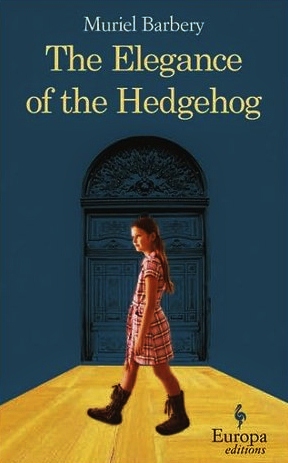
the elegance of the hedgehog muriel barberyThe Elegance of the Hedgehog by Muriel Barbery ~ 2006

This edition: Europa, 2008. Translated from the French by Alison Anderson. Softcover. ISBN: 978-1-9833372-60-0. 325 pages.

My rating: 8/10

I was moved to read this bestseller by the recommendations of respected fellow bloggers; sadly I cannot recall exactly who those were at this point in time! But to them I must say, “Thank you.”  For this was indeed a charming story.

In an exclusive Paris apartment building there dwells, upstairs, a snobbish upper-class family: mother, father, and two daughters. The youngest of the girls, twelve-year-old Paloma, is a strangely precocious child, given to thoughts well beyond her years. In her diary, which makes up half of the book, we learn that she is seriously disillusioned with life, and plans to commit suicide on her thirteenth birthday, unless something occurs to give her faith in the value of existence.

Downstairs is the stout, plain, elderly, and very obviously unintelligent concierge, Renée. Renée stumps around brusquely carrying out the tenants’ orders; she is blatantly uninterested in improving herself, and she carries out her duties with a sullen disrespect for her “betters”. Hers is the other half of the narrative.

Needless to say, for this novel follows the tried and true formula of loners uniting against the bitter world, Paloma and Renée find each other, and a friendship forms between the two social outcasts, who are soon joined by a third, new tenant Ozu, a wealthy Japanese businessman. And it will come as no surprise to readers that Renée is hiding an interior of the purest gold behind her prickly spikes – for she is indeed the hedgehog of the title, a creature of secret refinement, “deceptively indolent, fiercely solitary—and terribly elegant”.

Predictably, tragedy does indeed strike, but from an unexpected direction.

There is also a cat.

Need I say more?

god grew tired of us john bul dauGod Grew Tired of Us by John Bul Dau & Michael Sweeney ~ 2008

This edition: National Geographic, 2008. Hardcover. ISBN: 978-1-4262-0212-4. 304 pages.

My rating: 7.5/10

In 1987 a young Sudanese teenager was forced out of his home by a brutal raid on his village. What followed was a barefoot 1,000 mile trek through Sudan, Ethiopia, and eventually to Kenya, to a haven in a refugee camp. There John Bul Dau joined thousands of other displaced children, the “Lost Boys” of the Sudanese civil war.

Having no way of knowing the fate of his left-behind, possibly slaughtered family, John eventually immigrated to the United States, where he worked tirelessly to educate himself, all the while striving to raise awareness of the tribulations he himself went through, and to bring assistance to those still suffering from the aftermath of the war back in Sudan.

This book and its associated National Geographic film eloquently describe the situation. An earnest and strongly emotional memoir.

through the narrow gate karen armstrong 001Through the Narrow Gate: a memoir of life in and out of the convent by Karen Armstrong ~ 1981

This edition: Vintage Canada, 2005. Softcover. ISBN: 0-676-97709-X. 350 pages.

My rating: 7.5/10

Intriguing and occasionally bitter memoir of an ex-nun.

In 1962 Karen Armstrong, just seventeen, and child of a not particularly religious family, entered a Roman Catholic convent as a postulant, with the aim of becoming a nun. Seven years later, while attending Oxford under the sponsorship of her order (Armstrong was in training to become a teacher-nun) she realized that she had lost her faith, and she returned fully to the secular world.

Since then, Karen Armstrong has become well known for her writings on religion, and for her outspoken criticism of the Catholic Church’s more archaic practices, and of the confusion brought about by the mandated reforms of Vatican II.

This book, Armstrong’s first, is compelling reading. A very articulate writer.

The Guardian – Profile: Karen Armstrong is well worth reading if you are curious about this now high-profile public character; it references Through the Narrow Gate near the end of the article, with an amusing anecdote from Karen’s sister telling of how the family, after dropping Karen off at the convent for her entrance into her religious life, then went on to watch a production of The Sound of Music. That same sort of dark humour and willingness to smile at oneself is evident in places in this memoir, to leaven its more serious passages.

Sstarting out in the afternoon jill fraynetarting Out in the Afternoon by Jill Frayne ~ 2003

This edition: Vintage Canada, 2003. Softcover. ISBN: 978-0-679311-881. 256 pages.

My rating: 4/10

This is an autobiographical memoir of the author’s mid-life crisis, and of the solace she sought and found in communing with nature.

A solo road trip, hiking, biking, camping, sea kayaking and such all help to salve Jill Frayne’s inner pain at the dual blow of both the break up of her long-term romantic relationship back in Ontario, and the moving away of her young adult daughter. Once she begins to gain a degree of competence in her new pursuits, and to feel herself physically comfortable in nature, Frayne begins a deeper exploration of her own emotions.

While I’m sure that this was a marvelous thing for Jill Frayne herself, but sadly I had trouble relating to her angsty navel-gazing, and I felt more and more like I was reading a very private diary. I eventually lost patience with the “me-me-ME” of the author’s inner dialogue; it coloured my reaction to the book as a whole.

I certainly admire the author’s courage as a woman alone going off into challenging territory by herself, and I would have enjoyed this more it had spent more time on the scenery and nuts and bolts of solo travel, and less on the touchy feely bits. But that’s just me; others may embrace the personal narrative and find meaning there which resonates with their own lives.

Back story: the author had an almost fatal accident several years before she set off on her trip; she had been told she would never walk again. She proved everyone wrong. Extra kudos to her, and I do hope the writing of this very personal book brought her comfort and much-needed inner peace.

Read Full Post »

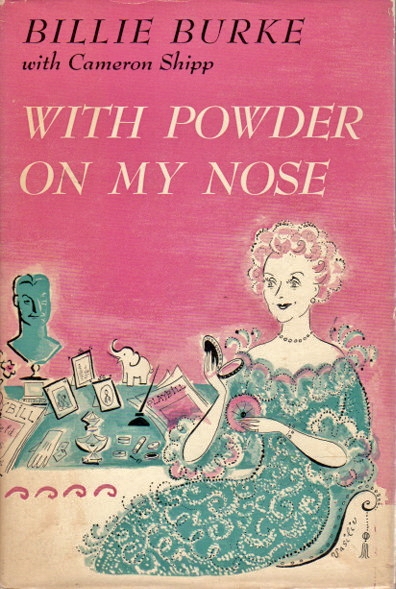
with powder on my nose billie burkeWith Powder on My Nose by Billie Burke ~ 1959. This edition: Coward-McCann, 1959. Second Printing. Adorable pen-and-ink illustrations by Mercia Vasiliu. Hardcover. 249 pages.

My rating: 5/10

Query: If I bought this frothy vintage memoir/feminine advice manual on a whim, does that automatically make it whimsical?

The hardcover books at one of my occasional used book sources – for you locals, Quesnel’s Family Thrift Shop, on Front Street right across from the walking bridge and beside the old Hudson’s Bay building – were on sale at a lovely 75% off, so I naturally indulged myself and collected a small stack of them, including this fluffy thing. I’d browsed it before, but always put it back; I am a bit sorry to say that that instinct was right on target. It was a pleasant diversion, but not one I wold have missed if I had missed it, if you know what I mean.

I originally rated this book at a conservative 4. On second thoughts, I’m upping it to 5. It had its moments, and those were very good. Some genuine gems among the lavish stage jewelry here. Enough so that I will be keeping an eye open for Miss Burke’s 1949 memoir, With a Feather on My Nose. (But I’m not going to a whole lot of trouble to track it down. If it shows up for a few dollars, I will happily snag it. But not going to mortgage the farm to finance it. I haven’t even checked it out on ABE; for all I know it may be cheap and abundant, or, conversely, rare and expensive.)

I must confess that I had no idea who Billie Burke was before I read the flyleaf, where I discovered that she was (in 1959) an elderly actress, and also the widow of the flamboyant Florenz Ziegfeld of, of course, Ziegfeld Follies fame. After finishing the book, I did my usual and put a query into Google, whence I immediately discovered that Miss Burke is very well known indeed, having played Glinda the Good alongside Judy Garland’s Dorothy in MGM’s stunningly successful 1939 musical, The Wizard of Oz.

Born in 1884 (according to Wikipedia; the memoir claims 1886) to American parents then living in England, Billie Burke followed in her comedic-actor (more accurately, a “singing clown with Barnum & Bailey and in Europe”) father’s footsteps and starred in her first Broadway play in 1907, and her first silent movie in 1916. Cast as a fluffy-headed romantic type (“spoony ladies with bird-foolish voices; skitter-wits!”) throughout most of her exceedingly long career (which ended in 1960), Miss Burke had a tremendously faithful following, and indeed worked closely with many of the theatrical and literary greats of her era, including, among numerous others, Will Rogers, Eddy Cantor, and Somerset Maugham (whom Miss Burke confesses she cherished a long-lasting though unspoken romantic crush on). The memoir is stuffed full of famous names, and quite understandably so, considering Miss Burke’s stellar career. (I am quite embarrassed that I’ve never knowingly heard of her; but as Hollywood and Broadway are not my natural forté, all I can say is that I shall meekly continue to live and learn.)

So, the book. It’s memoir-ish, but mostly it’s an advice manual. Billie Burke, a matronly seventy-five at the time of its publishing, had LOTS of advice to share. Her co-writer, Cameron Shipp, accomplished ghost and co writer to various other celebrities, claims in the last chapter (How to Write a Book with Billie Burke) that he merely assembled Miss Burke’s copious notes and transcribed her enthusiastic monologues. He states that much more was left out than included in With Powder on My Nose; one can well believe it, and I wondered if a third memoir was perhaps being hinted at, though one never materialized.

The chapter titles give a hint of the broad range of topics discussed with fervent opinionism by Miss Burke.

With Powder on My Nose – a brief overview of Billie Burke’s career, with some reference to her happy-but-complex marriage to showgirl-surrounded Florenz Ziegfeld.

The Trouble with Women – Billie Burke takes issue with the way women are negatively portrayed in the popular press, and then takes a few feeble swings at the budding feminists she has come across. The trouble referred to is the way that women are trying to – in the author’s opinion – step into men’s shoes. In her opinion, the same can be accomplished by using one’s natural femininity to get one’s way. In her personal experience, and all.

I always said the right things about love and marriage when I was on the stage. That was because I said what good playwrights wrote for me to say. I often said the wrong things to my husband…

Kitchen, Bedroom and Bath – Men love good food, but they love sex more. Always get up early and put your makeup on and do your hair. If he strays, really consider the implications before setting out ultimatums. Forgiveness without reproach can save your marriage. (One suspects that Billie frequently put this into practice herself; Ziegfeld was surrounded by luscious feminine temptation in the shape – pun intended – of the Ziegfeld showgirls, and by all reports continually indulged.) Bathing, preferably with lavish oils and soul-soothing bubbles is one of the secrets of staying attractive – lots and often is the rule here. (I like that last one!)

With a Possum on My Head – Mothers-in-law – how to get along with them; how to be one. Some rather good advice here, mostly along the lines of “Shut up and smile” and “A marriage concerns two people only – don’t butt in”.

Why I Never Married Again – Widowhood. A strong recommendation to remarry if possible; a poignant defense of why she herself didn’t. One of the more serious chapters; authentically heartfelt.

If You Want to Be an Actress… – Advice to those contemplating a similar career. Work and study hard; have a fall-back plan; don’t go to Hollywood. Some very good advice in this chapter, reading from my perspective as a performing arts parent, and perfectly applicable today.

Let’s Face It – Advice on hair and make-up. Take care of yourself, girls, and look at those wrinkles in a strong light, and above all accept your age. (But don’t give in to it!) Don’t dye your hair. The stage is one thing, real life another. Use moisturizer. Don’t plaster your foundation on. Etcetera. Billie Burke looks pretty darned good in all the pictures I’ve seen, not noticeably face-lifted as far as I can tell, so if this (make-up) is your thing, probably worth reading. Over my head, I confess!

How to Steal Up to Ten Dollars and Other Good Advice – Men like to view women as disorganized in general and careless about money in particular. Take advantage of this and pick his pockets and feel free to lie about expenditures. What he doesn’t know won’t hurt him. Etcetera. And other hints on husband taming. The battle between the sexes explained at its vintage best! A bit dated, this chapter. <ahem>

Clothes – and the Shape You’re In – Dressing to accentuate/hide your figure. Dress for your lifestyle; have fun with it; always wear comfortable shoes. There’s no excuse for being flabby, even if you’re not the gal you used to be. Eat a healthy diet. Don’t skip breakfast. Avoid alcohol, or indulge in moderation only. Don’t smoke. TAKE CARE OF YOURSELF!!! Etcetera. (This harks back slightly to the “put your make-up on before your spouse wakes” up advice, but is actually very applicable to everyone, male or female, in any era.)

My Best Advice – a very short chapter, which advises avoiding going to friends and family in a dilemma, as they will tell you what you want to hear. Go to an expert, and then FOLLOW that advice.

Easy Exercise – How to exercise without effort. (Hmmm…) Detailed advice on specific routines. Stand up STRAIGHT, ladies. The importance of posture and presentation.

They – Men, of course. This chapter could be easily expanded into a modern-day bestseller on how to keep “him” happy, in line with other such retro advice manuals. A revealing peek inside Miss Burke’s very feminine mind.

Something Good to Eat – Recipes. From the mouth-watering (“Stuffed Eggplant”) to the sybaritic (“Shrimp Newburg”) to the prosaic (“Whole Wheat Bread”). An enthusiastic promotion of organically grown vegetables; a definite fixation on organ meats (brains, sweetbreads, kidneys, heart, liver), plus a recommendation for gelatin drinks (?).

Going Steady – A bemused chapter on the present day (1959) predilection of the young for “going steady”. Billie Burke thinks they’re missing out on a whole lot of fun…

Dear Mrs. Post: Is It All Right to Be Polite to a Child? – How to talk (politely) to children. Some marvelous advice in this chapter, absolutely timeless.

Un-Birthdays – It’s perfectly fine to lie about your age! (Says Billie.)

When To Tell Your Age – Except, of course, when applying for your Social Security benefits. Billie encourages you to get out there and take advantage of the program. An interesting vignette of a time when such income insurance programs were just coming into their own.

Out of My Head – A short compilation of Billie’s snippets of advice and observation. Examples:

Go to church. You may believe nothing. But at least once a week you can join, if only in silent communication, a lot of hopeful people trying to learn good will.

***

There’s a lot of nonsense written about how money won’t buy happiness. Well, I’ve had a lot of money and a lot of unhappiness at the same time. And I’ve been poor and happy. But the most fun of all was being happy and having money.

So there you have it. A mildly diverting trip down a career film star’s memory lane. Absolutely dated, so read on with a forgiving smile.

Curious? Here’s an interesting link which will tell you more about the author:

Billie Burke – The Real Glinda

Read Full Post »

« Newer Posts - Older Posts »