Posts Tagged ‘Contemporary Fiction’

canada-reads-2013-panelists-books

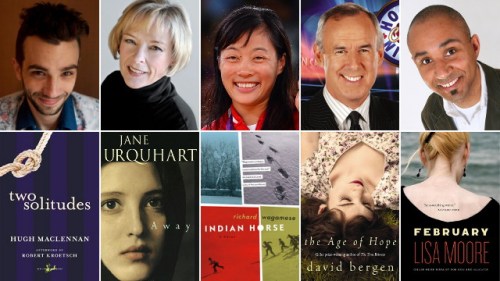
Last night, with great self-congratulatory brouhaha, CBC Radio host Jian Ghomeshi introduced the Canada Reads 2013 Shortlist and celebrity panelists. This is an event I’ve watched (well, more accurately, listened to) with mild interest the last few years, but never really embraced.

I confess that I am in general deeply cynical about prizes awarded by popular vote, which is the whole premise of this literary “event”, but this year the shortlist picks seem more intriguing to me than some in the past, so I’ve set myself a personal goal of reading and reviewing all five of them. This will also tie in nicely with my participation in 6th Annual Canadian Book Challenge , hosted by John Mutford of The Book Mine Set .

I may also explore among the picks in the Long List, though I have no intentions of reading all of them. We’ll see what happens. This list will find a home in my library bag, for those days when inspiration needs a little push. I’ve already read a few (a very few) of the picks, though mostly before this blog materialized. I may re-read and review. Or not! Leaving myself wide open here.

This year Canada Reads has a regional theme, which doesn’t really work in my opinion, as there are only five extremely broad regions and geographically and philosophically I think there is more variance in truly regional Canadian literature than these limited categories allow. But no one asked me, so I guess I need to go with it.

Here’s our Long List:

B.C. & Yukon:

The Prairies and North:

Ontario:

Quebec:

Atlantic Canada:

Read Full Post »

Coromandel Sea Change by Rumer Godden ~ 1991. This edition: Macmillan London, 1991. Hardcover. ISBN: 0-333-55227-x. 246 pages.

My rating: 6.5/10. Not bad. Decidedly better than the author’s parallel book Cromartie v. The God Shiva Acting Through the Government of India, which I read and reluctantly panned a few weeks ago.

*****

Kirkus sums it up succinctly, in the June, 1991 review. Major plot spoiler in this review, by the way.

They don’t tend to write like this anymore, perhaps with good reason, but nonetheless the latest from Godden, unabashedly sentimental, is an entertaining if nostalgic read.

Patna Hall, a popular hotel on the Coromandel coast of southern India, is owned and run by Auntie Sanni, an Anglo-Indian whose family has been there for generations. Auntie Sanni, a stereotype like all the characters here, is a wise and wonderful old woman who knows exactly what to do with misbehaving guests and servants. In the week the novel covers, a party of scholarly American women, a British honeymoon couple, a British diplomat and his wife, a journalist, a mysterious unattached woman, and the managers of a local political campaign are all guests.

The hotel, right on the beach, where the waves are strong and the sea shark- infested, becomes the stage for the unfolding drama with parts for everyone, including the servants, a donkey, and an elephant. It is soon apparent to all–but especially to Auntie Sanni and Sir John and Lady Fisher, the diplomats–that the young leads, honeymooners Mary and Blaise, are having problems. Mary, entranced with the hotel and all things Indian, gets involved in the political campaign and is especially drawn to the candidate, handsome English-educated Krishnan, who is everything that snobby and insensitive husband Blaise is not. The campaign has its ups and downs as Mary gets closer to Krishnan–which is terrific because they are meant for each other–a(highlight the rest of this section to reveal spoiler)nd as poor Blaise, obviously doomed, conveniently exits in a nasty accident just in time for Auntie Sanni to get the hotel ready for the next week’s guests.

Godden’s lively narrative and her vivid descriptions of the people, places, and customs of a country she loves are more than fair compensation for dated style and stock characters.

I’m rather sorry to say that the only surprise here was which of the characters was doomed; I initially had picked the l(highlight to reveal my choice if you so wish) lovely young Indian hotel manager Kuku as the expendable, but I was wrong.

All of the stock characters from a Godden Indian novel are here, the only ones missing are nuns. We have a young, emotionally mismatched married couple, an intellectual and physically beautiful young man, a sexy, sultry young Indian woman (sometimes she’s Eurasian), precocious children, personable animals, worldly-wise observers – in this case an older Anglo-Indian couple and the omniscient Auntie Sanni – and last, but definitely not least, a sensually rich setting.

The setting is, as always in a Godden tale, almost a character in its own right. Godden’s sharp observational skills and her stellar descriptive talents are put to good use here: the sights, sounds, smells, tastes and textures of this beautifully depicted corner of the world are the best part of this otherwise rather unremarkable story.

This was one of the last novels in Godden’s long list, and, in company with the others of this winding-down period of the writer’s career, is broadly sketched with less of the care and detail of some of her earlier masterpieces. It also has more of an upbeat, consciously humorous tone than some of the older books, especially regarding the shenanigans which the political combatants get up to – a vow of silence, a rally prank involving old umbrellas to discomfit a rival candidate – and even the climactic tragedy is presented with a farcical twist.

Loved the cover illustration, especially the illustrative references on the back, which the reader will appreciate much more deeply after completing the book.

Recommended for Godden fans rounding out their collections, and for “light” reading. No emotional challenges or deeply moving characters here, but the writing itself  is more than adequate, and sometimes very good indeed.

Read Full Post »

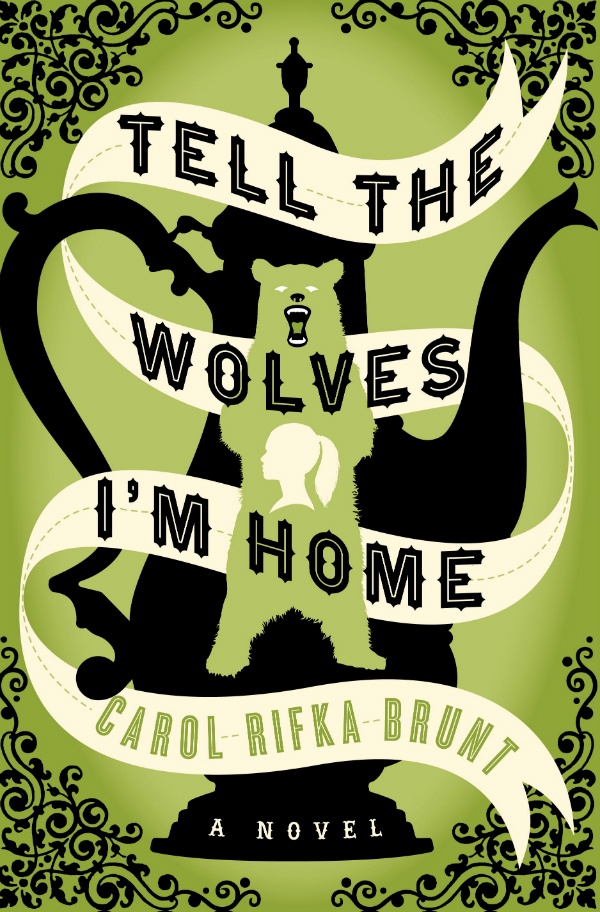
Tell the Wolves I’m Home by Carol Rifka Brunt ~ 2012. This edition: Random House, 2012. Hardcover. ISBN: 978-06796-4419-4. 355 pages.

My rating: 8/10. Very nicely done, especially for a first novel.

I’m sure this one will deeply appeal to the YA crowd, though I found it in the Adult section of the library. There’s nothing here that a modern teen couldn’t handle with one hand tied between her (or his, though this feels rather like a girl’s book, if I may be so bold as to stereotype it) back.

*****

I’m considering tagging this one historical fiction, because the sense of a very particular time is so strong, and it captures those early days of the AIDS epidemic so well, when we were all more than a little scared and confused, and traded rumours in whispers. The story is set in 1987, twenty-five years ago.

The internet is swarming with reviews on this one; I’ll try to keep this simple.

Young June Elbus, fourteen years old and deeply embroiled in the angst of adolescence, has one person she can count on unconditionally, her Uncle Finn. Finn, a renowned painter, now leads a semi-reclusive life in New York; he hasn’t exhibited anything for years, though he is still painting. He’s working, in fact, on a dual portrait of June and her older sister Greta.

The portrait is of supreme importance to everyone concerned; it is likely the last work Finn will ever complete, for he is dying of that mysterious and deadly new disease, AIDS.

Finn’s sister, June’s mother, is brutally shaken by Finn’s death early on in the story, as she has some unfinished business with her brother. She vents her anger at Finn’s lover, the unknown man who she claims has deliberately infected Finn and who is now, in her eyes, his murderer.

June has some baggage of her own. She has been secretly in love – full-blown romantic love – with her uncle, a middle-aged gay man (and June knows this), who, to further complicate things, is June’s godfather. The two share a deeply emotional connection, though Finn has many secrets which June is only to find out about after his death.

With Finn’s demise, and the entry of the mysterious lover, Toby, into the plot, things crank up a notch, and the narrative moves from completely believable to slightly fantastic, in the stretching-of-belief-and-probability sort of fantastic. But it makes for a good story, so allowances can easily be made.

All in all, a very likeable, suitably complex heroine and an interesting plot. I did find it quite predictable in many ways; people did what I thought they would, and the big secrets were telegraphed fairly clearly; clues were distributed with a generous hand.

Beautifully written, with an abundance of heart-tugging emotion. Though I didn’t personally tear up at all, old cynic that I am, as so many of the reviwers over on Goodreads did.

What else?

Good handling of the gay characters; this can be hard to get right without straying, even unintentionally, into parody, and I think Brunt did a very good job with that.

Absolutely gorgeous cover, which reflects the excellent content within. One to share with your teens, and borrow to read yourself.

Read Full Post »

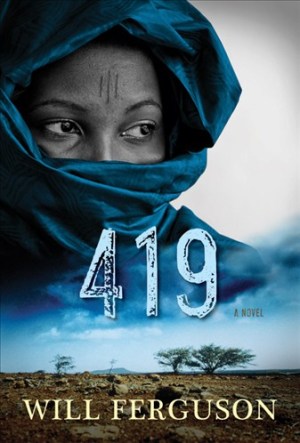
419 by Will Ferguson ~ 2012. This edition: Viking, 2012. Hardcover. First Edition. ISBN: 978-0-670-06471-7. Winner: 2012 Giller Prize, for best Canadian novel or short story collection published in English. 399 pages.

My rating: 8/10. Quite a lot better than I had anticipated. Ferguson’s last few efforts have left me mildly disappointed, but this new novel encouragingly shows that he is still growing as a writer. I haven’t yet read any of the other Giller Prize nominees, but 419‘s win a few nights ago no longer seems so far-fetched. This is a well-written and ambitiously plotted novel, and the writer exceeded my personal expectations this time around. I didn’t love this book, but I did like it – very much. Though I do have more than a few critiques, some of which I’ll address below.

*****

I like being pleasantly surprised, and this book did just that. I’d read quite a few reviews, and I’d heard that it was nominated for the Giller, but I wasn’t particularly eager to delve in, as I’d earlier found Will Ferguson’s last book, Canadian Pie, disappointing. It felt rather repetitive, with some of what seemed like reworked material from earlier books, though some bits were excellent entertainment, as always.

But the distinctive cover of 419 caught my eye on the “New Books” display as I was heading out of the library on Tuesday evening, so I impulsively stopped and added it to my pile. When I got to car, I heard the announcement on CBC that Ferguson had indeed just won the $50,000 Giller for 419, and I mentally shuffled it to the top of my to-read pile, and started it that same night.

I found the narrative initially confusing, as the author has a number of different storylines on the go from page one, but it soon started to jell, though I didn’t ever shake the feeling that I occasionally had too many windows open on my mental computer screen.

The first lines, the literal importance of which become clear later on, are suitably foreboding and mysterious:

Would you die for your child?

This is the only question a parent needs to answer; everything else flows from this. In the kiln-baked emptiness of thorn-bush deserts. In mangrove swamps and alpine woods. In city streets and snowfalls. It is the only question that needs answering…

And we are suddenly at a car accident scene in a snowy Canadian city. Then in a sweltering African airport. In a mangrove swamp with a fisherman and his son. Back to Canada as a family learns of their father’s sudden death. Africa. Canada. Africa. Canada. What’s the connection here?

Longer stretches of narrative are interspersed with mysterious vignettes, as the stage is set for the characters’ and events’ inevitable connections and intertwinings, and separate strands start to stand out.

  • In Calgary, a retired school teacher has died in a troubling car accident. Was it an accident, or something more sinister? A daughter seeks the truth, and justice.
  • In the same city, a police investigator tries to determine the truth about that death, and others, as he mulls over his own personal future.
  • In Nigeria, a self-confident young man haunts the internet cafés, sending out thousands of tempting emails, waiting for the inevitable but rare “bite”.
  • From peaceable beginnings in a fisherman’s family on the Niger Delta, a young boy becomes a man, moving into a vastly changed world as multinational companies start to extract the oily treasure hidden under the dense mangrove swamps.
  • A mysterious scar-faced young woman stumbles through the sub-Saharan desert, hiding a secret and searching for a refuge as yet unknown.
  • In Lagos City, a crime lord plays his victims like an obscene stage director, evil but ultimately doomed himself.

The plot is driven by the ubiquitous presence of the infamous Nigerian internet scam, the titular “419”, so named for the number of the article of the Nigerian Criminal Code dealing with fraud, which turns out to be a key – but not the only – plot element.

419 is a total departure from Ferguson’s usual shtick of out-and-out parody, folksy anecdotes, and very Canadian self-mockery, but there are still abundant traces of the “old” Ferguson throughout. Though the subject matter is often starkly tragic, there are laugh-out-loud moments of rather twisted humour, as here on an African road ferrying a tanker trunk filled with stolen fuel:

Nnamdi was gripping the wheel, eyes on the road, barely blinking, barely breathing. His first time driving.

“Speed up,” said Joe. “A baby crawls faster.”

Nnamdi swallowed down his nervousness, pushed a little harder on the accelerator.

“And don’t swerve for goats like that,” Joe said. “Go through them. It’s the only way. We can hose off the grill later…”

All in all, a blackly comedic suspense novel, but not to be taken too seriously, Giller Prize or not.

The reader absolutely must suspend personal disbelief, and here I give away a bit of a plot spoiler. (Though not more so than any of the other reviews I’ve read.)

What is the likelihood of a modern, middle class, apparently well-educated family being so totally unaware of the sophisticated nature of internet fraud? I could buy into the innocence of the father – sort of – because obviously people do fall for these scams or they could not continue to proliferate, and I know how trusting certain individuals can be, but the naïveté of the adult children, one an apparently financially savvy businessman, tests the reader’s credulity a little too far. The revenge element, the reverse fraud, the involvement of the now highly pregnant Saharan girl – these plot twists, and numerous others, had me shaking my head as the story reached its conclusion.

Viewed as a semi-farcical novel, the flaws of logic smooth out and the “hang on a minute” moments are much more forgivable, but I didn’t ever get the feeling that this was the Big Important Serious Novel that some mainstream reviewers have made it out to be. Sure, there are some serious elements, and those lend poignancy to the tale, but to me it seems just another diversionary read, to be consumed with a certain gusto and set back on the shelf among all of the other well-wrought entertainments of the semi-serious sort.

With this in mind, recommended.

Good job, Mr. Ferguson, and congratulations on your prize.

Read Full Post »

Let the Day Perish by Christian Petersen ~ 1999. This edition: Beach Holme Publishing, 1999. First Edition. Softcover. ISBN: 0-88878-400-7. 136 pages.

My rating: 9/10. Strong, vivid and eloquent. “Beautifully crafted”  and “Powerful” may have become clichéd descriptions, but they apply in their most sincere sense to these punchy short stories.

*****

From the back cover:

Christian Petersen beautifully reins in the confusion and displacement of a diminishing band of men facing the daily spectre of an unforgiving land, men enslaved to the grind of the sawmill, hunkered on bar stools, high in the saddle of a John Deere, or wild behind the wheel speeding down dirt roads to the Fraser. Here are fathers, brothers, lovers in search of forsaken children, bygone loves, and memories long faded in the wash of fast-running streams and firelight. Here are the unpardoned, raging against what they might have been, what they are now, and where their paths have led them. Yet Petersen’s characters hollow out a quiet dignity, gentle in the silent truth that they are small in the face of pain – and of change.

Regional literature set in areas familiar to the reader is difficult to view in perspective. I find that I am often so caught up in nodding in recognition of places and people that a crucial distance is hard to maintain in attempting to judge merit of story and style. And this is a very local collection of stories, by a writer who closely shares my own experience of time and place in his formative years, growing up in Quesnel in the 1960s and 70s, leaving the Cariboo for a time, and eventually resettling in Williams Lake, where he has worked (is still working?) as a probation officer. He is obviously a keen observer of local “types” – they are instantly recognizable – but he looks past the superficial surface of the stereotypes to the turmoil within.

A quotation on the opening page gives a clue to the content within:

If a story is not to be about love or fear, then I think it must be about anger.

  • The Look of the Lightning, The Sound of the Birds ~ Diane Schoemperlen

Love, fear and anger are all represented here in their deepest intensity.

A very readable collection of stories, definitely for British Columbians familiar with the Cariboo-Chilcotin settings, and with a broader appeal to universal emotions which should resonate with readers everywhere.

  • Heart Red Monaco ~ Two unlikely friends search for some kind of meaning in their treading-water lives.
  • The Next Nine Hundred Years ~ Vignettes of “working at the mill.”
  • Horseshoes ~ Two brothers: rivalry, conflict and resolution.
  • Come Evening ~ A day with one of the fringe-dwelling “troopers” of Williams Lake.
  • Scout Island ~ From her house overlooking the nature reserve, a horse trainer deals with “getting by”, and a troubling situation initiated by her young son and her elderly great-aunt.
  • Country Boys ~ The brutal world of the high school bully, his victims and, ultimately, his tormenters.
  • Taseko ~ A boy goes moose hunting in the Chilcotin with his father and his father’s friend.
  • Let the Day Perish ~ Life, love and death on the ranch.
  • This is How It Is ~ A divorced father yearns for his young daughter.
  • Thibeau’s Crossing ~ Betrayal changes everything in a peaceful valley.
  • Charity ~ A sincere Baptist Church minister gives in to passion with far-reaching consequences.
  • Men’s Wear (after a fashion) ~ The venerable owner of the town’s “upper crust” men’s wear store is challenged by changed times, and undergoes an epiphany. Great ending note to this collection – left me smiling. Nice to quit on a high point; some of these stories (though not all) were dark.

Petersen has also written a mystery novel, Outside the Line (2009), and another collection of short stories, All Those Drawn to Me (2010). He is currently working on another book, a novel. I will be watching for it. Keep an eye out for this author. This first collection is excellent.

Read Full Post »

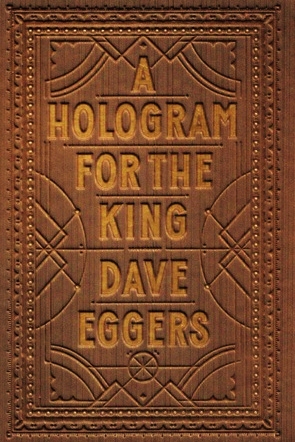
A Hologram for the King by Dave Eggers ~ 2012. This edition: McSweeney’s Books, 2012. First Edition. Hardcover. ISBN: 978-1-936365-74-6. 312 pages.

My rating: 5.5/10. Most of the points are for readability – and  it definitely was that. And half a point for sheer physical gorgeousness – this is a very handsome piece of bookbinding. But I couldn’t rate it any higher – the gaps of logic in the storyline are as wide as the Sahara. Perhaps I am too far removed from the protagonist’s world to fully engage. Or something.

Would I read another book by this author? Sure, I’d give him another chance. From the library, though – wouldn’t shell out any sort of serious cash; feels like too much of a gamble.

*****

Picked up on a whim, this one was an all right light read, but it ultimately felt unmemorable. Just nothing there, like a mirage in the desert – intriguing at first but faded away. It was a very fast read – the prose was spare and clean and raced right along – stylish presentation. I’ve a large number of reviews I want to write piling up, so I thought this might be a good one to cheat on and to borrow someone else’s review of, but looking at some of the mainstream reviews –  The Globe & Mail, New York Times, The Boston Globe  – it appears that my take is in the minority. The “real” reviewers apparently thought this was a deep and important novel. Ah, well. Good thing I’m only a blip in the blog world!

Goodreads has a full range of opinions.

Read Full Post »

« Newer Posts