Posts Tagged ‘Canadian Book Challenge 6’

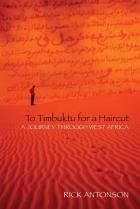
To Timbuktu for a Haircut by Rick Antonson ~ 2008. This edition: Dundurn, 2008. Softcover. ISBN: 978-1-55002-805-8. 256 pages.
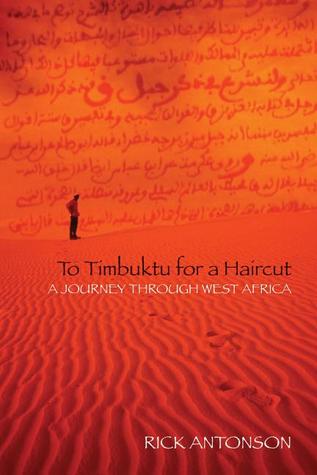
My rating: 6/10.

Uneven. The cover blurb references Bill Bryson and Michael Palin, and Antonson himself refers to Paul Theroux an awful lot, but he’s not anywhere in their league. Travel lit lite. The navel gazing equals Theroux’s, but is not nearly as interesting to this reader as Paul’s deep and/or often twisted musings. Antonson is no Bryson, and he really is no Theroux.

*****

Rick Antonson, CEO of Tourism Vancouver, is absolutely exhausted by his grueling efforts working on the 2010 Vancouver Olympics bid. Desiring to get away from it all, he mulls over where he can escape to for a month or so. His wife Janice rather flippantly suggests Timbuktu, in reference to Rick’s childhood curiosity about the place his father often joked about. Apparently Antonson Senior, when questioned by his offspring as to where he was going each day, would retort: “I’m going to Timbuktu to get my hair cut!” So there you have it – a destination for the trip and a catchy title all rolled up in one neat package.

Doing his research as a good traveller should, Rick loads up on guide books and bones up on Mali and on West African history, in particular the history recorded by the early European explorers. He makes internet contact with a Malian travel service owner, one Mohammed, and arrangements are put in place for a fairly modest itinerary, with Timbuktu as the ultimate destination, with perhaps a bit of local exploring.

To condense the saga, Rick makes it to Mali, finds out that Mohammed is a bit of a shady character, eventually makes it to Timbuktu despite being annoyed by other pesky Caucasian tourists sharing his space and treading on his dreams of solitary travel. He stays there all of ONE WHOLE DAY and then goes hiking in the Dogon region for another week or so, accompanied by a mini entourage of local guide and personal cook. Everything costs way more than he has anticipated, and he goes on at great length about how Mohammed has ripped him off, and paradoxically, how darned generous he is being to the locals, scattering selective largesse as his whims take him.

If this sounds like I didn’t much care for Rick Antonson’s tone, you’re right. Something about him just rubbed me the wrong way. Maybe the word I’m looking for is “smug”? And his writing style is all over the map. Sometimes it was very readable, especially in the descriptive passages about present-day Mali, and when he discusses  the explorers’ experiences. When he focusses on his personal thoughts and feelings he writes like a cross between Hemingway and Bryson – monosyllabic sentences and witty asides mingled in a mish-mash of would-be literary exposition.

All of this panning aside, To Timbuktu is not exactly a bad book. I learned quite a lot about both present-day and historical Mali. Rick’s travelling adventures were entertaining, and he is general reasonably kind in his evaluations of his fellow travellers; he did look for – and often found – the best qualities of both the Europeans and the Africans whom he encountered and spent time with. He is very willing to give credit to the Malians for their good-natured tolerance of the tourists in their country, and, obviously because of his involvement in the tourism industry himself, has pragmatic and very sensible views on how the tourist trade affects the local way of life. He puts forth some observations on how an already mutually beneficial two-way traffic might be improved.

Rick does stay pretty hung up on the perfidy of Mohammed, though, which I thought was something of an over reaction from someone with, as he boasts several times, only one blank page remaining in his passport. Rick’s irritation was quite blatantly personal – he was never actually left high and dry – the promised arrangements were always more or less in place, though they ended up costing more than first negotiated.

There is something of a greater purpose to the book, which Rick claims was inspired by his desire to help save a large collection of native Malian munuscripts, and a portion of the book sales are dedicated to the conservation effort, but it felt like this was more of a manufactured excuse for the visit than a true passion for the project.

I soldiered on to the end of this self-congratulatory effort, enjoying it in a mild way between moments of wanting to howl in annoyance. I relieved my ambiguous feelings somewhat by reading the most obnoxious bits out loud, like the bit where Rick tells of how wonderfully choosy his wife Janice is – she apparently goes ftrom table to table when dining out to ensure she has the best seat in the house, and examines multiple hotel rooms to ensure hers has the best features – bet she’s a real treat to serve!

This one’s going in the giveway box. An okay effort, but for this reader, once through was enough.
Read Full Post »

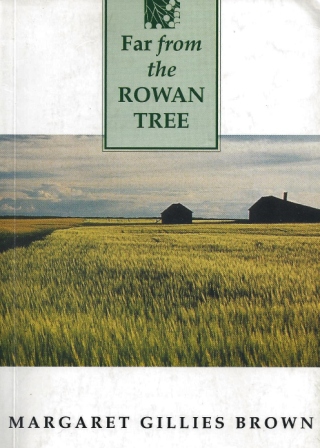
Far From the Rowan Tree by Margaret Gillies Brown ~ 1997. This edition: Argyll Publishing, 1998. Softcover. ISBN: 1-874640-696. 239 pages.

My rating: 8/10. I thought this quite an engrossing read, and an interesting perspective on a somewhat neglected era in Canadian history.

*****

In 1959 Margaret Gillies and her husband Ronald, with their three young boys, left Scotland to immigrate to Canada to try farming there. They left more for personal than financial reasons, seeking a new life and atmosphere far from what the stresses of working with Ronald’s demanding father, and with the sheltering hand of a Canadian Immigration program to encourage farm workers, they thought that their new life would be at least as congenial as the one they had just left.

This proved to be far from the case. Added to the environmental shock of landing in wintry Halifax in February, there was the unsettling trip by train across the vast stretch of country between the East coast and their first placement on a dairy farm in central Alberta, near Red Deer. This proved to be even more unsettling; the accommodation they were provided was an unfurnished shack with the barest amenities. There was electricity of a sort, but only an outside privy and hand-pump for water; Margaret, on top of having three children under six, was also half way through her fourth pregnancy. Ronald’s employer, whom they soon found was hard-pressed to find local help due to his foul temper and abusive manner, was of little assistance, and kept Ronald fully occupied except for a half day off a week.

Margaret and her family struggled through, and eventually were moved to a better situation on a mixed farm. Here they spent a happier summer, but found they were not able to manage on a farm labourer’s wages, especially with winter coming on and less pay because of reduced work hours. The family then moved to Edmonton, where Ronald took on a new career as a real estate salesman. This, though not a reliable income, allowed a rise in their standard of living, but there were still many challenges, and the family  returned to Scotland to take over Ronald’s family farm, as his father had in the meantime decided he was ready to retire and relinquish control to Ronald. The Canadian experiment had lasted three years.

The family, despite their dismal introduction to the country, had become happy in their adopted land, so this was not an easy decision. Margaret in this memoir speaks with great admiration and affection of the friends they made, and of the natural beauties that surrounded them, easing even the most uncomfortable of their several sub-standard homes.

A fifth baby was born in Canada, and it was with something like fond regret that the Gillies returned to their home country. Margaret would go on to have two more children, and several of her sons still operate the Scottish farm where she lives in retirement today.

Margaret had always been something of a writer, though she had set aside her “jottings” while training and working as a nurse, and later as a farmwife and busy mother. She had a few moments during her Canadian foray to create some poems, of which several are included in the book. Margaret took up her writing more seriously when her children grew up, and has become a highly respected Scottish poet and writer. Far From the Rowan Tree is the first in a number of memoirs and family histories she was inspired to write some thirty years after the Canadian years.

Margaret’s voice in this book is both romantic and vividly descriptive, as well as opinionated and matter-of-fact. It is most fascinating to see my own native country from an outsider’s eyes, especially as I am personally familiar with the areas of Alberta where the family resided, though their time their preceded my own by almost thirty years, and there were many changes in that time, as the oil industrry picked up speed and the standard of living even among the most struggling of the farms improved immensely.

Her story also reminds me in many ways of my father’s saga of coming to Canada as a German immigrant in the 1950s, working his own way across the country farm to farm until he ended up working in logging and construction in interior British Columbia. I am wondering now if perhaps he was involved in the same immigration program, placing farm workers? It is impossible to ask him, as he died several years ago, but I wouldn’t be at all surprised, as his experiences with various employers rather echo those of the Gillies’.

I found Margaret’s memoir hard to put down. It is nicely written, and kept my interest from start to finish. I would definitely read more of her literary works, as well as her poetry collections. I found some of her later poetry published online, and though it does not all appeal to my personal taste, some of it seems to me to be quite good, very evocative of setting and mood. Here is a sample from the frontispiece of Far From the Rowan Tree.

Emigrant Journey

There was the journey,
The endless coming on of the same wave,
The no-land time of ocean and high hopes
Until the icebergs rose
Like white snow palaces…
There were the moving days
And weary nights of train-hours overland,
The trees, the lakes, the straight and rolling plains
Until time stopped in sheer fantasy
Of a pre-dawn winter morning –
Gloved hand swinging the iron-hard handle
Of a frozen water pump
At the edge of a bark-rough cabin;
Above, the sky, moving strange magnificence,
Voile curtains of colour
Changing, shifting imperceptibly;
Below, the star-sparkled snow –
A virgin’s looking glass
Where spruce trees shot the only shadows
That made no movement –
Silence, immensity of silence,
Oil fires were burning brands
Reaching for chiffon robes
Of an aurora of dancers
Repeating dream sequences …
I tried to wake from unreality,
Felt my spine freeze,
Heard coyotes howling down the night.
 

~Margaret Gillies Brown~

Read Full Post »

Confessions of an Igloo Dweller by James Houston ~ 1995. This edition: McClelland and Stewart, 1996. Softcover. ISBN: 0-7710-4286-8. 320 pages.

My rating: 9/10. Enjoyable start to finish. Canadian by birth, the far-travelling Houston (1921-2005) was a great writer and storyteller, as well as an accomplished artist.

*****

Around here, I can tell if a book is really good because it often will disappear before I finish it. The usual culprits are my husband and my 18-year-old son. If it’s my son, no worries – he’s a speedy reader and I usually get it back in a day or two, but my husband has less free (meaning reading) time and he also tends to read a little more slowly, plus he also has a tendency to “hide” his current read (so he can find it again – he says we “move things” on him) – so, if he has the book, kiss it goodbye until he’s done.

I’ve been bugging him to let me have this one back for a few weeks now, as I wasn’t quite finished when he snuck it away from my reading pile.  He’s been working his way through it steadfastly, occasionally calling me to come and listen, and reading bits out loud. Something about this memoir really appealed to him, which is understandable, because it’s quite fascinating and very well written.

In 1948, 27-year-old James Houston managed to hitch a ride on a plane going on an urgent medical call from Moose Factory, Ontario to Canso Bay in northern Quebec. An experienced and talented artist, Houston had a keen interest in native peoples, and was in Moose Factory sketching and painting the local Indians. He had long wanted to travel further north into the Arctic, and he seized the chance when it came, staying behind in Canso Bay when the plane left to return to Montreal with the badly injured Inuit child it had come to evacuate.

This was the start of Houston’s fourteen or so years of Inuit artistic involvement. He had a keen eye for indigenous crafts, and was instrumental in the popularization of Inuit carvings for the southern markets, as well as introducing Japanese-style print-making to the Inuit, which was readily adopted as a new mode of expression for Inuit artistic vision.

Confessions of an Igloo Dweller is roughly chronological, and consists of personal anecdotes interspersed with vignettes from high Arctic life, and stories told to him during his travels.

Houston also wrote quite a number of novels for children as well as adults, most set in the Arctic or the far northern Canadian forests. Confessions reads like a novel, flowing seamlessly along from high point to high point. Houston was opinionated and extremely sure of himself; these qualities come through loud and clear, making for an especially strong narrative voice. The book is saved from shameless self-promotion by Houston’s ability to tell a humbling story on himself, and by his keen sense of humour.

We all liked it. Highly recommended.

Read Full Post »

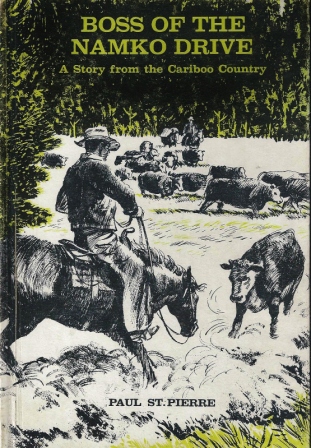
Boss of the Namko Drive by Paul St. Pierre ~ 1965. This edition: Ryerson Press, circa 1970. Hardcover. ISBN: 0-7700-3024-6. 117 pages.

My rating: 9.5/10. Paul St. Pierre perfectly captures the atmosphere and people of Interior British Columbia’s “Cariboo Country” Chilcotin Plateau. He’s dramatized things to make “good fiction”, but not so much as you would think. I live here. I know people – heck, I’m related to people (by marriage, that is – my husband’s family is venerable Cariboo-Chilcotin pioneer, 1860’s gold rush era) – who could have stepped into or out of this story.

My husband says he remembers reading this as an English class novel in the early 1970s, and I also remember a class set in one of my Williams Lake schoolrooms, though I never personally “studied” it. Reading this novel for the first time as an adult was a real treat, for I had read so much regional literature by then – stellar and otherwise –  about our personal stretch of country that I realized how good this fictional vignette really is; if not a sparkling gemstone, then at least a nicely polished, glowing golden agate from the banks of the Fraser River.

The story moves right along; a quick little read for teens and adults. Highly recommended.

*****

Author’s Note:

Young people for whom this story is written should not try to find Namko on the map of British Columbia. It is fictional. So are the characters in this book.

There is such a region, however. It is the westernmost extent of Canada’s cattle country, lying between the Fraser River and the Coast Mountains. The story is my attempt to tell the truth about life on these remote ranches. If it does not, the fault is mine.

15-year-old Delore Bernard starts out as the lowest hand on the 200-mile cattle drive led by his father Frenchie from the high Chilcotin to the stockyards in Williams Lake. Soon into the trip, before they’ve cleared the home ranch meadows, Frenchie breaks his leg as his horse bucks him off and falls on him. Frenchie, to everyone’s surprise, appoints Delore as “boss” in his place, a decision unquestioned by the rest of the cowboys, who for various personal reasons, are perhaps quite happy to have a young and green official leader.

Delore’s trip to the Lake is complicated by a stampede, cows caught in bogholes, packhorse wrecks, a runaway or two, an encounter with a murderer on the run, and the cowboys’ weakness for strong liquor, among other things. But, as Delore implies on the other end, it’s all in a day’s work for a Chilcotin cow boss: “Nothing to report.”

Read Full Post »

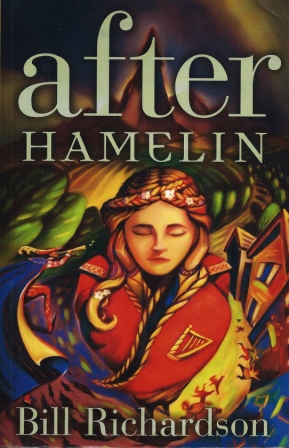
After Hamelin by Bill Richardson ~ 2000. This edition: Annick Press, 2000. Softcover. ISBN: 1-55037-628-4. 227 pages.

My rating: 6.5/10. Sorry, Bill. This one was a bit hit and miss with me. You got an extra point from me for old times’ sake, because I’ve been a (mostly) appreciative fan of yours since CBC Radio “Sad Goat” days.

I really liked parts of it, especially the character of Penelope, with her 101-year-old words of wisdom, and I admired the imagination of  the Frank L. Baum Oz-ish dream world, but I really had to push to see this one through to the end. I kept stopping and yawning and mentally saying “Where are we? Oh, yeah, she’s in the dream world now…”

And while the bizarre (and nicely imagined – I laughed at these) realms of the ski-footed flying creatures living in the land of perpetual ice and moonlight, and the rope-skipping, directionally challenged dragons next door were quirky and funny and sweet, the dark overtones of the menace waking from its sleep struck a harsh note. And I couldn’t really get what the Piper was all about. Even if he woke, what was going to happen? I mean, how bad was it going to be? Just another magician gone wrong…

And the whole turning-eleven thing. Obviously a puberty ritual, but surely a bit young for the whole “welcome-to-womanhood” chorus of the villagers? Or maybe I’m reading too much into that. Probably a cigar is just a cigar, and it’s merely a cute plot device.

This is not a bad book, and it had some great sequences, but I didn’t immediately love it. A pleasant, light diversionary read, for mature-ish children, say 10 and up, to adult. Well-constructed “after the end of the fairytale” story. Good discussion starter, or as part of an exploration of alternative fairy tales and such.

Oh, and an extra .5 point for the talking cat. (One of my personal weaknesses. I do so love a talking cat.)

Gorgeous cover art, too!

*****

Everyone knows the story of the Pied Piper of Hamelin. How, in a town plagued with rats, there appeared a mysterious man who promised to rid the town of the creatures, and, after being promised a lavish reward, did just that, piping out a magical tune that drew them from every nook and cranny, as the piper led them far away. Coming back for his promised reward, the greedy town councillors refuse his pay, at which point the piper takes revenge by calling all of the children of the town after him, save one crippled child, who cannot keep up and so is spared. This is where the story ends. But what happens after?

After Hamelin is Bill Richardson’s fantasy about the next stage in the story. In his version, not one but two children remain behind. Penelope, who has just woken to a sudden deafness on the morning of her eleventh birthday, and Alloway, a blind harpist’s apprentice, who gets lost as the horde of children travel through a forest. Between Penelope and Alloway, Penelope’s elderly cat Scally, the village wise man Cuthbert, and his three-legged dog Ulysses, a rescue is carried out, through the medium of a trance state – Deep Dreaming – and the liberal use of magical skipping-rhymes.

Narrated by Penelope herself, who, at the age of one hundred-and-one, still looks back on her long life and unbelievable adventures with clarity and humour, the tale is told through a series of flashbacks and reminiscences.

A children’s story for all ages.

And here is an interview with the author, which puts everything into context.

Bill Richardson Interview – After HamelinJanuary Magazine

Read Full Post »

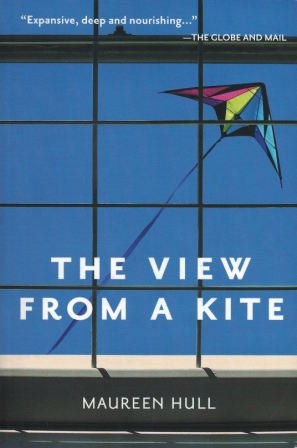
The View from a Kite by Maureen Hull ~ 2006. This edition: Vagrant Press (Nimbus Publishing, 2006. Softcover. ISBN: 1-55109-591-2. 338 pages.

My rating: Majority of the book: 9/10. Last few chapters: 7/10-ish. I found this book to be a compelling and sharply presented read, and, for a book about a tragically-backstoried teenager in a tuberculosis ward, unexpectedly funny. Occasionally the TB references felt a bit “teachable moment”-ish, but in general this aspect was handled well. (I had a bit of a chuckle when I later learned that the author had homeschooled her two daughters for seven years; I could definitely tell she was very familiar with the art of including information in a narrative in an interesting and almost flawlessly “natural” way – the mark of the very best historical fiction writers we homeschoolers love so much.)

I did feel the momentum dropped towards the end, as the author brought the strands of the story together. The ending felt a little too neat and predictable, not necessarily a bad thing, especially given the “young adult” nature of the novel, but I personally felt a rather vague disappointment, as if I had expected just a little bit more creativity from such an obviously capable author.

Overall recommendation: very well done. Well worth reading.

*****

I am a Dangerous Woman in a Dangerous Dress.

The gym is foggy with chiffon: rose, peach, aqua and mint, with dyed-to-match pumps spiked to the bottom, strings of pearls looped around the top – a pastel smear of background for the scarlet shout that is me.  Gwen. My dress is a lick of silk, the molten edge of a suicidal sun. I move through the crowd like a reckless kiss, a flash of crystal at my stiletto heels, nails enamelled in heart’s blood.

His hair is too long, dark curls thrown into confusion by the knife edge of his collar. He draws frowns but no direct criticism because he just doesn’t give a damn and can’t be made to. He pulls me into his arms, the band blasts me up off the bed, trumpets and trombones in a frenzy, some crazed person hammering the bells off her tambourine. I cling to the edge of the metal frame, tangled in the sheets, hyperventilating, what is that tune? Sweet Jesus, it is not, yes it is. “Onward Christian Soldiers.”

I see them through the half-open door, the Salvation Army Band, all dressed up in black wool, red collars, and shiny brass instruments. The leader winks at me as he whips the ensemble into a straight and narrow line, aims them at the crashing, metallic finale. Then, with the barest pause for breath, they fling themselves “Into the Garden Alone.”

I fall back onto the bed and stare at the ceiling. Check my pulse. One hundred and thirty, roaring and frothing through my veins and arteries. Check my watch – 9:30, still the same damn Sunday morning. I have napped for less than half an hour.

Meet 17-year-old Gwen MacIntyre, temporary resident of the Cape Breton County Sanatorium. It is the mid-1970s, and though tuberculosis is fast becoming an obsolete disease, there are still a few specialized treatment facilities dedicated to mopping up the final cases, and providing a home for the incurable “chronics.” Gwen’s TB is being dealt with, but the disease is only one of her pressing issues. Her family, once happy and united, is irretrievably broken, and with Gwen’s growing maturity comes the need to find a way to move forward into a more hopeful future.

The novel is written in the form of chapter-long diary entries. Gwen’s private voice is articulate and keenly humorous, with occasional lapses into poignant regret for what has gone before, and fear for the future.

Understandable, as Gwen is the survivor of a partially successful family murder-suicide episode…

A diverting and, dare I say it, “educational” – in the very best way – read which I enjoyed. The protagonist’s spirited voice kept the dire subjects addressed from being too pathetically sad, and there was a sharpness to the wit which felt very real and refreshing. Sex, friendship and religion, among numerous other compelling topics, are frankly discussed by Gwen in her conversations with herself.

Marketed as a Young Adult read, this is definitely cross-genre enough to find a home on the Adult bookshelves as well. Shades of Betty MacDonald’s autobiographical “The Plague and I” (1948), about another clever observer’s time in a post WW-II TB sanatorium. I found it interesting to compare the two accounts; they are ultimately very different but also quite similar in that sophisticated, self-aware humour is used to deal with the frightening and personally humiliating experience of battling the “dread disease.”

I found this review after I had written the rough draft of my own; I include it here because the reviewer’s take on this story was very similar to my own. By reviewer Marnie Parsons, Quill & Quire, November 2006:

Ambitious and well-written, Maureen Hull’s first novel tells the story of Gwen, a 17-year-old in a TB sanatorium, and later a TB hospital, on Cape Breton Island during the 1970s. Gwen’s natural curiosity and her talent for writing combine in the narrative, as she observes the characters in the sanatorium with thoughtful, often wry insight, and simultaneously acquaints herself with the history of TB, its treatment, and its more famous victims. Typical teen pressures of boyfriends and burgeoning sexuality are interwoven with Gwen’s stories of life in the San, of late-night escapes by patients, her own sometimes horrific treatments, pranks played on nurses, and lists of preposterous historical cures for her disease. Her dreams of an exotic writing life in Paris are that much more poignant because, as the reader discovers, her life outside the San is far from happy. As she recovers from her TB, Gwen must also come to terms with an almost unspeakable family tragedy.
Gwen is an engaging character; her voice is strong and compelling. However, there’s too much happening in this novel: Gwen’s illness and life in the sanatorium would have been quite enough without the added complexity of her grandmother’s long-ago illegitimate pregnancy and developing senility (not overlapping), her father’s shellshock, and her parents’ murder-suicide. Hull works hard to blend the divergent strands of narrative, and there’s much to recommend this novel, which is an admirable and enjoyable effort. But in the end it lacks a sense of proportion. Less would definitely have been more.

Maureen Hull is a life-long native of Nova Scotia, born on Cape Breton Island and currently living on Pictou Island. She seems to have had a diverse and experience-filled life, including studies at Dalhousie University and the Pictou Fisheries School, and stints in the costume department of the Neptune Theatre (Halifax), as well as twenty-two years in the lobster fishery. This is the author’s first novel, though she has been actively writing since 1992. Her other published work includes several children’s books, short story collections, poetry, and creative non-fiction.

A contemporary Canadian writer to keep an eye out for, if The View from a Kite is any indication, and worthy of further acquaintance. I will be looking for more of her work.

Read Full Post »

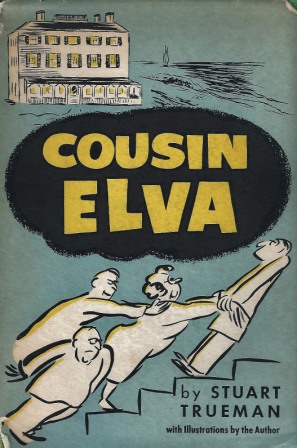
Cousin Elva by Stuart Trueman ~ 1955. This edition: McClelland and Stewart, 1955. First edition. Hardcover. 224 pages.

My rating: This is tough. I almost was going to say un-rateable, but on second thoughts I will give it maybe a 5.5/10. It’s a first book, and the author went on to write many more. There’s nothing really wrong with it, and I did read it with mild enjoyment, but I found it very easy to put down and I had to consciously pick it up and finish it. Probably a keeper, but on the bottom shelf or exiled to the “B”-reads boxes, I’m thinking.

*****

Cousin Elva is a humourous, satirical light novel about a fictional couple, Penelope and Frank Trimble, who purchase a large house in the (also fictional?) community of Quisbis on the Bay of Fundy, and proceed to open a boarding house – “Mr. and Mrs. Trimble’s Tourist Rest Haven”. The only catch is that the house comes with a pre-existing resident, Miss Elva Thwaite, granddaughter of the original owner.

Miss Thwaite, or “Cousin” Elva as she insists on being called, is a blatantly eccentric, sixty-ish,”old maid” who refuses to be put on the shelf, taking an active interest in everyone and everything that crosses her path. She’s also keen to catch herself a man. Hi-jinks ensue as a motley assortment of visitors to Trimble’s Rest Haven fall into Cousin Elva’s clutches.

The humour is, at its best, rather understated and wry, but too often over-the-top farcical. I did enjoy the many regional and Canadian references; those did much to keep me reading when I occasionally got overloaded with the slapstick action.

A well-meaning attempt by an author new to me. The kind of book you perhaps enjoy best when scanning the meagerly stocked shelves at an isolated lakeside cabin in summer. In other words, welcome if you’re fairly desperate for amusement and it’s too far to go to town…

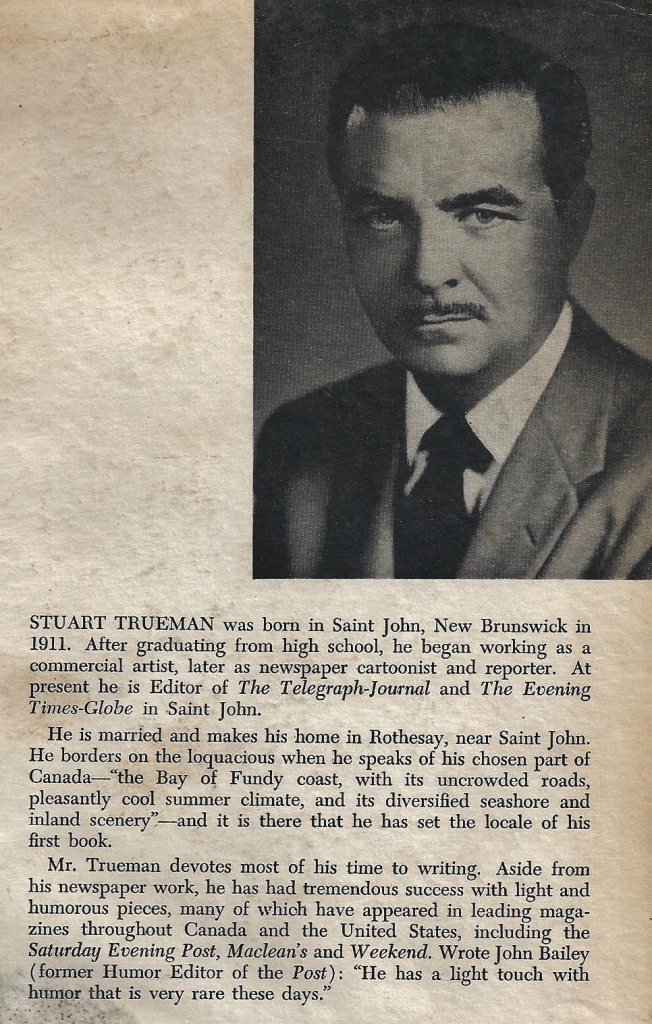
Stuart Trueman (1911-1995) was a Canadian writer from New Brunswick. He won the Steven Leacock Memorial Medal for Humour in 1969. I had never heard of him before picking up this book, but as you can see from his biography he had a long and prolific writing career. I would definitely be interested in reading some of his other work, but only if it was easily obtainable; I don’t think I’d go to a lot of effort to seek it out.

From the New Brunswick Literary Encyclopedia:

Stuart Trueman (writer, editor, historian,  reporter, cartoonist, and humorist) was born in 1911 in Saint John, New Brunswick,  the son of the late John MacMillan and Annie Mae (Roden) Trueman. He was  the husband of Mildred Kate (Stiles) and a father to Mac and Douglas, his two  sons; he was also a grandfather of four, and a great-grandfather to one.  Growing up, he had two sisters and three brothers, along with a countless  number of friends whom he believed shaped him into the man that he was. He  passed away in his home in Saint John,   New Brunswick, on 25 April 1995  after a period of failing health.

Trueman was known  for being a great representative of journalism, and he garnered a lot of  respect and credibility in all that he accomplished. Straight out of high  school, he started out as a cartoonist and reporter at the Telegraph Journal in Saint    John, where he stayed for forty-two years, later  becoming a sports writer. In 1951, Trueman became the editor-in-chief at the Telegraph Journal and Evening Times Globe, a position that he  would hold for the last twenty years of his working career. Upon retirement in  1971, he remained faithful to the newspapers that he had been involved with and  continued to contribute to weekly columns until 1993. He took writing, journalism,  and public speaking seriously, and had a keen insight into human character. He  was also known for being a stickler for details, always following the journalist’s  obsession with the “who,” “what,” “where,” and “how.”

Trueman was often  referred to as “Mr. New Brunswick”  because of his broad knowledge of the history of this province and of its  scenic and cultural attractions. He wrote many books about New Brunswick, its people, and its unique  history. Along with being a well-known author, Trueman was a part of New Brunswick history.  On 19 May 1932, he and co-worker Jack Brayley interviewed Amelia Earhart at the  Saint John Airport  as she was preparing for her historic flight across the Atlantic.  Another accomplishment for Trueman was when he and Brayley took a trip to Moncton, New    Brunswick, where they discovered an attraction that  many are familiar with today: Magnetic Hill. Trueman’s son Mac said that  despite the fame and development that has built up around Magnetic Hill, it was  always his father’s favourite natural phenomenon. The discovery of Magnetic  Hill gave way to the tourism industry within New Brunswick,  and it continues to be one of New    Brunswick’s most popular attractions.

Trueman published  fourteen books and wrote more than three hundred humorous articles for both  Canadian and American magazines. He thought of these articles as “light pieces,”  and although he never claimed they were funny, he was commonly referred to as a  funny man. One of his greatest accomplishments was winning the Stephen Leacock  Memorial Award for humour in 1969 for his book You’re Only as Old as You Act (1968). Other books Trueman produced  include: Cousin Elva (1955); The Ordeal of John Giles: Being an Account  of his Odd Adventures; Strange Deliverances, etc. as a Slave of the Maliseets (1966); An Intimate History of New  Brunswick (1970); My Life as a  Rose-Breasted Grosbeak (1972); The  Fascinating World of New Brunswick (1973); Ghosts, Pirates and Treasure Trove: The Phantoms that Haunt New  Brunswick (1975); The Wild Life I’ve Led (1976); Tall Tales and True Tales from  Down East: Eerie Experiences, Heroic Exploits, Extraordinary Personalities,  Ancient Legends and Folklore from New Brunswick and Elsewhere in the Maritimes (1979); The Colour of New Brunswick (1981); Don’t Let Them Smell the Lobsters Cooking:  The Lighter Side of Growing Up in the Maritimes Long Ago (1982); Life’s Odd Moments (1984); and Add Ten Years to Your Life: A Canadian  Humorist Looks at Florida (1989). Many of his books include light-hearted  stories that have been adapted from Trueman’s popular columns in the Telegraph Journal, Weekend, and the Saturday Evening Post.

Trueman’s wife,  Mildred, played an important role in his overall success as an author in New Brunswick. She  supported him throughout his career, and the couple collaborated on two  cookbooks: Favourite Recipes from Old New Brunswick Kitchens (1983) and Mildred Trueman’s New Brunswick Heritage Cookbook: With  Age-Old Cures and Medications, Atlantic Fishermen’s Weather Portents and  Superstitions (1986).

Amanda Palmer     St. Thomas University

And here is the author photo and biography from the back cover of Cousin Elva:

Read Full Post »

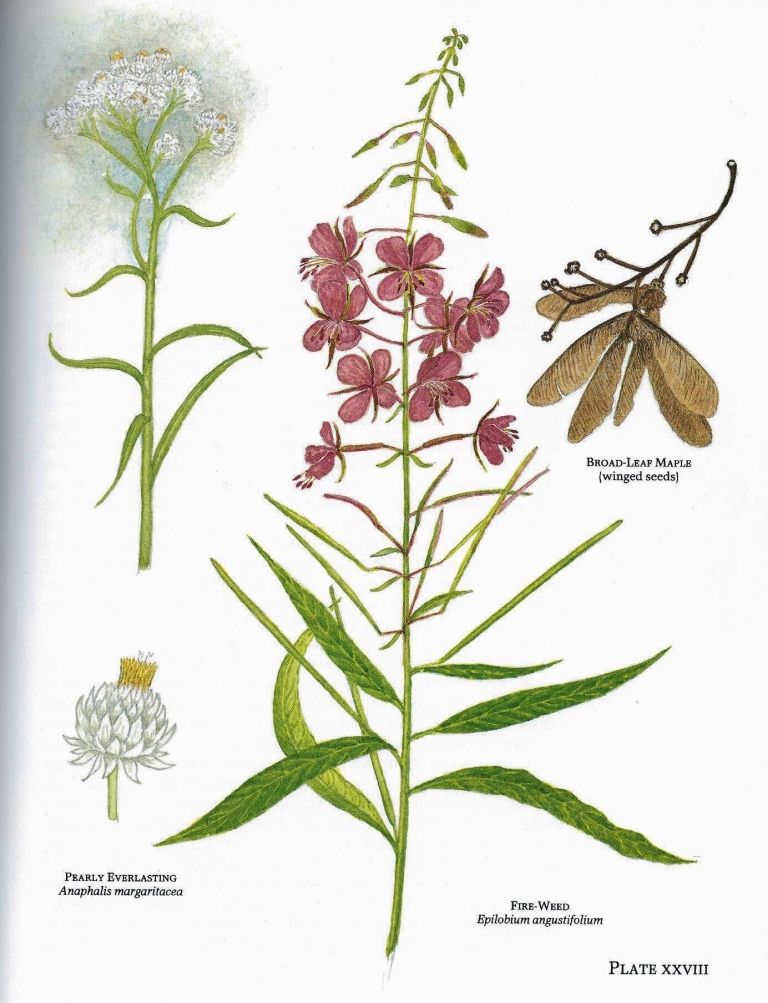
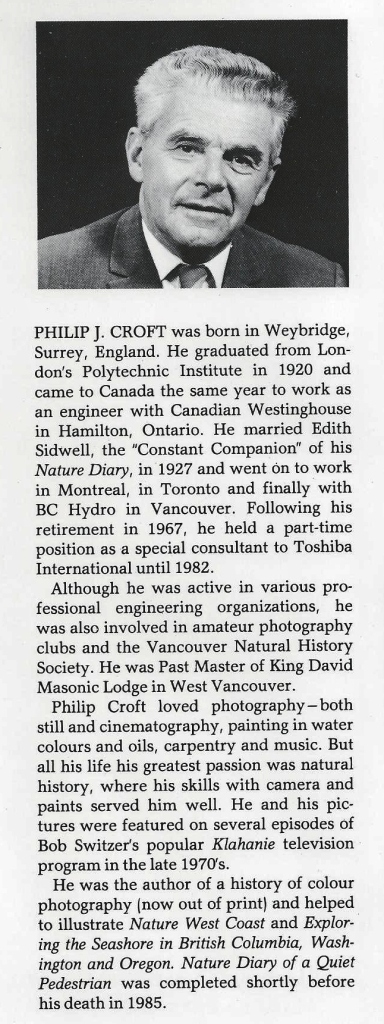
Nature Diary of a Quiet Pedestrian by Philip Croft ~ 1986. This edition: Harbour Publishing, 1986. Hardcover, illustrated by the author. ISBN: 0-920080-87-1. 141 pages.

My rating: 8/10. Occasionally a tiny bit stilted as the author tries hard to keep up his literary momentum, but for the most part the prose flows along just fine. An appealing glimpse into one man’s life, and into the natural history of his personal world.

*****

I spent some days in the Vancouver area earlier this week, and though my free time was limited I did manage to visit several used book stores – used bookstores? used-book stores? – for some reason this does not look right this morning! I am still a bit groggy from sleep, and this is very much a stolen hour at the start of what promises to be a very busy day… Anyway, on the holiday Monday (B.C. Day) evening, when most of the interesting small shops were closed up tight, I nipped into the Langley Value Village to browse their large book section, and, casting about for that elusive 5th book – the “freebie” – this one just sort of slid off the shelf at me in a shyly appealing “Hey, look at me” sort of way. From the title I was thinking – “Hmmm, probably British, another one of those made-for-tourists, Edwardian Lady take-offs, get ready to put it back…” so imagine my delight in finding that it was instead a very appropriate British Columbia book, written about the very region I was visiting.

Amateur naturalist Philip Croft kept a diary of his regular daily walks through his West Vancouver neighbourhood, through a section of forest and down to the beach. Blessed with a keenly observational eye, an artistic hand for illustration, and a gentle sense of humour, Mr. Croft’s year as recorded in this handsome book is very readable indeed. I have visited the coastal areas of B.C. enough to be generally familiar with the setting, but I have often been curious as to some of the interesting plants, insects and seashore creatures unfamiliar to me as a native of the very different, dryland fir zone interior of the province. I found myself browsing through the book in my next few evenings in my hotel room, during breaks from my delighted absorption in The Benefactress by Elizabeth von Arnim.

From the Preface:

I am an inveterate pedestrian. I walk daily for pleasure, exercise and control of the waistline. But mostly for pleasure… I like to walk alone: I prefer to be a quiet pedestrian, to walk and think, not walk and converse. In this respect my hour afoot is apt to be the most useful and productive hour of my day, for it is a time in which I am able, to a measured footfall, to think many things through uninterruptedly, to a logical or practical conclusion… It is my time for meditation and reflection…

…It is not necessary to travel to the out of the way wilderness areas of our province to be confronted by the year-long pageant of natural events in the life cycles of common plants, insects, birds and animals. It is surprising how many species inhabit roadside ditches, patches of woodland, vacant lots, railway embankments and cuttings and similar waste places throughout our area. By following the same limited selection of routes day after day, week in and week out throughout the year, one is enabled to note every phase in the development of wild plants as they spring, grow, flower, seed and make their appearance; when the birds that feed on the insects appear and when they congregate for their annual migrations… a never-ending source of wonder and pleasure…

Something that never ceases to please me is the abundance of natural life surviving and thriving in pockets of our crowded cities; as a dedicated country-dweller who enjoys occasional immersion in city life, I always give silent homage to the urban dandelions growing through cracks in the sidewalk, the fireweed colonizing the sagging roofs and windowsills of derelict buildings, the small birds opportunistically gleaning the road-killed insects from the grills of parkaded cars. And though I view the rural areas as my natural habitat, I have also lived in towns and cities; long enough to appreciate what Mr. Croft is speaking about; that nature surrounds us and goes about its inevitable business quietly and inexorably; if we pause for a moment now and then we can get much joy and encouragement from the steady adaptation of all sorts of organisms in our concrete-filled urban worlds.

This quick trip I noticed the ripening masses of blackberries, the last few foxglove flowers on their impossibly long, seedpod-lined stems, and the forests of Himalayan impatiens and buddleia along the roadsides. Parked in a busy industrial area, waiting for my daughter to emerge from a cavernous, ex-warehouse dance studio, I noticed several small brown rabbits lolloping among the blackberry vines at the edge of the parking lot. A large transport truck pulled up; the driver emerged holding a small plastic container and, without hesitating a moment, went bravely into the thorny thicket and started to pluck the berries; one in the mouth, one in the tub… I chuckled to myself and mentally went through my own belongings; sadly I had no suitable container or I might have joined him!

What joy to then read about Philip Croft’s August ode to walking in blackberry time, taking along a container to fill on the return trip to be subsequently made into a delectable pie, and his investigations of bumblebees pollinating the ubiquitous impatiens! The writer documents his observations, and enriches the narrative with philosophical mullings over of the state of the world and of human endeavour.

This book will join my collection of B.C. natural history titles which we delve into beforehand and take with us on trips and refer to later to answer queries triggered by things we see in our travels. A most enjoyable read. Mr. Croft must have been a delightful person to know; I am glad I stumbled across his natural history memoir.

Read Full Post »

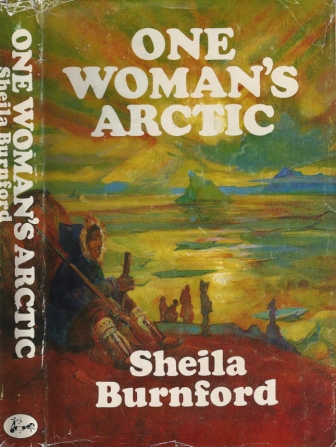
One Woman’s Arctic by Sheila Burnford ~ 1973. This edition: McClelland and Stewart, 1973. Hardcover. ISBN: 0-7710-1825-8. 222 pages.

My rating: 7/10.

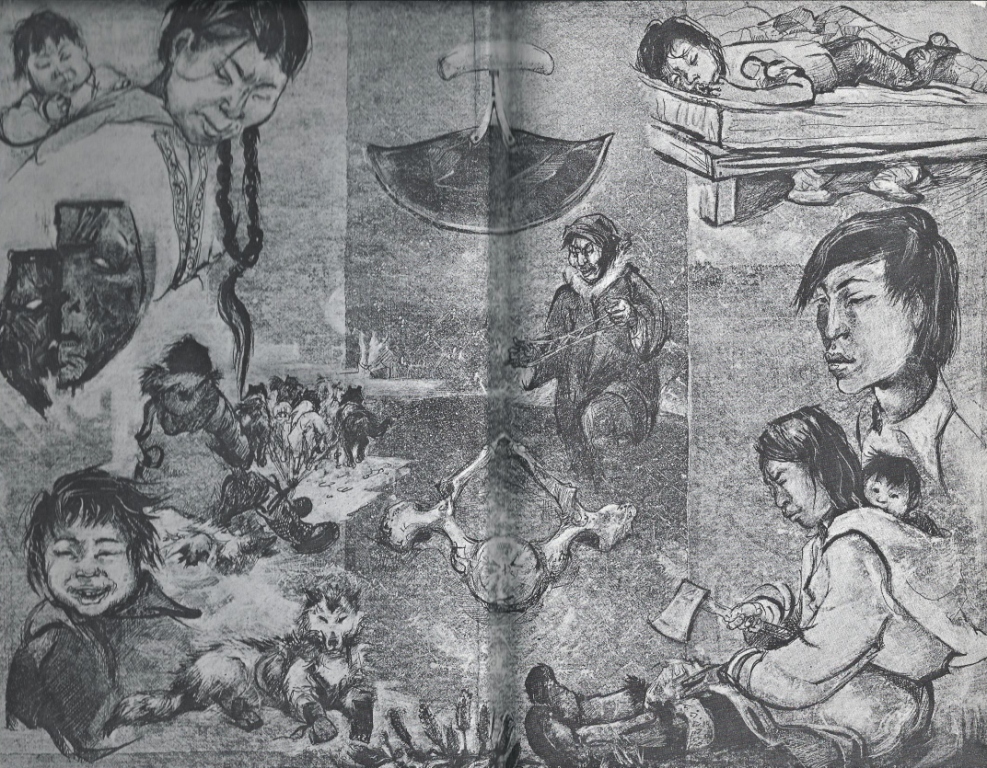
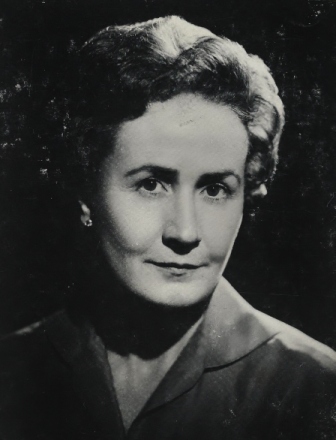
This is the account of writer Sheila Burnford’s personal impressions of two summers spent in and around Pond Inlet on Baffin Island, in 1971 and 1972. Burnford had received a Canada Council of the Arts grant to gather material for a book; she accompanied celebrated artist Susan Ross who had been commissioned by the Royal Ontario Museum to create work for an exhibition of art depicting Indian and Eskimo life. The two were longtime friends and travelling companions, having previously spent time living together among the Ojibway of northern Ontario, which she wrote about in 1969’s Without Reserve.

This was a time of cultural shift, as the Inuit embraced and were influenced by modern culture and innovations, while still practicing their traditional way of life to a great extent. Burnford describes her personal impressions, and occasionally tries to pat the larger picture into context, but this is exactly what it says it is in the title – one person’s take on a place too large and complex for generalities to be made, though of course the author occasionally writes as though her observations and conclusions about this small piece of the Arctic apply more broadly. In general, the author keeps to her mandate, which is to tell us about her impressions during her short excursion into the far northern world.

Though it took me a while to work my way through it, now that I’ve completed it I find that ultimately I liked this book, and I enjoyed filling in a few more of the pieces of the author’s life. But it could have been better. What Burnford did so well in The Fields of Noon, though, was talk about herself, her life, her childhood, her family; always in reference to her subject, which made that collection of memoirs so very readable. In One Woman’s Arctic there seems to be more distance between writer and subject, while at the same time the tone is uneven – we’re never sure what “voice” the writer is using because she shifts around so much.

Burnford sometimes maintains an onlooker’s dispassionate view, describing the landscape and the animals and the indigenous people of the small part of the Arctic she visits with a writer’s eye, painting pictures with words. These episodes are very nicely done indeed, and I found that my vision of the scenes from her words were borne out by the pictures I later searched out of the places she visited. Burnford had a rare ability to capture the visual in words.

The weakest parts of the book were when Burnford left the realm of observation and description and ventured into the difficult area of analysis of what she is seeing in regards to the behaviours and motivations of the Inuit (“Eskimos”) she came into brief contact with, or, in the case of the two white mens’ graves at Quilalukan, researched in some depth. Sometimes, as John Mutford points out in his own not particularly favorable review of this book – One Woman’s Arctic by Sheila Burnford – The Book Mine Set Review – the writer falls into the “white man bad/Eskimo good by default” trap. But I felt that she salvaged the situations where she did this by continually acknowledging that she didn’t know if her interpretation was correct; that she was mulling over the situation and trying to make sense of it from her perspective as a very superficial onlooker, and a member of the invading, paternally patronizing race. Burnford never seems to lose sight of the fact that she is a visitor in an alien landscape, and that her comfort and safety rely on the kindness of others.

The episodes I enjoyed the most were when Burnford described the individuals she travelled and stayed with and got to know more intimately. The residents of Pond Inlet, where Burnford and her companion, artist Susan Ross, made their home base in the community’s kindergarten building, are described in lively anecdotal style; Burnford remarks on the fact that no one seems to have anything bad to say about each other, and that she thinks that this is the result of conscious effort on their parts. Referring to the non-Inuit residents of Pond Inlet, the group she and Ross associated with and socially fit in with:

Those who lived here all year round whether teacher, nurse, game warden, R.C.M.P. or administrator, had seemingly developed a safe preservation of peace (outwardly, anyway) attitude to their fellows. One very, very seldom heard any criticism of personalities, but only he/she is so nice/does so much/is wonderful at/ – etc. Occasionally, because one’s antennae were more acutely tuned through being an outsider, one was conscious of tension between certain individuals, but this was rare. I gathered that they had all worked it out during the six months of twenty-four hour darkness…Activities, such as bridge, over which people in cities can tend to become rather maniacal sometimes, were recognized as potential trouble-makers and avoided; and anything involving competition. A good, safe activity, capable of being shared, arousing no jealousy or competition, was that of photography: practically everyone was madly interested in this, and many did their own developing and printing. I have never seen such an impressive array of Hasselblads, Pentaxes, Leicas, etc. as I had up there.

Another contributing factor of harmony – which of course had its overall impact on the general community – was the average age, which was around thirty or under. An age more exposed to today’s precepts of ‘doing your own thing’ and Make Love Not War – precepts very much more in line with the outlook of the Inuit, who have always been a non-aggressive people; and also an age which avoids that difficult menopausal age group, universal elsewhere among those who have made it up to positions of authority, during which strife is commonplace and mayhem (verbal or otherwise) frequent…

An interesting take on the situation, especially as Burnford and Ross were older than the Pond Inlet “white person” average, being in their mid-fifties; one wonders if the menopausal comment was coming from personal experience, or merely through prior observations in the southern world!

Also very readable were the descriptions of the archeological dig at Button Point on Bylot Island under the auspices of the venerable Father Guy Mary-Rousselière; Burnford was present at the discovery of the second Dorset culture (A.D. 500-1000) shaman’s mask found at that site and vividly describes the unique challenges of archaeological exploration in a permafrost zone. Dorset Masks – Canadian Museum of Civilization Treasures Gallery

I found One Woman’s Arctic to be interesting read from my perspective as someone who has never personally experienced the Arctic, though I found it easier to lay aside and read other things concurrently than I did with her other memoirs, Without Reserve and The Fields of Noon. Even though it has some unresolved and unsatisfactory conclusions about northern life and Inuit culture, I think there is much to learn from Burnford’s observations, purely on the natural history aspect of the area she visited. Her descriptions of the human impact on the area, both Inuit and white, are frank and outspoken; Burnford may be looking through wishful rose-coloured glasses occasionally, but she mostly has them off, the better to turn a sharp eye on the details of her surroundings, and she is not afraid to share what she sees.

A snapshot of a time and place now lost in time, from the perspective of a thoughtful and very individual observer. The quality of the writing is excellent through most of the book, though there are occasional awkward phrasings and strangely punctuated passages which I suspect point to lapses on the editor’s part; Burnford, from my past experience with her work, is an accomplished writer not prone to sloppiness.

I would recommend this book to anyone interested in exploring the different regions of Canada, and in particular the far north, though with a reminder that it should be kept in context as one individual’s impressions, and is, unavoidably, now very dated, being written forty years ago.

Read Full Post »

« Newer Posts - Older Posts »