Posts Tagged ‘British Columbia’

We’re having a dreary day today. It’s raining down here by the river, but snowing higher up, reported by a friend during an early morning call. I really should be outside working in the greenhouses, but I think I’ll have another cup of tea instead, and share some of the photos my son took a few days ago, when the sun was shining and spring seemed much more committed to staying than it does this morning!

Right now the river is as low as it gets all year, and we're taking advantage of that to explore the sandy side channels which are usually full of water the rest of the year.

Right now the river is as low as it gets all year, and we’re taking advantage of that to explore the sandy side channels which are usually full of water the rest of the year.

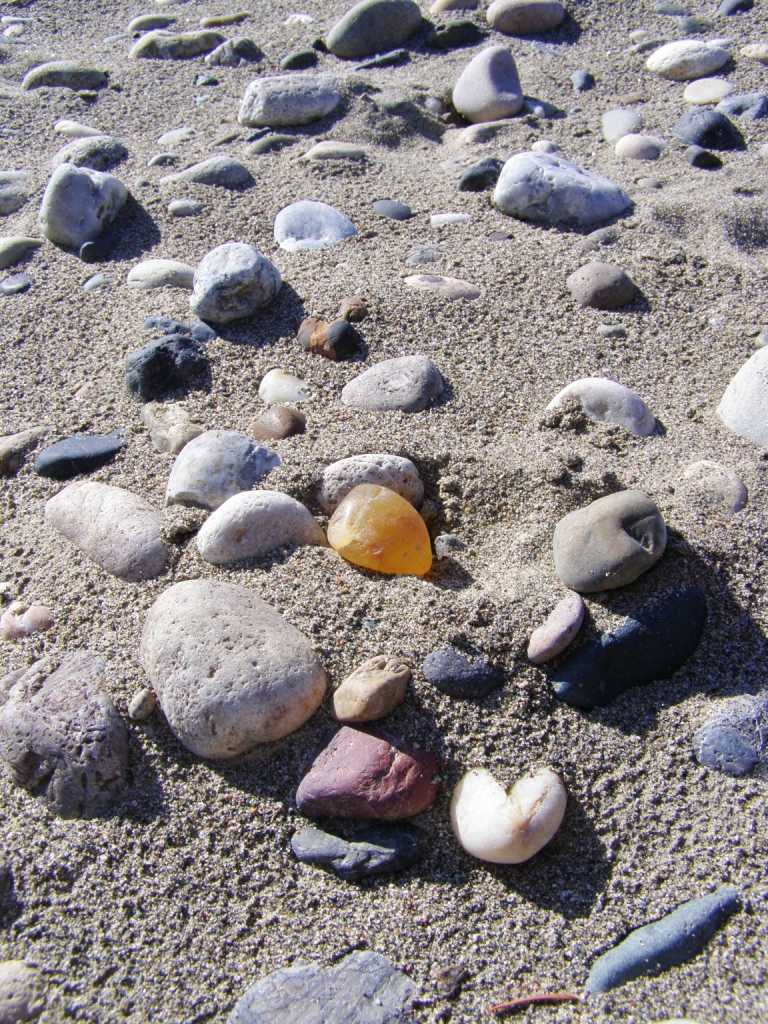
Down along the main river bed itself, rockhounding bliss at low water - new territory to explore!

Down along the main river bed itself, rockhounding bliss at low water – new territory to explore!

And here's our quarry - glowing agates.

And here’s our quarry – glowing agates.

April 2013

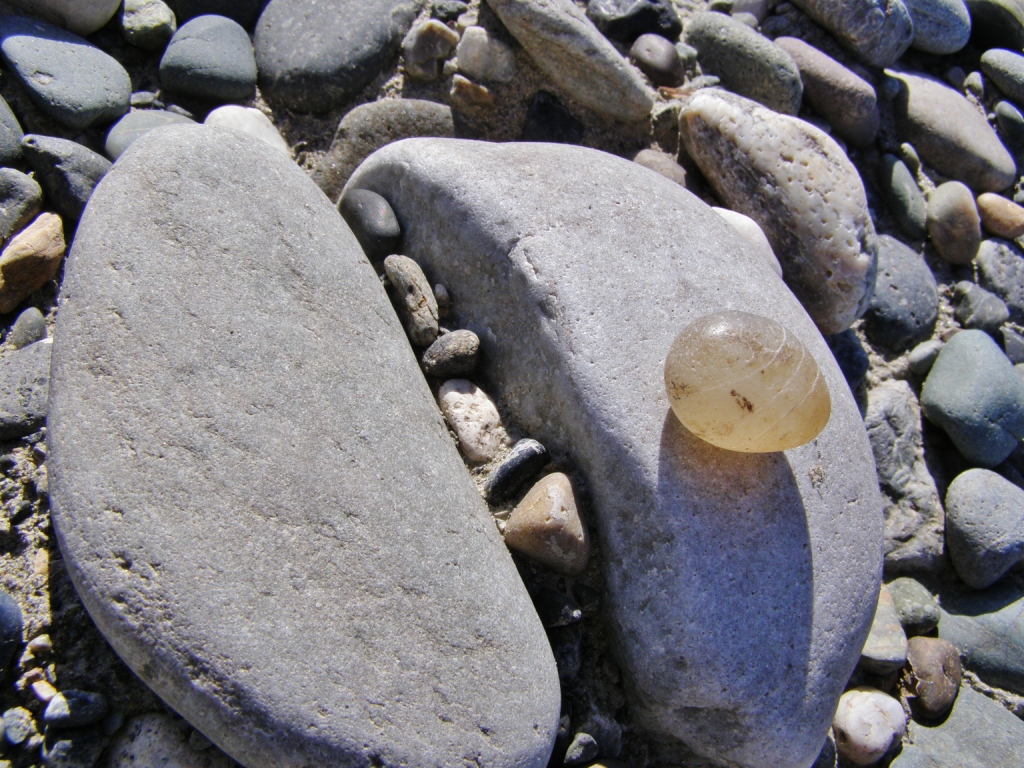
Naturally polished Fraser River gems.

Naturally polished Fraser River gems.

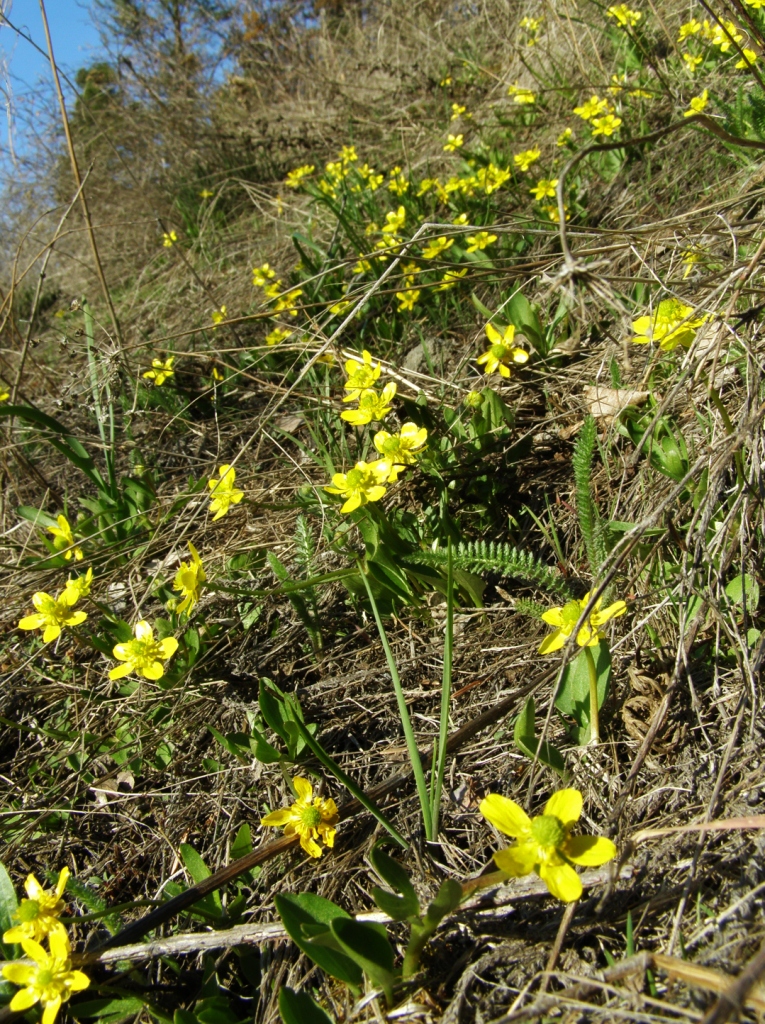
Returning home on higher ground, the sagebrush buttercups are out in full force on the hillsides.

Returning home on higher ground, the sagebrush buttercups are out in full force on the hillsides.

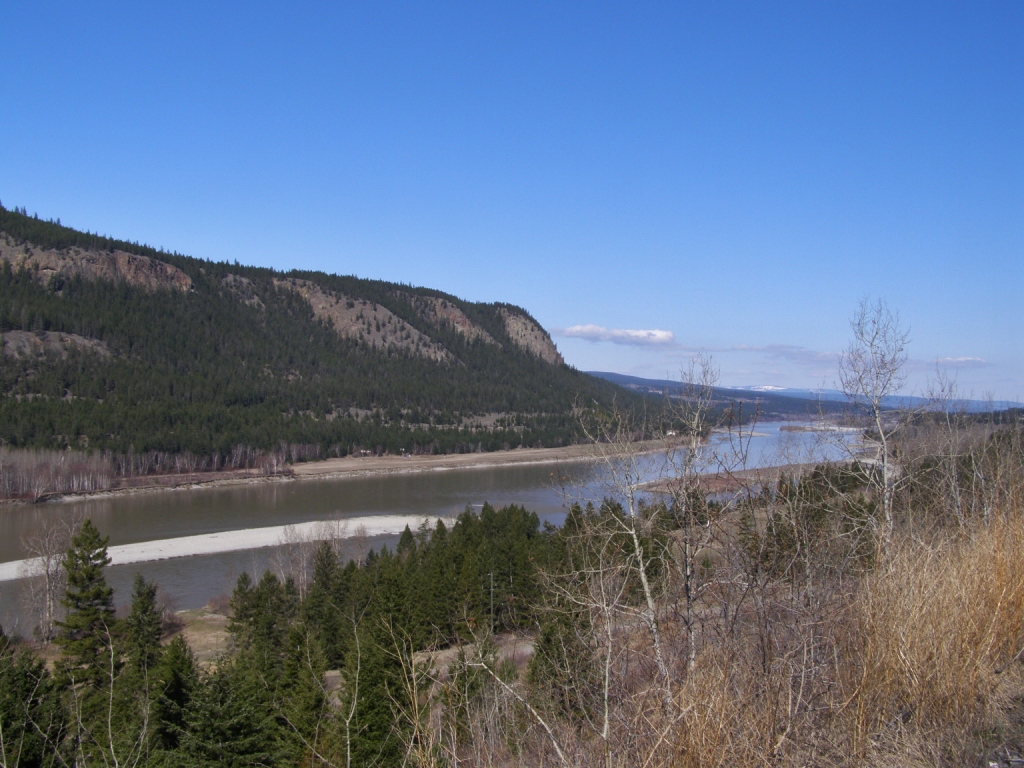
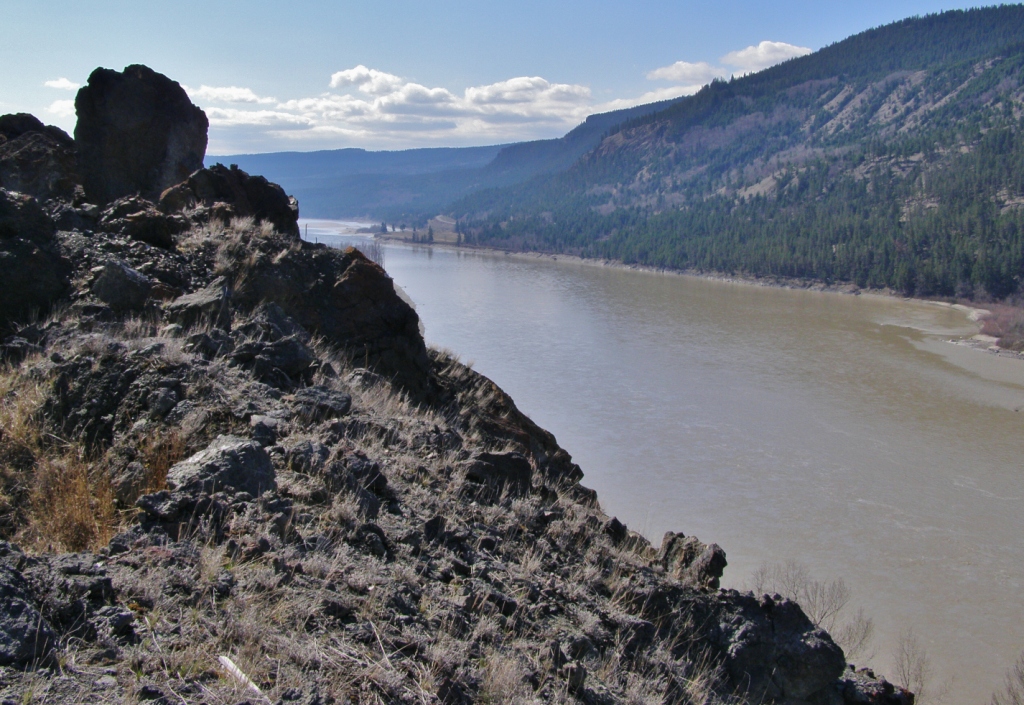
This is the high point of the farm - the house in directly below this spot, though you can't see it for the trees - and looking upriver to the North.

This is the high point of the farm – the house in directly below this spot, though you can’t see it for the trees – and looking upriver to the North.

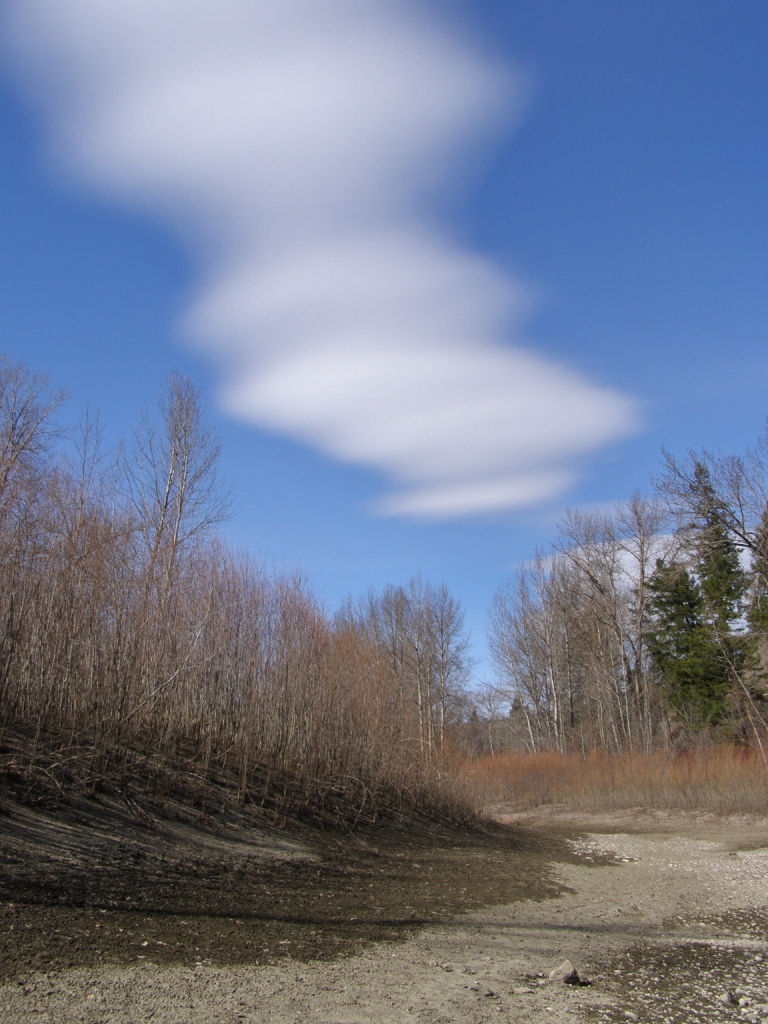
And from the same spot, a few days later, after some days rain, and enough warmth to result in melting snow in the high places. Our rockhounding grounds are seriously diminished; the river is on the way up once again.

And from the same spot, looking the other way, downriver to the South, a few days later, after some days of rain, and enough warmth to result in melting snow in the high places. Our rockhounding grounds are seriously diminished; the river is on the way up once again.

Read Full Post »

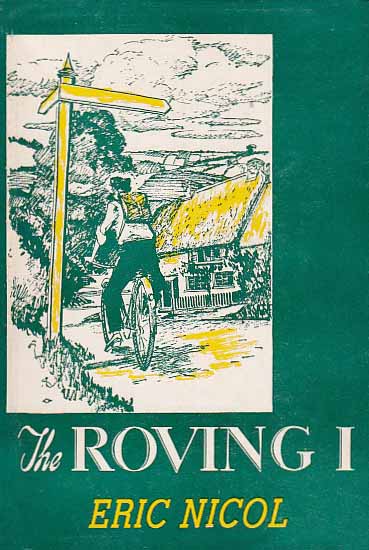
the roving i eric nicolThe Roving I by Eric Nicol ~ 1950. This edition: Ryerson Press, 1951. Hardcover. 134 pages.

My rating: 7/10, after some inner debate.

I  am rather sad to have to say that much of the humour is groaningly dated in this one, but despite that single failing, I have a strong affection for Eric’s comic tale of his year on The Continent, some phrases of which are ingrained deeply into my memory. The more eloquent passages obviously resonated deeply when I first read this at an impressionable age.

The Roving I won the Stephen Leacock Medal for Humour in 1951, which is commendable but not necessarily a guarantee of, well, of anything! The bits of Roving I which I am fondest of are the more serious bits, hidden beneath the sometimes-forced playfulness of the narrative.

Do I date myself when I assume that everyone knows who Eric Nicol is? As a middle-aged, mostly lifelong British Columbia resident, Vancouverite Nicol has somehow always been there, always on the edges of my awareness, a cultural constant. Exceedingly prolific throughout his writerly life, which began in college – he famously started his career by writing in the Ubyssey under the pen name of Jabez – Nicol went on to write more than 6000 newspaper columns for The Vancouver Province, as well as 40-odd books and a number of mostly-comic plays. Eric Nicol died in 2011, at the age of ninety-one, writing up until the end, despite battling the onset of Alzheimer’s. His last book, Script Tease, a collection of typically whimsical articles, was published in 2010.

But we’re going to go way back, to the early days, to Eric’s more youthful days as a young man after his WW II military service – three years in a non-combat role in the R.C.A.F. –  when he was taking advantage of an opportunity to pursue post-graduate studies for a year at the Sorbonne.

Here’s a sampling, from Chapter One: Debut of a Vagrant, at the start of the long train journey eastward to the embarkation point for ship travel to Europe.

The train lurches forward heavily, trying to take us all out by the roots at once. Mine hang on. Mine and those of the old couple across the aisle, who never thought of buying a newspaper because the news of the day was their being on the train, with a rope around their world.

Another good jerk does it. The station begins slowly to glide out under a full sail of flapping handkerchiefs. No, it’s us. We’re rolling. I and the fat lady sitting opposite me, reluctant to admit one another to the sudden vacuum of our existence, stare out the window at a grey and indifferent Vancouver. Oh, Vancouver, that I’ve given the best years of my life to, how can you dismiss me as though I were just another can of salmon? Is this how I’m to remember you, this motorist stymied by the crossing gate and glad to see the last of us? Couldn’t that woman stop hanging out her laundry for a minute? Is there no one to wave to us, on behalf of the city of Greater Vancouver?

Yes, by heaven! There she is. A little girl, a delegate at large, patting the air slowly and solemnly, making it last for the whole train. The fat lady and I wave back, and, relinquishing Vancouver, smile at each other, having in common someone we both said goodbye to…

That’s a fair sampling of Nicol’s style. Though occasionally it drops into sheer silliness, it is usually redeemed by clever, often very funny phrasings; the man did have – overused cliché fully applicable here – a way with words.

Eric Nicol’s books are quite easy to come by here in B.C., and are – here’s another cliché – well worth dipping into if you come across them in your travels, though some I find more enjoyable than others. The more hectic ones do seem to be trying a bit too hard, but there are little gems of delicious prose in each and every one. The Roving I is one of my personal favourites, a slight little period piece which captures a moment of time in a fast-moving world and frequently makes us smile at the infinite absurdities of life.

Read Full Post »

the autobiography david suzukiDavid Suzuki: The Autobiography by David Suzuki ~ 2006. This edition: Greystone Books, 2006. Hardcover. ISBN: 1-55365-156-1. 404 pages.

My rating: 5/10. Interesting to get some of Suzuki’s back story, but sadly my personal regard for this enviro-icon took a small step downward after reading it. It seems like the ego displayed here is as large as the legend.

*****

There’s a little comment someone made in my hearing years ago, which comes to mind right now: “If you want to know how good he is, just ask him”.

Packing a whole bundle of firewood on his shoulder (and understandably so) stemming from his family’s mistreatment during the World War II Japanese-Canadian internments and appropriation of property, David Suzuki grew up feeling like he had something to prove, and he’s succeeded to do just that, in spades. The depth of love/hate public feeling regarding this one soft-spoken and absolutely brilliant man goes to show how influential he has become.

The political right wing hates him, the lefties have made him their god. I tend to swing left, and I deeply admire David Suzuki for the focus on environmentalism he has forced into the public eye, but this autobiography shows all too clearly the god’s feet of clay.

This book looks back briefly to Suzuki’s childhood in B.C. Born in 1936, David Suzuki was six years old when he, his mother and sisters were interned in one of the camps for Japanese-Candians in the Slocan Valley. His father spent the war in a separate labour camp. After the war, the Suzukis moved to Ontario, where David completed his high school education before attending university in the U.S.A., attaining a PhD in Zoology in 1961.

Returning to Canada, Suzuki worked as a professor and researcher in genetics at the University of British Columbia. Branching out to participate in public education, he founded the popular CBC Radio science program Quirks and Quarks in 1974, and the iconic television series The Nature of Things in 1979. David Suzuki was a household name by the mid-70s, and his profile has grown exponentially through the years.

The Autobiography is honest enough in that Suzuki frankly discusses his two marriages and his shortcomings as a less than involved husband and father. His deep dedication to his work and his increasingly hectic public life often separated him from his family, and he freely admits that this is something he now regrets.

Most of this book is a listing of various events Suzuki has been involved in during the past twenty years; plenty of name-dropping of the celebrities he rubbed elbows with – Sting! Buffy St. Marie! John Denver! – and plenty of slightly patronizing commentary on how he brought this, that and the next thing to the public attention. True, so true, but the tone doesn’t feel very kind-spirited at times.

The writing is not the strong point here, either. The subject matter would be much more enthralling if it weren’t dealt with in such a flat “Then I said, then I did, then I said, then I did” manner. There are some personal anecdotes, mostly concerning his parents, and the death of his father, where he lets himself go, and these are the most poignant and memorable of this rather dull book.

I would say “read it” just to get a deeper understanding of this fascinating and frequently self-sacrificing man, but be prepared to come away feeling something like a member of the great unenlightened, living in the dark and waiting for The Master to flick the switch. You really want to know how good David Suzuki is? Read The Autobiography. He’ll tell you.

Read Full Post »

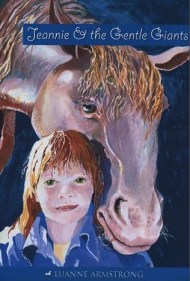
jeannie and the gentle giants luanne armstrongJeannie and the Gentle Giants by Luanne Armstrong ~ 2002. This edition: Ronsdale Press, 2002. Softcover. ISBN: 0-921870-91-4. 150 pages.

My rating: 4/10. A completely typical “problem novel” (single parenthood, mental illness, foster children) packed with contrived situations. An eleven-year-old heroine is placed in foster care after her mother has a mental breakdown.

Sadly this one didn’t quite fly. The horse bits were good – the best part of this novel, in my opinion –  but they couldn’t salvage the rest of the completely predictable, cookie cutter story. Despite the favorable back cover blurb by my up-the-hill neighbour, poet, writer, and horse-logger Lorne Dufour (aha! now here’s an interesting Canadian Reading Challenge author) it just didn’t click with anyone here. Too bad. Jeannie is set in Kelowna, B.C., and as a home-province, B.C. Interior-set youth novel I really wanted to love it. (Plus the cover image is fantastic.)

From the publisher’s website:

Jeannie and the Gentle Giants, a novel for readers eight to fourteen, deals with the problems experienced by children when they are taken from their parents and have to make a new life with foster parents in a new community. In Jeannie’s case, the problems begin when her mother falls ill and can no longer care for her. Taken from her home, placed with foster parents and unable to discover the whereabouts of her ill mother, young Jeannie withdraws into herself and can think only of running away.

Gradually her defences are breached by two immensely large and wonderful workhorses and their perceptive and humorous owner. Through the horses and her work on the farm, Jeannie develops new interests, learns to ride and becomes involved in the daily life of the farm, even helping with horse-logging. In turn, Jeannie learns about friendship, love and trust, and ultimately gains the maturity and self-confidence to accept the challenge of becoming herself a care-giver. In this sensitive and moving story, Luanne Armstrong draws us into a world of pain, growth and fulfilment.

Lorne Dufour’s back cover blurb:

In this story, the Gentle Giants slowly walk right through our hearts. We will forever remember their presence in Jeannie’s life and that the great Gentle Giants never forget.

 ~ Lorne Dufour, horse-logger & award-winning author

The author attempted an ambitious level of complexity here, by involving her young protagonist in a rather tangled combination of situations. We have: mentally ill mother, single-parent family with no father in sight, poverty, social stigma as child of mentally ill mother (handled quite well by author in providing heroine with staunch friends who immediately speak up in her favour to school bullies), foster parents who can’t have children, neighbour couple who find they are expecting a baby mid-way through book, heroine’s questioning as to what a family actually is and her conflicting desires to both be with her mother back in the city and to stay in her new, more fulfilling and interesting country life, doctors refusing to allow child to see ill mother – (this didn’t ring true – felt like a plot element to increase tension – mother was experiencing a psychotic episode, some mention of bipolar disorder/manic depression, but once the mother was capable of sending the first letters, why the heck WOULDN”T she be able to have visits from her daughter – wouldn’t that by emotionally beneficial to BOTH of them) – okay, moving on – learning to handle work horses, learning to ride, dealing with an injured horse all by herself, finding a lost child, guilt guilt guilt because heroine feels she has been the cause of the child being lost, feral stray dog tamed and made into pet …  My goodness, what a busy, busy girl.

As I said earlier, I really wanted to like this book, but it just didn’t ever feel “real”. Too much was chucked into the mix, Jeannie’s reactions were not very well portrayed – we were continually given the same set of outward clues that she was all bummed out – she had a “shy look”, “looked down”, “blinked to hold back tears”. The language throughout is overly simplistic, as if keeping it accessible to “poor readers” was a major goal.

Does this seem too critical? I feel like a big old meanie for picking this one apart, but, in all honesty, these were my thoughts as I read.

For the record, I really don’t care for “problem books”, for readers of any age, but in particular for young readers. “This is a book about DIVORCE! MENTAL ILLNESS! CEREBRAL PALSY! DOWN’S SYNDROME! BULLYING! ANOREXIA! ETHNICITY! PREJUDICE! BEING GAY! blah blah blah… If you, dear person/dear young child with a similar issue in your life, will only read this book you will feel so much better because you will see how this marvelous hero/heroine dealt with it in their fictional world and you won’t feel so alone.”

Dear youth authors: Write a STORY first. If there are side issues, so be it, for if naturally included those always interest, verisimilitude and richness to the mix. But don’t pick an “issue” and write a prescriptive “here’s how to deal with it, dear” contrived moral tale. Kids aren’t stupid. They don’t need to be told what to think in such a poorly written way. Yes, definitely acknowledge and include the issues, but don’t build a weak story around them, for the sake of marketing the book to the school library network! This whole “issue story” genre encourages sub-par story-telling.

In my opinion.

Jeannie and the Gentle Giants pushed a lot of my buttons, and not in a good way.

Rant over. (For today!)

Oh, hang on – not quite. “Foster” parents – I always thought that foster parents were those filling a long-term role in a child’s life. Jeannie is in what I would classify as “temporary care”, so the immediate (within days) placement of Jeannie with a new, albeit temporary, “mom” and “dad” didn’t ring true. It is continuously stated that Jeannie will be reunited with her mother once the doctors get her (mother’s) meds figured out. I mean, the actual family placement is okay, but the whole “this is your new family” thing felt rushed and phony. No wonder the poor kid is a basket case – “Here, Jeannie, meet your new mom!”

And another quibble, this with the publisher’s website and back cover plot outline. It sounds as though Jeannie doesn’t know where her mother is through all of this. She’s in the flipping hospital in Kelowna, people. Did you not read the book?!  Jeannie knows this, her social worker knows this, her “foster parents” know this – they make continual phone calls and Jeannie’s mom writes her letters, for crying out loud! So why is this presented in the promotional material as “child torn away from parent and searching for her”? The kid tries running away to go see her mother, but she knows where her mother is. She’s turned away as she tries to buy a bus ticket to Kelowna, to go to the hospital, to see her mother, because Jeannie knows she’s there.

Okay, now I’ll quit. I’d hesitated to review this book, because it let me down so sadly, but I did say I’d review and post every Canadian book I read, so here goes. There are a few more disappointing titles lined up for review, so a heads-up for those wondering why I’m so crabby today. I’ve just been pushing them back in the queue, but have decided to tick them off my deal-with list before 2013 hits.

Read Full Post »
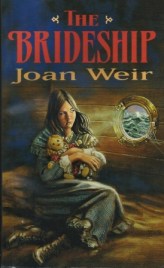
the brideship joan weir 001The Brideship by Joan Weir ~ 1998. This edition: Stoddart, 1998. Paperback. ISBN: 0-7736-7474-8. 218 pages.

My rating: 4.5/10. This one gets a “just missed” from me. It was marred by a seemingly unlikely but at the same time groaningly predictable plot, and a selection of overly stereotyped characters.

I initially questioned the historical accuracy, which didn’t quite ring true to me: a group of teenage girls is apparently sent by the Anglican Church to be prospective brides in the female-starved British Columbia and Vancouver Island colonies in the 1860s. This was indeed correct; I obviously do not know quite as much B.C. history as I like to think I do!

The writing is competent enough but the whole package didn’t do much for me. Some teens may find this an acceptable read, but I would hesitate to recommend it, except for its dramatic focus on a little-known chapter of British Columbia and Cariboo Gold Rush history.

*****

Fifteen-year-old Sarah is an orphan in England in 1862. Uncooperative and outspoken, she is a disruptive presence in the orphanage where she has ended up after the death of her parents and then her uncle, so is recommended with great relief by the orphanage head to join a group of teenage girls who are being sent to the western Canadian gold fields as prospective brides for the miners. This arbitrary emigration is presided over by a (hopefully atypical!) prospective Anglican Church minister, the sinister and vicious Mr. Dubonnet. Sarah’s frail older cousin Maud is also part of the group, as are a number of the usual variety of orphans in this type of fiction, including Lizzie, the cockney ex-pickpocket with a heart of gold, and Arabella, the mean-spirited snooty beauty.

Sarah makes the trip in fine fettle, despite continual run-ins with Mr. Dubonnet and various adventures on board. Poor Maud makes it only as far as the Falkland Islands, before succumbing to her constant cough, as we’ve expected from very early on in the narrative – the girl very obviously has the cloud of doom hanging over her right from the first chapter, with her meek disposition and delicate consitution. The surviving orphans weather the rest of the voyage, which is marked with melodramatic incidents to keep things interesting. They eventually arrive at Vancouver Island, are off-loaded at Esquimalt, and are then shipped up the Cariboo Road to Barkerville.

Sarah refuses to accept her prospective husband, and teams up with Lizzie to start an enterprise of her own as a laundress. Justice in the form of Judge Begbie nails Mr. Dubonnet, true love arrives for Lizzie and Sarah, and everything is looking up as we close the last page.

I was curious as to the verity of the “bride ship” angle, so I did a bit of research, and found that the author did base this tale on true events. See Victoria History – the British Columbia Emigration Society, for a brief discussion.

I’ve included several articles from other sources to balance my not terribly enthusiastic review. The Brideship isn’t a bad book, but compared to other similar works in the genre it is on the lower end of the spectrum, in my one-person’s opinion.

I’ve just been reading Marianne Brandis’ stellar 1830s’ Ontario trilogy of The Tinderbox, The Quarter-Pie Window, and The Sign of the Scales (reviews pending), as well as Suzanne Martel’s The King’s Daughter, following a French fille du roy sailing to Canada from France among a similar shipment of “brides to be” in the 1600s. These other books stand head and shoulders above Weir’s Brideship, at least for this reader, reading like properly engaging novels which just happen to be set in historically important and interesting times versus a packaged up collection of “teachable moments” clothed in stereotype and unlikely melodrama.

*****

In a University of Manitoba author profile, Kamloops, B.C. writer and retired college creative writing instructor Joan Weir talks about some aspects of the process of writing The Brideship.

“Usually when I start, I feel very strongly that, when the whole thing is over, I want to have made some sort of comment that is worth making. (I)n Brideship, I wanted very much to get across the idea for modern kids that, no matter where you find yourself, life’s an adventure and you’ve got to seize the moment and take it and go with and make something out of it… I start with that, and from there I go to character, but I have to know ‘why’ I’m writing the book before I start. I don’t know the ending. I think the ending has to grow out of what happens as your characters suddenly take on a life of their own which is greater than you thought when you started. It’s out of their growth that the ending grows, and very often the ending isn’t what you thought, even in a sort of vague way, that it was going to be at all. It surprised me very much what happened to Lizzie in Brideship. Lizzie becomes almost the strongest character in the book, something I didn’t intend at all when I started. I thought she was going to be very much a secondary character. So many readers, when they talk about Brideship, say, ‘Oh, I really liked Lizzie.’

“In the actual historical story of those girls who came over on the Tynemouth, one girl did die, and I felt committed to put that in because I felt so badly about that poor little orphan, Elizabeth Buchanan, who was buried at sea. Sarah’s cousin, Maud, in Brideship is patterned on Elizabeth. I didn’t dare use Elizabeth’s name because this is fiction, and I didn’t want to get involved in ‘this is true and this isn’t true,’ for Elizabeth didn’t have a cousin with her or someone back in England to marry, as my Maud character does. The Anglican Church organized and sent over three boatloads of girls from orphanages, but the first trip is the only one that there was any sort of information about at all. The conditions were absolutely like I’ve described them in the book. I’ve got an artist’s sketch of the ship which was drawn from pictures on file in the museum. It was a tiny little craft that had over 300 people on it. The girls really were housed down below in the hold compartment with only these little tiny portholes.

“The book’s cover was interesting because often publishers don’t give authors any input at all on covers. Kathryn Cole was wonderful because she sent me sketches of what they wanted to do with the cover which was a picture of Lizzie and Sarah dolled up in Mrs. Worthing’s clothes, with parasols and fancy hats, smiling and tripping around the ship’s deck. When Kathryn asked, ‘What do you think of it?’ I replied, ‘We’ll, it’s a very pretty picture, but I’m afraid that it sets the wrong tone for the book. When you look at it, you’ll think it was a happy journey, and it wasn’t.'” Kathryn then asked Joan for her cover ideas. “‘I would like a picture of Sarah below decks in the storage compartment in which they’re living, looking out that one little porthole. And, if possible I’d like her holding her doll.’ Even though that detail makes Sarah look younger than she is, that doll was the only thing that she owned. I was delighted because the artist did exactly what I wanted. The cover sets the tone, and it was not a happy trip. But, if you’d have had the title Brideship and these girls on the original cover dancing around, you would have thought it was like a Love Boat.

And here is an edited excerpt from the CanLit.ca review of The Brideship.

Four dozen orphans, some of them as young as sixteen, are sent off to the West Coast of Canada on the vague promise that they will find work there. Sarah eagerly volunteers to go; she will do anything to get out of the hated orphanage. An Anglican clergyman has organized the emigration, and this fact alone seems to guarantee that the promised positions will materialize, and that the four dozen girls are in good hands.

Appearances, however, deceive. A few days before their arrival in Canada, the girls find out that “there aren’t as many jobs available” as had originally been thought, and that they are to be “brides instead.” The clergyman, too, is not what he seems: aside from being responsible for deceiving the girls, he is also a thief. He triumphs in the short run, but his dishonesty eventually catches up with him. Sarah, however, never gets to meet the man intended for her. She escapes to Barkerville, sets up a laundry business there, and falls in love with someone she chooses for herself.

The Brideship concentrates more on action than on emotion. Sarah gets somewhat pushed into the background by the question of whether the Anglican Church really did organize shiploads of female orphans under the pretense of getting them positions as governesses, then offering them as brides to the miners working in British Columbia instead. And if, as Weir contends, the answer is “yes,” then one wonders why the author neglects to show some outrage in at least one of the unfortunate “brides.” Not even the heroine expresses any offense at such a monumental deception; she is worried that the husband the clergyman has chosen for her might be a brute, but it does not seem to enter her mind that the clergyman had no right to choose a husband for her in the first place. Although The Brideship has a lot of action, it is short on psychological realism.

Read Full Post »

the best thing for you annabel lyon 001The Best Thing for You by Annabel Lyon ~ 2004. This edition: McClelland & Stewart, 2004. Softcover. ISBN: 0-7710-5397-5. 322 pages.

My rating: 10/10

Annabel Lyon is absolutely fearless in where she’s willing to go with these novellas, and there wasn’t a single jarring note anywhere. I am in awe.

I liked this collection in the same way I liked her high-profile Giller and Governor General’s Award nominee, and Rogers Writers’ Trust Fiction Prize winner, 2009’s The Golden Mean – sometimes I was deeply disturbed – and occasionally almost offended – by the images she conjured up, but I never, ever – even briefly – looked away. She kept me fully engaged the whole breathless trip.

This woman can write, people. If you haven’t already, you need to check her out.

Highly recommended.

*****

The Best Thing For You is a collection of three novellas. This is a form which I don’t see used much any more, but in this case it works wonderfully well, allowing an ambitious complexity of content and keeping the pace fast without the inevitable fluctuation in energy which occurs in a longer novel.

All three stories are set in Vancouver, British Columbia, the home of the author. The first two are set in contemporary times and the third is set during the ending days of World War II; the celebration triggered by the announcement of the end of the war plays an important part in the narrative.

Be prepared to pace yourself when reading through this one. Each novella deserves as much attention as a novel would; I found that I stopped cold after each one and only was able to turn my full attention to the next after digesting what I’d read for a few days. I wouldn’t recommend reading these in one fell swoop; I personally would have found that overwhelming. This is a collection that deserves – demands! – the reader’s full attention.

  • No Fun – A conventional enough narrative about a respectable middle class family, mother a doctor, father a university professor, well-adjusted, perfectly normal teenage son in high school. That’s the surface picture. When the son is involved (possibly? probably?) and criminally charged in connection with the brutal beating of a mentally handicapped man, the picture perfect impression dissolves into a dramatically realistic portrait of three people in personal crisis. As the mother of a teen boy myself, this novella (cliché alert!) touched me deeply in a very personal way. It made me smile in recognition, it frequently made me laugh, and it made me feel less alone in my occasional confused dismay at what our beautiful babies evolve into without our maternal permission (damn it anyway!) Lyons gets it so very right; how does she do that? The portrait of a marriage going on behind the issues brought about by the child is exceedingly well drawn as well.
  • The Goldberg Metronome – a young couple find a mysterious package taped to the pipes under the bathroom sink in their newly rented apartment. In it is a midnight blue, broken antique metronome. The story of the metronome’s history interweaves with the stories of the lives of the people it has joined tenuously in a thread of possession, passion, desire and loss. Gorgeous story.
  • The Best Thing For You – The strongest (of a strong three) and most elaborately plotted (of a beautifully complex three) of these novellas. A discontented young married woman involves a teenage delivery boy first in an adulterous affair and then in something much deeper and darker. Another teenager in the periphery of the events becomes deeply involved in a very different way. Cleverly noir, I thought as I read; I was vindicated in this assessment by reading in an interview here that film noir was indeed Lyon’s inspiration for the story:

I like film noir, and was interested in creating a femme fatale who’s both less and more than she seems.  Anna is a black-eyed adulteress who murders her husband for his life insurance, but she’s also bookish and melancholy and doesn’t really enjoy sex with her lover.  She’s also curious.  That’s one of her defining characteristics for me.  She doesn’t want to close her eyes and act as though everything’s all right when clearly–as a young woman with little formal education, no job, and no prospects, who is perceived basically as a sexually precocious child by everyone around her–her life looks quite grim.  She doesn’t want to play along, to pretend.  She wants to confront.

I guess the tone of the novella came about because I was constantly thinking about film.  I tried to keep the action quite external, to start scenes in the middle, to cut, to use dialogue in the slightly stylized manner of movies from the forties, and also to convey a sense of black and white through the prose yet with a complexity of texture that is a hallmark of some of the great movies from that era.

Again, here’s the interview link: Book Clubs. ca. Short, but well worth a read after you’ve enjoyed the collection. It added another dimension to my respect for the depth and general excellence of this author’s work.

Read Full Post »

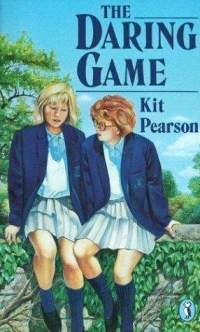
the daring game kit pearsonThe Daring Game by Kit Pearson ~ 1986. This edition: Puffin(Penguin), 1987. Paperback, ISBN: 0-14-031932-8. 225 pages.

My rating: 6.5/10. Rather pedestrian writing, but a decent “school story” with a strongly depicted Canadian setting. The intended audience would likely be preteen girls.

*****

Eleven-year-old Elizabeth – Eliza – Chapman has always dreamed of going to boarding school. She’s been reading English school stories for years, and thinks that wearing a uniform, living in a dormitory, and eluding Matron while having midnight feasts would be much more exciting than going to her boring old Edmonton day school. Her parents’ transfer to Toronto for a year seems like a grand opportunity to fulfill her dream. After much persuasion, Eliza is enrolled in Vancouver’s Ashdown Academy for her Grade Seven year, and with only a minor bout of homesickness enters into communal life with great enthusiasm.

Her fellow roommates are a widely varied lot: prim and bossy Pam, meek and gentle Jean, friendly Carrie and rambunctious, unpopular Helen. Alternately horrified by and attracted to Helen, Eliza finds herself drawn into a friendship which will have some serious consequences before the year is out. The “Daring Game” of the title is invented by Helen, and though some of the dares are simple enough to carry out, the last one goes very wrong and embroils Eliza in an impossible dilemma: stand up for a friend, or tell strict the Headmistress, Miss Tavistock, what is going on.

This was B.C. librarian and veteran kidlit author Kit Pearson’s first novel, and was inspired by her own teenage years at a Vancouver private school. It’s a decent enough middle grade novel, though my own daughter set it aside after the first chapter when I brought it home for her to read during her own Grade Seven year. I read it then and wasn’t terribly enthralled either, and this second reading for the purposes of writing this review (and possibly culling the book from our shelves) hasn’t really changed my mind.

Published in 1986, but set in 1964, The Daring Game attempts to reflect the scene of twenty years earlier, and though all the references are indeed correct, perhaps not enough time had passed to make it truly interesting from a historical point of view. The characters and the situations are competently presented, but this novel remained, to my mind, rather unexceptional from first page to last. Eliza goes through all the motions, but at the end of the story I found I was more than ready to bit her an easy farewell with nary a thought about what was to come next for her.

Kit Pearson has gone on to write a number of other well-regarded juvenile novels, including  the “Guests of War” trilogy involving British children sent to Canada during World War II: The Sky is Falling, Looking at the Moon, and The Lights Go On Again, which I’ve dipped into but not read in their entirety, and a time travel story, Awake and Dreaming, which I read and enjoyed. She’s an author worth keeping in mind if you have middle grade readers looking for something with strong Canadian content and thoughtfully (but not graphically depicted) challenging situations.

While I’m not tremendously enthusiastic about The Daring Game, I will give it a mild “okay”. Worth a try; might be just what your own young reader is looking for. I’m not quite ready to pitch it yet – see why our shelves are groaning! – but will try to read a few other titles by this author before deciding if she’s indeed a general “keeper”. The B.C. connection makes it hard to be heartless, though Pearson’s titles are abundant in local libraries and bookstores, and should be easy to find for the forseeable future even if I relinquish ownership of my personal copies.

Read Full Post »

canada-reads-2013-panelists-books

Last night, with great self-congratulatory brouhaha, CBC Radio host Jian Ghomeshi introduced the Canada Reads 2013 Shortlist and celebrity panelists. This is an event I’ve watched (well, more accurately, listened to) with mild interest the last few years, but never really embraced.

I confess that I am in general deeply cynical about prizes awarded by popular vote, which is the whole premise of this literary “event”, but this year the shortlist picks seem more intriguing to me than some in the past, so I’ve set myself a personal goal of reading and reviewing all five of them. This will also tie in nicely with my participation in 6th Annual Canadian Book Challenge , hosted by John Mutford of The Book Mine Set .

I may also explore among the picks in the Long List, though I have no intentions of reading all of them. We’ll see what happens. This list will find a home in my library bag, for those days when inspiration needs a little push. I’ve already read a few (a very few) of the picks, though mostly before this blog materialized. I may re-read and review. Or not! Leaving myself wide open here.

This year Canada Reads has a regional theme, which doesn’t really work in my opinion, as there are only five extremely broad regions and geographically and philosophically I think there is more variance in truly regional Canadian literature than these limited categories allow. But no one asked me, so I guess I need to go with it.

Here’s our Long List:

B.C. & Yukon:

The Prairies and North:

Ontario:

Quebec:

Atlantic Canada:

Read Full Post »

I’ve been on a lightning trip to the coast to take the dancer to choreography sessions and to pick up pointe shoes and other arcane neccessities. It was an enjoyable and productive – if rather rushed – excursion, but I’m glad to be back home.

A few glimpses from the side of the road on the trip home today.

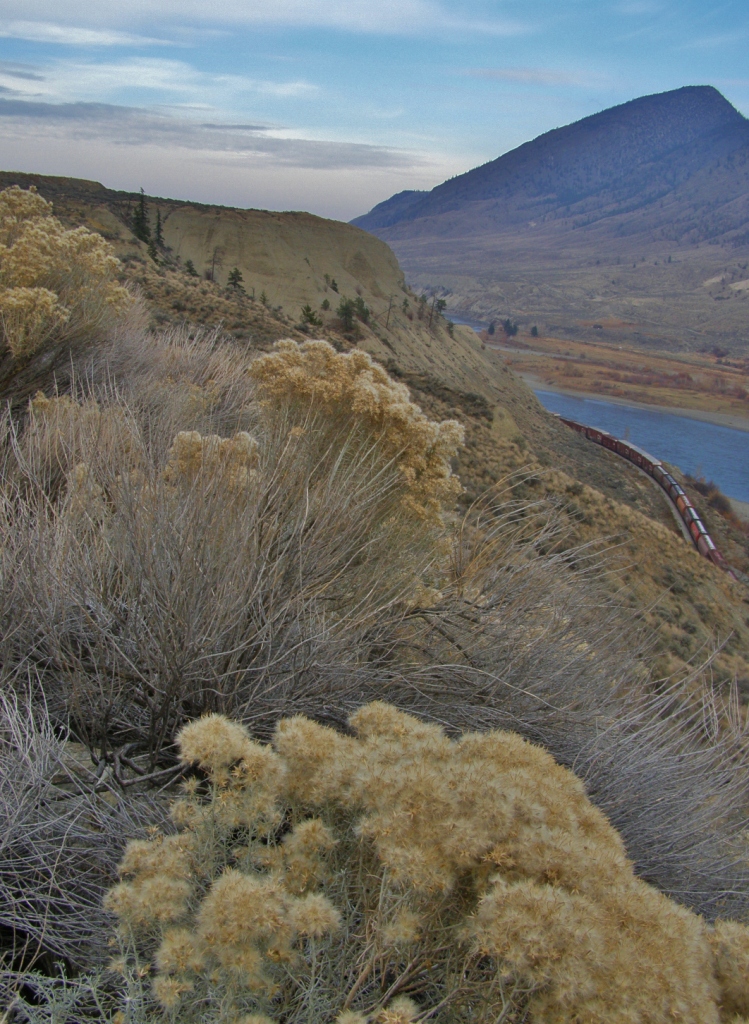
A frozen waterfall in the Fraser Canyon near Boston Bar; snow-dusted hills above Lytton; sagebrush above the Thompson River south of Ashcroft.

I would have liked to have stopped more often and taken many more photos. It was a beautiful day to be out and about –  the roads were quiet and the light was lovely – but dark comes quickly this time of year and we just made it home as dusk deepened into night as it was.

Read Full Post »

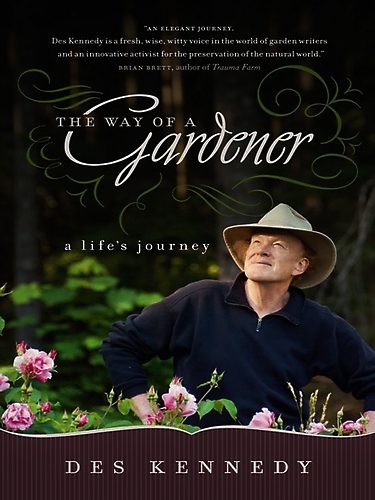
The Way of a Gardener: a life’s journey by Des Kennedy ~ 2010. This edition: Greystone Books, 2010. Softcover. ISBN: 978-1-55365-417-9. 271 pages.

My rating: 8/10. Beautifully written, but I found myself occasionally tuning out – just a tiny bit – in the later chapters. The author’s life has been so full that he just barely touches on many of the events in his later years. I would love to have seen this as a volume one of a multi-volume biography, ending at his leaving the seminary, or settling on Denman Island (one of the Gulf Islands in British Columbia’s Georgia Strait, between southern Vancouver Island and the mainland), because I think the last four decades on Denman plus all the environmental involvement could easily fill a book of its own.

*****

I remember when Des Kennedy first blipped onto my radar, through his 1990s columns in Gardens West magazine, a Canadian publication which is de rigueur reading in my fellow gardeners’ social circle. This was soon followed by my purchase of Kennedy’s first book, a collection of essays on unloved creatures – think rats, slugs, spiders and their ilk – called Nature’s Outcasts: Living Things We Love to Hate (1993),and the rest of his gardening books as they were published, the most recent, before this one, being 2008’s An Ecology of Enchantment, which hints at some of the backstory detailed in this current memoir.

He popped up here and there, speaking at a garden show, authoring an article in a gardening magazine, leading a well-advertised garden tour to Ireland – an instantly recognizable figure with his halo of unruly red hair, and his confident gaze straight into the camera.

Much has been made of his time spent as a Catholic seminarian and novice monk; Kennedy left the monastery before he took full vows after continually clashing with his superiors in matters concerning involvement with the secular and artistic world. (Kennedy was in favour of a degree of inter-mingling between the seminarians and the local population of artists, poets and musicians; his immediate supervisors were not.)

From the Greystone Books website:

A personal and revealing exploration of a life lived close to the earth, from one of Canada’s best-loved gardeners.

Called “a green-thumb rogue” (Star Tribune, Minneapolis), accomplished novelist, satirist, and garden writer Des Kennedy describes his life journey from a childhood of strict Irish Catholicism in Britain to a charmed existence amid the gardens of his Gulf Island home in British Columbia.

From his appearance as an innocent dressed in white for his First Holy Communion to his days as a young seminarian in black habit, through the Beat poetry scene in New York City and the social upheavals of the 1960s, this monk-turned-pilgrim pursues a quest for meaning and purpose.

After leaving monastic life and moving west, Kennedy takes up a new vocation in what has been called the Church of the Earth. On a rural acreage, he and his partner build their home from recycled and hand-hewn materials and create gardens that provide food as well as a symbiosis with the earth that is as profoundly spiritual as past religious rituals. Spiced with irreverence and an eye for the absurd, The Way of a Gardener ranges over environmental activism, Aboriginal rights, writing for a living, amateur wood butchery, the protocols of small community living, and the devilish obscenity of a billy goat at stud.

This book describes Kennedy’s childhood years in Liverpool, before his emigration with his family to Canada at the age of ten in 1955. Growing up in a strongly religious Roman-Catholic family, Kennedy convinced himself that a religious career was his vocation; he spent eight years studying and working towards this goal, and eventually graduated with a degree in Philosophy from the Passionist Monastic Seminary in New York in 1968.

He then left the religious life and drifted and travelled for a time, ending in Vancouver as a school teacher and social worker. There he met the love of his life, Sandy Lesyk, who has been his companion and partner ever since. In 1972 the couple moved to a rural acreage on quiet Denman Island, where they proceeded to pursue the not-terribly-simple “simple” life, building a house from salvaged materials and clearing the land to establish a large garden. The couple still live there today, and still pursue the same lifestyle, though the vegetables now share space with a unique and individualistic mature ornamental garden which has received many praises and was the site of a weekly television show in the 1990s.

Despite the title, this is most emphatically not a book about gardening. It is a highly personal memoir about the time before the gardener emerged, and a look backwards at the sometimes rough and twisted path the author travelled, before the arrival at the gates of the present very earthly “Eden”.

Those coming cold to this book, without knowing who the heck Des Kennedy is now, may wonder what it’s all about. I must confess that if I had not already had the context of knowing about the writer, I might not have found this partial autobiography as interesting as I did.

Definitely recommended for those already familiar with this author, as it gives a marvelous insight into the background of this mesmerizing British Columbia gardening and environmentally “green” figure.

Read Full Post »

« Newer Posts - Older Posts »