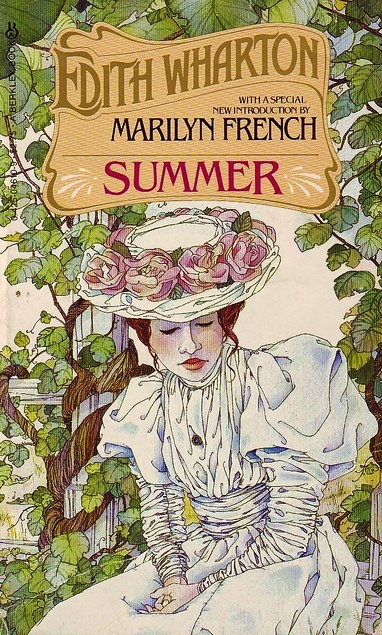
summer edith whartonSummer by Edith Wharton ~ 1917. This edition: Berkley, 1981. Introduction by Marilyn French. Paperback. ISBN: 0-425-04610-9. 205 pages.
My rating: 8.5/10

I couldn’t quite remember how many years ago I read this novel for the first time, but from the bookstore stamp (The Emporium – “New and Old” – Olds, Alberta) it must have been back in the late 1980s.

I have retained favorable memories of this rather Thomas Hardy-esque story right up until my re-reading this past week. There were a few gaps and blurring of details which I hadn’t remembered, but in essence my impressions of the book were identical this time around.

This was one of Edith Wharton’s favourites among her novels, according to Marilyn French’s Introduction, which I read, as is my habit – I prefer to come to my reading without too much prior analysis, as a rule – only after I’d finished the book.  Summer nonetheless has not been viewed as one of Wharton’s major accomplishments. It is a slight thing compared to her masterworks such as The Age of Innocence and The House of Mirth, but it shares with those the same elements of examining how characters are trapped within a closed society’s defined roles, and, even more deeply examined, their moral struggles surrounding surrender to romantic and sexual desires.

Summer’s heroine is Charity Royall, foster child of one of her small, rural New England village’s leading citizens, Lawyer Royall. Charity is just that, a charity-child, brought into the village from the nearby “Mountain”, a loose community of social outcasts. In the words of Lawyer Royall:

“The Mountain? The Mountain?… Why, the Mountain’s a blot… That scum up there ought to have been run in long ago—and would have, if the people down here hadn’t been clean scared of them… there’s a gang of thieves and outlaws living over there, in sight of us, defying the laws of their country. Why, there ain’t a sheriff or a tax-collector or a coroner’d durst go up there. When they hear of trouble on the Mountain the selectmen look the other way, and pass an appropriation to beautify the town pump…”

Charity is now nineteen years old, and has been living alone with her foster father since her foster mother’s death some years ago. She’s a dark-eyed, dark-haired, lushly lovely young thing, poised on the brink of womanhood; her main emotion is of frustration at the bleakness of her present life, and the absence of any sort of prospects. Since her foster father’s tentative advances one night some time ago, Charity has made a few changes in her life. She’s approached the town’s most prominent citizen (after Lawyer Royall), Miss Hatchard, and asked for a position as librarian in the dusty little library; Charity hopes to earn enough money to get out of town, though her actual plans are nebulous. An elderly woman has also been hired to live in and provide chaperonage; Lawyer Royall, notoriously tight-fisted, has been shamed into paying for this after his alcohol-fueled faux pas.

When a handsome young relative of Miss Hatchard’s unexpectedly shows up one bright June day, Charity falls hard. Her romance follows the course of the season, from innocently blushing June through the breathless days of July to full fruition in sultry August. And, predictably, to a anti-climactic close in the fall, when Lucius Harney, betrothed to another woman, must abandon his summer love to return to his real life; worlds away from Charity’s.

But Charity is, predictably, left in a decidedly compromised position. Though her foster father and neighbours are willing to turn a blind eye to her summer love affair, the souvenir her lover has left her will change her life completely. If, that is, she doesn’t take steps to rid herself of her liability.

What a fascinating glimpse of early 20th century women’s private lives this story gives! The discussion about young women “losing their virtue”, and the choices then open to them is frank and vivid, even though voiced only in  Wharton’s veiled allusions. Charity visits an abortionist, a woman doctor who specializes in helping women deal with their indiscretions – for a price – and, once her pregnancy is confirmed, greatly surprises the doctor by her next decision.

This is a story that hangs greatly on a series of coincidences; it is abundantly obvious that the author has planned her narrative carefully; every incident has a connection to the whole. A brief meeting in chapter one, or a mention of a seemingly minor event or a character’s idiosyncrasy is invariably followed up later on. And much as I appreciated Wharton’s meticulous approach, after a while I started looking for those connections; I ended my reading with a strong sensation of having read something completely contrived and separated from any sort of organic flow.

This novel felt like the author deliberated every last word. Is this a good thing? Well, in my opinion, sort of. As a piece of literary art this sort of hyper-detail can certainly be appropriate, but as a reader I found myself becoming aware too often of the creative master hand; it did disturb the narrative flow as I increasingly mulled over the place of each incident in the broader web.

Summer is often referred to as Wharton’s “erotic novel”, and the description is apt, if one considers that the most powerful eroticism comes from one’s own mind, as the reader builds an emotional picture upon open-ended suggestion. We never get the actual details of what Charity and Lucius are up to, but it’s very obvious what is about to happen every time the curtain of propriety drops; Charity’s general state of being at the beginning of the novel can rightly be described as “ready for love”; her naturally sensuous nature (sensuous in the most genuine sense – she glories in every physical and emotional stimulus around her – the warmth of the sun, the feel of the wind, the fragrance of flowers, the sight and texture of a piece of lovely fabric) leaves her open to the experience of sensual (and ultimately sexual) pleasure when at last she has the opportunity in her more than sheltered life.

What Charity is not is any sort of an intellectual. Despite her librarianship, books leave her cold, and her foster father’s and lover’s lively shared conversations bemuse her completely; she escapes their verbal gymnastics by quiet emotional retreat into her own small inner world which is governed by feelings rather than ideas. But when ideas do start to form, Charity’s actions are gloriously individualistic. She becomes completely self-centered in her responses to the situations she finds herself in, moving by sure inner instinct rather than by “appropriate” societal response.

The novel’s ending (which I am not going to reveal in detail; I do think this is a novel which rewards a reader’s personal discovery) and Charity’s ultimate decision regarding herself and her unborn child is surprising, and could, to some, be easily seen as a failure on the author’s part to allow her character to continue on her path to personal self-fulfillment. This is, naturally, as seen by our 21st Century eyes. But Charity is not of our time; she is doing the best she can in the place she comes from; I don’t believe it is fair to judge her actions and decisions in light of the choices women have a century later. I came away feeling that Charity’s future might well be a reasonably content and fulfilling one, though doubtless many will not agree, seeing her fate as infinitely dreary, with regards to “happiness” as we might define it today.

A must-read for anyone who has dabbled in Edith Wharton’s more prominent pieces, and an excellent summer read (so appropriately titled!) for the connoisseur of vintage fiction.
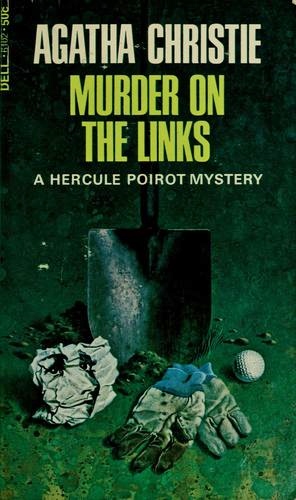
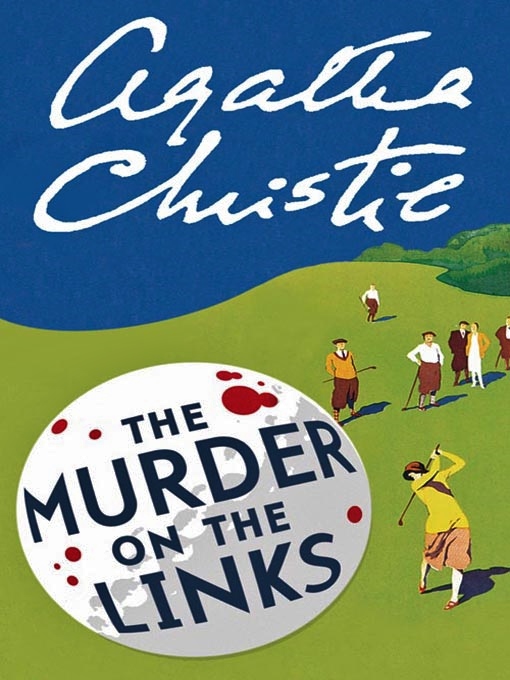
Tthe murder on the links agatha christie 1he Murder on the Links by Agatha Christie ~ 1923. This edition: Dell, 1967. Paperback. 224 pages.

My Rating: 7.5/10

Setting: Mostly in the vicinity of Merlinville, France, at the estate of expatriate English millionaire Mr. Renauld.

Detection by: HERCULE POIROT with continual accompaniment and occasional assistance by CAPTAIN HASTINGS. A fellow detective, MONSIEUR GIRAUD of the Paris Sûreté, is in official charge of the case; he and Poirot despise each other instantly.

Final Body Count: 2

Method(s) of Death: STABBING – both times with a paper knife made from airplane wire. (But all may be not as it as first seems.)

100 Word Plot Summary:

Hercule Poirot receives a panicked letter from an English millionaire living in France: “For God’s sake, come!” Poirot and Hasting hasten to France, but arrive mere hours after Mr. Renauld’s stabbed corpse is found, in a half-dug grave on the unfinished golf course next to his estate. Mrs. Renauld is found bound and gagged in her bedroom; two bearded thugs are the suspects. But why can’t they be tracked? Why was the dead man’s son secretly in the neighbourhood that night? And what is the connection with a number of beautiful women who continually pop up, including Hastings’ latest crush?

*****

The author hits her stride with this excellent murder mystery, packed as full of red herrings as a 1920s’ millionaire’s wall safe is of banknotes. (Or secret documents.) And yes, this time we are dallying with a millionaire, albeit a very dead one, with a suitably convoluted past.

Captain Hastings and Hercule Poirot, after forging a friendship while jointly dealing with The Mysterious Affair at Styles, are now sharing a London flat. Hastings is acting as a private secretary to a M.P., while Poirot employs himself as a private detective, chasing down lost lap dogs and stolen pearls for the wealthy dowager classes. Neither is particularly content with the status quo, so when a letter comes from a certain wealthy financier, Mr Renauld, formerly of England, Canada and Chile, now residing in France, referring to his life being in danger and a secret that he possesses, and begging for Poirot’s immediate aid, the bait is taken.

Across the Channel they go, only to find that they are mere hours too late. Mr. Renault is already dead, stabbed and left to die in a partially dug grave on the golf course under construction next to his country estate. (And, or the record, the site of the murder is the only connection this story has to golf in any way, shape or form. Please ignore all of the lurid paperback covers one will find with the body dressed in plus fours, or with a golf club or golf balls or any such nonsense. No one has played on the course yet! It is under construction! The title picks up on the most minor element of the story; careless illustrators assume something which isn’t in the story.)

Where was I? Oh, yes. The plot.

So: Mr Renauld is dead; his wife has been found tied and gagged in their bedroom. She claims that two bearded men tied her up and abducted her husband, and at first the story seems plausible, especially after Mrs. Renault faints in an excess of emotion after viewing her husband’s body. But there are just a few loose ends. Where did the bearded men come from, and where have they vanished to? What is the “secret” referred to in the letter to Poirot, and by the abductors? What part did the Renauld’s son Jack play in the events of the day leading up to the murder? Why is the elegantly mysterious neighbour’s beautiful daughter so anxious? Who was really dallying with the lovely young acrobat whom Hastings has already met back in England, and who shows up most unexpectedly at the site of the murder? And what’s all this about a SECOND body???!

The characters in general are not particularly sympathetic or memorable; the victim(s) and the criminal(s) appear as stereotyped set pieces, included merely to move the puzzle along. The egotistical French detective, Monsieur Giraud, pops in and out to sneer at Poirot and muddle the clues, but I could not even bring myself to dislike or scorn him; he just “was”, as manufactured a plot element as the murdered man, himself merely a lay figure labelled “the body”. The person I liked the most here was Poirot himself; I came away from this story with an increased appreciation both for his intelligence and his sense of humour. Hastings appears even more of a buffoon in this novel than he did in the Styles case; his actions in several cases act in direct opposition to the true murderer being discovered, at least in the short term. His romantic impulses were in full bloom throughout; only Poirot’s continual gentle mockery kept them in perspective to the reader, if not to Hastings himself.

Agatha Christie in this, only her third mystery novel, creates a most convoluted plot. She provides all of the needed clues, holding nothing back, but it will be a clever reader who guesses the true solution before the big reveal at the end. I had read this novel several times in the past, but even then could not quite get it sorted out until the final events, when my memory revived and I said to myself, “Of course!” Click, click, click, and it all makes a completed picture.

Final analysis: a strong puzzle mystery, well thought out, and an enjoyable light read ninety years after its first appearance.

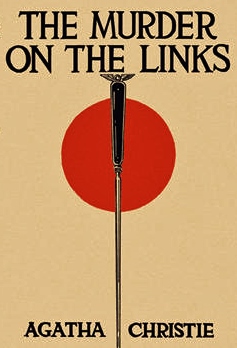
Elegantly simple is this first edition cover from 1923.

Elegantly simple is this first edition cover from 1923. (And not a golf ball in sight!)

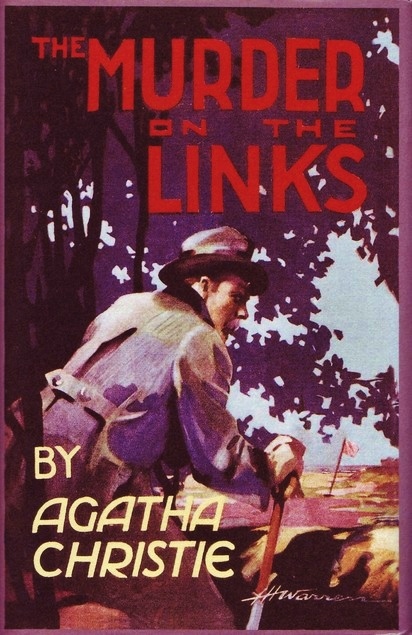
This is another 1920s' cover, nicely indicative of the plot within.

This is another 1920s’ cover, nicely indicative of the plot within, though I have my qualms about that flag on the golf course; it really shouldn’t be there, considering that the links are still under construction, and no one is golfing there yet.

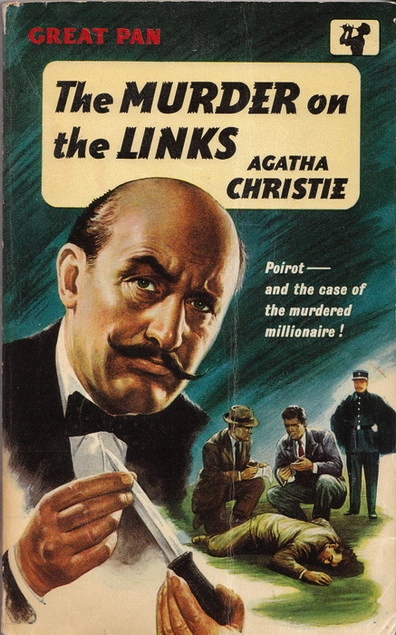
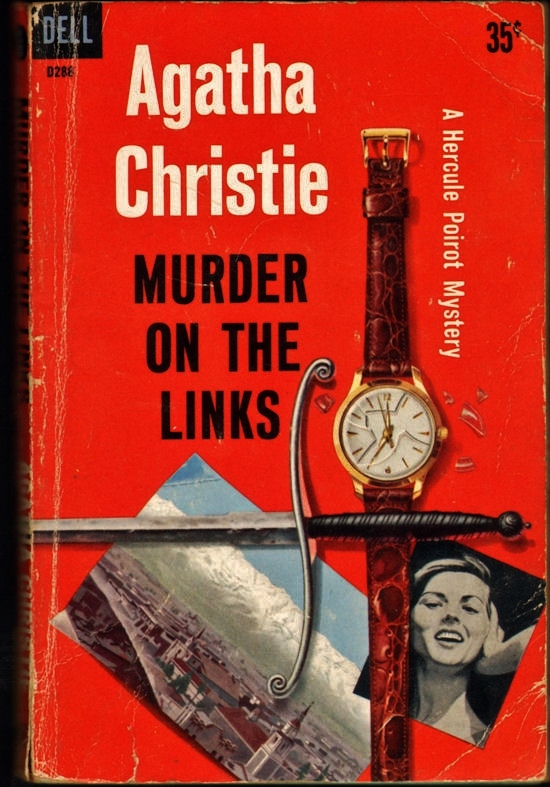
Jumping ahead several decades, this paperback cover at least does not include a golf ball. Our brilliant detective features prominently, little grey cells working furiously, one would assume from his serious expression.

Jumping ahead several decades, this paperback cover at least does not include a golf ball. Our brilliant detective features prominently, little grey cells working furiously, or so one would assume from his serious expression. My only major issue with this one is the dagger itself; in the story it is a letter opener made of airplane wire, a war souvenir. Check out the first cover for what it might really look like.

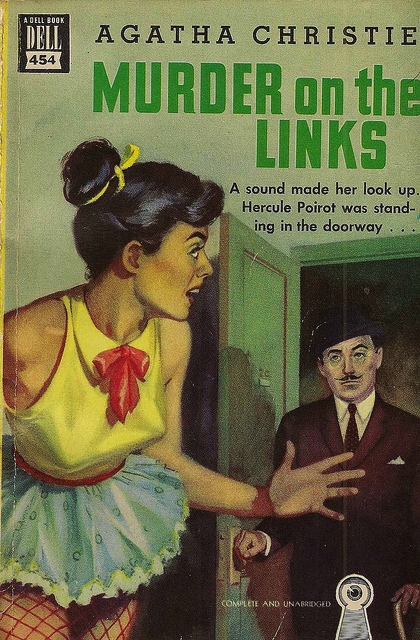
Ooh, la, la! Poirot confronts one of the beautiful women who so abundantly decorate the story. This particular one is Hastings' acrobatic charmer. I am rather uneasy about the era-correct authenticity of that stage costume, but I doubt it was a strong consideration with the artist; he was more interested in the physical attributes of the girl in question, don't you think?

Ooh, la, la! Poirot confronts one of the beautiful women who so abundantly decorate the story. This particular one is Hastings’ acrobatic charmer. I am rather uneasy about the era-correct authenticity of that stage costume, but I doubt it was a strong consideration with the artist; he was more interested in the physical attributes of the girl in question, don’t you think?

A nice collection of clues presented here, in this still more recent (1970s, perhaps) paperback cover.

A nice collection of clues presented here, in this still more recent (1960s, perhaps) paperback cover.

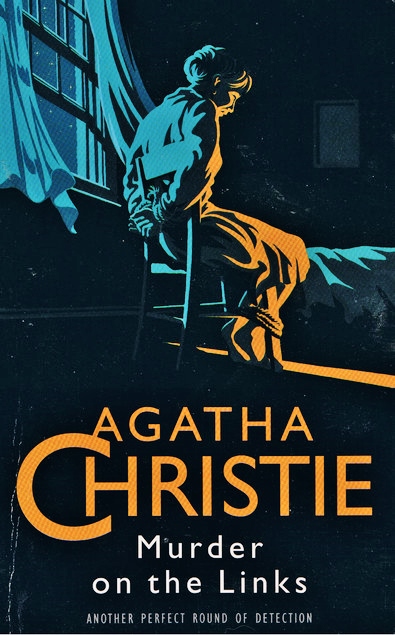
A modern cover illustration, very classy in its detailed simplicity, and focussing on a key plot element which other cover illustrators have seemingly ignored until now.

A modern cover illustration, very classy in its simplicity, and focussing on a key plot element which other cover illustrators have seemingly ignored until now. (There’s no gag, though – my only complaint. Details, details!)

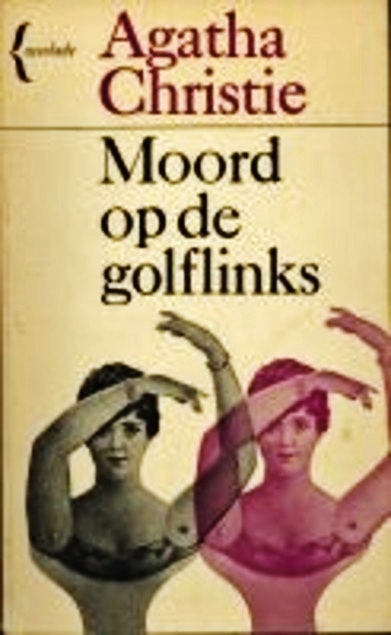
And here, as a sort of cover illustration bonus, is a Dutch cover illustration. This is a very clever one indeed, and the cover designer picked up on a major clue, which you will appreciate once you've finished the story. Very nice, and possibly y favourite cover of all, right up there with the simple dagger of the first edition pictured at the start of this cover art gallery.

And here, as a bonus, is a Dutch cover illustration. This is quite clever, and the illustrator picked up on a major clue, which you will appreciate once you’ve finished the story. Very nice, and possibly one of my favourites, right up there with the simple dagger of the first edition pictured at the start of this cover art gallery.

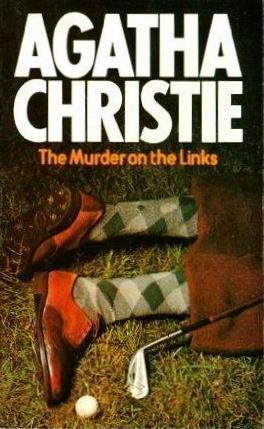
And here, at the bottom of the collection, is an entry for the Hall of Cover Illustration Shame. A completely wrong depiction of the scenario and the corpse. Maddening!

Now for an entry for the Hall of Cover Illustration Shame. A completely wrong depiction of the scenario and the corpse. Maddening!

And this contemporary illustration, which gets it completely wrong as well. The only thing the least bit appropriate is the period attire, but otherwise the picture is completely foreign to the novel. Boo, hiss.

Also shameful is this contemporary illustration, which gets it completely wrong as well. The only thing the least bit appropriate is the period attire, but otherwise the picture is completely foreign to the novel. Boo, hiss.

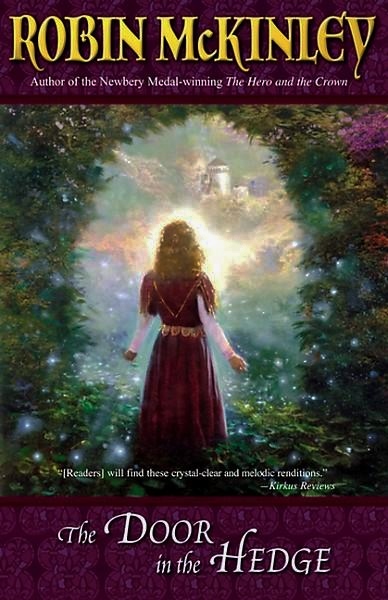
the door in the hedge robin mckinleyThe Door in the Hedge by Robin McKinley ~ 1981. This edition: Firebird (Penguin), 2003. Softcover. ISBN: 0-698-11960-6. 216 pages.

My rating: 6.5/10.

Nudged on by a comment from Jenny (of the former Jenny’s Books, now all spiffed up and better than ever at Reading the End) on my yesterday’s post about Robin McKinley’s later book of short stories, A Knot in the Grain(1994),  I temporarily sidelined (again!) the Agatha Christie (The Murder on the Links) that I was sporadically reading and settled down to a power read of The Door in the Hedge instead.

I knew I’d read this collection of four short fantasy-fairy tale retellings before, but I honestly could not drag up any strong memories regarding it, just that I had mentally filed it in the “wordy” category of McKinley’s writings. And this re-reading proved me right on that count, though I was pleasantly surprised to find that the two stories Jenny liked the most, The Princess and the Frog, and The Twelve Dancing Princesses, were really pretty darned good, and my own favourites of the collection, too.

This was Robin McKinley’s second published work, after her very well-received first novel, Beauty (1978), which was a creative retelling of the Beauty and the Beast fairy tale. The four stories in The Door in the Hedge follow that same pattern, though two of the stories are touted as original creations, versus re-imaginings.

The Stolen Princess

The last mortal kingdom before the unmeasured sweep of Faerieland begins has at best held an uneasy truce with its unpredictable neighbour…

And that uneasy truce is occasionally broken, with the abduction of the occasional child; a rare occurrence, indeed, but frequent enough to be always a nagging “maybe” in the minds of all parents. The faeries (for it must be them) are most interested in baby boys from birth till their first birthday, and in teenage girls in the first flower of blossoming womanhood, between the ages of sixteen and nineteen or so. And they always take the best: the most perfectly formed, the beautiful, the kind, the accomplished,  the wise. Who are never, ever, seen again…

So when the beloved king and queen of the mortal country produce a lovely princess, we just know that this is not going to end well. The princess is predictably spirited away on the eve of her seventeenth birthday, but this time, instead of just casting up hands and sighing forlornly, as this fantastical country’s parents are wont to do in these circumstances, the royal couple set off in pursuit, seeking to find the elusive boundary between the two realms, which, of course, proves to be the titular “door in the hedge”.

A not particularly original “original” tale; seriously overwritten in places, and with an overwhelmingly sweet ending, with every conceivable loose end neatly tied up.

The writing has moments of originality and great readability; the characters are quite genuinely likeable as well as being too beautiful, kind, gifted, nice, etc. for words, but the whole package oversteps my personal tolerance for tis kind of thing. On a scale of 1 to 10, I fear this one gets only an unenthusiastic 4 from me.

The Princess and the Frog

The princess in this case loses a terrible gift from a sinister suitor; a necklace of cloudy grey stones which emanates an awful power. She is afraid to admit she has dropped it in the garden pool; who knows what consequences her carelessness will bring?

She knelt at the edge of the pool and looked in; but while the water seemed clear, and the sunlight penetrated a long way, still she could not see the bottom, but only a misty greyness that drowned at last to utter black…

What a grand contrast this piece is to the first. This is a retelling of the well-known tale in which the young princess loses her golden ball, and then reluctantly adopts the helpful frog as a companion. In this version the princess is older, and she loses something much more crucial; the frog is welcomed with gratitude after his assistance, and the complexities of the scenario are rather more interesting than the usual morality tale about always keeping promises which the original is too often preachily presented as.

The helpful frog has a sense of humour; the princess is the antithesis of the spoiled little rich girl she is usually portrayed as; the suitor is gorgeously wicked; the denouement is absolutely predictable but yet with an element of surprise in the instinctive cleverness of the princess.

Well done, Robin McKinley. I hereby award this story a very respectable 9/10.

The Hunting of the Hind

This is the second “original” tale in the collection; “original” is in quotation marks because it contains strong traditional elements, though Robin McKinley has put together a story that goes in its own direction.

Here we have a beloved prince who becomes infatuated with a quest to follow and confront a beautiful golden deer which appears suddenly to hunting parties. The catch here is that every time someone rides off in pursuit, he comes home disappointed and forever marked by his pursuit; an deep depression descends upon him and he is never the same. Several men have nor returned; the worst is assumed.

The prince follows the deer, comes home raving, and slides into a feared-to-be-fatal decline. His younger half-sister, the kingdom’s neglected princess, then goes off on her own quest to solve the mystery, and to save her brother’s life.

I don’t think it will be a spoiler to mention that of course she succeeds.

This was the weakest tale of the four, to my mind. The characters never came to life; their actions are clumsily presented and then glossed over, and much is asked of the reader in order to accept the progress of the narrative; it never really worked for me. Too many “glowing eyes” and “tall stallions” and (not really explained) “malicious spells” and a weird (and also unexplained) laying on of hands “empty your mind” thing going on at the dramatic climax. The magical happy ending inspired not a contented smile, but a desire to violently chuck the book into the nearest waste receptacle.

This one gets a 3.5/10. It had a certain early promise in the storyline, but it went way past my personal tolerance level for unexplained fantasy magic. And it was, as my daughter would say, way too mooshy at the end.

The Twelve Dancing Princesses

What a relief to turn to the last story, a retelling of the old fairy tale of the same name. In this one, Robin McKinley redeems herself after the overblown slosh of the Golden Hind thing, by presenting an extremely likeable, slightly cynical, tired old soldier as her hero. I loved this guy; he did everything right, for all the right reasons.

We never get to really know the princesses in question, aside from little glances now and again, but the story is so nicely presented that it doesn’t really matter. There is also a cloak of invisibility which has almost as much character as the hero it hides. Here’s the bit where the soldier and the cloak come together, after a predictable good deed to a typically important (in fairy tale world) innocuous-seeming old crone.

“Wait a moment,” said the old woman; and he waited, gladly. She walked – swiftly, for a woman so old and weak that she had trouble drawing up her bucket from the well – the few steps to her cottage, and disappeared within. She was gone long enough that the soldier began to feel foolish for his sudden hope that she was a wise woman after all and would assist him. “Probably she is gone to find my some keepsake trinket, a clay dog, a luck charm made from birds’ feathers that she has not seen in years and has forgotten where it lies,” he said to himself. “But perhaps she will give me bread and cheese for what she has eaten of mine; for cities, I believe, are not often friendly to a poor wanderer.”

But it was none of these things she held in her hands when she returned to him. It was, instead, a cape…”(W)oven of the shadows that hide the hare from the fox, the mouse from the hawk, and the lovers from those who would forbid their love…”

Along with the cloak the crone proffers some useful advice; the soldier files it away in his shrewd mind, and it serves him in good stead once he is locked in the bedchamber with the his king’s twelve daughters, and as he follows them to their sinister dancing floor…

Nicely done. This one rates an approving 8.5/10.

*****

Judging this collection against A Knot in the Grain, I have to admit that I personally liked the later collection better. It was a bit more astringent, and way more “clean” – in an editorial way – tighter and better edited; the writing overall was more assured, and the writer’s unique voice much more developed. And, much as I often find Robin McKinley’s writing a little too over-the-top and descriptively overwritten, I do find it interesting and admirable that she has continued to develop her style as the years go on, and to experiment with new ideas, some of which (ahem – Sunshineabsolutely loved that one, the anti-Twilight vampire novel) work out very well indeed.

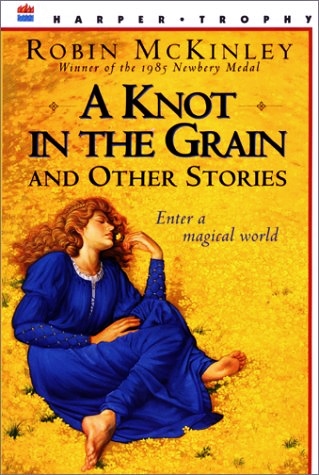
a knot in the grain robin mckinleyA Knot in the Grain and Other Stories by Robin McKinley ~ 1994. This edition: Harper Trophy, 1995. Softcover. ISBN: 0-06-44064-0. 192 pages.

My rating: 8/10, with the aside that these five short stories are über-fantasy-romantic, perhaps a tiny bit too fantastical for anyone past the age of about, oh, probably 13 or so.

Or maybe not. For anyone, teen to adult, this is total escape lit. Especially nice if you’ve already spent time in Damar.

I seriously love the cover illustration on this one, all romantically Burne-Jonesy. It’s by someone named Bryan Leister, and kudos to him, because it is perfect.

This is a collection of five short stories, three of which were previously published in other anthologies. Two are obviously set in the alternative-reality world Damar of The Hero and the Crown and The Blue Sword, two more are set in an unnamed alternative world, which could be Damar, and the last is set in the “real” world, in contemporary times. All feature completely sympathetic, strong female characters, and their male counterparts.

The Healer (1982)

The child was born just as the first faint rays of dawn made their way through the cracks between the shutters. The lantern-wick burned low. The new father bowed his head over his wife’s hands as the midwife smiled at the mite of humanity in her arms. Black curls framed the tiny face; the child gave a gasp of shock, then filled its lungs for its first cry in this world; but when the little mouth opened, no sound came out. The midwife tightened her hands on the warm wet skin as the baby gave a sudden writhe, and closed its mouth as if it knew that it had failed at something expected of it. Then the eyes stared up into the midwife’s own, black, and clearer than a newborn’s should be, and deep in them such a look of sorrow that tears rose in the midwife’s own eyes.

The baby, Lily, has been born without a voice, but she has another trait that more than makes up for that lack, at least in the eyes of the world: the gift of healing. Lily grows up beloved of her parents and ever-increasing siblings, and at the age of twelve she becomes apprentice to the midwife who was present at her birth. The two live together in love and harmony, until one day, when Lily is twenty, and she encounters a mysterious stranger on the road who can communicate with her mind-to-mind, without spoken words. Turns out that Sahath is an ex-mage, a once-accomplished master of the arcane arts, who has inexplicably lost most of his powers. One thing leads to another, and soon Lily and Sahath are sharing not just unspoken conversations but shyly blushing glances. And when Sahath puts forward the suggestion that perhaps his old mage-master could help Lily find her lost voice, the resulting journey to the mountain lake of the mysterious Luthe (yes, fellow Damar fans, that Luthe) brings all sorts of potentials to fruition.

The Stagman (1984)

She grew up in her uncle’s shadow, for her uncle was made Regent when her father was placed beside her mother in the royal tomb. Her uncle was a cold, proud man, who, because he chose to wear plain clothing and to eat simple food, claimed that he was not interested in worldly things, but this was not so…

The princess grows up under the oppressive shadow of her quietly malicious uncle, until, on her name day, when she is to be declared queen, she is instead offered as a living sacrifice to the mysterious Stagman, half-man, half-deer, who has been summoned forth by the Regent’s magicings in a swirl of ominous storms. The people of the kingdom raise no objection to the sacrifice of their princess; it is well known that she is a poor thing, of weak mind, for has not the Regent himself tried his hardest to educate her, without notable success? Into the cave then goes the maiden, to be chained to the stone wall to await her sacrificial fate. But things don’t go quite as the Regent has planned…

Luthe reappears in this story, offering succour to the Princess Ruen, unnamed until the end of her desperate journey to the inevitable mountain lake.

Touk’s House (1985)

In the best fairy tale tradition, a woodcutter steals into a witch’s garden for herbs to save his beloved youngest daughter’s life, is caught, and forfeits his next child to the witch, who claims she wants an apprentice to pass along her herb lore to. And then, still in best fairy tale tradition, things do not turn out as one would anticipate. For starters, the child in question, young Erana, has absolutely no aptitude for messing about with plants…

That’s all I’m going to say about this one; it is quite delightful, and my favourite story of the five in this book. You’ll just need to read it for yourself! (And, one more thing, because it’s by Robin McKinley – you probably don’t need me to tell you this – but it predictably morphs into a love story.)

Buttercups (1994)

There was an old farmer who married a young wife…

… but contrary to predictions, all goes well. At least until the farmer’s curiosity arouses a sleeping power emanating from Buttercup Hill…

A lovely story of a May-December romance, with two genuinely good people at its heart. A rather unusual story, this one, which doesn’t turn to tragedy as it so easily might in another author’s hands.

A Knot in the Grain (1994)

The last story in the collection returns from not-quite-here lands to contemporary times. High school student Annabelle reluctantly accompanies her family to their new home in a quiet New England town. She’s left all of her lifelong friends behind, and is having a hard time finding her new groove. Spending her summer visiting the library and rereading childhood favourites (thus giving the author a nice venue for mentioning her own favourites, from E. Nesbit to Mary Norton to Diana Wynne Jones, with a tiny shameless plug for McKinley’s partner, fellow author Peter Dickinson – I admit I chuckled a bit at that one, though I’m not much of a Dickinson fan) Annabelle is just plain ready for something to happen.

Which it does. One day, while staring at the ceiling in her attic hideaway, Annabelle notices an interesting knot in the wooden beam, which turns out to be the key to a hidden staircase, and another room. And in the room Annabelle finds a box. A box full of… well, I can’t tell you. (Nor can Annabelle.) But interesting things transpire, in a low-key sort of way.

A cute story, with a very likeable bunch of teenagers, including our heroine. Very nice. Just a titch too good to be true, though? (Says Inner Cynic.) Well, nice is a legitimate state of being, too…

*****

I feel like I should say something to sum up this collection. It’s a competently written group of stories, and very typical of the author’s early work, before she got into the edgier, darker, more adult realms of Deerskin and Sunshine. These fairy tales are aimed at the young teen reader and up, and the first four are strongly tinted with the veiled eroticism which is present in all of her longer novels. These heroines definitely all have hidden depths, and their male counterparts tend to be of the smoldering passion, glance-full-of-meaning type. Nothing to make one even blush, but it’s definitely there.

All in all, there’s not much to criticize. No masterpieces here, but it definitely should be on the shelf of every McKinley fan. I find myself rereading this one every so often; one day I’ll replace my battered ex-library paperback discard with a better, preferably hardcover copy. So – probably a recommendation, if you need it!

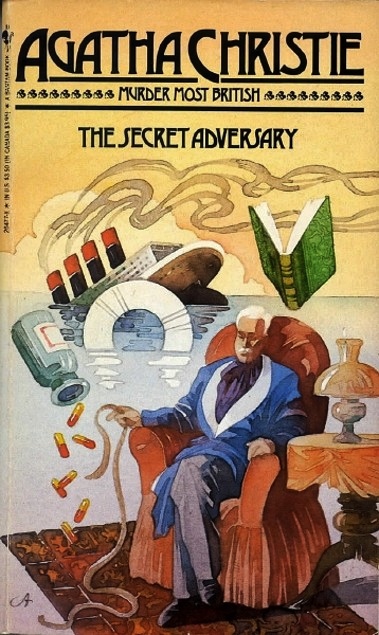
the secret adversary agatha christie 2The Secret Adversary by Agatha Christie ~ 1922. This edition: Bantam, 1986. Paperback. ISBN: 0-553-26477-X.  215 pages.

My Rating: 7/10

Setting: Mostly London, with a few excursions into the countryside; immediately post Great War, 1919.

Detection by: Thomas Beresford (TOMMY) and Prudence Cowley (a.k.a. TUPPENCE)

Final Body Count: 2

Method(s) of Murder: POISON – death #1 from an overdose of chloral , and death #2 by cyanide

100 Word Plot Summary:

Who is Jane Finn, and why has she vanished after escaping from the sinking Lusitania with a secret document entrusted to her by its doomed courier? That paper could have changed the course of the war, but why is the British Secret Service still keen to recover it now, 5 years later? Why the competing hunt by a group of Bolshevik anarchists, led by the mysterious “Mr Brown”? Tommy Beresford and “Tuppence” Cowley, newly demobbed and desperate for jobs, join forces and market their services to Jane Finn’s rich American cousin, whose interest in her seems just a little overenthusiastic…

*****

Agatha Christie’s second published work is a slightly more ambitious story than The Mysterious Affair at Styles; and it’s changed in style as well: dramatic thriller rather than sedate country house murder mystery. The tone is breathless, the plot improbable, the villains all degrees of wicked (urbane to thuggish), and the “women in question” suitably mysterious – as well as stunningly beautiful. What a grand little period piece of colourful writing, silly though the whole scenario is.

Here’s the devious (and exotically lovely)  Mrs Vandemeyer, who, incidentally, knows more about “Mr Brown” than is healthy for her long-term survival:

A woman was standing by the fireplace. She was no longer in her first youth, and the beauty she undeniably possessed was hardened and coarsened. In her youth she must have been dazzling. Her pale gold hair, owing a slight assistance to art, was coiled low on her neck, her eyes, of a piercing electric blue, seemed to possess a faculty of boring into the very soul of the person she was looking at. Her exquisite figure was enhanced by a wonderful gown of indigo charmeuse. And yet, despite her swaying grace, and the almost ethereal beauty of her face, you felt instinctively the presence of something hard and menacing, a kind of metallic strength that found expression in the tones of her voice and in that gimlet-like quality of her eyes.

Gimlet eyes and indigo charmeuse; obviously up to no good. Beware!

Young adventurers Tommy and Tuppence are a rollicking change from the pompous Poirot and sober Hastings of her first novel; Agatha Christie was to follow The Secret Adversary with four other books featuring the pair, spaced throughout the years, with the characters aging appropriately.

Though I found this an amusing enough read, with plenty of nostalgia value, I couldn’t quite buy into the whole Bolshevist plot side of things; too many vagaries and improbabilities. (Even at my first reading as a young teenager, I recall a feeling of cynical disbelief; this was never one of my favourite Christies.) But so much scope of course for all sorts of shenanigans – secret identities, people vanishing, other people being tied up in windowless rooms, threats of torture, beautiful girls, invisible ink, car chases, shots fired that just miss our heroes – it’s all in here.

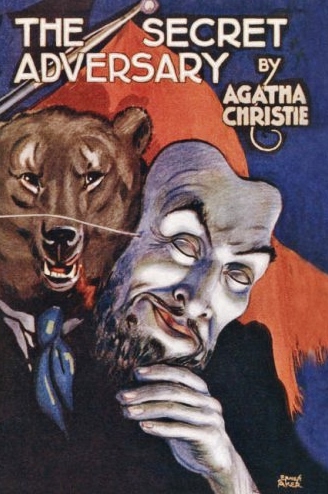
An early dustjacket - possibly from the first edition. Note the red flag and the Russian bear behind the mask of "Mr Brown"!

An early dustjacket – possibly from the first edition*. Note the red flag and the Russian bear behind the mask of “Mr Brown”! (February 2017 – A reader has just commented that this is not the first edition cover; that one apparently has a picture of a woman – presumably Jane Finn? – on it. I’ll keep an eye out for that one in my internet travels.)

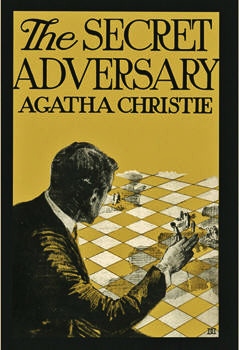
Another early dustjacket, with "Mr Brown" as the chess master moving his human pieces about the board.

Another early dustjacket, with “Mr Brown” as the chess master moving his human pieces about the board.

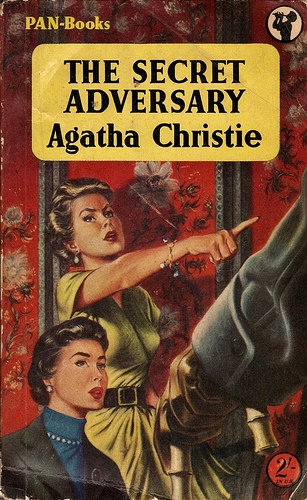
Tuppence with a tidy hairdo and a string of pearls; her companion much more appropriately tousled, considering the revolver covering them both... I'm guessing 1950s for this dramatic paperback jacket.

Tuppence with a tidy hairdo and a sedate string of pearls; her companion just a wee bit more appropriately tousled – though not much, considering the threatening figure in the foreground!  I’m guessing 1950s for this dramatic paperback cover.

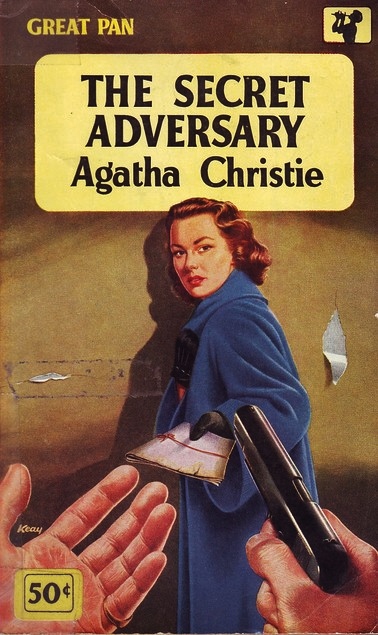
Another view from behind the handgun.

Another Pan paperback, this one for the North American market, and possibly released a few years later than the one just above. Great villains-eye view from behind the handgun.

I couldn't resist including this gorgeous paperback cover, from a French edition.

I couldn’t resist including this rather elegant paperback cover, from a more recent (I’m guessing 1970s or 1980s) French edition.

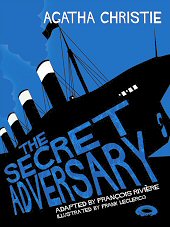
And from 2008, the cover of a graphic novel version, playing up the Lusitania connection.

And from 2008, this attractive poster-like cover of a graphic novel version, playing up the Lusitania connection.

Here’s a brief personal note for those of you who have I have come, over the past year or so, to think of as my long-distance friends.

As some of you may know, I am possessed of an elderly mother in frail physical health. She has been managing to live alone in her own house, with assistance from family and drop-in Home Care services, though it was becoming apparent to all of us that this was an increasingly precarious situation.

A week ago Thursday Mom had an early morning tumble. She was unable to get up, and, having struck her head when she landed, somehow did not collect herself enough to make the attempt to push her LifeLine call button which she wears 24/7 for just such a situation. She was on the floor a good five hours before we twigged that there was something wrong – when she missed her regular morning check-in call to me – and by the time we found her she had lost a lot of blood and was hypothermic.

She was ambulanced in to the hospital, warmed up and stitched up and rehydrated and given several units of blood; luckily nothing was broken, though she was very sore and bruised all over. She was coming along reasonably well – sitting up in bed, complaining mildly about the hospital food, and zipping through a book a day, and we were looking into convalescent arrangements for her, when she (not unexpectedly – she’s been rather crackly in the lungs even before her fall) developed pneumonia. She’s now on a course of antibiotics which seems to be helping limit the progression of her infection, but she’s very tired, has no appetite, and is generally not looking very chipper at all. She’s still reading a bit, which is a good sign, but her progress is now just a few pages per day.

Needless to say we are all feeling a bit helpless; we’re at “wait it out” stage right now, to see which way things go. Mom’s had a previous serious bout of pneumonia, but she rallied from that after being given up on by her doctor, so we’re hoping she’ll tough this one out, too. But, realistically, she just might not.

She’s fairly comfortable, has great care in the hospital, and we’re trying to get into a new routine of balancing time at the hospital with the relentless progression of summer jobs on the farm. I am doing a lot of sitting around waiting, and am finding that there is definitely some reading time – blessed books, what a good escape from our worldly woes! – but somehow the focus on writing for the blog is harder to attain.

I have a whole slew of posts started; these will be appearing as I’m able to get them finished off; I do have bits of quiet time here and there and focussing on talking about books is a refreshing change of pace, all things considered.

So that’s where I’m at right now. Things could change at a moment’s notice if Mom has a sudden downturn, or it could be one of those long, prolonged, everything-in-limbo situations. So this post is all I’ll say (at least for now) about the situation; my book posts will likely not reflect much of this, though it will of course be constantly there in my thoughts!

It had looked like this summer would be quiet and uneventful, but life changes in a moment sometimes, setting all of our trivial human plans awry…

Inspired by this morning’s post over at Gudrun’s Tights discussing best reads of the year to date, I went ahead and picked out my own personal “Top 5”, but, sadly, could not get my reply to come through. (Apparently the comments have been acting up on the blog; I’m wondering if that’s why I can’t seem to get mine up.) So, since I already typed it all out, here is my list.

Picking a top 5 for the first half of 2013 was easy/hard. I did read some rather outstanding books. A few more than 5, actually, but here are the ones that really stood out.  I’ve only reviewed three of these; the others deserved more review time than I could spare at the time of reading, so they’ll be under more focus in future.

  •  All the Little Live Things (1967) by Wallace Stegner – Two couples at differing points in their lives become neighbours and friends in a rural California setting. The book examines love in various forms – romantic, platonic, parental – as well as the different ways individuals deal with emotional traumas and the brutal realities of too-early deaths. Sounds grim, but it is a hauntingly presented story which I found powerful, thought-provoking and ultimately comforting in its examination of ways of embracing grief and going forward. (Not reviewed yet.)
  • The Joyous Season (1964) by Patrick Dennis – another farcical period-piece (the period in question being 1960s, upper-class New York) by  Auntie Mame‘s author. Two children cope with their parents’ proposed divorce in a very “civilized” way. Mostly humorous, with a truly poignant ending.
  • The Sisters Brothers (2011) by Patrick DeWitt – I missed reading this when it was all the rage a year or two ago, but now I get what all the buzz was about. A rather twisted saga of two brothers employed as contract killers in the 1850s. Very dark, very clever, very funny. (Not reviewed yet. I might not review this one; it has been so popular that it seems a bit pointless to add my words to the many that are already out there. Can I just say that I loved this book, and leave it at that? 😉 )
  • Crewe Train (1926) by Rose Macaulay – a highly unusual, absolutely stoic English girl who has grown up in an isolated Spanish village is brought back to England by her upper-class relations after she is orphaned. The resulting cultural clashes are highly entertaining, and highlight the foibles of “accepted behaviour” in a rather cunning way.
  • Hostages to Fortune (1933) by Elizabeth Cambridge – a quiet domestic drama centered around a doctor’s wife, her marriage, and her motherhood. A keen-eyed examination of a common experience which has many parallels to family life today. The essentials never change.

To answer the other question, regarding weekend plans, oh yes – I do indeed have those! Let’s see…

Yesterday I (unexpectedly!) bought a piano in the big city several hours away; today will be devoted to getting it home. There’s also a huge family reunion going on this weekend just a few miles away; all of my husband’s relations will be convening, so I’ll be cooking for that, and attending, of course, PLUS my elderly mother who is at present incarcerated in the hospital after a bad fall last week (she’s on the mend) will need multiple visits; she’s in the small city an hour away. So driving, talking, cooking, eating – in that order – are my themes for the upcoming long weekend! (Not much reading time, I fear.)

Hope you are all having a good summer. And what have your outstanding reads been this year to date?

the mysterious affair at styles agatha christie 001The Mysterious Affair at Styles by Agatha Christie ~ 1920. This edition: Grosset & Dunlap, 1927. Fourth printing. Hardcover. 296 pages.

My Rating: 7/10

Setting: An English country House, Styles Court in Essex, sometime during the Great War.

Detection by: HERCULE POIROT, with “assistance” from CAPTAIN HASTINGS (narrator); INSPECTOR JAPP of Scotland Yard is introduced.

Final Body Count: 1

Method(s) of Murder: POISON – strychnine

100 Word Plot Summary:

When wealthy Mrs. Inglethorpe succumbs to a dose of strychnine, suspicion immediately falls upon her much younger (and forbiddingly black-bearded) second husband, Albert. But the philandering Albert has an ironclad alibi, as do all of the other members of the Styles Court ménage. Could it be the sweet young pharmacy assistant, with her easy access to poisons? Or either of Mrs. Inglethorpe’s adult sons, hard up for cash and living on their mother? Her daughter-in-law, cool and unemotional? Her lady housekeeper, outspoken and jealously loyal? Or perhaps the sinister German-Jewish doctor, who just happens to be an expert on poisons?

*****

Agatha Christie’s first published novel. Her very first, a romantic drama set in Cairo and sent out under the working title Snow Upon the Desert, was read and favourably remarked upon but ultimately refused by the publishers she sent it to.  The Mysterious Affair at Styles was inspired by her sister Madge’s comments that Agatha couldn’t possibly write a decent murder mystery. Written while working as a pharmaceutical dispenser during and just after the close of World War I, The Mysterious Affair at Styles is a classic puzzle mystery, with all clues revealed to the reader, and a generosity of suspects. The most unlikely person, of course, might ultimately be revealed as the murderer.

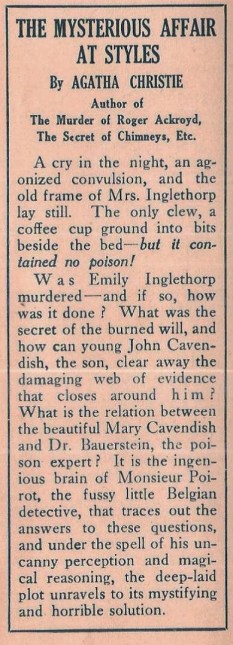
Front fold blurb from 1927 Grosset & Dunlap edition.

Front fold blurb from 1927 Grosset & Dunlap edition.

Narrated by a young Captain Hastings, who has been invalided out of active service, and is recuperating at his friend’s mother’s country home, Styles Court, the novel introduces Hercule Poirot, a finicky and eccentric Belgian ex-policeman. Poirot is living with several other Belgian refugees, and is eager to provide his investigative services when his generous sponsor, Mrs. Inglethorpe, dies mysteriously. Inspector Japp of Scotland Yard is also introduced; he and Poirot already know and like each other, and their collaboration, along with Captain Hastings’ inadvertent contributions, results in the solving of the murder plot.

Though decidedly dated and just a bit awkwardly plotted in spots, this is a very creditable mystery novel. The puzzle is truly hard to sort out; suspicion falls on each of the suspects in turn, and the ending is cleverly worked out. Poirot is not quite solidified into his final form, whom we come to know so well in future years – he was eventually to figure in thirty-three of Christie’s mysteries, and something like fifty short stories. The characters in general are puppet-like; aside from the narrator Hastings, we never get to know any of them – including Poirot – beyond their superficial appearances and stereotypical roles.

The murder itself occurs early on in the narrative, and Mrs. Inglethorpe’s horrible death is quite fully described, as Hastings is one of the witnesses. The brief mourning period for the victim is very soon over as the characters scramble to defend themselves against allegations of wishing for and ultimately causing her demise.

This is not at all a “literary” detective novel, such as those penned only a few years later by the other great “Golden Age” female mystery novelists Dorothy L. Sayers and Josephine Tey, but it is a well-constructed first attempt at the genre, and a grand little period piece, especially when considered in the context of Christie’s astoundingly prolific and successful later body of work.

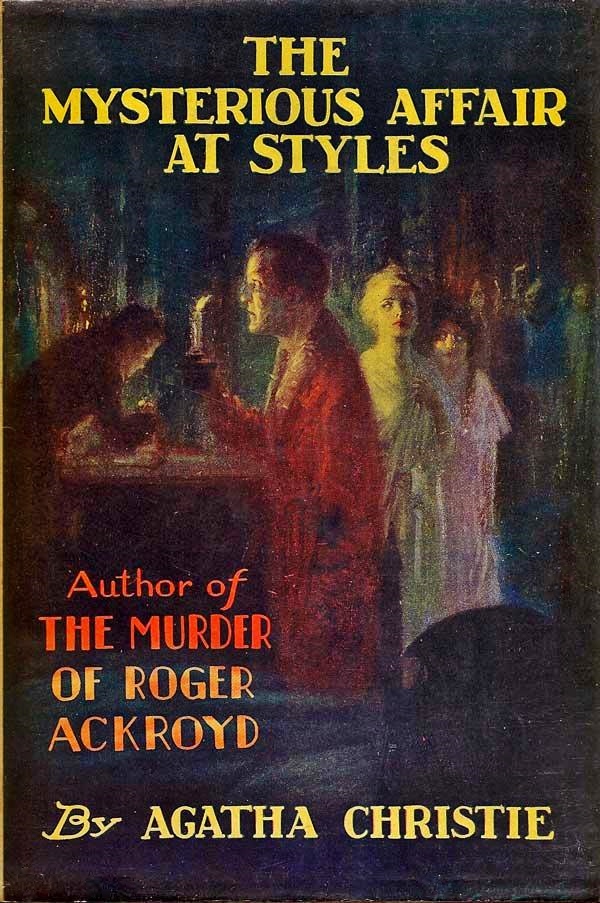
Dust jacket of the 1927 Grosset and Dunlap edition. Can you see all seven of the suspects?

Dust jacket of the 1927 Grosset and Dunlap edition. Can you see six of the seven suspects? (Captain Hastings is also present, but he is apparently never considered as a possibility, due to lack of motive, I presume.)

my discovery of america farley mowatMy Discovery of America by Farley Mowat ~ 1985. This edition: McClelland and Stewart, 1985. Hardcover. ISBN: 0-7710-6624-4. 125 pages.

My rating: 6/10.

High marks for tackling this topic with such eloquent vigour, tweaked downward for the increasingly bombastic posturings of the author, which led me to a sneaking small sympathy for his unwary opponents. As I read I could envision the froth forming at the Mowat’s mouth, perhaps dribbling down his legendary beard, too, as he raved on and on and on. (The conciliatory last chapter, where he thanks his many supporters in the U.S.A., did seem a bit calmer, and appropriately sincere.)

Oh – adding another point back on for that first chapter, in which Mowat describes his airport encounter with the Forces of American Evil, a.k.a. the INS: Immigration and Naturalization Services of the United States of America. It was a truly funny piece of writing, and for this I will forgive the annoyance Mowat so often inspires in me by his ego-driven blusterings, which, in this instance, had plenty of justification.

Okay, here’s the story. On April 23, 1985, as Mowat was setting out on a trip to the West Coast of the U.S.A. on a joint lecture/promotion tour for his just-released Sea of Slaughter (a passionate indictment of the human-caused ecological devastation of the Atlantic shores of North America), he was escorted off the plane as it sat on the tarmac, and notified that he was persona non grata in the U.S.A. Forever and for always. And no, we can’t tell you why, sir. Just go away now, sir.

Mowat storms out of the airport terminal and into the arms of his publisher, where he is met with a shared indignation exceeding even his own. “This is war!” (or words to that effect) cries Jack McClelland, and a press deluge begins, spurred on by the very recent “Irish Eyes are Smiling” Reagan-Mulroney love-fest, and assurances by both leaders that the U.S.A. and Canada are dear, dear friends.

Why does the mighty United States feel that wolf-, whale- and generally nature-loving Mr. Mowat is a security threat? And why do the words “Commie sympathiser” keep coming up, though no one will let Mowat or anyone else take a look at his secret file, the one that led to its abrupt barring from the neighbouring country?

It seems that there is a McCarthy-era law on the books, the McCarran–Walter Act, which allows such arbitrary barring on the most microscopic past “offenses”, such as visiting the USSR (which Mowat had done some  fifteen years earlier, to research his book Sibir), and – oh! that little incident in which Mr. Mowat reported a desire to shoot his .22 rifle at U.S. Air Force planes carrying (possibly) atomic warheads across Newfoundland air space…

125 pages later, not much has changed, except that Mowat is offered a “parole” to allow him a one-time entry into the U.S.A., which he scornfully turns down, “parole” implying some sort of wrong-doing.

In this post-9/11time of ever more stringent border examinations, and many more arbitrary black-listings for undisclosed reasons – “security risk” being the handy catch-all phrase – Mowat’s prior experience sounds sadly like something we’ve all heard before.

Mowat’s horrified indignation echoes so many others; his response was the one every wronged citizen dreams of pulling off. Lucky for Mr. Mowat that his celebrity and many connections allowed him to speak out so vibrantly without losing his livelihood or credibility, a real problem for so many others in the same position, as Mowat points out, and which is one of the reasons he puts forward for his strident rebuttal to his black-list barring.

An interesting read, and with chilling parallels to the situation today between the countries on both sides of the world’s longest – but for how much longer? – undefended border. The razor wire, both literal and figurative, is persistently going up.

Here, FYI, is a very partial list, courtesy Wikipedia and therefore including the related links, of some of the public figures joining Farley Mowat on the McCarran-Walter exclusion list, before its amendment (but not its dismantlement) in 1990:

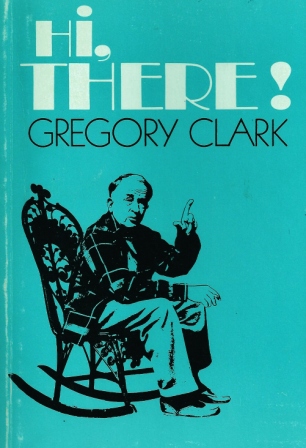
hi, there! gregory clark 001Hi, There! by Gregory Clark ~ 1963. This edition: McGraw Hill-Ryerson, 1968. Softcover. ISBN: 0-7700-6026-9. 228 pages.

My rating: 9/10. There is absolutely nothing to dislike – well, aside from, if one wants to get really nit-picky, the odd era-typical comment, such as Mr. Clark referring to his wife and presumably at least one daughter in a paternally misogynistic way as “my women” – and much to like.

This was one of my father’s books; I remember buying him other Gregory Clark titles as birthday and Father’s Day gifts; I am now wondering just where those might have ended up, as Hi, There! has piqued my interest; I’d happily read more of these pleasant (though possibly just a bit dramatized) memoirs.

These are short, 4 to 5 page, mostly humorous, meticulously well-written anecdotes and essays on various low-key topics, from winter driving (a truly Canadian focus of interest) to neighbourhood feuds to amusing encounters with all sorts of people, including a carload of bank robbers disguised as a wedding party.

Gregory Clark has a stellar backstory as an extremely well-regarded journalist. He was the recipient of both the Order of the British Empire and the Order of Canada for his war reporting, as well as receiving the Stephen Leacock Award for Humour for his collection entitled War Stories.

From The Canadian Journalism Foundation biography:

Greg Clark – Journalist 1892-1977

It was once said that in the years leading into the Second World War, more Canadians would recognize Greg Clark on the street than the prime minister or the movie hero of the day.

During the 1930s, Greg Clark was the most widely read writer in Canada, crafting features for the Star Weekly with cartoonist Jimmie Frise. His popularity continued through the late 1940s and into the early 1960s as a writer and most notably back-page columnist, for Weekend Magazine.

Nineteen books of Greg Clark’s writings, ranging from everyday life to the horrors of war, have been published. His output of stories about real people living real lives was phenomenal.

Craig Ballantyne, editorial director of Weekend Magazine, once described Clark as “a man so Canadian that no other land could possibly have produced him.” [Ernest] Hemingway, in 1920, called him the best writer at the Toronto Star.

Clark entered journalism in 1911 at the Toronto Star, where he worked for 34 years before joining the Montreal Standard, which later developed into Weekend Magazine.

He is often remembered as a columnist, but his feature and column work had been forged by years of front-page reporting. He covered the Moose River mining disaster, royal coronations, papal coronations, the death of FDR, and the founding of the UN, to name a few. He was a [frequently frontline] war correspondent in World War II, after serving in WWI, which he entered as a private and left as a major.

His contributions to journalism are many, but his most important is what his work can show other journalists about storytelling excellence. All Clark’s writings, from columns to hard front-page news, are guides to how journalists should tell stories that interest and inform readers.

His writings are real life with human touches. They have been described as “rapid, full of rhythm, unimpeded by digression.” His work was positive in the darkest situations, while still laying out the full facts and describing reality. This is an approach worth study in a time when the public feels journalism is far too negative…

More glowing biographies are here:

4th Canadian Mounted Rifles – Biography of Capt. Gregory Clark

Gregory Clark. Perhaps now a forgotten author in this new century? Fellow Canadians, remember the name for your used book store explorations; you might be very well pleased to make his acquaintance.