the rosie project graeme simsionThe Rosie Project by Graeme Simsion ~ 2013. This edition: Harper Collins, 2013. Softcover. ISBN: 978-1-44342-266-6. 329 pages.

My rating: 7/10

Aw, how sweet!

A charming beach read of a book which felt rather odd for a Canadian snow-filled January, but then I twigged that it was set in Melbourne, Australia (a reference to a character’s skimpy dress being perfect for “hot January evenings” making me sit up and pay attention) and it all fell into place.

An unusual narrator, university genetics professor Don, tells of his hyper-scheduled life, and how it all changed when he decided to locate a suitable life-partner by undertaking the questionnaire-based Wife Project in order to pre-screen likely prospects. A friend sets him up with a certain “Rosie” as something of a cruel joke; she fails the questionnaire on all counts, but even as he dismisses her from his list of potential partners, she interests him in a number of other ways.

Do I really need to go on? This book is completely stereotypical on so many counts, up to and including Don’s reinvention of himself to fit the presumed requirements of the woman he loves, and her teary-eyed insistence (after the fact) that the original him was the one she fell in love with.

Total chick flick stuff, and I thought all the way through what a perfect Hollywood romantic comedy this thing would be, which turned out to be the case – it was originally written as a screenplay. So no points for catching that.

But it works. It’s very funny, and cute and sweet and adorable and very happy-ending-ish. Also insubstantial as cotton candy, or perhaps one should say apricot ice cream – a bit zingy here and there, but ultimately mostly just sweet. Definitely not a real meal of a book, but a delectable dessert.

Many thanks to Claire at Captive Reader for recommending this; it was a whole lot of fun, and a perfect use of my Christmas bookstore gift card, and I know I will reread it when I need a bit of a pick-me-up.

I did a brief reconnaissance of other reviews, and among the many to choose from (several thousand on Goodreads, with a substantial number of high ratings) I found this one, by Ottawa writer Zachary Poole, which nicely reflected my own pros and cons regarding the story. I was quite impressed that we both rated it the same, 7/10, and my thoughts echoed Zachary’s to a T, though I must add the disclaimer that never once was I even marginally teary eyed!

Zachary Poole at Pop Matters Review – The Rosie Project

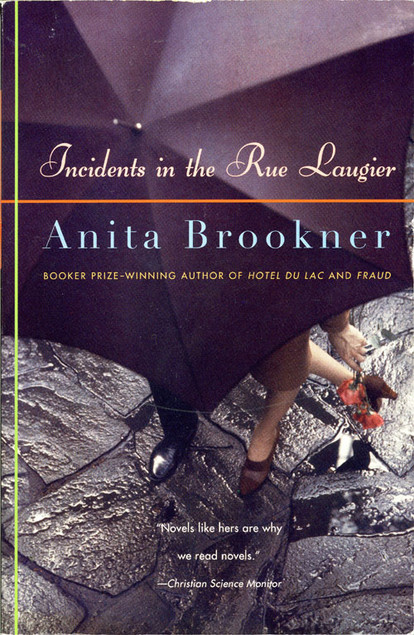
incidents in the rue laugier anita brooknerIncidents in the Rue Laugier by Anita Brookner ~ 1995. This edition: Vintage Canada, 1997. Softcover. ISBN: 0-679-30840-7. 233 pages.

My rating: 6.5/10

There is no denying that Anita Brookner is a smoothly accomplished writer, for if she wasn’t I suspect I would have quietly laid this novel aside partway through without regret. As it was I had to steadfastly avoid glancing at the many more-tempting books waiting for me on the Century of Books shelves, in order to maintain my focus on this increasingly monotone novel.

The opening chapter sets the stage. An orphaned female narrator (“my parents died years ago…”) muses on the characteristics of her mother which she has started to notice in herself:

My mother read a lot, sighed a lot, and went to bed early…

Maffy, daughter of French Maud and English Edward, goes on to set up the story. She has happened upon a notebook among her late mother’s effects. There are only a few cryptic phrases jotted on the first few pages, but Maffy is inspired by these to create a speculative biography of both of her parents’ lives.

It is a fabrication…one of those by which each of us lives, and as such an enormity, nothing to do with the truth. But perhaps the truth we tell ourselves is worth any number of facts, verifiable or not.  This unrecorded story…is a gesture only, a gesture towards my mother…who told me nothing either of what happened or what failed to happen, and how she came to live with us, so far from home.

Maud grows up in genteel bourgeois poverty, living quietly with her widowed mother and waiting the days away, passively beautiful, awaiting her future without attempting to shape it in any way. This changes when Maud meets the predatory David Tyler, holidaying in France. The two have an affair, and Maud awakens to the possibilities of love just as Tyler has had his fill of her and moves on, dumping Maud on his friend Edward, who has been watching the proceedings with jealous eyes. Edward and Maud end up marrying, and move back to England, where Edward is engaged in resurrecting a musty second-hand book shop he has inherited from a family friend. Maud stays home, keeping their apartment pristine, cooking under-appreciated gourmet meals, and otherwise spending her days reading.

And then nothing else happens. Even the birth of a child nine years into the marriage only serves as a minor blip; Maud goes through a long episode of depression, but Edward provides a nurse who remains with the family for many years, allowing Maud to drift along not really taking much interest in anything, though we realize that she does indeed love her daughter in an undemonstrative way, and that she respects and feels affection for the more passionate Edward, who has never quite forgotten that David Tyler was Maud’s first and deepest love. Anything that Edward gets is very much second best; he is willing to take it but something deep inside rebels, surfacing in his last months of life in a passive-aggressive form of personal neglect which ends in his death.

Maud hangs on four more years, until she too turns her face to the wall and drifts undramatically away.

Maffy is left to ponder the meaning (or lack thereof) of her parents’ lives, and how her own personality has been shaped by her dual heritage.

The End.

Did I like this book?

Well, “like” is perhaps too strong a word in regard to this novel. And no, I didn’t exactly like it, but I did admire it, in a shuddering “Why am I reading this? I know this will leave me feeling completely apathetic” sort of way.

There were moments of strong feeling, but these were isolated and served to emphasize the bleakness of the majority of the characters’ lives. The mood of a sultry French summer in the early 1970s and Maud’s brief sexual awakening is perfectly portrayed, and contrasts severely with the ambitionless futility of the remainder of her life, and her passive submission to everything else which happens to her from the moment David Tyler walks away. (Though farther along she pulls herself together enough to reject his advances when they meet again, showing a kernel of unsuspected pride, which kept me on her side even as she offhandedly absorbed Edward’s love without really attempting to meet him half way; passive acceptance with no overt sign of repulsion doesn’t quite satisfy, as Edward bitterly reflects.)

A beautiful bit of writing, all in shades of muted blush and grey. But not a writer whose novels I could read over and over and back to back. After reading a Brookner one needs something with more vibrancy to shake one out of the enervating trance of hopelessness which immersion in this sort of thing brings on, at least in me.

While some of the novels by Anita Brookner I read this past summer – Hotel du Lac, Brief Lives – reminded me of Barbara Pym in their rather sly wittiness, Incidents in the Rue Laugier was really like nothing I’ve yet read. It reclines in Proustian solitude on its chaise lounge with the drapes drawn against the sun, so very all alone.

Some thoughful reviews:

Roses Over a Cottage Door – Incidents in the Rue Laugier

Bibliolathas – Incidents in the Rue Laugier

Hilary Mantel’s New York Times Review – Incidents in the Rue Laugier

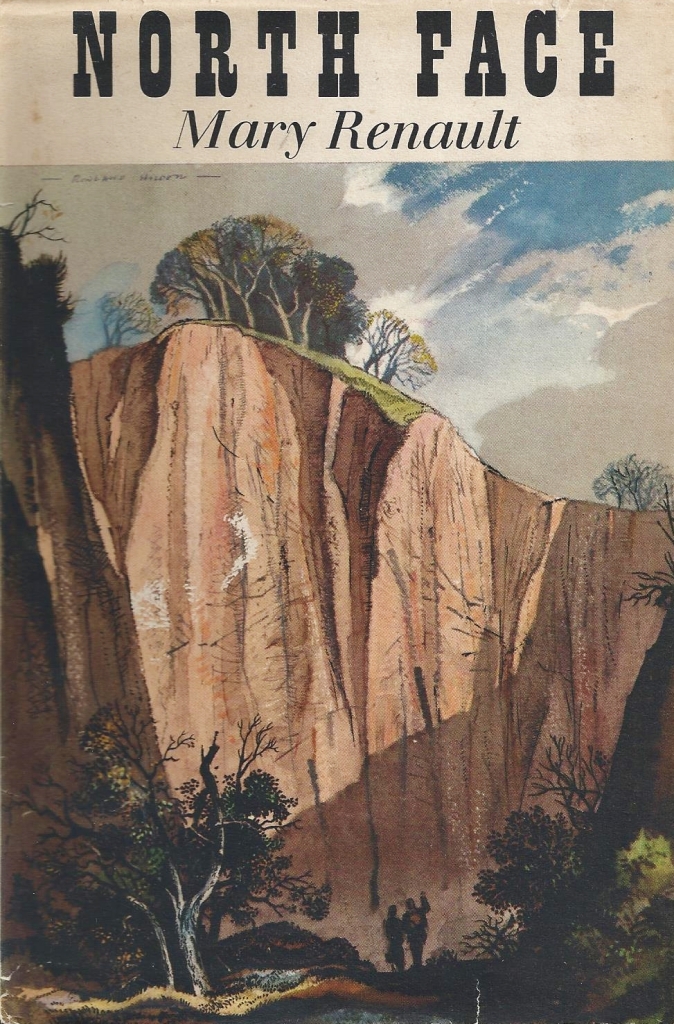
north face mary renault 001North Face by Mary Renault ~ 1948. This edition: Longmans, 1949. Hardcover. 318 pages.

My rating: 6/10

This is a little-discussed novel by the author who went on to become world renowned for her historical fiction centered on ancient Greece: The Bull From the Sea, The King Must Die, Fire From Heaven, et al. Before Mary Renault hit her stride with the ancients, she wrote a number of contemporary novels, all concerning the romantic relationships and struggles for self determination of the characters. Most featured hospital settings or nurses and doctors as characters, as the author drew on her own hospital and nursing experience for inspiration and to provide accurate detail.

North Face was Mary Renault’s fifth published novel, released in 1948 in North America (and a year later in England), just as Mary Renault was settling into a new life in South Africa, where she had moved with her partner Julie Mullard after winning a $150,000 prize from the American motion picture company MGM for her fourth novel, Return to Night. Renault was to write one more contemporary novel, the highly regarded The Charioteer (1953) before turning to ancient Greece for the inspiration of her future writing years.

The story opens in a boarding house in rural Devon, where two opinionated single women who are staying for their holidays are making each other’s acquaintance and finding each other rather unsympathetic. Miss Searle is an intellectual college don who travels with her weighty works of Chaucer, which she has been immersed in studying for the past decade. Miss Fisher is a nurse, with a hearty, rather “common” manner; she has a jolly appreciation of the realities of life, and finds Miss Searle’s fastidious air to be more than somewhat annoying.

World War II has just ended, and everyone we meet is still showing signs of the many years of emotional trauma they have experienced. Some have been wound up so tightly they are finding it difficult to return to some sort of new normal; society itself has taken a giant step sideways, leaving those slow to adapt floundering. Add to this the effects of personal tragedies, which are exacerbated by the effects of the war, and suddenly the tense atmosphere of every sort of social gathering is perfectly understandable.

The Misses Searle and Fisher unite in speculation regarding their fellow guests. They are most interested in the solitary Neil, who is abstracted and unapproachable, and spends his days trekking about the countryside with knapsack and detailed maps. A man with a secret, surely? Which is found to be true. Neil is a more than competent boys’ school teacher who has had a fairly uneventful war. Deemed an essential worker, most of it has been spent in his usual occupation, despite his attempts at joining active service. Finally he was accepted into a Service position, still in England, but far from home.

While Neil was otherwise occupied, his young wife discovered and was discovered by the young officers at the nearby American army camp; what started as innocent flirtation turned into a series of sexual liaisons. Neil had returned from his military posting to find that his wife was no longer interested in him in a sexual or emotional way. The dissolution of their marriage led to personal tragedy, as the couple’s young daughter, adored by Neil, is horribly injured in a fire while Neil is out and her mother is entertaining a soldier in her bedroom. The child dies, and on his return from her funeral, Neil is confronted by his wife’s demand for a divorce. She is pregnant by her latest lover, and wishes to start a new life with him post-haste.

Neil is therefore wandering about in Devon in a sort of trauma-induced trance, agonizing over what next to do, and if life is even worth living. In this state he bumps up against another troubled soul, the slender, virginal (literally) Ellen, who has just arrived at the guesthouse.

Ellen has also had an emotionally fraught time of things after the death of her fiancé, a fighter pilot, in the closing months of the war. He was a childhood first love; the two were brought up together as their mothers were step-sisters, and though Ellen was deeply attached to him, she was unable to bring herself to share his deeper passion. She feels that her rejection of his physical advances had hurt him so much that he had been careless while on his last mission; she holds herself responsible for his death, and has punished herself and sought to get over her frigidity by arranging a liaison with another man at the guest house. This falls through, as Ellen is unable to carry through with the physical aspect of the “fling”, and she too is wandering the countryside in something of a daze.

Neil and Ellen discover some shared interests, most notably rock climbing, and the theme of frail human pitted against cold stone and working out emotional issues through physical exertion runs through the novel. As Neil’s and Ellen’s romantic interests in each other grows, Miss Searle and Miss Fisher provide a sort of argumentative and gossiping Greek chorus to the progress of the affair, each putting her own interpretation on what is going on.

Much self-analysis and heart-rending ensues, before Neil and Ellen find comfort in each other’s arms.

A slightly unusual novel, and definitely of strong interest to the Mary Renault completest. I had no trouble at all reading this one through, though it was rather deeply seeped in gloomy psychological trauma and all sorts of Freudian situations, including a gypsy’s warning to Neil and Ellen to “stay away from high places”, which immediately led me to expect some sort of tragic ending, what with all the clambering about on cliffs. (Which didn’t materialize, much to my relief.)

Each of the two main protagonists finds at least some of the solution to their inner turmoil through the concentrated effort of working across a sheer rock face, though I was rather annoyed at the author for allowing Neil to get himself out of a desperate climbing situation while leaving Ellen stranded and requiring Neil’s aid, a metaphor which I felt was likely to represent their future life together.

Oh, and because it is Mary Renault, I am sure you are wondering about the gay/lesbian themes. Not much going on here, unless our intellectual and buttoned-up Miss Searle is a latent lesbian, but as she is quite obviously attracted to the masculinity of Neil, that one doesn’t really fly. Neil has had a close friend and climbing companion, Sammy, killed in the war, but how close a friend is never detailed and the relationship seems to be platonic from the hints dropped by Neil. Ellen thinks that she may be lesbian due to her frigidity towards her fiancé’s advances, but she allows herself to be wooed by a female friend and it doesn’t “take” so she crosses that possibility off the list. I think that’s about it, or at least all I can think of without re-reading with this sort of analysis in mind. 😉

Not in the same league as the best of this writer’s works, but most interesting in view of her future accomplishments. Next on my Mary Renault want-to-read list is The Charioteer, which is deemed to be the best of her contemporary fictions, along with the satirical The Friendly Young Ladies.


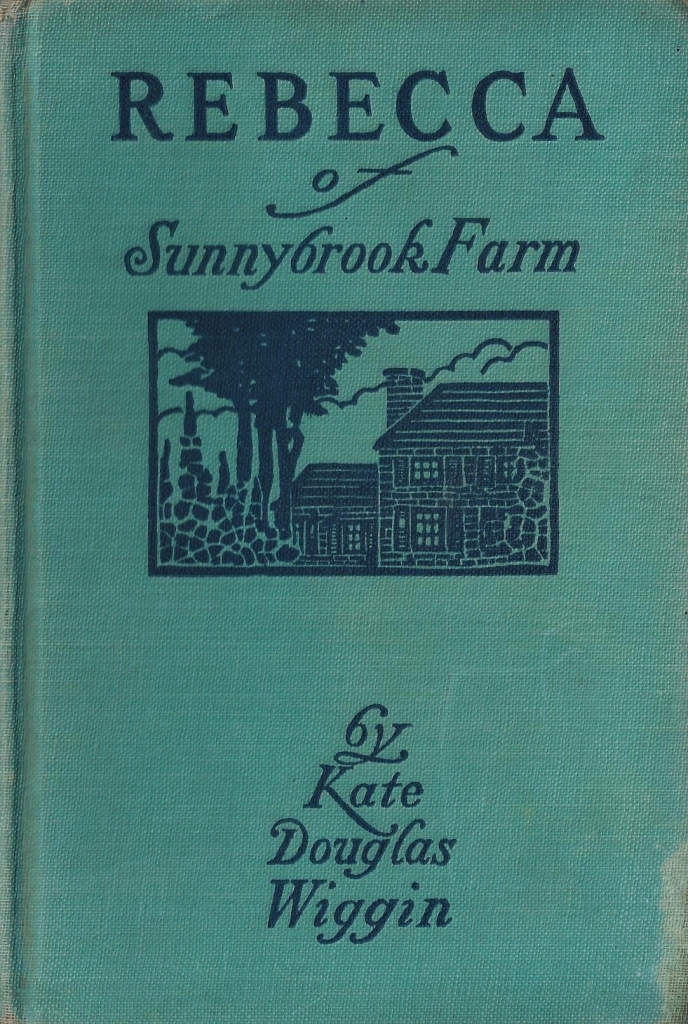
rebecca of sunnybrook farm kate douglas wiggin 001Rebecca of Sunnybrook Farm by Kate Douglas Wiggin ~ 1903. This edition: Grosset and Dunlap, circa 1920. Hardcover. 342 pages.

My rating: 7.5/10

I never read this venerable classic as a child, coming to it in young adulthood, but I enjoyed it when I did finally settle down to it. My tattered paperback copy was packed and unpacked over a number of moves until coming to rest at the back of the schoolroom bookshelf, where it still sits today. I hadn’t realized that my first copy was a quite highly edited one – “abridged for younger readers”, if one reads the fine print – until I stumbled upon this vintage hardcover, read it, and realized that there was more to the story than I had been aware of.

Not much more, really, mostly just an elaboration on the religion-related episodes, where Rebecca mulls over the appeal of the missionary life and discusses her faith at length, but it was satisfying to at last read the book as it originally appeared in print.

11-year-old Rebecca Rowena Randall (her late father was a devotee of Sir Walter Scott’s Ivanhoe) has been sent off to live with her two spinster aunts in Riverboro, as her widowed mother is having a difficult time making ends meet for herself and her seven children on mortgaged Sunnybrook Farm. And it’s interesting to note that though Rebecca identifies herself as coming from Sunnybrook Farm, and obviously has strong sentimental ties to her family home, we don’t get any further acquaintance with the place itself, with the action taking place almost exclusively in Rebecca’s new home.

Grim Aunt Miranda and quiet Aunt Jane are unprepared for the bouncing Rebecca as they had requested her sober older sister Hannah instead, but after the initial surprise all accept the situation and prepare in their various ways to make the best of it. This is the era of stern duty, after all.

Do I need to detail the escapades which Rebecca gets herself into and out of? It’s fairly standard stuff for this sort of novel, and anyone who is familiar with Louisa May Alcott, L.M. Montgomery and Jean Webster can fill in the blanks. Rebecca finds kindred spirits in an elderly childless couple to whom she can tell her woes when Aunt Miranda’s sharp tongue stings too much to bear, and she soon teams up with a best chum, in this case the blond and smiling Emma Jane Perkins, good natured foil to her more rambunctious and clever friend. The two attend the local one-room school together, have ins and outs with the other children, deal with the school’s Mean Girl, the cruelly named Minnie Smellie, and good-naturedly patronize the local ne’er-do-well family, the Simpsons, headed by the light-fingered Abner, master of the midnight visit and the subsequent “trading” of goods picked up from about the neighbourhood.

In a scenario which reminded me of the later Daddy-Long-Legs plot, the young Rebecca (she’s only eleven at the start of the story) meets a much older wealthy bachelor (Adam Ladd is thirty when he and Rebecca first meet), charms him with her childish prattle, and evokes feelings which grow into something much more mature in both parties. But that is looking far ahead, though hints are abundant from the first meeting that Adam and Rebecca have “special” feelings for each other, and of course nothing untoward happens, with Adam nobly refraining from romantic thoughts about his young protégé until she reaches college age. At which point, let’s see… he is thirty-eight and she is seventeen. This raises a bit of an “ick” response in modern-day me, but it seems perfectly acceptable to this time period’s novel writers, so I’ll just leave it right there, labelled prominently “Era Acceptable”.

Rebecca is a truly charming heroine with an innate dramatic bent which shows itself in her love of writing and music. As well as creating poetry and stories, Rebecca sings beautifully and later masters the piano, with the author being very clear that in all of these accomplishments her heroine has had to stringently apply herself to master the crafts and to polish her natural abilities, which I found nicely refreshing – too often our young protagonists blithely achieve lofty heights with surprising and unlikely ease.

Early on in the story I started thinking, “Hmm, this story seems just a bit familiar. Haven’t we met these people before on Prince Edward Island?” A quick internet search showed that I was not alone in this thought, though I was mildly surprised to realize that Rebecca was created first, with Anne following several years later. Check out this article, Mirror Images: Anne of Green Gables and Rebecca of Sunnybrook Farm, which is quite fascinating in its examination of parallels between the two iconic literary heroines.

Likeable as Rebecca is – and she is truly a winsome child – she never quite comes to life as does her younger literary sister Anne. Kate Douglas Wiggin seems to be standing just a little off in the distance in describing her creation’s thoughts and feelings; her rather stilted language and stock situations belonging more to the 19th Century, whereas Anne feels much more like a creature of the here and now.

A must-read for anyone at all interested in the time period and the vintage “youth fiction” genre; there is humor and irony galore to reward the adult reader of young Rebecca’s adventures, though I’m afraid a young reader of the 21st Century might bog down somewhat in all of the missionary subplot and the relative mildness of the “action”.

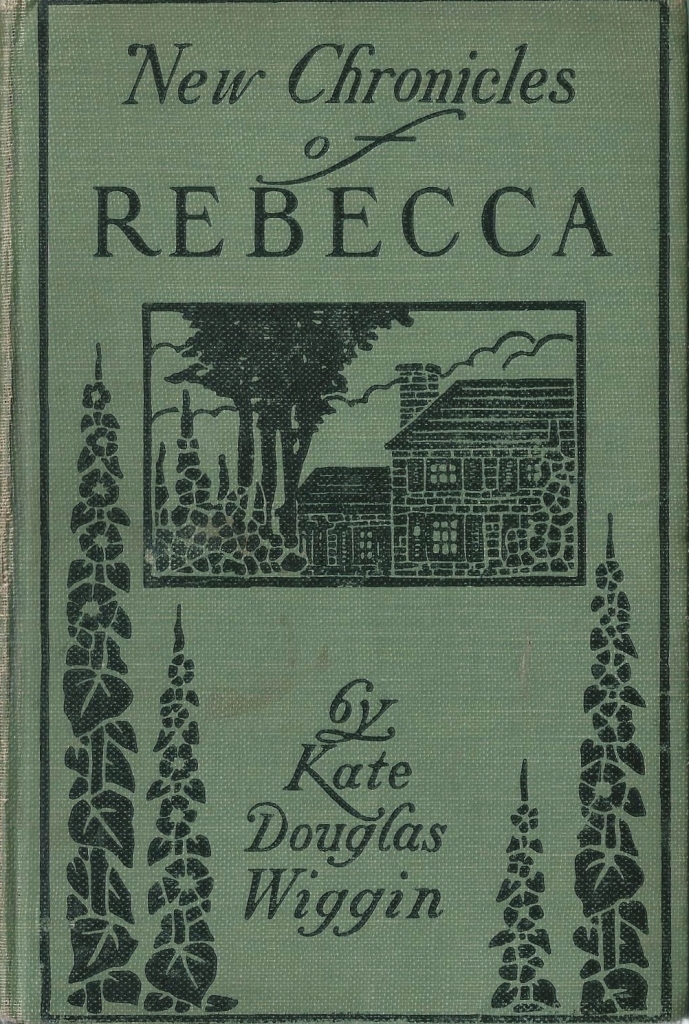
new chronicles of rebecca kate douglas wigginNew Chronicles of Rebecca by Kate Douglas Wiggin ~ 1907. This edition: Grosset and Dunlap, circa 1920. Hardcover278 pages.

My rating: 6.5/10

I was pleased to discover that there is a companion book to Rebecca of Sunnybrook Farm, New Chronicles of Rebecca, published four years later, in 1907. It consists of a linked series of anecdotes enlarging upon and adding to the Rebecca saga, drawing on readerly familiarity with Rebecca’s original adventures, and giving many more details as to her life and some strong clues to her future.

Because of its anecdotal nature, this is much less of a stand-alone novel than the first Rebecca, but it is thus freed up to delve into some intriguing sidelines of life in Riverboro. We meet Emma Jane’s swain, Abijah Flagg, and hear his back story, as well as becoming more intimately acquainted with the Simpson clan. Though Rebecca is viewed primarily as a children’s story, it is very apparent in New Chronicles that the author is writing as well to the mature members of her readership, as a key plot concerns the common-law relationship of the Simpsons, and Rebecca’s part in awakening the feckless Abner to the wrong done to his “wife” (and mother of his children) by his neglect of the religious ceremony to legitimatize their relationship.

In another chapter, a young woman abandoned by her husband during her second pregnancy dies along with her newborn child, and the young Rebecca and Emma Jane have the distressing and quite graphically described experience of being left alone with the deceased while Emma’s father goes to fetch the neighbours. Luckily the now-motherless first child creates a diversion, and then a longer-term project as the girls decide to prevent young Jack’s disposal of to the poorhouse. The girls find him a foster mother and form a society of benevolent young “aunts” to oversee his amusement.

In general this is a mild addendum to the classic novel, but it adds enough to the overall portrait of Rebecca and her associates that it should really accompany the original as a required-reading companion volume.

A pleasant reading experience, both of these books. Though I warn you that you may look at Anne of Green Gables with new eyes on your next reading, and wonder just a bit how carefully L.M. Montgomery was examining K.D. Wiggin!

Here are both of the Rebecca books online at Project Gutenberg, along with numerous other examples of this prolific author’s work.

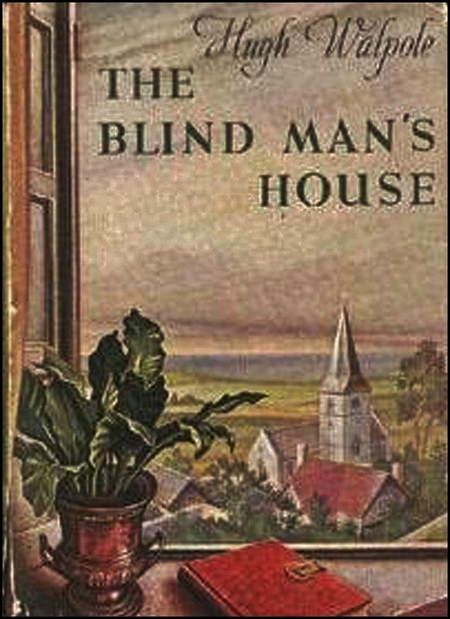
the blind man's house hugh walpoleThe Blind Man’s House by Hugh Walpole ~ 1941. This edition: Doubleday, Doran & Co., 1941. Hardcover. 337 pages.

My rating: 5.5/10

Sir Julius Cromwell, blinded many years before by a bullet to the head in the Great War, has recently married the lovely and impetuous Celia, fifteen years his junior. The two are still in the physically passionate honeymoon stage of their relationship, Celia’s husband adores and indulges her, and she worships him; they are moving to a country estate in the town where Sir Julius grew up; a warm welcome by the locals is anticipated. So why does Celia feel so apprehensive and sick with fear, and why does she cringe away from the sightless gaze of her husband’s beautiful blue eyes?

Everybody loves Sir Julius, from the youngest vicarage child to his servants to the one surviving member of the noble family whose ancestral home Sir Julius has just taken over. Even the handsome Jim Burke, well-born but looked down on with disdain for his wandering ways and philandering approach to the local young women, has settled into a remarkably stable relationship as a companion-odd job man to Sir Julius; the two are comfortable in each others’ company, and Jim reads aloud by the hour to Sir Julius and is his intellectual equal in their long shared talks together.

The young Mrs. Cromwell, on the other hand, is not going over so well. Her hasty temper and impulsive ways wreak domestic havoc and Sir Julius is frequently called upon to smooth ruffled feathers. Celia is well meaning and vivacious; she soon realizes that she is making some bitter enemies among the local ladies – most particularly and seemingly without cause with the vicar’s wife, but she is floundering with how best to make friends and handle her servants tactfully.

When it becomes obvious to all that Jim Burke is looking with admiring eyes at the lovely wife of his employer-friend, gossip starts to ferment and Celia’s popularity takes a further nosedive. When the two are witnessed in an embrace in the woods, whispers become outspoken words, and Sir Julius’ happy world starts to crumble around him.

This is a readable though occasionally melodramatic examination of the psychological effects of blindness both on the blind man and on everyone around him. Much as Sir Julius attempts to just get on with things, his injury is the elephant in the room, engendering endless speculation. Celia in particular can’t seem to get over her surprise that her husband’s other senses are so highly developed to make up for the loss of his sight; she is almost offended by the keenness of his hearing, by the delicacy of his touch, and by his uncanny ability to navigate through the darkest of rooms. Jim Burke has perhaps the most natural response to Sir Julius and the two mens’ friendship is sincere, despite the complications of the jointly admired Celia.

Just as I thought to myself that the story was taking on shades of Lady Chatterley’s Lover, what with the maimed husband, passionate young wife and handsome young retainer aspect and all, what does clever Walpole do but make reference to D.H. Lawrence in his own narrative, leading me to believe that the resemblance to the scenario is more than accidental.

It was as though (Celia) had been placed out of contact with everyone living. She picked up a book—a heavy brown volume on the table at her elbow. The Letters of D. H. Lawrence. There had been a time when it had been the fashion among her friends to read Lawrence, as though there were a new gospel here. And perhaps there was. She could never be sure, because so much of The Rainbow and Women in Love bored and wearied her, and sometimes there were magnificent things.

But now she read on and on and it was as though Lawrence screamed in her ear, telling her that catastrophe was on the way. She could not understand why he rejected everything and everybody—rejection, hate, misery. And then would come some passage of natural description so lovely and quiet that his voice dropped to a loving encouraging whisper. He rejected all living human beings. He said again and again with sickening reiteration that he trusted no one. His dearest friends he would embrace at one moment and reject with loathing at the next. Everything revolved around himself. He was sick, he was poor, he was betrayed, and he said so over and over again. But he had genius, that strange gift of seeing everything and everybody for the first time, as though no one had ever lived on this earth before himself.

But his thin nervous cry increased her own fear. He was right. The world was dreadful because the people in it were dreadful—dreadful and menacing…

Poor Celia, and poor Sir Julius. Poor Jim Burke, too! For this love triangle evaporates into nothingness, leaving the married couple still in partnership with each other and leaving Jim to make peace with himself on the outside of society’s charmed circle after his brief time of friendship with his fellow kindred spirit.

Hugh Walpole capably weaves numerous personal histories together on his way through this domestic saga, and some of his characterizations are clever and beautifully poignant, particularly concerning the three vicarage children.  But ultimately I felt that The Blind Man’s House was something of a minor work; too busy with incident and attempts at analysis to ever really settle down into story; personalities only carrying the thing so far.

The Blind Man’s House is available online at Project Gutenberg Canada.

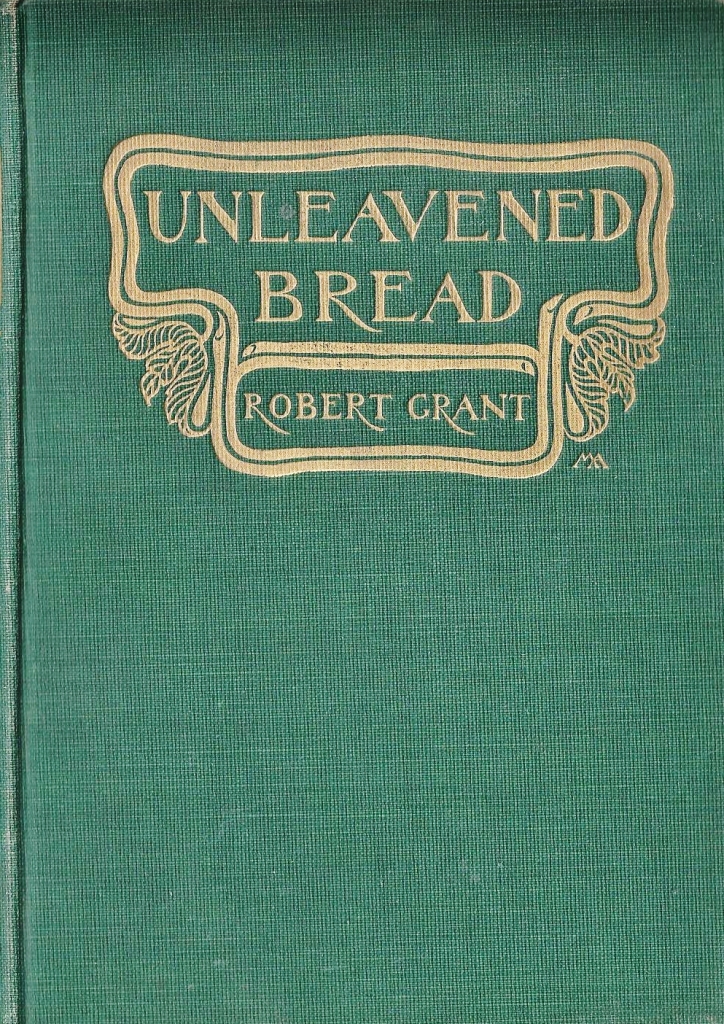
unleavened bread 1900 robert grant 001Unleavened Bread by Robert Grant ~ 1900. This edition: Charles Scribner’s Sons, 1900. Hardcover. 431 pages.

My rating: 8/10

This turn-of-the-century American novel is an ambitious three-stage portrayal of a woman’s rise from rural schoolteacher to Congressional Senator’s wife. While first and foremost an even-handed but deeply damning portrait of the protagonist, the ambitious and utterly humourless Selma White, the novel also acts as an intriguing picture of several decades of American social change.

Selma White was born with a high regard for herself and her abilities, and her position in the world has by and large supported that self-conception.

To be an American meant to be more keenly alive to the responsibility of life than any other citizen of civilization, and to be an American woman meant to be something finer, cleverer, stronger, and purer than any other daughter of Eve. Under the agreeable but sobering influence of this faith she had grown to womanhood, and the heroic deeds of the civil war had served to intensify a belief, the truth of which she had never heard questioned. Her mission in life had promptly been recognized by her as the development of her soul along individual lines, but until the necessity for a choice had arisen she had been content to contemplate a little longer. Now the world was before her…

Disillusioned by the less pleasant aspects of school teaching after only a short time presiding over a classroom of rural children, Selma has accepted the marriage proposal of an up and coming young man from the fictional small city of Benham, located somewhere along the Eastern seaboard, inland and presumably equidistant from Boston and New York. Lewis Babcock is a jolly, rather common sort of fellow, who is flourishing in the paint and varnish business during the post civil war building boom.

Without a backward glance Selma moves up a notch in the social scale, but is taken aback to find that she is a very small frog indeed in the larger pond of the city. A lightning fast learner, Selma ingratiates herself to all the right people and finds a measure of social success. She has a child, but though she does feel a certain fondness for her infant, she is relieved rather than heartbroken at the little girl’s death from croup. Having taken pains to prevent any more children – Selma has learned all about the current birth control methods through her friendship with a socially active suffragette – she eventually ditches the hapless Lewis (by divorce after his adultery) and attempts to support herself by writing for a newspaper.

Working for a living soon pales, and Selma is fortunate in that her ethereal appearance – she takes great pains to cultivate her thinness, scorning those who are “fleshy” as unintellectual and coarse – attracts the attentions of a young architect who soon becomes her second husband. (Lewis meanwhile is shattered by the death of his child and the dissolution of his marriage and turns to drink; the adultery was a minor glitch which foreshadowed his future decline.) This new marriage runs its predictable course until an early death releases Selma’s second unfortunate spouse. A third matrimonial experiment sees Selma united at last to a man of similar ambitions, and her rise to the top of her particular pile continues apace, built as it is on the happiness of those she has relentlessly crushed beneath her neatly shod feet.

This novel was a strong bestseller at the time of its publication, and I found that it held up well to a modern day reading. Selma is a fascinating character, being manipulative, selfish, humourless and an utter snob. An increasingly accomplished sociopath, one might say, to use modern day jargon. Robert Grant moves his mesmerizingly unsympathetic character through a variety of social settings, and provides not only an imaginative portrait of Selma but a keen and rather damning look at the “American way” which allows her to flourish at the expense of those more scrupulous in their moral states.

Not a particularly happy read, but deeply interesting, wryly well-written, and a worthy way to begin this year’s Century of Books Project.

Unleavened Bread felt rather reminiscent of the works of Sinclair Lewis, Main Street and Babbitt in particular, though a check of dates shows that Lewis was a mere teenager when Selma’s saga was having its popular success. Perhaps the seeds of inspiration were planted in the younger man by Grant’s work? In any event, I liked this novel well enough to order another by Robert Grant, The Orchid, which I intend to report on in due time.

Here is the only current review I could find of Unleavened Bread, at the Great Penformances blog.

The novel is also available through Project Gutenberg, along with several more of Robert Grant’s works.

the treasure selma lagerlof 1The Treasure by Selma Lagerlöf ~ 1904. Original title: Herr Arnes penningar (Herr Arne’s Hoard). Translated into English in 1923. This edition: Daughters, Inc., 1973. Foreword by June Arnold. Softcover. ISBN: 0-913780-01-4159 pages.

My rating: 10/10

“Why are they whetting knives at Branehog?”

So deep was the silence in the room that when the old lady asked this question all gave a start and looked up in fright. When they saw that she was listening for something, they kept their spoons quiet and strained their ears.

For some moments there was dead stillness in the room, but while it lasted the old woman became more and more uneasy. She laid her hand on Herr Arne’s arm and asked him: “How can it be that they are whetting such long knives at Branehog this evening?”

Torarin saw that Herr Arne stroked her hand to calm her. But he was in no mind to answer and ate on calmly as before.

The old woman still sat listening. Tears came into her eyes from terror, and her hands and her head trembled more and more violently.

Then the two little maids who sat at the end of the table began to weep with fear. “Can you not hear them scraping and filing?” asked the old mistress. “Can you not hear them hissing and grating?”

The crippled fish-seller, Torarin, who has stopped at the wealthy Herr Arne’s household to warm up and partake of the liberal hospitality of the household, is just as shocked as everyone else by the old woman’s outbreak. For didn’t his own little black dog, Grim, howl forebodingly and refuse to enter the gates of Herr Arne’s compound? Something sinister could well be afoot.

It is 16th Century Sweden, in the depths of winter. The sea is frozen; ships are trapped helplessly waiting for a thaw. Torarin hopes to take a shortcut home over the ice, and soon leaves. Grim rejoins him and Torarin shrugs off the omen. That night, however, a fiery glow lights up the night sky. Herr Arne’s buildings are on fire! Neighbours running to assist are shocked to find that the fire has been set from outside, and inside the hall Herr Arne, his wife, and their entire household lie dead in pools of blood; his famous treasure chest filled with silver is missing. A dying gasp from one man tells of three roughly dressed men coming down the chimney hole with long knives honed for the slaughter, surprising the household.

the treasure selma lagerlof 2One person has survived the massacre, a fourteen-year-old orphan girl, Elsalill, loving companion of Herr Arne’s daughter. She is dazed and at first will not speak; Torarin ends up taking her into his own poor home, where she soon learns to drudge along with Torarin’s mother cleaning fish on the harbourside.

Then three richly dressed Scottish mercenary soldiers, marking time with many others while waiting for the sea to thaw, overhear Elsalill telling the tale of that horrible night; they mock her weeping and her contention that she will be revenged upon the murderers who killed her beloved friend even as she pleaded for mercy. And as they walk away Elsalill thinks that somehow they look familiar, and this proves to be true.

Meanwhile, the unavenged dead are not resting peacefully these winter nights, and Herr Arne’s daughter returns to the land of the living in order to beg assistance from Elsalill in righting her great wrong. But Elsalill has fallen in love with the very man who murdered her friend…

What a great little ghost story this novella was, evocative of a bardish tale told round a flickering fire in a land of sunless winter.  Swedish writer (and articulate lesbian feminist) Selma Lagerlöf  was an accomplished teller of tales, winning the Nobel Prize for Literature in 1909 “in appreciation of the lofty idealism, vivid imagination and spiritual perception that characterize her writings”, and The Treasure is a fine small example of her much greater body of work.

Available for free online at Project Gutenberg, but perhaps best read out loud on a dark winter night with lights down low to a rapt audience of listeners.

Skål!

Happy New Year!

Just in from celebrating New Year’s Eve with some brightness in the darkness. The sky is full of stars tonight, echoed by the sparks we made down below. I don’t think I’ll make midnight, but I’m sending this message ahead to wish all of you a very happy 2014, full of good stuff, and LOTS of great books.

HAPPY NEW YEAR!

New Years Eve 2013 Hill Farm

This is a most enjoyable post to write, and, as last year, it was quite easy to chose the books on it. They definitely stood out from the crowd. I have only included books which were new to me this year; if I’d included old favourites this list would be a whole lot longer.

Here we go, then. Leaves and Pages’ Top Ten Reads Discovered in 2013.

*****

BEST NEW-TO-ME READS 2013

Ranked more or less in order of “favouritism”, countdown-style, 10 to 1, though the order was just a bit hard to decide.

Except the Number One book. That one was easy as pie!

*****
the innocent traveller ethel wilson10.

The Innocent Traveller

by Ethel Wilson ~ 1947

Every once in a while a book comes along which, unexpectedly, completely delights me. The Innocent Traveller is one such novel.

There’s not much in the way of drama in this joyfully written book, but it struck a chord of shared experience and of common humanity in its delicious narrative of the irrepressible Topaz. Always witty and occasionally poignant, the tale spans a full century of one woman’s life, 1840s to 1940s , and simultaneously gives a lightly drawn but absolutely fascinating portrait of the times she moved through: the fabulous social and scientific changes of the turning of the nineteenth into the twentieth century, through two world wars and the stunning growth of the colonial city of Vancouver. Through change after change after change, Topaz remains the same, endlessly curious, endlessly outspoken, endlessly optimistic and reaching for the next adventure.

Ethel Wilson writes this semi-biographical tale with a very personal touch – she appears just a little over half way in in the person of recently orphaned eight-year-old Rose who joins the household which includes the middle-aged Topaz. Lovingly written, with warm humour and an unsentimentally analytical eye, this is a delicious ode to an individual and a family, and an absolute joy to read.
turtle diary russell hoban 0019.

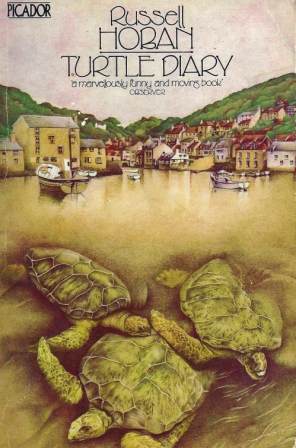
Turtle Diary 

by Russell Hoban ~ 1975

The only thing better than looking forward to a read with a cozy preconception as to what the story will bring, and being satisfied with your expectation, is to be blanket-tossed up in the air by a book that tightens up and bounces you unexpectedly into a very different direction, leaving you to freewheel for a while, scrambling for a sense of where you’re going, then catching you and returning you, more or less gently, to solid ground. Turtle Diary is that second kind of book.

The plot is easily condensed. Two middle-aged and currently unattached Londoners, William G. and Neaera H., both struggling with a stagnant state of being, visit the Zoo and are, separately, attracted to the sea turtle tank and the stoic inhabitants within. Musing on the cosmic injustice of these far-roaming creatures being confined to a tiny volume of water, William and Neaera each consider the possibility of somehow freeing the turtles back into the sea. As each of them in turn carry on their separate narrations, we see that their thoughts are uncannily similar, both regarding the turtles and other aspects of their solitary existences, and their relationships (or lack thereof) to those around them. Inevitably William and Neaera meet, speak, share their turtle-liberation impulses, and formulate a practical plan to carry it out, helped by the like-minded zookeeper. Can you guess where we’re going from here? Two lonely people, sharing a joint goal, yearning desperately for love…?

Well, abundant blessings to Russell Hoban. He faces up to and jumps the clichés beautifully, and I salute him for it.
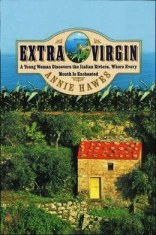
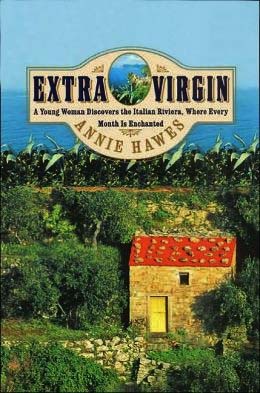
extra virgin annie hawes8.

Extra Virgin

by Annie Hawes ~ 2001

I’ve read a whole lot of memoirs this past year, and thoroughly enjoyed all of them, but this one was just a little bit extra-special. It was a quietly intense pleasure from Prologue to reluctantly-turned last page.

Back in the early 1980s, a young Englishwoman, recently turned down as a “poor risk” in her attempt to receive bank financing to buy her own home in England, is at loose ends and feeling rather sour about life in general. Her sister convinces her to come along on a working trip to Italy, grafting roses for a small commercial operation in the Ligurian hills, in the region of the “Italian Riviera”. The two eventually purchase a bargain property in the area, 2000 pounds for a stone house in an olive grove. Of course, it needs a bit of work…

But this is a rather different tale from the usual “we bought a place in a foreign paradise and hired quaint locals to fix it up” lifestyle porn. Written several decades after the purchase, the tone is not at all cutesy and patronizing. The sisters go to and from England and Italy regularly for many years – England for the “real” jobs which earn the funds to return to Italy for the love of the place, and, increasingly, the people.

And, as a bonus, the author can certainly write about food. Amazing descriptions of the wild-crafted, gardening and culinary abundance of Liguria. Well done, Annie Hawes.
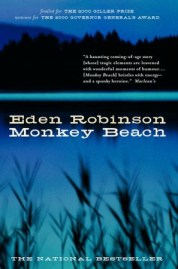
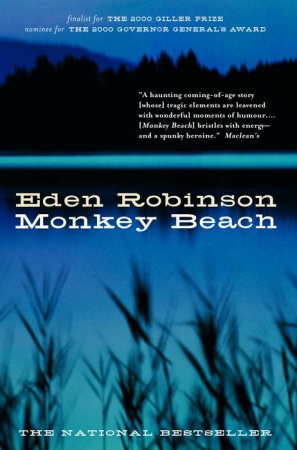
monkey beach eden robinson7.

Monkey Beach 

by Eden Robinson ~ 2000

Fabulous writer, this Eden Robinson. Such a strong book, and completely mesmerizing.

Lisamarie Hill is a young woman of mixed Haisla, Heiltsuk, and European heritage, from the Haisla village of Kitamaat, on an island in the Haida Gwaii group off the north coast of British Columbia. Lisamarie’s younger brother Jimmy has been reported as lost at sea, and as she and her family wait for news of the search mission, Lisamarie thinks back to her childhood, and the life she shared with Jimmy growing up in an intricately complex world of tradition and modernity and a mix of cultural influences.

The author flouts our expectations by both detailing some of the bleakness of First Nations life as her protagonist experienced it, and the more frequent deep joy of family and community. The humour is constant throughout, accompanying the most horrible of scenarios, a happily ironic paradox which inexplicably works.

This book almost made my Most Unexpected list, but it was so good that it really belongs over here.
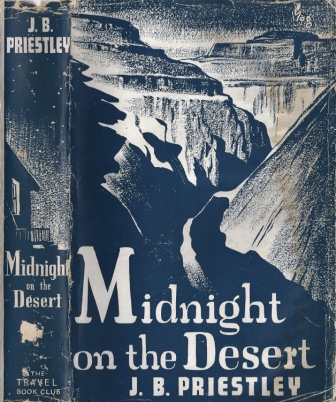
midnight on the desert j b priestley 0016.

Midnight on the Desert 

by J.B. Priestley ~ 1937

Midnight on the Desert is subtitled Chapters of Autobiography, and there is indeed a fair bit of journalizing going on in here. Written while the author was staying in Arizona, much of the content has an American connection; Priestley was very much in love with the physical space he found himself in here; the desert and the natural features such as the Grand Canyon are described with deep feeling.

I had expected this to be a travel book of sorts, and Midnight on the Desert could certainly fall under that classification, but it is also so very much more. It is an articulate examination of what it means to be a writer and an artist; a critique of the state of the world in politics, religion, philosophy, architecture and the performing arts; an ode to nature; a manifesto for seeking the good in the world and overcoming adversity and “doing one’s part”; a record of observation by a keen and analytical observer.

Near the end, Priestley really lets himself go as he mulls over the time theories of J.W. Dunne and P.D. Ouspensky, which are all about time as a fluid entity, which can be compressed, reversed, and experienced as a simultaneous multiple strand. (Novelist Rumer Godden plays with some of these ideas as well, especially in her book Take Three Tenses: A Fugue in Time. I was fascinated to realize that both Godden and Priestley were playing along the same metaphysical byways, though many of their musings go completely over my head.)

What a fascinating book; what a full book. One to read right through without stopping; one to tackle in small bits, to digest and mull over and agree with and occasionally refute. Not all that much autobiography, despite the tag on the title, but many insights into what went on in the mind of this deeply creative and opinionated man.
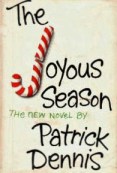
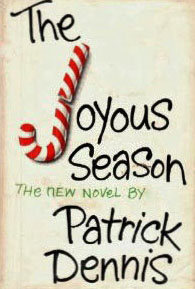
The Joyous Season5.

The Joyous Season 

by Patrick Dennis ~ 1964

Ten years after penning his highly successful social satire starring the exuberant Mame and her sedate nephew Patrick, author Edward Tanner – writing under the pseudonym Patrick Dennis – came up with this little  comedic gem. I wasn’t sure what to expect, having only ever previously experienced Auntie Mame, but The Joyous Season was absolutely marvelous, and much better than I had anticipated. Such a treat!

As the story opens, 10-year-old Kerry, 6-year-old Missy, and their nanny Lulu are reluctantly heading out the door from their posh New York apartment  to Gran’s place in East Haddock. Gran is Mom’s mother, and oh boy, is she ever a snooty piece of work! And she’s more or less the reason for the whole darned dilemma Kerry and Missy are in. To condense greatly, on Christmas morning there was a bit of a situation with Mom and Daddy which saw several kinds of shots fired, much broken glass, some physical violence and some exceedingly blunt words spoken. As a result, Kerr and Missy are poised to become Children of Divorce, much to the delight of meddling Gran. Everyone (except Gran, who openly gloats about the come-uppance of her despised soon-to-be-ex son-in-law) has decided to be Very Civilized About It All, and Not To Make The Children Suffer, but suffering they are indeed, though not perhaps in the way one would expect.

Kerry and Missy, despite all of the adult antics going on in their world, are the epitome of well-adjusted, and Kerry’s knowing-naive narrative exposes the follies of the grown ups, and New York upper crust society at large, to our appreciative eyes. As Kerry and Missy navigate their way through their new life, they conspire to bring their beloved parents back together again, with numerous setbacks along the way.

4.

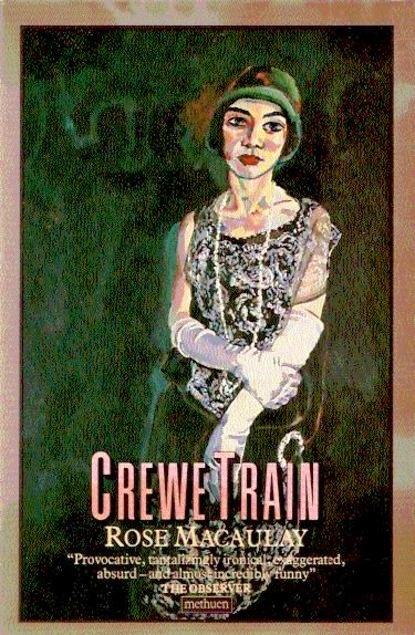
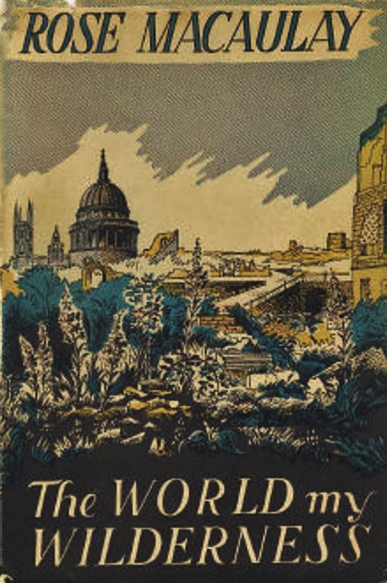
Crewe Train and The World My Wilderness  

by Rose Macaulay ~ 1926 and 1950

Two very different books by always-changing and challenging author, both featuring young heroines on the cusp of entry into their adult lives.
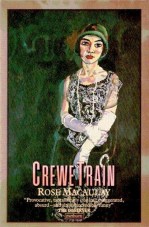
crewe train rose macaulay 3At the start of Crewe Train we are introduced to our sullen 21-year-old heroine, Denham Dobie. She and her widowed father are English expatriates living in attempted seclusion from the world in a small Andorran village; this hasn’t worked out quite as planned as the Reverend Dobie has allowed himself to be married to a local woman, giving Denham a number of unwanted step-siblings. But things are about to change, when a family of visiting English relatives are present when Mr. Dobie suffers a fatal heart attack, and whisk Denham off with them – to her stepmother’s loud relief – to England.

Denham is an unusual example of the innocent abroad – or, rather, the repatriated innocent in the land of her long-ago birth. She looks about not with the wide eyes of amazement, but with the hooded eyes of scorn. So much fuss about everything! Changing one’s clothes several times a day, all this bothersome bathing and personal grooming, and talk, talk, TALK at every meal. People get so worked up about ideas and books and plays and art…

Denham is a true sensualist, living a life of the body and not of the mind, which makes it most interesting when she catches the eye of the intellectual Arnold, a partner in Denham’s uncle’s publishing firm. And then Denham emerges from her prickly shell enough to respond to Arthur’s advances…

Gorgeously funny little book, very quirky and unusual. A great pleasure to read.
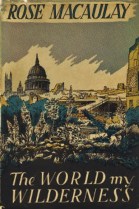
the world my wilderness dj rose macaulayThe World My Wilderness is quite different in tone, and much more sober, as befits a post-World War II novel.

I do believe it is one of the most beautifully written of all I’ve read so far this year. Rose Macaulay lets herself go with lushly vivid descriptions of the world just after the war. The bombed-our ruins of London are depicted in detailed clarity, and almost take precedence over the activities of the human characters, who move through their devastated physical habitat in a state of dazed shock from the brutalities they have seen and survived.

This is a bleakly realistic depiction of the aftermath of World War II and its effect on an expatriate teenager and her divided family, split between France and England. It moved me deeply, though the characters frequently acted in obviously fictional ways. What the author has to say about the effects of war on those who survived it is believably real.

17-year-old Barbary Denison is an English girl who has been raised for many years in France under the custody of her divorced mother and French stepfather. Under the confusion of the German Occupation, Barbary has run wild and has not-so-secretly joined up with an adolescent branch of the resistance – she and her younger half-brother have lived the lives of semi-feral children, and have witnessed and taken part in activities much too old for their tender years.

With the war just over, Barbary is unexpectedly sent to live with her father in London, and the culture shock of being suddenly thrust into “civilized” society is more than Barbary can cope with; she creates a secret life for herself which eventually has dire consequences for everyone concerned.

I’ve earlier described this novel as “bleak”, but don’t let that put you off. It’s definitely a worthwhile read, and Rose Macaulay’s satirical wit is in fine working order here. Not at all depressing, because it is so obviously contrived, but a powerfully memorable reading experience.

3.

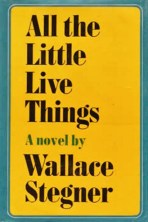
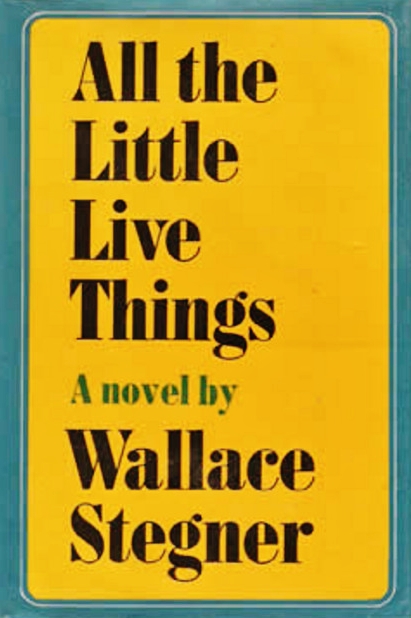
All the Little Live Things

by Wallace Stegner ~ 1967

all the little live things wallace stegner (2)An intense novel set in the California hills concerning love in all its forms. And death.

Here Wallace Stegner addresses one of the Big Questions of his time, the mid 1960s, which is to say, the great divide between the generations; the wide movement of youth (and relative youth) to reject categorically the ethics, morals and social standards of their elders, and to try to remake the world into a new utopia. We’re talking about hippies, here. And the California setting is the seething nerve centre of this societal battleground, full of lines drawn in the sand and unwitting trespasses and deliberate provocations. Change is in the air, and no one is immune to its effects.

Joe Allston and his wife, two Easterners in their sixties, retire to California in search of peace after the death of their wayward son. Their paradise is invaded by various parasites – not only by the gopher and the rose blight, the king snake and the hawk, but also by a neighbour with a bulldozer, bent on “development.” Jim Peck, a bearded young cultist, builds a treehouse on their property and starts a University of the Free Mind, complete with yoga, marijuana, and free-wheeling sex. Most damaging of all, it is invaded by Marian Catlin, an attractive young wife and mother, affirming all the hope and love that the Allstons believe in, who carries within herself seeds as destructive as any in the malevolent nature that surrounds them.

The relationship between the two couples, the older Allstons and the younger Catlins, is beautifully portrayed, and I felt it was one of the most admirable aspects of the novel. Stegner delicately captures the nuances of friendship, unspoken sexual attraction which does not have to be acted upon, and the balance of power between youth and age. Joe and Marian strike sparks off each other, but the relationship never turns ugly; all four spouses are involved in the relationship and each turns to his or her partner for support and comfort as needed. For the core issue of the story is this: Marian is pregnant, with a much-desired second child. (The Catlin’s first child, a young daughter, is very much loved and wanted, and is a charming girl, nicely handled by the author.) Marian also has terminal cancer, and she has rejected treatment in order that she can bring the pregnancy to term.

A difficult plot to see any happy way out of, isn’t it? I’ll tell you right now: no feel-good miracles occur.

Decidedly one of my most memorable reads of 2013.

hostages to fortune elizabeth cambridge 32.

Hostages to Fortune 

by Elizabeth Cambridge ~ 1933

He that hath wife and children hath given hostages to fortune; for they are impediments to great enterprises, either of virtue or mischief.

~Francis Bacon

I loved this book on so many levels. Not only is it beautifully written, but the themes of marriage, motherhood and personal fulfillment struck very close to home; I couldn’t help but recognize many parallels with my own experience, which (of course!) is not unique, as Elizabeth Cambridge so eloquently demonstrates.

This is an episodic novel in which “nothing ever happens”, but it is a beautifully observed and documented series of vignettes of family life, with a view to the broader scene in which it is set. It reminded me most strongly of another book that has a similar tone and an equally well-depicted mother, Margery Sharp’s 1935 novel Four Gardens, another hidden gem of a book which I wish would receive the same attention from modern re-publishers of almost-lost small literary treasures.

These women are, of course, more than “just mothers”, but their maternity is an inescapable part of their lives, and though it does not define them, it forms their lives in various unforeseen ways, and their emotional and intellectual responses to their motherhood are well worth considering. Elizabeth Cambridge’s Hostages is said to be semi-autobiographical; Margery Sharp was childless; but both writers have identified and played upon a strong chord of shared experience which resonates with me, a person (and mother) of several generations later, living in a very different time and place.

Hostages to Fortune is extremely readable, frequently very amusing, thoroughly thought-provoking, and occasionally poignant. An excellent book. Other readers agree; I don’t believe I’ve seen a single negative review.
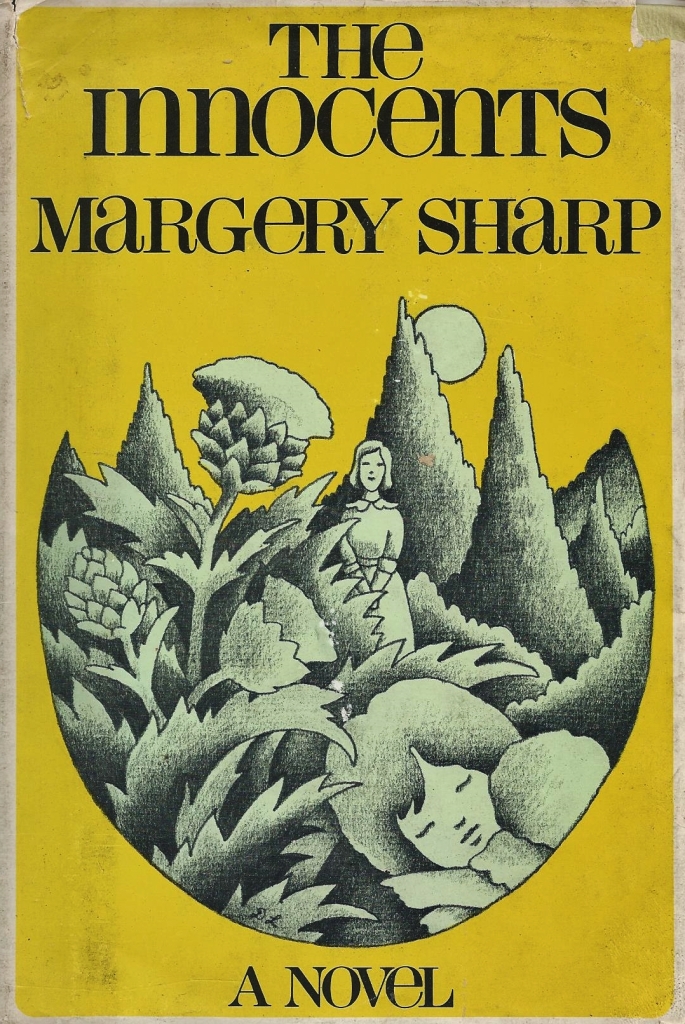
the innocents margery sharp 0011.

The Innocents

by Margery Sharp ~ 1974

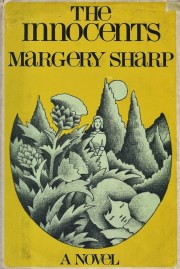
I think this may well be my very favourite Margery Sharp, and, as you all may have guessed by now, I am seriously enthusiastic about this author to start with.

This is a very quiet book, one of those minor tales concerning a few people only, with nothing terribly exciting going on within it. But it is a compelling read, and I was completely on the side of the angels right from the get go, though fully cognizant of their failings.

In brief, then.

Just prior to the start of World War II, a middle-aged spinster living in a quiet English village is unexpectedly left in charge of a mentally handicapped toddler whose mother refuses to believe that her child is anything less than “normal”.  The child and her caregiver form a deep and complex bond in the ensuing years before the now-widowed mother returns to collect her daughter and return with her to America, to launch into society, as it were, as a charming sidekick to her fashionable mother.

The reality is much different than the dream, and the subsequent events are absolutely heart-rending. The author lets us all suffer along with the brutally dazed child until bringing things to a rather shocking conclusion, which she has already told us about on the very first page.

Margery Sharp is at her caustic best in this late novel. I absolutely loved it. Hands down, my very best new-to-me read of the year.


Happy Reading to Everyone in 2014!
all the little live things wallace stegnerAll the Little Live Things by Wallace Stegner ~ 1967. This edition: Viking Press, 1967. Hardcover. 248 pages.

My rating: 10/10

This attempted review has been simmering away at the back of my mind for months and months. Getting it posted on New Year’s Eve day takes a great weight off of my conscience, even though I am not doing the novel the credit it deserves by this brief discussion.

Since reading the book way back in March of 2013, I have wondered how best to communicate the special quality it has, and its deep appeal, which is much more fundamental than its (highly engaging) storyline. This is where I bemoan my lack of a formal education in writing literary analysis; I know what I want to say but I don’t have the vocabulary to say it, so I fall back on the easy things: I liked the book. It moved me. Beautifully written. Memorable characters. An evocative picture of a time and a place.

These are things I can say of so many books I am fortunate enough to have encountered over an expansive reading life, but which do not at all illuminate the qualities that make this (or any other) book so special, this writer (or any other) so immediately compelling.

So, a review. Where to even start? How about here, with the front flyleaf material of the first edition, to set the story up, and to give me a lead in adding a very few thoughts of my own.

Why does the older generation feel as it does about what is happening in the world today? Wallace Stegner answers the question, with sympathy and understanding, for one good human individual trying to come to terms with his world while retaining his own integrity. In a novel that probes deeply into this and other aspects of contemporary life, he shows his narrative skill, his great gifts of evocation, and his eloquent intelligence at their mature best.

Fulsome praise indeed, even allowing for a publisher’s bias! But yes, in this case, not overstated. The author is addressing one of the Big Questions of his time, the mid 1960s, which is to say, the great divide between the generations; the wide movement of youth (and relative youth) to reject categorically the ethics, morals and social standards of their elders, and to try to remake the world into a new utopia. We’re talking about hippies, here. And the California setting is the seething nerve centre of this societal battleground, full of lines drawn in the sand and unwitting trespasses and deliberate provocations. Change is in the air, and no one is immune to its effects.

Joe Allston and his wife, two Easterners in their sixties, retire to California in search of peace after the death of their wayward son. Their paradise is invaded by various parasites – not only by the gopher and the rose blight, the king snake and the hawk, but also by a neighbour with a bulldozer, bent on “development.” Jim Peck, a bearded young cultist, builds a treehouse on their property and starts a University of the Free Mind, complete with yoga, marijuana, and free-wheeling sex. Most damaging of all, it is invaded by Marian Catlin, an attractive young wife and mother, affirming all the hope and love that the Allstons believe in, who carries within herself seeds as destructive as any in the malevolent nature that surrounds them.

The relationship between the two couples, the older Allstons and the younger Catlins, is beautifully portrayed, and I felt it was one of the most admirable aspects of the novel. Stegner delicately captures the nuances of friendship, unspoken sexual attraction which does not have to be acted upon, and the balance of power between youth and age. Joe and Marian strike sparks off each other, but the relationship never turns ugly; all four spouses are involved in the relationship and each turns to his or her partner for support and comfort as needed. For the core issue of the story is this: Marian is pregnant, with a much-desired second child. (The Catlin’s first child, a young daughter, is very much loved and wanted, and is a charming girl, nicely handled by the author.) Marian also has terminal cancer, and she has rejected treatment in order that she can bring the pregnancy to term.

A difficult plot to see any happy way out of, isn’t it? I’ll tell you right now: no feel-good miracles occur.

Here’s an admirable review which eloquently puts into words my own elusive thoughts on the novel: Bookslut: All the Little Live Things. Please read.

This is my very first Wallace Stegner, and I know full well it won’t be my last.