Right now I envy single-minded people who accomplish their tasks with minimal fuss. My own default mode this spring seems to have settled into doing “many things haphazardly” versus “one thing well”. And the poor book blog has suffered for it. The longer I put off posting the harder it is to sit down and focus. It doesn’t help that I’ve reorganized my little office area to place my desk beside the windows overlooking the garden and the bird feeders, with the river rolling along most picturesquely and distractingly in the background.

My devoted dog has taken to settling himself down on the garden path where he can make maximum eye contact with me whenever I glance outside. If I turn my head his way, he perks his ears and cocks his head and looks meaningfully towards the porch door, and if I so much as change position in my office chair he leaps to his feet, plumy tail waving madly – “Marvelous! She’s coming out!!” If I turn back to the computer screen he stands there hopefully, tail wagging slower and slower, until at last he gives up (for the time being) and subsides back into his canine version of Patience-on-a-monument, head resting on paws, eyebrows furrowed just a bit, eyes patiently pleading. Needless to say, one can only disappoint the poor fellow so many times before giving in and going out, and then it’s all over for any thought of working up a book post.

"Just look into my eyes...You are starting to feel an overwhelming urge to come outside....You will stop in the porch and fill your pockets with dog treats..."

“Just look into my eyes…You are starting to feel an overwhelming urge to come outside….You will stop briefly in the porch and fill your pockets with dog treats…”

This misty, moisty morning the dog in question is sprawled out blocking my office doorway, peacefully sleeping and occasionally twitching in his doggy dreams, all the while quietly emanating a faint but persistent aroma of Springtime Barnyard, reminding me why I don’t particularly hold with Big Fluffy Farm Dogs In The House, no matter how sweet their personality is.

Well, as I appear to be trapped here for a bit, perhaps I should take advantage of the temporary quiet in my world to slap up a blog entry of sorts.

First book on the stack, here we go.
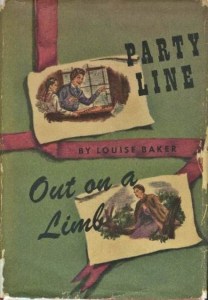
party line out on a limb louise baker djOut on a Limb/Party Line by Louise Baker ~ 1945/1946 ~This edition: Peoples Book Club, circa 1946. Hardcover. 376 pages.
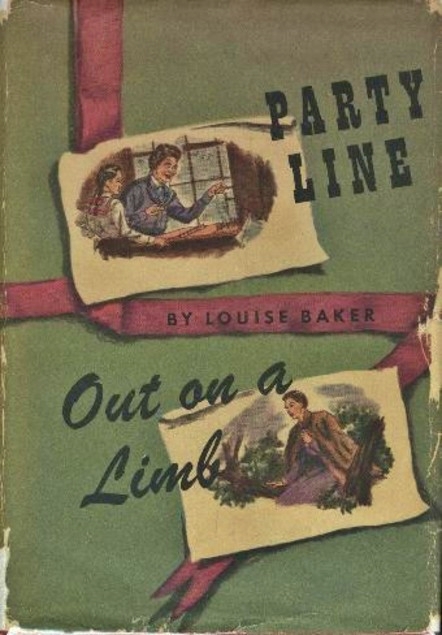
My rating: 8.5/10 for the 2-book compilation, for sheer nostalgic enjoyment.

A good-natured pair of days-of-my-youth memoirs by Louise Baker published in an omnibus version. The first, Party Line, centers around the personality of a small California town’s telephone switchboard operator, Miss Elmira Jordan.

It was like putting oneself in the arms of a comfortable providence to relax in Miss Elmira’s efficiency.

Telephones were something of a luxury in Mayfield and their installation was limited enough for one operator to handle the exchange. That power behind the communication system was Miss Elmira Jordan, an aging spinster who loved her work. She regarded her profession as a calling – no pun intended. Had she been so inclined, Miss Elmira could have resigned her job and, with a few threatening letters to launch the enterprise, retired to a luxurious life of blackmail. But nothing so base as avarice would have uprooted her from her stool at the Bell Telephone Company…

Miss Elmira has her finger on the pulse of Mayfield, and her story is intertwined with that of all of the other inhabitants of this microcosm of 1920s-30s American small town culture. Mostly amusing and occasionally genuinely poignant. The author pens a loving memoir of a person and a place – and, incidentally, her own young self – without lapsing into sentimentality.

And as you will see if you read on, there was a fair bit left out in this memoir concerning the writer herself, no doubt to allow the main focus to remain on Miss Elmira.

Here’s a peek at the Table of Contents. If you find this at all intriguing, this book is for you.
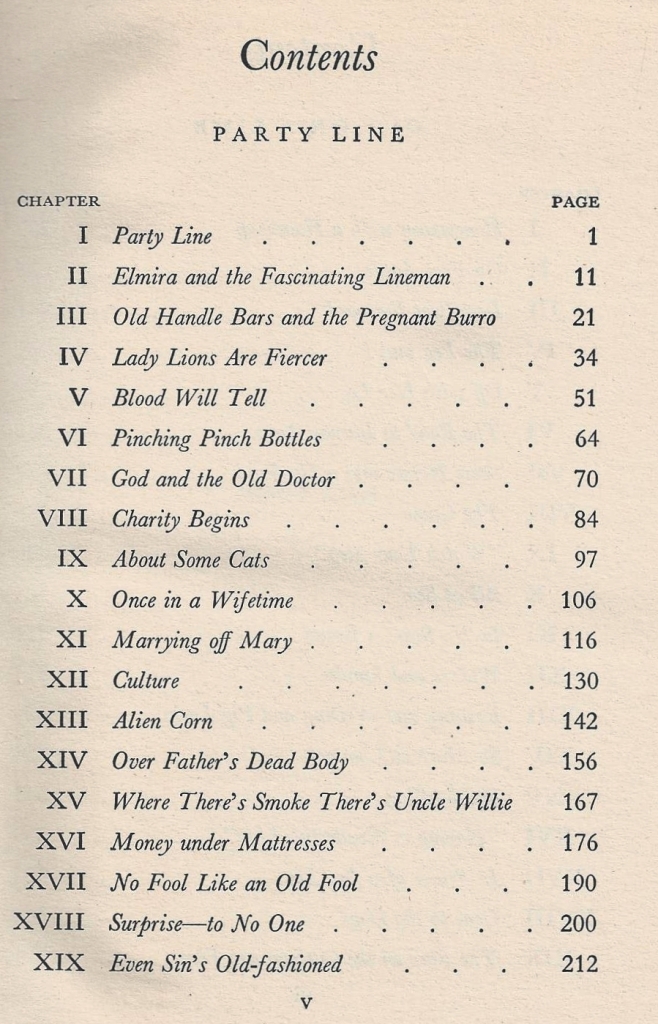
party line table contents louise baker 001

The second memoir comes as a bit of a shock, detailing as it does on the very first page a major life-changing event in the author’s personal history, not even hinted at in Party Line.

From Out on a Limb: (Click the highlighted link to take you to an online version.)

I became a minor celebrity in my home town at the precocious age of eight. This distinction was not bestowed on me because I was a bright little trick like Joel Kupperman, nor because I could play the piano like a velvet-pantalooned prodigy. I was, to keep the record straight, a decidedly normal and thoroughly untalented child. I wasn’t even pretty. My paternal grandmother, in fact, often pointed out that I was the plainest girl in three generations of our family, and she had a photograph album full of tintypes to prove it. She hoped that I’d at least be good, but I didn’t achieve my fame because of my virtue either. My memorable record in the annals of the town was the result of mere accident.

Completely against parental advice, I took an unauthorized spin on a neighbor boy’s bicycle. It was a shiny red vehicle that I admired inordinately but thoroughly misunderstood. I couldn’t even reach the pedals. However, I started a perilous descent of a hill, yelling with giddy excitement. At the bottom, I swung around a corner where I entangled myself and bicycle with an oncoming automobile. As part, apparently, of an ordained pattern, the car was piloted by a woman who was just learning to drive. Her ignorance and mine combined to victimize me.

A crowd gathered. Strong arms lifted me. I had a momentary horrified clarity during which I screamed “Mama!” as I got what proved to be a farewell glimpse of my right leg…

Yes indeed, Louise Baker was a child amputee due to the aforementioned 1917 accident, and her penning of this particular memoir was apparently commissioned by the US government to provide inspiration for combat-injured World War II soldiers as they began to return to “normal” life.

Kirkus in 1946 sums it up:

A debonair autobiographical account of a girl with one foot in the grave, of the particular problems of a uniped which in no way kept her from leading a round life. She was eight when she lost her leg, and acquired 17 dolls and a spoiled disposition which was spanked out of her when she returned from the hospital. Despite her handicap she managed to roller skate, swim, play tennis; she went to Europe alone, married, briefly, a professor, reported for several newspapers, taught, and eventually met the right man and went to Arizona. There she wrote Party Line (1945). This is a humorous and good humored approach to a loss which was only physically crippling. The book should have much to hearten amputees, without the more obviously inspirational quality of Betsey Barton’s And Now To Live Again.

Baker’s account of life as a “uniped” borders on just a bit too perky and positive, but she points out the negative aspects of her physical state often enough to keep it real. For example, a unique sort of pitfall in Louise’s young adult social life was the persistent appearance of men who were attracted to her because of her amputation; these “amputee devotees” are apparently not as rare as one would think, and the phenomenon is a recognized “disability fetish”. Who knew?!

Louise Baker wrote at least one more fictionalized memoir, 1953’s Snips and Snails, an account of life as a dorm matron at an exclusive Arizona boys’ school.

These memoirs were easy reading, with enough substance backing up the playful tone to justify tucking this book onto the keeper shelf, alongside similar personal accounts by Betty MacDonald and Rosemary Taylor.
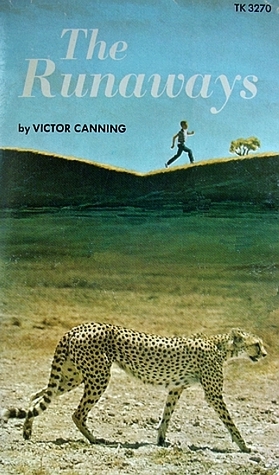


the runaways victor canningThe Runaways by Victor Canning ~ 1971. This edition: Scholastic, circa 1975. Paperback. 300 pages.

My rating: 6/10

This was something of a nostalgia trip, being a book I remember reading and re-reading in my late grade school years. Though it has lost some of its original magic on this four-decades-later adult re-read, there still exists a certain appeal, though the set-piece situation (misunderstood teenager with a working class background wrongly accused of a crime and on the run from the authorities) is very much of a muchness with so many other books in the youth market genre of the 1960s and 70s.

Victor Canning’s twist is that his protagonist’s adventures are twinned with those of an escaped cheetah, and though the improbability of the whole scenario is exceedingly glaring to me as a cynical grown-up who notices the many logistical gaps in the story, the tale works very well for its intended readership.

From The Runaways page on John Higgins’ extensive Victor Canning website:

Samuel Miles, known as “Smiler”, aged 15, has been falsely convicted of stealing an old lady’s handbag. He runs away from an approved school (young offenders’ prison), is recaptured and escapes from the police car during a thunderstorm. He is determined to stay free until his father, a ship’s cook, returns from his current voyage in nine months time and can help to clear him of the theft charge. The same thunderstorm brings down a tree in the wildlife enclosure at Longleat, allowing a cheetah called Yarra to escape.

On their first night of freedom, Smiler sleeps in the loft of a barn in which Yarra also takes shelter. We then follow their parallel stories, Smiler using a cottage in the village of Crockerton which belongs to the absent Major Collingwood, and Yarra learning to hunt again and finding a den in the Army firing range at Imber on Salisbury Plain. Smiler gets a job at a kennel. Yarra gives birth to cubs. Major Collingwood returns and Smiler goes to stay with the dog’s meat man, Joe Ringer, who teaches him a lot of country lore including poaching skills. Meanwhile Major Collingwood is intrigued with the signs of occupation at his cottage and starts a quiet investigation…

Vignettes from the story have stayed with me in crystal clarity from my youthful reading days: the escape from the police car in the thunderstorm; the cheetah’s escape at the same time only a few miles away; Smiler’s roaming through an empty cottage and his happy discovery of a jar of coins in the study and his use of those for “running money” and the subsequent replacement; the cheetah learning to craftily live with army maneuvers on Salisbury Plain.

Smiler outsmarts the well-meaning authorities, and fades away at the end of the tale, leaving things open for possible sequels, of which Canning did write two: Flight of the Grey Goose, 1973 and The Painted Tent, 1974, respectively concerning Smiler’s further adventures on the run and in temporary sanctuary in an animal sanctuary/castle in Scotland (with wild geese for the animal interest), and then with a Romany fortune-teller and an injured peregrine falcon.

I found The Runaways a rather simplistic read for an adult, though this is doubtless the reason it has retained its popularity as a recommended school novel for “reluctant readers”. I haven’t read the two other books in the trilogy, nor do I feel particularly compelled to seek them out, though I would be pleased enough to read them if the opportunity arose.

What I am really interested in, however, is the rest of Victor Canning’s body of work. The Smiler trilogy is something of a later-career departure for this writer, for his main claim to fame was as a prolific producer of adult fiction, from his comedic, best-selling, 1934 pseudo-travelogue, Mr Finchley Discovers His England, and a few similar books, to a large number – something like fifty – of thrillers and short story collections of varying degrees of darkness, a great number of which were successfully made into movies and television productions. He also penned a well-reviewed Arthurian trilogy.

Victor Canning kept himself busy writing up until the end of his life  – he died in 1986, at the age of seventy-five – with his last novel, Table Number Seven, being finished by his wife and sister, and published posthumously in 1987.

Looking over the list of Victor Canning’s titles on the excellent website already referred to, some titles sound more than a little familiar. I may perhaps already have a few of these tucked away amongst the boxes of yet-to-be-shelved books from my parents’ attic. I look forward to investigating this writer in a mild way in future, though I will need to make note of his several pseudonyms – Alan Gould and Julian Forest – to enable me to identify his books for further examination.

A promising writer to add to the vintage-books look-for list.

Is anyone already a fan?


Well, golly gee, what has happened to the month of March?! It has been RACING past and I am feeling more than a little breathless trying to come to terms with April looming only a few days away.

To my great shame the poor old blog has been terribly neglected lately. I’ve been reading some fantastic stuff (and some not so great stuff, too) and I do so wish to write about it all but everything else seems to be bumping my typing time.

I’m still here, though mostly in spirit versus in any sort of a practical way.

A proper post soon – I promise! And I’ll update the header picture to something more seasonal, and maybe do some long-overdue tweaking to the sidebar stuff.

Happy Spring, everyone.

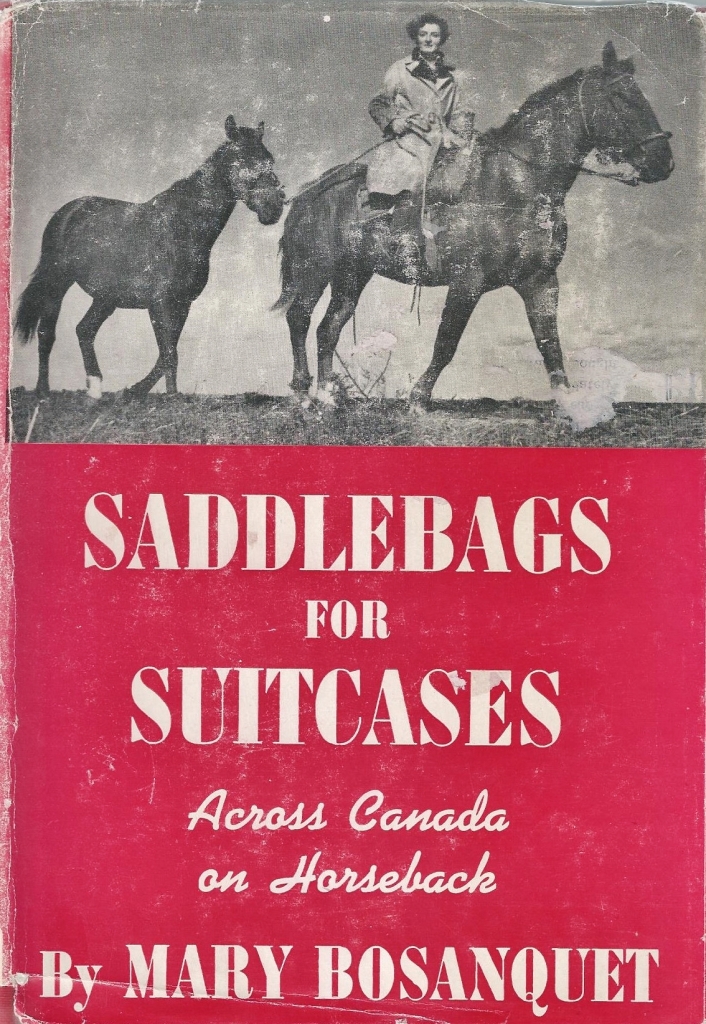
saddlebags for suitcases mary bosanquet 1942 001Saddlebags for Suitcases: Across Canada on Horseback by Mary Bosanquet ~ 1942. This edition: McClelland and Stewart, 1942, 4th printing. Hardcover. 247 pages.

My rating: 9/10

Every year the Rotary Club in a nearby small city holds a massive, week-long book sale. Every year I come away with boxes of books, and out of these boxes there always emerges at least one or two hidden gems. This year that designation goes, hands down, to this unexpected find.

In 1939 a young Englishwoman in her early 20s had an unusual idea, and, being of a straightforward nature and having a methodical sort of mind, set about to see if she could bring the thought into reality.

With the coming war looming on the near horizon, Mary Bosquanet, daughter of a diplomatic family (her father, Vivian Bosanquet, was the British Consul-General in Frankfurt from 1924 to 1932), decided that the time was ripe for a grand enterprise, a heroic self-imposed adventure, to be undertaken before the world erupted once again into widespread conflict. It would be something to remember in the dark days to follow.

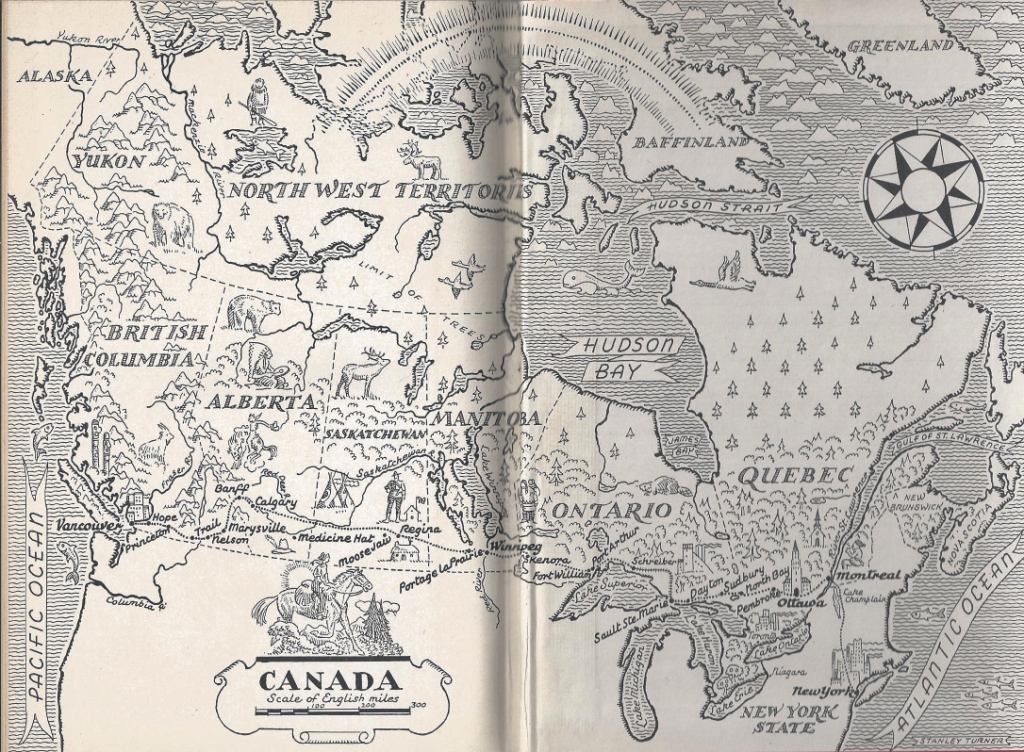
Perhaps inspired by the accounts of Aimé Tschiffely, who from 1925 to 1928 made a 10,000 mile horseback journey from Buenos Aires to New York City, Mary Bosanquet, a lifelong horsewoman and an accomplished rider, decided to try for a relatively more modest but still astoundingly ambitious solo horseback ride: right across Canada from Vancouver heading East.

Mary and her horses Timothy and Jonty achieved the goal, covering an estimated 3800 miles of horse trail, back road, and highway in eighteen months. Of this time, the winter of 1939-40 was spent hosted by a farm family in Ontario. Mary then continued on to Montreal, and then rode south to New York City, where she set sail back to England, to do her part in the war which had indeed broken out shortly after she embarked upon her ride.

map endpapers saddlebags to s bosanquet 001

The trek was not without setbacks. Mary’s first horse, Timothy, chosen from the working herd of the legendary Douglas Lake Ranch near Kamloops, B.C., started showing symptoms of chronic lameness during the challenging Rocky Mountain crossing from B.C. to Alberta. In Calgary Mary acquired another horse, Jonty, to spell Timothy off, and the trio made it to Ontario together, where Timothy was given an honourable retirement from the trek, finding a less strenuous home where his duties required merely short jaunts versus the pounding day-after-day demands of the long-distance journey. Mary continued on Jonty, and the two rode into New York City on a November day in 1940, escorted by an honour guard of mounted policemen, through Harlem, the Bronx, Central Park and into the Mounted Police Barracks.

Mary herself was injured several times during the ride, first breaking her wrist and later seriously fracturing her arm when she and Jonty were enjoying a wild springtime gallop which ended disastrously when the horse stumbled and Mary was thrown against a tree.

She was the recipient of much attention from newspaper reporters as the trek proceeded, was surprised by several offers of marriage from smitten cowboys, attended the Calgary Stampede and was inspired by the displays there to try out bronc riding herself with reasonably successful results, for though she was unseated several times she felt she had figured out the stick-to-the-horse technique quite nicely, learning through doing, as it were. During the later stage of her journey Mary even visited the Dionne quintuplets, and her wry commentary on that experience is a fascinating glimpse at that particular social phenomenon.

During her winter in Ontario, Mary was astounded to learn that she had been publically labelled as a German spy by the very newspapers which had initially applauded her enterprise. Apparently her unlikely undertaking combined with her frequent picture taking and her fluency in German (remember that she spent a number of years in Germany as the British Consul-General’s daughter) were suddenly seen as highly suspicious. Mary lived those slanders down, but one can tell that the slurs stung; she was already agonizing about not being “home” to help out with the war effort, and she debated ending the trek and heading back to England immediately. Encouraged by friends and family to continue, Mary did so, but ended the Canadian odyssey in Montreal, heading from there into the United States, to New York City, and thence home.

Mary kept a journal throughout the trip, though frequently weeks would pass between entries, for she was in a constant state of physical exhaustion while on the road, and writing up the day’s travels was not a priority. Enough was noted to make a fascinating framework for this account, and Mary’s personal musings embellish the exceedingly realistic account of travelling on horseback, finding a place to settle each night (Mary preferred asking for accommodation at farms and homesteads along the way; occasionally she slept under the stars) and the challenges of feeding both herself and her two horses.

She pulled the enterprise off with a budget of eighty English pounds – the equivalent of about £5000 today, or $9500 Canadian dollars, and, needless to say, relied greatly on the kindness of strangers throughout the trip. (My husband, after reading the book, joked that Mary should be the patron saint of today’s couch surfing travellers – finding constant free or very cheap accommodation for herself plus two equine companions was something of a noteworthy accomplishment all on its own, in his opinion. I hadn’t quite seen it that way, but I quite agree!)

I greatly enjoyed Mary Bosanquet’s account of her journey. She has a self-deprecating but never meek voice, a healthy sense of humour, and strong opinions ably defended. I liked her a whole lot by the end of her journey, enough so that I have sought out and ordered her two later memoirs, 1947’s Journey into a Picture, concerning her post-war social work with the YMCA in Italy after her return from Canada, and 1962’s The Man on the Island, an account of a year spent in Oxford.

Saddlebags for Suitcases is, in general, very competently written, but it has amateurish moments throughout, such as the author’s insistence on sharing her attempts at poetry, which, though adding to the charm of this from-the-heart memoir, also bring forth the lifted eyebrow, because to be quite brutally honest she’s not really much of a poet, except in the talented schoolgirl sense. There are great gaps in the narrative as well – and understandably so! – for one day of riding through Saskatchewan is surely much like another.

I loved the early chapters describing the travels through British Columbia, and the journey through the mountains following trails which have now become the Hope-Princeton highway. The changes between then and now are quite astounding; B.C. readers will love the contrast between the still-rural Fraser Valley of the 1930s and today’s overflow-from-Vancouver smog-shrouded sprawl.

The book is a marvelous bit of Canadiana, and a very telling piece of World War II memorabilia, though the action takes place far from the site of the actual conflict.

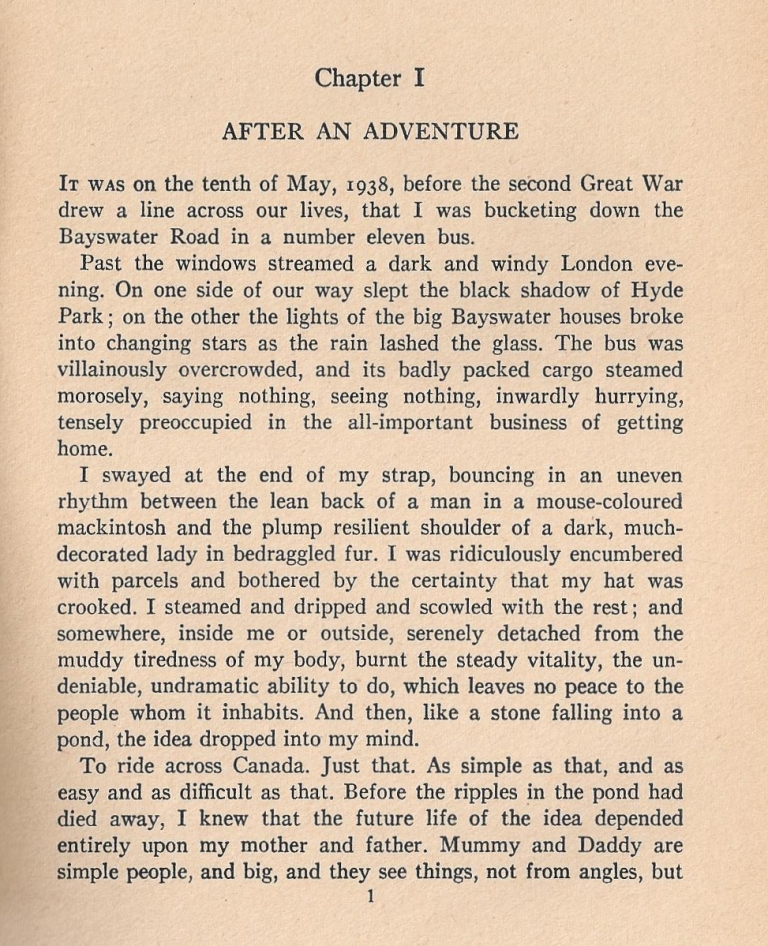
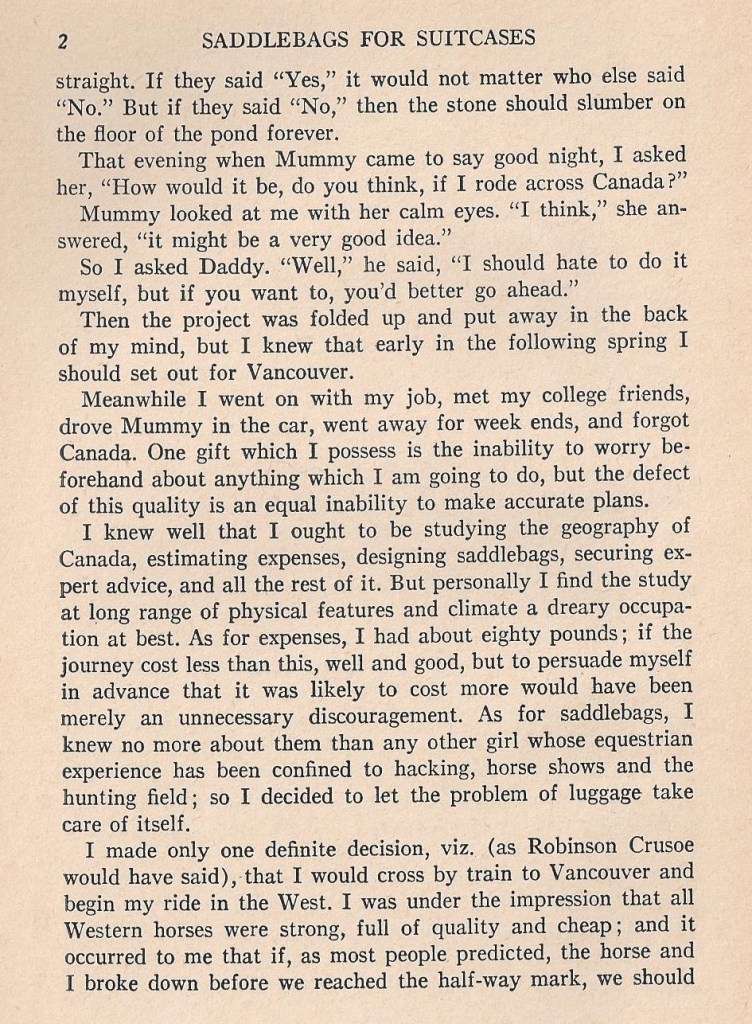
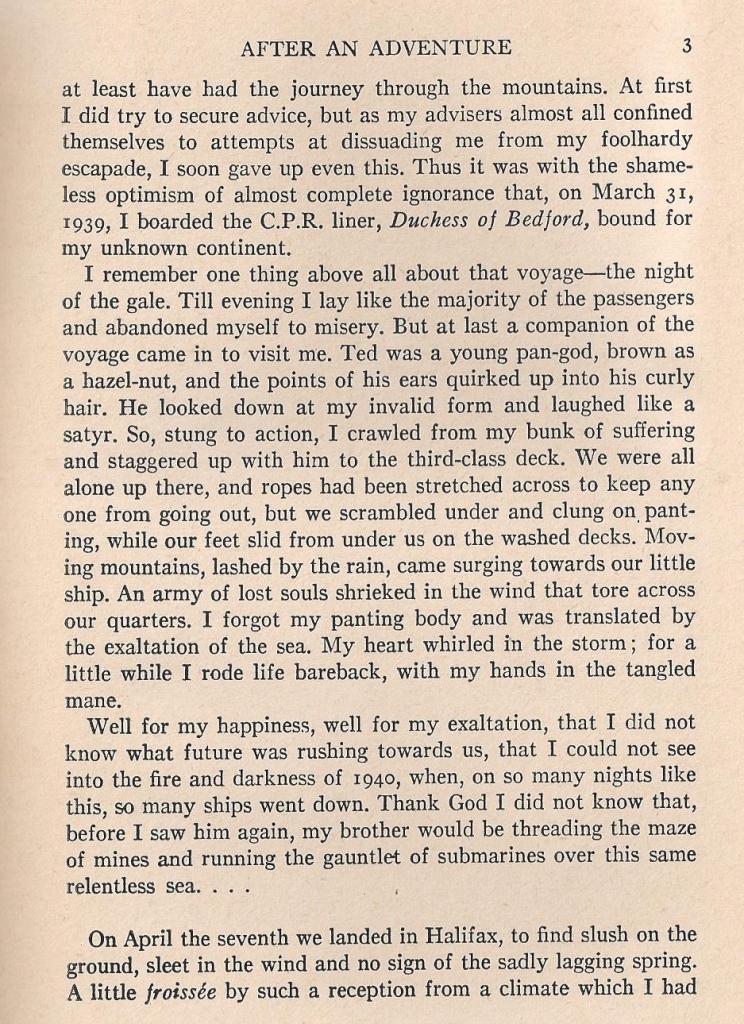
Here are the first  three pages, for those who think this might be a diverting read. The book is in good supply on ABE, and is available as a print-on-demand book through the Long Riders’ Guild publishing division.

saddlebags mary bosanquet pg 1 001saddlebags mary bosanquet pg 2 001saddlebags mary bosanquet pg 3 001 (2)

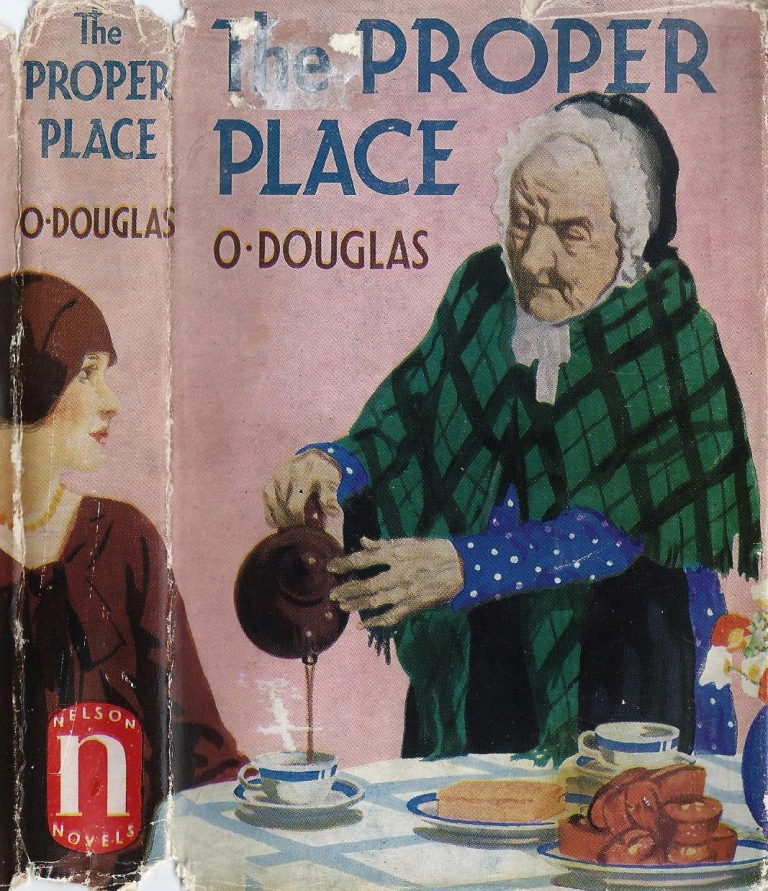
The Proper Place by O. Douglas (Pseudonym of Anna Buchan) ~ 1926. This edition: Nelson, no date, circa 1940s. Hardcover. 378 pages.

My rating: 9.5/10

This has been a week for seeking out “comfort reads”, and who better to provide such than the low-key Scottish writer, Anna Buchan. She wrote under the pseudonym O. Douglas, in order to modestly distance herself from her more prominent brother, the renowned thriller writer (and Governor-General of Canada from 1935 to 1940, when he died in office) John Buchan, a.k.a. Lord Tweedsmuir.

I am therefore dusting off and slightly editing this old post from July of 2012, in which I talk about one of my favourite O. Douglas novels, The Proper Place.

This is my favourite of Anna Buchan’s  books which I’ve read to date. The first time I read this, I had already read the sequel, The Day of Small Things, so I knew what had happened to a great extent before the characters did, if that makes sense. But I think it enhanced rather than detracted from my reading experience, for I came to the story with a pre-existing knowledge of and fondness for the characters and greatly enjoyed expanding my acquaintance with them.

As the story opens, the sole surviving offspring of the aristocratic Scottish Rutherfurd family, Nicole, is showing the family home to a prospective buyer. Of its twenty bedrooms, “twelve quite large, and eight small”, only three are now occupied, for with Nicole’s two brothers perished in the Great War and her father dead soon after, the family now consists only of Nicole, her mother, Lady Jane, and a orphaned cousin, Barbara Burt, who was raised by Lady Jane from childhood.

The three women are finding it impossible to carry on financially, and have reluctantly but sensibly decided that their only option is to sell the Rutherfurd estate and establish themselves in more modest accommodations. Lady Jane has retreated into a gently passive acceptance of her fate, Barbara is resentful but more or less compliant, and Nicole is very much making the best of things and looking hard for a silver lining in their cloud of sorrow and difficult circumstances.

The prospective buyers, Mr. and Mrs. Jackson of Glasgow, having attained great wealth after many years of striving, are ready for the next step in their social advancement, and hope with their purchase of Rutherfurd Hall to establish their son Andy as a “county” gentleman.

This is where the story departs a bit from the expected norm. One would expect the nouveau riche Jacksons to be portrayed as interlopers and figures of mild scorn, but instead we find that the author takes us into their world for a bit and gives an insight into their motivations and intentions that puts us fully on their side. Nicole herself, after her initial, well-hidden resentment, finds herself viewing out-spoken Mrs. Jackson first with quiet humour and soon after with sincere affection, with interesting repercussions further along in the story.

The Rutherfurds find a new home in the seaside town of Kirmeikle, and rent the old and stately but much more reasonably sized Harbour House for a year to see if they will adapt to the life of the town dweller, and to give themselves a bit of breathing space to ponder their futures. They are still very well-off, with sizeable incomes coming from their investments, and they enter easily into the upper strata of Kirkmeikle society.

For a story in which not much really happens, the author packs it full of likeable, amusing characters, and quietly intriguing situations. Though the tone is continually optimistic, somehow this tale escapes being “too sweet” by the pervasive presence of loss, grief and hardship resulting from the war, and by the occasionally pithy observations of some of the more astringent characters.

Nicole and Lady Jane are most obviously our heroines throughout, while Barbara plays a slightly secondary role. She is perhaps the least likeable character due to her deep-seated snobbishness and condescending attitude, but we get to know her well enough to understand the basis of her sometimes negative outlook. O. Douglas is a very fair-minded author, and she generally allows her characters the grace of a deep enough glimpse into their lives and thoughts to allow us to place their words and actions in full context, which was something I fully appreciated in this story.

A gentle, genuinely moving, small-in-scope novel with a stalwart strength to it; a very Scottish sort of vintage story, in the best possible sense.

A more detailed, equally favourable review is here, from the I Prefer Reading  blog of Lyn, from Melbourne, Australia.

http://preferreading.blogspot.ca/2010/09/proper-place-o-douglas.html

Well, I made it through our recent regional vocal, choral and dance festivals in one piece (and very happily, as the performances were, as always, absolutely stellar), only to be broadsided by a completely unexpected situation regarding parental displeasure as to some adjudicators’ decisions.

It’s boiled over and become nasty enough for me to be seriously considered packing my directorship bags and quietly leaving the building, as it were. Having given many years of invisible and earnest backstage support to this community project, I can quite proudly say that I am leaving things in better shape than when I first became involved as part of an ad hoc “rescue committee” when the previous executive walked away en masse, but I now have a first-hand appreciation of why they did so.

Some folks thrive on high emotion and created drama; I am not one of them. I yearn to come peacefully back to the books, my only Big Important Decisions being whether to next read a Wharton, a Whipple or a Pym.

I’ve managed to read some interesting things in the brief moments of downtime I’ve snatched from the fray this past week; a book post will be coming shortly.

I’ve recently read about an young Englishwoman making a solo horseback journey across Canada in the first years of World War II, and discovered diverting modern(ish) novels by A.N. Wilson and W.D. Valgardson, just to mention a few. I do so want to talk about these, and some others, but it will have to wait until another day. (Is that the phone I hear ringing? Deep breath, and back into the fray!)


These three books were not as diverting as I’d wished them to be.

Perhaps in another mood at another time I would give them better reviews – and I do intend to give Priestley’s Adam in Moonshine a second trial at some point – but today I’m calling them as I see them.

It won’t be a brutal massacre, I hasten to say, as all three had various degrees of enjoyability, but neither do I plan to hide my disappointment in their failings to entirely amuse.

As always, one person’s opinion – please don’t take it to heart if you love these novels, and do try to convince me otherwise if you think I’ve missed the point. One of my favourite things is when someone says, “Hey, wait a minute…” and eloquently defends something I’ve scorned, inspiring a second look from a new perspective.

Here we go.

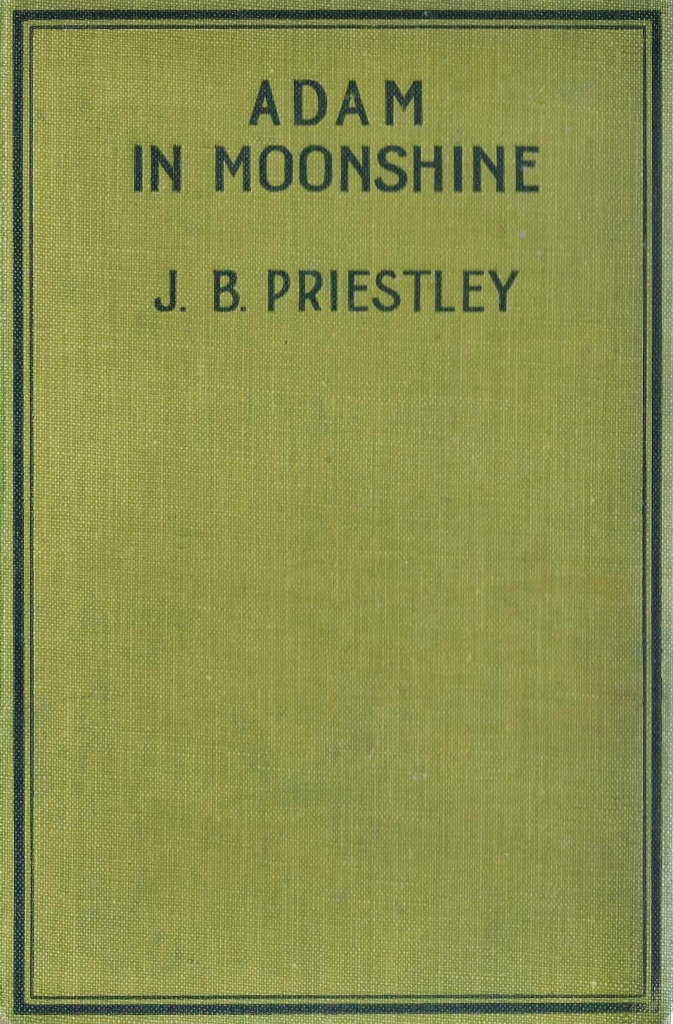
adam in moonshine j b priestleyAdam in Moonshine by J.B. Priestley ~ 1927. This edition: Heinemann, 1931. Hardcover. 293 pages.

My rating: 6/10

That “6” is a very generous rating, given mostly because of Adam in Moonshine’s “first novel” status by a writer I mostly admire, and the more than decent quality of the writing.

The plot, on the other hand, might be described as virtually non-existent. Interesting reading for a Priestley collector, but if the author was someone unknown to me I’m thinking this one would be in the box by the door, waiting to be passed along.

Of course, because it is a Priestley, and because I went to the trouble to seek out and order it from England, and because it is an interesting read in view of the author’s later works, I will keep Adam in Moonshine and, yes, eventually re-read it. But I will not recommend it to the rest of you for amusement purposes, because it is ultimately not even as solid as fluff. Like the referenced moonshine, its genuine but slight pleasures are purely transient.

Handsome young bachelor Adam Stewart, setting off on a country holiday, is in a mopish state. He should be thrilled at the thought of rambling over the dew-fresh North Country moors, hobnobbing with the birds and the bees and the little wild flowers, but he can’t seem to wind himself up to the appropriate mood. And when his railway compartment companion turns out to be a sternly bombastic, pessimistic cleric, the holiday atmosphere deteriorates even further.

But wait – what’s this?! Here comes a third man, flustered and rushing and escorted by a bevvy of lovely young ladies  – well, only three when Adam takes a closer look, but the effect is that of a bevvy – and as the train pulls out to the fervent goodbyes of the girls on the platform, Adam has perked up considerably, because it turns out that there is a rendezvous planned between the mystery man (father of one of the young lovelies) and the girls at the very village which Adam is himself heading for.

The sudden and disastrous opening of an attaché case filled with false beards catapults the action surreally forward, and before he knows it Adam is deeply embroiled in a ridiculous scenario having something to do with a conspiracy to bring back the Stuart line of royalty to the throne of England.

A case of mistaken identity – “Stewart” being assumed to be “Stuart” – takes our Adam into the heart of the not-very-clever plot, and leads to his infatuated and ultimately unfulfilling dalliances with all three of the lovely maidens.

He gets his share of wandering about the moors in all sorts of weathers, and emerges back into the sunlight of his everyday life blinking and bemused. Was it all a dream…?

If so, a jolly solid one, at 292 pages.

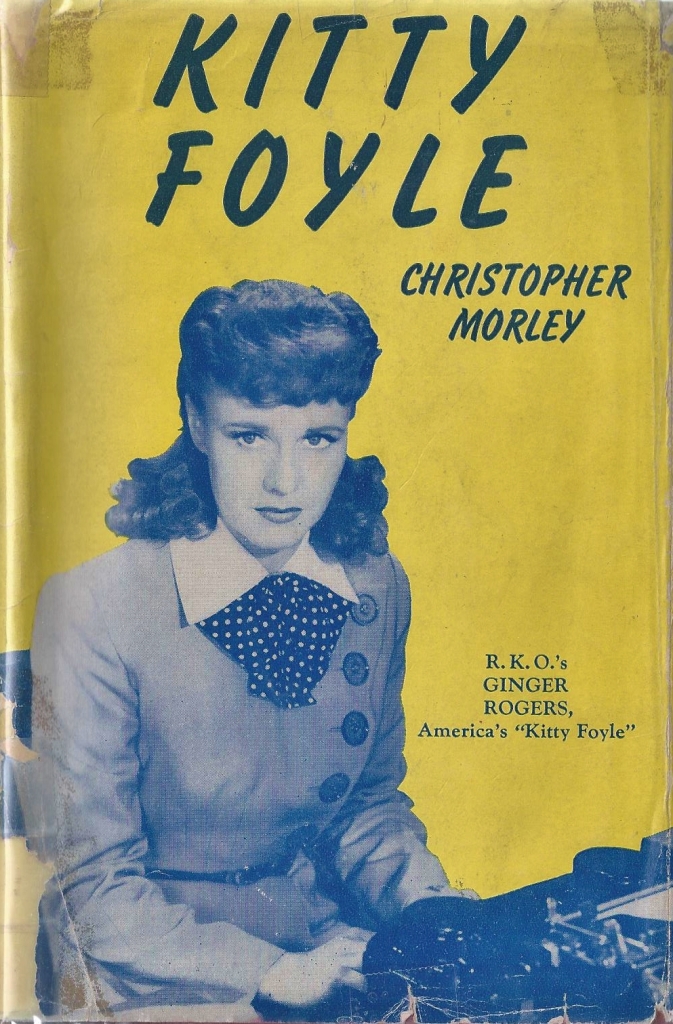
kitty foyle christopher morley 001Kitty Foyle by Christopher Morley ~ 1939. This edition: Grosset & Dunlap, circa 1940, with movie tie-in dust jacket featuring Ginger Rogers. Hardcover. 340 pages.

My rating: 7/10

I enjoyed this one rather uneasily, as Morley’s man-writing-as-a-woman wasn’t entirely convincing, and our heroine’s stream-of-consciousness narration often felt forced.

Chock-full of casual racism towards pretty well everyone of every colour and race, but, to be fair, never in a mean-spirited way.

In our present time, “Kitty’s” casual commentary would be read as utterly politically incorrect – a heads-up for those hyper-sensitive to these nuances – but if taken with a dash of “era-acceptable” tolerance, rather an interesting take on how a character of the time might conceivably think.

The October 1939 Kirkus review had this to say:

Surprise! Surprise! This proves how facile Chris Morley can be, for this is a far cry from everything he has done, whether whimsy, humor or intellectualized satire… This is primarily the story of a shanty Irish girl, how she was born, bred, and put through the mill, done in stream-of-consciousness tough-baby style… But it’s right good reading. Kitty is a high spirited, strong, and very straight young woman. Her early childhood in Philadelphia, daughter of a crude but lovable cricket coach, is nicely done, giving quite a feel of the city, its lethargy, immutable traditions, etc. At sixteen she meets Wyn, a sweet weakling from a blueblood family, whom she is to love for all time. She lives with him, becomes pregnant, but does away with the child because she is unwilling to tie Wyn to her, knowing that he cannot buck his family if he marries her, and knowing that she will be dishonest with herself if she broadens her a’s for him. Career girl on the side, she works later in New York for a cosmetics outfit, and at the close thinks of marriage to a man she does not love for companionship and stability. There’s some telling background detail on Philadelphia, points east and west, there’s some ingenious writing on the stunt side, but all in all it’s semi-light fiction…

There you pretty well have it.

I confess I was a bit taken aback by the frankness of much of Kitty’s narration – she discusses the most sensitive topics with slangy candour – the physical relationship between her parents, her father’s prostate disorder, the realities of living with chamber pots and a “backhouse” for toilet purposes, her own adolescent physical development, including the onset of her first menstrual period while travelling alone on a train, the sometimes very active sex life of the single “white collar” working girl, an unplanned pregnancy and her subsequent abortion of the baby…all in all, rather strong stuff for a popular mainstream novel. No real surprise that it was soon labelled as “filthy” by various church groups once its bestseller hype brought it to their attention.

Mixed with this hyper-realism is a strand of fairy tale fantasy, for Kitty is portrayed as being something of a perfect person – smart, funny, beautiful, and very lucky in her casual acquaintances, and always, despite her frequent hard knocks, falling jam side up.

Sure, she voluntarily gives up her One True Love, the aristocratic Wynnewood Strafford VI, because she is so darned sterling-natured as to want to spare him the disgrace of having a not-quite-top-drawer wife, but it’s not the hardship it might be (aside from the “he and she will secretly pine forever” bit, and that abortion) because going her own way seems to be Kitty’s reward to herself, and fate proves consistently ready to cushion her every fall.

Kitty Foyle was made into a very successful 1940 movie, starring Ginger Rogers in her first “serious” movie role. “Very successful” should be repeated, as her portrayal of Kitty Foyle won Miss Rogers the 1941 Oscar for Best Actress, which would perhaps make this novel one for the vintage movie buff to investigate.

Chock full of period colour, and fast-moving enough to keep one entertained, so I will say “check it out” to those so inclined, but to be completely blunt this is a very minor sort of novel – Kirkus’s “semi-light” says it well. Solid melodrama, in case that hasn’t quite come across.

And oh, yes, this is the same Christopher Morley who wrote Parnassus on Wheels, The Haunted Bookshop, and the very weird (as in featuring anthropomorphic dogs) Where the Blue Begins, among dozens of other novels. Kitty Foyle is nothing like any of these; you have to give Morley credit for not getting stuck in any sort of a “formula” groove!

Of these three novels, Kitty Foyle is the only one I would recommend as worth going to some effort to experience, but mind the caveats and please don’t expect a masterpiece of any sort, though the writing is much more than competent.

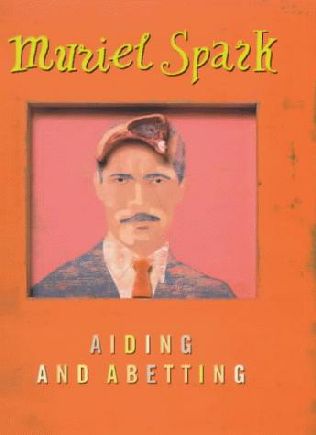
aiding and abetting muriel sparkAiding and Abetting by Muriel Spark ~ 2000. This edition: Viking, 2000. Hardcover. ISBN: 0-670-89428-1. 182 pages.

My rating: 4.75/10

Hmmm. An odd little novel, even taking into consideration the quirkiness of this particular writer.

I occasionally felt the “chuck it across the room” urge, in particular during the cannibal scene near the end (yes, you read that correctly), but I soldiered on and made it to the end with an unwilling smile on my face. Dame Muriel pulled it off yet again, to my reluctant admiration – I finished it despite myself.

So – does everyone remember Lord Lucan? If not, go take a quick gander here.

For summation of the plot of Aiding and Abetting, I am going to fall back on yet another Kirkus review (they are so nicely succinct, when done well) this one from November of 2000.

With her usual and famous narrative economies—though without the deeper energies she’s created in other of her books—Dame Muriel weaves her own fabric out of the real-life bits and threads left by the vile Lord Lucan.

On November 7th, 1974, the seventh Earl of Lucan mistakenly bludgeoned to death his children’s nanny instead of his divorced wife—whom he managed only to wound badly in spite of his feeling that “destiny” called for her death (he was angry, it seems, that she’d been given child-custody). And then? After wreaking his cruel havoc, the shallow Lucan quickly disappeared, wanted for murder and attempted murder but aided by influential friends in escape and hiding. Twenty-five years later, as the present novel opens, there appears in the office of a Paris psychoanalyst a patient claiming to be Lucan—followed by another claiming the same. Which, if either, is the real Lucan? And what does he, or they, want? Money, not surprisingly, which he/they hope to gain by blackmailing the shrink, she being one Hildegard Wolf, herself still wanted for an earlier and successful life of criminal fraud under a previous name—a vulnerability that makes her, think the Lucans, unlikely to turn them in. But of course it’s got to be cleared up as to which Lucan is Lucan—as, meanwhile, other complications ensue, such as Hildegard Wolf’s quick disappearance into hiding in deepest London; the pursuit of the real Lucan by a pair newly in love but connected from far back indeed with Lucan and the horrible murder; and the skilled and timely maneuverings of Pierre, Hildegard’s lover back in Paris, which will result in—well, in the Waughesque end of the story.

Quick, incisive, often entertaining, sometimes mysterious, at a moment or two compelling, but overall and generally, slight…

I nod in agreement with the summation of the last line, except for the incisive bit.

I thought the tale much too repetitive, in fact, and not so much incisive as lazy. Corners were indeed cut, regarding character and plot development, but a certain cluster of sanguinary details was endlessly repeated, and in my opinion needlessly so, for I felt that they weakened the impact, though I suspect the author felt they might have some sort of talismanic effect. (“Blood, blood, blood…”)

The final fate of one of the Lucans is bizarre even for a typically morbid Spark dénouement, and do I detect a certain racist element (the “primitive” Africans) which is out of place even in a purely satirical end-of-the-20th-Century tale?

Rated rather generously at very close to a “5” because of who the author is, for I have enjoyed many of her other novels in varying degrees, though usually with some reservations.

As an example of her end-of-career work (Aiding and Abetting was her second to last published novel) it is acceptably diverting, but it’s not one of her best by a far cry. More of a novella than a novel, and not particularly well-developed or well-edited. In fact, for such a generally crisp writer, this one is sloppy. Firmly on Muriel Spark’s B-list, in my opinion.

What one is left with most memorably is the thought of all that sticky, sticky blood…


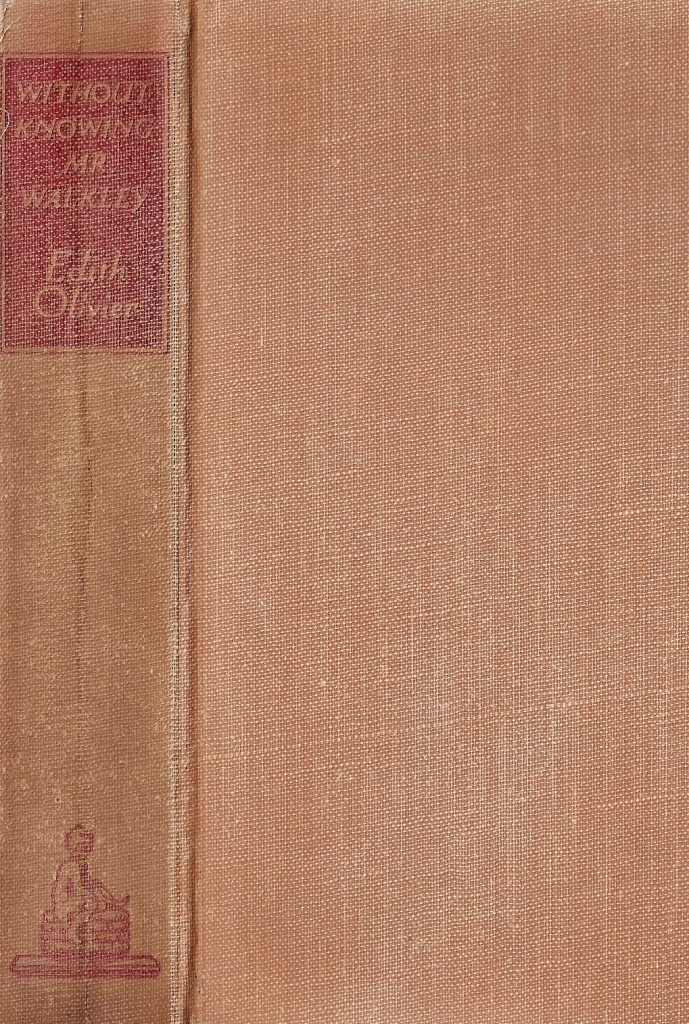
without knowing mr walkley edith olivier 1938 001Without Knowing Mr. Walkley: Personal Memories by Edith Olivier ~ 1938. This edition: Readers’ Union, 1939. Hardcover. 320 pages.

My rating: 9.75/10

I must say I was initially discouraged from taking up this gentle memoir by the mysterious (to me at least) reference to “Mr. Walkley”.

Edith Olivier I already had a nodding acquaintanceship with, as being the author of a number of highly regarded (though long out of print) 1920s’ and 1930s’ novels, among them The Love Child, Night Thoughts of a Country Landlady, and The Seraphim Room, as well as biographies and reports of interesting occurrences in her native Wiltshire and farther afield. But who was Mr. Walkley? Should I know this name? It didn’t ring a single tiny chime.

Luckily Miss Olivier’s first paragraph of her memoir proper set my mind at ease, and this reference is the first and last concerning the titular character, which is slightly odd (I had expected to hear more about Mr. Walkley, seeing as he features so prominently in the title), but completely indicative of the style of this meandering, stream-of-consciousness, very anecdotal, and utterly delightful book.

For your reading pleasure, here is an extended sample of the first section of Edith Olivier’s “personal memories” set down on paper. There is an eight-page italicized preamble to happily work through first, describing the setting of her first childhood home, Wilton Rectory, a pattern repeated as the settings change throughout the memoir, to Salisbury Close and Fitz House, and back to Wilton.

I used to say that if I died without knowing Mr. Walkley, I should have lived in vain. And now – I have. Or  rather, Mr. Walkley died without knowing me. He was The Times Dramatic Critic when I was in the schoolroom, and in those days it was my passionate desire to become an actress. The idea was grotesque. My father thought a professional actress was as improper as a Restoration Play, and an actor was almost as bad. My brother Alfred, in spite of his irresistible charm, was never really forgiven for having preferred the stage to his seat at the bottom of the Infants’ Class in Dr. Marks’s school for Burmese Princes in Rangoon. Alfred was on his way to a post in the Burmese Civil Service, and he was put to learn the language in this humble position, when a travelling company came to the town. It was too much. He was ‘off with the raggle-taggle gipsies’ and he went through India with them, returning at last to go on to the London stage. My father minded this so much that my own secret desire was never even mentioned, and Mr. Walkley remained my one link with the world of my dreams. It was through his eyes alone that I saw most of the plays of those days, for we seldom went to London, and our only ‘theatre’ was an occasional visit to Salisbury of Mr. Benson’s Shakespearian Company. It is true that I was present at Mrs. Patrick Campbell’s first appearance on the stage, but that took place at Wilton when Lord Pembroke had invited Ben Greet’s Company to play As You Like It in the Park. It had been played there once before, when Shakespeare himself was one of the actors. It is curious that as a girl I saw so few plays, for we all loved acting. Even now I have never seen a pantomime, though I have acted in more than one; but my father never imagined that his children could enjoy what would have bored himself, and a provincial pantomime did not attract him.

It would be unfair both to him and to the theatrical profession to suggest that the stage was my father’s only taboo where his children were concerned. He saw little of them when they were small, but when they grew up, he liked them always about him. Mrs. Morrison called us the Four and Twenty Blackbirds, and said that Papa liked to think that whenever he wanted to open the pie, the birds were all there, ready to begin to sing. It is true that though he always sat alone in the study, he liked us within call. He hated anyone in the house going out to parties. The coming and going worried him. He was truly conservative. As the family party had been yesterday, so he wished it to be to-day, and to-morrow, and so on ad infinitum.

He could not therefore approve of any proposed career for his daughters, and this objection extended to matrimony. He was not actually opposed to the institution in itself, for had he not himself twice married, and entirely happily? But in the case of his children, and more especially of his daughters, his standard was too high. He had an instinctive, sub-conscious prejudice in favour of Archbishops of Good Family as husbands for them, and by ill chance, none of these presented themselves. When my eldest sister fell fatally in love with a young naval officer of blameless character, her engagement was one of those things of which it is not fitting to speak in the family circle; and she only succeeded in marrying the young man at last, by the unfailing courage and determination which persisted through four years of opposition.

I rather shared my father’s fancy for the unattainable in bridegrooms; and the consequence of the various ‘inhibitions’ (as they call them to-day) which he laid upon our youthful ambitions, has been for me a happy life spent, not upon the stage or in any of the other professions which presented themselves, not as a wife, mother, mother-in-law, and grandmother (the fate of most of my friends), but as a lifelong inhabitant of Wiltshire, which is in my eyes, the most beautiful of the English counties…

If Edith Olivier’s father was something of a stern Victorian-era patriarch, it doesn’t appear to have soured Edith’s disposition, as her references to both of her parents are both clear-sighted and loving, and the family seems to have lived in quite admirable domestic harmony, stage-struck brothers and pining-for-matrimony sisters being the exception to the father-knows-best rule. One rather gathers that there was quite a lot of rather mild, what-he-doesn’t-know-won’t-grieve-him goings-on amongst the children of the family as they entered into their adult years, for the Reverend Dacres Olivier was exceedingly occupied with his duties as Rector of Wilton, and later as Canon of Salisbury Cathedral, and his family lived a somewhat separate life, though entwined throughout with predictable rhythm of the Anglican church year.

Without Knowing Mr. Walkley is broad in scope, touching briefly but most intriguingly on Edith’s childhood, on the memorable people she came into contact with – from rustic villagers to the brightest of the Bloomsbury set – Siegfried Sassoon and Rex Whister were intimates, as was Cecil Beaton – and on vivid recollections of the Great War years, including memorable descriptions of troops assembling on Salisbury Plain.

Edith was deeply involved in establishing the Women’s Land Army corps, and received an Order of the British Empire for her services in this regard, and this memoir touches on the difficulties faced with convincing the Wiltshire farmers to accept female workers in place of the men gone off en masse to war.

Edith was also highly tuned in to what one might call the “spiritual world” – in the non-church sense – being very open to the idea of visions from times past and supernatural manifestations, and experienced her own time travel episode among the derelict standing stones of Avebury.

I was deeply pleased when, after reading this memoir, I discovered that others have also found much to admire in this very obscure little volume.

If my description Without Knowing Mr. Walkley at all interests you, please visit the following for much more, including extensive quotes and much background information on this fascinating woman and her very full life.

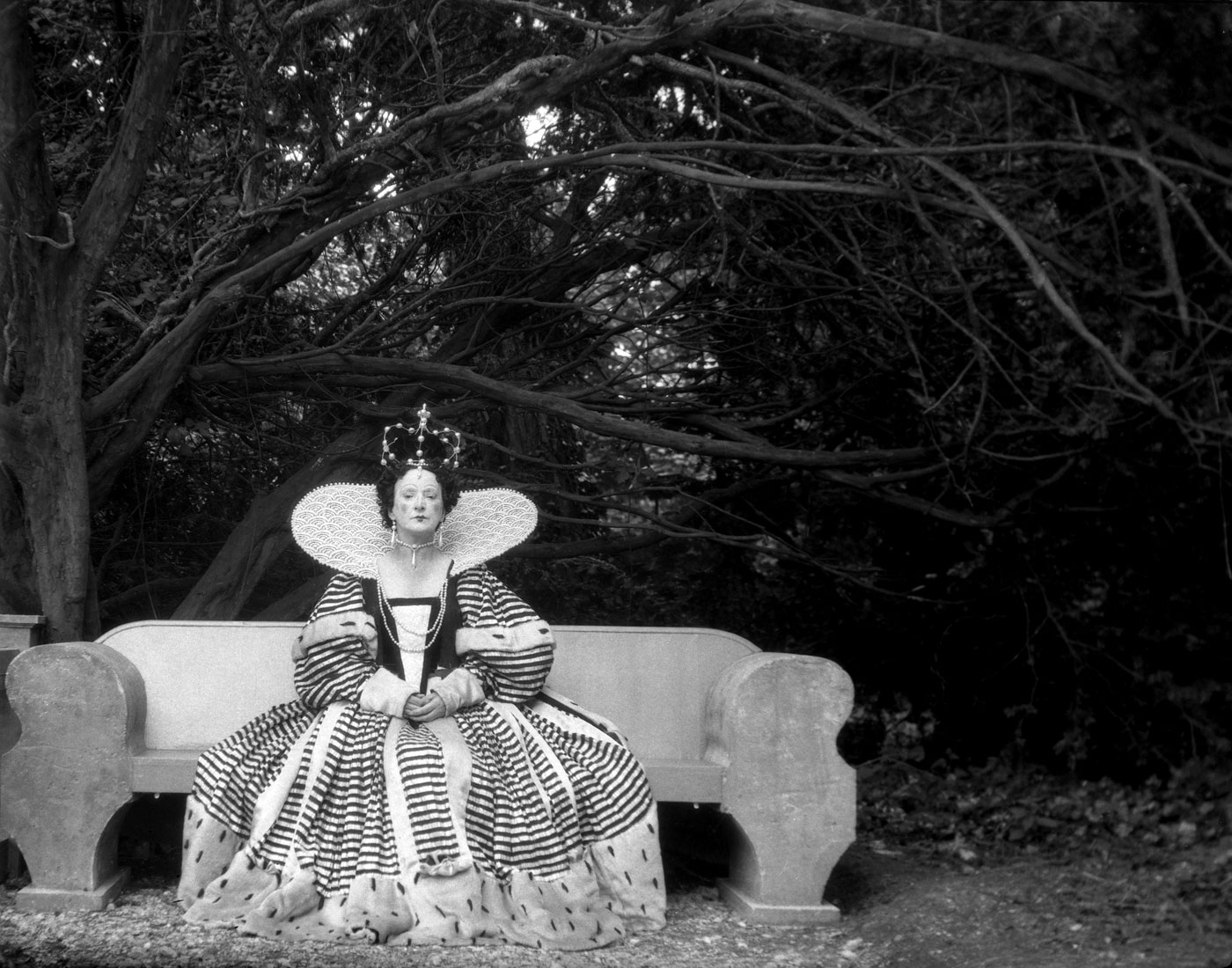
I will leave you with an image of Edith Olivier, photographed by her friend Cecil Beaton. This was taken before a pageant at Wilton, in 1939. Edith is representing Queen Elizabeth I. (And I must mention that at this time she was also Mayor of Wilton. She was the first woman to serve on the town council, and was then elected its first female mayor, holding the position from 1938 to 1941.)

edith-olivier-as-queen-elizabeth cecil beaton


What a whirlwind of a half-month this February has been. I’ve just today cleared my desk of a major clerical project which has kept me busy from early morning hours till late at night for the last several weeks, the creation of the hundred-page program for our regional youth performing arts festival, and all that is left now (of that particular project at least – others still loom) is the tidying up – the clearing away of pages of scribbled notes from my desk, no-longer-needed files from my computer desktop, and scads of red-flagged messages from my email inbox.

Every moment not typing, proof-reading or chasing down errant schedules and discipline directors has been spent up a ladder hammering, sanding or painting, as we are still very much in carpentry-home-renovation mode, though we did take a day or two away to do some highly enjoyable old-car shopping, dallying with the idea of acquiring an older Jaguar, and going so far as test-driving a not-very-well-kept mid-1980s XJ Sovereign. That was fun enough in its way, but we reminded ourselves that playing about with shabby ex-luxury cars is all well and good, what we really need is a new-to-us one-ton farm truck.

So  we bought a Mercedes.

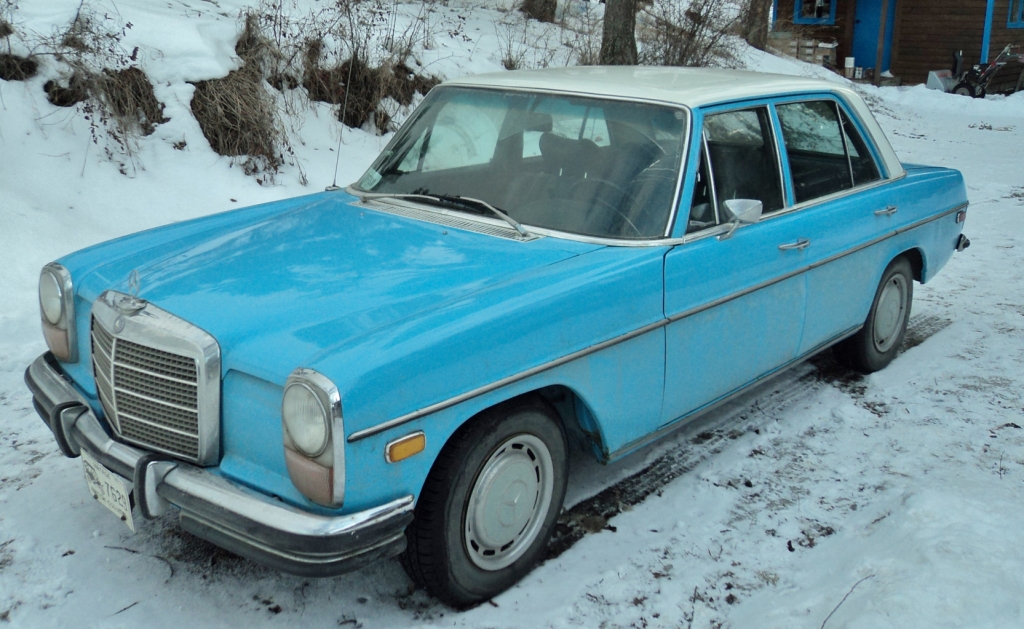
And not a relatively sensible newer Mercedes, or a jaunty coupe or convertible to join the several other vintage sports cars we cherish with quiet pride, but a getting-on-elderly – well, in car years – 1972 – decidedly sedate, 4-door W114-250/8 sedan, the same model used for several decades as a taxi throughout Europe, Africa and the Middle East. It’s had a cosmetic facelift, but is completely stock under the shiny new paint – the engine compartment and interior tell the true tale. Though definitely mature, she purred along very nicely when we took her for a test drive, and her obvious good nature completely won us over. (And she wasn’t all that expensive, as these sorts of cars go. A bit of a deal, in fact. Or so we fervently hope!)

xxx

Meet Hanamori, a reference which Japanese manga-anime lovers will surely catch, though which I expect will bemuse the uninitiated. Living with a teenager and sharing a single video screen situated in our home’s common area leads to these sorts of odd cultural exposures. (Hint to those who might have an idea of what we’re talking about: Remember the Mercedes Benz otaku chauffeur in Princess Jellyfish? We thought any sort of good karma might help, and the jokingly proposed name seems to be sticking. Though PJ‘s particular Hanamori is very much masculine, the name itself is generally regarded as feminine in most contexts, with reference to flowers, so we will see how it suits in practice. We now need a small Clara as a mascot, to tuck into the glove box, being utterly averse as “serious” car people to things dangling from the rear-view mirror.)

Well, don’t get the wrong idea about my life, for it’s definitely not all beer and skittles around here, and the fates, deciding I was much too happily giddy gloating over my nice new-to-me toy, threw in a humbling twist.

Several days ago I took a tumble and pulled my hamstring, and have been in varying degrees of discomfort ever since. (On a scale of 1 to 10, 10 being the worst pain one can imagine, as the triage nurses in Emergency like to say, I have at times this week hit a solid 8. Honest truth. This relatively unserious but completely debilitating injury is painful.) I can’t properly walk, let alone drive or climb ladders, and sitting too long at my computer has been agony, though I did manage to prop myself up in a delicately balanced position which allowed the completion of the paperwork project.

Now that I’ve conquered that, I shall at last take my doctor’s sage advice, put my feet well up for at least part of each day, and settle down to some recreational reading while waiting for this thing to heal enough to allow a return to some sort of normal mobility. Which also means I may swap my computer for my daughter’s laptop, and pound out a few book reviews.

A silver lining to this personal cloud, in fact.

Next post, back to books.


Some months ago I was intrigued enough by this post by the my fellow Margery Sharpite Rebecca Rose, aka GenusRosa, to seek out from antiquarian booksellers in England all three of Ethel Armitage’s garden journals, published in 1936, 1939, and 1946.

I am overdue in my thanks; these books are things of joy to the reader-gardener, being that perfectly balanced sort of garden writing which delights by its personal asides and anecdotes as much as by its descriptions of garden flora.

Without further ado, a Valentine’s Day observation from (one might assume) 1935 or thereabouts, from Ethel Armitage’s first book, A Country Garden, 1936. Engravings by John Farleigh enhance this first edition, published by Country Life Books.

Birch Trees - engraving by John Farleigh - from A Country Garden by Ethel Armitage, 1936

Birch Trees – engraving by John Farleigh – from A Country Garden by Ethel Armitage, 1936


14th. One hears that valentines are coming into fashion again, though none came this way, nor would it really be very suitable if they did.

But valentine or no valentine, the day brings a certain excitement with it, for the birds are supposed to pair, though many of them have anticipated the date and evidently gone off to Gretna Green. The rooks have been busy for some little time, and their nests look as transparent and draughty as ever. How terrified the young birds must be perched up so high; how frightened they must feel when the wind blows strong and, all day long, they sway from side to side! One can only hope they do not realize their peril when a brother or a sister is jerked from the nest and disappears into space. Probably all they are able to think about is food, and it is not until later on they grow wise and wear sleek black coats and sit in Parliament dealing out justice to the bad rooks who do not conform to the law.

Almost every year a pair attempts to build in one of our trees, but whenever this happens the other rooks come and tear the nest to pieces. We should very much like to have rooks here, but it is evidently against their policy, or else we are not considered worthy to possess a rookery. We prefer to think the rooks have a town planning scheme of their own, and that we are scheduled as an area unsuitable for building purposes, than that our characters are at fault in this matter.

After all a valentine did arrive. It came by the second post, and is a book on garden pests, and though most interesting in its way, we fear it makes no mention of the pests from which we suffer most, such as sheep and chickens and pigs, and even cows, all of which have, from time to time, visited us. Two goats once passed through the garden and, though their owner declared they possessed the very highest pedigree and were extremely particular about their food, they removed all the Brussels sprouts and a large fuchsia bush before they were hurried out. One year thirteen young pigs – truly an unlucky number except for the pigs – accounted for all the spring cabbages, and after them several ducks came and flattened out most of the lettuce.

But the worst pest we ever had was a bull.

At the end of a beautiful, but very hot summer day, we had gone out into the garden, partly to enjoy the cool of the evening and partly to do a little much needed weeding. Happening to look up from my task I saw a large red bull coming slowly up the little drive; as I hurried into the house I shouted the dire news to B., who was in another part of the garden, and just heard his answer of ‘oh rot’, as I slammed the front door.

The bull, most fortunately, turned on to the lawn, and from the windows could be seen browsing on-of all things -the roses. He tore two bushes from the ground, but not caring much about their flavour or the thorns, left them lying on the grass. In the meantime B., having gained the house, was telephoning to the bailiff, who, before much more damage was done, sent help, and, as they say in the news- papers, a capture was effected.

But that visit had rather far-reaching consequences, for the two rose bushes had been given by an elderly cousin whose taste in plants did not always coincide with ours. Unluckily she suspected this, so when she came to see us she always took particular care to inspect any plant she had sent. Now, how could she possibly be told that her two especial roses had been destroyed by a bull; why should he have selected those and no others? It was altogether too tall a story: one could not even expect her to believe it.

So when, the following week, she came, some quite unconvincing tale was invented, and was told in so halting a manner that, from the very first moment, it was obvious she believed it to be untrue. Since then there has been a distinct coldness towards us, and we have received neither plants nor anything else.

So we hope this new book will give some hints as to the best way of keeping bulls and other beasts of prey out of the garden.


Indeed.

Happy Valentine’s Day to you all, dear fellow readers. May this day bring you some sort of suitable treat, whether book, flower, message from a friend (or lover!); something delicious and to your taste, whatever it may be.