Archive for the ‘Read in 2013’ Category

And the last late reviews from February of 2013.

*****
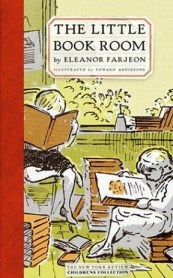
the little bookroom eleanor farjeonThe Little Bookroom by Eleanor Farjeon ~ 1955
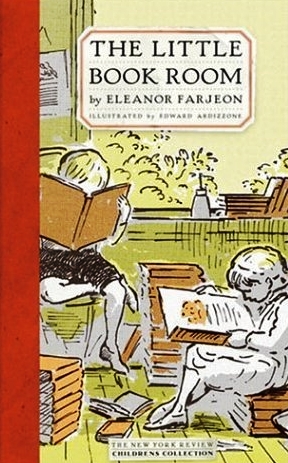
This edition: New York Review Books, 2003. Hardcover. ISBN: 978-1-590170-489. 336 pages.

My rating: 8/10

A collection of twenty-seven delicately written fairy tales. Aimed at the younger crowd, but possibly more suited to real appreciation by adults. A few are slight, gentle and – in the very best sense of the word – childish, but others are rich in their imagery and complexity. The stories were selected by Eleanor Farjeon herself, and are deliciously and perfectly illustrated by the one and only Edward Ardizzone. Rumer Godden’s Afterword is a lovingly worded compliment to the author.

My own pretty well grown children are sadly long past the stage of being read to, but I am keeping this one close by both for personal pleasure and perhaps to one day share with as yet theoretical grandchildren.
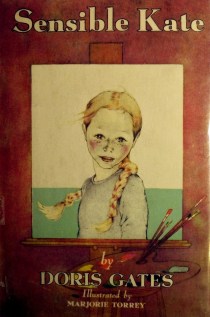
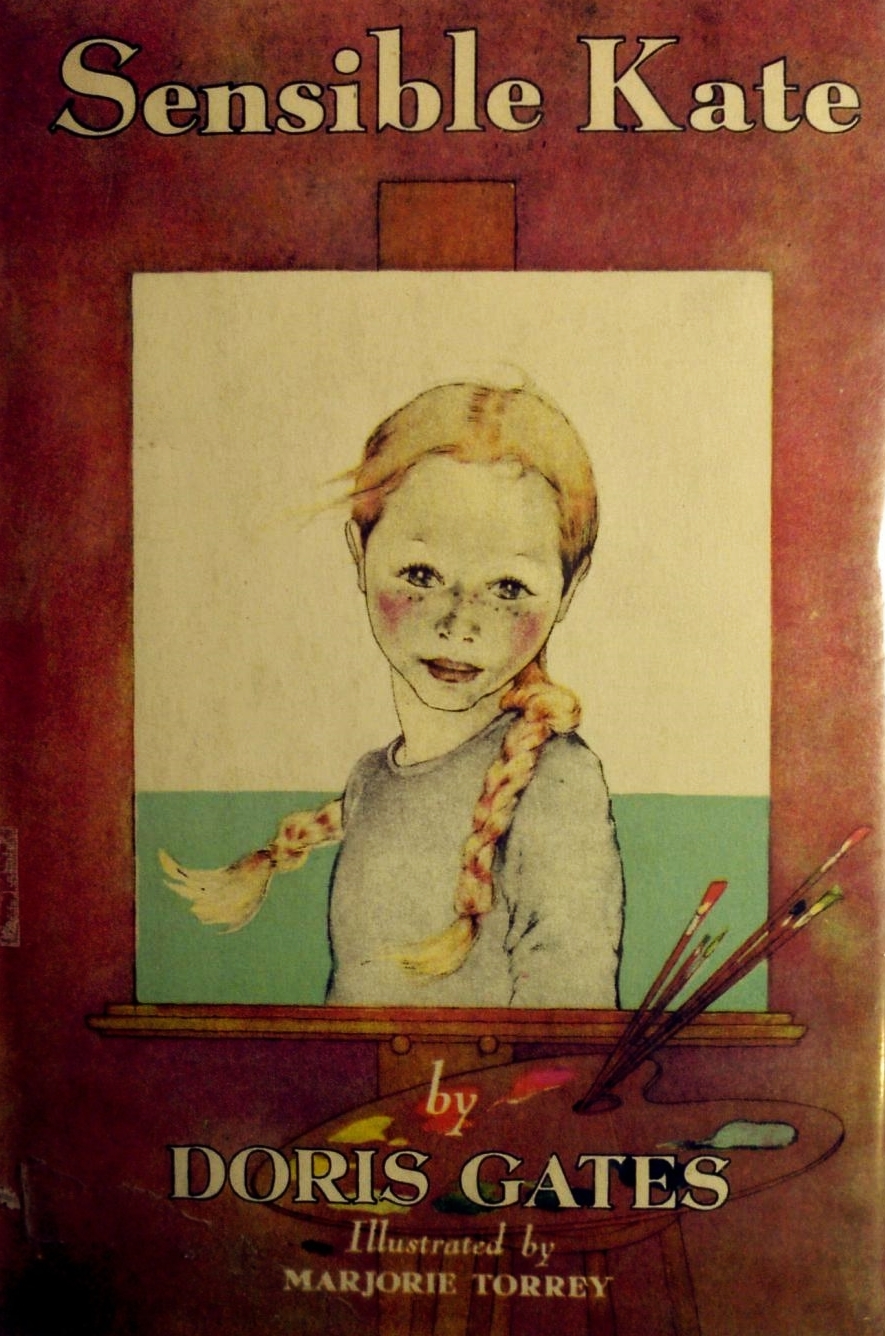
sensible kate doris gatesSensible Kate by Doris Gates ~ 1943

This edition: Viking Press, 1969. Hardcover. 189 pages.

My rating: 6/10

Doris Gates is perhaps best known for her Newbery Award runner-up children’s novel Blue Willow, as well as the widely read Little Vic, both viewed as important early examples of “realistic problem fiction” for young readers, not a genre I am particularly fond of as a rule, but which is perfectly acceptable when the characters and their story are over-emphasized over the “problem”. Doris Gates gets a pass; these are “real” novels no matter how they’re categorized.

Sensible Kate was Gates’ third novel, and it is a pleasant example of children’s literature of its era, with the young heroine facing her rather daunting challenges with good expectations of positive outcomes. The Kate of the novel is a likeable girl, flawed enough to be realistic, but with a solid core of goodness which makes her most appealing.

Kate has been an orphan as long as she can remember, and has been cared for by various “shiftless” relatives since babyhood. Now the relatives have decided to move out of the state, and they have decided to turn Kate over to the county relief office. Kate is placed as a foster child with an elderly couple, The Tuttles, and she soon makes herself beloved of them and many others whom she meets, including a young married couple, both artists, who are the very reverse of sensible in their daily affairs, and who are most appreciative of Kate’s practical talents.

A sweet but never saccharine story, with some interesting characters and scenarios which lift it a little over the average for its vintage and genre. Possibly one might pick up on the lightest shade of Anne of Green Gables, what with the red-haired heroine being an orphan and going off to live with an elderly couple, but the parallel ends right there. Kate is most certainly no Anne, and her creator has not attempted to model her so.
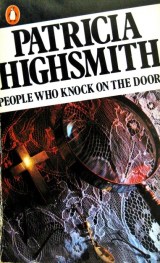
people who knock on the door patricia highsmithPeople Who Knock on the Door by Patricia Highsmith ~ 1983
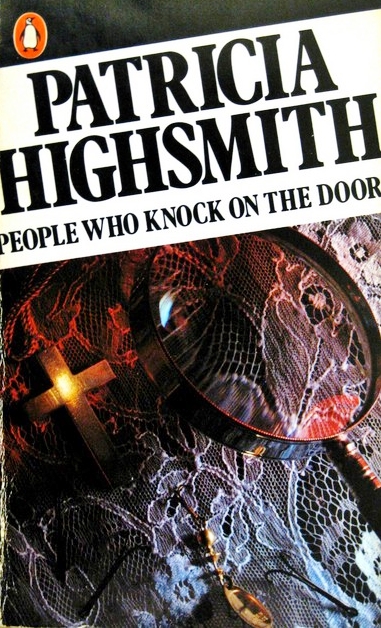
This edition: Penguin, 1983. Paperback. ISBN: 0-14-006741-8. 356 pages.

My rating: 6.5/10

A rather unusual book, a noir almost-thriller with some odd twists, including a subplot involving a teenage girl’s abortion. Despite its date of publication, it seems to be set in the 1950s, and has a decidedly vintage feel to it. This is the first Patricia Highsmith book I’ve ever read, though I’ve seen several of the movie adaptations of her work, Hitchcock’s Strangers on a Train, and of course the Venetian-set Talented Mr. Ripley, so the dark psychological elements in this one came as no surprise.

Here we have a normal middle-class family, the Aldermans, with an insurance-salesman father, stay-at-home mother volunteering a few days a week at a children’s hospital, and teenagers Arthur and younger Robbie. Arthur is getting ready to go to college, has a satisfactorily active love life, and he is poised to get on with his life when his whole world takes a sickening lurch.

Robbie falls ill with a mysterious infection and is suddenly on the verge of death. The doctors turn away in dismissal – the boy is going to die –  but Mr. Armstrong refuses to give up hope, and prays diligently to God for a miracle. Robbie recovers, and the previously un-religious father is so moved by the experience that he embraces religion and joins a highly evangelistic Christian sect. Mrs. Armstrong and Arthur view this at first with mildly perturbed eyes, but Robbie fully embraces his father’s new-found faith, with eventual horrifying consequences.

A can’t-look-away, exceedingly uncomfortable depiction of a dysfunctional family and its twisted disintegration, with none of the characters completely faultless, including our pseudo-hero Arthur, the closest thing to a chief protagonist in this tense tale.

 the wedding of zein tayeb salihThe Wedding of Zein by Tayeb Salih ~ 1968

This edition: New York Review Books, 2009. Softcover. ISBN: 978-1-59017-342-8. 120 pages.

My rating: 7/10

Two short stories and a short novella – the title story – by the late Sudanese writer Tayeb Salih, set in the country around the northern Nile .

The Doum Tree of Wad Hamid speaks to the importance of tradition, and to the quiet resistance of the people of the Sudanese country to outside influences.

A Handful of Dates concerns a young boy who becomes aware for the first time of the realities of rich and poor, and the role his grandfather has played in a neighbour losing his inheritance.

The Wedding of Zein concerns an unlikely hero, a physically deformed “village idiot” (for want of a better term), who insistently falls in love with one after another village maiden, only to be disappointed as they always marry someone else. Imagine then the shock of everyone when it is announced that Zein has at last found a prospective wife, and an unexpectedly wise and beautiful one at that.

This book gives a diverting glimpse into an unfamiliar world, and the stories are told with clarity and understated, rather sly humour. A short but worthwhile collection.
Read Full Post »

Here are a few more catch-up reviews from February of 2013.

*****

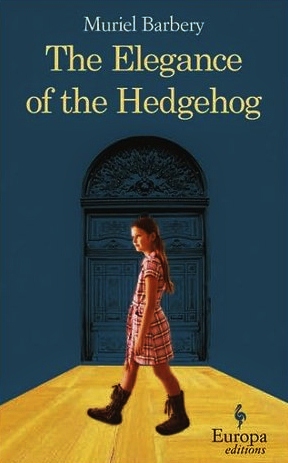
the elegance of the hedgehog muriel barberyThe Elegance of the Hedgehog by Muriel Barbery ~ 2006

This edition: Europa, 2008. Translated from the French by Alison Anderson. Softcover. ISBN: 978-1-9833372-60-0. 325 pages.

My rating: 8/10

I was moved to read this bestseller by the recommendations of respected fellow bloggers; sadly I cannot recall exactly who those were at this point in time! But to them I must say, “Thank you.”  For this was indeed a charming story.

In an exclusive Paris apartment building there dwells, upstairs, a snobbish upper-class family: mother, father, and two daughters. The youngest of the girls, twelve-year-old Paloma, is a strangely precocious child, given to thoughts well beyond her years. In her diary, which makes up half of the book, we learn that she is seriously disillusioned with life, and plans to commit suicide on her thirteenth birthday, unless something occurs to give her faith in the value of existence.

Downstairs is the stout, plain, elderly, and very obviously unintelligent concierge, Renée. Renée stumps around brusquely carrying out the tenants’ orders; she is blatantly uninterested in improving herself, and she carries out her duties with a sullen disrespect for her “betters”. Hers is the other half of the narrative.

Needless to say, for this novel follows the tried and true formula of loners uniting against the bitter world, Paloma and Renée find each other, and a friendship forms between the two social outcasts, who are soon joined by a third, new tenant Ozu, a wealthy Japanese businessman. And it will come as no surprise to readers that Renée is hiding an interior of the purest gold behind her prickly spikes – for she is indeed the hedgehog of the title, a creature of secret refinement, “deceptively indolent, fiercely solitary—and terribly elegant”.

Predictably, tragedy does indeed strike, but from an unexpected direction.

There is also a cat.

Need I say more?

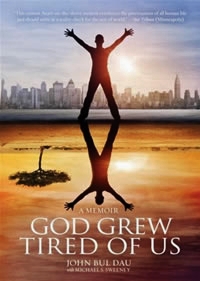
god grew tired of us john bul dauGod Grew Tired of Us by John Bul Dau & Michael Sweeney ~ 2008

This edition: National Geographic, 2008. Hardcover. ISBN: 978-1-4262-0212-4. 304 pages.

My rating: 7.5/10

In 1987 a young Sudanese teenager was forced out of his home by a brutal raid on his village. What followed was a barefoot 1,000 mile trek through Sudan, Ethiopia, and eventually to Kenya, to a haven in a refugee camp. There John Bul Dau joined thousands of other displaced children, the “Lost Boys” of the Sudanese civil war.

Having no way of knowing the fate of his left-behind, possibly slaughtered family, John eventually immigrated to the United States, where he worked tirelessly to educate himself, all the while striving to raise awareness of the tribulations he himself went through, and to bring assistance to those still suffering from the aftermath of the war back in Sudan.

This book and its associated National Geographic film eloquently describe the situation. An earnest and strongly emotional memoir.

through the narrow gate karen armstrong 001Through the Narrow Gate: a memoir of life in and out of the convent by Karen Armstrong ~ 1981

This edition: Vintage Canada, 2005. Softcover. ISBN: 0-676-97709-X. 350 pages.

My rating: 7.5/10

Intriguing and occasionally bitter memoir of an ex-nun.

In 1962 Karen Armstrong, just seventeen, and child of a not particularly religious family, entered a Roman Catholic convent as a postulant, with the aim of becoming a nun. Seven years later, while attending Oxford under the sponsorship of her order (Armstrong was in training to become a teacher-nun) she realized that she had lost her faith, and she returned fully to the secular world.

Since then, Karen Armstrong has become well known for her writings on religion, and for her outspoken criticism of the Catholic Church’s more archaic practices, and of the confusion brought about by the mandated reforms of Vatican II.

This book, Armstrong’s first, is compelling reading. A very articulate writer.

The Guardian – Profile: Karen Armstrong is well worth reading if you are curious about this now high-profile public character; it references Through the Narrow Gate near the end of the article, with an amusing anecdote from Karen’s sister telling of how the family, after dropping Karen off at the convent for her entrance into her religious life, then went on to watch a production of The Sound of Music. That same sort of dark humour and willingness to smile at oneself is evident in places in this memoir, to leaven its more serious passages.

Sstarting out in the afternoon jill fraynetarting Out in the Afternoon by Jill Frayne ~ 2003

This edition: Vintage Canada, 2003. Softcover. ISBN: 978-0-679311-881. 256 pages.

My rating: 4/10

This is an autobiographical memoir of the author’s mid-life crisis, and of the solace she sought and found in communing with nature.

A solo road trip, hiking, biking, camping, sea kayaking and such all help to salve Jill Frayne’s inner pain at the dual blow of both the break up of her long-term romantic relationship back in Ontario, and the moving away of her young adult daughter. Once she begins to gain a degree of competence in her new pursuits, and to feel herself physically comfortable in nature, Frayne begins a deeper exploration of her own emotions.

While I’m sure that this was a marvelous thing for Jill Frayne herself, but sadly I had trouble relating to her angsty navel-gazing, and I felt more and more like I was reading a very private diary. I eventually lost patience with the “me-me-ME” of the author’s inner dialogue; it coloured my reaction to the book as a whole.

I certainly admire the author’s courage as a woman alone going off into challenging territory by herself, and I would have enjoyed this more it had spent more time on the scenery and nuts and bolts of solo travel, and less on the touchy feely bits. But that’s just me; others may embrace the personal narrative and find meaning there which resonates with their own lives.

Back story: the author had an almost fatal accident several years before she set off on her trip; she had been told she would never walk again. She proved everyone wrong. Extra kudos to her, and I do hope the writing of this very personal book brought her comfort and much-needed inner peace.

Read Full Post »

Looking back at my list of books read, February 2013 was obviously a good month for hitting the books, but not quite so good for writing reviews. Playing catch-up, then with a series of short impressions of things I read 9 months or so ago.

In approximate order of reading, here are some of the books not previously reviewed from February of 2013.

*****

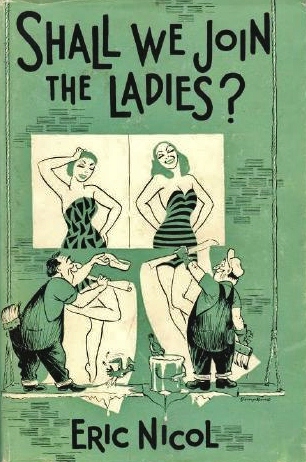
shall we join the ladies eric nicolShall We Join the Ladies? by Eric Nicol ~ 1955

This edition: Ryerson Press, 1965. Hardcover. 110 pages.

My rating: 5/10

I suspect I was sated with Nicol’s particular brand of humour when I read this one immediately after an old favourite, Nicol’s first collection of essays, The Roving I. For I recollect that I was not terribly amused. The mood was hectic, the punchlines groan-inducing. Vintage humour, turned a bit “off” after years of shelf life, perhaps?

A keeper, because it has its moments, and it is Eric Nicol, but not one I am eager to re-read any time soon. Contemporary readers thought much more highly of it, and it won the Leacock Award in 1956.

Canus Humorous thought it was a gem, and I recommend a look at this link if you’d like more detail. Such a thoughtful review that I feel immediately guilty for my faint enthusiasm. I promise I’ll revisit this one and do it more justice. Some day.

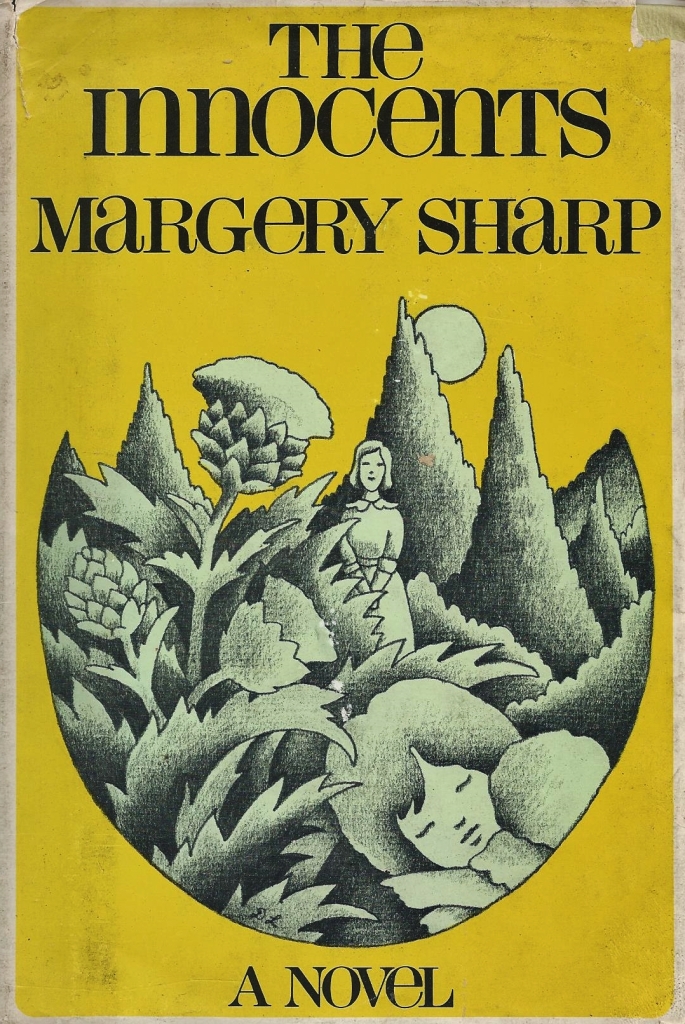
the innocents margery sharp 001The Innocents by Margery Sharp ~ 1972

This edition: Little, Brown & Co., 1972. Hardcover. 183 pages.

My rating: 11/10. I think this may well be my very favourite Margery Sharp, and, as you all may have guessed by now, I am seriously enthusiastic about this author to start with.

This was my second time reading The Innocents; I will be rationing myself to revisiting it, oh, maybe once a year or so, because I don’t want to wear out its already special status in my favourites list. For all of that enthusiasm, this is a very quiet book, one of those minor tales concerning a few people only, with nothing terribly exciting going on within it. But it is a compelling read, and I was completely on the side of the angels right from the get go, though fully cognizant of their failings.

In brief, then.

A middle-aged spinster living in a quiet English village is visited by a younger friend who has married very well indeed, and who is now living in America. It is immediately pre-WW II, and the married couple are hoping to squeeze in a Continental holiday before things cut loose. They are also travelling with their small child, and the unstated purpose of the visit-to-an-old-friend soon becomes clear: they are hoping that they can leave the child in the peace of the country while they continue on their tour.

All is arranged, and spinster and child settle in to a peaceful routine, which quietly turns into a longer-term arrangement as war intervenes and the parents return to America without stopping to collect their child.

Here’s the hook. The young child is very obviously mentally retarded, and though the father suspects this, the beautiful and vivacious mother refuses to even consider that her offspring may be in any way “sub normal”. The child and her caregiver form a deep and complex bond in the ensuing years before the now-widowed mother returns to collect her daughter and return with her to America, to launch into society, as it were, as a charming sidekick to her fashionable mother.

The reality is much different than the dream, and the subsequent events are absolutely heart-rending. The author lets us all suffer along with the brutally dazed child until bringing things to a rather shocking conclusion, which she has already told us about on the very first page.

Margery Sharp is at her caustic best in this late novel. Loved it. A longer review shall one day follow, full of excerpts and much more detail.

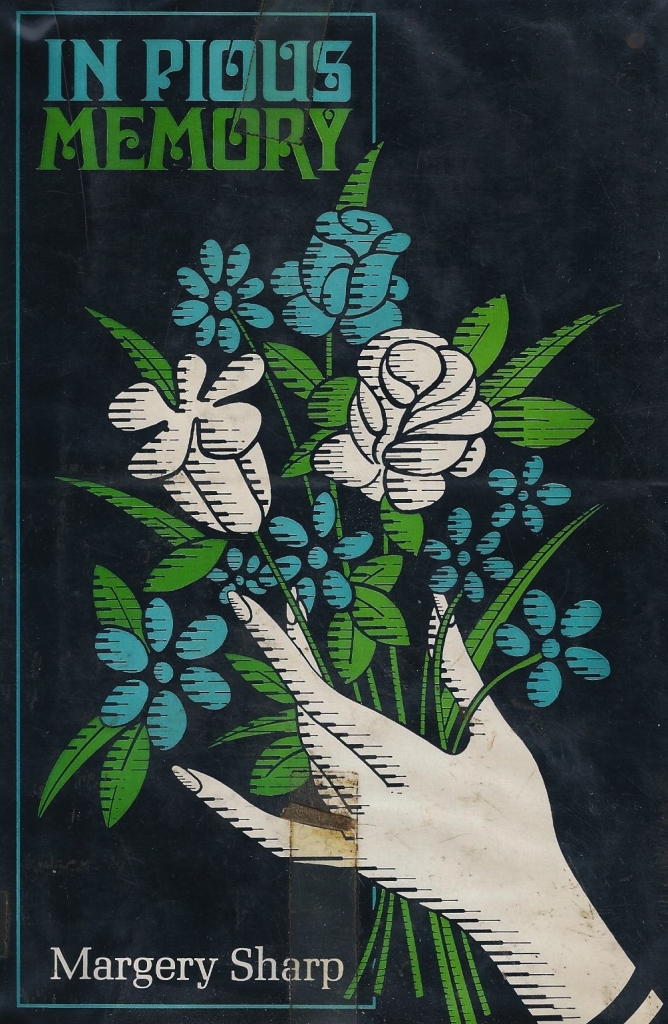
in pious memory margery sharp 001In Pious Memory by Margery Sharp ~ 1967

This edition: Little, Brown & Co., 1967. Hardcover. 184 pages.

My rating: 5/10

Well, then I went on to this slightly earlier novel, and of course it couldn’t even begin to stand up to The Innocents.

An out-and-out farce, this one. Mr. and Mrs. Prelude are in a plane crash in the Swiss Alps, and while Mrs. Prelude escapes relatively unharmed, Mr. Prelude perishes. Or does he? On her return to England, Mrs. Prelude begins to second-guess her hasty identification of what she now isn’t quite sure were her husband’s mortal remains. Sixteen-year-old Lydia sets out on a quest to find her father. Much hilarity ensues.

The whole thing fell rather flat. It seemed forced, and needlessly frenetic, and Margery Sharp’s sly innuendo just plain annoyed me this time around. To be fair, I will be re-reading this one in future, and may then possibly view it with less jaded eyes. I must say that it reminded me strongly of Dodie Smith’s The New Moon with the Old, and my reaction was much the same: reluctant amusement tinged with distaste for the general tone.

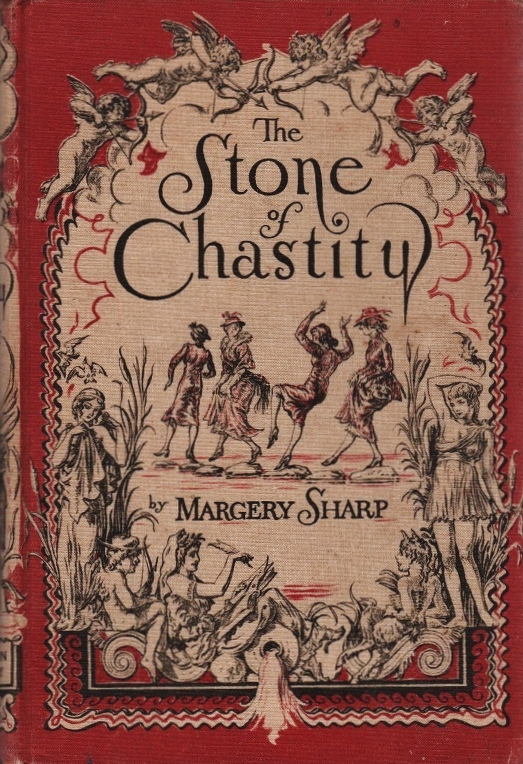
the stone of chastity margery sharpThe Stone of Chastity by Margery Sharp ~ 1940

This edition: The World Publishing Co., 1945. Hardcover. 280 pages.

My rating: 6.5/10

Now going back a few decades, to 1940, and Margery Sharp’s ninth novel, this one pure farce.

In the small gun-room, temporarily converted into a study, Professor Isaac Pounce was even then completing his questionnaire (later to be circulated through the unsuspecting village of Gillenham) on the subject of Chastity…

Professor Pounce is hot on the track of a piece of English folklore. He is looking for a mythical stepping stone which, when trod upon by female persons, will unfailingly support the virgins and toss off the unchaste ignominiously into the gurgling stream. Having a very good idea of where the stone might be, Professor Pounce’s first step in this very scientific study is to send his nephew Nicholas out with a questionnaire to all of the likely young village maidens. Confusion ensues as the rural rustics turn against the snoopy visitors in the Old Manor.

Another one due for a re-read, to savour the full flavour of what Margery Sharp has assembled here. She’s in fine form throughout, and the thing is most readable, though I felt that it wasn’t altogether convincing, even allowing for its obviously satirical intention.

Another snippet, to give you a taste of the flavour of the narrative within:

On the first floor Mrs. Pounce, mother to Nicholas and sister-in-law to the Professor, was lurking in her bedroom afraid to come out. She had appeared at lunch wearing a very nice necklace of scarabs and enamel, and the Professor, cocking an interested eye, had remarked that it was just such trifles – the sight of an English gentlewoman ornamented with seven phallic symbols – that made life so perennially interesting to the folklorist. Mrs. Pounce did not know what a phallic symbol was, and instinct (or perhaps a look in her son’s eye) prevented her asking; but after coffee she quietly sought out a dictionary and took it upstairs. At the moment she was feeling she could never come down again.

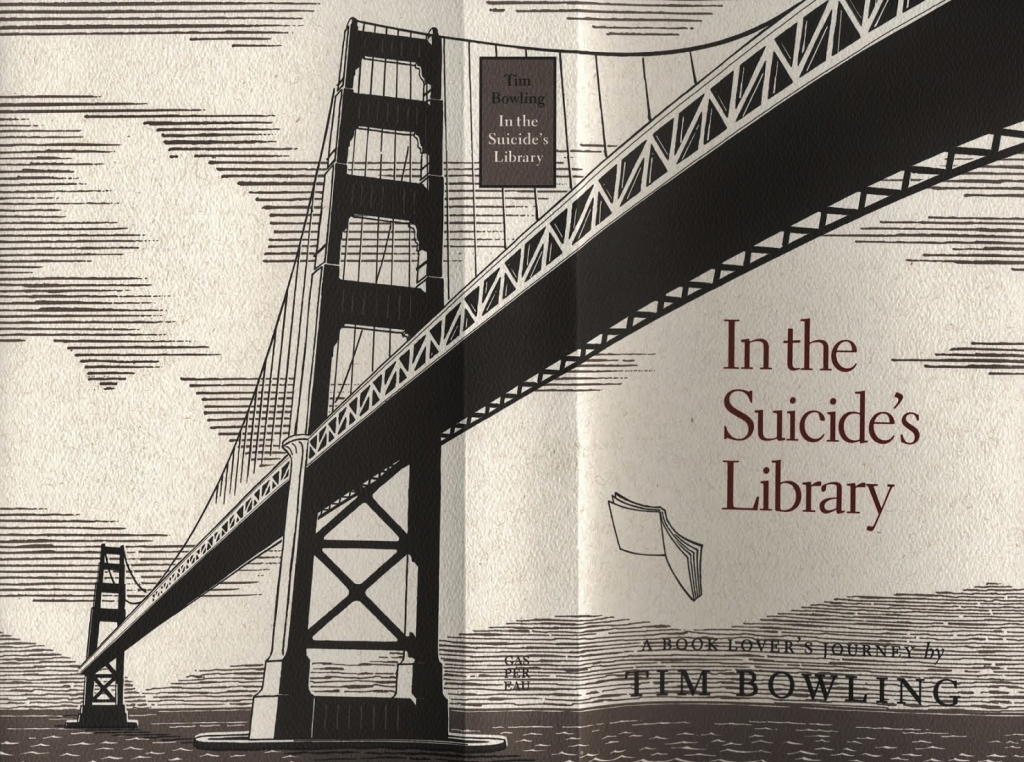
i the suicide's library tim bowling jacketIn the Suicide’s Library by Tim Bowling ~ 2004

This edition: Gaspereau Press, 2010. Softcover.  ISBN: 1-55447-089-7. 320 pages.

My rating: 7/10

And now, changing gears completely to something much more consciously literary.

Is it ever right to steal a book? Tim Bowling, Canadian poet, browsing a university library collection, stumbles upon a copy of poet Wallace Steven’s Ideas of Order, signed on the flyleaf by yet another poet, Weldon Kees, who disappeared mysteriously one day in 1955, with evidence suggesting his suicide by jumping of San Francisco’s Golden Gate Bridge.

As Tim Bowling allows his collector’s lust to suggest certain possibilities to him – would anyone even notice if he “liberated” such a poet’s treasure from its dusty obscurity in the stacks? – his renewed interest in both Wallace Stevens and Weldon Kees leads into a book-length examination of his own life, and the parallels between himself and his predecessors.

The angst of middle age, marriage and parenting are discussed with passionate intensity, as are such things as the relevance of poetry in the world, the desire to own objects, the new importance of the internet to the serious book collector, and much, much more.

Absolutely fascinating, but it does go on and on and on, and I absolutely hated Bowling’s final decision regarding the book, which I cannot share here, as it is the whole point of working through this thing. It made me grumpy for days, and still offends me to think about it.

Has anyone else read this one? What did you think he should have done?

And I must say that this has to be one of the most aesthetically pleasing of the contemporary books I personally own; Gaspereau Press did a fabulous job of the actual production of the physical book. The paper, the fonts, the slipcover and the undercover and the graphic design – absolutely perfect.

Read Full Post »

Looking over my year in books, I see many interesting and noteworthy books I’ve read but not yet written about here. So, in the interests of clearing the decks and tidying up my house for the coming winter, literally as well as figuratively speaking – the unreviewed books are piled in corners here and there and are a perpetual annoyance to those who share my space – I am going to see if I can say a few words about some of the neglected ones. Working from memory on most of these, with full intention of not going into too much detail; a rehearsal of sorts for the fast-approaching (!) January 1st summation of The Books of The Year Just Passed.

In approximate order of reading, here are the books not yet reviewed from January of 2013.

*****

daylight on saturday j b. priestleyDaylight on Saturday by J.B. Priestley ~ 1943.

This edition: MacMillan, 1944. Hardcover. 306 pages.

My rating: 7/10

I fully intend to re-read this one, and hope to write a fuller review one day. Though not one of Priestley’s top-rank efforts, an interesting book nonetheless, both in content and for its place in the genre of “propaganda books”, written during the war years to boost public morale.

Daylight on Saturday is set in an English aircraft factory during World War II. Priestley spent time visiting such factories in order to gather material for the novel; the title refers to the long hours which the workers spent inside the windowless buildings, with their only glimpse of daylight on their days off.

The novel is set in a series of linked chapters, each one following one particular character, foreman to girl-on-the-work bench to engineer to odd-job man. Many small daily incidents leading up to an improbably dramatic concluding episode make up the mild action of the novel; it is more of a series of vignettes and semi-analytical thoughts on the war and the nature of war work than a compelling piece of stand-alone fiction. I repeat, not one of Priestley’s better efforts, but one which I am glad I read, if only to make me better acquainted with the writer and his world.

The novel shares a setting with Monica Dickens’ similar wartime novel, The Fancy, but Dickens does characters so very much better than Priestley – at least in this novel –  that her book is one of my favourites for communicating the thoughts and feelings and the physical realities of wartime England among the factory workers. Priestley’s people verge on caricature; his world feels just a shade too stage-set and artificial.

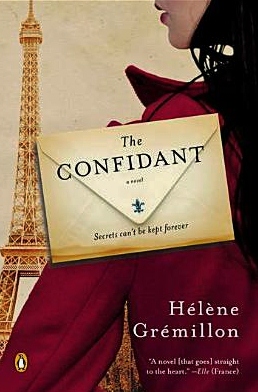
the confidant by helene gremillonThe Confidant by Hélène Grémillon ~  2010    

This edition: Penguin, 2012. Translated by Alison Anderson. ISBN: 978-0-14-312156-5. Softcover. 243 pages.

My rating: 6/10

I started the year of with the nest of intentions of taking part in a reading challenge to go Around the World in 12 Books. Country One was France, and I managed to read several books for the country after which I got rather sidetracked and completely lost my focus.

The book starts off with an intriguing hook. It is Paris, 1975, and a young woman, Camille, has just lost her mother. In the pile of letters of condolence she finds an unusually thick and heavy envelope, full of handwritten pages, the first installment of an anonymous narrative which will start appearing every Tuesday, until the tale – concerning Camille’s own mother and eventually Camille herself – is played out to its tell-all conclusion.

The whole thing is highly improbable, and among other things involves surrogate motherhood, treachery, death and destruction, and a dash of bitter revenge, all set in World War II France. I found it quite diverting while actually engaged in the reading of the novel, but it was sadly it seems to not have been very memorable, as now, only 10 months later, only the thinnest thread of the plot remains in my mind.

Leafing through the book today, I conclude that it may go into the giveaway box; a final damning verdict. I sense that this is one I will never miss once it goes away, though it amused me for its brief time.

the feminine middlebrow novel nicola humbleThe Feminine Middlebrow Novel 1920s to 1950s: Class, Domesticity and Bohemianism by Nicola Humble ~ 2001.

My rating: 8/10

A scholarly treatment of one of my pet genres, and very readable and affirmative of our pursuit of the same. For those days when we wonder a bit if our interest in this appealing sideline branch of literature is a bit too easy, and if we shouldn’t be working harder to justify our casual enjoyment. Luckily, Nicola Humble has gone ahead and done a bunch of the legwork for us, putting forth numerous arguments in favour of its social importance and literary value. Shelve this alongside your Rose Macaulays and Margaret Kennedys, and never feel apologetic again!

From the back cover:

“Middlebrow” has always been a dirty word, used disparagingly since its coinage in the mid-1920s for the sort of literature thought to be too easy, insular and smug. Yet it was middlebrow fiction – largely written and read by women – that absolutely dominated the publishing market in the four decades from the 1920s to the 1950s. Neglected by subsequent critical fashion in favour of the work of literary elites, this literature has only recently begun to be reassessed. Aiming to rehabilitate the feminine middlebrow, Nicola Humble argues that the novels of writers such as Rosamund Lehmann, Elizabeth Taylor, Stella Gibbons, Nancy Mitford, and a host of others less well known, played a powerful role in establishing and consolidating, but also in resisting, new class and gender identities in this period of volatile change for both women and the middle classes.

The work of over thirty novelists is covered, read alongside other discourses as diverse as cookery books, child-care manuals, and the reports of Mass Observation. Investigating the nature of the feminine middlebrow and its readers, the author considers its variously radical and conservative remakings of ideas of class, the home, the family and gender. Defining her period as running from the end of the first world war to the mid-1950s, she challenges the prevailing convention that sees the second world war as effecting a decisive ideological and cultural break, and offers a revision to the way we currently map the changing politics of femininity and the domestic in the twentieth century. The first work to insist on the centrality of the concept of the middlebrow in understanding the women’s writing of this period, The Feminine Middlebrow Novel uncovers a literature simultaneously snobbish and bohemian, daring and conventional, marked by an ideological flexibility that is the product of its paradoxical allegiance to both domesticity and a radical sophistication.

Sure. What they said.

Seriously though, wonderfully easy reading for a scholarly treatise.

a company of swans eva ibbotsonA Company of Swans by Eva Ibbotson ~  1985   

This edition: Picador, 2008. ISBN: 978-0-230-01484-8. Softcover. 392 pages.

My rating: 5/10

Another one of Eva Ibbotson’s abysmally maltreated, highly intelligent, totally talented, and absolutely adorable heroines runs away from an overbearing father and an ice-cold aunt to join a ballet company heading to South America, where she finds personal fulfillment, oodles of true new friends, and a passionate hero type who sweeps her off her feet. Set in 1912, and chock full of intriguing references to the fabulous world of the Amazonian high society – excesses of European culture in the jungle – most prominently the fabulous Manaus Opera House in Brazil, where key scenes are played out. What’s not to like?

Well…

Second time reading this, because the first time round I thought maybe I was missing something, because it left me just a tiny bit “huh?”

The story started out very well indeed, with our sensitive young heroine being well squelched by her uptight family; I cheerfully nodded in happy approval at her decision to duck out when opportunity arose. Where the author lost me was when the predictable romance degenerated into farce, what with some over-the-top kidnappers strayed from a Roald Dahl-type children’s story, and an absolutely overwritten seduction scene which made me writhe with embarrassment at the thought of being caught reading such tripe.

Ahem.

Guess that was a bit harsh, bur really, Eva Ibbotson – you can do much better than this!

Backing up a bit to say that the book, despite its flaws, is definitely readable. Don’t say I didn’t warn you, though.

for joshua richard wagameseFor Joshua: An Ojibway Father Teaches His Son by Richard Wagamese ~ 2002.

This edition: Doubleday, 2002. Hardcover. ISBN: 0-385-25712-0. 240 pages.  

My rating: 7/10.

Spurred on by the discussion around this years Canada Reads debates, I read Richard Wagamese’s novel, Indian Horse and his collection of personal essays,  One Native Life, and continued my exploration of this author with this autobiographical collection of personal anecdotes, framed as a series of talks given to Wagameses’s estranged son, Joshua.

Growing up as a native foster child in a white family, Wagamese had a troubled adolescence, and though going on to attain a certain level of “success” early on in his working life, he also was troubled by recurring bouts of binge drinking, which resulted in the breakup of his relationship with his son’s mother.

Wagamese successfully overcame his dependence on alcohol, and set about remaking his life, fully embracing his Ojibway heritage and seeking to find peace by delving into his own conflicted upbringing and his personal response to his loss of cultural identity.

The events recounted in For Joshua are all too bitterly familiar; we have read them all before in the newspaper, and in other memoirs, but Wagamese stands out in that he has chosen to deal with his justified anger at his personal situation by seeking to concentrate on the positive things of his past, and of the optimism of his future. Terrible things have happened to him and to others, things out of their control and influenced greatly by their ethnicity and accident of time of birth – specifically, to be aboriginal in post-colonial North America – but allowing anger to take over is the ultimate admission of defeat, is the basic gist of this wrenchingly bitter yet hopeful and ultimately positive memoir. “You are responsible for your own happiness” is the moral of this very personal story.

Read Full Post »

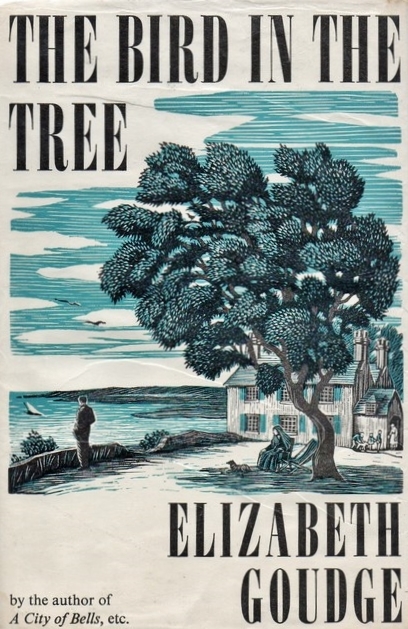
the bird in the tree elizabeth goudgeThe Bird in the Tree by Elizabeth Goudge ~ 1940. This edition: Coronet, 1990. Paperback. ISBN: 0-340-02683-9. 256 pages.

My rating: 6/10

This is the first book of what was to become the well-known “Eliots of Damerosehay” trilogy; three novels centered around a (mostly) artistic and intellectual upper-class family before and just after the World War II years. The setting of the ancient ship-building village in Hampshire, the real-life Buckler’s Hard referred to as Fairhaven, or “The Hard”, consisting of Big Village and Little Village, is lovingly drawn from life. The houses so eloquently described in the books as to be characters in their own right – Damerosehay, and, in the second book, the Herb O’Grace,  were fabricated by the author from memories of similar places important to her in her own retreat from the world to recuperate from her own emotional breakdown following the long illness and traumatic death of her beloved father, which prefaced the writing of this novel.

Visitors to Damerosehay, had they but known it, could have told just how much the children liked them by the particular spot at which they were met upon arrival. If the visitor was definitely disliked the children paid no attention to him until Ellen had forcibly thrust them into their best clothes and pushed them through the drawing-room door at about the hour of five; when they extended limp paws in salutation, replied in polite monosyllables to inquiries as to their well-being, and then stood in a depressed row staring at the carpet, beautiful to behold but no more alive than three Della Robbia cherubs modelled out of plaster. If, on the other hand, they tolerated the visitor, they would go so far as to meet him at the front door and ask if he had bought them anything. If they liked him they would go to the gate at the end of the wood and wave encouragingly as he came towards them. But if they loved him, if he were one of the inner circle, they would go right through the village, taking the dogs with them, and along the coast road to the corner by the cornfield, and when they saw the beloved approaching they would yell like all the fiends of hell let loose for the afternoon…

And as the story opens, the approaching visitor is very well beloved indeed. It is David, grandson of the matriarch of the country home Damerosehay, Lucilla Eliot, and the children referred to are his three young cousins, Ben, Tommy and Caroline, who are living with their grandmother in Hampshire while their father is in India and their mother in London.

As well as gifts for the children, David comes on this visit with some disquieting news for his grandmother. He has fallen in love with the children’s mother, his own aunt-by-marriage Nadine, who has just obtained a divorce from Lucilla’s son George. David and Nadine, despite the vaguely incestuous awkwardness of their relationship and the five year difference in their ages (Nadine is thirty; David twenty-five) propose to marry, and David has screwed up his courage to confront Lucilla with the decision as unalterable.

Lucilla cannot agree; she still hopes that Nadine and George will reunite, and she is utterly appalled at the thought of the trauma which the children will undergo, in particular the sensitive and sickly Ben, who worships his older cousin as well as his absent father; his mother’s proposed marriage will shatter Ben’s fragile peace, and Lucilla refuses to countenance such a thing.

Lucilla fits the pattern of benignant family matriarch wonderfully well. She is a woman of strong personal attractiveness, being both physically beautiful and deeply invested in the interests of her extended family. She had, years ago when the child David was orphaned shortly after the Great War, purchased Damerosehay and built it up as a place of refuge to her children and grandchildren to retreat to for emotional and spiritual healing from the stresses of their workaday lives. And, like all matriarchs, she frequently feels as though she knows best in every situation, regardless of what her family wishes for themselves. So Lucilla sets out to make David and Nadine see the errors of their ways, and to knit together the unravelling family bonds.

Damerosehay itself has a fascinating history, and it is through the discovery of the details of the lives of those who have resided there before the Eliots that Lucilla finds support for her passionate defense of the virtues of loyalty and higher responsibility – to family and God, and to community and society – which she presses upon both David and Nadine as of higher importance than personal happiness.

Elizabeth Goudge was a loquacious describer of both people and places, and her sincere nature-worship and delight in the beauties of the rural world come through loud and clear in this novel. The descriptive passages, though frequently gushing, do paint clear and evocative pictures of the Hampshire countryside and village worlds; her descriptions of the people in her stories are equally well drawn.

If the story has one major fault – and it does have many small ones, too – it is that the conclusion is very obviously contrived and owes much too much to convenient discovery of old manuscripts and vaguely supernatural occurrences including a mysterious blue bird and a phantom mother and child. Capping things off is a well-placed storm and rescue-by-rowboat of an old family retainer with a key part to play in the background tale of Damerosehay’s earlier inhabitants, and its mysterious carved drawing-room mantelpiece, which exerts a strangely compelling influence on everyone who enters the room.

This whole concluding episode is sentimentally melodramatic, and not particularly convincing, unless one accepts the extra-special specialness of the Eliots’ collective hypersensitivity to atmosphere, which selectively is a trait shared among the main characters, in particular Lucilla, David and Ben. And in this case, Nadine, who is temporarily allotted the same sensitivity in order to allow her to benefit from Damerosehay’s special atmosphere. (In later books she goes back to being herself, to my great relief, as she is a breath of sensible, sarcastic fresh air among the dreamy Eliots she finds herself saddled with as in-laws. I personally wish frequently to give David a good hard shake when he starts maundering poetically on in his actor’s way.)

The story has its merits, chief of which is its introduction of the very winsome Eliot children and its value as a back story to the even more sentimental but completely endearing Pilgrim’s Inn, the second book of the trilogy, which is one of my secret comfort reads when I need some moral pepping up. I also greatly enjoy Lucilla’s two adult children who are always steadily there in the background. Saintly Hilary, living in bachelor squalor in the local vicarage, and overworked and underappreciated Margaret, with no fashion sense, plain looks, and little talent for doing things as Lucilla would wish them done in the house, but with a secret life in her glorious garden, both give a refreshing breath of reality to the rarefied Damerosehay atmosphere.

If I seem to be damning this story with faint praise, I do wish to add that I am very fond of Elizabeth Goudge’s novels, and read them through on as regular basis, so my criticisms are those of an old, occasionally querulous, but ultimately well-meaning friend. This is not one of my favourites, but it is very readable despite my quibbles, particularly in context with the two companion books which follow.

This novel has been cursed with a wide array of hideous covers, so instead of sharing the actual Coronet illustration on my edition’s cover I am cheating a bit and using a much more lovely vintage cover, which sadly is inaccurate as to its depiction of Damerosehay overlooking the sea. In the book, the house is set in a sheltered place, set among walled gardens, and separated from the sea by an ancient oak wood. But let that pass; it will suffice.


Read Full Post »

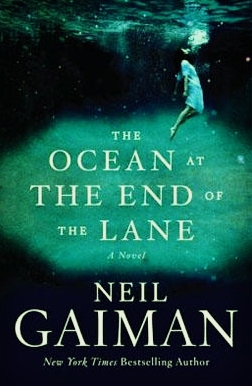
the ocean at the end of the lane neil gaimanThe Ocean at the End of the Lane by Neil Gaiman ~ 2013. This edition: Morrow, 2013. 1st Edition. Hardcover. ISBN: 978-0-06-225565-5. 181 pages.

My rating: 7.5/10

I ration my new books quite severely, for several reasons.

One is that new books are so darned easy. I love the second hand book hunt an awful lot, and relish the finding of literary treasure in all its forms, from the well-known bestsellers of yesterday to the quirky little short-run oddities which pop up now and then, and everything in between. I generally have a wish list of authors I’m currently interested in, but the serendipitous finds are what I keep going back for.

Another vital consideration is price. New books are expensive. Case in point, Gaiman’s latest which I’ll be talking about here. This one set my back $27.99 (Canadian) at my local independent bookstore. Yes, I know I could have purchased it for less through one of the big chain bookstores, or online from the big “A”, but I am trying my hardest to limit new book purchases to the local folks, to do my small part in keeping them in business.

But $28.00 (plus tax) for one book, which, considering Gaiman’s popularity and the size of the print runs, will be readily available for pennies on the dollar in a year or two in the Sally Ann book bins, is a chunk of cash which I need to think about fairly hard before parting with. For that investment I could walk out of even the most lavishly over-priced second hand book store with a handful of volumes, or purchase a true rarity online. Something to think about…

Well, was it worth it? Was my money well spent in purchasing a book because I wanted to read it now, not in a year’s time, or whenever my turn would come in the queue at the public library?

The answer is a resounding “I’m not quite sure…” While the story itself was well up to Gaiman’s best work, it was a slight little thing, quickly devoured and leaving one vaguely unsatisfied and wanting more. Not perhaps such a bad thing, come to think of it. We’ll see how it holds up to a reread in a year or two, once all the hype has faded.

I won’t go into too much detail, as the internet is seething with detailed reviews – over 10,000 (!) on Goodreads alone. I didn’t read any of these before I read the book, but I dipped into them briefly just now, and yes, there’s a lot of words being bandied about, some very thoughtful indeed.

But please, dear fellow reader, read the story cold, if you can, which is what I did. I do feel it is a much better experience, not knowing too much going in.

From the front flyleaf:

Sussex, England. A middle-aged man returns to his childhood home to attend a funeral. Although the house he lived in is long gone, he is drawn to the farm at the end of the road, where, when he was seven, he encountered a most remarkable girl, Lettie Hempstock, and her mother and grandmother. He hasn’t thought of Lettie in decades, and yet as he sits by the pond (a pond that she’d claimed was an ocean) behind the ramshackle old farmhouse, the unremembered past comes flooding back. And it is a past too strange, too frightening, too dangerous to have happened to anyone, let alone a small boy.

Forty years earlier, a man committed suicide in a stolen car at this farm at the end of the road. Like a fuse on a firework, his death lit a touchpaper and resonated in unimaginable ways. The darkness was unleashed, something scary and thoroughly incomprehensible to a little boy. And Lettie—magical, comforting, wise beyond her years—promised to protect him, no matter what.

A groundbreaking work from a master, The Ocean at the End of the Lane is told with a rare understanding of all that makes us human, and shows the power of stories to reveal and shelter us from the darkness inside and out. It is a stirring, terrifying, and elegiac fable as delicate as a butterfly’s wing and as menacing as a knife in the dark.

Not quite sure about that last bit, the “groundbreaking work” part, and the “rare understanding of all that makes us human” puff, but I do agree with the delicate and menacing bits. This was a very creepy story, but in a good way, fictionally speaking.

Lying in bed early this morning, mulling over what to say about the story, a few things stood out for me, and I felt all clever and wise, but glancing through the other online reviews show me that everyone else caught them, too, so I don’t feel quite so special any more.

I saw that it The Ocean at the End of the Lane could be viewed as an allegorical tale much along the same lines as the Narnia books, or any of the oodles of fairy tales and legends preceding that most well-known of story-as-hidden-propaganda-for-a-worldview. Or perhaps “propaganda” is not a fair term. Let’s say “explanation”, then, or something similar. In any event, it’s as old as history, this perhaps-not-so-groundbreaking story line.

In this one, the Maiden-Mother-Crone trinity, the requirement for the protagonist – a feeble creature indeed, standing in nicely for all Mankind, if one continues with the allegory – to act with full faith in their protection, the smug “good will always trump evil” atmosphere of the Hempstock farm, and the pseudo-sacrificial bit at the end, complete with water imagery and resurrection on another plane, all feel very familiar, as they indeed should, as we’ve seen their like before. Many times.

But Gaiman’s interpretation is unique and horrible and beautiful and very well imagined. I enjoyed it thoroughly, as a piece of creative contemporary fiction. Maybe the allegory is all in my head, and the story is just a story. Works either way.

So, asking myself again, was it worth the $27.99 in reading value? I have to say, after more consideration, that the answer is probably “No.” But now I have a nice hardcover copy, still crisp and clean even after being read by everyone in the family, which will look very nice on the shelf until the re-reading impulse strikes in a few years. It’s all right. And I’m hoping that my bookstore got a decent cut!

Read Full Post »

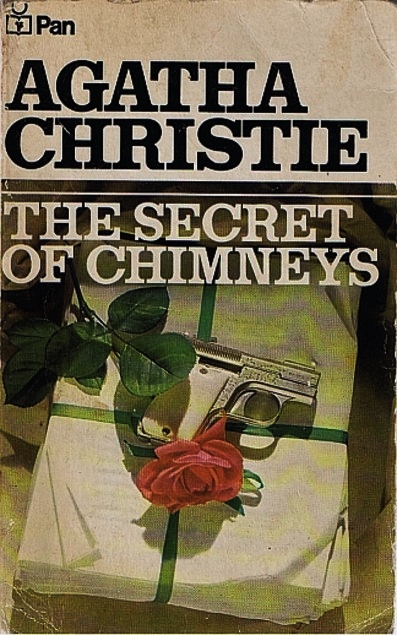
the secret of chimneys agatha christie 1The Secret of Chimneys by Agatha Christie ~ 1925. This edition: Pan, 1968. Paperback. 223 pages.

My rating: 6/10

Setting: Briefly in Africa, with most of the action taking place in the stately English country house, “Chimneys”.

Detection by: SUPERINTENDENT BATTLE of Scotland Yard and various international colleagues; ANTHONY CADE and several aristocratic acquaintances.

Final Body Count: 3 in this narrative; more in the background story.

Method(s) of Death: SINGLE PISTOL SHOT x 3

100 Word Plot Summary:

Anthony Cade, international adventurer, comes into a double commission to deliver a politically sensitive Herzoslovakian manuscript of memoirs and a bundle of blackmailing letters to England. Both appear to be in high demand and swap hands several times; two men are shot, and the diplomatic and aristocratic guests at stately country home “Chimneys” are embroiled in multiple mysteries. Hidden identities, a violent revolutionary society, an accomplished jewel thief, a fabulous diamond, coded letters, secret passages and misleading clues… Can anyone be trusted? Is anyone really who they appear to be? And who does beautiful young widow Virginia Revel really love?

*****

The dead bodies are a side plot to this thriller, written, one suspects, with tongue firmly in cheek. What with a butler named Tredwell, an Inspector Badgworthy, and a bumbling politician, one George Lomax – not to mention a stay at the posh Blitz Hotel in London – the author appears to have been having a lot of innocent fun with this one. Another thriller versus an out-and-out murder mystery, for though we have a number of violently killed bodies by the end of the saga, the other players view the deceased with cold speculation versus shocked emotion.

What a busy plot it is, too. Political intrigue and revolution in fictional Balkan state Herzoslovakia! A commoner queen brutally massacred by a mob along with her royal spouse; a missing prince (or two?); sensitive political memoirs; an aristocratic Englishwoman’s blackmailing letters; a master jewel thief and a missing diamond of fabulous worth; untold reserves of oil (in Herzoslovakia) just waiting for development; several bullet-riddled corpses of swarthy foreigners; and a stately English country home much used to hosting diplomatic gatherings. Drop in several lovely ladies of impeccable breeding and soothing manner, and a thrillingly handsome young man just off the boat from Africa acting as courier to the papers in question, and stir well.

Moments of truly humorous farcical writing made me smile with delight, but this was tempered by the many jaw-dropping racial slurs. These were aimed at everyone under the sun not a true-blue upper-class Conservative Brit, but were extra heavy regarding those of Jewish heritage, as well as the broadly categorized Balkan/Italian/swarthily foreign “dagos” of various nationalities who do all of the heavy lifting in the background story.

Did I enjoy this story? Well yes, I did, in a general sense. It had its moments. But very much a product of its time. Very vintage.

I’m more than ready to move on from this rather ridiculous romp. What about a cozy village murder mystery? Luckily the next one up is just that, The Murder of Roger Ackroyd.

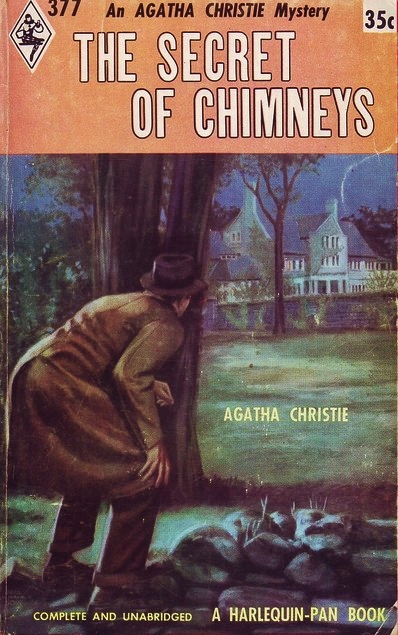
The cover gallery for The Secret of Chimneys is respectably diverse, and perhaps just a little bit misleading on occasion. Let’s take a look…

Second-string male lead Bill Eversleigh and the lovely Virginia Revel investigate midnight noises in the libray at Chimneys. Take note of the traditional weapon for confronting country house burglars - a fireplace poker, and Mrs. Revel's frothy negligée.

This first edition cover features second-string male lead Bill Eversleigh and the lovely Virginia Revel investigating midnight noises in the library at Chimneys. Take note of the traditional weapon for confronting country house burglars – a fireplace poker – and Mrs. Revel’s frothy negligée.

Our possible hero Anthony Cade, one would assume, and his first glimpse of Chimneys. A shot in the night is heard!

Our possible hero Anthony Cade, one would assume, and his first glimpse of Chimneys. A shot is heard in the night!

Something appears to be bothering the beautiful woman - is this Virginia? Could it be the menacing blood-red hand, the calling card of a murderous secret society?? "No comment" on the diamond and the rose.

Something appears to be bothering the beautiful woman on this cover – is this Virginia? And what could it be?! Perhaps the menacing blood-red hand, calling card of a murderous secret society?? “No comment” on the diamond and the rose.

Ah - here we have a classic cover containing key story elements, and a clue or two.

Ah – here we have a classic cover containing key story elements, and a clue or two. Nice composition.

This French cover is possibly my favourite, in a purely eye-catching sense. But I'm rather confused as to who this ghostly woman is supposed to be. The deceased Queen Varaga, perhaps? And is she holding a bouquet of roses? Hmmm...

This French cover is possibly my favourite, in a purely eye-catching sense. But I’m rather confused as to who this ghostly woman is supposed to be. The deceased Queen Varaga, perhaps? And is she holding a rose? Hmmm…

Read Full Post »

when jays fly to barbmo margaret baldersonWhen Jays Fly to Bárbmo by Margaret Balderson ~ 1968. This edition: Oxford University Press, 1970. Softcover. ISBN: 19-272010-4. 220 pages.

My rating: 8.5/10

Bárbmo is the mystical place in Lapland folklore where the migrating birds fly away to; some never go there, like the jays. The riddle of the intriguing title is made clear in the final pages of this engrossing historical fiction novel.

Fourteen-year-old Ingeborg lives on the remote Norwegian island of Draugoy, where her family household, consisting of her widowed father, an aunt, and elderly hired help Per (an obviously troubled man with a mysterious past), eke out a precarious but modestly comfortable living through farming and fishing. But even their small and isolated society is about to feel the effects of events in the greater world. It is 1940, and Hitler’s troops are advancing through Europe and into neutral Norway, with an aim to annex Norway’s ice-free shipping ports and to ensure crucial supplies of iron ore from Sweden which was handled through the Norwegian shipping system.

Norway falls under German control without much resistance; the royal family and the government escape to England to form a government-in-exile for the next five years; thousands of young Norwegian men begin to filter out of their homeland to train with Allied forces in other parts of Europe, and in Scotland and England; and as the years turn over even the farthest settlements are occupied by troops of the Wehrmacht.

This is the greater historical background to Ingeborg’s story, and against it the more detailed personal events of the novel take place. Our young heroine struggles with her place in her family, fiercely resenting her aunt’s attempts at turning her into a “proper” Norwegian housewife; Ingeborg would rather be out roaming the woods with her dog Benne, or out in the barn with the animals, or sitting with Per and badgering him for tales of his travels. Her father treats her with deep love but yet with a patronizing attitude, never letting Ingeborg forget that she will never be a part of his man’s world. He refuses to discuss her mother with her; there is some great mystery there which all of the adults skirt meticulously around, as if protecting Ingeborg from something which will harm her.

Being a properly traditional bildungsroman, Ingeborg tenaciously discovers the secrets of her origin. She faces and overcomes the loss of everything she holds dear, and in the end discovers who she really is and where she really belongs.

This novel is short and aimed at a juvenile audience, so by necessity glosses over large periods of time and merely hints at some events, but the author pauses at perfectly timed intervals to go into the exquisite details of Ingeborg’s inner and outer lives; the novel is beautifully written. The horrors of war are unflinchingly discussed; the evils of the Nazi regime and the atrocities surrounding the scorched earth policy of the retreat from northern Norway are tellingly depicted.

If there is any weakness to this story, it is that the realities spoken of – the historical facts – are so brutal as to be almost unbelievable, making accompanying research a necessity – heads up to those using this novel as part of a social studies/history curriculum.  Some details of the story are also perhaps a bit too lightly touched on, but appropriately so for the intended youthful audience.

But don’t overdo the background research; let the story tell itself, because it is first and foremost just that, a personal story of a quest for self-understanding. The dramatic events which unfold are viewed through a single set of eyes, that of the young narrator.

The seasons of the Scandinavian northland, the months without sun, the joy of returning daylight, the nomadic travels of the reindeer-herding Laplanders and their yearly brief relationship with the farmers and fishermen of the summer ranges are all wonderfully depicted.

This novel received the Children’s Book of the Year Award in 1969 in the author’s native Australia, and was a runner-up for the UK’s 1968 Carnegie Medal. It is also something of a one-of for the author. From the quality of the writing I had hoped to find some similar later works, but nothing comes to light except for a few light fictions for younger children published in the early 1970s.

A snippet of biography found online explains the author’s familiarity with the setting of her story, and her obvious passion for the sharing of the brutal experiences of the rural Norwegians during the German occupation.

Australian children’s book author Margaret Balderson first made a name for herself with When Jays Fly to Bárbmo, a coming-of-age story about Ingeborg, a Norwegian girl who experiences the German invasion of Norway during World War II. The fear of invasion, and then its traumatic reality, provoke the young woman into a soul-searching quest to validate her own personal identity. This debut novel won awards across the English-speaking world.

Balderson was born and raised in Australia, but in 1963 she left for Europe. She settled for two years in Norway, where she worked in the winters and explored the countryside in the brief northern summers. In the Arctic nation, according to Twentieth-Century Children’s Writers contributor H. M. Saxby, “she experienced in a deeply personal way the innate rhythms of that land as expressed through its seasons. In particular, the Dark Time of the long Arctic winter became for her symbolic of an oppression of spirit which evaporates with the miracle of each spring.” Balderson’s experience of that cycle is reflected in Ingeborg’s life, as she passes through the darkness of living under occupation and emerges into freedom and adulthood.

A grand example of a “living book” which will be of interest to homeschool families and history teachers. I would say that it is suitable for ages 10 or so to adult. Highly recommended.

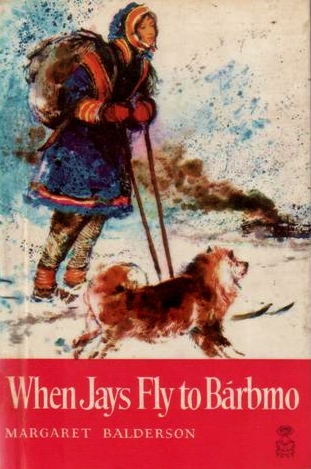
My edition is the OUP softcover, published in 1970, and it is graced by a wonderful cover illustration by one of my very favourite literary artists, Victor Ambrus. The first chapter heading is also illustrated, but sadly the rest of the volume is without decoration. I wonder if the original edition has more pictures? If so, I would love to get my hands on one…

Read Full Post »

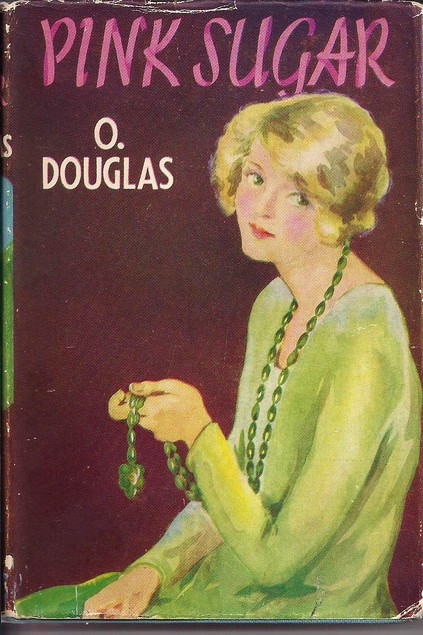
pink sugar o douglas anna buchanPink Sugar by O. Douglas ~ 1924. This edition: Hodder and Stoughton, 1936. Hardcover. 312 pages.

My rating: 7.5/10

A rather sweet book, but not mawkishly so in the way the title suggests. I wasn’t sure what to expect from this one, but I came away feeling beautifully contented, in an “all’s right in that fictional world” sort of way. The heroine sorted herself out nicely, and we have high hopes for her future if she can just retain that hard-won sensibility to the absurdity of playing Lady Bountiful to an oblivious populace!

I guess I should backtrack a bit, and summarize the plot for those of you not already familiar with this gentle novel.

“Spinster without encumbrances” Kirsty Gilmour is thirty and a free woman for the first time in her life, after the recent death of her stepmother, a woman described as “sweet and friendly and quite intolerable”. The second Lady Gilmour was an absolutely selfish creature whom Kirsty has stuck with from charitable impulse and deep inner goodness – Kirsty is the inheritor of her late father’s fortune, and has financially supported and accompanied her stepmother through that woman’s preferred social whirl in the years since Sir Gilmour’s death.

Kirsty’s older friend, Blanche Cunningham, reminisces about the unregretted Lady Gilmour.

Thinking of Lady Gilmour, Blanche was conscious again of the hot wave of dislike that had so often engulfed her when she had come across that lady in life. She remembered the baby-blue eyes, the appealing ways, the smooth sweet voice that could say such cruel things, the too red lips, the faint scent of violets that had clung to all of her possessions, the carefully thought out details of all she wore, her endless insistent care of herself and her own comfort, her absolute carelessness as to the feelings of others…

‘Kirsty,’ Blanche laid her hand on her friend’s arm. ‘However did you stand it all those years? What an intolerable woman she was!’

Kirsty sat looking in front of her.

‘She’s dead,’ was all she said.

‘Well,’ Mrs. Cunningham retorted briskly, ‘being dead doesn’t make people any nicer, does it?’

Now, freed of the superficial social whirl, Kirsty has joyously fled to the country, her true emotional habitat and the place of her birth, to the Borders of Scotland, to the little village of Muirburn, just outside of Priorsford.  (O. Douglas aficionados will recognize the reference.) Here she has rented a house, “Little Phantasy”, on the grounds of a larger estate. The manor house itself, rather quaintly named “Phantasy”,  is the abode of curmudgeonly bachelor Colonel Home, forty-ish and set in his ways, by all accounts. Kirsty doesn’t expect to see much of him, and is rather glad of that.

Kirsty has decided that she will now embrace the country life, and that she will devote herself, in true “good spinsterish” fashion, to “living for others”. Sensible Blanche rolls her eyes at this, and tells Kirsty not to be silly, but Kirsty means this in the very best way, taking under her wing as soon as possible a number of  dependents. First comes elderly Aunt Fanny, mild and gentle and perpetually knitting, and then the three motherless children of Blanche’s sister, for an extended rural stay while their recently widowed father travels abroad “to forget his grief”.

Kirsty’s foray into country life is not as smooth as anticipated, and she soon finds that people don’t necessarily like to be “lived for”; some of her most well-meant patronages are soundly snubbed, but there is enough encouragement that she soldiers on. Her tenacity and truly well-meaning sweet nature win over the most resentful of those around her. Kirsty was initially viewed as a frivolous bit of a thing, merely playing at enjoying her new role as householder and surrogate mother to the adorable Barbara and Specky, and the wickedly appealing “Bad” Bill, but as the months go by it is apparent that Kirsty’s innate inner goodness and staunch Scottish good sense will see her settled down and competently filling an important niche in Muirburn society, though not the role that she initially saw herself in.

There are some lovely character portraits in this appealing tale, and I will pass you along to several other reviewers, who also found much to admire in this pleasing novel. Please visit and read these excellent reviews, if you are at all intrigued by what I have said above. (And browse around the blogs a bit while you’re there – there are many more authors and titles highlighted worthy of rediscovery!)

The Book Trunk – Pink Sugar

Letters From a Hill Farm – Pink Sugar

I Prefer Reading – Pink Sugar

Pink Sugar was republished by Greyladies in 2009, and though that edition appears to be currently out of print, it should still be fairly easy to acquire through the second hand book trade. The novel was very popular in its day – my own copy is a vintage 1936 edition, stating that it is the twenty-first printing – so there are many still circulating around at reasonable prices.

Read Full Post »

thunder on the right mary stewart 1Thunder on the Right by Mary Stewart ~ 1957. This edition: Hodder Paperbacks (Coronet), 1974. Paperback. ISBN: 0-340-02219-1. 255 pages.

My rating: 4/10

Omigosh. This book. Words (almost) fail me. 110% gothic romance, and absolutely bizarre in plot and execution. Luckily I’ve been on something of a Mary Stewart binge recently, and this came along as book number six; if it was number one or two I doubt I would have had the heart to continue.

I try my hardest, in reviewing anything in the mystery-suspense line, to not include any spoilers, but, in this case, all bets are off. Consider yourself forewarned!

This one starts off promisingly enough. Jennifer Silver, 22-year-old daughter of the Bullen Professor of Music at Oxford, is ethereally lovely (of course!) and rather at loose ends, despite recent years at art school. She sits in the dining room of her hotel in the French Pyrenees, tucking into a most delectable-sounding repast. She is thrilled to be in France again – she has visited in the past – and is looking forward with anticipation to her planned reunion with her half-French older cousin, who, widowed not long after her marriage, is convalescing from a recent illness in a nearby convent. More than merely convalescing; Gillian has sought solace in religion, and is thinking of becoming a nun, much to Jennifer’s not-so-secret dismay. But something isn’t quite right in a larger sense, and Jennifer sits and mulls over her cousin’s situation with increasing unease. Why have her chatty letters suddenly stopped? Tomorrow Jennifer will be going to the Convent of Notre-Dame-des-Orages to meet Gillian, but she’s not quite sure what she’ll find. (Cue foreboding music. Oh, and a love theme, for here appears a prince on a white charger. Figuratively speaking. The real horse shows up later.)

For who should appear but a figure from Jennifer’s past. Up pops handsome Stephen Masefield, an old student of Professor Silver’s.  Jennifer has dallied with Stephen in Oxford days, and he has long cherished a secret passion for the lovely Jenny despite her mother’s brusque dismissal of his courtship, all unbeknownst to the innocent maiden. Stephen comes with an intriguing past, and is dashingly handsome despite his slight limp from an old war wound (this is all taking place post World War II, in the mid 1950s or thereabouts) as well as exceedingly talented, both in music and as a skilled amateur artist.

Lots of details, yes, I know. But every single one of them matters in the upcoming narrative, for this is an exceedingly busy story, chock full of details affecting details, and coincidences and lucky (or unlucky) juxtapositions of people and events. I’ll cut to the chase, if I may, and give the barest outline of the action to follow.

Jennifer goes to the convent, meets a sinister Spanish nun dressed in a silken habit and sporting a flashing ruby-encrusted cross, and is informed that her cousin was indeed in residence, but that she has died and is buried in the convent graveyard. Something about an automobile accident, and crawling up to the convent gates after midnight, and devoted nursing and a sudden decline… Jennifer is in shock and visits the grave, where a glimpse of a bouquet of gentians sets off a train of speculation in her mind. Perhaps Gillian is still alive, and a mystery woman is buried in her place…?!

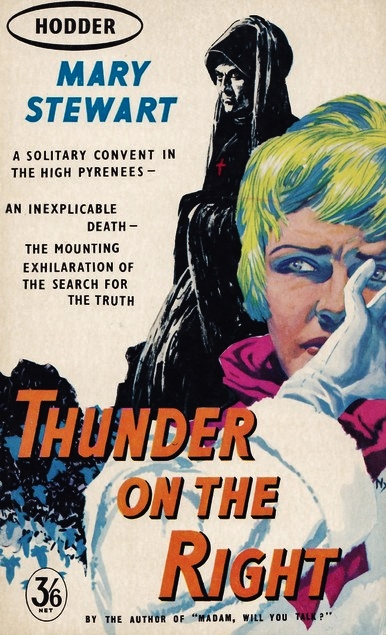
Beware the nun! An older paperback cover which captures the mood so very well.

Beware the nun! An older paperback cover which captures the mood so very well.

The plot convolutes on its merry way, involving a rare form of colour blindness (Gillian would not have been able to identify gentians as her favourite flower – she cannot distinguish blue), a beautiful young novice who nursed Gillian, a stunningly gorgeous local youth dashing about on a wicked stallion, the aforementioned sinister Spanish nun, the extremely old, kind and blind Mother Superior who is unaware of the fact that the Spanish nun, her bursar, is filling the convent with war-looted treasures (solid gold fittings, altar pieces by El Greco, jewelled statues, etcetera), a local smuggler in cahoots with said nun, a vitally crucial letter found tucked behind a picture – this coincidence put me off the story early on – absolutely contrived! – midnight forays by everyone generally ending in eavesdropping on startling conversations, a mystery woman in a mountain cottage, multiple thunderstorms (“thunder on the right” – aha!), a landslide, a flash flood, a slender rock bridge over a ravine, the heroine’s habit of delicately fainting at crucial moments, Stephen’s multiple heroic accomplishments – mastering the wild stallion! hand-to-hand combat skills! great kissing! – on and on and on we go.

The girl in the mountain hut is Gillian; the little novice goes off with her handsome horseman; the evil nun and the smuggler meet their comeuppances; the woman buried in the nunnery garden is the criminal alluded to in casual conversation early in the story. Jennifer is passionately kissed not only by her dashing swain, but by the testosterone-drenched smuggler, who manages to keep his carnal urges on a high boil even while fleeing for his life when the predictable dénouement occurs.

Moments of lovely writing – Mary Stewart does excel at her descriptions – and snippets of humour here and there did not make up for the messy, too-busy, coincidence-heavy plot. Jennifer is the most unbelievable of all of the Mary Stewart heroines I’ve met so far – the others have been very likeable – and I found her utterly annoying. The whole thing was too full of heaving bosoms – can even a nun have a heaving bosom? Well, yes, apparently – and surging stallions and heavily gothic settings.  Too much!

I have been soothing myself with a return to sedate O. Douglas, and am now reading Eliza for Common with relief. Thunder on the Right has rattled me badly, coming as it did after Mary Stewart’s rather more excellent My Brother Michael, which I have yet to review. I liked that one a whole lot more.

Thunder on the Right was apparently the author’s least favourite of her novels, and I can see why. Here are her own words, courtesy of the excellent Mary Stewart Novels website:

From Contemporary Authors, Vol. 1, 1967

Ms. Stewart once claimed Thunder on the Right as her least favorite novel. “I detest that book. I’m ashamed of it, and I’d like to see it drowned beyond recovery. It’s overwritten. It was actually the second book I wrote, and for some strange reason I went overboard, splurged with adjectives, all colored purple.”

I’m glad I read it, though, if only to contrast with the rest of the author’s works. It is indeed interesting to see her development as a writer over the course of her career. I’m only read six of the novels so far, and I’m definitely seeing a pattern of evolution. Very interesting. I intend to continue to explore the vividly painted, action-packed worlds of Mary Stewart, though I may have to take a bit of a break to regain my equilibrium after this latest foray.

Read Full Post »

« Newer Posts - Older Posts »