Archive for the ‘Read in 2013’ Category

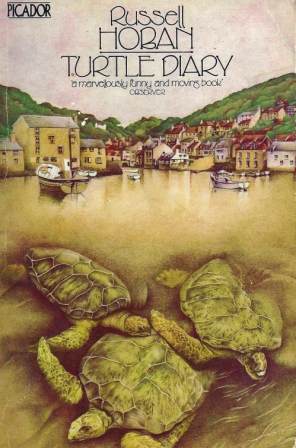
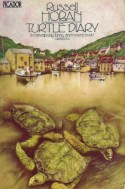
turtle diary russell hoban 001Turtle Diary by Russell Hoban ~ 1975. This edition: Picador, 1977. Softcover. ISBN: 0-330-25050-7. 191 pages.

My rating: 9/10.

The only thing better than looking forward to a read with a cozy preconception as to what the story will bring, and being satisfied with your expectation, is to be blanket-tossed up in the air by a book that tightens up and bounces you unexpectedly into a very different direction, leaving you to freewheel for a while, scrambling for a sense of where you’re going, then catching you and returning you, more or less gently, to solid ground. Turtle Diary is that second kind of book.

The plot is easily condensed. Two middle-aged and currently unattached Londoners, William G. and Neaera H., both struggling with a stagnant state of being, visit the Zoo and are, separately, attracted to the sea turtle tank and the stoic inhabitants within. Musing on the cosmic injustice of these far-roaming creatures being confined to a tiny volume of water, William and Neaera each consider the possibility of somehow freeing the turtles back into the sea. As each of them in turn carry on their separate narrations, we see that their thoughts are uncannily similar, both regarding the turtles and other aspects of their solitary existences, and their relationships (or lack thereof) to those around them. Inevitably William and Neaera meet, speak, share their turtle-liberation impulses, and formulate a practical plan to carry it out, helped by the like-minded zookeeper. Can you guess where we’re going from here? Two lonely people, sharing a joint goal, yearning desperately for love…?

Well, abundant blessings to Russell Hoban. He faces up to and jumps the clichés quite nicely, and while his characters do ultimately find themselves in a different and presumably better emotional place, it’s not their ultimate fate to rest in each others’ arms.

There is so much packed into these strange and wonderful book that the whole turtle thing turns out to be merely a unifying theme, a subplot. This is not as much a book about animal liberation as it is about human liberation. Or, as William G. would doubtless remind us, perhaps there isn’t any difference between the two, humans being just another sort of animal, after all. The trick being to find a state of existence where one can satisfy one’s biological and emotional needs, whether one is sea turtle (source of sea turtle soup) or William G. (source of William G. soup) or octopus or oyster-catcher or water beetle or zookeeper or Balkan expatriate…

It’s so strange (and wonderful) that I picked up an old edition of this book completely at random some weeks ago, merely on the strength of the author’s name. And yes, I already knew who Russell Hoban was – what reading parent could not miss the identity of the originator of the adorably contrary Frances? And of course The Mouse and His Child, which is, most emphatically, not a book for small children, or possibly any age of child, despite the repeated references to it as a “children’s classic”. Whoever has designated it as such has perhaps not read the actual book. But I digress.

As I was saying, I picked up Turtle Diary completely serendipitously, only finding out when another blogger mentioned that he too was reading it that it has been recently reissued by New York Review Books, and is currently receiving much popular press as literary readers “rediscover” Hoban-the-writer-of-adult-fiction.

Without further ado, and without wasting my words in attempted repetition of what Guy Savage of the excellent His Futile Preoccupations book blog has already said, I refer you to that review:

Turtle Diary by Russell Hoban

Guy states that this might well be one of his best books of the year. I know it will be high up on my own list.

And on the strength of Turtle Diary, I will be searching out my copy of The Mouse and His Child, which I acquired when my children were small, thinking that it was a children’s story – it was, after all, shelved in the juvenile section of the bookstore. It was tucked away when an initial reading showed a deep unsuitability for the highly imaginative, nightmare-prone younglings of the household, despite the message of unconditional love yadda yadda yadda. Now that the children in question are in their advanced teen years and decidedly bombproof in their reading habits they might even be interested in exploring Hoban’s adult works for themselves. The dystopian Riddley Walker sounds like something my son in particular might enjoy; must seek that one immediately.

Russell Hoban. If indeed his works are coming in for a time of resurgence, it is because they richly deserve it. Check him out.

Edited July 24, 2013 to add this link to another brilliant review: Seeing the World Through Books – Mary Whipple Reviews Turtle Diary

Read Full Post »

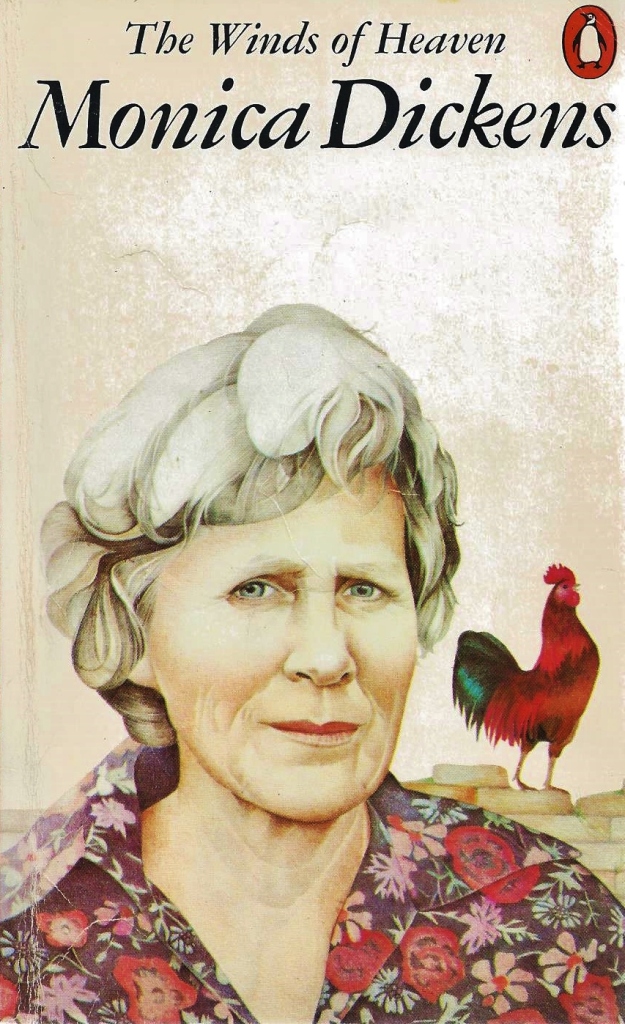
the winds of heaven monica dickens 001The Winds of Heaven by Monica Dickens ~ 1955. This edition: Penguin, 1977. Paperback. ISBN: 0-14-00.1917-0. 239 pages.

My rating: 7/10.

Monica Dickens is one of my pet authors; her books, despite their undoubted flaws, reside prominently on the bedroom bookshelves reserved for our favourite re-reads. And when one is so comfortable with a certain author, isn’t it sometimes hard to step back and realize that not everyone shares either their familiarity or enthusiasm?

I was quite surprised at my own passionate feelings of defensiveness regarding Monica Dickens recently when I read this review of The Winds of Heaven by blogger Rachel of Book Snob. I was half way through reading my own copy of the novel, and Rachel’s comments made me step back a bit and look at the story with new eyes. I’d read it several times previously over the years, and I didn’t really change my views on it with this reading, but it was truly interesting to read with a more critical eye, as if experiencing the novel as a “first” Monica Dickens, and to try to identify what exactly pushed Rachel’s buttons all wrong. Great discussion followed that post; worth reading, so please visit if you haven’t already.

So – taking a deep breath, stepping back, and trying to maintain some sort of distance so I’ll be able to give my own picture of the book in question.

First off, I must say that The Winds of Heaven isn’t, in my opinion, one of this author’s stronger books. Though well up to standard as far as the writing goes, there are others much, much better handled, both in plot and execution. The recent re-issue of this title by Persephone Books leaves me jut a bit bemused; there are others in this writer’s canon which are so much more worthy of that great honour. If this is your first exposure to Monica Dickens, it might well also be your last, and that would be an immense shame, as she has some rather good stories to tell.

I can only assume that Persephone chose this book because of its attention to women’s roles in the mid 20th century. Set in England in the post war years (The Winds of Heaven is set in 1951 and 1952, and was published in 1955), the characters are broadly representative of their time.

When the winds of Heaven blow, men are inclined to throw back their heads like horses, and stride ruggedly into the gusts, pretending to be much healthier than they really are; but women tend to creep about, shrunk into their clothes, and clutching miserably at their hats and hair.

To Louise Bickford, on this late April day, the wind that jostled through the London streets seemed a bitter personal enemy, turning to meet her no matter which way she turned, beating against her small figure in the open stretches, and calling in reserve cohorts to attack her afresh at every corner.

She had intended to walk to the Park and look at the spring flowers, but she was soon so tired of fighting the wind’s fiendish determination to pluck her clothes and hair awry that she turned into a teashop to resettle her hair and recover her breath, until it was time to meet Miriam and the children at Marble Arch.

Miriam was Louise’s eldest daughter. She had borne three daughters, to her surprise, for her husband had set his heart on a son, and Louise was in the habit of giving him everything he asked for. That she failed to give him a boy, with a long conceited nose like his own to look down on the world, had not helped to raise his opinion of his wife’s usefulness to society…

Louis, widowed for just over a year,  is on the cusp of sixty. Her late husband, the supercilious Dudley, has died unexpectedly after a short illness, leaving his financial affairs in a state of great turmoil. Instead of a sedate widowhood financed by a respectable income, Louise is startled to hear that she is, in fact, penniless. Her one resource is a small income from her parents’ estate, barely enough to keep her clothed and fed. Her home and possessions must be sold to repay Dudley’s many debts; Louise has become a bemused and helpless vagabond, thrown out into a world she has been increasingly insulated from during the long years of her difficult marriage.

Louise’s three daughters have stepped in to take on their mother in turn, a situation which all are unprepared for.

Miriam, married to an upwardly mobile barrister, is strongly focussed on the requirements of keeping up a suitable home, entertaining and being entertained by her husband’s business associates, and ensuring her three children are moving ahead in their school and social circles. The most financially prosperous of Louise’s children, it has fallen to Miriam to take on a major part of the responsibility of her mother’s care. Both Louise and Miriam are having a difficult time reconciling themselves to their new relationship. Louise would love to be a fond grandmother figure to Miriam’s three children, but this never quite works out as hoped for. Her closest relationship within the household is to Miriam’s eldest child, Ellen, a dreamy and ineffectual misfit in a household of high achievers. Louise and Ellen are kindred spirits, and Louise’s gentle defense of Ellen serves mostly to irritate, as Miriam sees this as unwarranted interference and an insidious criticism of her mothering skills.

Louise’s second daughter, Eva, an aspiring actress with a hectic personal life, maintains a small flat in London, and good-naturedly tucks her mother into her tiny spare room when it is her turn to host her mother, but her bohemian lifestyle is so at odds with Louise’s conventional nature that the two are never really comfortable together. Eva’s personal affairs are also made more difficult by the presence of her mother in her flat, especially now that she has fallen deeply in love with a married man, and faces her mother’s unspoken but very obvious horror at the situation her daughter has placed herself in.

Louise’s youngest daughter, Anne, has married a struggling market gardener and smallholder. Louise and her practical and kind-natured son-in-law get along well, and Frank has no objection to hosting his wife’s mother. Louise is even becoming rather handy with minor chores about the farm, and she and Frank work well together, with Louise showing increasing competence in practical things under Frank’s relaxed tutelage. Anne herself is the sore point here. Lazy by nature and downright slovenly about the house, Anne finds herself irritated by her mother’s attempts at housecleaning and cooking; those very small efforts at “helping out” seem to Anne to be a personal condemnation of her chosen lifestyle.

So Louise shuttles from daughter to daughter, with a brief respite as a winter resident – at extremely reduced rates –  at an old school friend’s seaside hotel. She increasingly desperately muses over what she should be doing to try to find some sort of solution to her poverty and homelessness. Never expecting to have to support herself, and ineffectual and self-effacing by nature, any initiative she once might have had has been quenched by the late Dudley’s continual verbal criticism. Though Louise has never been physically injured, she is as much a victim of abuse as any battered wife; the way out of her dilemma is lost to her, though well meaning friends try to pep her up and encourage her to find some occupation which might bring in enough income to enable her to maintain some semblance of an independent life.

Then, in a random meeting in a restaurant, Louise becomes friendly with a most unlikely character, department store bed salesman-slash-author of sex-and-murder pulp fiction, Gordon Disher. Gordon is hugely overweight, a severe diabetic who must be extremely careful of what he eats. He’s the never-married middle-aged son of a now-deceased, over-controlling mother, and he is a deeply likeable character, being soft-spoken, kind and deeply compassionate. Louise inspires affection and the longing to protect in Gordon, and their growing relationship winds through the book, increasing in importance until the startling  – but not surprising, given the increasingly melodramatic tone of this minor saga – conclusion.

The Winds of Heaven is “typical” Monica Dickens in that the characters are presented with all flaws fully intact. This is an author who sees every wrinkle, bump and character flaw, and doesn’t hesitate to share them with us. She is adept at showing us that those flaws don’t necessarily completely define her characters, and she generally shows us the positive aspects of each personality as well. She creates her characters, sets them on the stage to play out their various stories, and lets her readers make of everything as they will. I like “not liking” various of her players, and I like the grace that their creator gives by dropping hints of their deeper motivations, and their complex inner lives. Monica Dickens is occasionally sentimental, but only momentarily; her default tone is wryly observant, and her observations are frequently very amusing, in an “Oh my gosh, she’s right, that could be me!” or, “I know that person!” sort of way.

The book ends on a highly ambiguous note. Louise is about to change her life, and future happiness is a strong possibility, but there is a terrible price to pay.

One of my major issues with this novel is the rushed and superficial handling of the ending; after providing such micro-detail throughout, the sketchy handling of final events is something of a let-down, as if the author was really just ready to be done with the story, already.

I don’t personally feel that the author had any statements to make with this tale, much as it could be read as a critique of the treatment of the elderly (though Louise, at a hale and hearty sixty, isn’t really elderly, in the way that we interpret the term today). Every character is presented sympathetically in that we get to see all the facets of their personalities. We may not like how they behave, but we understand why they are like they are.

Yes, Louise’s daughters are selfish, but their creator does not condemn them for it. Louise is just as selfish in her own way, as is Gordon Disher. Everyone has something that they want, some vision that they’re chasing, which affects their relationships with those they are intimate with. It’s plain old human nature, and I appreciate Monica Dickens’ way of presenting each situation with glimpses of motivation and reasoning, and also those moments of reconciliation and affection which are so reflective of real life.

And this is why I love Monica Dickens. She is fully aware of the contradictory aspects of human nature, and forces them upon us in a way that is impossible to dismiss, all the while telling a diverting story. The Winds of Heaven, while not in her top rank, is full of good writing.

And that is all I have to say, at least for now.

I’m hoping to review more of this author’s work, but I find it is rather difficult to step back enough from someone I’ve read and re-read so much and really talk about the book in question while trying to remember that perhaps everyone else reading is not so familiar with the author’s canon. I read The Winds of Heaven quite a way along in my roster of Dickens’ titles; my response to the novel was definitely informed by that circumstance. If it was my first book by her, I very well might never have gone on.

Come to think of it, I’m not quite sure which was my first book by her. That’s sadly lost in the foggy mists of time. I think it was One Pair of Feet; I do remember picking that one up, in a vintage Penguin version, from a used book store in Calgary sometime in the 1980s, and not being quite sure what to expect. Obviously whatever it was that appealed still does!

Read Full Post »

schoolhouse in the wind anne treneer 001Schoolhouse in the Wind by Anne Treneer ~ 1944. This edition: The Travellers’ Library, 1950. Hardcover. 221 pages.

My rating: 8/10.

A slight memoir which leapt into my hand as I was quickly browsing the back room bookshelves housing the “collectibles” during a recent visit to Hope’s lovely used book store, Pages. I’d never heard of Anne Treneer before, but I am so pleased to have made her unexpected acquaintance.

Intrigued initially by the title, and wondering rather why this volume had been shelved among the back room “treasures”, I had no idea what to expect, but a brief dipping-into let me know that this was one of those personal memoirs of childhood which can be such appealing reading, capturing as they do the very essence of an individual’s earliest memories, and frequently memorable glimpses of long-passed time and much-changed place.

*****

He panted to escape but I
As he was winding thin
And narrowly was slipping by
Gasped and drew him in.

~On Catching the Breath

Anne Treneer was born in 1891, in the small village of Gorran in England’s Cornwall (hotbed of so many writers and creative types), the very much unplanned-for sixth child of the family, born after the family of four boys and a longed-for daughter, Anne’s older sister Susan, was thought complete. The baby carriage had long been given away, so Anne was trundled about by her older brothers in whatever other conveyance was handy:

My brothers say they brought me up in a wheelbarrow, and that this accounts for certain bumps in my forehead and generally scrappy appearance. When I was small they used to tell me that old Mrs. Tucker brought me one winter night in a potato sack and left me on the front step; and that I squalled so loud that my father said to my mother, ‘For God’s sake bring the little Devil in and see if she’ll stop that noise’. So in I came and stayed…

Anne’s father was the local schoolmaster, and Schoolhouse in the Wind is an affectionate, humorous and occasionally poignant evocation of a small corner of Cornwall at the juncture of the 19th and 20th centuries.

Gorran School, with a house for ‘master’ glued to it, stood strong and symmetrical, without beauty but not mean, triumphantly facing the wrong way. It might have looked south over the distant Gruda and the sea; but this advantage was forgone in favour of presenting a good face to the road. Master’s room in school, the big room as we called it, caught the north wind while the closets at the back caught the sun. I have heard that Mr. Silvanus Trevail, the architect, who designed many Cornish schools, committed suicide in the end; but whether out of remorse for his cold frontages I do not know.

That last comment at the end of the book’s first paragraph filled me with quiet glee – obviously this was not to be a completely sweetly sentimental memoir, but something with a bit more bite! – and I read on with high expectations. Those expectations were well met and frequently exceeded.

a young Anne Treneer

A young Anne Treneer.

I could go on and quote many excerpts of Anne Treneer’s rather delicious writing, but I won’t. This book was recently (well, in the late 1990s, “recent” in the used book world, I feel) reissued along with its two companion memoirs, Cornish Years and A Stranger in the Midlands, as a one-volume trilogy. It should be fairly readily available in libraries – at least in British ones – and there are a number of copies available through ABE.

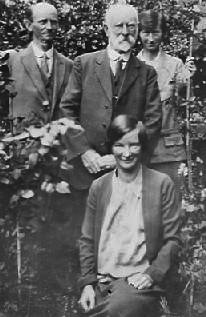
A young Anne Treneer (seated) with her father & sister Susan

A young Anne Treneer (seated) with her father & sister Susan

I recommend it on the strength of this first volume of the trilogy, and I will be buying the combined memoirs for my personal library. The first chapter of Schoolhouse in the Wind sets the stage, as it were, introducing the physical setting of the chapters of reminiscence to follow, and though it will perhaps be of greatest interest to those familiar with the area, even to me, a reader who has never visited England, the picture it draws is vivid and memorable. Also vivid are the character portraits the author paints of her family; with a few well chosen words they come alive on the page.

An internet search brought up a very few references to Treneer. Though she is described as a “prolific” writer, there appear to be few of her titles now available, aside from Schoolhouse in the Wind and the other two memoirs. Schoolhouse is also full of brief snippets of poetry; one assumes these are samples of the author’s work. Some are quite lovely; others seemingly aimed at perhaps a juvenile audience, which is understandable as Anne Treneer spent many years as a schoolteacher.

Anne Treneer

Anne Treneer

Anne Treneer never married, and seems to have led a happy and rather individualistic single life, pursuing her many interests with passion and good humour. She died in 1966.

I will leave the subject of Anne Treneer, at least for now, with this excerpt of a short biography from Maurice Smelt’s 2006 book, 101 Cornish lives.

 Anne Treneer pulled off a difficult trick; she wrote an autobiography that succeeds in enthralling despite its almost relentless happiness. Most writers would not even try, reminding themselves that ‘happiness writes white’. It came out as three books over a period of eight years – Schoolhouse in the Wind, Cornish Years, and A Stranger in the Midlands – and it runs from her earliest memories to a day in her late 50s when she went to America to visit her brother.

From her father’s village school she went to St Austell County School, then to a teacher training college in Truro and then taught in various schools in Cornwall. Ambitious to read deeper and wider she took an external course at London University during the First World War, later spent a year at Liverpool University, later still took a postgraduate degree at Oxford as a mature student. Her longest spell at any one school was a seventeen-year stint at King Edward’s in Birmingham, ending in 1946 with a year’s sabbatical leave. She had by then already written Schoolhouse in the Wind two years earlier, and her future was to be a writer, exiled but coming to her beloved Cornwall when she could. In those twenty post-war years she lived mostly in Devon. She was never married and died in 1966.

One reason why her life seems so tranquil is that she was so eccentric, and at the same time so commonsensical that she records what she did as if doing it were the most obvious thing. For example, she loved air with a passion. It is a word of power in her books, her poems especially; there it is, in slight disguise, in the title of Schoolhouse in the Wind. Hence her whizzing about the country in her young days on a Velocette motorbike, the air streaming past her nose like high-speed champagne. As a teacher in Birmingham she spent a summer term commuting (by Velocette) from a tent in Shropshire on Clent Hill. Tents also feature in later summer holidays in Gorran with her sister Susan – three tents, one for each of them and one for the saucepans… Her outdoorsness gave her the keenest eye for the particularity of place, and she could see several worlds in a single Cornish parish.

She claimed to hate crossings-out and third thoughts, but one would never know it as her books are easy reading, usually a sign of art concealing graft…

“Art concealing graft”… what an intriguing comment that one is, as well!

So, if you stumble upon anything by Anne Treneer in your travels, pick it up and peruse it. She has a lot – happily wry and generally unsentimental – to say.

This one gets a “hidden gem” tag.

Read Full Post »

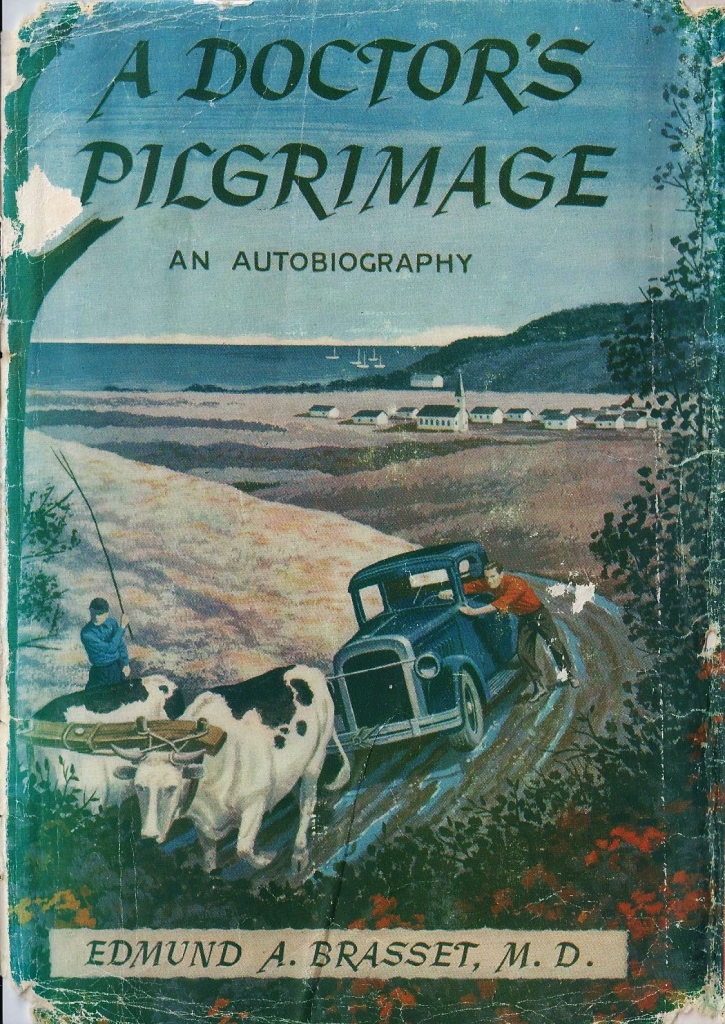
a doctor's pilgrimmage edmund a brasset 001A Doctor’s Pilgrimage: An Autobiography by Edmund A. Brasset, M.D. ~ 1951. This edition: J.B. Lippincott Company, 1951. First Edition. Hardcover. 256 pages.

My rating: 8/10.

What a great little autobiography this was! Totally unexpected. This was one of the books I picked up in Hope’s fabulous Pages bookstore recently; so far my eclectic selection of books from that source have been overwhelmingly rewarding.

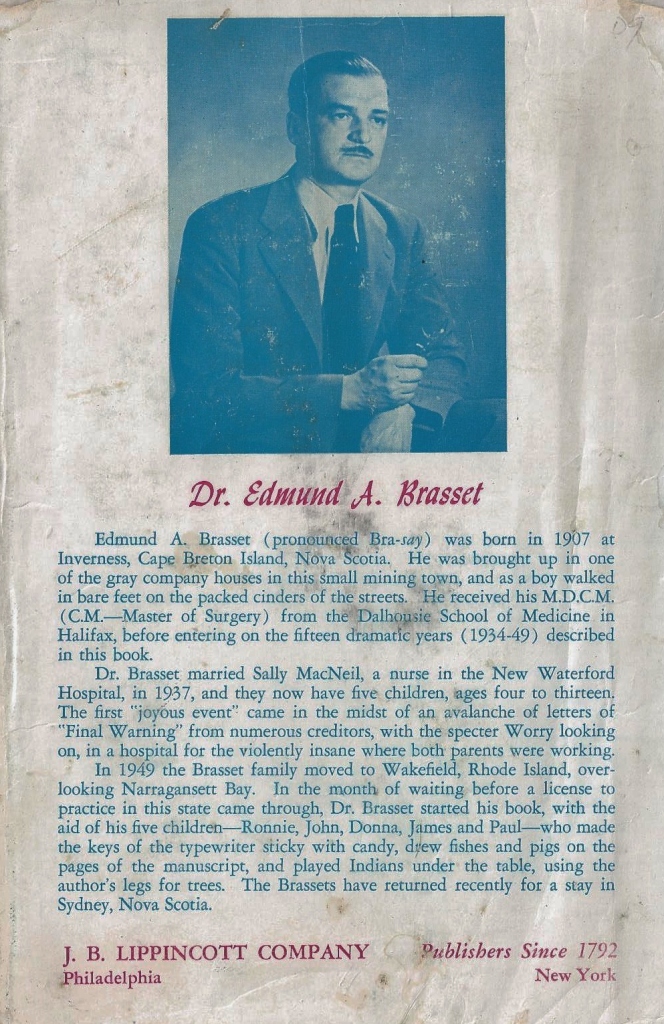
A Doctor’s Pilgrimage covers only a small portion of the life of Nova Scotia physician Edmund Brasset’s life and career, and it appears, from a fairly involved internet book search, that this was Brasset’s only literary endeavour. One can only assume that the man was too busy with his career and family to continue writing, but this lone work is interesting and well written and gives a wonderful portrait of both the man and the time and place he was writing about.

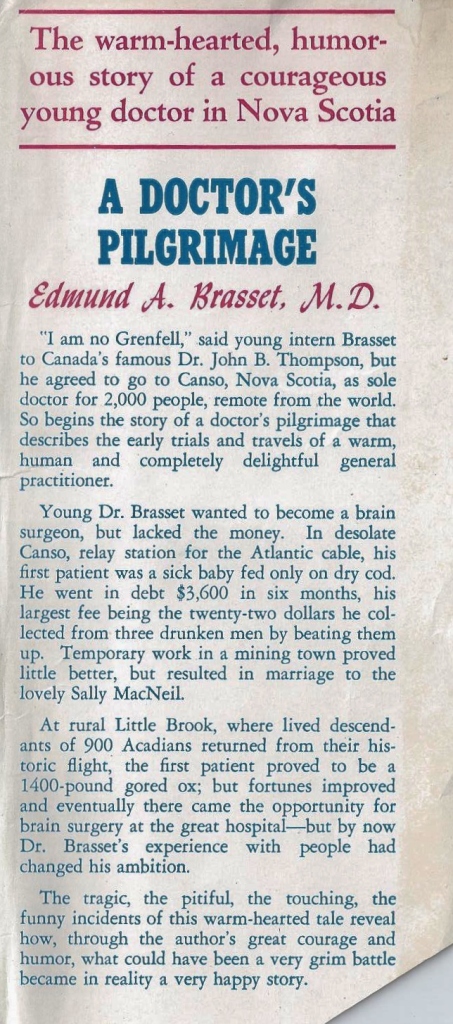
From the inner flyleaf:

a doctor's pilgrimmage edmund a brasset 001 (2)

The book consists of anecdotes of medical school, internship and work as a novice doctor in rural Nova Scotia, first in poverty-stricken Canso and later in a variety of other communities, ending in the almost utopian Acadian community of Little Brook, a posting which changed Dr. Brasset’s focus for the continuation of his medical career. Dr. Brasset never talks down to his readers; medical terminology is used with great abandon, but never to impress, merely to inform. Character portraits abound, as do retellings of local legends – a mysterious case of spontaneous combustion; the morning discovery on shore of an unconscious man with both legs recently amputated; a woman who believes that she is surrounded by ghosts – as well as asides referring to the author’s strong faith in both the goodness of humanity and the existence of a benevolent God. A very individualistic and opinionated (in a very good way) memoir.

A grand little book, in its happy minor key.

From the back cover, more on the author. (Aren’t these old dust jackets great?)

a doctor's pilgrimage back dj edmund brasset 001

And last but not least, the Kirkus Review entry for A Doctor’s Pilgrimage, from September of 1951.

A lively, likable record of a doctor’s rewarding if unrewarded first years in practice, and a little black bag full of fascinating cases, Brasset’s story starts when he left Halifax and the ambition to become a brain surgeon behind for Canso in Nova Scotia, where there was only fish and fog. After two years in Canso and a rising debt of several thousand dollars, Brasset was forced to leave for New Waterford where he married Sally, and his obligations increased in spite of a grateful mobster’s attempt to drum up business. A year on the staff of a mental institution widened his experience but did not increase his income, and finally he found a good practice in the remote French-Canadian village of Little Brook. Later given the chance to become a neurosurgical specialist, Brasset found the indifference and institutionalism of working with cases, as against people, less satisfying, made the decision to return to his country doctoring in Little Brook… A record of service which has warmth and humor.

The family eventually moved to the United States; during my internet research I found mention of Dr. Brasset’s son Paul, who is now a successful winemaker in California’s Somona Valley, even naming his winery after his childhood home: Bluenose Wines . (What an interesting little side note I found this to be. One reason I love the internet – such an abundance of rabbit trails one can happily follow!)

Read Full Post »

zigzag james houstonZigzag: A Life on the Move by James Houston ~ 1998. This edition: McClelland and Stewart, 1998. Hardcover. ISBN: 0-7710-4208-6. 278 pages.

My rating: 9/10.

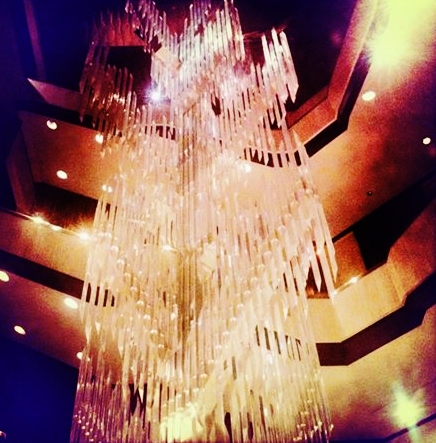
When we first visited Calgary’s Glenbow Museum in 1988 to take in the controversial but beautifully presented special exhibition on First Nations art and culture,  The Spirit Sings, we were impressed by the huge mobile, four stories in length, that hangs in the open foyer of the museum. “You should see it when it’s working!” we were told; plagued by continual malfunctions in the sound and lighting system, the mobile was hanging dim and silent. When artist James Houston installed the work in the newly opened Glenbow back in 1976, it was lit by moving lights coordinated to the strains of Debussy’s Snowflakes Are Falling. Though we visited the Glenbow numerous times during our Alberta sojourn, and again in 2005, we were never lucky enough to see the famed Aurora Borealis sculpture in its full glory, but it was a memorable sight nonetheless. (A bit more about the sculpture here. )

'Aurora Borealis', Glenbow Museum, Calgary, Alberta

‘Aurora Borealis’, Glenbow Museum, Calgary, Alberta

Several of the anecdotes in Zigzag concern the design of Aurora Borealis, and Houston and his son John’s personal transportation of the fragile, 5 to 7 foot long acrylic crystal “needles” by U-Haul truck from Rhode Island to Alberta. I will be looking at the sculpture with fresh appreciation on our next visit. (We are hoping to visit sometime this summer, to take in the current M.C. Escher exhibit before its closure in August.)

Joan Givner wrote in B.C. Bookworld, 1998:

James Houston’s second volume of autobiography, Zigzag: A Life On The Move begins as he leaves the Arctic to start a new life as a designer for Steuben Glass in New York. He has just spent 14 years working closely with the Inuit of the Arctic. [Houston is credited with discovering Inuit were producing great art and single-handedly creating a market for it. He also encouraged Inuit to adapt their work for North American buyers.] As he leaves Baffin Island, he receives two gifts from the Inuit: a carving of a walrus and a paper bag containing $33. “You’re going away, everyone says, to try and make more money,” they explain. “If at first you don’t have money in that foreign place, we thought to give some to you.”

The original purpose of Eskimo carvings was to bring luck and protection on hunting expeditions. Houston needs both luck and protection as he leaves a culture unconcerned with monetary gain (the market value of the walrus is $11,000) for one in which it is the be-all and end-all. In Manhattan in the 1960s, Houston at first has trouble adapting to the tyranny of clocks and schedules. Soon he becomes acclimatized and delights in the theatres, art shows, lavish parties and holidays on yachts where kings and presidents and Nelson Rockefeller casually drop by. Houston becomes a successful glass-designer, makes a fortune, teaches art in Harlem, becomes a successful writer, designs National Geographic’s centenary cover and even marries happily.

 It is, however, the Arctic which inspires and nurtures Houston. “I am thrilled by the frosted, Arctic-like appearance of deep engravings on glass,” he says. When the Glenbow Museum in Calgary asks him to design a sculpture, he creates his Aurora Borealis which is four storeys high. It is inspired by his memory of the spectacular ever-changing display of the Northern Lights. Either the protective qualities of the walrus carving or his years with the Inuit prevent him from succumbing completely to the glitzy life. He never confuses technological advances with civilization, nor economic gain with success. 

The final pages of the book describe his life in a cabin on another island, one of the Queen Charlottes now known as the Haida Gwaii, where he now lives part of every year. 

That anecdote about the paper bag filled with crumpled one dollar bills shows up in this collection of memoirs, as well as in the ending pages of Houston’s truncated account of his Arctic years, Confessions of an Igloo Dweller. It obviously moved him deeply at the time; it also made a “good story” and that, in essence, is something that James Houston liked to have under his hat.

Houston’s memoirs skirt extremely closely to the “If you want to know how good he is, just ask him” school of autobiography, but they are saved by his occasional self-effacing comments. He turns the laugh on himself as needed, and his frankness and willingness to comment openly on extremely intimate matters give small but crucial insights into his character. Whether that character comes across as intended is another story altogether; I frequently feel that there is a lot being left out of Houston’s story of himself.

What he does share is quite fascinating. Through Houston’s brief vignettes in both Zigzag and the earlier Confessions of an Igloo Dweller, we get glimpses of the Inuit world from the mid 20th century to the creation of Nunavut in 1999. We also get glimpses of what made this extremely driven and creative man “tick”; his great love for and pride in his two sons, and his lifelong dependence on touching base with the natural world to refuel him for his bouts of big city-based creativity.

He was an iconic figure in more ways than one in the numerous spheres he seems to have effortlessly inhabited. I suspect he might also have been a rather arrogant man to have bumped up against if one did not share his high opinion of himself, but I bet a dinner party with Houston at the table would have been a memorable thing.

Zigzag was a very good read; it lost a point merely because the vignette-style format jumped around an awful lot (to be expected, one supposes, from the very title of the work) and left me frequently wanting more than I was given.

Another volume of memoir, Hideaway, about the author’s cabin on Haida Gwaii, followed Zigzag and Confessions to form a trilogy of sorts. I will be reading this one when I come across it.

A memorable Canadian and a very gifted man; a complex persona in so many ways.

James Houston passed away in 2005. His artistic and literary legacy lives on.

Read Full Post »

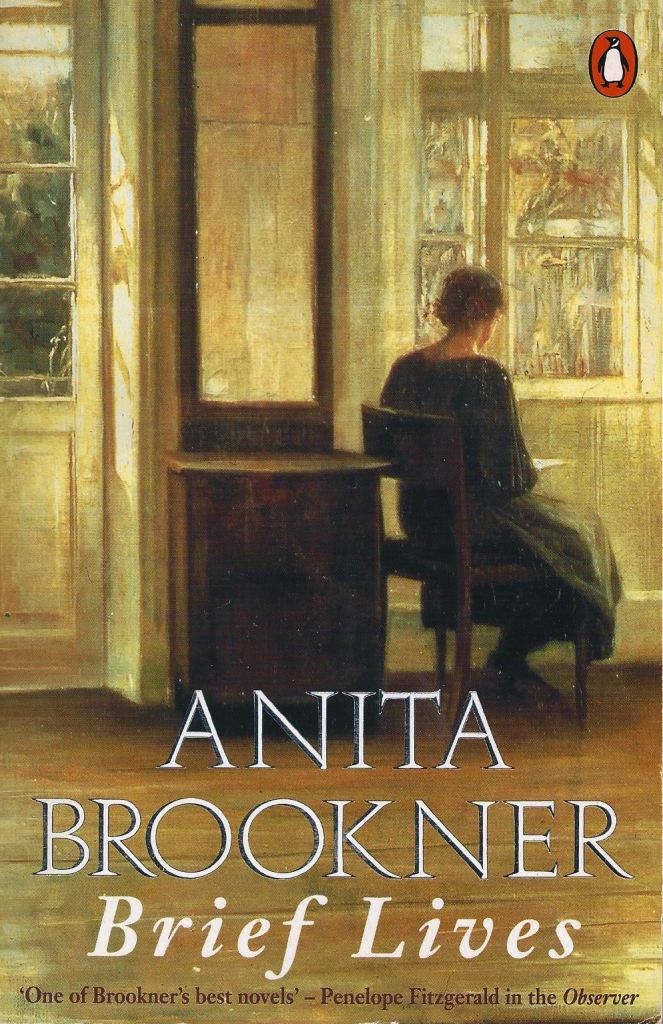
brief lives anita brookner 001Brief Lives by Anita Brookner ~ 1990. This edition: Penguin, 1991. Softcover. ISBN: 0-14-014538-9. 217 pages.

My rating: 7.5/10

Our bookshelves are in a constant state of flux. We’ve organized them in various ways throughout the years, even, for a brief halcyon time, in alphabetical order by author, just like a real library. Of course, that was many years ago, and just after a major inter-provincial move, so our joint collection was much smaller than it is now, after 22 years in the same house.

Most recently I’ve noticed we tend to group our books by type, as much as by author. Paul Theroux, Bill Bryson, and Bruce Chatwin share shelf space with Thor Heyerdahl; Lucy Maud Montgomery and Dorothy Emily Stevenson are bookshelf chums – or, rather, kindred spirits – both being represented by stacks of well-read, gaudily-covered paperbacks stacked precariously upon a few treasured vintage hardcover editions of their works; Margaret Atwood, Robertson Davies, Timothy Findley and Jack Hodgins anchor the Can-Lit section, with Farley Mowat off in solitary exile in our son’s cabin across the yard; Megan Whalen Turner and Robin McKinley are close at hand, right beside Diana Wynne Jones, ready to provide a escape into a well-created fantasy world when the real world loses its charm, as it occasionally does.

Off in a quiet corner there resides a community of women – and a few token men –  who are just a little bit difficult, just a shade sometimes-dreary. Their company is not often called for, though occasional visits prove refreshing; an antidote to the high drama and more obvious humour of so many of our other authorial favourites. The sisterhood on that shelf includes Barbara Pym, Muriel Spark, Elizabeth Taylor and Elizabeth Bowen; Vita Sackville-West and Nancy Mitford have settled nearby, as have H.E. Bates and D.H. Lawrence, the last two gathering quite a lot of dust, I must admit, though not in any way destined for the discard box. Though perhaps a bit out of place among that company of women, the melancholy tone of much of their work has placed them among the introspective ones.

And that shelf is where this author is headed. Anita Brookner’s Brief Lives is a fitting companion to Pym and Spark and Taylor and their ilk. It is quite beautifully written with a cleanly distinctive style, and an appreciable quantity of understated humour; the author is obviously one of the “intelligent women writers” who seem to have split their time equally between observation and introspection. The books on these shelves are rather thoughtful books, and, dare I say it, women’s books, in a most intimate way. Though men frequently feature in them, the intellectual emphasis is on the female characters, and the insights given are very much those of the feminine point of view.

Not much happens in Brief Lives; what drama there is exists mostly in the mind of the narrator; she is one of the self-aware observers who watch and hear themselves and rather brutally analyze their own actions and words and thoughts and feelings, while still proceeding with their outwardly “normal” ways.

Fay Langdon, narrator and chief character of Brief Lives, was once a modestly successful singer with a promising radio career. This ended with her marriage to a highly ambitious solicitor, Owen Langdon. Fay’s focus was shifted to the management and embellishment of her husband’s house, and to the frequent entertaining and socializing his rising career made de rigeuer. The marriage is childless, to Fay’s gentle regret, but she fills her days with her wifely duties, uncomplainingly accepting of her new role in the world, yet continually wistful for the life she once lived.

I accepted this routine without demur. I felt no indignation that he should give priority to the office; I doubt if many wives did in those days, or at least the sort of wife who came from my background, which I began to perceive was a little too simple for a man like Owen. He was used to complexity, trickiness, ambivalence; he would rather, I thought, be intrigued by a woman than disarmed by her. He hated those moments of unavoidable truth-telling which occasionally passed between us. I really think that he hated desire. He wanted a wife who would cause him no anguish, yet at the same time he wanted to hold her at arm’s length. He never seemed to sense the incompatibility of those two needs, the one for trust and the other for distance, even for a sort of formality, and I soon learned not to draw his attention to what was, to me, faintly alarming, his abrupt cancellation of intimacy as soon as the occasion for that intimacy had passed. My fault was precisely this, that I would seek to prolong our moments of closeness when I could see that he was already restless with the wish to do something else. My mistake was to lie in his arms moist-eyed with tenderness and gratitude, when the correct stance would have been a certain detachment, an irony, as if to imply that he would have to love me to a much higher standard to convince me that I had to take him seriously. I should have found such a tactic odious, but now I see that it is sometimes necessary to meet withdrawal with withdrawal, dismissal with dismissal. I did not know this then, and because of what happened since I remain unconvinced of it even now, but I see that if a woman has it in mind to bring a man to heel she may have to play a part which runs counter to her own instincts, unless her instincts are those of an aggressor, which mine certainly were not.

Fay is telling her story from the present day, looking back on sixty-some years of life. She is now widowed, and, left financially secure by her husband’s careful financial planning, she seeks to fill her days with some sort of meaningful occupation. Fay is carefully social on those occasions, increasingly rare, when she moves about among the people whom her marriage made into her peers. She is constantly mindful of overstepping the bounds of casual friendship; she dreads most of all becoming one of the emotionally needy women who others dread and eventually actively avoid.

Fay’s friend Julia has no such inhibitions. A decade older than Fay, and much more successful during her own show business career as a diseuse, a performer of dramatic monologues (I admit that I had to look that term up!), Julia’s husband was richer, her popularity greater, and her social circle higher and wider. Julia is a supremely unapologetic egoist; Fay has become an increasingly reluctant participant in the shrinking coterie of “helpers” whom Julia has collected to pander to her needs and desires.

The book opens with the announcement of Julia’s death in The Times, and Fay’s glimpse of Julia’s picture opens a floodgate of memories, and we follow along in almost horrified fascination as Fay monologues on about her life, marriage, and long and conflicted relationship with the acidic Julia.

I found, though “nothing happened”, I couldn’t look away from this novel. And yes, it was dreary, but I didn’t find it particularly depressing, even though I fully appreciated that Fay’s and Julia’s declining years were brutally lonely, and that they’d lived their lives in ways that fated them to an increase in that loneliness as the years advanced. I think it was the writing that tipped the balance. Anita Brookner, if this book is in any way a representative sample of her work, has a very readable, crisp and clean style; Brief Lives was an effortless read, in a very good way. I’ll be reading more Brookner in the future, and, yes, shelving her (I strongly suspect) right next to her literary sister Pym.

The novel lost points for its rather handy but not terribly believable removal of Julia from the scene right near the end. I felt it was a total cop out on the author’s part, though of course it allowed the character of Fay more scope for introspection without the bother of coping with the physical and emotional demands of her pseudo-friend. In real life I think this would have played out in a much more extended and ultimately tragic way.

An interesting author, with a dedicated following.

More on Brief Lives here:

Heavenali’s Review of Brief Lives

And more on Anita Brookner:

Anita Brookner – Her Life and Work

The Telegraph author interview – “A Singular Woman”

Read Full Post »

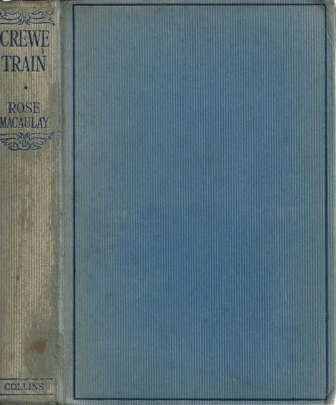
crewe train by rose macaulay 001Crewe Train by Rose Macaulay ~ 1926. This edition: W. Collins Sons & Co., Ltd, 1926. (One Shilling Library Series.) Hardcover. 307 pages.

My rating: A solid 9/10. It’s been several weeks since I read this rather shabby, more than slightly foxed edition of Crewe Train, but the character of Denham has walked beside me ever since.

TO

THE PHILISTINES,

THE BARBARIANS,

THE UNSOCIABLE,

AND

THOSE WHO DO NOT CARE TO TAKE
ANY TROUBLE.

I must admit that after that introduction I was already more than half won over, which was a good thing, for my initial impression of the characters in this quirky novel was that they were sincerely unlikeable. Our heroine in particular.

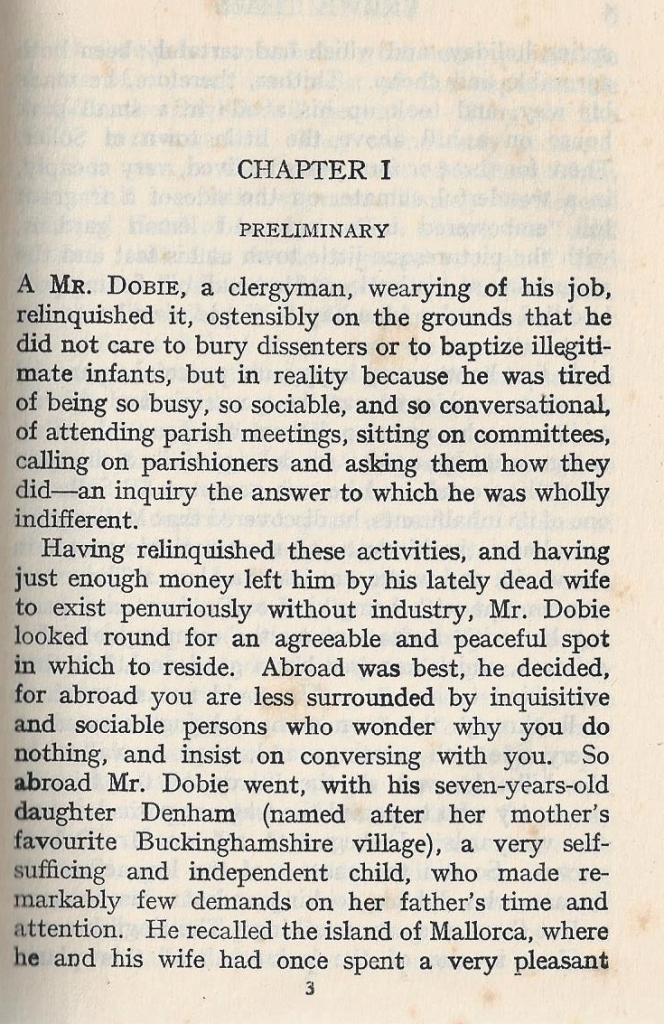
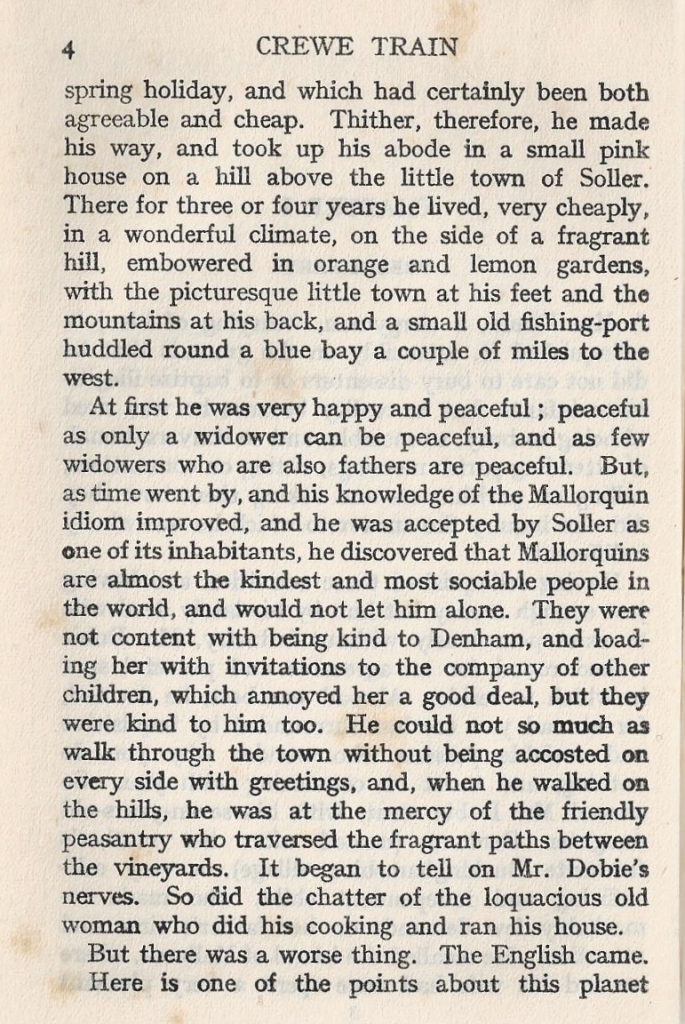
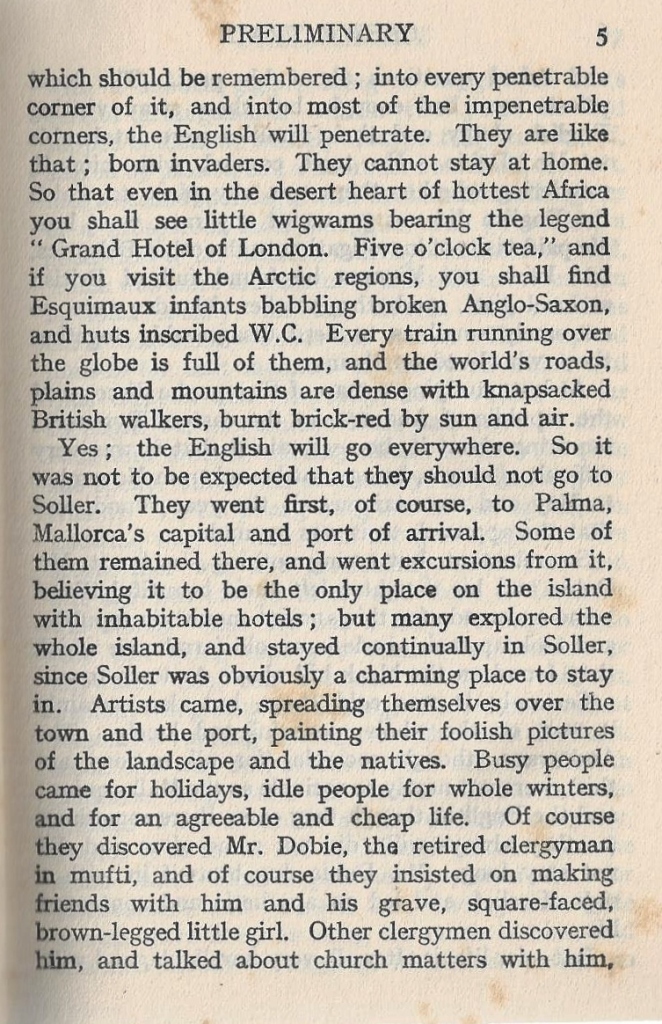
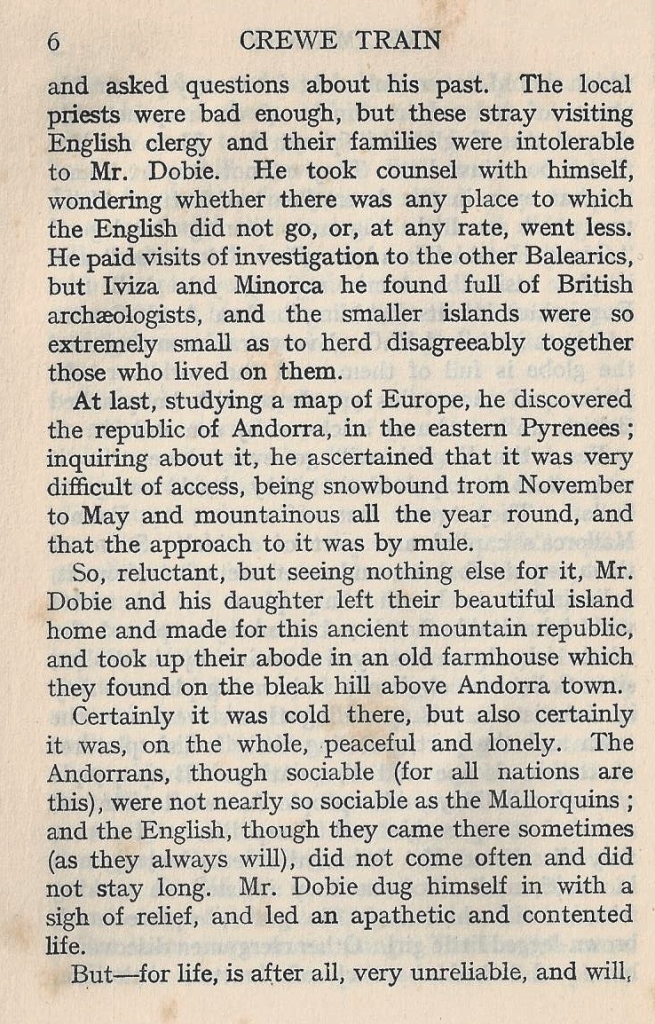
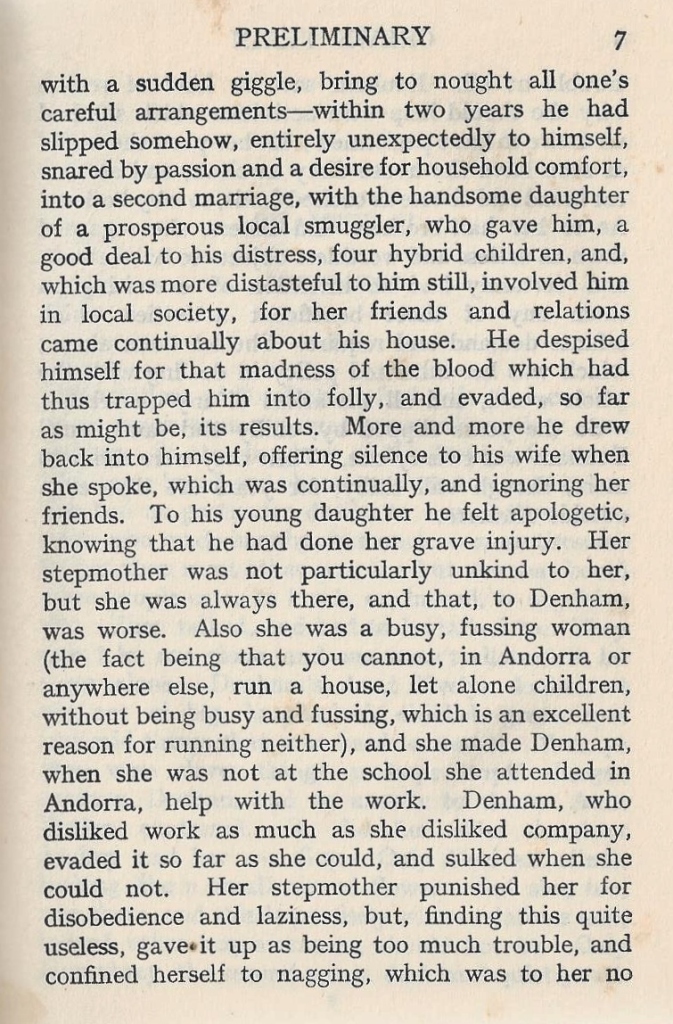
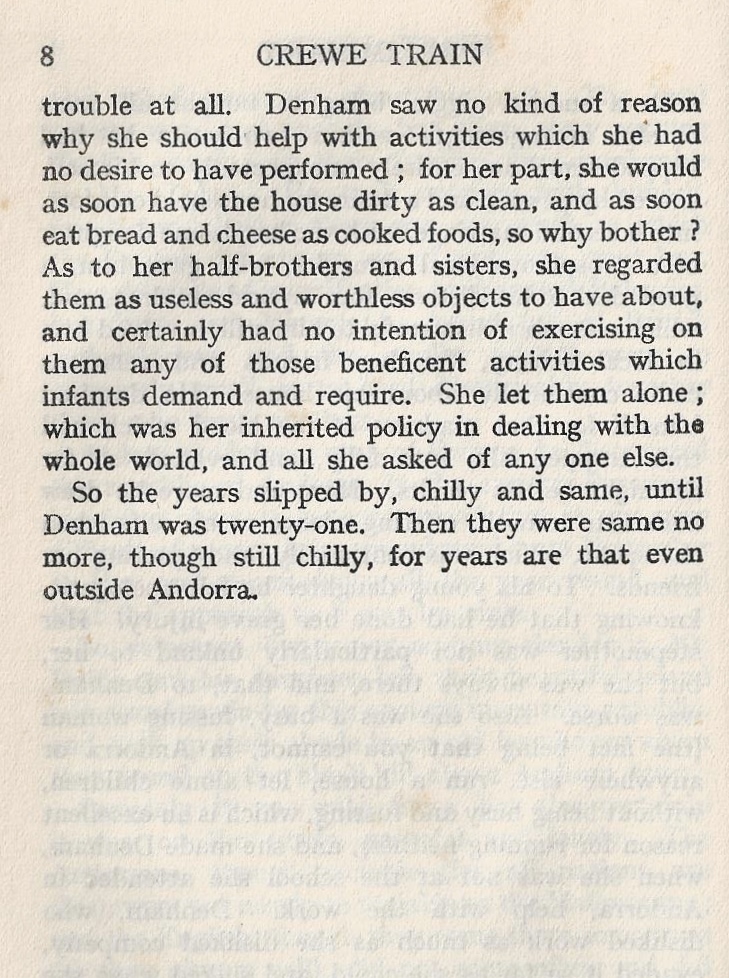
crewe train macaulay page 1 001crewe train macaulay page 2  001crewe train macaulay page 3 001 (2)crewe train macaulay pg 4 001crewe train macaulay pg 5 001 (2)crewe train macaulay pg 6 001And yes, in her twenty-first year, everything changes for Denham. Her father’s in-laws, the Greshams, the family of his first wife, descend upon the Andorran establishment for a visit, and, perhaps brought on by the unwonted stress of having to socialize so strenuously after a self-imposed life of seclusion, Mr. Dobie fatally succumbs to a stroke in the night.

Denham’s stepmother makes no bones about her distaste for her sullen stepdaughter; in her loquacious outpouring of hurt at her new widowhood she presses the responsibility for Denham upon the Gresham family. “You had better take her away with you to England!”

So they do.

Culture shock does not adequately describe Denham’s introduction to English society after her lifetime of relative seclusion. She allows herself to be tidied up and dressed up and trained up in the social conventions; these do not take particularly well though the continually bemused Denham does not actively resist her attempted makeover into a more socially acceptable “young lady”. She merely remains stoic under her Aunt Evelyn’s well-meaning ministrations and her cousins’ continual encouragements. She processes all she’s being exposed to, and does her best in her slow, wordless way to try to live up to the Greshams’ expectations; her success is not noteworthy.

Time moves inexorably on. Denham meets a certain young man, Arnold Chapel, a junior partner in the Gresham family’s publishing firm. Arnold and Denham experience something of a meeting of minds, though Arnold’s quicker intellect runs rings around the plodding progression of Denham’s thought processes. The two embark upon a shared life, and the novel details the peaks and valleys the two must traverse – some literal, most strictly figurative – before coming to a place of joint repose.

A very clever book, this one. I frequently felt much in common with Denham as Macaulay writes her own rings around my own rather plodding (though appreciative) thought process. I identified tremendously well with Denham; I wonder if this is a universal response? Or do the rest of you see her as the unrelateable (though ultimately sympathetic) stranger within the gates of intelligent society?

I suspect we all have something of Denham in us, as onlookers and inner critics of the chatter and occasional excesses perpetuated by the self-proclaimed intellectual classes of our own time. Perhaps this explains the lasting appeal of this mocking (but frequently tender) confection of a tale?

Crewe Train is definitely on my personal short list of “Most Memorable Books of 2013”, even though the year is not quite half over. I am very keen indeed to explore more of Macaulay’s fiction; this novel has wet my appetite for something more of her creative style.

Read Full Post »

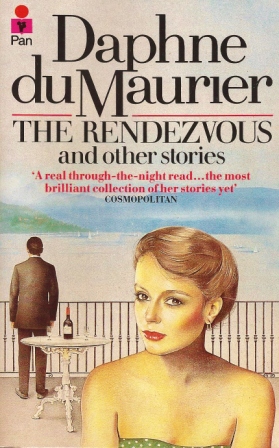
the rendezvous other stories daphne du maurier 001The Rendezvous and other stories by Daphne du Maurier ~ 1980. This edition: Pan, 1981. Paperback. ISBN: 0-330-26554-7. 234 pages.

My rating: The first and last stories in this otherwise rather mild collection elevate my rating to an overall 7/10. Otherwise, probably not more than a 5, or maybe a 6. All are worth reading, but most are not quite top-of-the-line for this particular author.

In the Preface, the author briefly explains her inspirations, and mentions that these stories show her development as a writer. I think a nice addition to this collection would have been dates of writing or of original publication; this would have added much to my own enjoyment as a long-time Daphne du Maurier reader.

*****

Some excellent, some not so much in this 1980 collection of short stories from throughout the author’s long career. All are very well written; the “less excellent” ones are described as such only in comparison to this author’s absolutely brilliant “best”.

  • No Motive ~ Why would a sweet-natured, happily married, expectant mother fatally shoot herself ten minutes after cheerfully ordering new garden furniture? One of the longer stories in this collection, and nicely plotted out. 7/10.
  • Panic ~ A casual love affair goes terribly wrong. Fabulously atmospheric, but ultimately slight. The dénouement comes as no surprise. 5/10.
  • The Supreme Artist ~ An aging actor gives a most superb performance off stage, and comes abruptly to an intimation of his own mortality. 6/10.
  • Adieu Sagesse ~ Two men from the opposite ends of the social spectrum plot their escape from tedious lives. Loved this one; the right people “win”. 8/10.
  • Fairy Tale ~ A slight and unlikely snippet of a story of a ne’er-do-well husband and his adoring wife. “Fairy tale”, indeed! 3/10.
  • The Rendezvous ~ I expected much from the title story of this collection. A successful author who has spent his life in observation finally arranges an “experience” for himself, only to be disappointed at every turn. In general, well done. But I wanted something just a little bit more. 6/10.
  • La Sainte-Vierge ~ Innocence and corruption. A snippet of a story, but very evocative of both. 5/10.
  • Leading Lady ~ Cherchez la femme… Another theatrical setting. Daphne used her eyes and ears well when about the backstage world. 6/10.
  • Escort ~ A maritime ghost story set in World War II. It’s been done before, but this attempt is reasonably decent. Nice detail on board the ghost ship. 5/10.
  • The Lover ~ A damning portrait of a rather vicious “lady’s man”. Didn’t really go anywhere as a story. 4/10.
  • The Closing Door ~ A young man faces up to a dire diagnosis. His lover unknowingly twists the knife. No shortage of symbolic situation in this one; I suspect it is one of the earlier efforts of the author. 5/10.
  • Indiscretion ~ Be careful what you say and who you say it to. Three lives are changed by a single sentence. A mite too contrived for my full enjoyment. 4/10.
  • Angels and Archangels ~ Religion and hypocrisy. The hypocrites win. A bitter little tale. 5/10.
  • Split Second ~ This story is the definite high point of the book. A middle-aged woman goes out for a walk, and comes away from a brush with death to a very different world. Or does she? Brutally pathetic, and perfectly written. 9/10.

Here’s another assessment of this collection:

Savidge Reads – The Rendezvous and other stories

Read Full Post »

ringing the changes mazo de la rocheRinging the Changes: An Autobiography by Mazo de la Roche ~ 1957. This edition: Macmillan, 1957. First Canadian Edition. Hardcover. 304 pages.

My rating: 9/10. What a fascinating autobiography! It was definitely readable, and full of vivid vignettes, capably portrayed.

But is it factual? Perhaps not particularly, from what I’ve  found out in some very desultory online research. It is very much a created portrait rather than a true glimpse into what made its subject tick. Nonetheless, I found it a compelling read and I will be approaching my future reading of the author’s works with this self-portrait very much in mind.

*****

First, some background information for those of you (and I suspect there may be some) who have no idea who Mazo de a Roche was, and why I’m finding her story so interesting. Feel free to skip this section; my response to the autobiography itself follows at the bottom of the post. I’ve spent a fair bit of time this past few days doing something of a mini-study on de la Roche; I’m not at all what one would call a fan, though I’ve read a few of her books in the past, without feeling the urge to read everything the author has written. She’s not quite my thing, though I’m intending to explore her fiction more in the future, nudged on by the new knowledge I’ve just gained. An intriguing woman.

Mazo de la Roche was born in Ontario in 1879, the only child of parents who, while not exactly poverty-stricken, certainly experienced ongoing financial difficulties. Young Mazo was a self-described eccentric child, and an avid reader. She created an imaginary world peopled by invented characters which she referred to in her autobiography as “The Play”, and this world, expanded and lovingly detailed as the years went on, is thought to be at least partially the basis of de la Roche’s eventual epic sixteen-book series about a fictional Ontario family, the Whiteoaks, and their home estate, Jalna.

When Mazo was seven years old, her parents adopted her younger cousin Caroline, and the two became as close as sisters – and in some ways perhaps closer. Their intimate relationship was to persist until Mazo’s death in 1961. The young girls shared in the imaginary world originally created by Mazo, and as they grew up they built a shared life which seemed to preclude either of them marrying or living independently of the other for more than brief periods of time. Mazo had written stories and poetry throughout her life, but her ongoing bouts of ill health and the need to care for her invalid mother prevented her from spending as much time writing as she desired to. Caroline became the breadwinner of the family group, while Mazo stayed at home, nursed her mother, and wrote in her spare time.

Mazo had had some success selling occasional short stories to magazines, but her first real literary break came with the publication of a series of linked anecdotal stories, Explorers of the Dawn, in 1922. Mazo de la Roche was at that point forty-four years old, and her greater success was yet to come. Explorers of the Dawn made it onto bestseller lists of its time, alongside The Beautiful and Damned by F. Scott Fitzgerald and Louis Hémon’s Maria Chapdelaine. A foreword by Christopher Morley (best known nowadays for his humorous novels The Haunted Bookshop and Parnassus on Wheels, but a respected literary editor and critic in his own time) gave credence to de la Roche’s evident talent, and her distinctive authorial voice.

Two more promising novels followed, the critically acclaimed Possession, in 1923, and Delight, a less popularly successful Thomas Hardy-esque rural satirical romance, in 1926. In 1927, the work that was to launch Mazo de la Roche’s career into the Canadian and eventually worldwide literary stratosphere was published. Jalna was a a soap-opera-ish family saga centered on an old Ontario family, the Whiteoaks,  headed by a wealthy matriarch. Something about it caught readers’ imaginations, and, when Jalna unexpectedly won the prestigious Atlantic Monthly $10,000 cash award – a small fortune in 1927 – for “most interesting international novel of the year”, it assured its author’s financial security and allowed her the freedom to write full time. At the age of forty-eight, Mazo’s creative life was about to become very much the focus of an overwhelmingly adoring public and a varied group of intensely opinionated critics.
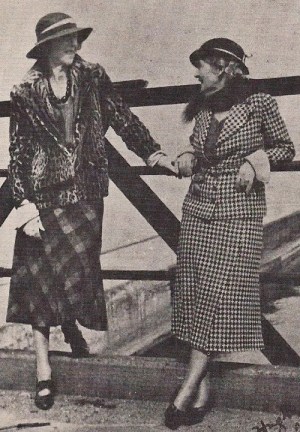
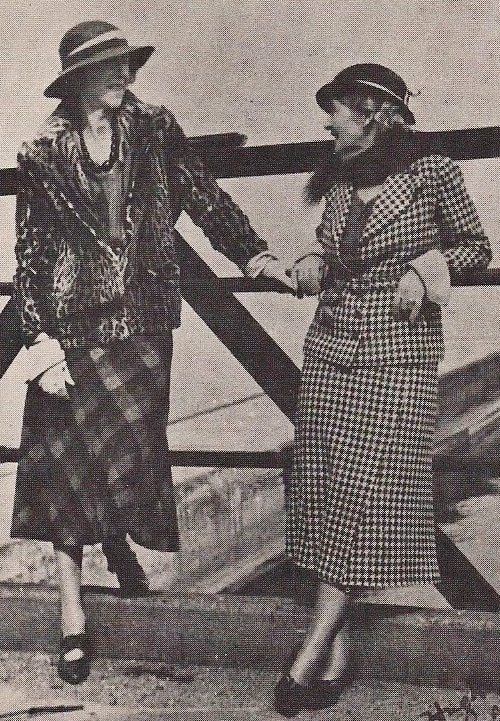
Mazo de la Roche and Caroline Clement, 1930s

Mazo de la Roche and Caroline Clement, 1930s

Caroline was now able to retire from wage-earning work and she took on the role of her suddenly-famous cousin’s housekeeper, editor, secretary, and collaborator in creativity. “The Play”, so precious to the two in childhood and maintained throughout the years, continued to expand in their leisure time, as the cousins ought respite from the pressures of fame in their shared imaginary world. Suffering continually from blinding headaches and trembling hands – and at least one bona fide nervous breakdown – Mazo found that the only way she could sometimes get her thoughts down on paper was to dictate them to Caroline. While Caroline always disclaimed any notion that she originated the plot lines and characterizations that Mazo was so famous for, both women were very open about Caroline’s role as a sounding board and critic.

Fifteen more “Whiteoaks of Jalna” novels were to follow that first astonishing bestseller, as well as more novels, plays, short stories and, eventually, several autobiographical memoirs, of which 1957’s Ringing the Changes is the last. Mazo de la Roche died four years later, at the age of 82. Caroline survived her cousin for some years; the two are buried side-by-side in an Anglican church cemetery in Sibbald Point, Ontario.

It is estimated that the Jalna novels have sold more than eleven million copies worldwide in the years since 1927. They have been translated into more than ninety languages, and were adapted for the stage, movies and television, with varying degrees of popular, commercial and critical success. Despite – or perhaps because of – their bestseller status,  the Jalna novels were increasingly viewed with scorn by the literary world as being too “popular”  and “melodramatic” in plot and execution.

Mazo de la Roche, in the decades since her death, has slipped into literary oblivion but for a few dedicated readers who staunchly read and reread the Jalna saga, and passed the books along to their children. Mostly daughters, one would assume, as de la Roche was seen as a “women’s writer”; her works were thought to appeal mostly to the bored housewife seeking sensation and emotional escape from the humdrum everyday round.

A recent (2012) documentary by Canadian film maker Maya Gallus has brought Mazo de la Roche into new focus. Both her ambitious novels and her unconventional and rather mysterious life are being examined with twenty-first century eyes. It will be interesting to see if there will be something of a “Jalna Revival”; I’m betting that we’ll be hearing much more of this not-quite-forgotten Canadian in the months and years to come.

Pertinent links regarding the recent docudrama:

NFB – The Mystery of Mazo de la Roche

Review: NFB docudrama: The Mystery of Mazo de la Roche

Quill & Quire – Interview with Maya Gallus

*****

(When reading) the autobiographies of other writers …  some appear as little more than a chronicle of the important people the author has known; some appear to dwell, in pallid relish, on poverty or misunderstanding or anguish of spirit endured. They overflow with self-pity. Others have recorded only the sunny periods of their lives, and these are the pleasantest to read.

~Mazo de la Roche ~ Ringing the Changes
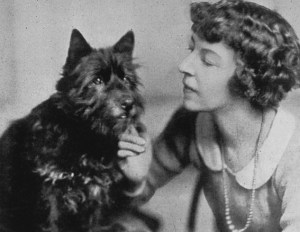
Mazo de la Roche and her beloved Scottie, Bunty

Mazo de la Roche and her beloved Scottie, Bunty

Ringing the Changes itself is a diverting memoir, and, if the author indeed intended to record the frequent sunny hours of her life, she by and large succeeded. Tragedy both major and minor continually followed Mazo and her extended family, and while unhappy events are described, they are not dwelt on or singled out as an excuse for pathos. I never got the feeling that the author was “wallowing”, though I occasionally shook my head in wonder at the sad fates of so many of her relatives, and, frequently, of her family’s beloved animals. They did seem, so many of them, to come to such tragic ends…

I must confess that I knew very little about de la Roche before I read this book, though I had a pre-existing vision of her as a rather reclusive, mildly eccentric sort. I had read several of the Jalna novels way back during my teenage years, but had certainly not found them worthy of any sort of “fandom”, as so many others apparently have. I did pick up a number of the books quite recently in a library sale, thinking that my mother might enjoy them, but she was rather dismissive of the series, so they currently languish somewhere in a box.

In this memoir, Mazo looks back to her childhood, and, once a bit of genealogical discussion is gotten out of the way, launches into a compelling tale of gallantry, tragedy, heartrending anecdotes and humorous vignettes. “Gallant” is a term I kept saying to myself as I read Ringing the Changes; so many of the people in Mazo’s life demonstrated this trait, in particular her beloved cousin Caroline, who was the epitome of selfless devotion in numerous ways, though she appeared to have a full and satisfying independent life as well. The Mazo-Caroline relationship is still raising eyebrows – were they lesbians? what was Mazo’s hold on Caroline? who really wrote the books? – but, seriously, it does seem like that particular relationship was one of equals. Both women apparently had romantic interludes – with men – at various times throughout their lives; that they would choose to stay single and in a “family relationship” with each other and various other family members surely is a purely personal matter and rather understandable given their backgrounds and that of their extended family.

The argument for “closet lesbianism” for Mazo at least is quite strong, or perhaps one might go so far as to speculate that “cross-gendered” might be a more apt term. From her own statements in Ringing the Changes, in childhood she wanted to be a boy, she related on completely equal terms with her male editors and literary advisors, and, perhaps most tellingly, she frankly states that she identified extremely strongly with one of her male protagonists, Finch Whiteoak, who is portrayed as artistic, emotionally and physically fragile, and highly conflicted in his romantic yearnings.

In Ringing the Changes it does seem that Mazo de la Roche was continually striking back at her many critics, the ones who denied her work any place in the “literature” canon, due to its popular success and formulaic nature. She is highly defensive of her own motivations, and this oft-quoted passage sums up her rather hurt tone well:

I could not deny the demands of readers who wanted to know more of that [the Whiteoak] family. Still less could I deny the urge within myself to write of them. Sometimes I see reviews in which the critic commends a novelist for not attempting to repeat former successes, and then goes on to say what an inferior thing his new novel is. If a novelist is prolific he is criticized for that, yet in all other creative forms — music, sculpture, painting — the artist may pour out his creations without blame. But the novelist, like the actor, must remember his audience. Without an audience, where is he? Like the actor, an audience is what he requires — first, last and all the time. But, unlike the actor, he can work when he is more than half ill and may even do his best work then. Looking back, it seems to me that the life of the novelist is the best of all and I would never choose any other.

Ringing the Changes, read as a stand-alone book without reference to Mazo de la Roche’s fictional body of work, “works” as a memoir which can be read for the pleasure of the tale itself. Mazo de la Roche was, as even her harshest critics freely admitted, a “born storyteller”, and this account of incidents in her life, as deliberately selected and edited as they may be, is a very readable thing indeed.

Read Full Post »
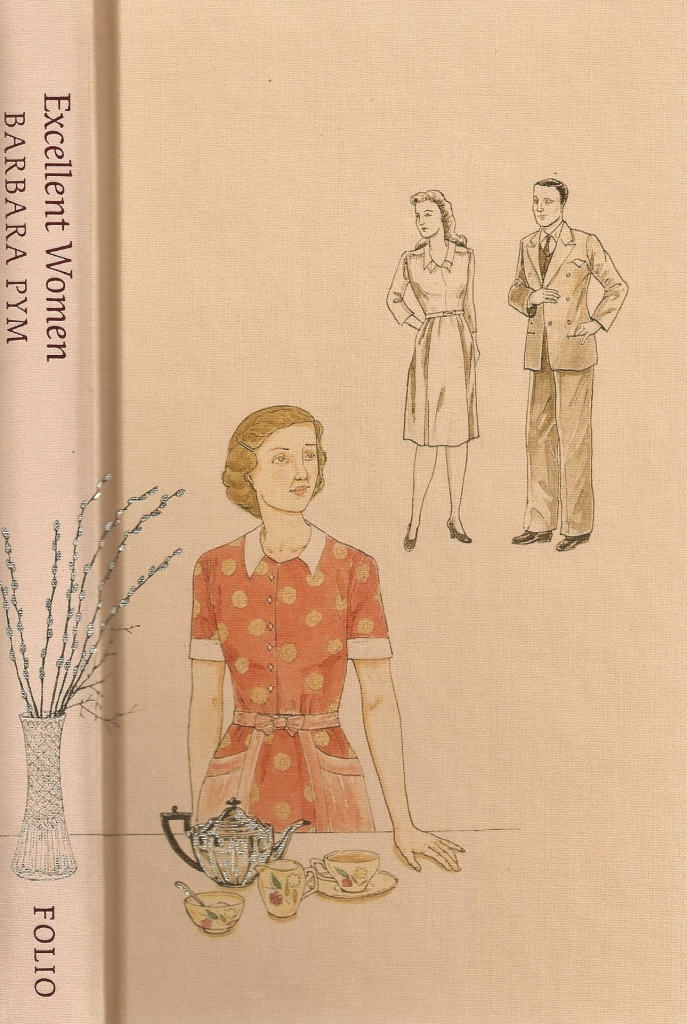
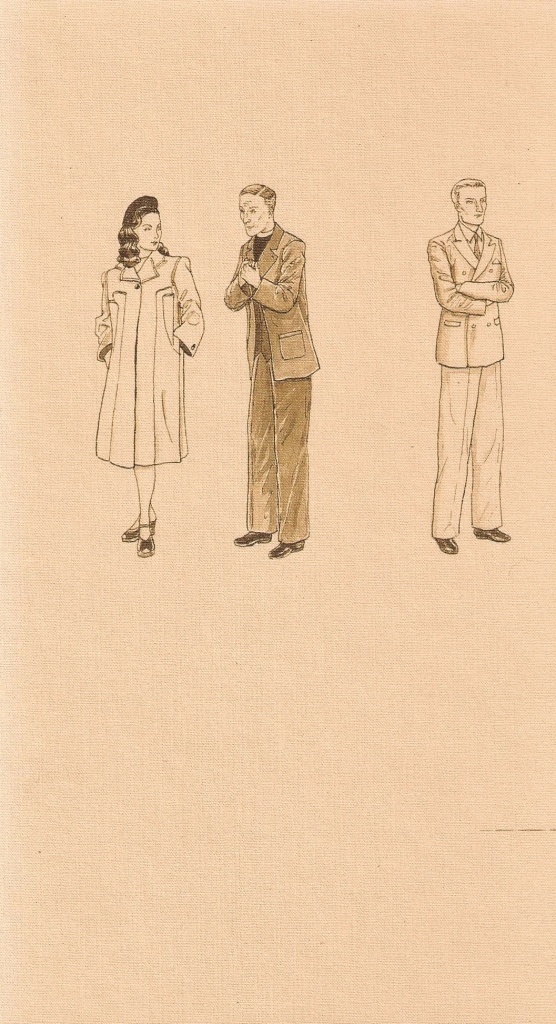
excellent women barbara pym folio front c 001Excellent Women by Barbara Pym ~ 1952. This edition: The Folio Society, 2005. Introduction by A.N. Wilson. Illustrated by Debra McFarlane. 206 pages.

My rating: 10/10.

This is the second time around for this book. My first reading left me gently pleased but not much more; this reading was much more rewarding, and I found I fully appreciated every nuance, every delicious – and occasionally malicious – little scenario.

This absolutely beautiful Folio edition certainly added to the experience; my first reading was of a yellowing paperback. I wonder if eyestrain is starting to influence my reading enjoyment? I do notice type clarity (and lack thereof) and font size much more these last few years.

And I must confess I almost passed this one by – “I already have it in paperback and it wasn’t that wonderful” – but am so glad I went back and splurged on this much more aesthetically pleasing book. Every sense was indulged by it! The pussywillows picked out in silver tipped the scales and sealed the impulse buy. I’m a sucker for pussywillows; these stole my heart. (On such small things do my buying decisions sometimes rest!)

Barbara Pym. Read her, and then reread her. Second time around is the key, here, I think. (Much as one needs to do with Diana Wynne Jones.)

*****

At the rather young age of thirty-one, Mildred Lathbury, self-described “spinster” and “clergyman’s daughter” (both of these designations serving to explain her clear-eyed observations of other people’s lives, and her lack of sentiment about her own), is well on her way to becoming one of the titular “excellent women” so dutifully and frequently thanklessly keeping things on an even keel in the bleak post-World War II years. Surplus females of every age, in super-abundance at mid-century after the decimation of their generations’ crops of marriageable men in the two brutal cullings of the previous decades.

“They have nothing better to do,” shrug their “luckier” compatriots, “they might as well make themselves useful, and be grateful for the occupation…”

So they do. Make themselves useful, that is. Though, as Mildred so delicately observes, the gratitude frequently falls short on both sides of the equation.

excellent women barbara pym folio back c 001Read quickly, this is a rather depressing, non-eventful, bleakly dreary minor tale. Not much happens. Mildred gets new neighbours, watches as the vicar of her church is pursued and almost caught by a predacious widow, narrowly escapes being saddled with an unwanted flatmate, and is offhandedly wooed in a most unromantic way by an anthropologist looking for a meek but competent dogsbody to take on the tedious task of editing his notes.

But, oh! – her inner voice! She misses nothing at all, our Mildred, and her wry observations are a joy to read.

I’m going to stop right here. What with it being Barbara Pym’s centenary year, and with the book blogging world full of mostly fulsome praise and beautifully written, thoughtful book reviews of her work (though the occasional dissenting voice is heard from, mostly from mildly querulous folk wondering what all the fuss is about – I can’t say I’ve yet come across anything resembling a brutal denunciation of Miss Pym) anything I have to add to the conversation is rather superfluous, I feel.

I liked this book.  A whole lot. You might, too. My caveat: it might take more than one try.

Here are some excellent reviews, well worth reading. They include all of the excerpts I would have chosen myself.

Well done, all!

You’ve saved me much typing. Well, that, and also, more importantly, you’ve given me the great pleasure of reading your delightful posts. Thank you. A (fresh) wand of mimosa all round! (And a cup of China tea, if that be your desire. Unless you’d prefer a beer? Or a glass of wine, exciting or merely adequate?)

Excellent Women –  Review at The Captive Reader

Excellent Women – Review at Book Snob

Excellent Women – Review at The Indextrious Reader

And there are many more.

Read Full Post »

« Newer Posts - Older Posts »