Archive for the ‘Read in 2012’ Category

Passing of the Third Floor Back by Jerome K. Jerome ~ 1904. This edition: Dodd, Mead & Co., 1928. Hardcover. 186 pages.

My rating: This is one of those complicated-to-rate books. In context with other short story collections of its time, I thought it fairly typical. Not perhaps outstanding, but a solid little group of era-correct (love that term – it comes from the vintage car world, in which I have a tiny involvement) pieces. Did I enjoy them, though, on a purely reading-for-pleasure level? Some yes, others not so much. I thought the short stories herein were reasonably well written – if a bit wordy – and quite moralistic. No doubt as to what we’re supposed to be thinking at the end of each!

So, taking everything into consideration, how about  7/10. I don’t know if I would recommend this small collection as purely pleasure reading suitable for modern tastes, but the stories do possess a certain curiousity value, and several are quite humorous, in an “era-correct” (there, I got to use that again!) sort of way.

*****

Jerome K. Jerome, 1859-1927, is, as you’ll know unless you’ve been residing under a literary rock all your adult days, best-known for his 1889 comic novel, Three Men in a Boat (To Say Nothing of the Dog), still very much in print 123 years after its first publication. This was my own first introduction to this author some years ago, and I found the story mildly diverting. A pleasant memory persisted, so when I chanced upon this book of short stories in a pile of vintage hardcovers on the deliciously over-crowded shelves of At Second Glance in Kamloops, I eagerly added it to my pile of acquisitions.

Apparently the title story, Passing of the Third Floor Back, was made into a quite successful movie in 1935, starring Conrad Veidt. I must admit I’d never heard of it until I did a bit of background research on this book for reasons of this review, but from the Wikipedia article it looks as though Jerome’s story was very much a starting point – the movie plot as described seems nothing like the story I’ve just read, but for the boarding house setting and the idea of the mysterious stranger changing the lives of those about him.

Six stories make up this collection.

Passing of the Third Floor Back ~  A mysterious stranger moves into a squalid boarding house and changes the lives of everyone who comes into contact with him.

The Philosopher’s Joke ~ What if you could go back to your younger days, but still remember everything you’d learned through your maturity? I liked the premise, but found the handling rather awkward. An intriguing idea – very thought-provoking.

The Soul of Nicolas Snyders, or The Miser of Zandam ~ An exchange of souls has predictable results, and a few surprises. Moralistic but smile-provoking.

Mrs. Korner Sins Her Mercies ~ The most purely humorous story of the collection. A clever friend puts an interesting spin on a marital crisis.

The Cost of Kindness ~ A good deed sets off a chain reaction, with very different results than first anticipated. Another humorous piece.

The Love of Ulrich Nebendahl ~ Self-sacrifice taken to the extreme. This was the most serious story of the lot; a rather shocking conclusion, which the author attempts to soften with a Biblical tag.

*****

I am going to leave my review right there – a simple report – so sorry, but I can’t quite bring off a deeper analysis. Limited computer time this week, and so much going on in my real life that my thinking capacity is all used up by the time I sit down to type!

Read Full Post »

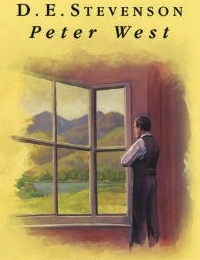
Peter West by D.E. Stevenson ~ 1923. This edition: Isis Publishing, 2007. Hardcover. Large Print. ISBN: 978-0-7531-7824-9. 213 pages.

My rating: 6.5/10. Very much reads like a first novel, which it is. The author tries hard, and ultimately succeeds, in telling her soberly romantic little story. I had been warned not to expect much from this obscure first work, but I was pleasantly surprised by its readability once I learned to navigate the flowery language and the bits of Scots dialogue from the local lassies, crones and crofters.

A point off for the constant references to the heroine’s figurative gossamer wings. Urgh!

Also lost a point for excessive use of the convenient plot device of the random hand of death. Deus ex machina, dear author? Please don’t make that a habit!

*****

This was now-esteemed and very collectible romantic fiction writer Dorothy Emily Stevenson’s first published novel. According to the BOOKRIDE rare book guide website, it was first released in magazine serial form.

Bookride, 12 February, 2007:

‘Peter West’ is the first of over 40 novels by the popular writer. Her sister married into the Chambers publishing family, and Ms Stevenson got this novel serialized in ‘The Chambers Journal’, and published by them in book form in 1923, but it wasn’t a success. Dorothy Emily Stevenson was born in Edinburgh in 1892, she was related to Robert Louis Stevenson, who was her father’s first cousin. She was 24 when she married Captain James Reid Peploe of the 6th Gurkha Rifles in 1916. Created the immortal characters Mrs Tim and Miss Buncle published by Herbert Jenkins. Can find nothing on ‘Peter West’ except that it is much wanted and highly elusive.

Almost ten years were to pass before D.E.Stevenson’s second novel was published. Mrs. Tim of the Regiment, 1932, inspired by Stevenson’s personal diary as an army wife,  proved much more successful and is one of the very few of her forty-odd books currently in print.

But we want to talk about Peter West. Apparently it is quite obscure, though the copy before me, obtained from my local library, is a very recent (2007) large print edition from Isis Publishing, so there must be a few of these in circulation. The following review contains spoilers, so if you want to search out Peter West for yourself and be surprised, stop reading now.

*****

Dedication by the author:

Dedicated to all who love Scotland, her tears and smiles, her dark woods and sunlit moors, and the plain and homely folk in the lonely villages of the north.

And the first few paragraphs of the Prologue, to give you a taste of the author’s descriptive style:

Mr. Maclaren loved Kintoul. Ever since he had come there, nigh on twenty years ago, the place had “grown on him,” as the saying goes. It had seemed a paradise of rest and quiet to the town-weary minister – a place where a man might regain health and strength of mind and body; where a man might forget the ugly striving and pushing of the city, and steep his very soul in the peace of God.

It was, on the whole, an easy thing to fall in love with Kintoul. There was something alluring about it, something mysteriously feminine. Even in the depths of winter, when the pure white snow covered all the hill-side, hanging on the pine-trees like fleecy blankets, and the river (the only non-white thing in the whole valley) ran like a narrow snake between jagged ice – even then there was something soft about Kintoul. The hills were friendly sentinels for all their rugged crests; the long dark nights were lighted by misted stars; the very snowflakes seemed to caress one’s cheek as they fell.

When spring came, soft, blustery winds blew primroses and cowslips into the sheltered hollows, still moist and green from the late melting of the snows. Soft white clouds drifted across the blue, blue sky, throwing patches of moving shadows on the newly awakening hills.

Summer brought long. drowsy days – days which seemed to have forgotten how to fade into night; when the emerald turf paled to a soft dun colour, and heather bloomed like a purple mist under the golden sun.

Autumn came as a king in the full panoply of state, and, in a single night of frost the hill-side glowed with colour like the dream of a demented artist. Here rowan and beech, with their clashing tones, mingled harmoniously, and the dark unchanging pines stood like quiet tokens of immortality among the gay but transitory foliage of their neighbours. And over all was the mist, the cool, soft white mist, lying sometimes in the valley hollows, sometimes capping only the hills, eddying hither and thither, and enhancing the beauties of the landscape by revealing them afresh and unexpectedly through rents in its clinging folds.

The stage is set, and in this idyllic scene Mr. Maclaren muses and reminisces about a certain local romance which he has taken a great interest in. Romantic Mary Simpson, lovely young daughter of Mr. Maclaren’s predecessor as Kintoul’s church minister, fell in love with the rough and ruggedly handsome John Kerr, ferryman at the river crossing. Against her parents’ wishes Mary married John, and found all of their dire predictions coming true. Sheltered Mary was unprepared for John’s practical and brusque ways. Mary found herself in the unenviable position of being shunned by her former friends, who felt she had lowered herself by her marriage to a common working man, and viewed with suspicion by the villagers as having stepped down out of her proper class and therefore not adhering to the proper social code. Poor Mary “did her duty” as a wife, had three children, and then died of a decline – a “bruised heart” – when her youngest child, her only daughter, was eight years old.

Elizabeth – Beth – is that daughter, and she is the focus, along with the titular Peter West, of this story. Turns out that Mary, and then Beth, were befriended by a local upper-class Englishwoman, Prudence West, who recognized “something unusual” in the young Beth. When Prudence died, her son Peter, sensitive and gentle, and the possessor of a “bad heart” which precluded normal manly activities, carried on his mother’s patronage of young Beth. (I must add here that I stopped to do the math, and as this story starts Beth is sixteen, and Peter thirty-five. You may wish to remember this as the tale progresses.)

So here we have “sprite-like” Beth and sensitive Peter, thrown together by circumstances with predictable results. Beth’s father John is deeply suspicious of the “meddlings” of Peter, and when the opportunity to arrange his daughter’s marriage to a neighbouring farmer arises, he pushes his daughter into an early wedding. Beth, who has experienced a dawning suspicion of romantic love for Peter, is apathetic and goes to the church without a fuss, because Peter has become romantically involved with another woman, and Beth has witnessed a scene of passion between the two (they kissed!) which has left her stunned and heartbroken.

I’ll back up a bit to explain. Peter is possessed of a bossy elder sister, who occasionally descends upon him and makes a great ruckus and meddlement in his affairs. She has suspected an attachment with the unsuitable village girl, so she has brought along a lovely young woman to distract him; her ultimate goal is to marry Peter off to a bride of her choosing, and she quickly succeeds.

Peter’s new wife, the former Natalie Horner, is not quite the lovely, intelligent, playful creature she appears to be. Apparently she is heir to a family curse of insanity, and she also has a wee bit of a drinking problem. Peter learns of this too late, and he does the best he can with his wife, though her quick descent into full-blown depression shocks and saddens him. Eventually she runs into the night and tragically perishes in the river. Peter returns to his solitary life, giving up hope of romance and steeling himself for whatever the future brings. (The weak heart seems to be ticking along not too badly, by the way.)

Meanwhile Beth’s abusive husband Alec and her harsh-mother-in-law Mrs. Baines have between the two of them almost broken the spirit of sweet little Beth. She eventually runs away and ends up in Peter West’s study, where the two of them have a poignant scene and finally admit their mutual attraction. Beth is offered a way out of her difficult situation by another older man, Brownlow Forth, who was once in love with her mother, Mary, and has since cherished a deep interest in her daughter. Brownlow is in the neighbourhood staying with Mr. Maclaren, and while visiting Peter he becomes enmeshed in the dilemma of Beth’s desertion of her husband, and offers to take her to London to get a job and live independently though under his (Brownlow’s) protection.

So off they go in the night, leaving the village agog with Beth’s mysterious disappearance. Peter is eyed suspiciously, as his affection for Beth and hers for him are naturally well-known to the local gossips, but as Beth is not anywhere in evidence, he stands up to investigation and the rumours die down.

Fast forward a few months, and a flu epidemic strikes peaceful Kintoul. Both Beth’s father and husband are stricken, and Beth, hearing of this, returns at once to care for her now-remorseful father. She pulls him through, but Alec, weakened by his self-indulgent lifestyle, succumbs.

Their first spouses handily disposed of, Peter and Beth are now free to resume their interrupted courtship. The novel’s ending is not quite as expected, though it will satisfy the most romantic-minded of readers, and I will leave that a secret, though I’ve given away most of the high points of the plot already.

A fast little read, and full of melodrama and romantic situations – perfect serial fare.

Rather a solemn story, missing the humorous touches of D.E. Stevenson’s later books, but I thought it a quite respectable first novel, and a more enjoyable read than I had first anticipated. I’m glad it was a short one, though – that was definitely a point in favour!

Recommended for the D.E. Stevenson fan who would like to check off every one of her books from their reading list, but probably not a good sample of her larger bibliography, and not a place to start for the fledgling Stevenson reader, unless they are willing to take a leap of faith and trustily go on to the much more light-hearted Mrs. Tim and her literary descendents.

Read Full Post »

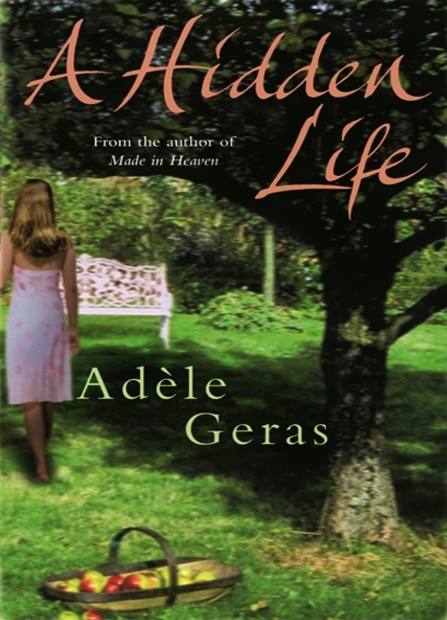
A Hidden Life by Adèle Geras ~ 2007. This edition: Orion Books, 2008. Paperback. ISBN: 978-0-7528-9394-5. 439 pages.

My rating: 3/10. I made it halfway through, right up to the you-could-see-it-coming-from-Chapter-One lesbian love scene, and I speed-scanned the rest just to make sure I wasn’t missing any unforeseen developments. I wonder if the author was paid by the word? This book just went on and on and on. Every prediction I made came out bang on, and the ending was so! gaggingly! upbeat! it! made! me! want! to! scream!

Such a disappointment. I had high hopes for Adèle, having heard good things about her YA novels, in particular Ithaka. But this one was a definite miss. I wish I had my two hours back. I’m going to cut my losses and give a very quick un-review, then into the Sally Ann box – not going to waste any space on this one.

Not completely horrible, hence the generous “3”, but the author could do so much better with every aspect of this attempt.

*****

From the back cover:

When Constance Barrington dies, she leaves behind a wealthy estate and a complex family network. But when the whole family gathers to hear her last will and testament, they are in for a terrible shock. Constance – possessed of a long memory and a spiteful disposition – altered her will shortly before her death. The new provisions are far from fair; some benefit hugely and others hardly at all. Constance’s granddaughter, Louise, is bequeathed the copyright for her late grandfather’s novels (barely remembered, long-since out of print and valuable only as a reminder of the man she loved). It is a paltry inheritance and one that comes to symbolise the inequity at the heart of the Barrington family. Soon, old family feuds and long-hidden resentments come to the surface, and with them, secrets start to emerge. But it is through Louise’s inheritance – those dusty, long-forgotten books – that the most explosive secret of all will come to light, bringing with it a very different future for her and the rest of the family.

Sounds promising, yes?

The reality: no.

The Barringtons and their friends, enemies, in-laws, ancestors and descendents are all a bunch of damp whiners. Even the infidelity and the “passionate” love scenes are yawn-making, and almost everyone is sorry in the morning. A contrived happy ending for one or two of the favoured ones; a final poke in the eye for the vindictive Constance, watching from her celestial cloud.

The in-text excerpts from the grandfather’s prison camp book, “Blind Moon”, were indescribable. This is not a compliment. Constance was right. Her husband wrote dreck.

This is a book for a waiting room, or possibly, if nothing else is about – an old People or Vanity Fair magazine would be more enticing – for the beach or poolside. Go ahead – get it wet!  That’s its natural state, I’m afraid.

Many apologies to those of you who may be Geras fans. Feel free to talk me around – I don’t like to dislike books – it makes me feel all prickly and glum.

Read Full Post »

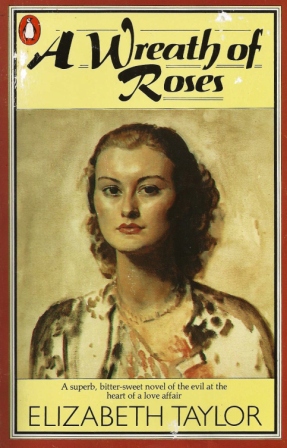
A Wreath of Roses by Elizabeth Taylor ~ 1949. This edition: Penguin, 1984. Softcover. ISBN: 0-14-00.2587-1. 176 pages.

My rating: Easily a 9/10 for the writing, perhaps a bit less for the dark mood it engenders.

Well, no, I don’t really mean that. There are abundant gleams of light. As a middle-aged person myself, fast approaching the half century mark, much in this novel resonated with me, and I felt a strong sympathy and emotional kinship for all three of the female main characters, “maiden, woman, and crone”, as another reviewer referred to them.

*****

There are several excellent reviews on this early Elizabeth Taylor novel, only her fourth, which I’ve linked for your enjoyment below. Anything I have to say merely echoes what these others have said, so I won’t go into too much detail, or describe my response to this interesting novel except to say that I found it much more enthralling than expected.

Three women spend a summer holiday together year after year, but this visit highlights the inexorable march of time, and is one of those “years where everything changes” which happen to everyone from time to time; markers which we think of later in the context of “before” and “after.”

Frances, the eldest, owns the cottage where the three convene. A retired governess and a confirmed spinster, she has for years pursued a secondary career as a modestly successful painter. Liz, the youngest, was once Frances’ charge, and in the year past has married a much older clergyman and has borne a child, whose inclusion in the party is looked upon with something like apprehension by the adult trio. Camilla, a school secretary, is approaching middle-age; she too is a spinster, though not by choice; circumstances and her fastidious personality have left her out in the cold in the mating ritual, and her pride reinforces her smooth shell; she pretends not to mind her state, and the pretence is so finely wrought that she has begun to believe in it herself.

It is Camilla who has the most outwardly eventful time. Her journey to the cottage has been horribly punctuated by a suicide at the railway station; shaken out of her usual reserve, she has made the acquaintance of a handsome young man who turns out to be going to the same village. Claiming to be a writer on a trip of nostalgic research, it is soon apparent that Richard is not averse to weaving a web of lies about his past and present. Camilla is attracted to him and he returns her interest, to the concern of Frances and especially Liz, who sense something “off” in Richard’s manner and constantly shifting explanations.

All three of the friends are “paired up” as the summer progresses. Liz’s husband Arthur drops in from time to time, and Liz flits between her home and the cottage. Frances apprehensively prepares to meet a man who has been a long-time artistic patron and correspondent. Film director Morland Beddoes is himself uncertain as to whether the woman of his long-distance friendship will be the kindred spirit he yearns for.

As the various personalities clash with each other, self-analyze and readjust, the truth about Richard slowly becomes revealed, with deeply disturbing repercussions.

I must also add that Frances’ dog Hotchkiss is one of the most unpleasant canines I’ve yet met in literature. I suspect that Elizabeth Taylor was more of a cat person, as she uses feline comparisons in a rather favorable way in describing some of the characters, and incidentally gives a beautiful cameo appearance to a pregnant Siamese.

*****

Check out the following for more detail and some very thoughtful analyses of this work:

Bentley Rumble: A Wreath of Roses

Laura’s Musings: A Wreath of Roses

Buried in Print: A Wreath of Roses

Read Full Post »

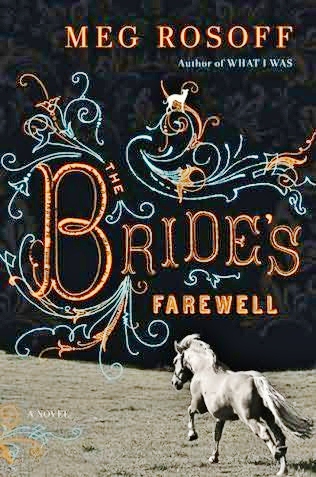
The Bride’s Farewell by Meg Rosoff ~ 2009. This edition: Viking-Penguin, 2009. Hardcover. ISBN: 978-0-670-02099-7. 214 pages.

My rating: 7.5/10. A fast little read. Fairly typical “young adult” adventure-romance, but a well-written and nicely plotted example of its genre.

The author’s name sounded familiar, and looking on her list of previous titles I realize I already own and some years ago read one of her earlier books, How I Live Now. Must delve around for that one – it was quite different in setting – fictional post-apocalyptic Britain versus vaguely historical Industrial Revolution Britain.

I’m tagging this one “alternative world” because though the setting has many real world parallels, it doesn’t feel quite right in a historical sense; it is apparently set in the 1850s, but is almost medieval, or possible mid 1700s, in some of the incidents, and how the people think, talk and live. (Or maybe it is quite historically correct, and the disconnect is just my own take.) For much of the book I was wondering if this was perhaps set in post-modern times, in a newly primitive society, and that was even before I made the How I Live Now connection.

*****

On the morning of August the twelfth, eighteen hundred and fifty something, on the day she was to be married, Pell Ridley crept up from her bed in the dark, kissed her sisters goodbye, fetched Jack in from the wind and rain on the heath, and told him they were leaving. Not that he was likely to offer any objections, being a horse.

Though Pell sincerely loves and respects her childhood sweetheart Birdie, she is repelled by the thought of what marriage means: a subservient position versus her present equality as Birdie’s tomboyish companion, a life of continual pregnancy and childbirth, and the speedy degradation of her body, as typified by her own mother’s sorry example. The morning of her marriage, Pell sneaks out of the family cottage with her few possessions, and accompanied by her horse Jack and her small mute brother Bean, heads into the unknown.

Pell has no real plan but to escape, though she feels that she might find employment at Salisbury Fair, so that is where she heads, narrowly missing discovery by her father who has headed there as well to seek out his errant children. An itinerant fire-and-brimstone preacher, Joe Ridley has a compulsive weakness for strong drink and womanizing, and his neglect of his family has been the root cause of Pell’s decision to flee.

Pell and Bean fall in with a fatherless Gypsy family, and meet with a certain amount of kindness from strangers during their days at Salisbury, though by the end of the fair this hopeful beginning has come to nought. Pell has been stiffed by the man who employed her to help choose some horses, and Bean and Jack have disappeared.

Bad turns quickly worse, as Pell desperately seeks her missing brother (and her horse); she eventually ends up spending the winter living in a shed beside a poacher’s woodland cottage. The poacher, never named but dubbed Dogman by Pell, is a mysterious, silent man who mostly ignores his desperate hanger-on, until she falls afoul of an amorous villager, whereupon Dogman rescues her, brings her into his home, and, inevitably, his bed.

The horse and the boy have their own adventures, and Pell eventually reconnects with both, as well as with two of her younger sisters.

Much angst, tragedy, and drama, and teasing gleams of romance. Pell of course has marvelous hidden abilities – a stereotypical necessity for a classic YA heroine – in her case an almost magical affinity for horses. This is a very horsey book, by the way. In quite a good way.

Suspend your disbelief – and oh, yes, you’ll need to! – and go along for the ride. Nicely diverting tale, for teens and adults. Rosoff gets my nod – good work. (Gorgeous cover, too.)

Read Full Post »

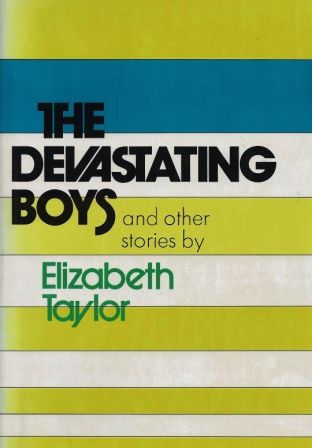
The Devastating Boys and Other Stories by Elizabeth Taylor ~ 1972. This edition: Viking Press, 1972. Hardcover. ISBN: 670-27067-9. 179 pages.

My overall rating: 7.5/10. Competently and beautifully written, this is a quietly memorable collection of subdued short stories, written between 1965 and 1972.

I’m not quite embracing the Jane Austen comparisons though, of which there are two from different reviewers on the dustjacket.

*****

Elizabeth Taylor. Hmm. As a broad statement, I very much like her work, but I don’t indiscriminately love it, with a few stellar exceptions. A mistress of concise, clean and crisply descriptive prose, I find I enjoy her voice the best when she lets herself go with keen, wry humour. The detail she picks up on is one of her best qualities. Thinking a little more about this author, I do think that perhaps her short stories are her best work. Like hyper-detailed miniatures they allow us to focus intensely for brief time on the minutiae which too often blurs in a larger, more ambitious narrative.

Here’s what we have in this collection. I’ve included first paragraphs and a brief summary of each short story.

The Devastating Boys

Laura was always too early; and this was as bad as being late, her husband, who was always late himself, told her. She sat in her car in the empty railway-station approach, feeling very sick, from dread.

It was half past eleven on a summer morning. The country station was almost spellbound in silence, and there was, to Laura, a dreadful sense of elf-absorption – in herself – in the stillness of the only porter standing on the platform, staring down the line: even – perhaps especially – in inanimate things; all were menacingly intent on being themselves, and separately themselves – the slanting shadow of railings across the platform, the glossiness of leaves, and the closed door of the office, looking more closed, she thought, than any door she had ever seen.

She got out of the car and went into the station, and walked up and down the platform in panic. It was a beautiful morning. If only the children weren’t coming, then she could have enjoyed it.

The children are two inner city six-year-olds, coming for a two-week country vacation to Laura and her university don husband. Nothing turns out as anticipated; the experiment refocuses Laura’s conception of her place in the world, and in her marriage. Unexpectedly upbeat ending. 8/10.

The Excursion to the Source

“England was like this when I was a child,” Gwenda said. She was fifteen years older than Polly, and had had a brief, baby’s glimpse of the gay twenties – though, as an infant, could hardly have been really conscious of their charms.

It was France – the middle of France – which so much resembled that unspoilt England. In the hedgerows grew all the wild-flowers that urbanization, ribbon-development, and sprayed insecticides had made delights of the past in the south of England where Gwenda and Polly lived.

Polly had insisted on Gwenda’s stopping the car so that she could get out and add to her bunch a new blue flower that she was puzzling over. She climbed the bank to get a good specimen and stung her bare legs on some nettles. Gwenda sat in the car with her eyes closed.

Gwenda acts as slightly simple, middle-aged Polly’s companion and guardian, and the trip to France is something of a journey into the past for Gwenda as the two retrace the course of Gwenda’s last journey with her late husband. An unexpected stopover in a French village gives Polly a chance to experiment with the pleasures of physical love, while Gwenda pursues her more sophisticated goals. The journey continues to its tragic (?) end. I quite liked this longish, rather rambling dual portrait. 7/10.

Tall Boy

This Sunday had begun well, by not having begun too early. Jasper Jones overslept – or, rather, slept later than usual, for there was nothing to get up for – and so had got for himself an hour’s remission from the Sunday sentence. It was after half past ten and he had escaped, for one thing, the clatter of the milk van, a noise which for some reason depressed him. But church bells had begun to toll – to him an even more dispiriting sound, though much worse in the evening.

West Indian expatriate Jasper leads a starkly solitary life as a labourer in the “better” world of London. A poignant portrait of loneliness. 6/10.

Praises

The sunlight came through dusty windows into Miss Smythe’s Gown Department on the first floor of the building. Across the glass were red-and-white notices announcing the clearance sale. It was an early summer’s evening, and the London rush hour at its worst. Rush hours were now over for Miss Smythe, and she listened to the hum of this one, feeling strange not to be stepping along the crowded pavement towards the Underground.

In a corner of the department some of the juniors had begun to blow up balloons. The last customers had gone, and several of the office staff came in with trays of glasses. With remarkable deftness, as soon as the shop was closed – for the last time – they had draped and decorated Miss Smythe’s display counter, and they set the trays down on this.

The great store, built in the 1860s, was due for demolition. As business slowly failed, like a tide on its way out, the value of the site had gone on growing. The building had lately seemed to be demolishing itself, or at least not hindering its happening. Its green dome still stood with acid clarity against the summer sky; but the stone walls had not been washed for many years and were black with grime and dashed by pigeons’ droppings.

Fastidious, self-contained Miss Smythe prepares for her enforced retirement. 7/10.

In and Out the Houses

Kitty Miller, wearing a new red hair ribbon,bounced along the vicarage drive, skipping across ruts and jumping over puddles. Visiting took up all her mornings during the school holidays. From kitchen to kitchen round the village she made her progress, and this morning she felt drawn towards the vicarage. Quite sure of her welcome, she tapped on the back door..

“Why, Kitty Miller!” said the vicar, opening the door. He looked quite different from in church, Kitty thought. He was wearing an open-necked shirt and an old, darned cardigan. He held a tea towel to the door handle because his fingers were sticky. He and his wife were cutting up Seville oranges for marmalade, and there was a delicious, tangy smell about he kitchen.

Kitty took off her coat, hung it on the usual peg, and fetched a knife from the drawer where they were kept.

“You are on your rounds again,” Mr. Edwards said. “Spreading light and succour about the parish.”

Kitty glanced at him rather warily. She preferred him not to be there, disliking men about her kitchens. She reached for an orange and, watching Mrs. Edwards for a moment out of the corners of her eyes, began to slice it up.

Precocious young Kitty is something of a disturbing element in her village, sharing her “innocent” observations and reporting happenings from house to house, cleverly pinpointing secret weaknesses and touching sensibilities on the raw. Perfect twist in the ending. Good one! 9/10.

Flesh

Phyl was always one of the first to come into the hotel bar in the evenings for what she called her apéritif, and which, in reality, amounted to two hours’ steady drinking. After that, she had little appetite for dinner, a meal to which she was not used.

On this evening she had put on one of her beaded tops, of the kind she wore behind the bar on Saturday evening in London, and patted back her tortoise-shell hair. She was massive and glittering and sunburnt – a wonderful sight, Stanley Barrett thought, as she came across the bar towards him.

Middle-aged barmaid Phyllis has been sent on a solitary holiday by her husband to recover from a hysterectomy; she and widower Stanley inevitably draw together as kindred spirits among the more staid fellow members of their group tour to Malta. Taylor keeps just on the kind side of parody while painting a brutally honest picture of their brief “affair”. 8/10.

Sisters

On a Thursday morning, soon after Mrs. Mason returned from shopping – in fact she had not yet taken off her hat – a neat young man wearing a dark suit and spectacles, half gold, half mock tortoise-shell, and carrying a rolled umbrella, called at the house and brought her to the edge of ruin…

Über-respectable Mrs. Mason’s skeleton in her closet is her long-ago cast-off sister, an author whose fanciful descriptions of their shared childhood brought writerly fame at the cost of familial shame. The young man in question brings up memories long buried, and casts Mrs. Mason into a state of panic. 6/10.

Hôtel du Commerce

The hallway, with its reception desk and hat-stand, was gloomy. Madame Bertail reached up to the board where the keys hung, took the one for Room Eight, and led the way upstairs.Her daughter picked up the heavier suitcase, and began to lurch lopsidedly across the hall with it until Leonard, blushing as he always (and understandably) did when he was obliged to speak French, insisted on taking it from her.

Looking offended, she grabbed instead Melanie’s spanking-new wedding-present suitcase, and followed them grimly, as they followed Madame Bertail’s stiffly corseted back. Level with her shoulder-blades, the corsets stopped and the massive flesh moved gently with each step she took, as if it had a life of its own.

A newlywed couple, nervous, impulsive Melanie and methodical, staid Leonard, are traumatized in their separate ways by an overheard argument in the room next door in their French honeymoon hotel. 6/10.

Miss A. and Miss M.

A new motorway has made a different landscape of that part of England I loved as a child, cutting through meadows, spanning valleys, shaving off old gardens, and leaving houses perched on islands of confusion. Nothing is recognizable now: the guest-house has gone, with its croquet-lawn; the cherry orchard; and Miss Alliot’s and Miss Martin’s week-end cottage. I should think that little is left anywhere, except in my mind.

Looking back to childhood summers forty years ago, the narrator paints telling portraits of the summer visitors she came to know, in particular two schoolteachers, sincere and quiet Miss M. and heedlessly vivacious, manipulative Miss A. Devastating. 9/10.

The Fly-Paper

On Wednesdays, after school, Sylvia took the bus to the outskirts of the nearest town for her music lesson. Because of her docile manner, she did not complain of the misery she suffered in Miss Harrison’s darkened parlour, sitting at the old-fashioned upright piano with its brass candlesticks and loose, yellowed keys. In the highest register there was not the faintest tinkle of a note, only the hollow sound of a key being banged down. Although that distant octave was out of her range, Sylvia sometimes pressed down one of its notes, listening mutely to Miss Harrison’s exasperated railings about her – Sylvia’s – lack of aptitude, or even concentration. The room was darkened in winter by a large fir-tree pressing against – in windy weather tapping against – the window, and in summer by holland blinds, half drawn to preserve the threadbare carpet. To add to all the other miseries, Sylvia had to peer shortsightedly at the music-book, her glance going up and down between it and the keyboard, losing her place, looking hunted, her lips pursed.

I’m not going to tell you anything about this one, except that it’s a perfectly crafted little shocker. 10/10.

Crêpes Flambées

Harry and Rose, returning to Mahmoud Souk, found it a great deal changed. Along the sea road there were neat beds of mesembryanthemum. There were lamp standards, too; branches of globes, in the Parisian manner. Four years before, there had been only a stretch of stony sand, a low sea wall, an unmade road. Now new buildings were glittering along the shore – a hospital, a cinema, a second hotel.

A young couple returns to a memorable holiday destination of the past, expecting a happy, nostalgic visit with their pet “locals”; they find instead that you truly can never go back again. While beautifully written as always, I did think this was perhaps the weakest story of this collection. 6/10.

Read Full Post »

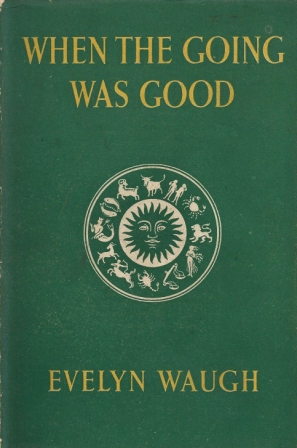
When the Going was Good by Evelyn Waugh ~ 1946. This edition: The Reprint Society, London, 1948. Hardcover. 314 pages.

My rating: 7.5/10. Held my interest throughout.

I’m not even sure where I picked this one up – it appeared in a stack of books gathered in this summer’s travels through B.C. I’m thinking either Kamloops or Vernon, though there is no price and bookseller code marked anywhere on the flyleaf. Possibly from the Sally Ann or a similar charity shop? No matter what it’s provenance, I’m most glad I’ve added it to my private collection. A most enjoyable read, consumed in goodly portions each evening for the last week just before closing my eyes.

*****

From the inner dustjacket:

About this book

It comprises all that the author wishes to preserve of the four travel books he wrote between 1929 and 1935: Labels, Remote People, Ninety-Two Days, and Waugh in Abyssinia. “These four books,” he writes, “here in fragments reprinted, were the record of certain journeys, chosen for no better reason than I needed money at the time of their completion; they were pedestrian, day-to-day accounts of things seen and people met, interspersed with commonplace information and some rather callow comments. In cutting them to their present shape, I have sought to leave a purely personal narrative in the hope there still lingers round it some traces of vernal scent … I never aspired to be a great traveller, I was simply a young man, typical of my age; we travelled as a matter of course. I rejoice that I went when the going was good.”

It’s vintage Waugh, and it’s well-written, the author’s disclaimers aside. Some of it is excellent; it’s all very readable, and it made me brush up on my history; Waugh was of course writing for a contemporary audience, and though I was pleased to realize his references were easy to place, I was quite vague on the details.

Here are the contents:

Preface

From 1928 until 1937 I had no fixed home and no possessions which would not conveniently go on a porter’s barrow. I travelled continuously, in England and abroad… We have most of us marched and made camp since then, gone hungry and thirsty, lived where pistols are flourished and fired. At that time it seemed like an ordeal, an initiation to manhood…”

Chapter One: A Pleasure Cruise in 1929 (From Labels) – London, Paris, Monte Carlo, Naples, Catania, Haifa, Cana (Galilee), Port Said, Cairo, Malta, Crete, Constantinople, Athens, Corfu, Gibraltar, Seville.

Chapter Two: A Coronation in 1930 (From Remote Peoples) – The coronation of Ethiopian Emperor Ras Tafari at Addis Ababa.

Chapter Three: Globe-Trotting in 1930-1 (From Remote Peoples) – Zanzibar, the Congo, Aden, Kenya (Nairobi, the Rift Valley), Tanganyika, Cape Town.

Chapter Four: A Journey to Brazil in 1932 (From Ninety-two Days) – Guiana and Brazil.

Chapter Five: A War in 1935 (From Waugh in Abyssinia) – The Italian invasion of Abyssinia, from a war correspondent’s perspective. Farce versus bloodshed.

*****

If you happen across this little account in your own travels, it is worth the time to read, especially if you are already a Waugh convert.

Read Full Post »

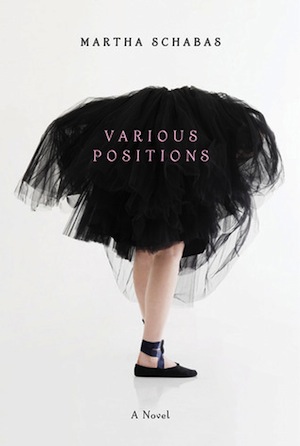
Various Positions by Martha Schabas ~ 2011. This edition: Farrar Straus Giroux, 2012. Hardcover. ISBN: 978-0-374-38086-1. 325 pages.

My rating: 5/10. Reasonably readable, but left me feeling queasy.

*****

Well, my last review was of a sensitive coming-of-age novel set in the late 1930s, Maureen Daly’s deliciously sensuous Seventeenth Summer. I have just read the contemporary counterpart, young Torontonian Martha Schabas’ highly praised (and seemingly as often highly damned) first novel concerning a fourteen-year-old facing a similar turning point in her life. The two heroines couldn’t be more similar in their focus on themselves and their emerging womanhood, or more different in their morals and actions.

“It was like sex was in everything,” writes Martha Schabas in her deeply unsettling first novel, “lodged in men’s heads and drowning in women’s bodies.” The thought is given to Georgia, a 14-year-old student at the Royal Toronto Ballet Academy, whose increasingly fraught and confusing reactions to her own burgeoning sexuality lead her into a horribly inappropriate and dangerous interaction with the academy’s artistic director. Schabas is unforgiving in her examination of the way sex and ballet collide, often with terrible consequences for the young women who are too innocent to comprehend the nature of the forces they are trafficking in. No lazy moralist, Schabas lays bare the misunderstandings and insensitivities on all sides: the well-meaning adults who want nothing more than to help Georgia in large part end up making things much worse. The great Japanese filmmaker Akira Kurosawa once said that being an artist means never averting your eyes. Schabas, to her enduring credit, resolutely refuses to do just that.

Steven. W. Beattie, Quill & Quire, November 14, 2011

First off, though I’ve tagged this story with a “dance” designation, it isn’t really about ballet. The dance academy background does allow for the extreme focus of the characters on themselves, their bodies, and the brutal competition between young teens to be better in every nuance than their peers, which is actively encouraged by the adults in charge of these fragile egos encased in steel-strong musculature tightly strung on still-growing bones and covered by the freshly dewy skin of early adolescence.

And though it’s also tagged “young adult”, and was found on the teen shelves at the library, I’m thinking it’s not really a story for many younger teens, even though the main character is just fourteen. There are very graphic passages describing pornography, and the pages of this deeply disturbing story are soaked in sex. Actual sex between teens, and the forbidden sexual yearnings between adolescents and adults. The student-teacher crush has doubtless existed since time immemorial, and has been frowned upon with very good reason. Outwardly repressed young Georgia is a seething mass of inner emotional conflicts, which find vent in the most inappropriate ways possible.

Here follow loads of spoilers.

Fourteen year old Georgia Slade is the daughter of an upper class, outwardly successful but deeply dysfunctional family. Her father Lawrence is a cold, emotionally distant psychiatric doctor who openly sneers at Georgia’s ballet fixation; her mother Lena is a much-younger university lecturer who became involved with Dr. Slade while in a student-professor position; their affair was the cause of Dr. Slade’s first marriage break-up. Lena is teetering on the edge of a mental and emotional breakdown; the marriage is fragile as eggshells and cold as ice. There is a vibrant, scholarly, Mediterranean first wife in the background, and a university student older stepsister, who turn out to be the most empathetic and likeable members of Georgia’s dreadful little world.

Georgia lives her life on a knife-edge, playing peacemaker and go-between at home, and carefully navigating the increasingly complicated waters of her school world. Everything there is all about peer pressure and implied and actual sexual relations; Georgia frigidly refuses to participate in any of the games, but is nonetheless very aware of the avid stares of the boys and the casual cruelty of the girls. The only place she can let down is in ballet class, though let down is perhaps an inapt term – Georgia’s quest for control and perfection have taken her to the head of her class, and her teacher recommends an audition with the prestigious Royal Ballet Academy.

Georgia passes her audition, and breathes a sigh of relief. Surely here there will be less focus on sex and more on the purity of the dance. To her dismay, the dancers are decidedly interested in all the usual teen girl preoccupations, including boys and sex. And Georgia now comes into contact with the cruelly demanding but physically attractive Roderick Allen, senior instructor and choreographer at the school.

As the dancers are pushed hard to achieve their highest potential, Roderick’s classes take on a special importance to Georgia. Every look, every fleetingly necessary placement touch from her instructor is analyzed and brooded upon, until she convinces herself that she and Roderick are involved in an unspoken mutual relationship. How best to bring it out into the open?

Georgia’s newly awakened curiosity about the possibilities of a sexual relationship with a much older man lead her – where else? – to the internet, where she discovers the pornographic permission for all sorts of illicit relationships. Looking at the poses of the nubile young women on her computer, Georgia is inspired to take similar self-portraits of herself. She prints these off, wraps them in her underwear, and, after confronting her instructor in his office with a passionate advance, slips the photos into his desk drawer.

Meanwhile a subplot has been going on regarding one of the other dancers. Not quite as slender as her peers, Chantal has been brought to tears by the comments of Roderick and the sneers of the inevitable clique of mean girls in the class. Georgia, in a mood of commiseration, decides to help Chantal out, and gives her advice on how best to starve herself to lose weight, information Georgia has used in her own turn to maintain her stick-thin dancer’s figure. Turns out Georgia has had a long-time obsession with Gelsey Kirkland, hardly a healthy role model, for all her undeniable talent and ethereal beauty.

Chantal comes back to school from Christmas break a mere skeleton of her former self; she is checked into an eating disorders clinic, and her parents talk of suing the Dance Academy. Roderick is pinpointed as the esteem-breaker of the students, and is under investigation on this matter when the photos of Georgia come to light, dramatizing the situation even further.

Roderick loses his job, and only avoids criminal prosecution by Georgia’s confession that she has made all the advances. Her parents separate, with Lena and Georgia moving to an apartment. Rejecting her stepsister’s caring advice, Georgia alienates herself from the one normal member of her family. She willingly surrenders her virginity to an old classmate at a drunken house party, and we find ourselves not really caring if her sexual inhibitions are fixed by this or not. Georgia leaves the Academy, and the last we see of her, she is auditioning for a place in yet another ballet school, along with none other than the very anorexic girl she previously “helped” into a hospital room.

There’s other stuff as well, but I think this is enough to give a broad picture of this dramatic little novel. What a soap opera!

*****

What are my conclusions regarding this one?

Well, first off, I’m not terribly bothered by all the sex. Teens, even those as young as (and often younger than) fourteen, think about, talk about, and (hide your eyes!) even have sex. We have no grounds to get all huffy and pretend that it’s not going on, because it is. It went on back in Maureen Daly’s time, it went on in my teenage years – and though I was one of the late bloomers myself, I had ears and eyes – nothing in Various Positions was all that shocking, seen it all before – and by golly, they’re still doing it today, albeit much more openly and possibly more inventively than in the immediately previous generations.

For every sexually precocious teen there are lots of more conservatively minded ones; from observing my own teen children’s friends and acquaintances I see the whole array, and I’m not seeing anything terribly worrisome – good sense is there in abundance, and our up and coming generation is fine and pure as gold in many ways.

Are the striving dancers painted as too competitive and cruel? No, not at all. My teen daughter has been heavily involved in dance for the last twelve years, and I’ve been privy to some shocking displays by the most sweetly innocent-looking creatures you can imagine. Again, this is not the norm – there is a wide range – but it certainly exists.

Anorexia and bulimia are still the elephants in the room; good teachers and studios deal openly with those issues, but the onus on private behaviour and how far to go does lie with the individuals. Dance, especially at the more advanced levels, can be a cruelly competitive world, especially if the career track is a possibility and a goal, and there are many pitfalls for even the best-nurtured teen in navigating that particular labyrinth. Bodies do matter tremendously, particularly in ballet, and the stick insects are still in vogue, thanks to Balanchine’s long reaching influence and his preference for the sylph-like form.

My biggest quibble was that I just did not like the character of Georgia. Even allowing for her dreadful home life, she made all the wrong choices, right up until the last pages. What was this obviously very bright, talented and focussed child thinking? Not just about the sexual thing with her teacher, but everything in her personal life seemed to have a serious kink. I’m not quite sure if this was deliberate, or if we’re supposed to understand the whys and wherefores and make allowances.

Martha Schabas certainly has writing talent, but I have some qualms at how she’s used it here. First novels are notoriously autobiographical, and much is made of the fact that Ms. Schabas seriously studied ballet herself, until being asked to leave the National Ballet School at age fifteen because of problems with her feet. While a number of critics have breathlessly gasped – and I here paraphrase – “How bold and daring! A courageous debut!” – I see instead perhaps something of an infatuation with the titillation of the sexual adventures of a Canadian Lolita-ballerina.

Would I give this book to my own sixteen-year-old dancer daughter? I had originally checked it out for her – she asked me to pick her up some interesting books, and this one looked like an easy winner. I read it and then offered it to her, and she asked what it was about, glanced through it and shrugged it off. “Too mainstream, too pop-fiction,” she said. “Too drama-queen for me.”

*****

And for the final word, to balance my rather dismissive review, here is Angela Hickman’s National Post review, from July 5, 2011, found here.

When Martha Schabas was five years old, she took her first ballet class, kicking off a decade of intense training and dreams of becoming a ballerina. Then, at 15, she was kicked out of the National Ballet School’s summer program for having bad feet — her arch wasn’t pronounced and she had a low instep. “I just didn’t fit into the ideal,” she says. “That very precise balletic ideal.”

Although she quit ballet after that, Schabas has now returned to the National Ballet School in her debut novel, Various Positions. Despite its setting and the balletic ambitions of Georgia, the 14-year-old central character, Schabas didn’t set out to write a ballet novel. Initially Georgia was older, but as Schabas started to dig into the issues of feminism that interested her, she says the character just started getting younger.

“I wanted to write about some facet of being a young woman in our so-called third wave feminist climate,” she says. From there, she adds, it made sense to place Georgia in a context that she was familiar with.

The novel opens in the middle of an unexplained disaster, with Georgia arriving at the ballet school in the morning and discovering it is closed for the day. Georgia feels responsible, but we don’t know what happened, which sets up a sense of dark uncertainty and unease that carries forward throughout the novel. After the initial scene, the story rewinds to the beginning before bringing us back to the steps of the school with a full understanding of what it is Georgia has done, and continuing forward into the aftermath.

But Schabas takes her time setting up Georgia’s life — her parents’ dysfunctional marriage, her idolization of her stepsister Isabel, and her all-consuming love of ballet. When Georgia is accepted into the National Ballet School, it is as if her life is just beginning. She wasn’t happy at her previous public school, where sex was starting to tint the air around her in a way she didn’t understand or like, and ballet seemed like a perfect escape from that.

“She starts off with this idea that she will pursue this very asexual, pre-adulthood aesthetic form of ballet, and that will be her means of staking out her own parameters for her body and for power,” Schabas says. “And then the real world slowly starts to seep back in: she’s inundated by ordinary, healthy teenage girls who have an interest in sex; she’s starting to piece together information about her parents’ marriage; she’s studying men on the subway and realizes that, you know, ‘I made a mistake. Ballet is not separate from sex. The two must go together because sex is in everything.’ ”

The tension between the body and power and sex propel the story forward as it climbs toward the crescendo you know is coming. When Georgia ties ballet and sex together, she begins to see her teacher, Roderick, as a sexual person; she also assumes he sees her the same way. Georgia becomes acutely aware of each time Roderick touches her or notices her, and she becomes fixated on the idea that if she can work out what Roderick wants, he can propel her career.

“When she’s pursuing Roderick in a sexual way, it’s more about getting at the heart of what it means to be a woman for her, and also a woman as a dancer,” Schabas say. “So the two things get conflated.”

Georgia is a dancer at a very high level, and her connection to her body and its movement is pronounced. In a way, Schabas says, Georgia tries to understand the world through her body, which means that every touch and movement takes on other dimensions. Georgia’s physicality means that she doesn’t just think about doing things, she does them, often without a thought about consequences.

“I think a lot of these issues haven’t really been written about much before,” Schabas says. “The idea that [Georgia] actually looks up porn and tries to recreate porn, thinking that this is OK. She actually pieces information together and thinks ‘This is a pretty logical way to pursue what I want to get.’ That can seem outrageous on the one hand, but at the same time, when we look at the millions of mixed messages that we send young women and … the idea of sexuality and the public sphere, maybe she’s a bit of a whistle-blower calling us on the real implications of our values.”

Much like the heroines of classical ballets, after the action, Georgia is left powerless, and it’s devastating to watch her grapple with what happened and then to be unable to take responsibility for what she did.

“Horrible things happen to ballet heroines and they die and go mad – it’s the mad, bad, sad thing – but [they] are ultimately victimized,” Schabas says. “In a way it’s Georgia who’s victimized by something of her own perpetration.”

Read Full Post »

Seventeenth Summer by Maureen Daly ~ 1942. This edition: Simon & Shuster, 2002. Paperback. ISBN: 0-671-61931-4. 291 pages.

My rating: 9.5/10. Every time I re-read this book I love it all over again. I know I tend to overuse the term “evocative”, but if there’s any novel I’ve ever read that qualifies fully for that term, this is it. The young author started working on this book when she herself was seventeen; it was published when she was twenty. With the expected flaws due to the youth of the author, it does not stand up well to pure literary analysis, but as an emotionally appealing record of a teenage love affair it is a delicate little masterpiece.

I’m sitting here trying to think of other titles to compare it to, and I keep coming up with I Capture the Castle, by Dodie Smith, a book I love so much that I’m avoiding reviewing it because I don’t quite know how to put into words its very special quality and appeal.

Though the setting is completely different, and much more realistic – could I Capture the Castle be described as plausible? – I don’t think so! – Seventeenth Summer has a similar mood and delicacy of feeling. Innocent, sensual, agonizingly evocative of a girl’s romantic and yes – I’ll say it – sexual awakening – though anyone expecting the protagonist to actually go “all the way” will be shamefully disappointed. It’s all in there, though.

Maybe a girl’s, or a woman’s book, more than a man’s? Or maybe not. Anyway, I like it – a lot – and confidently recommend it to my fellow readers, at least those of you who think highly of Dodie Smith, Rumer Godden and their ilk.

*****

One early summer evening, in the small city of Fond du Lac, Wisconsin, the late 1930s, seventeen-year-old Angeline (Angie) Morrow, newly graduated from her all-girls Academy, catches a smile from public high-school grad Jack Duluth. A few days later they meet again; Angie is barefoot in the garden picking early radishes, and Jack, driving his father’s bakery delivery truck, stops to inquire about her mother’s bread order. Jack is as taken with Angie as she is with him; he invites her sailing, and the summer love affair is on. And off again, and then on, with all of the teenage angst and glorious peaks and abysmal valleys of emotion and “Does he like me? Really like me? And how much do I like him? And what’s next?”

As the flowers in the garden bud, flower, and reach their blowsy peak in late summer, the love affair follows its predicable natural course. The ending is not as expected, and is, in my opinion, perfectly fitted to what has gone before.

How much should I go into detail here? The internet abounds with reviews; it’s not hard to find a complete dissection of this novel with a minimum of effort. Somehow it has ended up on many high school reading lists, and has suffered far much over-analysis and way too many reluctant-student book reports.

Ignore all of these. Ignore the comments that “nothing happens in this book”, and “Angie is impossibly innocent”, and “how could a little thing like table manners condemn Jack if she really liked him?”, and “the metaphors are so obvious – tomatoes and radishes and poppies – we get it!”, and ” gee, they sure drink a lot of tea and eat a lot of ice cream”, and “what’s the matter with the mother, and why can’t her daughters talk to her?”, and “what about Lorraine (Angie’s older sister) and her parallel love affair with the abusive and manipulative Martin?”, and “what the heck is that ending all about – don’t we get to know what happens?!”

Ignore all of these. Pick up the book, remind yourself that the author was just seventeen herself when she first put these words on paper – because for a little while you will probably be thinking “What the heck? This is so lame!” – and surrender yourself in full to Angie and Jack’s golden summer of personal discovery, restrained passion, and first true love.

Read Full Post »

The Honorary Patron by Jack Hodgins ~ 1987. This edition: McClelland and Stewart, 1989. Paperback. ISBN: 0-7710-4190-X. 413 pages.

My rating: 6.5/10. You’ve got to be in the mood to fully appreciate Hodgin’s rather cumbersome playfulness in this one. I guess I’m not quite in the right frame of mind. It was pretty good, and I smiled my way through, but I can’t see myself picking this one up again any time soon. Still a keeper, for a few years hence. Bottom or top shelf – not in the premium placings.

*****

If you liked Timothy Findley’s Not Wanted on the Voyage, or anything by Robertson Davies, you’ll probably look on The Honorary Patron with interest. I think the genre here might be what is termed “magical realism”. Everything is based firmly on solid ground, but the farcical bits go way over the top, tipping the reader off early on that this is not simply an amusing narrative, but something much more playful and far-flying. I get the feeling that Jack Hodgins had a wonderfully self-indulgent time writing this one, and there are more than few cunning digs at his native Vancouver Island and the residents thereof. (Unloading some old baggage, eh, Jack?) But he keeps just this side of spitefulness, so it’s all good.

Not-quite-elderly Professor Jeffrey Crane is settled comfortably into life as a Canadian expatriate in his adopted habitat of Zürich. He has a solid reputation as an accomplished art lecturer, a respectable retirement income from his university teaching days and his still-popular television series, and looks forward to an unbroken future of gentle walks in the park, trips into the countryside to visit his landlady’s family, and long hours spent napping in the sun at his favourite rooftop cafe.

All of this is threatened by the sudden tempestuous arrival of a very-much-alive ghost from the past, his Canadian ex-lover Elizabeth Argent, who bursts in on Jeffrey as he sits up in said cafe, searching frantically for his shoes – which he always kicks off, a running gag throughout the book – so he can escape. He is captured, and thoroughly subdued by vibrant Elizabeth, who has sought Jeffrey out to convince him to come back to Vancouver Island and act as the Honorary Patron of the newly minted Pacific Coast Festival of the Arts. A few speeches, a lot of nodding and smiling, a chance to revisit old haunts, what’s to worry about, Jeffrey?

As it turns out, there are many surprises waiting for the Professor on his long-abandoned home grounds. The coastal rainforest is crawling with old secrets nurtured and embellished, ready for revelation, and unanticipated new situations which Jeffrey, exceedingly unprepared, steps into with bizarre results.

Hodgins paints this picture with a palette brimful of colour and dazzle, using a combination of wildly broad strokes and occasionally the most delicate of detailing where his attention is focussed momentarily.

Does it work? Well, sort of. The Honorary Patron is a bit of a forgotten book, though it did win an award or two – Commonwealth Writers’ Prize for Best Book in the Caribbean and Canada, 1988, for starters. Hodgins is a good writer, no quibbles about that, but I wouldn’t recommend this as a place to begin in exploring his body of work. Spit Delaney’s Island would be my personal recommendation, and then see where (and if) you go from there.

Read Full Post »

« Newer Posts - Older Posts »