Archive for the ‘Read in 2012’ Category

Mother Mason by Bess Streeter Aldrich ~ 1916. This edition: Grosset & Dunlap, 1924. Hardcover. 269 pages.

My rating: 9/10. What a sweet book! A fast-reading pick-me-up, full of gentle humour and most likeable characters.

Reminiscent of Lucy Maud Montgomery’s early stories, in the very best way.

*****

Molly Mason sits down at her bedroom dressing table, feeling very much fat, fifty-two and fidgety. She can’t quite put her finger on the reason, though. Her life has evolved along pleasant lines; from humble beginnings her husband has progressed from clerkdom to bank president over the decades of their happy marriage. Molly’s five children, eleven-year-old Junior, sixteen-year-old Eleanor, twenty-one year old Marcia, twenty-two-year-old Katherine, and twenty-five-year-old Bob, are healthy, bright and brimful of fire and ambition in their various very individual ways. A girlhood friend, fallen on hard times, lives in as companion and paid household help; the two get along famously well. Her marriage is deeply happy in a quiet, contented way; her husband doesn’t say much but he’s always ready to support her when needed and obviously loves Molly deeply though undemonstratively.

A happy home life, no money worries, a respected social position, lots of useful and generally pleasant work to occupy her time and energy – what could possibly be causing Molly’s middle-aged angst? Could it be the constant demands on her time both in the family and the community? Complimentary though the people around her are of her constant contributions, Molly is tired of always being the dependable one without whom things just can’t seem to happen. She can’t help herself, though she knows she has a darned good life – right now she feels like running away.

So she does.

Upon her return from several days in the city, which she has spent in a hotel, dining out, visiting the theatre and art gallery and, very briefly, having a tiny bit of dental work done – her erstwhile reason for the trip, misrepresented by Molly as more complicated than it actually is to buy her the time away – she is greeted with a long list of the occasions she was supposed to preside over in her absence; they’ve all been rescheduled so she wouldn’t miss a single one. To do her credit, Molly Mason sees the humour, and ruefully laughs.

This is an example of the mild adventures described in this book. Each chapter follows a member of the Mason household as they face their particular challenges and find a happy resolution.

This is an appealingly written, cleverly humorous domestic drama. It may sound ho-hum described like that, but I found that I enjoyed it greatly. Bess Streeter Aldrich tends to deal with extended flashbacks and rushed narrative to get her characters from the start to the finish of their lives within the period of her books; this book is an exception. It is very much in the here and now, with all activity narrated in the present tense. And it works exceedingly well; a similar approach might have addressed some of the flaws in certain of her other books, which I felt packed too much time-gone-by into too small a narrative package.

A feel-good book, easily polished off in an evening or two. I would recommend it for the L.M. Montgomery fan, or anyone else needing a fictionally gentle trip back in time to an absolutely decent American small town, just post World War I.

The copyright date in this book, 1916, disagrees with the publishing date found elsewhere, usually 1924, which is the latest publication date in my edition, following 1916, 1918, 1919 and 1920; I then discovered that some of these chapters originally appeared as magazine stories, which would explain the episodic nature of the book.
Read Full Post »

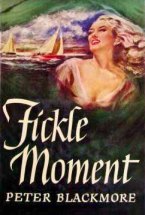
Fickle Moment by Peter Blackmore ~ 1948. This edition: G.P. Putnam’s Sons, 1948. Hardcover. 244 pages.

My rating: 7/10. The epitome of light reading; pure vintage fluff. A nice diversion from the snow whirling round outside!

*****

Elizabeth Portal rather smugly contemplates her thirtieth season as the leading star in the Watermouth Regis amateur operatic and dramatic society. She’s aging marvelously well, looks more youthful than her undeniable fifty, and only an unkind person would raise an eyebrow at Elizabeth’s coming performance as schoolgirl Yum-Yum in The Mikado. But when the other two of the Three Little Maids are Elizabeth’s daughters  Louise and Anna, more than a few sarcastic smiles are hidden behind politely shielding hands.

No matter – Elizabeth is on top of the world. Her eldest daughter, Anna, is about to marry the Watermouth Regis mayor, one Hubert Briggs, a man of varied experience: one-time jockey now turned respected undertaker after a riding accident ended his turf career and sent him back to take over the family business. People like Hubert, hence his election to the mayor’s chair; he’s unremittingly cheerful, and the funerals he presides over rocket right along, a relic (people whisper with a wink) of his sporting career and fondness for speed. Anna’s a bit of a drooper, true, but maybe marriage will pep her up?

Louise already has plenty of pep. A gorgeous young woman with a passion for tennis and swimming, Louise has attracted many admiring glances but so far has not returned the masculine attention of the local swains with anything other than polite amusement. Louise is ripe for love, ready to fall for the right man, who so far hasn’t appeared on her horizon. Or has he?

One day a rather battered sailboat, the Ayacanora, appears from nowhere and anchors just off the Portal’s private beach. Aboard is dashing sailor Richard Hardy, taking a break from his round the world voyaging, hoping to replenish stores and maybe engage in a little amorous relaxation. Lovely Louise swims by, and Richard’s interest is definitely aroused, especially when Louise glances back in her turn. Could something be about to happen?

Young Charlie Rogers, employed under the Portal patriarch Henry’s supervision at the Watermouth Regis town treasurer’s office, shows up to play the piano for the female Portals’ rehearsals. It has suddenly occurred to him that the questions his prospective employer asked him about his piano playing abilities were not so random after all. Charlie sees Louise, and fireworks go off inside his modestly manly heart. But could such a strong and vibrant girl ever look with even the remotest interest on an unathletic, sensitive and insecure (though undeniably good-looking) junior clerk?

Well, I’m thinking you can guess the answers to all of those, and I’m betting you’d be getting them all right. Shake these all together, add a generous handful of eccentric aristocrats and comic townspeople and ex-chorus girls and snobby upper-middle-class matrons, and here you have the ingredients to make a happy few hours reading.

The comeuppance of Elizabeth and the romantic flowering of Louise, plus the side stories of a nicely varied group of secondary characters makes for a narrative which dashes along at a very good pace indeed.

This one was picked up on a whim for the Gilbert and Sullivan quotation on the frontispiece: “Fickle moment, prithee stay!” Having a weakness for Penzancian pirates and Lord High Executioners and the rest of the G and S panoply of characters, my interest was piqued, especially when a closer investigation revealed a publishing date of 1948 and a Wodehousian sparkle of dialogue within.

I must say, if you’re not a devotee of The Mikado, you may find many of the scenes mildly confusing, but if you are, you will snicker along with the townspeople of Watermouth Regis at Elizabeth’s dramatic excesses.

Peter Blackmore was obviously a theatre lover, which assumption was confirmed when I researched him after reading this book and discovered that he was quite a well-known playwright and film screenwriter in the 1940s, 50s and 60s. Fickle Moment also appeared in dramatic form as a play called The Blue Goose, and a play called Miranda, featuring a captivating mermaid being paraded about in a bath chair as an invalid, was made into a very successful comedy movie, detailed here. Most intriguing!

I’d never heard of Peter Blackmore before, but you can bet your sea boots I’ll be watching for his name now. Though I somehow doubt I’ll soon come across another of Blackmore’s books at such a ridiculously low price – 25¢ at the local Salvation Army’s bargain book sale. Perhaps it will average out the next one I just might have to seek out online at a probably much richer price!

I’ll be looking for Miranda on film through the regional library system; this is just the thing that our wonderful librarians like to acquire and share. Please let me know if any of you are familiar with Blackmore; I’m really interested now, and the internet is strangely uninformative, save for the playwright designation, a few Miranda discussions, his dates – 1909 to 1984, and his British nationality.

Read Full Post »

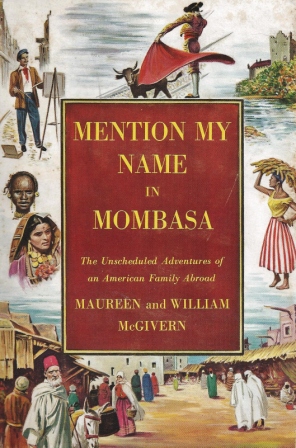
Mention My Name in Mombasa: The Unscheduled Adventures of an American Family Abroad by Maureen Daly McGivern & William McGivern ~ 1958. This edition: Dodd, Mead & Co., 1958. First Edition. Hardcover. 312 pages.

My rating: 7/10.

*****

This is a most interesting read; a travel memoir with a very 1950s’ feel – not surprising, seeing as it is a 1950s’ book! I enjoyed it.

The authors were literary figures of their time, and the travels herein described were, it seems from a few comments here and there, both to fulfill a personal desire for wanderlust and to collect material for future books, including this one.

If the name Maureen Daly rings a bell, it is most likely because of her extremely successful young adult novel, Seventeenth Summer, written when the author was herself just seventeen, and published in 1942. Some years later we find Maureen married to fellow writer William McGivern, a successful writer of crime-mystery novels (The Big Heat, Rogue Cop, war novel Soldiers of ’44, and almost 20 more) and film and television scriptwriter (Kojak, Adam-12, and Ben Casey, among others). They had their two children along, 6-year-old Megan and 2-year-old Patrick, when they left New York on New Year’s Eve to travel to Paris, the start of their extended travels.

Long, detailed and quite enthralling chapters describe the scenery, culture and especially the unique individuals the McGiverns came into contact with. The tone is a mixture of worldly-wise (but never condescending), travel guide (but merely to lay out the scene), and very 1950s’ American superiority (but innocent of bluster so therefore non-jarring – at least for the most part). The McGiverns were very eager to give credit where it was due regarding the superior aspects of their temporary homes and tourist destinations, which included Paris, and then a stay in the tiny fishing village of Torremolinos near Málaga, Spain, just on the verge of its discovery and development as a winter-tourist hotspot.

Then come several chapters on Spanish bullfighting, bullfighters and the ranches which raise and train the bulls. The tone here is journalistically non-judgemental much of the time; I never did get a grasp of whether the McGiverns were fully behind the “sport”, though from the farcical descriptions of a number of stereotypical bullfight aficionados which graces one of the chapters, I suspect they had marginally more sympathy for the bovine members of that elite yet widely populist pastime.

Next is a short visit (and hence a short chapter) in Gibraltar, where the McGiverns are rather disappointed in the elusiveness of the famous apes. On to Iceland, and a very travel-guide chapter this is, with loads of facts thrown at the reader, interspersed with short vignettes of some of the US Army families living on the vast NATO air base, and native Icelanders who opened their homes to our travellers.

Then comes the most memorable chapter of the book. During World War II, William had served as a US Army gunner in the European campaign, and his platoon had ended up entrenched on the mountainside near the tiny Belgian village of Fraipont, where the local people showed such generosity and warmth to their American allies that William had long planned to return in more peaceful times. Just over ten years later that sentimental visit took place, with the villagers overjoyed to recognize William and welcome his family. A poignant reminder that the war was not all that far in the past when this pilgrimage took place.

Back to Spain, and then a four-day voyage to the Canary Islands, a visit which seems not to have quite met the high expectations of the romance of the name. On to Morocco, where the McGiverns have several pleasant surprises regarding the locals, and then to Nigeria, on the cusp of independence as a full member of the British Commonwealth, after decades of colonial occupation.

A safari to Abadjan on the Ivory Coast and then to Fort Lamy in Chad doesn’t quite go as expected, but there are compensations in the people who the McGiverns meet as they wait for their travel visas to gain approval from the local bureaucracy. This does not happen, so back to Spain, through France, Belgium, and over to Ireland, where the Daly family is waiting to welcome their wayward relative and her family for an extended visit. Several months in Dublin follow, and then the trip is wound up, with a return to New York over a year after the original departure.

In this book there is a strong sense of how good it is to be an American at this point in history, and how welcome the traveller from the U.S.A. both feels and is made to feel; the McGiverns travel in their French-bought Citroën plastered with American flags fore and aft, and seldom seem to meet with a cold shoulder. Quite a change in the ensuing fifty years!

This is a fine book, and a literary time capsule of the post-war era, before things started to go wrong for the U.S.A., politically speaking.

I suspect it may be hard to come by (I ordered mine for a rather large sum from an online rare book dealer, for the Maureen Daly connection) but if your library happens to have a copy hidden in the stacks, or if you chance upon it in a used book store, it is well worth delving into.

Read Full Post »

Fire and Hemlock by Diana Wynne Jones ~ 1985. This edition: Greenwillow, 2002. Hardcover. ISBN: 0-06-029885-5. 420 pages.

My rating: 9.5/10. Half point off because of the typical DWJ ending – a re-read and an explanation by the author almost mandatory. Maddening. So close to perfect!

*****

This one took two tries. The first time I didn’t make it 20 pages in, but the second go, several months later, I was completely enthralled. I knew I would like it (I always end up liking Diana Wynne Jones, but sometimes I really need to work at it), but that the timing would need to be just right. Hit it perfectly, obviously.

Okay, here we go. This is a book that deserves a long, scholarly explanation, but I will try to keep it fairly brief – I need to work on that – brevity – I really tend to ramble on. Stream of consciousness typing. Heh.

College student Polly Whittaker lies on her bed in her room in her grandmother’s house and muses on a number of things. On the coming academic year; on the mysterious photograph on her wall which she has loved since childhood – hay bales burning in a field, with a huge hemlock plant enveloped in smoke in the foreground – as a child Polly remembers seeing people in the picture, but that was surely youthful imagination, because they certainly aren’t there now; and on the book of stories she’s been reading, another childhood favourite, except that the stories are not quite as she remembered. Growing up is so dreary, Polly sighs to herself; you see things as they are.

Or do you?

As she muses and digs deeper in her mind, Polly begins to remember more details that certainly can’t – couldn’t possibly – have happened. But there they are, that second set of memories, emerging from the hidden recesses of her mind and forming as she thinks about them. This set of memories begins at the age of ten, with the meeting of Tom at the funeral…

Flashback! And we’re off. Polly now remembers meeting a rather shy, mildly dreary young man at a neighbour’s house where she has inadvertently trespassed into an after-the-funeral will reading. Tom had looked over at Polly, realized that she really shouldn’t be there, and inconspicuously spirited her away, out of the house. The two are immediately and deeply attracted to each other in some elemental way, though Polly is, as I mentioned earlier, a child of ten, and Tom Lynn is an adult. He’s a musician, a cellist in an orchestra in London, and after returning Polly to her grandmother’s house, with the fire and hemlock picture which he has given Polly from his share of his just-announced inheritance – six pictures – he vanishes from her everyday life, though a letter soon comes from him, and the two then embark on a running epistolary narrative, with Polly reinventing herself as a Hero, or rather, assistant-Hero, to the Tom figure she has embellished into a heroic crusader-for-goodness, Tan Coul.

They write, and occasionally meet, while Polly’s life goes through some shattering events, such as the separation of her parents and her mother’s disastrous relationships with new men; Polly fortunately has a haven in her grandmother’s house, and keeps emotionally afloat though we wouldn’t blame her if she gave up and let herself drown in misery; awful things happen, many of them fantastically unlikely.

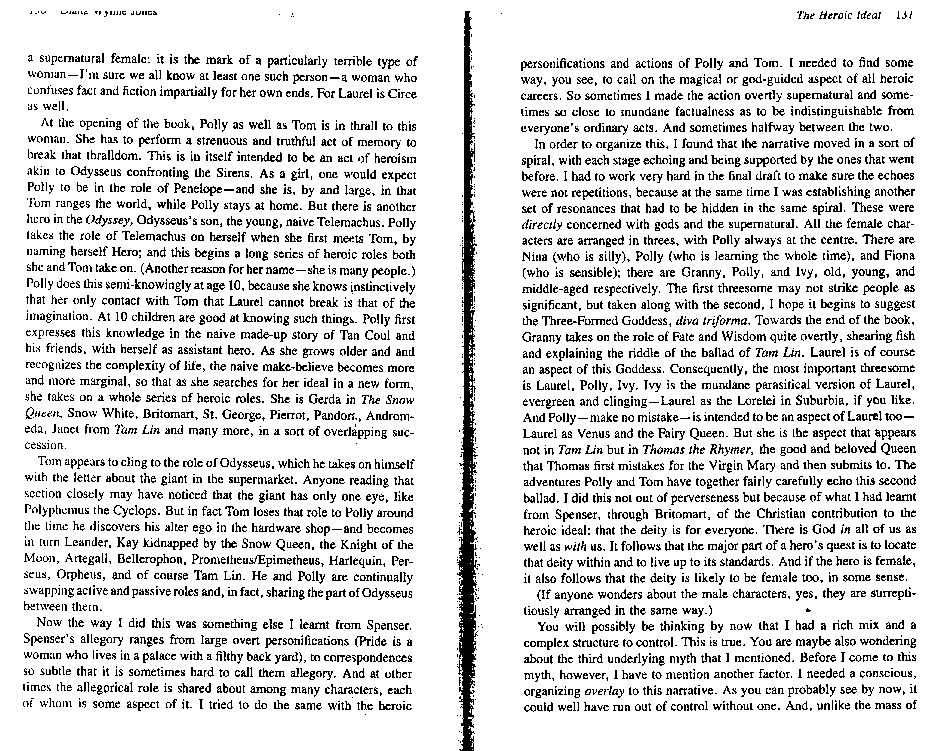
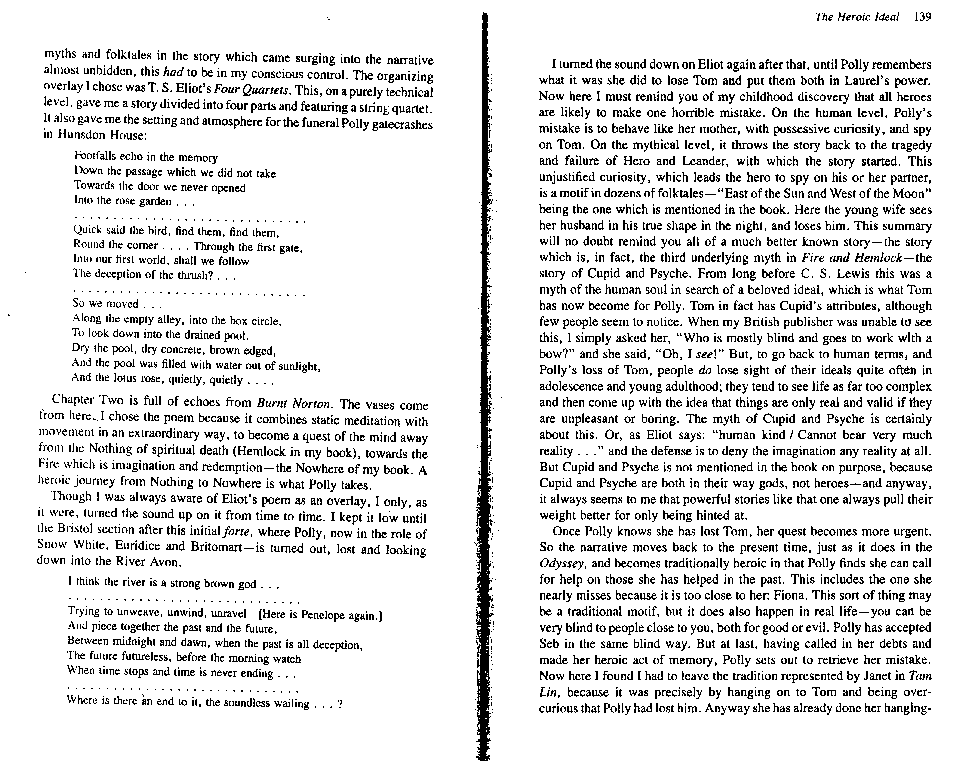
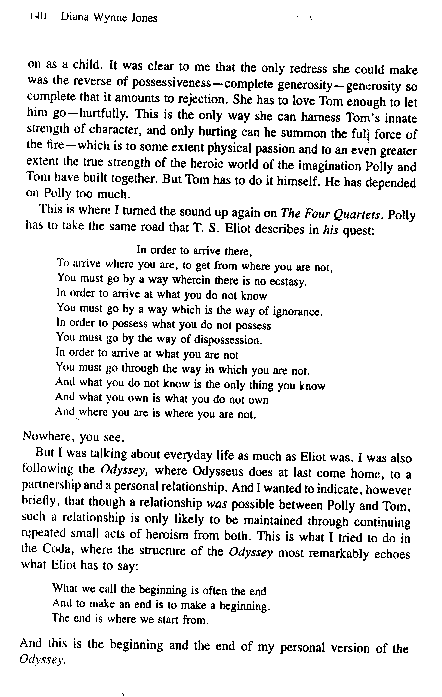
This book is, by the author’s own explanation, deeply influenced by a number of legendary tales: Tam Lin is the most obvious, with Polly obviously taking on the role of Janet, and Tom Lynn the doomed hero whom she saves from the sacrificial rites of faeryland. We also have Thomas the Rhymer, who cannot speak a lie, the gift-curse of his particular faery queen; for our tale’s Tom this becomes the gift/curse of whatever Tom imagines taking on reality. Tom’s faery queen is his divorced wife Laurel, an ominous figure who maintains her grasp on Tom even though they are supposed to have parted ways. The Odyssey is in there,  with Tom/Odysseus journeying through the years and often being seduced away from his faithful Polly/Penelope labouring away at home; Cupid and Psyche, and the tragedy of Psyche’s curiosity separating her from her true love; and eventually and most hard to pick up on, unless tipped off by the author’s explanation, as I was, T.S. Eliot’s Four Quartets and this stanza:

In order to arrive there,
To arrive where you are, to get from where you are not,
       You must go by a way wherein there is no ecstasy.
In order to arrive at what you do not know
       You must go by a way which is the way of ignorance.
In order to possess what you do not possess
       You must go by the way of dispossession.
In order to arrive at what you are not
       You must go through the way in which you are not.
And what you do not know is the only thing you know
And what you own is what you do not own
And where you are is where you are not.

And this bit:

What we call the beginning is often the end
And to make and end is to make a beginning.
The end is where we start from.

Confused? Trust me, it will make sense when you get to the last chapter, and chaos ensues, and nothing seems to work by the rules you think you know about, about Janet clinging to Tam Lin to bring about his salvation. Something very different happens.

This is really a non-review, an un-review; you need to read this book, and, if you are in the right time and space, it will be perfect for you, and you will love it. If not, set it aside, for weeks, months, years – but do give it a second try. This may be Diana Wynne Jones masterpiece; the book which elevates her considerable body of work to the next level, to something beyond juvenile fantasy to a very mature level indeed.

(It also works beautifully as a plain and simple story, though that darned ending rather knocks the unwary reader down.)

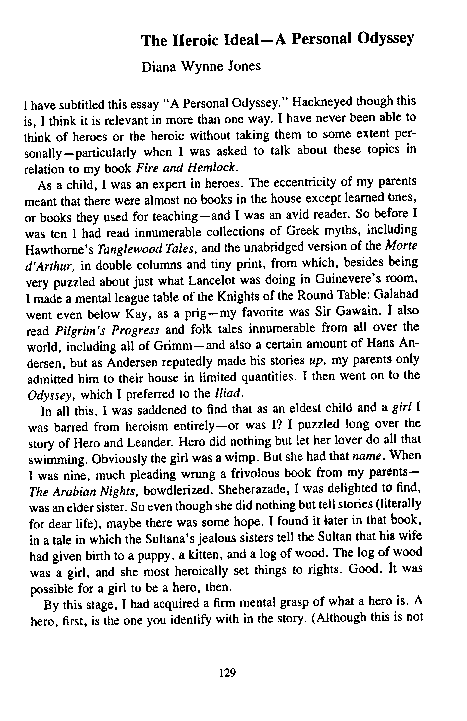
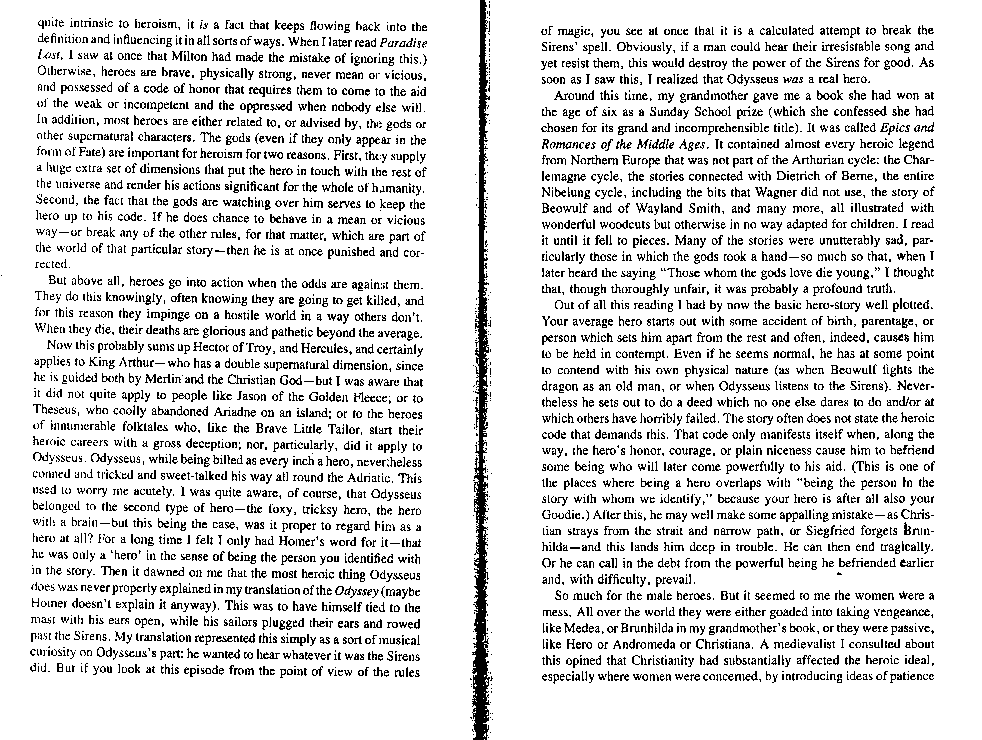
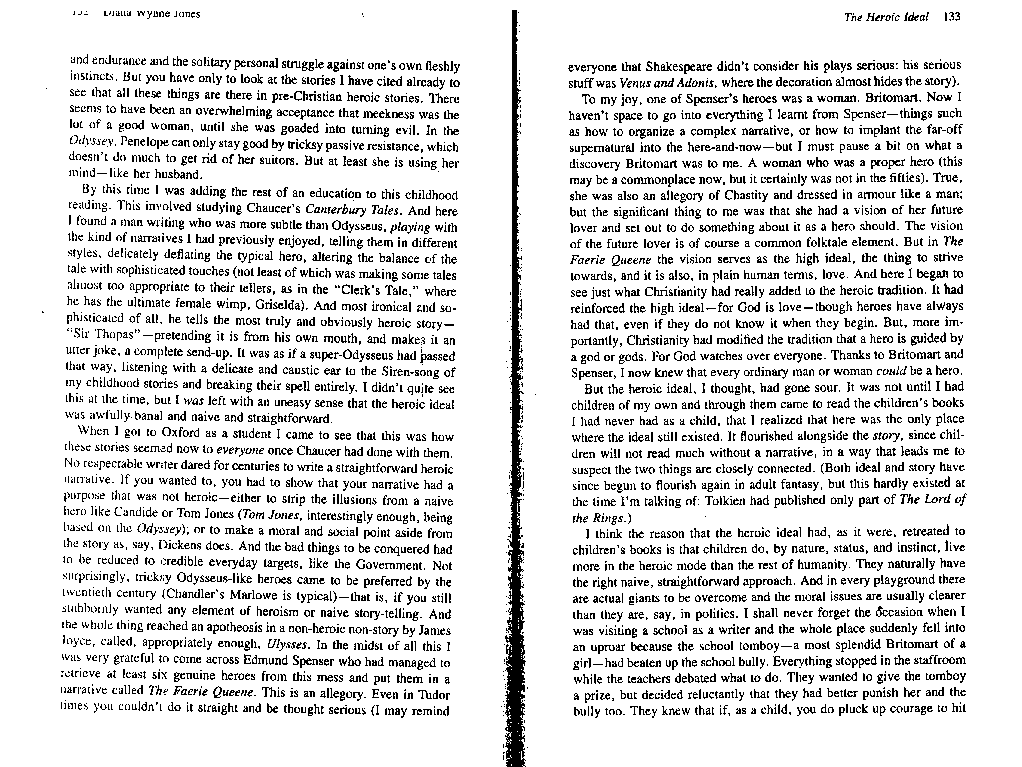
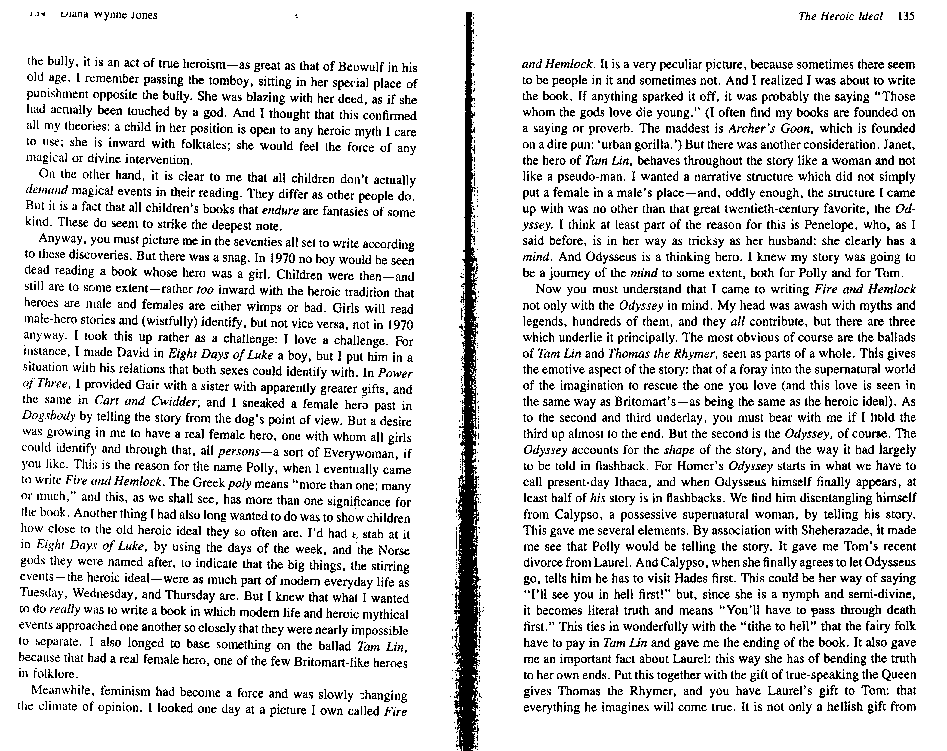
And once you’ve read the book – and NOT before – read the author’s thoughts on Fire and Hemlock here, in an essay called The Heroic Ideal – A Personal Odyssey
http://www.sccs.swarthmore.edu/users/01/kyla/Heroic_Ideal1.gif
http://www.sccs.swarthmore.edu/users/01/kyla/Heroic_Ideal2.gif
http://www.sccs.swarthmore.edu/users/01/kyla/Heroic_Ideal3.gif
http://www.sccs.swarthmore.edu/users/01/kyla/Heroic_Ideal4.gif
http://www.sccs.swarthmore.edu/users/01/kyla/Heroic_Ideal5.gif
http://www.sccs.swarthmore.edu/users/01/kyla/Heroic_Ideal6.gif
http://www.sccs.swarthmore.edu/users/01/kyla/Heroic_Ideal7.gif

Here are some more reviews you will appreciate, because the writers give proper plot summaries (unlike my wishy-washy avoidance of doing so) starting with the one which contains the links to The Heroic Ideal, copied above:

Two Sides to Nowhere – Fire and Hemlock

Valentina’s Room – Fire and Hemlock

Jenny’s Books – Fire and Hemlock

Shelf Love – Fire and Hemlock

A Musical Feast – Fire and Hemlock (a more critical review, worth reading because it puts into words the bothersome flaws in DWJ’s technique)

This is just a small sampling. Happy reading!

Read Full Post »

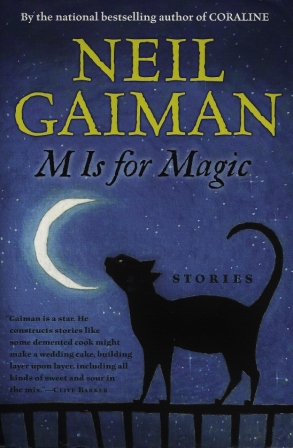
M is for Magic by Neil Gaiman ~ 2007. This edition: Harper Collins, 2007. First Edition. Hardcover. ISBN: 978-0-06-1186424-4. 260 pages.

My rating: 8/10. It’s Neil Gaiman – what else can I say? When he’s good, he’s great. Some of his stuff is a bit out there and twisty for my squeamish comfort, but mostly I’m a solid fan.

But I disagree with the marketing angle for this collection – this is not a book for children. The true audience here is teens and up, in my opinion. Some of the reference are totally aimed at adults. Not to say kids shouldn’t read this – not at all! Like most of Ray Bradbury’s work, whom this collection was inspired by according to Gaiman’s forward, the fact that some of the stuff is over their heads will be immaterial.

None of the material in this book is original to it; the pieces have all been published in other anthologies and collections, with the exception of  The Witch’s Headstone, which is an excerpt from and a teaser for The Graveyard Book, which was about to be published the next year, 2008,  and Gaiman’s Introduction.

*****

  • Introduction ~ “When I was a boy, Ray Bradbury picked stories from his books of short stories he thought younger readers might like, and he published them in R is for Rocket and S is for Space. Now I was doing the same thing, and I asked Ray if he’d mind if I called this book M is for Magic. (He didn’t.) M is for Magic. All the letters are, if you put them together properly. You can make magic with them, and dreams, and, I hope, even a few surprises…” ~ Neil Gaiman, August 2006
  • The Case of the Four and Twenty Blackbirds ~ 1984 ~ A take-off on the hardboiled detective story, a la Dashiell Hammett. The main conceit here is that the characters are nursery rhyme figures. Meh. Cute idea, but it doesn’t really work. (Starting on a low point. Don’t worry, it gets better.) 5/10.
  • Troll Bridge ~ 1993 ~ Omigosh. Angst Alert! A boy encounters a troll at the tender age of seven and bargains successfully for his life. But if you live long enough things may just come full circle. 8/10.
  • Don’t Ask Jack ~ 1995 ~ A pointless little vignette featuring a jack-in-the-box and Time. Methinks the author was reading too much Bradbury before he penned this one. 6/10.
  • How to Sell the Ponti Bridge ~ 1985 ~ Okay, now we’re warming up. The story of the perfect scam, and how to turn lust and greed back on itself. And I award this one a  perfect 10/10.
  • October in the Chair ~ 2002 ~ The Months are telling stories. Beautiful set up, and one of those endings which leaves you just hanging there gasping in mid-air. Nice. 9/10.
  • Chivalry ~ 1993 ~ Mrs. Whitaker finds the Holy Grail in an Oxfam Shop, and things get interesting. Gorgeous! And very funny.  Another 10/10.
  • The Price ~ 1997 ~ This one bothered me, being a cat person. An adopted Black Cat apparently guards his human family against the devil, but the battle is proving too much for him. Sad. 6/10.
  • How to Talk to Girls at Parties ~ 2006 ~ Vic and Enn crash the wrong party. These girls come from a long way away. 7/10.
  • Sunbird ~ 2005 ~ The Epicurean Club finds a new and mostly fatal dining experience. A strangely entrancing tale. 8/10.
  • The Witch’s Headstone ~ 2007 ~ An excerpted chapter from the yet-to-be-published (at the time of this collection) Graveyard Book. Young Bod falls in with the ghost of a witch, and does the perfect thing. 10/10.
  • Instructions ~ 2000 ~ A poem lays out the fairytale guide to life’s journey. 11/10. (No, that’s not a typo. Love this one that much. Hmm, maybe I should post it.)

Read Full Post »

White Mist by Barbara Smucker ~ 1985. This edition: Puffin Books, 1987. Paperback. Includes research bibliography. ISBN: 0-14-032144-6. 157 pages.

My rating: 5/10. Just barely. It’s more like a 4, but I gave the author an extra point because of her well meaning earnestness. The message is a good one, but the presentation is deeply lacking in finesse.

I wonder what a typical nowadays young reader would think of this one? It might be perfectly acceptable; I’ve read much worse “kid lit”. From my adult perspective it was a tough slog, though. The author tried to pack too much into this one; in my opinion she should have let off a bit on the info-dump and paid more attention to the story.

And the “Indian = good, White Man = bad” thing was oversimplified.

*****

I’ve been trying to cull our overwhelming book collection, and this was one that got a second look when I was sorting through several boxes of kids’ books this week.

Barbara Smucker, as you Canadians with children or schoolroom experience may know, is famously the author of the multi-award-winning Underground to Canada, about the legendary “underground railway” system of helpers and safe houses by which black slaves escaped to freedom in Canada in the mid-19th century. I haven’t read Underground for years; not since my own children were quite young, but in my memory it was a well-done juvenile historical fiction. I may need to review that one after reading White Mist, to see if it holds up to my positive memory of it.

Smucker, born  Barbara Claasen, was a New Order Mennonite from Kansas, where she attended college and received a journalism degree in 1939. After graduation, she married a Mennonite minister, Donavan Smucker, and the two of them, and eventually their three children, travelled widely throughout the United States. In the late 1960s, the Smuckers found themselves in Mississippi, where Barbara became deeply interested in the civil rights movement. As Mennonites, the Smuckers were already passionate about peaceful resolution and non-violent solutions, as well as justice and minority rights. These themes run through every one of  Barbara’s subsequent stories.

In 1969 the Smuckers moved to Ontario, and, while working as a public librarian, Barbara’s writing career took off, at the relatively advance age of sixty-two, with Underground to Canada’s 1977 publication. This was followed by Days of Terror in 1979, about a Russo-Mennonite family fleeing the Russian Revolution in 1917, and Amish Adventure in 1983, about the challenges facing the contemporary Amish. White Mist, 1985, deals with ecological issues, as well as First Nations (“Indian”) displacement and rights.

Here is the plot outline of White Mist, from a review written by Susan Ratcliffe in 1986:

Grades 5-6/Ages 10-11.

The message of Barbara Smucker’s newest novel is clearly stated by one of the main characters: “If we destroy the earth, we destroy ourselves. We are one with the earth.” She has chosen a rather unusual, and somewhat awkward narrative method to convey this theme.

May is a young, dark-skinned, dark-haired teenager, abandoned as a baby on the door-step of the Applebys, who subsequently adopted her. She thus has no knowledge of her parentage or heritage, and suffers the teasing of other kids in her Sarnia [Ontario] school. She feels an outcast from their society. Every summer she and her parents go to work in their nursery on the shores of Lake Michigan, but find the lake changed this year. The beaches are dirty and littered with dead fish; the water is smelly and unfit for swimming. This year too, Lee, an Indian boy from the local reserve, comes to work at the nursery. He and May gradually become the captives of a strange, swirling white mist that eventually takes them back to a time when there were virgin forests on the shores of a clean lake, a thriving lumber town, and a village of the Potawatomi Indians. They are absorbed into the village life and learn pride in their native heritage. May even meets her great-grandmother, and gains a sense of family and roots.

The awkwardness comes in the switch from the present to the past. May and Lee are surprisingly knowledgeable about every detail of the area and people of 1835. At several points in the story, one or the other of them has to give the source of their information: “I studied all winter at the Reserve library about the Potawatomi…”. “I read about it in Uncle Steve’s books on local history…”. “Uncle Steve had told her…”. Their interest and historical retention is astonishing for their age.

The messages of the novel are strong and worthwhile; pollution and the environment, and the prejudices against native peoples. The characters are bright and attractive, but the method chosen to tell the story is too contrived and unbelievable. However, Barbara Smucker’s many fans may forgive her, because of the appeal of the themes.

I was interested to read that this reviewer felt the same way that I did; that the novel was awkwardly presented and the young protagonists unrealistically knowledgeable about local history. I also felt that the “Indian” characters whom May and Lee met in their deeply contrived time travel were presented in a very stereotyped way, as almost impossibly good, noble, and completely in touch with nature at all times, in the literary “noble savage” tradition.

I do appreciate the use of First Nations characters in leading roles, and it was sweet to see May’s relationship with her white foster parents so lovingly depicted. May’s confusion about her racial history and quest for a way to balance her origins and her present life was very exaggerated, but it was good to see those topics addressed head on. Lee’s recent tragic history of losing a close friend to suicide on his troubled reserve doesn’t get much discussion, but is presented in a matter-of-fact fashion; this is Lee’s reality, and explains why he is so ready to embrace a more positive past. Lee’s fierce pride in his ancestry, and his impatience with May’s ambiguity towards her ancestors ring true to Lee’s characterization.

While many of the non-First Nations characters are presented in a negative, one-dimensional way, there are several exceptions: May’s foster parents are seen as unreservedly “good”; May in her distressed first days as a time traveller meets with kindness from a pioneer woman, and from a cook in a logging camp; and many of the “white” lakeside dwellers embrace the ecological message when Lee and May return from their blip into the past and make their heartfelt presentation for a crusade against pollution.

I didn’t enjoy this book, though. Its flaws were too many and too glaring to ignore, and I can’t recommend it.

I give the author a decided nod for her good  intentions, but it’s a very faked-up story, and I ultimately couldn’t get past that. Into the giveaway box.

Read Full Post »

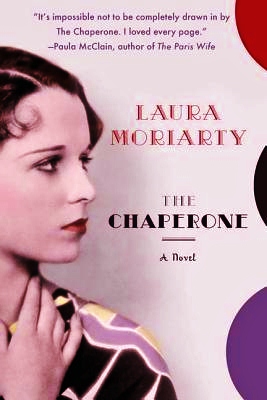
The Chaperone by Laura Moriarty ~ 2012. This edition: Riverhead Books, 2012. First edition. Hardcover. ISBN: 978-1-59448-701-9. 367 pages.

My rating: 6.5/10. You know, the only real surprise I found here was how mild it was. I’d expected something a bit more graphic, from all the hype. The several key sex scenes are safely veiled in allusion. A decently well-written addition to the “women’s fiction” shelf, which, if it feels like damning with faint praise, is how I’m feeling about this one right now.

*****

The Chaperone was all over the bestseller lists earlier this year, but seems to have faded quickly as readers seeking the latest literary thrill gobbled it up, found nothing worth spending much time digesting, and inexorably moved on. To continue with the food analogy, I was going to compare this one to a box of chocolates, or a big slice of layer cake,  but mulling it over just a mite more, I’ve settled on watermelon for my comparison. Sweet and refreshing and welcome while it’s being consumed, but once it’s down to the rind you realize it doesn’t really count as food. And there are always those slightly bothersome seeds…

I quite liked this book – I really did  – but the whole time I was reading I had that “you are being educated” feeling which is dreadfully difficult for the writer of historical fiction to completely avoid. Right from the very first scene, where our protagonist Cora Carlisle appears engaged in one of her civic-improvement projects – this particular one is collecting children’s book donations for the local library – the scene is being set up all around her, figurative stage hands pointing at clues and the authorial chorus monologuing away so we don’t miss a thing.

Here I was going to write out my own version of the plot outline, but, really, life’s too short. From the Goodreads page:

The Chaperone is a captivating novel about the woman who chaperoned an irreverent Louise Brooks to New York City in 1922 and the summer that would change them both.

Only a few years before becoming a famous silent-film star and an icon of her generation, a fifteen-year-old Louise Brooks leaves Wichita, Kansas, to study with the prestigious Denishawn School of Dancing in New York. Much to her annoyance, she is accompanied by a thirty-six-year-old chaperone, who is neither mother nor friend. Cora Carlisle, a complicated but traditional woman with her own reasons for making the trip, has no idea what she’s in for. Young Louise, already stunningly beautiful and sporting her famous black bob with blunt bangs, is known for her arrogance and her lack of respect for convention. Ultimately, the five weeks they spend together will transform their lives forever.

For Cora, the city holds the promise of discovery that might answer the question at the core of her being, and even as she does her best to watch over Louise in this strange and bustling place she embarks on a mission of her own. And while what she finds isn’t what she anticipated, she is liberated in a way she could not have imagined. Over the course of Cora’s relationship with Louise, her eyes are opened to the promise of the twentieth century and a new understanding of the possibilities for being fully alive.

Drawing on the rich history of the 1920s,’30s, and beyond—from the orphan trains to Prohibition, flappers,  and the onset of the Great Depression to the burgeoning movement for equal rights and new opportunities for women—Laura Moriarty’s The Chaperone illustrates how rapidly everything, from fashion and hemlines to values and attitudes, was changing at this time and what a vast difference it all made for Louise Brooks, Cora Carlisle, and others like them.

The Chaperone is crammed with a whole bunch of social issues, with our heroine Cora firmly on the side of right, of course, at least after her consciousness-raising is completed. Racial prejudice and segregation, women’s rights – namely access to contraceptives and care for unwed mothers, with a bit of figurative bra-burning (in this case corset dropping), Prohibition and the repeal of liquor laws,  and eventually gay rights are all featured.

This is an ambitiously crowded book, with the author attempting to cover the entire term of a woman’s life in 357 pages. The few weeks of summer with Louise in New York gets the most screen time, with flashbacks to childhood nicely detailed here and there. The rest of the story is painted with a very broad brush; we are told simply what happens and what Cora thinks of it all, but from an omnipotent distance.

A little way into the book I started thinking, “Hey, this reminds me extremely strongly of another author”, and eventually I had the “aha!” moment. This is a novel very much resembling one of Bess Streeter Aldrich‘s. The same short but detailed periods of a protagonist’s life, with stretches of “then this or that happened and she/he was really sad/happy/confused/vindicated/pick some emotion”, plus very obvious inclusions of historical snippets clumsily inserted to show the bigger picture. Sometimes the characters seem like paper cutouts stuck on a schoolroom timeline.

Possibly the Kansas setting of much of The Chaperone had something to do with it; Aldrich was also a writer devoted to the midwestern states and the decent farmers and gossipy small town denizens thereof. Despite the New York interludes and the growth of Wichita from sleepy town to bustling city in the course of Cora’s life, The Chaperone is at heart just another small town story.

The Louise Brooks connection serves merely as a skeletal framework to build Cora’s story onto; it actually works fairly well, and I must say it left me with a strong desire to learn more about the real life Louise, to see if she was indeed the self-centered egoist she appears to be here. Brook’s own collection of biographical essays, Lulu in Hollywood, is now on my list of things to read next, as is Edith Wharton’s The Age of Innocence (a re-reading, in that case); it is the book which Cora struggles with and is rather offended by throughout her New York summer.

This is not a great review – my thoughts are everywhere – I apologize. It’s been a busy week, with many things going on, and though I’ve stolen some time for reading my writing sessions have been fragmented and often interrupted.

I generally enjoyed The Chaperone and had no trouble keeping my mind engaged; its numerous flaws were slightly annoying but forgivable. Cora Carlisle has some unlikely adventures, and I can’t quite bring myself to completely believe in the complete success of her two lives – the public and the very private – especially as she has to keep a number of other people convinced to play along. I kept expecting her to get busted; she never was. And that’s my biggest spoiler.

Chick lit, but of a superior type. If you liked Kathryn Stockett’s The Help, this one should suit you just fine. Birds of a feather.

Read Full Post »

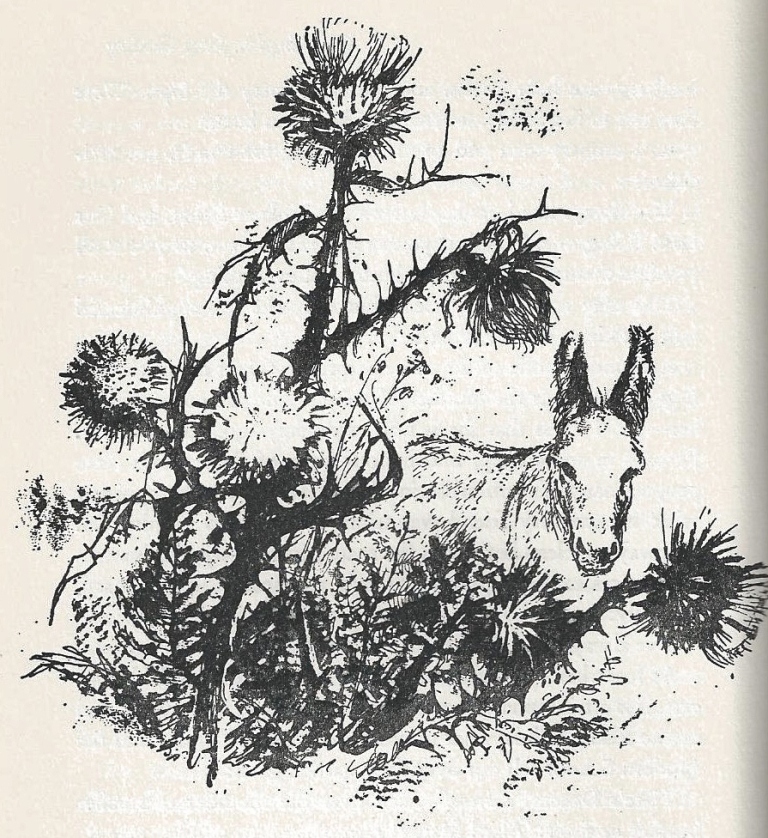
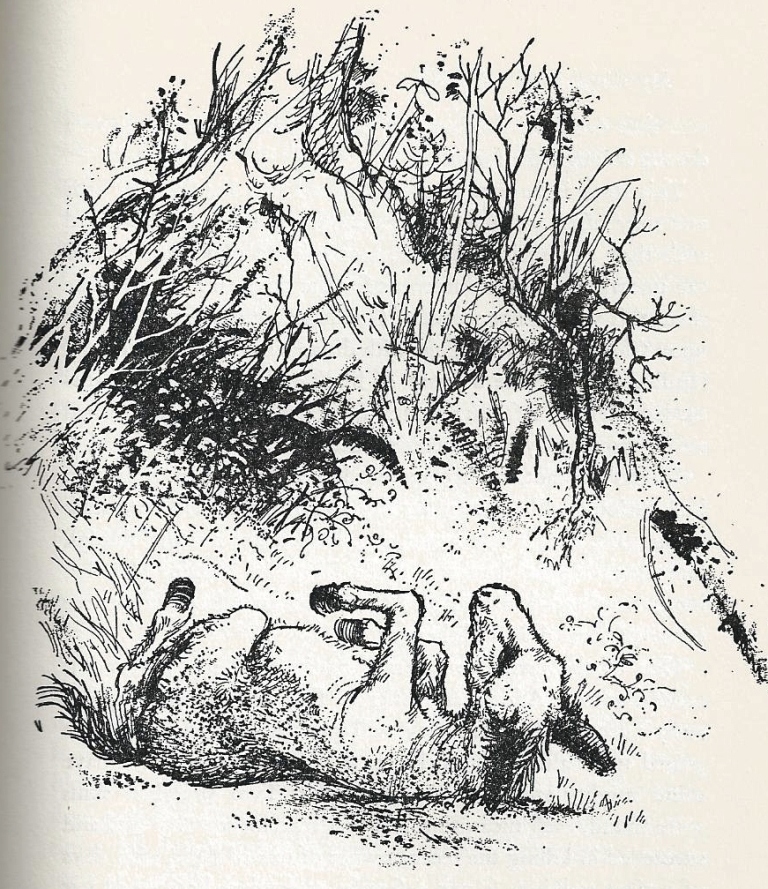
My Kingdom for a Donkey by Doris Rybot ~ 1963. This edition: Hutchinson & Co., 1963. First Edition. Hardcover. Line drawings by Douglas Hall. 128 pages.

My rating: Another unique book which is hard to rate. It’s centered on the author’s pet donkey, Dorcas, with predictable anecdotes about the creature itself, but it also ranges much more broadly into history, philosophy, animal rights and general opinionating by the author.

I liked it. I initially bought the book to give to a donkey-owning friend, but am finding it difficult to make up my mind to let it go just yet. And I love the illustrations. I should send it on its way back out into the world, but I strongly suspect I won’t.

Anyway – rating. I’m thinking 8/10. A slender little volume, but earnestly written, and beautifully sincere. Almost makes you yearn for a donkey of your own. (“Or not!” exclaims my reading-over-the-shoulder daughter, who has spent a number of sessions brushing out the knots in down-the-road Fanny’s woolly coat.)

*****

I’ve been carrying this one around with me for weeks, to the detriment of its rather fragile dustjacket, so I’ll try to pull off a quick review in my little window of time this evening so I can at last leave the poor thing on the shelf.

The author writes:

My own Dorcas is a plump, well-liking donkey. But even I – who can say of her as Sancho Panza said of his ass Dapple, she is the ‘delight of my eyes, my sweet companion’ – even I cannot call her beautiful. She is too like a child’s inexpert drawing, with her head absurdly big for the mouse-brown body that is at the same time neat and clumsy.

Poor grotesque beasts! Whose fault is it that they are as they are? From that day far down the increasing centuries, before the Pyramids, before Abraham, when the first wild ass was haltered and loaded. his kind have been abused, overweighted, beaten, ill-fed, chancily watered; kicks and goads have come their way more often than pats and praise. Little wonder they were reft of their real grace and swiftness to become the stunted toilers that we know, waifs of the world, clowns among horses, a byword for patience and humbleness.

This particular donkey has been acquired to keep the grass down on a small country acreage. She has not been neglected or abused, but instead was deliberately sought out and purchased from a horse dealer who kept the little jenny among a herd of ponies in the New Forest of England’s Hampshire region. Dorcas was a costly acquisition, donkeys apparently being rare and hard to come by in this particular place and time – England in the late 1950s – but the transaction was made and Dorcas soon adapted to her new home.

Dorcas’ new life was in no way harsh or unhappy; her days were filled with peaceful grazing and visits over the fence with many passers-by, occasionally pulling a small cart, being taken for short rides by her owner and visiting children, and, on one memorable occasion, embarrassing her owner mightily by refusing to participate in a horse show in the most public fashion possible, by rooting herself immovably in the show ring as the rest of the participants circled round in perfect form.

Dorcas provided her owner with years of interest and pleasure, mostly by her mere possession and the enjoyment of watching her carry on her natural inclinations and habits.

Doris Rybot tells the tale of Dorcas with the minimum of sentimentality – she sees her donkey and her own role as animal owner and caregiver through pragmatic eyes – but at the same time she speaks most movingly about the treatment of Dorcas’s tribe through the centuries, and expands this to a plea to treat all animals with respect. In between personal anecdotes featuring not only Dorcas but the other animals in her life, Doris retells a number of legends and Biblical stories in which the humble ass takes a prominent part.

An unusual and very heartfelt book, by a writer who has a deep and articulate love of all creatures from the lowliest insect to humankind itself. A hidden gem of a book, which I am quite thrilled (in a quiet way) to have come across.

I’ve done a little bit of background research on Doris Rybot, and have discovered little about her except that she did write at least one other book, It Began Before Noah, and that she also appears as Doris Almon Ponsonby, and that she was born in 1907.

Read Full Post »

Randy Bachman’s Vinyl Tap Stories by Randy Bachman ~ 2011. This edition: Penguin Canada, 2011. First edition. Hardcover. ISBN: 978-0-670-06579-0. 224 pages.

My rating: Oh boy. Another toughie to rate.

Because I’m already something of a Vinyl Tap fan, admittedly for Randy’s rambling anecdotes more so than some of the actual songs, and I’ve heard some – a lot! – of these stories before. The book perfectly captures his long-winded, continually-sidetracked, “Hey – I played with everyone you ever heard of” – and of course he did, he really DID! – very Canadian, very polite, and very funny style. I could hear his voice say every word I read.

Anyway, the rating. If I’d never heard a single episode of Vinyl Tap, I’d have to say a 6 or possibly a 7. Lot’s of name dropping, lots of references to both now-forgotten musicians and still-legendary rock stars, lots of eyes-glaze-over arcane musical stuff. As it is, and because I really like and admire Randy on a personal level – though I’ve never met the guy, and was definitely not a real fan of his music when growing up, except for the few chart toppers I inadvertently listened to – “American Woman”, “No Sugar Tonight” – you know, the standards – (I was always more into the Brits, like The Stones and The Who and Bowie and T. Rex, with a parallel affection for Jonie Mitchell and Bob Dylan and their ilk) – anyway, his voice on CBC Radio is a ton of fun to listen to, and the man seems genuinely nice.

Nice is good. We need way more nice in the world. And he’s a kid from Winnipeg. Who now lives in B.C. So he gets an 8.5/10. Rock on, Randy! Long may you ramble.

*****

I think maybe I already wrote my review. Let’s see, maybe a bit of background info for those of you Canadians who haven’t inadvertently or deliberately tuned into CBC Radio on a Saturday night driving along in the dark.

The Guess Who. Bachman Turner Overdrive. Ring any bells? If so, you may be a Canadian of a certain age.

Randy Bachman’s musical life started way back in his childhood, with violin lessons from the age of five. That was in the 1940s, and by the ’50s Randy had discovered another stringed instrument, the guitar – in particular the rock’n’roll guitar – and his future was set. Blessed with a hear-it-once-and-play-it mind – Randy calls it his “phonographic memory” – Randy forged ahead single-mindedly absorbing every new lick and chord and riff, and hanging out with the rest of the young wannabees in Winnipeg’s surprisingly fertile breeding ground for the rockers of the next few decades.

Teenage garage bands evolved and moved on, and the young musicians traded high school gyms for recording studios, doggedly saving their money to produce demos and singles and eventually albums, and one day, not too far into his musical journey, Randy found himself playing among the greats. Having converted to Mormonism when wooing his first wife, Randy was that rare figure: a rocker who embraced the third element of the stereotypical sex, drugs and rock’n’roll lifestyle while remaining a sober observer of the excesses of his compatriots in the first two departments. Perhaps that’s why his memory is so darned good?

And it – his memory – is amazing. The guy is a fount of trivial detail and anecdotes galore. To listen to him chatting away on Vinyl Tap, picking on his guitar to illustrate the details of what chord so-and-so played on his/her greatest hit/forgotten classic is mesmerizing. The guy is a literal sponge. He’s soaked up everything he’s ever heard or seen, music-wise. I repeat – amazing.

This book is a collection of Randy Bachman’s Vinyl Tap radio show monologues, expanded and cross referenced and generally polished up, with playlists of referenced songs at each chapter end, apparently available as collections on iTunes. (I haven’t checked this out personally, but I read that somewhere in the book end notes. It’s not prominently mentioned – a point in favour, in my opinion.) Another cool feature is the themed lists of songs at the end of the book, reflecting the themed Vinyl Tap shows where the featured “common thing” among diverse songs highlighted by Randy may be, say, cowbells, or songs for your funeral – how about “I Shall Be Released” by The Band, or “Wasn’t That a Party?” by the Irish Rovers, or “Another One Bites the Dust” by Queen, among all the sad and sobby tearjerkers also listed –  or food songs (“Catfish Blues”, “Cheeseburger in Paradise”, “I Want Candy”.) Sometimes a little bit silly, but a whole lot of fun.

Speaking of food, Randy shares some deep down and personal stuff here as well, like how his own appetite led him to the point where he weighed almost 400 pounds a few years ago, and his resolve to turn his life around. He opted for gastric bypass surgery, and it appears to have done wonders for him; he’s downright svelte in his later photos.

All in all, an interesting book for a Randy Bachman fan or a guitar aficionado – the guy’s a guitar monomaniac too, and there is a long, super-detailed chapter on rock guitars and their ins and outs and how to get various details of sound which, though fascinating in an “I’ll never use this information but it’s cool to see someone so passionate about it” way is something that was mostly lost on me, as I suspect it would be on most of us who aren’t aspiring rock band guitarists.

Would I recommend it? Hmm. Maybe one to check out from the library before buying it, though the song playlists are maybe worth having around, for those days with too much time on your hands and an iTunes gift card handy.

And here are some good links to recent interviews with Randy Bachman:

National Post – Randy Bachman Talks & Writes Vinyl Tap

Georgia Straight – Randy Bachman Remembers

Guitar International – Randy Bachman on Canadian Rock & Collecting Guitars

Read Full Post »

The Stars Grow Pale by Karl Bjarnhof ~ 1956. This edition: Penguin, 1960. Translated from the Danish by Naomi Walford. Paperback. 267 pages.

My rating: 7/10.

This early years autobiography left me curious as to the next stage in Bjarnhof’s life. The internet is curiously empty of much information about a man who became a celebrated member of Danish musical and intellectual society.

Desperately bleak in parts; often deeply moving.

*****

This is the story of a boy whose early years were filled with an array of tragic and challenging  issues, not the least of which is his growing blindness. Looking back on his childhood from many years in the future, the tone is stoic yet unsparing of the details of the situation and actions of Karl Bjarnhof’s family and childhood associates, and his own reactions and thoughts.

Karl, from his own self-description, was a stubborn and introspective child, occasionally impulsive, and often unable to explain his own actions or respond emotionally appropriately to the out-reaching of others. The deep love of his parents for their troubled child comes through clearly and poignantly, though Karl does not acknowledge those feelings in so many words in this account.

A gifted mathematician and musician from childhood, though these tendencies were initially dismissed, Karl went on in his adult life to gain international fame and respect as a cellist and organist, and later as a writer and radio broadcaster.

I can’t say I exactly “enjoyed” this autobiography. It immediately pulled me in and kept me enthralled, but it is a painful account to read, and it left me saddened, even knowing that Karl’s persistence in following his inner vision won through, and that he went on to lead a creative and fulfilling adult life. There is a certain understated humour to some of the anecdotes, but much of the book comes across as serious and unsmiling in tone. I suspect that some of the sparingly written vignettes will be etched in my memory for years to come.

Karl Bjarnhof was born in 1889, and died in 1980. His vision faded throughout his childhood and teen years; he became fully blind at the age of nineteen.

From the inner cover of this vintage 1960 Penguin edition:

Karl Bjarnhof in this brilliant autobiographical novel tells the story of a boy marked out from his fellows by the gradual onset of blindness.

The boy himself is not depressed, though other people may make him miserable: the boys in the yard will not play with him because he is too ‘stupid’ to see the ball; his mother nags at him for being ‘peculiar’; his schoolmaster punishes him for not being able to do the sums set on the blackboard. When eventually he is taken to an occulist he is told he has ‘eyes like a hawk’ because while he was waiting for his test he memorized the letters on the chart.

This story is devoid of self-pity or sentimentality. It gives a complete picture of a childhood in a small town in Denmark, with a gallery of unforgettable characters, both comic and pathetic. The book is profoundly moving, and deserves its outstanding success; the Danish book trade awarded the Golden Laurels (for the most outstanding book of the year) to Kark Bjarnhof in 1956 for The Stars Grow Pale; it has been published in nine countries, and was a Book Society Recommendation.

‘The book is a thing of beauty, of tenderness, and, at times, humour; which has, too, a strong adventurous streak.’ – Elizabeth Bowen in the Tatler

‘The sheer beauty of the writing … is exquisite …[The boy’s] world is completely his own, yet Mr. Bjarnhof, by his almost uncanny power of communication, puts the reader right into it.’ – Rumer Godden in the Bookman

From the back cover:

Karl Bjarnhof was born in 1898 in the small town of Vejle in Denmark. His family lived in very moderate circumstances and was hard put to provide proper medical assistance for the boy, who began to go blind at an early age. He has been totally blind for many years.

Bjarnhof’s musical talents and interests were manifest from the very beginning, and he developed into one of Denmark’s best violoncellists, although he no longer performs in public.

He is now known chiefly for his radio work as feature writer, music commentator and quizmaster, and above all for his exceptional talents as radio interviewer. He has been the editor of a Copenhagen newspaper, and has written several novels and numerous feature articles on a wide variety of subjects ranging from music, literature, art and the theatre to the state of the world in general.

The Good Light, published in 1960, continues Karl Bjarnhof’s story. Both books are readily available through ABE.

Though I personally found The Stars Grow Pale an interesting, and often compelling, read, I would hesitate to recommend it unless the reader is a serious collector of rather obscure autobiography, or has a previous interest in Bjarnhof’s early years. Well written, in a distinctive style – or at least well translated with clarity and artistic flair – it is nonetheless a work which may not appeal to the broadest range of readers.

Read Full Post »

« Newer Posts - Older Posts »