Archive for the ‘2000s’ Category

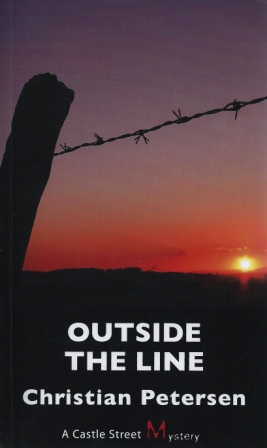
outside the line christian petersen 001Outside the Line by Christian Petersen ~ 2009. This edition: Dundurn Press, 2009. Paperback. ISBN: 978-1-55002-859-1. 213 pages.

My rating: 6/10. I must admit I gave this one an extra dash of “like” because it is by a hometown author. If it was by someone from somewhere else, it would likely only rate a 5. Maybe not even that high…

Christian Petersen has also had published two volumes of short stories. I read, greatly enjoyed, and subsequently reviewed the first collection, Let the Day Perish, so was eager to read Petersen’s first full-length novel.

*****

Middle-aged Peter Ellis is an auxiliary probation officer attached to a busy office in a small, unnamed city in the interior of British Columbia. (And though never named, it is very obviously Williams Lake, with a few creative liberties taken here and there; not quite sure why Petersen didn’t just go ahead and “locate” his place; the caginess is perhaps a self-protective measure by an author who lives and works in his own – though obviously slightly fictionalized – setting.)

As a former student of literature and lower-case communist who once attended rallies and freely signed all manner of petitions, (Peter) had never had any interest or intention of getting involved in the Justice System. When he first began working as a probation officer, a few of his friends questioned the move, and thereby his values. With these keen defenders of human rights he took an almost apologetic tone, claimed the job was a trial run, just a means of survival, certainly temporary. He chews gum at a range of paces, aggressively at the moment, while he swivels back and forth in his chair, prioritizing the work at hand. What he didn’t admit to anyone, even to himself for a long time, was that this job hooked him immediately. Every day it places him at the crisis point in someone’s life, tangent to a stupid mistake, a rage, an arrest.

Peter shies from judgement, despite or maybe partly to spite his Baptist upbringing. He suffers with imagination like vertigo lately, glimpsing life’s infinite heartbreaking scenarios. He wonders whether it is some errant part in himself, some piece askew, that enables his rapport with the probation clients, the offenders.

Then a client walks into Peter’s life whom he can find no common ground with, no sympathy or rapport.

Twenty-four-year-old Todd Nolin is, despite his relative youth, already washed up, and dealing with it badly. As a teenage hockey star and National Hockey League draft pick rookie player, Todd’s potentially brilliant career has gone sideways on him; he’s been quietly let go from the team with no real reason given, and he’s gone from being totally focussed on hockey and rolling in cash to working in the sports store in his old home town, where he’s come to lick his wounds after his ego-crushing letdown.

While Todd was flying high, he bought a lavish (well, lavish by small-town B.C. standards) house in the upper scale neighbourhood he grew up in, hosted wild parties, and took up with a gorgeous local girl, Marina Faro. Now, two years after the “big time”, all that remains of Todd’s fleeting time as an elite athlete is a hometown hero reputation, an appetite for alcohol and cocaine, a condo, and the lovely Marina. And he’s just screwed up the last two. The reason Todd is in Peter Ellis’ office is because of a recent enraged physical and sexual assault of Marina; one of the terms of Todd’s probation is a restraining order barring him from both his home and girlfriend.

Todd’s not taking it well at all. He takes an immediate dislike to his probation officer, and the feeling is more than mutual, especially once Peter meets Marina and feels stirrings of multiple emotions; a paternalistic protective instinct combined with admiration for her physical beauty, plus the unmistakable stirrings of sexual attraction.

Against his better judgement, Peter lets himself go with his feelings. You see, Peter’s own personal life is a bit of a mess, what with his beloved wife of eight years having walked out on him six months or so ago. She’s left Peter for another woman, and is now living in California, only connecting with Peter to inquire why their house, purchased several years ago with the idea of starting a family, hasn’t sold yet.

Facing personal bankruptcy both emotional and financial, Peter has been letting himself go in more ways than one, and when he breaks that ironclad taboo not to get personally involved with a client, he goes down hard. And Todd is on to him…

The rest of the story falls into predictable patterns, and the dramatic ending is par for the course with this type of novel; nothing out of the ordinary.

This is actually a very ordinary story, an ordinary drama. It’s a step back in some ways from Petersen’s edgy short stories, much more cliché-ridden and safer and tamer, despite attempts to keep it moving by tossing in references to the cowboy culture of the area, and a continuous scornful sub-theme of the bad attitudes and deep stupidity of the local “rednecks”.

That last term was what I found most troubling about this novel, because it shows up way too often. C’mon, Christian, is it you or your character Peter talking here? A few too many cheap digs at the less intellectual inhabitants of our “fictional” town, in my opinion.

That, and the totally stereotypical situation with the gorgeous Marina and Peter’s “urges” being too strong for him to control. No matter if she made reciprocal moves of her own, what was the man thinking?!?

Oh, right. Plot device.

*****

Outside the Line is billed as a mystery novel, but it isn’t any such thing. It’s more of a dramatic-suspense, noir-lite type of story. It also reads very much a “first novel”, a bit rough around the edges here and there, especially in the final dramatic scenes, as if the author was not quite sure how to handle his characters during the physical action. He does seem more at home with the cerebral stuff.

I think the word I’m looking for here is “promising”. What is good in Petersen’s writing is very good indeed, as his well-tailored short stories prove. This novel moves in a different direction, and Petersen occasionally falters along the way. I think I made allowances for the weaknesses in the narrative and especially the plot because I did so want to like this book, and I was curious as to what the author would make of a setting familiar to me from my own experience.

Petersen’s Peter Ellis kept reminding my vaguely of Kate Atkinson’s Jackson Brodie, in that even though he pulled off the most desperately stupid moves, I still liked him at the end. There’s some good writing going on here, and the characterization of Ellis was one of the better aspects of Outside the Line. (The plot, however, was the weakest bit.)

And as for that whole “first novel is autobiography” thing, it seems alive and well in this case. Christian Petersen is intimately familiar with the B.C. interior’s Cariboo-Chilcotin region, as he grew up in Quesnel, and currently lives in Williams Lake, where he works as a probation officer. Well, “write what you know” is good advice, and in this case it works out fairly decently. This novel was just good enough that I would readily read a second, if it ever makes it to the bookstore shelf.

Kudos to Mr. Petersen for his persistence in honing his writerly craft and branching out genre-wise. Here’s hoping that that more than abundant promise is refined even further in future books.

Note: I don’t personally know Christian Petersen, despite being the same age as he is and sharing the same communities. His author photos look darned familiar though; I’m sure we’ve crossed paths in our daily rounds. Williams Lake is really just a very small town at heart, despite its bold claim to cityhood. I’m looking forward to one day meeting the author in person, perhaps at his next novel launch, if and when that occurs. Despite this rather damning review, I have a genuine liking and admiration for his writing style.
Read Full Post »

Surfacing briefly from the May supreme busy-ness which only escalate in the coming weeks – I’m in the plant nursery business –  to talk a bit about a book. Much as I’d like to maunder on in-depth about everything I’ve been reading recently, there are those pesky time constraints…

A week ago it was below zero (Celsius) and snowing; today, in our region’s typical spring weather extremes fashion, it is forecast to hit the mid-plus-20s. The sun is coming across the valley (we’re nestled at the foot of the east side, tall hills behind us) so until it hits us directly I’m off-duty, as it were, from going out and tinkering with greenhouse ventilation systems. (Well, fans, windows, doors and roll-up hoop house side panels – not very fancy – but “ventilation systems” sounds much more professional, doesn’t it?) 😉

The second Sunday morning cup of tea is at hand – I’ve already consumed the first propped up in bed finishing a re-read of Tom’s Midnight Garden –  and I’ve a short but sweet guilt-free chunk of non-work-related computer time before I need to be really up and moving again. Here we go.

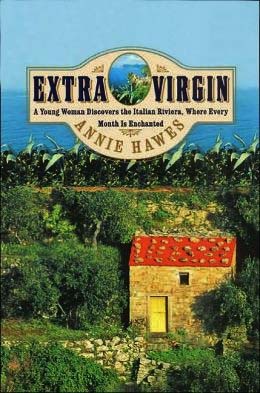
extra virgin annie hawesExtra Virgin: A Young Woman Discovers the Italian Riviera, Where Every Month Is Enchanted by Annie Hawes – 2001. This edition: Harper Collins, 2001. Hardcover, first American edition. ISBN: 0-06-019850-8. 337 pages.

My rating: 9/10.

I almost didn’t pick this one up, but was intrigued by the (presumably) Elizabeth von Arnim reference in the subtitle. What I found inside this densely written creative autobiography was a better reward than I deserved for my initial hesitation. It’s taken me a good week of hard-won reading breaks to get through it all, but I was never tempted to set it aside in exchange for something shorter and easier. This one was a quiet pleasure from Prologue to reluctantly-turned last page.

Back in the early 1980s, a young Englishwoman, recently turned down as a “poor risk” in her attempt to receive bank financing to buy her own home in England, is at loose ends and feeling rather sour about life in general. Her sister convinces her to come along on a working trip to Italy, grafting roses for a small commercial operation in the Ligurian hills, in the region of the “Italian Riviera”.

Annie is a rose-culture neophyte, but her obviously experienced sister coaches her through the first thorny weeks, after which, settled well into their temporary occupation, the two find themselves occasionally with time to explore the surrounding countryside. On one of their off-duty hill walks they come across a derelict stone house in a neglected olive grove, and when the local real estate entrepreneur scents their interest, they find themselves possessed of a rural Italian property for the unbelievably cheap sum of 2000 pounds. The facilities are primitive to the extreme – water is bucketed up from a shallow dug well, and an outdoor shower and “earth closet” are needed for sanitary purposes, but the two settle into their new life with optimistic tenacity.

This is a rather different tale from the usual “we bought a place in a foreign paradise and hired quaint locals to fix it up” lifestyle porn. Written several decades after the purchase, the tone is not at all cutesy and patronizing. The sisters go to and from England and Italy regularly for many years – England for the “real” jobs which earn the funds to return to Italy for the love of the place, and, increasingly, the people.

I’ll tease you by revealing that Annie is not all that forthcoming about personal details, but more than makes up for it in her portraits of others, and in her much too brief comments regarding her own family. As well as the sister of the Ligurian enterprise there are three brothers, several of whom chip in to provide much-needed labour and even fire-fighting assistance during the progressive slow Italian house and olive grove renovations which stretch over the years.

Other reviewers – I briefly scanned the book’s page on Goodreads – had issue with some of the stylistic devices the author used, but I found them to be a non-issue, personally. Extra Virgin is written from the “we” viewpoint throughout, only slipping into “I” near the end. Much ironic use of capitalized terms – the Sulky Bar, the Evil Sister, the Poor Stranger, and so on. Again, for me, not a problem. The Author stayed most consistently true to her Chosen Style.

I did just a bit of research on Hawes after finishing Extra Virgin, and was more than intrigued by what I found – Annie’s back story includes a teenage marriage and a residence in Portugal, a child of that (quickly dissolved) marriage, much travelling and a “real” career as a film editor. Not much of this comes out in the Italian tale, but apparently her succeeding books, Ripe for the Picking and A Journey to the South, are more personally revealing. There’s also a Moroccan memoir, A Handful of Honey.

Annie’s second career as a memoirist is a definite success, at least enough so that, according to an author interview which appeared on the Harper Collins website, she now has indoor plumbing in Liguria.

I enjoyed the author’s voice in Extra Virgin enough that I will be seeking out her other books as soon as I am able to. She writes with a wry, dry humour and a very individual style, just short of “travel writer” parody. In a very good way. Loved it.

Oh – one more point in favour. Annie Hawes can certainly write about food! Amazing descriptions of the wild-crafted, gardening and culinary abundance of Liguria. I absent-mindedly found myself lining out yet another flat of basil seedlings and potting up extra eggplant babies while musing on my ongoing reading of Extra Virgin while out in my own very earth(l)y paradise this past week. This book made me hungry. Again, in a very good way.

Read Full Post »

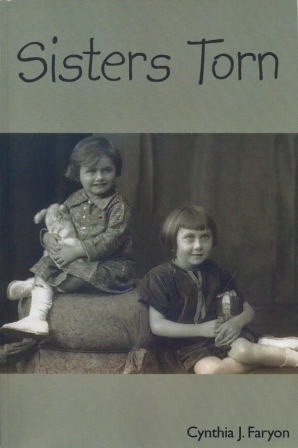
sisters torn cynthia faryon 001Sisters Torn by Cynthia J. Faryon ~ 2001. This edition: Caitlin Press, 2001. Softcover. ISBN: 0-920576-92-3. 297 pages.

My rating: 4/10.

A tragic family story, and much as I respected the author’s desire to record it, it didn’t quite come to life as it might have. Perhaps the attempts at dialect and dialogue didn’t really work out?

This has a small press, “self published” feel to it. It definitely could have used a stronger editorial presence, to clean up grammar, punctuation and proof reading errors, all of which were much too frequent, and got in the way of my fully appreciating the narrative.

*****

From the back cover:

“I promise I will always look afta’ my sista’ no matter what, I will never let go of her hand.”

Little did young Simone realize, as she made this promise to her aunt, that she and young Catherine would spend the next 65 years trying to reconnect.

Abandoned by their parents and separated by the British adoption system, these two young girls would face impersonal orphanages, brutal boarding-out homes, a world war, and separation by an ocean and two continents before they finally met again – in Victoria, B.C.

This is their story as told to the daughter of one of them. It is a story of pain and courage – and hope.

Born to a mismatched couple in the 1920s – their mother “married beneath her” – young Simone and Catherine were placed with relatives when their baby brother tragically died in a gruesome accident (vividly – perhaps too vividly! – recreated by the author) and the marriage dissolved. After a few years, the relatives were unable to financially manage the care of the sisters, so they were placed in a series of children’s homes, always with the proviso that they remain together.

Sadly, this request was not respected, and Catherine and Simone were separated suddenly and without explanation. Though they both attempted to find each other through the years to follow, they were completely unsuccessful, and all attempts at gaining information from the British children’s care ministry were met with stark refusals and, eventually, threats of prosecution.

A damning condemnation of the conditions and attitudes of the time which made such an abusive (and just plain wrong) situation possible.

The story does have a happy, late-in-the-day reunification. Both sisters were also fortunate in finding caring spouses and creating satisfying lives for themselves, but the thread of sadness at the loss of their “true family” wound through their lives, and influenced the lives of their children.

This is a work of creative non-fiction which works reasonably well; it is the author’s first published work. Cynthia Faryon originally wrote it as a family document, but at the request of the her mother, the “Simone” of the story, the author sought and found a publisher for it, Prince George, B.C.’s Caitlin Press.

Sadly, the publisher did not edit and polish the manuscript to the extent which it deserved; I feel that a much stronger editorial hand would have resulted in a more smooth and successful presentation of a fascinating and poignant family saga.

I will be passing this book along via a BookCrossing.com release sometime in the near future.

Read Full Post »

one native life richard wagameseOne Native Life by Richard Wagamese ~ 2008. This edition: Douglas & McIntyre, 2008. Hardcover. ISBN: 978-1-55365-364-6. 257 pages.

My rating: 6.5/10.

*****

After reading Wagamese’s Indian Horse recently, one of the prominent Canada Reads 2013 finalists, I was curious enough about the author to search out what I could find of his other works. The library proved generously supplied, and I chose two biographies, One Native Life, and For Joshua, and have mentally checkmarked two fictions, Ragged Company and Dream Wheels, for a future time.

One Native Life is a collection of short, three to four page reminiscences, anecdotes and mini essays on First Nations identity. Richard Wagamese was removed from his home in childhood due to physical abuse by adults in his birth family, and lived with non-Native families as a foster child and then as an adopted child until he reached his mid teens, when he left home to live independently, with varied success.

Often the only First Nations person in his school and social circle, Wagamese, especially as he matured, frequently wondered about his “differences”, and pondered his inability to feel fully whole with his First Nations heritage treated either as a curiousity or a non-issue by his adoptive family and his friends.

Serious substance abuse, alternating with periods of sobriety, and career and social success, eventually took its toll, laying Wagamese so low that a complete rebuild of his life was essential to his survival. Richard Wagamese looks to have survived his crash to rock bottom, and has more than successfully rebuilt his life into something new and good, though it is obvious that he views this very much as an ongoing process, and not a “done deal” by any means.

One Native Life addresses the healing process of Wagamese coming to terms with his individual circumstance. He seldom comes across as angry or resentful; he is very ready to excuse the actions and attitudes of those in his life by looking at the reasoning – or, often, lack of thought – behind each situation. This is both a memoir and an attempt to address current social conflicts between Native and non-Native ways of thinking and being. From someone who has walked all of these paths, and who has experienced life as a member of both social groups, the thoughts laid out here are definitely deserving of respect and consideration.

Very nicely written, too, as I expected after the more-than-decent quality of Indian Horse. My one nagging problem with this book, the one that kept me from buying into it one hundred per cent, is that it is perhaps a bit too conciliatory and understanding. Wagamese is so darned nice. But he excuses this himself by stating throughout that he wants to see bridges built, not more barricades erected, hence the tone. But it might be easy to dismiss this one because of its gentleness, which is, paradoxically, one of its main strengths.

And I’m also reading another of Wagamese’s memoirs, For Joshua, written five years earlier than One Native Life, and addressed as an open letter to his young son, whom he became estranged from due to his alcoholism, which is plenty full of tragedy and anger and strong emotion. One Native Life, coming as it does later in the sequence, shows evidence of a further healing and a few more years of thinking things through.

An interesting memoir, from an interesting man.

For a much more specific review, go here:   The British Columbian Quarterly – One Native Life

Read Full Post »

safe haven larry gaudeSafe Haven: The Possibility of Sanctuary in an Unsafe World by Larry Gaudet ~ 2007. This edition: Random House, 2007. Hardcover. ISBN: 978-0-679-31383-0. 274 pages.

My rating: 5.5/10.

*****

Here’s the promotional material from the publisher. Heads up for the predictably effusive tone.

“Sanctuary” is a beautiful word: philosophically rich, culturally intriguing and evocative of so much we cherish — protection, safety, contemplation, solitude. But lurking at the edges of this bright concept are some very dark associations: fear, paranoia, the slamming of gates to exclude the threat of other-ness. Whatever the word means to each of us, and whatever our ancestral legacies, the yearning for sanctuary is a malady we all share to varying degrees, a quest that is both our birthright and our affliction.

These are the assertions of award-winning author Larry Gaudet in Safe Haven, an unorthodox and highly engaging work of imaginative non-fiction. Sure to resonate with anyone who has dreamt of escaping from the pressures of the workaday world — that is, all of us — this book is a highly personal, funny and unflinchingly honest investigation of the power and allure of the idea of sanctuary.

Safe Haven begins and ends in the soft fog of coastal Nova Scotia, taking side trips into the ruined shrines of ancient Greece (with a fictional Bayou-born international spy serving as tour guide), journeying by rail through the frozen vistas and forlorn social realities of Canada’s north and dipping into Gaudet’s own Acadian heritage of displacement.

Booking a year for this project, Gaudet moved with his wife, Alison, and their two small boys to a newly constructed barn by the sea in the fictionally named community of Foggy Cove. His intent: to chart the meaning of sanctuary through the ages, using his family’s solitude as an idyllic jumping-off point. But the project becomes far more complicated than he’d envisioned, and far less idyllic. Envying his children who can oversee uncomplicated imaginary civilizations in a sandbox, Gaudet cannot shake the awareness that he is complicit in the very iniquities from which he seeks to shelter his family, from the environmental toll of their septic tank on this ecologically sensitive land, to the wince of a lobster he is about to boil for dinner. He must also contend with the guilt he feels for having hijacked his wife and children, potentially for naught. As Alison’s desire to return to the comforts and stimuli of urban life grows with every month spent in isolation, Gaudet knows their idyllic days in Foggy Cove are numbered.

In his search for the diverse meanings of sanctuary, Gaudet illuminates the dysfunctions and hidden costs of the way we live — and challenges us to find ways to bring down the walls that keep so many of us estranged from our own experiences. Safe Haven is an entertaining and illuminating romp through the fog-shrouded territory of sanctuary through ages and mythologies, guided by an engaging author who is not afraid to shine the light directly on his own fallible and highly likeable self.

My take:

This book is quite beautifully written, but my initial desire to totally enter into and embrace the author’s ideas was increasingly difficult to maintain as I learned more and more of the author’s personal life, and, in particular, his relationship with his wife, Alison. This seems deeply troubled, and Gaudet’s continual apologies to Alison for dragging her way out to the wilds of Nova Scotia, despite her yearnings for her “real life” of urban sophistication in the city, felt very passive-aggressive in a “this marriage may have issues” sort of way. Or perhaps a cigar is just a cigar, and it was all stream-of-consciousness writing with no below-the-surface vibe breaking through.

Some fascinating stuff in here, all about the author’s most complicated life and how he got to where he is today, but the continual first-person referencing ruined it for me. If one counted up all of the “me”s and the “I”s in this one, they’d outnumber every other word ten to one. Or at least that is the impression I am left with.

So – basically a vanity project, with some gorgeous passages worth anthologizing, or at least quoting in a blog, except that I didn’t mark those pages and I am very ready to part ways with this book and return it to the library shelves. Here’s the thing: it is stamped “Received 2007” by the library, and it appears to have been unread until my checking out of it in 2013. Absolutely crisp and clean and tight. That’s five years, and no one has apparently touched it, except for me on one of my random-selection forays into the non-fiction aisles.

What does that mean, I wonder? It’s not a bad book; some parts are truly excellent. The man can definitely write. Maybe the pervasive (though most probably non-intentional) self-promoting tone has prevented this one from being truly likeable and accessible to the vast majority of those of us unable, through the results of our own career and lifestyle choices, or by those unpreventable twists of fate, to sit out on a sabbatical year in our second home and ponder on the deeper universal concepts implicit in our lifestyles.

Am I glad I invested the time in reading this? Sure. It was thought-provoking and life affirming and occasionally mildly amusing. A lot of Gaudet’s thoughts resonated deeply with me; I felt much the same when I had small children under my care, as he did when writing this book, all broody and protective and suspicious of the world’s vast potential for hurting those I love. And Gaudet’s cutting comments on the prevalence of “sanctuary porn” in our society were absolutely spot-on. I liked him the very best when he probed delicately and accurately on what we choose to divert ourselves with, and how we feed, and are fed, on the stuff of fantastical escapist dreams.

Would I read this book again? Not very darned likely. Unless, of course, it would be to mark out those few memorable passages for future reference. Long ago in another time of my life I kept a series of journals, in which I frequently noted down personally-appealing bits of other people’s writing; I no longer do that, but I thought of it while reading Safe Haven.

Read Full Post »

lake of the prairies warren cariouLake of the Prairies: A Story of Belonging by Warren Cariou ~ 2002. This edition: Doubleday Canada, 2002. Hardcover. ISBN: 0-385-25960-3. 318 pages.

My rating: 9/10.

A quite wonderful book, serendipitously unexpected. It’s only (very small) flaw was the very occasional not-quite-so-engaging historical passage, as Cariou delves into some of the histories of his ancestors. A little flat in those spots, a bit too much like sober research. Cariou quickly returned to his engaging anecdotal style. Very close to the perfect 10 of my ideal reading experience.

*****

And it was a real surprise, this one.

It was randomly chosen from the non-fiction stacks in close vicinity to the L.M. Montgomery biographies I was browsing, and I almost returned it without reading, due to the present supremely busy busy-ness of my life. However, quite fortuitously, I had a few minutes to fill while on hold on the phone, and this was the first thing I could reach, so I opened it up for what I assumed would be a mere few moments of casual browsing. Once started, I could not stop. It was much too good to put down unread. It’s taken several days to get through it, reading a chapter here and there, over lunch and tea breaks, but I was never tempted to abandon it, and found it very easy to jump back into each time.

Where do I come from?
 
The potato patch.
God in Heaven.
A falling star.
The stork.
A moonlit night.
A hole in the legs.
You were named for the doctor who delivered you.
 
Where, really?
 
From here. You’re from right here. The town of Meadow Lake, the province of Saskatchewan, the country of Canada, the planet of Earth. Just down the street at the Meadow Lake Union Hospital you were born, and we lived in the Carter Apartments until you were one, and then we moved to this house, and you grew like quackgrass in the backyard.
And that’s the story of you.

A beautifully written personal memoir, and a loving, often very funny, sometimes almost unbearably poignant, but never soppy ode to a town, region, and most importantly, a father and a family. As I was reading I found myself nodding in complete recognition of scenarios so many times. Flipping to the front of the book and examining the author’s information, I was not at all surprised to see that the author was born in 1966, only a year or so later than me; some of his memories of a childhood in rural Saskatchewan are stunningly similar to mine in rural B.C.

I too grew up along the rural fringes of a working class town. Cariou’s Meadow Lake and my own Williams Lake could almost be twin communities, though separated by an immense stretch of Canada. Northern towns, in relation to the cities hugging the 49th parallel, though not, of course, truly northern in a geographic sense, both being situated mid-province. North of us both the true bush country starts.

My town too had its fabulous (in every sense) rodeo, growing from a venue for the local cowboys to show off and celebrate their machismo and skills to another points-and-cash-prizes stop on the long summer tours of the professional rodeo circuit. Timber and ranching built and maintained both of our towns. His town had the Cold Lake military reserve, mine had Riske Creek. His town and mine were – are! –  a mix of “white people” – various European and pan-Asian bloodlines – and “Indians”. Meadow Lake is Cree territory; Williams Lake straddles the Carrier-Chilcotin divide.

The Indian kids chased the white kids in my schoolyard too, chock full of resentment for their demeaned social status of members of the oppressed race, the children of the reserves. Now, forty years later, the whites in both of our towns take open pride in their occasional Indian ancestors, basking in the trendy new cool status of First Nationhood, while in reality not much at all has changed, and the cultural divide betwen the races is as brutally deep as it ever was, with the occasional personal exceptions of individual friendships.

Perhaps this is why I identified so strongly with Cariou’s memoir; the parallels are strong in that and in other ways as well. Even when our general experiences diverged, as they did widely here and there, I remained fully engaged. This writer has a compelling voice.

Discovering as a young man that he was of Metís heritage, Cariou writes of that, and of how it changed all of his perceptions as to who he really was, where he really came from, and it is these passages which seem to have caught the attention of reviewers, making this out to be a book about First Nations identity. It is, and it isn’t.

There is no soapbox here, no grandstand. It remains a deeply personal story, and it feels genuine from start to finish. Those of us “whites” who grew up in similar settings through the ’60s, ’70s, and ’80s know exceedingly well what he is talking about, about our conflicted emotional relationships with the natives whose land we – the ancestral we as the descendants of immigrants and pioneers  – have taken over as our own. The reserve kids huddled at the back of the bus and the classroom, whispering together in indecipherable dialects, peering at the rest of us with well-deserved gleams of pure hatred, and we recognized that,  both the fact of the hatred and the reasoning behind it, and were terrified. Here was something bigger than us as individuals, and older, and more elemental. We’re still pretty scared, us grown-up white people, though we frequently hide it behind carefully political correct words – notice how I am now well-trained to put “Indian” in quotations, even though the “natives” I personally know call themselves “Indians” with no ironic inflection –  and a superficial acceptance and celebration of “First Nations” and “Aboriginal Pride”. Cariou captures that dichotomy brilliantly well.

This is such a small part of the narrative, though it does run through the entire book, as it rightly should. The majority of this memoir is personal reminiscences, gloriously focussed on Cariou’s father, and on the large extended family which sheltered and comforted and challenged and formed its younger generations, sending them out into the world to their various adult destinies with an ever-changing but ultimately supporting familial story behind them. I loved that atmosphere in this book. Cariou lovingly celebrates his family while fully recognizing their flaws, not always an easy task for a writer to pull off. He succeeds.

Here is a short excerpt from an early chapter that made me laugh out loud in joyful recognition. Holey gumboots and bread bags – oh yes, indeed! I have waded joyfully in those as well. “Flamingoed” – brilliant!

We stomped in puddles, waded across ditches, created little rivers between puddles, and sometimes made dams on the trenches that our parents had dug for drainage. We spent most of our time in rubber boots, which were largely ineffectual because either they were full of holes or we waded too deep in the puddles. Sometimes for whole summers we would have to put plastic bread bags on our feet before pulling on our boots. McGavin’s Bread bags were particularly popular for this. But they were prone to leaking, and worst of all, they made your feet slide around inside your boots, which were therefore more likely to slip off at the worst possible moment. The lost boot was a familiar sight: a kid standing one-legged, his bread-bagged foot held out tentatively, balancing himself there and staring back at he empty boot embedded in the muck. It was so common and so comical that we came up with a name for the predicament.

“Andrew flamingoed yesterday in Carlson’s ditch, you shoulda see him there crying for his boot. Lost his sock and his bread back too, and nobody;d get them for him so he had to step in, bare foot and all.”

And here are excerpts from two reviews. This first is by Allan Safarik, from the Books in Canada website.

Warren Cariou’s Lake of the Prairies is a beautifully written memoir about time and place and the nostalgia of a childhood growing up on the edge of the northern prairie in the parkland, a relatively uncelebrated area of Saskatchewan that is mostly dense forests, muskeg, rocky outcrops, marshes and lakes. Cariou’s maternal grandparents were immigrants who came to the harsh country near Meadow Lake and carved out pasture from the raw treed land. His family sank their roots into the place and Cariou grew up with his family legacy, particularly as remembered and influenced by his father, still relatively intact. Cariou is a skillful writer who weaves his father’s anecdotal adventures along with his own to recreate a marvelous pastiche …This is a book about nature as much as about anything. [Cariou] has a powerful lyrical way of describing the atmosphere and the details. He is an observer who is wonderfully educated about nature and as he grows up, he tells about his friendships and his adventures in an increasingly wider realm.

Cariou has given us a personal story about his family, skillfully injecting a second story about the way people live in his community and how they interact with one another. This incredibly crafted Canadian book might be about South Africa or many other countries. But no, this is Canada. Bustling Meadow Lake, Saskatchewan, a small town with big shoulders. Warren Cariou, in his coming-of-age memoir, writes like a naturalist/historian on a mission from God. The result is a distinctive style, a well-paced tale that leaves nothing out. Lake of the Prairie, a superb memoir about place, is also a powerful document about the human condition.

And from a review by Victor J. Raymond, University of Toronto Quarterly, 2004:

Place, family, history, belonging, home. Drawing on such ordinary words, Warren Cariou begins his memoir of growing up in northern Saskatchewan. The stories he recounts seem familiar: fishing, digging for arrowheads, moving to an old farm, learning about one’s family. But there are also deeper truths in these stories, rooted in hidden secrets, lost for generations.

One such story – Cariou’s discovery of his own Metís heritage – is central to the constellation of questions the author raises about identity and knowledge. But there is no thunderclap, no single moment of transition. Cariou’s heritage slowly emerges from his recounting of the stories others tell – his father, his uncles, his aunt, and others in his family. There is little remarkable about his initial self-description; at an early age, he is supposedly from ‘Norwayfrancenglandgermany.’… Interwoven with larger considerations of race and place is the author’s own story of growing up and leaving home. Beginning with his relationship with his parents and uncles, Cariou gradually reveals his own life growing up in Meadow Lake as a youth and then going to university and becoming a writer as an adult. Common life events … help reveal hidden complications of the seemingly easiest questions. Who am I? Where am I from?

Throughout Lake of the Prairies it is this sense of gradual revelation that shapes and reveals the landscape of identity, not only of what you know, but also of what you don’t know about yourself. In that, Lake of the Prairies is itself a story being told about our own identities and how we relate to one another – and we would be wise to listen carefully.

Read Full Post »

a reading diary alberto manguelA Reading Diary: A Year of Favourite Books by Alberto Manguel ~ 2004. This edition: Knopf, 2004. Hardcover. ISBN: 0-676-97590-9. 253 pages.

My rating: After a certain amount of consideration, 7.5/10.

Now this is a book about books which I would be happy to have on the keeper shelf. It caught my eye during a library browse, and, after standing in the aisle and reading most of the entry regarding Kipling’s Kim, I decided it was worth an even deeper investigation. I was not disappointed.

Alberto Manguel is an Argentine-born writer, anthologist, editor, and translator. He spent his early years in Israel, where his father served as the Argentine ambassador, then back to Argentina, and, once his schooling was completed, working and living in England, France and Tahiti. He moved to Canada in 1982, eventually acquiring Canadian citizenship, though he continues to travel widely, and also maintains a home in rural France.

A Reading Diary is a vanity project of sorts, but a worthwhile one. It consists of the jottings kept over the course of a year as Manguel rereads some of his most treasured books.

It occurred to me that, rereading a book a month, I might complete, in a year, something between a personal diary and a commonplace book: a volume of notes, reflections, impressions of travel, sketches of friends, of events public and private, all elicited by my reading. I made a list of what the chosen books would be. It seemed important, for the sake of balance, that there should be a little of everything. (Since I’m nothing if not an eclectic reader, this wasn’t too difficult to accomplish.)

What has resulted is a book rich with references both everyday and arcane, from the note that the cat is nestled in a towel-lined box looking out at the rain, to the mention of the death of a friend and a reflection on the transience of all things dear to us, to the sombre discussion of the tragedy of the World Trade Centre destruction only a few years earlier, and the subsequent war in Iraq, to warm memories of golden childhood hours spent reading some of the same books that feature in this Diary.

The books chosen are:

  • June ~ The Invention of Morel by Adolfo Bioy Casares
  • July ~ The Island of Dr. Moreau by H.G. Wells
  • August ~ Kim by Rudyard Kipling
  • September ~ Memoirs from Beyond the Grave by François-René de Chateaubriand
  • October ~ The Sign of Four by Sir Arthur Conan Doyle
  • November ~ Elective Affinities by Johann Wolfgang von Goethe
  • December ~ The Wind in the Willows by Kenneth Grahame
  • January ~ Don Quixote by Miguel de Cervantes
  • February ~ The Tartar Steppe by Dino Buzzati
  • March ~ The Pillow-Book by Sei Shonagon
  • April ~ Surfacing by Margaret Atwood
  • May ~ The Posthumous Memoirs of Brás Cubas by Joaquim Maria Machado de Assis

Having only read a few of the books on the list – The Island of Dr. Moreau, Kim, The Sign of Four, The Wind in the Willows, and Don Quixote –  I wondered if I would be completely lost trying to read the chapters concerning the ones new to me, several of which I had never heard of before. As it turned out, this was not at all the case. A Reading Diary is not about the books as much as it is about the thoughts and connections they trigger. Manguel has such a broad experience and so much to say that everything he comes up with is fascinating even though one strains to fit it into the context of a book one hasn’t read.

Open this book up anywhere at random and perfectly crafted snippets of prose rise from the page. Here are some completely random samples.

Perhaps, in order for a book to attract us, it must establish between our experience and that of the fiction – between the two imaginations, ours and that on the page – a link of coincidences.

A brilliant touch: the woman who stains Kim’s skin to darken his colour “for protection” in the great Game (thereby changing his outer identity) is blind.

Contentment requires a certain lack of curiousity.

I feel uncomfortable having other people’s books at home. I want either to steal them or to return them immediately. There is something of the visitor who outstays his welcome in borrowed books. Reading them and knowing that they don’t belong to me gives me the feeling of something unfinished, half-enjoyed. This is also true of library books.

Brilliant sunshine, crisp cold. My neighbour comes over with a gift of fresh eggs and stays for twenty minutes discussing the conflict in Iraq. How strange for an Iraqi farmer half a world away, if he were to know that his fate is the subject of conversation here, in a small, almost invisible French village.

A few days after the tragedy, I heard of someone who had been trapped that morning inside a bookstore close to the World Trade Center. Since there was nothing to do but wait for the dust to settle, he kept on browsing through the books, in the midst of the sirens and the screams. Chateaubriand notes that, during the chaos of the French Revolution, a Breton poet just arrived in Paris asked to be taken on a tour of Versailles. “There are people,” Chateaubriand comments, “who, while empires collapse, visit fountains and gardens.”

My only disappointment, and the reason the book lost a few points with me, is the degree to which Alberto Manguel magnificently name-drops and occasionally pontificates on how dismally uneducated the hoi polloi is compared to him and his intellectually elite cronies. As he makes little effort to pander to those of a less broad experience, I think he might also have left out the occasional thinly veiled sneering. The book will ultimately find its own audience, though its readers may not all be quite what Manguel expects. I must admit my own feelings were bruised by a comment (which I did not bookmark and now, quickly browsing, cannot find) regarding the ignorance of those who only read in English. That would certainly be me, and how many others?

This one complaint aside, A Reading Diary is a fascinating glimpse into the mind of a deeply intellectual book lover, and a prolific and eclectic writer and reader.

Read Full Post »

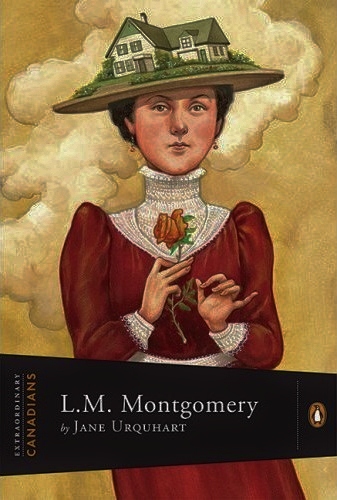
l m montgomery jane urquhartL.M. Montgomery by Jane Urquhart ~ 2009. This edition: Penguin Canada, 2009. Hardcover. ISBN: 978-0-670-06675-9. 161 pages.

My rating: 7.5/10.

A slender little biography which hits most of the high points of L.M. Montgomery’s life and career. Perhaps better as an overview or an introduction versus a definitive exploration of this Canadian literary figure.

A good addition to the many works about this iconic writer. Already familiar with the story of Montgomery’s life, I must say that the most interesting bits, to me, were where the author (Urquhart) writes about Montgomery’s influence on her own development as a writer.

Even if you have read other L.M. Montgomery biographies, Urquhart’s covers the same material in a very readable way, with a dash of creative flair.

*****

In the green master bedroom of a mock-Tudor house in the west end of the grey city of Toronto, a woman in late middle age lies dying, her pale arms almost as white as the sheet on which they are resting. It is April 24, 1942. Her failing body seems to her increasingly heavy, as if pulled by a great weight deeper and deeper into the flesh of the mattress. Outside, the air itself is weighted, saturated with the moisture of seasonal rain. Seeping into the room is the faintly discernible sound of the swollen river as it follows the path of the Humber Valley. The trees beyond the leaded windows have only just begun to show signs of spring.

In spite of what is about to happen, nothing in this room suggests struggle or discomfort: every cell of the woman’s body seems not so much in rebellion against life as dissolving into death, the way the rain outside her door is willingly dissolving into the earth…

The author almost lost me with her opening paragraphs. Urquhart’s biography of Lucy Maud Montgomery had received high praise when it was released several years ago as part of Penguin Canada’s 18-volume Extraordinary Canadians series, but this decidedly fictional opening shook me. Was this merely another “creative biography”? How on earth could Jane Urquhart have known any of these details, unless there somewhere exists a hyper-accurate account of Montgomery’s deathbed? There are no footnotes or references provided to suggest that this is the case.

The account of the expiration of Montgomery, and of her thoughts as she lies dying – the scene goes on for 9 pages – is purely speculative. Beautifully written, of course – it is Urquhart – but fiction.

Though the deathbed passages were pure fabrication, things improved considerably a bit further in. Though she never completely abandoned her occasional creative interpretations of Montgomery’s inner thoughts, those references became increasingly more plausible as Urquhart tells us of her reading of Montgomery’s diaries; we can more easily believe that the actual voice of Montgomery influenced Urquhart.

As I continued reading the biography, I appreciated the difficult task the author of it had taken on, to sort out the facts from the fictions of the life of this complicated, deeply troubled, rather tragically fated woman.

Urquhart cites Montgomery’s loss of her mother as a toddler, her cheerless upbringing by stoic grandparents, a dismal marriage to mentally disturbed husband, and beloved but disappointing children as reasons for her (Montgomery’s) continual efforts at reinvention of her own self through her personal writing. Montgomery’s diaries are known to have been continually edited and rewritten by the author as she progressed through her own life, which, though by no means devoid of joyful occurrences, close friends, and other good things, was so much less rosy than the fictional lives she created for her heroines.

Urquhart is a positively biassed – if occasionally “creative” – biographer in that she obviously admires her subject, and sympathizes with her, and seeks to understand what made her tick.

In spite of countless romantic references to moonlight and starlight in her fiction, and to rooms warmly lit by lamplight and by candlelight, it was shadow, not radiance, that most often claimed her once the sun had set. Her seeming addiction to detailing sunsets and twilights in her writing, if it sprang from anything at all beyond a poetic convention, may have come from a desire to hold on to the fading light. After the sunset came total, wide-awake darkness.

After my shaky initial start, I settled comfortably into reading the book, mentally sorting out the plums of fact from the lovely fictional bits and the author’s very interesting personal anecdotes. It was an enjoyable combination, but I would hesitate to rely on it as my only source of information on L.M. Montgomery’s life. It seems that Urquhart frequently assumes that the reader is already familiar with Montgomery’s body of work beyond the iconic Anne of Green Gables and its array of sequels; it assumes we are familiar with the era and the atmosphere in which the author lived and worked.

Keeping all of these things in mind, I would cheerfully recommend the book for those curious about L.M. Montgomery, and where she was “coming from” when she was crafting her overwhelmingly optimistic stories and novels. Montgomery’s truth, it turns out, is much darker and more compelling than her many fictions.

Read Full Post »

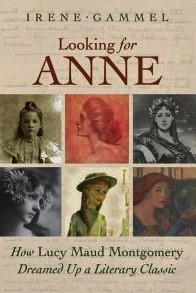
looking for anne irene gammelLooking for Anne: How Lucy Maud Montgomery Dreamed Up a Literary Classic by Irene Gammel ~ 2008. This edition: Key Porter, 2008. Hardcover. ISBN: 978-1-55263-985-6. 312 pages.

My rating: 4.5/10. I certainly wanted to like this book, and I picked it up with optimistic anticipation. Sadly I ended up feeling less than thrilled with my reading experience.

I did like bits and pieces – the factual bits and pieces – and I learned a few things about Lucy Maud Montgomery I didn’t know before, but the disjointed presentation and the frequent “It could have been like this” and “She must have felt like that” and the “I am certain that x was influenced by y, even though I have no proof” soon put me off.

While Irene Gammel is obviously a dedicated researcher and undoubtedly a well-informed Lucy Maud Montgomery scholar, I feel that her presentation of her theories in this book come across as unprofessional because of her continual admitted fabrications and assumptions.

Is it better if she admits it? Here’s a thought – why not stick to the facts? Or else drop the flowery, gushing, pseudo-Lucy Maud “voice”, which served merely to annoy rather than bewitch this particular reader.

*****

The questions Irene Gammel pose as the thesis statements for this book go something like this: What is the mystery behind the writing of Lucy Maud Montgomery’s magnum opus and incredibly successful book, Anne of Green Gables? Why did LMM not document the process of writing Anne much more thoroughly, and, while we’re on the topic, who actually inspired the red-haired heroine?

(Because of course it must have been a real person! There’s no way an author could just dream up a character out of her own head!)

Well, I must admit that such questions have never personally troubled me regarding Anne of Green Gables, a piece of entertaining fiction which I do indeed like a whole lot and which I re-read with deep pleasure every few years. I have always happily accepted that LMM just struck a lucky chord with this one, and that the character Anne was likely an amalgam of various personalities LMM knew in her daily life, with a good dash of artistic creativity rounding out the details.

Does it really matter if we don’t know the exact details of Anne’s origins? Well, it obviously bothered Irene Gammel enough so that she went ahead and assembled a vast array of evidence to support her own theories. Sometimes her enthusiasm carried her away. While the factual passages of this ambitious book are fascinating reading, they all too often degenerate into speculation. The author readily identifies her frequent forays into the imaginary, but they do detract from the value of the research.

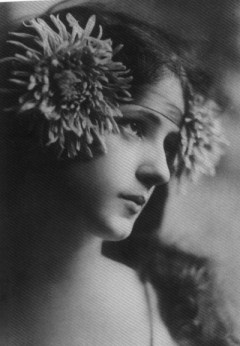
evelyn nesbitGammel theorizes that Anne’s key ancestor was young photographer’s model Evelyn Nesbit, identified many years after the publication of Anne of Green Gables as “the face of Anne” in one of LMM’s journals. I’m including the photo in question for your edification – see left.

Gammel then goes on to speculate about a vast number of other celebrities, acquaintances and fictional characters who might have added their characteristics to embryo Anne as her creator formed her and defined her in writing.

Fair enough, but these are all speculation, as the Gammel admits over and over. She throws out a daunting array of possibilities and mulls each one over in detail, before admitting that she just can’t quite be sure. I ended up feeling like the writing of this book, much like my reading of it, was a bit of an exercise in futility.

I think I’ll end with this. I could go on and share all sorts of annoying examples from the text – as well as some quite lovely and informative passages concerned LMM which are actually documented and provable by genuine references – but I’m full up to here with this one, so this is all my enthusiasm amounts to.

As usual, Goodreads – Looking for Anne has a wide selection of interesting reviews. I am quite relieved to find that I am not alone in my somewhat faint enthusiasm – others appear to feel the same, though there are some fans.

And if you are a serious LMM fan, by all means go ahead and tackle this ambitious personal project – it’s certainly interesting enough, if one can keep focussed – but keep the salt-cellar handy!

On the plus side: Some unusual LMM photographs are included, and the biographer does manage to give a wide-ranging picture of the time in which LMM was working on the book, and the artistic, literary and cultural mood of the era.

Oh – and a little heads-up – speculation as to LMM’s sexual proclivities abound in this one, though Gammel doesn’t come right out and say the “L-word” except to paradoxically refute the insinuation which she herself seems to make. Many salacious references to Sapphic friendships!

Now, to be quite honest, it doesn’t matter to me one whit what LMM’s sexual orientation was, but obviously it matters a whole lot to Gammel, as she teasingly parades this theme throughout the book. It got tiresome.

Read Full Post »

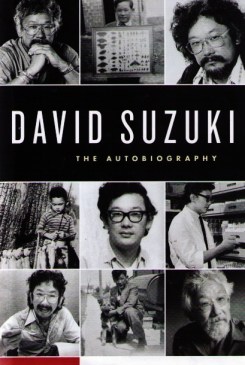
the autobiography david suzukiDavid Suzuki: The Autobiography by David Suzuki ~ 2006. This edition: Greystone Books, 2006. Hardcover. ISBN: 1-55365-156-1. 404 pages.

My rating: 5/10. Interesting to get some of Suzuki’s back story, but sadly my personal regard for this enviro-icon took a small step downward after reading it. It seems like the ego displayed here is as large as the legend.

*****

There’s a little comment someone made in my hearing years ago, which comes to mind right now: “If you want to know how good he is, just ask him”.

Packing a whole bundle of firewood on his shoulder (and understandably so) stemming from his family’s mistreatment during the World War II Japanese-Canadian internments and appropriation of property, David Suzuki grew up feeling like he had something to prove, and he’s succeeded to do just that, in spades. The depth of love/hate public feeling regarding this one soft-spoken and absolutely brilliant man goes to show how influential he has become.

The political right wing hates him, the lefties have made him their god. I tend to swing left, and I deeply admire David Suzuki for the focus on environmentalism he has forced into the public eye, but this autobiography shows all too clearly the god’s feet of clay.

This book looks back briefly to Suzuki’s childhood in B.C. Born in 1936, David Suzuki was six years old when he, his mother and sisters were interned in one of the camps for Japanese-Candians in the Slocan Valley. His father spent the war in a separate labour camp. After the war, the Suzukis moved to Ontario, where David completed his high school education before attending university in the U.S.A., attaining a PhD in Zoology in 1961.

Returning to Canada, Suzuki worked as a professor and researcher in genetics at the University of British Columbia. Branching out to participate in public education, he founded the popular CBC Radio science program Quirks and Quarks in 1974, and the iconic television series The Nature of Things in 1979. David Suzuki was a household name by the mid-70s, and his profile has grown exponentially through the years.

The Autobiography is honest enough in that Suzuki frankly discusses his two marriages and his shortcomings as a less than involved husband and father. His deep dedication to his work and his increasingly hectic public life often separated him from his family, and he freely admits that this is something he now regrets.

Most of this book is a listing of various events Suzuki has been involved in during the past twenty years; plenty of name-dropping of the celebrities he rubbed elbows with – Sting! Buffy St. Marie! John Denver! – and plenty of slightly patronizing commentary on how he brought this, that and the next thing to the public attention. True, so true, but the tone doesn’t feel very kind-spirited at times.

The writing is not the strong point here, either. The subject matter would be much more enthralling if it weren’t dealt with in such a flat “Then I said, then I did, then I said, then I did” manner. There are some personal anecdotes, mostly concerning his parents, and the death of his father, where he lets himself go, and these are the most poignant and memorable of this rather dull book.

I would say “read it” just to get a deeper understanding of this fascinating and frequently self-sacrificing man, but be prepared to come away feeling something like a member of the great unenlightened, living in the dark and waiting for The Master to flick the switch. You really want to know how good David Suzuki is? Read The Autobiography. He’ll tell you.

Read Full Post »

« Newer Posts - Older Posts »