Archive for the ‘1960s’ Category

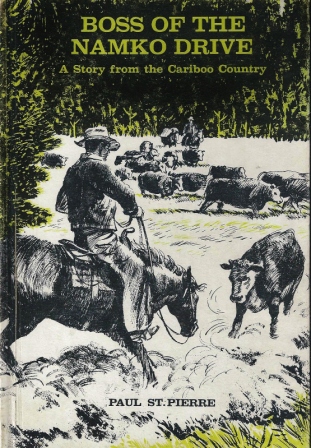
Boss of the Namko Drive by Paul St. Pierre ~ 1965. This edition: Ryerson Press, circa 1970. Hardcover. ISBN: 0-7700-3024-6. 117 pages.

My rating: 9.5/10. Paul St. Pierre perfectly captures the atmosphere and people of Interior British Columbia’s “Cariboo Country” Chilcotin Plateau. He’s dramatized things to make “good fiction”, but not so much as you would think. I live here. I know people – heck, I’m related to people (by marriage, that is – my husband’s family is venerable Cariboo-Chilcotin pioneer, 1860’s gold rush era) – who could have stepped into or out of this story.

My husband says he remembers reading this as an English class novel in the early 1970s, and I also remember a class set in one of my Williams Lake schoolrooms, though I never personally “studied” it. Reading this novel for the first time as an adult was a real treat, for I had read so much regional literature by then – stellar and otherwise –  about our personal stretch of country that I realized how good this fictional vignette really is; if not a sparkling gemstone, then at least a nicely polished, glowing golden agate from the banks of the Fraser River.

The story moves right along; a quick little read for teens and adults. Highly recommended.

*****

Author’s Note:

Young people for whom this story is written should not try to find Namko on the map of British Columbia. It is fictional. So are the characters in this book.

There is such a region, however. It is the westernmost extent of Canada’s cattle country, lying between the Fraser River and the Coast Mountains. The story is my attempt to tell the truth about life on these remote ranches. If it does not, the fault is mine.

15-year-old Delore Bernard starts out as the lowest hand on the 200-mile cattle drive led by his father Frenchie from the high Chilcotin to the stockyards in Williams Lake. Soon into the trip, before they’ve cleared the home ranch meadows, Frenchie breaks his leg as his horse bucks him off and falls on him. Frenchie, to everyone’s surprise, appoints Delore as “boss” in his place, a decision unquestioned by the rest of the cowboys, who for various personal reasons, are perhaps quite happy to have a young and green official leader.

Delore’s trip to the Lake is complicated by a stampede, cows caught in bogholes, packhorse wrecks, a runaway or two, an encounter with a murderer on the run, and the cowboys’ weakness for strong liquor, among other things. But, as Delore implies on the other end, it’s all in a day’s work for a Chilcotin cow boss: “Nothing to report.”

Read Full Post »

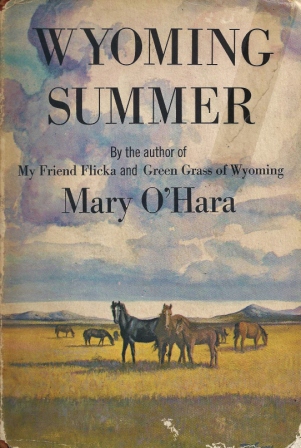
Wyoming Summer by Mary O’Hara ~1963. This edition: Doubleday & Company, 1963. Hardcover. 286 pages.

My rating: 7.5/10. An enlightening backstory of a short period of the author Mary O’Hara’s (1885-1980) life, and details the inspiration for My Friend Flicka, Thunderhead and The Green Grass of Wyoming. It felt rather self-congratulatory at times – my handsome husband, my great natural talent as a composer, my amazing sensitivity to the glories of nature, my important celebrity friends – but to excuse this it seems that most of Mary O’Hara’s boasts were indeed true. This account is also balanced with explanations, and details of the valleys as well as the peaks of the experiences within.

Presented as an autobiography, Mary O’Hara herself notes in the Preface that she has tinkered with her journal entries to make them more cohesive and readable. While the book has a reasonably strong narrative flow, there are frequent times when the entries are a bit disjointed, with out-of-place comments tacked onto longer vignettes. Perhaps this was done to maintain the feeling of a spontaneous journal, but since the work was already being edited I think it might have been stronger if these snippets had either been expanded upon or left out completely.

*****

This book was a surprising find last week in a quick scouting cruise through Nuthatch Books in 100 Mile House. The author’s name was immediately recognizable – for what horse-crazy child of my particular generation has not read My Friend Flicka? – but I was unfamiliar with the title. A lesser-known novel, perhaps? On closer investigation I found that this was an autobiographical account of part of a year spent on the Wyoming ranch that inspired the Flicka bestseller and its two sequels.

Mary O’Hara Alsop was a talented pianist, published composer, and Hollywood script writer when she turned her hand to writing fiction. Inspired by the rugged surroundings of the ranch which she and her second husband, Helge Sture-Vasa, purchased in Wyoming in 1930 and lived on for sixteen years, and the horses and other ranch animals she came to know intimately, O’Hara’s novel My Friend Flicka was published in 1941 to immediate acclaim. It was based on the journals O’Hara had been keeping of her life on the ranch, and the characters were very much drawn from her own family, friends and the ranch workers.

Wyoming Summer is set in the tenth year of she and her husband’s occupation of the Remount Ranch. Their initial scheme of sheep farminghad failed dismally, as prices for livestock dropped catastrophically during the Great Depression. Helge (referred to as “Michael” in Wyoming Summer, and the prototype for “Rob” in the Flicka books) was an experienced ex-Army cavalry officer, and the next enterprise that met with modest success was that of raising and training horses (“remounts”) for the U.S. Army. This was a precarious and not particularly prosperous undertaking, and Mary’s dairy herd and the establishment of a summer boy’s camp catering to the sons of her well-off music and film connections paid many of the bills.

Wyoming Summer details the challenging and exhausting juxtaposition of Mary’s dual worlds: ranch wife baking bread, hand-milking cows and dealing with daily chores combined with aspiring composer eagerly snatching the hours needed for piano practice and composition from her more prosaic duties.

Though this autobiography details both the rewards and drawbacks of life on a remote ranch, it decidedly glosses over the personal crises that Mary O’Hara dealt with throughout her life. A difficult first marriage resulted in two children, one of whom, a daughter, died tragically of cancer in her teens. After her divorce from her first husband, Mary’s second matrimonial attempt seemed happier, at least initially, but it was also doomed. Helge was a handsome, hard-working, hard-drinking man who was not above a certain amount of philandering, and that marriage ended, after the sale of the Remount Ranch and a move to California, in 1947.

Mary continued her work in composing music and working on stage and screen productions, as well as publishing several other novels. The journals kept while at the Remount Ranch had been set aside among Mary’s papers, and when they resurfaced in the 1960s Mary thought she could make something of them, hence the publication of Wyoming Summer. Several other novels met with modest success, but it was the Wyoming trilogy, and in particular the first installment, My Friend Flicka, that ensured Mary O’Hara’s longest lasting acclaim.

Wyoming Summer is interesting both for its window into a specific time and place, and for what its author leaves out. While we are allowed into certain areas of Mary O’Hara’s complex life, we are firmly shut out of others, leaving us with a definite feeling of being a spectator with limited access to the performance being played out.

These few reservations aside, Wyoming Summer is definitely worth reading, especially in tandem with the more purely fictional novels of the same setting.

Read Full Post »

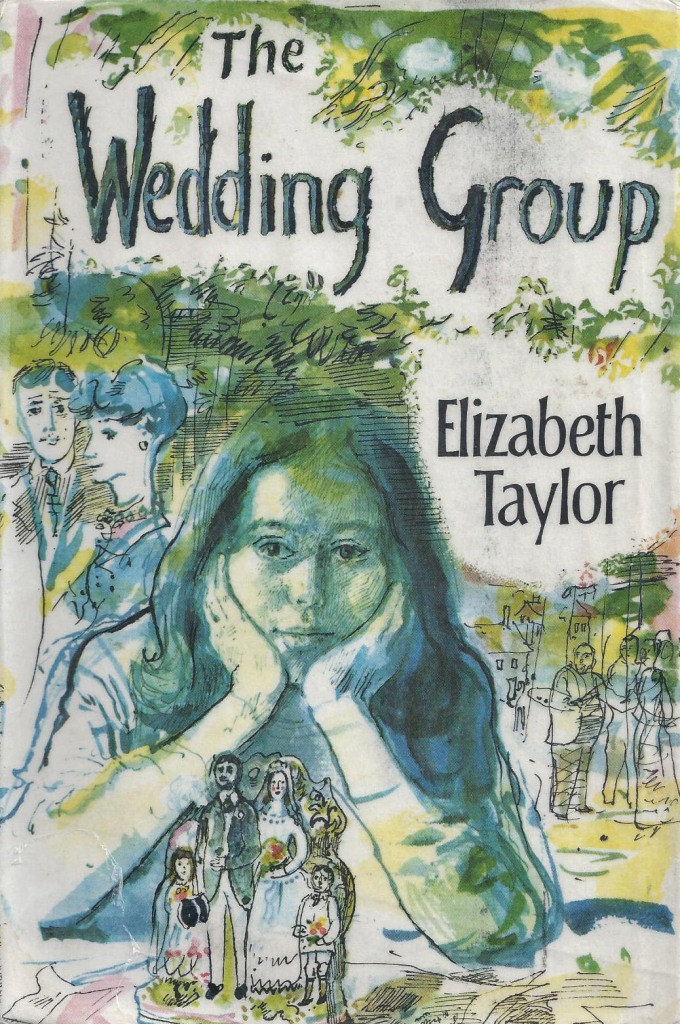
The Wedding Group by Elizabeth Taylor ~ 1968. This edition: Chatto and Windus, 1968. First Edition. Hardcover. 230 pages.

My rating: 7.5/10. I know that Elizabeth Taylor (1912-1975) is something of a pet author among the book blogging crowd, but I find I sometimes have to try really hard to whole-heartedly like her style. I found the writing in this novel rather stilted and distant; I also found the story itself depressing, with the humour being on the subfusc side of the spectrum.

To be quite fair, there were numerous passages of exceedingly enjoyable prose, and I did easily make it to the end of this slight novel without losing interest. And as this is my second time willingly reading this book,  it can’t be all that bad! Perhaps the fact that this time round it was hospital bed reading has coloured my review? I’ve just had an unplanned foray into the medical world, with prospects of more blood testing, scans and bed-time to come; this is certainly souring my current disposition. I’m thinking Elizabeth Taylor is not a good author to be reading in that venue. (Or perhaps she is the very best? Highlighting the cynical side of life, and all…)

*****

Nineteen-year-old Cressida (Cressy) has lived all of her life in the exclusive artists’ colony presided over by her patriarchal maternal grandfather, Harry Bretton. The only child of meek mother Rose, and ineffectual father Joe (an Irish would-be writer hand-picked by Harry as a suitably infuenceable husband for his daughter), Cressy yearns for a life outside of the earnestly dull extended-family enclave she is trapped in.

Harry Bretton was once a outré artist whose depictions of Biblical scenes incorporating contemporary settings caused a certain stir. The art world has moved on, and such non-conventional depictions are now the norm, but Harry clings to his old style, supplementing his decreasing artistic income by forays into religious lecturing, as well as taking in well-heeled “disciples” eager to study at the feet of the “Master”, as he has self-styled himself.

Cressy first announces her renunciation of religion, to her mother’s shock and, disappointingly, to her grandfather’s tolerant amusement – he casts an omniscient view over his subservient clan, and patronizingly assumes that this is merely a youthful rite of passage, though more suitable perhaps to a boyish temperament rather than that of a girl. (Harry Bretton has decided views regarding the proper subservient role of the female sex.)

Cressy then finds herself a job doing menial chores at the village antique store, and, in a small sequence of coincidences, meets a middle-aged journalist who is a friend of the antique shop owners, as well as having previously written a sarcastic article regarding Harry Bretton’s establishment. David Little is modestly successful in his field, and, living with his divorced mother, has a comfortable enough life, though he has noticed that of late romantic relationships are becoming more and more unsatisfactory, as all the “good ones” – desirable women with looks, charm and pleasant personalities – are leaving the singles scene for the securities and domestic pleasures of marriage.

David surprises himself by his attraction to childish Cressy’s innocent enjoyment of such worldly pleasures as television, hamburger bars and ready-made clothing, and soon the two are romantically involved, to the initial pleasure of David’s emotionally needy and manipulative mother Midge, who sees in Cressy an unthreatening solution to the long dreaded break-up of her mother-son domain.

Cressy and David marry, and Midge turns her full attention to preserving the status quo by erasing Cressy’s already feeble self-will and ensuring the continued attendance of David at the maternal beck and call. Cressy’s pregnancy and subsequent incompetent attempts at motherhood eventually bring about a shift in the balance of power as Midge becomes infatuated with her new grandson, and David realizes that the only hope for himself and his marriage is a breaking away from his mother’s insinuating grasp.

The ending is ambiguous and could be slanted either optimistically or the reverse; I chose to read into it a hopeful future for all involved, though this is in no way guaranteed by the author’s very hands-off approach.

I felt that the characters were nothing like as fully developed as they could have been; Midge seems to be the only fully rounded person in the story, and might indeed be the main protagonist. Cressy and David came across as mere sketches, though there are glimpses into the depths of each of them; just enough to keep us on their side and hope for an improvement in their relationship and their personal lives. Cressy’s parents and cousins are, in general, sympathetically handled, but one of the most potentially interesting characters,  Harry Bretton – the Master himself – is left as a mockable caricature.

Elizabeth Taylor was a decidedly clever writer with a wry and morbidly humorous viewpoint, but by concentrating on the darker side of human nature she walks the edge of being just a shade too cynical for my personal present reading comfort.

Read Full Post »

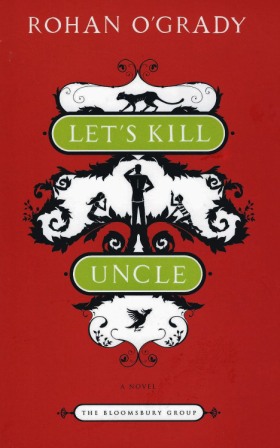
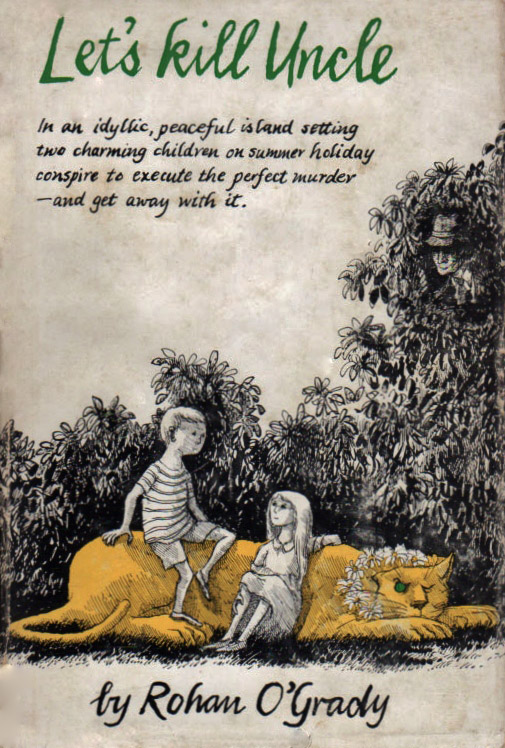
Let’s Kill Uncle by Rohan O’Grady ~ 1963. This edition: Bloomsbury Press, 2011. Softcover. ISBN: 978-1-60819-511-4. 279 pages.

My rating: 7.5/10. Extra points for the creepy and darkly humorous plot, the very thoughtful and poignant musings of Sergeant Coulter, and the grand British Columbia Gulf Island setting, apparently based on the author’s visit to Saltspring Island. (I chuckled at the naming of Benares; shades of Ganges and Vesuvius on Saltspring!) Points off for the cardboard cutout characterizations of most of the characters. Points off for the occasional swearing, which, though mild, felt out-of-place, even if this story was aimed at an adult audience. Extra points for letting the cougar finally ultimately be a cougar, and for letting the villain be purely evil with no redeeming qualities! Far from a flawless effort, but I liked it much more than I didn’t.

*****

You’ll find lots of reviews on this one; its reissue by Bloomsbury a year ago brought it into high profile.

This was a weird little book. I had read quite a few reviews before I ordered it, so I knew what to expect, but heaven help the innocent reader who thought they were picking up a mild children’s tale! Nothing innocent here; chock full of the darkest human flaws and emotions; the humour (of which there is a lot, all intentional) shades from gray to ebony black.

Two 10-year-old children from very different backgrounds are sent to stay on an isolated, and, incidentally, long-childless island. (Every son from the past generation has gone away to war and thus perished, except for one: the island’s Royal Canadian Mounted Police officer, Sergeant Albert Coulter. The bereft parents and grandparents view him with a certain resentment and suspicion making for a bitter underplot.)

Orphaned Barnaby is the heir to a ten million dollar fortune; he is coming to spend the summer with his uncle at a rural retreat. Christie is the sickly daughter of a struggling more-or-less single mother. Her parents are separated; her father is a good-for-nothing drunkard; her selfless mother is working extra hours to pay for Christie’s country holiday with Mrs. Nielsen, the island’s “goat-lady.”

The children meet on the ferry ride to the island; it is hate at first sight, but that doesn’t prevent them ganging up, running wild and wreaking havoc the entire trip. They are gratefully off-loaded, and the first person that makes an impression on them is the local Mountie, Sergeant Coulter. Luckily both children are struck with hero-worship at first sight, and Sergeant Coulter’s calming influence starts their personal transformations from brats to pleasant children.

Turns out that Barnaby’s Uncle Sylvester is not the mild, mannerly and caring man he appears to be. He is a psychotic murderer with a long history of killing for pleasure and profit; Barnaby is pegged as his next victim, and soon Christie is doomed as well. The children are on to him, and unite to plot right back, deciding to strike first to save their lives. Uncle foils them at every turn. Enter a surprise ally, an outlaw cougar, One-Ear, livestock and child killer, who is hiding out in the underbrush. One-Ear tolerates the two children associating with him, sparing their annoying lives only because he can’t afford to draw attention to himself; the three end in working together to act as Nemesis to stop this wickedest of uncles.

Nothing in this story is quite as expected; the ground continually shifts under our feet as we think we know what the author is going to have her characters do and say next; we often predict completely wrong. Sergeant Coulter is one of the most surprising characters. Initially he is a figure of fun, a slightly blustering, generally disregarded, musical-comedy type policeman. But the Sergeant has hidden depths. He writes long letters to his unaware (and happily married) love interest, rips them up and casts them on the waves. He has survived being a prisoner of war, and, in the novel’s very serious thread which runs through all the farcical nonsense of the murder plot, condemns the political forces that send young men away to kill and be killed, destroys innocent civilians, and allow the evil of the Jewish Holocaust to happen. A few incidents involving First Nations people, or, as 1963 lingo describes them, “Indians”, would likely not get past today’s politically correct censors.

There are quite a number of parallel stories going on in this novel; the author competently intertwines them and brings them to their rightful conclusions. A highly moral tale, when all is said and done.

Let’s Kill Uncle has a superficial feel of being a children’s story, and it definitely works on that level as a straightforward if morbidly fantastical adventure, but I finished with the strong feeling that the intended audience was very much the adults, and the message much more sophisticated than the plot description allows for.

The author’s name, Rohan O’Grady, is the pseudonym of June Skinner, a Vancouver writer who published five novels between 1961 and 1970, of which 1963’s Let’s Kill Uncle seems to be the best known. The others are:

  • O’Houlihan’s Jest, 1961.
  • Pippin’s Journal; Or, Rosemary Is for Remembrance, 1962.  (Also published as The Curse of the Montrolfes and The Master of Montrolfe Hall.)
  • Bleak November, 1970. Michael Joseph, London, 1971.
  • The May Spoon, 1981. (Published under the pseudonym A. Carleon.)

Edward Gorey illustrated Let’s Kill Uncle; I regret that the Bloomsbury reprint contains no art except for a rendition of the original cover on the title page.

This is a very hard book to classify. I’m trying to think of another similar book to compare it to; A Series of Unfortunate Events has been suggested as its natural successor, but Let’s Kill Uncle is a much more complex work than the contemporary Lemony Snicket series.

I enjoyed this quick read; it will be even better the second time around. Recommended.

Read Full Post »

Martha, Eric and George by Margery Sharp ~ 1964. This edition: Collins, 1964. First Edition. Hardcover. 160 pages.

My rating: 9/10

From the flyleaf:

‘Why should it always be the woman,’ asked Martha, ‘who’s landed with the little illegit?’

Putting principle into practice, she thus deposited a two-weeks-old infant on the paternal door-step and returned carefree to her proper business of painting masterpieces: vanishing so successfully, indeed, from the lives of both lover and son, that ten years elapsed before the consequences of her misbehaviour caught up with her…

Why, indeed?

Martha strikes a blow for her sex as she neatly turns the tables on her partner in procreation. Her child, result of a brief dalliance with the illicit pleasures of physical passion (and not to be repeated, as, though most enjoyable,  it makes her too tired to get up early and paint) has safely entered the world. Providing him with a layette, a carry-cot and a recipe for formula, Martha proceeds to take her ex-lover Eric at his word – “I want to shoulder all your burdens for you,” Eric has declared in his (scorned) proposal of marriage – and drops this small burden off on the Parisian doorstep of British expatriate Eric and his doting mother.

Eric Taylor, returning home to lunch, after the French fashion, from his morning’s work at the City of London (Paris branch) Bank, paused as usual outside the concierge’s lodge. The flat occupied by himself and his mother was on the fourth floor; tradespeople in a hurry frequently left parcels below – also Mme Leclerc the concierge seldom troubled to carry up a letter unless she suspected it to contain bad news. The pause at the lodge was part of Eric’s routine, his words ritual.

“Anything for me to take up, Mme Leclerc?”

For once, a rare smile curved the thin lips. Employing all her fine Gallic gifts of drama, irony and concision –

“Apparently yes, monsieur,” replied Mme Leclerc; and issuing burdened from her lodge planted in his arms a carry-cot containing a two-weeks-old infant.

Poor Eric! One does feel for him in his sudden comeuppance, though of course he had no idea that his brief dalliance with Martha had had fruitful results; he did inquire as to Martha’s state once the fling was over, and she brushed him off in typical Martha-manner, so I rather think his disgruntled reaction is justified. If we weren’t clear on the farcical nature of this series before, we certainly get the full picture in this last installment. Eric carries the baby up to his mother, who is, quite naturally, completely blindsided.

Out from the covers pushed a tiny, grasping fist like a very small octopus. The nearest object at hand being Mrs. Taylor’s ring-finger, about it the small octopus twined.

Now it was her turn to be struck dumb. For what seemed like an age, while the clock on the mantelshelf ticked, while on the table the liver-and-bacon congealed, mother and son gazed at each other in equal silence, equal consternation, indeed equal incredulity. (Disbelief: the instinctive, protective human reaction before disaster.) But the small octopus-hand insisted. Mrs. Taylor stooped; pulled a lap of blanket aside; and raised a face white as her son’s.

“Eric!” breathed Mrs. Taylor. “Whose is it?” 

Actually the question was superfluous. It is an accepted if inexplicable fact that an infant during the very first weeks of its existence may show a marked resemblance to one or other parent. In this case, the tiny countenance now revealed was an uncanny, crumpled miniature of Eric’s own. It simply looked much older: an image of Eric in toothless senility. – Not that the latter more than glanced: by this time he was … sure.

“It’s mine all right,” agreed Eric Taylor.

Now Mrs. Taylor surprises us by her reaction. Rather than being appalled by this incontrovertible evidence of her son’s amorous activities, she is instead thrilled to the core “Oh, my darling, it’s a boy!” she cries in delight. And, “Gran’s little treasure!” she croons, to Eric’s deep disgust and abiding dismay. Here we get another glimpse of Margery Sharp’s cynical wit.

The moment was far too delightful to spoil by thinking about Martha, so Mrs. Taylor didn’t. This involved no particular feat of will-power, merely a complete if unconscious surrender to wishful thinking. To possess a grandchild without the encumbrance of a daughter-in-law is many a grandmother’s unadmitted dream. “Dear Anne, dear Lucy, dear Susan!” cry the grandmothers – happy to welcome with small bottles of Chanel No. 5 at Christmas each necessary transmitter of a family face; but even happier to water with easy tears a rose-bush on an early grave…

Certainly Mrs. Taylor didn’t hope Martha was dead, even though she’d never really liked the girl. (In any case, as she’d learned from Mme Leclerc, Martha was obviously alive that morning. It would have had to be a very sudden accident.) Mrs. Taylor simply forgot Martha: indeed, so all-absorbing was the sheer physical pleasure of holding a baby again…

So the stage is set. Martha’s baby, quickly named George, is well provided for. His father becomes very much a background figure; in a turning of tables, the unmarried father takes on a role usually reserved for the mother in such a situation. A figure of mildly ribald amusement among his compatriots, Eric faces social ostracism, and, worse yet, is passed over for his expected promotion. He is no longer seen as quite so “above reproach” to qualify for a higher position in the Bank of London (Paris branch), though fortunately for him there is no thought of terminating his employment entirely.

Martha has returned to England, there to hone her artistic skills and single-mindedly  become an accomplished mistress of her art. Still sponsored and nurtured by paternal Mr. Joyce, Martha’s genuine genius blossoms. Ten years of hard, creative work pass by, and at last Martha is deemed ready to risk a solo exhibition in that mecca of the art world, Paris.

The reunion of Martha and Eric, and young George, fully meets our expectations, but there are a few surprises in store. The ending is delicately poignant; Martha redeems herself, emotionally speaking, by showing that she does have a certain sensitivity hidden by her brusque exterior. A most satisfying conclusion, despite the deathbed scene.

I hugely enjoyed this trilogy. (I still think this should be published as an omnibus; too cruel if you can’t get your hands on the complete set!) Highly recommended for the Margery Sharp fan, or anyone desiring a cleverly satirical literary diversion.

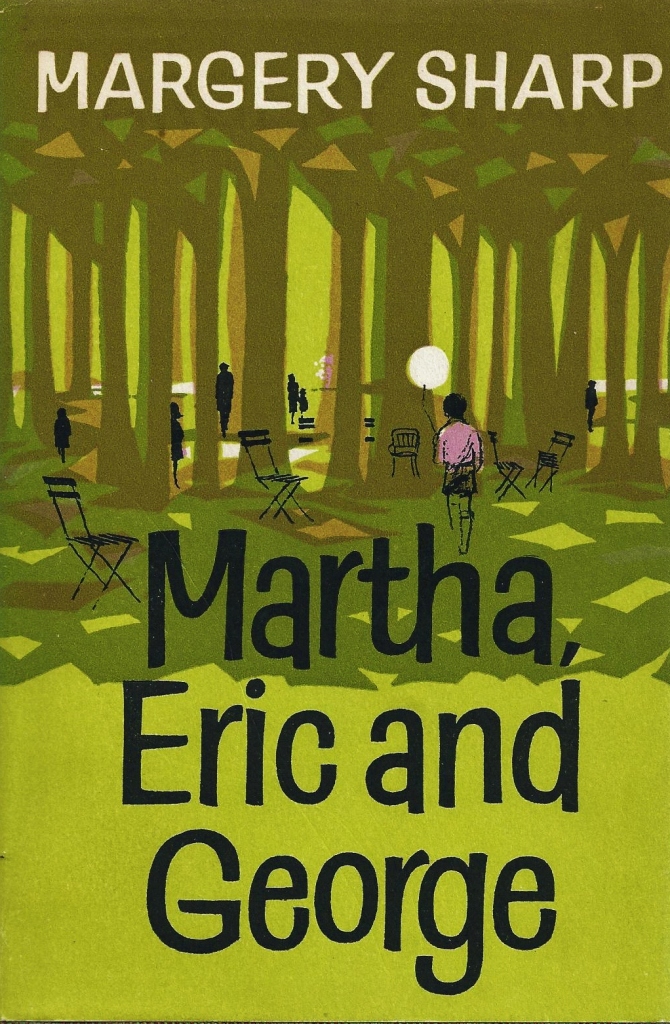
Side note: I love the cover illustration of this edition. Jillian Willet captures perfectly a rather mysterious and moody feeling of foreboding; the child in the foreground (young George?) strides sturdily towards the vaguely menacing figures partially obscured by the park’s trees. The geometric shadowing pays homage to Martha’s vision of the world as a series of shapes; the whole is a deeply satisfying composition.

Read Full Post »

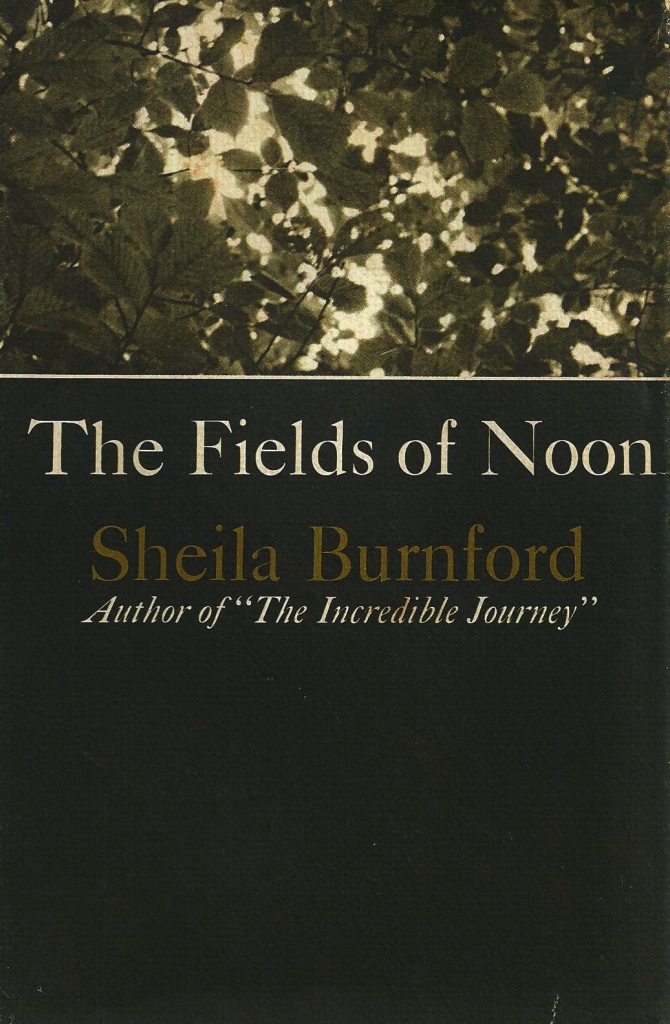
The Fields of Noon by Sheila Burnford ~ 1964. This edition: Little, Brown & Co., 1964. Hardcover. 175 pages.

My rating: 10/10

This quiet, elegant, and often very funny book is one I keep  in my ‘favourites’ collection, and regularly reread with great enjoyment.

The Fields of Noon is a memorable collection of autobiographical essays by Scottish-born Canadian writer Sheila Burnford, better known for her bestselling fictional book The Incredible Journey, a story of two dogs and a Siamese cat who together embark on a 300-mile journey through the northern Ontario wilderness. Disneyfied and popularized, The Incredible Journey might be dismissed without further attention by the discerning reader, but it was intended to be an adult book, was based on actual pets of the Burnford family, and is quite a lovely little piece of work with its own merit. Ignore the sentimental movies, please! (Perhaps I should re-read and review The Incredible Journey as an entry into the 2012-13 Canadian Book Challenge …)

Sheila Burnford, if these highly personal essays are any indication, must have been a fascinating woman to know; her writerly voice is warm and intimate, highly intelligent and self-deprecatingly humorous.

To give you a taste of the tone of this collection, here is an excerpt from the essay Time Out of Mind, concerning Sheila’s interest in archaeology and anthropology, and her subsequent attempts to learn the art of flint-knapping.

The first story I ever remember having read to me was Robinson Crusoe, and later I read and reread it myself, starting again at the beginning the moment it was finished, just like painting the Forth bridge. The Swiss Family Robinson was even better; not the shortened version so often found today but a wonderfully fat volume, profusely illustrated and complete in every last moralization (and every gruesome detail of poor Grizzle’s demise in the folds of the boa constrictor and subsequent mastication; five hours from ear to hoof – Papa Robinson timed it; children were apparently credited with stronger stomachs in those days) and its pages crammed with useful tidbits of information on how to improve one’s lot and live more graciously on desert islands. I used to spend hours daydreaming of starting from scratch on my island utopia and putting all this practical information to the test. Thanks to Mr. Robinson, that bottomless well of How To Do It lore, I knew how to make a Unique Machine for boiling whale blubber; I could construct a sun or sand clock, train ostriches, open oysters and manufacture sago; if a sturgeon had been caught in my coconut fiber fishnet I knew just how to make isinglass windows from its bladder. I could even – and as I write I feel the urge to do so – make waterproof boots (beloved, familiar gumboots), with a clay mold, taken from my sand-filled socks, then painted over with layers of latex tapped from the nearest rubber tree. It would have been a luckless Man Friday who made his imprint on my solitary sands, for I would have been a fearful bore to live with: like Papa Robinson, one innocent question would have released a pedantic torrent of information.

This childhood preoccupation with carving out an existence by my own unaided efforts used to end, invariably, I remember, with that baffled, mind-boggling feeling that used to overcome me – and still does – when staring up at a cloudless blue sky and trying to make my small limited mind grasp that the blue is a void, endless infinity, nothing, not even omega. For, sooner or later, a fearful nagging doubt insinuated itself into every castaway installment of my self-told story: What if one did not have a knife, or a goat, or a gun to start with? Or, worse still, had not read Swiss Family Robinson? How on earth did one go about forging steel for that most necessary knife (what, for that matter, was steel?), substitute for a goat, manufacture a gun, or any kind of weapon?

*****

  • Canadian Spring – a trip with an artist friend to an isolated lakeside cabin during spring ice break-up.
  • Walking: Its Cause, Duration and Effect – reflections on a Scottish childhood spent largely out-of-doors.
  • The Peaceful Pursuit – the joys and occasional pitfalls of wild mushroom hunting.
  • Confessions of a Noisemaker – how to shed one’s vocal inhibitions while accompanied on a solitary expedition by a patient dog and four inflatable duck decoys.
  • Time Out of Mind – the deceptively steep learning curve of the paleolithic flint-knapper.
  • Inclinations to Fish – the consideration of large bodies of water as primarily “fish containers”, and the joys of a lifetime of attempting to bring those fish to shore.
  • Tom – a touching ode to a feral tom cat.
  • With Claud Beneath the Bough… – caring for a solitary canary.
  • Pas Devant le Chien – a sober-minded dog becomes firmly convinced that an electric heater contains a small, living inhabitant.
  • William – the last day of life and the death of a beloved bull terrier.

Read Full Post »

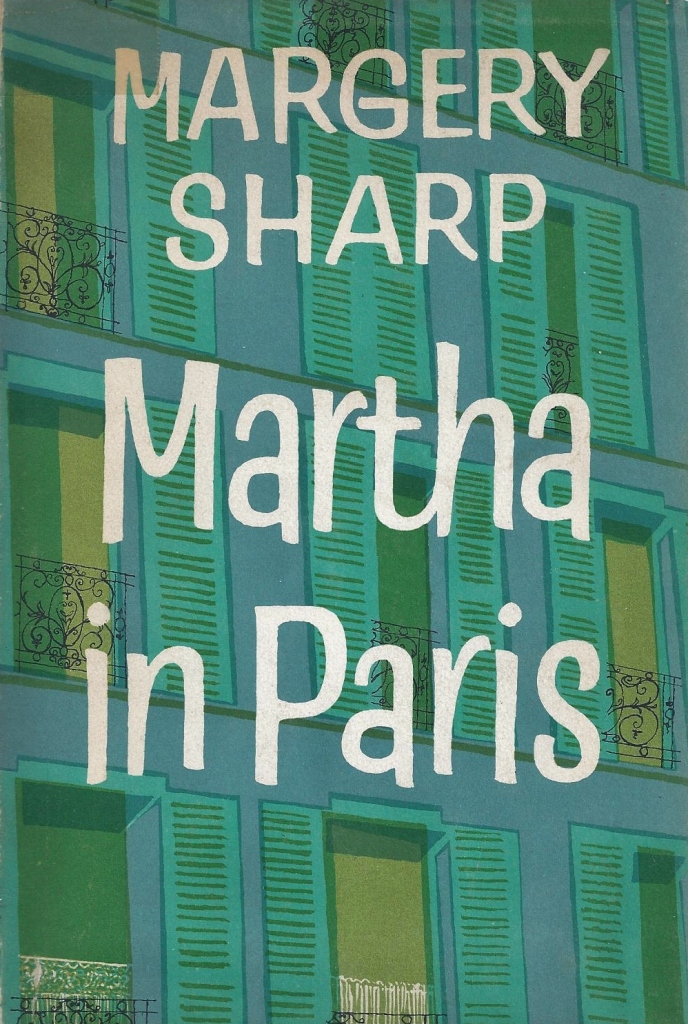
Martha in Paris by Margery Sharp ~ 1962. This edition: Little,Brown, 1962. Hardcover. First American Edition. 166 pages.

My rating: 9/10

From the front flyleaf:

In this “portrait of the artist as a young woman,” Margery Sharp uses all her individual observation – humorous, tender and astringent – to recount a climacteric twelve months in the life of eighteen-year-old Martha, who was sent to Paris to learn to paint, and learned a great deal else besides.

Readers who first met Martha as the stolid, matter-of-fact and altogether memorable child  in The Eye of Love and wondered what would happen to this truly independent spirit when confronted with Life now have an opportunity to find out.

Oblivious to the glamour and temptation of Paris, Martha’s single-minded pursuit of creativity and her matronly appearance seem to protect her from her Aunt Dolores’s delicately-put fear that “Martha might come to some harm…” Once called the Young Pachyderm by a friend back home near Paddington Station, perhaps because he glimpsed something tough-carapaced about her even then, Martha is now Mother Bunch to her fellow art students. Apparently the threat of Paris is to be lost ton her as she at once sets herself up in a doggedly methodical routine of working, eating and sleeping.

But Paris has an outrageous joke to play on Martha. It all begins with her somewhat unconventional adoration of deep, hot baths, after which she always looked her most attractive, or as the French say, “appetizing.” Nice hot baths involve Martha in an experience with a young Englishman (City of London Bank, Paris Branch) which would challenge the resources of a far more sophisticated girl than Martha. How she triumphantly copes with the resulting situation is the them of this engaging novel.

That about sums it up. I greatly enjoyed this next installment in Martha’s life-journey. Margery Sharp has settled into her story nicely; she champions Martha’s artistic cause and incidentally tramples over the gender-based lines of common behaviours; Martha is a true feminist, or perhaps we should say humanist; she has zero tolerance for the conventions which govern the behaviours of more conventional beings. Such as, for instance, her would-be lover Eric, and his doting mother. Their persistence in viewing Martha through their own rose-tinted spectacles of wishful thinking as to her personality and motivations lead to an ironically comedic situation, which Martha single-handedly sorts out in a most pragmatic way.

Martha is a deeply unusual heroine; regardless of her lack of sentiment and socially acceptable behaviour I found myself fully on her side in her Parisian adventures, and have no doubt that her ambitions will be fulfilled.

Highly recommended. If you can at all manage to find these three titles, read them in order. This is the middle book of a trilogy. The preceding book is The Eye of Love; the following book is Martha, Eric and George.

The Eye of Love is presently in print, in softcover from Virago Press. Martha in Paris and Martha, Eric and George are readily available and generally reasonably priced through ABE.

Read Full Post »

The New Moon with the Old by Dodie Smith ~ 1963. This edition: Atlantic – Little, Brown, 1963. Hardcover. 367 pages.

My rating: 6.5/10

I have just laid down The New Moon with the Old with something like a delicate revulsion; I am subsequently wrestling with the dilemma of how best to describe this fantastic tale. “Fantastic” in this case meaning contrived and highly improbable.

That said, damning as it is, I’m going to keep this book, and I know I will re-read it, both to give it a second chance to redeem my first impression of its awfulness and because, despite that very awfulness, it has frequent moments of a quite appealing charm and clever turns of phrase that almost (almost!) redeem the awefully (fantastically!) bad bits.

Confused yet? If so, we’re on the same page.

Dodie Smith’s first novel, I Capture the Castle, is, in my frank opinion, more than a minor masterpiece of the “light novel” genre. There is so much that I like about that work that I have been eager to get my hands on some of Smith’s other, much more obscure titles, hoping that they would have something of the same delicate touch and deep appeal of Castle.  Sadly, New Moon did not meet expectations.

The New Moon with the Old is set in contemporary times, the early 1960s, though the heady atmosphere of that change-filled era is nowhere apparent in the story. A young woman, Jane Minton, has just been engaged as an assistant to wealthy Rupert Carrington. Her duties will be to act as occasional secretary and general overseer of the domestic arrangements at his country home, Dome House. Also in residence are Rupert’s four children: 14-year-old schoolgirl Merry, who is actively planning a stellar acting career; 20-year-old Drew, an aspiring “Edwardian-era” novelist; twenty-something Clare, unsure of her natural bent but toying with the romantic idea of being a “mistress to a king”; and slightly older Richard, a musician and neophyte composer. Two devoted elderly sisters acting as cook and general maid round out the cast of characters.

Jane arrives at Dome House and is immediately impressed by the quiet luxury which surrounds her. Absentee lord of the manor Rupert is more than generous in his provision for his dependents, but this is very soon to change. On her first full day in residence, alone in the house, Jane is surprised by Rupert’s sudden clandestine appearance. He hurriedly explains that there is suddenly no more money to pay for his family’s luxurious lifestyle, and he asks her (or, rather, she spontaneously volunteers, due to her unspoken crush on Rupert) to look after the young Carringtons and try to launch them into their careers. Rupert himself is about to flee the country to avoid prosecution for some undefined financial transgression related to his handling of his clients’ affairs. Jane, who fell in love at first sight with Rupert at her job interview and now welcomes a chance to openly show her rather sudden devotion, jumps in to the situation cheerfully, going so far as to seek outside employment so she can assist with Dome House’s operating costs.

After this sketchy set-up, the story continues as a series of multi-chapter interludes, following each Carrington as he or she attempts to pursue each driving ambition, or, in Clare’s case, to find an ambition to pursue.

The characterizations of Jane, Rupert, and the two maids are extremely superficial; the author insists on telling rather than showing the reasons for their actions, and, in the case of Jane and the maids, their over-the-top dedication to a rather offhand employer and his ineffectual, over-indulged (though endlessly sweet and charming) brood. The four young Carringtons are better presented; we do get more of a chance to get inside their heads as we follow them on their precipitous fledgling flights from Dome House.

The story takes off (as much as it ever does) with the first decision by the youngest child (Merry) to seek her fortune elsewhere. The adventures of Merry and her three siblings  are rather unusual and require a serious suspension of disbelief from the reader. New Moon’s world is one in which love at first sight is a commonplace, and serendipity and coincidence reign supreme. Great wealth, often unsuspected, abounds to save the questing characters from more than superficial worry and discomfort.

This collection of vignettes is tacked together by visits back to Dome House to see how Jane, the maids, and the rest of the family are making out; as the characters move out of their downy nest they generally fall into others even more generously feathered, much to this reader’s perpetual annoyance.

Near the end of the novel,  after waiting in vain  for the whole thing to jell into something a little more cohesive, the author did provide a spot of conversation between several of the main characters wherein they admit their own anachronistic traits, and poke a bit of fun at themselves. This went far with me to renew my flagging interest. I thought, “Aha! Dodie Smith realizes what a mess these people are, and she’s deliberately allowing them this exposition with a view to a stronger, more artistically satisfying and marginally more realistic ending.” But it was not to be.

By the novel’s end, everyone is neatly paired off with a friendly and/or romantic interest; everyone has found a solution to their financial woes. Though reasonably open-ended, the conclusion is quite clear in its optimistic tone for all concerned, most appropriate to this fluffy little fairytale.

I see that this title, as well as two others, The Town in Bloom and It Ends with Revelations, have been reissued in March, 2012. If the other two titles are at all like The New Moon with the Old in tone and complexity (or lack thereof) I would think that here we have nothing more than a trio of nice little beach or lawn chair reads, of value for several hours of light entertainment and inventive nostalgia.

The New Moon with the Old serves to display the perfection of I Capture the Castle as a diamond among literary rhinestones. Rhinestones being pretty enough for a bit of shine and dazzle, as long as they aren’t confused with the genuine thing!

And a bit of a heads-up here for the reader expecting a story as morally upright as I Capture the Castle turns out to be. New Moon shows Dodie Smith in a much more laissez-faire moral mood. She uses as a rather feeble plot device Rupert Carrington’s financial dishonesty, and she ignores the reality that his actions have doubtlessly injured many innocent parties; she offhandedly arranges for him to be bailed out of his disgrace by a wealthy connection who can afford the best lawyers and counsel; and her characters have surprisingly permissive views on sex and sexual arrangements. One of the most off-putting passages (to me) was near the story’s conclusion where Jane is scorned for her “frigidity” concerning extramarital sex: “No wonder she hasn’t been able to catch a man!” is implied. But I wasn’t shocked so much by the sophistication of the characters’ amoral sex lives as by their offhand acceptance of the “easy ride” that money brings; all concerned seem quite happy to act as sweetly smiling and endlessy charming parasites on various wealth-engorged hosts.

A strange little novel in so many ways.

Read Full Post »

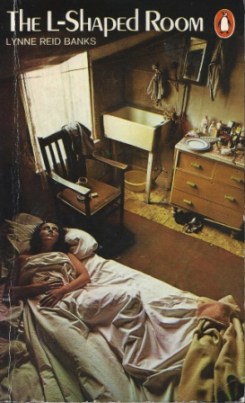
The L-Shaped Room by Lynne Reid Banks ~ 1960. This edition: Penguin, 1983. ISBN: 0-14-00-1913-8. Paperback. 269 pages.

My rating: 5/10. Just barely. It had a few good moments, but I generally did not care for this one.

Widely touted as a ground-breaking, pro-feminist, must-read novel of the early Sixties.

Lynne Reid Banks, born in 1929, and part of the post-war wave of  newly “liberated” women entering the professional workplace in droves, initially pursued a career as a stage actress, then as a television journalist, and, following a demotion, as a television scriptwriter. She took revenge by writing the first draft of this novel “on a company typewriter, on a company paper, on company time.”

http://www.lynnereidbanks.com/interview.html

The novel became an almost instant bestseller, and, with some plot changes to allow for the French accent of the starring actress,  was made into a successful 1962 movie featuring Leslie Caron.

Written very much in the first person, this is the story of twenty-seven-year-old Jane Graham, an ex-aspiring stage actress, who has moved back to her father’s house and is working as an assistant to a London hotel manager. Feeling jaded and dissatisfied with her life, Jane seeks out an old flame, with the idea of consummating their unfulfilled prior romance. The relationship doesn’t take, and, much to her surprise, Jane finds herself pregnant after the single sexual encounter (her first) which doomed the dying romance to its ultimate death.

Jane immediately decides she will keep and raise the baby, without telling her ex-lover, as she feels this is strictly her own affair, and she wants the child to completely belong to her. She is offered an opportunity for an abortion by the doctor whom she consults to confirm her pregnancy, but with high moral purpose, Jane indignantly turns the suggestion down.

She breaks the news to her staid and conservative father, who, in a state of shock and dismay, orders her to leave his house at once. Off Jane goes in a fit of pique, to find herself the most squalid room possible in a slummish part of town. This is the “L-shaped room” of the title, and it is located on the top floor of a decaying boarding house. The other residents are her contradictory landlady Doris; ex-wardobe mistress Mavis (who spies relentlessly on all comings and goings); Toby Coleman, a young writer; West Indian Negro jazz musician John; and two prostitutes in the basement, another Jane and a Hungarian refugee, Sonia.

Jane hides her pregnancy (she thinks) very well from those around her, feeling that to avoid the discussion at all is better somehow than lying about it. Jane eventually loses her job when her condition becomes too obvious to further ignore, but she finds solace in her growing friendships with her fellow tenants, and in a blossoming love affair with Toby.

Though I appreciate that there is some very fine writing in this story, and that it was much more forthright about taboo subjects than others of its era (first sexual encounters, the morality and reality of abortion, unwed motherhood, the physical rigours of pregnancy, sexual and racial prejudice, among others), I cannot say that I particularly enjoyed my reading of it.

Jane’s character, as revealed by our literal reading of her innermost thoughts, is self-centered, supremely egotistical, openly prejudiced against Jews, blacks and homosexuals, and almost offensively “honest”. Though she appears to inspire instant love and dedication in many of those she encounters, I could never quite believe in her widespread attraction to so many disparate people. I sometimes wondered during my reading of the novel, if some of Jane’s convictions of how others viewed her were rather delusions; she continually comments on how she has impressed others with her superiour taste, wit and knowledge.

Perhaps some of my reluctance to fully embrace this story has something to do with the style of the writing, often very much “statement of fact”; almost wooden at times. But mostly I just did not find Jane as worthy of sincere interest and affection as I would have liked; this sort of story, to work for me, has to have a much more deserving-of-my-regard protagonist. I often felt that the fictional Jane created many of her own problems, then moped about stewing in her resultant misery, before being bailed out by various strangely willing “white knights” – her supervisor James, Toby and John, her father (who almost immediately after telling her to leave writes begging her to return), and, most improbably of all,  her eccentric Aunt Addy, who appears out of the blue, after never being previously mentioned, offering succour at the most opportune moment.

Jane carries on a continual internal monologue at how strange and disgusting other people, places and objects are to her. I wondered if author Banks has an ultra-sensitive sense of smell; there are many mentions of offensive odours throughout, including the “strong Negro smell” of John, the cloying perfumes of Mavis and the prostitute Jane, the “bug-infested” odour of the house in general and Jane’s room in particular … over and over Jane makes mention of these, and her frequent nausea and disgust.

On the credit side, Jane does grow somewhat as a person as the story progresses; I found myself wondering if the author made Jane’s inner voice so critical and offensive to highlight how far she had to travel to approach a more tolerant and accepting point-of-view. She hassn’t quite gotten there by the end of the novel, though. Perhaps she progresses more in the next two books of the trilogy?

Improbably pat resolutions to some of the characters’ most pressing issues also jarred my sensibilities. Lots of loose ends tidily tucked away, many more so than would happen in the real world, I felt.

There is no doubt that Lynne Reid Banks has a writing talent of a high degree; as a first novel this shows an advanced ability and voice. Banks went on to write nine more adult novels, including two sequels to L-Shaped Room: The Backward Shadow and Two is Lonely; as well as numerous children’s’ books, most notably The Indian in the Cupboard (1980) and its several sequels.

There are many glowing reviews of The L-Shaped Room; mine, sadly, can not be one of them. I would still recommend the novel, with reservations, as an interesting period piece and for cultural literacy purposes for those interested in popular and/or feminist fiction of the mid-twentieth century. My most serious reservation concerns the continual overt racist comments (whether or not they reflect the author’s true views or are merely, as I rather suspect, an attention-catching plot device).  I felt there were some serious weaknesses in the probabilities of the plot itself.

I have also acquired a copy of the next book in the Jane Graham trilogy, The Backward Shadow, and, glancing through it, I see that the style appears much the same. I am going to read it soon, out of curiousity to see how (and if) Jane becomes more understanding and tolerant of others, and, also, in fairness to this still-popular and often highly regarded author, to give me another chance to try to more deeply appreciate her work.

Read Full Post »
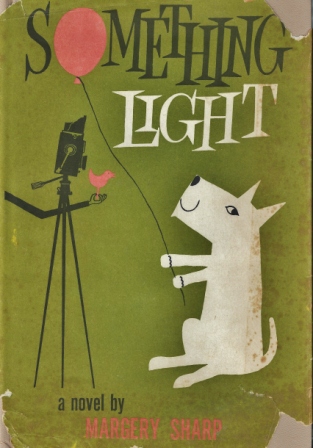
Something Light by Margery Sharp ~ 1960. This edition: Little, Brown & Co., 1960. Hardcover. No ISBN. 216 pages.

My rating: 10/10.

I love the works of Margery Sharp. No exclamation mark needed, merely a sober statement of fact. I am slowly and with deep pleasure building up a collection of her works. In every “Definition of Happiness” there is included “something to look forward to”; I am therefore a happy woman as I look forward with pure anticipation to sitting down with each hard-won out-of-print title by this most excellent forgotten author.

Luckily Margery Sharp was popular enough in her day that her titles are for the most part reasonably available with a bit of on-line searching, though her first two novels, Rhododendron Pie (1930) and A Fanfare For Tin Trumpets (1932),  fetch rather high prices in the used book world; well into the hundreds of dollars. In the meantime I haunt second-hand bookstores at every opportunity, peering hopefully at the faded titles of scruffy vintage hardcovers in eternal hopefulness. I did find two of her works this way, at the same most-excellent used bookstore in Kamloops, on separate occasions several years apart. I paid the princely sum of $5 each and controlled my great glee with difficulty until I was well away from the store. This also freed me up, as I gloatingly explained later to my slightly skeptical husband,  to be able to shell out for several of her other works at much higher prices, because then they all averaged out, and each one of the others wasn’t so ridiculously expensive, etcetera, etcetera.

But I digress.

Something Light was my very first Margery Sharp, picked up on a whim at a little second-hand store I occasionally visit to scan through the modest book section. I noticed the book early in my shelf scan, but the faded and foxed dust jacket spine was less than appealing, and it wasn’t until my second pass around the stacks that something made me pull it out for a closer look. Here’s what I saw:

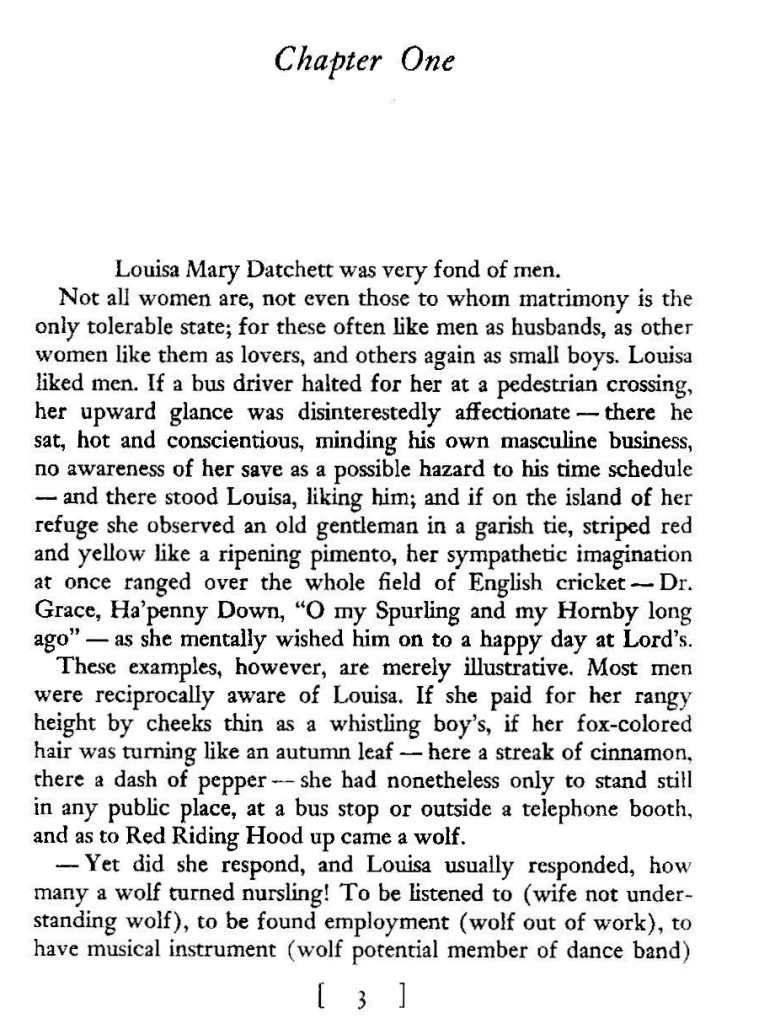
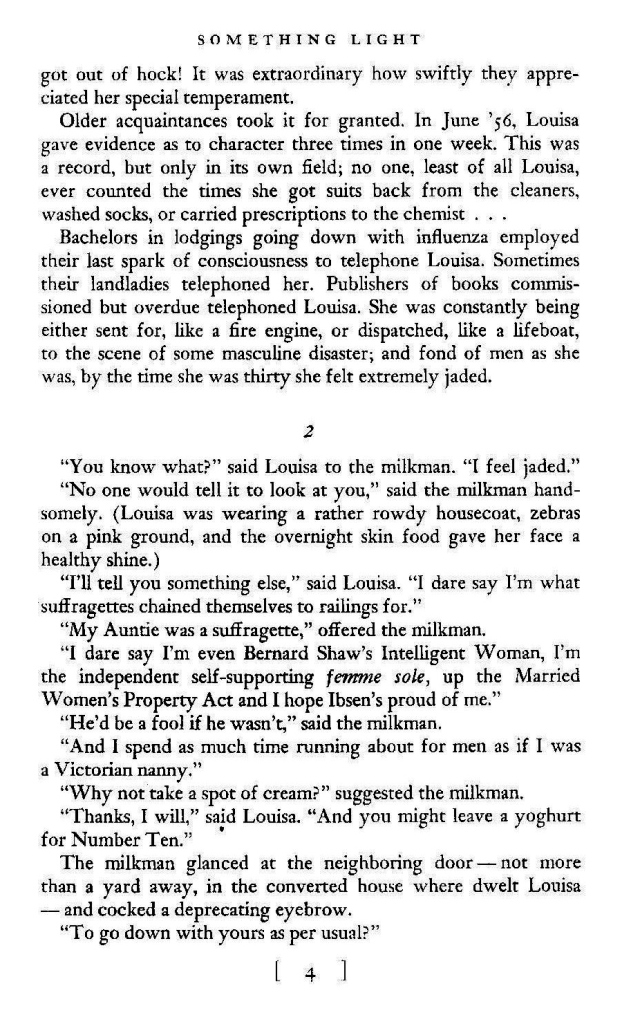
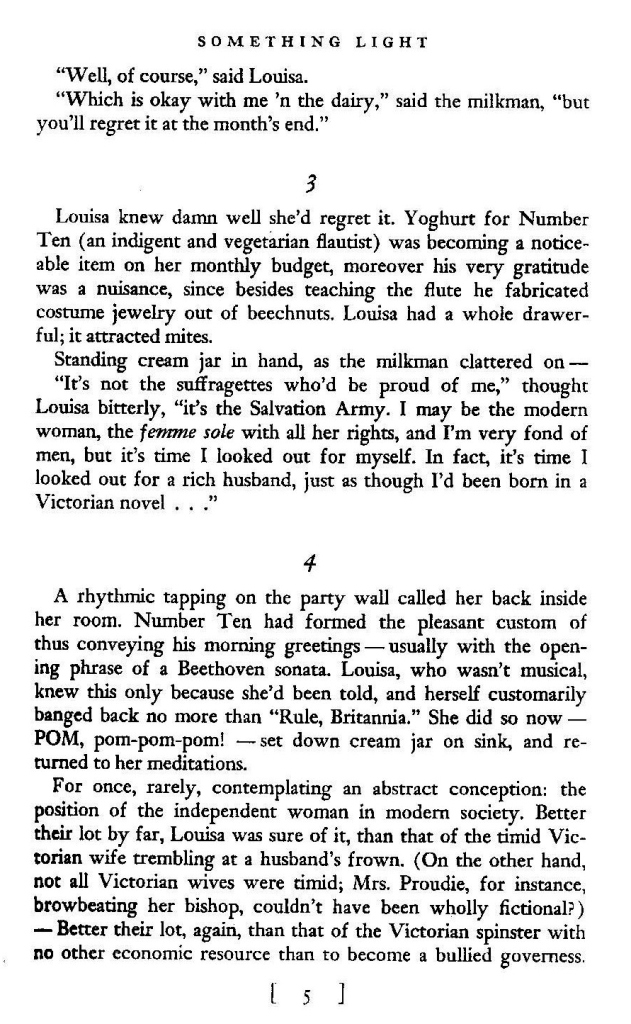
Hmm, I thought to myself. What’s all this, then? And I opened it up, noting that the pages easily turned as though it was used to being handled by a loving owner, and started to read. One, two, three pages. Then I quietly closed the book, walked up to the cash register, paid over my one dollar, tactfully ducked out of a conversation with the chatty proprietor, went out to my car, settled down and kept reading, completely neglecting my grocery and town chores list and stopping reading only when I was overdue to collect my daughter from her dance class. Definitely hooked.

Louisa Datchett likes men. No, not in the way that you’re thinking from that bald statement. Louisa likes men.

Here, read it yourself. A romp of a book,  something light indeed among Sharp’s delicious oeuvre.

Read Full Post »

« Newer Posts - Older Posts »