I need to get some of this towering stack of books-to-be-discussed thinned out; my desk is way too crowded; no place to park the teacup! (And my spouse, coming in last night to “borrow” the computer, made comment on the situation and then graciously offered to shelve them for me – which though a sweet gesture is not necessarily a good thing, as he puts things in strange places. Our filing systems differ. 😉 )Time for a few round-up posts, I think.
Where to start? How to group these? Let’s see…
How about this trio of not necessarily bad books, but ones which could have been better. Definitely readable, but not top notch. (My personal responses only, dependent entirely on my mood at the reading moment – yours could be so much different, so please forgive me if I cold-shoulder one of your favourites.)
 Station Wagon in Spain by Frances Parkinson Keyes ~ 1959. This edition: Farrar, Straus and Cudahy, 1959. Hardcover. 224 pages.

My rating: 5/10
I’ve occasionally flirted with Keyes, because her books have such potentially interesting premises, but I invariably come away sighing. And sadly this concoction is no exception. The very best thing about it was the nine-page author’s foreword, in which she relates her own experiences travelling with her friend Kitty in immediately post-war Italy, France and Spain in 1946, with a rickety American station wagon loaded with relief supplies for an evacuated convent of Bendictine nuns.
Utterly fascinating – “Tell me more!” was my response – but no, Keyes blithely dismisses her own experiences and instead embarks on this rather creatively imagined fictional tale, which starts off reasonably well but soon bogs down in a morass of excessive detail and complicated plotting.
In brief(ish):
A young university professor unexpectedly inherits a large fortune, and, while mulling over his sudden change in situation and his deeply elemental boredom with his life to this point, receives a version of the infamous “Spanish Prisoner” letter in the mail. This one is purportedly from a real Spanish prisoner, and – how handy! – Lambert just happens to be a fluent Spanish speaker himself. Knowing full well that the letter is a scam, he feels that a diversion is in order, so he takes a sabbatical year from his teaching job, packs up his newly purchased big red convertible station wagon, says a dismissive good-bye to the young woman who has been scheming (well beknownst to Lambert) to marry him, and heads off to Spain.
The plot thickens, as Lambert immediately falls in with a luscious adventuress and carries on an intense shipboard flirtation. “Coincidences” start to fall together thick and fast. There does, to Lambert’s great glee, appear to be a genuine prisoner of sorts associated with the fabricated scenario – an impoverished Duke incarcerated in a private sanatorium. Who happens to have a lovely, virginal daughter who could not possibly be involved in any nefarious dealings…
The whole thing is rather bogged down in too much detail. There are long pages of explanation on all sorts of side-issues, as if the author is dead keen on the education of her readers as much as on their entertainment. The plottings of the wicked conspirators get rather see-through and slightly ridiculous early on, and the inevitable romance is just too predictable to be satisfying. (A pox on “love at first sight”, I emphatically say. At least in this situation.)
Moments of excellence; chapters of blah blah blah. Rated at 5/10 because I did willingly carry through to the end, despite my ever-increasing feelings of annoyance that the author would make such a messy job of such a promising plot, and turn her quite likeable protagonist into a bit of a blustering egoist. Points off, too, for the sweetly yielding female love interest (the new one in Spain, not the abandoned American, though she also pops up in Europe to add some more kinks to the tale) and the “unspoken communion of two passionate souls.” Ick!
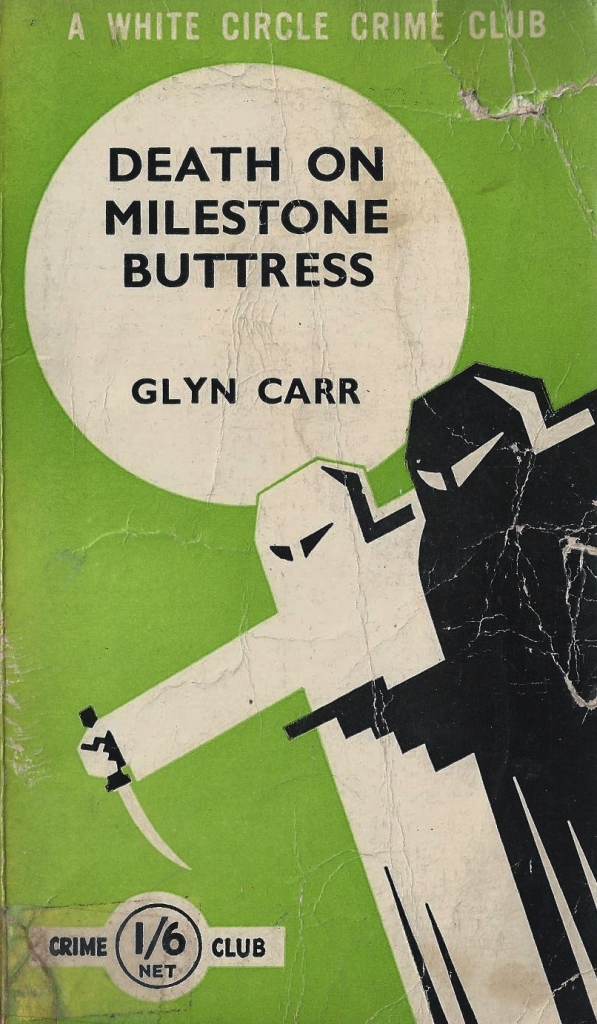
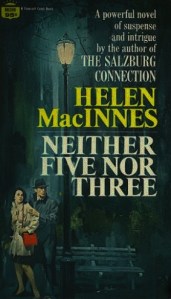 Neither Five nor Three by Helen MacInnes ~ 1951. This edition: Fawcett Crest, circa late 1960s. Paperback. 320 pages.
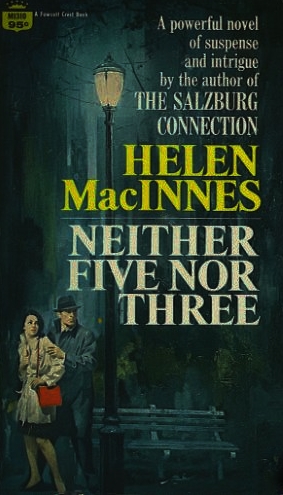
My rating: 6/10
Set in post-World War II New York.
I found myself rather taken aback by this story. While many of Helen MacInnes’ books demonstrate her strong stance on capital-C Communism (it’s 100% bad) this one takes that fixation to a whole new level. Instead of clean-cut English/American heroes and heroines flitting about the shadows of war-torn European cities, it’s all about the insidious influence of underground Commies on the home front (in this case America) after World War II, and it comes across as being deeply paranoid, viewed from half a century in the future.
The love story is utterly predicable and really rather sweet; the two lovers are likeable enough and I found myself in general wishing them well; but the anti-Red plotline pushed me past my comfort level into the “Really? Really?” territory. Even taking era-appropriateness into account. So black; so white. Shades of grey are evidence of weakness, on both sides.
MacInnes’ Commies are supremely well organized; they have infiltrated the American publishing industry and are placing their pawns very cleverly in order to slant the perceptions of readers in favour of the political left. Head honchos from the main office (as it were) in Europe undertake clandestine inspirational (and disciplinary) visits to American “party cells”; new recruits are jollied along until they are too deeply enmeshed to easily escape; then the gloves come off and any attempt to back away from participation or to “inform” is punishable by carefully engineered public disgrace, or, just possibly, sudden death. (Cue foreboding music…)
Definitely a Cold War period piece, which was received with warm approval by readers and reviewers of its time.
Excerpted from the March, 1951 Kirkus Review:
This is the most important book Helen MacInnes has done … absorbing and challenging from first page to last, as the devious methods of Communist penetration into the fields of public relations are revealed, and the terrifying network of Communist affiliation is convincingly recorded. Rona Metford is engaged to Scott Ettley, a journalist whose loyalties are torn between his mounting commitment to “the party” and his yearning for a normal course of love and marriage. Into this situation comes Paul Haydn, just returned to New York from a very hush-hush assignment in Europe and finding that his love for Rona, which he thought was a thing of the past, is still very much alive. The checkered course of love is traced against the background of gradually unfolding ramifications of the violence and falsity of Communist activities in the heart of the world they think they know…
I personally found the political bits verging on hysteria, and while there was an occasional authorial attempt made to balance the viewpoints by pondering why Clean Young Americans might be seduced to the Red Side, once they went too far they were brutally written off and became completely expendable, in the most ultimate way.
A precursor to MacInnes’ more “traditional” (i.e., European-set and action-packed) espionage stories which were to follow, blending an ideological plotline with a stereotypical together/torn asunder/together again romantic tale, with vaguely unsatisfying results.
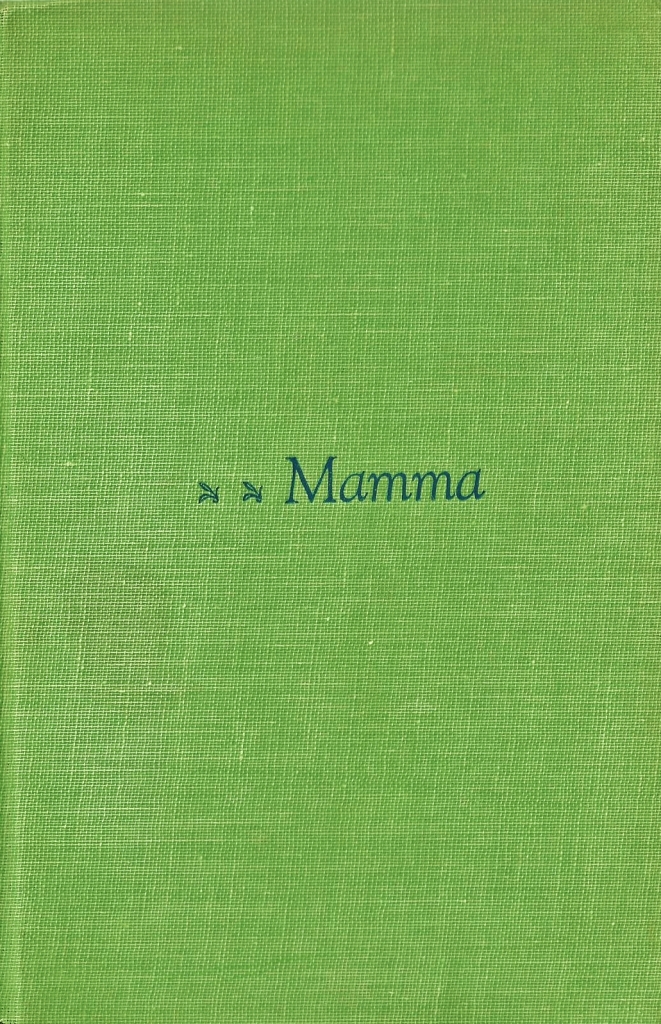
 My Heart Shall Not Fear by Josephine Lawrence ~ 1949. This edition: Peoples Book Club, 1950. Hardcover. 285 pages.

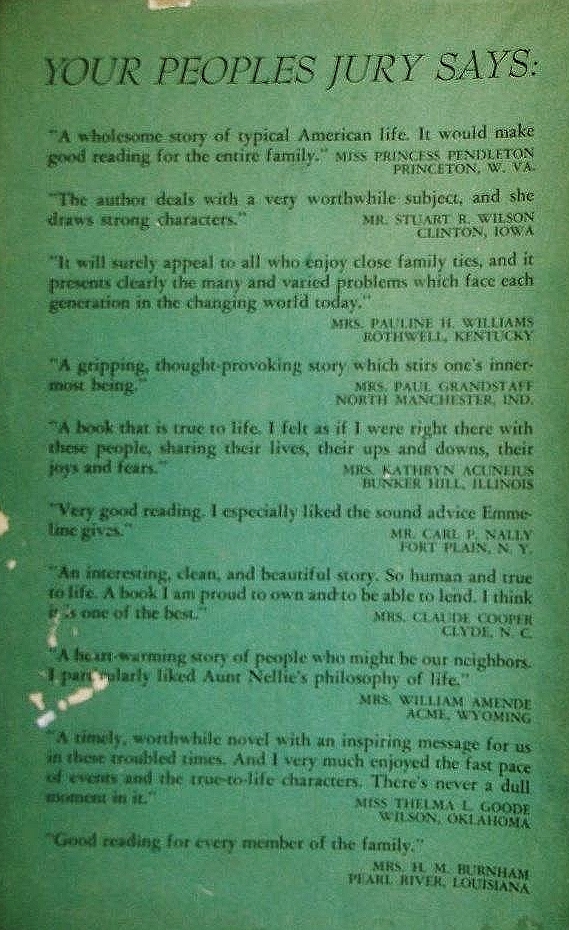
A sampling of readers’ comments, My Heart Shall Not Fear.







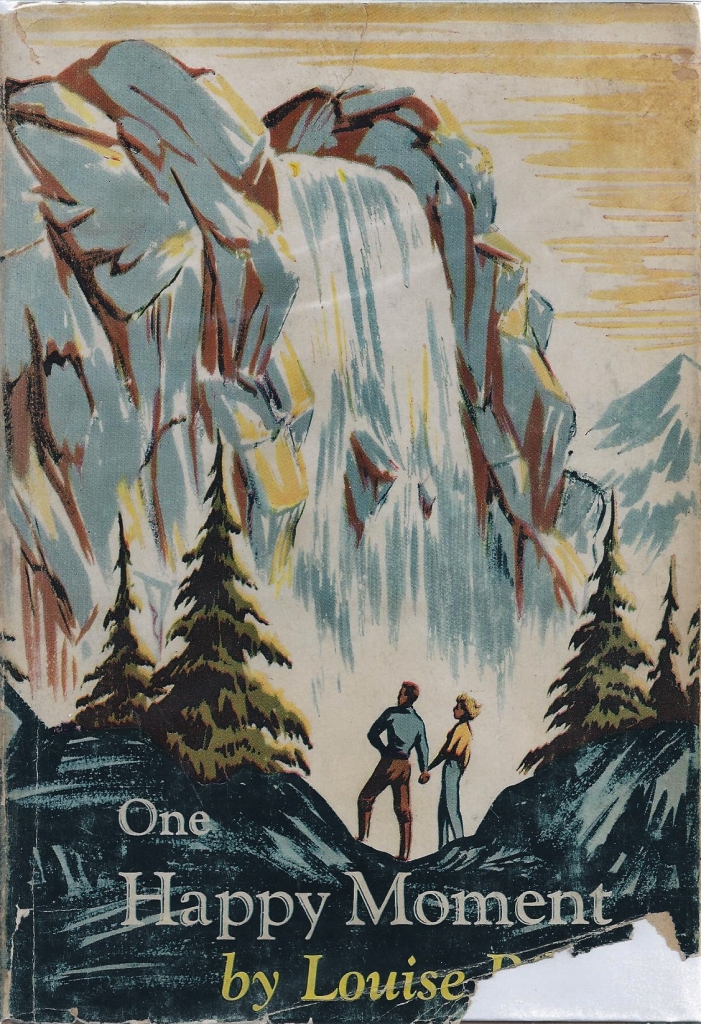
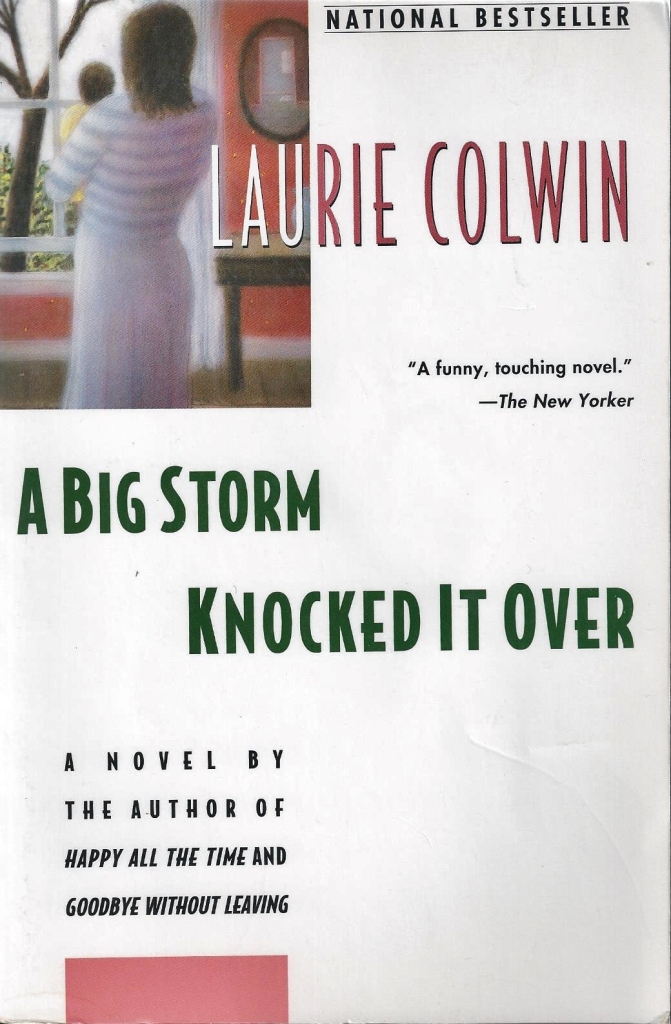








 Leaves & Pages
Indian Vignettes: Mercy, Pity, Peace and Love by Rumer and Jon Godden
Posted in 1950s, 1980s, Century of Books - 2014, Godden, Rumer, Poetry, Read in 2014, Short Stories, tagged Century of Books 2014, Godden, Rumer, India, Jon Godden, Mercy, Peace and Love, Pity, Poetry, Short Stories, Social Commentary on July 28, 2014| 5 Comments »
My rating: I have somewhat mixed feelings about this collection of stories mostly by Rumer, because so many are already included in her 1957 collection, Mooltiki, and reading Mercy, Pity, Peace and Love felt very much like déjà vu all over again. But then I got to the very few (four out of fifteen) stories by Rumer’s sister Jon, and those were good enough to still my pangs of annoyance. To be fair, all of these short stories are actually very good, and if you haven’t read the rather obscure Mooltiki, you will be coming to them with fresh and appreciative eyes.
I think in this case I will award the collection as a whole a most respectable 8/10. (Along with the recycled stories, the two also-repeated poems made me knock it back a half point; Rumer Godden was a much more accomplished prose writer; her poems are just “not quite” for me; something just a bit jarring with the phrasing, I think.)
The intent of the collection is to celebrate the India that the Godden sisters knew and loved; they spent most of their childhood years in India, and significant amounts of their adult lives there as well. Rumer and Jon also collaborated on a beautifully written joint childhood memoir, Two Under the Indian Sun, which I read with pleasure some years ago.
Reader Alert! This is the same book as Indian Dust. Both were published in 1989, but Mercy, Pity, Peace and Love is the American title, from Macmillan, with Indian Dust the British title, from Macmillan. I had recently ordered Indian Dust, thinking it was another collection of stories, and was greatly disappointed to find it was identical to the one I already owned, under the Mercy, Pity title.
But life-plans may go horribly awry; Dhandu’s does not follow its anticipated path; in an ironic ending, which I somehow found reminiscent of W.W. Jacob’s The Monkey’s Paw, the field stays with Dhandu but is forever lost to his son.
An anecdote concerning a series of encounters with a minor craftsman, who proves to be representative of a vast class of Indian society balanced on the knife edge of survival.
Another anecdote, this time by Jon, telling of an encounter with a neighbour’s pet monkey, and the chain of events set off by its biting the author. Fascinating glimpse into the pet-owning culture of upper middle class Calcutta, where Jon was part of a mixed Anglo and Indian community.
Sister Malone, the nun in charge of a charity hospital in Calcutta, is unshaken by the horrible sufferings all around her and does great good with her nursing abilities, but her continual effort to share her religious faith with those she heals goes unheeded. One day Sister Malone meets a man who has truly put all of his trust in God, but she cannot reconcile this with her own conception of what faith should be.
Heart-rending short description of a valiant pet bird and its sad fate.
A modest seamstress is offered a once-in-a-lifetime chance to make her fortune.
A Bhramini Hindu student, who has travelled abroad to study in England, visits Paris with a friend and is forced to examine the role of compromise in the formation of his own developing character.
… … …
A young Kashmiri hunter, longing for winter to be over, thinks of his time the previous year among the high mountains hunting ibex.
The long process of acquiring – or rather, being led into buying by a master salesman – a beautiful Persian carpet. Beautifully observed; gently humorous.
A vignette of a young nomad riding up the mountain to fetch his unseen new wife. Sensitive and poignant.
An orphan boy,
finds his place in the world through his care of a black ram lamb.
Miss Passano is disgusted by her fellow humans, and meditates upon a world without them, where only she would remain, in service to the animals she so greatly loves.
Ganesh Dey attempts to write on these concepts – Mercy, Pity, Peace and Love – for his doctoral thesis. A gently ironical and emotionally powerful story, possibly the best of the collection in its summation of the contradictions of human nature and how we actually treat each other versus how we view our relationships and interactions.
Read Full Post »