Archive for the ‘1950s’ Category

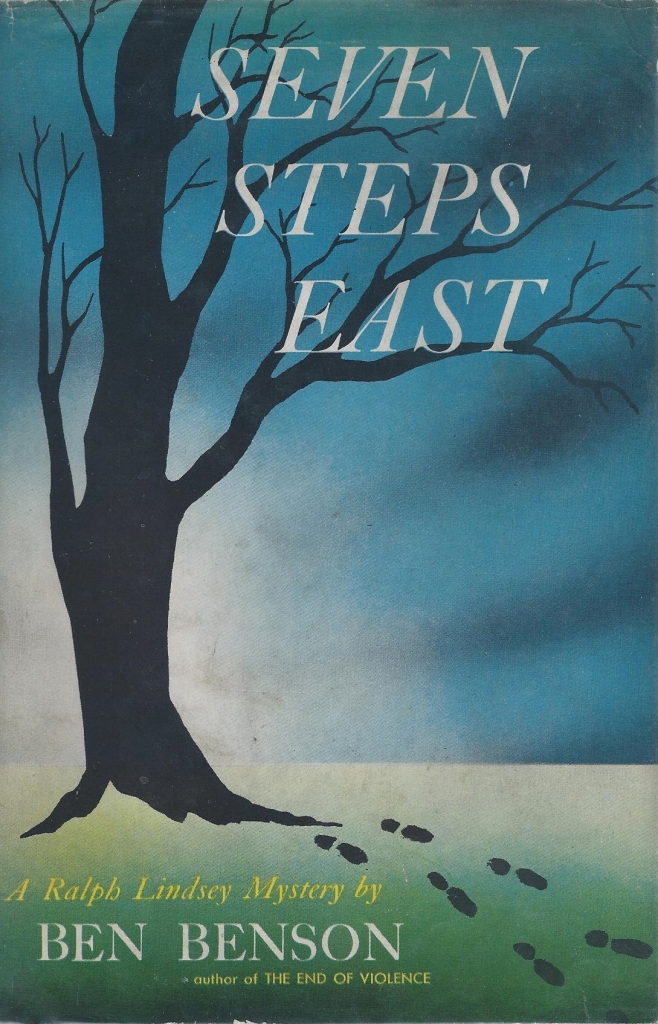
seven steps east ben benson 1959 001Seven Steps East by Ben Benson ~ 1959. This edition: M.S. Mill Co., 1959. Hardcover. 189 pages.

My rating: 5/10*

Nice cover, isn’t it?

Summertime, and the reading is easy.

This reasonably diverting police procedural is my first encounter with this writer, and I’d cheerfully pick up another if it showed up in front of me. It worked well for kick-back time yesterday. Enough puzzle element and moral dilemma discussion going on to keep it from being too black and white, and characters with enough personality to keep them straight in one’s head for the time needed to polish off this slender and more than slightly unlikely mystery.

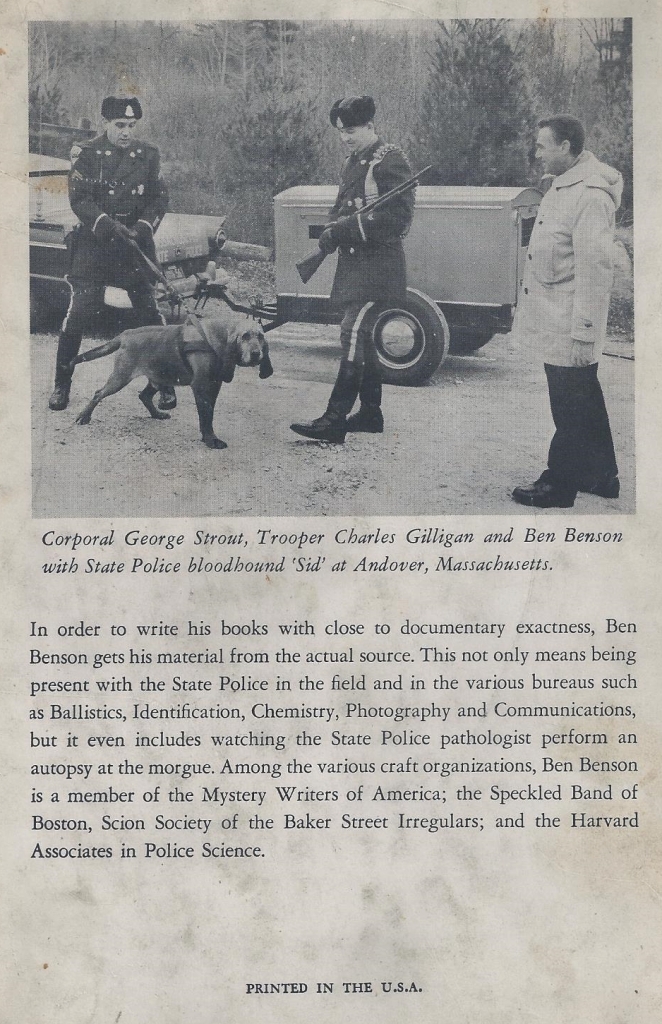
Seven Steps East is the last title by Ben Benson, who started writing as therapy after spending three years in hospital due to war injuries sustained during his 1943-45 U.S. Army stint of active combat. He wrote something like 17 mystery novels between 1951 and his death at the too-young age of forty-four in 1959, sharing the key investigative roles between two fictional members of the Massachusetts State Police: Trooper Ralph Lindsey and Detective Inspector Wade Paris.

In brief, our main character Ralph Lindsey is given leave to investigate the disappearance of one of his star students, Kirk Chanslor – coincidentally a childhood acquaintance now engaged to be married to Lindsey’s ex-girlfriend – when the young man fails to return from a weekend’s leave from the State Police Training Academy where Lindsey is a part-time instructor.

An anonymous phone call leads Lindsey to Kirk Chanslor’s body, hidden beneath a pile of leaves in the forest, and the hunt is on for the killer.

Benson quickly takes us through the steps of a murder investigation, giving a willing nod to each member of the homicide team. Surprisingly for the genre, Ralph Linsey apparently gets along just fine with everyone in his department; there are no internal feuds or personality conflicts; everyone cooperates wonderfully, united in their goal to nail the bad people of their precinct. No question as to which side the cops are on – they hang out with the angels from start to finish.

Chasing down leads among hotel waitresses and bellboys, the investigation has Lindsey making himself unpopular with a powerful ex-gangster-turned-hotelier. Illegal gambling and a highly successful con-artist – someone who can change their eye colour at will, according to the one clue Kirk Chanslor has left behind – hold the key to the solution.

I guessed the gambling con early on, but the actual killer was a bit tougher to pin down, though when the big reveal came I wasn’t at all surprised.

All in all, a workmanlike piece of writing, with moments of flair and the promise of an interesting development for Trooper Lindsey’s future. A shame this turned out to be Ben Benson’s last book.

*The lowish rating reflects that while the book is readable enough, it is nowhere close to the top of the high standard set by the best in the mystery-thriller genre of its era. Raymond Chandler, Josephine Tey, Margery Allingham, Rex Stout, among so many others.

seven steps east ben benson back cover bio 1959 001


Read Full Post »

The books I have read the past ten days of 2016 are already disappearing from my desk quicker than I can consider writing about them. I blame my husband, who is in his wintertime mode of reading the long evenings away, as it is too dark and cold for his other-three-seasons outside occupations. He’s hot on my heels reading-wise this time of year, as I am spending much of my inside “free” time parked at the computer, working on twin time-consuming projects – our plant nursery website, and our upcoming regional performing arts festival, of which I am registrar and program director. No winter doldrums here!

But I’ve looked in all of the obvious spots, and have re-gathered the January books-to-date. I doubt I’ll be writing at length about much this coming year – it promises to be fully as hectic as 2015 – so I am going to try instead to pull off some mini-reviews as I go along.

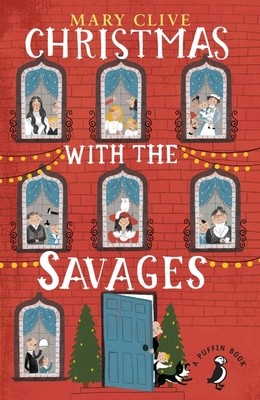
christmas with the savages mary cliveChristmas with the Savages by Mary Clive ~ 1955. This edition: Puffin, 2015. Paperback. ISBN: 978-0-141-36112-3. 186 pages.

My rating: 7.5/10

Ordered in late November from England, this one arrived a few days too late for pre-Christmas reading, but it turned out not to really matter, as its time frame covered the extended after-Christmas weeks as well, and it felt most timely for a seasonal New Year’s read.

This slim book is based on the childhood experiences of the author – Lady Mary Katherine Packenham as she was christened in 1907 – as an attempt to share with her grandchildren a vanished way of life. I had assumed its depiction of a rather spoiled, prim and proper solitary child going off to spend Christmas with a boisterous house full of other children was autobiographical, but as it turns out, the narrator “Evelyn” of Christmas with the Savages is a fictional creation, though all of the children are based on real-life models – Mary, her own brothers and sisters, and assorted cousins.

Though marketed by Puffin as a “sweetly charming” juvenile Christmas story, this wasn’t that at all, being rather a gloves-off depiction of the true nature of children by a writer with little use for mawkish sentiment.

Young Evelyn is quite a horrible prig of a child – she treats her governess and nursery maid with snobbish disdain, looks askance at the rowdy crowd of upper class brats she is expected to mingle with, and assiduously courts the company of the mostly disinterested grownups who live their parallel silk-lined lives alongside the slightly grotty sub-world of the nursery.

This is quite a grand little book in its way, and though it wasn’t the “cosy” I assumed at first that it would be, it does have a dash or two of youthful joy, with Mary Clive’s unsentimental depiction of the world of Edwardian upper class childhood including many pleasurable events and the occasional thoughtful moment.

Mary Clive wrote several other memoirs for adult readers, and I am now dead keen to get my hands on them, in particular Brought Out and Brought Up, her 1938 account of her season as a debutante in 1926.

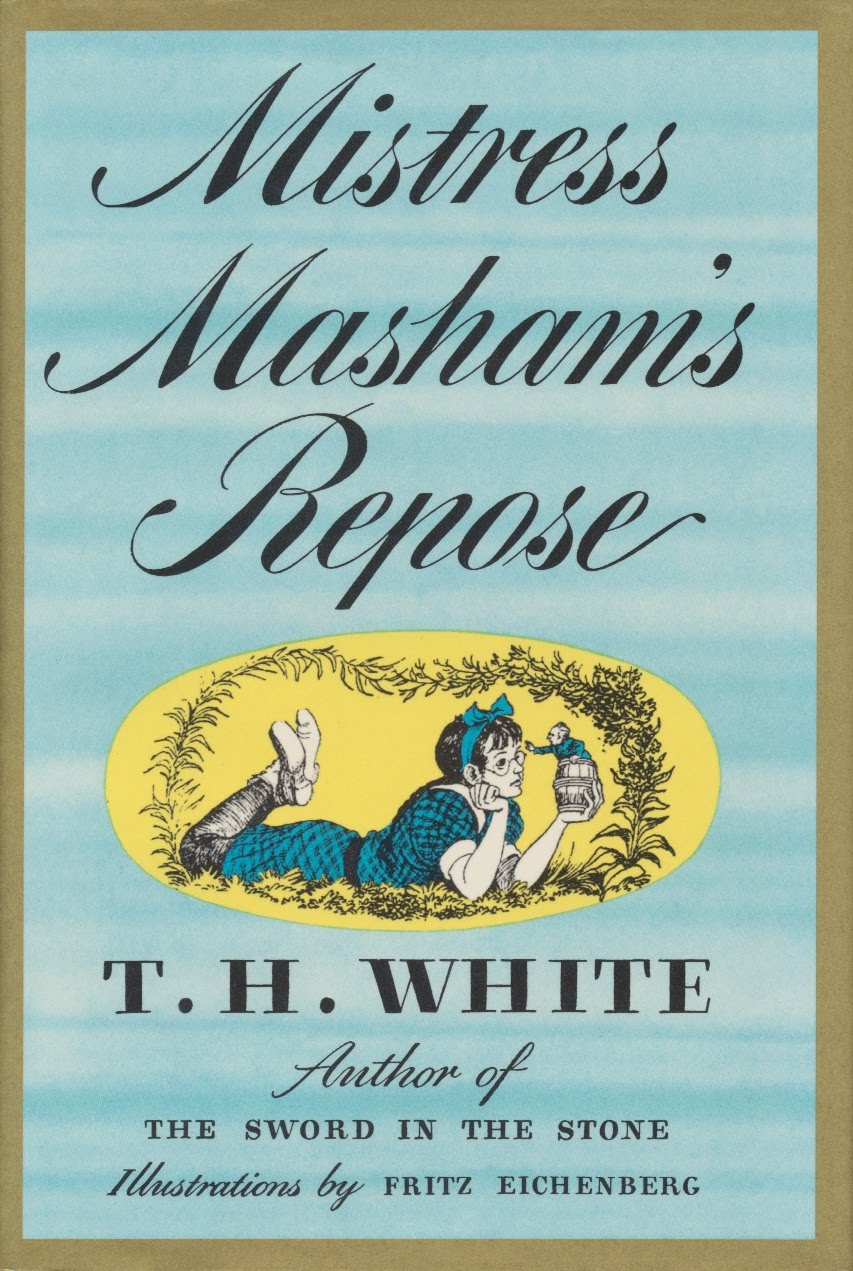
Mistress-Mashams-Repose-by-TH-WhiteMistress Masham’s Repose by T.H. White ~ 1946. This edition: Putnam, 1946. Illustrations by Fritz Eichenberg. Hardcover. 255 pages.

My rating: 9/10

This gloriously involved juvenile by the brilliant T.H. White is one I’ve read and re-read with great pleasure over the years, though somehow I never did read it aloud to my own children. Indeed, I rather wonder what the 21st century child would make of its arcane references to art, architecture, history and literature. I suspect a fair bit of what makes this tale so deeply funny would sail right over the heads of the present crop of youngsters, though an interested child could certainly find a lot of scope for click-research!

Orphaned ten-year-old Maria, last of her noble and once fantastically wealthy family, resides in a tiny corner of the crumbling Great House of the Malplaquet estate, attended to only by a solitary old family retainer, and under the sadistic “protection” of her malicious governess and her official guardian, a wicked vicar.

One day, while out exploring the ornamental lake in a leaky punt, Maria decides to visit the tiny manmade island which is crowned by a now-decayed ornate ornamental temple, known as Mistress Masham’s Repose. What she stumbles upon there is a thriving population of Lilliputian people, descendents of escapees from those brought to England by the scheming but bumbling Captain Biddle, who displayed them as sideshow oddities in order to earn money to indulge in his drinking habit, way back in 1700-and-something.

What happens when Maria decides to take on a philanthropist’s role to her discovery – and when her overseers inevitably discover the tiny people – makes for a lively, occasionally philosophically meandering, deeply appealing adventure tale.

Good stuff. This one may well get a proper long post one day, full of quotes and samples of Eichenberg’s brilliantly detailed illustrations.

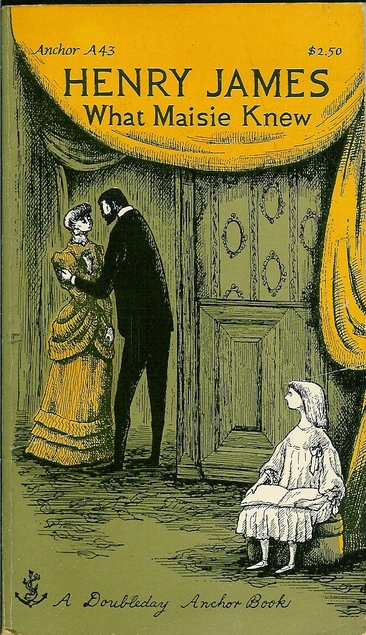
what maisie knew henry jamesWhat Maisie Knew by Henry James ~ 1897. This edition: Anchor Books, 1954. Paperback. 280 pages.

My rating: 6/10

Ah, Henry James. Master of the densely written social examination. In small doses, I rather enjoy him, though I am beyond grateful I’ve never had to approach his work in any sort of scholarly capacity.

What Maise Knew should be subtitled Adults Behaving Badly, as it portrays some of the least likeable parents imaginable.

Wee Maisie is the focus of her parent’s divorce trial, with each vying for possession of her small person in order to punish the other. A compromise is reached, six months per household, and Maisie shuttlecocks between mother and father, acquiring in the course of affairs two governesses, who shall feature strongly in her subsequent life.

In a few years, Maisie’s terms of residence turn from being maneuvered for to being something to be avoided; now the parental game is to see how long each can force the other to care for the increasingly unwelcome child. In the course of things, Governess Number One becomes Maisie’s stepmother, while Governess Number Two tries to imbue the child with at least a semblance of moral sense, while giving her a modicum of steadfast love and stability in a brutally uncaring world.

Parental partners come and go, until at last Maisie is disowned by both birth parents and ends up as the charge of two step parents, the kind but weak Sir Claude who has married and then been abandoned by Maisie’s mother, and the newly “freed” second wife of Maisie’s father.

Complicated doesn’t begin to describe the relationships in this morbidly fascinating concoction, thought be some critics to be Henry James masterwork. I found it hard to look away, while at the same time struggling with the bogging-down complexities of James’ über-wordy prose.

Pleasure reading?  Well, sort of. It felt like something of an accomplishment merely to make it to its odd and only vaguely optimistic (in my opinion) end.

And what did Maisie “know”? A heck of a lot, as it turns out. As a depiction of how an unwanted child remakes herself into a survivor, this is a telling little tale.

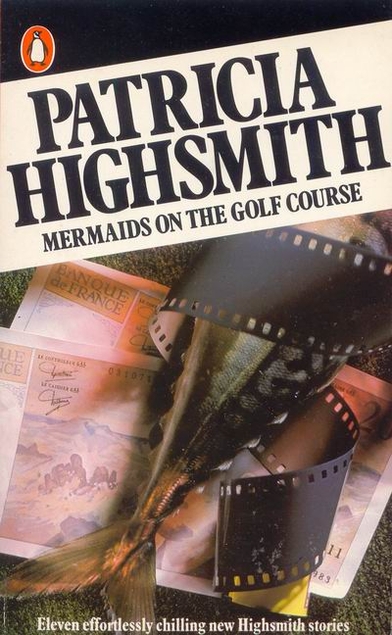
mermaids on the golf course patricia highsmithMermaids on the Golf Course by Patricia Highsmith ~ 1985. This edition: Penguin, 1986. Paperback. ISBN: 0-14-008790-7. 233 pages.

My rating: 5/10

A collection of eleven rather grim, sometimes macabre, only occasionally – and then only faintly – humorous short stories. Not really what I was in the mood for, as Highsmith here portrays her characters in the least positive light possible, and I just got sadder and sadder as I worked my way through these, hoping that the next one would strike short story gold. It wasn’t to be.

This rather twisted moodiness was something Highsmith made rather a thing of in her novels as well, come to think of it. Mr. Ripley being what he was, for one example.

Several of the stories end in suicide, and one of the most subtly disturbing concerns a Down’s Syndrome child’s secretly resentful father and a brutally random murder.

People in these gloomy tales generally wander about with festering grievances which precipitate the plot lines. Endings fade into grey, and most of them left me feeling a bit suspended in space, as if I’d missed that last step – but with no subsequent bang! of a landing. Just floating down, landing with a suppressed whimper.

Not a collection I’d whole heartedly recommend, though there are compensations in Highsmith’s more than competent styling.

TheYearTheYankeesLostThePennantThe Year the Yankees Lost the Pennant by Douglass Wallop ~1954. This edition: Norton, 1954. Hardcover. 250 pages.

My rating: 8.5/10

Now this was an unexpected pleasure. A happily romping fantasy concerning a middle-aged real estate salesman’s inadvertent pact with the devil, and his transformation into a younger baseball superstar who comes out of nowhere (literally!) in order to assist his favourite but dismally unsuccessful baseball team, the Washington Senators, break the clockwork-precise New York Yankees’ long winning streak.

Now, I’m not at all a baseball fan, but one doesn’t have to be to appreciate this cheerfully light tale.

Will our hero Joe be able to hold the devil to his bargain? And what of the middle-aged wife so staunchly dealing with her sudden loss of a husband with good natured stoicism? And then there is the most beautiful woman in the world, who falls in love with the reinvented Joe, and who has a Faustian dilemma of her own to work out.

This is the best-selling novel behind the successful musical Damn Yankees, which I must confess to never having seen. But now I want to!

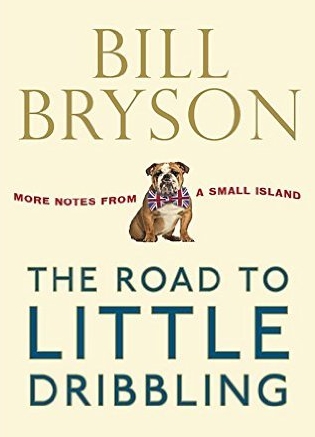
bill bryson road to little dribbling 2015The Road to Little Dribbling: More Notes from a Small Island by Bill Bryson ~ 2015. This edition: Doubleday, 2015. Hardcover. ISBN: 978-0-385-68571-9. 384 pages.

My rating: 7/10

Do I need to talk about this one? Surely not, for those interested will likely already have read it, and the internet will of course be rife with reviews, though I haven’t actually checked to see, having purchased the book as a Christmas gift to my husband merely on spec, seeing as how we have enjoyed (to various degrees) everything else the author has ever written.

Bill Bryson delivers the goods as expected, though this redux of the earlier Notes from a Small Island shows American-by-birth Mr. Bryson in full curmudgeon mode, versus his earlier honestly appreciative if frequently critical take on his adopted country, Great Britain.

Basically, England is going to hell in a handbasket, and our Bill is both mournful and moved to righteous annoyance. Occasionally he finds something to appreciate, and is honestly fulsome in his praise. I laughed out loud here and there, but I also occasionally cringed, because the author’s tone is so harshly judgmental. Well, generally with good reason, but still…

It was more than okay, but not one of his best. Has the Bryson bucket gone to the travel memoir well one time too many? I wonder.

*****

And I bailed out on two books. Just couldn’t get into them, though I may try again one day.

Iris Murdoch’s The Green Knight defeated me at page 80, after a long rambling set-up filled with the complicated back stories of way too many characters. Weird things going on with phrasing and punctuation, too, which had me stopping in confusion and re-reading whole paragraphs to see if I was missing something. I wasn’t, but the editor certainly was. Browsing ahead, there are some intriguing passages, and I hope to return one day to enjoy them. Perhaps.

One Winter in the Wilderness by Pat Cary Peek sounded extremely promising, being presented as the diary of Peek and her wildlife biologist husband one isolated winter in the Idaho back country at the Taylor Ranch Field Station. It might have picked up steam farther along, but the first few sections were just the tiniest bit plodding, as if the writer were trying a mite too hard – and mostly unsuccessfully – to turn her repetitious diary entries into something more literary. Apparently the Idaho Book of the Year in 1998. Fair enough. Back on the shelf, perhaps even into the giveaway box, for someone else to take a go at.


Read Full Post »

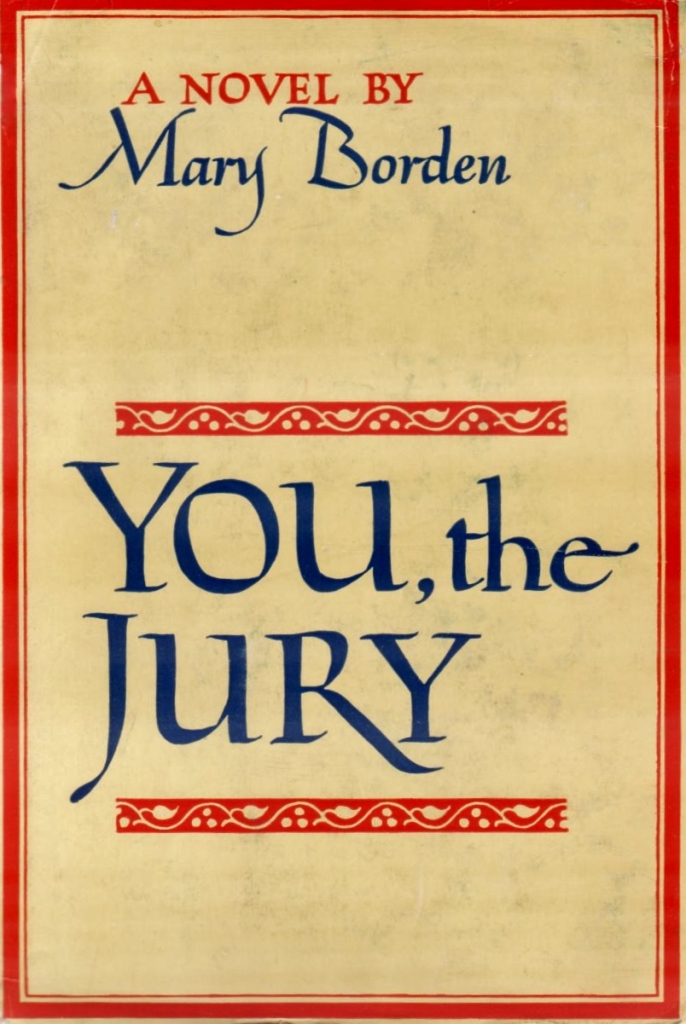
you the jury mary bordenYou, the Jury by Mary Borden, 1952. Alternate title: Martin Merriedew. This edition: Longmans, Green and Co., 1952. Hardcover. 346 pages.

My rating: 8/10

An unreliable narrator, a damning society, a haunting question.

We grew up together. I didn’t get on with him too well once the first excitement wore off (it was wonderful making a friend of our very own), but my brother Francis adored him, they were like David and Jonathan, so I had to go on being friends if I wasn’t to be left out of everything. And I wanted him to think well of me, he was a glorious boy, but he wasn’t the sort of person you could be comfortably fond of, he was too independent and expected too much. Eventually you either gave in to him and loved him blindly, or came to hate him; it was the same with almost everyone who knew him.

So speaks narrator Barbara Patche, looking back from 1951 to the childhood day in 1914 when she and her brother met seven-year-old Martin Merriedew, whose influence on them was to mark and change the expected pattern of their future lives.

Barbara and Francis are the blue-blooded children of an English earl and reside in a typically stately country home; Martin is the child of the newly arrived village doctor whose calm good sense proves a godsend to the Patche family, aiding as it does to the successful treatment of Francis’ crippled legs.

The boys grow up together, and swear an unbreakable oath to go out into the world and do some unspecified action of heroic good together; Barbara jealously looks on, never quite buying (she says, protesting perhaps too strenuously) into Martin’s charismatic appeal, but staying silent because of her beloved brother’s friendship which grows into something more complex and troubling as the boys grown to manhood. (It’s not the sort of male-to-male relationship you might think, either, but something much more complicated.)

Martin takes his medical degree, Francis steps into his father’s place as the new lord of the manor, and both set the countryside all agog with their eventual establishment of a medical clinic funded by Francis’ inheritance, and run along the lines of medical common sense mixed with a dash of faith healing.

For Martin is steadfast in his belief that he knows the will of God – at least as it applies to himself – and when the Second World War breaks over England, he steps forward boldly to proclaim his conscientious objection to taking life, and is posted as a medical orderly (he has since stopped practicing as a doctor for reasons I will leave up to the author to explain) to a front-line surgical station. He and Francis have become estranged some years previously; Francis has followed the way of his more mainstream peers and has joined the air force and is engaged in active combat.

Something happens at the front; Martin is charged with treason and sent back to England to stand trial as the war winds its way into its final days. The penalty, if a conviction is attained, is automatically death.

In a strange twist of fate, the judge who presides over Martin’s trial is Barbara’s husband. Barbara and Francis are shocked and silent spectators as Martin is tried for his life.

As you might suppose, this is not a cheerful sort of story, but instead a deeply thought-provoking examination of what it means to be a true pacifist. Though it can’t avoid a certain amount of sensationalism, the atmosphere throughout is tense with foreboding, and the importance of what isn’t being discussed looms larger than the charges of the village gossips and the headline writers.

I never felt that I got to really know any of the characters in a truly intimate way; too much is unsaid, and Barbara’s point of view is always just slightly open for interpretation. By the end of the story we know the most about her, and only what she allows us to know about the others in that forged-in-childhood triumvirate which has parted and which comes together so irrevocably those decades later.

I won’t detail the ending, but I will say that it was more than slightly ambiguous. Neat solutions and tidy wrap-ups not to be found here.

An interesting book, beautifully written in a tense, controlled, dispassionately stoic tone. It works, in this case, quite well. An author I will be reading more of, if I can.

This was a random acquisition at a book sale a year or so ago, added to the stack after a quick glance inside and the reading of a few paragraphs hinted at something promising. It has taken me some time to get around to reading it, and the paradoxical reward for my procrastination has been the discovery of yet another author-of-note to add to my list of look-for names while out upon the old-book hunt.

A modest amount of research reveals that Mary Borden was a woman of some accomplishment. Daughter of an American millionaire, against all expectations and with no medical training, she spent the Great War voluntarily and by all reports quite brilliantly and efficiently running a field evacuation hospital in one of the most active war zones in France. She wrote a damning (and suppressed – it was not published until some years after the war) memoir of the carnage she witnessed, the recently republished The Forbidden Zone, reviewed in detail here, at Open Letters Monthly.

Taking up writing after the war, Mary Borden produced a number of well-regarded novels, most with serious or suspenseful themes. (You, the Jury, was her last published work. Mary Borden died in 1968, at the age of 82.) She served again in Great Britain during the Second World War, financing and operating an ambulance unit. As well as her novels she apparently wrote at least one further volume of memoirs.

Why have I never come across this writer before? I am sure she must be – or was once – fairly well known; her books are in good supply in the used book trade, in multiple editions.

Is anyone else familiar with this writer? And if you’ve read this or any other of her books, what did you think?

I myself am quite impressed, though I hesitate to recommend this particular book without a caution that it’s not a very typically appealing sort of thing. Hard to classify, really. A product-of-its-time psychological drama?

Edited to add that someone else certainly knows about Mary Borden – Roger who has kindly commented below points us in the direction of an online appreciation and a link to a recent biography of Mary Borden here, as well as a fascinatingly pertinent blog which I spent a satisfying amount of time browsing this morning, Great War Fiction.

Read Full Post »

??????????????????????December 12, 2015. Originally posted a year ago, I offer you all this most seasonal book recommendation. It may be a challenge to come by – just two expensive copies show up on an ABE search – but it might still be in some library systems. This one would be a prime candidate for republishing – Slightly Foxed ?

Marijke, thank you once again for the making me aware of this lovely memoir.

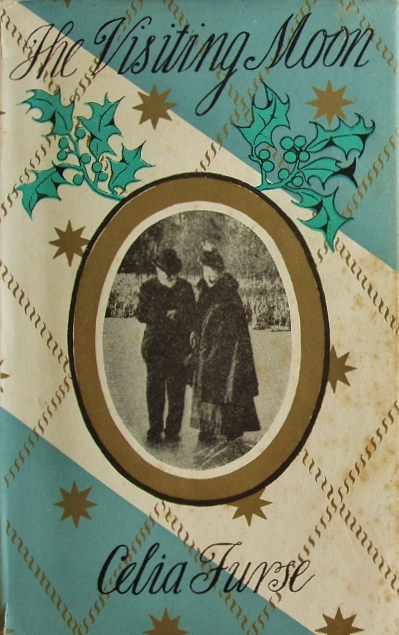
The Visiting Moon by Celia Furse ~ 1956. This edition: Faber & Faber, 1956. Chapter-head illustrations by Charles Stewart. Hardcover. 260 pages.

My rating: 10/10

I will tell the very recent history of how I came across this book here, inspired by the words of a fellow reader who recommended it to me.

On December 3rd, I received a comment on a post from Marijke in Holland, and in it she said:

…There is…one book… and as it is about Christmas and as Christmas is coming, I recommend it hereby “from all my heart”!

In 1966, when I was 22, I stayed for 4 weeks in August at a family in Cheadle, Cheshire, England. I had met them some 10 years before at my aunt’s bed and breakfast in my (then) hometown Nijmegen, where I was doing the washing up, and being a tolk for the family: father, mother and grownup daughter. They had come to Nijmegen because the father had fought in the battle around Nijmegen in the winter of 1944-1945, and he wanted to let his wife and daughter see the place. So I went around with them every day, even to some German places not far from our border, and they invited me to come and stay in England, and I went for the first time when I was 17, after finishing school, and, as I said before, again in 1966. Cheadle is near Manchester and I went there to the antiquarian bookshops, looking for Elizabeth Goudge and Beverley Nichols, and one of the bookshop-owners, a very nice and understanding man said, that when I liked these authors I might like THE VISITING MOON by CELIA FURSE (Faber 1956). I bought the book, merely because of the illustrations, and read it, at home again, in the week before Christmas, fell in love with it, and have read it since that time EVERY YEAR at Christmas. It is stained by candlegrease, because it is always lying under the Christmastree, and it has lost its cover and it is my very very best Christmas-story ever, and when you do not know it, look for it at Amazon or Abe-books immediately!

Celia Furse is the daughter of Sir Henry Newbolt, but that is another story and a very peculiar one indeed…

If you think I can resist a recommendation like this, you don’t know me very well 😉 so of course off I immediately went to ABE and ordered myself a copy from a bookseller in England and with wonderful serendipity it arrived well before Christmas.

What a grand book. I think I can safely add it to the “Hidden Gem” category, and I know it will become a favorite Christmas season re-read, though it is so good that one could pleasurably read in in any of the twelve months.

Lady Margaret Cecilia Newbolt Furse – her pen name a shortened version – writing in 1955 when she was 65 years old, tells of a two-week visit to a large English country home at the turn of the 19th Century. The 11-year-old girl in the story, “Antonia”, or “Tony” as she is called by almost everyone, is a boisterous tomboy of a girl, imaginative and occasionally pensive, and our omnipotent narrator (Celia Furse herself, as we are given confirmation of at the close of the story) follows her through a fortnight, recording the goings-on in a large Victorian household packed with visiting relations, and full of family tradition and local custom.

A detailed and loving remembrance of a moment in time now long past, deeply nostalgic but also wonderfully realistic. This is a charming book, but never sticky-sweet: Antonia/Celia has much too much forthright character for that to be a danger.

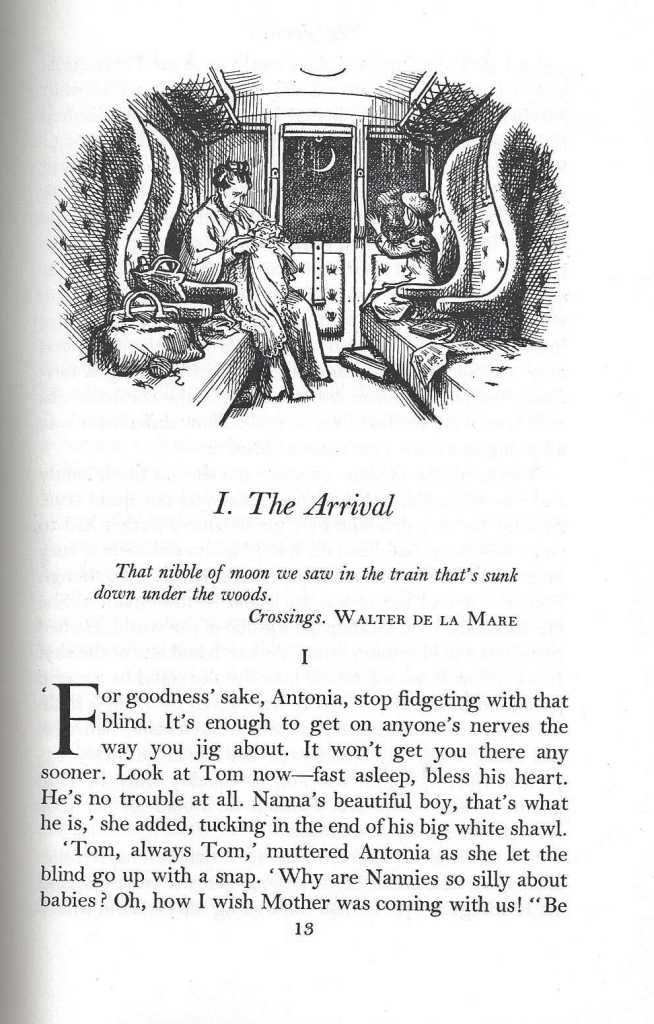
Here are the first 5 pages, so you can sample this for yourself. (Click each page scan to enlarge for reading.)

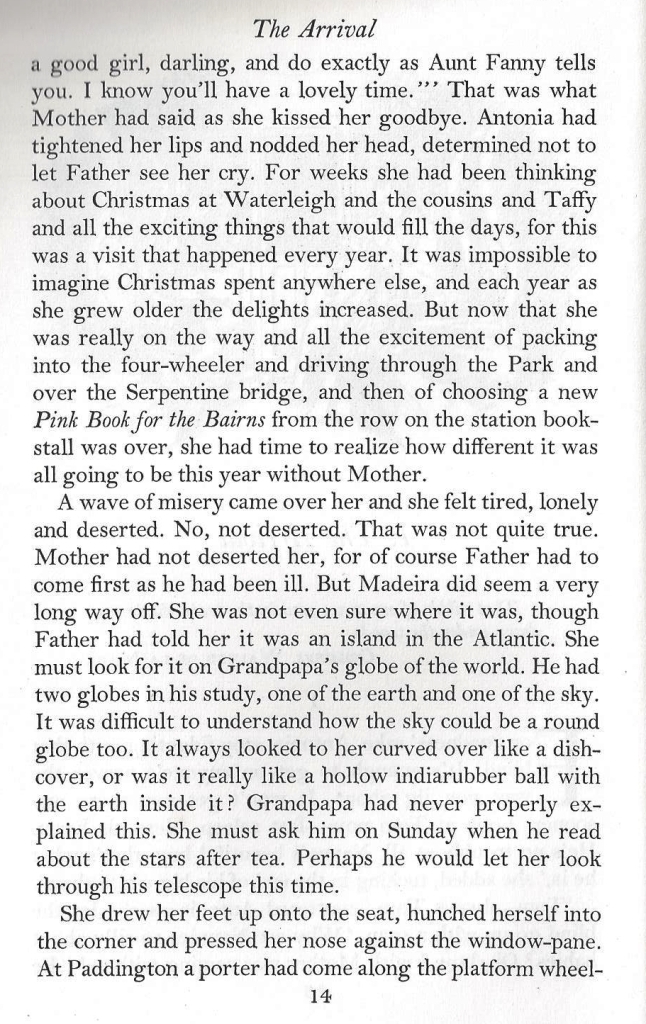
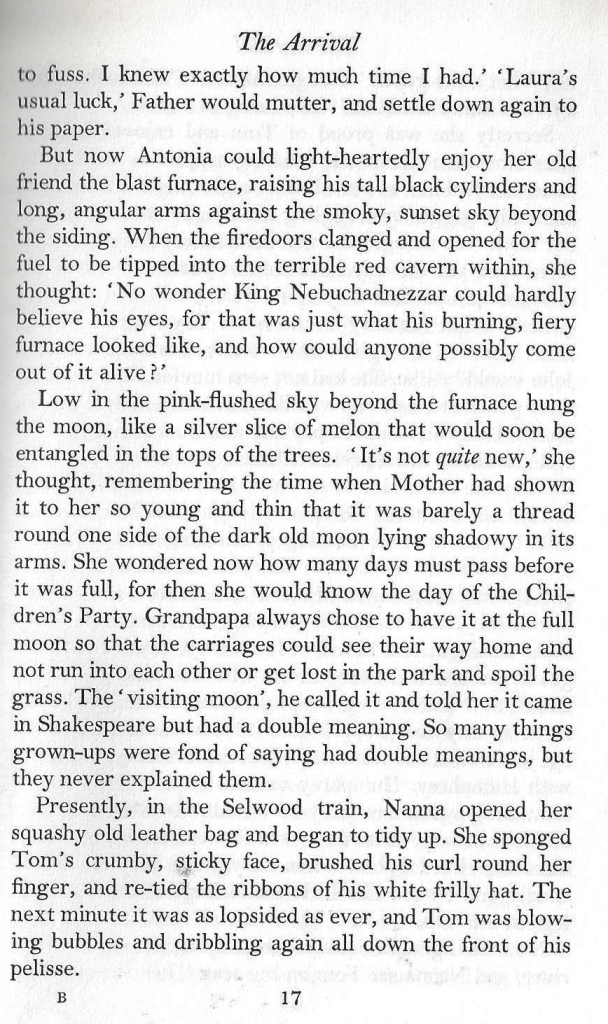
visting moon celia furse excerpt pg 1 001

visiting moon celia furse excerpt pg 2 001visiting moon celia furse excerpt pg 3 001 (2)visiting moon celia furse excerpt pg 4 001 (2)visiting moon celia furse excerpt pg 5 001

It just gets better and better – a perfect gem of its childhood memoir genre.

Highly recommended, though you may have a bit of a quest getting your hands on it. There are only 9 copies listed this morning on ABE, ranging from $2 US (plus $26 shipping to Canada from the UK, so not such a bargain as all that) to $60 US. (Edited to add: Only two copies on December 12, 2015, starting at $50 U.S. plus shipping – perhaps a mite too high-priced?)

This book cries out for republication – it has Slightly Foxed written all over it – spread the word!

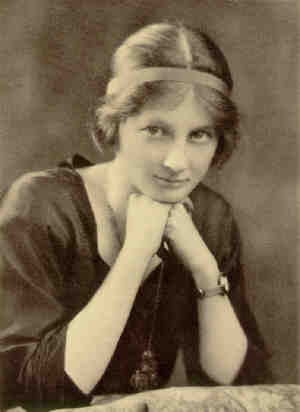
Margaret Cecilia Newbolt as a young woman.

Margaret Cecilia Newbolt as a young woman.

A little more information I picked up while (fruitlessly) looking for more by this writer. The Visiting Moon appears to be Celia Furse’s only published memoir (and what a shame that is, for it is really good), but it seems that she was a lifelong writer, as I did come across mention of her as a minor Edwardian poetess, including this rather twee example, circa 1919, from her only published (apparently, for I could not find mention of any more) book of poetry, The Gift.

The Lamp Flower

by Margaret Cecilia Furse

The campion white
Above the grass
Her lamps doth light
Where fairies pass.

Softly they show
The secret way,
Unflickering glow
For elf and fay.

My little thought
Hath donned her shoe,
And all untaught
Gone dancing too.

Sadly I peer
Among the grass
And seem to hear
The fairies pass.

But where they go
I cannot see,
Too faintly glow
The lamps for me.

My thought is gone
With fay and elf,
We mope alone,
I and myself.

Don’t let this put you off, though, for The Visiting Moon is good strong stuff, with prose much less sentimental than this poetic effort.

Celia Furse’s father was the poet Sir Henry Newbolt, as mentioned by Marijke, and I am most intrigued by his particulars.

I’m sure you will have come across one of his most well-known poems, the ubiquitous “Vitai Lampada”, beloved of Great War propagandists, though Sir Henry came to dislike his early effort greatly, as its lasting popularity eclipsed his later work:

There’s a breathless hush in the Close to-night —
Ten to make and the match to win —
A bumping pitch and a blinding light,
An hour to play and the last man in.
And it’s not for the sake of a ribboned coat,
Or the selfish hope of a season’s fame,
But his Captain’s hand on his shoulder smote
“Play up! play up! and play the game!”

The sand of the desert is sodden red, —
Red with the wreck of a square that broke; —
The Gatling’s jammed and the colonel dead,
And the regiment blind with dust and smoke.
The river of death has brimmed his banks,
And England’s far, and Honour a name,
But the voice of schoolboy rallies the ranks,
“Play up! play up! and play the game!”

This is the word that year by year
While in her place the School is set
Every one of her sons must hear,
And none that hears it dare forget.
This they all with a joyful mind
Bear through life like a torch in flame,
And falling fling to the host behind —
“Play up! play up! and play the game!”

Good strong manly stuff, what?

So here’s a rather salacious tidbit about its writer, and of the household set-up of our Celia Furse, who must have had some sort of inkling that her parents’ marriage was of an unconventional sort. (She does refer in The Visiting Moon to “Tony’s” mother’s “boyish” qualities, which the 11-year-old of the memoir feels she has inherited.)

When Sir Henry Newbolt proposed to his wife, Margaret Duckworth, she was already in love with her lesbian cousin, Ella Coltman. Margaret agreed to marry Henry only if she could continue in her relationship with Ella; Henry agreed and went a bit further, by setting up a ménage à trois with both women, and noting in his diaries the number of times he slept with each one, turn and turn about. This situation lasted out the life of the principles, and seemed reasonably successful for all of them, though there were reported to be some to-be-expected flurries of emotion upon occasion.

On my reading list for 2015: a biography of Sir Henry Newbolt. Luckily there appears to be quite a good one out there, 1997’s Playing the Game, by Susan Chitty.

Isn’t this sort of thing quite wonderful? One thing leads to another, and I know I will never run all of these meandering book-related questings and explorations!

Read Full Post »

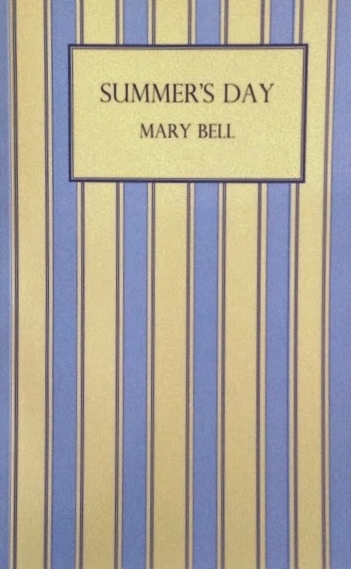
Summer's Day by Mary Bell 1951 Greyladies reprint 2008Summer’s Day by Mary Bell ~ 1951. This edition: Greyladies Press, 2008. Softcover. ISBN: 978-0-9559413-2-0. 281 pages.

My rating: 10/10

Craftsmanship of any sort is an admirable thing, and one of life’s greatest joys is coming unexpectedly upon an example of mastery in execution, no matter what the field.

Finding craftmanship in writing is perhaps rarer than one would hope, what with the amount of people practising the trade. A book can easily make it to the bestseller lists without this elusive element – I won’t be giving examples, leaving it to you, dear fellow reader, to nod in recognition of this rather cheeky assertion – and how ironic it is (I often think) that some of the most creatively or just downright cleanly styled books are to be found languishing all unapplauded in the out-of-print stacks.

A case in point is this minor novel in a minor key, brought to my attention by Scott of the always-dangerous-to-browse Furrowed Middlebrow (“Off the beaten page: lesser-known British women writers 1910-1960”). After reading his post regarding this book back in 2013, and the follow-up post regarding his search for the identity of the writer some months later, I decided that this was something I needed to investigate for myself.

Summer’s Day proved not that easy to access, for though it had been re-published in 2008 by Greyladies Press, it was no longer on the available list, having been sold out of its print run. (Which makes me wonder just how many copies a typical print run might be for this sort of thing. I’m guessing not particularly high, but it would lovely if I’m wrong, and if there were thousands of these second-life titles being snapped up by discerning readers like myself. But I suspect the number is in the hundreds, or even less. Ah, well, we do what we can to spread the word.)

I did find a used copy on ABE, and it arrived promptly, and I just as promptly dove into it, but sadly the timing of my reading was all wrong, as I took the book along to enhance and occupy my time in a surgical waiting room (not for any operation of my own, but for one of my family members) and, needless to say, I was not as focussed as I should have been, for the story did not take, and I set it aside to tackle in future.

Future having arrived, and an opportunity for quiet, mindful reading along with it (thanks to the sudden onset of bitterly cold weather and the temporary sidelining of a major outdoor project), I’ve now read the book.

Scott is right. It’s a gorgeous example of its sort of thing.

In an English girls’ boarding school, shortly after the end of World War II, on the first day of summer term, a variety of characters are assembling. We see them at first in delicately sketched vignettes, and as the novel progresses and the camera pans out, as it were, we discover the inter-connectedness of each to the others, and with each succeeding page our interest grows, as we become acquainted with what is going on inside each of the character’s heads, and how the others in their circle react to their words and actions, and what makes them all tick.

The plot is episodic and not terribly dramatic: a number of schoolgirls deal with the everyday issues of communal life and occasionally wonder what their future will bring; a number of schoolmistresses (and one schoolmaster) ponder the same – both for themselves and their charges; a number of supporting characters (the school gardener, the housekeeper, members of the auxiliary staff, assorted parents, a potential lover or two) weigh in with their own thoughts on the girls they are attached to or otherwise interact with.

The appeal of Summer’s Day is not in what actually happens in the course of the narrative, but in the picture it creates of this common-yet-arcane micrososmos. The author has her characters well in hand, and she parades them across her stage with competence and delicious humour and deeply relatable poignancy.

For such a short book, less than 300 pages, there are an unusually high number of fully formed characters created who take shape and live in the reader’s mind, though none of them are likely to trouble us much, with the exception of two who are bereaved of their beloved, and whose grief follows us after the book is closed. I found myself genuinely anxious on their behalf, and had to give mself a litle mental shake – “It’s fiction, you silly – these people aren’t real!”

But they could be, and that’s a sincere compliment to the writer’s art.

More detailed reviews are presented here (same Furrowed Middlebrow link as earlier on) and here (from Lyn, of I Prefer Reading) complete with a number of quotations. I am perhaps not quite as enamoured as Scott was – though everything he says I concur with – and I nodded happily throughout Lyn’s review, for in it she says everything I’d like to, saving me the trouble of a recap.

Both are correct in that you really do need to concentrate on this one – it rewards a close examination, and is perhaps not the type of thing to take up if one is in the midst of any sort of emotional turmoil in one’s real life. But once you enter in, so much to appreciate.

And – as I do believe I’ve mentioned once or twice – with a lovely vein of ironic humour. Good stuff. Thumbs up to Mary Bell, whoever the heck she was, and boo hiss that this was (apparently) her only foray into writing.

“Who’s that chap?” asked a small girl’s father as Mr. Walker went by, liking the look of him. “I don’t remember -”

“Oh, that’s Fishy Walker,” his daughter informed him. “He’s not anybody’s father. As far as I know,” she added with intent – a failure – to shock.

“Fish?”

“Yes. The drawing master.”

“And what do you draw?”

“Fish,” she explained patiently. “Do watch the bowling, dear.”

He did so, taking furtive glances at his daughter during runs. Did they really draw fish? he wondered. It seemed an odd reason for him to be scrounging for those fees. Perhaps it was a prelude to one of those modern careers, like girls looking after animals in the zoo, and he had a vision of himself creeping through the dim shades of some future aquarium to an assignation with his daughter among the octopuses.


Read Full Post »


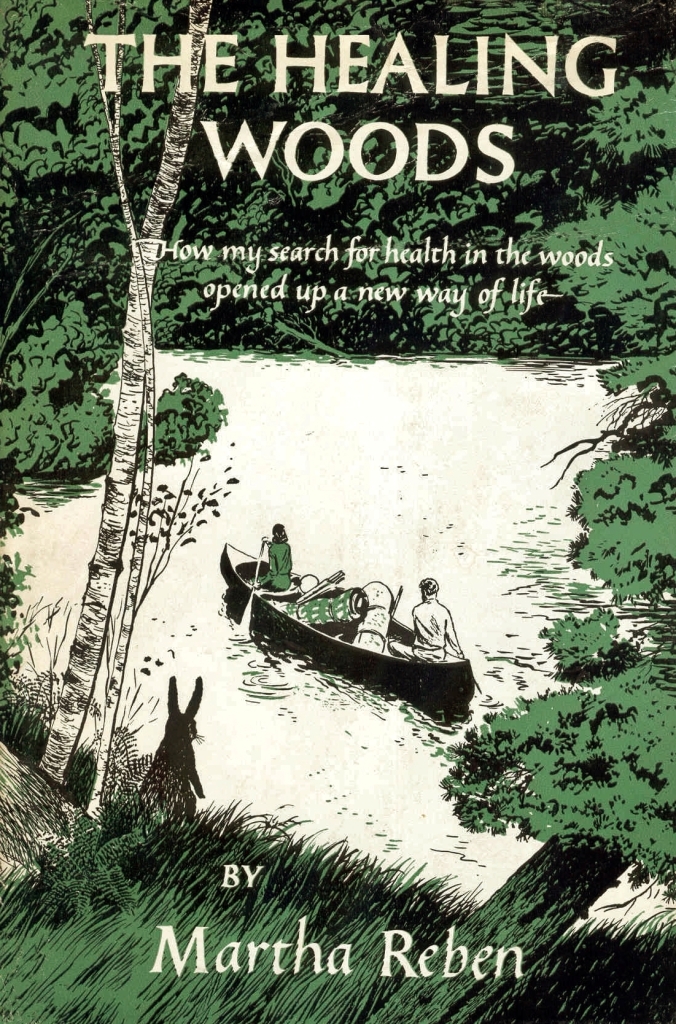
the healing woods 2 martha rebenThe Healing Woods by Martha Reben ~ 1952. This edition: Thomas Y. Crowell, 1952. Decorations by Fred Collins. Hardcover. 250 pages.

My rating: 7.5/10

From my late mother’s bookshelf, a likeable, low-key memoir. Now shelved with Betty MacDonald and Rachel Peden, as it is of similar vintage and appeal, though more sober in tone than MacDonald’s humorous narratives, and more limited in scope than Peden’s musings on mankind and nature.

*****

No respecter of social or economic status, in 1931 tuberculosis was still very much a deadly disease, treated by strict bed rest in isolation wards, and in severe cases gruesome-sounding surgeries, including removal of ribs in aid of collapsing the lungs in order for them to “rest” and heal. (Unlikely as this sounds, it did frequently work. But not always.)

Martha Reben’s mother had died of TB when her daughter was six years old, and some years later Martha was diagnosed with the dread disease herself. The prognosis wasn’t good. After three years of bed rest and a number of unsuccessful operations, Martha in a last-hope move decided to try something a bit different in order to save her own life.

From her bed in the TB sanatorium at Saranac Lake, New York, Martha made contact with a local boat builder and fishing guide. Fred Rice, having spent many years observing the TB patients as they passed through the community, had an idea of his own as to whether rest or gentle exercise were the best way to cope with the disease. He felt that inactivity might not in all cases be the best treatment, and in 1931 placed an ad in the local newspaper:

Wanted — To get in touch with some invalid who is not improving, and who wants to go into the woods for the summer. — Fred Rice.”

Fred was shocked when M. Rebenstisch (her publisher later shortened her surname to Reben) turned out to be a young lady, and at first refused to take her on, but she eventually talked him round. Against all doctors’ advice, and with his wife’s permission and her father’s reluctant blessing, Fred Rice loaded frail Martha into his canoe, propping her up with pillows and enveloping her in blankets, and the two set off for a campsite eleven miles away.

Here Martha was established in a tent as her good-natured caretaker went about his daily chores. Soon Martha was venturing a little farther into the woods on each of her gentle walks. She started to sit up in the canoe for short excursions, and then to wield a paddle. Tired of Fred’s uninspired cooking, Martha began to take on kitchen duties. The combination of fresh air day and night, abundant rest interspersed with enough chores to keep things from getting dull, and the companionship of cheerful Fred and a multitude of woodland creatures worked its magic. By snowfall that year, when the lake was icing over and it was time to break camp, Martha was well on her way to being cured of her TB, though she was still unable to partake in more strenuous activities.

With modest financial help from her family and the occasional assistance of the Saranac Lake villagers with such jobs as firewood chopping, Martha moved into a small cabin for the winter. When spring came, she and Fred again headed out to their camp, where this time round Martha was able to manage for herself much of the time while Fred went off on guiding jobs. The pattern of three seasons sharing a home base camp and winter in town was to continue for many years.

The platonic relationship between Fred and Martha was to last until the end of their lives. The two enjoyed their mutually beneficial coexistence out in the woods, sharing a deep love of the nature and of “bushcraft”, and of reading and spirited conversation. Fred’s wife Kate also became firm friends with Martha, helping her with winter household chores and cooking for her on Martha’s bad days.

Searching for a way of generating some income while still living in the country – a return to bustling New York City holding no appeal – Martha decided to more seriously pursue the craft of writing. She wrote newspaper articles and re-worked her journals from those first years in the bush with Fred into her first memoir, The Healing Woods. It was received by the public with warmth and became a modest bestseller, an unusual “ends well” story which was inspiring and positive.

Though Martha eventually was officially “healed” of her TB, her constitution was always fragile. She died at the age of 58 in 1964, and Fred at the age of 90 in 1966.

I quite like this book, though I can’t in all honesty call it a true “hidden gem” – it’s a minor sort of work, though very good for what it is. Its author writes with evident appreciation about her life in the woods, and with acerbic affection about her human companion.

The Healing Woods is the slightest bit uneven in the early chapters, but the writer soon settles into her stride. The resulting memoir is a no-nonsense, no-self-pity evocation of one woman’s healing journey, soon expanded to become an eloquently realistic ode to the natural world.

I wonder what Martha Reben’s life was like after that turning-point season in the woods? Two subsequent memoirs are now on my watch-for list, The Way of the Wilderness, and A Sharing of Joy.


Read Full Post »

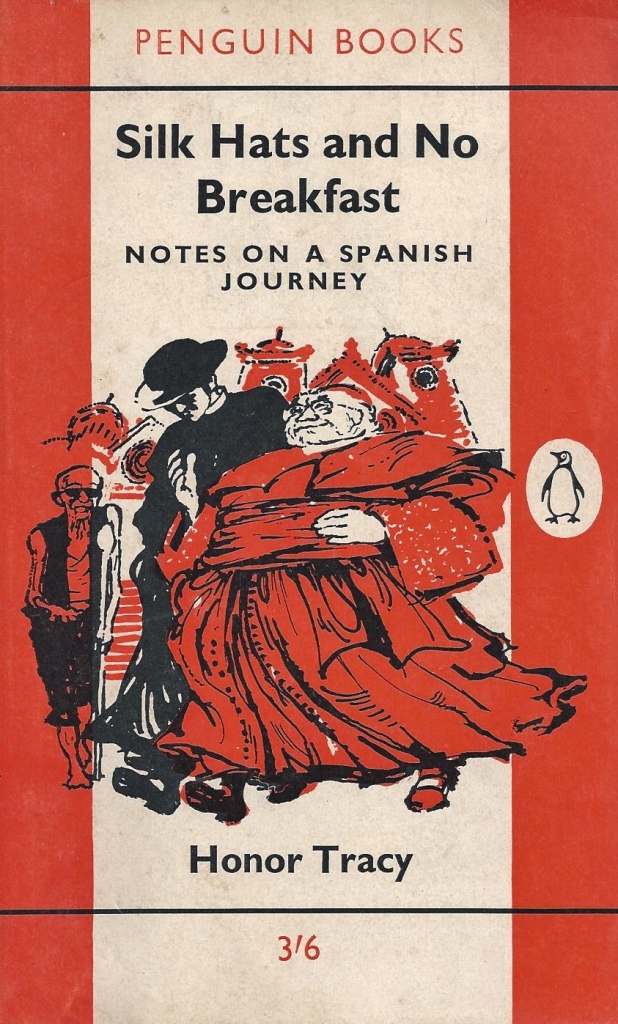
silk hats and no breakfast honor tracy 001Silk Hats and No Breakfast: Notes on a Spanish Journey by Honor Tracy ~ 1957. This edition: Penguin, 1962. Paperback. 190 pages.

My rating: 6/10

New to me with this book is this writer, one Honor Lilbush Wingfield Tracy.

Born in England in 1913, Honor Tracy seems to have been involved in the world of the written word from early on, with her first job being in a London publishing house. She went on to work in wartime intelligence for the British government, and then as a newspaper columnist and foreign correspondent, eventually turning out a number of well-received travel memoirs as well as a respectable number of satirical novels.

Honor Tracy, according to the biographical write-up in my vintage Penguin paperback copy of Silk Hats and No Breakfast, generally spent her summers in “a village near Dublin”, and her winters in Spain, making her something of an accepted authority on both countries and a translator of both Irish and Spanish quirks and eccentricities to her English readership. She also wrote a book, Kakemono, about her 8-month stay in Japan in 1948, which piques my interest, for if Silk Hats is any indication of her general technique, Honor Tracy would have written with brutal accuracy her impressions of that war-torn land and the reception she received from its people.

Silk Hats and No Breakfast recounts a summer journey – June till September, 1956 – made into Spain, from Algeciras to Vigo, with numerous side excursions, over something like 1200 miles of road (the author’s rough estimate) travelled by public transport (mostly bus) and hired taxis.

Though well-prepared with an itinerary of what she wished to see, and with abundant prior experience in Spanish travel, Honor Tracy rather gallantly threw herself to the mercies of fate regarding her accommodations and meals. She goes with the first hotel tout she meets at each bus or railway station, and ventures into any number of local (versus for-the-tourist) restaurants, cafes and bars, sometimes with wonderful results and fantastic food, and other times not quite so fortunately.

This sounded like an interesting travel memoir, and I had very high hopes for it, and it met many of my expectations. It is good – very good, really- but I wouldn’t go so far as to call it “great”, which is, of course, only a reflection of my own individual likes and dislikes for books of this genre.

Honor Tracy writes with skill and precision, and she is mostly acceptably interesting, though after a while I started to lose track of exactly where we were supposed to be – place names being lavishly provided but with little explanation of context, as if the reader is expected to be as familiar with the intricacies of the Spanish map as the writer obviously was.

There is, however, a continual bitter cynicism to her tone which keeps one from getting too close to her, as it were. The best travel writers have the reader stepping along as a firmly attached shadow; with Honor Tracy I get the feeling that I am very much an audience member, and an uncritical one at that – she can say anything she likes and can indulge in sarcasm and asides, and I am expected to nod and smile and not say anything in return.

That probably doesn’t help you much with deciding if this is your sort of thing, does it? I should probably include a few excerpts, so you can get a taste of this writer’s flavour for yourself.

I’m rather curious about her other works, and am debating tracking down the Japanese memoir, as well as some of her fiction. She’s very readable, as long as one is prepared to be the recipient of some rather brutally opinionated asides, mixed a bit confusing with frequent warm approbation of the people and country she is turning her journalistic X-ray eye upon.

(At the start of the journey, visiting with a friend and fellow writer, Gerald Brenan.) All along the hilly path to the shore we talked about Spain, and when at last we reached Torremolinos we sank into chairs at a café and talked about it further. Gerald Brenan knows the country as well as any Englishman alive and he shares his knowledge with the ignorant in a splendidly open way. When two or three English people are gathered together in the Iberian Peninsula inevitably at some point the question of animals comes up, and it was startling to hear him say that Spaniards love them as we do. They might think it unseemly, obsessed as they are with their own human dignity, to fondle a beast, but their attitude was not the cruel or indifferent one that foreigners supposed. He gave what seemed a curious illustration of the argument: that when domestic creatures are old or sick the owners cannot bear to put them down but will push donkeys and mules over cliffs and leave them, perhaps with broken backs or legs, to die alone; and will turn unwanted dogs and cats loose to fend for themselves among the hundreds and hundreds of strays already starving. This unwillingness to take their lives directly, he thought, came down from the Moors: his wife put it down to stupidity and want of imagination: I wondered if it might be simply the helplessness of uneducated people anywhere. But Gerald Brenan said that the reluctance to tamper with life went through all classes, and gave as example doctors, who will refuse morphia to an agonizing patient if it is likely to bring death any the sooner: adding, wryly, that this attitude disappeared at once the moment passions were aroused, as in the Civil War, when people would be slaughtered to left and right.

Tracy consistently points out examples of animals being routinely abused (by all accepted English standards) – donkeys and mules bearing staggering loads, emaciated draft animals, starving stray cats and dogs haunting street cafes and garbage piles for scraps – and she seems to relate this casual acceptance of animal hardship to the frequently dire physical condition of many of the “common people” she observes. There are descriptions of the many beggars and street people in varying degrees of physical infirmity, which she includes as frequently and as soberly as the accounts of the animals. One wonders what a Spanish observer would have to say about this same situation? – and what the situation regarding animal and human welfare is in a more modern Spain, given that Honor Tracy’s journeyings there occurred well over a half-century ago.

(Tracking down a “great beauty spot” recommended by travel writers and locals, but apparently unreachable by any sort of scheduled public conveyance.) In the morning I hired a taxi at frightful expense and drove to the Lago. The scene deserved all that was said about it: a great expanse of water, clear green and mirror-smooth save where now and again a breeze fretted the surface, enclosed by mountains with fields of pale gold corn all over their lower reaches. I have never seen an inland lake of greater beauty in Switzerland or Yugoslavia or anywhere else; and except for a girl washing clothes at the edge of it it was quite deserted. No bathing cabins, refreshment stalls, or boats for hire, and not a soul in sight: and, better than that, not a sound to be heard but the girl chanting a melancholy little tune to herself or the ripple of a leaping fish. After the eternal brouhaha of Spanish life, this lovely peace was far more than the mere absence of bustle and commotion, and I lay on a rock in the sun almost drunk with it, fervently blessing the tourist officials for their lack of enterprise. Presently I went to swim: the water was warm and not icy-cold as described in the literature, but no doubt the author of this, for want of conveyance, had been unable to make a personal verification. As the morning wore on one or two motor-cars drove up and by lunch-time there were about fifteen people on the sand, among them some enchanting little brown baby boys, each with his peaked cap to protect him from the sun and not a stitch of anything else: with whom their papas constantly played as if they were dolls, unable to leave them. alone for a minute and fussing over them a great deal more than the mothers.

So, Honor Tracy. Is anyone familiar with her? Have you read any of her travel memoirs or novels? Silk Hats and No Breakfast may well not be one of her best works; I’m wondering if I should dig a little deeper…


Read Full Post »

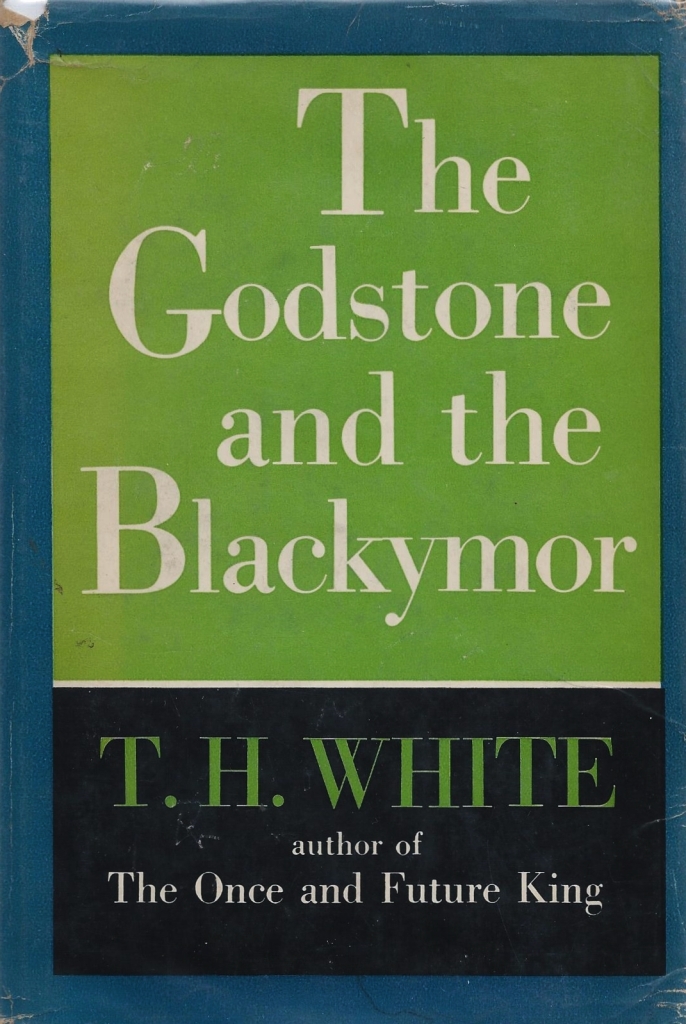
the godstone and the blackymor t h white 001The Godstone and the Blackymore by T.H. White ~ 1959. This edition: Putnam, 1959. Hardcover. Illustrated by Edward Ardizzone. 225 pages.

My rating: 10/10

T.H. White and Edward Ardizzone together – what a superbly unexpected partnering.

This is a rather unusual book, and hard to categorize. From the dust jacket rear flyleaf, here is what the author himself had to say:

God knows what this book is about. I suppose it’s a bit of autobiography really. But it’s about living on the West Coast of Ireland, in ‘the parish nearest to America’ – they all are, I mean the parishes – and it is about the people and things there, more than about me. I stumbled across what Protestants had said was an idol still being worshipped by the Catholics, and a coal-black Negro selling patent medicines, and a real Fairy Fire which lit our footsteps over the infinite bog – no whimsy. I did a lot of goose-shooting and falconry and salmon fishing. I went on pilgrimages and drank a lot and made friends and found out what I could and thought about it. I got ashamed of killing things. It seems to me a complicated sort of book about a complicated place, which I loved, and anyway it has pictures by Ardizzone, who loved it too.

In the 1940s, White travelled about in Western Ireland, seeking what he could find, whether it was game birds for hunting, or folklore for documenting and unravelling. He was met with suspicion by some – rumour occasionally had it that he was up to no good – a spy, no less, with his secret maps and documents hidden in a pocket of his red setter Brownie’s cloth coat –  for this was during the World War II years. White, refusing to countenance taking part in the fighting, arrived in Ireland on the day the war broke out, and spent much of the next decade there, in informal conscientious objector status.

But White’s local hosts were more helpful and friendly than antagonistic, and The Godstone and the Blackymor is a quietly passionate appreciation of the place and people who gave him refuge, and whose stories and lives fed his voracious writers’ curiousity.

The Godstone of the title turns out to be a mysterious stone shape, the naomhóg, which was rumoured to have special powers, though whether pagan or Christian being up for debate. White spent months tracking down the lore related to the image, and interviewed historians, clerics, and local residents (the silent-on-the-subject elders being approached through the schoolchildren, under guise of an essay-writing competition) and eventually coming up with a plausible history of the object.

The Blackymor was one Mr. James Montgomery-Marjoribanks, from Nigeria by way of England, who travelled from small village fair to small village fair flogging patent medicines and practising his formidable skills in healing massage. White encounters him unexpectedly in the dining room of a small inn, and is struck by the extreme contrast of Mr. Montgomery-Marjoribanks’ physical appearance and sheer exoticism compared to the local Celts. White’s vivid description of this “coal-black cannibal” – “utterly, Nigerianly black…not a brown man, or a coloured man, or a crooner…absolutely a sable savage, a strong, bony, black, cannibal Negro.”  After this first vivid impression, the two spend some time in conversation over several days, enough so that T.H. White is able to capture the essence of the brutally lonely life of a man so very far from whatever home he might have had, stoically making his way in the world earning his pitiful shillings, and never being accepted by anyone as really quite equally human. (The Irish innkeepers refuse to give him sheets, apparently believing his colour to be dirty – to be liable to come off on the linens, as it were.)

White writes with passionate clarity about episodes of falconry and hunting in the marshes and by the seashore, travelling to the coastal islands in various small craft, including traditional curricles (which he did not feel terribly comfortable in), and driving about where there were suitable roads – and sometimes where there weren’t – with his constant companion Brownie in his Jaguar car.

The last chapters are robustly philosophical in tone, examining the Irish way of religion, and White’s own troubled agnosticism, and the many complexities of the true Irish character, as opposed to the popular legend of “shamrocks and shillelaghs” of comic writers and films.

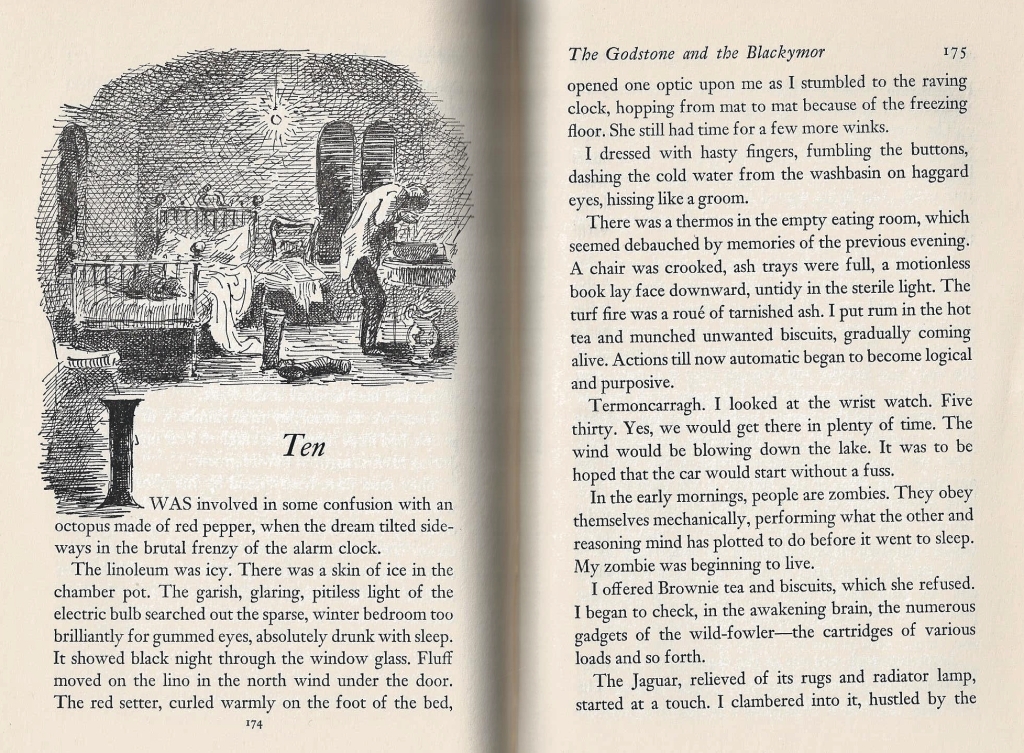
Ardizzone’s illustrations are a vivid enhancement of the text, capturing both the stark beauty, undoubted dignity and frequent quiet humour of the situations and people White portrays in words.

After randomly picking The Godstone and the Blackymor off of my shelf of 2014 TBR acquisitions, I realized that I was not alone in my current reading of his work, though he is not a new discovery here, but an old favourite.

T.H. White, so it seems from my very brief online researches into the provenance of Godstone,  is suddenly on everyone’s radar, owing in great part to his role in Helen Macdonald’s prize-winning 2014 memoir, H is for Hawk, which includes references to White’s unusual life, as well as to his own falcon-focussed memoir, 1951’s The Goshawk.

I asked for Macdonald’s book today in my local independent bookstore, only to find that it is not available in Canada until March. I wonder if I will wait till then, or if I will send off to England for a copy?

In the meantime, I am considering a re-read of T.H. White’s Malory-inspired masterpiece of Arthurian reimagining, the four volumes which make up The Once and Future King. I read and re-read these times without number in my teenage years, and several times in adulthood, and I suddenly feel a deep urge to delve into that world once again, for The Godstone and the Blackymor reminds me what a grand wordsmith T.H. White was. His prose style has a lilting cadence which perhaps owes something to his time in Ireland, or perhaps it was there along. No matter which it is, it works.

T.H. White. If you haven’t already, may I suggest you turn your attention his way?

the godstone and the blackymor t h white excerpt 001

An excerpt from The Godstone and the Blackymor. Click to enlarge for ease of reading.


Read Full Post »

“Well, Mom, are you going to make your deadline? Why aren’t you off typing?” inquired my daughter just a little while ago, and with her encouragement (“Get in there!”) here I am, tap-tappity-tap-tapping.

So – five more books to write something about and tick off the Century of Books project list.

Here goes with four of them.

Best one first.

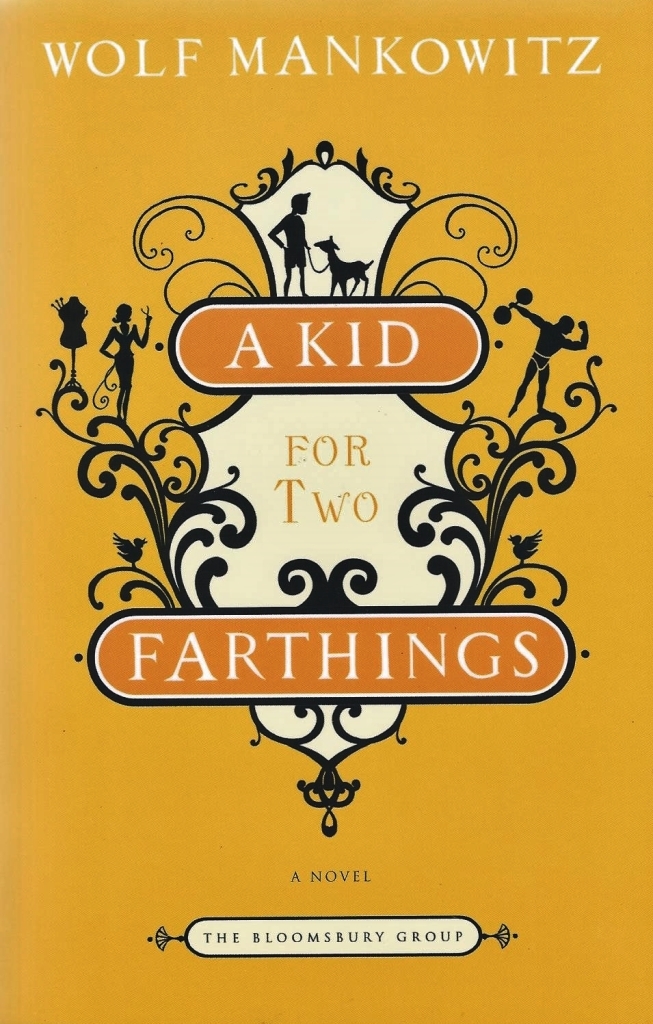
a kid for two farthings wolf mankowitz 001A Kid For Two Farthings by Wolf Mankowitz ~ 1953. This edition: Bloomsbury, 2010. Paperback. ISBN: 978-1-60819-048-5. 128 pages.

My rating: 9.5/10

What an absolute sparkler of a little book. Probably more properly a long short story, or maybe, with allowances, a novella. Whatever it is, it’s a winner. I’ve seen it referred to as “robustly sentimental”, and that description is absolutely bang-on.

6-year-old Joe lives on Fashion Street in Spitalfields in London’s East End, as did the author as a child, so one must assume that the abundant local colour here is taken straight from life. The time period is not specified, but as the writer was born in 1924 and the story is full of firsthand observations, one would assume it takes place in the late 1920s/early 1930s timeframe. It has a between-the-wars feel and the references seem to fit that period.

Joe and his mother have been left behind while the man of the family heads off to Africa where he’s involved in the garment trade, having something to do with selling clothes and boots to soldiers and such. Joe desperately wants to join him there but as every penny his mother makes as a piecework-basis hat trimmer goes to rent and groceries their tickets to Africa are not coming anytime soon.

Anyway, Joe spends a lot of time downstairs with his landlord, Mr Kandinsky the trouser-maker, and Mr Kandinsky’s apprentice Schmule, who, when he isn’t working, is deeply involved in body-building, having not-so-secret dreams of one day being Mr Europe, or even Mr World or – dare he raise his eyes so high? – Mr Universe. In the meantime Schmule is involved in serious wrestling, working his way through the ranks in order to win enough bouts to earn some prize money to buy his fiancé of two years a proper ring, so her fellow workers at the Gay-Day Blouses factory will stop teasing her about her no-good boyfriend.

Mr Kandinsky wants to buy a proper steam-pressing outfit, so he can run a more efficient business and not be always fighting with old fashioned flatirons, but in the meantime he gets on as best he can, clothing the neighbourhood’s men and trying to live up to the standard set be his late father, who was an accomplished jacket maker, no less.

Three sets of wishes, such small ones in the great scheme of things (well, aside from Schmule’s Mr Universe dreams, perhaps), but so out of reach. But when Joe learns from Mr Kandinsky that unicorns – now extinct in England but still to be found in other places of the world, such as, well, maybe Africa? – have the power to grant wishes, off he sets to the animal market to see if he can acquire a unicorn for himself and his friends.

What Joe finds is a small, white animal, looking something like a goat kid, but wait! – there is a telltale single horn bud – can it possibly be…?

Mr Kandinsky assures Joe that he has indeed found his heart’s desire and so Africana, as the mysterious creature is named, joins the household. He’s a quiet little creature, not much good at walking, and he doesn’t seem to grow very fast, but Joe has faith that Africana’s magic is just waiting for the right time to develop…

This is an adult fairytale, so along with the attainment of hearts’ desires you know there lurks a certain amount of heartbreak to keep things balanced, and if you expect something tragic to happen at the end of all this, you’re sort of prepared for what occurs. But sad though that something is, everything ultimately works itself out, and we walk away smiling. A bit ruefully, but well content.

This was made into quite a successful 1955 film, which I haven’t seen but which appears to have a strong fan base among vintage movie buffs.

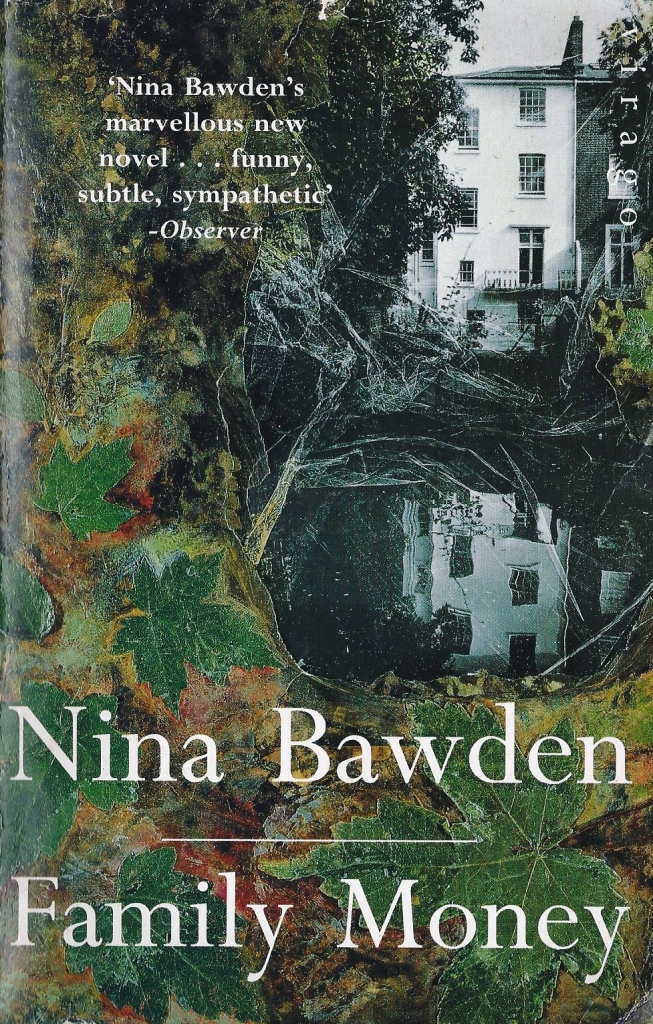
family money nina bawden 001Family Money by Nina Bawden ~ 1991. This edition: Virago Press, 1992. Paperback. ISBN: 1-85381-486-5. 250 pages.

My rating: 7.5/10

Liked it at the start, hated it here and there in the middle bits, liked it again as it drew to a close. Ended up with a great big question mark regarding the fate of the main character, and I actually cared, so I guess it was a success, hence the final very decent rating.

Widowed Fanny Pye, heading into old age unencumbered financially and owning a now-rather-valuable London house, worries her children. Mother shouldn’t be living alone, they say to each other with furrowed brows, for what if she should, say, fall down those stairs? Or be violently burgled? Or…well…you know…attract the wrong sort of man, out to romance her for her money? And that lovely house is now worth a lot of money, and we’re going to inherit it anyway, and we could really use the cash now….

Fanny knows what they’re thinking, and lets it all slide by, for she knows her children love her and only want what’s best for everyone, but the status quo is about to change dramatically. Fanny witnesses a fatal assault, and in the melee is knocked down and concussed, with resultant temporary amnesia, and her whole world changes. Never before fearful – or having reason to be – Fanny is now well aware that she may be the only witness to the circumstances of a young man’s death. The police have given up questioning her, but she has a niggling idea that there is something troublingly familiar about a young man she now seems to be encountering everywhere…and details of that awful night are slowly surfacing in her healing brain…

Here’s a good précis, courtesy of Kirkus:

Bawden (examines) the concerns of middle-aged children for their mother, who has, violently and abruptly, become a problem to be solved–while the mother battles through a thicket of difficulties, alone. There is love, but also sprouting amid the children’s loyalty are telltale tendrils of greed and a monstrous self-pity. Fanny Pye, 60-ish widow of a career diplomat, confronted three young toughs who had beaten another man senseless on a London street, and was herself knocked unconscious. Lying in the hospital, with children Isobel and Harry standing by in shock, Fanny can’t remember the incident (“memory had its own logic; a code which was hard to break sometimes”) – but she returns to her substantial home (all her husband left her) to reclaim it and herself. Her children worry about a companion. Memory, however – “a dimly seen cloud” – holds a surprise, as eventually floating up from Fanny’s store of buried nightmares is a chance remark revealing a nasty crime. Meanwhile, Fanny has been making decisions that give the children shivers. Will she sell the house and give the money to a friend? And what of her single contemporary Tom, who seems to be a permanent fixture? After all, Fanny’s house, both children agree, represents “family money,” and therefore is not Fanny’s to dispose of. (Among friends and neighbors there are echoes of such trans-generational conflicts – with the middle-aged frustrated and harried, and the old careening off in their own way.) Fanny is almost defeated by her secret knowledge of a murder and by her own panic, but she conquers fear, and, in an amusing close, flies off on a holiday plane leaving Harry bothered, bemused, self-deceived, and drawing the wrong conclusions…

Deeply, darkly funny, as fictional tales which hit close to truthful home can be, and the ending was something of a quiet gasper, leaving us as it does literally up in the air.

Flawed, but the merits cancel out the iffy bits. Best for appreciators of Pym and Brookner, I think.

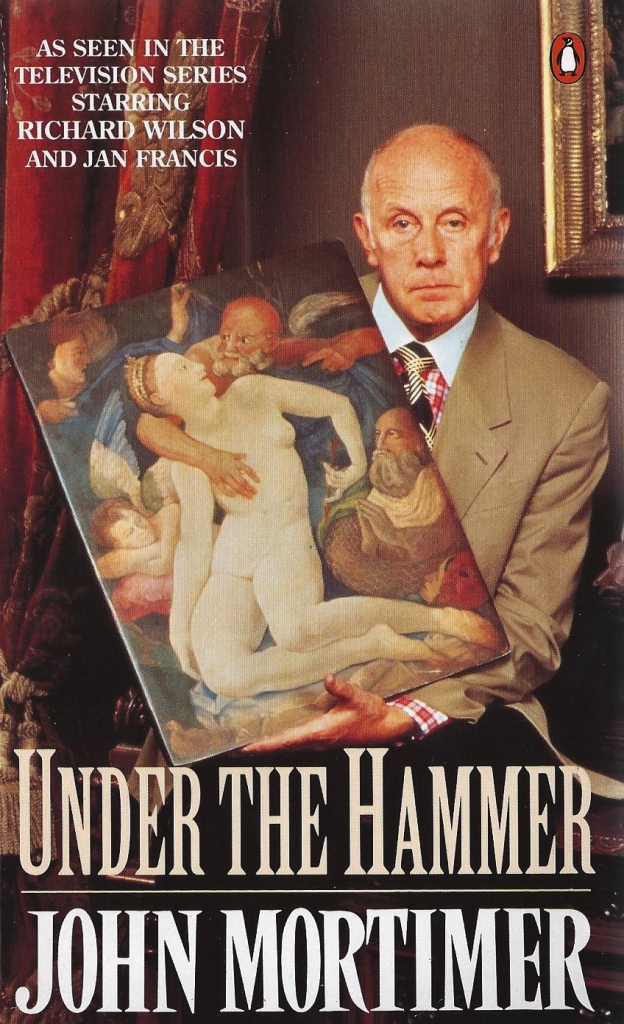
under the hammer john mortimer 001 (2)Under the Hammer by John Mortimer ~ 1994. This edition: Penguin, 1994. Paperback. ISBN: 0-14-023656-2. 253 pages.

My rating: 6/10

I found this collection of episodes in the life of “Klinsky’s of London” auction house art experts Ben Glazier and Maggie Perowne just a little too light on plotting and character development to be worthy of my high expectations from its writer. It reads like a series of episodes for a television production.

Oh, wait. That’s exactly what it is! No word on whether it was written up before, after, or in conjunction with the screenplay for the Meridian Broadcasting 7-episode series.

So here we have a semi-elderly man in partnership, in friendship and in unrequited love with a younger woman. Ben and Maggie work together in the Old Masters section – Maggie is Ben’s boss – and have a complex personal relationship which is nevertheless entirely a thing of clichéd innuendo. Though Maggie dallies with handsome young men, bedding them with casual enjoyment while Ben, off in the wings, studiously thinks of other things, the two strike obvious sparks when they’re together, and though they keep things mostly platonic the partnership seethes with romantic possibility – will they? won’t they? ah! not this time around…

The book contains six self-contained chapters, each concerning a questionable art antiquity – much of the work of the department is in proving provenance and exposing clever forgeries. We have a possible Bronzini, a fabulously valuable Russian icon, and a possible unknown Dickens manuscript, as well as case lots of vintage wine, a maybe-Titian, and a questionable piece of modern art.

All good for a lot of romping about and educational bits of dialogue regarding the art thing in question. It reminded me strongly of Jonathan Gash’s Lovejoy books (concerning a promiscuous antique dealer who is constantly mixed up with forgeries, good and bad deals, amorous adventures, and an astounding amount of murder), though Mortimer has a much stronger grasp on linear plot structure than Gash does. That television-episode-screenplay thing rearing its head versus a full-length novel which can go hither and yon before its at-length conclusion, of course.

Under the Hammer is acceptably clever and adequately readable and ultimately light as a feather. Good for holiday reading and times when one doesn’t want to think too hard. The writing is good if not great, and the characters manage to entertain more often than annoy, though occasional too-farcical moments had me grumbling a bit to myself.

I’d hoped for more, particularly as I read it soon after the much better Dunster, but it is what it is, and lightweight is okay too.

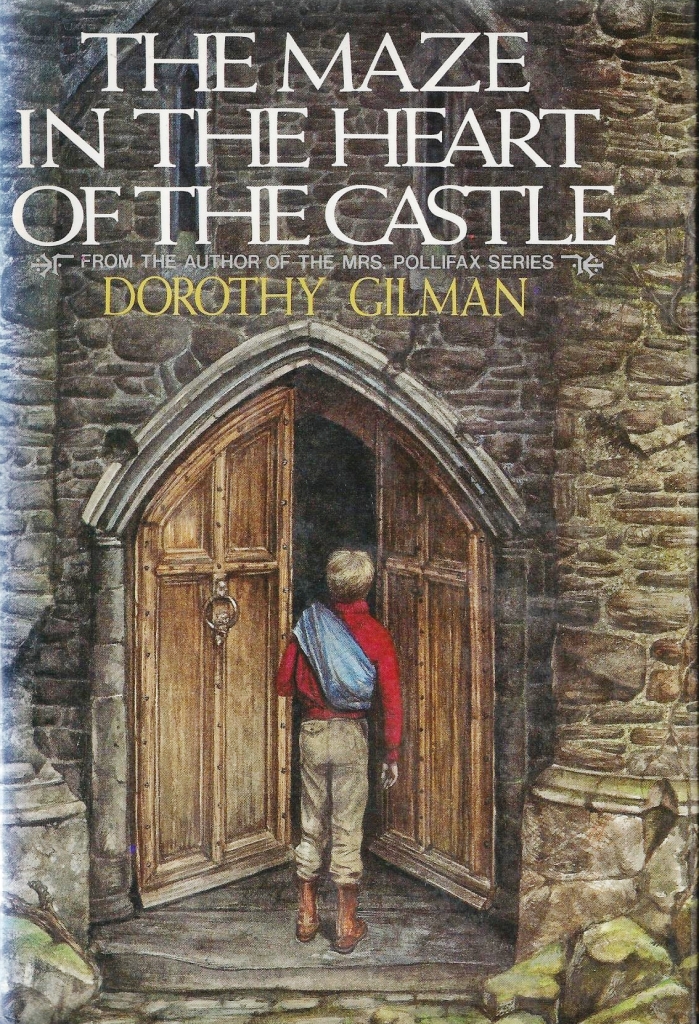
the maze in the heart of the castle dorothy gilman 001The Maze in the Heart of the Castle by Dorothy Gilman ~ 1983. This edition: Doubleday, 1983. Hardcover. ISBN: 0-385-17817-4. 230 pages.

My rating: 3.5/10

Oh dear. This was really pretty rotten. Even allowing for its intended grade school/teenage audience.

It’s been lurking on our “juvenile fiction” shelves for years, and I remember trying to foist it off on both of my children with little success, but I’d not read it cover-to-cover till now. I would have quit with it midway through except it did fit in with a missing century year and it was a slight thing (with nice large print, thank goodness) and soon over.

Here we have an allegorical tale concerning the importance of staying true to oneself or something like that. Or maybe it was about being in control of one’s own destiny, and the importance of letting go of bad stuff to make room for good. I think that was it.

The publisher’s promotional write-up reads like this:

He Was Only Sixteen When Tragedy Struck….

His name was Colin, and although he still couldn’t believe it, his parents were gone, both dead from the plague. Scared, confused, and angry, he sought out a monk who told him about a haunted castle on Rheembeck Mountain — and the old, strange wizard who lived there. Perhaps there Colin would find a way to stop his pain….

But instead of answers, the wizard showed him a locked oak door. Beyond it lay an ancient stone maze that led to a mystical land, a place where bandits roamed freely, where people lived within dark caves, afraid of the light, where cruelty was the way of the world, and where beautiful girls were not always what they seemed.

The wizard opened the oak door and invited Colin to enter. If Colin came through this strange place alive, he might indeed be able to ease the pain in his heart. But once inside, there could be no going back….

Okay, there’s a backstory to this thing. Happens that Dorothy Gilman (yes, the same person who wrote the Mrs Pollifax mysteries, which I could never get into so my dislike for TMATHOTC is perhaps predestined) wrote a novel in 1979 called The Tightrope Walker, a mystery-suspense-coming of age tale in which the heroine constantly references a meaningful book read in childhood which saves her sanity in adulthood after her mother’s suicide and a bunch of other traumatic experiences. The book in question being named The Maze in the Heart of the Castle. So several years later Gilman decides to actually write the fictional book she fictionally referenced. Some of the work was already done, because she’s apparently included lots of quotes from the non-book in The Tightrope Walker, so she built the real book around those and voila! – inspirational allegorical tale.

Our Hero Colin enters the Maze, immediately figures out a way out – over the surrounding wall – leaving behind everyone else who is afraid to venture into the unknown, preferring the bleak familiar land of entrapment. He has numerous adventures and cleverly thinks his way out of all of his tight spots, is seduced and abandoned by a heartless bad girl, and eventually finds a true friend, a true love, and the way into the safety of the kingdom he set out to seek, the key to which was really inside himself all the time.

I thought this was a waste of paper. But lots of people like it – see Goodreads for confirmation – so I will quietly step aside and leave them to admire in peace.


Read Full Post »

« Newer Posts - Older Posts »