Archive for the ‘1940s’ Category

I’m getting back on the posting pony, after having been tumbled to the ground by recent events, and aren’t I lucky this morning, because look at this! – I found a draft post from mid-May that I never did publish. I think I was going to add a Bill Bryson (I’m a Stranger Here Myself) to the line-up, but I’m sure no one will mind giving my thoughts on Our Mr. Bryson a miss (short verdict: in general, I like his stuff quite a lot), because he’s hardly under-reviewed and I haven’t anything new and stunning to say about his earnestly (relentlessly?) humorous ramblings.

Quickie reviews only, I’m afraid, but operating on the premise that a little something is better than nothing, here we go.

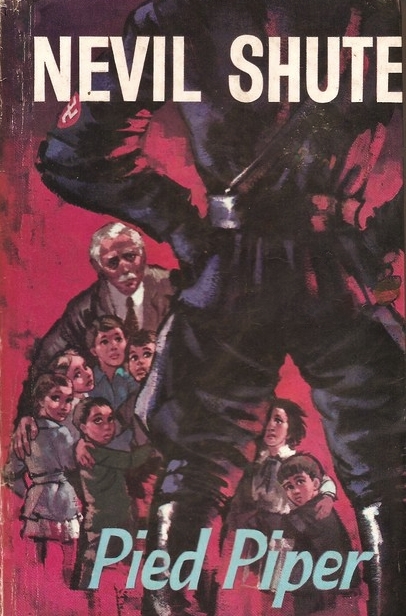
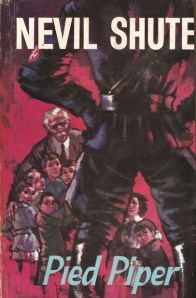
pied piper nevil shutePied Piper by Nevil Shute ~ 1942. This edition: Heinemann, 1962. Hardcover. 303 pages.

My rating: 9/10

A ripping yarn, indeed, and typical of Nevil Shute at his best.

Elderly (70-ish) John Howard, not needed for war-related work due to his age, and mourning the loss of his pilot son in the early days of the Second World War, decides to take a quiet fishing trip to eastern France, despite the menacing activities of the German forces in other parts of Europe. Unwittingly caught out by the swiftness of the unstoppable German invasion, Howard finds himself escorting two young English children in an increasingly desperate attempt to return to England. His entourage increases child by child as he collects various waifs and strays, as well as a young French woman who has an unexpected connection to the Howard family.

The coast is reached, and transport across the Channel seems to be coming together nicely when the local Nazi commander intercepts Howard and accuses him of espionage – a charge which carries a brutal penalty…

A fast-moving story with a slightly unusual cast of characters. The children are mostly believable, and John Howard himself is the epitome of quiet heroism. The invading Nazis are brutish and brutal, in between their attempts at placating the locals by benevolent establishment of soup kitchens and the like; the English who are caught in the turmoil are universally likeable and high-minded; the French locals are mostly portrayed as a combination of bovinely stoic, and (paradoxically) boldly sly.

Pied Piper is rather obviously (and expectedly so given its time of writing) something of a fervent propaganda novel, celebrating as it does the sterling nature of the British Everyman in the face of the Teutonic War Machine, but with enough departure from the clichés here and there to keep it engaging. Nevil Shute brushes over some vital details as he keeps his story moving right along, but those he includes add clarity and verisimilitude to this gripping and very readable tale.

something wholesale eric newbySomething Wholesale by Eric Newby ~1962. This edition (revised 1970 and 1985): Picador, 1985. Softcover. ISBN: 978-0-00-736751-1. 228 pages.

My rating: 6.5/10

Ever since a teaser in the early part of A Short Walk in the Hindu Kush I have been deeply curious as to Eric Newby’s “time in the rag trade”, as he so facetiously terms his years as a apprentice of sorts in the family business, Lane and Newby Limited, a wholesale women’s fashion house situated in London. By the time Eric darkened its door in 1945, after his return to England after a traumatic wartime of special forces service, time on the run from capture, and prison camp incarceration (see Love and War in the Apennines/When the snow comes they will take you away), the once-thriving business was in the first stages of what would prove to be its death throes.

The rationing of cloth was still in effect for some years after the end of the war, and this created serious difficulties for Great Britain’s dress-making firms, but of more serious impact was the resurgence of the very competitive French fashion houses, in particular Dior, whose hyper-feminine New Look (incidentally requiring vast yardages to make up, putting the struggling English firms at a severe logistical disadvantage) was a jaw-dropping success on the 1947 haute couture scene.

As Eric becomes more and more enmeshed in the garment trade – quite literally, as one will learn from the anecdotes in Something Wholesale – he records with a keen eye to detail the absurdities of that arcane world, and the many eccentric characters he came up against, from flirtatious “outsize” models intent on playing under-the-table footsie with the boss’s son (Eric, of course), to various department store buyers, commercial travellers and contract seamstresses.

In general I enjoyed this memoir, though the humour is of the determined type and not particularly funny after a certain point – pseudonymous names such as Throttle and Fumble (a retailer of Lane and Newby’s output), and the Misses Axhead and Stallybrass being examples of the sort of heavy-handed fun which Eric Newby resorts to for much of the book.

But here and there the narrative strikes pure gold, and some bits are sarcastic gems of prose and really quite perfect. And though he refuses to be completely serious for much of the tale, Eric Newby’s ultimately loving depiction of his parents and their dedication to the firm is perhaps the most gentle and poignant aspect of this uneven memoir.

Lane and Newby went down for the third and final time in 1956, winding up its affairs after the death of Eric’s father, but Eric himself stayed employed in the garment business until 1963 – taking off for an occasional expedition during holidays and writing the odd book and magazine article here and there in his spare time – when he finally managed to find full-time employment in a career much more suited to his tale-telling aptitude, journalism.

Read Full Post »

the blank wall elisabeth sanxay holdingThe Blank Wall by Elisabeth Sanxay Holding ~ 1947. This edition: Persephone, 2003. Softcover. ISBN: 1-903155-320. 231 pages.

My rating: 9.5/10

Hardboiled is about toughness. Noir is about weakness.

All crime fiction is about moral transgression. Most mysteries put us on the side of the person trying to expose the transgression. Noir, though, puts us on the side of the person who is trying to hide the transgression.

~ Jake Hinkson (In interview with Mike Monson here.)

The reading lately has been overwhelmingly rewarding; a recent foray to the small B.C. Okanagan city of Vernon having netted me a substantial number of promising books, among them an astounding six (!) beautiful and pristine Persephone Press reprints – rare as hen’s teeth in the used book trade in this part of the world, as no doubt most of the people who go to the trouble to acquire them cling like mad to their precious editions.

There was this one, and also The Making of a Marchioness by Frances Hodgson Burnett, Little Boy Lost by Marghanita Laski, William – An Englishman by Cicely Hamilton, Good Evening, Mrs. Craven by Mollie Panter-Downes, and last but decidedly not least, They Knew Mr. Knight by Dorothy Whipple. (I left behind a single one, Mariana by Monica Dickens, because I already own several copies. But later, on the long drive home, I was rather surprised to find myself mentally berating myself for not snagging it as well. The dove-grey books being so beautifully produced.) Plus an early (pre-Persephone) edition of Heat Lightning by Helen Hull, among much else. The dusty-old-books treasure hunt was blissfully successful this time round!

This digression is really just me stalling for time, because I am waffling about how best to discuss The Blank Wall. It was good. Very, very good. But in an unusual sort of way, because it is that so-hard-to-get-just-right thing, “a novel of suspense”, and much of the thrill of reading it was coming to it with no prior knowledge beyond the brief flyleaf excerpt.

She got a book and read it in bed with stubborn determination. It was a mystery story she had got out of the lending library for her father, and she was not fond of mystery stories. Nobody in them ever seemed to fell sorry about murders, she had said. They’re presented as a problem m’dear, her father said. What’s more, they generally show the murdered person as someone you can’t waste any pity on. I’m sorry for them, she said, I hate it when they’re found with daggers sticking in them and their eyes all staring from poison and things like that.

Yet how little pity did she feel for Ted Darby! I really did that, she thought amazed. I concealed a body. Anyhow I took it away. And when I came back – after that – nobody could see anything wrong with me – anything queer. Maybe I haven’t got so much feeling, after all. Maybe I’m rather too tough.

I’d better be, too, she thought, as she rose and started to dress.

It’s well into World War II, and Lucia Holley, middle-aged housewife, is holding down the fort on the home front in rural New York state while her husband Tom is off “somewhere in the Pacific.” Lucia has recently rented a lakeside house, where she quietly resides with her elderly father (Mr. Harper), 15-year-old son (David), 17-year old daughter (Beatrice a.k.a. Bee), and long-time maid (Sibyl).

War-time rationing is in full force, making the everyday business of acquiring such household essentials such as butter, cheese, meat and laundry soap something of a challenge – interesting side plot regarding how best to lay out one’s “points” – and cigarettes and gasoline are virtually unobtainable. Rather than driving private cars, people are now frequently using taxis for their transportation – another fascinating period detail which becomes an intertwining plot device as the story convolutes to its end.

Bee, in the full throes of impatient post-adolescent rebellion, has decided to attend “art school” in the city. There she has become involved with a much older man, to the deep dismay of Lucia, who is completely involved in overseeing and nurturing her family, having apparently completely subjugated herself to the role of perfect daughter, wife and mother. Only Sibyl knows that the façade is sometimes just that, and she quietly covers up for her employer’s inefficiencies; the two women are complicit in their joint creation of the domestic fable of Lucia’s complete competence.

However, Lucia is no fool, though her children increasingly think her so. And as she finds her life spiralling into absolute disaster, she finds that she has an inner fortitude unsuspected during her previously sheltered and very tame life.

Bee is particularly snotty with her mother, informing her time after time that she (Lucia) has wasted her life, has no ambition, has no concept of how to properly live and no ability to analyze people; that someone of Lucia’s generation and social status (upper middle class) is basically dead from the neck up, and should be kept firmly in their proper place. Which is, apparently, as a provider of a nice place of live and a ready source of funds to allow those more capable of truly appreciating Life to get on with things. Meaning Bee. Who is an utterly nasty creature, in a perfectly “nice” way.

David is a miniature version of the all-knowing Man-of-the-Family, and has ruthlessly placed himself in that role, obviously compensating for his father’s absence with a juvenile version of misanthropic superiority to, well, just about everyone he meets. But in particular his doting mother, whose activities he oversees and critiques and occasionally forbids. And while Lucia meekly complies with his bossiness in the interests of domestic harmony, she is getting increasingly annoyed at her son’s pompous attitudes and assumptions.

When Bee’s shady lover turns up demanding a personal interview, Mr. Harper deals with him in his own way, and blissfully reports to his daughter that the problem of Bee’s love affair has been solved. Just how permanently is soon discovered by Lucia, when she sneaks away from the house the next morning in pursuit of an illicit (meaning forbidden by David) solitary swim…

I’ll throw out some more teasers. The rest of the tale involves blackmail, small-time thuggery, black marketers, racial prejudice, diverse people failed by the justice system, an unlikely (and sexually pure) passion, the yacht club set and social snobbery, multiple deceptions all around, and brutal death.

Definitely not a “cozy”!  A deeply disturbing story in multiple ways. The ending was exceedingly thought-provoking, and I’d love to divulge my thoughts, but in the interests of you all experiencing this one properly, I won’t.

If you are into domestic noir (think Patricia Highsmith and her ilk) – or even if you aren’t but are willing to take a chance on something rather dark – read it.

Absolutely excellent.

Heading off now to ABE, to investigate the availability of Elisabeth Sanxay Holding’s 17 other suspense novels.


Read Full Post »

because of the lockwoods dorothy whipple 001Because of the Lockwoods by Dorothy Whipple ~ 1949. This edition: Longmans, 1949. 1st Canadian edition. Hardcover. 358 pages.

Provenance: Purchased (via ABE) from A Biblio-Omnivore Harvey Lev, Montreal – March 2014.

My rating: 9/10

Sound the trumpets! I have finally read a Dorothy Whipple. And thoroughly enjoyed every minute of it, too.

A satisfyingly nasty family of antagonists, and an absolutely feeble (though gentle and well meaning) family of protaganists, saved from themselves by the spunky youngest daughter, with the help of a lower-class social climber who has fallen in love with said daughter and uses his keen wits to their joint advantage.

Shortly after the end of the Great War, meek Mrs. Hunter, an architect’s wife, is suddenly left a widow with three young children, and who should she turn to but her husband’s business acquaintance, lawyer Mr. Lockwood, for help with her affairs. Mr. Lockwood, fully occupied with feathering his own nest and the care and nurturing of his beloved wife and three daughters, rolls his eyes and sorts things out in a resentful way. While going through the late Mr. Hunter’s papers, Mr. Lockwood comes upon a situation which he can twist to benefit himself to the detriment of the surviving Hunters; he immediately does so, and the stage is set for our emotionally heart-rending story.

Mrs. Hunter insists on being grateful to Mr. Lockwood, and cherishes the benevolent friendship of Mrs. Lockwood, which is – to give Mrs. Lockwood credit – meant well, even if it doesn’t turn out to be truly kind in practice.

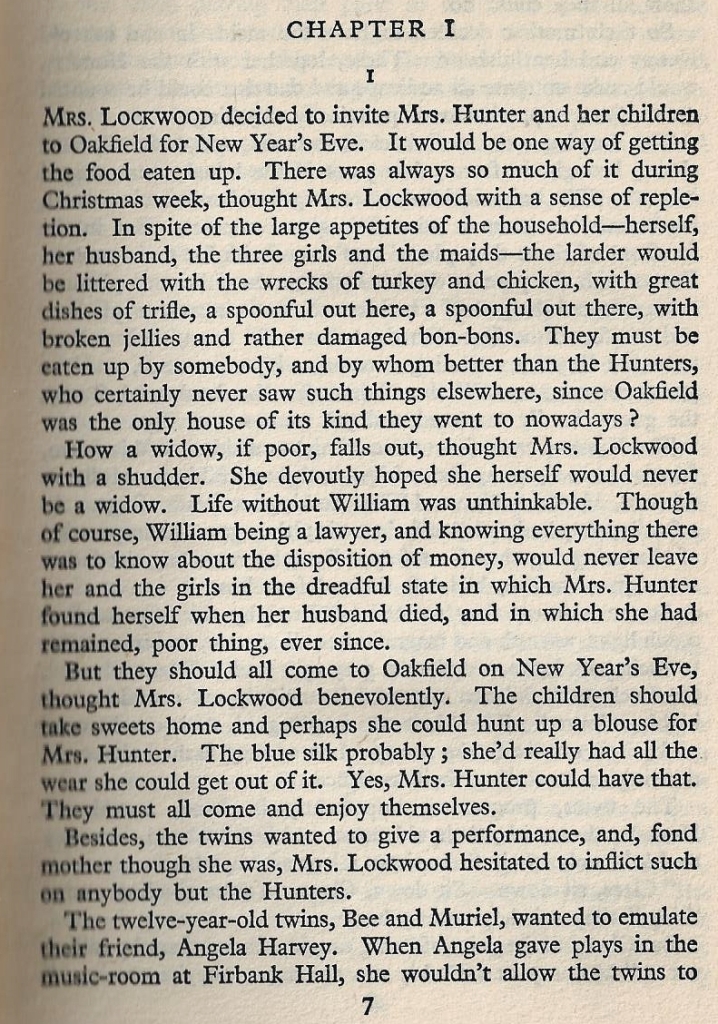
because of the lockwoods 1st page dorothy whipple 001


The Hunter children grow up under the shadow of the Lockwoods, and as the youngest child, Thea, watches her older sister, Molly, withdrawn from school and forced into an unsuitable post as a governess at the age of fifteen on Mr. Lockwood’s advice (“Your children must start earning,” he sternly informs the compliant Mrs. Hunter), and her older brother, Martin, placed into a bank rather than being allowed to train as a doctor (“Does anybody need a boy?” casually inquires Mr. Lockwood of his banking acquaintances at his club), she sets herself to avoid her siblings’ fate. Thea will not be shunted off into an uncongenial occupation, oh no, not she!

Thea, cleverest of the Hunters by far, sets herself on an upward path, and eventually, at the age of eighteen, manages to make it to France in company with the Lockwood girls; they to be “polished” and to learn French, Thea to teach English at the same school for her keep. But Thea’s ascendant star is about to tumble from the sky, when she is caught in a compromising situation with a handsome young Frenchman, and is sent home in deep disgrace.

Social injustice, deliberate wrongdoing, frustrated hopes, romantic yearnings – what a fruitful set of circumstances for a novelist! Add to that romance and revenge, plus a dash of remorse, and we have an engaging story with which to while away several most diverting hours.

Dorothy Whipple is now very much on my radar, and I will be actively questing for more of her titles. Happily Persephone Press is actively reprinting the Whipple oeuvre, so some at least will be easy to acquire.

What bookish joy, making the acquaintance of Bryher yesterday, Whipple today. And what a happy time I will have exploring more by both of these congenial (though rather different) novelists!


Read Full Post »

beowulf bryher 001Beowulf by Bryher ~ 1948. This edition: Pantheon, 1956. Hardcover. 201 pages.

Provenance: Purchased (via ABE) from Powell’s Books, Portland, Oregon – March 2014.

My rating: 9.5/10

This is a beautifully framed and constructed capture of a brief and bleak moment in time, focussing on a few ordinary people over a few short days in the midst of World War II’s London Blitz.

Selina Tippett, for twenty years a paid companion to a series of querulous old ladies, had at long last achieved her dream, that of operating a comforting teashop supplying nourishing and delicious refreshments to those most in need of a peaceful break in their stressful lives. For seven years the Warming Pan has been a haven for the harried housewives, elderly shoppers and frazzled governesses of this small corner of London, but times are increasingly difficult, and Selina is in a state of quiet desperation.

The bombs rain down, and her loyal customers are quietly fading away, either through the dismal fate of sudden death from the sky, or the more insidious process of quiet evacuation to the countryside. The Warming Pan’s once abundant selection of teacakes has dwindled to a mere shadow of past glories as rationing is in full force; Selena has just been informed that she may no longer buy fresh eggs for her baking, and she is ineligible for powdered eggs because she has never used them before and hence has no entitlement to a rationed allowance. The rent is months overdue; Selina receives each day’s post with trepidation, expecting an eviction notice. What will the future bring…?

Selina’s partner Angelina refuses to share Selina’s concerns. Girded for battle with her strong sense of righteousness, Angelina goes forth daily to enthusiastically do battle with the bureaucracy of the Food Ministry and her wide circle of provision merchants. In her free hours, Angelina is an aficionado of various evening courses; she is a keen autodidact and fierce feminist with a special interest in improving the position of women in society.

When Angelina brings home a hideous plaster statue of a  bulldog – christened “Beowulf” in a gesture of symbolic nose-thumbing at the disturbers of England’s peace – Selina tries to hide her inner anger at the fact that it was paid for with money intended for the gas bill and the fishmonger. But as Selina’s sense of foreboding increases hour by hour, fate is preparing a climactic solution (of sorts) to her most urgent problems…

Much more than a simply linear narrative, this novel is a spiral series of vignettes, all connected at the centre to the Warming Pan and the people who cross its threshold and find refuge within its threatened walls.

Short but quite perfect; an excellent reading experience. Though the subject matter is desperately sad, the novel is quietly and genuinely humorous, and not at all depressing.

Half a point lost because I wanted more, and the ending solved a key problem just a little too neatly.

Bryher was the pen-name of British novelist and poet Annie Winifred Ellerman. A keen historian and amateur archeologist (as well as the daughter of “England’s wealthiest man”, shipping magnate John Ellerman), she wrote a number of well-researched, well-written and well-reviewed historical novels focussing on various periods in England’s history, such as The Fourteenth of October (the year of 1066), and The Player’s Boy (Beaumont and Fletcher at the end of the Elizabethan period). She also dabbled in writing science fiction in 1965’s Visa for Avalon, and was well known for her strongly eclectic interests and her steadfast support of the literary and creative arts.

An author very much worthy of further investigation.

Read Full Post »

lady in waiting rory gallagher 001Lady in Waiting: An Intimate Journal of a Labor of Love by Rory Gallagher ~ 1943. This edition: Stephen Daye, 1943. Hardcover. 243 pages.

My rating: 6.5/10

My oldest child turned twenty yesterday, and it gave me a surprisingly sharp shock to realize that two decades had passed since that white-knuckle after-midnight drive to the hospital an hour away where our first-born was ushered into the world in a memorable – at least to me! – fashion.

All those clichés are true, by the way, especially the one about the instant rush of love one feels upon holding your newborn child, and even more so the one about you never being free from a continual background hum of worry ever again. Not to mention the whole “time passing like the blink of a moment” thing…

So this book was an apt choice for some light reading last night, after the person-in-question casually breezed in to eat his cake, deposit his laundry in a heap beside the washing machine, and honour us with his welcome presence for a few days, before his next jaunt off into the wild blue yonder.

Oh, twenty…  For with all of the very reasonable angsty worries of today’s “young adults”, they still have that marvelous thing, youth itself, and that’s a rather grand advantage in the great scheme of things, thinks me from my middle-aged perspective.

Well, enough about my own Mother Musings, and on to Rory Gallagher’s. Lady in Waiting is a 1940s version of the Mommy-lit of today’s jogging-stroller set, though it concentrates solely on the nine months of expectation and comes to a screeching halt upon arrival of Baby.

It’s funny enough, though the author works a bit too hard here and there as she plays out every twinge for maximum laugh-appeal, but there are enough moments of genuinely relatable ironic glee to keep it on my too-good-to-part-with shelf. A period piece, most definitely. Set in the eastern United States, where the author lives (as her story opens) in a pleasant (rented) two-hundred-year-old rural home along the Saugatuck River, during the mid years of World War II, with the expected adventures of coping with less than satisfactory maids and other upper-middle-class domestic mini-crises.

And that is all I’ll be saying about it, but I will add in several random page scans, plus this archived newspaper article I found in my internet cruise looking for more on the author. (I didn’t find much – the Rory Gallagher most recognized by Google being the Irish folk-rock singer.)

From The Times Recorder, (apparently) someplace in Ohio, July 19, 1943:

“LADY IN WAITING” by Rory Gallagher (Stephen Daye; $2.50.) Apparently the first baby is an experience from which no parent ever recovers. Each thinks of it as a unique experience, even as he talks over the impending event with neighbors who undoubtedly are going through the same experience exactly..For all the conversation, it seems true that no woman has recently put down a day by day account of the mystical nine months–none until Rory Gallagher came along with her “Lady in Waiting.”

Just why the author chose to use a pseudonym is a little vague, and since she has put her neighbors and friends in under their correct names (including me) I see no reason why Rory Gallagher should not be identified as Mrs. Patrick Dolan, Ruthie for short. The Dolans lived a mile and a half down the Lyons road from us, in Weston, Conn., while all of the events of “Lady In Waiting” were laid. If I had time, I should write a book of my own on having a neighbor have a baby. It would be almost as funny as Ruthie’s.

For “Lady in Waiting” is funny as well as physiological. It is brash, too, and has a swing that is peculiarly like its author. Mrs. Dolan-Gallagher has a terrific sense of humor, which might seem odd to the superficial, because she happens to be half Scottish and half German. She is tall and slender, and this provided her first difficulty–she was afraid she would “show.” She did, eventually. I doubt whether anybody ever broke the news to papa from a sitting posture in a parking lot but Ruthie did. Most gals take the pills the doctor proffers, but Ruthie didn’t. Mama is presumably the second to know the news, but Ruthie’s mama was not. The business of the morning horrors, the strange yearnings and so forth usually run a pretty definite course –but Ruthie’s did not. Prospective mothers, as a rule, pick inconspicuous places for their fainting spells, but “Jake’s” mother chose a Philadelphia dinner table manned by various butlers and such. So the last, and exciting day. I don’t think old ladies in tippets will approve, but a lot of people will think “Lady in Waiting” a row.

And here is the Kirkus Review take, June 21, 1943

With the birth rate running a high fever, this just might catch on. (I)t is a nine months’ diary, composite of the trepidations, small concerns and humiliations, and its share of girlish laughter. Daily cares and changes; the husband’s refusal to consider her as fragile as she thinks he should; the monstrousness of the paraphernalia; the Mein Kampf between morning sickness and appetite; the bluff nonchalance of the doctor; the small worries and large; and finally the advent of Jake, with no trouble at all, just as friend husband is off to the wars. Light handling of prenatal preconceptions and preoccupations.

lady in waitng exerpt 2 rory gallagher 001

lady in waiting excerpt brory gallagher 1 001

Read Full Post »

I’ve just finished something of a mini-binge of World War II-era spy thrillers, with the first two of what would turn into a handsome list of espionage and suspense thrillers by Helen MacInnes.

Above Suspicion was the first, and published in 1941 in the opening moves of what was to become the prolonged agony of the Second Great War, its urgent and foreboding tone rocketed it to bestseller heights. MacInnes followed her first novel by another even more topically urgent and dark, Assignment in Brittany, in 1942.

Though definitely dated, these suspense novels are decidedly still very readable today, made even more enthralling by the fact that we know what happened in the years after, while MacInnes and her heroic characters are facing a tremendous and forbidding Great Unknown. I’m going to give brief sketches of both in two hundred word snapshots, if I can condense them so tightly – with the strong recommendation that you discover these for yourself if you feel that these might be your thing. These two novels are excellent examples of their genre, though highly dramatized and relying upon those inevitable unlikely coincidences and lucky breaks in order to bring them to a satisfactory conclusion. Though neither has an ending that is neatly rounded off; the settings and times don’t allow it.

I have read Above Suspicion numerous times through the years, but Assignment in Brittany was new to me, and I was pleased at how engaging both of these were, even though in the first I knew the plot inside and out, and the second I guessed at rather successfully all of the way through, except for the rather heartrending (but ultimately optimistic) twist at the very end.

Both books were immediate bestsellers, and remain very readable – and continually in print –  almost seventy-five years after their first publication.

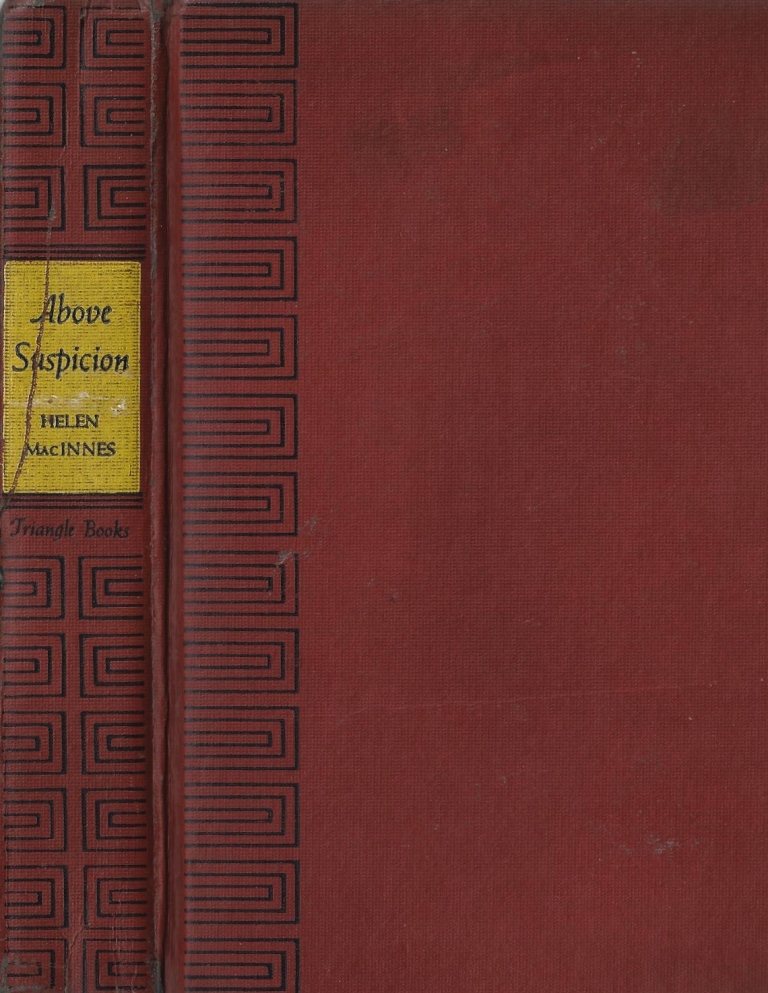
above suspicion helen macinnes 001 (2)

“Because of the acute shortage of regular book cloth under war-time rationing, this book is bound in ‘leatherette,’ a sturdy paper fabric especially designed for this purpose.”

Above Suspicion by Helen MacInnes ~ 1941. This edition: Triangle Books, 1944. Hardcover. 333 pages.

My rating: 8.5/10

Young Oxford University don Richard Myles and his wife Frances are recruited to travel to Europe during summer break in order to discover what has happened to a possibly-compromised chain of British secret service agents. The premise being that the two are so innocent-seeming as to be able to wander at will, from agent to agent, following the links as identified at each contact. In their travels they run in and out of numerous sinister encounters; the Nazis are very much on the ascendant and their evil shadow looms over the lands the Myles visit on their journeyings.

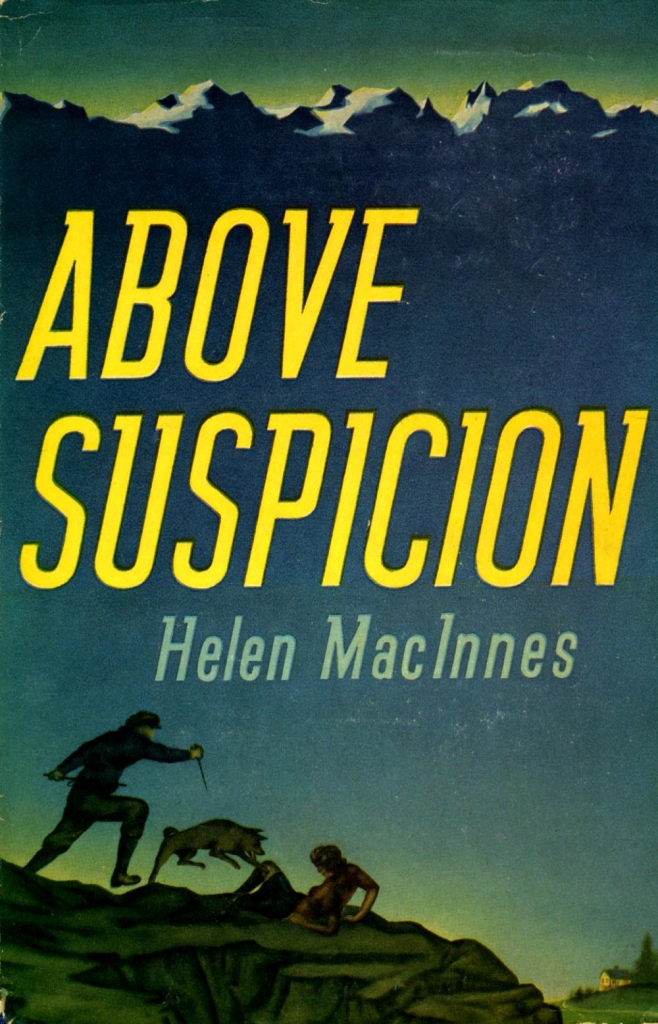
above suspicion helen macinnes  old dj 001 (2)

This dramatic vintage dust jacket illustration illustrates one of the peak moments of this suspense thriller, as the heroine is attacked by the Head Evil Nazi’s killer dog and is rescued by quick deployment of her husband’s handy-dandy sword-stick. Imminently distressing dispatch of the hound aside, isn’t this a gorgeous bit of graphic design?

A novel made most poignant by the time of writing; the last months of peacetime shadowed by foreboding clouds of war. The author draws upon personal experience in telling her tale, and it is an interesting combination of travelogue and suspense thriller, full of asides describing the scenes in which the action is set, and philosophical musings regarding the whys and wherefores of the imminent conflict. The German psyche is searchingly probed by a very British analyst – MacInnes in the guise of her heroic (and autobiographical) married couple – and found to be both blustering and chillingly focussed on military dominion.

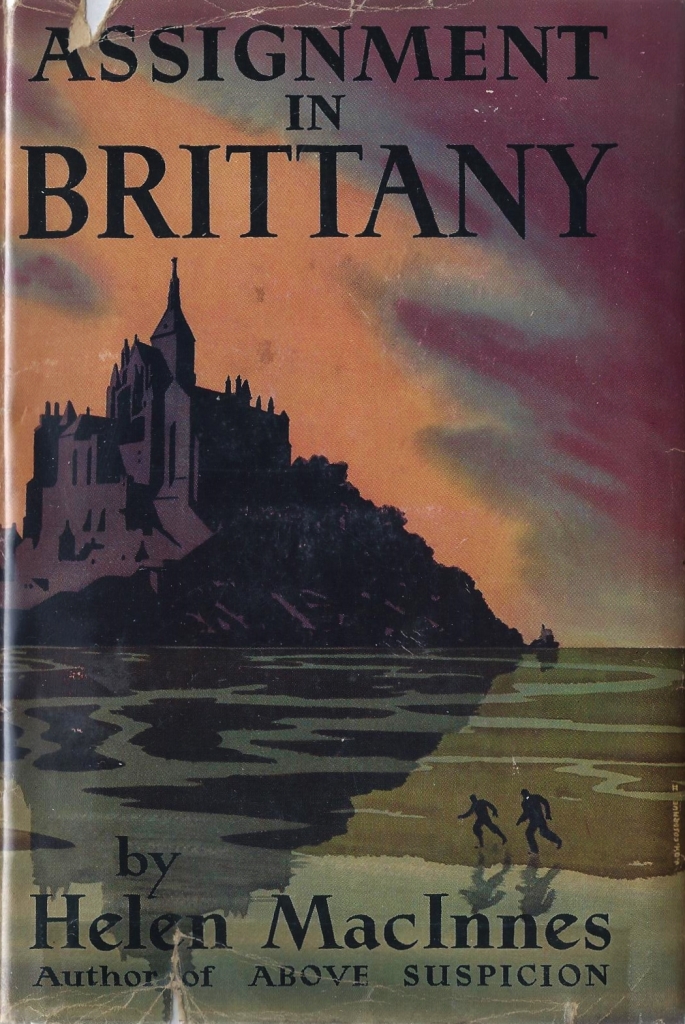
assignment in brittany dj helen macinnes 001

I am fortunate enough to be the possessor of this handsomely dust-jacketed first American edition. An absolutely stellar example of vintage cover art. Wouldn’t this make an amazing wall poster?

Assignment in Brittany by Helen MacInnes ~ 1942. This edition: Little, Brown & Co., 1942. Hardcover. 373 pages.

My rating: 9/10

Martin Hearne is parachuted into Brittany, into the very forefront of the Nazi occupation, in the guise of  his French body double, Bertrand Corlay. Many surprises await Hearne, not least of which is the discovery that his predecessor was less than forthcoming about some of his own activities before his evacuation to England via the Dunkirk debacle. For instance, his pre-marital arrangement with the neighbouring farmer’s daughter, Anne, and his estrangement from his invalid mother, who keeps strictly to her own rooms in the shared household. Who is beautiful and passionately forthcoming Elise? Why do the Nazi occupiers greet “Bertrand Corlay” with warm enthusiasm, while his fellow villagers hiss in cold disgust?

An escaping American journalist sheltering in the Corlay home sets off a string of complications, most notably a dramatic trip to the medieval monastic stronghold of Mont St. Michel, situated at the end of a causeway above tidal flats of quicksand. A return to the Corlay home finds Hearne confronted by steely-eyed Teutons who have discovered their collaborator is not what he seems, in so very many ways. Will Hearne make it back to England with his meticulously written notes and maps, as well as his new-found love?

Good dramatic stuff, rather nicely plotted for its type of thing, though with an exceedingly strong reliance on Hand of Coincidence. The evil Boche are given no ground, and the resident Bretons are depicted as cunning and stubborn survivors, insular to an astounding degree, but in the main resistant to their unwelcome occupiers by a combination of sullen non-cooperation and occasional acts of secret sabotage.

An engaging period thriller, written at the time it depicts, and so a valuable snapshot of the mood and details of its moment in time as well as a very readable diversion.

helen macinnes bio dj assignment in brittany dj 001

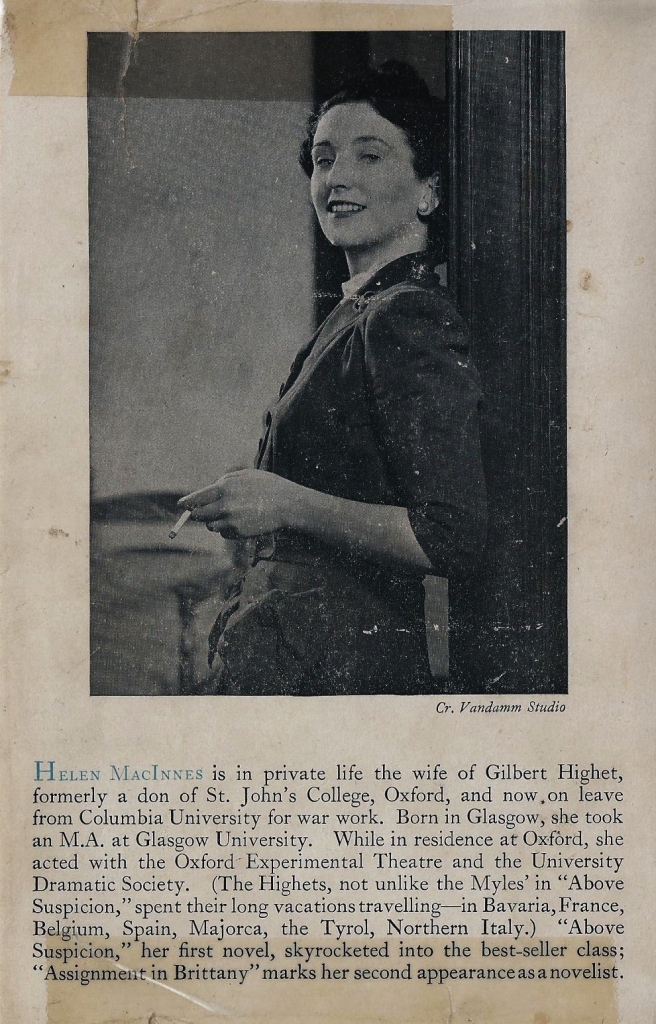
Author biography from the back cover of “Assignment in Brittany.” Check out the casual cigarette! No doubt the other hidden hand is nonchalantly holding a martini glass…

Read Full Post »

It’s always fascinating to read vintage books aimed at the youth market. The terms “literary snapshots” and “period pieces” apply particularly well to this widely varied genre, though more serious themes tend to be handled in a gentle way, obviously in order to cushion young minds from the harsher realities of the world they live in.

I recently read these two American “juveniles” from the many which have accumulated on our shelves in the past nineteen years of buying books for the younger members of the family, and while neither is an outstanding piece of fiction in any sense of the word, they are both rather interesting in what they have to say about the eras they were written in and about. Footnotes to the period, as it were, which is why I’m including them among the Century of Books fellowship.

*****

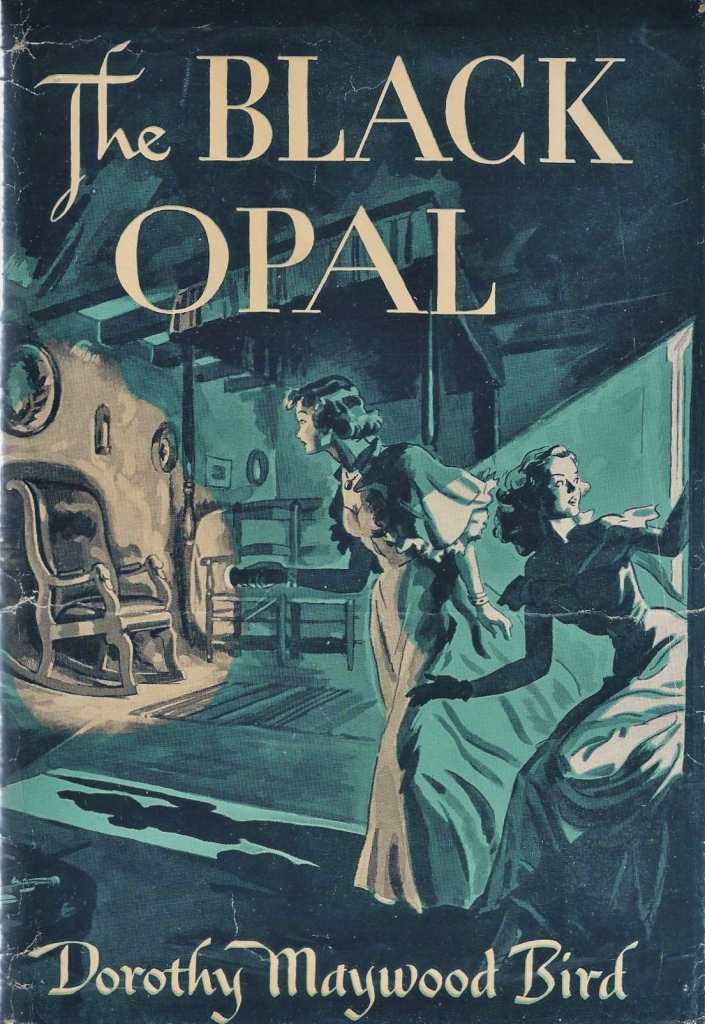
the black opal dorothy maywood bird 001The Black Opal by Dorothy Maywood Bird ~ 1949. This edition: Macmillan, 1962. (Ninth printing.) Hardcover. 202 pages.

My rating: 6/10

Surprisingly likeable was this rather hard to classify light novel, comprised as it was of equal parts college caper, highly contrived mystery, and blossoming romance. All right, maybe not that hard to classify! But the mixture works quite nicely, and the characters are highly appealing, and the whole thing is completely adorable. Decidedly a book aimed at the feminine readership of the junior high schools of its time.

Look, I even found an approving Kirkus review, from October of 1949:

When Laurel went off to the small coeducational college in Michigan which had been her great-great-grandmother’s alma mater, she expected it to be fun — and it was. What she didn’t know was that she would find herself up to the neck in a century old, unsolved murder mystery which was to give her the thrill of establishing the identity of the murdered man and his killer. The mystery theme is well-integrated and companions a satisfying modern college story of dates, term papers and strict house-mothers. There is not only the sinister black opal which Laurel unearths but also the exciting and sparkling diamond with which her One And Only ends the story. Maybe her solution will seem a trifle glib and maybe everything falls in place too smoothly, but no one will care for it is a nice, light entertaining tale with the virtue, highly to be prized, of not following an exact formula.

Laurel Stanwood has decided to do something a bit out of the norm. Instead of going with her high school friends to a college in her native Vermont, Laurel has chosen to attend a school, Colbert College, in far-off Michigan, a decision inspired by the fact that her Great-great-grandmother Caroline Hayes was a student of the precursor to the now co-educational facility, the Colbert Female Seminary, in 1846.

What follows is an absolutely typical account of lively college life. Laurel immediately makes two best friends, and immerses herself in a whirl of activity, where some serious studying is livened up by dramatic football games, campus socials, the ongoing “campus war” between the freshmen/juniors and sophomores/seniors, and some serious battling of the sexes via the two campus newspapers, the Colbert Feminist, under the editorial control of Laurel’s new friend Rue, and the Colbert Iconoclast, presided over by the woman-despising J. Swinton Towne. As an aspiring journalist, Laurel is immediately put to work gathering material for the Feminist; she has high hopes of finding a stunning “scoop” which will allow the Feminist to grind the Iconoclast‘s annoying pretensions to male superiority under its well-clad foot.

Lovely period details abound throughout this book, such as here where the girls are opening their mail at dinner time.

Laurel slit them open with her fork. The first, a circular, ordered her to make reservations at once for that Round-the-World Cruise she’d been eagerly awaiting since before the war. “Lapping waves,” it promised, “soft winds to caress your brow, nights full of wonder.” The second assured her that she could borrow up to three hundred dollars without embarrassing investigation and could pay it back in easy monthly installments. “Why be short?” it demanded. The third looked more hopeful, an expensive ivory envelope addressed in a feminine hand and postmarked Detroit. But the letter inside merely stated that if she planned to invest five hundred and fifty dollars in a genuine blue muskrat coat, she would do well to visit Compere’s Fur Salon first.

“Here’s a card from Mother,” Stacy giggled, “reminding me that if I want my duds to get into the Monday wash I can’t wait till Monday to mail them, and here’s a letter from Kent. Even if I didn’t recognize the scrawl, nobody else would have the nerve to start out ‘Dear Horseface.'”

Laundry sent home by mail for washing, stocking boxes to protect one’s cherished “nylons”, beau parlors to entertain your male guests in, telegrams sent with gay abandon in the same way teens today fire off texts to arrange their dates, having one’s hair washed once a week at the beauty parlor, Sadie Hawkin’s Day dances with both sexes in drag, apple cider socials, and a continual description of the most lovely-sounding clothes are happy period details. Laurel is continually sporting such gems as a “cherry flannel robe”(while filling out her college application form), “white wool gabardine suit” with a white chrysanthemum corsage (to attend a football game), “green silk raincoat” (actually that was Stacy’s, but it sounds quite sharp), “red cambric bolero edged in gold furniture braid” (for dressing up as a Spanish courtier on Sadie Hawkin’s Day), dungarees and sheepskin lined stadium boot (for winter hiking in the snow), a plaid gingham dress giving way to a “heliotrope spun rayon” (dressing for dinner, a must-do in the girl’s dormitory house), a beau’s “electric-blue loafer coat”, a friend’s “magenta taffeta with the bustle” prom dress, and Laurel’s own costume for the high point of the story, prom night topped off by discovery of the “Black Opal” mystery: mist-gray tulle with silver slippers and handbag, and a corsage of forget-me-nots, rosebuds and silver ribbon. Oh, swoon!

The girls, despite their life of strict midnight curfews and beau parlors, are given a wonderful amount of freedom; in most ways they are treated as completely competent adults and are left to sink or swim and make their own decisions in a way that many of the sheltered-but-socially-sophisticated teens of today would be most miffed to asked to do. Failed your Biology exam? Oh, well, guess you should have studied harder! No helicopter-parenting mom or dad in this 1940s’ world is about to confront the Biology prof to demand their pampered offspring’s mark be altered!

The historical murder mystery/mysterious gemstone plot, though prominent in the title and constantly referenced, is a very minor part of this happy little novel, though it forms a uniting thread throughout. It is the least well handled aspect of the book, being utterly predictable, totally fabricated out of unlikely coincidences, and not particularly believable even at its most detailed point. But this I completely forgave, because the rest of the story charmed me completely.

Dorothy Maywood Bird wrote two other similar novels, Granite Harbor and Mystery at Laughing Water, and I would be quietly pleased to get my hands on these at some point, for a little more travelling gently back in time.

*****

the year of the dream jane collier 001The Year of the Dream by Jane Collier ~ 1962. This edition: Funk & Wagnalls, 1962. Hardcover. Illustrated by E. Harper Johnson. 122 pages.

My rating: 4.5/10

This one is aimed at a younger set, the elementary school ages. Another very predictable plot, with rather more cardboardish characters, but again an interesting period piece with some redeeming features.

A middle-class family of five – mother at home baking cookies, father a teacher, thirteen-year-old Dick, twelve-year-old Wendy and younger brother Beanie – have been summering at a lakeside cottage and messing about with rowboats for years. But this year it somehow doesn’t quite satisfy – “If only we had a boat of our own…!” And not just a rowboat, but a proper boat. A cabin cruiser, so Mom can come along and not miss her kitchen(!) – bright red flag, here – first hint of era-correct gender stereotype, but far from the last.

Anyway, it’s decided that this is just a dream, as Dad isn’t exactly wealthy, and even a cheap cabin cruiser would cost thousands to buy. Then a chance conversation puts the family on the track of a derelict boat to be sold as part of an estate settlement. For two thousand dollars they can have it. Lots of work would be needed, but the boat is essentially sound. But where to find the money?

Everyone chips in and the year progresses as the pennies and dollars start to flow into the boat fund. The family decides to holiday at home and put their vacation money in the fund. Dad quits smoking and takes on an evening job, Wendy gives up her riding lessons and takes on babysitting jobs, Dick decides to raise rats to sell for science experiments, and Beanie roams the neighbourhood with his wagon collecting old newspapers to sell for salvage prices – 75 cents per 100 pounds. Even Mom finds something to do – she goes back to work in a law office part time, asking Wendy to step up and help out more at home.

Domestic details of the early sixties include a gee-whiz!-isn’t-it-great! reliance on cake mixes, instant pudding, canned everything, and casseroles of frankfurters and beans. Mom pores over a book called Shipboard Menus, leaving the mechanical and construction details of boat refurbishment up to the menfolk.

The only person not thrilled with the family’s common goal and their pursuit of their dream is Mom’s older sister, Aunt Louise. Louise had raised her younger sister after they were orphaned, and has settled into a prudently conservative spinsterhood. She lives in an apartment above the card and gift shop she has established with persistent self-sacrifice and dogged determination, and though she is the epitome of a self-sufficient woman she is, paradoxically, absolutely livid with Dad for “allowing” Mom to work. Mom, on the other hand, decidedly blossoms as she goes back out into the world, which inspires an interesting line of thought in twelve-year-old Wendy, about who “Mother” really is, and how she appears to herself and to each individual in her family, and what her mother’s own dreams might be, the ones she calmly has put aside to dedicate herself to her family. Inklings of the consciousness-raising going on in the greater world of the 1950s and 60s.

The dream – the cabin cruiser – is tantalizingly close to becoming a reality when catastrophe strikes, as young Beanie is struck and severely injured by a hit-and-run driver as he plods along with a wagonload of newspapers. Everything turns upside down as priorities are instantly re-assessed, with the two older children readjusting their personal ambitions for the boat without a murmur, much to the surprise of the adults in their lives, who have rather assumed that there would be resistance to the idea of letting the dream die.

Expectedly clichéd is the ending, with everyone rallying around and “family comes first” the slogan of the day; my greatest disappointment (from an adult point of view) was the sudden windfall that allowed the dream a new life. Artistically speaking, the sacrifice would have made for a stronger ending, but thinking back to my own juvenile reading days, the happy ending would have been appreciated by my young self, so I’ll let it go.

These sorts of books were a dime a dozen back in my elementary school years, mild dramas with some sort of a message attached, and The Year of the Dream is neither exceptionally good nor dreadfully bad. It’s a very average example of the middle range of juvenile literature of its era, and as such is worthy of a nod of appreciation as it helps to embellish the background against which “better” and more “mature” and “literary” books are set.

**********

I wouldn’t say that Jane Collier’s The Year of the Dream is worth looking for – it’s very much a nonentity of a thing – but for those of you who enjoy “teen girl’s fiction” of the 1940s and early 50s, precursors to the “malt shop” genre, Dorothy Maywood Bird’s three novels may be of some interest.

Read Full Post »

the english air d e stevenson 001The English Air by D.E. Stevenson ~ 1940. This edition: Farrar and Rinehart, 1940. Hardcover. 317 pages.

My rating: 9/10

I liked this novel a lot. It’s hard to believe it was written at the roughly the same time as the melodramatic Crooked Adam (1942), as it is a much more sober and thoughtful sort of thing, reflective no doubt of the author’s own musings in the years leading up to the start of World War II. It is wonderfully atmospheric from start to finish, and the characters pleased me greatly, from the gorgeous blonde Aryan “super-man” and ex-Hitler Youth Franz to fluffy-but-ultimately-wise Sophie and fragile-seeming but tough-as-nails Wynne.

This book is fairly common, and I don’t want to spoil it for those of you still to read it, so I’ll keep this review brief and avoid any spoilers.

It is the spring of 1938, and half-German, half-English Franz has suddenly invited himself to stay with his English semi-cousins, the Braithwaites. No one is quite sure what to make of Franz’s out-of-the-blue advances, and when he arrives their initial reaction is uneasy. Franz is a tall young golden-haired “Greek god” figure of a man, with stiffly formal manners and no apparent sense of humour. After the initial whispered consultations: “I wonder if he’s a Nazi? Don’t talk about politics!” everyone unbends a bit, and as the days pass Franz is seen to make a real effort to find common ground with his English hosts.

Especially lovely Wynne, the Braithwaite daughter, who has been tenaciously trying to get through Franz’s Teutonic reserve while educating him in the niceties of the English sense of humour, common slang, and recognition of and appropriate responses to friendly teasing.

But Dane Worthington, Wynne’s uncle, who has been her legal guardian since her father’s untimely death, cocks a cynical eyebrow in Franz’s direction. Why is he really so keen to immerse himself in English domestic life? For Dane knows, through certain connections of his own, that Franz’s father is a highly-placed official in the Nazi party, and one of Hitler’s personal advisers.

There are many secrets afoot, this golden last summer of peace before the start of the war…

A rather nicely plotted story – though we do get some major clues throughout as to what is really going on – and well up there in D.E. Stevenson’s oeuvre. The themes are serious and treated with respect without being dreary; in places this one reads rather like an O. Douglas novel, unsensational and matter-of-fact, and deeply appealing in a quietly memorable way. Occasionally things slip into melodrama, but all in all the author does a grand job here; it is one of my new favourites of the many DES stories I’ve now read.

I particularly enjoyed the author’s discussion of patriotism, and thought it well-balanced and insightful, though by the time of the writing of Crooked Adam in 1942 the mood had obviously changed to something much more reactive and extreme, on both sides of the ongoing conflict.

The English Air was finished in February, 1940, and, as well as being a diverting light novel, is an intriguing eyewitness snapshot of a specific time and place in the last year of peace and the first year of war.

Read Full Post »

the gilded ladder laura conway hebe elsna 001The Gilded Ladder by Laura Conway ~ 1945. This edition: Collins, 1970. Originally published under author’s name Hebe Elsna. Hardcover. ISBN: 00-233272-8. 159 pages.

My rating: 5/10

Found recently among my mother’s stored-away books was this mildly engaging relationship novel. (One can’t really slot it neatly into the romance category as it has larger ambitions, and the love affairs are off on the sidelines as compared to the niece-aunt partnership at the centre of the drama.)

It is just good enough to get a pass from me, though I doubt it will be high on the re-read list. A keeper, I think, though one for the bottom shelf. It pleasantly helped while away the time I spent in the orthodontist’s waiting room yesterday while my son was getting his braces tightened up a few more notches.

Young Lucy Erskine, ten years old in 1888 when this novel opens, is slightly in awe of her Aunt Madelon. Lucy’s mother is dead; her father’s new wife has produced two step-siblings, and Lucy feels rather out of things and appreciates the occasional attention she receives from her father’s rather glamorous unmarried sister who resides in a small suite of antique-furnished rooms in the Erskine family home.

Lucy has a small but genuine talent for music, both for playing the piano and for composing original little melodies, which Madelon notices and files away for future reference as a trait worthy of further encouragement. Madelon herself is fully occupied with hoisting herself up on the social scale – the “gilded ladder” of the title – and she gains each rung by strenuous though hidden exertions and more than a little single-minded plotting.

In Lucy’s tenth summer, all are agog at the upcoming marriage of Madelon’s old school chum, Lady Pamela, to a wealthy young man who cherishes an altruistic interest in slum projects. Lady Pamela hesitates at the thought of David’s plans to turn the major part of their prospective home into a convalescent hospital for ailing factory girls and as Pamela momentarily bobbles, Madelon slinks in and scoops away the fiancé. Marrying in haste, the two decamp on a honeymoon in France, but tragedy strikes and David is killed in a railway accident, leaving Madelon a devastated widow, albeit an exceedingly wealthy one.

Back then to the Erskine family home, where yet more tragedy has occurred, for Lucy’s father has suddenly died. Bereft Madelon, looking about for a new interest to assuage her grief, offers to give a home to young Lucy, and our story is off and running.

Madelon is truly fond of her niece, but can’t resist speculating about the possibilities of Lucy’s mild accomplishments as a minor musical prodigy to gain entry into noble drawing rooms. Tea for auntie, and a command performance from pretty little Lucy is the unspoken “deal” Madelon makes with her acquaintances in the social strata directly above her own, for Madelon’s new wealth, and, ironically, her past friendship with Lady Pamela, have given her a renewed taste for the joys of class climbing.

The novel wends on its way following Madelon’s steady social progress, and detailing Lucy’s growing awareness of her aunt’s manipulative ways, which Lucy starts to quietly confound when they touch upon herself. Lucy’s growing self-awareness and her rather clever provisioning for an life independent of her aunt’s control were rather admirable and renewed my interest in the plot, which had started to flag just a little.

This is a shortish novel, so things do keep moving at a respectable pace right up until the last chapter, where Lucy’s love affair, originally sabotaged by jealous Madelon’s manipulations, promises to finally come out all right. Madelon herself gets a brutally permanent comeuppance: she perishes rather dramatically just as she reaches the pinnacle of her social ambitions.

More irony here, for, as the author delicately informs us, Madelon’s bitterly hard-won ascent up the social scale is about to be rendered obsolete, as mere wealth alone is now becoming the golden ticket to social status. Madelon was born a generation too early; her long-sought-for prize is merely gilded base metal, and her tragedy is only appreciated by Lucy, who has loved her manipulative aunt for the good qualities of her personality, and by Lady Pamela, who has forgiven Madelon for the long-ago treachery of the stolen husband-to-be.

The writing is far from stellar, being rather pedestrian, more tell than show, full of awkwardly-written dialogue from the lower-class characters, and with the characters remaining at arm’s length from the reader. Despite the flaws, it was well-paced and just good enough to hold my interest, though as the climax of the story approached the strands of plot were increasingly predictable. No surprises there, but I have encountered much worse in some of the “bestsellers” of our present day (Rosemary Pilcher, your name springs to mind), and it was a mostly painless reading experience, though I cringed at the pat predictability of the last few pages.

Though The Gilded Ladder is decidedly a formula story, it is a well-polished one. A search of the internet to find out more about the author yielded little in the way of biographical insight, but it did produce some rather startling information.

Laura Conway was one of the pseudonyms of the terrifically prolific Dorothy Phoebe Ansle, who published, between 1928 and 1982, something like one hundred (!) popular novels under a variety of names, including Hebe Elsna, Vicky Lancaster and Lyndon Snow.

A long list appears on the Fantastic Fiction – Hebe Elsna web page, and the titles are surprisingly intriguing. Now I don’t recommend you rush out and acquire any of these. If The Gilded Ladder is a fair example of the author’s output then it is a very average sort of casual romantic fiction aimed at the housewife market (forgive my using that phrase – it’s not meant to be derogatory of actual housewives, of whom I myself am one, merely descriptive of a certain cliché) and certainly not “literary”.

But don’t some of these sound quite fascinating in an “Oops, I didn’t do the dishes as I was too wrapped up in my latest dime novel” sort of way?

What could This Clay Suburb concern? What is a Receipt for Hardness? Is it really true that Women Always Forgive? What happened The First Week of September? Are Marks Upon the Snow as sinister as they sound?

I sadly suspect that the titles may be the best part of many of these…

Child of Passion (1928) The Third Wife (1928) Sweeter Unpossessed (1929) Study of Sara (1930) We are the Pilgrims (1931) Upturned Palms (1933) Half Sisters (1934) Women Always Forgive (1934) Receipt for Hardness (1935) Uncertain Lover (1935) Crista Moon (1936) You Never Knew (1936) Brief Heroine (1937) People Are So Respectable (1937) Like Summer Brave (1938) Strait-Jacket (1938) This Clay Suburb (1938) The Wedding Took Place (1939) The First Week in September (1940) Everyone Loves Lorraine (1941) Lady Misjudged (1941) None Can Return (1942) Our Little Life (1942) See my Shining Palace (1942) No Fields of Amaranth (1943) Young and Broke (1943) The Happiest Year (1944) I Have Lived To-Day (1944) Echo from Afar (1945) The Gilded Ladder (1945) Cafeteria (1946) Clemency Page (1947) The Dream and the World (1947) All Visitors Ashore (1948) Midnight Matinee (1949) The Soul of Mary Olivane (1949) The Door Between (1950) No Shallow Stream (1950) Happy Birthday to You (1951) The Convert (1952) A Day of Grace (1952) Gail Talbot (1953) A Girl Disappears (1953) Catherine of Braganza (1954) Consider These Women (1954) A Shade of Darkness (1954) The Sweet Lost Years (1955) I Bequeath (1956) Strange Visitor (1956) The Marrying Kind (1957) My Dear Lady (1957) The Gay Unfortunate (1958) Mrs. Melbourne (1958) The Younger Miss Nightingale (1959) Marks Upon The Snow (1960) Time Is – Time Was (1960) The Little Goddess (1961) Lonely Dreamer (1961) Vicky (1961) Beyond Reasonable Doubt (1962) Take Pity Upon Youth (1962) A House Called Pleasance (1963) Minstrel’s Court (1963) Unwanted Wife (1963) Too Well Beloved (1964) The Undying Past (1964) The Brimming Cup (1965) The China Princess (1965) Saxon’s Folly (1966) The Queen’s Ward (1967) The Wise Virgin (1967) Gallant Lady (1968) Heir of Garlands (1968) The Abbot’s House (1969) Pursuit of Pleasure (1969) The Mask of Comedy (1970) Sing for Your Supper (1970) Take Heed of Loving Me (1970) The Love Match (1971) The King’s Bastard (1971) Prelude for Two Queens (1972) Elusive Crown (1973) Mary Olivane (1973) The Cherished Ones (1974) Eldest Daughter (1974) Distant Landscape (1975) Link in the Chain (1975) Cast a Long Shadow (1976) Family Duel (1979) Bid Time Return (1979) Long Years of Loving (1981) Red Headed Bastard (1981) Heiress Presumptive (1981) My Lover – The King (1982)

Read Full Post »

These next two books are proving to be something of a challenge to me.

Well, not actually the books themselves. Reading Miles Franklin’s teenage bestseller, My Brilliant Career, and her publisher-suppressed sequel (and apology to her parents) My Career Goes Bung, has been a fascinating process. My dilemma lies in how best to express what these books are really all about, and how they reflect the strong ideals of their author in her own life, while still inhabiting the fictional realm.

I will try to keep things brief(ish); one could go on for pages and pages and pages. Luckily there are others who have covered this ground before, and I think that if I succeed in piquing your interest in this writer and her books I will have to say, “Good enough.” Biographies and resources are definitely available for further study.
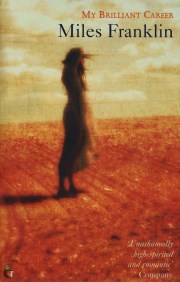
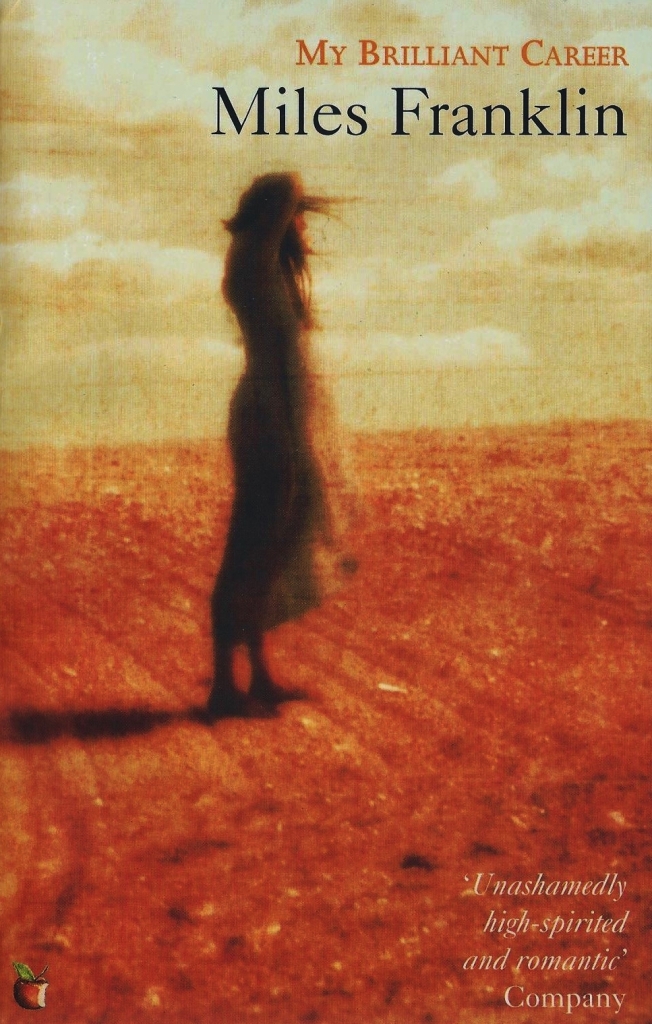
my brilliant career virago press miles franklin 001 (2)My Brilliant Career by Miles Franklin ~ 1901. This edition: Virago, 2002. Introduction by Carmen Callil. Paperback. ISBN: 0-86068-193-9. 232 pages.

My rating: 8.5/10

My sphere in life is not congenial to me. Oh, how I hate this living death which has swallowed all my teens, which is greedily devouring my youth, which will sap my prime, and in which my old age, if I am cursed with any, will be worn away! As my life creeps on for ever through the long toil-laden days with its agonizing monotony, narrowness, and absolute uncongeniality, how my spirit frets and champs its unbreakable fetters—all in vain!

Whoa, steady on, there!

These emotions, from the introduction of My Brilliant Career, written in the voice of fictional autobiographer, almost-seventeen-year-old Sybylla Melvyn, absolutely sob teen angst. Appropriately so, for their real author, Australian Stella Maria Sarah Miles Franklin, was just sixteen herself when she dashed these words off in the late 1900s, and the youth of the author is very evident throughout the story.

The fictional Sybylla starts life as the indulged child of a successful New South Wales landholder and an aristocratic mother. When Sybylla is eight years old, a prolonged drought inspires her father to change his occupation, to that of a stock dealer in nearby dairy-farming region, and the landholdings are sold and the family relocated to a much smaller farm. Sybylla’s father proves to be a very poor businessman, and his escalating failures start him drinking to excess, until the family’s circumstances become reduced to the point of bankruptcy. Sybylla’s mother is predictably soured by all of this, and her frustration with her declining lot in life and with her continually sulking eldest daughter comes to a head. Sybylla is told to get out into the world and earn a living, as the family cannot support either her careless ways or her continued financial drain on family resources. A reprieve comes through an offer by Sybylla’s well-off maternal grandmother to come and live on the family estate.

Sybylla finds life at her grandmother’s very congenial, and she blossoms into something of a local belle, eventually attracting the attention of the district’s wealthiest bachelor, the dashing Harry Beecham. Harry and Sybylla come to a tentative agreement – tentative, anyway, on Sybylla’s part, though ironclad on Harry’s – that she will marry him once she turns twenty-one. As she is just seventeen when this takes place, anything might happen in the ensuing years, and of course it does.

Harry loses his estate and leaves the district in order to re-establish himself; Sybylla’s parents send for her to take on a post as a governess with a family friend who has loaned the Melvyns money; Sybylla’s labors will count towards the interest. This proves to be a squalid and humiliating experience; Sybylla ends up having a nervous and physical breakdown, and returns to her parents’ home to recuperate, much to their combined dismay.

Harry returns, with fortune well on its way to being restored, but Sybylla has developed a deep antipathy to the married state, having observed the brutal physical and emotional effects of even a happy marriage on the women she has been observing as she becomes ever more acquainted with the wider world. Though Harry offers her a deep respect and swears that he will allow her the freedom to pursue her own interests (writing and music), and she is herself more than a little in love with him, she is ultimately unable to commit herself to him, and there Sybylla’s story abruptly ends.

This novel was an immediate bestseller, and brought the young author – Miles Franklin was twenty-one when it appeared – much fame and notoriety, as it was claimed by the publisher to be autobiographical, and the parallels between aspects of the lives of fictional Sybylla and real-life Miles were too obvious to dismiss. Teenage girls thrilled to Sybylla’s emotional outpourings and her desire to make something of herself, to have a “brilliant career”. The melodramatic tone of the tale caught adult readers’ attention, while family friends and neighbours raised querying eyebrows at the “Franklin girl’s” manipulation of the facts, and eagerly purchased the book for its curiousity value.

Despite the welcome income her debut novel brought, Miles Franklin was appalled at how it was received, and by the assumption that her family was accurately portrayed; she had meant it as a fiction. When her publisher inquired as to whether she would allow a second edition, Miles Franklin staunchly refused, and the book went out of print, until it was finally reissued in 1966, twelve years after her death.

The emotions expressed in the novel, chiefly those of frustration at the lack of opportunities for education and professional development for women, resonated with the modern feminists of the 1960s, and My Brilliant Career has been in print ever since, a highly regarded piece of early feminist literature, and a blazing example of a young woman’s refusal to bow to the status quo.

So much for the “meaningful” aspect of this book. Was it a “good” read?

Well, yes. It really was. I enjoyed it greatly.

Sybylla, for all of her over-the-top rantings about the woefulness of her life, early on turns into a very real and relatable character. I found that I was completely drawn in to her rather heart-rending little saga, and though I had moments of wanting to shake her vigorously – my “mother” side coming to the fore, I’m sure – I was completely on her side throughout. I sighed a bit when she turned down Harry Beecham at the very last; he was a wonderful catch, especially for the time and place. It was touch and go there for a bit, until Sybylla’s deeply entrenched intention of lifelong single womanhood got the upper hand!

Fascinating, then, to read the “sequel” to My Brilliant Career, which was written soon after the first book was published, but which was turned down by the publisher because of fear of scandal. More below.
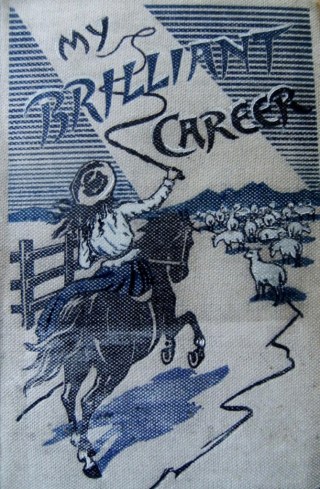
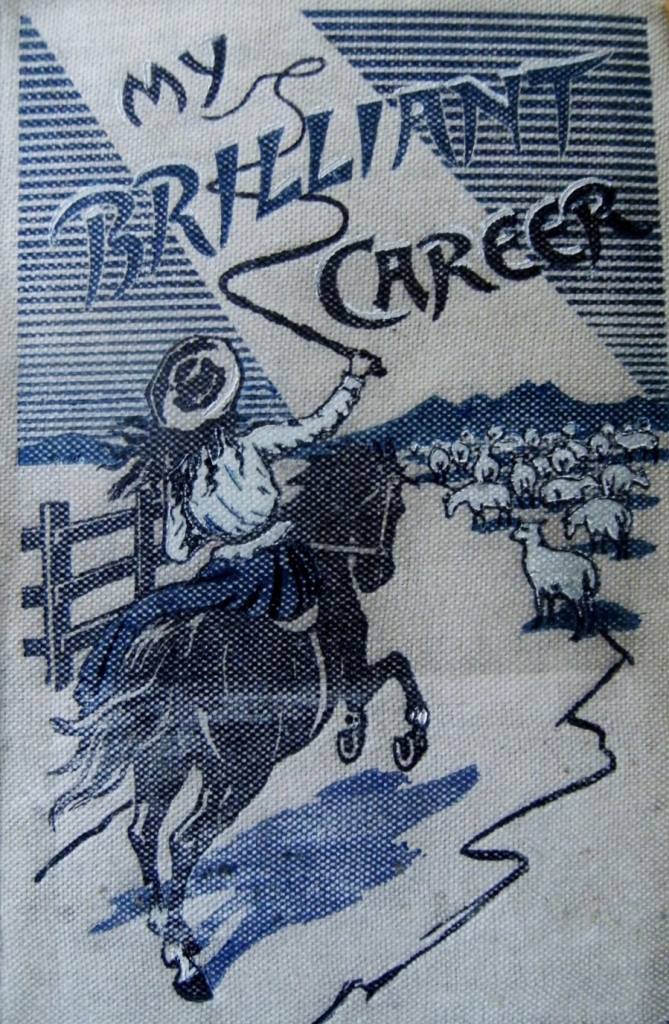
First edition cover of "My Brilliant Career", which is gently mocked in the author's sequel/rebuttal, "My Career Goes Bung".

First edition cover of “My Brilliant Career”, showing the illustration which is gently mocked in the author’s sequel/rebuttal, “My Career Goes Bung”.
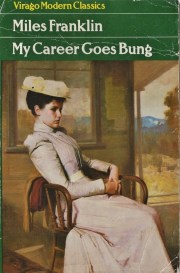
my career goes bung virago press miles franklin 001My Career Goes Bung by Miles Franklin ~ 1946. This edition: Virago, 1981. Foreword by Verna Coleman. Paperback. ISBN: 0-86068-220-X. 234 pages.

My rating: 9/10

I bless the serendipity which brought this book to me just before Christmas, when I was assembling books for the Century reading challenge. The name “Miles Franklin” was in the forefront of my awareness, having just purchased her first novel, My Brilliant Career, to represent 1901, and that in combination with the green Virago cover caught my eye.

While My Brilliant Career is something of a curiousity, a teenage writer’s attempt at dramatic fictional autobiography, My Career Goes Bung shows a polish and maturity which make me eager to explore more of this writer’s work.

The back story behind the delayed publication of the novel is fascinating as well. Written in 1902, concurrent with the author’s brief social success in Sydney as an up and coming young writer due to the instant popularity of My Brilliant Career, this next novel was returned by Franklin’s publisher with a terse, “No, thanks!”, citing fears of libel suits as well as concerns about its audacious and “advanced” views on sexuality and women’s rights. Miles Franklin then packed the manuscript away, and for decades believed it to have been destroyed, until the discovery of a second copy in an old trunk of her mother’s led to its publication in 1946.

In My Career Goes Bung, we are introduced to the “real” Sybylla, the young woman who has penned a bestseller based very loosely on fact, but which has been accepted as strictly autobiographical. In My Brilliant Career the fictional Sybylla’s parents and associates are portrayed as much less than admirable, and it is not at all surprising that the young author finds herself humiliated by the whole experience, and deeply apologetic to her parents, who were in actuality supportive of the young Sybylla’s literary strivings.

Peeling away the layers then, we have three characters to consider while reading these books. At the core, the very real person, Miles Franklin. Then her sympathetic alter-ego, the Sybylla Number Two of My Career Goes Bung, and lastly the teenage creation of excessive emotion and high imagination, Sybylla Number One, of My Brilliant Career.

Got that? It’s not all that complicated once one is immersed in the books; it all falls into place quite neatly. (Trust me!)

Sybylla Number Two goes off to Sydney to attempt to take advantage of the hubbub around her bestselling novel and to meet some of the literary stars of the day, with an eye to advancing her writing career. She is greeted with enthusiasm as the novelty of the moment, the little “bush girl” in her simple frocks, very much the innocent abroad, fending off the wolves by her impermeable naïvety in regards to their social manipulations, and in the case of many of the men, their sexual advances.

Sybylla attracts the eye of the handsome, calculating and immensely successful Goring Hardy, a thinly disguised version of the real-life “Banjo” Paterson (Waltzing Matilda, The Man From Snowy River, et al), who finds the virginal Sybylla a tempting prospect for conquest. Sybylla submits to his caresses, but allows no further liberties than some hot and heavy fondling and kissing; at the end of a week of secretive meetings, both parties realize that the relationship is not about to progress any further, and politely part ways. (Miles Franklin did have a short-term relationship of some sort with Paterson, hence the libel suit fears in regard to the fictional version.)

Sybylla is apparently something of a “babe” – in the most modern sense of the term – attracting the lavicious attentions of every many she meets. Another suitor, one Henry Beauchamp, assumed by all to be the original of the dashing Harry Beecham of My Brilliant Career, appears to vigorously woo Sybylla, but she spurns his frequent marriage proposals with steadfast determination. Sybylla then rather scornfully dismisses Sydney society as an artificial and fickle atmosphere antipathetic to true creativity, and returns to her family home more than ever determined to live the life of an independent woman, unshackled by the chains of marriage and childbearing, to pursue her ideals alone.

The End. (With the sound of enthusiastic feminist cheering faintly off on the sidelines.)

The real Miles Franklin stood by her convictions as firmly as did her fictional alter-ego. Though courted by many men, she never married. She continued to further develop her unique literary voice, supporting herself while writing by a variety of occupations, including nursing, housemaiding, and working as a secretary. She adopted the unlikely and picturesque nom-de-plume “Brent of Bin Bin”, avoiding her (modified) real name in order to sidetrack unfavourable comparisons of her subsequent work to My Brilliant Career, and had a modest success in her lifetime as a writer of Australian historical sagas and slightly quirky fictions.

Miles Franklin. I don’t think I’m quite done with her yet. What an interesting writer. Century of Books, you’ve already introduced me to a number of new-to-me mind-broadening reading experiences, of which this one stands out, so early along. I wonder what other happy surprises this reading year will bring?

Project Gutenberg Australia has a number of Miles Franklin’s works represented online, well worth looking at. My Brilliant Career and My Career Goes Bung are widely available in physical book form, in some cases as a combined edition, which I highly recommend. The second book enhances the first, and they greatly reward being read together.

Read Full Post »
« Newer Posts - Older Posts »