Archive for January, 2014

These next two books are proving to be something of a challenge to me.

Well, not actually the books themselves. Reading Miles Franklin’s teenage bestseller, My Brilliant Career, and her publisher-suppressed sequel (and apology to her parents) My Career Goes Bung, has been a fascinating process. My dilemma lies in how best to express what these books are really all about, and how they reflect the strong ideals of their author in her own life, while still inhabiting the fictional realm.

I will try to keep things brief(ish); one could go on for pages and pages and pages. Luckily there are others who have covered this ground before, and I think that if I succeed in piquing your interest in this writer and her books I will have to say, “Good enough.” Biographies and resources are definitely available for further study.
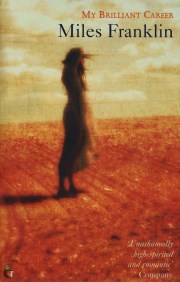
my brilliant career virago press miles franklin 001 (2)My Brilliant Career by Miles Franklin ~ 1901. This edition: Virago, 2002. Introduction by Carmen Callil. Paperback. ISBN: 0-86068-193-9. 232 pages.

My rating: 8.5/10

My sphere in life is not congenial to me. Oh, how I hate this living death which has swallowed all my teens, which is greedily devouring my youth, which will sap my prime, and in which my old age, if I am cursed with any, will be worn away! As my life creeps on for ever through the long toil-laden days with its agonizing monotony, narrowness, and absolute uncongeniality, how my spirit frets and champs its unbreakable fetters—all in vain!

Whoa, steady on, there!

These emotions, from the introduction of My Brilliant Career, written in the voice of fictional autobiographer, almost-seventeen-year-old Sybylla Melvyn, absolutely sob teen angst. Appropriately so, for their real author, Australian Stella Maria Sarah Miles Franklin, was just sixteen herself when she dashed these words off in the late 1900s, and the youth of the author is very evident throughout the story.

The fictional Sybylla starts life as the indulged child of a successful New South Wales landholder and an aristocratic mother. When Sybylla is eight years old, a prolonged drought inspires her father to change his occupation, to that of a stock dealer in nearby dairy-farming region, and the landholdings are sold and the family relocated to a much smaller farm. Sybylla’s father proves to be a very poor businessman, and his escalating failures start him drinking to excess, until the family’s circumstances become reduced to the point of bankruptcy. Sybylla’s mother is predictably soured by all of this, and her frustration with her declining lot in life and with her continually sulking eldest daughter comes to a head. Sybylla is told to get out into the world and earn a living, as the family cannot support either her careless ways or her continued financial drain on family resources. A reprieve comes through an offer by Sybylla’s well-off maternal grandmother to come and live on the family estate.

Sybylla finds life at her grandmother’s very congenial, and she blossoms into something of a local belle, eventually attracting the attention of the district’s wealthiest bachelor, the dashing Harry Beecham. Harry and Sybylla come to a tentative agreement – tentative, anyway, on Sybylla’s part, though ironclad on Harry’s – that she will marry him once she turns twenty-one. As she is just seventeen when this takes place, anything might happen in the ensuing years, and of course it does.

Harry loses his estate and leaves the district in order to re-establish himself; Sybylla’s parents send for her to take on a post as a governess with a family friend who has loaned the Melvyns money; Sybylla’s labors will count towards the interest. This proves to be a squalid and humiliating experience; Sybylla ends up having a nervous and physical breakdown, and returns to her parents’ home to recuperate, much to their combined dismay.

Harry returns, with fortune well on its way to being restored, but Sybylla has developed a deep antipathy to the married state, having observed the brutal physical and emotional effects of even a happy marriage on the women she has been observing as she becomes ever more acquainted with the wider world. Though Harry offers her a deep respect and swears that he will allow her the freedom to pursue her own interests (writing and music), and she is herself more than a little in love with him, she is ultimately unable to commit herself to him, and there Sybylla’s story abruptly ends.

This novel was an immediate bestseller, and brought the young author – Miles Franklin was twenty-one when it appeared – much fame and notoriety, as it was claimed by the publisher to be autobiographical, and the parallels between aspects of the lives of fictional Sybylla and real-life Miles were too obvious to dismiss. Teenage girls thrilled to Sybylla’s emotional outpourings and her desire to make something of herself, to have a “brilliant career”. The melodramatic tone of the tale caught adult readers’ attention, while family friends and neighbours raised querying eyebrows at the “Franklin girl’s” manipulation of the facts, and eagerly purchased the book for its curiousity value.

Despite the welcome income her debut novel brought, Miles Franklin was appalled at how it was received, and by the assumption that her family was accurately portrayed; she had meant it as a fiction. When her publisher inquired as to whether she would allow a second edition, Miles Franklin staunchly refused, and the book went out of print, until it was finally reissued in 1966, twelve years after her death.

The emotions expressed in the novel, chiefly those of frustration at the lack of opportunities for education and professional development for women, resonated with the modern feminists of the 1960s, and My Brilliant Career has been in print ever since, a highly regarded piece of early feminist literature, and a blazing example of a young woman’s refusal to bow to the status quo.

So much for the “meaningful” aspect of this book. Was it a “good” read?

Well, yes. It really was. I enjoyed it greatly.

Sybylla, for all of her over-the-top rantings about the woefulness of her life, early on turns into a very real and relatable character. I found that I was completely drawn in to her rather heart-rending little saga, and though I had moments of wanting to shake her vigorously – my “mother” side coming to the fore, I’m sure – I was completely on her side throughout. I sighed a bit when she turned down Harry Beecham at the very last; he was a wonderful catch, especially for the time and place. It was touch and go there for a bit, until Sybylla’s deeply entrenched intention of lifelong single womanhood got the upper hand!

Fascinating, then, to read the “sequel” to My Brilliant Career, which was written soon after the first book was published, but which was turned down by the publisher because of fear of scandal. More below.
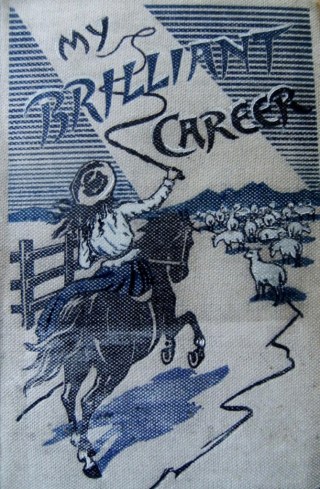
First edition cover of "My Brilliant Career", which is gently mocked in the author's sequel/rebuttal, "My Career Goes Bung".

First edition cover of “My Brilliant Career”, showing the illustration which is gently mocked in the author’s sequel/rebuttal, “My Career Goes Bung”.
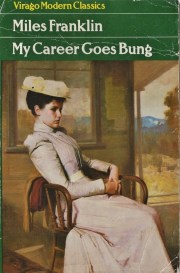
my career goes bung virago press miles franklin 001My Career Goes Bung by Miles Franklin ~ 1946. This edition: Virago, 1981. Foreword by Verna Coleman. Paperback. ISBN: 0-86068-220-X. 234 pages.

My rating: 9/10

I bless the serendipity which brought this book to me just before Christmas, when I was assembling books for the Century reading challenge. The name “Miles Franklin” was in the forefront of my awareness, having just purchased her first novel, My Brilliant Career, to represent 1901, and that in combination with the green Virago cover caught my eye.

While My Brilliant Career is something of a curiousity, a teenage writer’s attempt at dramatic fictional autobiography, My Career Goes Bung shows a polish and maturity which make me eager to explore more of this writer’s work.

The back story behind the delayed publication of the novel is fascinating as well. Written in 1902, concurrent with the author’s brief social success in Sydney as an up and coming young writer due to the instant popularity of My Brilliant Career, this next novel was returned by Franklin’s publisher with a terse, “No, thanks!”, citing fears of libel suits as well as concerns about its audacious and “advanced” views on sexuality and women’s rights. Miles Franklin then packed the manuscript away, and for decades believed it to have been destroyed, until the discovery of a second copy in an old trunk of her mother’s led to its publication in 1946.

In My Career Goes Bung, we are introduced to the “real” Sybylla, the young woman who has penned a bestseller based very loosely on fact, but which has been accepted as strictly autobiographical. In My Brilliant Career the fictional Sybylla’s parents and associates are portrayed as much less than admirable, and it is not at all surprising that the young author finds herself humiliated by the whole experience, and deeply apologetic to her parents, who were in actuality supportive of the young Sybylla’s literary strivings.

Peeling away the layers then, we have three characters to consider while reading these books. At the core, the very real person, Miles Franklin. Then her sympathetic alter-ego, the Sybylla Number Two of My Career Goes Bung, and lastly the teenage creation of excessive emotion and high imagination, Sybylla Number One, of My Brilliant Career.

Got that? It’s not all that complicated once one is immersed in the books; it all falls into place quite neatly. (Trust me!)

Sybylla Number Two goes off to Sydney to attempt to take advantage of the hubbub around her bestselling novel and to meet some of the literary stars of the day, with an eye to advancing her writing career. She is greeted with enthusiasm as the novelty of the moment, the little “bush girl” in her simple frocks, very much the innocent abroad, fending off the wolves by her impermeable naïvety in regards to their social manipulations, and in the case of many of the men, their sexual advances.

Sybylla attracts the eye of the handsome, calculating and immensely successful Goring Hardy, a thinly disguised version of the real-life “Banjo” Paterson (Waltzing Matilda, The Man From Snowy River, et al), who finds the virginal Sybylla a tempting prospect for conquest. Sybylla submits to his caresses, but allows no further liberties than some hot and heavy fondling and kissing; at the end of a week of secretive meetings, both parties realize that the relationship is not about to progress any further, and politely part ways. (Miles Franklin did have a short-term relationship of some sort with Paterson, hence the libel suit fears in regard to the fictional version.)

Sybylla is apparently something of a “babe” – in the most modern sense of the term – attracting the lavicious attentions of every many she meets. Another suitor, one Henry Beauchamp, assumed by all to be the original of the dashing Harry Beecham of My Brilliant Career, appears to vigorously woo Sybylla, but she spurns his frequent marriage proposals with steadfast determination. Sybylla then rather scornfully dismisses Sydney society as an artificial and fickle atmosphere antipathetic to true creativity, and returns to her family home more than ever determined to live the life of an independent woman, unshackled by the chains of marriage and childbearing, to pursue her ideals alone.

The End. (With the sound of enthusiastic feminist cheering faintly off on the sidelines.)

The real Miles Franklin stood by her convictions as firmly as did her fictional alter-ego. Though courted by many men, she never married. She continued to further develop her unique literary voice, supporting herself while writing by a variety of occupations, including nursing, housemaiding, and working as a secretary. She adopted the unlikely and picturesque nom-de-plume “Brent of Bin Bin”, avoiding her (modified) real name in order to sidetrack unfavourable comparisons of her subsequent work to My Brilliant Career, and had a modest success in her lifetime as a writer of Australian historical sagas and slightly quirky fictions.

Miles Franklin. I don’t think I’m quite done with her yet. What an interesting writer. Century of Books, you’ve already introduced me to a number of new-to-me mind-broadening reading experiences, of which this one stands out, so early along. I wonder what other happy surprises this reading year will bring?

Project Gutenberg Australia has a number of Miles Franklin’s works represented online, well worth looking at. My Brilliant Career and My Career Goes Bung are widely available in physical book form, in some cases as a combined edition, which I highly recommend. The second book enhances the first, and they greatly reward being read together.

Read Full Post »
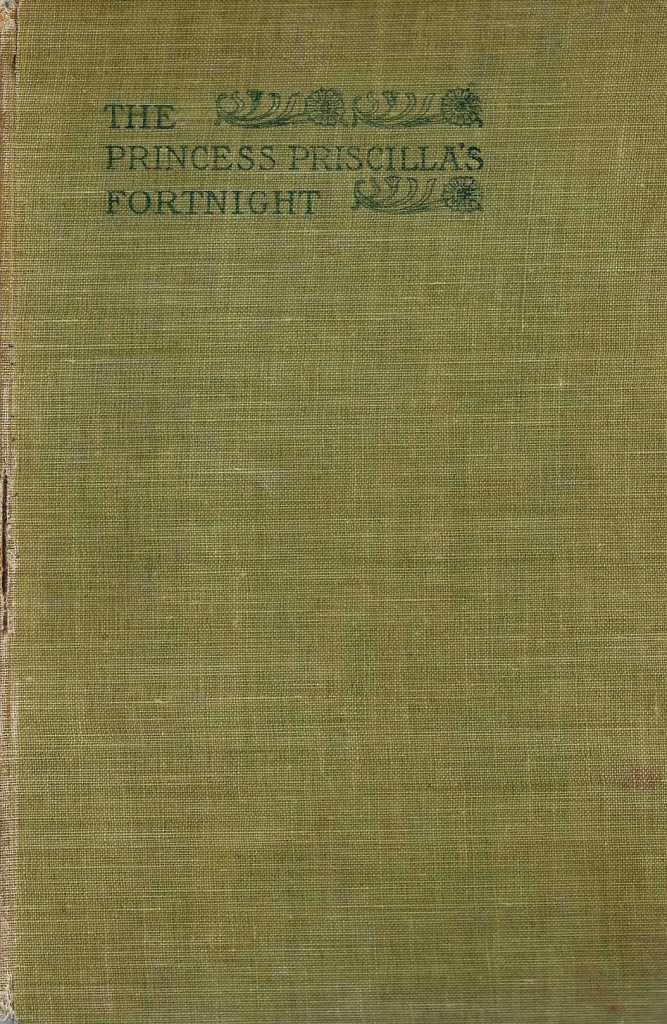
the princess priscilla's fortnight elizabeth von arnim 001The Princess Priscilla’s Fortnight by Elizabeth von Arnim ~ 1905. This edition: Smith, Elder & Co., 1906. Hardcover. 329 pages.



My rating: 7.5/10

Her Grand Ducal Highness the Princess Priscilla of Lothen-Kunitz was up to the age of twenty-one a most promising young lady. She was not only poetic in appearance beyond the habit of princesses but she was also of graceful and appropriate behaviour. She did what she was told; or, more valuable, she did what was expected of her without being told. Her father, in his youth and middle age a fiery man, now an irritable old gentleman who liked good food and insisted on strictest etiquette, was proud of her on those occasions when she happened to cross his mind. Her mother, by birth an English princess of an originality uncomfortable and unexpected in a royal lady that continued to the end of her life to crop up at disconcerting moments, died when Priscilla was sixteen. Her sisters, one older and one younger than herself, were both far less pleasing to look upon than she was, and much more difficult to manage; yet each married a suitable prince and each became a credit to her House, while as for Priscilla,—well, as for Priscilla, I propose to describe her dreadful conduct.

German Princess Priscilla is finally facing an appropriately marriageable suitor, a personable prince with a suitably secure income, and all that is left is to arrange the formal engagement. But the princess is suffering from what would vulgarly be called “cold feet”, so she dreams up a plan to escape from her overly lavish courtly surroundings, “where one is never alone”, by taking up an incognito life in an English country cottage with her personal mentor, the elderly ducal librarian, who sympathizes with Priscilla’s secret desire to pursue the beautiful simple life.

Bribing one of Princess Priscilla’s maids to go on ahead and meet them in Cologne, prefatory to travelling through France and crossing the Channel, Priscilla and Herr Fritzing disguise themselves in old clothes, scarves and veils and depart the castle on bicycles. Luck smiles on them; they make a clean getaway, and eventually fetch up in the English countryside, where they turn a sober village upside down by their joint combination of well-meaning naïvety and high-handed snobbishness.

Two young men fall immediately head over heels in love with the oblivious princess, two households are bitterly disrupted, and then the cheerful farce of this improbable adventure turns even more sober when Priscilla’s thoughtlessness and misplaced generosity causes a hitherto honest young woman to turn thief through irresistible temptation, and an elderly woman to be murdered for the money Priscilla has given her.

Once luck deserts the two idealistic German vagabonds, it does so with a vengeance. Their emotional maid, deeply resentful of her lowly position and the assumption that she will take on menial tasks unthought-of in castle days, blackmails Herr Fritzing for his last penny. The indignant mothers of Priscilla’s two local suitors descend upon the household with their respectively outraged and tearful maternal woes, and the local tradespeople send in their bills and refuse to extend any more credit to the suddenly-beleaguered establishment.

Luckily this is by way of being a fairy-tale-ish confection, and a bold rescuer appears from an unexpected direction. Priscilla comes away from her rural fortnight a much sadder and wiser young woman, and the obvious morals are writ large in bold letters all over the concluding chapters.

This playful story with a semi-serious message is a very readable light novel, something along the lines of The Enchanted April and The Jasmine Farm in tone, with a similarly neat and tidy satisfactory ending. Perhaps not one of von Arnim’s best and most complex works, but more than acceptable for cheerful diversion, and charmingly witty, with the author getting her usual digs in at the Germanic patriarchy’s tendency to squelch their women into an acceptable meekness.

Here is Princess Priscilla at Project Gutenberg, and here are several other favorable reviews:

The Captive Reader ~ The Princess Priscilla’s Fortnight

Geranium Cat’s Bookshelf ~ The Princess Priscilla’s Fortnight

Read Full Post »

Down by the Fraser River, which forms the boundary of our small farm, New Year's Eve afternoon. A brief moment of peaceful beauty, soon to change...

Down by the Fraser River, which forms the boundary of our small farm, New Year’s Eve afternoon. A brief moment of peaceful beauty, soon to change…

The book reviews have been coming daily so far in January, and though this looks quite impressive, I hasten to reassure my readers that it will definitely not be the pattern of the year. January so far has been something of an anomaly, a time of stillness and a sort of tipping point for what is proving to be a transitional time in my life, in a smallish and positive way.

(And as some of you might remember from previous comments, we don’t have TV, so that time is freed up for dallying with books. At least an hour or two a day, if our friends’ TV watching habits are anything to go by.)

For the past twelve years I have been that most involved of maternal figures, a fully fledged dance mom, and it had looked like this would have been one of the busiest years yet in that regard, as it would have been my daughter’s “peak year”, the last fully dedicated to dancing before her graduation from high school and transition into the next stage in her life. After much agonizing, the decision was made in October to call it quits right now, a year early, as it were. No more long commutes to the dance studio in the city two and a half hours away, no more trips to Vancouver to visit her choreographer, no more sweating over solos and arranging for rehearsal sessions and cutting music and mulling over costumes, and most lovely of all, no more monthly tuition, choreo and fuel bills. We are suddenly free from the self-imposed tyranny of the dance world, and though there are definitely deep regrets for the many positive aspects of being a serious amateur dancer, we are both, she and I, rather enjoying the experience of going into the festival and competition season stress-free (for we are still both involved on an organizational and volunteer level in our local performing arts festival), and being able to look forward to being home in the springtime, instead of daily on the road to somewhere else.

For we’ve also decided to take a sabbatical from running our plant nursery this year, something we’ve done twice before in our twenty-one years of involvement in the business. Our personal perennial garden desperately needs a concerted year (or possibly two) of attention, something impossible to do when one is tied up in the greenhouse growing thousands of lovely little plants for other people’s gardens. The little propagation greenhouse, my 12-hours-a-day home in February-March-April-May, which has been yearly shored up and patched up and made to “make do”, is at last going to be replaced with something a bit bigger, much better built, and more comfortable to work in.

January 1st, 2014. Ice coming down the Fraser River has piled up a mile or so downstream, causing an ice dam and upstream flooding of our lower fields.

January 1st, 2014. Ice coming down the Fraser River has piled up a mile or so downstream, causing an ice dam and upstream flooding of our lower fields. This is looking north, as the river runs backwards in the main channel, on the other side of that ice pile mid-photo. I had to scoot out of the way, as my feet were about to get very wet!

And what with various family medical crises these past few years, including losing a family member to cancer, my mother’s serious fall in the summer and subsequent transition into a seniors’ care facility, and a flare-up of problems with my own two broken ankles which still refuse to work properly several years post-injury, it’s time for a healing year, emotionally and physically. Time to step back, and look inward for a bit.

Usually January 1st marks the time of taking a huge breath and diving into the combined maelstrom of dance festival preparation and concentrated seed starting and seedling care. Not this year. Not a single seed has been planted – heck, not a single seed order has been made! – and the dancer has cheerfully packed away her pointe shoes and has turned to drawing up ambitious garden plans instead. Under doctor’s paradoxical orders to both favor my ankles and exercise as much as possible, I’m attempting to do both by having some sitting down time every hour (which happily translates into reading time and computer time), and by using hiking poles when out and about, which is slightly awkward in that I am still learning how best to use manage my sticks properly when going up and down hills and on narrow paths. But the ankles are noticeably less painful at the end of the day, so maybe it’s working. One can hope!

We’re presently getting some work in on our still-not-finished self-built house, including a gorgeous set of floor-to-ceiling bookcases in a newly constructed hallway/office space which we are calling the “L Room”. “L” for its funny shape, and for “Library”, too! It’s coming along nicely, and when completed will house my working collection of plant books, as well as a goodly amount of “pleasure” reading, my old wooden desk, desktop computer and scanner/printer, filing cabinets and last but not least my piano. Which I hope will figure more prominently in my own near future, as once it is properly settled in I will be able to resume playing, at last in a quiet corner all of my very own. I’m inwardly tremendously excited, though I show an outer calm. 😉

It’s been a very good winter to be off the roads, as the weather has been rather frightful – lots of snow, and warmer temperatures turning everything to ice, and then snow again. We’ve shovelled our roof off four times so far – a record – to prevent ice buildup on the eaves, and this morning I see it could likely use it again. A few inches of fresh snow yesterday morning, followed by above-freezing temperatures and slushy rain in the afternoon, and this morning minus 6 Celsius. Lots of icicles.

I should probably sign off. This quiet Sunday morning has left me feeling rather introspective, hence this rambling post. Both teens are sleeping in, and my husband is off at work. It’s snowing again, the dogs are sleeping in front of the woodstove, the bird feeders are topped up, my kitchen is relatively neat and tidy, and my plans for the day – a bit of paperwork, some puttering about in the construction zone, a bit of sanding, a bit of painting – are modest and manageable. An intriguing book is waiting for my attention as well, My Brilliant Career, by Miles Franklin. Teen angst in Australia, circa 1901.

Happy January, friends. A full fresh year stretches before us. I hope you are all feeling as optimistic as I am that it will bring good things, and that we will all have the inner resources to weather the inevitable storms as well.

Cheers!

January 2, 2014. Same spot as the idyllic picture at the top of the post, a short two days later, after the water has flooded the banks and receded, leaving much ice behind.

January 2, 2014. Same spot as the idyllic picture at the top of the post, a short two days later, after the water has flooded the banks and receded, leaving much ice behind.

Read Full Post »

green mansions 1944 dj w h hudsonGreen Mansions: A Romance of the Tropical Forest by W.H. Hudson ~ 1904. This edition: Random House, 1944. Introduction by John Galsworthy (1915); illustrations by E. McKnight-Kauffer. Hardcover. 303 pages.

My rating: 3.5/10

Memorable and deserving of its status as a literary classic? “Yes” to the first bit – it is definitely memorable – and “Sure, okay, I guess so” to the second. I can see how this one caught people’s attention, with its exotic setting and all. In 1904 deepest darkest Amazonia was still fairly blank on the world map.

Enjoyable reading? I am so sad to say that as far as I’m concerned, this is an emphatic “No!”

Ugh. It’s been a very long time since I read something that repelled me as deeply as did Green Mansions, glowing descriptions of Amazonian flora and fauna and Galsworthy’s effusive foreword aside.

Venezuelan aristocrat Abel gets mixed up in a failed coup and must flee for his life. He ends up in the interior of Guayana, someplace beyond the Orinoco River. As he wanders about, doing a bit of hunting here, a bit of gold prospecting there, he starts to gain an appreciation for the natural wonders of the jungle. He then falls in with a small tribe of “savages” and decides that maybe this would be a cool place to hang out for a while. Impressing the chief savage with the gift of a silver tinderbox, Abel slings his hammock in the corner of the communal shelter and settles down to being waited on by the women in between stints of building himself a guitar and condescendingly teaching the youngsters of the group to fence with wooden foils.

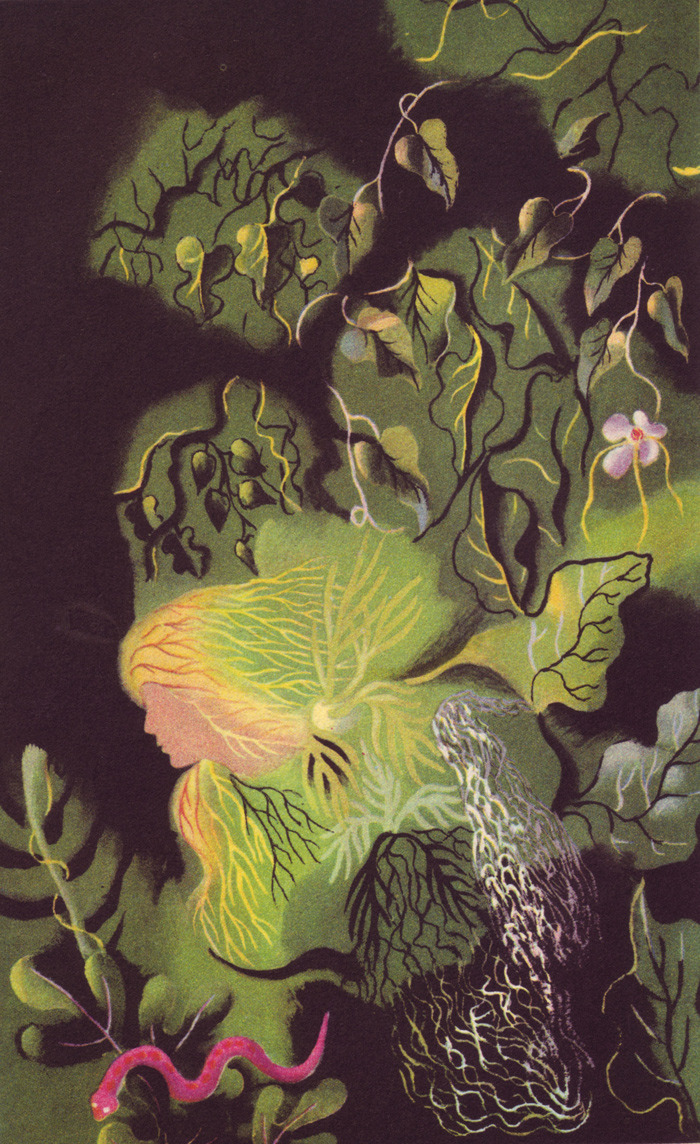
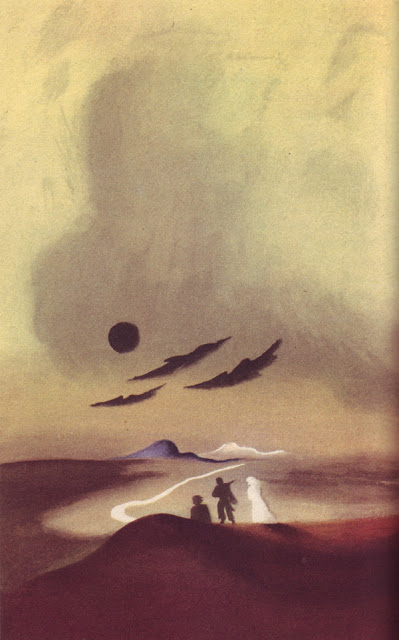
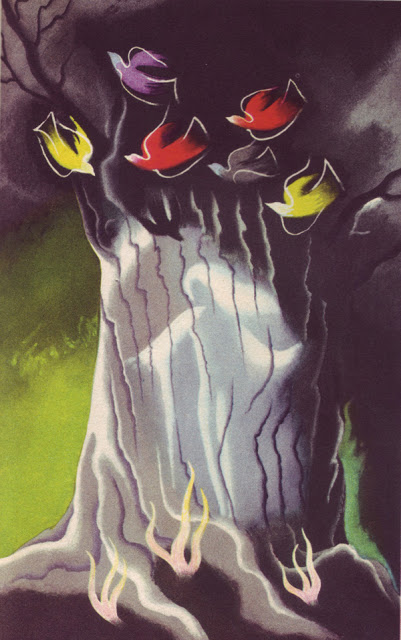
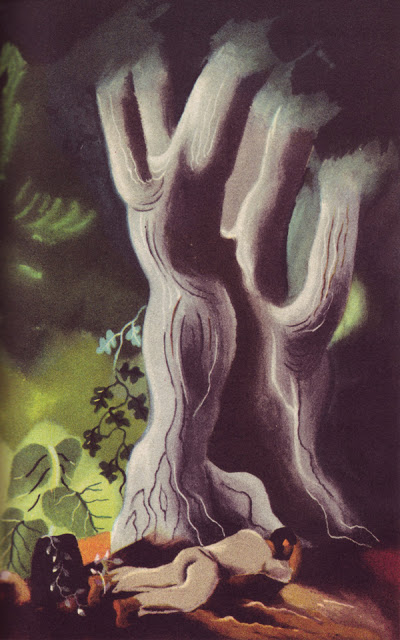
The E. McKnight-Kauffer illustrations in my 1944 edition of this book are lovely; the best part of the book!

The E. McKnight-Kauffer illustrations in my 1944 edition of this book are lovely; the best part of the book! Check out all the symbolic details that the illustrator has included here.

To condense greatly (which I wish the author would have) Abel encounters a mysterious girl in the nearby forest, in the taboo region where his host tribe will not hunt. She teases him with glimpses of her lovely self, all the while whistling and chirping like a mysterious bird. Eventually the two make contact, but as he embraces the elusive creature Abel is bitten by a deadly coral snake. He flees through the forest, expecting death at any moment, stumbles upon the camp of an old European man, and collapses. When he comes to, miraculously on the mend from the snakebite, he finds that he has found Bird Girl’s “grandfather”, a shifty-eyed elderly bearded type named Nuflo.

Much twittering about the forest ensues, Abel lusting after Rima (which turns out to be Bird Girl’s name) and Rima being all ethereal and hard to get. She’s the wood nymph protector of the forest creatures, etcetera. Meanwhile Nuflo daily sneaks off with his two dogs and surreptitiously kills the odd little animal, which he devours in a secret hideaway, joined by Abel who is getting rather famished living on the roots and berries which Rima feels are the only food needed to sustain life.

At some point all three go off to the place “twenty days away” where Nuflo discovered her wounded mother, on a quest to find Rima’s hypothetical vanished tribe. (Nuflo, “grandfather” title to the contrary, is actually no relation, but he had appointed himself guardian of the tiny child when her mother eventually died, some ten years before Abel enters the picture. Rima is now seventeen, making her ripe for love and hence fair game, as the author continually implies.)

Off to find the lost tribe.

Off to find the lost tribe.

Anyway, Abel convinces Rima that her mother’s tribe appears to be truly vanished, and Rima decides to return to the forest, leaving Abel and Nuflo to follow at their own pace, because she’s just so darned marvelous and ethereal (not to mention weather resistant in her spiderweb dress) and not requiring of any boring shelter or cooked food so she can travel so much faster than the menfolk. And she wants to prepare a lovely forest home for herself and Abel, as she has finally agreed to give in to his passionate entreaties, but she wants them to “do it” properly in nice surroundings.

So imagine Abel’s feelings when he and Nuflo come back home to find that the savages have chased Rima to the top of a tall tree and then burned it down, with her plunging to a fiery death. We don’t get to witness this, just hear about it from one of the savages, leading to the false hope that Rima may still be alive out there in the forest. (Spoiler: She isn’t.)

Rima's spirit lives on is the gist of this one, I think.

Rima’s spirit lives on is the gist of this one, I think.

Abel vows revenge, and goes to the next tribe of savages over (who are, naturally, sworn enemies to the first tribe of savages) and sets them to slaughter tribe of savages number one. Once everyone is dead (including Nuflo), Abel scrapes up Rima’s ashes, makes an ornate clay urn to contain them, and returns to civilization, where he spends his time pondering the wickedness of man, the glorious wonder of nature, and the sad fate of his bird girl.

I’m trying to think of one single character who didn’t make me want to vehemently cuff them at some point, but nope, can’t do it. Rima is just plain annoying, with her teasing girlish ways, her glowing red eyes, greyish-ivory skin, cloud of halo-like hair and spiderweb dress. Abel is a lout, living off the locals and rudely critiquing every detail of their morals, intelligence, appearance and lifestyle. Nuflo is shady to the nth degree, and the native tribespeople are paradoxically portrayed as universally unintelligent, deeply superstitious and highly manipulative.

I am glad I finally read this book, as it is so highly regarded by so many and so often referenced in literature, but I am even gladder to have turned the last page, and I have zero intention of ever reading it again.

Onward then, to something more palatable. I deserve something really good, I think, to take the taste of this one away. Let’s see now… maybe something by Elizabeth von Arnim? Of a similar vintage, to restore my faith in authors of this era.

This is how I felt after reading this book. (The illustration is actually from early on in the story, when Abel despairs at getting his hands on the elusive Rima.)

This is how I felt after reading this book. (The illustration is actually from early on in the story, when Abel despairs at getting his hands on the elusive Rima.)

And please don’t let my snarly review put you off. Thousands thrilled to this book, and you might well be among them. Here it is, online at Project Gutenberg.

Green Mansions by W.H. Hudson

Has anyone else read this? Loved it or despised it or felt completely ambiguous about it? Please do share!

Read Full Post »

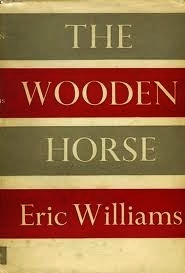
12285312The Wooden Horse by Eric Williams ~ 1949. This edition: Collins, 1949. Hardcover. 256 pages.

My rating: 8.5/10.

It was January when they had first come to Stalag-Luft III, and for the whole of that month the ground was under snow. Snow lay thickly on the roofs of the barracks blocks and gave an air of gaiety to the barbed wire which sparkled and glittered in the sun. Every post carried its cap of crisp, powdery snow, and when the wind blew, the snow drifted up against the coiled wire, softening its gauntness. Escape in this weather was impossible, and when the snow stopped falling the prisoners made a bobsleigh run and cut up their bed-boards to make toboggans. They flooded the football pitch and made an ice rink on which they skated from morning until evening. The camp was pure and clean while the snow lay on the ground, and the air loud with the shouts of the skaters. It was only when the night carts came to empty the aborts that the compound became offensive, and then the air was malodorous and long yellow streaks marked the snow where the carts had been.

When the thaw came the camp was a sea of mud. The packed ice of the toboggan run was the last to melt, and the skating rink was a miniature lake on which a few enthusiasts sailed their home-made yachts. Then that dried up and the football pitch was reconditioned. The goalposts were replaced and the earth dams that had held the water were removed.

With the spring came a renewed interest in escape. Spring is the escaping season…

Royal Air Force Flight Lieutenant Peter Howard, shot down over Germany in 1942, is on his second prison camp. He and fellow officer John Clinton had already tunnelled out of their first camp, Oflag XXI-B, but were recaptured only a few days later. Now they are pondering the possibilities of surreptitiously leaving Stalag-Luft II, the massive internment camp purpose-built and maintained by the Luftwaffe for captured flight crews. (This officers-only camp eventually housed over 10,000 POWs. For an excellent description of Stalag-Luft III, see this extensive Wikipedia article.)

Escaping from Stalag-Luft III had so far been impossible. Built on sandy soil, with distinctly coloured subsoil making disposal of tunnelling debris extremely difficult to disguise, the camp buildings were constructed on pilings, with guard dogs patrolling the compound after dark, and a system of foot patrols and random spotlighting to prevent any prisoner activity under cover of darkness. Due to the prevalence of prisoners attempting to escape by tunnelling, microphones capable of picking up seismographic vibrations had been installed around the perimeter of the camp.

Conditions inside the camp were reputed to be among the most “lavish” in any of the German-run POW camps. Because the detainees were officers, they were not required to perform forced labour under the terms of the Geneva Convention, and were provided with regular Red Cross food and relief parcels, which included cigarettes and toiletries. Many of the POWs were taking correspondence-style university courses, and recreation opportunities within the camp – sports, theatre, music – were well organized and highly attended.

So why even try to escape, and risk being shot? Many of the captured British airmen were quite content to put up with the boredom of being interned, grateful to be in a relatively comfortable camp, but for others the idea of being held in detention was maddening. Their one focus was on getting out and away back to England, from where they could renew their active participation in the war.

films-1950-the-wooden-horse

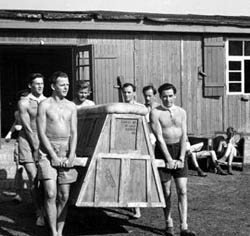
A re-creation of the vaulting horse in the 1950 movie version of the book.

Howard and Clinton come up with an ingenious plan, inspired by the traditional “Trojan Horse”, to start a tunnel close to the perimeter fence and so lessen the distance needed for excavation. They design a wooden vaulting horse, in which at first one and then later two and three men can be hidden and carried, and proceed to establish a regular routine of gymnastic exercises at their chosen tunnel head. With the cooperation and assistance of numerous fellow prisoners, the continuous vaulting, jumping, landing and related calisthenics created enough vibration that the tunneling noise was disguised from the microphones. Bags of excavated sand, made from the cut-off legs of prisoners’ pants, were hung on hooks inside the horse, to be removed and surreptitiously scattered in innocuous locations, and eventually, as it was harder to dispose off without being spotted, in the ceilings of the dormitories.

The Wooden Horse describes the escape plan in great detail, and makes fascinating reading. The ingenuity of the prisoners is admirable, as is the camp organization which coordinated escape attempts. A hidden stockpile of altered clothing, forged papers, German money and condensed food rations was assembled through various efforts, to be allotted to those who had made a plausible case to the Escape Committee.

Howard and Clinton, along with a third officer, Phillip Rowe, are the first and as it turns out, the only prisoners to successfully escape from Stalag-Luft III and to return to their home country. Every other escape attempt, of which there were many, including the famous “Great Escape”  of 1944 documented by writer Paul Brickhill, ended in recapture and, in the case of the Great Escape, execution of many of the escapees.

no111

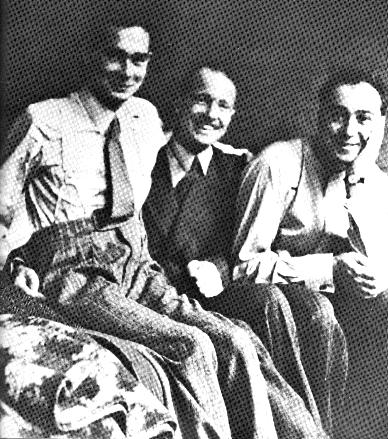
Michael Codner, Oliver Philpot, and Eric Williams

In The Wooden Horse, the fictionalized version of events written by participant Eric Williams, ‘Peter Howard’ is Eric himself,  ‘John Clinton’ is Michael Codner, and ‘Philip Rowe’ is Oliver Philpot. All three men returned to active service after their return to England.

An extremely interesting book, containing as it does such intensive detail concerning life in an officers’ POW camp, and vivid descriptions of life in civilian Germany midway through the war as the men blend in with the population during their journey toward the seaport where they hope to find transport out of the country.

The story is well-told, though events here and there which are really quite dramatic are told in an offhand sort of manner, with the exception of a brutal encounter with a German guard at the very end of the narrative, which stands out by its dramatic and gory details. This incident was later revealed to be fabricated at the request of the book’s publisher, in order to “spice up” the ending. Everything else, though, appears to be quite true.

A must-read for anyone at all interested in World War II history, for its extensive detail and its business-as-usual, “sure-we-did-amazing-things-but-why-all-the-fuss?” tone, keeping that British “stiff upper lip” stereotype nicely polished. What emotion is shown is in the realistic depiction of the nerve-wracking journey across Germany and into occupied Denmark, and the stressful situation at being completely at the mercy of randomly-met strangers who may or may not be willing to pass along information or messages, and any of whom might be in collaboration with the German officials.

All in all, a good read.

Read Full Post »

crooked adm d e stevensonCrooked Adam by D.E. Stevenson ~ 1942. This edition: Fontana, 1974. Paperback. 219 pages.

My rating: 6.5/10

You have to hand it to D.E. Stevenson. Even if she didn’t know anything at all about her subject (mental illness in Rochester’s Wife, for example) it didn’t stop her from taking a good old swing at it, cheerfully glossing over the complicated bits by having her characters tell each other, “It’s too specialized to explain. Just trust me.” And of course, they do.

In this case it is schoolmaster Adam Southey who is the clueless one. His headmaster, Samuel Cooke, is a prominent scientist who is working on a secret war machine, a kind of death ray which focus an ultraviolet beam of light on an object – say, an enemy airplane – and causes it to burst into flames. “A Death Ray!” exclaims Adam, only to be lectured by his superior that this is inaccurate: “It’s too specialized to explain to a simple soul like you. Just trust me.”

It is early in World War II, and Adam is disappointed that His Majesty’s Army has no use for him, due to a childhood injury which has left one of his legs shorter than the other. Despite this physical handicap, Adam is fit and strong, and can swing along at a great rate, which is about to come in very handy very soon. He surprises a suspicious intruder attempting to get a look at Cooke’s secret weapon, and ends up accompanying the van carrying the machine to a secret army testing base in Scotland, with some interesting adventures on the way, including an attempted hijacking and a stint of camouflage with a travelling circus.

Once in Scotland, with Marvelous Invention to Change the Course of the War almost ready to demonstrate, Adam’s adventures get even more exciting, as he stumbles upon a Cleverly Disguised Nest of Nazi Spies (complete with submarine access to a secret tunnel), teams up with the local shepherds and fishermen to foil the Wicked Teutonic Menace, and ultimately finds True Love.

Despite the simplistic tone of the whole thing, written in a “Gosh! Golly!” schoolboy-adventure-tale-genre sort of way, it is rather an enjoyable romp, and the groaning faux-pas-by-sincere-author moments add to the charming vintage atmosphere. The hero is sweet and true-blue all the way through (“Crooked Adam”, as one of his schoolboy charges murmurs in a scene-setting aside to a friend, is really one of those double entendre nicknames which mean the exact opposite – gimpy leg aside, Adam is straight as they come) and we can only hope that his serendipitous love interest will live up to his nobleness, once the war is safely over.

Though this adventure started off rather slowly for me – this is my second go at reading it, as the first try fizzled out – once I pushed past the “I can’t explain my invention; you’ll just have to take my word for it that it’s marvelous” bit by Dr. Cooke and wide-eyed Adam’s acceptance that he’s too dumb to grasp the complexities of science I started to grow rather fond of our sterling-natured hero, and cheerfully went along with the tale until the heroic and neatly tied up end. I’d noticed before that D.E. Stevenson often has no qualms about cold-bloodedly eliminating her bad eggs, and Crooked Adam proved no exception, with the author showing more sympathy with the German Nazis versus the turncoat Englishmen, who get their (fatal) comeuppance.

Yes, one might safely shelve this one with the propaganda novels, I think.

Read Full Post »

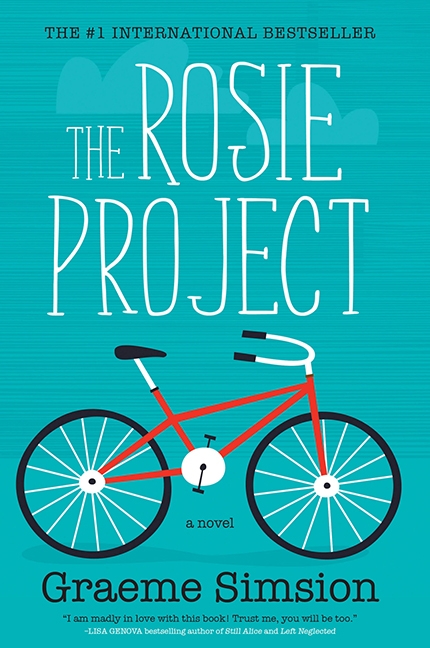
the rosie project graeme simsionThe Rosie Project by Graeme Simsion ~ 2013. This edition: Harper Collins, 2013. Softcover. ISBN: 978-1-44342-266-6. 329 pages.

My rating: 7/10

Aw, how sweet!

A charming beach read of a book which felt rather odd for a Canadian snow-filled January, but then I twigged that it was set in Melbourne, Australia (a reference to a character’s skimpy dress being perfect for “hot January evenings” making me sit up and pay attention) and it all fell into place.

An unusual narrator, university genetics professor Don, tells of his hyper-scheduled life, and how it all changed when he decided to locate a suitable life-partner by undertaking the questionnaire-based Wife Project in order to pre-screen likely prospects. A friend sets him up with a certain “Rosie” as something of a cruel joke; she fails the questionnaire on all counts, but even as he dismisses her from his list of potential partners, she interests him in a number of other ways.

Do I really need to go on? This book is completely stereotypical on so many counts, up to and including Don’s reinvention of himself to fit the presumed requirements of the woman he loves, and her teary-eyed insistence (after the fact) that the original him was the one she fell in love with.

Total chick flick stuff, and I thought all the way through what a perfect Hollywood romantic comedy this thing would be, which turned out to be the case – it was originally written as a screenplay. So no points for catching that.

But it works. It’s very funny, and cute and sweet and adorable and very happy-ending-ish. Also insubstantial as cotton candy, or perhaps one should say apricot ice cream – a bit zingy here and there, but ultimately mostly just sweet. Definitely not a real meal of a book, but a delectable dessert.

Many thanks to Claire at Captive Reader for recommending this; it was a whole lot of fun, and a perfect use of my Christmas bookstore gift card, and I know I will reread it when I need a bit of a pick-me-up.

I did a brief reconnaissance of other reviews, and among the many to choose from (several thousand on Goodreads, with a substantial number of high ratings) I found this one, by Ottawa writer Zachary Poole, which nicely reflected my own pros and cons regarding the story. I was quite impressed that we both rated it the same, 7/10, and my thoughts echoed Zachary’s to a T, though I must add the disclaimer that never once was I even marginally teary eyed!

Zachary Poole at Pop Matters Review – The Rosie Project

Read Full Post »

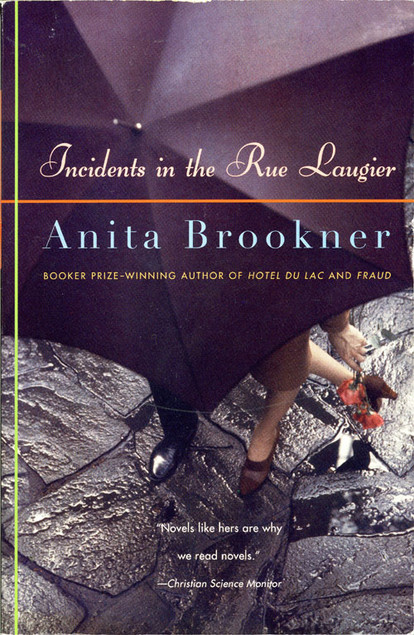
incidents in the rue laugier anita brooknerIncidents in the Rue Laugier by Anita Brookner ~ 1995. This edition: Vintage Canada, 1997. Softcover. ISBN: 0-679-30840-7. 233 pages.

My rating: 6.5/10

There is no denying that Anita Brookner is a smoothly accomplished writer, for if she wasn’t I suspect I would have quietly laid this novel aside partway through without regret. As it was I had to steadfastly avoid glancing at the many more-tempting books waiting for me on the Century of Books shelves, in order to maintain my focus on this increasingly monotone novel.

The opening chapter sets the stage. An orphaned female narrator (“my parents died years ago…”) muses on the characteristics of her mother which she has started to notice in herself:

My mother read a lot, sighed a lot, and went to bed early…

Maffy, daughter of French Maud and English Edward, goes on to set up the story. She has happened upon a notebook among her late mother’s effects. There are only a few cryptic phrases jotted on the first few pages, but Maffy is inspired by these to create a speculative biography of both of her parents’ lives.

It is a fabrication…one of those by which each of us lives, and as such an enormity, nothing to do with the truth. But perhaps the truth we tell ourselves is worth any number of facts, verifiable or not.  This unrecorded story…is a gesture only, a gesture towards my mother…who told me nothing either of what happened or what failed to happen, and how she came to live with us, so far from home.

Maud grows up in genteel bourgeois poverty, living quietly with her widowed mother and waiting the days away, passively beautiful, awaiting her future without attempting to shape it in any way. This changes when Maud meets the predatory David Tyler, holidaying in France. The two have an affair, and Maud awakens to the possibilities of love just as Tyler has had his fill of her and moves on, dumping Maud on his friend Edward, who has been watching the proceedings with jealous eyes. Edward and Maud end up marrying, and move back to England, where Edward is engaged in resurrecting a musty second-hand book shop he has inherited from a family friend. Maud stays home, keeping their apartment pristine, cooking under-appreciated gourmet meals, and otherwise spending her days reading.

And then nothing else happens. Even the birth of a child nine years into the marriage only serves as a minor blip; Maud goes through a long episode of depression, but Edward provides a nurse who remains with the family for many years, allowing Maud to drift along not really taking much interest in anything, though we realize that she does indeed love her daughter in an undemonstrative way, and that she respects and feels affection for the more passionate Edward, who has never quite forgotten that David Tyler was Maud’s first and deepest love. Anything that Edward gets is very much second best; he is willing to take it but something deep inside rebels, surfacing in his last months of life in a passive-aggressive form of personal neglect which ends in his death.

Maud hangs on four more years, until she too turns her face to the wall and drifts undramatically away.

Maffy is left to ponder the meaning (or lack thereof) of her parents’ lives, and how her own personality has been shaped by her dual heritage.

The End.

Did I like this book?

Well, “like” is perhaps too strong a word in regard to this novel. And no, I didn’t exactly like it, but I did admire it, in a shuddering “Why am I reading this? I know this will leave me feeling completely apathetic” sort of way.

There were moments of strong feeling, but these were isolated and served to emphasize the bleakness of the majority of the characters’ lives. The mood of a sultry French summer in the early 1970s and Maud’s brief sexual awakening is perfectly portrayed, and contrasts severely with the ambitionless futility of the remainder of her life, and her passive submission to everything else which happens to her from the moment David Tyler walks away. (Though farther along she pulls herself together enough to reject his advances when they meet again, showing a kernel of unsuspected pride, which kept me on her side even as she offhandedly absorbed Edward’s love without really attempting to meet him half way; passive acceptance with no overt sign of repulsion doesn’t quite satisfy, as Edward bitterly reflects.)

A beautiful bit of writing, all in shades of muted blush and grey. But not a writer whose novels I could read over and over and back to back. After reading a Brookner one needs something with more vibrancy to shake one out of the enervating trance of hopelessness which immersion in this sort of thing brings on, at least in me.

While some of the novels by Anita Brookner I read this past summer – Hotel du Lac, Brief Lives – reminded me of Barbara Pym in their rather sly wittiness, Incidents in the Rue Laugier was really like nothing I’ve yet read. It reclines in Proustian solitude on its chaise lounge with the drapes drawn against the sun, so very all alone.

Some thoughful reviews:

Roses Over a Cottage Door – Incidents in the Rue Laugier

Bibliolathas – Incidents in the Rue Laugier

Hilary Mantel’s New York Times Review – Incidents in the Rue Laugier

Read Full Post »

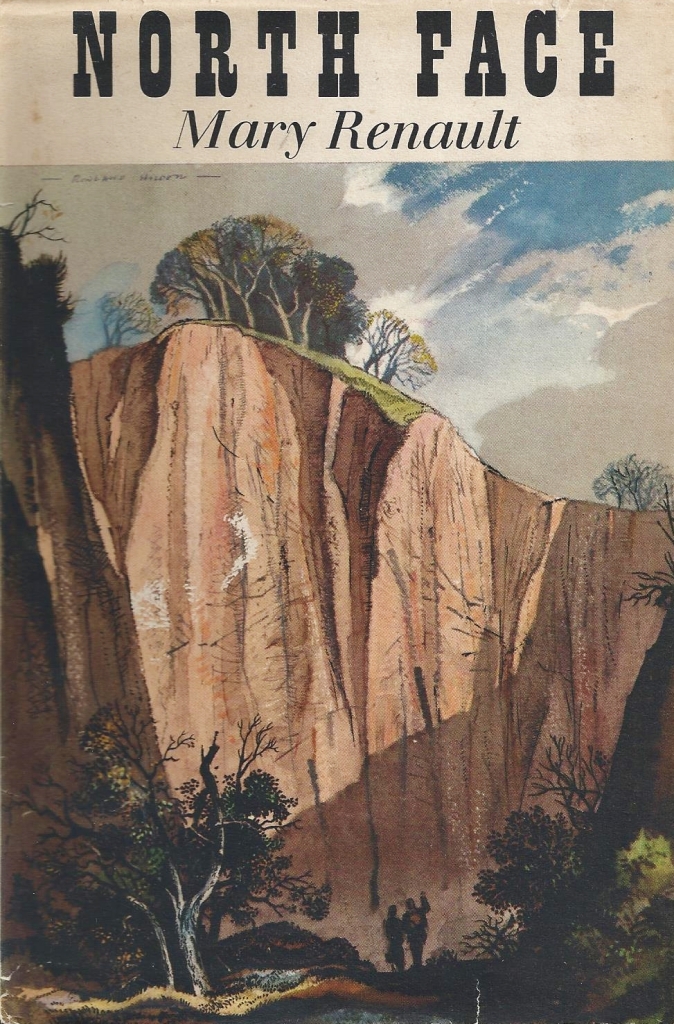
north face mary renault 001North Face by Mary Renault ~ 1948. This edition: Longmans, 1949. Hardcover. 318 pages.

My rating: 6/10

This is a little-discussed novel by the author who went on to become world renowned for her historical fiction centered on ancient Greece: The Bull From the Sea, The King Must Die, Fire From Heaven, et al. Before Mary Renault hit her stride with the ancients, she wrote a number of contemporary novels, all concerning the romantic relationships and struggles for self determination of the characters. Most featured hospital settings or nurses and doctors as characters, as the author drew on her own hospital and nursing experience for inspiration and to provide accurate detail.

North Face was Mary Renault’s fifth published novel, released in 1948 in North America (and a year later in England), just as Mary Renault was settling into a new life in South Africa, where she had moved with her partner Julie Mullard after winning a $150,000 prize from the American motion picture company MGM for her fourth novel, Return to Night. Renault was to write one more contemporary novel, the highly regarded The Charioteer (1953) before turning to ancient Greece for the inspiration of her future writing years.

The story opens in a boarding house in rural Devon, where two opinionated single women who are staying for their holidays are making each other’s acquaintance and finding each other rather unsympathetic. Miss Searle is an intellectual college don who travels with her weighty works of Chaucer, which she has been immersed in studying for the past decade. Miss Fisher is a nurse, with a hearty, rather “common” manner; she has a jolly appreciation of the realities of life, and finds Miss Searle’s fastidious air to be more than somewhat annoying.

World War II has just ended, and everyone we meet is still showing signs of the many years of emotional trauma they have experienced. Some have been wound up so tightly they are finding it difficult to return to some sort of new normal; society itself has taken a giant step sideways, leaving those slow to adapt floundering. Add to this the effects of personal tragedies, which are exacerbated by the effects of the war, and suddenly the tense atmosphere of every sort of social gathering is perfectly understandable.

The Misses Searle and Fisher unite in speculation regarding their fellow guests. They are most interested in the solitary Neil, who is abstracted and unapproachable, and spends his days trekking about the countryside with knapsack and detailed maps. A man with a secret, surely? Which is found to be true. Neil is a more than competent boys’ school teacher who has had a fairly uneventful war. Deemed an essential worker, most of it has been spent in his usual occupation, despite his attempts at joining active service. Finally he was accepted into a Service position, still in England, but far from home.

While Neil was otherwise occupied, his young wife discovered and was discovered by the young officers at the nearby American army camp; what started as innocent flirtation turned into a series of sexual liaisons. Neil had returned from his military posting to find that his wife was no longer interested in him in a sexual or emotional way. The dissolution of their marriage led to personal tragedy, as the couple’s young daughter, adored by Neil, is horribly injured in a fire while Neil is out and her mother is entertaining a soldier in her bedroom. The child dies, and on his return from her funeral, Neil is confronted by his wife’s demand for a divorce. She is pregnant by her latest lover, and wishes to start a new life with him post-haste.

Neil is therefore wandering about in Devon in a sort of trauma-induced trance, agonizing over what next to do, and if life is even worth living. In this state he bumps up against another troubled soul, the slender, virginal (literally) Ellen, who has just arrived at the guesthouse.

Ellen has also had an emotionally fraught time of things after the death of her fiancé, a fighter pilot, in the closing months of the war. He was a childhood first love; the two were brought up together as their mothers were step-sisters, and though Ellen was deeply attached to him, she was unable to bring herself to share his deeper passion. She feels that her rejection of his physical advances had hurt him so much that he had been careless while on his last mission; she holds herself responsible for his death, and has punished herself and sought to get over her frigidity by arranging a liaison with another man at the guest house. This falls through, as Ellen is unable to carry through with the physical aspect of the “fling”, and she too is wandering the countryside in something of a daze.

Neil and Ellen discover some shared interests, most notably rock climbing, and the theme of frail human pitted against cold stone and working out emotional issues through physical exertion runs through the novel. As Neil’s and Ellen’s romantic interests in each other grows, Miss Searle and Miss Fisher provide a sort of argumentative and gossiping Greek chorus to the progress of the affair, each putting her own interpretation on what is going on.

Much self-analysis and heart-rending ensues, before Neil and Ellen find comfort in each other’s arms.

A slightly unusual novel, and definitely of strong interest to the Mary Renault completest. I had no trouble at all reading this one through, though it was rather deeply seeped in gloomy psychological trauma and all sorts of Freudian situations, including a gypsy’s warning to Neil and Ellen to “stay away from high places”, which immediately led me to expect some sort of tragic ending, what with all the clambering about on cliffs. (Which didn’t materialize, much to my relief.)

Each of the two main protagonists finds at least some of the solution to their inner turmoil through the concentrated effort of working across a sheer rock face, though I was rather annoyed at the author for allowing Neil to get himself out of a desperate climbing situation while leaving Ellen stranded and requiring Neil’s aid, a metaphor which I felt was likely to represent their future life together.

Oh, and because it is Mary Renault, I am sure you are wondering about the gay/lesbian themes. Not much going on here, unless our intellectual and buttoned-up Miss Searle is a latent lesbian, but as she is quite obviously attracted to the masculinity of Neil, that one doesn’t really fly. Neil has had a close friend and climbing companion, Sammy, killed in the war, but how close a friend is never detailed and the relationship seems to be platonic from the hints dropped by Neil. Ellen thinks that she may be lesbian due to her frigidity towards her fiancé’s advances, but she allows herself to be wooed by a female friend and it doesn’t “take” so she crosses that possibility off the list. I think that’s about it, or at least all I can think of without re-reading with this sort of analysis in mind. 😉

Not in the same league as the best of this writer’s works, but most interesting in view of her future accomplishments. Next on my Mary Renault want-to-read list is The Charioteer, which is deemed to be the best of her contemporary fictions, along with the satirical The Friendly Young Ladies.


Read Full Post »

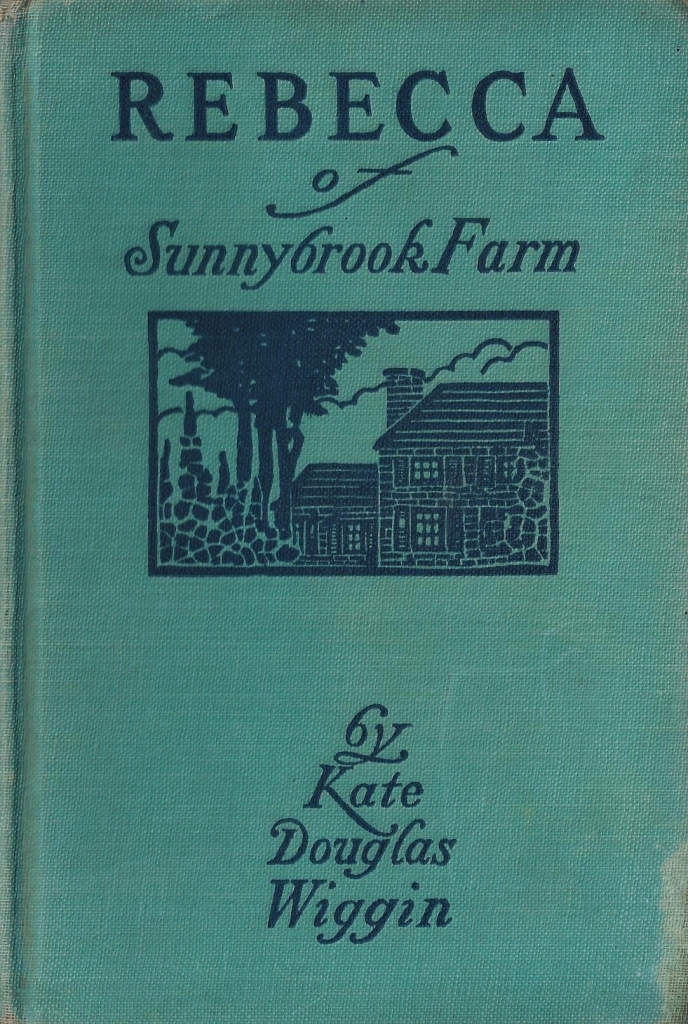
rebecca of sunnybrook farm kate douglas wiggin 001Rebecca of Sunnybrook Farm by Kate Douglas Wiggin ~ 1903. This edition: Grosset and Dunlap, circa 1920. Hardcover. 342 pages.

My rating: 7.5/10

I never read this venerable classic as a child, coming to it in young adulthood, but I enjoyed it when I did finally settle down to it. My tattered paperback copy was packed and unpacked over a number of moves until coming to rest at the back of the schoolroom bookshelf, where it still sits today. I hadn’t realized that my first copy was a quite highly edited one – “abridged for younger readers”, if one reads the fine print – until I stumbled upon this vintage hardcover, read it, and realized that there was more to the story than I had been aware of.

Not much more, really, mostly just an elaboration on the religion-related episodes, where Rebecca mulls over the appeal of the missionary life and discusses her faith at length, but it was satisfying to at last read the book as it originally appeared in print.

11-year-old Rebecca Rowena Randall (her late father was a devotee of Sir Walter Scott’s Ivanhoe) has been sent off to live with her two spinster aunts in Riverboro, as her widowed mother is having a difficult time making ends meet for herself and her seven children on mortgaged Sunnybrook Farm. And it’s interesting to note that though Rebecca identifies herself as coming from Sunnybrook Farm, and obviously has strong sentimental ties to her family home, we don’t get any further acquaintance with the place itself, with the action taking place almost exclusively in Rebecca’s new home.

Grim Aunt Miranda and quiet Aunt Jane are unprepared for the bouncing Rebecca as they had requested her sober older sister Hannah instead, but after the initial surprise all accept the situation and prepare in their various ways to make the best of it. This is the era of stern duty, after all.

Do I need to detail the escapades which Rebecca gets herself into and out of? It’s fairly standard stuff for this sort of novel, and anyone who is familiar with Louisa May Alcott, L.M. Montgomery and Jean Webster can fill in the blanks. Rebecca finds kindred spirits in an elderly childless couple to whom she can tell her woes when Aunt Miranda’s sharp tongue stings too much to bear, and she soon teams up with a best chum, in this case the blond and smiling Emma Jane Perkins, good natured foil to her more rambunctious and clever friend. The two attend the local one-room school together, have ins and outs with the other children, deal with the school’s Mean Girl, the cruelly named Minnie Smellie, and good-naturedly patronize the local ne’er-do-well family, the Simpsons, headed by the light-fingered Abner, master of the midnight visit and the subsequent “trading” of goods picked up from about the neighbourhood.

In a scenario which reminded me of the later Daddy-Long-Legs plot, the young Rebecca (she’s only eleven at the start of the story) meets a much older wealthy bachelor (Adam Ladd is thirty when he and Rebecca first meet), charms him with her childish prattle, and evokes feelings which grow into something much more mature in both parties. But that is looking far ahead, though hints are abundant from the first meeting that Adam and Rebecca have “special” feelings for each other, and of course nothing untoward happens, with Adam nobly refraining from romantic thoughts about his young protégé until she reaches college age. At which point, let’s see… he is thirty-eight and she is seventeen. This raises a bit of an “ick” response in modern-day me, but it seems perfectly acceptable to this time period’s novel writers, so I’ll just leave it right there, labelled prominently “Era Acceptable”.

Rebecca is a truly charming heroine with an innate dramatic bent which shows itself in her love of writing and music. As well as creating poetry and stories, Rebecca sings beautifully and later masters the piano, with the author being very clear that in all of these accomplishments her heroine has had to stringently apply herself to master the crafts and to polish her natural abilities, which I found nicely refreshing – too often our young protagonists blithely achieve lofty heights with surprising and unlikely ease.

Early on in the story I started thinking, “Hmm, this story seems just a bit familiar. Haven’t we met these people before on Prince Edward Island?” A quick internet search showed that I was not alone in this thought, though I was mildly surprised to realize that Rebecca was created first, with Anne following several years later. Check out this article, Mirror Images: Anne of Green Gables and Rebecca of Sunnybrook Farm, which is quite fascinating in its examination of parallels between the two iconic literary heroines.

Likeable as Rebecca is – and she is truly a winsome child – she never quite comes to life as does her younger literary sister Anne. Kate Douglas Wiggin seems to be standing just a little off in the distance in describing her creation’s thoughts and feelings; her rather stilted language and stock situations belonging more to the 19th Century, whereas Anne feels much more like a creature of the here and now.

A must-read for anyone at all interested in the time period and the vintage “youth fiction” genre; there is humor and irony galore to reward the adult reader of young Rebecca’s adventures, though I’m afraid a young reader of the 21st Century might bog down somewhat in all of the missionary subplot and the relative mildness of the “action”.

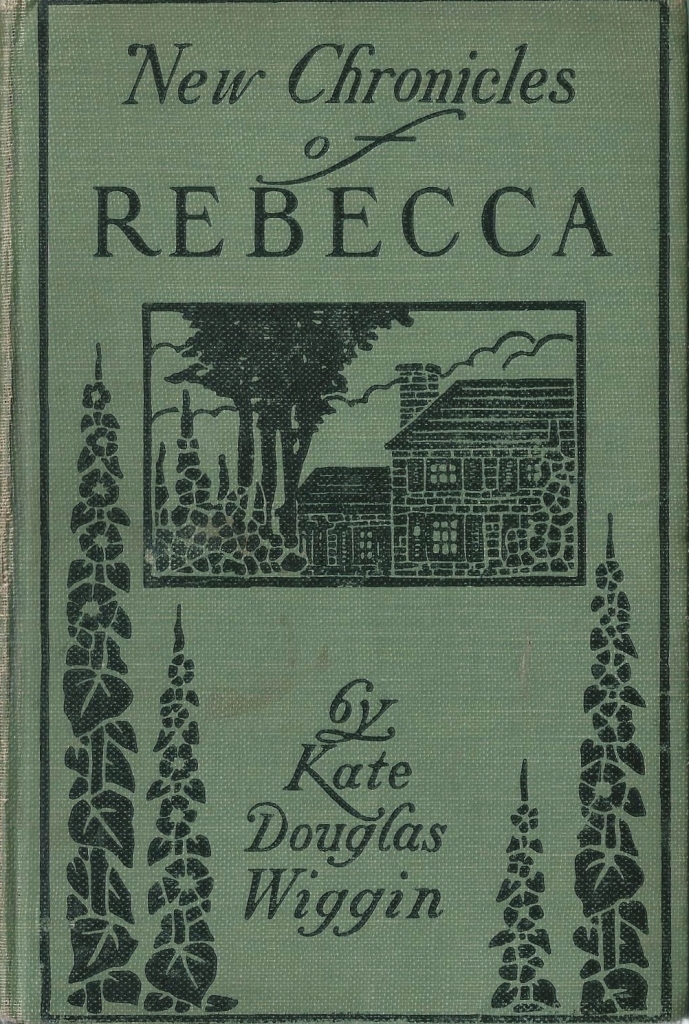
new chronicles of rebecca kate douglas wigginNew Chronicles of Rebecca by Kate Douglas Wiggin ~ 1907. This edition: Grosset and Dunlap, circa 1920. Hardcover278 pages.

My rating: 6.5/10

I was pleased to discover that there is a companion book to Rebecca of Sunnybrook Farm, New Chronicles of Rebecca, published four years later, in 1907. It consists of a linked series of anecdotes enlarging upon and adding to the Rebecca saga, drawing on readerly familiarity with Rebecca’s original adventures, and giving many more details as to her life and some strong clues to her future.

Because of its anecdotal nature, this is much less of a stand-alone novel than the first Rebecca, but it is thus freed up to delve into some intriguing sidelines of life in Riverboro. We meet Emma Jane’s swain, Abijah Flagg, and hear his back story, as well as becoming more intimately acquainted with the Simpson clan. Though Rebecca is viewed primarily as a children’s story, it is very apparent in New Chronicles that the author is writing as well to the mature members of her readership, as a key plot concerns the common-law relationship of the Simpsons, and Rebecca’s part in awakening the feckless Abner to the wrong done to his “wife” (and mother of his children) by his neglect of the religious ceremony to legitimatize their relationship.

In another chapter, a young woman abandoned by her husband during her second pregnancy dies along with her newborn child, and the young Rebecca and Emma Jane have the distressing and quite graphically described experience of being left alone with the deceased while Emma’s father goes to fetch the neighbours. Luckily the now-motherless first child creates a diversion, and then a longer-term project as the girls decide to prevent young Jack’s disposal of to the poorhouse. The girls find him a foster mother and form a society of benevolent young “aunts” to oversee his amusement.

In general this is a mild addendum to the classic novel, but it adds enough to the overall portrait of Rebecca and her associates that it should really accompany the original as a required-reading companion volume.

A pleasant reading experience, both of these books. Though I warn you that you may look at Anne of Green Gables with new eyes on your next reading, and wonder just a bit how carefully L.M. Montgomery was examining K.D. Wiggin!

Here are both of the Rebecca books online at Project Gutenberg, along with numerous other examples of this prolific author’s work.

Read Full Post »

« Newer Posts - Older Posts »