Archive for November, 2012

This November 11th, two poems by ex-soldier Danny Martin of Liverpool, who served two tours of duty in Iraq.

CENOTAPH

The

cenotaph

was first made

of wood;

a temporary tree

for the “Glorious Dead”.

Wood can’t hold the will

of the wolf.

So us little pigs

build in stone now, it lasts

longer. It can be added to

that monument to “the war to end all wars”

spawned more.

 Portland stone
is a blank canvas.
It wants to be filled.
It craves names.
It lusts
for the chisel tip.

Danny Martin ~ 2008

(Note about Portland Stone: Portland stone is the preferred material for many war memorials, including the Cenotaph in London and the new National Arboretum in Staffordshire. During a recent visit to the Arboretum I was struck at the sheer size of its main war memorial, and the vast blank slabs waiting to be filled.  – DM)

LESSONS

Do away with medals
Poppies and remembrance parades
Those boys were brave, we know
But look where it got them

Reduced to line after perfect line
Of white stones
Immobile, but glorious, exciting
To kids who haven’t yet learned
That bullets don’t make little red holes

They rip and smash and gouge
And drag the world’s dirt behind them
Remember lads, you won’t get laid
No matter how good your war stories

If you’re dead
So melt down the medals
Fuel the fire with paper poppies, war books and Arnie films
Stop playing the pipes, stop banging the drums
And stop writing fucking poems about it.

Danny Martin ~ 2008

*****

The sentiments expressed here remind me of the thoughts and words of my own father, a World War II veteran, born 1923, died 2006.  A teenage farm boy conscripted as a soldier in the German Army, he and many other young men on all sides of the conflict did what they were told was their duty. And every survivor bore scars, even those who came through physically unmarked.

Dad had been wounded physically and emotionally, and though he recovered to a great degree, he personally took exception to the term “The Glorious Dead”, which is engraved – as it is on so many others across our country –  on the Cenotaph in Quesnel. Every time we passed it, he would soberly say, “There is nothing glorious about war. Nothing. Anyone who tries to dress it up with words is a fool. It’s just a bunch of boys trying to kill each other, by orders of men standing out of the way of the bullets.  All this fuss with the poppies and speeches is covering up the truth of what goes on in war. We are so stupid that we never learn to do things differently, just find new ways to kill each other, then cry and write poems about it.”

I never had any answer to that speech.

What can we say, those of us who haven’t walked that road?

For more: War Poetry by Danny Martin.

Read Full Post »

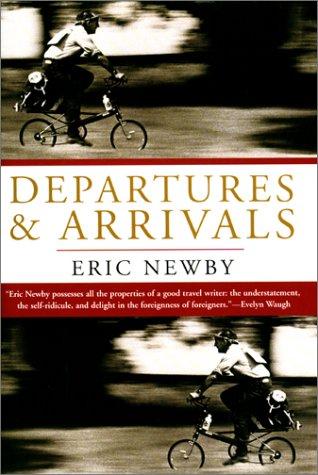
Departures and Arrivals by Eric Newby ~ 1999. This edition: The Lyons Press, 1999. Hardcover. ISBN: 1-58576-224-4. 192 pages.

My rating: 5/10. Some decent essays but not enough of them to swing the balance between “fair” and “very good” reading. A lot of reciting of railway schedules, and short, out of context snippets about trips which blurred together after a while. Travel writing “lite”. I expected more from this writer.

*****

A few essays into this book I was thinking to myself, “Okay, these are obviously excerpts from other works. Where’s the reference page?” Looking through the front and back material, there was no indication that this was the case; it apparently is a stand-alone collection of (mostly) travel tales and short reminiscences of the writer’s earlier life.

There is no context given more many of the trips referenced, which I found disconcerting. “Flying into Coober Pedy…” Yes – okay – so you’re in Australia – but WHY are you there? What bigger trip is this part of? And aside from discovering that opal miners like to be paid in cash, and certain of them have a fondness for personal architecture such as a revolving bed surrounded by mirrors, what other memorable things did you find there that we, your readers, might be interested in?

Though there are well-written, interesting, and amusing passages, the whole thing feels like a selection of truncated pages from a personal journal, bits and pieces of information jotted down in transit to aid in later memory of the trip. Perhaps it is, worked up with a minimum of added information.

I suspect this is a book which was commissioned and published on the strength of the author’s earlier, and much stronger, efforts. A case of selling the name, not the content.

It was readable, but  vaguely unsatisfying. One to borrow from the library for light diversion, hotel room reading on a road trip (which is how I’ve just experienced it), but I’m not left with an urge to rush out to buy it. Not recommended, unless you come by it for a bargain basement price.

Read Full Post »

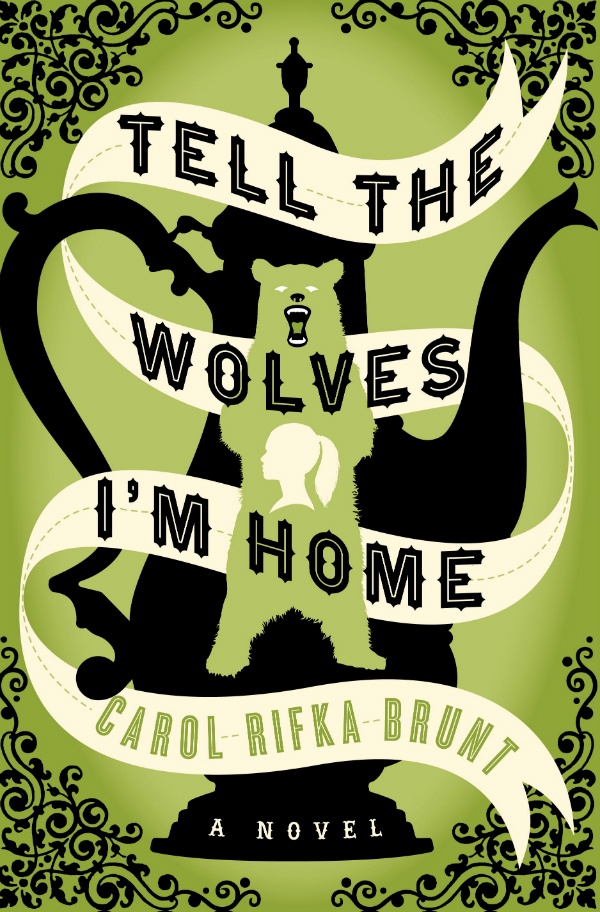
Tell the Wolves I’m Home by Carol Rifka Brunt ~ 2012. This edition: Random House, 2012. Hardcover. ISBN: 978-06796-4419-4. 355 pages.

My rating: 8/10. Very nicely done, especially for a first novel.

I’m sure this one will deeply appeal to the YA crowd, though I found it in the Adult section of the library. There’s nothing here that a modern teen couldn’t handle with one hand tied between her (or his, though this feels rather like a girl’s book, if I may be so bold as to stereotype it) back.

*****

I’m considering tagging this one historical fiction, because the sense of a very particular time is so strong, and it captures those early days of the AIDS epidemic so well, when we were all more than a little scared and confused, and traded rumours in whispers. The story is set in 1987, twenty-five years ago.

The internet is swarming with reviews on this one; I’ll try to keep this simple.

Young June Elbus, fourteen years old and deeply embroiled in the angst of adolescence, has one person she can count on unconditionally, her Uncle Finn. Finn, a renowned painter, now leads a semi-reclusive life in New York; he hasn’t exhibited anything for years, though he is still painting. He’s working, in fact, on a dual portrait of June and her older sister Greta.

The portrait is of supreme importance to everyone concerned; it is likely the last work Finn will ever complete, for he is dying of that mysterious and deadly new disease, AIDS.

Finn’s sister, June’s mother, is brutally shaken by Finn’s death early on in the story, as she has some unfinished business with her brother. She vents her anger at Finn’s lover, the unknown man who she claims has deliberately infected Finn and who is now, in her eyes, his murderer.

June has some baggage of her own. She has been secretly in love – full-blown romantic love – with her uncle, a middle-aged gay man (and June knows this), who, to further complicate things, is June’s godfather. The two share a deeply emotional connection, though Finn has many secrets which June is only to find out about after his death.

With Finn’s demise, and the entry of the mysterious lover, Toby, into the plot, things crank up a notch, and the narrative moves from completely believable to slightly fantastic, in the stretching-of-belief-and-probability sort of fantastic. But it makes for a good story, so allowances can easily be made.

All in all, a very likeable, suitably complex heroine and an interesting plot. I did find it quite predictable in many ways; people did what I thought they would, and the big secrets were telegraphed fairly clearly; clues were distributed with a generous hand.

Beautifully written, with an abundance of heart-tugging emotion. Though I didn’t personally tear up at all, old cynic that I am, as so many of the reviwers over on Goodreads did.

What else?

Good handling of the gay characters; this can be hard to get right without straying, even unintentionally, into parody, and I think Brunt did a very good job with that.

Absolutely gorgeous cover, which reflects the excellent content within. One to share with your teens, and borrow to read yourself.

Read Full Post »

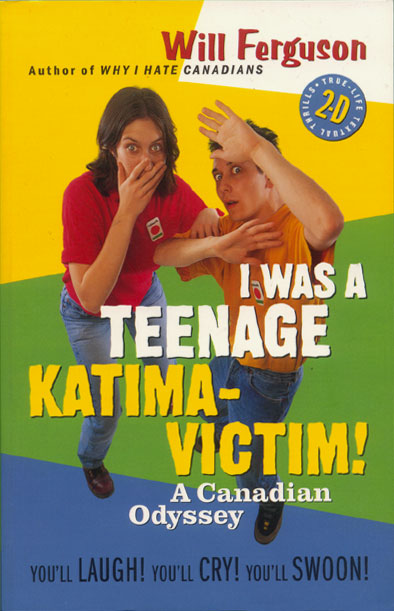
I Was a Teenage Katima-Victim: A Canadian Odyssey by Will Ferguson ~ 1998. This edition: Douglas & McIntyre, 1998. Softcover. ISBN: 1-55054-652-x. 259 pages.

My rating: 9/10.Funny and thought provoking. This is the book that made me a Will Ferguson fan, way back in 1998, when I plucked it off the “New Releases” bookstore shelf solely for the reference to Katimavik. A few minutes browsing and I was sold. Liked it then, like it now. A very Canadian memoir.

*****

Funny, touching, and never maudlin . . .”     – Montreal Gazette

“A rollicking memoir”     – Globe & Mail

“A coming of age story with a fierce and nationalistic bite.”     – January Magazine

With Will Ferguson in the literary spotlight these days, due to his Booker Prize win for 419: A Novel  just a week ago, I felt the urge to dig through the bookshelves and re-read the my first ever Ferguson book, the now-obscure 1998 coming-of-age-Canadian-style memoir, I Was a Teenage Katima-Victim.

Ah, Katimavik! What a well-meaning and ambitious, oh so Canadian idea!

In my Grade 11 year I too went to one of those earnest presentations in the school gym, listened with deep interest to the bubbly recruiter, and, most importantly, mused over what I could do with the thousand dollar pay-off at the end.

I even went so far as to take a brochure home to my parents, who flicked through it with scornful dismissal. The airy-fairy notion of travelling and seeing Canada basically on the taxpayers’ dime was not something to countenance for one of their children. In my father’s eyes such programs were akin to “those deadbeats collecting welfare”, and he quite literally would have starved on the street rather than apply for a government handout, or anything which could be remotely conceived of as such. To top it off, Katimavik was supported by none other than “that Liberal bastard”,  Prime Minister Pierre Trudeau, who my father hated with a black passion, for reasons I’m still not quite clear on.

By the end of my Grade 12 year Katimavik was a distant memory, a momentary what-if? fairytale I had told myself. I had moved out of my parents’ home into a nasty and dank – but blessedly my own – basement suite in town, and was working full-time waitressing (nights and weekends) while struggling to make it through the tatters of my last high school year to collect that all-important graduation diploma. My love life had unexpectedly taken off, and I was deeply occupied in the here and now. The last thing I now wanted was to rip up those tentaively establishing adult roots and travel. But a soft spot remained for the grand ideas embodied in Katimavik, and my ears ever after were sensitive to the sound of the name.

Will Ferguson took the bait, made the plunge, and survived to tell the tale. Here is a 1999 interview in January magazine:

The book … is delightful: a coming of age story with a fierce and nationalistic bite.
To explain the reference, Katimavik was a Canadian government funded and sponsored program that blossomed in the 1970s. Of course. While the program was active, it brought thousands of young Canadians together to do “meaningful work.” Everything from soup kitchens to nature trails to heritage sites: over 20,000 “katima-victims” went through the program. “The scope of the program was staggering,” writes Ferguson. “1400 different communities across Canada, and more than 200,000 people directly involved or affected. For better of worse, Katimavik helped shape an entire generation.”
For the lavish sum of $1 a day and “all the granola you could eat” these 20,000 17 to 21 year-olds were taken far from their home towns for a year to see first-hand the cultural mosaic of which they were – by birth – a part.
“The thinking about Katimavik was that there is something redeeming about manual labor,” says Ferguson. “And the thing is, it just isn’t true at all. Anybody doing manual labor knows that it’s a tough gig and if they had the option not to do it, they wouldn’t. The second notion is that somehow once we get to know each other, we’ll like each other. This is the biggest flaw and it runs right through a lot of thinking. They think that, just because you and I are enemies, if we got to know each other, we’d like each other: that’s a big flawed premise because – quite often – the more you get to know each other, the more you realize that you have nothing in common.”
Despite his misgivings about the program’s principals, “Katimavik worked on a personal level, despite its good intentions. Just because any time you throw someone into something that big and that intense you come out of it with a rounder personality.”
Now 34, Ferguson’s personality is sufficiently rounded to take us along with him on great rollicking rides. Thus far he’s taken us from the wilds of Canada to the back roads of Japan. Whatever he has in store for us next is sure to be fun: and will hopefully raise still more eyebrows. | Linda L. Richards, January Magazine, February 1999

There is a certain irony in the fact that, soon after Ferguson’s participation in the now-iconic Canadian youth travel-service-work-cultural  program, it was axed in 1986 by the newly elected Mulroney Progressive Conservative government. Katimavik was resurrected in a slightly different form in 1994, and just this year, 2012, has been cut again, this time by the Conservative Harper government. Another rescue mission is afoot, to reimagine Katimavik for yet another generation of young Canadians. I hope it succeeds.

This book has been out of print for years, and is unaccountably ignored in most discussions of Ferguson’s work, which is a shame. Despite the graphically appalling cover, the tale told within is worth reading, especially for anyone who has memories of Katimavik in its sincere and slightly loopy heyday. A bit raw in spots – it was, after all, only Will Ferguson’s second published book, following hard on the heels of surprise bestseller Why I Hate Canadians – it nevertheless gets better and better as it goes along. Laugh out loud funny in places, there is a thread of sincerity running through it which is deeply appealing.

More than a mere curiousity piece and a relic of the author’s youth, it’s a rather grand little read. One of those “Proud to be Canadian” feel-good things. Recommended.

And here is link to the Goodreads page.

Read Full Post »

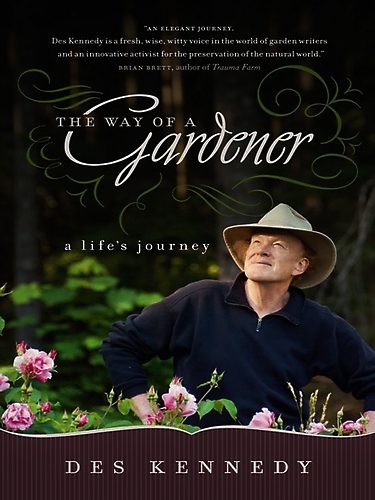
The Way of a Gardener: a life’s journey by Des Kennedy ~ 2010. This edition: Greystone Books, 2010. Softcover. ISBN: 978-1-55365-417-9. 271 pages.

My rating: 8/10. Beautifully written, but I found myself occasionally tuning out – just a tiny bit – in the later chapters. The author’s life has been so full that he just barely touches on many of the events in his later years. I would love to have seen this as a volume one of a multi-volume biography, ending at his leaving the seminary, or settling on Denman Island (one of the Gulf Islands in British Columbia’s Georgia Strait, between southern Vancouver Island and the mainland), because I think the last four decades on Denman plus all the environmental involvement could easily fill a book of its own.

*****

I remember when Des Kennedy first blipped onto my radar, through his 1990s columns in Gardens West magazine, a Canadian publication which is de rigueur reading in my fellow gardeners’ social circle. This was soon followed by my purchase of Kennedy’s first book, a collection of essays on unloved creatures – think rats, slugs, spiders and their ilk – called Nature’s Outcasts: Living Things We Love to Hate (1993),and the rest of his gardening books as they were published, the most recent, before this one, being 2008’s An Ecology of Enchantment, which hints at some of the backstory detailed in this current memoir.

He popped up here and there, speaking at a garden show, authoring an article in a gardening magazine, leading a well-advertised garden tour to Ireland – an instantly recognizable figure with his halo of unruly red hair, and his confident gaze straight into the camera.

Much has been made of his time spent as a Catholic seminarian and novice monk; Kennedy left the monastery before he took full vows after continually clashing with his superiors in matters concerning involvement with the secular and artistic world. (Kennedy was in favour of a degree of inter-mingling between the seminarians and the local population of artists, poets and musicians; his immediate supervisors were not.)

From the Greystone Books website:

A personal and revealing exploration of a life lived close to the earth, from one of Canada’s best-loved gardeners.

Called “a green-thumb rogue” (Star Tribune, Minneapolis), accomplished novelist, satirist, and garden writer Des Kennedy describes his life journey from a childhood of strict Irish Catholicism in Britain to a charmed existence amid the gardens of his Gulf Island home in British Columbia.

From his appearance as an innocent dressed in white for his First Holy Communion to his days as a young seminarian in black habit, through the Beat poetry scene in New York City and the social upheavals of the 1960s, this monk-turned-pilgrim pursues a quest for meaning and purpose.

After leaving monastic life and moving west, Kennedy takes up a new vocation in what has been called the Church of the Earth. On a rural acreage, he and his partner build their home from recycled and hand-hewn materials and create gardens that provide food as well as a symbiosis with the earth that is as profoundly spiritual as past religious rituals. Spiced with irreverence and an eye for the absurd, The Way of a Gardener ranges over environmental activism, Aboriginal rights, writing for a living, amateur wood butchery, the protocols of small community living, and the devilish obscenity of a billy goat at stud.

This book describes Kennedy’s childhood years in Liverpool, before his emigration with his family to Canada at the age of ten in 1955. Growing up in a strongly religious Roman-Catholic family, Kennedy convinced himself that a religious career was his vocation; he spent eight years studying and working towards this goal, and eventually graduated with a degree in Philosophy from the Passionist Monastic Seminary in New York in 1968.

He then left the religious life and drifted and travelled for a time, ending in Vancouver as a school teacher and social worker. There he met the love of his life, Sandy Lesyk, who has been his companion and partner ever since. In 1972 the couple moved to a rural acreage on quiet Denman Island, where they proceeded to pursue the not-terribly-simple “simple” life, building a house from salvaged materials and clearing the land to establish a large garden. The couple still live there today, and still pursue the same lifestyle, though the vegetables now share space with a unique and individualistic mature ornamental garden which has received many praises and was the site of a weekly television show in the 1990s.

Despite the title, this is most emphatically not a book about gardening. It is a highly personal memoir about the time before the gardener emerged, and a look backwards at the sometimes rough and twisted path the author travelled, before the arrival at the gates of the present very earthly “Eden”.

Those coming cold to this book, without knowing who the heck Des Kennedy is now, may wonder what it’s all about. I must confess that if I had not already had the context of knowing about the writer, I might not have found this partial autobiography as interesting as I did.

Definitely recommended for those already familiar with this author, as it gives a marvelous insight into the background of this mesmerizing British Columbia gardening and environmentally “green” figure.

Read Full Post »

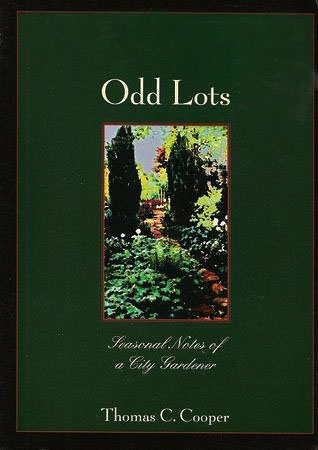
Odd Lots: Seasonal Notes of a City Gardener by Thomas C. Cooper ~ 1995. This edition: Henry Holt, 1995. Hardcover. ISBN: 0-8050-3741-1. 218 pages.

My rating: 5/10. I felt rather brutal giving this rating, because the author writes well, sometimes exceedingly so, and his subject matter is dear to my heart. But somehow this book just didn’t feel like a “keeper” – I had to push myself quite firmly to go on with it after the third chapter or so, and as I did so I found myself skimming much too much, between the bits worth slowing down for and more deeply savouring.

*****

This book of twelve monthly themed garden essays began life as editorials in Horticulture magazine. Thomas Cooper is a passionate and literate gardener, and he writes a perfectly readable style of prose, but for the most part there was nothing here to really stick with this particular reader. A pleasant one-way conversation. I mentally nodded and smiled, while one half of my mind was appreciating Cooper’s thoughts on peonies, mulch and the joys of examining a crocus at child’s eye level. The other half – well – it was thinking about my own garden much of the time, or the progress of the dinner roast, or how I really need to sweep down the cobwebs on the ceiling fan. Oops, bad sign.

This review from Kirkus says it well:

A devoted gardener offers a meandering collection of brief essays that may hold some charm for others of the same ilk.

As the editor of Horticulture magazine, Cooper contributes a regular column whose intent, he says, is “to capture the world in and around a garden.” This translates into fragmentary and scattered musings, mainly about his own backyard gardens in Massachusetts, so don’t look for practical assistance or even the occasional clever idea here. Although the columns are not dated or presented chronologically (for example, the reader sees Cooper’s daughter age eccentrically from three to two to six), they are grouped by month. January finds the author poring over nursery catalogs and drafting resolutions (“Stop accepting plants as gifts, no mater how tempting . . . just imagine they are offering a tray of zucchini seedlings”), while by April he is yearning for a spiffier potting shed and delighting over the arrival of packages from mail-order nurseries. A number of columns are little more than the verbal equivalent of puttering, but then, as Cooper says, gardeners do “raise puttering to the state of high art.” Occasionally, pieces that were written to be read one at a time are diminished by being crowded together: Although July’s articles on water and watering, musing on a watering can, noting the desirability of an efficient soaker hose, and admonishing readers to learn from water shortages out West are separated by forays into other matters, they lose some of their effect when read within the space of half an hour.

This one is for people who nod sagely at the line, “There is only so much Geranium endressii one person can handle,” and whose hours not spent in the garden are spent talking about being in the garden.

What else can I say? Good effort, nice production, but just a titch more miss than hit, at least in this garden veteran’s opinion. And yes, I did read many of T.C.C.’s columns in Horticulture during his 22-year stint as editor which ended in 2001, and enjoyed them in a mild way, as one does when reading the editorial as a sort of appetizer for the much anticipated main course of the longer articles to come.

Tom Cooper knows his stuff, and can turn a neat phrase, and in his time at the helm he oversaw a marvelous gardening magazine, my prized back-issue collection of which I frequently re-read. But when it comes right down to it, I can’t in good conscience wholeheartedly recommend this book. I truly wish I could – it’s that close.

Read Full Post »

The Story Girl by L.M. Montgomery ~ 1911. This edition: 1st World Library, 2007. Hardcover. ISBN: 978-1-4218-4202-8. 312 pages.

My rating: 9/10. What a delicious period piece. Loved it! Why have I not read this one before?

Beautifully evocative of golden childhood summers in a faraway time. Sweet, but never cloying; the very human children keep it real.

*****

An absolutely charming set piece about a group of cousins and friends spending a mostly idyllic summer together on Prince Edward Island.

The narrator is a grown man, Beverley King, looking back on his childhood, when he and his brother Felix travelled from their home in Toronto to spend the summer on the old family farm while their widowed father travelled to Rio de Janeiro on business. They are to stay with their Aunt Janet and Uncle Alec, and cousins Felicity, Cecily and Dan. Nearby is another motherless cousin, Sara Stanley, living with her Uncle Roger and Aunt Olivia, with a father in Paris. Uncle Roger’s hired boy, Peter Craig, and a neighbourhood friend, Sara Ray, round out the group of children.

Nothing much happens in this book, but the days are nonetheless filled to the brim with interesting incidents. The cousins and friends do their chores, play, squabble and run wild as often as they are able. They are generally good children, but not unreasonably so, and their numerous falls from grace drive the narrative, along with the endless succession of tales told by cousin Sara Stanley, the self-named Story Girl, who has an endless collection of anecdotes from a myriad of sources – local and family fables, legends, fairy tales and Greek myths – something for every occasion. Gifted with a natural dramatic ability, Sara Stanley could “make the multiplication table sound fascinating”, as she does on one memorable occasion.

Observant, restless Bev; chubby, sensitive Felix; self-confident, proud Dan;  beautiful, bossy, domestically talented Felicity; sober, stubborn, peace-loving Cecily; plain, imaginative Sara Stanley; over-protected, tear-prone Sara Ray; self-sufficient, passionate Peter – these are the eight personalities which make up the core group, though other family members and friends – and a few animals – take their part as well. Ranging in age from eleven up into the early teens, glimpses of the young men and women the children will become are very much in evidence, though childhood emotions and interests still hold sway.

Tragic (and joyful) family love affairs, a mysterious locked blue chest filled with a disappointed bride’s prize possessions, magic seeds, poison berries, various “hauntings”, a neighbourhood “witch woman”, reports of the end of the world, a competition regarding dreams, adolescent crushes, a brush or two with death – all of these (and more) serve to add spice to this halcyon summer, looked back on with fond memory by the adult narrator. A few clues as to what the future holds are given – hired boy Peter is deeply in love with beautiful, scornful Felicity; the Story Girl will perform before royalty in Europe – but by and large the narrator stays focussed on that brief time between heedless childhood and care-filled adult life.

*****

This book, along with The Golden Road, The Chronicles of Avonlea and The Further Chronicles of Avonlea, was the basis for a highly successful CBC-Disney television series co-production, Road to Avonlea, which was widely broadcast from 1990 to 1996. I completely missed this one, having by then entered my “no television” years, but reports by L.M. Montgomery aficionados claim that the show departed drastically from the books, both in characters and plot. Canadian actress (and now screenwriter and film director) Sarah Polley played the Story Girl in the series.

The Story Girl is followed by The Golden Road, another Montgomery book which has been on my shelf for some time, but which I have also not yet read – I will be remedying that this winter. If it is as charming and amusing as The Story Girl, I am in for another nostalgic literary treat.

Read-Aloud: The Story Girl would likely work well as a Read-Aloud for ages about 8 and up – there will be some rather long-winded parts here and there as episodes as set up, so you may need to self edit depending on your listeners. A few of the stories are a wee bit gruesome – in one reference a lost child is found the following spring as only a “SKELETON –  with grass growing through it”; ghosts are often referred to; there is a neighbourhood eccentric thought by the children to be a witch – if you are at all concerned over such themes it would be best to read ahead a bit to see if the material is acceptable to your listener’s sensibilities. Many references to and some plots centered on religion. All very era-appropriate. Nothing too extreme, in my opinion, but you may want to preview, especially before starting this with younger children.

Read-Alone: For reading alone, this one is most likely best for older children, say 11 or 12, to adult.

The largest challenge the reader will find themselves faced with, though, is envisioning, or, in the case of a Read Aloud, replicating the Story Girl’s magical talent for tale telling. Good luck! (And enjoy.)

Read Full Post »

419 by Will Ferguson ~ 2012. This edition: Viking, 2012. Hardcover. First Edition. ISBN: 978-0-670-06471-7. Winner: 2012 Giller Prize, for best Canadian novel or short story collection published in English. 399 pages.

My rating: 8/10. Quite a lot better than I had anticipated. Ferguson’s last few efforts have left me mildly disappointed, but this new novel encouragingly shows that he is still growing as a writer. I haven’t yet read any of the other Giller Prize nominees, but 419‘s win a few nights ago no longer seems so far-fetched. This is a well-written and ambitiously plotted novel, and the writer exceeded my personal expectations this time around. I didn’t love this book, but I did like it – very much. Though I do have more than a few critiques, some of which I’ll address below.

*****

I like being pleasantly surprised, and this book did just that. I’d read quite a few reviews, and I’d heard that it was nominated for the Giller, but I wasn’t particularly eager to delve in, as I’d earlier found Will Ferguson’s last book, Canadian Pie, disappointing. It felt rather repetitive, with some of what seemed like reworked material from earlier books, though some bits were excellent entertainment, as always.

But the distinctive cover of 419 caught my eye on the “New Books” display as I was heading out of the library on Tuesday evening, so I impulsively stopped and added it to my pile. When I got to car, I heard the announcement on CBC that Ferguson had indeed just won the $50,000 Giller for 419, and I mentally shuffled it to the top of my to-read pile, and started it that same night.

I found the narrative initially confusing, as the author has a number of different storylines on the go from page one, but it soon started to jell, though I didn’t ever shake the feeling that I occasionally had too many windows open on my mental computer screen.

The first lines, the literal importance of which become clear later on, are suitably foreboding and mysterious:

Would you die for your child?

This is the only question a parent needs to answer; everything else flows from this. In the kiln-baked emptiness of thorn-bush deserts. In mangrove swamps and alpine woods. In city streets and snowfalls. It is the only question that needs answering…

And we are suddenly at a car accident scene in a snowy Canadian city. Then in a sweltering African airport. In a mangrove swamp with a fisherman and his son. Back to Canada as a family learns of their father’s sudden death. Africa. Canada. Africa. Canada. What’s the connection here?

Longer stretches of narrative are interspersed with mysterious vignettes, as the stage is set for the characters’ and events’ inevitable connections and intertwinings, and separate strands start to stand out.

  • In Calgary, a retired school teacher has died in a troubling car accident. Was it an accident, or something more sinister? A daughter seeks the truth, and justice.
  • In the same city, a police investigator tries to determine the truth about that death, and others, as he mulls over his own personal future.
  • In Nigeria, a self-confident young man haunts the internet cafés, sending out thousands of tempting emails, waiting for the inevitable but rare “bite”.
  • From peaceable beginnings in a fisherman’s family on the Niger Delta, a young boy becomes a man, moving into a vastly changed world as multinational companies start to extract the oily treasure hidden under the dense mangrove swamps.
  • A mysterious scar-faced young woman stumbles through the sub-Saharan desert, hiding a secret and searching for a refuge as yet unknown.
  • In Lagos City, a crime lord plays his victims like an obscene stage director, evil but ultimately doomed himself.

The plot is driven by the ubiquitous presence of the infamous Nigerian internet scam, the titular “419”, so named for the number of the article of the Nigerian Criminal Code dealing with fraud, which turns out to be a key – but not the only – plot element.

419 is a total departure from Ferguson’s usual shtick of out-and-out parody, folksy anecdotes, and very Canadian self-mockery, but there are still abundant traces of the “old” Ferguson throughout. Though the subject matter is often starkly tragic, there are laugh-out-loud moments of rather twisted humour, as here on an African road ferrying a tanker trunk filled with stolen fuel:

Nnamdi was gripping the wheel, eyes on the road, barely blinking, barely breathing. His first time driving.

“Speed up,” said Joe. “A baby crawls faster.”

Nnamdi swallowed down his nervousness, pushed a little harder on the accelerator.

“And don’t swerve for goats like that,” Joe said. “Go through them. It’s the only way. We can hose off the grill later…”

All in all, a blackly comedic suspense novel, but not to be taken too seriously, Giller Prize or not.

The reader absolutely must suspend personal disbelief, and here I give away a bit of a plot spoiler. (Though not more so than any of the other reviews I’ve read.)

What is the likelihood of a modern, middle class, apparently well-educated family being so totally unaware of the sophisticated nature of internet fraud? I could buy into the innocence of the father – sort of – because obviously people do fall for these scams or they could not continue to proliferate, and I know how trusting certain individuals can be, but the naïveté of the adult children, one an apparently financially savvy businessman, tests the reader’s credulity a little too far. The revenge element, the reverse fraud, the involvement of the now highly pregnant Saharan girl – these plot twists, and numerous others, had me shaking my head as the story reached its conclusion.

Viewed as a semi-farcical novel, the flaws of logic smooth out and the “hang on a minute” moments are much more forgivable, but I didn’t ever get the feeling that this was the Big Important Serious Novel that some mainstream reviewers have made it out to be. Sure, there are some serious elements, and those lend poignancy to the tale, but to me it seems just another diversionary read, to be consumed with a certain gusto and set back on the shelf among all of the other well-wrought entertainments of the semi-serious sort.

With this in mind, recommended.

Good job, Mr. Ferguson, and congratulations on your prize.

Read Full Post »
« Newer Posts