Posts Tagged ‘Vintage’

the man in the queue josephine tey b001The Man in the Queue by Josephine Tey ~ 1929. This edition: Berkely Medallion, 1971. Paperback. ISBN: 425-01873-3. 223 pages. Originally published as The Killer in the Crowd by Gordon Daviot, and released with the new title under the Josephine Tey pseudonym after author Elizabeth Macintosh’s death in 1959.

My rating: 7.5/10.

*****

This was Josephine Tey’s (to use the author’s best-known pseudonym, though she apparently preferred “Gordon Daviot”) first full-length book, written very quickly, reputedly in two weeks, according to this internet source,  Josephine Tey: A Very Private Person:

Tey started writing almost as soon as she could walk, according to a note from her literary agent, which also states that “writing was always her greatest amusement.” She published short stories and poems during the late 1920s in Scottish newspapers and in the English Review. Her first novel, The Man in the Queue, was published in 1929. It was reportedly written in two weeks for a competition sponsored by the publisher Methuen.

Tey’s first detective novel, The Man in the Queue – dedicated ‘To Brisena, who actually wrote it’ – Brisena was a nickname she gave to her typewriter – was a highly accomplished piece of work for a beginner.   Winning the Dutton Mystery Prize, it was published in 1929 under the pseudonym of Gordon Daviot—the name by which she preferred to be known, in both public and private.

Considering the time in which it was written, and the time frame it was written in, this novel is an accomplished piece of work, though it is far from flawless. I easily forgive the inconsistencies, because the writing is very good indeed, and I love seeing how the author progresses in her novels from the slight occasional awkwardnesses of this one to the sophistication of something like Brat Farrar, which I’ve just read as well, written twenty years later. This was a writer who continually honed and improved her craft; an admirable – and far from universal – thing.

The Man in the Queue starts out in front of popular London theatre, with a crowded line of hopeful people waiting for hours for a chance to see the most popular musical comedy show of the season, Didn’t You Know?, starring the lovely actress and dancer Ray Marcable (say it out loud – yes, it is what it looks like, though I didn’t twig myself until much later on in the story, when it was explained to me) in her last week of appearing in England before setting sail to try her luck in America.

It was between seven and eight o’clock on a March evening, and all over London the bars were being drawn back from pit and gallery doors. Bang, thud, and clank. Grim sounds to preface an evening’s amusement. But no last trump could have so galvanized the weary attendants on Thespis and Terpsichore standing in patient column of four before the gates of promise. Here and there, of course, there was no column. At the Irving, five people spread themselves over the two steps and sacrificed in warmth what they gained in comfort; Greek tragedy was not popular. At the Playbox there was no one; the Playbox was exclusive, and ignored the existence of pits. At the Arena, which had a three weeks’ ballet season, there were ten persons for the gallery and a long queue for the pit. But at the Woffington both human strings tailed away apparently into infinity. Long ago a lordly official had come down the pit queue and, with a gesture of his outstretched arm that seemed to guillotine hope, had said, “All after here standing room only.” Having thus, with a mere contraction of his deltoid muscle, separated the sheep from the goats, he retired in Olympian state to the front of the theatre, where beyond the glass doors there was warmth and shelter. But no one moved away from the long line. Those who were doomed to stand for three hours more seemed indifferent to their martyrdom. They laughed and chattered, and passed each other sustaining bits of chocolate in torn silver paper. Standing room only, was it? Well, who would not stand, and be pleased to, in the last week of Didn’t You Know? Nearly two years it had run now, London’s own musical comedy, and this was its swan song …

As the theatre doors finally open and the surging queue moves forward, another swan song is played out. A man gently slumps to the ground, having been held up by the press of the crowd. “He’s fainted!” is the murmur from the bystanders, until one of them noticed that between his shoulder-blades gleams the hilt of a silver dagger!the man in the queue josephine tey
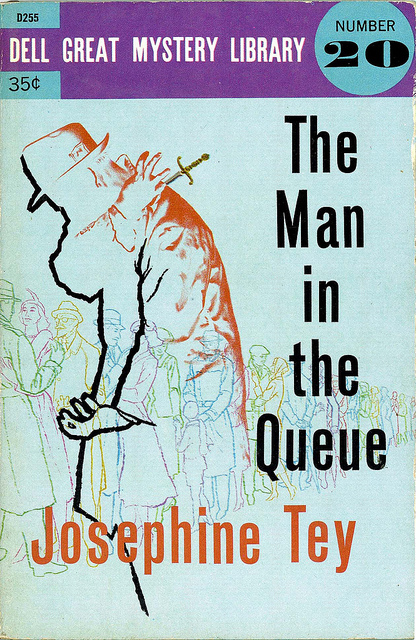
And we’re off. For the man in undeniably very dead indeed, and it appears that he has been so for some time. But who could have stabbed him in front of so many potential witnesses, and why didn’t he cry out? Who is the man, anyway, and why is he carrying no identification? And is that a loaded revolver in his pocket?!

Scotland Yard immediately takes charge, and it is up to Inspector Grant, guaranteed dependable and with a certain flair for successfully solving his cases, to identify the victim and inexorably hunt down the missing killer.

An excellent piece of “Golden Age” mystery writing, chock full of appalling-to-the-modern-sensibility racial profiling and sexist commentary, but great fun to any lover of this most engaging genre. I must say I was completely stumped by the surprise ending; I was completely taken with the huge, stinking red herring which the author paraded about to confuse the plot; I did NOT guess the murderer until the final denouncement and explanation.

Inspector Grant, in his first appearance on the page, is rather Holmesian in style, consulting with the examining surgeon and coming up with some rather surprising assumptions, based on appearances alone. “Scientific”? Oh, dear …

“Can you tell me anything about the dead man himself?” asked Grant, who liked to hear a scientific opinion on any subject.

“Not much. Well nourished – prosperous, I should say.”

“Intelligent?”

“Yes, very, I should think.”

“What type?”

“What type of occupation, do you mean?”

“No, I can deduce that for myself. What type of – temperament, I suppose you’d call it?”

“Oh, I see.” The surgeon thought for a moment. He looked doubtfully at his interlocutor. “Well, no one can say that for a certainty – you understand that?” And when Grant had acknowledged this qualification: “but I should call him one of the ‘lost cause’ type.” He raised his eyebrows interrogatively at the inspector and, assured of his understanding, added, “He had practical enough qualities in his face, but his hands were a dreamer’s. You’ll see for yourself.”

Together they viewed the body. It was that of a young man of twenty-nine or thirty, fair-haired, hazel-eyed, slim, and of medium height. The hands, as the doctor had pointed out, were long and slim and not used to manual work …

Nice “scientific” work, you two. And if you thought this was a little too good to be true, just wait until you read about the assumptions made once the murder weapon is considered…

Very good stuff, in a completely “vintage read” sort of way. A definite must-read for the Tey fan, to track where the author came from, as it were, and to realize the huge strides she made in her writing career. Decidedly decent indeed for a first book; the others only get better.

And here, for your enjoyment and further enlightenment, are some grand reviews by other bloggers:

Fleur Fisher – The Man in the Queue
Stewartry ( A Gold of Fish) – The Man in the Queue

Read Full Post »

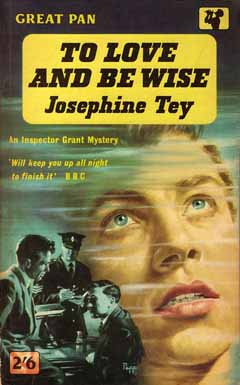
to love and be wise josephine teyTo Love and Be Wise by Josephine Tey ~ 1950. This edition: Pan, 1973. Paperback. ISBN: 0-330-10381-4. 191 pages.

My rating: 8/10.

*****

Who is the unusual young man who catches Inspector Grant’s attention during a brief encounter at a literary cocktail party? Slender and soft-spoken, rather negligible but for his white-blond fairness, Leslie Searle professes to be a professional American photographer on a private trip to England.

Why has Searle insinuated himself into best-selling author Lavina Fitch’s household, focussing his charm on Lavinia’s niece Liz Garroway, and partnering up with Liz’s fiance Water Whitmore, the well-known radio broadcaster, on a suddenly conceived book project?

And why is Mrs. Garroway, Liz’s super-maternal stepmother, so immediately hostile to the personable and perfectly well-mannered Mr. Searle, and why does the local vicar murmur about other-worldly demons after making Mr. Searle’s acquaintance over a placid dinner?

Walter and Leslie head off on their spontaneously planned canoe trip down the twisting Rushmere River, which they are co-documenting in words and photographs, and all seems well until the night when Walter storms out of the pub where he’s been sitting with Leslie. Laughing off Walter’s departure, Leslie is in no hurry to follow, and when he does leave, he placidly walks down the street and out of the village on his way back to the riverside camping spot. And then he disappears into the night. Leslie Searle is never seen again…

What really happened that night, and what dark secrets are hiding behind the many blank, superficially cooperative faces of so many respectable people? Nothing is as it seems, and Inspector Grant of Scotland Yard has his work cut out in attempting to unravel the mysteries surrounding what may just be an exceedingly well-planned murder.

A most satisfactory vintage mystery story, with a traditionally English countryside setting – though what is it with these (purely fictional, I’m always hoping) sedate British villages and their exceedingly high rates of murder and other such mayhem?!  With its nicely detailed character development, and reasonably believable plot twists, Tey’s novel still stands up well more than a half-century after publication, and will provide an evening or two of diverting reading to the modern connoisseur of the genre. If you have not yet discovered Josephine Tey, I recommend her to you with admiration and enthusiasm.

I frequently find it a lot harder to sensibly talk about why I like a book, especially one I’ve read and re-read numerous times with pure enjoyment, than to pan something I’ve reacted to unfavourably and have no intention of ever reading again, as I did in my last review, of Mary Wesley’s The Chamomile Lawn. So though I’ve spent some time mulling over how best to analyze  the appeal of this author, I will merely say that something about her writing just “clicks” in a deeply satisfying way.

If I can compare Josephine Tey to anyone, it would be Ngaio Marsh at her very best, hybridized with the intellectual superiority of D.L. Sayers. This writer treats her readers as full equals, never for a moment talking down to us, and always assuming we are well able to catch all of the nuances of the characters, settings and plots she has created and presented for our enjoyment.

And Tey has a deliciously sly sense of humour as well, which shows that the author had a very keen observational eye on the society and personalities of her time, much as she seems to have been personally rather reclusive in nature. She did move in some interesting circles – the theatre, literary and upper-class society worlds of her time – though she quite cleverly evaded the attentions of the press once her work became widely popular.

I do admire and enjoy Josephine Tey’s clean, intelligent style, especially in her later books, and I deeply regret that her body of work is so slight. There exist only eight mystery novels, of which To Love and Be Wise is the sixth, as well as several “straight” novels, and a number of stage and radio plays.

“Josephine Tey” is a pseudonym, that of Scottish writer Elizabeth Mackintosh. She also published under the pen name “Gordon Daviot” – several of the novels and the dramatic works originally appeared under this name. This accomplished writer died tragically, much too young, of cancer at the age of fifty-six in 1952. For more information on this famously reclusive writer, check out this dedicated website: Josephine Tey.net

It’s been a few years since I’ve read this particular mystery novel, To Love and Be Wise, but now that I have indulged myself by escaping into her fictional world, and renewing my acquaintance with the most likeable Inspector Grant of Scotland Yard, key investigator in five of the mysteries, I am eyeing the rest of the Teys sitting here on the “special books” shelf with anticipation. Time perhaps for yet another single-author reading jag, now that I’ve gleefully polished off most of the D.E. Stevensons I was saving for a treat for myself during this most hectic time of the year.

I believe that Josephine Tey’s mysteries are being currently reprinted in handsome modern editions, but even if you are unable to find new volumes, her most popular titles are in wide abundance in the secondhand book world.

Edited to add this link to an exceedingly excellent review which I’ve stumbled upon in marvelous serendipity while looking for info on the story around the publishing of Tey’s very first mystery, The Man in the Queue. I beg of you, if you’re interested in Tey, please click over here:  A Gold of Fish – To Love and Be Wise

I wish I could write reviews like this. Thank you, Stewartry ! I anticipate much happy reading as I further explore your EXCELLENT blog!

Read Full Post »

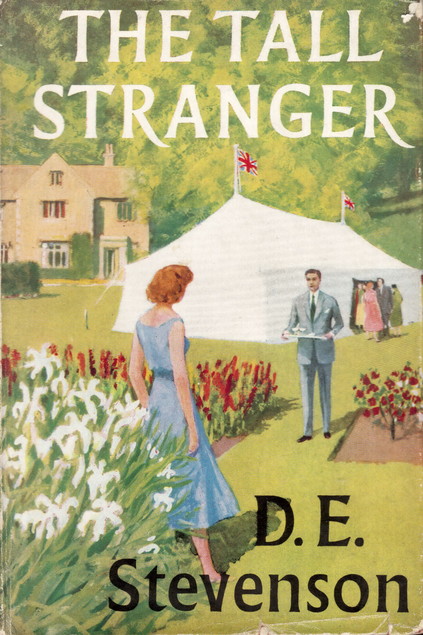
Tthe tall stranger d e stevenson hc djhe Tall Stranger by D.E. Stevenson ~ 1957. This edition: Ace, 1978. Paperback. ISBN: 0-441-79621-4. 252 pages. (Note: This is not the cover of the paperback, but of the original hardcover dustjacket. The Ace paperback illustration is quite a different thing! I will spare you it.)

My rating: 8/10.

Yes, it’s a very high rating for what is basically a “fluff” book, but it was what I needed last night, after a very trying day (condensed version – an unexpected visit to the vet with our 13-year-old dog and $2000 in emergency surgery fees, prognosis a guarded “fair”, upgraded to “good” when it was apparent that she handled the surgery very well indeed, all things considered) and it (the story) made me forget our combined woes for a bit, and made me happy. Maybe I should even put it up a point or two more for that!

Postscript – the dog is back home and looking most happy to be here; though rather sore and stiff after her internal surgery. Feeling optimistic this morning that all will be well with her for at least the near future, because, realistically, at 13, the inevitable final parting is not all that far away. This is the dreadful bit about sharing your home and heart with pets…

*****

This is one of D.E. Stevenson’s minor romantic novels which doesn’t get much press – I don’t think I’ve ever read anything about it at all. And probably for good reason – it’s a slight little thing, and the characters are nothing if not “stock”. But I loved it!

So here we have two roommates in a London flat. Barbara – Barbie – works for an interior decorating firm, while Nell is a secretary to a doctor. As the story opens, Barbie is in hospital with a mysterious virus, exceedingly ill. To cut a long story short, she recovers, due to timely intervention by Nell’s employer, and the loving care of Barbie’s Aunt Amalie and her companion-housekeeper Miss Penney.

Now toss in a charming but shifty love interest for Barbie, Aunt Amalie’s handsome stepson Edward, and a mysterious “tall stranger” met briefly at a crowded wedding. Relocate the action to a rather shabby castle on the Scottish border, garnish with a lovable child (and one not quite so immediately lovable), various charming clients-cum-friends, a basket of kittens, a dramatic storm and a rescue from an island, another love interest for Nell (looks aren’t everything in a man, you know), and there you go. One trials-and-tribulations-overcome-with-a-very-happy-ending double (quadruple?) romance.

Not very realistic, but lovely to escape into. Nicely done, Dorothy Emily!

I promised myself I’d just post and run with this one, because it’s really not the material for any sort of deep analysis, but I feel like sharing this snippet from midway through, because of course spring is, by the calendar at least, here; my life (and nursery greenhouse) is full of plants and my mind is full of gardening plans, and I too have a fondness for, but, sadly, no luck with, the lovely willow gentian.

The garden was now at its best; wistaria rioted over the south wall, its branches bowed down with their weight of blossom, and the willow-gentian in its cool shady spot was beginning to come into flower. Soon the little bushes with their slender stems would bear narrow bells of deep blue flowers, and the corner of the garden where they grew would look like a pool of blue water. Amalie was very fond of these gentians, she had grown them herself from a few seeds gathered on a visit to Switzerland. She had been told that they would not grow here in the Cotswolds but they had liked their new home and had thriven and multiplied under her care.

Amalie was in no hurry for them to flower. She would have held back the garden if she could … for, as each plant flowered and faded, she knew that it was gone for a whole year. The longest day was long past … Next year was such a long time to wait … all through the dead winter. Summer days passed too quickly, thought Amalie, and then she thought, but there are still the chrysanthemums to come and the dahlias and the proud upstanding gladioli and the gold of the ripe corn in the garvest fields and the flames ofthe autumn leaves!

The years do pass so swiftly, as do the days of the garden and the moments of each flower’s particular glory, but (apt thought with Easter coming and all) there is at least the eternal resurrection of plant life each year to look forward to. For every thing there is a season, if you’ll forgive the overused but most appropriate quotation, though (increasingly, it seems with the passing years) the season in question is often too brief. Would I freeze time if I could? Perhaps occasionally…

I’m going to my sister’s 50th birthday party today, so please forgive my rather angsty ramblings. Half a century. No matter how casual we are about joking that 50 is the new 40, it’s a slightly sobering milestone!

gentiana asclepiadeae hf 2013 x

Read Full Post »

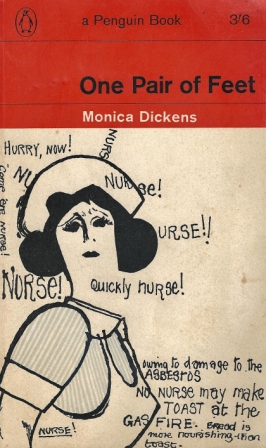
one pair of feet monica dickens 001One Pair of Feet by Monica Dickens ~ 1942. This edition: Penguin, 1964. Paperback. 221 pages.

My rating: 10/10.

One had got to be something; that was obvious. But what? It seemed that women, after having been surplus for twenty years, were suddenly wanted in a hundred different places at once. You couldn’t open a newspaper without being told that you were wanted in the Army, the Navy, or the Air Force; factory wheels would stop turning unless you rushed into overalls once; the A.F.S. could quench no fires without you, every hoarding beckoned you and even Marble Arch badgered you about A.R.P.

The Suffragettes could have saved themselves a lot of trouble if they had seen this coming. Men’s jobs were open to women and trousers were selling like hotcakes in Kensington High Street.

I could not make up my mind what to be. A lot of fanatics rushed into the most uncongenial jobs they could find, stimulated by a glow of self-sacrifice that lasted until the novelty wore off or the cold weather set in, but it seemed to me that, provided it was useful, it was no less patriotic to do something enjoyable. At first sight, the choice seemed so enormous that the trouble was to decide what not to be, but a closer inspection revealed so many snags that in the end the trouble was to find something to which I had a hope of sticking.

The Services? I didn’t think my hips would stand the cut of the skirt and I wasn’t too sure about my legs in wool stockings. Besides, I’d never been much good at drilling and all that. My school reports used to say: ‘Not amenable to discipline; too fond of organizing,’ which was only a kind way of saying: ‘Bossy.’ I might have been a success as a general but not as a private.

The A.F.S.? I did try that for a while, but at the beginning of the war there was not much doing and I got discouraged with sitting all day in the back room of a police station knitting and eating sticky buns with six assorted women and a man with a wooden leg. At the end of the week, we all knew each other’s life histories, including that of the woodenleg’s uncle, who lived at Selsey and had to be careful of his diet. Messenger Dickens had once been down to Roehampton to fetch the Commandant’s handbag and a small tube of soda-mints from the shelf in her bathroom.

A bus conductress? … The W.V.S.? … I worked in a canteen for a while, but had to leave after a terrible row with Mrs Templeton-Douglas, who could never subtract one-and-ninepence from half-a-crown. I sold some of her jam tarts for a penny instead of twopence, thinking they were the throw-outs we had bought at the back door of the A.B.C.

The Land Army? One saw oneself picking apples in a shady hat, or silhouetted against the skyline with a couple of plough horses, but a second look showed one tugging mangel-wurzels out of the frozen ground at five o’clock on a bitter February morning.

Ministries and Bureaux? Apart from the question of my hips again (sitting is so spreading), they didn’t seem to want me. Perhaps it was because I can only type with three fingers and it always keeps coming red.

The Censor’s Office I knew was in Liverpool, and I’d been there once.

Nursing? The idea had always attracted me, even in peace-time, but I suppose every girl goes through that. It’s one of those adolescent phases, like wanting to be a nun. It was reading Farewell to Arms, I think, that finally decided me, though what sort of hospital allowed such goings on, I can’t imagine. However, that was the last war…

So nursing it is, and Monica Dickens edgily and wittily documents the year she spent as a probationer at Queen Adelaide Hospital, and life on and off the wards, and the personalities she rubbed up against.

It is terribly difficult, I find, to write critically about an author whom one has read so often and with so much enjoyment, as I have read Monica Dickens. I will merely say that this book more than lives up to the first few pages excerpted above, and that it does not disappoint.

The author’s voice is two-thirds world-wearily cynical – as only a twenty-something writer can be! – and one-third completely sincere; “readable” is a mild recommendation, but very apt. Many of her sharper observations feel initially rather cruel, but Dickens is as hard on herself as on anyone, and often her most maligned characters are revealed to have redemptive qualities which the author displays with as much clarity as their failings.

Highly recommended.

Caveat lector: Several era-correct racial slurs in this one which may bring the modern reader up short. One character’s nickname is N_____, due to his curly hair, and several times the same term is used descriptively. There appears to be no intention to offend; I believe the usages here were completely accepted at the time of writing. I only mention them because it is a sensitive point with some modern readers.

Read Full Post »

the alpine path l m montgomeryThe Alpine Path: The Story of My Career by L.M. Montgomery ~ 1917. This edition: Fitzhenry & Whiteside, 1975. Hardcover. ISBN: 0-88902-019-1. 96 pages.

My rating: Probably an 8/10 – it’s a slender little thing, and tells nothing very new, deep, or startling, but it is nonetheless an enjoyable excursion into the life of the renowned author, written in the relatively early years of her successful career.

A must-read for the L.M. Montgomery aficionado, just to say you’ve read it; a gentle, happy overview of the author’s life for those new to her; a pleasant “light” memoir with only a few mentions of the very real and frequently tragic difficulties the author faced in her childhood, teen and adult years.

The book is a compilation of a series of six autobiographical essays which L.M.M. wrote for the Toronto magazine Everywoman’s World in 1917, ten years after the stunning success of Anne of Green Gables had made her a worldwide household name.

Many years ago, when I was still a child, I clipped from a current magazine a bit of verse, entitled “To the Fringed Gentian”, and pasted it on the corner of the little portfolio on which I wrote my letters and school essays. Every time I opened the portfolio I read one of those verses over; it was the key-note of my every aim and ambition:

“Then whisper, blossom, in thy sleep
How I may upward climb
The Alpine path, so hard, so steep,
That leads to heights sublime;
How I may reach that far-off goal
Of true and honoured fame,
And write upon its shining scroll
A woman’s humble name.”

It is indeed a “hard and steep” path; and if any word I can write will assist or encourage another pilgrim along that path, that word I will gladly and willingly write.

The first half of this slender book is devoted to childhood reminiscences, many of which the author mentions as having been used as inspiration and worked-over anecdotes for her personal favourite of her novels, The Story Girl. Then follows some discussion of the years when she attempted to establish herself as a published, and more importantly, paid author, and of course, the story of the manuscript of Anne, which was flatly rejected numerous times, and laid away

in an old hat-box in the clothes room, resolving that some day when I had the time I would take her and reduce her to the original seven chapters of her first incarnation. In that case I was sure of getting thirty-five dollars for her at least, and perhaps even forty.

The manuscript lay in the hat-box until I came across it one winter day while rummaging. I began turning over the leaves, reading here and there. It didn’t seem so very bad. “I’ll try once more”, I thought. The result was that a couple of months later an entry appeared in my journal to the effect that my book had been accepted. After some natural jubilation I wrote: “The book may or may not succeed. I wrote it for love, not money, but very often such books are the most successful, just as everything in the world that is born of true love has life in it, as nothing constructed for purely mercenary ends can ever have.”

And then there’s this comment, which I rather smiled at; the author having too-late second thoughts after killing off a character:

Many people have told me that they regretted Matthew’s death in Green Gables. I regret it myself. If I had the book to write over again I would spare Matthew for several years. But when I wrote it I thought he must die, that there might be a necessity for self-sacrifice on Anne’s part, so poor Matthew joined the long procession of ghosts that haunt my literary path.

After the evocative descriptions of her Prince Edward Island childhood, the part of the book I enjoyed the very most was the selection of journal entries from L.M.M.’s winter in 1901 of working on the staff of the Halifax Daily Echo, where she performed all sorts of different roles, from chasing down advertisers for copy – once unexpectedly scoring a new hat from a satisfied client – to proof-reading, and making up endings for serials whose manuscripts are inexplicably incomplete. Grand training for an aspiring writer, as L.M.M. points out, with much good humour!

Read Full Post »

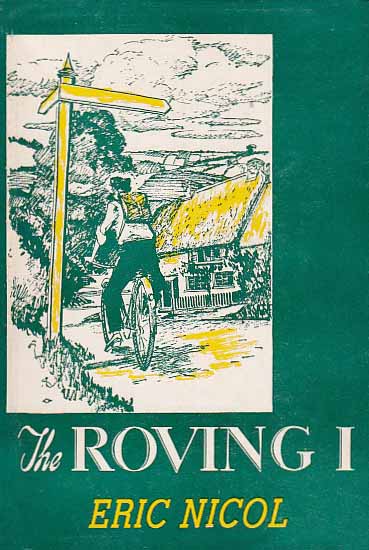
the roving i eric nicolThe Roving I by Eric Nicol ~ 1950. This edition: Ryerson Press, 1951. Hardcover. 134 pages.

My rating: 7/10, after some inner debate.

I  am rather sad to have to say that much of the humour is groaningly dated in this one, but despite that single failing, I have a strong affection for Eric’s comic tale of his year on The Continent, some phrases of which are ingrained deeply into my memory. The more eloquent passages obviously resonated deeply when I first read this at an impressionable age.

The Roving I won the Stephen Leacock Medal for Humour in 1951, which is commendable but not necessarily a guarantee of, well, of anything! The bits of Roving I which I am fondest of are the more serious bits, hidden beneath the sometimes-forced playfulness of the narrative.

Do I date myself when I assume that everyone knows who Eric Nicol is? As a middle-aged, mostly lifelong British Columbia resident, Vancouverite Nicol has somehow always been there, always on the edges of my awareness, a cultural constant. Exceedingly prolific throughout his writerly life, which began in college – he famously started his career by writing in the Ubyssey under the pen name of Jabez – Nicol went on to write more than 6000 newspaper columns for The Vancouver Province, as well as 40-odd books and a number of mostly-comic plays. Eric Nicol died in 2011, at the age of ninety-one, writing up until the end, despite battling the onset of Alzheimer’s. His last book, Script Tease, a collection of typically whimsical articles, was published in 2010.

But we’re going to go way back, to the early days, to Eric’s more youthful days as a young man after his WW II military service – three years in a non-combat role in the R.C.A.F. –  when he was taking advantage of an opportunity to pursue post-graduate studies for a year at the Sorbonne.

Here’s a sampling, from Chapter One: Debut of a Vagrant, at the start of the long train journey eastward to the embarkation point for ship travel to Europe.

The train lurches forward heavily, trying to take us all out by the roots at once. Mine hang on. Mine and those of the old couple across the aisle, who never thought of buying a newspaper because the news of the day was their being on the train, with a rope around their world.

Another good jerk does it. The station begins slowly to glide out under a full sail of flapping handkerchiefs. No, it’s us. We’re rolling. I and the fat lady sitting opposite me, reluctant to admit one another to the sudden vacuum of our existence, stare out the window at a grey and indifferent Vancouver. Oh, Vancouver, that I’ve given the best years of my life to, how can you dismiss me as though I were just another can of salmon? Is this how I’m to remember you, this motorist stymied by the crossing gate and glad to see the last of us? Couldn’t that woman stop hanging out her laundry for a minute? Is there no one to wave to us, on behalf of the city of Greater Vancouver?

Yes, by heaven! There she is. A little girl, a delegate at large, patting the air slowly and solemnly, making it last for the whole train. The fat lady and I wave back, and, relinquishing Vancouver, smile at each other, having in common someone we both said goodbye to…

That’s a fair sampling of Nicol’s style. Though occasionally it drops into sheer silliness, it is usually redeemed by clever, often very funny phrasings; the man did have – overused cliché fully applicable here – a way with words.

Eric Nicol’s books are quite easy to come by here in B.C., and are – here’s another cliché – well worth dipping into if you come across them in your travels, though some I find more enjoyable than others. The more hectic ones do seem to be trying a bit too hard, but there are little gems of delicious prose in each and every one. The Roving I is one of my personal favourites, a slight little period piece which captures a moment of time in a fast-moving world and frequently makes us smile at the infinite absurdities of life.

Read Full Post »

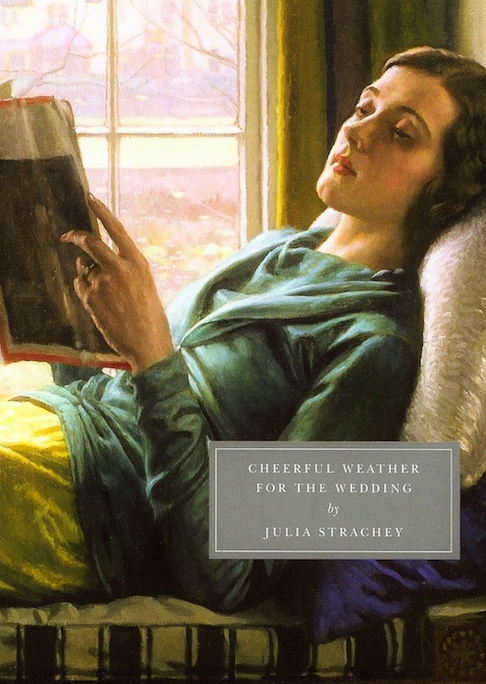
cheerful weather for the wedding  julia stracheyCheerful Weather for the Wedding by Julia Strachey ~ 1932. This edition: Persephone, 2011. Preface by Frances Partridge. Softcover. ISBN: 978-1-906462-07-9. 119 pages.

My rating: 7.5/10

*****

This slender novella read much better the second time around. The initial attempt rather threw me – I wasn’t quite sure what I was dealing with – it was decidedly unexpected. Much more noir than I had anticipated from the other reviews I’d read, and from the Persephone description.

Having sorted things out, I was able to read with more attention to detail the second time around, and to pin down my impressions much more firmly. Though, the more I think about it, the more complicated my responses seem to be!

Dolly Thatcham is getting married in a few hours, and upon meeting her in the opening pages of the book we take a deep breath and hold it for the duration. This book is strung out with tension. Something is going to happen. Something more than a mere marriage ceremony, the veiled implication teases us.

Her mother, whom Dolly appears to tolerate with thinly disguised disgust, is fluttering about micro-managing the action, and confusing the servants by constantly contradicting her impulsive orders. Dolly’s younger sister, Kitty, a brash but deeply insecure seventeen-year-old, barges about and loudly plays the knowing naïf. Dolly’s close friend Evelyn tensely hovers at the edges of the action. The bridegroom is about somewhere, but does not seem to be a prominent player in this drama; it is a very feminine world we are glimpsing: the bride, her sister and mother, her best friend, the inside servants.

Several hours before she is due at the altar, Dolly seems immobilized with a kind of fixated lethargy. On her way through the drawing-room to breakfast, she sits down at the writing-table, and we see the room and Dolly’s face reflected in the clouded surface of an antique mirror.

It was as if the drawing-room reappeared in the mirror as a familiar room in a dream reappears, ghostly, significant, and wiped free of all signs of humdrum and trivial existence,. Two crossed books lying flat, the round top of a table, a carved lizard’s head on a clock, the sofa-top and its arms, shone in the grey light from the sky outside; everything else was in shadow. The transparent ferns that stood massed in the window showed up very brightly and looked fearful. They seemed to have come alive, so to speak. They looked to have just that moment reared up their long backs, arched their jagged and serrated bodies menacingly, twisted and knotted themselves tightly about each other and darted out long forked and ribboning tongues from one to the other; and all as if under some terrible compulsion … they brought to mind travellers’ descriptions of the jungles in the Congo, – of the silent struggles and strangulations that vegetable life there consists in it seems.

To complete the picture, Dolly’s white face, with its thick and heavily curled back lips, above her black speckled wool frock, glimmered palely in front of the ferns, like a phosphorescent orchid blooming alone there in the twilit swamp.

For five or six minutes, the pale and luminous orchid remained stationary, in the centre of the mirror’s dark surface. The strange thing was the way the eyes kept ceaselessly roaming, shifting, ranging, round and round the room. Round and round again … this looked queer – the face so passive and remote seeming, and the eyes so restless.

The light perhaps caught the mirrored eyes at a peculiar angle, and this might have caused them to glitter so uncomfortably, it seemed even so wildly – irresponsibly, – like the glittering eyes of a sick woman who is exhausted, yet feverish.

Is this the portrait of a joyful bride? Obviously not, and as the narrative continues we discover nothing to change this initial impression of the bride as having some serious emotional turmoil going on under her numbly complacent cooperation with those preparing her for her imminent ceremonial change of matrimonial status.

For we soon become aware that this bride has a back story, and that story has another main character, and he is actually in the house, waiting for a chance to speak to Dolly, who in her turn seems most reluctant to encounter him.

Joseph Patten is an anthropology student who is obviously on familiar terms with the Thatcham menage. Apparently he has been a bosom friend of Dolly’s; they spent the previous summer inseparably together, though they have since parted ways. Yet here is Joseph, lurking about, waylaying people as to the whereabouts of Dolly, obviously hoping to speak to her before the ceremony, after which she will be immediately departing with her new husband to embark for South America where the bridegroom has a diplomatic posting.

Dolly is avoiding Joseph, and he whiles away the hours by popping out of rooms and dropping inflammatory comments into the midst of conversations, before retreating into sullen silence which builds until the next outburst.

Dolly makes it into her dress and eventually out the door with the aid of a bottle of rum, which, in a memorable vignette, we see clutched in her hand and swathed in the lace of her antique lace veil as she droops down the stairs in the final moments of her spinsterhood. She and Joseph do connect, but as neither of them can articulate their Great Big Expectations of each other – if indeed they actually have fully formed expectations – the wedding day proceeds as originally planned.

Once the bride and groom are seen off, the dregs of the guests and the family mingle in anticlimactic winding-down mode. Joseph is still hanging about, and he lets go with a shocking but highly suspect account of what Dolly has been up to the summer before while in Albania. Mrs. Thatcham, the target of this bizarre allegation, dismisses it with a fine cold shoulder, and we are left reeling a bit at the swirling undercurrents of this brief and highly disturbing glimpse into this collection of fictional lives.

Julia Strachey has put together a quirky, memorably stylized, very visual bit of fiction with this short novella. The exceedingly unlikable Mrs. Thatcham was based on Strachey’s first mother-in-law, whom she apparently despised; it is a damning character portrait, if that is indeed the case.

I did find myself surprisingly in sympathy with both Dolly and the almost-invisible Owen at the end of the tale; I suspect and hope, from a few tiny clues dropped here and there, that they will create a marriage with some hope of success, once they have escaped the physical bonds of their old lives in England and can recreate themselves in a new world.

Joseph – well – I found myself rather on his side as well. In his “affair” with Dolly, and his failure to further develop their relationship, he’s perhaps had a fortunate escape. The Thatchams in general so obviously scorn him, and Dolly herself is so reluctant to acknowledge any sort of affection or lasting committment to their prior dalliance, that we must accept the obvious. That is, that a Dolly-Joseph alliance was never a real option.

Or possibly not.

Cheerful Weather for the Wedding is a rather gloriously intriguing little bit of literature in that the speculations it spawns are endless. I’m going to quit right here with it, at least for now, but it’s been great fun kicking ideas around regarding what the author intended, and how we’re supposed to read her characters and the seething back story.

Thank you for initiating this discussion, Simon!

And to everyone else who has been much prompter in posting their reviews, your thoughts were most fascinating and beautifully presented. I am in awe of the clever people who post on these topics; you find the most intriguing angles and nooks and crannies to illuminate; thank you all so much for sharing your thoughts!

Here’s the link to the post which kickstarted my discovery of this arcane author:

Stuck-in-a-Book – Cheerful Weather for the Wedding Readalong

Read Full Post »

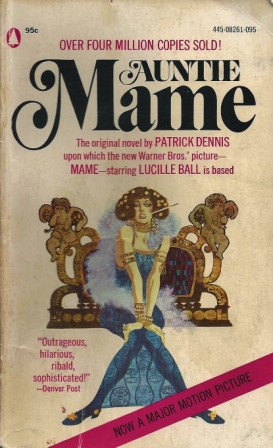
auntie mame patrick dennis 001Auntie Mame by Patrick Dennis ~ 1955. This edition: Popular Library, circa 1974. Paperback. ISBN: 445-08261-095. 254 pages.

My rating: 8/10.

It is what it is – a blissfully easy-to-read, unapologetically American social comedy, with enough perfectly timed, backhanded slaps at social snobbery, racism and anti-Semitism to redeem it from total silliness.

*****

I don’t know quite where she came from, but Auntie Mame appeared one day in a stack of old paperback books I was sorting and putting away. I gave her a rather scornful glance – she was, after all, ensconced between tatty covers emblazoned with movie tie-in headlines, never a particularly endearing feature – and popped her into a box with a bunch of other “maybe someday” books. But not long afterwards she showed up on my night table, brought into the bedroom by (of course) a man, who’d been looking for a diversion, found her intriguing and decided to experience her lavish charms more intimately. After he’d finished with Mame, he left her there to work her charm on me.

“Well, darling,” she whispered to me with a we’re-all-girls-in-here-together-now intonation, “how about it? Don’t you want to find out what Auntie Mame is all about?”

So I read her.

Hotcha!

*****

I’m guessing almost everyone’s either seen one of the two movies based on this 1955 bestseller – the 1958 Rosalind Russell vehicle (pretty darned good), and the 1974 Lucille Ball effort (pretty darned bad) – or one of the countless stage adaptations, or read the actual book itself – printed and reprinted numberless times, most lately in, I believe, 2001. That’s a good half-century of popularity, and I think it’s safe to state that Auntie Mame has a decidedly secure place well up in the top end of the American pop culture archive.

Does she deserve it?

Well, yes, I rather think she does. She’s a deeply lovable creation – with that lovableness outshining her undeniable glamour and her bizarre goings-on as the key reason for my re-reading her spicy “biography” every so often, whenever Mame winningly works herself up to the top of the book stacks, like cream rising to the top of an old-fashioned bottle of milk.

Here’s the basic outline, for those of you who’ve so far been blissfully unaware of the existence of Auntie Mame and her impressionable young nephew, Patrick.

Orphaned at the age of ten in 1929, the very much fictional* Patrick Dennis is sent to live with his wealthy and gloriously extroverted aunt, who is presently holding court (apt term) in a lavish apartment at 3 Beekman Place in Manhattan.

*The author published this book under this pseudonym in order to add verisimilitude to the “memoir” form; after the novel’s success, the pseudonym was maintained for most of the author’s future writings. Edward Tanner is the real name of the author – actually, Edward Everett Tanner III. Mame was inspired by, but was not an accurate depiction of, the author’s real-life aunt, Marion Tanner. Edward Tanner also wrote under the pseudonym “Virginia Rowans”.

Mame welcomes her “own little love” with open arms, and Patrick returns that affection immediately and instinctively, despite his father’s rather foreboding words while making his will the year prior to his sudden demise.

…My father read his will to me in a shaky voice. He said that my Aunt Mame was a very peculiar woman and that to be left in her hands was a fate that he wouldn’t wish a dog, but that beggars couldn’t be choosers and Auntie Mame was my only living relative.

Despite the deathbed wishes of Patrick’s father for his son to receive a conservative upbringing, Mame craftily dodges the stodgy school which Patrick’s trustee, the estimable but strictly conventional Mr. Babcock, has chosen. Instead Patrick ends up in a very avant-garde establishment distinguished by its policy of complete nudity for all, students and staff – and absolute lack of any inhibitions, or actual academic teaching. Mr. Babcock’s visit as the students and their adult mentors are role-playing a school of spawning salmon puts a quick end to the experiment, and lands Patrick in that dreaded boarding school, far away from the influence of his aunt, whom Mr. Babcock regards as the epitome of evil decadence from that moment forward.

Luckily Patrick’s education had already received something of a unorthodox but most useful boost from his aunt’s insistence, from his very first day with her, of Patrick’s carrying a pad of paper with him and writing down any unfamiliar words for future explanation.

I spent that first summer in New York trotting around after Auntie Mame with my vocabulary pad, having Little Morning Chats every afternoon, and being seen and not heard at her literary teas, salons and cocktail parties.

They used a lot of new words, too, and I acquired quite a vocabulary by the end of the summer. I still have some of the vocabulary sheets of odd information picked up at Auntie Mame’s soirees. One, dated July 14, 1929, features such random terms as: Bastille Day, Lesbian, Hotsy-Totsy Club, gang war, Id, daiquiri – although I didn’t sell it properly – relativity, free love, Oedipus complex – another one I misspelled – mobile, stinko – and from here on my spelling went wild – narcissistic, Biarritz, psychoneurotic, Shönberg, and nymphomaniac. Auntie Mame explained all the words she thought I ought to know and then made me put them into sentences which I practiced with Ito, while he did his Japanese flower arrangements and giggled.

Once Patrick is incarcerated in conventional school, his visits to Auntie Mame are restricted to occasional weekends and the holidays. No matter, though, as the two are already bound by a strong and abiding love which will see them through the most outrageous of Mame’s excesses and the rapid ups and downs of her changing fortunes and continual reinventions of herself.

Mame’s fortune is decimated by the Stock Market Crash of October 29, 1929, and she hits the lowest point, financially speaking, of her life, ending up selling roller skates (ineptly) in Macy’s department store, before being rescued at the 11th hour by a wealthy Deep Southern white knight, Beauregard Jackson Pickett Burnside, who sweeps her of her feet and sets her up for the rest of her life, leaving her a seriously large fortune when he dies rather tragically only a few years into the marriage.

Mame sincerely mourns Beau, but continues on her merry way charming and being charmed, and enjoying the attentions both platonic and amorous of a huge range of people, including at one point one of Patrick’s college friends – Mame refuses to let a little thing like age difference stand in the way of her relationships of any sort.

Patrick drifts in and out of Mame’s circle, observing and pithily commenting on her friends and latest fads, which range from the oriental stylings of their first meeting to the Southern belle of the Beau years, to literary pseudo-Irish tweed and brogues, to war-time Friend of England sponsoring some truly horrible Cockney refugee children in a Colonial mansion which they promptly completely destroy.

Patrick falls in and out of numerous relationships on his own, from gold-digging waitress Bubbles, to über-snobbish fiance Gloria Upson, to a poverty-stricken but determinedly aristocratic trio of blue-blooded and stunningly beautiful sisters. He finally finds true love, marries and produces a son of his own, only to have Mame swish in sari-bedecked and trailing a pet swami during her Indian reincarnation period, to carry her latest “little love” off to the orient, thus bringing our tale full circle.

*****

Undeniably funny – though I never did “laugh out loud” as many reviewers report themselves doing – this satirical tale is as full of barbs as a porcupine is of quills. The author uses his humorous platform to trot out his very decided views on the state of middle class American mores, while amusing us with his bitchy delivery – there’s a decidedly contemporary feel to a lot of the humour, despite the book being well into its sixth decade by now.

“Risque” is a word not often used today, but it applies in full force to Auntie Mame – the book and the character. Inhibitions – pshaw! If it feels good and doesn’t harm anyone, go for it! is the credo Mame lives by, and Patrick slips into that attitude easily, though prudishness occasionally rears its head in his case. The innuendo throughout is frequently gloriously bawdy, though there are a few groaningly bad double entendres, as when Patrick reports on his first social occasion at Auntie Mame’s, as an still-innocent ten-year-old. (Needed information: Norah is Patrick’s Irish nurse, and Ito is Mame’s Japanese houseman; Prohibition is in full swing.)

One lady with red hair said that she spent an hour a day on the Couch with her doctor and that he charged her twenty-five dollars every time she came. Norah led me to another part of the room.

The little Japanese man gave Norah a glass and said it was right off the boat and Norah said she wasn’t used to spirits – even though she was always telling me about seeing ghosts and haunts – but this time she’d take a drop of the creature. She seemed to be feeling very happy all of a sudden. And in a little while she asked Ito to give her another Nip.

Oh. My. Goodness. That was pretty dire, Mr. Dennis/Tanner. Had to read this bit twice to make sure I’d seen it correctly. Groan. How many desperately bad puns did the author cram into these few sentences? I think I counted six.

Luckily most of the jibes aren’t quite so deeply awful, but in the interests of full disclosure the prospective reader should be warned of these types of things!

To sum up, I do ultimately enjoy this gloriously campy period piece. Yes, it’s chock full of period-typical stereotypes and attitudes towards women and “foreigners”, but that doesn’t bother me one whit in this one – it’s an innocently era-correct sort of prejudice, and there’s enough social awareness going on of the greater evils in the world of the time to excuse the bits which would be politically incorrect if written today.

It’s a refreshingly easy read, too, as I think I mentioned earlier, and has a very American type of blatantly outrageous humour which appeals in its own way as much as the typically lower key, straight-faced British literary wit does. You do need to pay a certain amount of attention while reading to catch all the nuances, but Auntie Mame romps along at such a good pace that drowsing off in her company is not a danger at all.

(And I’m glad to report that I didn’t use the term “madcap” once in this review. Ha! Points for me!)

Read Full Post »

the lonely life bette davis 001The Lonely Life by Bette Davis ~ 1962. This edition: G.P. Putnam’s Sons, 1962. Hardcover. 254 pages.

My rating: 7.5/10.

*****

I’m not a particularly dedicated fan of Bette Davis, though I’ve liked what I’ve seen of her acting – films I can remember watching are Dark Victory, Now, Voyager, Whatever Happened to Baby Jane?, Death on the Nile, and of course, most memorably, that glorious 1950s classic, All About Eve. Probably a few others over the years. But I do like a good autobiography, no matter who it’s about, and this one passed the browse test recently and found its way home.

I’d wavered a bit on it, because of the price (let’s just say “not cheap”) but the bookseller kindly gave my a nice discount – without my asking, because I very seldom dicker, figuring most people in the used book business aren’t exactly getting rich. I already had a generous collection assembled on the front counter, and this particular chap believes in encouraging his repeat customers. (The Final Chapter, downtown on George Street, the block between 4th and 5th Avenue, if you’re ever in Prince George, B.C. Cheerful, chatty owner – a self-confessed “non-reader” <gasp!> – his store has a quite decent selection, affordably priced for the most part. I’ve found some prizes there.)

Back to the bio.

*****

Bette Davis comes across in this tell-all much as she does on the screen – confident, outspoken and decidedly unapologetic. She fixes her eye on the goal, and powers ahead until she gets here, quite happily stepping on as many toes as need be.

The quality of writing is quite good, if a bit choppy in style – lots of short sentences. There often seems to be an assumption that the reader will have prior knowledge of whatever’s being discussed. Fair enough, coming from such a celebrity; this memoir was published at a time when most people reading it would have been fans, with intimate knowledge of the career of this prominent movie star.

Bette Davis was born Ruth Elizabeth Davis in 1908, famously during a thunderstorm, as she relates in The Lonely Life:

I happened between a clap of thunder and a streak of lightning. It almost hit the house and destroyed a tree out front. As a child I fancied that the Finger of God was directing the attention of the world to me … I always felt special – part of a wonderful secret. I was always going to be somebody. I didn’t know exactly what at first … but when my dream became clear, I followed it.

Bette, her younger sister Bobby, and their mother Ruth – “Ruthie” – were deserted by their father and husband when Bette was seven years old. Her mother refused to wallow in self-pity, but set herself to make a successful and prosperous life for herself and her daughters. Ruthie took on a wide variety of jobs, sending the girls to good boarding schools, and always arranging to spend vacation times together in interesting locations.

Bette received an unorthodox but adequate education; she was a great reader, and took singing, piano and dance lessons, apparently excelling at all of these pursuits. At some point she decided that her Great Big Goal was a theatrical career, and several seasons of New England theatre made up Bette’s dramatic apprenticeship.

As we all know, Bette eventually made the jump from dusty New York theatres to California sound stages. Roundly criticized as being homely in appearance and with zero sex appeal, there was paradoxically a certain something about Bette that came across as mesmerizing when she took on a dramatic role, and of course, there were those beautiful eyes.

Bette was never meek or humble. From a very early age she was tremendously focussed and not afraid to set her sights high, though she often fell afoul of fellow actors and her employers for her outspoken ways. She wasn’t afraid to take on unpopular characters, or to look less than glamorous if the role called for it – another characteristic which shocked many in “the business” was her insistence on realism over “pretty”. And though she full well knew what people were saying about her, she brazenly professed not to care.

If you aim high, the pygmies will jump on your back and tug at your skirts.The people who call you a driving female will come along for the ride. If they weigh you down, you will fight them off. It is then that you are called a bitch.

I do not regret one professional enemy I have made. Any actor who doesn’t dare to make an enemy should get out of the business. I worked for my career and I’ll protect it as I would my children – every inch of the way. I do not regret the dust I kicked up.

Speaking of those children, it is very obvious from this book that Bette’s dedication to her family matched her ambition. Frankly and with bitter regret, Bette reports that her first husband convinced her to have an abortion, fearing that a baby would damage her career. Years later, with husband number three, Bette did at last have a child. Barbara Davis Sherry – “B.D.” – was born in 1947, when Bette was 39. Under doctor’s orders to avoid further pregnancies, Bette and her fourth husband later adopted two more children, Michael and Margot. Margot was later found to have been brain-damaged at birth, and after being diagnosed as severely mentally handicapped, was then institutionalized, though she continued to spend much time with her family, and appears prominently in Bette Davis’s family publicity photos.

Bette’s personal life was predictably tumultuous; she was married four times, divorced from three of those husbands, and widowed tragically when her “true love”, her second husband, died suddenly of a blood clot in his brain after collapsing while walking down the street.

The Lonely Life was written in 1961, the year after Bette’s divorce from her fourth and final husband, actor Gary Merrill, her co-star and screen husband in the iconic All About Eve.

The Lonely Life, Bette says, refers to her resolution to live without a man in her life. She’s had rotten luck with husbands; better to go it alone.

After 1962 Bette had a number of career ups and downs and come-backs; she never really retired, never rested on her considerable laurels.

Several other memoirs followed The Lonely Life. Mother Goddam (1974) and This ‘n’ That (1987), continue the tale. Bette Davis died in 1989 from breast cancer, at the age of 81.

bette davis back cover the lonely life 001

Here she is on the back cover of The Lonely Life, aged 54.

I wondered how much of The Lonely Life was actually written by Bette herself; it did have an authentic-sounding ring to it. The dedication gives the answer to this question:

I attribute the enormous research, the persistence of putting together the pieces of this very “crossed”-word puzzle which comprises my life, to Sandford Dody.

Without him this book could never have been! His understanding of my reluctance to face the past was his most valuable contribution. We were collaborators in every sense of the world.

-Bette Davis

March 8, 1962

Sandford Dody was an aspiring actor-turned-writer who ghost-wrote a number of Hollywood memoirs. His own story seems worthy of a follow-up, and my attention was caught by his 2009 obituary in the Washington Post.  Dody’s version of his own life, Giving Up the Ghost (1980), is now on my wish list of future Hollywood memoirs to read.

The Lonely Life was a fast-paced and engaging, once I found my way into the choppy rhythm of the writing style. I particularly enjoyed the  well-depicted childhood and young adulthood reminiscences. My interest faded a bit in the later parts, when Bette Davis talks about her film career and the encounters with studio owners, directors, and fellow stars – lots of name-dropping, and assumptions that we know what she’s going on about. Much of the time it made sense – the names were mostly very recognizable – but occasionally I felt out of the loop.

While Bette is gracious about most of the people in her life – loyalty to her chosen friends is one of her positive traits – it is obvious that there was also a substantial baggage of animosity and bitterness in some of her working and personal relationships.

I don’t necessarily like Bette Davis any more after reading this personal saga, but I did feel like I understood her, and appreciated what she had to say, and why she said it. She was frequently too strident in her self-justification for me to feel that I could really relate to the egoism of the “star” aspect of her personality, but I did feel that she came across as worthy of admiration and respect for her many accomplishments.

The perfectionist little girl with the lofty goals did achieve her ambitious destiny. She stood up for her ideals of artistic integrity her entire career. She was literate, thoughtful and highly intelligent and articulate, and she was a darned hard worker.

I put down this book with the strong inclination to seek out and watch some more of Bette Davis’s films – the ones she spoke favourably of, among the vast array of B-movies she also appeared in – so you may take this as a pleased-with-the-read recommendation.

Read Full Post »

man & nature efb 2012

Thinking of T.S. Eliot tonight, because of the way his poetry has been showing up in my reading lately. I’ve just finished reading Hugh Walpole’s The Joyful Delaneys, and was intrigued by the snippet of Eliot verse on the frontispiece, so I searched it out. It’s from a play, The Rock, written and performed in 1934. I’ve gone through the verses and highlighted those which I found the most compelling; the entire work is 21 pages long, so it is a bit lengthy to include in its entirety here.

The Rock was performed as a pageant to raise money for the building of new churches in London. It speaks to mankind’s relation to God, about the implications of a world lived without religion, and, more to the point, what it means to build a church. The famous “Choruses” are spoken by bands of workmen. The Rock is strongly pro-religion with anti-fascist/anti-communist overtones, in reaction to the looming shadow of the totalitarian regimes building in Europe, and the rumblings of the coming Second World War.

The entire text can be found here: T.S. Eliot – The Rock

Even taken out of context with the whole work, many of these verses are memorable.

*****

The Eagle soars in the summit of Heaven,

The Hunter with his dogs pursues his circuit.

О perpetual revolution of configured stars,

О perpetual recurrence of determined seasons,

О world of spring and autumn, birth and dying!

***

Where is the Life we have lost in living?

Where is the wisdom we have lost in knowledge?

Where is the knowledge we have lost in information?

***

I journeyed to London, to the timekept City,

Where the River flows, with foreign flotations.

There I was told: we have too many churches,

And too few chop-houses. There I was told:

Let the vicars retire. Men do not need the Church

In the place where they work, but where they spend their

Sundays.

In the City, we need no bells:

Let them waken the suburbs.

I journeyed to the suburbs, and there I was told:

We toil for six days, on the seventh we must motor

To Hindhead, or Maidenhead.

If the weather is foul we stay at home and read the papers.

In industrial districts, there I was told

Of economic laws.

In the pleasant countryside, there it seemed

That the country now is only fit for picnics.

And the Church does not seem to be wanted

In country or in suburbs; and in the town

Only for important weddings.

***

The world turns and the world changes,

But one thing does not change.

In all of my years, one thing does not change.

However you disguise it, this thing does not change:

The perpetual struggle of Good and Evil.

***

The desert is not remote in southern tropics,

The desert is not only around the corner,

The desert is squeezed in the tube-train next to you.

The desert is in the heart of your brother.

***

The voices of the Unemployed:

No man has hired us

With pocketed hands

And lowered faces

We stand about in open places

And shiver in unlit rooms.

Only the wind moves

Over empty fields, untilled

Where the plough rests, at an angle

To the furrow. In this land

There shall be one cigarette to two men,

To two women one half pint of bitter

Ale. In this land

No man has hired us.

Our life is unwelcome, our death

Unmentioned in “The Times.”

***

What life have you if you have not life together?

There is no life that is not in community,

And no community not lived in praise of God.

***

And now you live dispersed on ribbon roads.

And no man knows or cares who is his neighbour

Unless his neighbour makes too much disturbance,

But all dash to and fro in motor cars,

Familiar with the roads and settled nowhere.

Nor does the family even move about together.

But every son would have his motor cycle,

And daughters ride away on casual pillions.

***

In the land of lobelias and tennis flannels

The rabbit shall burrow and the thorn revisit,

The nettle shall flourish on the gravel court,

And the wind shall say: “Here were decent godless people:

Their only monument the asphalt road

And a thousand lost golf balls.”

***

When the Stranger says: “What is the meaning of this city?

Do you huddle close together because you love each other?”

What will you answer? “We all dwell together

To make money from each other”? or “This is a community”?

And the Stranger will depart and return to the desert.

О my soul, be prepared for the coming of the Stranger,

Be prepared for him who knows how to ask questions.

О weariness of men who turn from God

To the grandeur of your mind and the glory of your action,

To arts and inventions and daring enterprises.

To schemes of human greatness thoroughly discredited.

Binding the earth and the water to your service,

Exploiting the seas and developing the mountains,

Dividing the stars into common and preferred.

Engaged in devising the perfect refrigerator,

Engaged in working out a rational morality,

Engaged in printing as many books as possible,

Plotting of happiness and flinging empty bottles,

Turning from your vacancy to fevered enthusiasm

For nation or race or what you call humanity;

Though you forget the way to the Temple,

There is one who remembers the way to your door:

Life you may evade, but Death you shall not.

You shall not deny the Stranger.

***

But it seems that something has happened that has never happened before:

though we know not just when, or why, or

how, or where.

Men have left God not for other gods, they say, but for no god;

and this has never happened before

That men both deny gods and worship gods, professing first

Reason,

And then Money, and Power, and what they call Life, or Race,

or Dialectic.

The Church disowned, the tower overthrown, the bells up-

turned, what have we to do

But stand with empty hands and palms turned upwards

In an age which advances progressively backwards?

***

T.S. Eliot ~ 1934

Read Full Post »

« Newer Posts - Older Posts »