Posts Tagged ‘Travel’

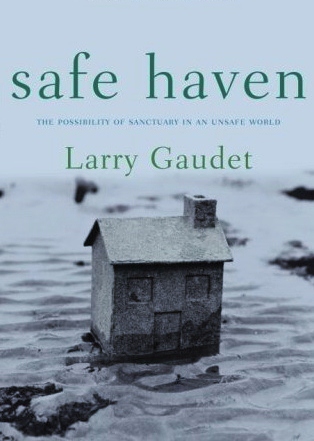
safe haven larry gaudeSafe Haven: The Possibility of Sanctuary in an Unsafe World by Larry Gaudet ~ 2007. This edition: Random House, 2007. Hardcover. ISBN: 978-0-679-31383-0. 274 pages.

My rating: 5.5/10.

*****

Here’s the promotional material from the publisher. Heads up for the predictably effusive tone.

“Sanctuary” is a beautiful word: philosophically rich, culturally intriguing and evocative of so much we cherish — protection, safety, contemplation, solitude. But lurking at the edges of this bright concept are some very dark associations: fear, paranoia, the slamming of gates to exclude the threat of other-ness. Whatever the word means to each of us, and whatever our ancestral legacies, the yearning for sanctuary is a malady we all share to varying degrees, a quest that is both our birthright and our affliction.

These are the assertions of award-winning author Larry Gaudet in Safe Haven, an unorthodox and highly engaging work of imaginative non-fiction. Sure to resonate with anyone who has dreamt of escaping from the pressures of the workaday world — that is, all of us — this book is a highly personal, funny and unflinchingly honest investigation of the power and allure of the idea of sanctuary.

Safe Haven begins and ends in the soft fog of coastal Nova Scotia, taking side trips into the ruined shrines of ancient Greece (with a fictional Bayou-born international spy serving as tour guide), journeying by rail through the frozen vistas and forlorn social realities of Canada’s north and dipping into Gaudet’s own Acadian heritage of displacement.

Booking a year for this project, Gaudet moved with his wife, Alison, and their two small boys to a newly constructed barn by the sea in the fictionally named community of Foggy Cove. His intent: to chart the meaning of sanctuary through the ages, using his family’s solitude as an idyllic jumping-off point. But the project becomes far more complicated than he’d envisioned, and far less idyllic. Envying his children who can oversee uncomplicated imaginary civilizations in a sandbox, Gaudet cannot shake the awareness that he is complicit in the very iniquities from which he seeks to shelter his family, from the environmental toll of their septic tank on this ecologically sensitive land, to the wince of a lobster he is about to boil for dinner. He must also contend with the guilt he feels for having hijacked his wife and children, potentially for naught. As Alison’s desire to return to the comforts and stimuli of urban life grows with every month spent in isolation, Gaudet knows their idyllic days in Foggy Cove are numbered.

In his search for the diverse meanings of sanctuary, Gaudet illuminates the dysfunctions and hidden costs of the way we live — and challenges us to find ways to bring down the walls that keep so many of us estranged from our own experiences. Safe Haven is an entertaining and illuminating romp through the fog-shrouded territory of sanctuary through ages and mythologies, guided by an engaging author who is not afraid to shine the light directly on his own fallible and highly likeable self.

My take:

This book is quite beautifully written, but my initial desire to totally enter into and embrace the author’s ideas was increasingly difficult to maintain as I learned more and more of the author’s personal life, and, in particular, his relationship with his wife, Alison. This seems deeply troubled, and Gaudet’s continual apologies to Alison for dragging her way out to the wilds of Nova Scotia, despite her yearnings for her “real life” of urban sophistication in the city, felt very passive-aggressive in a “this marriage may have issues” sort of way. Or perhaps a cigar is just a cigar, and it was all stream-of-consciousness writing with no below-the-surface vibe breaking through.

Some fascinating stuff in here, all about the author’s most complicated life and how he got to where he is today, but the continual first-person referencing ruined it for me. If one counted up all of the “me”s and the “I”s in this one, they’d outnumber every other word ten to one. Or at least that is the impression I am left with.

So – basically a vanity project, with some gorgeous passages worth anthologizing, or at least quoting in a blog, except that I didn’t mark those pages and I am very ready to part ways with this book and return it to the library shelves. Here’s the thing: it is stamped “Received 2007” by the library, and it appears to have been unread until my checking out of it in 2013. Absolutely crisp and clean and tight. That’s five years, and no one has apparently touched it, except for me on one of my random-selection forays into the non-fiction aisles.

What does that mean, I wonder? It’s not a bad book; some parts are truly excellent. The man can definitely write. Maybe the pervasive (though most probably non-intentional) self-promoting tone has prevented this one from being truly likeable and accessible to the vast majority of those of us unable, through the results of our own career and lifestyle choices, or by those unpreventable twists of fate, to sit out on a sabbatical year in our second home and ponder on the deeper universal concepts implicit in our lifestyles.

Am I glad I invested the time in reading this? Sure. It was thought-provoking and life affirming and occasionally mildly amusing. A lot of Gaudet’s thoughts resonated deeply with me; I felt much the same when I had small children under my care, as he did when writing this book, all broody and protective and suspicious of the world’s vast potential for hurting those I love. And Gaudet’s cutting comments on the prevalence of “sanctuary porn” in our society were absolutely spot-on. I liked him the very best when he probed delicately and accurately on what we choose to divert ourselves with, and how we feed, and are fed, on the stuff of fantastical escapist dreams.

Would I read this book again? Not very darned likely. Unless, of course, it would be to mark out those few memorable passages for future reference. Long ago in another time of my life I kept a series of journals, in which I frequently noted down personally-appealing bits of other people’s writing; I no longer do that, but I thought of it while reading Safe Haven.
Read Full Post »

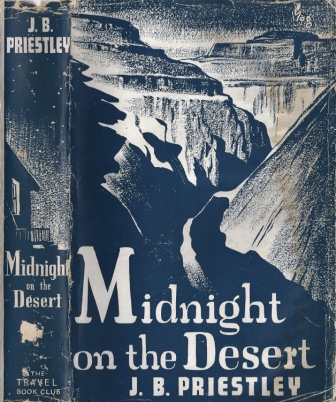
Midnight on the Desert: chapters of autobiography by J.B. Priestley ~ 1937. This edition: Readers’ Union & William Heinemann Ltd., 1940. Hardcover. 312 pages.

My rating: 9.5/10. Extremely hard to classify this book, but I found it completely engaging. The time theories near the end were completely over my head, but I appreciated Priestley’s enthusiasm nonetheless.

*****

I had expected a travel book of sorts, and Midnight on the Desert could certainly fall under that classification, but it is also so very much more. An examination of what it means to be a writer and an artist; a critique of the state of the world in politics, religion, philosophy, architecture and the performing arts; an ode to nature; a manifesto for seeking the good in the world and overcoming adversity and “doing one’s part”; a record of observation by a keen and analytical observer.

I have been spinning out my reading of this marvelously unexpected gem, and have been racking my brains over how best to convey what this unique work is all about and why I found it so compelling. Words do not come easily to me, which is why I’m a reader and not a writer, aside from these attempts at distilling the essence of what I find on the printed page. Perhaps I will let Priestley speak for himself.

First, the “set-up”.

Let me begin with what I can remember quite clearly. It was the end of my stay on the ranch in Arizona, last winter…There was the usual accumulated litter of letters and odd papers to be gone through, and most of it to be destroyed. But that was not all. I had decided during the evening to burn certain chapters, many thousands of words, of the book I had been writing…Yes, thousands and thousands of words would have to go, along with the rubbish; good words, all arranged to make sound sense, and with a cash value in the market, and representing, too, something more than money – time, precious and priceless time, of which, they say, only so much is allotted to each of us. I dare not wait for morning. Midnight was the hour for such a deed.

The first chapter starts with an appreciation and evocation of a place dear to the author’s heart, a small writer’s hut at the edge of the desert on a guest ranch in the Mojave Desert, where Priestley had spent the better part of the winter. He describes the beauty and majesty of the still, clear desert night, and then branches of in a dozen different directions in a sort of free association of ideas – random – oh, yes! – but most clear and sensible – he never loses us in his side trips though we fetch up back at the beginning a mite breathless and dazed at the speed and scope of our journey.

The papers are not yet set alight, though the fire is lit and is roaring in the wood stove, but we are far away now from the desert, back in England, getting ready to set sail for America, at the beginning of this particular trip. The Atlantic is crossed, New York attained, and Priestley is off.

I told myself severely that for once I must take New York quietly, as just another city. I had some work to do – to produce my play – but I must do that work as calmly as if I were at home in London. (I overlooked the fact that it is quite impossible for me to produce a play calmly anywhere; for that mad old witch, the Theatre, tolerates no calmness…)

… All other cities … seem in retrospect like mere huddles of mud huts. Here .. be Babylon and Nineveh in steel and concrete, the island of shining towers, all the urban poetry of our time … I would hurry down these canyons and gulfs they call avenues, cry out as one magnificent vista of towers crowns another, hold my breath at nightfall to see the glittering palaces in the sky, and wonder how I can ever again endure the gloomy and stunted London …

… There is a deep inner excitement, like that of a famished lover waiting for his mistress, that I cannot account for – not when it outlasts the mere novelty of arrival, and goes on week after week … I would begin to feel empty inside. It would be impossible for me to sit still and be quiet. I must go somewhere, eat and drink with a crowd, see a show, make a noise. Time must not merely be killed, but savagely murdered in public. In this mood, which has never missed me yet in New York, I feel a strange apprehension, unknown to me in any other place. The city assumes a queer menacing aspect … I begin to fancy that perhaps it is waiting for some other kind of people – chromium-plated giants without dreams or tenderness – to come along and claim it …

.. I feel like a midget character moving in an early scene of some immense tragedy, as if I had had a glimpse in some dream, years ago, of the final desolation of this city, of sea-birds mewing and nesting in these ruined avenues. Familiar figures of the streets begin to move in some dance of death. That baker outside the Broadway burlesque show, whose voice has almost rusted away from inviting you day and night to step inside and see the girls, now seems a sad demon croaking in Hell. The traffic’s din sounds like the drums in the March to the Gallows of a Symphonie Fantastique infinitely greater, wilder, more despairing than Berlioz’. Yes, this is all very fanciful, of course, the literary mind playing with images; yet the mood behind it, that feeling of spiritual desolation, that deepening despair, are real enough…

That was the distillation of, let’s see, four pages or so, and the man can keep it up indefinitely. He turns the same sort of passionate stream-of-consciousness writing to everything he observes and experiences. Further along in the book we are treated to similar digressions on The Theatre and the experience of working as a novelist-dramatist taking the written word to the stage, and about the challenges of being an author in general, and the quest to both satisfy the inner urge to record and create, and to fulfill the ever-difficult goal of please one’s readers.

Give us, please, you cry, the real world, not some triviality taking place in a pretty-pretty imaginary world, no mere escape stuff. Certainly, madam; certainly, sir. Now what is happening in this real world? The Communists and Fascists are demonstrating and counter-demonstrating, preparing for a fight; the economic system of our fathers is breaking down; Europe is bristling with armaments and gigantic intolerances, Asia is stirring out of her ancient dream, America is bewildered and bitter; one kind of civilization is rapidly vanishing and God-knows-what is taking its place; some men are marching in column of fours, shouting slogans, and making ready to kill and be killed; some men – many of them in exile because their minds are honest and not without distinction – are arguing in a melancholy circle; other men are lining up in hope of finding a little bread, a little work, a little peace of mind.

And Priestley goes on:

But no, no, no, this will not do, you tell us: you want a novel, a fiction to take you out of yourselves, not a newspaper, a fat pamphlet, a slab of propaganda. After all, private life goes on; men still fall in love, women fall out of it; there are entertaining quarrels between the Smiths and the Robinsons; young men are suddenly promoted and girls are given fur coats and diamond bracelets; and there is still plenty of comic stuff about – oh, uproariously comic stuff. This being so, get on with your novel, and don’t give yourself airs, don’t come over the propagandist, the gloomy prophet, over us.

… You may be sure that whatever he [the author] decides, he will be blamed. He may succeed in displeasing everybody. Lucky enough in other respects, I have been unlucky in this. Some years ago, because I had long cherished the plan and was now in the mood to work it out, I wrote a long, comic, picaresque, a fairy-tale sort of novel, called The Good Companions. I am neither prouder nor more ashamed of having written it than I am of having written any of the other books and plays under my name. But it happened to achieve an astonishing popularity. Since then – and this s an exact statement – I do not think I have met or corresponded with five-and-twenty persons who have not blamed me, either for having written this particular novel, or for not having written a lot of other novels just like it. One party denounces me as a hearty, insensitive lowbrow. The other party asks what the devil I mean by turning myself into a gloomy highbrow … I am condemned – and for a long term, it seems – to offend all round … No wonder, then, my new novel needed some thinking out. I was not bored on those trains …

Travelling by train, observing every fellow human being he comes across, from baggage car attendant to well-preserved and painted elderly matron sharing the dining room, Priestley goes off on more tangents, such as the difficulties of being an American woman, never being allowed to drop your eyes from your goal of “keeping up” for a moment; then looking out the window, asit were, to the American landscape itself and the need for painters, writers and poets to develop to capture its unique quality – the processes of developing a regional form of the arts, true to the physical space which inspires the artists.

Odes to the great physical beauty of the American West are in this book – the deserts and mountains, the Grand Canyon, the stark glories of rock and sand and rivers carving out their otherworldly sculptures. Priestley is in love with this aspect of America, and he sings his praises most eloquently well.

What a fascinating book; what a full book. One to read right through without stopping; one to tackle in small bits, to digest and mull over and agree with and occasionally refute. Not all that much autobiography, despite the tag on the title, but many insights into what went on in the mind of this deeply creative and opinionated man.

An excellent read; a grand glimpse into the mind of a master writer.

Read Full Post »

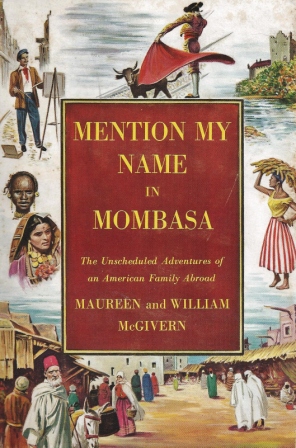
Mention My Name in Mombasa: The Unscheduled Adventures of an American Family Abroad by Maureen Daly McGivern & William McGivern ~ 1958. This edition: Dodd, Mead & Co., 1958. First Edition. Hardcover. 312 pages.

My rating: 7/10.

*****

This is a most interesting read; a travel memoir with a very 1950s’ feel – not surprising, seeing as it is a 1950s’ book! I enjoyed it.

The authors were literary figures of their time, and the travels herein described were, it seems from a few comments here and there, both to fulfill a personal desire for wanderlust and to collect material for future books, including this one.

If the name Maureen Daly rings a bell, it is most likely because of her extremely successful young adult novel, Seventeenth Summer, written when the author was herself just seventeen, and published in 1942. Some years later we find Maureen married to fellow writer William McGivern, a successful writer of crime-mystery novels (The Big Heat, Rogue Cop, war novel Soldiers of ’44, and almost 20 more) and film and television scriptwriter (Kojak, Adam-12, and Ben Casey, among others). They had their two children along, 6-year-old Megan and 2-year-old Patrick, when they left New York on New Year’s Eve to travel to Paris, the start of their extended travels.

Long, detailed and quite enthralling chapters describe the scenery, culture and especially the unique individuals the McGiverns came into contact with. The tone is a mixture of worldly-wise (but never condescending), travel guide (but merely to lay out the scene), and very 1950s’ American superiority (but innocent of bluster so therefore non-jarring – at least for the most part). The McGiverns were very eager to give credit where it was due regarding the superior aspects of their temporary homes and tourist destinations, which included Paris, and then a stay in the tiny fishing village of Torremolinos near Málaga, Spain, just on the verge of its discovery and development as a winter-tourist hotspot.

Then come several chapters on Spanish bullfighting, bullfighters and the ranches which raise and train the bulls. The tone here is journalistically non-judgemental much of the time; I never did get a grasp of whether the McGiverns were fully behind the “sport”, though from the farcical descriptions of a number of stereotypical bullfight aficionados which graces one of the chapters, I suspect they had marginally more sympathy for the bovine members of that elite yet widely populist pastime.

Next is a short visit (and hence a short chapter) in Gibraltar, where the McGiverns are rather disappointed in the elusiveness of the famous apes. On to Iceland, and a very travel-guide chapter this is, with loads of facts thrown at the reader, interspersed with short vignettes of some of the US Army families living on the vast NATO air base, and native Icelanders who opened their homes to our travellers.

Then comes the most memorable chapter of the book. During World War II, William had served as a US Army gunner in the European campaign, and his platoon had ended up entrenched on the mountainside near the tiny Belgian village of Fraipont, where the local people showed such generosity and warmth to their American allies that William had long planned to return in more peaceful times. Just over ten years later that sentimental visit took place, with the villagers overjoyed to recognize William and welcome his family. A poignant reminder that the war was not all that far in the past when this pilgrimage took place.

Back to Spain, and then a four-day voyage to the Canary Islands, a visit which seems not to have quite met the high expectations of the romance of the name. On to Morocco, where the McGiverns have several pleasant surprises regarding the locals, and then to Nigeria, on the cusp of independence as a full member of the British Commonwealth, after decades of colonial occupation.

A safari to Abadjan on the Ivory Coast and then to Fort Lamy in Chad doesn’t quite go as expected, but there are compensations in the people who the McGiverns meet as they wait for their travel visas to gain approval from the local bureaucracy. This does not happen, so back to Spain, through France, Belgium, and over to Ireland, where the Daly family is waiting to welcome their wayward relative and her family for an extended visit. Several months in Dublin follow, and then the trip is wound up, with a return to New York over a year after the original departure.

In this book there is a strong sense of how good it is to be an American at this point in history, and how welcome the traveller from the U.S.A. both feels and is made to feel; the McGiverns travel in their French-bought Citroën plastered with American flags fore and aft, and seldom seem to meet with a cold shoulder. Quite a change in the ensuing fifty years!

This is a fine book, and a literary time capsule of the post-war era, before things started to go wrong for the U.S.A., politically speaking.

I suspect it may be hard to come by (I ordered mine for a rather large sum from an online rare book dealer, for the Maureen Daly connection) but if your library happens to have a copy hidden in the stacks, or if you chance upon it in a used book store, it is well worth delving into.

Read Full Post »

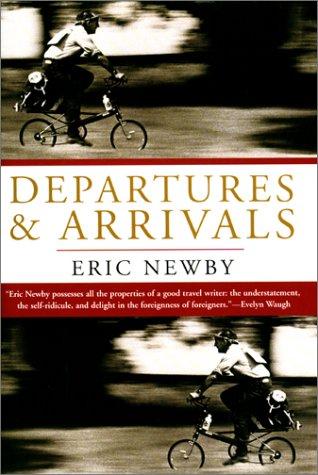
Departures and Arrivals by Eric Newby ~ 1999. This edition: The Lyons Press, 1999. Hardcover. ISBN: 1-58576-224-4. 192 pages.

My rating: 5/10. Some decent essays but not enough of them to swing the balance between “fair” and “very good” reading. A lot of reciting of railway schedules, and short, out of context snippets about trips which blurred together after a while. Travel writing “lite”. I expected more from this writer.

*****

A few essays into this book I was thinking to myself, “Okay, these are obviously excerpts from other works. Where’s the reference page?” Looking through the front and back material, there was no indication that this was the case; it apparently is a stand-alone collection of (mostly) travel tales and short reminiscences of the writer’s earlier life.

There is no context given more many of the trips referenced, which I found disconcerting. “Flying into Coober Pedy…” Yes – okay – so you’re in Australia – but WHY are you there? What bigger trip is this part of? And aside from discovering that opal miners like to be paid in cash, and certain of them have a fondness for personal architecture such as a revolving bed surrounded by mirrors, what other memorable things did you find there that we, your readers, might be interested in?

Though there are well-written, interesting, and amusing passages, the whole thing feels like a selection of truncated pages from a personal journal, bits and pieces of information jotted down in transit to aid in later memory of the trip. Perhaps it is, worked up with a minimum of added information.

I suspect this is a book which was commissioned and published on the strength of the author’s earlier, and much stronger, efforts. A case of selling the name, not the content.

It was readable, but  vaguely unsatisfying. One to borrow from the library for light diversion, hotel room reading on a road trip (which is how I’ve just experienced it), but I’m not left with an urge to rush out to buy it. Not recommended, unless you come by it for a bargain basement price.

Read Full Post »

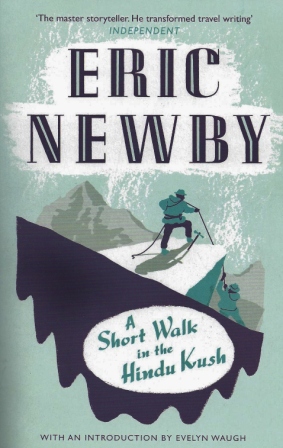
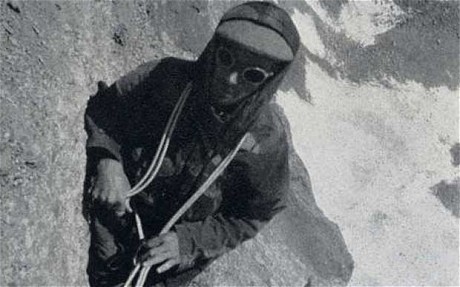
A Short Walk in the Hindu Kush by Eric Newby ~ 1958. This edition: Harper Collins, 2010. Introduction by Evelyn Waugh, Epilogue by Hugh Carless. Softcover. ISBN: 978-0-00-736775-7. 288 pages.

My rating: 8.5/10, after some inner debate. I have decided to overlook the more blatant “Eurocentric” passages, and to view this book as a product of its times, despite a vast change in standards of political correctness in the ensuing fifty-some years since its first publication. Very readable, in a dryly witty British way.

*****

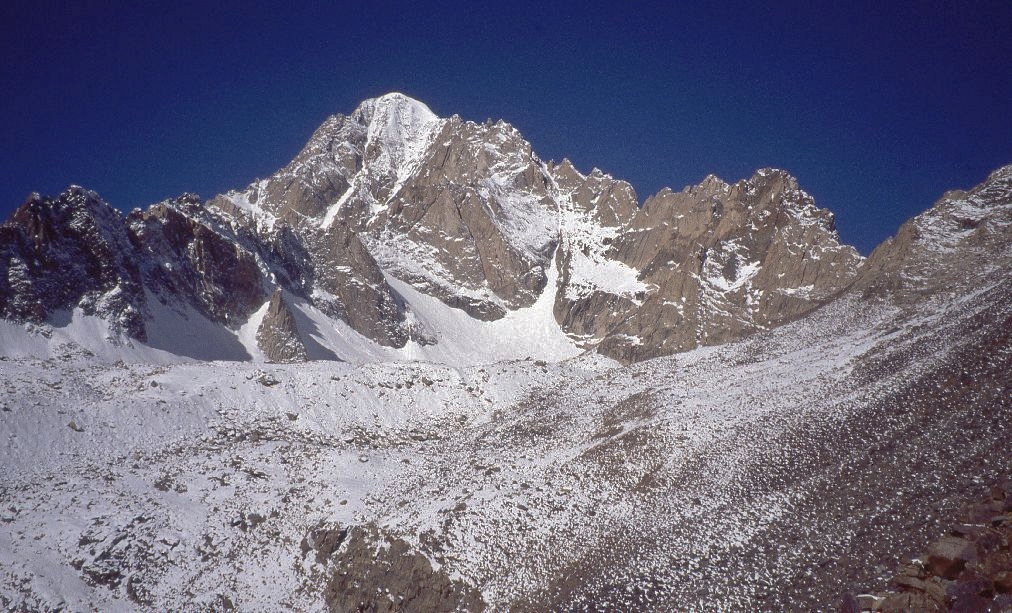
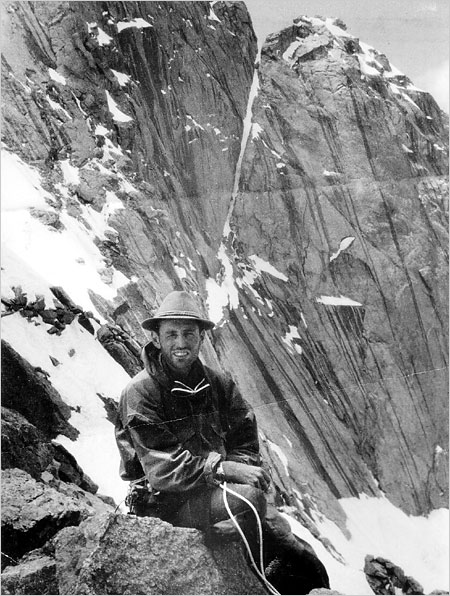
In 1956, 37-year-old Englishman Eric Newby, having received a publisher’s advance to write a travel book, contacted his friend, career diplomat Hugh Carless, and floated the idea of travelling to Afghanistan and trekking in the Hindu Kush mountains, an area where few Europeans had previously ventured. The two decided that the trek should have some definite aim, in part to enable them to request grants from various organizations to assist with expenses, so, without letting their lack of mountaineering experience stand in their way, they decided to focus on ascending 20,000 foot Mir Samir, which had not yet been climbed to its summit.

After a two-day crash course in basic alpine climbing at Snowdonia in Wales, the two felt they were marginally more prepared for the rigours ahead, and the trip was on. Each man brought a certain experience to the expedition.

Newby, though having spent the previous ten years working in his family’s ladies’ fashion business, had strong credentials as an outdoorsman. At the tender age of 19, he had spent time on a four-masted Finnish sailing ship, voyaging from Australia to Europe via Cape Horn, and his eventual book about this experience, The Last Grain Race, was responsible for the publisher’s advance which initiated the Hindu Kush journey. With the start of World War II, Newby served in the famous Black Watch regiment, and was involved in the Special Boat Section, making lightning commando raids on enemy airfields and the like. One of these expeditions went awry, and Newby was captured off Sicily and interned for the rest of the war, barring a brief period of freedom in the Italian mountains, where he met his future wife, a Slovenian village girl, Wanda, who aided him in an escape attempt. This period was also written about, in Love and War in the Apennines, published in North America as When the Snow Comes, They Will Take You Away. (I am currently reading this memoir, and it is fascinating, and helps put Eric Newby the Hindu Kush “explorer” into context.) Wanda wrote her own memoir, Peace and War: Growing Up in Fascist Italy, in 1992. Always strongly and competently athletic, and with a strong sense of humour and a forthright readiness to embrace new experiences, Newby’s intent to venture into the forbidding mountains of a somewhat hostile Afghanistan is more understandable than it appears from his account of the initial decision in A Short Walk, where it appears to be merely a whim of the moment.

Hugh Carless himself, while on one of his official postings in Kabul, had previous experience in the area, and it was his accounts of trekking in the region with Tajik guides which got Newby thinking about the possibilities of a more ambitious expedition. The 31-year-old Carless brought knowledge of local languages and on-the-ground diplomacy to the partnership, as well as a strong inclination to adventure which more than matched Eric Newby’s.

The entire adventure, the “short walk”, lasted only a month, but what a marathon that month was. The book details the trials and tribulations, as well as the rewards, of the journey first to Afghanistan, and then, after engaging local guides, into the mountains. Mir Samir was reached, and the climb attempted, but both Newby and Carless were so weakened by continual dysentery and altitude sickness that they were forced to turn back a mere 700 feet from the summit. (A German party of experienced climbers was the first to reach the summit, only three years later, in 1959.)

After descending Mir Samir, bloodied and bruised, the trekkers continued around the foot of the mountain, as Newby and Carless thought they would like to see it from the “other side”, which entailed the party entering the neighbouring province of Nuristan, to the trepidation of their guides; regional rivalries were intense and deadly, and there was a very real danger of violence to trespassers.

A safe return was made, and the two men were thereby provided with anecdotes for a lifelong series of dinner parties, not to mention a whole book. The guides returned to their normal lives, grateful, one would assume, that the whole darned thing was so quickly over.

Much is made of Newby’s playful, ironic tone in this book, and while I did appreciate the bantering tone, as it made for an enjoyable reading experience on a purely diversionary level, I did continually keep thinking to myself, “Why?” Why risk life and limb, not only of themselves but of their guides, on such a pointless journey? Because it was “there”? That does seem to be the chief motivation set forth in the book, and I am not sure whether learning from the afterword by Hugh Carless, special to the 50th anniversary edition of A Short Walk, that the trip was contrived at least partly in order to have an experience to write a book about, that I am any happier with that reasoning. I suppose it is no different from the contemporary trips in search of material by the likes of Michael Palin and Bill Bryson, and even the revered Paul Theroux. We do tend to love a good traveller’s tale, whether we are fellow adventurers or merely armchair voyeurs.

A Short Walk in the Hindu Kush is often referred to as the book that started that successful genre, but I must differ on that point, as the traveller’s tale form stretches back in popularity to pre-history. Think of The Odyssey, and the Nordic journey tales, and Marco Polo, and the countless accounts since then. This book is a worthy successor of its historical ancestors, but it very much walks in the shadow of what came before, versus branching out in any significant way.

Newby and Carless ultimately come across as being a wee bit arrogant (okay, in Carless’ case, hugely arrogant), with their snide comments on the personal habits of the natives of the area. To balance this they do poke continual fun at themselves, and there are numerous appreciative comments regarding the region and the people, so perhaps it is merely a case of the author being more honest than most in that he records his negative thoughts, rather than submerging them in the interests of political correctness as more modern writers have been trained to do. Whatever my criticism, the fact remains that these two men ventured where few others dared, and, in the face of overwhelming discomfort and very real danger, pushed forward to pursue their stated goals, with a great degree of success.

To sum up, I quite enjoyed reading this book, am eager to read more of Newby’s work, and would happily recommend A Short Walk to others, with the note that it represents the attitudes of the time it was written, and may jar the sensibilities of a more tactful and possibly better educated (in a worldly aware sense) time.

Read Full Post »

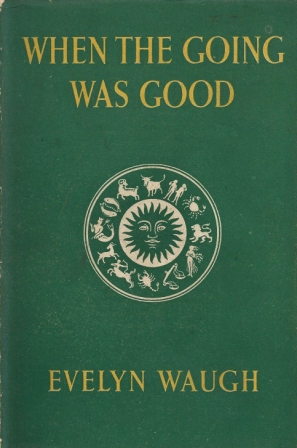
When the Going was Good by Evelyn Waugh ~ 1946. This edition: The Reprint Society, London, 1948. Hardcover. 314 pages.

My rating: 7.5/10. Held my interest throughout.

I’m not even sure where I picked this one up – it appeared in a stack of books gathered in this summer’s travels through B.C. I’m thinking either Kamloops or Vernon, though there is no price and bookseller code marked anywhere on the flyleaf. Possibly from the Sally Ann or a similar charity shop? No matter what it’s provenance, I’m most glad I’ve added it to my private collection. A most enjoyable read, consumed in goodly portions each evening for the last week just before closing my eyes.

*****

From the inner dustjacket:

About this book

It comprises all that the author wishes to preserve of the four travel books he wrote between 1929 and 1935: Labels, Remote People, Ninety-Two Days, and Waugh in Abyssinia. “These four books,” he writes, “here in fragments reprinted, were the record of certain journeys, chosen for no better reason than I needed money at the time of their completion; they were pedestrian, day-to-day accounts of things seen and people met, interspersed with commonplace information and some rather callow comments. In cutting them to their present shape, I have sought to leave a purely personal narrative in the hope there still lingers round it some traces of vernal scent … I never aspired to be a great traveller, I was simply a young man, typical of my age; we travelled as a matter of course. I rejoice that I went when the going was good.”

It’s vintage Waugh, and it’s well-written, the author’s disclaimers aside. Some of it is excellent; it’s all very readable, and it made me brush up on my history; Waugh was of course writing for a contemporary audience, and though I was pleased to realize his references were easy to place, I was quite vague on the details.

Here are the contents:

Preface

From 1928 until 1937 I had no fixed home and no possessions which would not conveniently go on a porter’s barrow. I travelled continuously, in England and abroad… We have most of us marched and made camp since then, gone hungry and thirsty, lived where pistols are flourished and fired. At that time it seemed like an ordeal, an initiation to manhood…”

Chapter One: A Pleasure Cruise in 1929 (From Labels) – London, Paris, Monte Carlo, Naples, Catania, Haifa, Cana (Galilee), Port Said, Cairo, Malta, Crete, Constantinople, Athens, Corfu, Gibraltar, Seville.

Chapter Two: A Coronation in 1930 (From Remote Peoples) – The coronation of Ethiopian Emperor Ras Tafari at Addis Ababa.

Chapter Three: Globe-Trotting in 1930-1 (From Remote Peoples) – Zanzibar, the Congo, Aden, Kenya (Nairobi, the Rift Valley), Tanganyika, Cape Town.

Chapter Four: A Journey to Brazil in 1932 (From Ninety-two Days) – Guiana and Brazil.

Chapter Five: A War in 1935 (From Waugh in Abyssinia) – The Italian invasion of Abyssinia, from a war correspondent’s perspective. Farce versus bloodshed.

*****

If you happen across this little account in your own travels, it is worth the time to read, especially if you are already a Waugh convert.

Read Full Post »

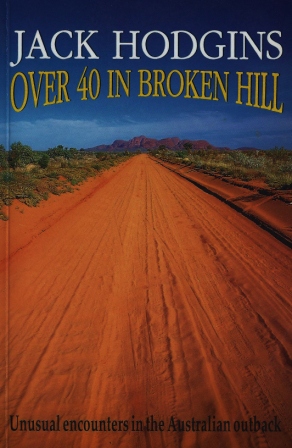
Over 40 in Broken Hill by Jack Hodgins ~ 1992. This edition: McClelland and Stewart, 1992. Softcover. ISBN: 0-7710-4192-6. 197 pages.

My rating: 8.5/10. Unpretentious and good-humoured, without stooping to farce. Jack can, as needed, poke a bit of fun at himself, but he keeps his self-respect and extends that regard to others.

*****

This is a book without a Great Big Purpose, which is too often rare in a travel book, into which category this work mainly falls. Over 40 is a rather elegantly presented account of two writers on the loose in Australia. One, Australian novelist Roger McDonald, is researching his next book, a non-fiction account of the politics and conflicts between New Zealand and Australian sheep shearers working the vast outback flocks, and the other is our own British Columbian Jack, tagging along with his friends and colleague for the four-week trip.

Jack finds himself taking notes throughout the journey, and ends by writing his own account of the fascinating people and unique places the two encounter. Quirky, often humorous, fair-minded and very readable. I enjoyed this travel memoir.

Jack Hodgins is well-known in B.C. literary circles for his fiction, from his now-iconic short story collection Spit Delaney’s Island in 1976 to his most recent novel, The Master of Happy Endings in 2010. Over 40 in Broken Hill was something of a departure from the fictional norm of this author, but it worked for me.

I’ve read a number of this author’s works over the years, and think very highly of his distinctive style. (He reminds me a bit of Robertson Davies, but without the aura of intellectual snobbery that Davies sometimes projects.) I am not alone in this regard, as Jack Hodgins was awarded an Order of Canada in 2010 for his lifetime contribution to Canadian literature. An author well worth exploring, if you are not already familiar with him.

Side note: The “40” referred to in the title has a double meaning. Think age, and then think degrees Celsius. There is a chapter midway through the book that clarifies the reference most engagingly.

Read Full Post »

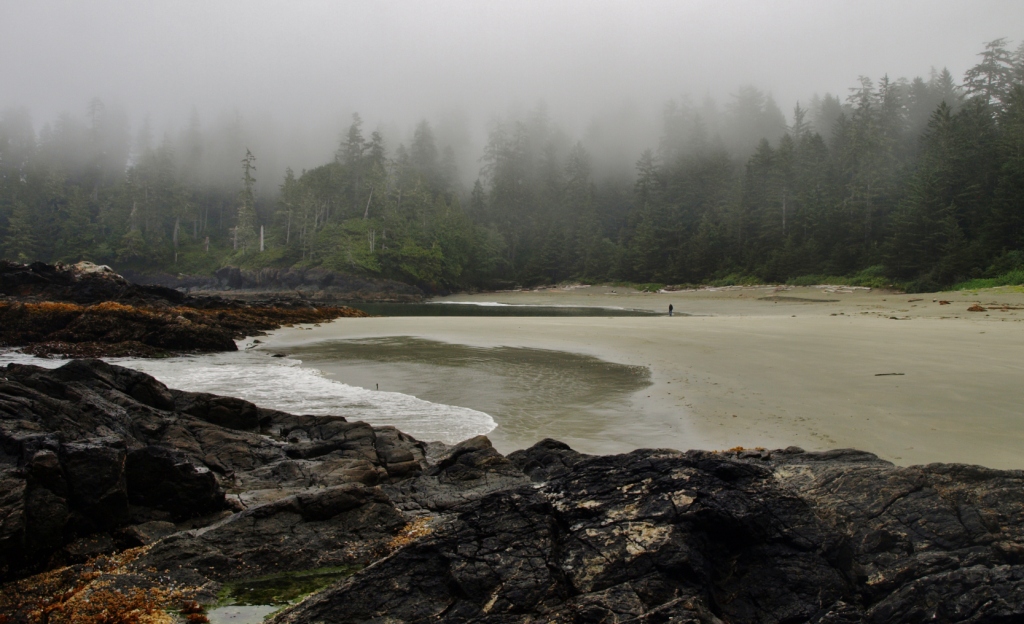
The best-laid plans oft gang agley, and so also do the spontaneous ones. We’ve all been laid low, in beautiful synchronicity, by an evil virus our daughter brought home from her newly convened dance studio chums. Hacking and barking like a bevy of two-legged seals, we hiked about Pacific Rim Park with ever-lessening enthusiasm for several days, before blearily deciding to suffer the rest of the awful illness’ term at home in relative comfort.

It wasn’t all so bad – there were some quite good bits. We hit low tide in early morning on several beaches, all alone but for the sea creatures in the intertidal zones; we napped away two beautifully sunny afternoons in the warm sand, wakening to read for a bit, watch the surfers attempt to catch those obviously rare “perfect waves”, and doze again; we people-watched one morning in Tofino and had a grand brunch at The Common Loaf, the iconic local bakery; we sat around numerous campfires commiserating with each other and comparing symptoms; we visited the Ucluelet Aquarium and chatted with the ever-enthusiastic and knowledgeable biologists and volunteers; and even, on our last day, managed a side trip into the big city to visit the Cone Sisters Retrospective “Collecting Matisse” exhibition on loan from Baltimore, at the Vancouver Art Gallery.

We pulled out of the city and headed up the Sea-to-Sky Highway at 2:30 and made it home just before midnight – a marathon drive, but the reward was an enthusiastic greeting by our canine and feline crew, and our own cozy beds. Today we’ve been wandering about a bit lost and culture-shocked by the abrupt changes in our generally sedate lives this past week.

Newly topped up with sea air and a dash of culture, we’re thinking we’re now ready to face our getting-ready-for-winter chores with fresh enthusiasm. Or, to be honest, we will be ready soon, once we get a bit further along in our viral journey.

I only managed to read two short books, and I didn’t take too many pictures, but here are a few souvenirs of the lightning-fast trip. Next time…

*****

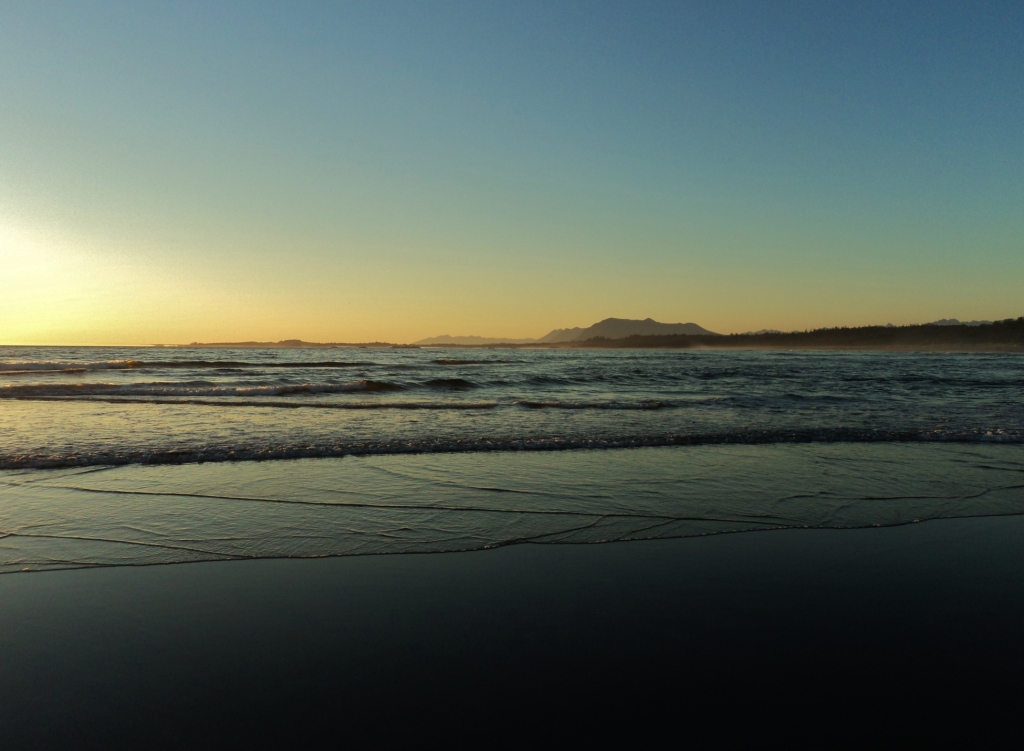
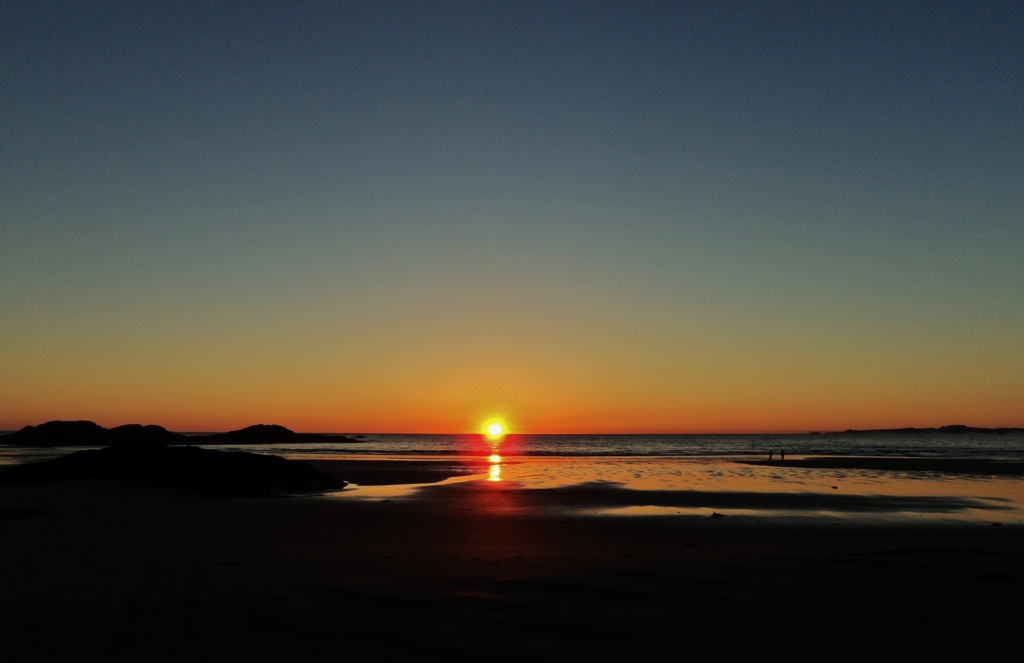
We arrived just in time for a rare clear evening and an awe-inspiring sunset over the ocean, next landfall Japan.

Long Beach, Pacific Rim National Park Reserve, Vancouver Island, British Columbia.

A very special place.

And a while later, the real celestial show began.

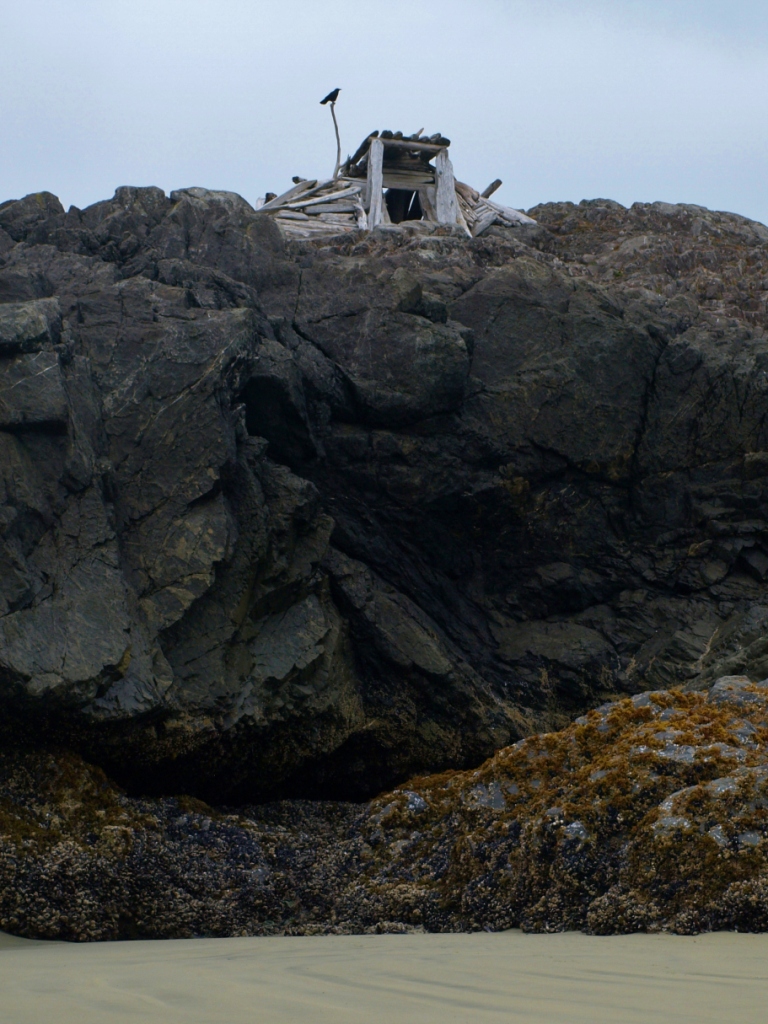
Early the next morning we enjoyed the company of ravens scouting for a low tide meal, and using a convenient driftwood structure as a lookout post.

Starfish. (But you knew that, didn’t you?)

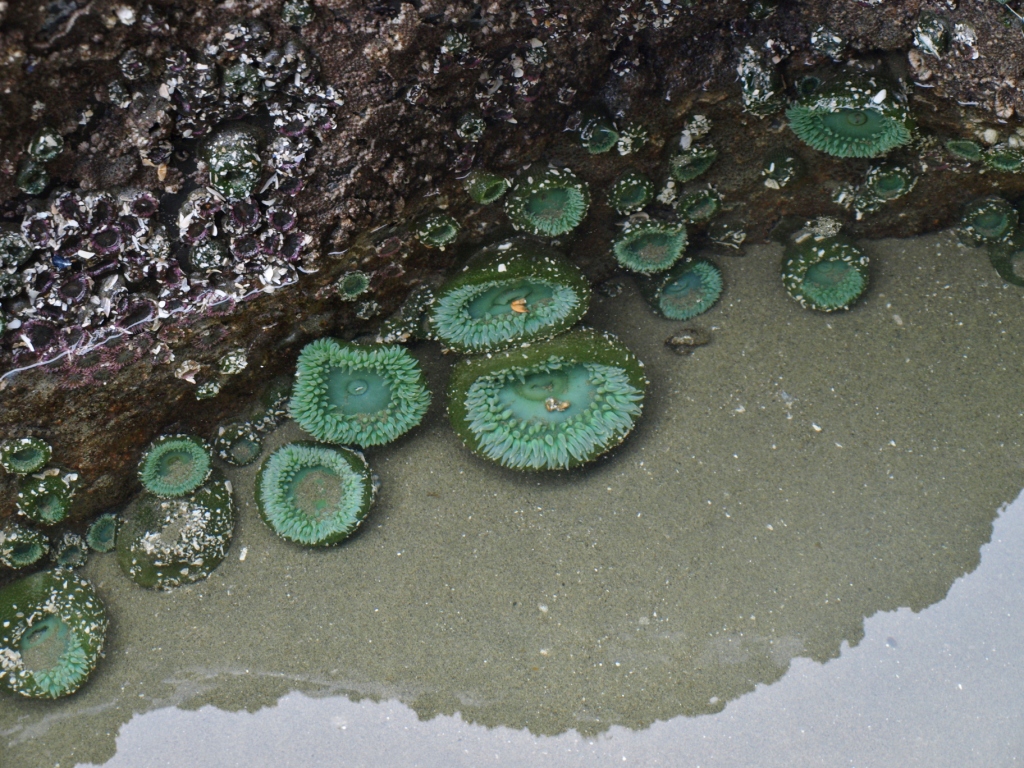
 And many sea anemones.

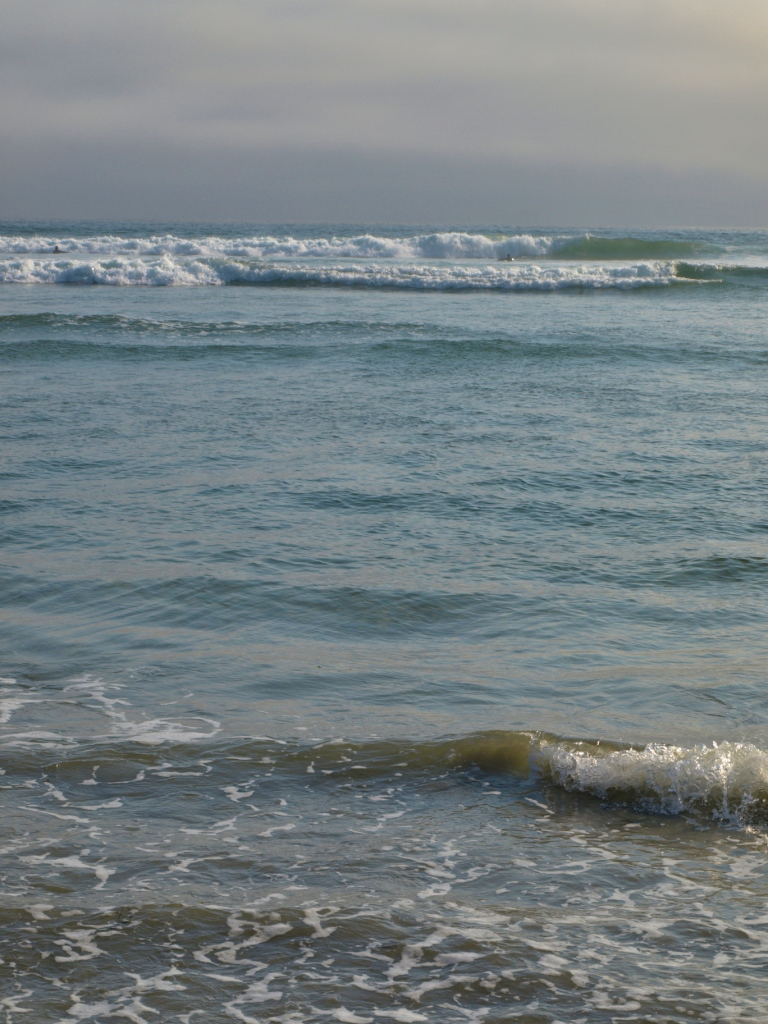
Waves at Incinerator Rock, a favourite surfer’s hangout. Can you see the two “Bobs” in the water? We decided that all surfers are named Bob, because that’s what they spent the vast majority of their time doing. Waiting on the perfect wave! This is wetsuit water, even in high summer. They hung around for hours out there, like seals in the surf, while we napped and watched from our warm and sandy nook among the washed up driftwood logs.

And on our last morning, we caught low tide and waited for the turning at the perfectly named Halfmoon Bay. Down a kilometre and a half of no longer sign-posted trail, ending in a precipitous ocean side staircase fast giving in to the elements, we were the only people here for hours. We met a few fellow trekkers coming in as we were leaving – perfect timing and a lovely way to end our too-short visit.

If you ever get a chance to visit this glorious area, do it! There’s never a bad time, summer or winter, rain or shine.

Read Full Post »

Confessions of an Igloo Dweller by James Houston ~ 1995. This edition: McClelland and Stewart, 1996. Softcover. ISBN: 0-7710-4286-8. 320 pages.

My rating: 9/10. Enjoyable start to finish. Canadian by birth, the far-travelling Houston (1921-2005) was a great writer and storyteller, as well as an accomplished artist.

*****

Around here, I can tell if a book is really good because it often will disappear before I finish it. The usual culprits are my husband and my 18-year-old son. If it’s my son, no worries – he’s a speedy reader and I usually get it back in a day or two, but my husband has less free (meaning reading) time and he also tends to read a little more slowly, plus he also has a tendency to “hide” his current read (so he can find it again – he says we “move things” on him) – so, if he has the book, kiss it goodbye until he’s done.

I’ve been bugging him to let me have this one back for a few weeks now, as I wasn’t quite finished when he snuck it away from my reading pile.  He’s been working his way through it steadfastly, occasionally calling me to come and listen, and reading bits out loud. Something about this memoir really appealed to him, which is understandable, because it’s quite fascinating and very well written.

In 1948, 27-year-old James Houston managed to hitch a ride on a plane going on an urgent medical call from Moose Factory, Ontario to Canso Bay in northern Quebec. An experienced and talented artist, Houston had a keen interest in native peoples, and was in Moose Factory sketching and painting the local Indians. He had long wanted to travel further north into the Arctic, and he seized the chance when it came, staying behind in Canso Bay when the plane left to return to Montreal with the badly injured Inuit child it had come to evacuate.

This was the start of Houston’s fourteen or so years of Inuit artistic involvement. He had a keen eye for indigenous crafts, and was instrumental in the popularization of Inuit carvings for the southern markets, as well as introducing Japanese-style print-making to the Inuit, which was readily adopted as a new mode of expression for Inuit artistic vision.

Confessions of an Igloo Dweller is roughly chronological, and consists of personal anecdotes interspersed with vignettes from high Arctic life, and stories told to him during his travels.

Houston also wrote quite a number of novels for children as well as adults, most set in the Arctic or the far northern Canadian forests. Confessions reads like a novel, flowing seamlessly along from high point to high point. Houston was opinionated and extremely sure of himself; these qualities come through loud and clear, making for an especially strong narrative voice. The book is saved from shameless self-promotion by Houston’s ability to tell a humbling story on himself, and by his keen sense of humour.

We all liked it. Highly recommended.

Read Full Post »

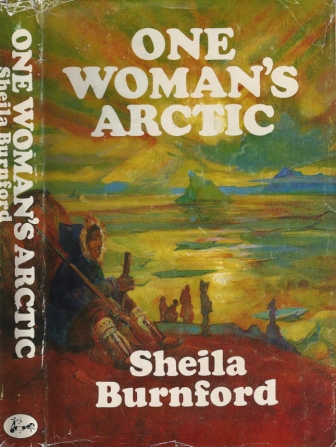
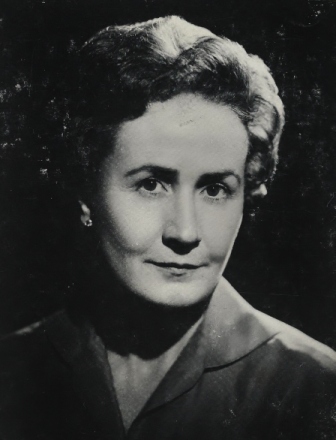
One Woman’s Arctic by Sheila Burnford ~ 1973. This edition: McClelland and Stewart, 1973. Hardcover. ISBN: 0-7710-1825-8. 222 pages.

My rating: 7/10.

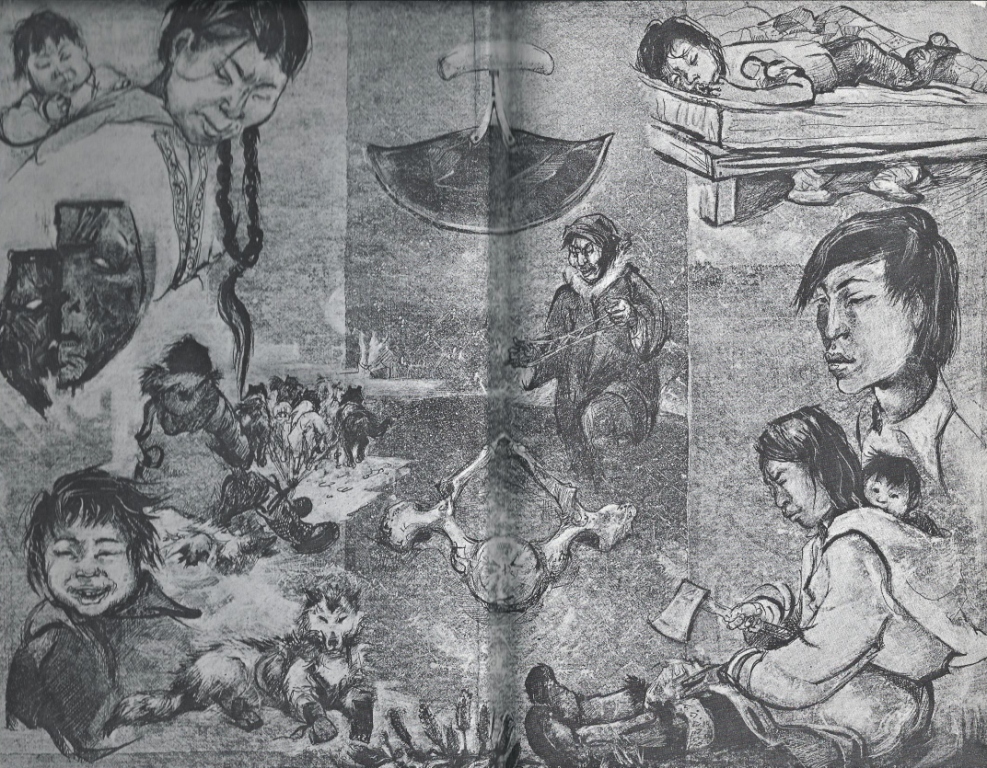
This is the account of writer Sheila Burnford’s personal impressions of two summers spent in and around Pond Inlet on Baffin Island, in 1971 and 1972. Burnford had received a Canada Council of the Arts grant to gather material for a book; she accompanied celebrated artist Susan Ross who had been commissioned by the Royal Ontario Museum to create work for an exhibition of art depicting Indian and Eskimo life. The two were longtime friends and travelling companions, having previously spent time living together among the Ojibway of northern Ontario, which she wrote about in 1969’s Without Reserve.

This was a time of cultural shift, as the Inuit embraced and were influenced by modern culture and innovations, while still practicing their traditional way of life to a great extent. Burnford describes her personal impressions, and occasionally tries to pat the larger picture into context, but this is exactly what it says it is in the title – one person’s take on a place too large and complex for generalities to be made, though of course the author occasionally writes as though her observations and conclusions about this small piece of the Arctic apply more broadly. In general, the author keeps to her mandate, which is to tell us about her impressions during her short excursion into the far northern world.

Though it took me a while to work my way through it, now that I’ve completed it I find that ultimately I liked this book, and I enjoyed filling in a few more of the pieces of the author’s life. But it could have been better. What Burnford did so well in The Fields of Noon, though, was talk about herself, her life, her childhood, her family; always in reference to her subject, which made that collection of memoirs so very readable. In One Woman’s Arctic there seems to be more distance between writer and subject, while at the same time the tone is uneven – we’re never sure what “voice” the writer is using because she shifts around so much.

Burnford sometimes maintains an onlooker’s dispassionate view, describing the landscape and the animals and the indigenous people of the small part of the Arctic she visits with a writer’s eye, painting pictures with words. These episodes are very nicely done indeed, and I found that my vision of the scenes from her words were borne out by the pictures I later searched out of the places she visited. Burnford had a rare ability to capture the visual in words.

The weakest parts of the book were when Burnford left the realm of observation and description and ventured into the difficult area of analysis of what she is seeing in regards to the behaviours and motivations of the Inuit (“Eskimos”) she came into brief contact with, or, in the case of the two white mens’ graves at Quilalukan, researched in some depth. Sometimes, as John Mutford points out in his own not particularly favorable review of this book – One Woman’s Arctic by Sheila Burnford – The Book Mine Set Review – the writer falls into the “white man bad/Eskimo good by default” trap. But I felt that she salvaged the situations where she did this by continually acknowledging that she didn’t know if her interpretation was correct; that she was mulling over the situation and trying to make sense of it from her perspective as a very superficial onlooker, and a member of the invading, paternally patronizing race. Burnford never seems to lose sight of the fact that she is a visitor in an alien landscape, and that her comfort and safety rely on the kindness of others.

The episodes I enjoyed the most were when Burnford described the individuals she travelled and stayed with and got to know more intimately. The residents of Pond Inlet, where Burnford and her companion, artist Susan Ross, made their home base in the community’s kindergarten building, are described in lively anecdotal style; Burnford remarks on the fact that no one seems to have anything bad to say about each other, and that she thinks that this is the result of conscious effort on their parts. Referring to the non-Inuit residents of Pond Inlet, the group she and Ross associated with and socially fit in with:

Those who lived here all year round whether teacher, nurse, game warden, R.C.M.P. or administrator, had seemingly developed a safe preservation of peace (outwardly, anyway) attitude to their fellows. One very, very seldom heard any criticism of personalities, but only he/she is so nice/does so much/is wonderful at/ – etc. Occasionally, because one’s antennae were more acutely tuned through being an outsider, one was conscious of tension between certain individuals, but this was rare. I gathered that they had all worked it out during the six months of twenty-four hour darkness…Activities, such as bridge, over which people in cities can tend to become rather maniacal sometimes, were recognized as potential trouble-makers and avoided; and anything involving competition. A good, safe activity, capable of being shared, arousing no jealousy or competition, was that of photography: practically everyone was madly interested in this, and many did their own developing and printing. I have never seen such an impressive array of Hasselblads, Pentaxes, Leicas, etc. as I had up there.

Another contributing factor of harmony – which of course had its overall impact on the general community – was the average age, which was around thirty or under. An age more exposed to today’s precepts of ‘doing your own thing’ and Make Love Not War – precepts very much more in line with the outlook of the Inuit, who have always been a non-aggressive people; and also an age which avoids that difficult menopausal age group, universal elsewhere among those who have made it up to positions of authority, during which strife is commonplace and mayhem (verbal or otherwise) frequent…

An interesting take on the situation, especially as Burnford and Ross were older than the Pond Inlet “white person” average, being in their mid-fifties; one wonders if the menopausal comment was coming from personal experience, or merely through prior observations in the southern world!

Also very readable were the descriptions of the archeological dig at Button Point on Bylot Island under the auspices of the venerable Father Guy Mary-Rousselière; Burnford was present at the discovery of the second Dorset culture (A.D. 500-1000) shaman’s mask found at that site and vividly describes the unique challenges of archaeological exploration in a permafrost zone. Dorset Masks – Canadian Museum of Civilization Treasures Gallery

I found One Woman’s Arctic to be interesting read from my perspective as someone who has never personally experienced the Arctic, though I found it easier to lay aside and read other things concurrently than I did with her other memoirs, Without Reserve and The Fields of Noon. Even though it has some unresolved and unsatisfactory conclusions about northern life and Inuit culture, I think there is much to learn from Burnford’s observations, purely on the natural history aspect of the area she visited. Her descriptions of the human impact on the area, both Inuit and white, are frank and outspoken; Burnford may be looking through wishful rose-coloured glasses occasionally, but she mostly has them off, the better to turn a sharp eye on the details of her surroundings, and she is not afraid to share what she sees.

A snapshot of a time and place now lost in time, from the perspective of a thoughtful and very individual observer. The quality of the writing is excellent through most of the book, though there are occasional awkward phrasings and strangely punctuated passages which I suspect point to lapses on the editor’s part; Burnford, from my past experience with her work, is an accomplished writer not prone to sloppiness.

I would recommend this book to anyone interested in exploring the different regions of Canada, and in particular the far north, though with a reminder that it should be kept in context as one individual’s impressions, and is, unavoidably, now very dated, being written forty years ago.

Read Full Post »

« Newer Posts