Posts Tagged ‘Relationships’

My World: Six Boxes

I have just finished sorting my mother’s things in preparation for her move from the hospital, where she has been since a nasty spill in mid-July, to a single room in the complex care wing of her small city’s old age home. (Er, I guess that would be “seniors’ village”; that’s what this one calls itself.)

Not counting her clothes, her belongings fill six small boxes.

This has been an emotional summer in so many ways, and I am trying to muster up some cheerfulness because that is what Mom most needs to see from me; my inner self is howling like a baby.

I’m glad she didn’t die; the facility she is going to will provide stellar care – we have another family member and several friends living there, and are personal friends with several staffers – one of the nicer things about having grown up near a smaller community (the city proper has a population of 10,000 people, though the service area is closer to 30,000); Mom herself states that she is more ready to make the move; there is no way she will ever be able to manage living in her own home, what with her physical limitations and increasing frailty.

But still.

Six boxes.

Eighty-eight years of life; so many accomplishments; so much work done. All passed; all put behind her. All that is left is her memories, and six small boxes.

Sob.

There, doesn’t that sound melancholy?! Onward and upward, that’s the theme I need to embrace. It’ll be a far cry better than the hospital, is what Mom reminded me today, and she said something about there being a certain freedom in stripping oneself of all those things; it’s down to essentials from here on in. Oh, and to remember to go through my shelves one more time, and to pack her up a box or two of books, and to keep my eyes open for new reading for her.

Comfort in books is something my mom knows a lot about, and she’s more than passed that down to me. And with that thought, I’ll sign off for tonight. It will all be okay. But just for tonight, I’m sad.

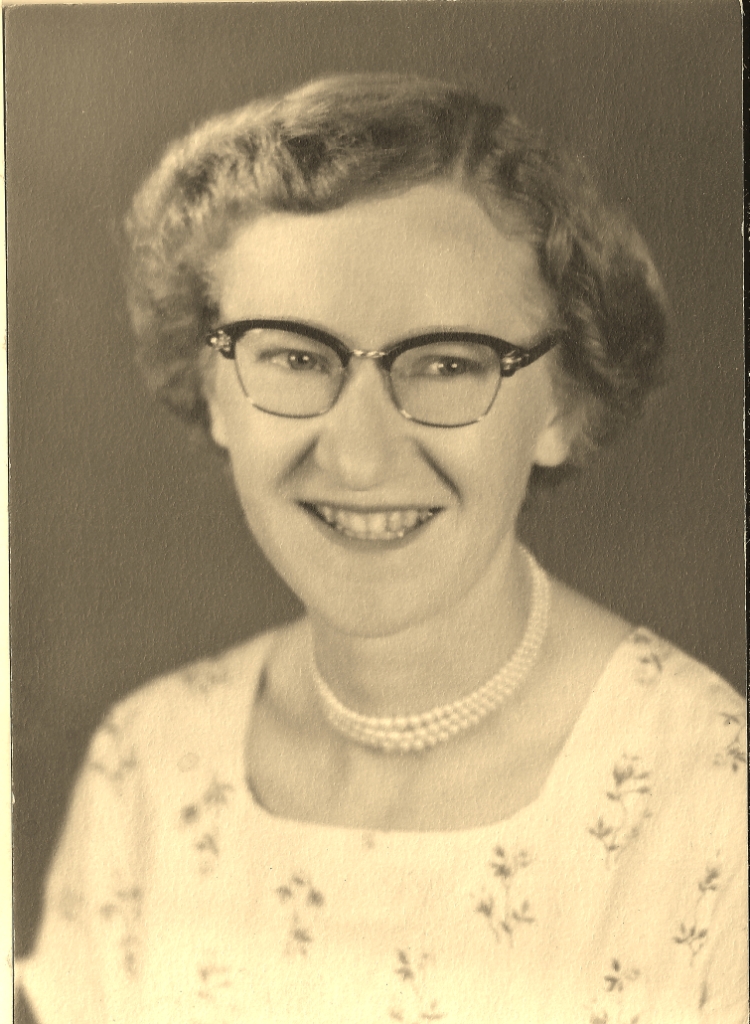
My mom in 1959. Portrait taken in Reedley, California, just before her marriage and move to British Columbia.

My mom in 1959. Portrait taken in Reedley, California, just before her marriage and move to British Columbia. One of the photos I’ve scanned and enlarged to put in the “treasure box” just outside her room; a reminder to herself and those around her of the vital and still-young person hidden behind the elderly mask.

Read Full Post »

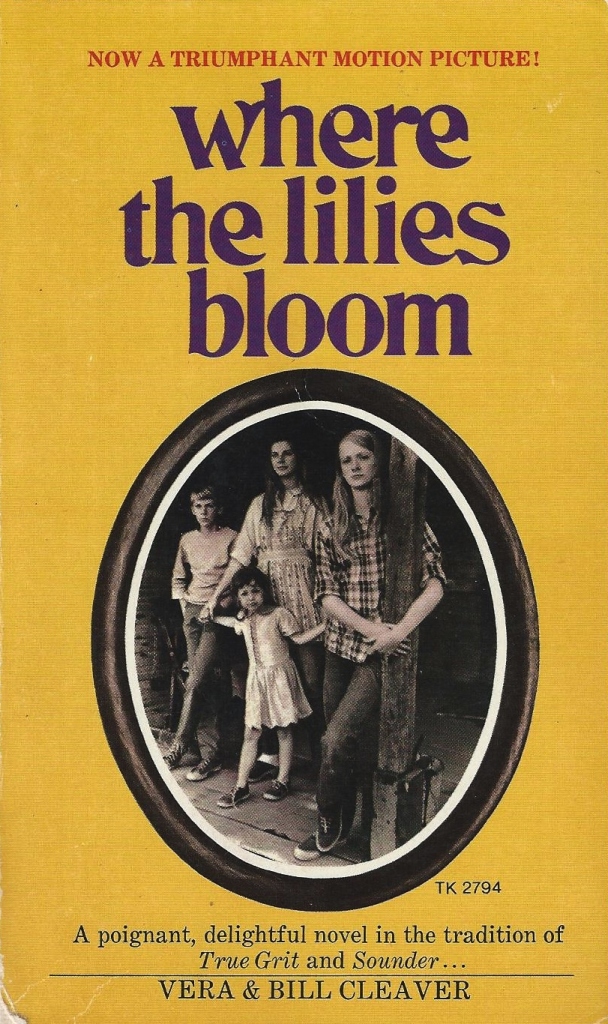
where the lilies bloom vera bill cleaver 001Where the Lilies Bloom by Vera and Bill Cleaver ~ 1969. This edition: Scholastic, 1974. Paperback. 175 pages.

My rating: Oh, gosh. This is a hard one. The writing is unique and enjoyable to read; the heroine’s voice is individualistic and uniquely portrayed. But the plot is where I held my head in agony. I get that this is a book aimed at the children’s/teens’ market, and therefore perhaps to be expected to be slightly simplified, but the plot was so full of holes that I kept stopping and going “What…???!!!” But the poignant bits were genuinely heartbreaking, and the story as a whole just might have happened. Just maybe…

Okay, I need to commit myself to a rating. How about an 8/10, with reservations. If a bit better developed and with more attention to plausibility, this one could well have been worth a 9 or even a 10 from me.

This is basically one of those bleak Appalachian stories all about abject poverty and fiercely stubborn people living in various degrees of squalor among fabulous natural beauty. And, predictably, we are taken behind the superficial vision of “dirty hillbillies” to see into the glorious nobility of the characters’ souls.

I am sincere in putting forth a rather cynical generalization of this type of fiction, which was abundant in the 1960s and 1970s, at least in the juvenile novels I was finding in my school library. There seemed to be a certain trend to showing all of the dreary details in kid-lit, with an amazingly strong hero, or, more frequently, a heroine, overcoming all sorts of obstacles and ending the book staring off into the gleaming sunrise (metaphorically speaking) of a better future. Hyper-realism combined with a fairytale ending. (“Did we play upon your deepest emotions, young reader? Well, here’s a nice resolution to make it all better.”) However, as the next development in youth fiction of the 1970s, 1980s and beyond was of brutally unrelieved bleak endings, I guess the “happy” fabrications are a mite easier to handle.

So here we have a family of five people living in a tired shack on twenty acres of share-cropped land in North Carolina’s Great Smoky Mountains. Widowed Roy Luther, patriarch of the family, is seriously ailing. About to die, in fact. Before he does, in a heart-rending episode, he makes his four children promise that they will bury him in a hand-dug grave, not inform anyone of his demise, and take care of each other. They are not to accept charity from anyone, and the eldest daughter, eighteen-year-old Devola, described as “cloudy-headed” (quite obviously mentally handicapped to a certain degree), beautiful in appearance and childishly happy in nature, is not to marry the wicked landlord, one Kiser Pease, who is actively pursuing her.

Fourteen-year-old Mary Call Luther is our narrator, and the heroine of this dramatic novel of survival.

Roy Luther has made me promise him some things:

When the time comes, which he hopes will be in his sleep, I am to let him go on as quietly as he can, without any wailing or fussing. I am not to call any doctor or allow anyone else to call one. If it happens at night I am to wait until morning before I tell the others: I am not to send for the preacher or undertaker. The preacher has a mighty voice in these mountains but he expects to be paid for his wisdom. And the undertaker, for all his hushed, liquid speakings of how paltry his tariff will be, can be ill-humoured and short-tempered when the time comes to divvy up as we found out in the case of Cosby Luther, my maternal parent, who died of the fever four years ago.

So it is that Roy Luther has requisitioned me to give him a simple, homemade burial when the time comes. After I am sure his heart and breathing have stopped, I am to wrap him in an old, clean sheet and take him to his final resting place, which will be within a stand of black spruce up on Old Joshua. We have not talked about how I am to get him there. Were you to ask Roy Luther it would shame him to have to say aloud that it will have to be in Romey’s wagon and he’d have to say what for me to do with the feet which will surely drag because the vehicle is but a toy.

Quite a charge for a fourteen-year-old; as Devola is incapable of taking charge, and the other children are even younger than Mary Call. Brother Romey is only ten, and smallest sister Ima Dean six.

From the tragedy of a slowly dying father, the story turns to farce with the discovery of Kiser Pease in a state of sickness alone in his house; the siblings decide to try some home remedies out on him, immersing him in a bathtub full of stewed onions to break his fever. Holding Kiser hostage in his weakened state, Mary Call forces him to sign a paper giving the Luthers the title to their farm, which he does with surprising meekness.

Roy Luther lingers on, and the children turn to wildcrafting to make grocery money.  Wildcrafting, for those unfamiliar with the concept, is the gathering of wild plants, generally for medicinal purposes. The Appalachians are a rich hunting ground for this purpose – ginseng, goldenseal, witch hazel and mayapple are just a few of the wild herbs fetching high prices at the drug store in the nearby settlement.

Roy dies and is buried by Mary and Romey in the most brutally poignant episode in this emotional little story; I swear a tear or two formed in my own eyes as I read this part. But the children soldier on, pretending to everyone that their father is still alive, and preparing as best they can for the fast-approaching cold time.

Disaster after disaster strikes the diminished family; winter is barely survived; but with spring a series of unlikely events brings a positive conclusion of sorts to this saga of endurance.

All in all, a decent enough fiction for the pre-teen to adult readership. Abandon your sense of disbelief at the first page, and just let yourself go; it’s the easiest way to get through this one, believe me.

If presenting this to your children as a novel study or social studies curriculum supplement, there are some truly interesting features in the story. The wildcrafting parts are based on fact, and would, to my mind, be the most valuable episodes to emphasize and research further. As for Appalachian life, I am of the opinion that this is a highly dramatized version. There is no real sense of a specific time period; one could assume the story is set in some time from the 1940s up until the 1950s or 60s. There is electricity, radios, freezers, cars, and tractors, but people are still farming with mules as well, and ignorance and superstition are rampant.

I have mixed feelings about this now-classic drama. Some parts are strong and beautifully written; other elements, such as the aforementioned shaky plotting, leave me at a complete loss.

I will be watching for other titles by this husband-and-wife team. I’ve recently read a later novel of theirs, Hazel Rye, and found it intriguing. Like Where the Lilies Bloom, a bit “light” despite the serious themes addressed, but with a certain charm and appeal, and containing passages that stay with one long after the book is reshelved.

Where the Lilies Bloom was also made into a movie in 1974, which I have not seen. The stills included in this copy of the novel show a rather inspired casting, going by appearances alone, though it appears that the movie plot differs somewhat from that of the book. The actress playing Mary Call Luther, Julie Gholson, looks perfect for her role, and the other children appear suitably cast as well. If you’ve seen this movie, or, better yet, read the story, I’d be interested in your own reactions.

Read Full Post »
hazel rye vera bill cleaver 001Hazel Rye by Vera and Bill Cleaver ~ 1983. This edition: Harper Trophy, 1985. Softcover. ISBN: 0-06-440156-1. 178 pages.

My rating: 5/10.

A short novel published for the older elementary school ages – it says so right there on the back cover – ages 10 to 12 – and please don’t get me started on such narrowly prescriptive recommendations! Useful as these are to teachers and librarians when “targeting” the books they select for their students, I often wonder how many readers miss out on reading truly diverting and worthwhile stories because they are past the “age limit” so prominently displayed.

Not that I am suggesting that this particular novel is a masterpiece. Far from it. Hazel Rye is a slight novel, one of those “relationship”-slash-“issues”-slash-“problem” tales so common in elementary school libraries. The idea, it seems, is to make sure that any particular problem a child might be facing in his or her life can be eased by referring said child to a book featuring a similar situation. Want to be a football star but didn’t make the team? Here, read this. Being bullied at school because you’re fat/thin/gay/gawky/smart/slow? Super popular but still unhappy because your friends are all so shallow? Adopted and having issues with it? Foster kid? Mom and Dad divorcing?  Pregnant? Big brother dying of AIDS? Best friend dying of cancer? Mother dying of cancer? YOU’RE dying of cancer? You name it, there’s a story that addresses it, usually with a Big Helpful Conclusion of some sort to help the reader cope with the issue by learning that even though bad stuff happens, he/she is not alone.

All of the above being great topics to drive a novel, but so terribly often the storytelling gets lost in the shuffle, what with The Issue taking precedence. The characters exist merely to mouth the words; they’re frequently merely the framework The Issue gets draped over;  we never get to know them, let alone form any sort of personal relationship with them.

What I’m aiming at with my opinionated dismissal of so much well-meaning but misses-its-mark-as-good-fiction juvenile literature is to say that though this particular book fits into the category of an “issues” book, it’s just a little bit different, and it works well as a purely enjoyable read. It also seems aimed at perhaps a more mature audience than that stated on the cover, or maybe I should say “likely to be appreciated by”, rather than aimed at. For Hazel Rye – the book as well as the character – is a bit out of the ordinary.

The titular protagonist is an eleven-year-old girl living in a small community surrounded by orange groves in central Florida. Hazel’s Big Obvious Issue is that she’s slow in school; we find out on the first page that she’s just flunked sixth grade, and though she pretends not to mind all of the evidence points to a sorely bruised psyche.

Hazel’s eighteen-year-old brother Donnie has just been married; he lives nearby and is doing just fine taxi-driving; Hazel holds his financial success in high regard and likes to think that she too could do as well in a few years, once this bothersome school time is over; Donnie dropped out at sixteen and no one seems too concerned about it. Her mother is a fragile hypochondriac, too involved in her woes to take much interest in housekeeping, let alone mothering her daughter. As the story starts, Ona Rye is about to leave for a prolonged visit to her family in Tennessee.  The parental mantle in the household rests firmly on the shoulders of Hazel’s father, Millard, a hard-working and successful carpentry contractor. He and Hazel are not just father-and-daughter but also very close friends – “buddies” – with occasional bouts of flash-in-the-pan violent squabbles to keep things interesting between them. It was after one of these arguments that Millard transferred ownership of his small, neglected orange grove to Hazel, to woo back her attention and affection by an important gift.

Hazel rather likes the idea of being a property owner, though she’s not much interested in the farming aspect of things – too much work, and Hazel is all about taking things as easy as possible – and when an itinerant, fatherless family shows up asking to rent the rundown shack in Hazel’s grove, she enters into an agreement with the Poole family to let them live in her grove in return for young Felder Poole’s assistance in bringing the damaged trees back into production.

Felder Poole is close in age to Hazel, but aside from this similarity he is everything that she is not. Extremely bright, fond of all sorts of learning, he is an accomplished autodidact with a talent and propensity for making things grow. Hazel is at first suspicious and then enthralled with Felder’s plans for the grove; she becomes fascinated with the whole Poole ménage, much to her father’s dismay.

For Millard Rye’s Great Big Issue – which is really part and parcel of Hazel’s Great Big Issue, too – is that he is so emotionally attached to his daughter that he can’t bear to share her with anyone else. As Hazel’s horizons widen with the entry of Felder and the rest of the Pooles into her life, she is continually confronted with her father’s veiled but genuinely deep jealousy, and rather than being flattered by his attachment to her as she has been in the past, is beginning to see that this is an emotionally unhealthy situation for the both of them.

Let me hasten to say that Millard’s interest in Hazel is purely filial; there is no shadow of anything improper in his attachment to her; Millard is also deeply attached to his “nervous” wife Ona, and yearns for her happiness, indulging her in every way possible, hence his willingness to send her off to her parents to regain her fragile equilibrium while Millard and Hazel keep the home fires burning. She’s definitely coming back; whatever the Ryes’ other issues, a permanently split and unhappy family life does not appear to be among them.

As Hazel becomes more and more interested in the orange grove, and in the inner workings of the happy, loving, poor-but-ambitious Poole family, she is moved to change her own life in various ways. The sudden and unexpected resolution of the story rather surprised me, as did Hazel’s reaction to it; a welcome situation for this old cynic where this particular juvenile genre is concerned. Actually, I shouldn’t say “resolution”, as there really isn’t one; Hazel is left poised for her next step as the curtain closes on this brief period in her life.

The language in the book, coming from a third person perspective, is unusual and unique, using what I can only assume is a local Florida dialect and its very distinctive phraseology. Husband-and-wife writing team Vera and Bill Cleaver already had a respectable number of well-reviewed juvenile novels to their credit when they came up with Hazel Rye, and regional emphasis and use of dialect was one of their specialities. (You may find the authors’ names familiar if you were in grade school in the 1970s, as their award-winning Appalachian novel, Where the Lilies Bloom, was ubiquitous in libraries and frequently used for novel study classes. I read it way back then, and remember it vaguely but with admiration; I will be seeking it out for an adult re-read.)

Hazel Rye pleased me. Though it belongs in a genre I frequently hold up to scorn, I happily admit that it was a gently diverting read. The serious themes – the “issues” – were treated with respect and common sense, and the book was jam-packed with good nature and understated humour. A novel perhaps best appreciated by more mature readers than the target identified by the publishers; I would think a lot of the more enjoyable aspects of the language and scenarios would fly right over the head of the typical grade-schooler, and the plot itself isn’t really strong enough to be memorable, among so many other books with much more dramatic storylines.

I wouldn’t suggest that anyone rush out an acquire this one – it’s a very minor story in a read-once-and-move-on sort of way – but if you or your bookish adolescent come across it in your library travels, I’d say that you should give it a go.

Read Full Post »

« Newer Posts