Posts Tagged ‘My World’

To be filed under “There’s always something…” or perhaps “Never a dull moment down on the farm…” , today we had some serious excitement here in our valley. A freight train came through (the rail tracks run through our farm and down the valley, following the Fraser River) and had some brake issues. Sparks from the dragging wheels set a number of fires through our neighbours’ farms and ranches; luckily it just missed us, but it was rather, umm, interesting when we saw the smoke columns, just before the fire crews showed up. (Very quickly, I am happy to say.)

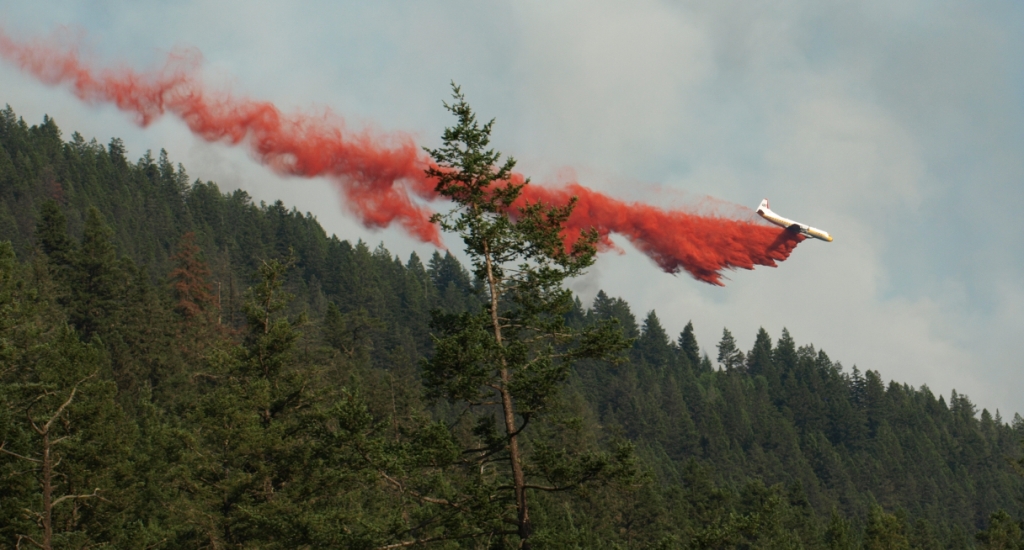
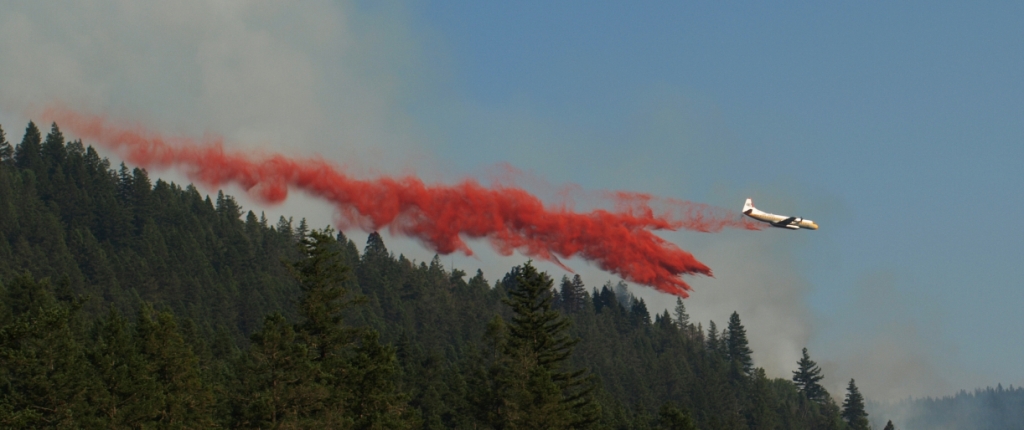
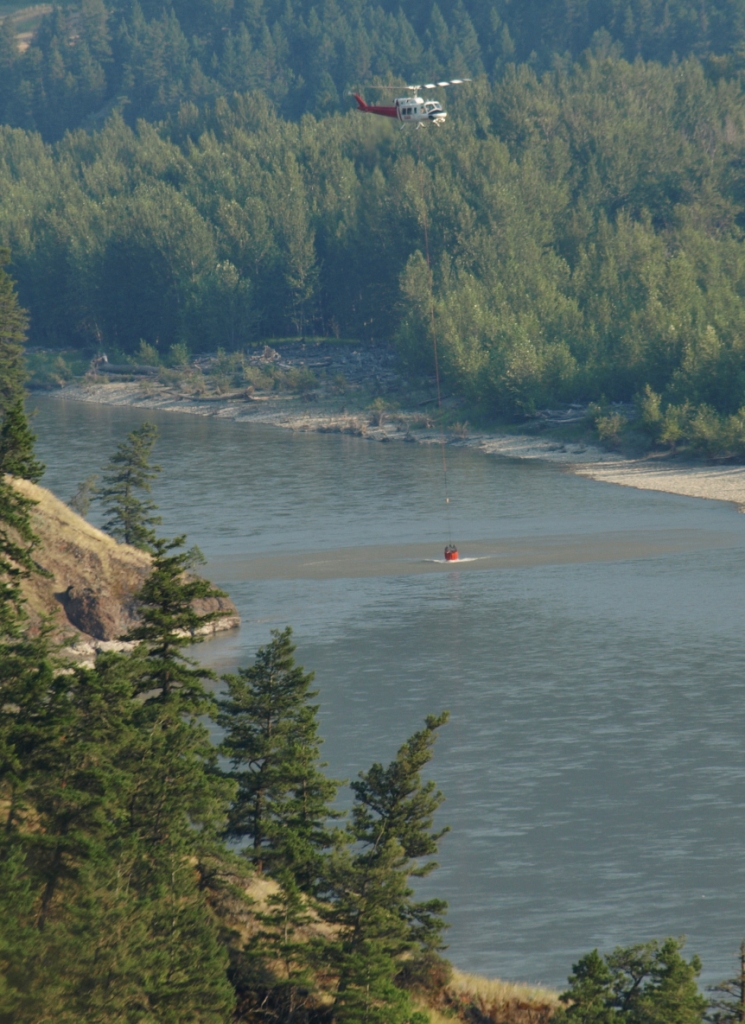
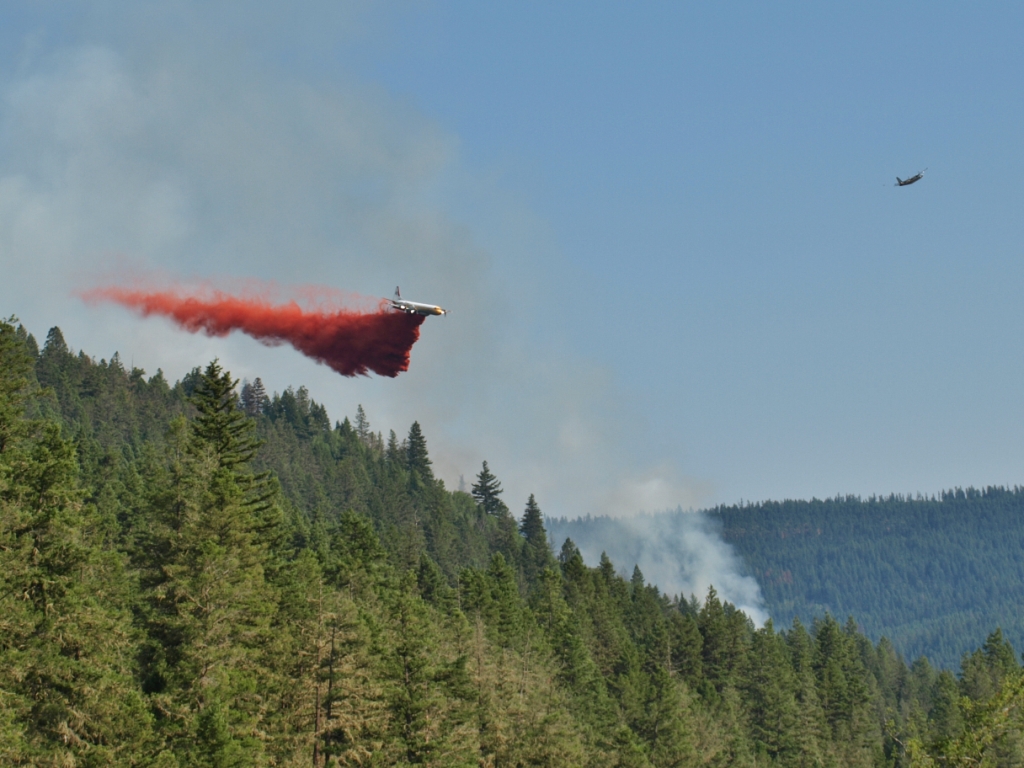
It’s being held at bay this evening, after some seriously intense work by two big retardant bombers and their spotter planes, plus three helicopters with buckets dipping water out of the river. Fingers crossed that the wind doesn’t pick up. Here are a few pictures taken from a neighbour’s lawn a few hours ago, as we stood around watching and formulating “what to take” plans as the trees on the ridge burst into flame, just before the bombers nailed the fire margin on our side.

july 13 2014 fire at soda creek

The “bird dog” plane sets the path for the bomber – you can just see him heading out at the top right of the picture.

???????????????????????????????

Pass after pass after pass…

???????????????????????????????

…for which we are all exceedingly grateful. Our tax dollars at work, as we joked to each other as we watched, but no one’s going to argue about this use of our public funds.

After the bombers left to refill their tanks, the helicopters took over, targetting hot spots.

When the bombers left to refill their tanks, the helicopters took over, targetting hot spots.

And so to bed, to sleep rather lightly, I suspect.

The ground crews were just setting up this evening; they’ll be here for at least a few days until everything is under control. Could still get away if the wind picks up, but we are all below the fire on the slope so feeling pretty good about things, as fires tend to burn “up” the hillsides.

A bit too hot, this particular summer day, don’t you agree?

Edited to add these, sent by a neighbour on the other side of the ridge. Despite the nearness of the flames to the buildings, all people, houses, and livestock are safe. A very close thing, and not over yet.

Ranch buildings shrouded in smoke. Irrigation sprinklers moved to protect structures just visible.

Ranch buildings shrouded in smoke as the flames burn up the hillside. Irrigation sprinklers were moved in to protect structures.

Looking upriver from the south over our valley and the two main fire areas. We are well away to the north, several miles past the furthest smoke column.

Looking upriver from the south over our valley and the two main fire areas. We are safely to the north, past the furthest smoke column. Two neighbour ranches are directly involved, with fires still burning tonight across the railway tracks from the buildings. They won’t be getting too much sleep, I’m afraid…

Read Full Post »


Oh, dangerous days ahead!

The Summer 2014 issue of the online book review magazine Shiny New Books (“What to Read Next and Why”) is online as of this very morning, and I am happily bouncing from review to review to review, enlarging my “Ooh! That sounds promising!” list to a potentially costly degree.

All very well and good, but I should, instead of spending time gleefully reading about reading on the computer, be loading the car for a spur-of-the-moment road trip which has suddenly materialized. We were supposed to be engaged in a small carpentry project in town this week, but the person we are helping has had to reschedule, leaving us with a chunk of suddenly “free” (well, otherwise unplanned-for – there are really loads of useful things we could/should be doing here on the farm) time.

The weather forecast is for brilliant sunshine, my husband has four days of off-time before he needs to be back at his real job, we have competent house-sitters in residence, the old open-top Spitfire hasn’t yet had a good long run this year after its spring-time tune-up, and mid-week availability of good B&B accommodation looks promising. Golly, what should we do? 😉

One of the lovely things about road-tripping is that it generally includes a fair bit of evening reading, as we are more than ready, after noisy hours in the Spit with the wind in our ears, for some quiet down time. Book choice is one of the toughest parts of packing. Proper road trip books are preferably new-to-us, highly engaging, and not too “heavy”, in the literary if not in the literal sense.

Luckily one recommendation in SNB is already available right here in my house, and Bill Bryson’s One Summer: America 1927,  just released in paperback and intriguingly reviewed by Harriet Devine, is coming along for the ride. My son has just located it (in the substantial hardcover edition, published in 2013) and plunked it down on top of my duffle bag; he read it earlier this year and also gives it words of high praise.

Off we go, fingers crossed that the weather will indeed smile on us, that the car will run smoothly (not always a given, what with its age and wondrous multitude of Little British Car eccentricities), and that we will find a promising bookstore or two en route. Part of the trip will be through previously unexplored territory, and those small towns tucked away off the beaten track sometimes are the very best book-hunting ground of all.

Bye for now! (Wish us luck.)


Read Full Post »

As those of you who have been followers of L&P for any length of time will perhaps remember, I would occasionally reference my elderly mother who I have supported in various ways, including, quite pertinently to this blog, the provision of vast amounts of reading material; she was a book-a-dayer these past eight years, ever since my father’s death in 2006.

A week ago Sunday morning, June 15th, she called me as usual in the morning; we had a pleasantly normal chat, and I told her that I would be in to see her in a day or two, to drop off yet more books. Later that day, mid-afternoon, my sister called me to tearfully inform me that the nurse at the seniors’ residence had just called her: Mom had quietly passed away during her afternoon nap.

Though Mom was physically extremely frail – hence her residence in a complex care facility these past ten months – her death was absolutely unexpected.

And I find myself quite bereft.

It was not at all a tragedy in any real sense of the word; Mom’s ending was the classic “best way to go”, as everyone tells us, and as we tell each other and ourselves. She was 89; she had had some serious health issues, and a few close calls. Several surgeries. A bad fall last summer, which put her in hospital for months. Several bouts of pneumonia. She had just been put on full-time oxygen.

But still…

So, everyone, call your mother, if you’re lucky enough to have one in your life. Go see her, if you can. Take her some flowers, or take her out to lunch, or just sit and have a chat. If it feels right and the timing works, tell her you love her. Yes, she already knows that. But do it anyway.

Those of you who have also lost your parents, perhaps you will agree that this is such a surreal feeling. This is it. We’re all alone. Orphans, in fact. My goodness. Rather sobering.

Life does indeed go on. The grass grows and needs mowing; the garden needs watering and weeding; the flowers I picked for Mom’s funeral are drooping and are almost ready to be thrown out onto the compost pile. The books I had ready to go in to town for her are still sitting on the kitchen counter; the books I collected from her room along with her other personal belongings are needing to be sorted out and put away. The floor needs sweeping, meals must be made; the food from caring friends is mostly gone. And I am very much able to laugh at jokes, to smile, to be happy much of the time, despite the tremendous sorrow that shadows my days right now.

And books are still good. I know that they brought Mom endless and reliable amusement and interest and comfort; I read right now with a nod to her shade. Nothing too challenging: from the stack I had ready for Mom, Elizabeth Goudge’s The Castle on the Hill, Norah Lofts’ Lovers All Untrue. An E.B. White essay collection, and tonight I think perhaps something from the Margery Sharp shelf.

Back to writing now as well. I have a review to formulate for Shiny New Books; I have things to say about recently read novels; I have loads of catch-up to do on my favourite book bloggers’ sites; I’ve neglected those particular email notifications this past week.

Thanks for listening, everyone. Now, go call your mom!

Mom in 1962, moving to the Cariboo region of British Columbia from central California. She drove up in her beloved Taunus car, Dad's truck is loaded with her furniture and household treasures, and, yes, many boxes of books. I love this picture, especially the totally unsuitable footwear. Mom never did really resign herself to wearing proper winter boots; I swear her feet were cold for the next 50 years!

Mom in January 1962, moving to the Cariboo region of British Columbia from central California. She drove up in her beloved Taunus car. Behind her, Dad’s truck is loaded with her furniture and household treasures, and, yes, many boxes of books. I love this picture, especially the totally unsuitable footwear. Mom never did really resign herself to wearing proper winter boots; I swear her feet were cold for the next 50 years!

Mom and Dad, 1962. At home in the Cariboo.

Mom and Dad, 1962. At home in the Cariboo.

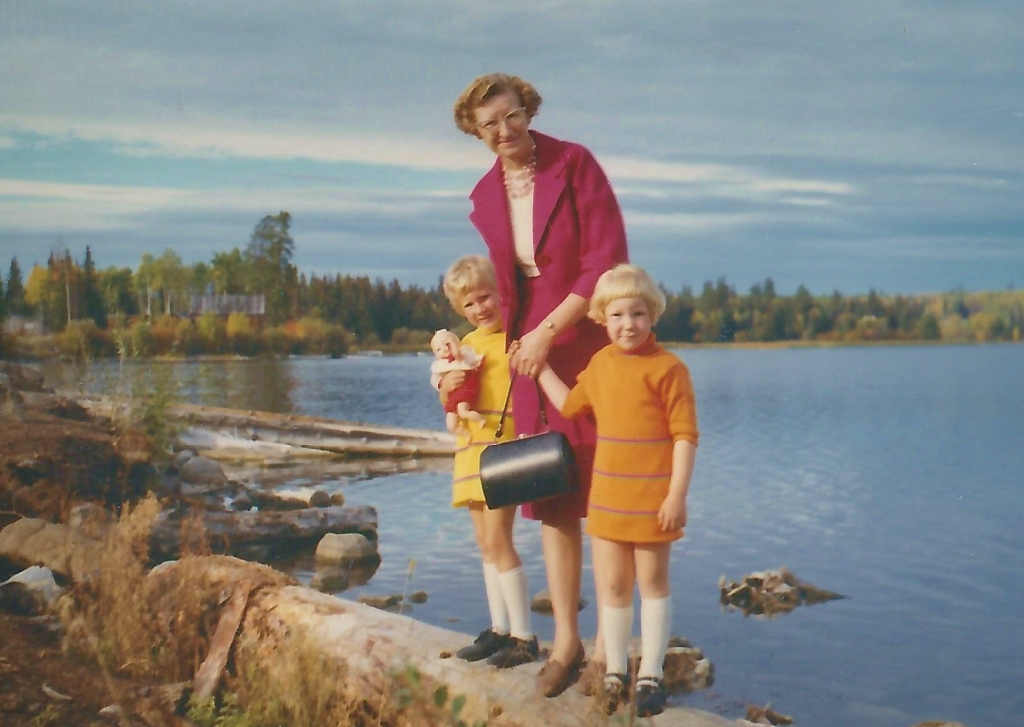
And a few years later, now with children in tow. This looks like we're going Sunday visiting; all dressed up. I'm the one in orange; check out the homemade haircut!

And a few years later, now with children in tow. This looks like we’re going Sunday visiting; all dressed up. I’m the one in orange; check out the homemade haircut!

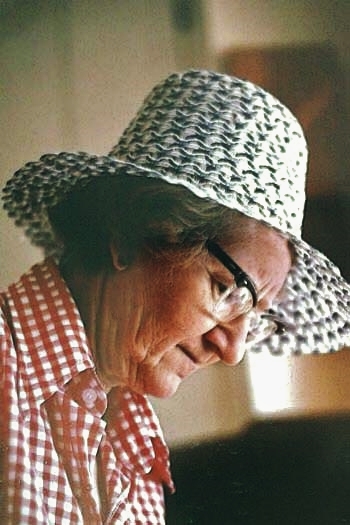
One of my German cousins just sent me this picture. It was taken in the summer of 1981. Mom has just come in from the garden. (I know this because of that distinctive hat; she wore it for years every time she set foot outside between April and October!) She could be shelling peas, or hulling strawberries; that look of concentration and her slight frown is utterly typical. My family tells me I look just the same; our faces share a rather sombre cast which does not necessarily reflect our actually happy mood!

One of my German cousins just sent me this picture, taken in the summer of 1981. Mom has just come in from the garden. (I know this because of that distinctive hat; she wore it every time she set foot outside between April and October.) She could be shelling peas, or hulling strawberries; that look of concentration and her slight frown is utterly typical. My family tells me I look just the same; our faces share a rather sombre cast which does not necessarily reflect our actually happy moods.

Just a few years ago; one of the last photos I have of Mom. She was deeply self-conscious and hated having her photo taken; this one was stealthily snapped from across the room while I was "experimenting" with a new camera lens.

Just a few years ago; one of the last photos I have of Mom. She was deeply self-conscious and hated having her photo taken; this one was stealthily snapped from across the room while I was “experimenting” with a new camera lens.


Read Full Post »

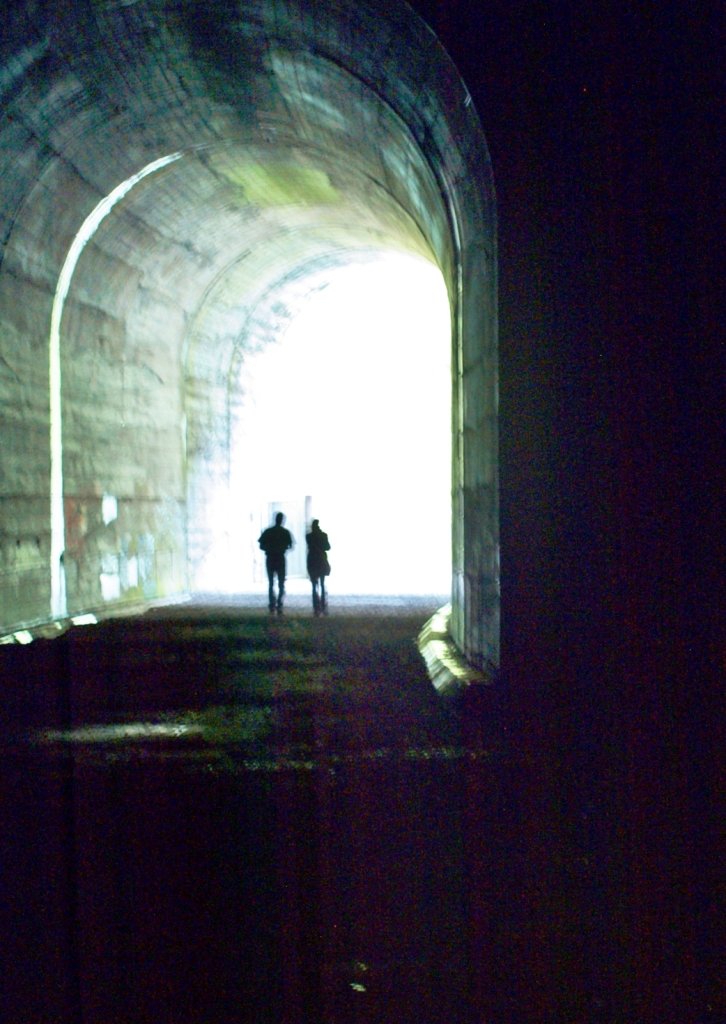
There's a light at the end of the tunnel... in this case, that would be the extremely cool (literally) abandoned Othello railway tunnels near Hope, British Columbia. Yes, we've been travelling! Not too far away from home, just touristing in the backyard, as it were. This is about 5-ish hours driving hours from home, not counting numerous stops.

There’s a light at the end of the tunnel… in this case, that would be the extremely cool (literally) abandoned Othello railway tunnels near Hope, British Columbia. Yes, we’ve been travelling! Not too far away from home, just touristing in the backyard, as it were. (This is about 5-ish hours driving hours from home, not counting numerous stops to get up close and personal with the roadside flora. Marvelous botanizing this time of year, especially as it has been rather more wet than usual and the wildflowers are very happy.) Couldn’t resist sharing this photo of my travelling companions, heading out into the light while I lingered behind, trying to hold the camera still enough for a steady(ish) shot.

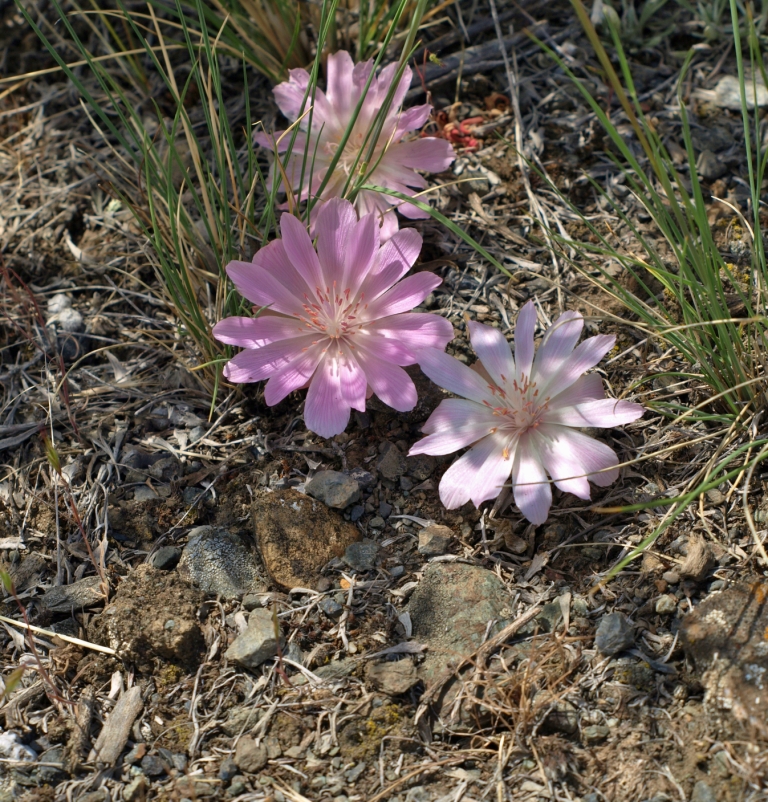
The dry, sagebrush-covered hills south of Cache Creek, B.C. were alive with the ephemeral blooms of Bitterroot, Lewisia rediviva. Fragile, ephemeral, and extremely beautiful.

The dry, sagebrush-covered hills south of Cache Creek, B.C. were alive with the ephemeral blooms of Bitter-root, Lewisia rediviva. Fragile, ephemeral, and extremely beautiful. Just a sample of the wonderful flowers we encountered.

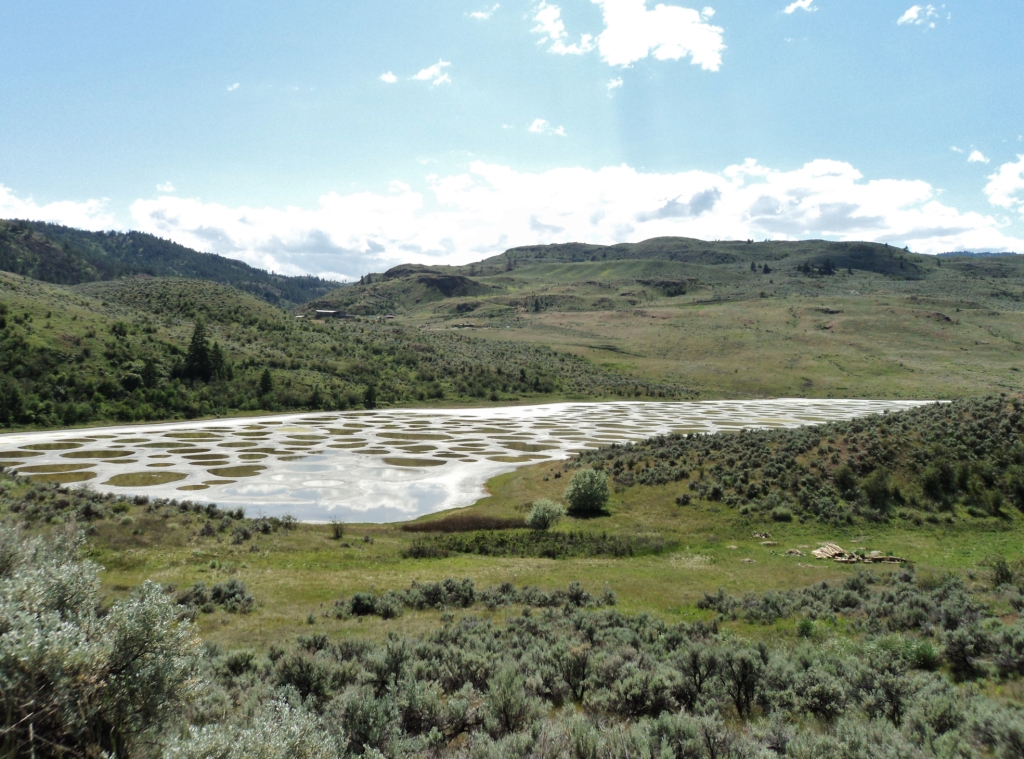
And the scenery was pretty incredible, too. Here's the locally famous "Spotted Lake" near Osoyoos, B.C. (just north of the United States border). Crystalline salt pans in perfectly rounbd formation; a sacred First Nations site as well as an interesting natural phenomenon.

And the scenery was pretty incredible, too. Here’s the locally famous “Spotted Lake” near Osoyoos, B.C. (just north of the United States border). Crystalline salt pans in perfectly round formation; a sacred First Nations site as well as an interesting natural phenomenon.

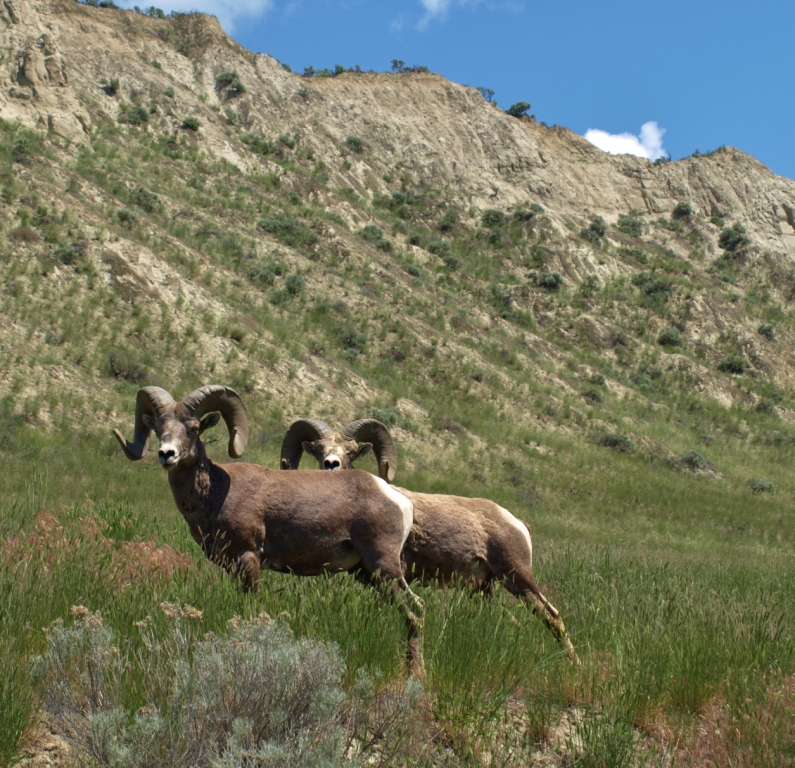
And then there was the fauna. Like these guys. Bighorn sheep near Kamloops, B.C.

And then there was the fauna. Like these guys. Bighorn sheep near Kamloops, B.C.

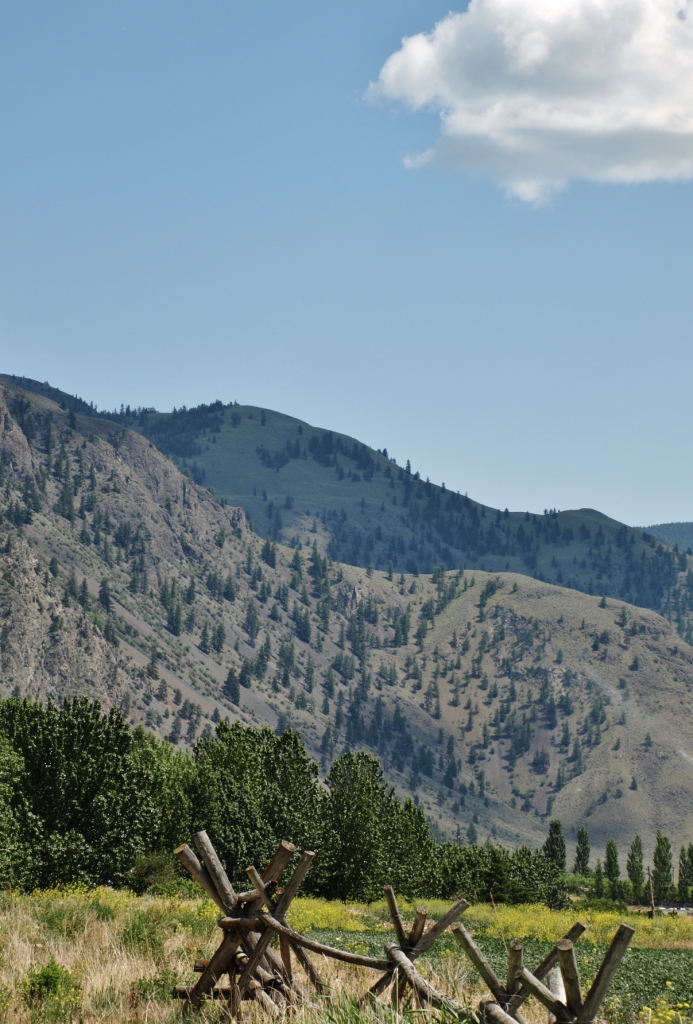
Blue skies, dry hills, and lush farms in the valleys where the rivers and streams provide welcome irrigation water. This is near Keremeos, B.C., an area of orchards and vineyards - the fruit basket of B.C.

Blue skies, dry hills, and lush farms in the valleys where the rivers and streams provide welcome irrigation water. This is near Keremeos, B.C., an area of orchards and vineyards – the fruit basket of B.C.

What a very full week or so this has turned out to be. I won’t go into details, but it has been packed with eventful things. Mostly good, I am happy to say.

Just home for two days, then off again tomorrow to the Provincial Performing Arts Festival in Penticton, with happy anticipation of the pleasures to come of watching and listening and marveling at the talented young musicians, singers and dancers from all over B.C. who converge once a year to represent their local festivals, to perform, compete, take master classes and workshops, and delight their audiences with their passion and mastery of their chosen arts.

I’ll be back to the books soon, once I stop moving.

I can’t quite believe that May has come to a close so quickly; that now we are in June! Blink, and a day goes by…

Hope you are all having a lovely spring!


Read Full Post »


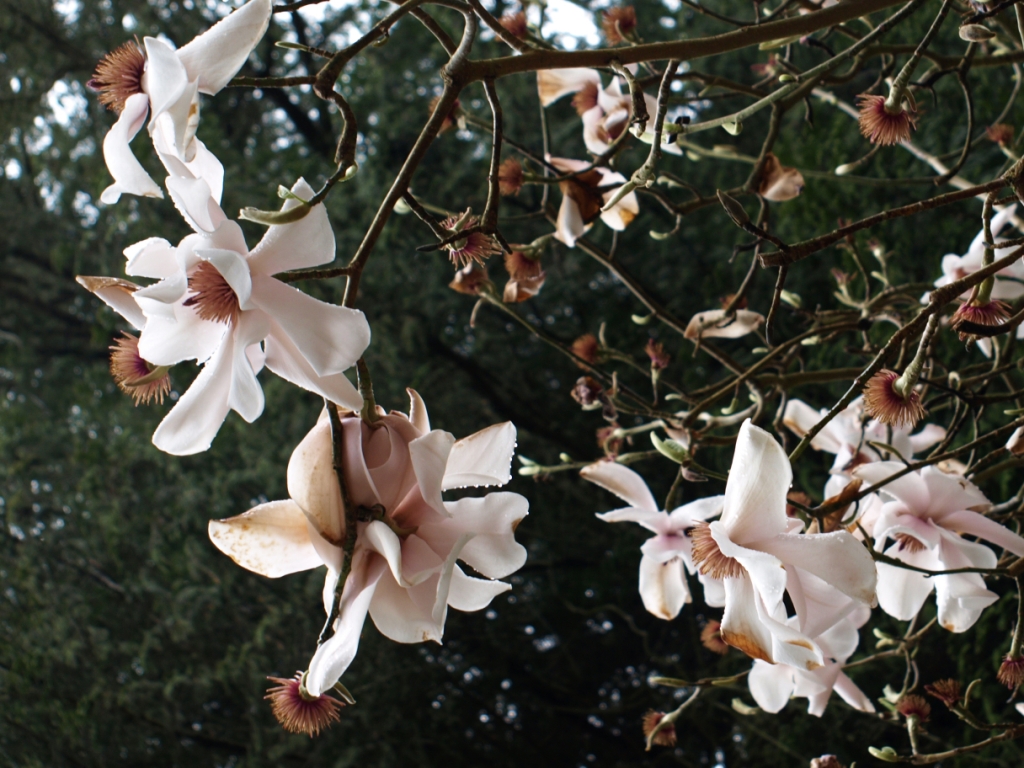
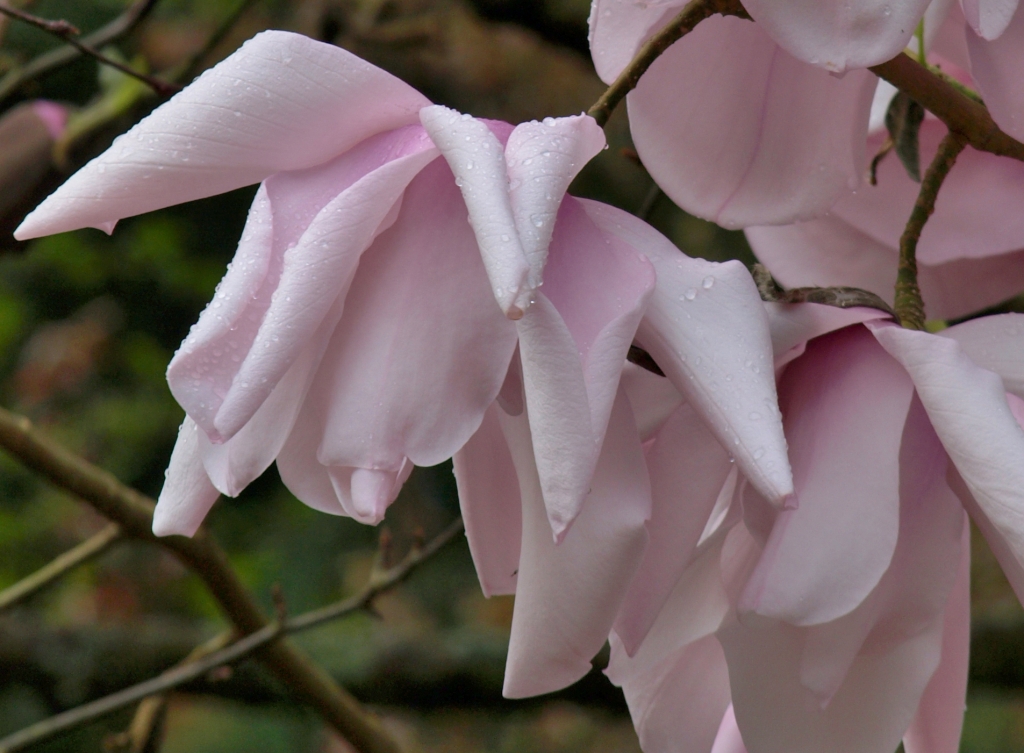
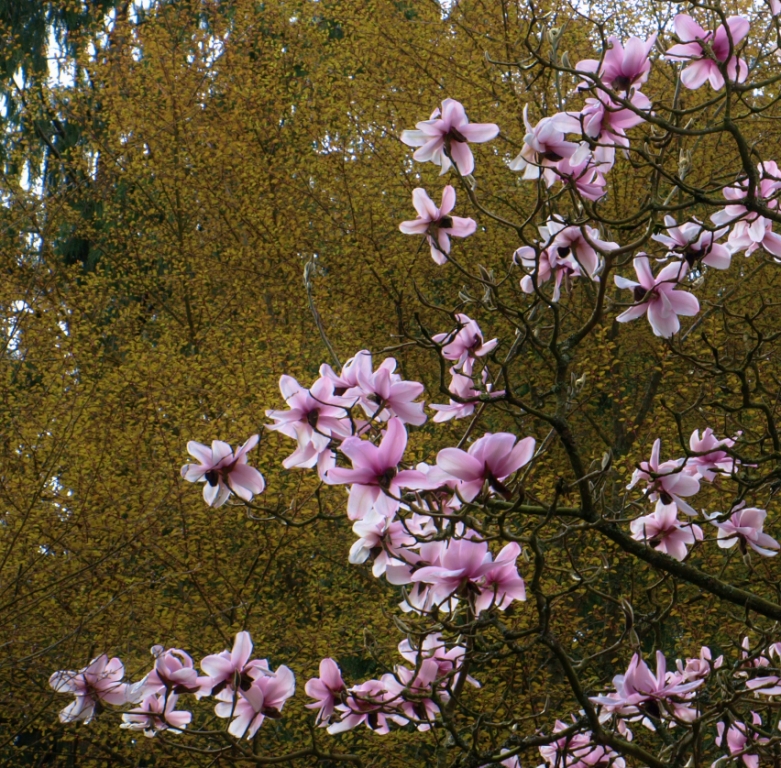
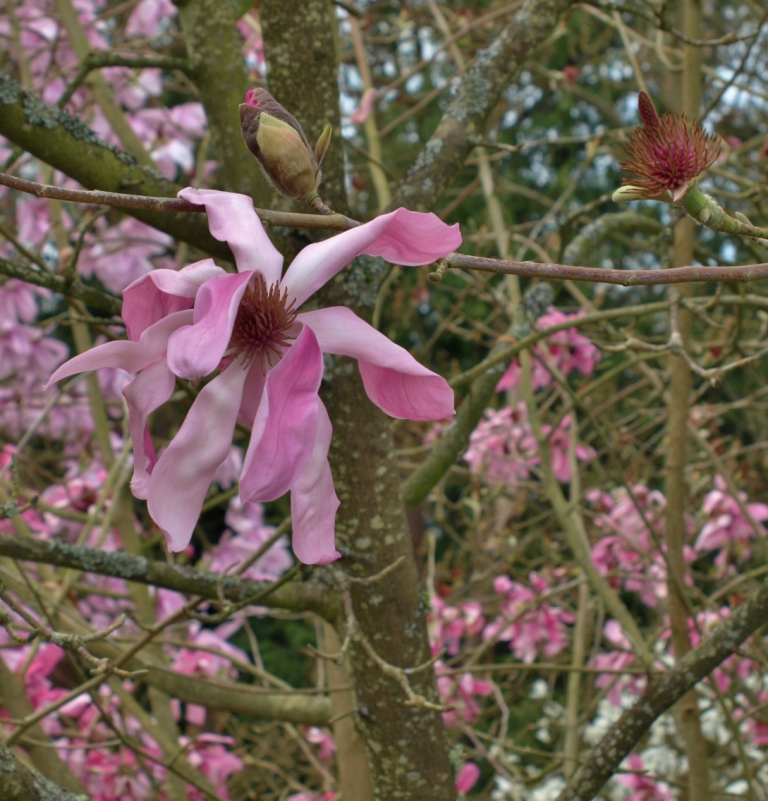
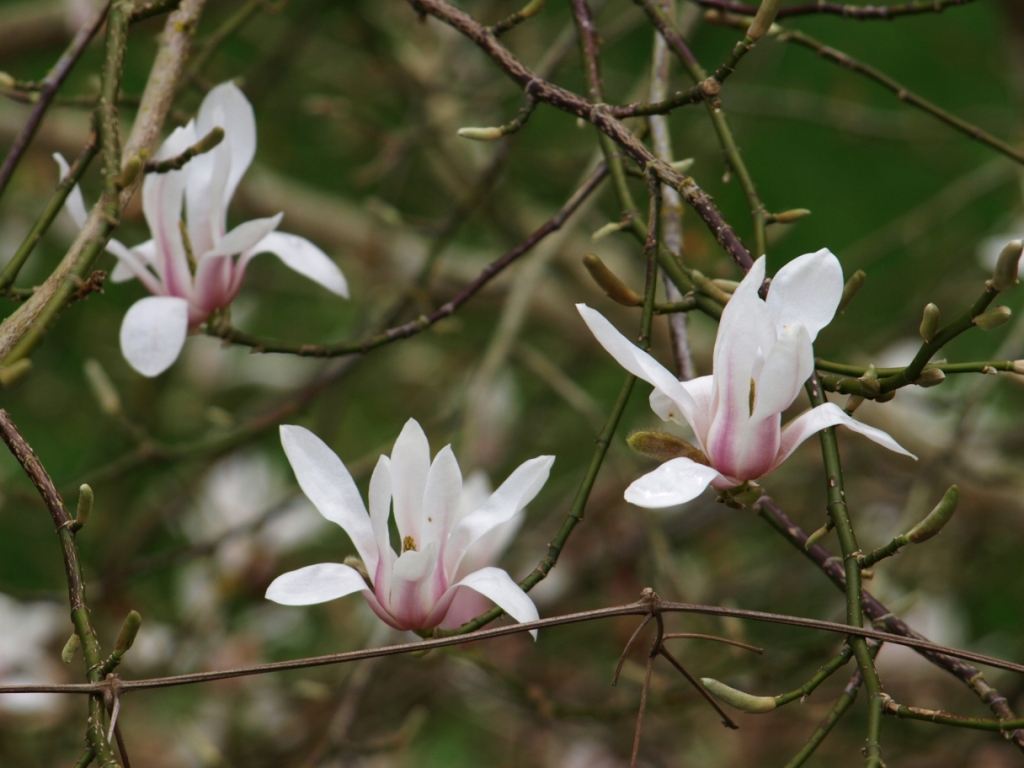
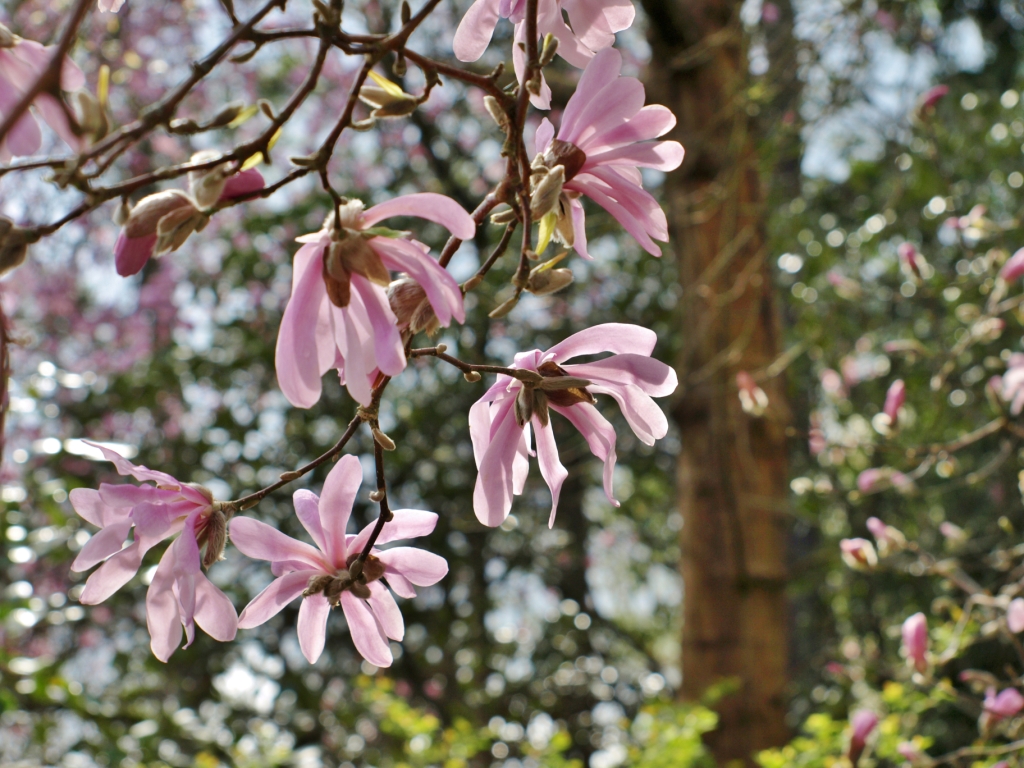
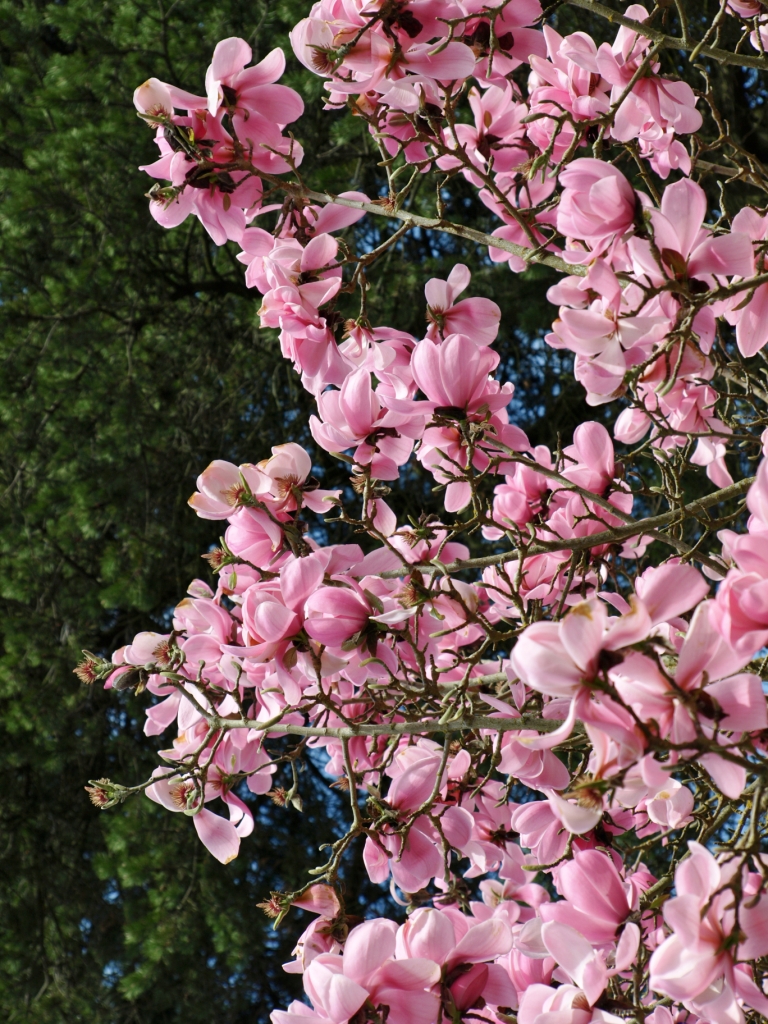
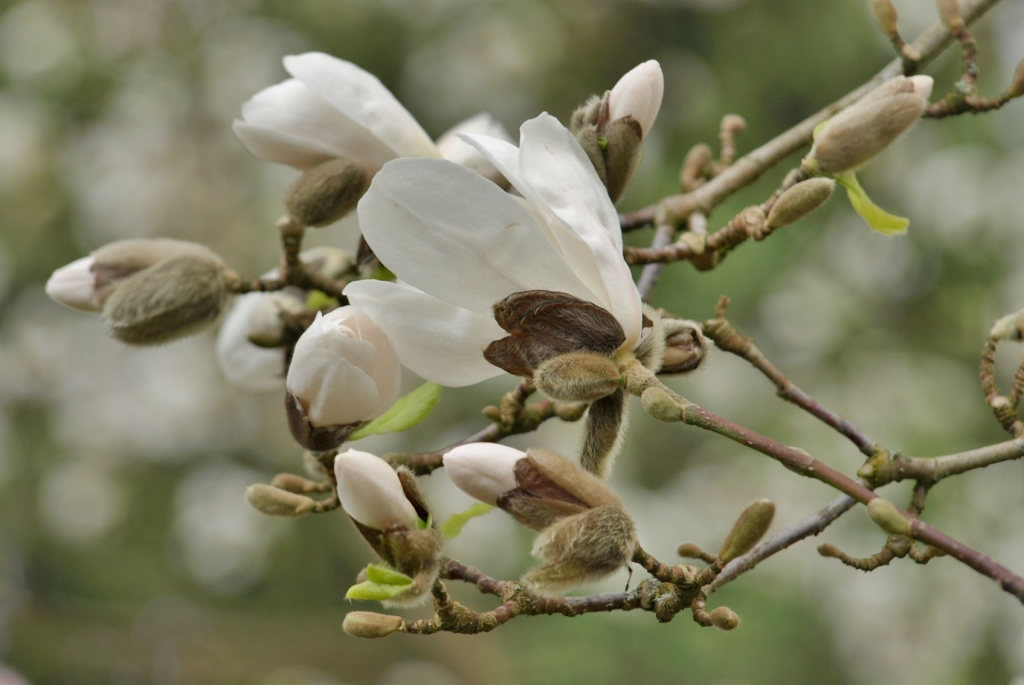
I have operated a small specialty plant nursery from our farm for many years, but this year am thrilled to be taking a sabbatical from that occupation, which means I get to look around and get a proper taste of spring. Earlier in the month we travelled to Vancouver for a look at the spring flowers there, and I fell head over heels in love with the many magnolias which rivalled the lovely cherry blossoms which were our initial and “official” quest.

I’d never seen these before in their full glory, as we are ourselves much too far north (being situated close to the centre of the province) for magnolia trees to survive, let alone thrive as those on the coast obviously do.

Too lovely not to share, so here are a few I captured with my camera. Much more spectacular in real life, by the way, as those of you in milder climes will no doubt already know.

Happy Spring!

????????????????????????????????????????????????????????????????????????????????????????????????????????????????????????????????????????????????????????????????????????????????????????????????????????????????????????????

Read Full Post »

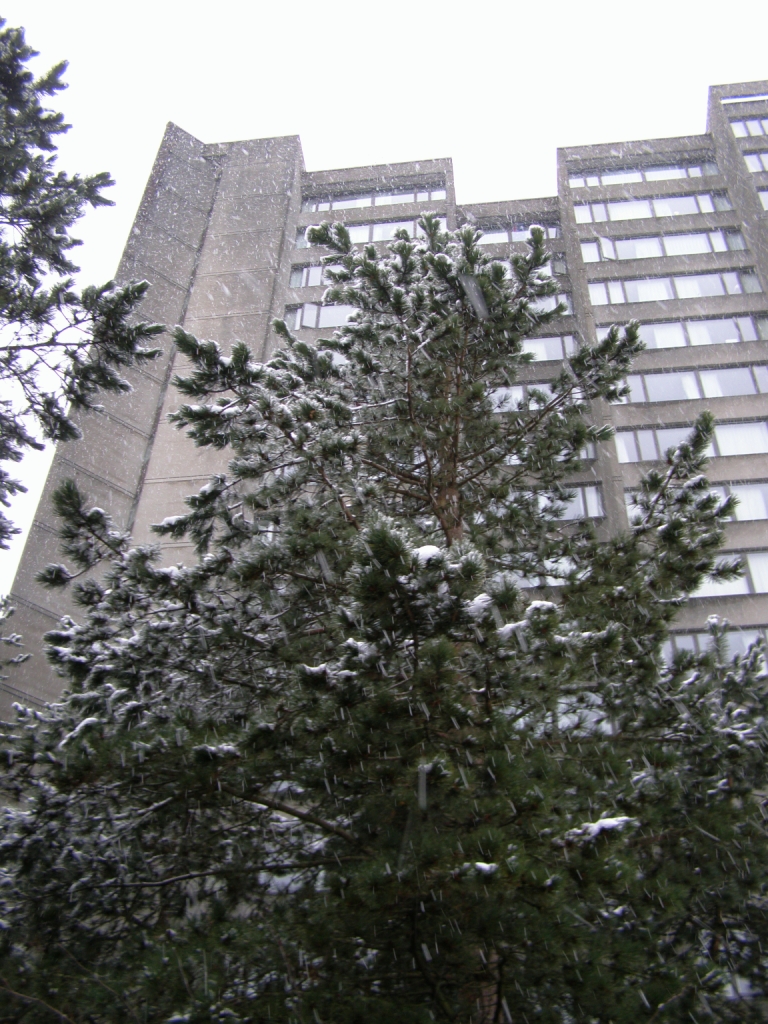
The view out the window upon arrival at UBC last week - what's up with the SNOW?!

The view out the window upon arrival at UBC last week – what’s up with the SNOW?!

The last part of February passed in an absolute blur, and I’ve been away from the blog completely but for brief moments to reply to comments. But I’m back, and life promises to settle down a bit after the recent flurry, and my stack of to-discuss books is frighteningly tall. I’ll get back to my blogging routine very soon – I’ve missed you all!

Claire – I did make it to Vancouver, but it was literally a flying visit – I was there two days, visited Van Dusen and the UBC garden in the snow, stopped in at three bookstores – Pulp Fiction on Main (which I found well-organized but very high priced) and Lawrence Books on Dunbar (which was gloriously overstuffed and a bit chaotic, also very high-priced, but full of treasures) and of course the excellent Pages (now renamed) in Hope on the way home. That cup of tea – next time!

I came to Vancouver for a glimpse of green grass, but sadly found lots and lots of SNOW instead – but at least it wasn’t minus 25C like it was at home!

Multiple vet visits with our elderly dog, including one rather costly surgery (she’s recovered brilliantly – what a tough old girl she is), and minor surgery for one of the humans (three wisdom teeth removed – the person in question is in looks-like-chipmunk recovery mode today), and the regional dance festival ate up vast chunks of my time these past two weeks, but things are easing up a bit.

We have a two-day Vocal and Choral Festival to get through this coming weekend, but it promises to be a gentle diversion after the high-energy Dance Festival, and I am looking forward to just sitting back and listening to the music, in between my not-very-arduous duties as the local Provincial Festival representative. Kevin Zakresky, choral director of the Vancouver Symphony, Prince George Symphony, and Pacifica Singers, is our Vocal adjudicator, and it sounds like he will be a lot of fun, so very much looking forward to that.

I shall soon be back posting away as usual – I have been reading some very interesting books, which I’m keen to share thoughts on.

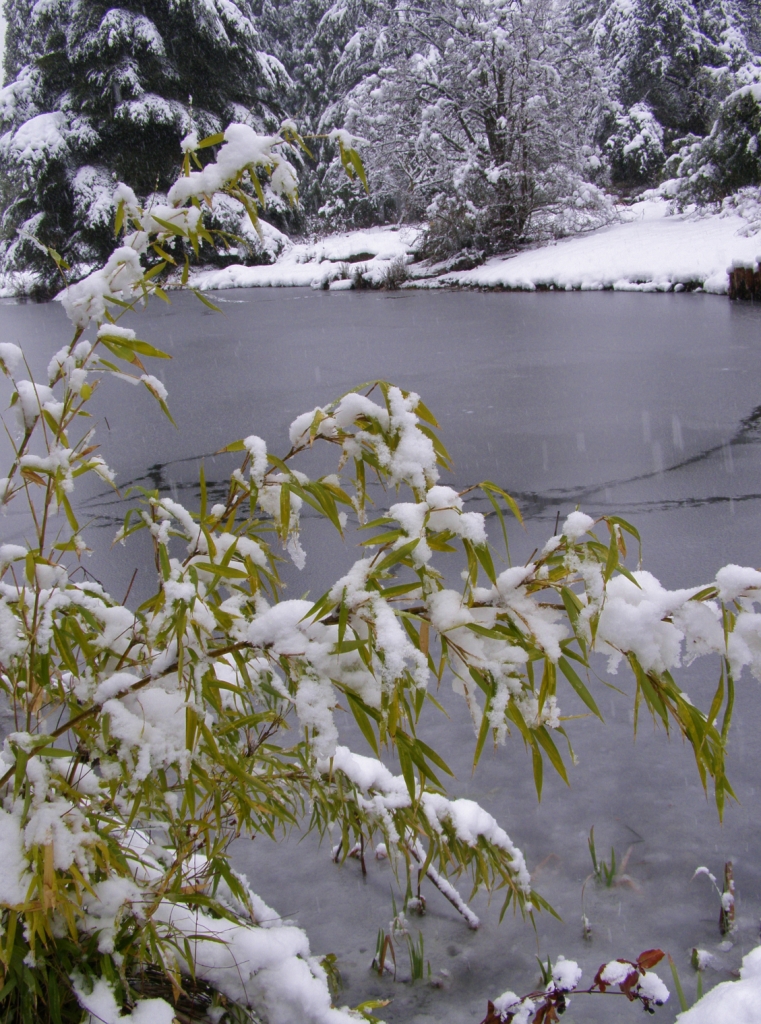
Van Dusen Garden in Vancouver, February 24, 2014 - There are spring flowers out there, buried for the most part under the unexpected snow.

Van Dusen Garden in Vancouver, February 24, 2014 – There are spring flowers out there – really! – I saw glimpses of them – buried for the most part under the unexpected snow. A very beautiful botanical garden, under any conditions.

Read Full Post »

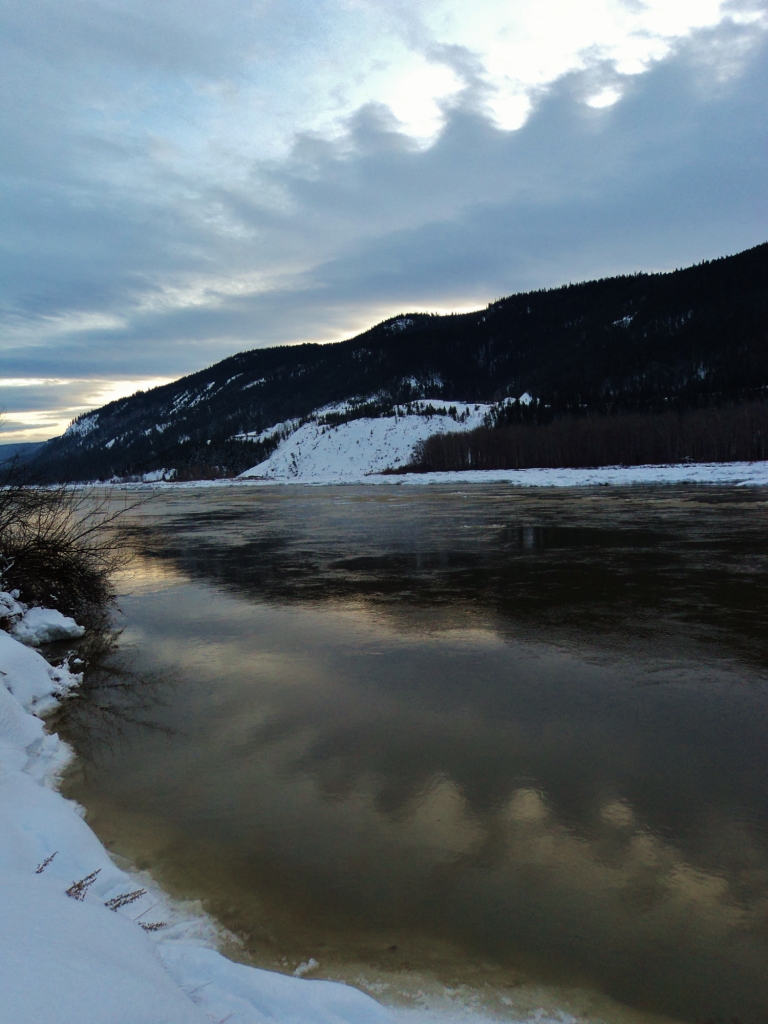
Down by the Fraser River, which forms the boundary of our small farm, New Year's Eve afternoon. A brief moment of peaceful beauty, soon to change...

Down by the Fraser River, which forms the boundary of our small farm, New Year’s Eve afternoon. A brief moment of peaceful beauty, soon to change…

The book reviews have been coming daily so far in January, and though this looks quite impressive, I hasten to reassure my readers that it will definitely not be the pattern of the year. January so far has been something of an anomaly, a time of stillness and a sort of tipping point for what is proving to be a transitional time in my life, in a smallish and positive way.

(And as some of you might remember from previous comments, we don’t have TV, so that time is freed up for dallying with books. At least an hour or two a day, if our friends’ TV watching habits are anything to go by.)

For the past twelve years I have been that most involved of maternal figures, a fully fledged dance mom, and it had looked like this would have been one of the busiest years yet in that regard, as it would have been my daughter’s “peak year”, the last fully dedicated to dancing before her graduation from high school and transition into the next stage in her life. After much agonizing, the decision was made in October to call it quits right now, a year early, as it were. No more long commutes to the dance studio in the city two and a half hours away, no more trips to Vancouver to visit her choreographer, no more sweating over solos and arranging for rehearsal sessions and cutting music and mulling over costumes, and most lovely of all, no more monthly tuition, choreo and fuel bills. We are suddenly free from the self-imposed tyranny of the dance world, and though there are definitely deep regrets for the many positive aspects of being a serious amateur dancer, we are both, she and I, rather enjoying the experience of going into the festival and competition season stress-free (for we are still both involved on an organizational and volunteer level in our local performing arts festival), and being able to look forward to being home in the springtime, instead of daily on the road to somewhere else.

For we’ve also decided to take a sabbatical from running our plant nursery this year, something we’ve done twice before in our twenty-one years of involvement in the business. Our personal perennial garden desperately needs a concerted year (or possibly two) of attention, something impossible to do when one is tied up in the greenhouse growing thousands of lovely little plants for other people’s gardens. The little propagation greenhouse, my 12-hours-a-day home in February-March-April-May, which has been yearly shored up and patched up and made to “make do”, is at last going to be replaced with something a bit bigger, much better built, and more comfortable to work in.

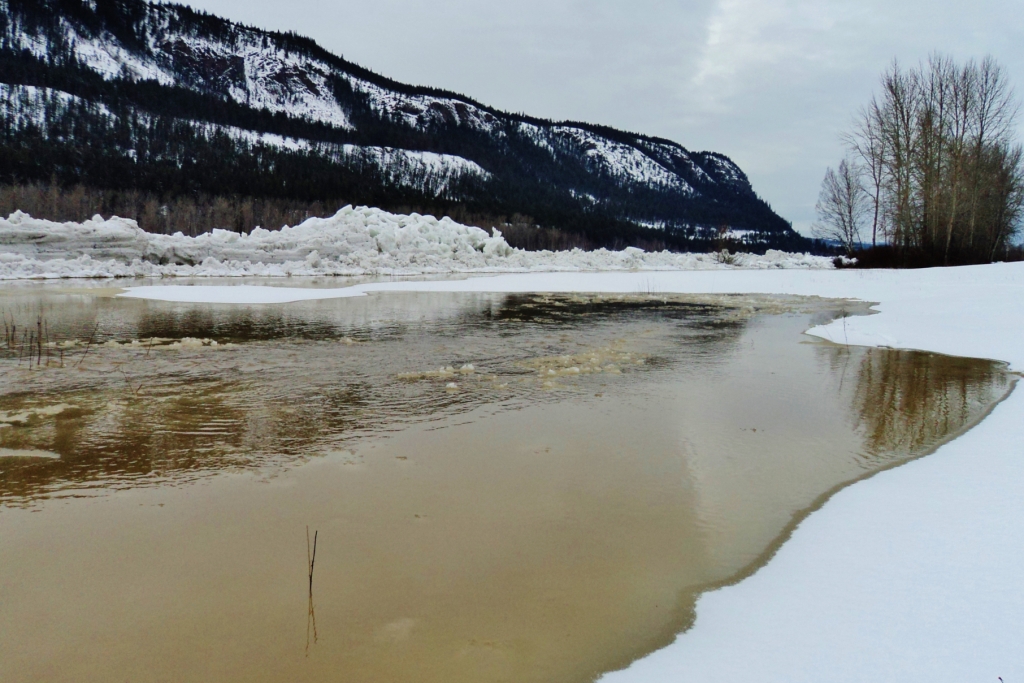
January 1st, 2014. Ice coming down the Fraser River has piled up a mile or so downstream, causing an ice dam and upstream flooding of our lower fields.

January 1st, 2014. Ice coming down the Fraser River has piled up a mile or so downstream, causing an ice dam and upstream flooding of our lower fields. This is looking north, as the river runs backwards in the main channel, on the other side of that ice pile mid-photo. I had to scoot out of the way, as my feet were about to get very wet!

And what with various family medical crises these past few years, including losing a family member to cancer, my mother’s serious fall in the summer and subsequent transition into a seniors’ care facility, and a flare-up of problems with my own two broken ankles which still refuse to work properly several years post-injury, it’s time for a healing year, emotionally and physically. Time to step back, and look inward for a bit.

Usually January 1st marks the time of taking a huge breath and diving into the combined maelstrom of dance festival preparation and concentrated seed starting and seedling care. Not this year. Not a single seed has been planted – heck, not a single seed order has been made! – and the dancer has cheerfully packed away her pointe shoes and has turned to drawing up ambitious garden plans instead. Under doctor’s paradoxical orders to both favor my ankles and exercise as much as possible, I’m attempting to do both by having some sitting down time every hour (which happily translates into reading time and computer time), and by using hiking poles when out and about, which is slightly awkward in that I am still learning how best to use manage my sticks properly when going up and down hills and on narrow paths. But the ankles are noticeably less painful at the end of the day, so maybe it’s working. One can hope!

We’re presently getting some work in on our still-not-finished self-built house, including a gorgeous set of floor-to-ceiling bookcases in a newly constructed hallway/office space which we are calling the “L Room”. “L” for its funny shape, and for “Library”, too! It’s coming along nicely, and when completed will house my working collection of plant books, as well as a goodly amount of “pleasure” reading, my old wooden desk, desktop computer and scanner/printer, filing cabinets and last but not least my piano. Which I hope will figure more prominently in my own near future, as once it is properly settled in I will be able to resume playing, at last in a quiet corner all of my very own. I’m inwardly tremendously excited, though I show an outer calm. 😉

It’s been a very good winter to be off the roads, as the weather has been rather frightful – lots of snow, and warmer temperatures turning everything to ice, and then snow again. We’ve shovelled our roof off four times so far – a record – to prevent ice buildup on the eaves, and this morning I see it could likely use it again. A few inches of fresh snow yesterday morning, followed by above-freezing temperatures and slushy rain in the afternoon, and this morning minus 6 Celsius. Lots of icicles.

I should probably sign off. This quiet Sunday morning has left me feeling rather introspective, hence this rambling post. Both teens are sleeping in, and my husband is off at work. It’s snowing again, the dogs are sleeping in front of the woodstove, the bird feeders are topped up, my kitchen is relatively neat and tidy, and my plans for the day – a bit of paperwork, some puttering about in the construction zone, a bit of sanding, a bit of painting – are modest and manageable. An intriguing book is waiting for my attention as well, My Brilliant Career, by Miles Franklin. Teen angst in Australia, circa 1901.

Happy January, friends. A full fresh year stretches before us. I hope you are all feeling as optimistic as I am that it will bring good things, and that we will all have the inner resources to weather the inevitable storms as well.

Cheers!

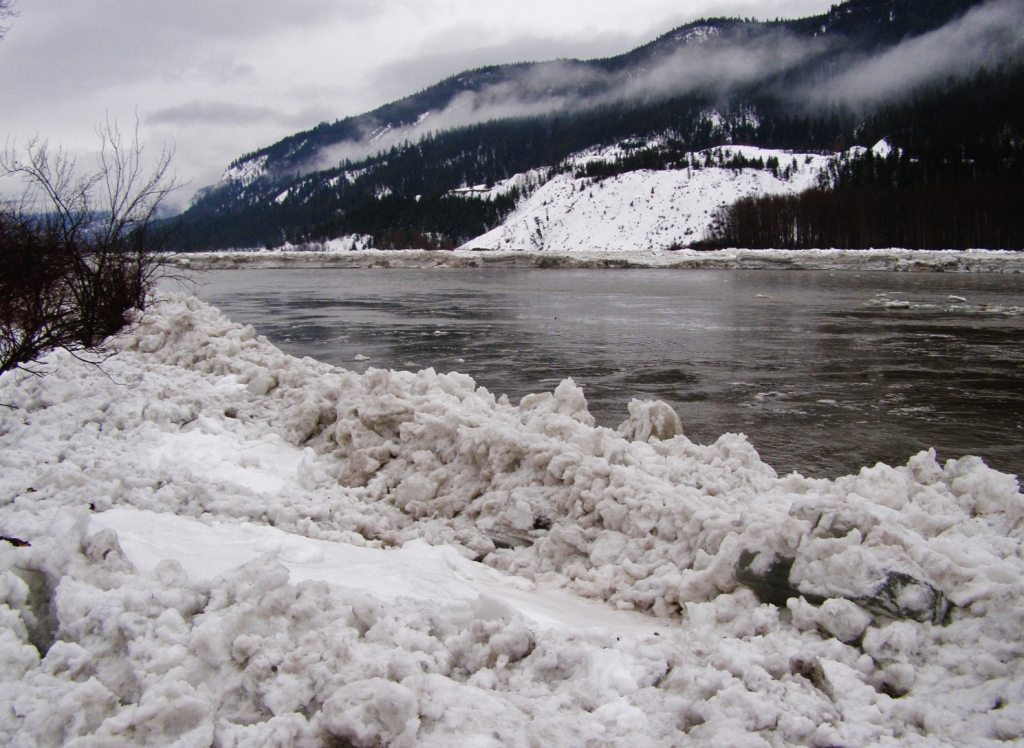
January 2, 2014. Same spot as the idyllic picture at the top of the post, a short two days later, after the water has flooded the banks and receded, leaving much ice behind.

January 2, 2014. Same spot as the idyllic picture at the top of the post, a short two days later, after the water has flooded the banks and receded, leaving much ice behind.

Read Full Post »

Happy New Year!

Just in from celebrating New Year’s Eve with some brightness in the darkness. The sky is full of stars tonight, echoed by the sparks we made down below. I don’t think I’ll make midnight, but I’m sending this message ahead to wish all of you a very happy 2014, full of good stuff, and LOTS of great books.

HAPPY NEW YEAR!

New Years Eve 2013 Hill Farm

Read Full Post »

This is a most enjoyable post to write, and, as last year, it was quite easy to chose the books on it. They definitely stood out from the crowd. I have only included books which were new to me this year; if I’d included old favourites this list would be a whole lot longer.

Here we go, then. Leaves and Pages’ Top Ten Reads Discovered in 2013.

*****

BEST NEW-TO-ME READS 2013

Ranked more or less in order of “favouritism”, countdown-style, 10 to 1, though the order was just a bit hard to decide.

Except the Number One book. That one was easy as pie!

*****

the innocent traveller ethel wilson10.

The Innocent Traveller

by Ethel Wilson ~ 1947

Every once in a while a book comes along which, unexpectedly, completely delights me. The Innocent Traveller is one such novel.

There’s not much in the way of drama in this joyfully written book, but it struck a chord of shared experience and of common humanity in its delicious narrative of the irrepressible Topaz. Always witty and occasionally poignant, the tale spans a full century of one woman’s life, 1840s to 1940s , and simultaneously gives a lightly drawn but absolutely fascinating portrait of the times she moved through: the fabulous social and scientific changes of the turning of the nineteenth into the twentieth century, through two world wars and the stunning growth of the colonial city of Vancouver. Through change after change after change, Topaz remains the same, endlessly curious, endlessly outspoken, endlessly optimistic and reaching for the next adventure.

Ethel Wilson writes this semi-biographical tale with a very personal touch – she appears just a little over half way in in the person of recently orphaned eight-year-old Rose who joins the household which includes the middle-aged Topaz. Lovingly written, with warm humour and an unsentimentally analytical eye, this is a delicious ode to an individual and a family, and an absolute joy to read.

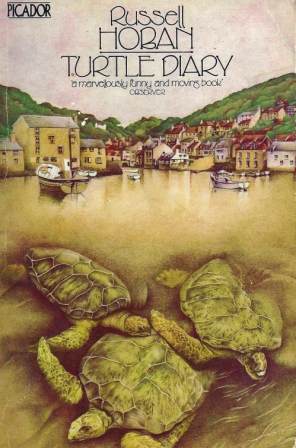
turtle diary russell hoban 0019.

Turtle Diary 

by Russell Hoban ~ 1975

The only thing better than looking forward to a read with a cozy preconception as to what the story will bring, and being satisfied with your expectation, is to be blanket-tossed up in the air by a book that tightens up and bounces you unexpectedly into a very different direction, leaving you to freewheel for a while, scrambling for a sense of where you’re going, then catching you and returning you, more or less gently, to solid ground. Turtle Diary is that second kind of book.

The plot is easily condensed. Two middle-aged and currently unattached Londoners, William G. and Neaera H., both struggling with a stagnant state of being, visit the Zoo and are, separately, attracted to the sea turtle tank and the stoic inhabitants within. Musing on the cosmic injustice of these far-roaming creatures being confined to a tiny volume of water, William and Neaera each consider the possibility of somehow freeing the turtles back into the sea. As each of them in turn carry on their separate narrations, we see that their thoughts are uncannily similar, both regarding the turtles and other aspects of their solitary existences, and their relationships (or lack thereof) to those around them. Inevitably William and Neaera meet, speak, share their turtle-liberation impulses, and formulate a practical plan to carry it out, helped by the like-minded zookeeper. Can you guess where we’re going from here? Two lonely people, sharing a joint goal, yearning desperately for love…?

Well, abundant blessings to Russell Hoban. He faces up to and jumps the clichés beautifully, and I salute him for it.

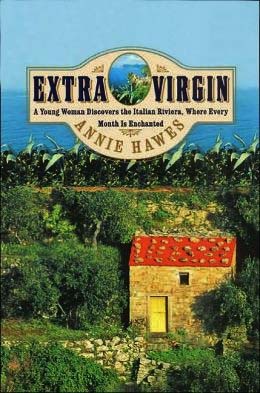
extra virgin annie hawes8.

Extra Virgin

by Annie Hawes ~ 2001

I’ve read a whole lot of memoirs this past year, and thoroughly enjoyed all of them, but this one was just a little bit extra-special. It was a quietly intense pleasure from Prologue to reluctantly-turned last page.

Back in the early 1980s, a young Englishwoman, recently turned down as a “poor risk” in her attempt to receive bank financing to buy her own home in England, is at loose ends and feeling rather sour about life in general. Her sister convinces her to come along on a working trip to Italy, grafting roses for a small commercial operation in the Ligurian hills, in the region of the “Italian Riviera”. The two eventually purchase a bargain property in the area, 2000 pounds for a stone house in an olive grove. Of course, it needs a bit of work…

But this is a rather different tale from the usual “we bought a place in a foreign paradise and hired quaint locals to fix it up” lifestyle porn. Written several decades after the purchase, the tone is not at all cutesy and patronizing. The sisters go to and from England and Italy regularly for many years – England for the “real” jobs which earn the funds to return to Italy for the love of the place, and, increasingly, the people.

And, as a bonus, the author can certainly write about food. Amazing descriptions of the wild-crafted, gardening and culinary abundance of Liguria. Well done, Annie Hawes.

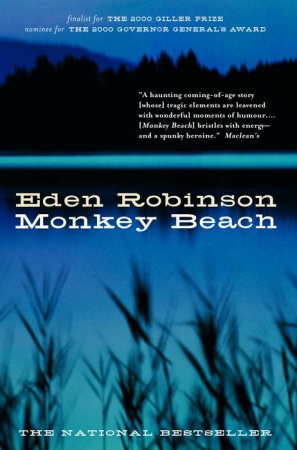
monkey beach eden robinson7.

Monkey Beach 

by Eden Robinson ~ 2000

Fabulous writer, this Eden Robinson. Such a strong book, and completely mesmerizing.

Lisamarie Hill is a young woman of mixed Haisla, Heiltsuk, and European heritage, from the Haisla village of Kitamaat, on an island in the Haida Gwaii group off the north coast of British Columbia. Lisamarie’s younger brother Jimmy has been reported as lost at sea, and as she and her family wait for news of the search mission, Lisamarie thinks back to her childhood, and the life she shared with Jimmy growing up in an intricately complex world of tradition and modernity and a mix of cultural influences.

The author flouts our expectations by both detailing some of the bleakness of First Nations life as her protagonist experienced it, and the more frequent deep joy of family and community. The humour is constant throughout, accompanying the most horrible of scenarios, a happily ironic paradox which inexplicably works.

This book almost made my Most Unexpected list, but it was so good that it really belongs over here.

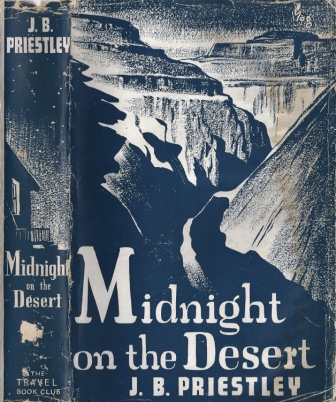
midnight on the desert j b priestley 0016.

Midnight on the Desert 

by J.B. Priestley ~ 1937

Midnight on the Desert is subtitled Chapters of Autobiography, and there is indeed a fair bit of journalizing going on in here. Written while the author was staying in Arizona, much of the content has an American connection; Priestley was very much in love with the physical space he found himself in here; the desert and the natural features such as the Grand Canyon are described with deep feeling.

I had expected this to be a travel book of sorts, and Midnight on the Desert could certainly fall under that classification, but it is also so very much more. It is an articulate examination of what it means to be a writer and an artist; a critique of the state of the world in politics, religion, philosophy, architecture and the performing arts; an ode to nature; a manifesto for seeking the good in the world and overcoming adversity and “doing one’s part”; a record of observation by a keen and analytical observer.

Near the end, Priestley really lets himself go as he mulls over the time theories of J.W. Dunne and P.D. Ouspensky, which are all about time as a fluid entity, which can be compressed, reversed, and experienced as a simultaneous multiple strand. (Novelist Rumer Godden plays with some of these ideas as well, especially in her book Take Three Tenses: A Fugue in Time. I was fascinated to realize that both Godden and Priestley were playing along the same metaphysical byways, though many of their musings go completely over my head.)

What a fascinating book; what a full book. One to read right through without stopping; one to tackle in small bits, to digest and mull over and agree with and occasionally refute. Not all that much autobiography, despite the tag on the title, but many insights into what went on in the mind of this deeply creative and opinionated man.

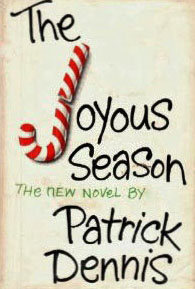
The Joyous Season5.

The Joyous Season 

by Patrick Dennis ~ 1964

Ten years after penning his highly successful social satire starring the exuberant Mame and her sedate nephew Patrick, author Edward Tanner – writing under the pseudonym Patrick Dennis – came up with this little  comedic gem. I wasn’t sure what to expect, having only ever previously experienced Auntie Mame, but The Joyous Season was absolutely marvelous, and much better than I had anticipated. Such a treat!

As the story opens, 10-year-old Kerry, 6-year-old Missy, and their nanny Lulu are reluctantly heading out the door from their posh New York apartment  to Gran’s place in East Haddock. Gran is Mom’s mother, and oh boy, is she ever a snooty piece of work! And she’s more or less the reason for the whole darned dilemma Kerry and Missy are in. To condense greatly, on Christmas morning there was a bit of a situation with Mom and Daddy which saw several kinds of shots fired, much broken glass, some physical violence and some exceedingly blunt words spoken. As a result, Kerr and Missy are poised to become Children of Divorce, much to the delight of meddling Gran. Everyone (except Gran, who openly gloats about the come-uppance of her despised soon-to-be-ex son-in-law) has decided to be Very Civilized About It All, and Not To Make The Children Suffer, but suffering they are indeed, though not perhaps in the way one would expect.

Kerry and Missy, despite all of the adult antics going on in their world, are the epitome of well-adjusted, and Kerry’s knowing-naive narrative exposes the follies of the grown ups, and New York upper crust society at large, to our appreciative eyes. As Kerry and Missy navigate their way through their new life, they conspire to bring their beloved parents back together again, with numerous setbacks along the way.

4.

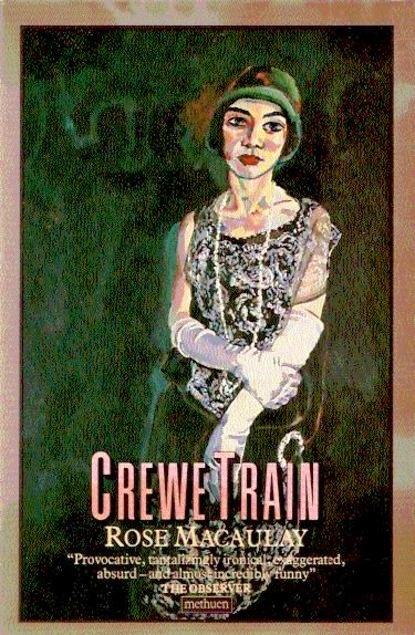
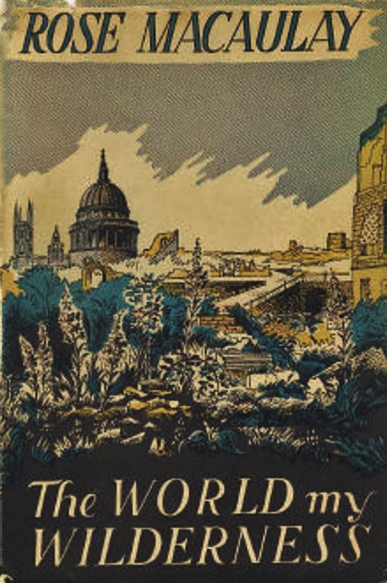
Crewe Train and The World My Wilderness  

by Rose Macaulay ~ 1926 and 1950

Two very different books by always-changing and challenging author, both featuring young heroines on the cusp of entry into their adult lives.

crewe train rose macaulay 3At the start of Crewe Train we are introduced to our sullen 21-year-old heroine, Denham Dobie. She and her widowed father are English expatriates living in attempted seclusion from the world in a small Andorran village; this hasn’t worked out quite as planned as the Reverend Dobie has allowed himself to be married to a local woman, giving Denham a number of unwanted step-siblings. But things are about to change, when a family of visiting English relatives are present when Mr. Dobie suffers a fatal heart attack, and whisk Denham off with them – to her stepmother’s loud relief – to England.

Denham is an unusual example of the innocent abroad – or, rather, the repatriated innocent in the land of her long-ago birth. She looks about not with the wide eyes of amazement, but with the hooded eyes of scorn. So much fuss about everything! Changing one’s clothes several times a day, all this bothersome bathing and personal grooming, and talk, talk, TALK at every meal. People get so worked up about ideas and books and plays and art…

Denham is a true sensualist, living a life of the body and not of the mind, which makes it most interesting when she catches the eye of the intellectual Arnold, a partner in Denham’s uncle’s publishing firm. And then Denham emerges from her prickly shell enough to respond to Arthur’s advances…

Gorgeously funny little book, very quirky and unusual. A great pleasure to read.

the world my wilderness dj rose macaulayThe World My Wilderness is quite different in tone, and much more sober, as befits a post-World War II novel.

I do believe it is one of the most beautifully written of all I’ve read so far this year. Rose Macaulay lets herself go with lushly vivid descriptions of the world just after the war. The bombed-our ruins of London are depicted in detailed clarity, and almost take precedence over the activities of the human characters, who move through their devastated physical habitat in a state of dazed shock from the brutalities they have seen and survived.

This is a bleakly realistic depiction of the aftermath of World War II and its effect on an expatriate teenager and her divided family, split between France and England. It moved me deeply, though the characters frequently acted in obviously fictional ways. What the author has to say about the effects of war on those who survived it is believably real.

17-year-old Barbary Denison is an English girl who has been raised for many years in France under the custody of her divorced mother and French stepfather. Under the confusion of the German Occupation, Barbary has run wild and has not-so-secretly joined up with an adolescent branch of the resistance – she and her younger half-brother have lived the lives of semi-feral children, and have witnessed and taken part in activities much too old for their tender years.

With the war just over, Barbary is unexpectedly sent to live with her father in London, and the culture shock of being suddenly thrust into “civilized” society is more than Barbary can cope with; she creates a secret life for herself which eventually has dire consequences for everyone concerned.

I’ve earlier described this novel as “bleak”, but don’t let that put you off. It’s definitely a worthwhile read, and Rose Macaulay’s satirical wit is in fine working order here. Not at all depressing, because it is so obviously contrived, but a powerfully memorable reading experience.

3.

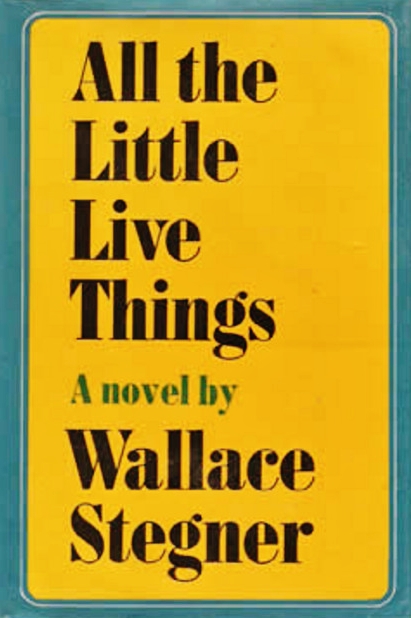
All the Little Live Things

by Wallace Stegner ~ 1967

all the little live things wallace stegner (2)An intense novel set in the California hills concerning love in all its forms. And death.

Here Wallace Stegner addresses one of the Big Questions of his time, the mid 1960s, which is to say, the great divide between the generations; the wide movement of youth (and relative youth) to reject categorically the ethics, morals and social standards of their elders, and to try to remake the world into a new utopia. We’re talking about hippies, here. And the California setting is the seething nerve centre of this societal battleground, full of lines drawn in the sand and unwitting trespasses and deliberate provocations. Change is in the air, and no one is immune to its effects.

Joe Allston and his wife, two Easterners in their sixties, retire to California in search of peace after the death of their wayward son. Their paradise is invaded by various parasites – not only by the gopher and the rose blight, the king snake and the hawk, but also by a neighbour with a bulldozer, bent on “development.” Jim Peck, a bearded young cultist, builds a treehouse on their property and starts a University of the Free Mind, complete with yoga, marijuana, and free-wheeling sex. Most damaging of all, it is invaded by Marian Catlin, an attractive young wife and mother, affirming all the hope and love that the Allstons believe in, who carries within herself seeds as destructive as any in the malevolent nature that surrounds them.

The relationship between the two couples, the older Allstons and the younger Catlins, is beautifully portrayed, and I felt it was one of the most admirable aspects of the novel. Stegner delicately captures the nuances of friendship, unspoken sexual attraction which does not have to be acted upon, and the balance of power between youth and age. Joe and Marian strike sparks off each other, but the relationship never turns ugly; all four spouses are involved in the relationship and each turns to his or her partner for support and comfort as needed. For the core issue of the story is this: Marian is pregnant, with a much-desired second child. (The Catlin’s first child, a young daughter, is very much loved and wanted, and is a charming girl, nicely handled by the author.) Marian also has terminal cancer, and she has rejected treatment in order that she can bring the pregnancy to term.

A difficult plot to see any happy way out of, isn’t it? I’ll tell you right now: no feel-good miracles occur.

Decidedly one of my most memorable reads of 2013.

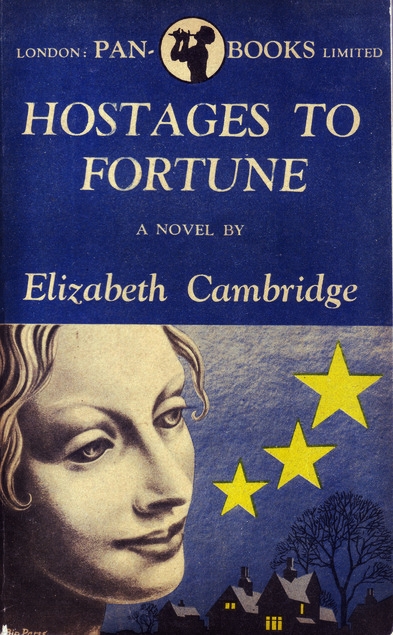
hostages to fortune elizabeth cambridge 32.

Hostages to Fortune 

by Elizabeth Cambridge ~ 1933

He that hath wife and children hath given hostages to fortune; for they are impediments to great enterprises, either of virtue or mischief.

~Francis Bacon

I loved this book on so many levels. Not only is it beautifully written, but the themes of marriage, motherhood and personal fulfillment struck very close to home; I couldn’t help but recognize many parallels with my own experience, which (of course!) is not unique, as Elizabeth Cambridge so eloquently demonstrates.

This is an episodic novel in which “nothing ever happens”, but it is a beautifully observed and documented series of vignettes of family life, with a view to the broader scene in which it is set. It reminded me most strongly of another book that has a similar tone and an equally well-depicted mother, Margery Sharp’s 1935 novel Four Gardens, another hidden gem of a book which I wish would receive the same attention from modern re-publishers of almost-lost small literary treasures.

These women are, of course, more than “just mothers”, but their maternity is an inescapable part of their lives, and though it does not define them, it forms their lives in various unforeseen ways, and their emotional and intellectual responses to their motherhood are well worth considering. Elizabeth Cambridge’s Hostages is said to be semi-autobiographical; Margery Sharp was childless; but both writers have identified and played upon a strong chord of shared experience which resonates with me, a person (and mother) of several generations later, living in a very different time and place.

Hostages to Fortune is extremely readable, frequently very amusing, thoroughly thought-provoking, and occasionally poignant. An excellent book. Other readers agree; I don’t believe I’ve seen a single negative review.

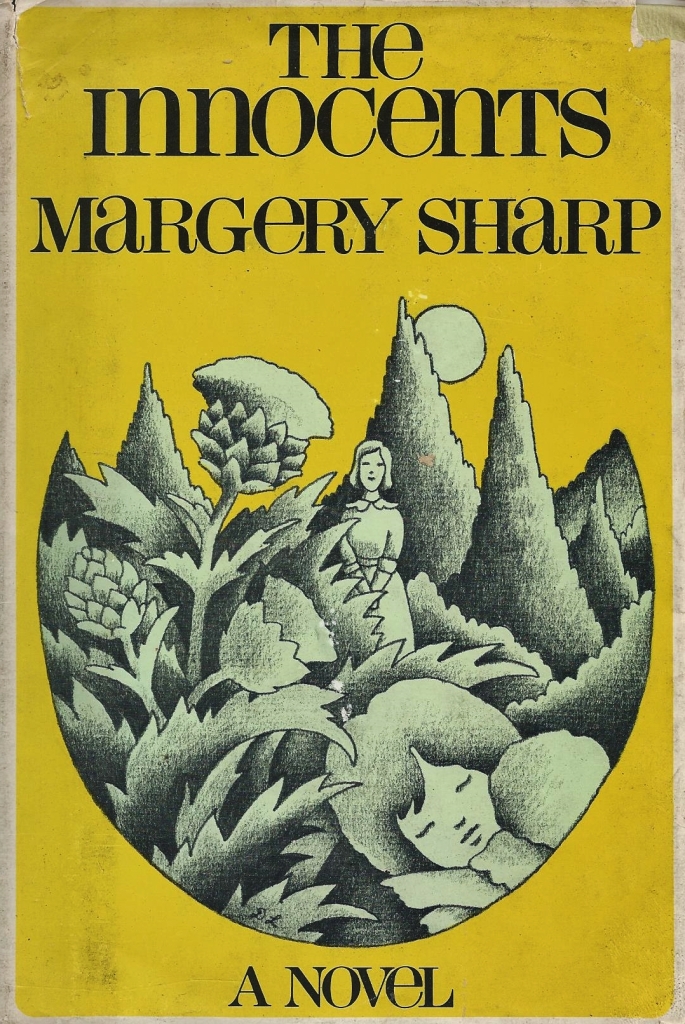
the innocents margery sharp 0011.

The Innocents

by Margery Sharp ~ 1974

I think this may well be my very favourite Margery Sharp, and, as you all may have guessed by now, I am seriously enthusiastic about this author to start with.

This is a very quiet book, one of those minor tales concerning a few people only, with nothing terribly exciting going on within it. But it is a compelling read, and I was completely on the side of the angels right from the get go, though fully cognizant of their failings.

In brief, then.

Just prior to the start of World War II, a middle-aged spinster living in a quiet English village is unexpectedly left in charge of a mentally handicapped toddler whose mother refuses to believe that her child is anything less than “normal”.  The child and her caregiver form a deep and complex bond in the ensuing years before the now-widowed mother returns to collect her daughter and return with her to America, to launch into society, as it were, as a charming sidekick to her fashionable mother.

The reality is much different than the dream, and the subsequent events are absolutely heart-rending. The author lets us all suffer along with the brutally dazed child until bringing things to a rather shocking conclusion, which she has already told us about on the very first page.

Margery Sharp is at her caustic best in this late novel. I absolutely loved it. Hands down, my very best new-to-me read of the year.


Happy Reading to Everyone in 2014!

Read Full Post »

Installment 3 in the 2013 Round-Up takes a melancholy look at some books which just didn’t do it for me.

Still to come, Installment 4 highlighting some books which really hit the spot: Personal Favourites of 2013.

*****

MOST DISAPPOINTING READS ~ 2013

In absolutely random order.

*****

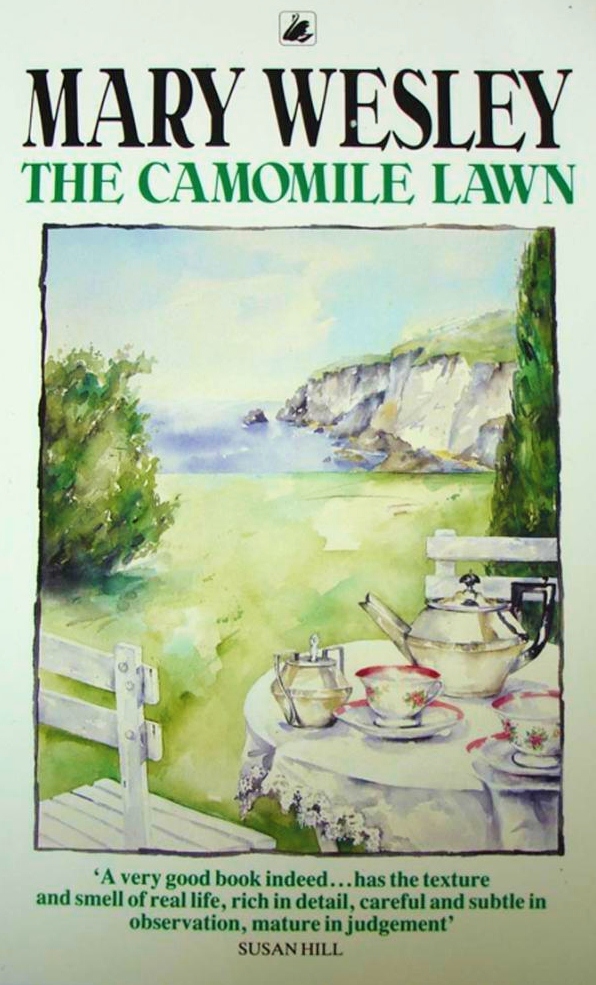
the chamomile lawn mary wesley1. The Chamomile Lawn 

by Mary Wesley ~ 1984

The Chamomile Lawn became a bestseller when it was first published in the 1980s, and much was made of the fact that the author, Mary Wesley, who apparently based much of the wartime narrative on her own experiences, was over seventy when it was released. A popular television mini-series broadcast in 1992 brought the novel to a much wider notoriety.

I can understand the popularity of the novel, as it does have an ambitious scope, a tangled, soap-opera-like storyline, and a generous enough amount of sexual goings-on to pique the interest of the most reluctant and jaded of readers, but I’m afraid I did not embrace it fully. This might be partly editorial, as the phrasing often seemed awkward to me, and I never entered fully into the story, remaining very much an onlooker as the author soberly and without much flair matter-of-factly related the action with an abundance of smutty detail which couldn’t help but leave me squirming – and not in a good way. A complicated and vaguely incestuous (cousins all over each other) picture of lust, yearning and self-indulgence. The period details weren’t enough to make up for the unsavoury plot and stylistic deficits.

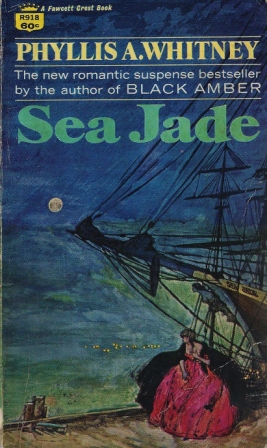
sea jade phyllis a whitney 0012. Phyllis A. Whitney’s Gosh-Awful Bodice Rippers

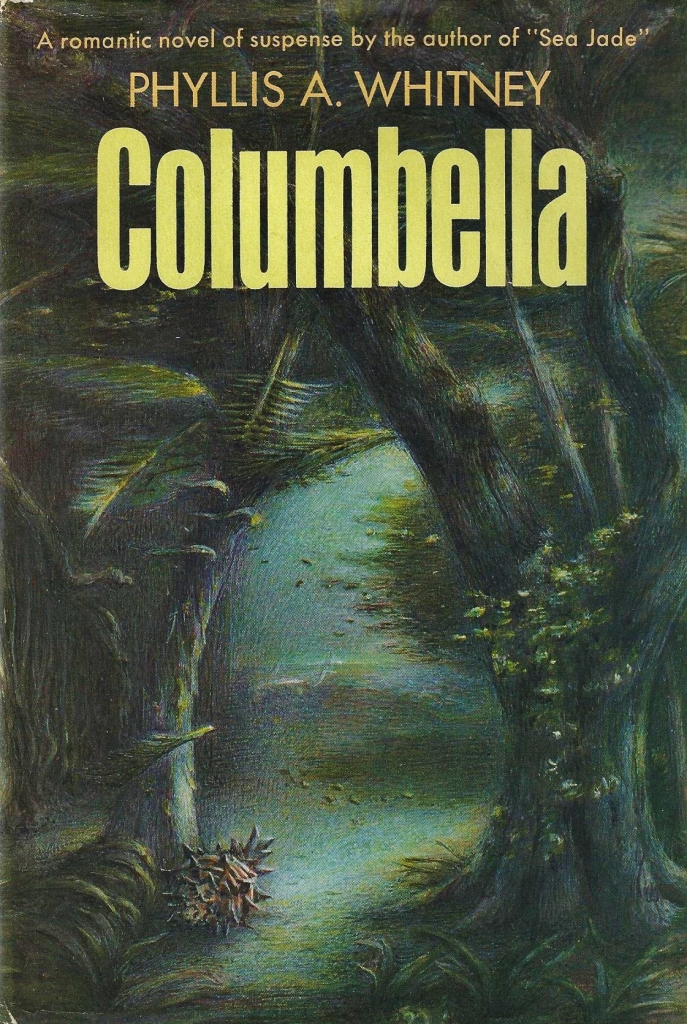
Sea Jade and Columbella 

by Phyllis A. Whitney ~ 1964 and 1966

Just to prove that I sometimes show desperately poor judgement in my reading choices, I willingly read not one, not two, but three books by the very prolific romance writer Phyllis A. Whitney this year. One of these, Seven Tears for Apollo, was reasonably decent, but these other two were absolute stinkers.

Sea Jade was a desperately gothic romance set in post-Civil War New England. Here’s our heroine.

I know how I must have looked that day when I first set foot in the little New England town where my father, my mother, and I were born. Since I am no longer so tenderly, so disarmingly young, I can recall the look of that youthful Miranda Heath as if she were someone else. Slight and slender she was, with fair tendrils of hair, soft and fine, curling across her forehead beneath the peak of her bonnet. Her eyes were tawny brown, with quirked, flyaway brows above them. The wind undoubtedly added to the illusion of her flyaway look; the look of a fey, winged creature straight out of a make-believe world where love and pampering were taken for granted. A creature unaware that she was about to stray into dark regions for which nothing had prepared her…

Breathless, gushing, suddenly orphaned Miranda goes on to have all the stock adventures of a gothic genre heroine. As soon as she seeks refuge with her late father’s old friend Captain Bascombe, she’s immediately forced into an unwelcome marriage with his widowed son. There are all sorts of family secrets, and of course her husband hates her and wants nothing to do with her, having married her under extreme duress. Dramatic deathbed scenes and mysterious Chinese wives and exotic swords and ill-begotten fortunes feature in the scenario. And there’s an intially-hateful-yet-ultimately-winsome child, a huge black dog named (of course) Lucifer, an unexpected will, a mysterious murder (or two)… In other words, the formula as usual.

Points in favour were a certain amount of creativity in the historical bits involving the tea trade and the brief glory of the Yankee clipper ships. And also because the author used every cliché in the romance writer’s book, completely (I’m quite sure) without irony. One of those “so bad it makes everything else look good by contrast” reading experiences – a necessary thing in every reader’s life. Occasionally.

columbella phyllis a whitney 001Columbella  was salvaged very slightly by its nicely described setting, that of the St. Thomas in the Virgin Islands. Shell collecting, jewel thieves, love triangles, heaving bosoms all round. A throbbingly broody love interest named Kingdon should have tipped me off, but I squelched those misgivings down, because I so wanted this to be better than it turned out to be. More clues to its sheer over-the-top-ness which I willfully ignored can be found on the front flyleaf:

That was a night of gold and red, with torches flaming on the hilltop and the lights of Charlotte Amalie fanning out around the harbor below. A night of water lily and sweet-smelling cereus. The night of the shell…

Jessica Abbott, fleeing her own past, finds herself the center of a whirlpool of conflict at Hampden House, high on its cliff in the Virgin Islands. She is confronted by Catherine Drew, a woman whose sole purpose is to torment and destroy. Catherine is the wife of a vital, driven man, Kingdon Drew-toward whom Jessica is irresistible drawn. Jessica must defy the beautiful, self-indulgent Catherine, who likes to affect the name of a shell – Columbella. She must fight for the very future of another woman’s child. Above all, she must find the strength to help the man she loves escape the trap Catherine has set for him. Yet each day Catherine seems to mock her in a new way – and win. Until the night of the shell…

Always, the brilliant island sun shines over Hampden House in St. Thomas and over Caprice, the plantation in St. Croix that is crumbling to eerie ruin, guarded by its unicorns. Always the threat of a hurricane looms over this exotic setting, where the past still affects the present.

And so on. Read at your own peril!

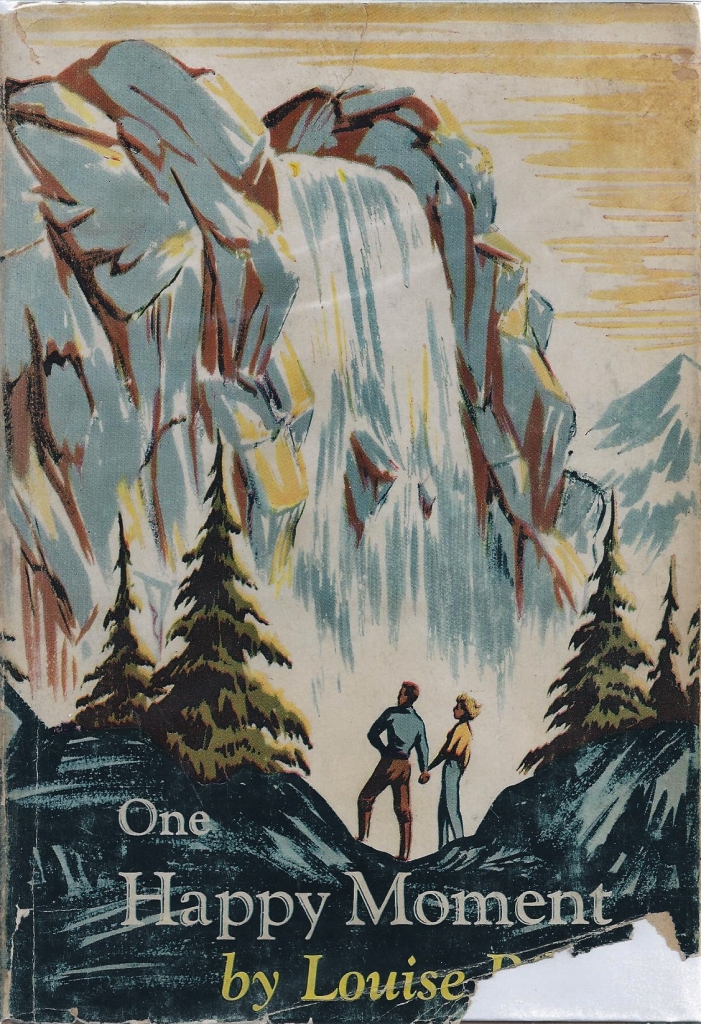
one happy moment dj louise riley 0013. One Happy Moment

by Louise Riley ~ 1951

Much less gushing and emotional than Phyllis A. Whitney’s tortured heroines is this home-grown Canadian gal. Deborah Blair, a young librarian from Montreal, disembarks from a train at a remote way station in the Rocky Mountains near Lake Louise. The first thing she does is when the train pulls away is to strip off her city clothes, change into country duds, and pitch her suitcase and dress suit into the lake. Then she sets off on the 9-mile hike to the mountain holiday camp where she has secretly booked herself a holiday.

Oh, hurray! Tell me more, I thought. But sadly that was about as good as it got. Deborah is fleeing from both an overbearing mother and a rotten, already-married lover, and both track her down to her mountain hideaway, but not before she has found enough self-fulfillment among the lofty peaks and has gained a certain amount of self confidence due to the appreciative embraces of several of her fellow (male) guests to tell them both (mother and lover) to go take a hike.

Not a horrible book at all, and it had some good things to say about female self determination, but clunky styling, the plainest of prose, and an increasingly awkward plot kept it from reaching significant heights. A keeper because of its vintage appeal and enthusiastically described Alberta setting, but disappointing because it could have been so much better with tighter editing, an expanded vocabulary, and less wooden characterizations.
 unlikely pilgrimage of harold fry rachel joyce4. The Unlikely Pilgrimage of Harold Fry

by Rachel Joyce ~ 2012

This recent bestseller started off with some promise. Recently retired Harold, stuck aimlessly at home with his sour wife, receives a letter from an old colleague which tells him that she is terminally ill. Harold hems and haws and eventually writes a rather pathetic letter of condolence. He sets off to walk to the mail box to send the letter, but is overwhelmed by a sudden urge to walk to see the doomed Queenie and deliver his message in person. While he’s walking, she can’t die, is his sudden superstitious thought. The catch is that she is ensconced in a nursing home some 600 miles away. But he trudges along in his light summer jacket and golf shoes, for days and days and days, compelled by an inner urge to make at least this one thing right in his rather gone-wrong life.

Sadly, very soon into Harold’s walk, the plot went all mawkish and droopy and all directions of highly unlikely as meaningful encounters with troubled but helpful people start to occur in quick succession, until at last an assortment of odd pedestrians start walking along with Harold in some sort of copy-cat pilgrimage having nothing to do with poor dying Queenie.

I’m all into magical reality if it’s convincingly well done, but this one demanded more of my suspension of disbelief than I could possibly give.  And the Big Sad Secret which was revealed at the end was so terribly boring, and the “life affirming” ending was so stereotyped that I was tempted to give the thing the toss-across-the-room treatment. It was only saved by the fact that it was a library book. Sorry about my rude dismissal, those of you who loved this one, but my dislike for the way this deteriorated from its early promise is savage and sincere.

And checking out the one-star reviews on Goodreads showed that while I am part of  a serious minority, I was not alone in my annoyed dislike. Long-listed for the 2012 Booker Prize? Was it really?! Oh. My. Gosh. Though I see (I checked) that it didn’t get to short-list status. Thank you, gods of literature, for that small mercy.

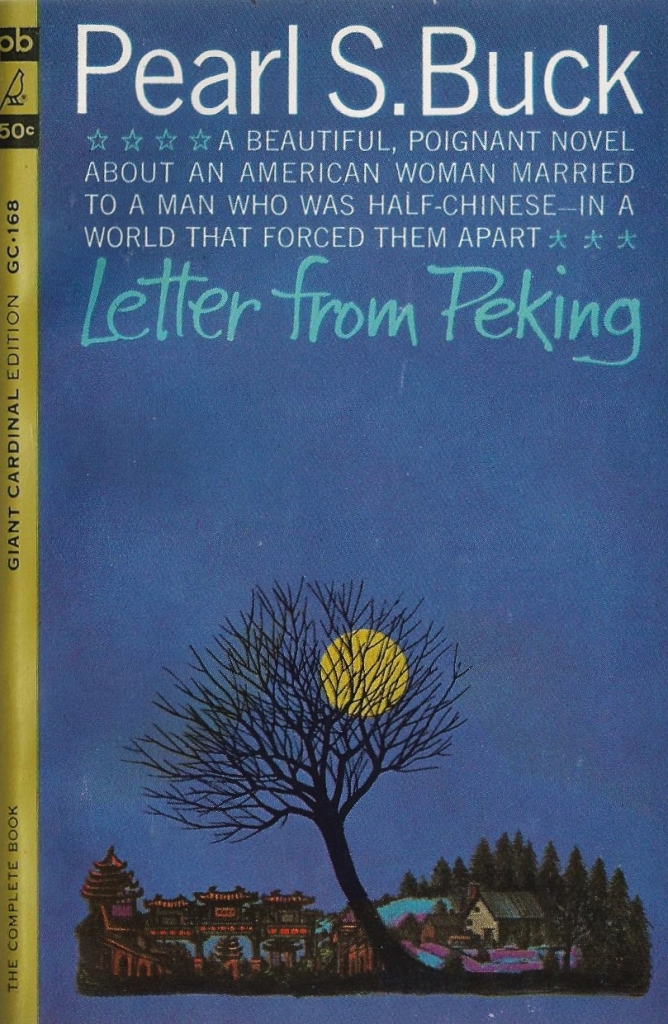
letter from peking pearl s buck5. Letter from Peking 

by Pearl S. Buck ~ 1957

I hate it when I quite like an author but then he/she turns out not just one or two but a whole string of sub-par throw-away books. Pearl S. Buck is a classic case of this, and I have long had a love-hate relationship with her work. When she’s good, she very, very good, but when she gets sloppy, she’s dire. Guess which category this novel – long novella(?) – falls into?

It has an interesting premise, but the characters are all so smug and unlikeable that any sympathy for their situation I might have had soon evaporated.  Here’s the plot. An American woman, happily married for twenty years to a half-Chinese, half-American man, leaves China with her twelve-year-old son at the start of the Communist government takeover. Her husband, due to an extreme sense of duty, remains behind in his job. The woman settles into her family home in rural Vermont, complete with faithful hired man. Communication is sporadic with China; years pass quietly. A letter arrives. Her husband has been pressured to take on a Chinese wife, to prove his loyalty to his country. The woman puts off answering it. The (mature teenage) son runs into issues with his mixed race ethnicity. The woman vapors about, meddles in son’s romantic affairs. She continually demonstrates extreme snobbism, and not-so-secretly rejoices that son’s fiancé is orphaned so she (the mother) will not have to interact with them. During all of this not one but two prospective suitors to the mother materialize. “Divorce your husband and marry again!” Oh, what to do, what to do???!

By the time it all sort of resolved itself (sort of) I no longer cared. Meh. A very carelessly put together book, from a writer who can do much better.

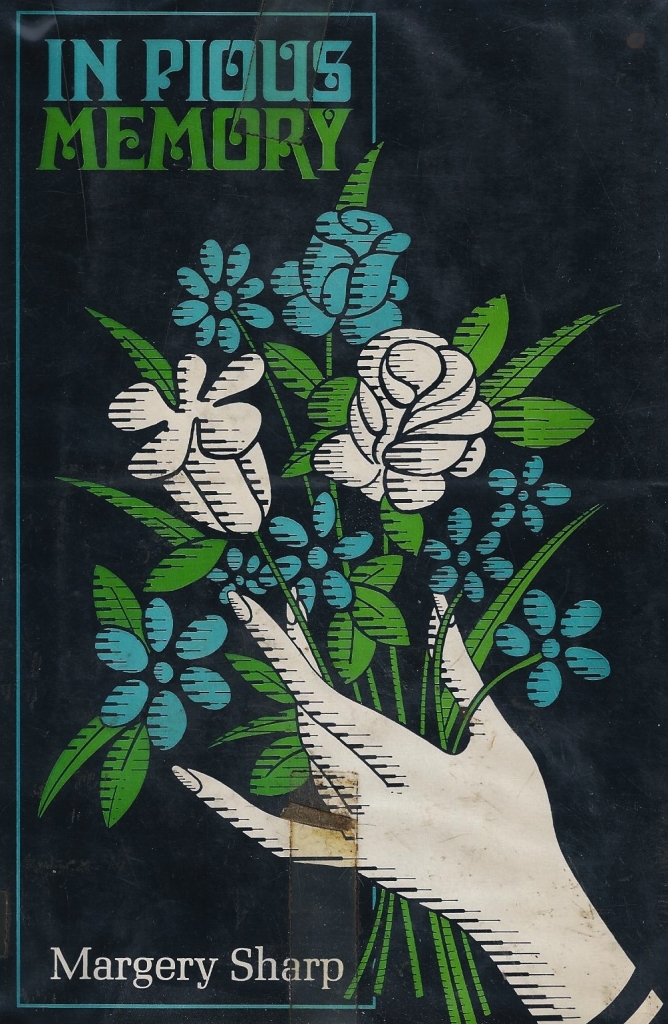
 6. in pious memory margery sharp 001In Pious Memory 

by Margery Sharp ~ 1967

Those of you who are aware of my strong infatuation with the glorious Margery Sharp will be surprised to see her on the Most Disappointing list, but sadly, this book let me down. It’s not rotten, but it’s not up to par either. The plot – never admittedly a very strong point with this author – seems more befuddled than usual, and the characters did not engender any sort of a sympathetic response in my readerly heart. I didn’t really like any one of them, but neither could I work up a strong feeling of dislike. There they just kind of were, moving about randomly in fictional limbo.

The plot description sounds better than the story turns out to be. Mr and Mrs Prelude are in a plane crash; Mrs Prelude walks away, but Mr Prelude perishes. Or does he? Convinced that she has possibly made a horrible mistake when viewing her husband’s body, Mrs Prelude theorizes that perhaps he is still alone, wandering in the Swiss mountains. The 16-year-old Prelude daughter decides to go and investigate for herself. A rather limp farce which doesn’t, like the ill-fated plane, quite make its destination.

OK, I’ll repeat, it’s not a horrid book, and there are quite a number of wickedly funny moments. It’s a keeper, and I fully intend to re-read it and try to drum up some more affection for its good elements, but at this point I’d hate to recommend it as any sort of prime example of this accomplished author’s greater body of work.

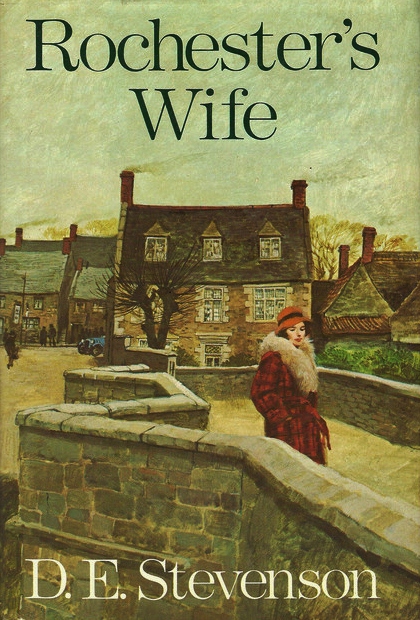
rochester's wife hc dj d.e. stevenson7. Rochester’s Wife  

by D.E. Stevenson ~ 1940

Here’s another writer whom I like quite a lot, but who sometimes lets me down. I don’t read these sorts of books for their hyper-realism – they are “cozies”, after all – but one does require some standard of verisimilitude. In Rochester’s Wife, with its strong reliance on insanity as a key plot point, one can’t help but feel that the author didn’t do her research.

A young doctor decides to settle down in England after travelling about the world. There is much romance, none of it particularly appealing to read about, all forbidden love and rather limp yearnings. The already-referred-to episode of insanity is handled in a very bizarre manner by the author as well as the several doctors in the case. Even in 1940 I am sure the British medical establishment was more capable of treating psychoses in more effective ways than they appear to do here! One of the weakest of this author’s books I’ve read to date.

8.Mary Stewart’s B List

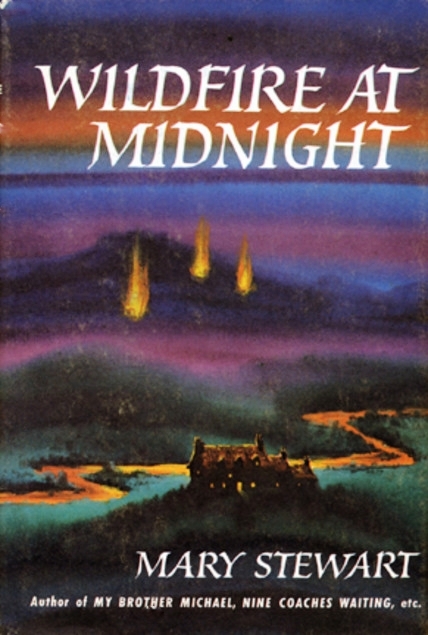
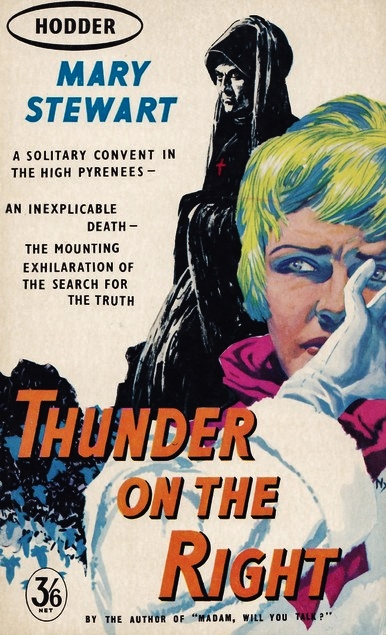
Wildfire at Midnight and Thunder on the Right 

by Mary Stewart ~ 1956 and 1957

Well, while I’m on something of a roll panning tales by authors I really, truly like, let’s spend a few minutes with Mary Stewart. I’ve read quite a few of her romantic-suspense novels this year, and have found my responses to be mixed. While I really do sympathise with her very capable and likeable heroines, and enjoy her detailed descriptions of settings, the de rigueur action sequences of many of the books, described in frame-by-frame photographic detail, drive me slightly mad. Panic-stricken girl in high heels etcetera manages to dodge ex-secret service trained killer etcetera while negotiating crumbling cliff/tiled castle roof/squelching Scottish bog/etcetera. Yup. Of course.

Well, those sequences are really the whole point of the books, aren’t they? The menace keeps building until something has to give. And in most of the books I’ve read I’ve happily played along, rolling my eyes but taking it as part of the package deal. But these two pushed past my tolerance level for willing suspension of disbelief.

Wildfire at Midnight - dust jacket illustration, first edition, 1956.

In Wildfire at Midnight, a gorgeous London model, separated from her husband, is maneuvered by her parents into taking a holiday on the Isle of Skye, ostensibly to escape the chaos of the Coronation festivities. Immediately upon arrival, who should lovely Gianetta meet but her estranged husband, who is ostensibly on Skye for a mountain climbing holiday. The two keep their prior acquaintanceship a secret from their fellow guests, which makes things quite awkward when a series of grisly murders puts the holiday-makers and rock-climbers at the remote country inn under strong suspicion.

Gianetta (or Janet, as she prefers to be called) shows no common sense at all, continually wandering about either all by herself or with one or another of the chief suspects. One day she goes for a walk at just the wrong time…

Bizarre and unlikely motive for the killings, continual stupidity of the heroine, and unlikeable love interest rather ruined this one for me, even before the mountain crag/quivering bog/Scottish mist chase scene.

Salvaged by gorgeous descriptions of the settings and atmospheres of London and Skye, and the period verisimilitude of the characters crowding around the radio every evening in order to follow both the progress of Coronation festivities and Edmund Hillary’s attempt to climb Mount Everest, of particular interest to all of the rock climbers in the story. Nicely done, those bits.
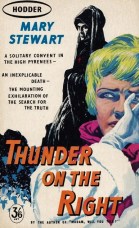
Beware the nun! An older paperback cover which captures the mood so very well.

With my panning of Thunder on the Right I’m in good company. This was apparently the author’s least favourite of her novels, and I can see why. Here are her own words, courtesy of the excellent Mary Stewart Novels website:

From Contemporary Authors, Vol. 1, 1967

Ms. Stewart once claimed Thunder on the Right as her least favorite novel. “I detest that book. I’m ashamed of it, and I’d like to see it drowned beyond recovery. It’s overwritten. It was actually the second book I wrote, and for some strange reason I went overboard, splurged with adjectives, all colored purple.”

So what’s this one all about? Let’s see if I can sum it up briefly. A gorgeous young lady is in France and hopes to have a reunion with her older, recently-widowed cousin, who is apparently undergoing a retreat in a nunnery prefatory to taking vows. When the heroine arrives at said nunnery, she is told her cousin is dead and has been buried in the garden. “Something” tells the heroine that this is untrue, and that her cousin is alive. Luckily there is a handsome and rather brooding young man handy to aid the heroine in her search for the truth – and, by golly! – he is conveniently an old flame of the heroine’s, there in a remote corner of France by sheerest authorial hand-of-God. Evil nuns, a handsome local boy on a rampant stallion, a wicked smuggler, escaping criminals and much too much coincidence unite in making this one my own least favourite of Mary Stewart’s improbable (but usually highly enjoyable) romantic-suspense novels.
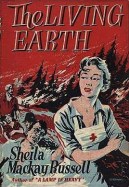
 

the living earth sheila mackay russell 29. The Living Earth

by Sheila Mackay Russell ~ 1954

I became interested in this book due to my prior discovery of the author’s semi-autobiographical novel A Lamp is Heavy, concerning a young nurse’s experiences as probationer in a North American city teaching hospital in the early 1940s. I was pleased to find out that Sheila Mackay Russell was an Albertan nurse/writer, who had a modest success with A Lamp is Heavy, and who went on to publish another novel, The Living Earth, also with a nurse as a main character. With some trouble I managed to acquire a copy of The Living Earth, and settled down to a happily anticipated read.

The story started out quite well, with a young nurse travelling by train to her posting in a remote northern Alberta community, “Mud Creek”. On the train is a fellow traveller, another young woman heading for the same community, to her posting as a school teacher. The two set up house together, and proceed to have all sorts of rather sordid experiences. Both attract rather unsavory lovers (married, alcoholic, manic-depressive, abusive etcetera) and much heart-rending ensues.

This novel is of the hyper-realistic genre, and it could have been quite decent but for its rather awkward phrasing throughout, and its insistence on dragging out every single episode to the utmost of its interest level and then a little bit beyond. It’s also dreadfully bleak. And melodramatic. Bleakly melodramatic, in fact! I am not surprised that there is no third novel from this writer, though The Living Earth went through a number of printings which argues a certain success. She did produce a number of short stories which were printed in the Canadian women’s periodical Chateleine, according to one of this blog’s readers.

I never did write a review of this novel, because it so deeply disappointed me, despite its author’s undoubted good intentions of creating a true-to-life dramatic novel with a regional setting. I think that her motivation was praiseworthy, but sadly it didn’t quite come off. Possibly of interest to anyone studying womens’ experiences in northern Alberta in the 1940s/50s, but beware the fictional elements, which seemed to me to be many.

I could not find any other reviews of this now-obscure Canadian novel.

1982 jian ghomeshi10. 1982 

by Jian Ghomeshi ~ 2012

And here we have a truly Canadian memoir, this time by the popular C.B.C. radio personality and ex-Moxy Früvous drummer, Jian Ghomeshi. I had such wonderfully high hopes for this book, as I usually enjoy Jian’s interviewing style on his weekday pop culture talk-and-music program on the C.B.C., “Q.” He’s an interesting-sounding personality himself, and his frequent references to his own background as a child of Iranian immigrant parents growing up in Ontario in the 70s and 80s make him both relatable and slightly exotic, a public persona he nourishes with obvious care.

But this memoir. Boring, boring, boring.

It wasn’t that Jian didn’t have an interesting teenage life. He did, in a tame sort of middle-class, upwardly mobile, successful immigrant family sort of way. In 1982, the year more or less profiled in this “creative autobiography”, Jian turned fifteen. He was in the throes of young love, was hanging out with a bunch of good friends, and was playing drums in a band – okay, it was the community band, but still… He was listening to all sorts of cool new music, had reinvented himself as a New Wave wannabe, and was having quite a time experimenting with hair dye and styling gel and eyeliner and dressing all in black. He had a loving and supportive family, abundant parental funding, and oodles of positive reinforcement from his teachers and the other adults in his life. He did stuff. He went places. He got into a few interesting situations, and made it through them in one piece. Easily enough stuff to write a memoir about.

A short memoir. A novella-length memoir. Not the almost-300 page thing that this turned out to be.  Jian ran every single little incident of that year completely to death. And though it was interesting in bits here and there, ultimately I just couldn’t care.

shadows robin mckinley11. Shadows

by Robin McKinley ~ 2013

Much as I hate to do this, I need to add a “bonus” to this list.

Shadows is the recently published “kind of like Sunshine, but for teens” fantasy by the iconic writer, and I had high hopes for it. Sounded good in the pre-publication discussions, and the early reviews were mostly favorable, though in retrospect I realize there were quite a few “buts” in some of those reviews.

17-year-old Maggie lives in a world where magic is forbidden, and when it sporadically shows up it is immediately squelched by squads of specially trained soldiers. People with magic in their genes are “cleaned” and re-released into the population; science takes care of everything in this world, thank you very much.

So when it becomes apparent that there is a massive outbreak of the magic bulges called cobeys threatening to overflow into Newworld, Maggie is shocked to discover that she has some latent powers which work to contain the bad vibes.

The author doesn’t bother explaining why magic is so nasty, and what will happen if it breaks through. She tells us it’s a really bad thing, and leaves it at that. But suddenly all of the “good” characters start showing varying degrees of magic powers which are obviously going to save the day. From, umm, something.

Extra Disappointing points for the annoying first person narrating heroine and her endless rambling on about how wonderful she is to understand all the nice little animals she loves so very much and how thick the adults in her life are and how hard algebra is and how amazing her origami skills are and how cute and clever her pop culture Japanese slang is.

Please forgive me, those of you who liked this book. I’m a long-time McKinley fan too, and I hate to slam her work, but this one wasn’t quite ready to see the light of day, in my opinion.


Read Full Post »
« Newer Posts - Older Posts »