Posts Tagged ‘British Columbia’

Let the Day Perish by Christian Petersen ~ 1999. This edition: Beach Holme Publishing, 1999. First Edition. Softcover. ISBN: 0-88878-400-7. 136 pages.

My rating: 9/10. Strong, vivid and eloquent. “Beautifully crafted”  and “Powerful” may have become clichéd descriptions, but they apply in their most sincere sense to these punchy short stories.

*****

From the back cover:

Christian Petersen beautifully reins in the confusion and displacement of a diminishing band of men facing the daily spectre of an unforgiving land, men enslaved to the grind of the sawmill, hunkered on bar stools, high in the saddle of a John Deere, or wild behind the wheel speeding down dirt roads to the Fraser. Here are fathers, brothers, lovers in search of forsaken children, bygone loves, and memories long faded in the wash of fast-running streams and firelight. Here are the unpardoned, raging against what they might have been, what they are now, and where their paths have led them. Yet Petersen’s characters hollow out a quiet dignity, gentle in the silent truth that they are small in the face of pain – and of change.

Regional literature set in areas familiar to the reader is difficult to view in perspective. I find that I am often so caught up in nodding in recognition of places and people that a crucial distance is hard to maintain in attempting to judge merit of story and style. And this is a very local collection of stories, by a writer who closely shares my own experience of time and place in his formative years, growing up in Quesnel in the 1960s and 70s, leaving the Cariboo for a time, and eventually resettling in Williams Lake, where he has worked (is still working?) as a probation officer. He is obviously a keen observer of local “types” – they are instantly recognizable – but he looks past the superficial surface of the stereotypes to the turmoil within.

A quotation on the opening page gives a clue to the content within:

If a story is not to be about love or fear, then I think it must be about anger.

  • The Look of the Lightning, The Sound of the Birds ~ Diane Schoemperlen

Love, fear and anger are all represented here in their deepest intensity.

A very readable collection of stories, definitely for British Columbians familiar with the Cariboo-Chilcotin settings, and with a broader appeal to universal emotions which should resonate with readers everywhere.

  • Heart Red Monaco ~ Two unlikely friends search for some kind of meaning in their treading-water lives.
  • The Next Nine Hundred Years ~ Vignettes of “working at the mill.”
  • Horseshoes ~ Two brothers: rivalry, conflict and resolution.
  • Come Evening ~ A day with one of the fringe-dwelling “troopers” of Williams Lake.
  • Scout Island ~ From her house overlooking the nature reserve, a horse trainer deals with “getting by”, and a troubling situation initiated by her young son and her elderly great-aunt.
  • Country Boys ~ The brutal world of the high school bully, his victims and, ultimately, his tormenters.
  • Taseko ~ A boy goes moose hunting in the Chilcotin with his father and his father’s friend.
  • Let the Day Perish ~ Life, love and death on the ranch.
  • This is How It Is ~ A divorced father yearns for his young daughter.
  • Thibeau’s Crossing ~ Betrayal changes everything in a peaceful valley.
  • Charity ~ A sincere Baptist Church minister gives in to passion with far-reaching consequences.
  • Men’s Wear (after a fashion) ~ The venerable owner of the town’s “upper crust” men’s wear store is challenged by changed times, and undergoes an epiphany. Great ending note to this collection – left me smiling. Nice to quit on a high point; some of these stories (though not all) were dark.

Petersen has also written a mystery novel, Outside the Line (2009), and another collection of short stories, All Those Drawn to Me (2010). He is currently working on another book, a novel. I will be watching for it. Keep an eye out for this author. This first collection is excellent.
Read Full Post »

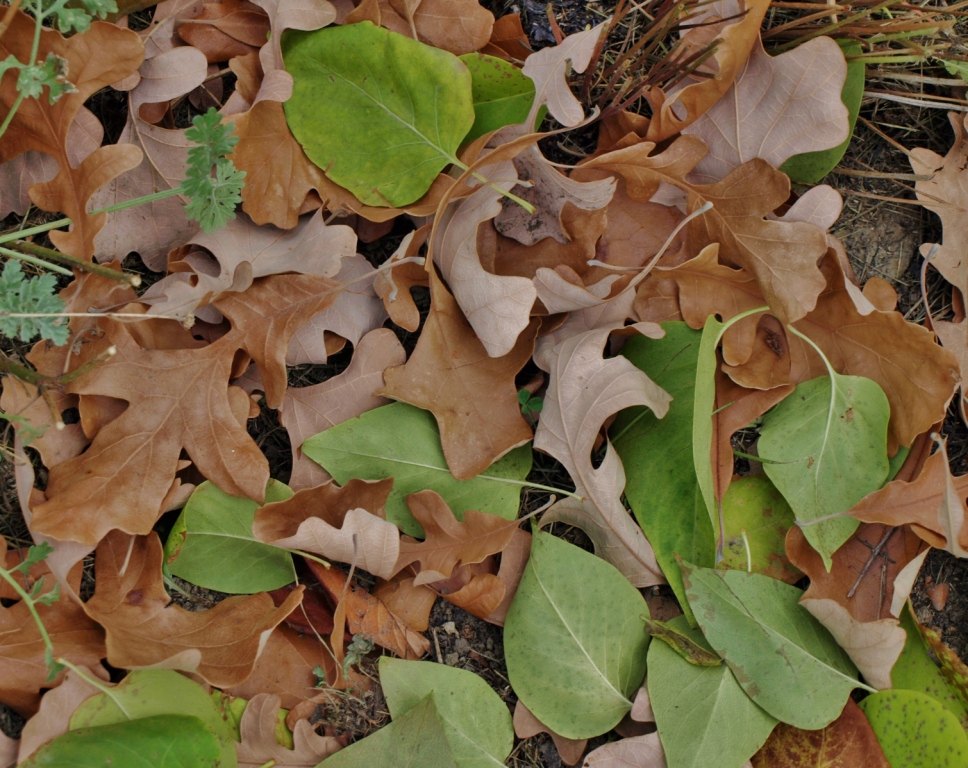
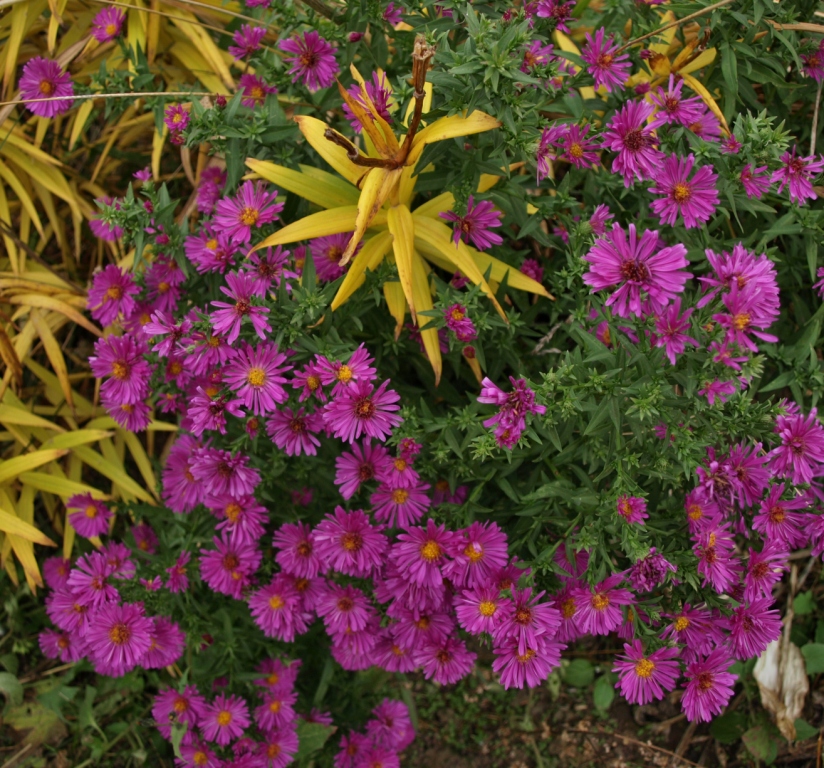
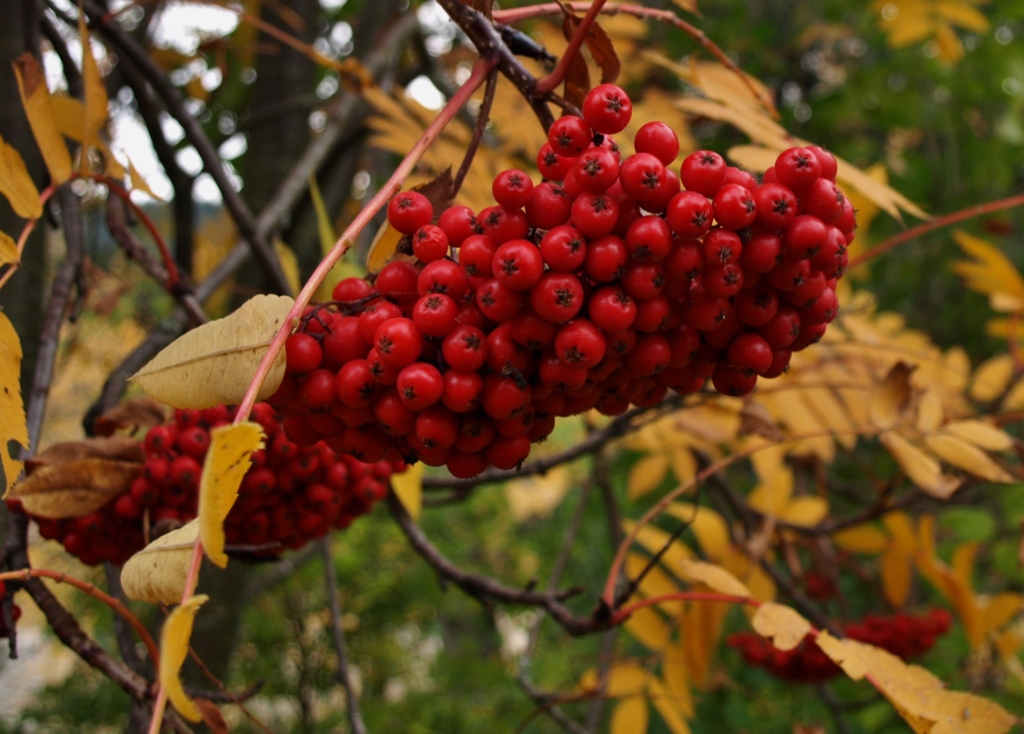
On the outer edge of autumn. October 17, 2012.

Read Full Post »

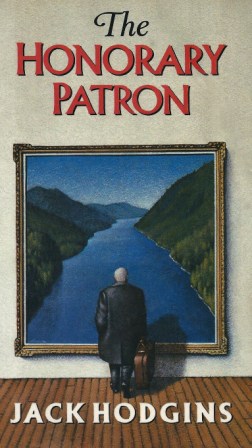
The Honorary Patron by Jack Hodgins ~ 1987. This edition: McClelland and Stewart, 1989. Paperback. ISBN: 0-7710-4190-X. 413 pages.

My rating: 6.5/10. You’ve got to be in the mood to fully appreciate Hodgin’s rather cumbersome playfulness in this one. I guess I’m not quite in the right frame of mind. It was pretty good, and I smiled my way through, but I can’t see myself picking this one up again any time soon. Still a keeper, for a few years hence. Bottom or top shelf – not in the premium placings.

*****

If you liked Timothy Findley’s Not Wanted on the Voyage, or anything by Robertson Davies, you’ll probably look on The Honorary Patron with interest. I think the genre here might be what is termed “magical realism”. Everything is based firmly on solid ground, but the farcical bits go way over the top, tipping the reader off early on that this is not simply an amusing narrative, but something much more playful and far-flying. I get the feeling that Jack Hodgins had a wonderfully self-indulgent time writing this one, and there are more than few cunning digs at his native Vancouver Island and the residents thereof. (Unloading some old baggage, eh, Jack?) But he keeps just this side of spitefulness, so it’s all good.

Not-quite-elderly Professor Jeffrey Crane is settled comfortably into life as a Canadian expatriate in his adopted habitat of Zürich. He has a solid reputation as an accomplished art lecturer, a respectable retirement income from his university teaching days and his still-popular television series, and looks forward to an unbroken future of gentle walks in the park, trips into the countryside to visit his landlady’s family, and long hours spent napping in the sun at his favourite rooftop cafe.

All of this is threatened by the sudden tempestuous arrival of a very-much-alive ghost from the past, his Canadian ex-lover Elizabeth Argent, who bursts in on Jeffrey as he sits up in said cafe, searching frantically for his shoes – which he always kicks off, a running gag throughout the book – so he can escape. He is captured, and thoroughly subdued by vibrant Elizabeth, who has sought Jeffrey out to convince him to come back to Vancouver Island and act as the Honorary Patron of the newly minted Pacific Coast Festival of the Arts. A few speeches, a lot of nodding and smiling, a chance to revisit old haunts, what’s to worry about, Jeffrey?

As it turns out, there are many surprises waiting for the Professor on his long-abandoned home grounds. The coastal rainforest is crawling with old secrets nurtured and embellished, ready for revelation, and unanticipated new situations which Jeffrey, exceedingly unprepared, steps into with bizarre results.

Hodgins paints this picture with a palette brimful of colour and dazzle, using a combination of wildly broad strokes and occasionally the most delicate of detailing where his attention is focussed momentarily.

Does it work? Well, sort of. The Honorary Patron is a bit of a forgotten book, though it did win an award or two – Commonwealth Writers’ Prize for Best Book in the Caribbean and Canada, 1988, for starters. Hodgins is a good writer, no quibbles about that, but I wouldn’t recommend this as a place to begin in exploring his body of work. Spit Delaney’s Island would be my personal recommendation, and then see where (and if) you go from there.

Read Full Post »

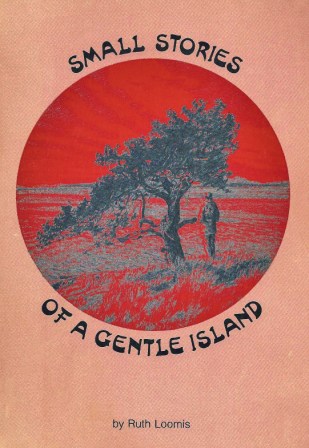
Small Stories of a Gentle Island by Ruth Loomis ~ 1986. This edition: Reflections, Ladysmith, British Columbia, 1986. Illustrated by Carol Evans. Softcover. ISBN: 0-9692570-0-7. 96 pages.

My rating: 7.5/10. I enjoy re-reading up this slight volume of memoirs every few years, and I suspect it will always remain in my permanent collection of British Columbia books. I do wish it were a bit longer; many of the stories stop short, leaving the reader yearning for more. Ruth Loomis doubtless has a fount of knowledge and stories of this area; I would be thrilled to read a longer, more in-depth volume going into more detail. A very personal memoir, this one, and one almost feels as if one were eavesdropping on a private conversation. Well done.

*****

In 1952, young and newly married Ruth Loomis moved with her husband from bustling Seattle to small Pylades Island in the Strait of Georgia, between Vancouver Island and mainland British Columbia. Here an alternative lifestyle moved from dream to reality. A home and garden were established, two babies born, and the challenges and joys of a life intimately connected with the sea and nature were embraced.

Time moved on, and twenty years later the marriage dissolved and the island was left behind. This was shortly followed by the tragic death of Ruth’s eldest daughter, and, after trying to cope with her multiple sorrows by immersing herself in the busy mainland world, Ruth decided to go back to the island alone.

She lived there until 1985, when she left for the last time. Pylades was sold, and Ruth moved to Vancouver Island. This book is a collection of reminiscences and a loving farewell to the dream and the reality.

A slender volume, only ninety-six pages, but it captures the essence of one woman’s thoughts and feelings about a very unique time and place. Having recently returned from a Vancouver Island visit, and after having leaned on the railings of the ferry crossing the Strait, yearning romantically for a chance to explore those wave-surrounded rocky isles glimpsed all too briefly in the ship’s swift passage, I sought out this book on my return. The smell of sea and cedar seem to waft from its pages, among other evocative aromas.

The Gulf Islands are famous for their free spirits and willing experimenters with various relaxants and hallucinogens, and it is apparent from this memoir that Ruth was no exception; some of the vignettes are very much tinted with a haze of unreality, though most are straightforward stories. There is a strong vein of melancholy and sorrow throughout, though it is balanced by remembrances of joy and healing.

In her Introduction, Ruth says

I survived, discovering that life has a healing balm alongside its searing forces. I needed time, time to feel my past dissolve into the present. That love of now Pylades gave, with its interplay of seasons and sea-life. The fantasy that I controlled my life vanished. I became interested in the essence of creation, slowly realizing I was not separate but part of it. Others occasionally came to this gentle island who needed time too, whether a few hours, days or months which Pylades gave.

The stories follow a chronological path, from 1957 to 1986, allowing brief and vivid glimpses of moments now lost in time. Along with the poignancy and the regrets there is plenty of humour and thoughtful musing. This is a slender little volume, an hour or two’s reading, but the stories stay in one’s head long after the book is put back on the shelf.

The Visitor ~ 1957

Butter Money ~ 1959

Today, Tomorrow and the Brother ~ 1961

Fog ~ 1968

Five Days of Nina ~ 1970

Appointment with God ~ 1974

Squatters ~ 1975

Susanne ~ 1978

Mushrooms and the Renaissance Man ~ 1979

Play with the Dolphin ~ 1980

Eagles ~ 1984

The Last Season ~ 1985

B.C. readers, keep an eye out for this one in secondhand book stores. If you find it, open it up and spend a few minutes in Ruth’s lost world, and perhaps give it a home on your own shelves among other records of our past.

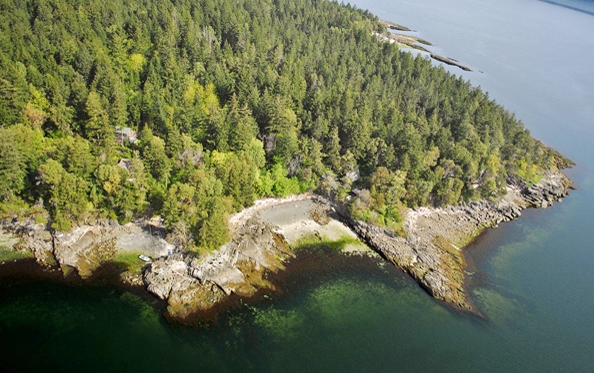
A postscript. We were curious about the eventual fate of Pylades Island, and did a bit of internet research. Pylades was on the market again  in 2009, and a lot comprising half of the island, with Ruth’s derelict old home on it, had just sold for something like $2,400,000. I hope Ruth profited to a like degree upon her departure. Here are several picture taken at the time of that sale. Dream away!

Read Full Post »

The best-laid plans oft gang agley, and so also do the spontaneous ones. We’ve all been laid low, in beautiful synchronicity, by an evil virus our daughter brought home from her newly convened dance studio chums. Hacking and barking like a bevy of two-legged seals, we hiked about Pacific Rim Park with ever-lessening enthusiasm for several days, before blearily deciding to suffer the rest of the awful illness’ term at home in relative comfort.

It wasn’t all so bad – there were some quite good bits. We hit low tide in early morning on several beaches, all alone but for the sea creatures in the intertidal zones; we napped away two beautifully sunny afternoons in the warm sand, wakening to read for a bit, watch the surfers attempt to catch those obviously rare “perfect waves”, and doze again; we people-watched one morning in Tofino and had a grand brunch at The Common Loaf, the iconic local bakery; we sat around numerous campfires commiserating with each other and comparing symptoms; we visited the Ucluelet Aquarium and chatted with the ever-enthusiastic and knowledgeable biologists and volunteers; and even, on our last day, managed a side trip into the big city to visit the Cone Sisters Retrospective “Collecting Matisse” exhibition on loan from Baltimore, at the Vancouver Art Gallery.

We pulled out of the city and headed up the Sea-to-Sky Highway at 2:30 and made it home just before midnight – a marathon drive, but the reward was an enthusiastic greeting by our canine and feline crew, and our own cozy beds. Today we’ve been wandering about a bit lost and culture-shocked by the abrupt changes in our generally sedate lives this past week.

Newly topped up with sea air and a dash of culture, we’re thinking we’re now ready to face our getting-ready-for-winter chores with fresh enthusiasm. Or, to be honest, we will be ready soon, once we get a bit further along in our viral journey.

I only managed to read two short books, and I didn’t take too many pictures, but here are a few souvenirs of the lightning-fast trip. Next time…

*****

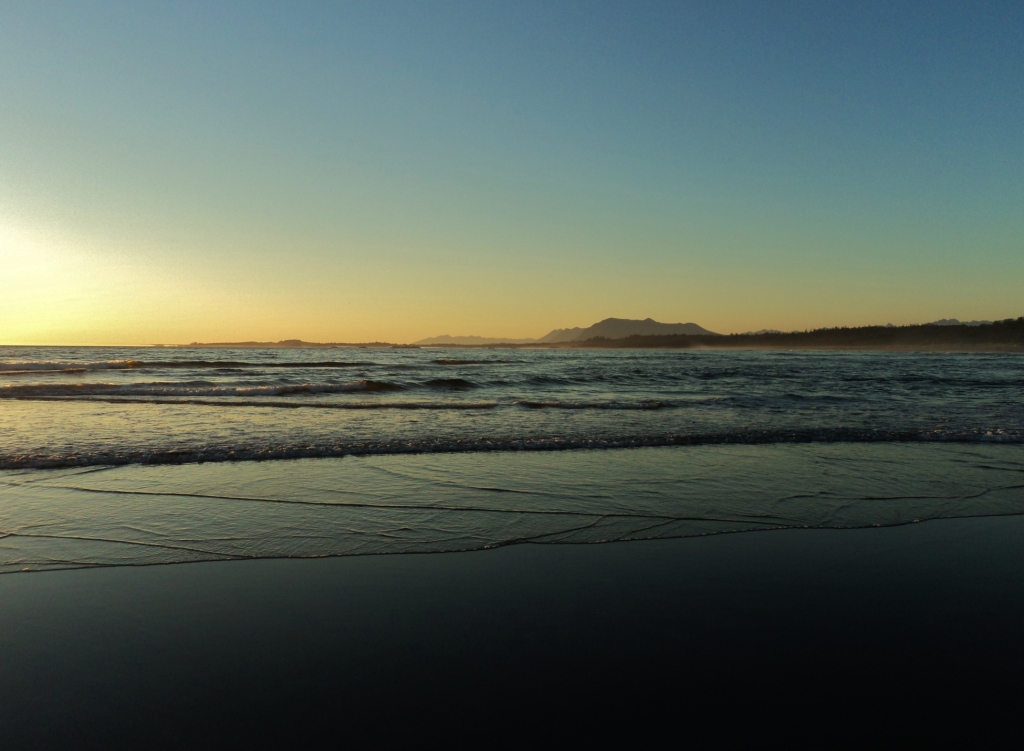
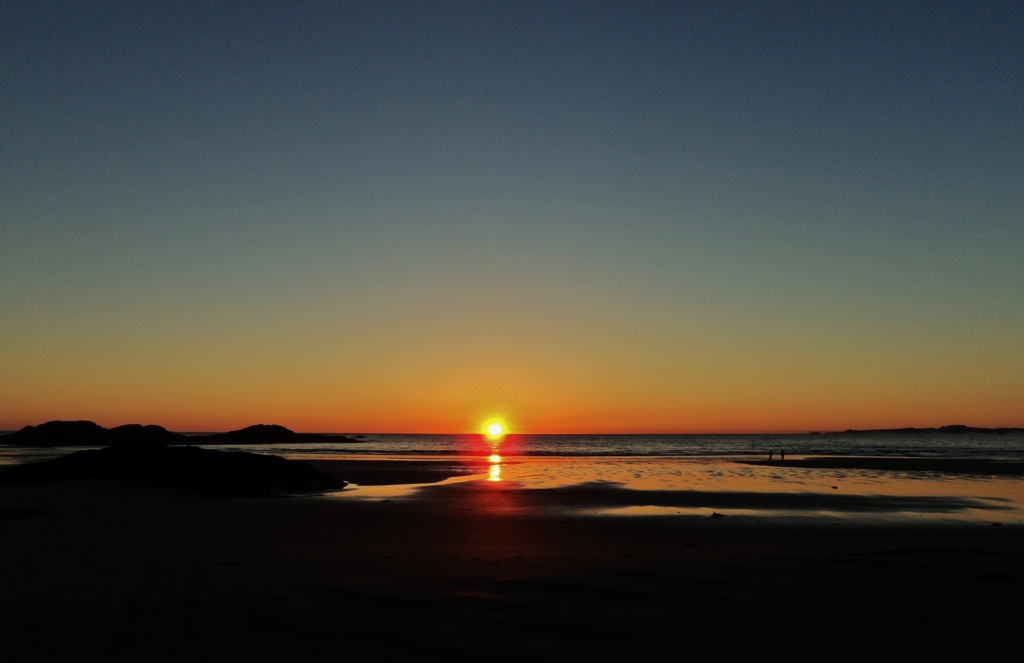
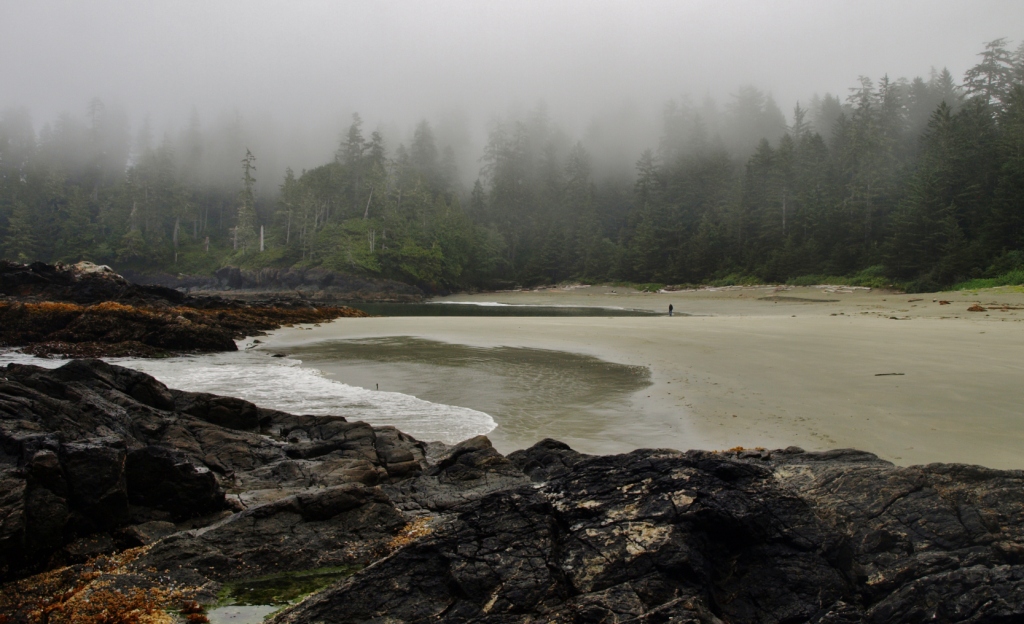
We arrived just in time for a rare clear evening and an awe-inspiring sunset over the ocean, next landfall Japan.

Long Beach, Pacific Rim National Park Reserve, Vancouver Island, British Columbia.

A very special place.

And a while later, the real celestial show began.

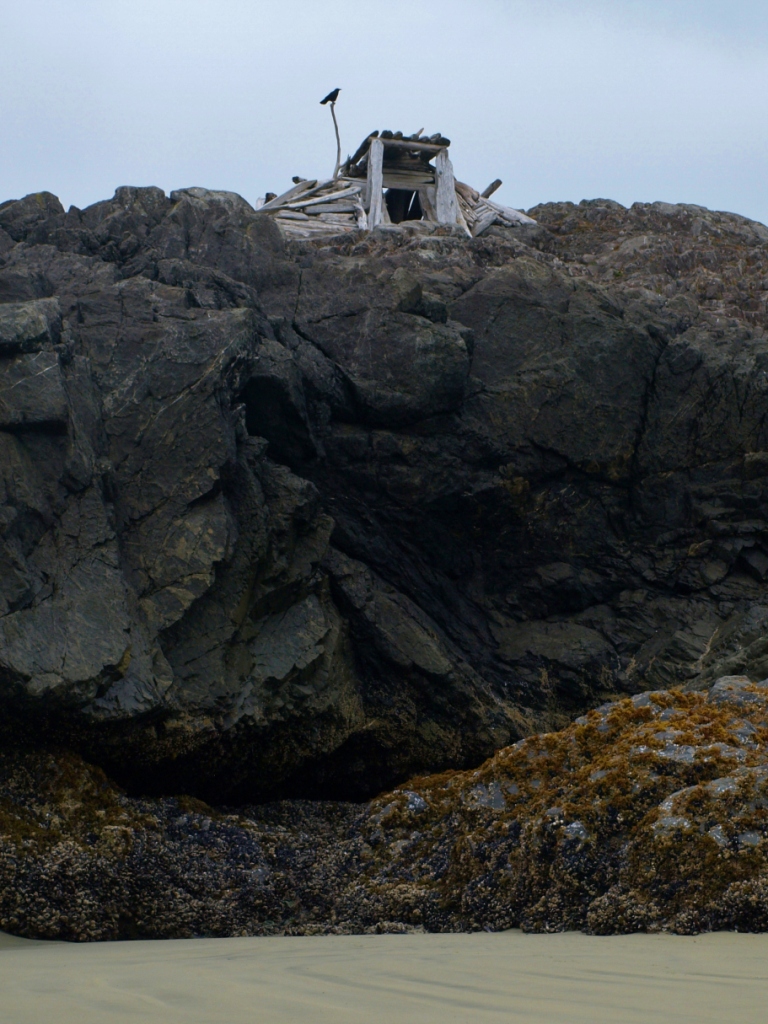
Early the next morning we enjoyed the company of ravens scouting for a low tide meal, and using a convenient driftwood structure as a lookout post.

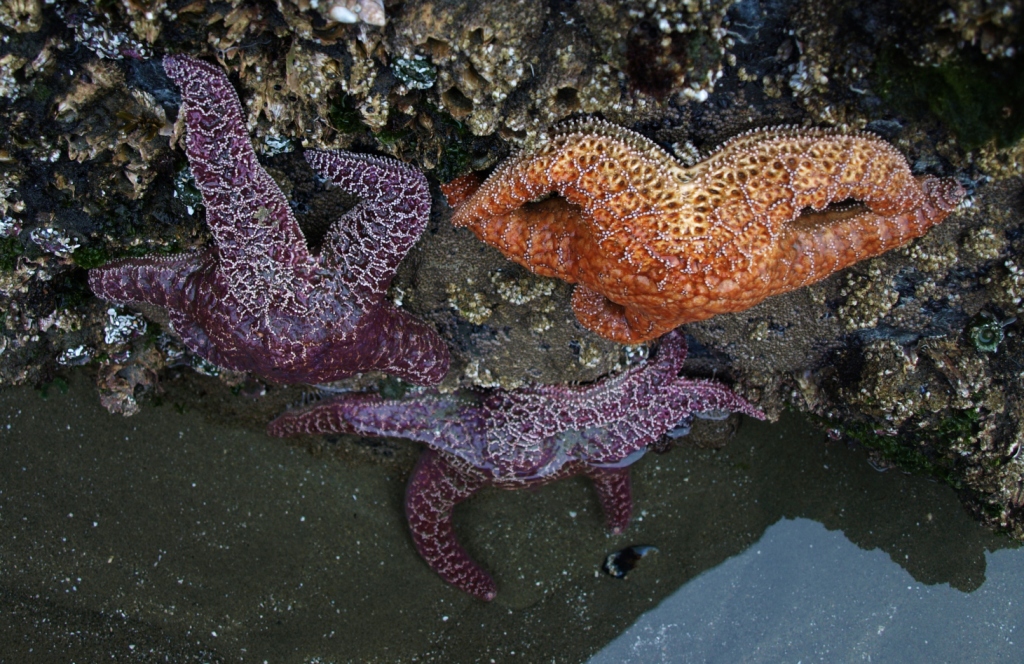
Starfish. (But you knew that, didn’t you?)

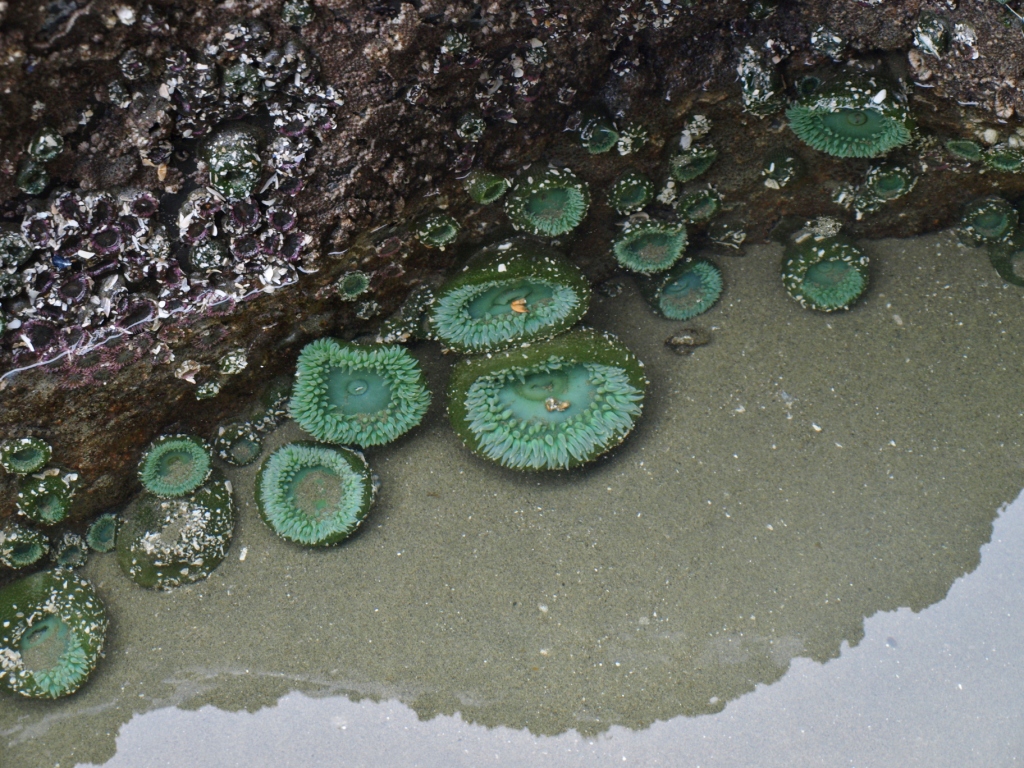
 And many sea anemones.

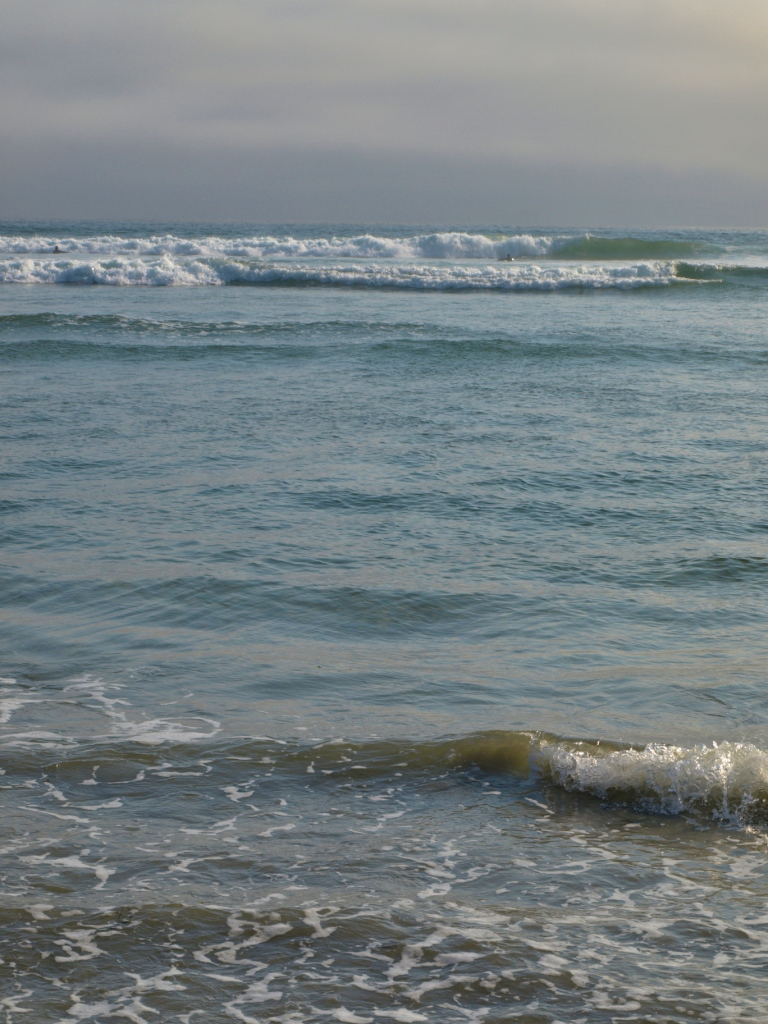
Waves at Incinerator Rock, a favourite surfer’s hangout. Can you see the two “Bobs” in the water? We decided that all surfers are named Bob, because that’s what they spent the vast majority of their time doing. Waiting on the perfect wave! This is wetsuit water, even in high summer. They hung around for hours out there, like seals in the surf, while we napped and watched from our warm and sandy nook among the washed up driftwood logs.

And on our last morning, we caught low tide and waited for the turning at the perfectly named Halfmoon Bay. Down a kilometre and a half of no longer sign-posted trail, ending in a precipitous ocean side staircase fast giving in to the elements, we were the only people here for hours. We met a few fellow trekkers coming in as we were leaving – perfect timing and a lovely way to end our too-short visit.

If you ever get a chance to visit this glorious area, do it! There’s never a bad time, summer or winter, rain or shine.

Read Full Post »

My World: Heading South

Greetings all – just a quick note to those of you so kind as to visit and especially comment on my postings. We have unexpectedly been blessed with a farm sitter, so have decided to take a rather spur of the moment trip to points south and west. In other words – so we’re shortly heading out on a camping/hiking trip to beautiful Long Beach on the west coast of Vancouver Island. We are leaving all electronics behind, so the blog shall fall silent for a while – maybe a week or a bit longer?

I’ve got a great big pile of books to take along for these ever-earlier-dark autumn evenings, and lots of batteries for my reading light, so will be back with an even longer “must review” list.

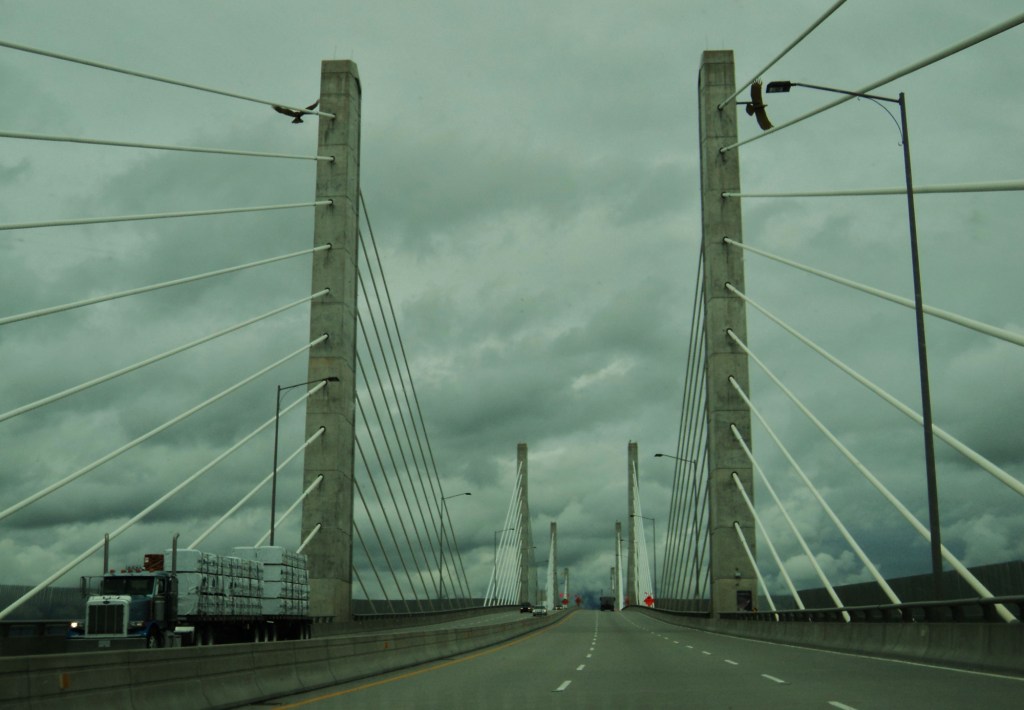
Leaving you all with a glimpse of one of my favourite new bridges, the soaring Golden Ears span over the Fraser River heading towards Vancouver, which we may or may not pass over this trip, depending on traffic levels and our ever-changing route plans. (It was also the only vaguely “coastal” image I could find quickly on my camera card this afternoon, before wiping it clean for the next go-round.)

Ciao!

Read Full Post »

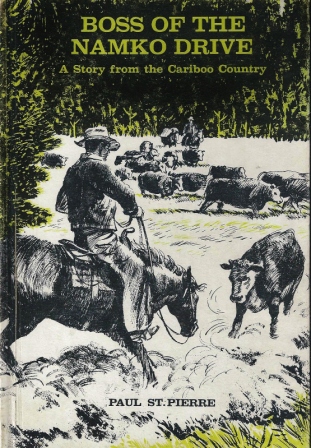
Boss of the Namko Drive by Paul St. Pierre ~ 1965. This edition: Ryerson Press, circa 1970. Hardcover. ISBN: 0-7700-3024-6. 117 pages.

My rating: 9.5/10. Paul St. Pierre perfectly captures the atmosphere and people of Interior British Columbia’s “Cariboo Country” Chilcotin Plateau. He’s dramatized things to make “good fiction”, but not so much as you would think. I live here. I know people – heck, I’m related to people (by marriage, that is – my husband’s family is venerable Cariboo-Chilcotin pioneer, 1860’s gold rush era) – who could have stepped into or out of this story.

My husband says he remembers reading this as an English class novel in the early 1970s, and I also remember a class set in one of my Williams Lake schoolrooms, though I never personally “studied” it. Reading this novel for the first time as an adult was a real treat, for I had read so much regional literature by then – stellar and otherwise –  about our personal stretch of country that I realized how good this fictional vignette really is; if not a sparkling gemstone, then at least a nicely polished, glowing golden agate from the banks of the Fraser River.

The story moves right along; a quick little read for teens and adults. Highly recommended.

*****

Author’s Note:

Young people for whom this story is written should not try to find Namko on the map of British Columbia. It is fictional. So are the characters in this book.

There is such a region, however. It is the westernmost extent of Canada’s cattle country, lying between the Fraser River and the Coast Mountains. The story is my attempt to tell the truth about life on these remote ranches. If it does not, the fault is mine.

15-year-old Delore Bernard starts out as the lowest hand on the 200-mile cattle drive led by his father Frenchie from the high Chilcotin to the stockyards in Williams Lake. Soon into the trip, before they’ve cleared the home ranch meadows, Frenchie breaks his leg as his horse bucks him off and falls on him. Frenchie, to everyone’s surprise, appoints Delore as “boss” in his place, a decision unquestioned by the rest of the cowboys, who for various personal reasons, are perhaps quite happy to have a young and green official leader.

Delore’s trip to the Lake is complicated by a stampede, cows caught in bogholes, packhorse wrecks, a runaway or two, an encounter with a murderer on the run, and the cowboys’ weakness for strong liquor, among other things. But, as Delore implies on the other end, it’s all in a day’s work for a Chilcotin cow boss: “Nothing to report.”

Read Full Post »

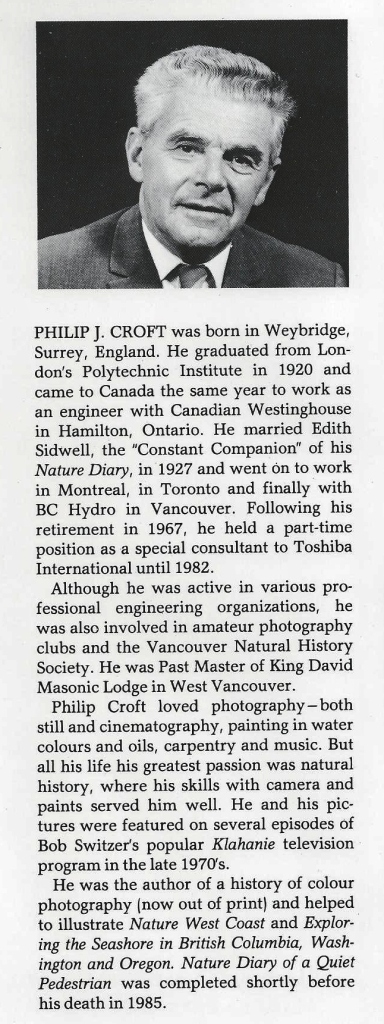
Nature Diary of a Quiet Pedestrian by Philip Croft ~ 1986. This edition: Harbour Publishing, 1986. Hardcover, illustrated by the author. ISBN: 0-920080-87-1. 141 pages.

My rating: 8/10. Occasionally a tiny bit stilted as the author tries hard to keep up his literary momentum, but for the most part the prose flows along just fine. An appealing glimpse into one man’s life, and into the natural history of his personal world.

*****

I spent some days in the Vancouver area earlier this week, and though my free time was limited I did manage to visit several used book stores – used bookstores? used-book stores? – for some reason this does not look right this morning! I am still a bit groggy from sleep, and this is very much a stolen hour at the start of what promises to be a very busy day… Anyway, on the holiday Monday (B.C. Day) evening, when most of the interesting small shops were closed up tight, I nipped into the Langley Value Village to browse their large book section, and, casting about for that elusive 5th book – the “freebie” – this one just sort of slid off the shelf at me in a shyly appealing “Hey, look at me” sort of way. From the title I was thinking – “Hmmm, probably British, another one of those made-for-tourists, Edwardian Lady take-offs, get ready to put it back…” so imagine my delight in finding that it was instead a very appropriate British Columbia book, written about the very region I was visiting.

Amateur naturalist Philip Croft kept a diary of his regular daily walks through his West Vancouver neighbourhood, through a section of forest and down to the beach. Blessed with a keenly observational eye, an artistic hand for illustration, and a gentle sense of humour, Mr. Croft’s year as recorded in this handsome book is very readable indeed. I have visited the coastal areas of B.C. enough to be generally familiar with the setting, but I have often been curious as to some of the interesting plants, insects and seashore creatures unfamiliar to me as a native of the very different, dryland fir zone interior of the province. I found myself browsing through the book in my next few evenings in my hotel room, during breaks from my delighted absorption in The Benefactress by Elizabeth von Arnim.

From the Preface:

I am an inveterate pedestrian. I walk daily for pleasure, exercise and control of the waistline. But mostly for pleasure… I like to walk alone: I prefer to be a quiet pedestrian, to walk and think, not walk and converse. In this respect my hour afoot is apt to be the most useful and productive hour of my day, for it is a time in which I am able, to a measured footfall, to think many things through uninterruptedly, to a logical or practical conclusion… It is my time for meditation and reflection…

…It is not necessary to travel to the out of the way wilderness areas of our province to be confronted by the year-long pageant of natural events in the life cycles of common plants, insects, birds and animals. It is surprising how many species inhabit roadside ditches, patches of woodland, vacant lots, railway embankments and cuttings and similar waste places throughout our area. By following the same limited selection of routes day after day, week in and week out throughout the year, one is enabled to note every phase in the development of wild plants as they spring, grow, flower, seed and make their appearance; when the birds that feed on the insects appear and when they congregate for their annual migrations… a never-ending source of wonder and pleasure…

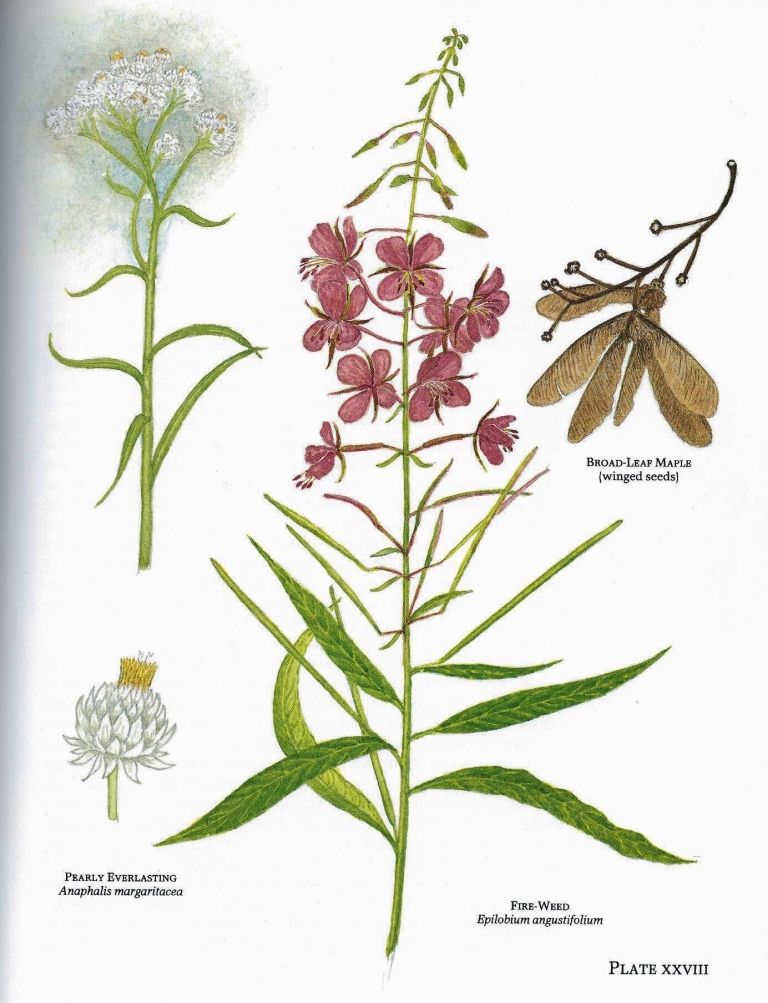
Something that never ceases to please me is the abundance of natural life surviving and thriving in pockets of our crowded cities; as a dedicated country-dweller who enjoys occasional immersion in city life, I always give silent homage to the urban dandelions growing through cracks in the sidewalk, the fireweed colonizing the sagging roofs and windowsills of derelict buildings, the small birds opportunistically gleaning the road-killed insects from the grills of parkaded cars. And though I view the rural areas as my natural habitat, I have also lived in towns and cities; long enough to appreciate what Mr. Croft is speaking about; that nature surrounds us and goes about its inevitable business quietly and inexorably; if we pause for a moment now and then we can get much joy and encouragement from the steady adaptation of all sorts of organisms in our concrete-filled urban worlds.

This quick trip I noticed the ripening masses of blackberries, the last few foxglove flowers on their impossibly long, seedpod-lined stems, and the forests of Himalayan impatiens and buddleia along the roadsides. Parked in a busy industrial area, waiting for my daughter to emerge from a cavernous, ex-warehouse dance studio, I noticed several small brown rabbits lolloping among the blackberry vines at the edge of the parking lot. A large transport truck pulled up; the driver emerged holding a small plastic container and, without hesitating a moment, went bravely into the thorny thicket and started to pluck the berries; one in the mouth, one in the tub… I chuckled to myself and mentally went through my own belongings; sadly I had no suitable container or I might have joined him!

What joy to then read about Philip Croft’s August ode to walking in blackberry time, taking along a container to fill on the return trip to be subsequently made into a delectable pie, and his investigations of bumblebees pollinating the ubiquitous impatiens! The writer documents his observations, and enriches the narrative with philosophical mullings over of the state of the world and of human endeavour.

This book will join my collection of B.C. natural history titles which we delve into beforehand and take with us on trips and refer to later to answer queries triggered by things we see in our travels. A most enjoyable read. Mr. Croft must have been a delightful person to know; I am glad I stumbled across his natural history memoir.

Read Full Post »

« Newer Posts