Posts Tagged ‘Biography’

Green Grows the City by Beverley Nichols ~ 1939. This edition: Jonathan Cape, Ltd., 1939. Hardcover. First edition. 285 pages.

My rating: 8/10. A little lush in the prose department, but ultimately I found this semi-fiction quite a likeable diversion. The chapter devoted to the author’s black, half-Siamese felines, Rose and Cavalier, won me completely over; I had been wavering a bit as the human cattiness of the narrative was sometimes rather too precious. Nichols’ affection for and description of his pets is a lovely bit of writing, appealing to anyone who shares his predilection for cats as the perfect – though endlessly demanding – home and garden companions.

The author makes no pretensions about his preferred role as planner and onlooker rather than a get-dirty, hands-on gardener. A little light watering, the plucking of a few blooms to adorn the breakfast table, maybe a mite of flower arranging to while away a slow morning, while the hired gardener does the heavy stuff under our Mr. Nichols’ interested eye…

Oh, meow! Who’s being catty now?

*****

Beverley Nichols, in his long life (1898-1883) in which he acted out the roles of journalist, author, playwright, composer, lecturer, pianist, and gay (in every sense of the word) man-about-town, alternately amused and infuriated his audience, friends and, I suspect, more than a few enemies. Possessed of a very high opinion of himself, a keenly sarcastic tongue, and a decided willingness to share his lightly censored thoughts in print, Beverley Nichols remains as readable today as he was when first published. Especially popular are his garden books, as among all the chattering nonsense and superfluous frills there are passages of very authentic admiration and insight into the appeal of that cultivated “square of ground” so universally sought after the universal tribe of gardeners, and his portraits of the plants that struck his fey fancy are small treasures of descriptive prose.

Speaking in the chapter regarding ferns,  Rhapsody in Green, in Green Grows the City, of his introduction to the gold and silver ferns (Gymnogramme species) at Kew:

…(A)s I stooped to tie the (shoe)lace, I happened to glance upward. And the underside of this fern was coated with gold, pure gold, that glistened in the sunlight.

Perhaps it may sound silly to say that it was the loveliest thing that has ever come my way since I have seem life through the eyes of a gardener… I knelt down before it. The closer I came, the more lovely did the fern appear. There were no half-measures about the gold-dust with which it was so richly coated. It wasn’t just a yellow powder. It bore no sort of resemblance to the ochre make-up with which the lily is adorned. Nor was the gold dusted merely here and there – it covered every curve and crevice of the frond.

The tiny shoots that were springing up from the base were, if possible, even brighter. Since their leaves had not yet opened, and there was no green about them, they looked like delicate golden ornaments, daintily disposed about the parent plant.

And by the side of it was another excitement. A silver fern! As thickly coated with the metal of the moon as the other had been coated with the metal of the sun. If I had not realized the futility of comparisons at moments such as this, I would have dared to suggest that the silver fern was even more beautiful than the golden. For it seemed actually luminous with this magic dust. And again, there were no half-measures. It was silver. Not just white or grey, not in the least like, say, a centaurea. It was silver, hall-marked, pure and glistening from the inexhaustible mint of Nature.

What gardener could resist such a teasing description? Now in my botanical garden and specialty nursery visits I shall be forever watching for gold and silver ferns…

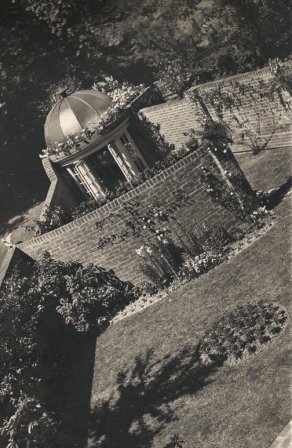
Green Grows the Garden is the fictionalized account of the creation of a very real garden. In 1936, after parting from his beloved country cottage and garden in the village of Glatton, Nichols tried the inner city life, living in a small, gardenless house in the Westminster district of London. Homesick for a bit of green, he tried without success to find a more suitable situation.

I had a hunger for green. I was lonely for the sound of trees by night. I longed to feel the turf beneath my feet, instead of the eternal pavement. Even if it were only a narrow strip of sooty grass, it would be resilient and alive, and would give me some of its own life.

Finally a small semi-detached house is found, in a close in the suburb of Heathstead. There is a garden, of sorts, a triangular-shaped bit of ground which challenges the would-be garden-designer with its peculiar idiosyncracies.
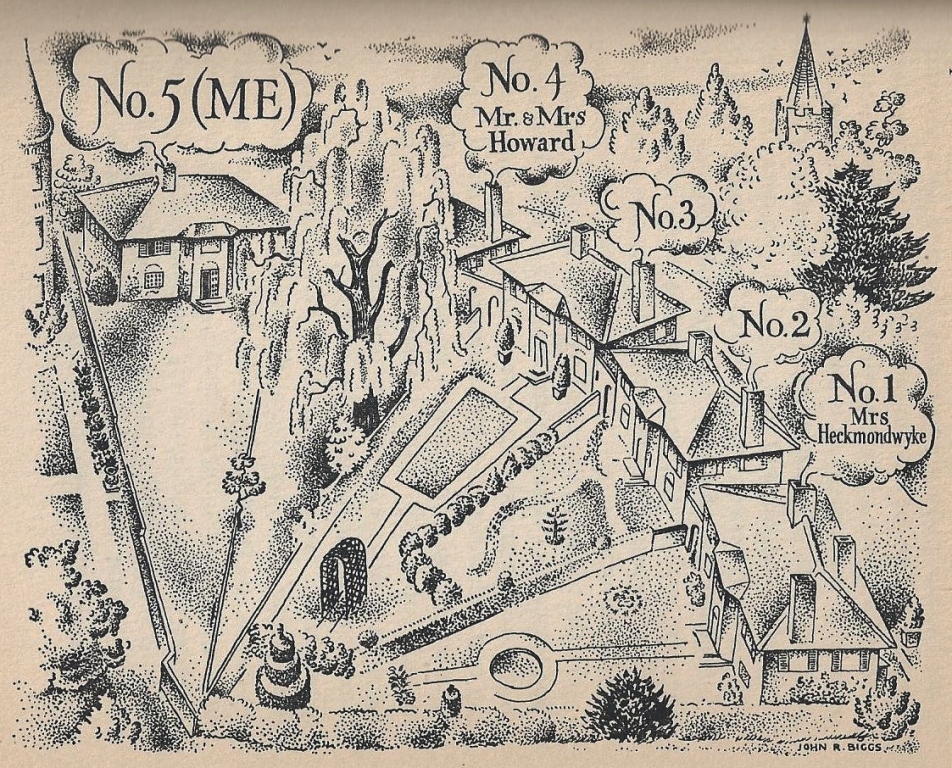
The challenge is accepted, and the transformation begins. Struggles with the site abound, not least of which is the continual protestation of every one of Nichols’ projects by the overbearing “Mrs. Heckmondwyke” of No. 1. The feud between No. 5 and No. 1 drives much of the drama of this microcosmic enterprise, though in the end something of an uneasy truce is attained.

The book is dedicated “To My Friends Next Door”, probably to nip in the bud any idea that any of them were the actual prototype of the overwhelming Mrs. H, and Beverley Nichols quite freely admits, in an evasive forward, that perhaps some of his characters owe more to fiction than to real life. The garden was a real garden, though; as were the cats and the extraordinary, imperturbable, Jeeves-like manservant Gaskin.
As the story draws to a close, the shadow of World War II is looming, and in the last chapter there is sober reference made to the outside world. Watching newsreel footage, Nichols comments:

…Line after line of youths, in brown shirts, black shirts, red shirts, any sort of shirt…marching, always marching. Backwards and forwards, to the North, to the South, to the East and West. Marching with bigger and better guns, to louder and fiercer music. Marching with clenched fists or with outstretched arms, animated by the insane conviction that the fist that is clenched was made for the sole purpose of striking the arm that is outstretched. Marching, always marching, blind to the beauty that is around and above, deaf to all music save the snarl of the drum, marching to a destination that no man knows but all men dread.

And I suspect no one will be found to argue with the often quoted final words of this little book:

…(T)hat if all men were gardeners, the world at last would be at peace.
Read Full Post »

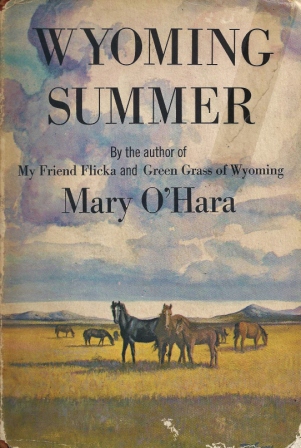
Wyoming Summer by Mary O’Hara ~1963. This edition: Doubleday & Company, 1963. Hardcover. 286 pages.

My rating: 7.5/10. An enlightening backstory of a short period of the author Mary O’Hara’s (1885-1980) life, and details the inspiration for My Friend Flicka, Thunderhead and The Green Grass of Wyoming. It felt rather self-congratulatory at times – my handsome husband, my great natural talent as a composer, my amazing sensitivity to the glories of nature, my important celebrity friends – but to excuse this it seems that most of Mary O’Hara’s boasts were indeed true. This account is also balanced with explanations, and details of the valleys as well as the peaks of the experiences within.

Presented as an autobiography, Mary O’Hara herself notes in the Preface that she has tinkered with her journal entries to make them more cohesive and readable. While the book has a reasonably strong narrative flow, there are frequent times when the entries are a bit disjointed, with out-of-place comments tacked onto longer vignettes. Perhaps this was done to maintain the feeling of a spontaneous journal, but since the work was already being edited I think it might have been stronger if these snippets had either been expanded upon or left out completely.

*****

This book was a surprising find last week in a quick scouting cruise through Nuthatch Books in 100 Mile House. The author’s name was immediately recognizable – for what horse-crazy child of my particular generation has not read My Friend Flicka? – but I was unfamiliar with the title. A lesser-known novel, perhaps? On closer investigation I found that this was an autobiographical account of part of a year spent on the Wyoming ranch that inspired the Flicka bestseller and its two sequels.

Mary O’Hara Alsop was a talented pianist, published composer, and Hollywood script writer when she turned her hand to writing fiction. Inspired by the rugged surroundings of the ranch which she and her second husband, Helge Sture-Vasa, purchased in Wyoming in 1930 and lived on for sixteen years, and the horses and other ranch animals she came to know intimately, O’Hara’s novel My Friend Flicka was published in 1941 to immediate acclaim. It was based on the journals O’Hara had been keeping of her life on the ranch, and the characters were very much drawn from her own family, friends and the ranch workers.

Wyoming Summer is set in the tenth year of she and her husband’s occupation of the Remount Ranch. Their initial scheme of sheep farminghad failed dismally, as prices for livestock dropped catastrophically during the Great Depression. Helge (referred to as “Michael” in Wyoming Summer, and the prototype for “Rob” in the Flicka books) was an experienced ex-Army cavalry officer, and the next enterprise that met with modest success was that of raising and training horses (“remounts”) for the U.S. Army. This was a precarious and not particularly prosperous undertaking, and Mary’s dairy herd and the establishment of a summer boy’s camp catering to the sons of her well-off music and film connections paid many of the bills.

Wyoming Summer details the challenging and exhausting juxtaposition of Mary’s dual worlds: ranch wife baking bread, hand-milking cows and dealing with daily chores combined with aspiring composer eagerly snatching the hours needed for piano practice and composition from her more prosaic duties.

Though this autobiography details both the rewards and drawbacks of life on a remote ranch, it decidedly glosses over the personal crises that Mary O’Hara dealt with throughout her life. A difficult first marriage resulted in two children, one of whom, a daughter, died tragically of cancer in her teens. After her divorce from her first husband, Mary’s second matrimonial attempt seemed happier, at least initially, but it was also doomed. Helge was a handsome, hard-working, hard-drinking man who was not above a certain amount of philandering, and that marriage ended, after the sale of the Remount Ranch and a move to California, in 1947.

Mary continued her work in composing music and working on stage and screen productions, as well as publishing several other novels. The journals kept while at the Remount Ranch had been set aside among Mary’s papers, and when they resurfaced in the 1960s Mary thought she could make something of them, hence the publication of Wyoming Summer. Several other novels met with modest success, but it was the Wyoming trilogy, and in particular the first installment, My Friend Flicka, that ensured Mary O’Hara’s longest lasting acclaim.

Wyoming Summer is interesting both for its window into a specific time and place, and for what its author leaves out. While we are allowed into certain areas of Mary O’Hara’s complex life, we are firmly shut out of others, leaving us with a definite feeling of being a spectator with limited access to the performance being played out.

These few reservations aside, Wyoming Summer is definitely worth reading, especially in tandem with the more purely fictional novels of the same setting.

Read Full Post »

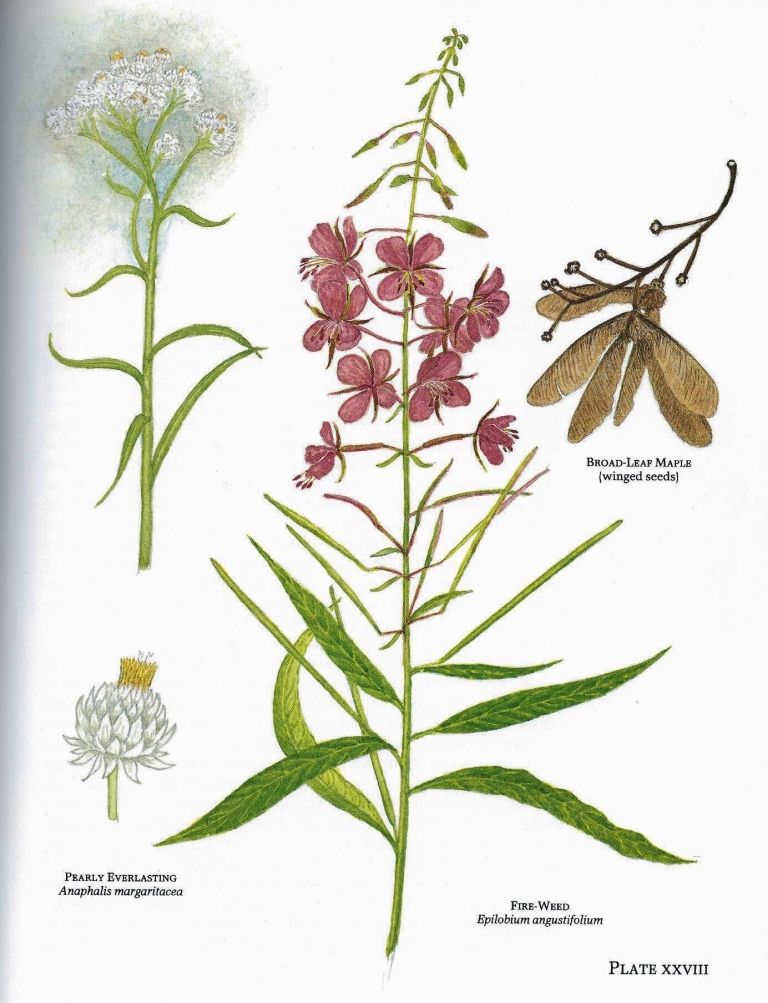
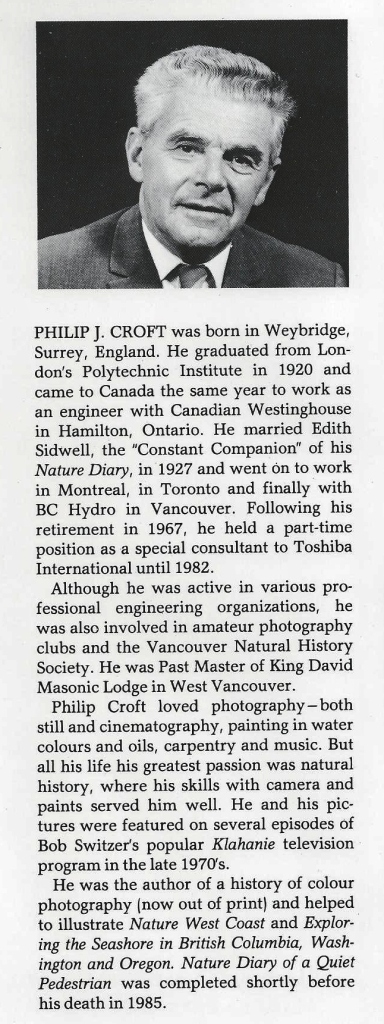
Nature Diary of a Quiet Pedestrian by Philip Croft ~ 1986. This edition: Harbour Publishing, 1986. Hardcover, illustrated by the author. ISBN: 0-920080-87-1. 141 pages.

My rating: 8/10. Occasionally a tiny bit stilted as the author tries hard to keep up his literary momentum, but for the most part the prose flows along just fine. An appealing glimpse into one man’s life, and into the natural history of his personal world.

*****

I spent some days in the Vancouver area earlier this week, and though my free time was limited I did manage to visit several used book stores – used bookstores? used-book stores? – for some reason this does not look right this morning! I am still a bit groggy from sleep, and this is very much a stolen hour at the start of what promises to be a very busy day… Anyway, on the holiday Monday (B.C. Day) evening, when most of the interesting small shops were closed up tight, I nipped into the Langley Value Village to browse their large book section, and, casting about for that elusive 5th book – the “freebie” – this one just sort of slid off the shelf at me in a shyly appealing “Hey, look at me” sort of way. From the title I was thinking – “Hmmm, probably British, another one of those made-for-tourists, Edwardian Lady take-offs, get ready to put it back…” so imagine my delight in finding that it was instead a very appropriate British Columbia book, written about the very region I was visiting.

Amateur naturalist Philip Croft kept a diary of his regular daily walks through his West Vancouver neighbourhood, through a section of forest and down to the beach. Blessed with a keenly observational eye, an artistic hand for illustration, and a gentle sense of humour, Mr. Croft’s year as recorded in this handsome book is very readable indeed. I have visited the coastal areas of B.C. enough to be generally familiar with the setting, but I have often been curious as to some of the interesting plants, insects and seashore creatures unfamiliar to me as a native of the very different, dryland fir zone interior of the province. I found myself browsing through the book in my next few evenings in my hotel room, during breaks from my delighted absorption in The Benefactress by Elizabeth von Arnim.

From the Preface:

I am an inveterate pedestrian. I walk daily for pleasure, exercise and control of the waistline. But mostly for pleasure… I like to walk alone: I prefer to be a quiet pedestrian, to walk and think, not walk and converse. In this respect my hour afoot is apt to be the most useful and productive hour of my day, for it is a time in which I am able, to a measured footfall, to think many things through uninterruptedly, to a logical or practical conclusion… It is my time for meditation and reflection…

…It is not necessary to travel to the out of the way wilderness areas of our province to be confronted by the year-long pageant of natural events in the life cycles of common plants, insects, birds and animals. It is surprising how many species inhabit roadside ditches, patches of woodland, vacant lots, railway embankments and cuttings and similar waste places throughout our area. By following the same limited selection of routes day after day, week in and week out throughout the year, one is enabled to note every phase in the development of wild plants as they spring, grow, flower, seed and make their appearance; when the birds that feed on the insects appear and when they congregate for their annual migrations… a never-ending source of wonder and pleasure…

Something that never ceases to please me is the abundance of natural life surviving and thriving in pockets of our crowded cities; as a dedicated country-dweller who enjoys occasional immersion in city life, I always give silent homage to the urban dandelions growing through cracks in the sidewalk, the fireweed colonizing the sagging roofs and windowsills of derelict buildings, the small birds opportunistically gleaning the road-killed insects from the grills of parkaded cars. And though I view the rural areas as my natural habitat, I have also lived in towns and cities; long enough to appreciate what Mr. Croft is speaking about; that nature surrounds us and goes about its inevitable business quietly and inexorably; if we pause for a moment now and then we can get much joy and encouragement from the steady adaptation of all sorts of organisms in our concrete-filled urban worlds.

This quick trip I noticed the ripening masses of blackberries, the last few foxglove flowers on their impossibly long, seedpod-lined stems, and the forests of Himalayan impatiens and buddleia along the roadsides. Parked in a busy industrial area, waiting for my daughter to emerge from a cavernous, ex-warehouse dance studio, I noticed several small brown rabbits lolloping among the blackberry vines at the edge of the parking lot. A large transport truck pulled up; the driver emerged holding a small plastic container and, without hesitating a moment, went bravely into the thorny thicket and started to pluck the berries; one in the mouth, one in the tub… I chuckled to myself and mentally went through my own belongings; sadly I had no suitable container or I might have joined him!

What joy to then read about Philip Croft’s August ode to walking in blackberry time, taking along a container to fill on the return trip to be subsequently made into a delectable pie, and his investigations of bumblebees pollinating the ubiquitous impatiens! The writer documents his observations, and enriches the narrative with philosophical mullings over of the state of the world and of human endeavour.

This book will join my collection of B.C. natural history titles which we delve into beforehand and take with us on trips and refer to later to answer queries triggered by things we see in our travels. A most enjoyable read. Mr. Croft must have been a delightful person to know; I am glad I stumbled across his natural history memoir.

Read Full Post »

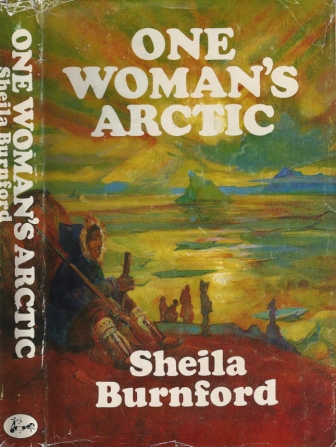
One Woman’s Arctic by Sheila Burnford ~ 1973. This edition: McClelland and Stewart, 1973. Hardcover. ISBN: 0-7710-1825-8. 222 pages.

My rating: 7/10.

This is the account of writer Sheila Burnford’s personal impressions of two summers spent in and around Pond Inlet on Baffin Island, in 1971 and 1972. Burnford had received a Canada Council of the Arts grant to gather material for a book; she accompanied celebrated artist Susan Ross who had been commissioned by the Royal Ontario Museum to create work for an exhibition of art depicting Indian and Eskimo life. The two were longtime friends and travelling companions, having previously spent time living together among the Ojibway of northern Ontario, which she wrote about in 1969’s Without Reserve.

This was a time of cultural shift, as the Inuit embraced and were influenced by modern culture and innovations, while still practicing their traditional way of life to a great extent. Burnford describes her personal impressions, and occasionally tries to pat the larger picture into context, but this is exactly what it says it is in the title – one person’s take on a place too large and complex for generalities to be made, though of course the author occasionally writes as though her observations and conclusions about this small piece of the Arctic apply more broadly. In general, the author keeps to her mandate, which is to tell us about her impressions during her short excursion into the far northern world.

Though it took me a while to work my way through it, now that I’ve completed it I find that ultimately I liked this book, and I enjoyed filling in a few more of the pieces of the author’s life. But it could have been better. What Burnford did so well in The Fields of Noon, though, was talk about herself, her life, her childhood, her family; always in reference to her subject, which made that collection of memoirs so very readable. In One Woman’s Arctic there seems to be more distance between writer and subject, while at the same time the tone is uneven – we’re never sure what “voice” the writer is using because she shifts around so much.

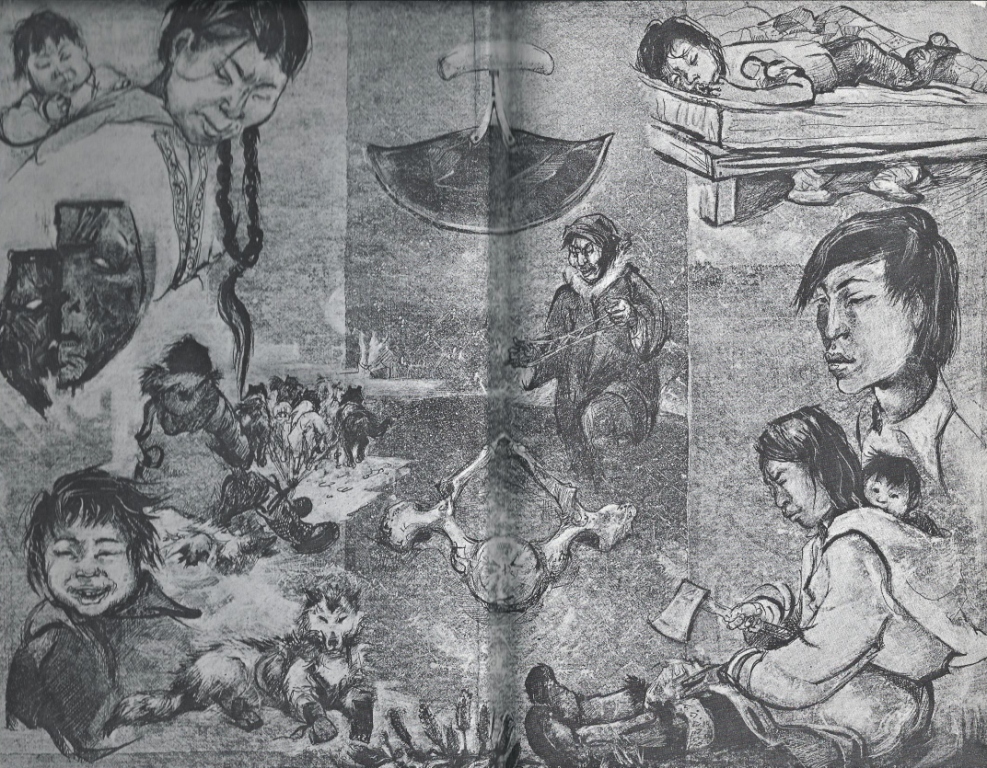
Burnford sometimes maintains an onlooker’s dispassionate view, describing the landscape and the animals and the indigenous people of the small part of the Arctic she visits with a writer’s eye, painting pictures with words. These episodes are very nicely done indeed, and I found that my vision of the scenes from her words were borne out by the pictures I later searched out of the places she visited. Burnford had a rare ability to capture the visual in words.

The weakest parts of the book were when Burnford left the realm of observation and description and ventured into the difficult area of analysis of what she is seeing in regards to the behaviours and motivations of the Inuit (“Eskimos”) she came into brief contact with, or, in the case of the two white mens’ graves at Quilalukan, researched in some depth. Sometimes, as John Mutford points out in his own not particularly favorable review of this book – One Woman’s Arctic by Sheila Burnford – The Book Mine Set Review – the writer falls into the “white man bad/Eskimo good by default” trap. But I felt that she salvaged the situations where she did this by continually acknowledging that she didn’t know if her interpretation was correct; that she was mulling over the situation and trying to make sense of it from her perspective as a very superficial onlooker, and a member of the invading, paternally patronizing race. Burnford never seems to lose sight of the fact that she is a visitor in an alien landscape, and that her comfort and safety rely on the kindness of others.

The episodes I enjoyed the most were when Burnford described the individuals she travelled and stayed with and got to know more intimately. The residents of Pond Inlet, where Burnford and her companion, artist Susan Ross, made their home base in the community’s kindergarten building, are described in lively anecdotal style; Burnford remarks on the fact that no one seems to have anything bad to say about each other, and that she thinks that this is the result of conscious effort on their parts. Referring to the non-Inuit residents of Pond Inlet, the group she and Ross associated with and socially fit in with:

Those who lived here all year round whether teacher, nurse, game warden, R.C.M.P. or administrator, had seemingly developed a safe preservation of peace (outwardly, anyway) attitude to their fellows. One very, very seldom heard any criticism of personalities, but only he/she is so nice/does so much/is wonderful at/ – etc. Occasionally, because one’s antennae were more acutely tuned through being an outsider, one was conscious of tension between certain individuals, but this was rare. I gathered that they had all worked it out during the six months of twenty-four hour darkness…Activities, such as bridge, over which people in cities can tend to become rather maniacal sometimes, were recognized as potential trouble-makers and avoided; and anything involving competition. A good, safe activity, capable of being shared, arousing no jealousy or competition, was that of photography: practically everyone was madly interested in this, and many did their own developing and printing. I have never seen such an impressive array of Hasselblads, Pentaxes, Leicas, etc. as I had up there.

Another contributing factor of harmony – which of course had its overall impact on the general community – was the average age, which was around thirty or under. An age more exposed to today’s precepts of ‘doing your own thing’ and Make Love Not War – precepts very much more in line with the outlook of the Inuit, who have always been a non-aggressive people; and also an age which avoids that difficult menopausal age group, universal elsewhere among those who have made it up to positions of authority, during which strife is commonplace and mayhem (verbal or otherwise) frequent…

An interesting take on the situation, especially as Burnford and Ross were older than the Pond Inlet “white person” average, being in their mid-fifties; one wonders if the menopausal comment was coming from personal experience, or merely through prior observations in the southern world!

Also very readable were the descriptions of the archeological dig at Button Point on Bylot Island under the auspices of the venerable Father Guy Mary-Rousselière; Burnford was present at the discovery of the second Dorset culture (A.D. 500-1000) shaman’s mask found at that site and vividly describes the unique challenges of archaeological exploration in a permafrost zone. Dorset Masks – Canadian Museum of Civilization Treasures Gallery

I found One Woman’s Arctic to be interesting read from my perspective as someone who has never personally experienced the Arctic, though I found it easier to lay aside and read other things concurrently than I did with her other memoirs, Without Reserve and The Fields of Noon. Even though it has some unresolved and unsatisfactory conclusions about northern life and Inuit culture, I think there is much to learn from Burnford’s observations, purely on the natural history aspect of the area she visited. Her descriptions of the human impact on the area, both Inuit and white, are frank and outspoken; Burnford may be looking through wishful rose-coloured glasses occasionally, but she mostly has them off, the better to turn a sharp eye on the details of her surroundings, and she is not afraid to share what she sees.

A snapshot of a time and place now lost in time, from the perspective of a thoughtful and very individual observer. The quality of the writing is excellent through most of the book, though there are occasional awkward phrasings and strangely punctuated passages which I suspect point to lapses on the editor’s part; Burnford, from my past experience with her work, is an accomplished writer not prone to sloppiness.

I would recommend this book to anyone interested in exploring the different regions of Canada, and in particular the far north, though with a reminder that it should be kept in context as one individual’s impressions, and is, unavoidably, now very dated, being written forty years ago.

Read Full Post »

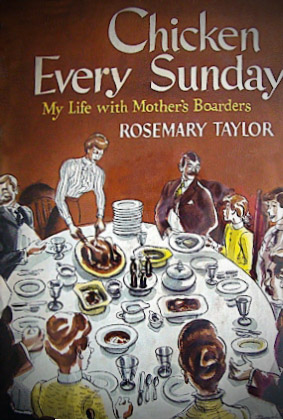
Chicken Every Sunday: My Life with Mother’s Boarders by Rosemary Taylor ~ 1943. This edition: Blakiston, 1945. Hardcover. Illustrated by Donald McKay. 307 pages.

My rating: 6.5/10.

A nostalgic trip down memory lane. This fictionalized autobiography fits well into the “humorous memoir” genre so popular a half-century ago. If you enjoyed Cheaper by the Dozen (Galbraith), and The Egg an I (MacDonald) you will find this a pleasing read. The rating feels a bit low, but it’s not meant to be a snub, just a reflection of where this book fits in with other similar works which I have read and enjoyed over the years. It’s pleasant enough and I will happily recommend it if you come across it “cheap and easy”, but I doubt I would deliberately search it down unless I were particularly interested in the era and setting.

*****

I purchased this old hardcover recently, for a reasonable $5, at Second Glance in Kamloops, B.C. – a WONDERFUL secondhand bookstore, by the way, for any of us local enough to visit it in person. The title rang a faint bell in deepest memory, and once I dipped into it I realized that I had indeed read it years ago. It must have been as part of my mother’s library, though she no longer owns it – it obviously did not survive her many give-ways as she prepared to move from her huge house (two stories plus a packed-full attic) to the much tinier “granny house” she lives in now.

I’m a bit mystified as to why Mom parted with it, as it is just the kind of light memoir she generally enjoys, so I’m going to surprise her with it the next trip in to town with a box of books. At a physically frail 87, one of her few remaining pleasures is reading, and she keeps me busy searching my own shelves and scouting the secondhand emporiums for reading material; a chore I must admit I take on with great pleasure – an excuse to book shop! How much better does it get than having permission from your mother?!

The setting is Tuscon, Arizona, during the first decade of the 2oth Century; the boarding house that the author’s mother ran with such success was built in 1906, “far out in the country”, though, as predicted, the city soon came out to surround it during the boom times of the “roaring twenties”.

The father of the family was quite the wheeler-dealer; finances swung like a pendulum as deals succeeded or fell through; the mother decided to take matters into her own hands to ensure a steady enough income to feed the family, so she began to take in boarders. The book details the succession of quirky characters that passed through the Drachman family doors, as seen through the eyes of young Rosemary.

The incidents are well-presented and the characters are well-portrayed; I did enjoy reading this period piece and I will be keeping it (once my mother finishes with it) with my largish collection of similar works. The humor works most of the time; I smiled (rather than full-out laughed) throughout; the writing is more than competent. The author wrote another book of memoirs focussed on her father’s many enterprises (Ridin’ the Rainbow: Father’s Life in Tuscon, 1944), and several novels.

Apparently very popular at its time of publication, the book inspired a comedic 1944 stage play and then a 1949 movie of the same title, starring Dan Dailey, Celeste Holm, and a young Natalie Wood. (I see that the movie gets lackadaisical reviews on the few online sites I browsed through; I’ve never seen it and don’t plan on searching it out, so that’s all I can tell you.)

Read Full Post »

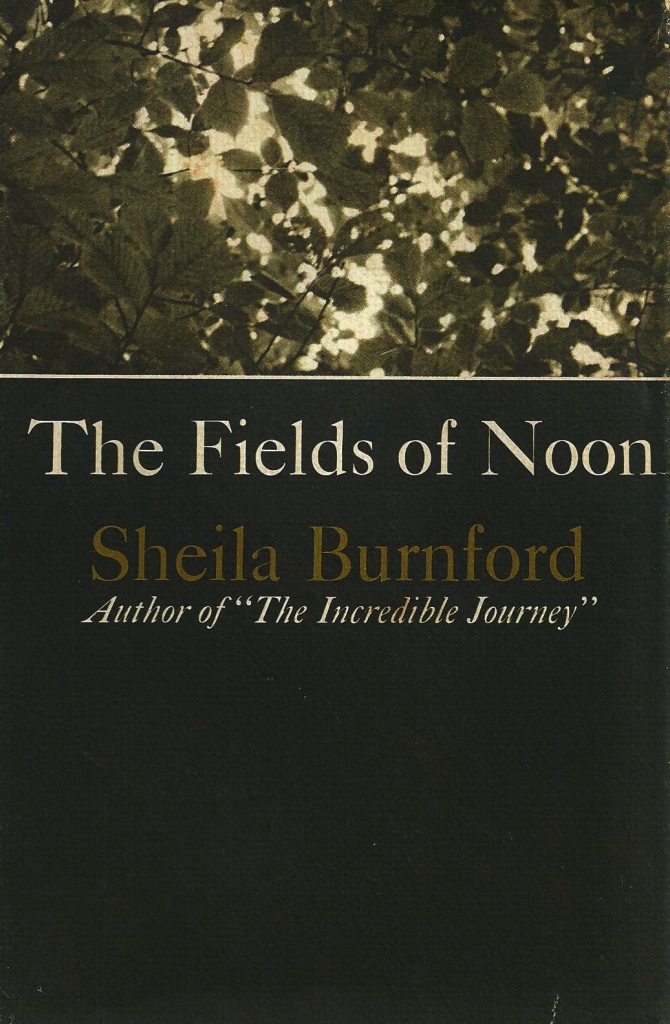
The Fields of Noon by Sheila Burnford ~ 1964. This edition: Little, Brown & Co., 1964. Hardcover. 175 pages.

My rating: 10/10

This quiet, elegant, and often very funny book is one I keep  in my ‘favourites’ collection, and regularly reread with great enjoyment.

The Fields of Noon is a memorable collection of autobiographical essays by Scottish-born Canadian writer Sheila Burnford, better known for her bestselling fictional book The Incredible Journey, a story of two dogs and a Siamese cat who together embark on a 300-mile journey through the northern Ontario wilderness. Disneyfied and popularized, The Incredible Journey might be dismissed without further attention by the discerning reader, but it was intended to be an adult book, was based on actual pets of the Burnford family, and is quite a lovely little piece of work with its own merit. Ignore the sentimental movies, please! (Perhaps I should re-read and review The Incredible Journey as an entry into the 2012-13 Canadian Book Challenge …)

Sheila Burnford, if these highly personal essays are any indication, must have been a fascinating woman to know; her writerly voice is warm and intimate, highly intelligent and self-deprecatingly humorous.

To give you a taste of the tone of this collection, here is an excerpt from the essay Time Out of Mind, concerning Sheila’s interest in archaeology and anthropology, and her subsequent attempts to learn the art of flint-knapping.

The first story I ever remember having read to me was Robinson Crusoe, and later I read and reread it myself, starting again at the beginning the moment it was finished, just like painting the Forth bridge. The Swiss Family Robinson was even better; not the shortened version so often found today but a wonderfully fat volume, profusely illustrated and complete in every last moralization (and every gruesome detail of poor Grizzle’s demise in the folds of the boa constrictor and subsequent mastication; five hours from ear to hoof – Papa Robinson timed it; children were apparently credited with stronger stomachs in those days) and its pages crammed with useful tidbits of information on how to improve one’s lot and live more graciously on desert islands. I used to spend hours daydreaming of starting from scratch on my island utopia and putting all this practical information to the test. Thanks to Mr. Robinson, that bottomless well of How To Do It lore, I knew how to make a Unique Machine for boiling whale blubber; I could construct a sun or sand clock, train ostriches, open oysters and manufacture sago; if a sturgeon had been caught in my coconut fiber fishnet I knew just how to make isinglass windows from its bladder. I could even – and as I write I feel the urge to do so – make waterproof boots (beloved, familiar gumboots), with a clay mold, taken from my sand-filled socks, then painted over with layers of latex tapped from the nearest rubber tree. It would have been a luckless Man Friday who made his imprint on my solitary sands, for I would have been a fearful bore to live with: like Papa Robinson, one innocent question would have released a pedantic torrent of information.

This childhood preoccupation with carving out an existence by my own unaided efforts used to end, invariably, I remember, with that baffled, mind-boggling feeling that used to overcome me – and still does – when staring up at a cloudless blue sky and trying to make my small limited mind grasp that the blue is a void, endless infinity, nothing, not even omega. For, sooner or later, a fearful nagging doubt insinuated itself into every castaway installment of my self-told story: What if one did not have a knife, or a goat, or a gun to start with? Or, worse still, had not read Swiss Family Robinson? How on earth did one go about forging steel for that most necessary knife (what, for that matter, was steel?), substitute for a goat, manufacture a gun, or any kind of weapon?

*****

  • Canadian Spring – a trip with an artist friend to an isolated lakeside cabin during spring ice break-up.
  • Walking: Its Cause, Duration and Effect – reflections on a Scottish childhood spent largely out-of-doors.
  • The Peaceful Pursuit – the joys and occasional pitfalls of wild mushroom hunting.
  • Confessions of a Noisemaker – how to shed one’s vocal inhibitions while accompanied on a solitary expedition by a patient dog and four inflatable duck decoys.
  • Time Out of Mind – the deceptively steep learning curve of the paleolithic flint-knapper.
  • Inclinations to Fish – the consideration of large bodies of water as primarily “fish containers”, and the joys of a lifetime of attempting to bring those fish to shore.
  • Tom – a touching ode to a feral tom cat.
  • With Claud Beneath the Bough… – caring for a solitary canary.
  • Pas Devant le Chien – a sober-minded dog becomes firmly convinced that an electric heater contains a small, living inhabitant.
  • William – the last day of life and the death of a beloved bull terrier.

Read Full Post »

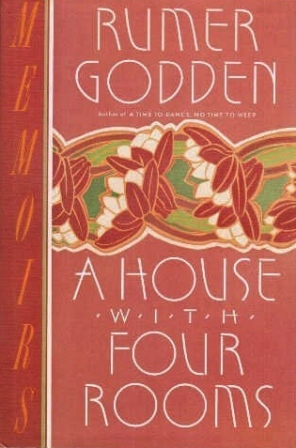
A House with Four Rooms by Rumer Godden ~ 1989. This edition: William Morrow, 1989. Hardcover. ISBN: 0-688-08629-2. 319 pages.

My rating: 7/10

A must-read for any Rumer Godden fan, though in my opinion not nearly as gripping as her first memoir, A Time to Dance, No Time to Weep.

Four Rooms starts with Godden’s permanent return to England, and follows her through her ongoing struggles as a divorced mother of two young children, working to support them with her pen.

Lots of name-dropping ensues as Rumer Godden’s books increasingly grow in popularity and she starts to move in exalted literary and film-making circles; while not terribly offensive this occasionally feels a bit gratuitous. But it was the reality of her life; she did truly gain the high stature her celebrity friends and compatriots suggest, and those circles became her natural habitat, so to pretend she was still a simple soul in a country cottage would be misleading.

She describes the long courtship by her second husband, and her emotional difficulties committing to a second marital experience after the abysmal disaster of her first tragic marriage. The second union had its ups and downs but Godden’s description of James’ final years and death is poignantly sorrowful, if rather briefly referred to. I certainly felt that her love and grief were sincere.

Fascinating glimpses into the backgrounds of many of the novels from The River onwards, plus details of Godden’s growing stature as a children’s writer and advocate for literacy which was a major interest in her later years. She also refers to her conversion to the Roman Catholic faith, and her sincere admiration for the Anglican and Catholic nuns, brothers and priests she met throughout her life, and those she came to know intimately during her research into her masterwork, In This House of Brede.

All in all an enlightening and extremely readable memoir by a gifted and memorable writer. And I do believe she was often her own harshest critic, seeing her work with true clarity, though she occasionally bridled at negative comments from reviewers on the “slightness” of some of her books.

Rumer Godden’s life spanned nearly the whole 20th Century. Born in 1907, she died at the age of 90 in 1998, actively writing almost until the very end. Her last novel, Cromartie vs. the God Shiva, was published in 1997, less than a year before her death. A fascinating and gallant woman, who weathered many personal storms, some of her own creation.

Rumer Godden’s much-quoted words sum up her philosophy in the mature years of her long and creative life:

There is an Indian proverb or axiom that says that everyone is a house with four rooms, a physical, a mental, an emotional, and a spiritual. Most of us tend to live in one room most of the time but, unless we go into every room every day, even if only to keep it aired, we are not a complete person.

Read Full Post »

A Time to Dance, No Time to Weep by Rumer Godden ~ 1987. This edition: Beech Tree Books (William Morrow), 1987. Hardcover. ISBN: 0-688-07421-9. 243 pages.

My rating: 10/10

A must-read for anyone with an acquaintance with  Rumer Godden’s body of work, and a fascinating stand-alone autobiography that will send the reader unfamiliar with her titles on a search to find out more. The first half of her two-volume autobiography, it covers the years 1907 to 1946; Rumer’s childhood in India and her various travels up until her ultimate return to England in 1946.

There is so much packed into this book, as there was in Godden’s life, that I will not attempt to give a detailed overview, merely a blanket recommendation – very good reading.

Rumer Godden was a complex personality; her novels and stories are often drawn directly from her own life and experiences. She could not have been an easy woman to be around, being one of the “driven” writers; she fully acknowledges this in this memoir; in many ways it feels somewhat like an apology to her family and her friends.

The latter part of the book, concerning Godden’s time living at Dove House in the Kashmir hills, was the basis for the novel Kingfishers Catch Fire. The reality was even more intense than the fictional account that it inspired; Godden delves deep into her motivation for that socially astounding retreat from the “proper” Anglo-Indian community, and she comments as well on the effects of that self-imposed isolation on her two young children. Jane and Paula were at that time, I believe, seven and five years old, and it would be fascinating to hear their own childhood memories of their wandering life with their mother. I am wondering if either of them has written about their lives in their turn. Vaguely I am thinking that there is a daughter’s memories of Rumer Godden out there somewhere.

This memoir reads like a novel, only it is so much better than anything fictional Godden wrote, because it is a personal examination of experiences, thoughts and emotions based on the writer’s “truth” (always stranger and richer than fiction), and it therefore shines a radiant light on both the personal life of this extremely talented and passionate writer, as well as showing the framework of her subsequent stories. Keep in mind that this is one person’s version of events, as Godden herself comments in the dedication:

For Jane and Paula.

This book is my life as a young writer; to me and my kind life itself is a story and we have to tell it in stories – that is the way it falls. I have told the truth and nothing but the truth, yet not the whole truth, because that would be impossible.

Most highly recommended.

Read Full Post »

« Newer Posts