Posts Tagged ‘Biography’

the lonely life bette davis 001The Lonely Life by Bette Davis ~ 1962. This edition: G.P. Putnam’s Sons, 1962. Hardcover. 254 pages.

My rating: 7.5/10.

*****

I’m not a particularly dedicated fan of Bette Davis, though I’ve liked what I’ve seen of her acting – films I can remember watching are Dark Victory, Now, Voyager, Whatever Happened to Baby Jane?, Death on the Nile, and of course, most memorably, that glorious 1950s classic, All About Eve. Probably a few others over the years. But I do like a good autobiography, no matter who it’s about, and this one passed the browse test recently and found its way home.

I’d wavered a bit on it, because of the price (let’s just say “not cheap”) but the bookseller kindly gave my a nice discount – without my asking, because I very seldom dicker, figuring most people in the used book business aren’t exactly getting rich. I already had a generous collection assembled on the front counter, and this particular chap believes in encouraging his repeat customers. (The Final Chapter, downtown on George Street, the block between 4th and 5th Avenue, if you’re ever in Prince George, B.C. Cheerful, chatty owner – a self-confessed “non-reader” <gasp!> – his store has a quite decent selection, affordably priced for the most part. I’ve found some prizes there.)

Back to the bio.

*****

Bette Davis comes across in this tell-all much as she does on the screen – confident, outspoken and decidedly unapologetic. She fixes her eye on the goal, and powers ahead until she gets here, quite happily stepping on as many toes as need be.

The quality of writing is quite good, if a bit choppy in style – lots of short sentences. There often seems to be an assumption that the reader will have prior knowledge of whatever’s being discussed. Fair enough, coming from such a celebrity; this memoir was published at a time when most people reading it would have been fans, with intimate knowledge of the career of this prominent movie star.

Bette Davis was born Ruth Elizabeth Davis in 1908, famously during a thunderstorm, as she relates in The Lonely Life:

I happened between a clap of thunder and a streak of lightning. It almost hit the house and destroyed a tree out front. As a child I fancied that the Finger of God was directing the attention of the world to me … I always felt special – part of a wonderful secret. I was always going to be somebody. I didn’t know exactly what at first … but when my dream became clear, I followed it.

Bette, her younger sister Bobby, and their mother Ruth – “Ruthie” – were deserted by their father and husband when Bette was seven years old. Her mother refused to wallow in self-pity, but set herself to make a successful and prosperous life for herself and her daughters. Ruthie took on a wide variety of jobs, sending the girls to good boarding schools, and always arranging to spend vacation times together in interesting locations.

Bette received an unorthodox but adequate education; she was a great reader, and took singing, piano and dance lessons, apparently excelling at all of these pursuits. At some point she decided that her Great Big Goal was a theatrical career, and several seasons of New England theatre made up Bette’s dramatic apprenticeship.

As we all know, Bette eventually made the jump from dusty New York theatres to California sound stages. Roundly criticized as being homely in appearance and with zero sex appeal, there was paradoxically a certain something about Bette that came across as mesmerizing when she took on a dramatic role, and of course, there were those beautiful eyes.

Bette was never meek or humble. From a very early age she was tremendously focussed and not afraid to set her sights high, though she often fell afoul of fellow actors and her employers for her outspoken ways. She wasn’t afraid to take on unpopular characters, or to look less than glamorous if the role called for it – another characteristic which shocked many in “the business” was her insistence on realism over “pretty”. And though she full well knew what people were saying about her, she brazenly professed not to care.

If you aim high, the pygmies will jump on your back and tug at your skirts.The people who call you a driving female will come along for the ride. If they weigh you down, you will fight them off. It is then that you are called a bitch.

I do not regret one professional enemy I have made. Any actor who doesn’t dare to make an enemy should get out of the business. I worked for my career and I’ll protect it as I would my children – every inch of the way. I do not regret the dust I kicked up.

Speaking of those children, it is very obvious from this book that Bette’s dedication to her family matched her ambition. Frankly and with bitter regret, Bette reports that her first husband convinced her to have an abortion, fearing that a baby would damage her career. Years later, with husband number three, Bette did at last have a child. Barbara Davis Sherry – “B.D.” – was born in 1947, when Bette was 39. Under doctor’s orders to avoid further pregnancies, Bette and her fourth husband later adopted two more children, Michael and Margot. Margot was later found to have been brain-damaged at birth, and after being diagnosed as severely mentally handicapped, was then institutionalized, though she continued to spend much time with her family, and appears prominently in Bette Davis’s family publicity photos.

Bette’s personal life was predictably tumultuous; she was married four times, divorced from three of those husbands, and widowed tragically when her “true love”, her second husband, died suddenly of a blood clot in his brain after collapsing while walking down the street.

The Lonely Life was written in 1961, the year after Bette’s divorce from her fourth and final husband, actor Gary Merrill, her co-star and screen husband in the iconic All About Eve.

The Lonely Life, Bette says, refers to her resolution to live without a man in her life. She’s had rotten luck with husbands; better to go it alone.

After 1962 Bette had a number of career ups and downs and come-backs; she never really retired, never rested on her considerable laurels.

Several other memoirs followed The Lonely Life. Mother Goddam (1974) and This ‘n’ That (1987), continue the tale. Bette Davis died in 1989 from breast cancer, at the age of 81.

bette davis back cover the lonely life 001

Here she is on the back cover of The Lonely Life, aged 54.

I wondered how much of The Lonely Life was actually written by Bette herself; it did have an authentic-sounding ring to it. The dedication gives the answer to this question:

I attribute the enormous research, the persistence of putting together the pieces of this very “crossed”-word puzzle which comprises my life, to Sandford Dody.

Without him this book could never have been! His understanding of my reluctance to face the past was his most valuable contribution. We were collaborators in every sense of the world.

-Bette Davis

March 8, 1962

Sandford Dody was an aspiring actor-turned-writer who ghost-wrote a number of Hollywood memoirs. His own story seems worthy of a follow-up, and my attention was caught by his 2009 obituary in the Washington Post.  Dody’s version of his own life, Giving Up the Ghost (1980), is now on my wish list of future Hollywood memoirs to read.

The Lonely Life was a fast-paced and engaging, once I found my way into the choppy rhythm of the writing style. I particularly enjoyed the  well-depicted childhood and young adulthood reminiscences. My interest faded a bit in the later parts, when Bette Davis talks about her film career and the encounters with studio owners, directors, and fellow stars – lots of name-dropping, and assumptions that we know what she’s going on about. Much of the time it made sense – the names were mostly very recognizable – but occasionally I felt out of the loop.

While Bette is gracious about most of the people in her life – loyalty to her chosen friends is one of her positive traits – it is obvious that there was also a substantial baggage of animosity and bitterness in some of her working and personal relationships.

I don’t necessarily like Bette Davis any more after reading this personal saga, but I did feel like I understood her, and appreciated what she had to say, and why she said it. She was frequently too strident in her self-justification for me to feel that I could really relate to the egoism of the “star” aspect of her personality, but I did feel that she came across as worthy of admiration and respect for her many accomplishments.

The perfectionist little girl with the lofty goals did achieve her ambitious destiny. She stood up for her ideals of artistic integrity her entire career. She was literate, thoughtful and highly intelligent and articulate, and she was a darned hard worker.

I put down this book with the strong inclination to seek out and watch some more of Bette Davis’s films – the ones she spoke favourably of, among the vast array of B-movies she also appeared in – so you may take this as a pleased-with-the-read recommendation.
Read Full Post »

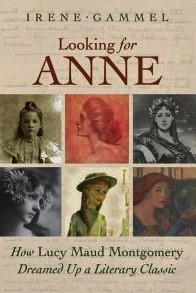
looking for anne irene gammelLooking for Anne: How Lucy Maud Montgomery Dreamed Up a Literary Classic by Irene Gammel ~ 2008. This edition: Key Porter, 2008. Hardcover. ISBN: 978-1-55263-985-6. 312 pages.

My rating: 4.5/10. I certainly wanted to like this book, and I picked it up with optimistic anticipation. Sadly I ended up feeling less than thrilled with my reading experience.

I did like bits and pieces – the factual bits and pieces – and I learned a few things about Lucy Maud Montgomery I didn’t know before, but the disjointed presentation and the frequent “It could have been like this” and “She must have felt like that” and the “I am certain that x was influenced by y, even though I have no proof” soon put me off.

While Irene Gammel is obviously a dedicated researcher and undoubtedly a well-informed Lucy Maud Montgomery scholar, I feel that her presentation of her theories in this book come across as unprofessional because of her continual admitted fabrications and assumptions.

Is it better if she admits it? Here’s a thought – why not stick to the facts? Or else drop the flowery, gushing, pseudo-Lucy Maud “voice”, which served merely to annoy rather than bewitch this particular reader.

*****

The questions Irene Gammel pose as the thesis statements for this book go something like this: What is the mystery behind the writing of Lucy Maud Montgomery’s magnum opus and incredibly successful book, Anne of Green Gables? Why did LMM not document the process of writing Anne much more thoroughly, and, while we’re on the topic, who actually inspired the red-haired heroine?

(Because of course it must have been a real person! There’s no way an author could just dream up a character out of her own head!)

Well, I must admit that such questions have never personally troubled me regarding Anne of Green Gables, a piece of entertaining fiction which I do indeed like a whole lot and which I re-read with deep pleasure every few years. I have always happily accepted that LMM just struck a lucky chord with this one, and that the character Anne was likely an amalgam of various personalities LMM knew in her daily life, with a good dash of artistic creativity rounding out the details.

Does it really matter if we don’t know the exact details of Anne’s origins? Well, it obviously bothered Irene Gammel enough so that she went ahead and assembled a vast array of evidence to support her own theories. Sometimes her enthusiasm carried her away. While the factual passages of this ambitious book are fascinating reading, they all too often degenerate into speculation. The author readily identifies her frequent forays into the imaginary, but they do detract from the value of the research.

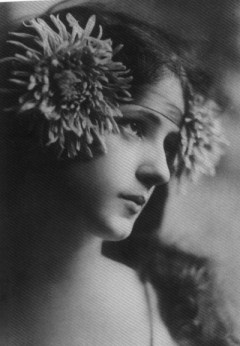
evelyn nesbitGammel theorizes that Anne’s key ancestor was young photographer’s model Evelyn Nesbit, identified many years after the publication of Anne of Green Gables as “the face of Anne” in one of LMM’s journals. I’m including the photo in question for your edification – see left.

Gammel then goes on to speculate about a vast number of other celebrities, acquaintances and fictional characters who might have added their characteristics to embryo Anne as her creator formed her and defined her in writing.

Fair enough, but these are all speculation, as the Gammel admits over and over. She throws out a daunting array of possibilities and mulls each one over in detail, before admitting that she just can’t quite be sure. I ended up feeling like the writing of this book, much like my reading of it, was a bit of an exercise in futility.

I think I’ll end with this. I could go on and share all sorts of annoying examples from the text – as well as some quite lovely and informative passages concerned LMM which are actually documented and provable by genuine references – but I’m full up to here with this one, so this is all my enthusiasm amounts to.

As usual, Goodreads – Looking for Anne has a wide selection of interesting reviews. I am quite relieved to find that I am not alone in my somewhat faint enthusiasm – others appear to feel the same, though there are some fans.

And if you are a serious LMM fan, by all means go ahead and tackle this ambitious personal project – it’s certainly interesting enough, if one can keep focussed – but keep the salt-cellar handy!

On the plus side: Some unusual LMM photographs are included, and the biographer does manage to give a wide-ranging picture of the time in which LMM was working on the book, and the artistic, literary and cultural mood of the era.

Oh – and a little heads-up – speculation as to LMM’s sexual proclivities abound in this one, though Gammel doesn’t come right out and say the “L-word” except to paradoxically refute the insinuation which she herself seems to make. Many salacious references to Sapphic friendships!

Now, to be quite honest, it doesn’t matter to me one whit what LMM’s sexual orientation was, but obviously it matters a whole lot to Gammel, as she teasingly parades this theme throughout the book. It got tiresome.

Read Full Post »

the autobiography david suzukiDavid Suzuki: The Autobiography by David Suzuki ~ 2006. This edition: Greystone Books, 2006. Hardcover. ISBN: 1-55365-156-1. 404 pages.

My rating: 5/10. Interesting to get some of Suzuki’s back story, but sadly my personal regard for this enviro-icon took a small step downward after reading it. It seems like the ego displayed here is as large as the legend.

*****

There’s a little comment someone made in my hearing years ago, which comes to mind right now: “If you want to know how good he is, just ask him”.

Packing a whole bundle of firewood on his shoulder (and understandably so) stemming from his family’s mistreatment during the World War II Japanese-Canadian internments and appropriation of property, David Suzuki grew up feeling like he had something to prove, and he’s succeeded to do just that, in spades. The depth of love/hate public feeling regarding this one soft-spoken and absolutely brilliant man goes to show how influential he has become.

The political right wing hates him, the lefties have made him their god. I tend to swing left, and I deeply admire David Suzuki for the focus on environmentalism he has forced into the public eye, but this autobiography shows all too clearly the god’s feet of clay.

This book looks back briefly to Suzuki’s childhood in B.C. Born in 1936, David Suzuki was six years old when he, his mother and sisters were interned in one of the camps for Japanese-Candians in the Slocan Valley. His father spent the war in a separate labour camp. After the war, the Suzukis moved to Ontario, where David completed his high school education before attending university in the U.S.A., attaining a PhD in Zoology in 1961.

Returning to Canada, Suzuki worked as a professor and researcher in genetics at the University of British Columbia. Branching out to participate in public education, he founded the popular CBC Radio science program Quirks and Quarks in 1974, and the iconic television series The Nature of Things in 1979. David Suzuki was a household name by the mid-70s, and his profile has grown exponentially through the years.

The Autobiography is honest enough in that Suzuki frankly discusses his two marriages and his shortcomings as a less than involved husband and father. His deep dedication to his work and his increasingly hectic public life often separated him from his family, and he freely admits that this is something he now regrets.

Most of this book is a listing of various events Suzuki has been involved in during the past twenty years; plenty of name-dropping of the celebrities he rubbed elbows with – Sting! Buffy St. Marie! John Denver! – and plenty of slightly patronizing commentary on how he brought this, that and the next thing to the public attention. True, so true, but the tone doesn’t feel very kind-spirited at times.

The writing is not the strong point here, either. The subject matter would be much more enthralling if it weren’t dealt with in such a flat “Then I said, then I did, then I said, then I did” manner. There are some personal anecdotes, mostly concerning his parents, and the death of his father, where he lets himself go, and these are the most poignant and memorable of this rather dull book.

I would say “read it” just to get a deeper understanding of this fascinating and frequently self-sacrificing man, but be prepared to come away feeling something like a member of the great unenlightened, living in the dark and waiting for The Master to flick the switch. You really want to know how good David Suzuki is? Read The Autobiography. He’ll tell you.

Read Full Post »

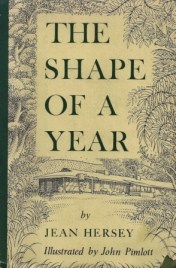
the shape of a year jean hersey 001The Shape of a Year by Jean Hersey ~ 1967. This edition: Scribner’s, 1967. Hardcover. Library of Congress# 67-13158. 243 pages.

My rating: 6/10.

This is not at all a poor book, but rather an unexceptional one. Set in the author’s rural homeplace of Weston, Connecticut, here are month-by-month musings and reportings of the little incidents of her life. These definitely have a certain appeal, but there is a creeping banality clothed in florid description to some of what she judges worthy of note. Most of it is all very well and good, but while readable this does not promise to become a favourite.

As a personal record it seems just a bit too good to be true, a shade too sweet and optimistic; there is little record of any sort of frustration, annoyance, disappointment or anger; it is all very “nice”, as if the author decided ahead of time to only include the more inspiring incidents of her days. I think this would be a much stronger memoir if it showed a broader range of emotion.

Golly, these comments sound a little harsher than I had intended. Here, I’ll share some of the author’s words with you so you can get a better picture of what this one is all about. I suspect this author will appeal most to the Gladys Taber crowd. (For the record, I like Gladys Taber; my mother had a number of her Stillmeadow books and I read them with deep delight during my teen years.)

Jean Hersey, born in 1902 and living in the Eastern United States, in Pennsylvania and Connecticut, was a prolific writer of magazine articles for Woman’s Day and various gardening and houseplant periodicals. She also authored something like a dozen non-fiction books dealing with gardening, homemaking, and semi-rural life.

*****

From The Shape of a Year: January, 1965.

January mornings at seven are like opals, soft, milky white and pink around the edges. The January sun rises silvery white, bright but not warm, and a mist like an aura hovers over the south meadow.

One morning early as we ate breakfast, Bob was eyeing a cluster of many colored Christmas tree balls lying in one of the upholstered chairs. We had dismantled the tree the day before.

“They look,” said he sipping his coffee, “as if they were waiting for a goose to come along and hatch them.”

“It would have to be a golden goose,” I replied watching the stars laid on their shiny surfaces by the early sun streaming in the windows. Obviously no ordinary goose could sit on these bits of Christmas magic.

May, 1965:

May sweeps in on a theme of daffodils. I gather armfuls from the meadow and next day so many more unfold that I cannot see where I have picked. Along the roadside the willows are tumbled masses of pale green foam, and forsythia, in streaming fountains of flowers, reflects the sun’s golden rays. Here a dusky pink weeping cherry adds a soft note of color. There a magnolia tree is a bouquet of pink blossoms, and everywhere maples are shaking out their tight fists of green into lacy green leaves.

July, 1965:

Where is our grandson? I am waiting on the station platform for this young thirteen-year-old who will be carrying a suitcase and I don’t see him. Other people get off, but no Jeff. There is a boy down the platform – or is it a boy – it seems more like a thatched roof moving along.

“Hi, Grandma, here I am.”

“Why, Jeff,” I gasp. “Hello, how good to see you.”

I gasp because here we have the Beatles incarnate. I have no war with these young Englishmen beyond what they have done to the hairdos of America…

October, 1965:

The fragrance of burning leaves is another autumn delight. Their delicious rustle and the scent of their smoke invariably carries me back to the days when my father used to rake great piles to burn. Before he lit them my friends and I would burrow deep and hide ourselves in the slightly scratchy heaps. From here we would look out at the world through tiny odd-shaped chinks of light …

December, 1965:

These days the car is always filled with Christmas presents on the way in or the way out. One time we were in New York City with presents to deliver and we parked our convertible. When we returned the presents were gone and the top neatly slit with a little triangle just large enough to reach in and draw things out. The gifts did look rather festive with their gay paper and ribbons. I’ve often considered though, what their effect was on the person who appropriated them. He overlooked a suitcase and overcoat on the back seat, and took instead a package of wild bird food destined for my brother-in-law and a book called The Power of Constructive Thinking by Emmet Fox. I’ve never ceased to wonder about the reaction of this particular thief as he opened his haul.

*****

And there are recipes.

While I wouldn’t search this author out, I also wouldn’t turn down another of her books if it came to me cheap and easy, as this one did – on the bargain rack at a used bookstore this autumn.

Read Full Post »

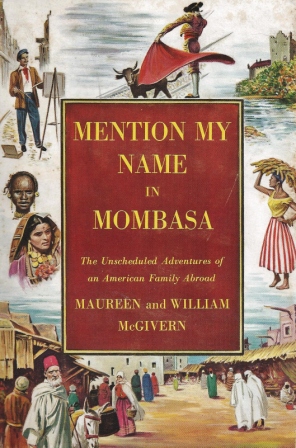
Mention My Name in Mombasa: The Unscheduled Adventures of an American Family Abroad by Maureen Daly McGivern & William McGivern ~ 1958. This edition: Dodd, Mead & Co., 1958. First Edition. Hardcover. 312 pages.

My rating: 7/10.

*****

This is a most interesting read; a travel memoir with a very 1950s’ feel – not surprising, seeing as it is a 1950s’ book! I enjoyed it.

The authors were literary figures of their time, and the travels herein described were, it seems from a few comments here and there, both to fulfill a personal desire for wanderlust and to collect material for future books, including this one.

If the name Maureen Daly rings a bell, it is most likely because of her extremely successful young adult novel, Seventeenth Summer, written when the author was herself just seventeen, and published in 1942. Some years later we find Maureen married to fellow writer William McGivern, a successful writer of crime-mystery novels (The Big Heat, Rogue Cop, war novel Soldiers of ’44, and almost 20 more) and film and television scriptwriter (Kojak, Adam-12, and Ben Casey, among others). They had their two children along, 6-year-old Megan and 2-year-old Patrick, when they left New York on New Year’s Eve to travel to Paris, the start of their extended travels.

Long, detailed and quite enthralling chapters describe the scenery, culture and especially the unique individuals the McGiverns came into contact with. The tone is a mixture of worldly-wise (but never condescending), travel guide (but merely to lay out the scene), and very 1950s’ American superiority (but innocent of bluster so therefore non-jarring – at least for the most part). The McGiverns were very eager to give credit where it was due regarding the superior aspects of their temporary homes and tourist destinations, which included Paris, and then a stay in the tiny fishing village of Torremolinos near Málaga, Spain, just on the verge of its discovery and development as a winter-tourist hotspot.

Then come several chapters on Spanish bullfighting, bullfighters and the ranches which raise and train the bulls. The tone here is journalistically non-judgemental much of the time; I never did get a grasp of whether the McGiverns were fully behind the “sport”, though from the farcical descriptions of a number of stereotypical bullfight aficionados which graces one of the chapters, I suspect they had marginally more sympathy for the bovine members of that elite yet widely populist pastime.

Next is a short visit (and hence a short chapter) in Gibraltar, where the McGiverns are rather disappointed in the elusiveness of the famous apes. On to Iceland, and a very travel-guide chapter this is, with loads of facts thrown at the reader, interspersed with short vignettes of some of the US Army families living on the vast NATO air base, and native Icelanders who opened their homes to our travellers.

Then comes the most memorable chapter of the book. During World War II, William had served as a US Army gunner in the European campaign, and his platoon had ended up entrenched on the mountainside near the tiny Belgian village of Fraipont, where the local people showed such generosity and warmth to their American allies that William had long planned to return in more peaceful times. Just over ten years later that sentimental visit took place, with the villagers overjoyed to recognize William and welcome his family. A poignant reminder that the war was not all that far in the past when this pilgrimage took place.

Back to Spain, and then a four-day voyage to the Canary Islands, a visit which seems not to have quite met the high expectations of the romance of the name. On to Morocco, where the McGiverns have several pleasant surprises regarding the locals, and then to Nigeria, on the cusp of independence as a full member of the British Commonwealth, after decades of colonial occupation.

A safari to Abadjan on the Ivory Coast and then to Fort Lamy in Chad doesn’t quite go as expected, but there are compensations in the people who the McGiverns meet as they wait for their travel visas to gain approval from the local bureaucracy. This does not happen, so back to Spain, through France, Belgium, and over to Ireland, where the Daly family is waiting to welcome their wayward relative and her family for an extended visit. Several months in Dublin follow, and then the trip is wound up, with a return to New York over a year after the original departure.

In this book there is a strong sense of how good it is to be an American at this point in history, and how welcome the traveller from the U.S.A. both feels and is made to feel; the McGiverns travel in their French-bought Citroën plastered with American flags fore and aft, and seldom seem to meet with a cold shoulder. Quite a change in the ensuing fifty years!

This is a fine book, and a literary time capsule of the post-war era, before things started to go wrong for the U.S.A., politically speaking.

I suspect it may be hard to come by (I ordered mine for a rather large sum from an online rare book dealer, for the Maureen Daly connection) but if your library happens to have a copy hidden in the stacks, or if you chance upon it in a used book store, it is well worth delving into.

Read Full Post »

Randy Bachman’s Vinyl Tap Stories by Randy Bachman ~ 2011. This edition: Penguin Canada, 2011. First edition. Hardcover. ISBN: 978-0-670-06579-0. 224 pages.

My rating: Oh boy. Another toughie to rate.

Because I’m already something of a Vinyl Tap fan, admittedly for Randy’s rambling anecdotes more so than some of the actual songs, and I’ve heard some – a lot! – of these stories before. The book perfectly captures his long-winded, continually-sidetracked, “Hey – I played with everyone you ever heard of” – and of course he did, he really DID! – very Canadian, very polite, and very funny style. I could hear his voice say every word I read.

Anyway, the rating. If I’d never heard a single episode of Vinyl Tap, I’d have to say a 6 or possibly a 7. Lot’s of name dropping, lots of references to both now-forgotten musicians and still-legendary rock stars, lots of eyes-glaze-over arcane musical stuff. As it is, and because I really like and admire Randy on a personal level – though I’ve never met the guy, and was definitely not a real fan of his music when growing up, except for the few chart toppers I inadvertently listened to – “American Woman”, “No Sugar Tonight” – you know, the standards – (I was always more into the Brits, like The Stones and The Who and Bowie and T. Rex, with a parallel affection for Jonie Mitchell and Bob Dylan and their ilk) – anyway, his voice on CBC Radio is a ton of fun to listen to, and the man seems genuinely nice.

Nice is good. We need way more nice in the world. And he’s a kid from Winnipeg. Who now lives in B.C. So he gets an 8.5/10. Rock on, Randy! Long may you ramble.

*****

I think maybe I already wrote my review. Let’s see, maybe a bit of background info for those of you Canadians who haven’t inadvertently or deliberately tuned into CBC Radio on a Saturday night driving along in the dark.

The Guess Who. Bachman Turner Overdrive. Ring any bells? If so, you may be a Canadian of a certain age.

Randy Bachman’s musical life started way back in his childhood, with violin lessons from the age of five. That was in the 1940s, and by the ’50s Randy had discovered another stringed instrument, the guitar – in particular the rock’n’roll guitar – and his future was set. Blessed with a hear-it-once-and-play-it mind – Randy calls it his “phonographic memory” – Randy forged ahead single-mindedly absorbing every new lick and chord and riff, and hanging out with the rest of the young wannabees in Winnipeg’s surprisingly fertile breeding ground for the rockers of the next few decades.

Teenage garage bands evolved and moved on, and the young musicians traded high school gyms for recording studios, doggedly saving their money to produce demos and singles and eventually albums, and one day, not too far into his musical journey, Randy found himself playing among the greats. Having converted to Mormonism when wooing his first wife, Randy was that rare figure: a rocker who embraced the third element of the stereotypical sex, drugs and rock’n’roll lifestyle while remaining a sober observer of the excesses of his compatriots in the first two departments. Perhaps that’s why his memory is so darned good?

And it – his memory – is amazing. The guy is a fount of trivial detail and anecdotes galore. To listen to him chatting away on Vinyl Tap, picking on his guitar to illustrate the details of what chord so-and-so played on his/her greatest hit/forgotten classic is mesmerizing. The guy is a literal sponge. He’s soaked up everything he’s ever heard or seen, music-wise. I repeat – amazing.

This book is a collection of Randy Bachman’s Vinyl Tap radio show monologues, expanded and cross referenced and generally polished up, with playlists of referenced songs at each chapter end, apparently available as collections on iTunes. (I haven’t checked this out personally, but I read that somewhere in the book end notes. It’s not prominently mentioned – a point in favour, in my opinion.) Another cool feature is the themed lists of songs at the end of the book, reflecting the themed Vinyl Tap shows where the featured “common thing” among diverse songs highlighted by Randy may be, say, cowbells, or songs for your funeral – how about “I Shall Be Released” by The Band, or “Wasn’t That a Party?” by the Irish Rovers, or “Another One Bites the Dust” by Queen, among all the sad and sobby tearjerkers also listed –  or food songs (“Catfish Blues”, “Cheeseburger in Paradise”, “I Want Candy”.) Sometimes a little bit silly, but a whole lot of fun.

Speaking of food, Randy shares some deep down and personal stuff here as well, like how his own appetite led him to the point where he weighed almost 400 pounds a few years ago, and his resolve to turn his life around. He opted for gastric bypass surgery, and it appears to have done wonders for him; he’s downright svelte in his later photos.

All in all, an interesting book for a Randy Bachman fan or a guitar aficionado – the guy’s a guitar monomaniac too, and there is a long, super-detailed chapter on rock guitars and their ins and outs and how to get various details of sound which, though fascinating in an “I’ll never use this information but it’s cool to see someone so passionate about it” way is something that was mostly lost on me, as I suspect it would be on most of us who aren’t aspiring rock band guitarists.

Would I recommend it? Hmm. Maybe one to check out from the library before buying it, though the song playlists are maybe worth having around, for those days with too much time on your hands and an iTunes gift card handy.

And here are some good links to recent interviews with Randy Bachman:

National Post – Randy Bachman Talks & Writes Vinyl Tap

Georgia Straight – Randy Bachman Remembers

Guitar International – Randy Bachman on Canadian Rock & Collecting Guitars

Read Full Post »

The Stars Grow Pale by Karl Bjarnhof ~ 1956. This edition: Penguin, 1960. Translated from the Danish by Naomi Walford. Paperback. 267 pages.

My rating: 7/10.

This early years autobiography left me curious as to the next stage in Bjarnhof’s life. The internet is curiously empty of much information about a man who became a celebrated member of Danish musical and intellectual society.

Desperately bleak in parts; often deeply moving.

*****

This is the story of a boy whose early years were filled with an array of tragic and challenging  issues, not the least of which is his growing blindness. Looking back on his childhood from many years in the future, the tone is stoic yet unsparing of the details of the situation and actions of Karl Bjarnhof’s family and childhood associates, and his own reactions and thoughts.

Karl, from his own self-description, was a stubborn and introspective child, occasionally impulsive, and often unable to explain his own actions or respond emotionally appropriately to the out-reaching of others. The deep love of his parents for their troubled child comes through clearly and poignantly, though Karl does not acknowledge those feelings in so many words in this account.

A gifted mathematician and musician from childhood, though these tendencies were initially dismissed, Karl went on in his adult life to gain international fame and respect as a cellist and organist, and later as a writer and radio broadcaster.

I can’t say I exactly “enjoyed” this autobiography. It immediately pulled me in and kept me enthralled, but it is a painful account to read, and it left me saddened, even knowing that Karl’s persistence in following his inner vision won through, and that he went on to lead a creative and fulfilling adult life. There is a certain understated humour to some of the anecdotes, but much of the book comes across as serious and unsmiling in tone. I suspect that some of the sparingly written vignettes will be etched in my memory for years to come.

Karl Bjarnhof was born in 1889, and died in 1980. His vision faded throughout his childhood and teen years; he became fully blind at the age of nineteen.

From the inner cover of this vintage 1960 Penguin edition:

Karl Bjarnhof in this brilliant autobiographical novel tells the story of a boy marked out from his fellows by the gradual onset of blindness.

The boy himself is not depressed, though other people may make him miserable: the boys in the yard will not play with him because he is too ‘stupid’ to see the ball; his mother nags at him for being ‘peculiar’; his schoolmaster punishes him for not being able to do the sums set on the blackboard. When eventually he is taken to an occulist he is told he has ‘eyes like a hawk’ because while he was waiting for his test he memorized the letters on the chart.

This story is devoid of self-pity or sentimentality. It gives a complete picture of a childhood in a small town in Denmark, with a gallery of unforgettable characters, both comic and pathetic. The book is profoundly moving, and deserves its outstanding success; the Danish book trade awarded the Golden Laurels (for the most outstanding book of the year) to Kark Bjarnhof in 1956 for The Stars Grow Pale; it has been published in nine countries, and was a Book Society Recommendation.

‘The book is a thing of beauty, of tenderness, and, at times, humour; which has, too, a strong adventurous streak.’ – Elizabeth Bowen in the Tatler

‘The sheer beauty of the writing … is exquisite …[The boy’s] world is completely his own, yet Mr. Bjarnhof, by his almost uncanny power of communication, puts the reader right into it.’ – Rumer Godden in the Bookman

From the back cover:

Karl Bjarnhof was born in 1898 in the small town of Vejle in Denmark. His family lived in very moderate circumstances and was hard put to provide proper medical assistance for the boy, who began to go blind at an early age. He has been totally blind for many years.

Bjarnhof’s musical talents and interests were manifest from the very beginning, and he developed into one of Denmark’s best violoncellists, although he no longer performs in public.

He is now known chiefly for his radio work as feature writer, music commentator and quizmaster, and above all for his exceptional talents as radio interviewer. He has been the editor of a Copenhagen newspaper, and has written several novels and numerous feature articles on a wide variety of subjects ranging from music, literature, art and the theatre to the state of the world in general.

The Good Light, published in 1960, continues Karl Bjarnhof’s story. Both books are readily available through ABE.

Though I personally found The Stars Grow Pale an interesting, and often compelling, read, I would hesitate to recommend it unless the reader is a serious collector of rather obscure autobiography, or has a previous interest in Bjarnhof’s early years. Well written, in a distinctive style – or at least well translated with clarity and artistic flair – it is nonetheless a work which may not appeal to the broadest range of readers.

Read Full Post »

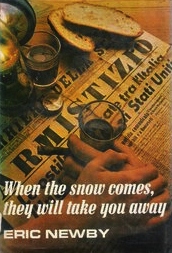
When the snow comes, they will take you away by Eric Newby ~ 1971. This edition: Charles Scribner’s Sons, 1971.  British title: Love and War in the Apennines. Hardcover. ISBN: 684-12486-6. 221 pages.

My rating: 9.5/10. Loses a bit for occasionally awkward phrasing which made me stop and re-read in an attempt to keep the story sorted out. It broke the flow a few times; nothing too serious. Otherwise, a very engaging and sincere memoir.

***** 

I said “sincere” just above, and that is my overall impression of this World War II prisoner-of-war account by the late British travel writer Eric Newby, best known perhaps for his month-long ramble in the Hindu Kush back in 1956. Fourteen years before that famous excursion, Newby was occupied with an even greater adventure after he was interned with his companions in German-occupied Italy after a British Special Forces sabotage mission against a German airfield in Sicily went completely awry.

We were captured off the east coast of Sicily on the morning of the twelfth of August, 1942, about four miles out of the Bay of Catania. It was a beautiful morning. As the sun rose I could see Etna, a truncated cone with a plume of smoke over it like the quill of a pen stuck in a pewter ink-pot, rising out of the haze to the north of where I was treading water.

After being dropped off by a submarine off the Sicilian coast, Newby and five companions had paddled their folbots – portable folding canoes – to the beach, and proceeded to attempt to sneak onto the German airfield and bomb as many of the planes as possible before escaping back to the beach and then a pick-up rendezvous with the sub. Unfortunately for the saboteurs, the Germans were very much on the alert, and the sneak attack ended in a hasty retreat. The canoes sank one by one during the night, leaving the men completely stranded at sea, where they were picked up by Italian fishermen. A year in a rather decent POW camp followed, with numerous unsuccessful escape attempts by various prisoners being attempted, before the Allied-Italian Armistice of 1943 which saw a mass exodus of Allied prisoners and Italian soldiers into the countryside just ahead of advancing German troops.

Eric had unluckily broken his ankle the night before the Armistice, which complicated his movements considerably. Ending up in an Italian hospital, waiting for the inevitable arrival of the Germans, Eric met a young Slovenian woman, Wanda, who initiated a series of language lessons – Italian in exchange for English – which soon led to something more than a disinterested friendly relationship.

When the Germans did show up, Eric was put under guard by Italian policemen, but he managed to escape out of a bathroom window, broken ankle and all, following Wanda’s instructions as to how to find assistance in the town. An underground movement of antifascist/anti-German civilians was mobilizing, and Eric came under their protection and was passed from house to house until his eventual haven in a small mountain village, where he ended up working for a farmer in exchange for shelter and meals.

Wanda kept in occasional contact, mostly by cryptic notes and once by a rare and risky visit, and Eric stayed one step ahead of his potential captors. But as the autumn progressed and the mountain snows began to fall, the period of freedom drew to a close, as it became impossible to hide the presence of Eric and the other temporarily free POWs from the investigative raids of the German patrols.

As the book ends, Eric has been recaptured and is heading to another internment camp, where he will be spending the rest of the war. He and Wanda managed to stay in contact, and were married after the war.

This book is a self-deprecating account of one man’s attempt at maintaining his freedom, though, as Eric himself notes several times, the best thing he could have done both for himself and for the Italian villagers who risked their lives to aid him would have been to surrender. And there was a very real danger to his hosts. Entire families were shot for harbouring fugitives, and though there were numerous people willing to run such a risk, there were others just as eager to turn in both escaped prisoners and those of their neighbours who aided them.

It is also a touching love story, both of a man and a woman who meet and fall in love in most uncongenial circumstances, and of Eric Newby’s deep affection and respect for the Italian peasants who sheltered and fed him at unbelievable risk to themselves and their families.

A sincere and grateful story, written in a modest tone with a good dose of wry humour.

This is one of the recommendations in Noel Perrin’s book about good books, , which I reviewed earlier this year.

I must agree. Highly recommended.

Read Full Post »

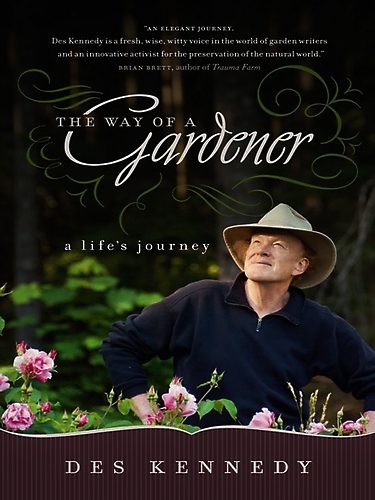
The Way of a Gardener: a life’s journey by Des Kennedy ~ 2010. This edition: Greystone Books, 2010. Softcover. ISBN: 978-1-55365-417-9. 271 pages.

My rating: 8/10. Beautifully written, but I found myself occasionally tuning out – just a tiny bit – in the later chapters. The author’s life has been so full that he just barely touches on many of the events in his later years. I would love to have seen this as a volume one of a multi-volume biography, ending at his leaving the seminary, or settling on Denman Island (one of the Gulf Islands in British Columbia’s Georgia Strait, between southern Vancouver Island and the mainland), because I think the last four decades on Denman plus all the environmental involvement could easily fill a book of its own.

*****

I remember when Des Kennedy first blipped onto my radar, through his 1990s columns in Gardens West magazine, a Canadian publication which is de rigueur reading in my fellow gardeners’ social circle. This was soon followed by my purchase of Kennedy’s first book, a collection of essays on unloved creatures – think rats, slugs, spiders and their ilk – called Nature’s Outcasts: Living Things We Love to Hate (1993),and the rest of his gardening books as they were published, the most recent, before this one, being 2008’s An Ecology of Enchantment, which hints at some of the backstory detailed in this current memoir.

He popped up here and there, speaking at a garden show, authoring an article in a gardening magazine, leading a well-advertised garden tour to Ireland – an instantly recognizable figure with his halo of unruly red hair, and his confident gaze straight into the camera.

Much has been made of his time spent as a Catholic seminarian and novice monk; Kennedy left the monastery before he took full vows after continually clashing with his superiors in matters concerning involvement with the secular and artistic world. (Kennedy was in favour of a degree of inter-mingling between the seminarians and the local population of artists, poets and musicians; his immediate supervisors were not.)

From the Greystone Books website:

A personal and revealing exploration of a life lived close to the earth, from one of Canada’s best-loved gardeners.

Called “a green-thumb rogue” (Star Tribune, Minneapolis), accomplished novelist, satirist, and garden writer Des Kennedy describes his life journey from a childhood of strict Irish Catholicism in Britain to a charmed existence amid the gardens of his Gulf Island home in British Columbia.

From his appearance as an innocent dressed in white for his First Holy Communion to his days as a young seminarian in black habit, through the Beat poetry scene in New York City and the social upheavals of the 1960s, this monk-turned-pilgrim pursues a quest for meaning and purpose.

After leaving monastic life and moving west, Kennedy takes up a new vocation in what has been called the Church of the Earth. On a rural acreage, he and his partner build their home from recycled and hand-hewn materials and create gardens that provide food as well as a symbiosis with the earth that is as profoundly spiritual as past religious rituals. Spiced with irreverence and an eye for the absurd, The Way of a Gardener ranges over environmental activism, Aboriginal rights, writing for a living, amateur wood butchery, the protocols of small community living, and the devilish obscenity of a billy goat at stud.

This book describes Kennedy’s childhood years in Liverpool, before his emigration with his family to Canada at the age of ten in 1955. Growing up in a strongly religious Roman-Catholic family, Kennedy convinced himself that a religious career was his vocation; he spent eight years studying and working towards this goal, and eventually graduated with a degree in Philosophy from the Passionist Monastic Seminary in New York in 1968.

He then left the religious life and drifted and travelled for a time, ending in Vancouver as a school teacher and social worker. There he met the love of his life, Sandy Lesyk, who has been his companion and partner ever since. In 1972 the couple moved to a rural acreage on quiet Denman Island, where they proceeded to pursue the not-terribly-simple “simple” life, building a house from salvaged materials and clearing the land to establish a large garden. The couple still live there today, and still pursue the same lifestyle, though the vegetables now share space with a unique and individualistic mature ornamental garden which has received many praises and was the site of a weekly television show in the 1990s.

Despite the title, this is most emphatically not a book about gardening. It is a highly personal memoir about the time before the gardener emerged, and a look backwards at the sometimes rough and twisted path the author travelled, before the arrival at the gates of the present very earthly “Eden”.

Those coming cold to this book, without knowing who the heck Des Kennedy is now, may wonder what it’s all about. I must confess that if I had not already had the context of knowing about the writer, I might not have found this partial autobiography as interesting as I did.

Definitely recommended for those already familiar with this author, as it gives a marvelous insight into the background of this mesmerizing British Columbia gardening and environmentally “green” figure.

Read Full Post »

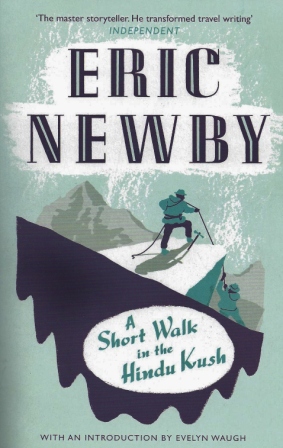
A Short Walk in the Hindu Kush by Eric Newby ~ 1958. This edition: Harper Collins, 2010. Introduction by Evelyn Waugh, Epilogue by Hugh Carless. Softcover. ISBN: 978-0-00-736775-7. 288 pages.

My rating: 8.5/10, after some inner debate. I have decided to overlook the more blatant “Eurocentric” passages, and to view this book as a product of its times, despite a vast change in standards of political correctness in the ensuing fifty-some years since its first publication. Very readable, in a dryly witty British way.

*****

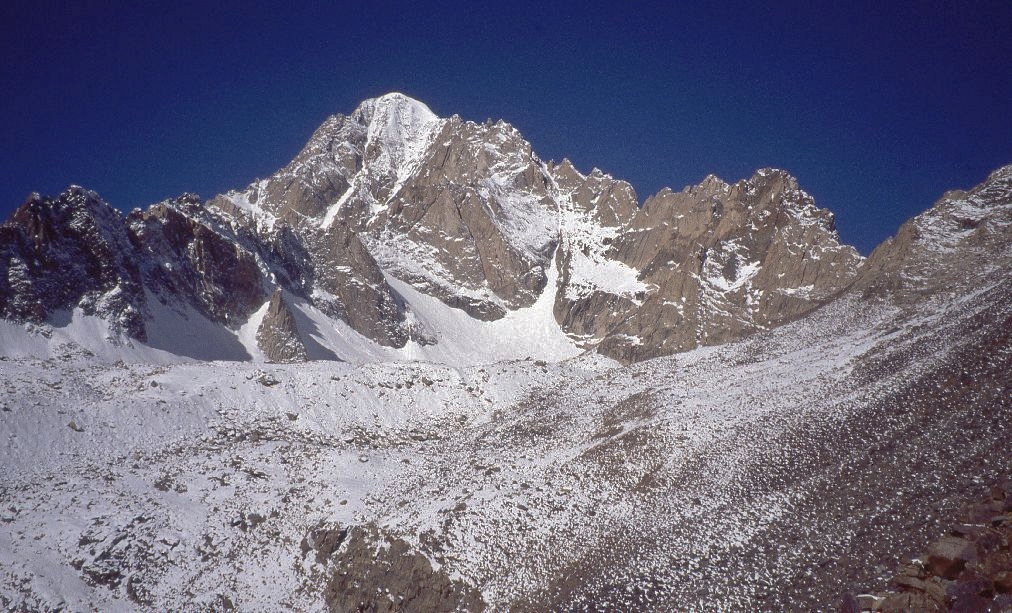
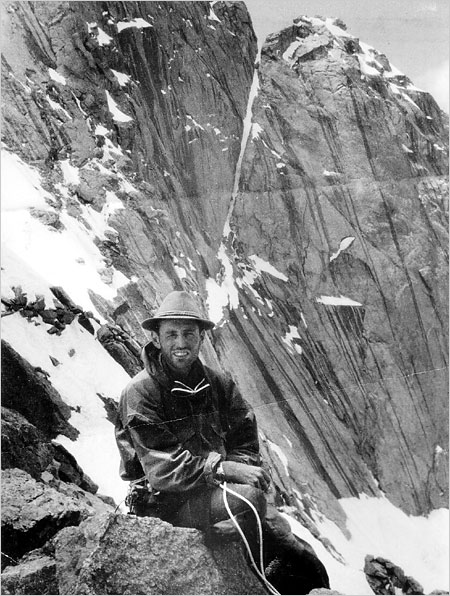
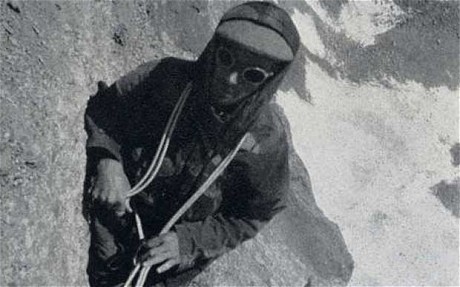
In 1956, 37-year-old Englishman Eric Newby, having received a publisher’s advance to write a travel book, contacted his friend, career diplomat Hugh Carless, and floated the idea of travelling to Afghanistan and trekking in the Hindu Kush mountains, an area where few Europeans had previously ventured. The two decided that the trek should have some definite aim, in part to enable them to request grants from various organizations to assist with expenses, so, without letting their lack of mountaineering experience stand in their way, they decided to focus on ascending 20,000 foot Mir Samir, which had not yet been climbed to its summit.

After a two-day crash course in basic alpine climbing at Snowdonia in Wales, the two felt they were marginally more prepared for the rigours ahead, and the trip was on. Each man brought a certain experience to the expedition.

Newby, though having spent the previous ten years working in his family’s ladies’ fashion business, had strong credentials as an outdoorsman. At the tender age of 19, he had spent time on a four-masted Finnish sailing ship, voyaging from Australia to Europe via Cape Horn, and his eventual book about this experience, The Last Grain Race, was responsible for the publisher’s advance which initiated the Hindu Kush journey. With the start of World War II, Newby served in the famous Black Watch regiment, and was involved in the Special Boat Section, making lightning commando raids on enemy airfields and the like. One of these expeditions went awry, and Newby was captured off Sicily and interned for the rest of the war, barring a brief period of freedom in the Italian mountains, where he met his future wife, a Slovenian village girl, Wanda, who aided him in an escape attempt. This period was also written about, in Love and War in the Apennines, published in North America as When the Snow Comes, They Will Take You Away. (I am currently reading this memoir, and it is fascinating, and helps put Eric Newby the Hindu Kush “explorer” into context.) Wanda wrote her own memoir, Peace and War: Growing Up in Fascist Italy, in 1992. Always strongly and competently athletic, and with a strong sense of humour and a forthright readiness to embrace new experiences, Newby’s intent to venture into the forbidding mountains of a somewhat hostile Afghanistan is more understandable than it appears from his account of the initial decision in A Short Walk, where it appears to be merely a whim of the moment.

Hugh Carless himself, while on one of his official postings in Kabul, had previous experience in the area, and it was his accounts of trekking in the region with Tajik guides which got Newby thinking about the possibilities of a more ambitious expedition. The 31-year-old Carless brought knowledge of local languages and on-the-ground diplomacy to the partnership, as well as a strong inclination to adventure which more than matched Eric Newby’s.

The entire adventure, the “short walk”, lasted only a month, but what a marathon that month was. The book details the trials and tribulations, as well as the rewards, of the journey first to Afghanistan, and then, after engaging local guides, into the mountains. Mir Samir was reached, and the climb attempted, but both Newby and Carless were so weakened by continual dysentery and altitude sickness that they were forced to turn back a mere 700 feet from the summit. (A German party of experienced climbers was the first to reach the summit, only three years later, in 1959.)

After descending Mir Samir, bloodied and bruised, the trekkers continued around the foot of the mountain, as Newby and Carless thought they would like to see it from the “other side”, which entailed the party entering the neighbouring province of Nuristan, to the trepidation of their guides; regional rivalries were intense and deadly, and there was a very real danger of violence to trespassers.

A safe return was made, and the two men were thereby provided with anecdotes for a lifelong series of dinner parties, not to mention a whole book. The guides returned to their normal lives, grateful, one would assume, that the whole darned thing was so quickly over.

Much is made of Newby’s playful, ironic tone in this book, and while I did appreciate the bantering tone, as it made for an enjoyable reading experience on a purely diversionary level, I did continually keep thinking to myself, “Why?” Why risk life and limb, not only of themselves but of their guides, on such a pointless journey? Because it was “there”? That does seem to be the chief motivation set forth in the book, and I am not sure whether learning from the afterword by Hugh Carless, special to the 50th anniversary edition of A Short Walk, that the trip was contrived at least partly in order to have an experience to write a book about, that I am any happier with that reasoning. I suppose it is no different from the contemporary trips in search of material by the likes of Michael Palin and Bill Bryson, and even the revered Paul Theroux. We do tend to love a good traveller’s tale, whether we are fellow adventurers or merely armchair voyeurs.

A Short Walk in the Hindu Kush is often referred to as the book that started that successful genre, but I must differ on that point, as the traveller’s tale form stretches back in popularity to pre-history. Think of The Odyssey, and the Nordic journey tales, and Marco Polo, and the countless accounts since then. This book is a worthy successor of its historical ancestors, but it very much walks in the shadow of what came before, versus branching out in any significant way.

Newby and Carless ultimately come across as being a wee bit arrogant (okay, in Carless’ case, hugely arrogant), with their snide comments on the personal habits of the natives of the area. To balance this they do poke continual fun at themselves, and there are numerous appreciative comments regarding the region and the people, so perhaps it is merely a case of the author being more honest than most in that he records his negative thoughts, rather than submerging them in the interests of political correctness as more modern writers have been trained to do. Whatever my criticism, the fact remains that these two men ventured where few others dared, and, in the face of overwhelming discomfort and very real danger, pushed forward to pursue their stated goals, with a great degree of success.

To sum up, I quite enjoyed reading this book, am eager to read more of Newby’s work, and would happily recommend A Short Walk to others, with the note that it represents the attitudes of the time it was written, and may jar the sensibilities of a more tactful and possibly better educated (in a worldly aware sense) time.

Read Full Post »

« Newer Posts - Older Posts »