Posts Tagged ‘Biography’

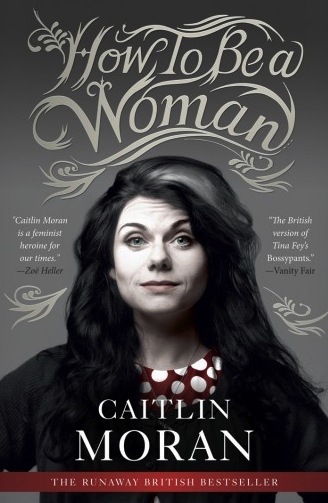
how to be a woman caitlin moranHow to Be a Woman by Caitlin Moran ~ 2011. This edition: Ebury Press, 2011. Softcover. ISBN: 978-0-06-212429-6. 305 pages.

My rating: This one was unrateable.

What can I say? It’s all been said. Multiple times.

Outspoken, thought-provoking, vulgar, romantic, profane, profound, controversial, brave, rude … and very, very funny. This is not a book I would give my mother! But I would leave it where my teenage daughter could find it.

I actually did just that, and she (the teenage daughter) dipped into it, and basically said “Ew. Too much information. And swearing. She’s a bit scary, Mom.” So that didn’t take. Which is just fine. We’ve already had all of the conversations that Caitlin missed with her mother. A lot of this one reads like a cautionary tale, a what-not-do-do manual, at least until Caitlin gets herself all grown up and out in the big world. Though even then her decisions aren’t exactly stellar one hundred percent of the time.

This is a big, bold, brassy memoir of British newspaper columnist and generally funny lady Caitlin Moran’s teenage years right up until the present. She has zero barriers; she discusses everything there is to discuss about being born with on the double X-chromosome side of the human sexual spectrum. This is Caitlin’s take on what it means to be a woman. While frequently prescriptive, it’s best taken with a good dash of salt. As one reviewer quipped, this one should perhaps have been titled How to be Caitlin Moran, because it certainly doesn’t apply – or appeal –  universally. Many are – and will be – sceptical, if not downright appalled, at Moran’s Technicolor rantings.

Menstruation, masturbation, obesity, body hair, pregnancy, childbirth –  full coverage of the biological range. Then there are drugs and alcohol and the over-the-top excesses these can lead too. Bad relationships. Good relationships. Marriage. Children. Abortion. Right along with the ethics of employing a cleaner.

And this is what seems to be getting all the attention in the reviews I’ve been reading. Capital-F Feminism. What it looks like today, and what Caitlin Moran thinks it should look like. In a nutshell, good old Golden Rule stuff. Do as you would be done by. Treat each other well.

I’ve been thinking about how to present this review for a few days now, ever since finishing the book, and since reading fellow blogger Claire’s take over on Captive Reader – How to Be a Woman . What I’ve decided is to not really say all that much about this one. The internet is crowded to overflowing with reviews; this one has received capital-H Hype, and some people are taking it really, really seriously.

Here’s the Goodreads – How to Be a Woman page. 2500 reviews. Go wild!

I’m not taking this one terribly seriously. I found it amusing, and I agreed with Caitlin Moran on her various opinions a good majority of the time. I particularly liked her chapters on marriage and motherhood, and the abortion chapter was something very unusual in its sincerity and refreshing lack of sensationalism. I don’t think I could be so detached and unemotional as Moran was, if it were me facing the same scenario, and my decision would likely have been the exact opposite, but her forthright acceptance of what she did felt genuine.

But I’m not about to bow down to her as our newest Feminist leader, our Womanly Great White Hope, as some enthusiastic fans seem to be. She’s not really breaking any new ground here, just repeating what’s already been said with a lavish dash of shazzam.

Moran is a very funny writer. I literally laughed out loud – a rarity for me when reading –  more than once – most notably during the bra and breastfeeding discussions – spot on! Loved it. I’ll likely purchase the book one day, but I’m in no rush. If I never read it again, no big deal. I’d never heard of the woman until a few weeks ago, and I strongly suspect I’ll not hear too much from her in future, but I’ve at least placed her in my personal “cultural literacy” file and can now nod knowingly if her name comes up.

And that’s good enough for me.

As a parting gift, here are some quotes I lifted from How to Be a Woman, courtesy of Goodreads. If anything here resonates, you’ll probably like this book.

*****

If you want to know what’s in motherhood for you, as a woman, then – in truth – it’s nothing you couldn’t get from, say, reading the 100 greatest books in human history; learning a foreign language well enough to argue in it; climbing hills; loving recklessly; sitting quietly, alone, in the dawn; drinking whisky with revolutionaries; learning to do close-hand magic; swimming in a river in winter; growing foxgloves, peas and roses; calling your mum; singing while you walk; being polite; and always, always helping strangers. No one has ever claimed for a moment that childless men have missed out on a vital aspect of their existence, and were the poorer, and crippled by it.

*****

I cannot understand anti-abortion arguments that centre on the sanctity of life.  As a species we’ve fairly comprehensively demonstrated that we don’t believe in the sanctity of life.  The shrugging acceptance of war, famine, epidemic, pain and life-long poverty shows us that, whatever we tell ourselves, we’ve made only the most feeble of efforts to really treat human life as sacred.

*****

Overeating is the addiction of choice of carers, and that’s why it’s come to be regarded as the lowest-ranking of all the addictions. It’s a way of fucking yourself up while still remaining fully functional, because you have to. Fat people aren’t indulging in the “luxury” of their addiction making them useless, chaotic, or a burden. Instead, they are slowly self-destructing in a way that doesn’t inconvenience anyone. And that’s why it’s so often a woman’s addiction of choice. All the quietly eating mums. All the KitKats in office drawers. All the unhappy moments, late at night, caught only in the fridge light.

Read Full Post »

one native life richard wagameseOne Native Life by Richard Wagamese ~ 2008. This edition: Douglas & McIntyre, 2008. Hardcover. ISBN: 978-1-55365-364-6. 257 pages.

My rating: 6.5/10.

*****

After reading Wagamese’s Indian Horse recently, one of the prominent Canada Reads 2013 finalists, I was curious enough about the author to search out what I could find of his other works. The library proved generously supplied, and I chose two biographies, One Native Life, and For Joshua, and have mentally checkmarked two fictions, Ragged Company and Dream Wheels, for a future time.

One Native Life is a collection of short, three to four page reminiscences, anecdotes and mini essays on First Nations identity. Richard Wagamese was removed from his home in childhood due to physical abuse by adults in his birth family, and lived with non-Native families as a foster child and then as an adopted child until he reached his mid teens, when he left home to live independently, with varied success.

Often the only First Nations person in his school and social circle, Wagamese, especially as he matured, frequently wondered about his “differences”, and pondered his inability to feel fully whole with his First Nations heritage treated either as a curiousity or a non-issue by his adoptive family and his friends.

Serious substance abuse, alternating with periods of sobriety, and career and social success, eventually took its toll, laying Wagamese so low that a complete rebuild of his life was essential to his survival. Richard Wagamese looks to have survived his crash to rock bottom, and has more than successfully rebuilt his life into something new and good, though it is obvious that he views this very much as an ongoing process, and not a “done deal” by any means.

One Native Life addresses the healing process of Wagamese coming to terms with his individual circumstance. He seldom comes across as angry or resentful; he is very ready to excuse the actions and attitudes of those in his life by looking at the reasoning – or, often, lack of thought – behind each situation. This is both a memoir and an attempt to address current social conflicts between Native and non-Native ways of thinking and being. From someone who has walked all of these paths, and who has experienced life as a member of both social groups, the thoughts laid out here are definitely deserving of respect and consideration.

Very nicely written, too, as I expected after the more-than-decent quality of Indian Horse. My one nagging problem with this book, the one that kept me from buying into it one hundred per cent, is that it is perhaps a bit too conciliatory and understanding. Wagamese is so darned nice. But he excuses this himself by stating throughout that he wants to see bridges built, not more barricades erected, hence the tone. But it might be easy to dismiss this one because of its gentleness, which is, paradoxically, one of its main strengths.

And I’m also reading another of Wagamese’s memoirs, For Joshua, written five years earlier than One Native Life, and addressed as an open letter to his young son, whom he became estranged from due to his alcoholism, which is plenty full of tragedy and anger and strong emotion. One Native Life, coming as it does later in the sequence, shows evidence of a further healing and a few more years of thinking things through.

An interesting memoir, from an interesting man.

For a much more specific review, go here:   The British Columbian Quarterly – One Native Life

Read Full Post »

the alpine path l m montgomeryThe Alpine Path: The Story of My Career by L.M. Montgomery ~ 1917. This edition: Fitzhenry & Whiteside, 1975. Hardcover. ISBN: 0-88902-019-1. 96 pages.

My rating: Probably an 8/10 – it’s a slender little thing, and tells nothing very new, deep, or startling, but it is nonetheless an enjoyable excursion into the life of the renowned author, written in the relatively early years of her successful career.

A must-read for the L.M. Montgomery aficionado, just to say you’ve read it; a gentle, happy overview of the author’s life for those new to her; a pleasant “light” memoir with only a few mentions of the very real and frequently tragic difficulties the author faced in her childhood, teen and adult years.

The book is a compilation of a series of six autobiographical essays which L.M.M. wrote for the Toronto magazine Everywoman’s World in 1917, ten years after the stunning success of Anne of Green Gables had made her a worldwide household name.

Many years ago, when I was still a child, I clipped from a current magazine a bit of verse, entitled “To the Fringed Gentian”, and pasted it on the corner of the little portfolio on which I wrote my letters and school essays. Every time I opened the portfolio I read one of those verses over; it was the key-note of my every aim and ambition:

“Then whisper, blossom, in thy sleep
How I may upward climb
The Alpine path, so hard, so steep,
That leads to heights sublime;
How I may reach that far-off goal
Of true and honoured fame,
And write upon its shining scroll
A woman’s humble name.”

It is indeed a “hard and steep” path; and if any word I can write will assist or encourage another pilgrim along that path, that word I will gladly and willingly write.

The first half of this slender book is devoted to childhood reminiscences, many of which the author mentions as having been used as inspiration and worked-over anecdotes for her personal favourite of her novels, The Story Girl. Then follows some discussion of the years when she attempted to establish herself as a published, and more importantly, paid author, and of course, the story of the manuscript of Anne, which was flatly rejected numerous times, and laid away

in an old hat-box in the clothes room, resolving that some day when I had the time I would take her and reduce her to the original seven chapters of her first incarnation. In that case I was sure of getting thirty-five dollars for her at least, and perhaps even forty.

The manuscript lay in the hat-box until I came across it one winter day while rummaging. I began turning over the leaves, reading here and there. It didn’t seem so very bad. “I’ll try once more”, I thought. The result was that a couple of months later an entry appeared in my journal to the effect that my book had been accepted. After some natural jubilation I wrote: “The book may or may not succeed. I wrote it for love, not money, but very often such books are the most successful, just as everything in the world that is born of true love has life in it, as nothing constructed for purely mercenary ends can ever have.”

And then there’s this comment, which I rather smiled at; the author having too-late second thoughts after killing off a character:

Many people have told me that they regretted Matthew’s death in Green Gables. I regret it myself. If I had the book to write over again I would spare Matthew for several years. But when I wrote it I thought he must die, that there might be a necessity for self-sacrifice on Anne’s part, so poor Matthew joined the long procession of ghosts that haunt my literary path.

After the evocative descriptions of her Prince Edward Island childhood, the part of the book I enjoyed the very most was the selection of journal entries from L.M.M.’s winter in 1901 of working on the staff of the Halifax Daily Echo, where she performed all sorts of different roles, from chasing down advertisers for copy – once unexpectedly scoring a new hat from a satisfied client – to proof-reading, and making up endings for serials whose manuscripts are inexplicably incomplete. Grand training for an aspiring writer, as L.M.M. points out, with much good humour!

Read Full Post »

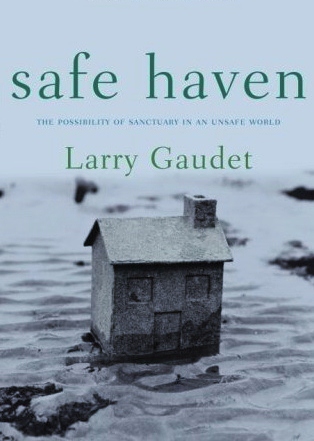
safe haven larry gaudeSafe Haven: The Possibility of Sanctuary in an Unsafe World by Larry Gaudet ~ 2007. This edition: Random House, 2007. Hardcover. ISBN: 978-0-679-31383-0. 274 pages.

My rating: 5.5/10.

*****

Here’s the promotional material from the publisher. Heads up for the predictably effusive tone.

“Sanctuary” is a beautiful word: philosophically rich, culturally intriguing and evocative of so much we cherish — protection, safety, contemplation, solitude. But lurking at the edges of this bright concept are some very dark associations: fear, paranoia, the slamming of gates to exclude the threat of other-ness. Whatever the word means to each of us, and whatever our ancestral legacies, the yearning for sanctuary is a malady we all share to varying degrees, a quest that is both our birthright and our affliction.

These are the assertions of award-winning author Larry Gaudet in Safe Haven, an unorthodox and highly engaging work of imaginative non-fiction. Sure to resonate with anyone who has dreamt of escaping from the pressures of the workaday world — that is, all of us — this book is a highly personal, funny and unflinchingly honest investigation of the power and allure of the idea of sanctuary.

Safe Haven begins and ends in the soft fog of coastal Nova Scotia, taking side trips into the ruined shrines of ancient Greece (with a fictional Bayou-born international spy serving as tour guide), journeying by rail through the frozen vistas and forlorn social realities of Canada’s north and dipping into Gaudet’s own Acadian heritage of displacement.

Booking a year for this project, Gaudet moved with his wife, Alison, and their two small boys to a newly constructed barn by the sea in the fictionally named community of Foggy Cove. His intent: to chart the meaning of sanctuary through the ages, using his family’s solitude as an idyllic jumping-off point. But the project becomes far more complicated than he’d envisioned, and far less idyllic. Envying his children who can oversee uncomplicated imaginary civilizations in a sandbox, Gaudet cannot shake the awareness that he is complicit in the very iniquities from which he seeks to shelter his family, from the environmental toll of their septic tank on this ecologically sensitive land, to the wince of a lobster he is about to boil for dinner. He must also contend with the guilt he feels for having hijacked his wife and children, potentially for naught. As Alison’s desire to return to the comforts and stimuli of urban life grows with every month spent in isolation, Gaudet knows their idyllic days in Foggy Cove are numbered.

In his search for the diverse meanings of sanctuary, Gaudet illuminates the dysfunctions and hidden costs of the way we live — and challenges us to find ways to bring down the walls that keep so many of us estranged from our own experiences. Safe Haven is an entertaining and illuminating romp through the fog-shrouded territory of sanctuary through ages and mythologies, guided by an engaging author who is not afraid to shine the light directly on his own fallible and highly likeable self.

My take:

This book is quite beautifully written, but my initial desire to totally enter into and embrace the author’s ideas was increasingly difficult to maintain as I learned more and more of the author’s personal life, and, in particular, his relationship with his wife, Alison. This seems deeply troubled, and Gaudet’s continual apologies to Alison for dragging her way out to the wilds of Nova Scotia, despite her yearnings for her “real life” of urban sophistication in the city, felt very passive-aggressive in a “this marriage may have issues” sort of way. Or perhaps a cigar is just a cigar, and it was all stream-of-consciousness writing with no below-the-surface vibe breaking through.

Some fascinating stuff in here, all about the author’s most complicated life and how he got to where he is today, but the continual first-person referencing ruined it for me. If one counted up all of the “me”s and the “I”s in this one, they’d outnumber every other word ten to one. Or at least that is the impression I am left with.

So – basically a vanity project, with some gorgeous passages worth anthologizing, or at least quoting in a blog, except that I didn’t mark those pages and I am very ready to part ways with this book and return it to the library shelves. Here’s the thing: it is stamped “Received 2007” by the library, and it appears to have been unread until my checking out of it in 2013. Absolutely crisp and clean and tight. That’s five years, and no one has apparently touched it, except for me on one of my random-selection forays into the non-fiction aisles.

What does that mean, I wonder? It’s not a bad book; some parts are truly excellent. The man can definitely write. Maybe the pervasive (though most probably non-intentional) self-promoting tone has prevented this one from being truly likeable and accessible to the vast majority of those of us unable, through the results of our own career and lifestyle choices, or by those unpreventable twists of fate, to sit out on a sabbatical year in our second home and ponder on the deeper universal concepts implicit in our lifestyles.

Am I glad I invested the time in reading this? Sure. It was thought-provoking and life affirming and occasionally mildly amusing. A lot of Gaudet’s thoughts resonated deeply with me; I felt much the same when I had small children under my care, as he did when writing this book, all broody and protective and suspicious of the world’s vast potential for hurting those I love. And Gaudet’s cutting comments on the prevalence of “sanctuary porn” in our society were absolutely spot-on. I liked him the very best when he probed delicately and accurately on what we choose to divert ourselves with, and how we feed, and are fed, on the stuff of fantastical escapist dreams.

Would I read this book again? Not very darned likely. Unless, of course, it would be to mark out those few memorable passages for future reference. Long ago in another time of my life I kept a series of journals, in which I frequently noted down personally-appealing bits of other people’s writing; I no longer do that, but I thought of it while reading Safe Haven.

Read Full Post »

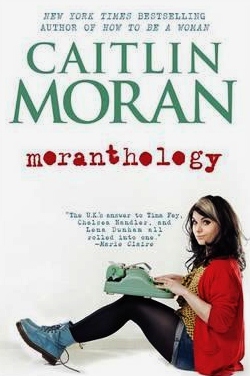
moranthology caitlin moranMoranthology by Caitlin Moran ~ 2012. This edition: Ebury Press, 2012. Softcover. ISBN: 978-0-06-225853-3. 237 pages.

My rating: 9/10.

*****

I searched this one out because of Claire’s intriguing posting about it on The Captive Reader recently. Click this link to read her take, and don’t forget to scroll down into the comments for an interesting side note onto the life of Charles Dickens. Here you go: Moranthology

I had never heard of Caitlin Moran before, but the lack of context was no barrier to enjoying this collection of columns originally published in the London Times. A previous book, How to Be a Woman, gets rave reviews on the back cover of Moranthology, and also, when I did my small bit of “research” for this review, all over the internet. One I may also seek out, because I liked Moran’s brash, cheeky and occasionally heart-rending voice in this later compilation.

Some articles are decidedly stronger than others, but every single one was more than readable. Moran works the pop culture beat, with frequent forays into personal memoir, and anecdotes about her own marriage and family life.

Caitlin Moran apparently had quite a counter-culture childhood and adolescence. Growing up in a self-described family of “hippies”, she frequently mentions her family’s poverty and the heavy-as-lead despair of the slow slide downward; the family lived on Moran’s father’s disability benefit, never quite enough to meet the basic daily needs, let alone afford any sort of advancement in life. Moran refers frequently to her youthful status as one of the lookers-on. As a homeschooled child, she remarks that she had zero experience in fitting in with her more conventional peers, and I suspect that it is this position outside of the norm which has helped make her such a sharp observer of the more ridiculous of the pop culture excesses splashed across our universal consciousness in this age of hyper-information.

There are poignant moments throughout Moranthology which I found most moving, in contrast to the aggressive humour of some of the pop culture critiques. Caitlin limping through London on her first visit there, astounded by the scale of the city and unable to find her way, on foot, to either the British Museum or Buckingham Palace, which she thought she’d just briefly visit before visiting the offices of The Observer; she’s won a “young writers” prize which includes a tour of the newspaper office and a chance to write a youths’ view article for publication. Caitlin and her brothers and sisters squeezed into the cab of their camper van, singing to drown out the sounds of their parents’ lovemaking in the back. Caitlin’s four years as a supremely heavy user of marijuana, and the gap in her life (and memories) this caused.

This is a strong collection with a wide variety of pieces; the range meant that it never blurred for me, as collections of newspaper columns sometimes may.

Outstanding pieces were a rather brutal observation of the ironies of Michael Jackson’s lavish funeral and the public response to it, and two interviews with rock and roll icons, Keith Richards and Paul McCartney. The Keith Richards piece is an absolute stand-out, jaw-droppingly frank and frequently very funny; a must-read for any long-time Stones fan such as myself. I learned nothing new – Keith’s excesses and the sordid details of his frequently wasted (in every sense) life are common knowledge to anyone who has been paying attention to the mesmerizing freak show of the Stones during the various stages of their rock royalty progression – but what Moran observes, and how she reports it makes for a brilliant piece of pop journalism. This article alone makes Moranthology worth buying, but there’s a lot more packed in here, too. Including, I must mention, a visit to a German sex club with Lady Gaga, a surprisingly gentle article which shows a strong affection and admiration for the blatantly controversial main character of the ongoing Gaga Saga.

Switching gears successfully from the pop world to social commentary, Moran also writes compelling, thought-provoking and serious pieces on such diverse topics as the importance of public libraries, the compassionate and economic benefits of a strong public welfare system, and the right of women to access safe abortion.

Cheeky, over-the-top, family-targeted humour abounds. Moran pens a scathing critique of the practice of providing goody bags at children’s’ parties, and gives a spirited defense of the occasional need for parental binge drinking. A slightly more serious, but exceedingly funny piece discusses the changing meaning of the word “special” to something rather dirty – references to “Daddy’s Special Lemonade” (it has limes in it!)  and playground requests for Daddy to “tickle me in my special place” (under the chin, for heaven’s sake!) – bring parental mortification and suspicious glances from other ever-vigilant parents on high alert for any shadow of anything smacking of sexual perversion.

All in all, a most entertaining read. Loved it.

Read Full Post »

moab is my washpot steven fry Moab is my Washpot by Stephen Fry ~ 1997. This edition: Arrow Books, 2011. Softcover. ISBN: 978-0-09-945704-6. 436 pages.

My rating: 9.5/10.

One word: Unexpected.

Elaboration: Unexpectedly frank, unexpectedly kind, unexpectedly excellent. To clarify that last, I did expect it to be excellent, but not quite in the way it was. Almost too much information, with some very graphic sexual details, but it works.

The .5 is lost for various vague reasons. Maybe a bit too graphic?

This is a grandly quirky memoir, which I hugely enjoyed reading.

I’m attempting to work on this review while sitting at a borrowed desk in the office of a dance studio far from home. Above my head, in the rather less than sound proof dance space, my daughter and her choreographer hammer out the last difficult 8-counts of an ambitious lyrical jazz solo, and I find myself caught up in the music, the continual repetition of the same phrases over and over and over. The song they’re working with is Ghosting, by Vancouver band Mother Mother, in case you’re wondering what some of the soundtrack of my life is like this year.

Moab itself is not at hand, so I’m writing this cold, as it were, without the book to check for passages of note. You’ll just have to trust me on this one; the writing is more than competent. Fry can spin the words, on paper as well as in person, oh yes, indeed.

I deeply enjoyed Stephen Fry’s acting before I ever read this biography, and I sought out and purchased the book because of my admiration of his dramatic and comedic performances in the comedic sketches he and Hugh Laurie performed for television in the early 1990s, A Bit of Fry and Laurie. And the Granada Television adaptations of  the seminal P.G. Wodehouse’s Jeeves stories, starring Hugh Laurie as an elegantly simple Wooster, and Stephen Fry as the perfect gentleman’s gentleman, Jeeves, are absolutely brilliant.

The twitch of an eyebrow, a slight inflection of tone, a fragment of a glimpse of body language – Fry as Jeeves merely stiffens and draws in his breath almost imperceptibly, and it hits like a ton of bricks. This guy – these guys, because Hugh Laurie is equally brilliant and deserving of his own rave reviews – are good. Very, very good.

And after reading Moab, I will watch and read Stephen Fry in future with an even stronger appreciation, because of where he’s come from, and what he’s all about.

Critics of his biographical works have mentioned that some of his details are a bit unreliable. It matters not at all to me. For the purposes of artistic and personal appreciation, Fry can tweak away to his heart’s content. Moab has an authentic feel. Truth is, as the cliché goes, frequently stranger than fiction, and this man has led a gloriously strange life.

Moab is my Washpot – such an odd title, I can imagine you saying to yourself, as I did –  comes from a Biblical quote, King James Version, Psalms, Chapter 60, and it make a surprising amount of sense once one has embarked upon the reading of the book.

    1. O God, thou hast cast us off, thou hast scattered us, thou hast been displeased; O turn thyself to us again.
    2. Thou hast made the earth to tremble; thou hast broken it: heal the breaches thereof; for it shaketh.
    3. Thou hast shewed thy people hard things: thou hast made us to drink the wine of astonishment
    4. Thou hast given a banner to them that fear thee, that it may be displayed because of the truth. Selah.
    5. That thy beloved may be delivered; save with thy right hand, and hear me.
    6. God hath spoken in his holiness; I will rejoice, I will divide Shechem, and mete out the valley of Succoth.
    7. Gilead is mine, and Manasseh is mine; Ephraim also is the strength of mine head; Judah is my lawgiver;
    8. Moab is my washpot; over Edom will I cast out my shoe: Philistia, triumph thou because of me.
    9. Who will bring me into the strong city? who will lead me into Edom?
    10. Wilt not thou, O God, which hadst cast us off? and thou, O God, which didst not go out with our armies?
    11. Give us help from trouble: for vain is the help of man.
    12. Through God we shall do valiantly: for he it is that shall tread down our enemies.

 Moab is an account, creatively rendered, about Stephen Fry’s youth and time at boarding school, until his breaking bounds in a most anti-social way in his late teens. He consistently lied, cheated, and stole his way through school; his juvenile life of crime ended spectacularly when he stole credit cards from the father of one of his friends and went on a spending spree which ended in a jail term, at the age of seventeen.

Fry’s personal redemption and his university days and acting career are tales for another book, but there is enough packed into the early years detailed in  Moab to keep the reader more than interested for the duration.

Warning to readers: if you have any issues about homosexuality, you should probably give this one a pass. Or perhaps not. Perhaps you should take it on as prescribed reading. Stephen Fry is gay, and much of this memoir talks exceedingly frankly about what that means to him, and how it influenced his teenage years, and the life he lives now, or, rather, was living at the time of the writing of the biography, sixteen years ago.

This is a kind, clever, amusing, thought-provoking and above all firmly confident gay man’s manifesto: “Here I am, this is me. I don’t have any issues with my sexuality. Why should you?”

Though one might say that the fact that he needs to speak at such length about it argues “issues”…

But, on the other hand, as memoirs of youth and the teen years go, if curiousity about sex and accounts of yearning love were left out of any account by a narrator of any sexuality, the narrative would not ring true.

I deeply appreciated what the author had to say, and I will be reading more by Stephen Fry.

Read Full Post »

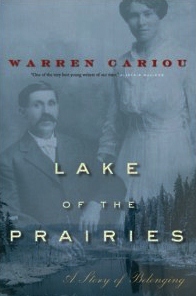
lake of the prairies warren cariouLake of the Prairies: A Story of Belonging by Warren Cariou ~ 2002. This edition: Doubleday Canada, 2002. Hardcover. ISBN: 0-385-25960-3. 318 pages.

My rating: 9/10.

A quite wonderful book, serendipitously unexpected. It’s only (very small) flaw was the very occasional not-quite-so-engaging historical passage, as Cariou delves into some of the histories of his ancestors. A little flat in those spots, a bit too much like sober research. Cariou quickly returned to his engaging anecdotal style. Very close to the perfect 10 of my ideal reading experience.

*****

And it was a real surprise, this one.

It was randomly chosen from the non-fiction stacks in close vicinity to the L.M. Montgomery biographies I was browsing, and I almost returned it without reading, due to the present supremely busy busy-ness of my life. However, quite fortuitously, I had a few minutes to fill while on hold on the phone, and this was the first thing I could reach, so I opened it up for what I assumed would be a mere few moments of casual browsing. Once started, I could not stop. It was much too good to put down unread. It’s taken several days to get through it, reading a chapter here and there, over lunch and tea breaks, but I was never tempted to abandon it, and found it very easy to jump back into each time.

Where do I come from?
 
The potato patch.
God in Heaven.
A falling star.
The stork.
A moonlit night.
A hole in the legs.
You were named for the doctor who delivered you.
 
Where, really?
 
From here. You’re from right here. The town of Meadow Lake, the province of Saskatchewan, the country of Canada, the planet of Earth. Just down the street at the Meadow Lake Union Hospital you were born, and we lived in the Carter Apartments until you were one, and then we moved to this house, and you grew like quackgrass in the backyard.
And that’s the story of you.

A beautifully written personal memoir, and a loving, often very funny, sometimes almost unbearably poignant, but never soppy ode to a town, region, and most importantly, a father and a family. As I was reading I found myself nodding in complete recognition of scenarios so many times. Flipping to the front of the book and examining the author’s information, I was not at all surprised to see that the author was born in 1966, only a year or so later than me; some of his memories of a childhood in rural Saskatchewan are stunningly similar to mine in rural B.C.

I too grew up along the rural fringes of a working class town. Cariou’s Meadow Lake and my own Williams Lake could almost be twin communities, though separated by an immense stretch of Canada. Northern towns, in relation to the cities hugging the 49th parallel, though not, of course, truly northern in a geographic sense, both being situated mid-province. North of us both the true bush country starts.

My town too had its fabulous (in every sense) rodeo, growing from a venue for the local cowboys to show off and celebrate their machismo and skills to another points-and-cash-prizes stop on the long summer tours of the professional rodeo circuit. Timber and ranching built and maintained both of our towns. His town had the Cold Lake military reserve, mine had Riske Creek. His town and mine were – are! –  a mix of “white people” – various European and pan-Asian bloodlines – and “Indians”. Meadow Lake is Cree territory; Williams Lake straddles the Carrier-Chilcotin divide.

The Indian kids chased the white kids in my schoolyard too, chock full of resentment for their demeaned social status of members of the oppressed race, the children of the reserves. Now, forty years later, the whites in both of our towns take open pride in their occasional Indian ancestors, basking in the trendy new cool status of First Nationhood, while in reality not much at all has changed, and the cultural divide betwen the races is as brutally deep as it ever was, with the occasional personal exceptions of individual friendships.

Perhaps this is why I identified so strongly with Cariou’s memoir; the parallels are strong in that and in other ways as well. Even when our general experiences diverged, as they did widely here and there, I remained fully engaged. This writer has a compelling voice.

Discovering as a young man that he was of Metís heritage, Cariou writes of that, and of how it changed all of his perceptions as to who he really was, where he really came from, and it is these passages which seem to have caught the attention of reviewers, making this out to be a book about First Nations identity. It is, and it isn’t.

There is no soapbox here, no grandstand. It remains a deeply personal story, and it feels genuine from start to finish. Those of us “whites” who grew up in similar settings through the ’60s, ’70s, and ’80s know exceedingly well what he is talking about, about our conflicted emotional relationships with the natives whose land we – the ancestral we as the descendants of immigrants and pioneers  – have taken over as our own. The reserve kids huddled at the back of the bus and the classroom, whispering together in indecipherable dialects, peering at the rest of us with well-deserved gleams of pure hatred, and we recognized that,  both the fact of the hatred and the reasoning behind it, and were terrified. Here was something bigger than us as individuals, and older, and more elemental. We’re still pretty scared, us grown-up white people, though we frequently hide it behind carefully political correct words – notice how I am now well-trained to put “Indian” in quotations, even though the “natives” I personally know call themselves “Indians” with no ironic inflection –  and a superficial acceptance and celebration of “First Nations” and “Aboriginal Pride”. Cariou captures that dichotomy brilliantly well.

This is such a small part of the narrative, though it does run through the entire book, as it rightly should. The majority of this memoir is personal reminiscences, gloriously focussed on Cariou’s father, and on the large extended family which sheltered and comforted and challenged and formed its younger generations, sending them out into the world to their various adult destinies with an ever-changing but ultimately supporting familial story behind them. I loved that atmosphere in this book. Cariou lovingly celebrates his family while fully recognizing their flaws, not always an easy task for a writer to pull off. He succeeds.

Here is a short excerpt from an early chapter that made me laugh out loud in joyful recognition. Holey gumboots and bread bags – oh yes, indeed! I have waded joyfully in those as well. “Flamingoed” – brilliant!

We stomped in puddles, waded across ditches, created little rivers between puddles, and sometimes made dams on the trenches that our parents had dug for drainage. We spent most of our time in rubber boots, which were largely ineffectual because either they were full of holes or we waded too deep in the puddles. Sometimes for whole summers we would have to put plastic bread bags on our feet before pulling on our boots. McGavin’s Bread bags were particularly popular for this. But they were prone to leaking, and worst of all, they made your feet slide around inside your boots, which were therefore more likely to slip off at the worst possible moment. The lost boot was a familiar sight: a kid standing one-legged, his bread-bagged foot held out tentatively, balancing himself there and staring back at he empty boot embedded in the muck. It was so common and so comical that we came up with a name for the predicament.

“Andrew flamingoed yesterday in Carlson’s ditch, you shoulda see him there crying for his boot. Lost his sock and his bread back too, and nobody;d get them for him so he had to step in, bare foot and all.”

And here are excerpts from two reviews. This first is by Allan Safarik, from the Books in Canada website.

Warren Cariou’s Lake of the Prairies is a beautifully written memoir about time and place and the nostalgia of a childhood growing up on the edge of the northern prairie in the parkland, a relatively uncelebrated area of Saskatchewan that is mostly dense forests, muskeg, rocky outcrops, marshes and lakes. Cariou’s maternal grandparents were immigrants who came to the harsh country near Meadow Lake and carved out pasture from the raw treed land. His family sank their roots into the place and Cariou grew up with his family legacy, particularly as remembered and influenced by his father, still relatively intact. Cariou is a skillful writer who weaves his father’s anecdotal adventures along with his own to recreate a marvelous pastiche …This is a book about nature as much as about anything. [Cariou] has a powerful lyrical way of describing the atmosphere and the details. He is an observer who is wonderfully educated about nature and as he grows up, he tells about his friendships and his adventures in an increasingly wider realm.

Cariou has given us a personal story about his family, skillfully injecting a second story about the way people live in his community and how they interact with one another. This incredibly crafted Canadian book might be about South Africa or many other countries. But no, this is Canada. Bustling Meadow Lake, Saskatchewan, a small town with big shoulders. Warren Cariou, in his coming-of-age memoir, writes like a naturalist/historian on a mission from God. The result is a distinctive style, a well-paced tale that leaves nothing out. Lake of the Prairie, a superb memoir about place, is also a powerful document about the human condition.

And from a review by Victor J. Raymond, University of Toronto Quarterly, 2004:

Place, family, history, belonging, home. Drawing on such ordinary words, Warren Cariou begins his memoir of growing up in northern Saskatchewan. The stories he recounts seem familiar: fishing, digging for arrowheads, moving to an old farm, learning about one’s family. But there are also deeper truths in these stories, rooted in hidden secrets, lost for generations.

One such story – Cariou’s discovery of his own Metís heritage – is central to the constellation of questions the author raises about identity and knowledge. But there is no thunderclap, no single moment of transition. Cariou’s heritage slowly emerges from his recounting of the stories others tell – his father, his uncles, his aunt, and others in his family. There is little remarkable about his initial self-description; at an early age, he is supposedly from ‘Norwayfrancenglandgermany.’… Interwoven with larger considerations of race and place is the author’s own story of growing up and leaving home. Beginning with his relationship with his parents and uncles, Cariou gradually reveals his own life growing up in Meadow Lake as a youth and then going to university and becoming a writer as an adult. Common life events … help reveal hidden complications of the seemingly easiest questions. Who am I? Where am I from?

Throughout Lake of the Prairies it is this sense of gradual revelation that shapes and reveals the landscape of identity, not only of what you know, but also of what you don’t know about yourself. In that, Lake of the Prairies is itself a story being told about our own identities and how we relate to one another – and we would be wise to listen carefully.

Read Full Post »


1982 jian ghomeshi1982 by Jian Ghomeshi ~ 2012. This edition: Viking, 2012. Hardcover. ISBN: 978-0-670-06648-3. 284 pages.

My rating: 4/10.

Sorry, Jian.

Love the radio show, and you’re a great interviewer, but as far as authoring memoirs goes, well, don’t quit the day job.

*****

Here’s the promotional material that had me all keen to read this memoir by star CBC Radio host Jian Ghomeshi.

In 1982 the Commodore 64 computer was introduced, Ronald Reagan survived being shot, the Falkland War started and ended, Michael Jackson released Thriller, Canada repatriated its Constitution, and the first compact disc was sold in Germany. And that’s not all. In 1982 I blossomed from a naive fourteen-year-old trying to fit in with the cool kids to something much more: a naive eyeliner-wearing, fifteen-year-old trying to fit in with the cool kids.

So writes Jian Ghomeshi in this, his first book, 1982. It is a memoir told across intertwined stories of the songs and musical moments that changed his life. Obsessed with David Bowie (“I wanted to be Bowie,” he recalls), the adolescent Ghomeshi embarks on a Nick Hornbyesque journey to make music the centre of his life. Acceptance meant being cool, and being cool meant being Bowie. And being Bowie meant pointy black boots, eyeliner, and hair gel. Add to that the essential all-black wardrobe and you have two very confused Iranian parents, busy themselves with gaining acceptance in Canada against the backdrop of the revolution in Iran.

It is a bittersweet, heartfelt book that recalls awkward moments such as Ghomeshi’s performance as the “Ivory” in a school production of Michael Jackson and Paul McCartney’s Ebony and Ivory; a stakeout where Rush was rehearsing for its world tour; and a memorable day at the Police picnic of 1982. Music is the jumping-off place for Ghomeshi to discuss young love, young heartache, conformity, and the nature of cool. At the same time, 1982 is an entertaining cultural history of a crazy era of glam, glitter, and gender-bending fads and fashions. And it is definitely the first rock memoir by a Persian-Canadian new waver.

All excited and looking forward to it – I’m a happy Q listener whenever I get the chance, and I too had (have!) a thing for the Thin White Duke – I requested this book for Christmas, and my family tried their best, but it was sold out at the local bookstore. So I was very happy last week to see it on the 7-day express shelf by the library door. (These are popular books available for one-week loan, no renewals. $1 a day for every day over the week, so there’s definitely an incentive to get them back asap.) My week is up on Tuesday, and I’ve made a concerted effort to push through it, but boy oh boy, it was tough going. (On the bright side, my family saved their $30.)

What’s wrong with it, you ask?

One word: Boring.

Boring, boring, boring.

And it wasn’t that Jian didn’t have an interesting teenage life. He did, in a tame sort of middle-class, upwardly mobile, successful immigrant family sort of way. In 1982, the year more or less profiled in this “creative autobiography”, Jian turned fifteen. He was in the throes of young love, was hanging out with a bunch of good friends, and was playing drums in a band – okay, it was the community band, but still… He was listening to all sorts of cool new music, had reinvented himself as a New Wave wannabe, and was having quite a time experimenting with hair dye and styling gel and eyeliner and dressing all in black. He had a loving and supportive family, abundant parental funding, and oodles of positive reinforcement from his teachers and the other adults in his life. He did stuff. He went places. He got into a few interesting situations, and made it through them in one piece. Easily enough stuff to write a memoir about.

A short memoir. A novella-length memoir. Not the almost-300 page thing that I have just gratefully slapped shut. Jian ran every single little incident of that year completely to death. And though it was interesting in bits here and there, ultimately I just couldn’t care.

Small sample of the prose to follow.

I will sacrifice a chunk of my evening and type this out, so you can read a bit and perhaps save yourself the heartbreak of discovering the banality that dwells within the covers of this book. Or, on the other hand, maybe you’ll love it, and wonder why I’m moaning on about the boringness of 1982. The book, that is. Not the year. Because, that would be, like, really tragic. If you like this kind of thing. And then didn’t read it. Because I was, like, panning it. Really badly. For some reason. Yeah.

Oh. No. It is catching. The prose style. You will see what I mean. In a minute. Uh huh.

Okay. Here’s Jian, describing his teenage Ontario home. Or sprinklers. Or middle-aged men. Or all three.

Thornhill was the quintessential suburb. I’ve never lived in any other suburb, but I imagine they all look like Thornhill, with people who act like they did in Thornhill. It was the kind of place where men watch sprinklers on their lawns. Have you ever noticed that men like to watch sprinklers? They do. Or at least, they did. But I think they probably still do.

When suburban men reach a certain age (let’s say, north of thirty-five), they like to stand at the foot of their front lawns and watch their sprinklers distributing water on them. This seems to be a biological need. It may look like a banal exercise, but men take it very seriously. You might expect that these men are involved in another activity while watching the lawn – like thinking. But I’m not so sure they are. I think they’re not thinking. Watching the lawn is like a middle-class, suburban form of meditation for men. It becomes more common as they age. Their heads are empty and they are just watching sprinklers. Sometimes men will rub their bellies while they watch their lawns. Perhaps these men are so tired from a busy week that this is their respite. Or maybe these men feel a sense of accomplishment and worth by looking at their lawns. Maybe, in the moments when their heads aren’t empty, they’re thinking, “This is MY lawn! Look what I’ve done. I’ve got myself a lawn with a working sprinkler! I don’t have to think. My belly feels good. I am feeling my belly.” Maybe that’s what suburban men are thinking…

This goes on, the sprinkler watching monologue, for three pages. It includes a list.

I have made a short list of the lawn sprinklers that were available in Thornhill in 1982:

  • stationary sprinkler
  • rotary sprinkler
  • oscillating sprinkler
  • pulsating(impulse) sprinkler
  • travelling sprinkler

As you can see, there were distinct and varied types of sprinklers to be utilized in the suburbs in the early ’80s…

There are a lot of lists in this book. Many more lists than there were types of sprinklers in Thornhill in 1982. And reading the lists are about as exciting as standing at the bottom of the lawn watching the grass get wet.

Okay, I guess you’ve twigged that I’m pretty underwhelmed by Jian’s little personal saga.

To be fair, it did have a certain time-travel charm; a certain nostalgia factor for those of us who shared that time on the planet with Jian. Yes, we remember Commodore 64s, and rotary dial phones and twisty phone cords, and some of the more intelligible words from the major AC/DC songs. We remember Boy George, and, yes, definitely David Bowie. But we now know, those of us who’ve read your teen years – oops, year – opus, way too much about what went on in your head, way back during the time span of your fifteenth trip round the sun.

Maybe this book is all avante garde ironic, and I’m just not hip enough to appreciate it. Maybe I’m not in the right demographic. It does seems targetted at a younger set of readers, because most of it is all, “Gee whiz, when I was a kid we didn’t have all these iPods and digital cameras and cell phones and stuff. Here, let me tell you about the pathetic technology of 1982.”

But I can’t imagine anyone younger than, say, thirty-five or forty or thereabouts finding it remotely interesting.

Anyone else read this one? Am I completely out of touch? Is is deeply cool and ironic? Or just deeply boring?

*****

I do forgive you, Jian. Just don’t do it again.

No 1983. Please.

(I still like the radio show.)

More reviews:

Goodreads – 1982 by Jian Ghomeshi

National Post – 1982 by Jian Ghomeshi

Read Full Post »

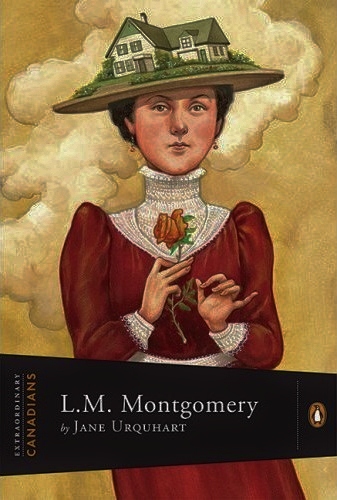
l m montgomery jane urquhartL.M. Montgomery by Jane Urquhart ~ 2009. This edition: Penguin Canada, 2009. Hardcover. ISBN: 978-0-670-06675-9. 161 pages.

My rating: 7.5/10.

A slender little biography which hits most of the high points of L.M. Montgomery’s life and career. Perhaps better as an overview or an introduction versus a definitive exploration of this Canadian literary figure.

A good addition to the many works about this iconic writer. Already familiar with the story of Montgomery’s life, I must say that the most interesting bits, to me, were where the author (Urquhart) writes about Montgomery’s influence on her own development as a writer.

Even if you have read other L.M. Montgomery biographies, Urquhart’s covers the same material in a very readable way, with a dash of creative flair.

*****

In the green master bedroom of a mock-Tudor house in the west end of the grey city of Toronto, a woman in late middle age lies dying, her pale arms almost as white as the sheet on which they are resting. It is April 24, 1942. Her failing body seems to her increasingly heavy, as if pulled by a great weight deeper and deeper into the flesh of the mattress. Outside, the air itself is weighted, saturated with the moisture of seasonal rain. Seeping into the room is the faintly discernible sound of the swollen river as it follows the path of the Humber Valley. The trees beyond the leaded windows have only just begun to show signs of spring.

In spite of what is about to happen, nothing in this room suggests struggle or discomfort: every cell of the woman’s body seems not so much in rebellion against life as dissolving into death, the way the rain outside her door is willingly dissolving into the earth…

The author almost lost me with her opening paragraphs. Urquhart’s biography of Lucy Maud Montgomery had received high praise when it was released several years ago as part of Penguin Canada’s 18-volume Extraordinary Canadians series, but this decidedly fictional opening shook me. Was this merely another “creative biography”? How on earth could Jane Urquhart have known any of these details, unless there somewhere exists a hyper-accurate account of Montgomery’s deathbed? There are no footnotes or references provided to suggest that this is the case.

The account of the expiration of Montgomery, and of her thoughts as she lies dying – the scene goes on for 9 pages – is purely speculative. Beautifully written, of course – it is Urquhart – but fiction.

Though the deathbed passages were pure fabrication, things improved considerably a bit further in. Though she never completely abandoned her occasional creative interpretations of Montgomery’s inner thoughts, those references became increasingly more plausible as Urquhart tells us of her reading of Montgomery’s diaries; we can more easily believe that the actual voice of Montgomery influenced Urquhart.

As I continued reading the biography, I appreciated the difficult task the author of it had taken on, to sort out the facts from the fictions of the life of this complicated, deeply troubled, rather tragically fated woman.

Urquhart cites Montgomery’s loss of her mother as a toddler, her cheerless upbringing by stoic grandparents, a dismal marriage to mentally disturbed husband, and beloved but disappointing children as reasons for her (Montgomery’s) continual efforts at reinvention of her own self through her personal writing. Montgomery’s diaries are known to have been continually edited and rewritten by the author as she progressed through her own life, which, though by no means devoid of joyful occurrences, close friends, and other good things, was so much less rosy than the fictional lives she created for her heroines.

Urquhart is a positively biassed – if occasionally “creative” – biographer in that she obviously admires her subject, and sympathizes with her, and seeks to understand what made her tick.

In spite of countless romantic references to moonlight and starlight in her fiction, and to rooms warmly lit by lamplight and by candlelight, it was shadow, not radiance, that most often claimed her once the sun had set. Her seeming addiction to detailing sunsets and twilights in her writing, if it sprang from anything at all beyond a poetic convention, may have come from a desire to hold on to the fading light. After the sunset came total, wide-awake darkness.

After my shaky initial start, I settled comfortably into reading the book, mentally sorting out the plums of fact from the lovely fictional bits and the author’s very interesting personal anecdotes. It was an enjoyable combination, but I would hesitate to rely on it as my only source of information on L.M. Montgomery’s life. It seems that Urquhart frequently assumes that the reader is already familiar with Montgomery’s body of work beyond the iconic Anne of Green Gables and its array of sequels; it assumes we are familiar with the era and the atmosphere in which the author lived and worked.

Keeping all of these things in mind, I would cheerfully recommend the book for those curious about L.M. Montgomery, and where she was “coming from” when she was crafting her overwhelmingly optimistic stories and novels. Montgomery’s truth, it turns out, is much darker and more compelling than her many fictions.

Read Full Post »

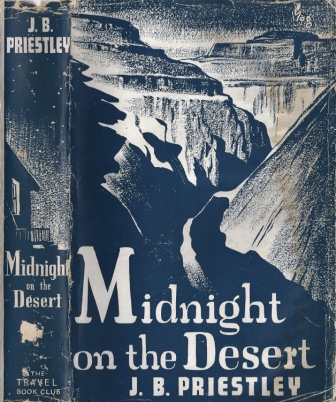
Midnight on the Desert: chapters of autobiography by J.B. Priestley ~ 1937. This edition: Readers’ Union & William Heinemann Ltd., 1940. Hardcover. 312 pages.

My rating: 9.5/10. Extremely hard to classify this book, but I found it completely engaging. The time theories near the end were completely over my head, but I appreciated Priestley’s enthusiasm nonetheless.

*****

I had expected a travel book of sorts, and Midnight on the Desert could certainly fall under that classification, but it is also so very much more. An examination of what it means to be a writer and an artist; a critique of the state of the world in politics, religion, philosophy, architecture and the performing arts; an ode to nature; a manifesto for seeking the good in the world and overcoming adversity and “doing one’s part”; a record of observation by a keen and analytical observer.

I have been spinning out my reading of this marvelously unexpected gem, and have been racking my brains over how best to convey what this unique work is all about and why I found it so compelling. Words do not come easily to me, which is why I’m a reader and not a writer, aside from these attempts at distilling the essence of what I find on the printed page. Perhaps I will let Priestley speak for himself.

First, the “set-up”.

Let me begin with what I can remember quite clearly. It was the end of my stay on the ranch in Arizona, last winter…There was the usual accumulated litter of letters and odd papers to be gone through, and most of it to be destroyed. But that was not all. I had decided during the evening to burn certain chapters, many thousands of words, of the book I had been writing…Yes, thousands and thousands of words would have to go, along with the rubbish; good words, all arranged to make sound sense, and with a cash value in the market, and representing, too, something more than money – time, precious and priceless time, of which, they say, only so much is allotted to each of us. I dare not wait for morning. Midnight was the hour for such a deed.

The first chapter starts with an appreciation and evocation of a place dear to the author’s heart, a small writer’s hut at the edge of the desert on a guest ranch in the Mojave Desert, where Priestley had spent the better part of the winter. He describes the beauty and majesty of the still, clear desert night, and then branches of in a dozen different directions in a sort of free association of ideas – random – oh, yes! – but most clear and sensible – he never loses us in his side trips though we fetch up back at the beginning a mite breathless and dazed at the speed and scope of our journey.

The papers are not yet set alight, though the fire is lit and is roaring in the wood stove, but we are far away now from the desert, back in England, getting ready to set sail for America, at the beginning of this particular trip. The Atlantic is crossed, New York attained, and Priestley is off.

I told myself severely that for once I must take New York quietly, as just another city. I had some work to do – to produce my play – but I must do that work as calmly as if I were at home in London. (I overlooked the fact that it is quite impossible for me to produce a play calmly anywhere; for that mad old witch, the Theatre, tolerates no calmness…)

… All other cities … seem in retrospect like mere huddles of mud huts. Here .. be Babylon and Nineveh in steel and concrete, the island of shining towers, all the urban poetry of our time … I would hurry down these canyons and gulfs they call avenues, cry out as one magnificent vista of towers crowns another, hold my breath at nightfall to see the glittering palaces in the sky, and wonder how I can ever again endure the gloomy and stunted London …

… There is a deep inner excitement, like that of a famished lover waiting for his mistress, that I cannot account for – not when it outlasts the mere novelty of arrival, and goes on week after week … I would begin to feel empty inside. It would be impossible for me to sit still and be quiet. I must go somewhere, eat and drink with a crowd, see a show, make a noise. Time must not merely be killed, but savagely murdered in public. In this mood, which has never missed me yet in New York, I feel a strange apprehension, unknown to me in any other place. The city assumes a queer menacing aspect … I begin to fancy that perhaps it is waiting for some other kind of people – chromium-plated giants without dreams or tenderness – to come along and claim it …

.. I feel like a midget character moving in an early scene of some immense tragedy, as if I had had a glimpse in some dream, years ago, of the final desolation of this city, of sea-birds mewing and nesting in these ruined avenues. Familiar figures of the streets begin to move in some dance of death. That baker outside the Broadway burlesque show, whose voice has almost rusted away from inviting you day and night to step inside and see the girls, now seems a sad demon croaking in Hell. The traffic’s din sounds like the drums in the March to the Gallows of a Symphonie Fantastique infinitely greater, wilder, more despairing than Berlioz’. Yes, this is all very fanciful, of course, the literary mind playing with images; yet the mood behind it, that feeling of spiritual desolation, that deepening despair, are real enough…

That was the distillation of, let’s see, four pages or so, and the man can keep it up indefinitely. He turns the same sort of passionate stream-of-consciousness writing to everything he observes and experiences. Further along in the book we are treated to similar digressions on The Theatre and the experience of working as a novelist-dramatist taking the written word to the stage, and about the challenges of being an author in general, and the quest to both satisfy the inner urge to record and create, and to fulfill the ever-difficult goal of please one’s readers.

Give us, please, you cry, the real world, not some triviality taking place in a pretty-pretty imaginary world, no mere escape stuff. Certainly, madam; certainly, sir. Now what is happening in this real world? The Communists and Fascists are demonstrating and counter-demonstrating, preparing for a fight; the economic system of our fathers is breaking down; Europe is bristling with armaments and gigantic intolerances, Asia is stirring out of her ancient dream, America is bewildered and bitter; one kind of civilization is rapidly vanishing and God-knows-what is taking its place; some men are marching in column of fours, shouting slogans, and making ready to kill and be killed; some men – many of them in exile because their minds are honest and not without distinction – are arguing in a melancholy circle; other men are lining up in hope of finding a little bread, a little work, a little peace of mind.

And Priestley goes on:

But no, no, no, this will not do, you tell us: you want a novel, a fiction to take you out of yourselves, not a newspaper, a fat pamphlet, a slab of propaganda. After all, private life goes on; men still fall in love, women fall out of it; there are entertaining quarrels between the Smiths and the Robinsons; young men are suddenly promoted and girls are given fur coats and diamond bracelets; and there is still plenty of comic stuff about – oh, uproariously comic stuff. This being so, get on with your novel, and don’t give yourself airs, don’t come over the propagandist, the gloomy prophet, over us.

… You may be sure that whatever he [the author] decides, he will be blamed. He may succeed in displeasing everybody. Lucky enough in other respects, I have been unlucky in this. Some years ago, because I had long cherished the plan and was now in the mood to work it out, I wrote a long, comic, picaresque, a fairy-tale sort of novel, called The Good Companions. I am neither prouder nor more ashamed of having written it than I am of having written any of the other books and plays under my name. But it happened to achieve an astonishing popularity. Since then – and this s an exact statement – I do not think I have met or corresponded with five-and-twenty persons who have not blamed me, either for having written this particular novel, or for not having written a lot of other novels just like it. One party denounces me as a hearty, insensitive lowbrow. The other party asks what the devil I mean by turning myself into a gloomy highbrow … I am condemned – and for a long term, it seems – to offend all round … No wonder, then, my new novel needed some thinking out. I was not bored on those trains …

Travelling by train, observing every fellow human being he comes across, from baggage car attendant to well-preserved and painted elderly matron sharing the dining room, Priestley goes off on more tangents, such as the difficulties of being an American woman, never being allowed to drop your eyes from your goal of “keeping up” for a moment; then looking out the window, asit were, to the American landscape itself and the need for painters, writers and poets to develop to capture its unique quality – the processes of developing a regional form of the arts, true to the physical space which inspires the artists.

Odes to the great physical beauty of the American West are in this book – the deserts and mountains, the Grand Canyon, the stark glories of rock and sand and rivers carving out their otherworldly sculptures. Priestley is in love with this aspect of America, and he sings his praises most eloquently well.

What a fascinating book; what a full book. One to read right through without stopping; one to tackle in small bits, to digest and mull over and agree with and occasionally refute. Not all that much autobiography, despite the tag on the title, but many insights into what went on in the mind of this deeply creative and opinionated man.

An excellent read; a grand glimpse into the mind of a master writer.

Read Full Post »

« Newer Posts - Older Posts »