November 19, 2015. I have just re-read these two of E.M. Delafield’s books, Humbug (1922) and Thank Heaven Fasting (1932) and was curious to see what I had written about them the first time around, back in March of last year. I was interested to find that I would say much the same after the second reading, so am re-posting a very slightly tweaked version of what I said 18 months ago.

This summer I also read an omnibus collection of  of the Provincial Lady stories published between 1930 and 1940, The Diary of a Provinicial Lady, The PL Goes Further, The PL in America, and the PL in Wartime. The tone throughout these was much lighter than Humbug and Thank Heaven Fasting; at times I struggled to reconcile the two vastly different voices.

The humour in the “straight” novels (versus the diary-type formatted ones) was certainly there, but was much more restrained and bitter. The Provincial Lady books are chiefly amusing, the others disturbingly thought provoking. Delafield is very much on my radar as an author to quietly pursue, though most of her back list is long out of print.

The Provinicial Lady quartet has been republished in various formats and editions and is easy to find; Virago republished both Thank Heaven Fasting and The Way Things Are in 1988; Persephone republished Consequences in 2000. One can only hope that some others of Delafield’s long-neglected novels will catch the attention of either of these two pillars of the feminist press, or of one of the other republishers now so intent on mining the rich literary field of the early to mid 20th century. Preservation and distribution is the starting point of so much more, and it’s always a good thing to hear from those who walked before us, in their own words. Plus a lot of these old books are darned good reading, adding to the appeal for those of us not so much scholarly as merely seeking of interesting things to divert our minds with.

*****

From March 7, 2014: Those of us who are familiar with E.M. Delafield only through her understated and slyly humourous Provincial Lady stories may be in for a bit of a surprise when delving deeper into her more than respectable greater body of work. According to Delafield’s succinct but comprehensive Wikipedia entry – someone has taken the time to briefly summarize each of her titles – she authored something like forty novels, as well as a number of film and radio play scripts.

Delafield’s novels are frequently described as semi-autobiographical. In the two I read recently the sentiments are certainly sincere enough to bear that out, and quietly tragic enough to make me feel a deep chord of sympathy to the young woman Delafield may possibly have been. Though she eventually slipped off the shackles of a strictly conventional upper-class girlhood and young womanhood, she appears from these two novels to be carrying a fair bit on angst-laden baggage from her youthful days. Delafield prefaces Humbug with a disclaimer as to the autobiographical nature of these tale, but if she did not live something similar she certainly observed it at close quarters is my own impression.

humbug e m delafield 001Humbug: A Study in Education by E.M. Delafield ~ 1922. This edition: Macmillan, 1922. Hardcover in reproduction dust jacket. 345 pages.

My rating: 8.5/10

Good women know by instinct that the younger generation, more especially when nearly related to themselves, should be equipped to encounter life by the careful and systemic misrepresentation of the more vital aspects of life.

The mother of Lily and Yvonne Stellenthorpe was a good woman, and had all a good woman’s capacity for the falsification of moral values…

Pretty little Lily, a child of seven as the story opens, is deeply and quietly perceptive, especially when it comes to her older sister Yvonne, who is quite obviously brain-damaged and “sub-normal”, though her parents vehemently deny it. Lily’s passionate defense of Yvonne, and her intuitive realization of Yvonne’s stoically endured pain are brushed off by the adults in her life as “naughtiness and impertinent interference.” Yvonne eventually perishes of a brain tumour, parents in denial to the bitter end. Lily grieves for her beloved sister but also rejoices that “Vonnie” is now pain-free in Heaven. Lily’s outwardly serene acceptance of the loss of her sister – she goes to great trouble to hide her tears from her parents in order to refrain from distressing them – is seen as juvenile callousness, and this crucial misunderstanding is representative of Lily’s parents’ lack of perceptiveness and their persistent misreading of their daughter’s true nature – that of a bright, loving and imaginative child.

A new baby brother appears, to Lily’s deep bemusement – she has been informed of the mystery about to unfold only by an ambiguous instruction towards the end of her mother’s pregnancy that she may pray for a baby brother – and once Kenneth appears Lily is suddenly packed away to convent school. Three months later, her mother dies, and Lily returns home, where she, baby Kenneth and the bereaved family patriarch settle into a muted existence of whispers and extended mourning.

The years go by, with Lily continually coming up against her father’s shocked disappointment in the things she innocently yearns for – storybooks, candy, the company of other children – until at last Lily, honestly thinking that her presence in the household is completely unnecessary, begs to be allowed to go to school. Her father reels in offended horror, clinging to the idea of the tightly-knit family while rejecting Lily’s right to having needs and desires of her own.

Her continual request to be sent to school distressed him profoundly. At one and the same time, he saw Lily convicted of disloyalty in wishing to alter the routine of life instituted for her by her mother, and as heartlessly desirous of abandoning her lonely father and little brother in their changed and saddened home.

At last he said to her:

“I can stand this no longer. Go, Lily, but remember that God Himself will condemn those who blaspheme against the sacred love of mother and father. You can go. I will keep no child at home against its will.”

Lily is, quite naturally, deeply distressed by this heaping on of parentally fabricated guilt, but she perseveres and off she goes to boarding school, where she comes under the thumb of her hearty headmistress, who seeks to mould Lily to yet another standard of acceptable girlhood. Lily does her best, as she always has, to outwardly conform to the expectations of her elders, but inside she is seething with confusion and deep shame. Her intentions are always good, but frequently misunderstood; Lily is the subject of many a lecture on how best to “improve” herself, which she takes to heart, causing further inner conflict as she tries her best to please everyone while still retaining some shred of self.

The years go by, and when Lily is well into her teens an opportunity arises for her to travel to Italy to visit her flamboyant Aunt Clo. Thrown into a very different society, Lily experiences a mild self-aware awakening.  She also meets the man who will become her husband, the much older, exceedingly staid and dull Nicolas Aubray. Once she is married, Lily at last has the opportunity to indulge in a certain degree of introspection, and her conclusions about herself, the way she has been manipulated throughout her life, and the way she will raise own small child bring this rather heart-rending treatise on how not to bring up children to a gently low-key but optimistic conclusion.

A quietly horrifying book in its description of Lily’s psychological and emotional abuse by those who love her too selfishly to be truly kind. Full of keen social commentary, with moments of sly humour. The subtitle, A Study in Education, points the authorial finger directly at the misguided attempts of everyone in Lily’s life – mother, father, nuns at convent school, headmistress and teachers at boarding school, her aunt and finally her husband – to form Lily into something that they think she should be, all the while stifling the natural intelligence and creativity which Lily was born with, and which is almost snuffed out by her extended “education” at the hands of others.

Ten years later, Thank Heaven Fasting examines the inner life of the similarly repressed Monica Ingram, another victim of smothering and misguided parental love and pervasive societal hypocrisy.

thank heaven fasting e m delafield 001 (2)Thank Heaven Fasting by E.M. Delafield ~ 1932. This edition: Virago, 1988. Paperback. ISBN: 0-86068-995-6. 233 pages.

My rating: 8/10

Monica Ingram is on the cusp of young womanhood: she is about to be launched into society and, more importantly, the marriage market. Sweetly pretty, fresh and hopeful, Monica breathlessly awaits the man who will prove to be her socially acceptable mate; his physical attractiveness and intellectual fitness are secondary considerations compared to financial and social standing.

Monica attracts a few approving masculine glances, but bobbles badly in her first season, becoming infatuated with a charming womanizer. Putting herself beyond the pale with an evening of stolen kisses, Monica’s small world condemns her behaviour, and, to her parents’ deep despair, Monica appears unable to recover lost ground. The available men turn their gaze to the newest crop of debutantes, and Monica sits on the shelf, becoming more and more stale with each passing year.

This novel is a bitter indictment of the lack of opportunities for young upper-class women, as well as a stab at traditional Victorian and Edwardian parenting. Educated in a more than sketchy fashion, trained for no occupation or career, having nothing to offer a prospective spouse but their own not particularly rare charms, crowds of daughters jockey for position, politely jostling each other at dinners and balls, and peeping over their shoulders with frightened eyes at last year’s crop of wallflowers who were unable to “get off” successfully.

Monica and her peers are creatures raised by their parents for one purpose only, to make good – or at least good enough – marriages. If they fail to succeed at this, the murmurings about unwed daughters being family liabilities louden to a discontented roar, with previously loving and nurturing parents becoming more and more exasperated and resentful as each year passes.

Both Lily of Humbug and Monica of Thank Heaven Fasting have been severely let down by their families and their society. Their eventual compromises are disappointingly the best they can do. For both of these gentle protaganists, their flounderings to stay afloat after not being taught to properly swim in the unforgiving ocean of the outside world and their gasping gratitude for the few good things that come their way are truly tragic in their absolute banality.

What appropriate reading for International Women’s Day, come to think of it. Flawed as some aspects of contemporary life are, we have indeed (by and large) come a long way, baby!

Both of these books are very readable, thought-provoking, and, yes, more than a little depressing. The heroines show glimmerings of self-actualization, glints of ambition, and a very reasonable resentment against their positions in the societal hierarchy, but ultimately both settle for something less than what they have been groomed to expect. Lily differs from Monica in that she manages to rise above her dismal upbringing – her “education” – and make herself some semblance of a happy life. Monica – well – Monica’s story ends before we can see too far into her future, but we suspect that she has lowered her expectations so greatly that her meek nature will at last find a place of compromised peace, and no aspiration to anything more.
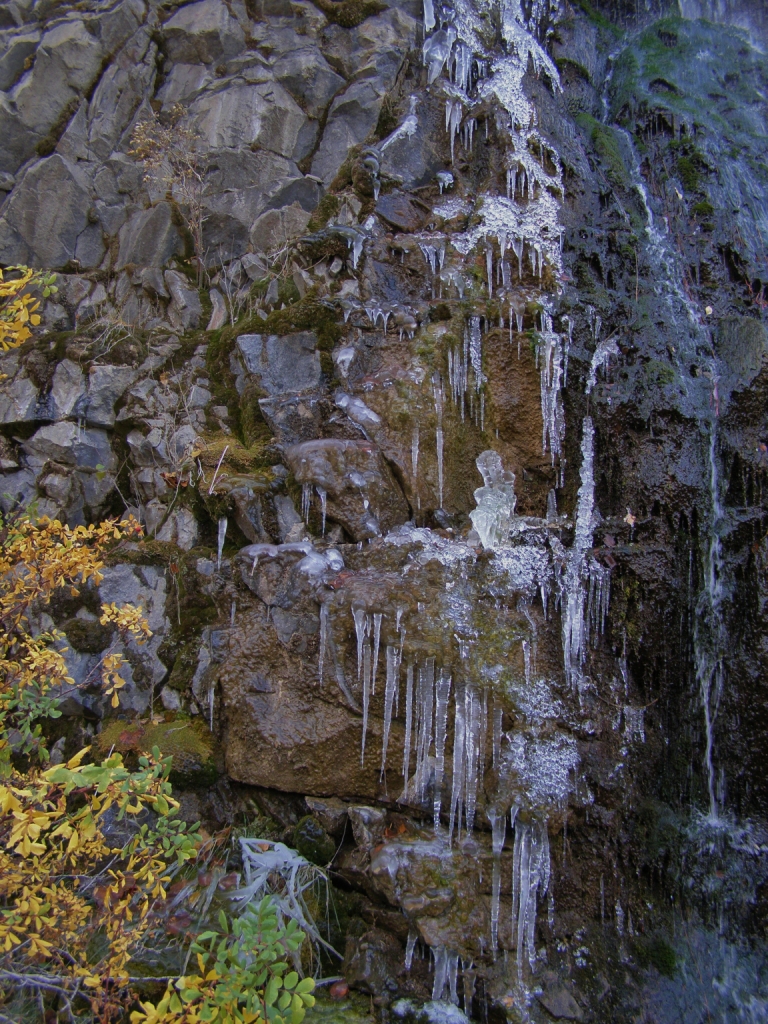
OLYMPUS DIGITAL CAMERANovember. Here it is, and well on its way, too.
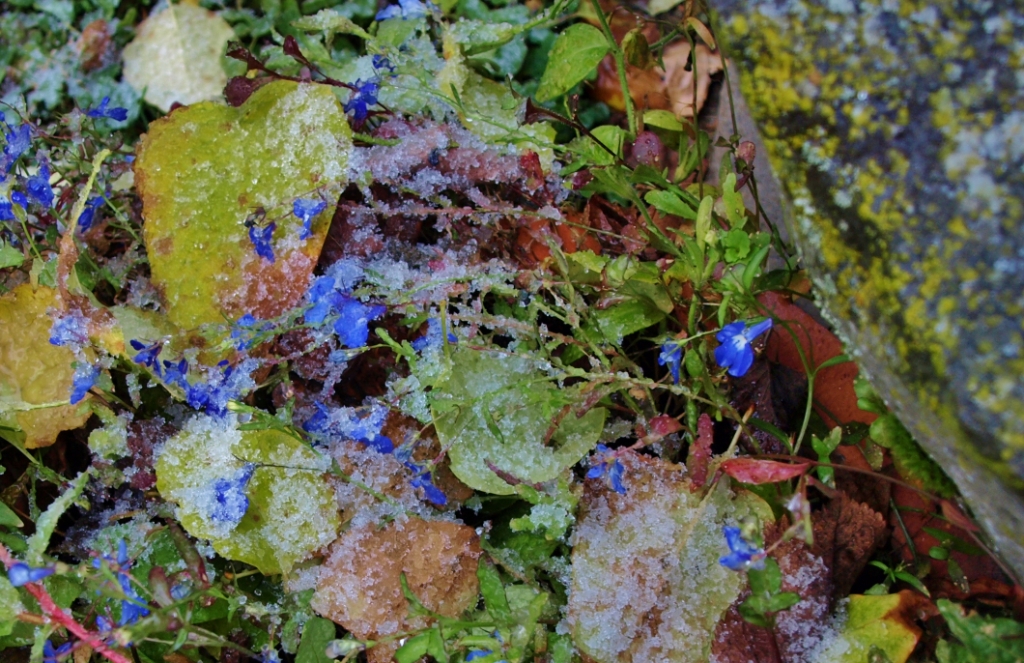
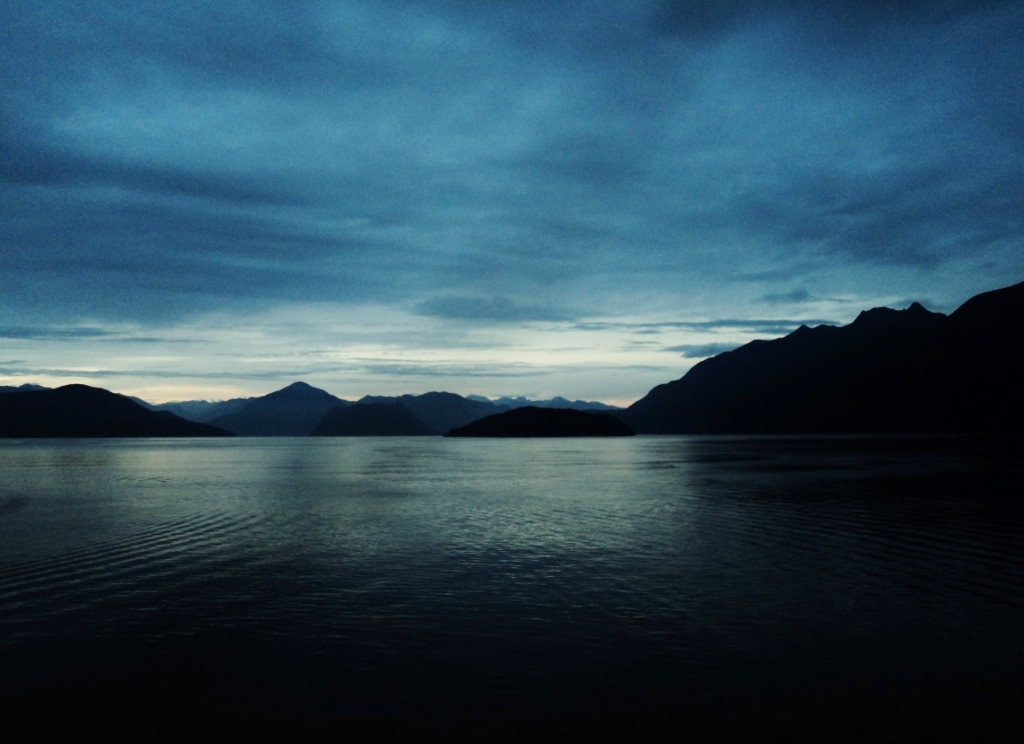
I cannot remember another period of time in my life when I have been so abstracted, so unfocussed, so just not there mentally. Things are coming from too many directions. And my reading has been what you might expect: abstracted as well. Ah, well, this too shall pass.

It’s been a great year, all things considered. A nice balance of (mostly) work, and (too infrequent but most enjoyable) play. But the busy-ness shows no sign of abating any time soon. I’m not even looking forward to snow, because the outside projects are due to continue regardless. Our best friends are our big tarps, covering construction projects in between working bouts.

What have I been reading? Nothing too exciting, mostly re-reads. Mamma, by Diana Tutton of Guard Your Daughters fame. Lafcadio Hearn’s The Romance of the Milky Way, from 1905, “studies and stories” from Japan. A whole string of O. Douglas tales. Reginald Arkell’s Old Herbaceous. Most of Booth Tarkington’s The Magnificent Ambersons, until I misplaced it. Monica Dickens – Joy and Josephine (ho-hum) and The Angel in the Corner (better). Ethel Armitage, and a host of other vintage British garden writers, combining pleasure with work, as I plug away updating our plant nursery website’s pages, in preparation for the too-soon-coming nursery year, which gets underway mid-December with the slowest-to-sprout perennials being optimistically seeded and subjected to their various germination-triggering temperature requirements – long warm, long cool, warm-cool-warm, cold-cool, cold-warm, very hot…

OLYMPUS DIGITAL CAMERA

So, instead of a book post, here’s a seasonal poem. And not the one you’re thinking it will be, from that misleading post title.

I’ve been worrying away at Rilke in the original German, keeping a volume of his collected works on my bedside table and wishing I had the self-discipline to actually study the language in an organized manner. Maybe next year!

In a slightly uneven English translation, here is one of my favourites, especially that third stanza. November, indeed.

Autumn Day

Lord, it is time. Let the great summer go,
Cast your long shadow on the sundial,
And over harvest fields let the winds blow.

Command to ripen the final fruits;
Grant them two more burning days,
Bring them to fullness, and press
A last sweetness into the heavy wine.

Who has no house, will not build now.
Who now is alone, will remain alone,
Will wake, read, write long letters,
And will the alleys up and down
Walk restlessly, in wind-blown fallen leaves.

Rainer Maria Rilke, circa 1902


Greetings, all.

I’m still here.

Or rather, I’m back again.

Two weeks or so ago we took an ambitious road trip in our little vintage sports car down into Washington state, where we joined an eclectic group of like-minded old-car people for a three-day road rally into parts unknown. (We received the navigation instructions and route book on the morning of the start – it was all a mystery as to where we were heading before we started.)

Well, my goodness. What an amazing three days that was. We went up into the mountains, and down into the badlands, and skirted four volcanoes, getting up close and personal with Mount St Helens, navigating the stunningly beautiful, intricately winding road up to the Spirit Lake viewpoint, well within the 198o “blast zone”. Back down the mountain, then along the incredible Columbia Gorge, and into the sagebrush-and-fossil-beds northern interior of Oregon.

We were moving much too fast to do much of what we saw credit. But it was wonderful. We hope to go back, this time at a more leisurely pace.

I don’t have very many pictures, as both cameras we brought along developed strange glitches, so I’m including only the tiniest sampling of our journey down below.

Back home now, and immediately into the Next Big Project (after the Great Roof Replacement of 2015) – building a new propagation greenhouse for our small plant nursery business. We’re racing the weather on this one, with just a few weeks left before the chance of snow. My daughter and I are almost finished pouring the concrete foundation (and we’re pretty proud of ourselves regarding this ambitious job, though both very sore in the muscle department right now) and we start on the framing this coming week, if all goes well. Hoping to be under glass (or, more accurately, glass-like polycarbonate panels) by snowfall.

Books. What have I been reading? Let’s see.

The Egg and I by Betty MacDonald, because we drove down the Olympic Peninsula on our way to the rally start in Tacoma, and I thought it would be fun to read something set in the region as my hotel room book. Terribly racist in pieces here and there, but I avert my eyes at those bits and embrace the rest with pure enjoyment. Still funny after the tenth (maybe more?) time around.

The Unlit Lamp, by Radclyffe Hall. Thank you to the person who recommended this – it definitely trumps The Well of Loneliness, though it’s equally as heart-rending. Maybe more so, because I actually liked the protagonist of this one. Mostly. Features a truly horrible father and a sweetly grasping vampire mother, whose parental misdemeanours put us firmly on the side of their hapless daughter.

Sarah Morris Remembers by D.E. Stevenson – went on something of a DES reading binge a little while ago, and determined to add a few more of her hard-to-find titles to my slowly growing collection. This one arrived all the way from Australia, and I’ve enjoyed it greatly, which is lovely, as it is one of the author’s last few books, some of which are decidedly sub-par. I was tempering my expectations, but it did not disappoint.

All the Day Long by Howard Spring – one of the few books I purchased in my travels – found in Hope, B.C.’s always rewarding Baker Books. It will be placed well up on my “best books of 2015” list – more later. Right up there with the other Spring book I discovered a year or so ago, The Houses in Between. Loved it just as much as the other.

What else…rather a hodgepodge of female-featuring fiction, these seem to be.

Peacock Feathers by Temple Bailey. Can we just call it a period piece and move quickly on? Not great. I may say more. I probably should, as Temple Bailey was something of a phenomenon in her time. We’ll see.

The Old Gray Homestead by Frances Parkinson Keyes. Her first book, published way back in 1919, and also a strongly dated period piece. I’m constantly wavering on Keyes. Her books always start out so well, and then she drops the ball. Or goes on for far too long. This one was quite tight, but full of goofy implausibilities. (I feel a scathing review a-brewing away.)

Bethel Merriday by Sinclair Lewis. Definitely off of this writer’s B-list, but even his B-list is pretty good reading. A cautious nod of mild approval. (Main Street it isn’t, though.)

Onward.

For those interested, here are a few glimpses of our journey.

Into the blue - leaving the mainland for Vancouver Island, end of the first day of our journey.

Into the blue – leaving the mainland for Vancouver Island, end of the first day of our journey. This was where camera number one started going weird – note the shadow running  through the image. It got much worse.

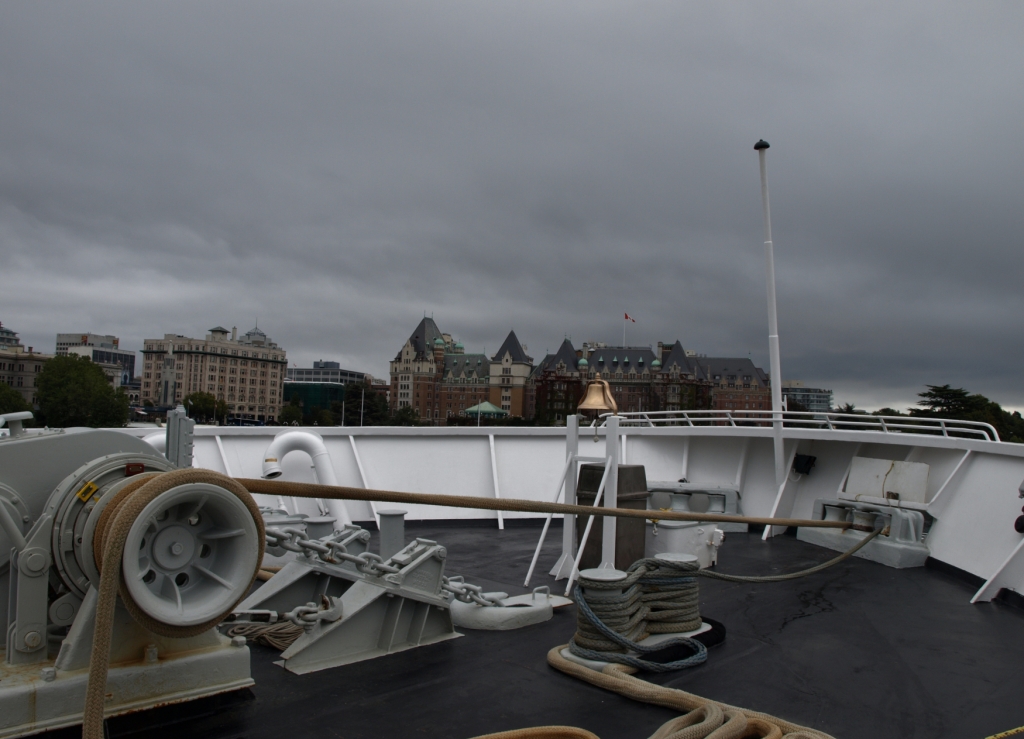
And on another ferry, leaving Victoria, B.C. for Port Angeles, Washington, on the car ferry Coho.

And on another ferry, leaving Victoria, B.C. for Port Angeles, Washington, on the car ferry Coho. (And yes, those clouds weren’t joking. Once landed, this was a top-up, peering through a misty windshield sort of day. But it got better!)

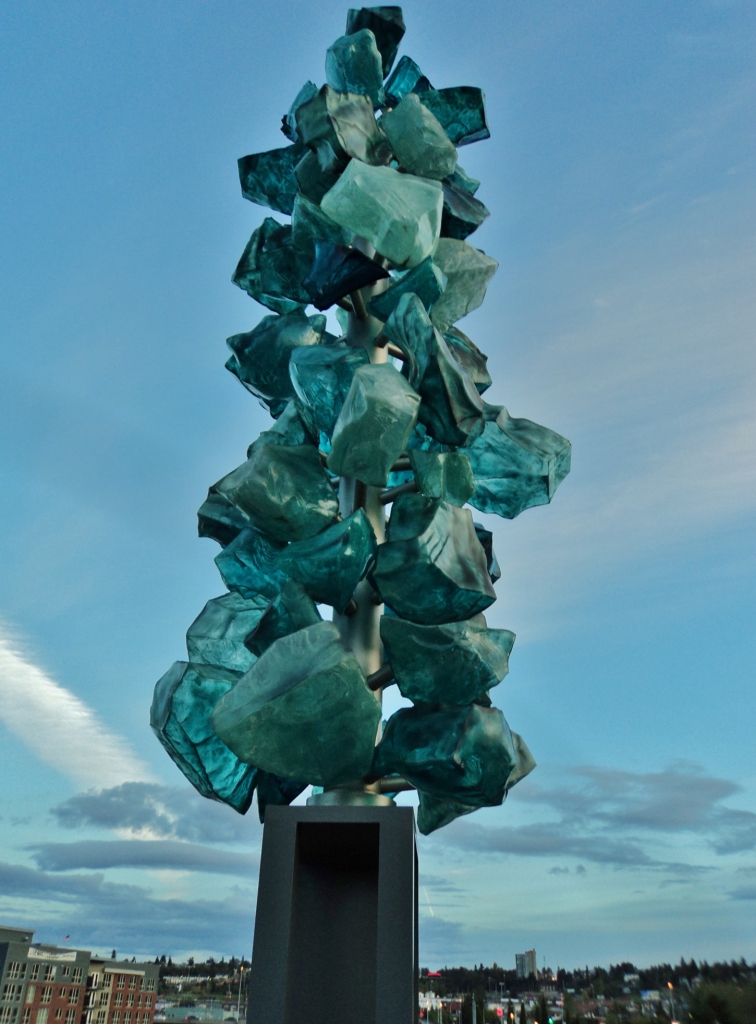
Random image from our 15 hours or so in Tacoma, Washington. We skipped out on the group dinner and walked down to the Tacoma Museum of Glass, stopping to admire the immense Chihuly glass sculptures along the bridge over the highway on our way to the harbour side.

Random image from our 15 hours or so in Tacoma, Washington. We skipped out on the group dinner and walked down to the Tacoma Museum of Glass, stopping to admire the immense Chihuly glass sculptures along the bridge over the highway on our way to the harbour side. Locals apparently call this one “the shishkabob”. It was massive, rather like a stack of pieces broken off an iceberg.

"Start your engines..." Here we are getting ready to set off on our rally. That's us, the little blue Spitfire hiding between the Beamer and the Bug.

“Start your engines…” Here we are getting ready to set off on our rally. That’s us, the little blue Spitfire hiding between the Beamer and the Bug.

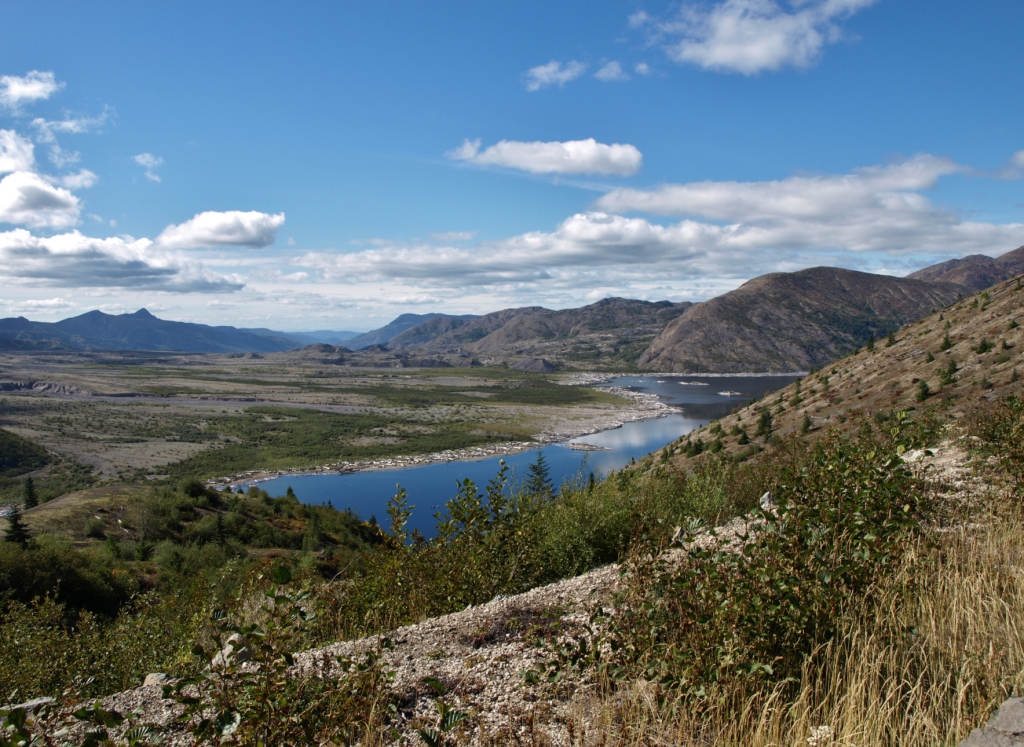
Above Spirit Lake, Windy Ridge Lookout, Mt St Helens. It's hard to capture the impact of the scene in context with the surroundings. This looks like nothing more than a pretty alpine lake, but we're surrounded by ash and rock deposits, and the silver stumps of thousands upon thousand of trees destroyed in the 1980 volcanic eruption.

Above Spirit Lake, Windy Ridge Lookout, Mt St Helens. It’s hard to capture the impact of the scene without the context of the wider surroundings. This looks like nothing more than a pretty alpine lake, but we’re surrounded by ash and pumice deposits, and the silver stumps of thousands upon thousand of trees destroyed in the 1980 volcanic eruption. This used to be a flourishing green forest, and Spirit Lake was once 200 feet lower than it is now. The silver along the edge of the lake is not rocks, but the skeletons of massive trees, piled up like driftwood.

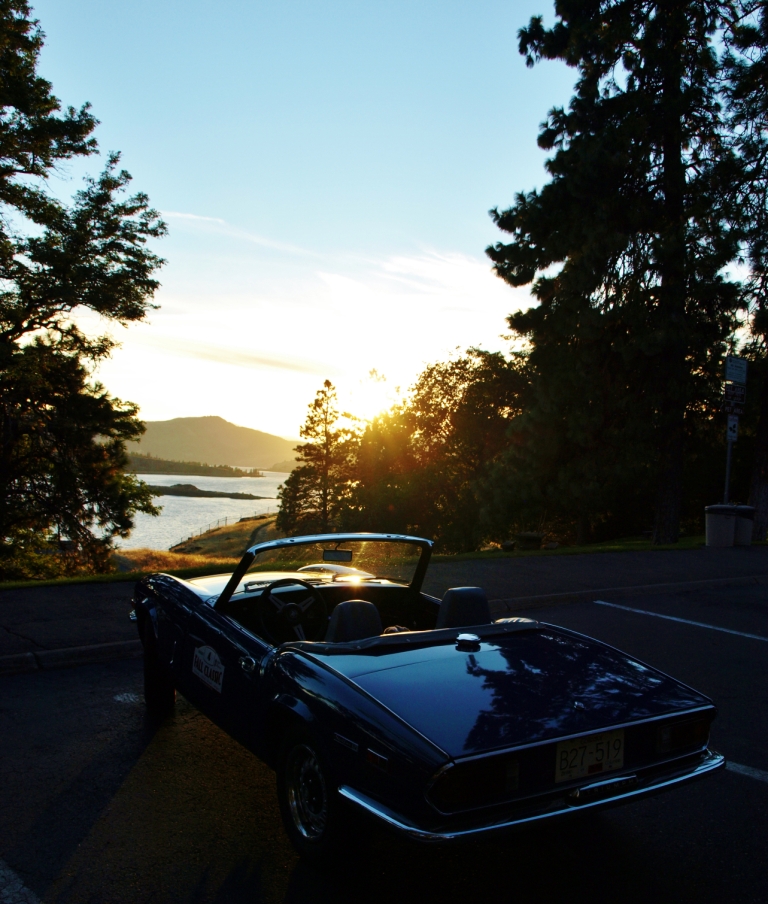
Chasing the sunset, coming through a section of the Columbia Gorge. We stopped to take a quick break just a few miles from our evening stop at The Dalles, Oregon.

Chasing the sunset, coming through a section of the Columbia Gorge. We stopped to take a quick break just a few miles from our evening stop at The Dalles, Oregon.

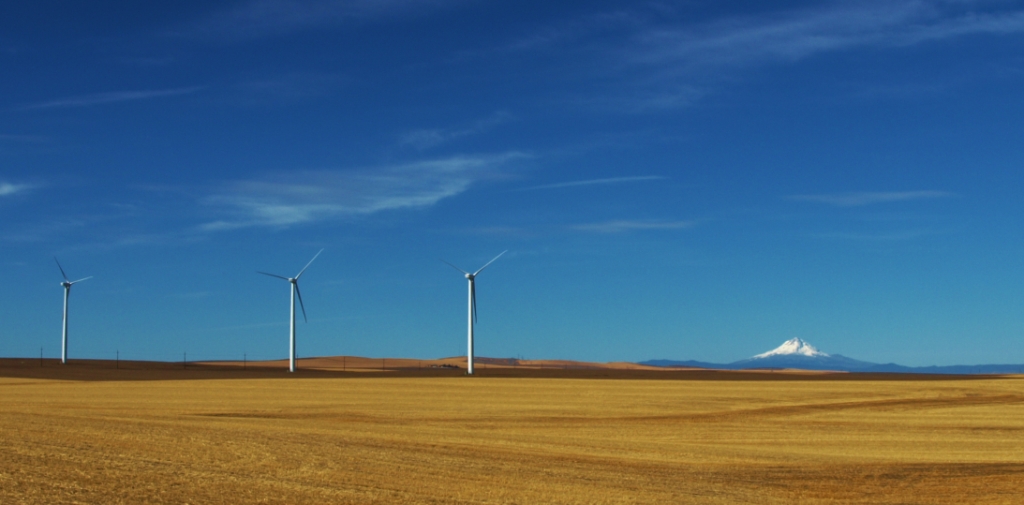
Into Oregon. Wind farms, wheat fields, and Mount Hood.

Into Oregon. Wind farms, wheat fields, and Mount Hood.

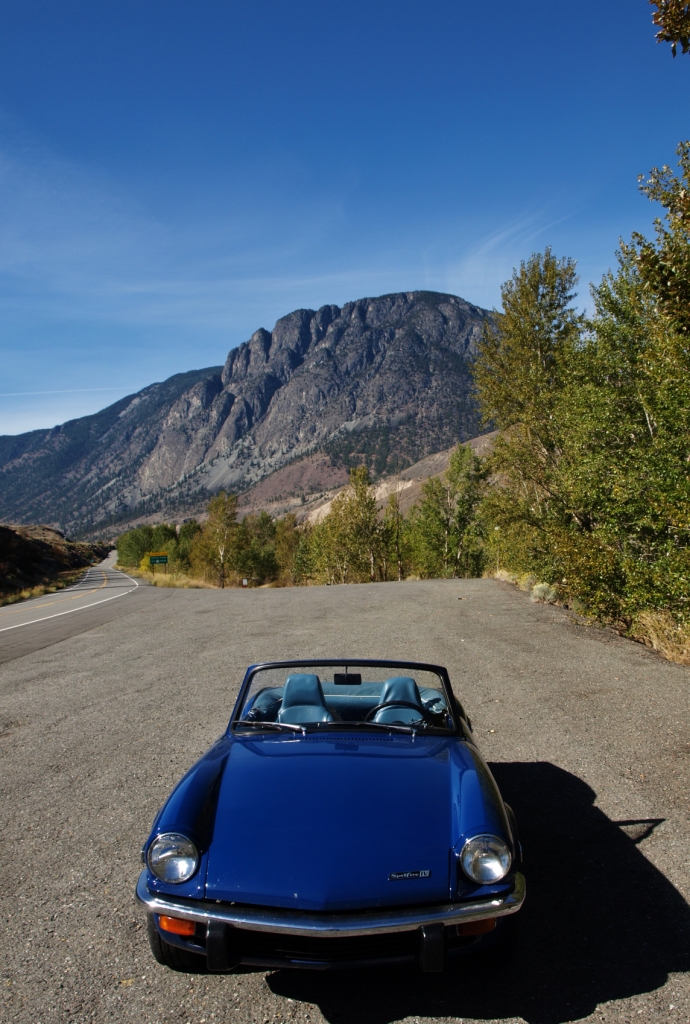
Fast forward another 500 miles and several days of travel - here we are more or less back in home country, at Spences Bridge, B.C. Only 5 more hours till home! Day number 8 in the tiny car, and we're pretty well ready to stop moving.

Fast forward another 600 + miles and several days of travel – here we are more or less back in home country, at Spences Bridge, B.C. Only 5 more hours till home! Day number 8 in the tiny, rough-riding car, and we’re pretty well ready to stop moving. Time to get back to all of the things we temporarily set aside. But it was grand.


This popped up in my inbox this morning, and I felt it very worthy of sharing. Steve’s posts are always exceedingly readable, but this one was extra good. Take a look, fellow readers. Take a look.

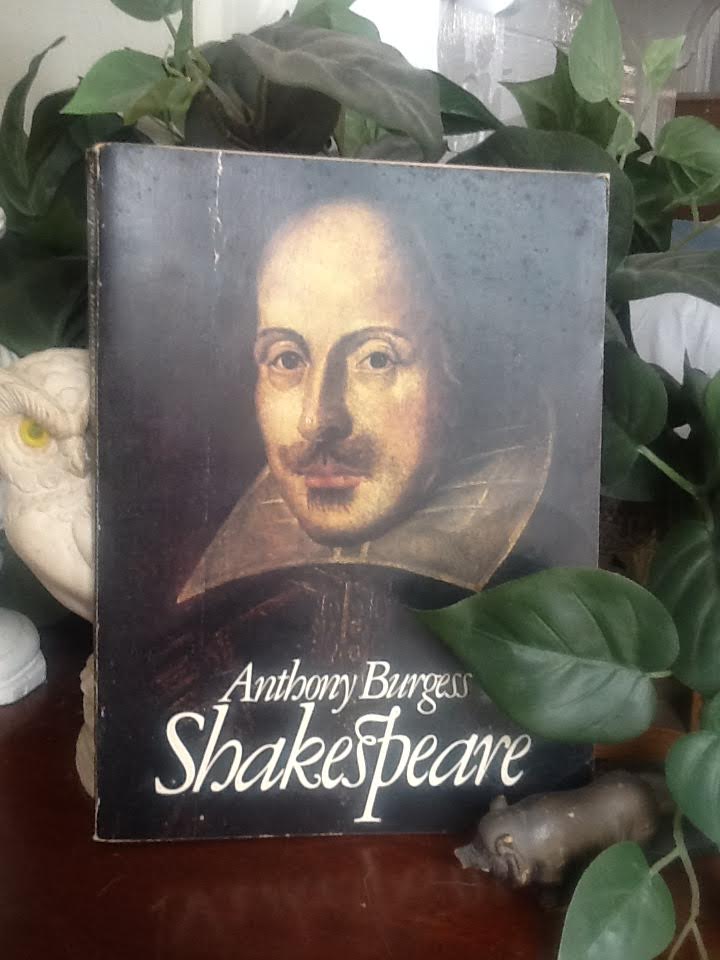
Our book today is Shakespeare, which Anthony Burgess wrote one morning in 1970 after a 40-pint evening. The morning was raw and scratchy, one imagines, and our author, not at his best, needed some task to distract him before his four-course breakfast and pick-me-up whiskey was ready. The afternoon was already planned: a TV show appearance talking about Truffaut’s cinematic legacy. And the evening was locked up as well: dash off a treatise on pornography and then attend a Jonathan Cape literary soiree and get to work on the night’s 40 pints. But all that still left the pre-breakfast window open, and hence: Shakespeare.

The Burgess Shakespeare!

burgess-shakespeare

Hello, all!

Still here, I am, silence on the blog notwithstanding. It’s been ridiculously busy, but a breathing space appears to be developing, as we’ve finished the heavy lifting-scary heights segment of our most recent home improvement project, putting on a spanking new roof.

xxx

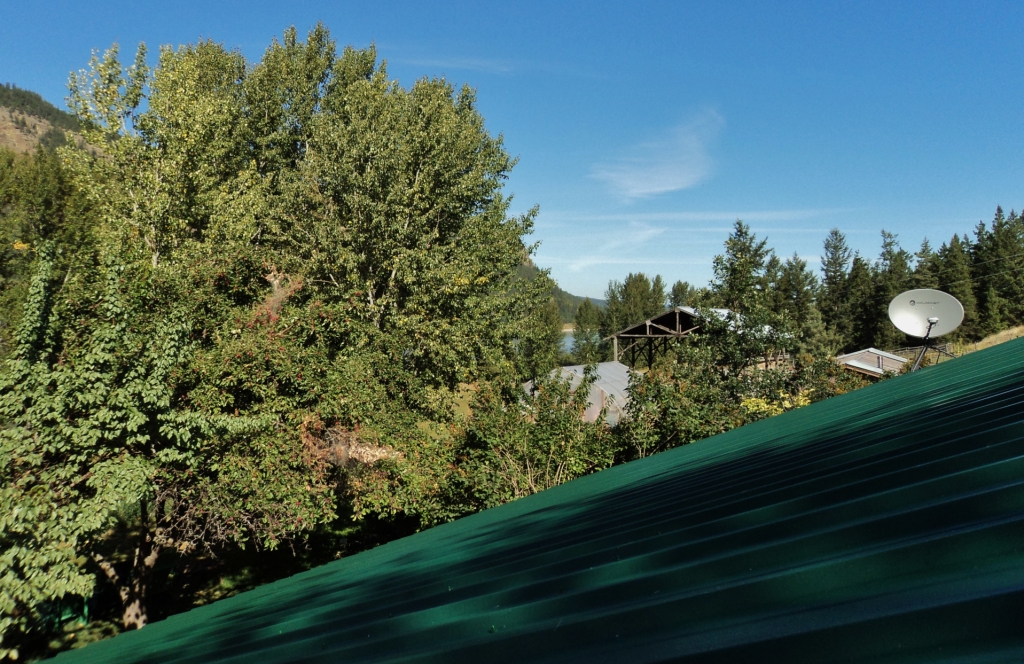
The view from up top. (Note the little satellite dish which keeps us connected to the online world.) Still not quite sure about the roofing colour choice, but I guess we’re stuck with it now – it’s supposed to be good for forty years, and I suspect I will be long gone before it needs replacing. (At least, I sincerely hope it outlasts me, even if I live well into old age.) Next project: painting everything on the outside of the house, and installing quite a bit of new wood siding. (This new roof thing is rather like painting one thing in a room – everything else immediately looks tired and shabby.)

My reading has been mostly late at night and decidedly escapist. Re-reading the ever-amusing Margery Sharp (Cluny Brown, The Innocents, Rhododendron Pie)  and Dodie Smith (I Capture the Castle), some rather fascinating memoirs (Lucy Irvine on a desert island, Noel Streatfeild in her childhood vicarage, Edward Abbey in the Utah desert – respectively Castaway, A Vicarage Family and Desert Solitaire), the slightly shocking adult version (sex! and lots of it) of Streatfeild’s juvenile favourite Ballet Shoes, The Whicharts, Winifred Holtby’s The Land of Green Ginger, among others. I have abundant opinions on all of these, so hoping to sit down to a round-up post quite soon.

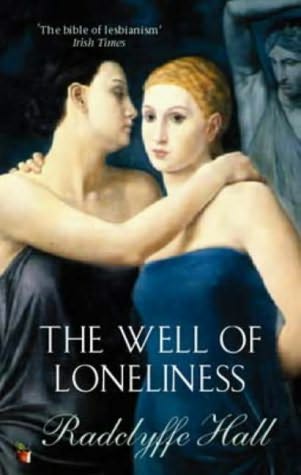
the well of loneliness radclyffe hallCurrently plugging away at Radclyffe Hall’s The Well of Loneliness, and finding it so aptly named. (The heroine has just shot her beloved horse – sob! And she’s on blighted infatuation number three or four, and it’s not going at all well in her life in general on every front.)

Mary Renault famously wrote her own lesbian drama The Friendly Young Ladies in not-so-gentle mockery of Hall’s rather dreary tragedy, and I am finding myself increasingly in sympathy with Renault’s rejection of the melodrama of Hall’s portrayal of “inverts” and “the third sex”. I shall soldier on; the Great War is looming, and we’re heading off to Paris. Perhaps things will start pepping up for poor, conflicted Stephen Gordon, love life wise? (Though I rather fear not.)

I’ve been staying close to home and reading from the shelves, but an upcoming excursion into new territory (Washington and Oregon) mid September may well prove rewarding if all goes well. We’ll be travelling the back roads, so will be watching for those promising “Used Books/Vintage Books” signs which so often reward investigation. You never know what will turn up in the most unlikely places!

More soon.

Happy end-of-summer reading, everyone.

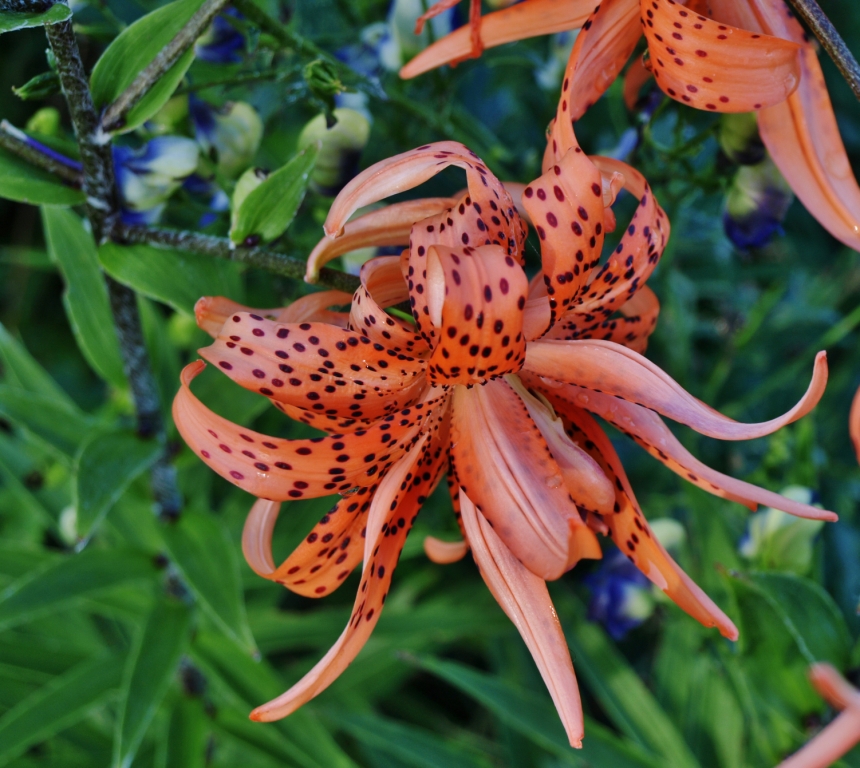
In my garden. Double tiger lily, early August morning.

In my summer garden. Double tiger lily, early August morning.

A slightly surreal moment yesterday when a friend mentioned in passing that he had been reading the blog. He smiled as he said it and gave a nod. It sounded like he felt that was a good thing, but it took me totally by surprise and left me momentarily at a loss for an appropriate response. I murmured something about not posting much these days, he replied understandingly with a “Yes, summer…” and that’s where it ended.

I have mixed feelings about knowing that people I know In Real Life are also familiar with My Online Life. Not that I’m hiding anything, dear friends and neighbours, but knowing you are reading these posts does give me pause. I wonder why?

My husband reads many of my posts, usually over my shoulder as they’re being tapped out in the early morning and during daytime tea breaks. I’ve overheard him telling people about my blogging, which I must confess makes me cringe as if this were something to be ashamed of, to be hidden.

In Real Life I am secretly, painfully shy. I’m the appreciative listener at social gatherings rather than the holder-forth. It’s recently become rather trendy to self-identify as an introvert, and our socially awkward tribe has been getting some positive press, but all cute Facebook questionnaires and celebrity confessions aside, there are those of us who think better in solitude, and who enjoy the slower but possibly more forgiving process of communicating in print rather than in think-on-the-go face-to-face chat. (Before the internet we kept journals. And wrote letters. Well, I guess we still do, though the media has changed.)

Writing about my reading gives me great pleasure, and I hope reading these posts gives something of the same degree of pleasure to all of you. It’s good to feel that one is a small cog in the vast machinery of this ongoing bookish discourse, sharing an interest with (mostly) unseen others.

Moving on…

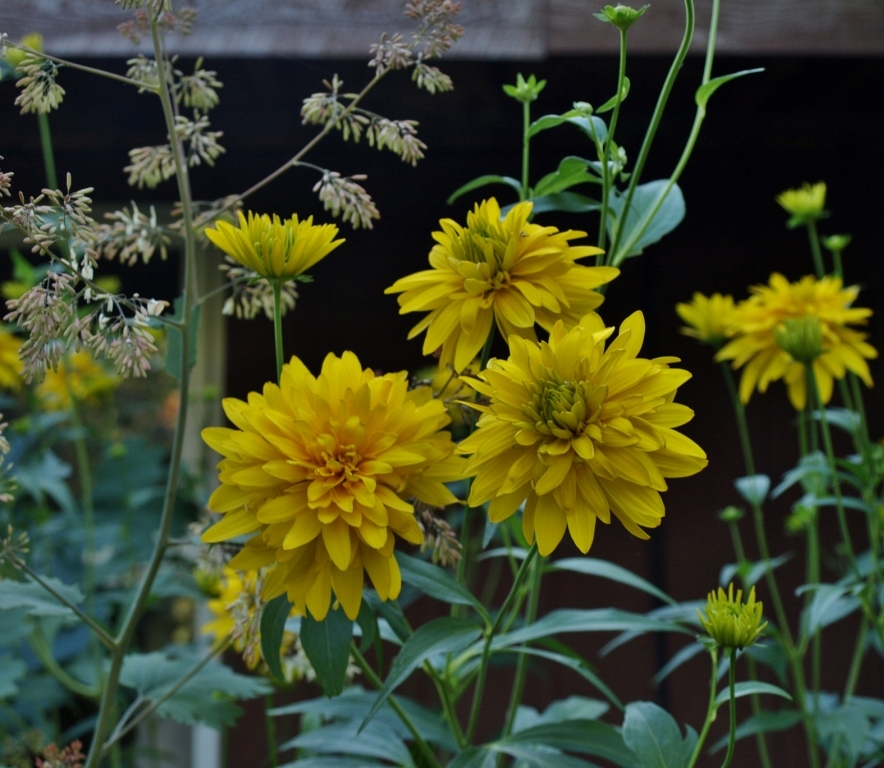
The doomed rudbeckia and plume poppy in the under-the-eaves flowerbed just before the ladders moved in.

A few of the doomed rudbeckia and plume poppies in my under-the-eaves flowerbed just before the ladders moved in. Early August, 2015.

Half of the roof is now off our house. Three large tarps are keeping the rain from pouring in, and of course it has been raining just enough to keep things interesting.

This is the summer’s Great Big Project, changing our roofline to something more extreme to allow for better snow slide in winter, and replacing the aging metal sheathing with newer, better cladding which should outlast our time in residence. (Unless of course we both make our centuries aging-in-place, at which point I expect that these sorts of worries will be capably dealt with by others in our lives.)

It’s a massive job, and in our consistent tradition of never hiring anything out that we can do ourselves (and this covers all aspects of our lives except for things such as medical and dental visits, and haircuts, and removing/replacing tires from/on wheel rims, which my husband can do but absolutely hates so we patronize a tire shop for that particular job) we are plugging away all by ourselves.

The two of us with the priceless help of our absolutely wonderful nineteen-year-old daughter have to date built 58 roof trusses, have removed the old roofing and rafter sheathing, porch pillars and roof and rafters, and eaves and soffit and miscellaneous other stuff (there are certainly a lot of pieces in a house, as daughter rather redundantly pointed out with frustrated passion during one of her countless trips up and down the ladder), and are now in the process of putting it all back together.

We’re weeks and weeks behind when we’d hoped to be finished because of course that’s the way these sorts of things go. We’ve had to accommodate “real” work (you know – for wages), all sorts of weather, and various other pressing issues. (Including some marvelous travelling-for-pleasure, so it’s not all been “poor us” by a long shot.)

And now with a quarter of the trusses up in place, we can at last truly visualize the finished project.

It will, when done, be wonderful. No more scary sessions shovelling snow off the darned thing, no more leaks.

I should really be documenting this project in photos, but I haven’t yet taken a single one. I should remedy that, because once this is over it will all be a blur, as we move inexorably on to the next thing on the project list.

Ah, well. Onward and upward. (Quite literally. Did I mention my desperate level of discomfort with heights? Confronting that fear on a daily basis; I should come away from this episode a better person. Or something! 😉 )

Happy summer, all.

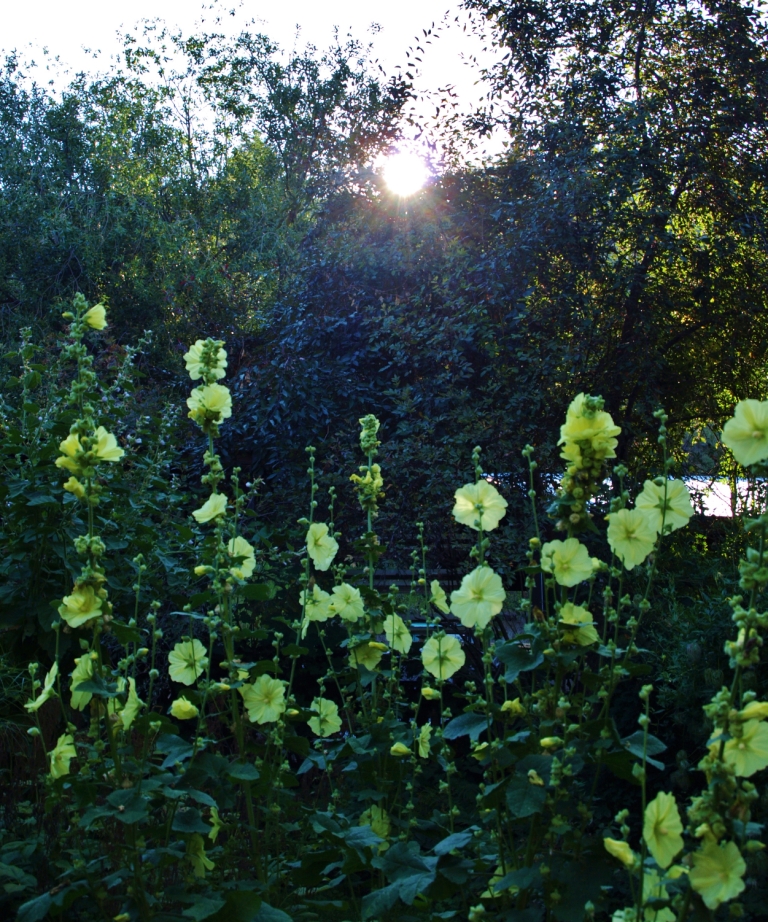
Russian yellow hollyhocks, rising sun. Early August in my garden.

Russian yellow hollyhocks, rising sun. Early August 2015.


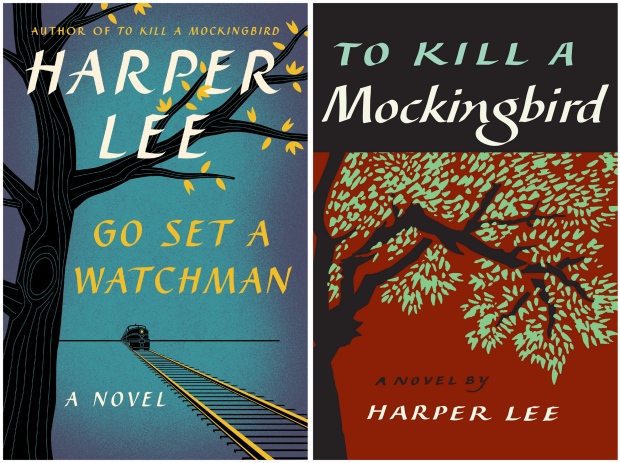
go-set-a-watchman-and-to-kill-a-mockingbird

Started the morning off with one of the most sensibly articulate posts I’ve yet read on Harper Lee’s Go Set a Watchman.

Here’s Jenny:

There’s Atticus Finch, and there’s the myth of Atticus Finch. There’s what he is, and what he’s come to stand for. What he is (and I say this with great affection for To Kill a Mockingbird) is an ur-text for the white savior story: a depiction of history that lets white folks today feel good about themselves. If we’d lived back then (we think while reading), we would not have been Bob Ewell. We would be Atticus Finch. (Or the commander in Glory or Skeeter in The Help — or, or, or.)

It’s a problem for minority groups, of course. It privileges a white story over the real stories of black folks organizing and fighting and saving themselves, but let’s put that to the side for a second…

For the rest, please go to Reading the End.

What she said.

Thank you.

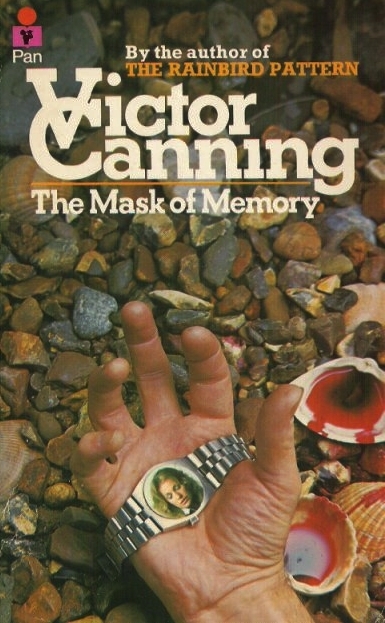
the mask of memory victor canning 1974

My 1976 Pan edition sports this gruesome cover illustration, chock full of spoilerish clues.

The Mask of Memory by Victor Canning ~ 1974. This edition: Pan, 1976. Paperback. ISBN: 0-330-246941. 237 pages.

My rating: 7.5/10

Well, this was a welcome surprise. A random find among the tumble of abused books at the Williams Lake Share Shed – located just before the community refuse dump, where one may drop off unwanted items with some life left in them. It’s seldom on my book search route as it’s a bit out of the way for me, but I certainly scored this time round.

Besides the Canning book, I snagged a hardcover copy of Agnes Newton Keith’s Land Below the Wind, five immaculate hardcover copies of Richmal Compton’s William books, a Laurie Colwin, an Ernest K. Gann, Terry Fallis’ latest comic effort, and, most unexpected, an intriguing, chatty, and (at cursory browse-through) chockfull of good-sounding recipes, 1966 cookbook called Cooking with Love and Paprika, ostensibly by notable Hollywood director-producer Joseph Pasternak. Yum! – to all of these.

But back to the Victor Canning.

I already hold this writer’s most famous juvenile – The Runaways, 1971 – in nostalgically good regard, and I did know that he was also the author of a substantial number of detective/spy thrillers, but until now I had not actually read one of these. If The Mask of Memory is anything to go by, a promising shelf’s worth of future light reading has just materialized.

In a small seaside town in Devon, middle-aged Mrs Margaret Tucker wanders through the local department store, filling her pockets with packets of shoplifted sweets. She walks serenely out the door, her petty larceny unnoticed by the store clerks, and gets into her car, where she finds herself inexplicably crying. Pulling herself together, she drives through the town and out to the dune-edged estuary, where she walks across the sand to meet a group of children from the local orphanage, in charge of a nun. Giving the sweets to the Sister with a murmured “For the children”, Margaret then steps back and watches the straggling group proceed down the beach, and her tears return.

So, what’s this all about, then? Margaret’s two secret watchers would really like to know…

For Margaret is being shadowed, and not as one would expect by the department store’s detective – if they indeed have such a person on staff, which seems doubtful, for Margaret has been carrying on with her petty pilfering undetected for months now. No, she is being followed by a private inquiry agent employed by her mostly-absentee husband to record her movements, and, as well, Margaret’s sand dune walks are under close scrutiny by an oddly reclusive birdwatcher/amateur artist/casual laborer who lives in a secluded cottage nearby.

Both secret watchers are out for what they can get, and in well-bred, desperately lonely, until-now-faithful, conveniently-independently-wealthy Margaret Tucker they have found something of a golden jackpot. For her husband Bernard seems content to keep paying the private detective for his weekly reports – a nice little income stream, not likely to diminish anytime soon – while the dune watcher is after something a little more intimate, and ultimately more financially rewarding.

Margaret’s husband leads a dually secret life as a senior member of an unnamed British government internal espionage department. His wife of many years thinks he is involved in industrial chemical sales; his superiors and co-workers have no idea he is even married. But his two secret lives are about to be exposed, in a building cloud of tense drama.

Two plot lines drive the story. Margaret’s emotional and mental trauma lead to her first ever extra-marital love affair, and her seeking of a divorce from the all-unaware Bernard, who himself has been secretly yearning to be freed from a marriage gone still and cold. Meanwhile, back at the office as it were (or The Department as it is referred to throughout), Bernard is deeply involved in the upcoming revelation of a critical political exposé, and has just come home with a folder of highly sensitive documents as well as a secret recording device potentially throbbing with delicate secrets.

The suspense builds, partial revelations are made on all sides, someone dies, and the politically toxic papers and James Bond-worthy recording-device-wristwatch turn up missing.

Is the death an accident, or murder? What does the private detective really know? Is Margaret’s lover deep down true? Is Bernard a traitor to his nation? A snarl of lies, deception, ethical qualms, love and lust (of every type) must be sorted through before the surprisingly hopeful ending.

While this is not a top rank sort of thriller – just a few too many over-simplifications, logic gaps and blurred-over bits for absolute suspension of disbelief on the part of the reader – it’s a very easy read. Victor Canning spins a nicely complex web, and the strengths of his writing style outweigh the logic deficits of the plot.

A very decent example of 1970s-era espionage/thriller fiction, with a well done domestic drama going on concurrently with the spy stuff. I will be shelving this one between Mary Stewart and Helen MacInnes, one shelf down from John le Carré and Eric Ambler.

Victor Canning. Making note of that name and adding to the look-for list for my next foray into the big city used book stores on upcoming fall road trips.

Another The Mask of Memory review here, from Nick Jones at Existential Ennui.


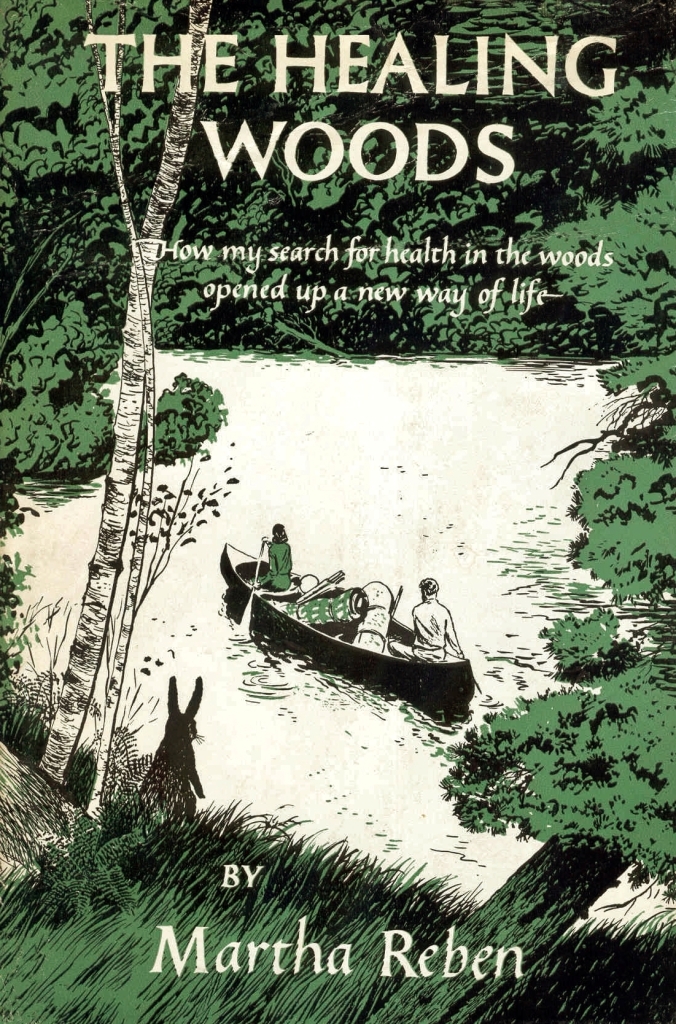
the healing woods 2 martha rebenThe Healing Woods by Martha Reben ~ 1952. This edition: Thomas Y. Crowell, 1952. Decorations by Fred Collins. Hardcover. 250 pages.

My rating: 7.5/10

From my late mother’s bookshelf, a likeable, low-key memoir. Now shelved with Betty MacDonald and Rachel Peden, as it is of similar vintage and appeal, though more sober in tone than MacDonald’s humorous narratives, and more limited in scope than Peden’s musings on mankind and nature.

*****

No respecter of social or economic status, in 1931 tuberculosis was still very much a deadly disease, treated by strict bed rest in isolation wards, and in severe cases gruesome-sounding surgeries, including removal of ribs in aid of collapsing the lungs in order for them to “rest” and heal. (Unlikely as this sounds, it did frequently work. But not always.)

Martha Reben’s mother had died of TB when her daughter was six years old, and some years later Martha was diagnosed with the dread disease herself. The prognosis wasn’t good. After three years of bed rest and a number of unsuccessful operations, Martha in a last-hope move decided to try something a bit different in order to save her own life.

From her bed in the TB sanatorium at Saranac Lake, New York, Martha made contact with a local boat builder and fishing guide. Fred Rice, having spent many years observing the TB patients as they passed through the community, had an idea of his own as to whether rest or gentle exercise were the best way to cope with the disease. He felt that inactivity might not in all cases be the best treatment, and in 1931 placed an ad in the local newspaper:

Wanted — To get in touch with some invalid who is not improving, and who wants to go into the woods for the summer. — Fred Rice.”

Fred was shocked when M. Rebenstisch (her publisher later shortened her surname to Reben) turned out to be a young lady, and at first refused to take her on, but she eventually talked him round. Against all doctors’ advice, and with his wife’s permission and her father’s reluctant blessing, Fred Rice loaded frail Martha into his canoe, propping her up with pillows and enveloping her in blankets, and the two set off for a campsite eleven miles away.

Here Martha was established in a tent as her good-natured caretaker went about his daily chores. Soon Martha was venturing a little farther into the woods on each of her gentle walks. She started to sit up in the canoe for short excursions, and then to wield a paddle. Tired of Fred’s uninspired cooking, Martha began to take on kitchen duties. The combination of fresh air day and night, abundant rest interspersed with enough chores to keep things from getting dull, and the companionship of cheerful Fred and a multitude of woodland creatures worked its magic. By snowfall that year, when the lake was icing over and it was time to break camp, Martha was well on her way to being cured of her TB, though she was still unable to partake in more strenuous activities.

With modest financial help from her family and the occasional assistance of the Saranac Lake villagers with such jobs as firewood chopping, Martha moved into a small cabin for the winter. When spring came, she and Fred again headed out to their camp, where this time round Martha was able to manage for herself much of the time while Fred went off on guiding jobs. The pattern of three seasons sharing a home base camp and winter in town was to continue for many years.

The platonic relationship between Fred and Martha was to last until the end of their lives. The two enjoyed their mutually beneficial coexistence out in the woods, sharing a deep love of the nature and of “bushcraft”, and of reading and spirited conversation. Fred’s wife Kate also became firm friends with Martha, helping her with winter household chores and cooking for her on Martha’s bad days.

Searching for a way of generating some income while still living in the country – a return to bustling New York City holding no appeal – Martha decided to more seriously pursue the craft of writing. She wrote newspaper articles and re-worked her journals from those first years in the bush with Fred into her first memoir, The Healing Woods. It was received by the public with warmth and became a modest bestseller, an unusual “ends well” story which was inspiring and positive.

Though Martha eventually was officially “healed” of her TB, her constitution was always fragile. She died at the age of 58 in 1964, and Fred at the age of 90 in 1966.

I quite like this book, though I can’t in all honesty call it a true “hidden gem” – it’s a minor sort of work, though very good for what it is. Its author writes with evident appreciation about her life in the woods, and with acerbic affection about her human companion.

The Healing Woods is the slightest bit uneven in the early chapters, but the writer soon settles into her stride. The resulting memoir is a no-nonsense, no-self-pity evocation of one woman’s healing journey, soon expanded to become an eloquently realistic ode to the natural world.

I wonder what Martha Reben’s life was like after that turning-point season in the woods? Two subsequent memoirs are now on my watch-for list, The Way of the Wilderness, and A Sharing of Joy.


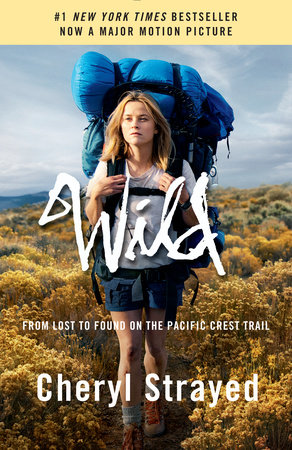
wild cheryl strayed 2012Wild: From Lost to Found on the Pacific Crest Trail by Cheryl Strayed ~ 2012. This edition: Vintage, 2014. Softcover. ISBN: 978-1-101-87344-1. 317 pages.

My rating: 4.5/10

In 1995 a young woman set off to solo-hike a 1000-mile portion of the Pacific Crest Trail, a 2663-mile-long wilderness track through the Sierra Nevada and Cascade Mountains, from Mexico to Canada.

Twenty years later writer Cheryl Strayed looked back and turned her trip journal into a book. An advance copy of her book found its way to Hollywood actress Reese Witherspoon, who quickly tied down the filming rights and produced a self-starring movie (see cover of my copy, left) which has subsequently done quite nicely at the box office. Oprah Winfrey also caught the buzz, and Wild became the newest must-read book, rivalling Elizabeth Gilbert’s earlier Eat, Pray, Love as the “woman power” inspirational tome of the moment.

Cheryl Strayed’s reason for the trek was not particularly unique: personal trauma calling for a self-challenging healing journey. In this case, the take-a-hike impulse was engendered by the death of her too-young mother from cancer several years earlier, the self-inflicted ending of her marriage, and an escalating heroin habit.

Wild is equal parts flashback memoir and hiking journal, emphasis on the flashback portions. We get the gritty details of the dirt-poor, country-girl childhood blessed with a totally loving mother and cursed with an abusive birth-father, an affectionate but elusively committed stepfather, two close but eventually unreliable siblings who abandon Cheryl at her mother’s deathbed, a saintly husband who cares desperately for the emotionally damaged Cheryl, episodes of casual sex engaged in while that husband all-unaware meekly tends the home fires, frequent hardcore drug use, brutal self-loathing. This woman has a ton of baggage, and the real-life metaphor of the overloaded backpack is a perfect fit.

Completely unprepared for the magnitude of the hiking aspect of her undertaking, Strayed makes some major neophyte errors: brand-new and too-small boots, way too much equipment, no prior physical conditioning. And, quite predictably, she suffers for these blunders, allowing for a sub-theme of how-wrecked-is-my-body to wind through the narrative.

The hiking journal episodes are mildly engaging, for Cheryl Strayed is an acceptable readable writer, and does ironic humour well. But this book is mostly about the emotional journey – likely why Oprah embraced it with such gushing enthusiasm – with the solitude of the days spent walking allowing for the replaying of life episodes in desperate detail, and their reorganization into the messy story of Strayed’s life, and how she got to where she was.

The glories of the wilderness she is walking through receive not much more than an occasional (though appreciative) mention, obviously overshadowed by the dramatic scenery of the memoirist’s inner life. Fellow travellers on the trail get some attention, as do people from Cheryl Strayed’s off-trail world, but it’s ultimately very much the account of a solo journey.

There is no great epiphany experienced here, though by the end of Wild Cheryl Strayed does seem to have found a modicum of peace. The Pacific Crest Trail trek was a turning point in Cheryl’s life, and she did seem to get herself sorted enough to move ahead in a positive way, so that’s something.

Did I like this book?

Yes (sort of), and no.

I liked the author’s matter-of-fact honesty regarding her more bizarre behaviours, and I easily accepted the reasons she put forward for her actions: the trauma of her beloved mother’s death and the difficulties of her childhood and teen years are legitimate reasons for a messed up adult life. Perhaps some episodes are dramatized, but that’s what writers do. They take the mundane and shine it up and rework it to make a story. Nothing wrong with that.

What I didn’t like is that I found myself frequently seriously annoyed at Cheryl Strayed for her continued bad decisions once she had ample time to learn from her past history. She obviously self-analyzed on an ongoing basis, and the best she could come up with for continuing to engage in less than intelligent behaviour is something like “I am what I am. So deal, rest of the world.”

But at least she didn’t come across as feeling like the world owed her anything, which I did appreciate. Cheryl Strayed does keep things real in that department, so perhaps she has grown through her experience after all.

This book was a vaguely unsatisfying read despite its good points, and it’s now going into the giveaway box – a rare occurrence, as most books that come into the house manage to find shelf space. (It also reinforces my opinion that anything Oprah embraces is to be viewed with delicate caution. You guessed it, I’m not what you’d call an “O” fan.)

No shortage of internet material if one is looking for second opinions and lots and lots of analysis regarding this recent “inspirational” bestseller. (Was I personally inspired? I confess I was not.)

Here are two “professional” reviews which may prove helpful if you’re mulling over going down the Wild path yourself.

Dani Shapiro’s New York Times Book Review: The High Road – Wild, a Hiking Memoir by Cheryl Strayed

Melanie Rehak’s Slate Book Review: Trail of Tears – Wild by Cheryl Strayed