The books I have read the past ten days of 2016 are already disappearing from my desk quicker than I can consider writing about them. I blame my husband, who is in his wintertime mode of reading the long evenings away, as it is too dark and cold for his other-three-seasons outside occupations. He’s hot on my heels reading-wise this time of year, as I am spending much of my inside “free” time parked at the computer, working on twin time-consuming projects – our plant nursery website, and our upcoming regional performing arts festival, of which I am registrar and program director. No winter doldrums here!

But I’ve looked in all of the obvious spots, and have re-gathered the January books-to-date. I doubt I’ll be writing at length about much this coming year – it promises to be fully as hectic as 2015 – so I am going to try instead to pull off some mini-reviews as I go along.
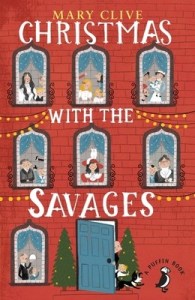
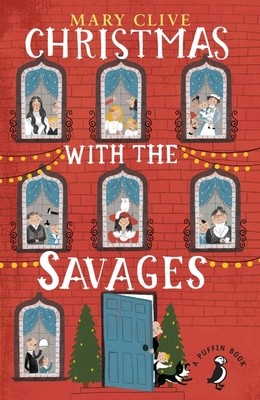
christmas with the savages mary cliveChristmas with the Savages by Mary Clive ~ 1955. This edition: Puffin, 2015. Paperback. ISBN: 978-0-141-36112-3. 186 pages.
My rating: 7.5/10

Ordered in late November from England, this one arrived a few days too late for pre-Christmas reading, but it turned out not to really matter, as its time frame covered the extended after-Christmas weeks as well, and it felt most timely for a seasonal New Year’s read.

This slim book is based on the childhood experiences of the author – Lady Mary Katherine Packenham as she was christened in 1907 – as an attempt to share with her grandchildren a vanished way of life. I had assumed its depiction of a rather spoiled, prim and proper solitary child going off to spend Christmas with a boisterous house full of other children was autobiographical, but as it turns out, the narrator “Evelyn” of Christmas with the Savages is a fictional creation, though all of the children are based on real-life models – Mary, her own brothers and sisters, and assorted cousins.

Though marketed by Puffin as a “sweetly charming” juvenile Christmas story, this wasn’t that at all, being rather a gloves-off depiction of the true nature of children by a writer with little use for mawkish sentiment.

Young Evelyn is quite a horrible prig of a child – she treats her governess and nursery maid with snobbish disdain, looks askance at the rowdy crowd of upper class brats she is expected to mingle with, and assiduously courts the company of the mostly disinterested grownups who live their parallel silk-lined lives alongside the slightly grotty sub-world of the nursery.

This is quite a grand little book in its way, and though it wasn’t the “cosy” I assumed at first that it would be, it does have a dash or two of youthful joy, with Mary Clive’s unsentimental depiction of the world of Edwardian upper class childhood including many pleasurable events and the occasional thoughtful moment.

Mary Clive wrote several other memoirs for adult readers, and I am now dead keen to get my hands on them, in particular Brought Out and Brought Up, her 1938 account of her season as a debutante in 1926.

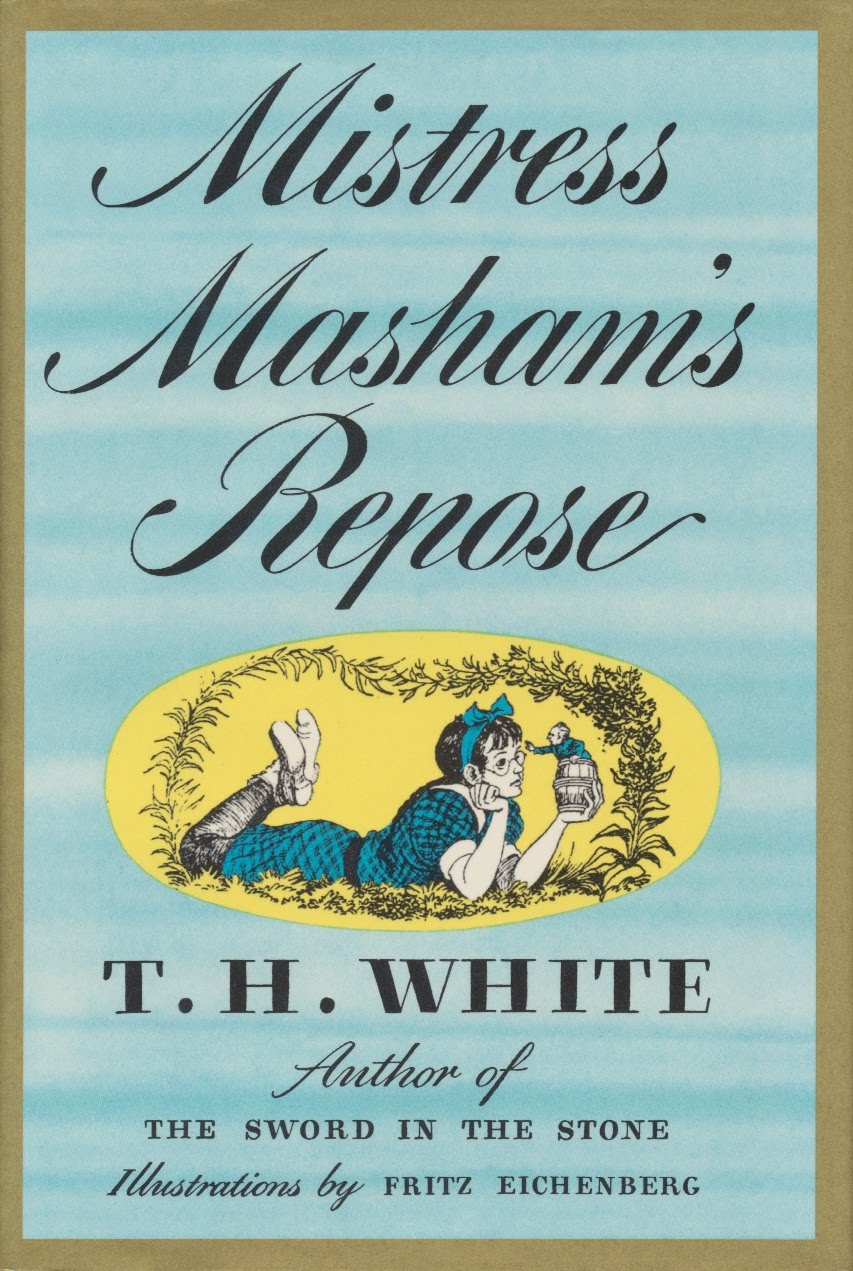
Mistress-Mashams-Repose-by-TH-WhiteMistress Masham’s Repose by T.H. White ~ 1946. This edition: Putnam, 1946. Illustrations by Fritz Eichenberg. Hardcover. 255 pages.
My rating: 9/10

This gloriously involved juvenile by the brilliant T.H. White is one I’ve read and re-read with great pleasure over the years, though somehow I never did read it aloud to my own children. Indeed, I rather wonder what the 21st century child would make of its arcane references to art, architecture, history and literature. I suspect a fair bit of what makes this tale so deeply funny would sail right over the heads of the present crop of youngsters, though an interested child could certainly find a lot of scope for click-research!

Orphaned ten-year-old Maria, last of her noble and once fantastically wealthy family, resides in a tiny corner of the crumbling Great House of the Malplaquet estate, attended to only by a solitary old family retainer, and under the sadistic “protection” of her malicious governess and her official guardian, a wicked vicar.

One day, while out exploring the ornamental lake in a leaky punt, Maria decides to visit the tiny manmade island which is crowned by a now-decayed ornate ornamental temple, known as Mistress Masham’s Repose. What she stumbles upon there is a thriving population of Lilliputian people, descendents of escapees from those brought to England by the scheming but bumbling Captain Biddle, who displayed them as sideshow oddities in order to earn money to indulge in his drinking habit, way back in 1700-and-something.

What happens when Maria decides to take on a philanthropist’s role to her discovery – and when her overseers inevitably discover the tiny people – makes for a lively, occasionally philosophically meandering, deeply appealing adventure tale.

Good stuff. This one may well get a proper long post one day, full of quotes and samples of Eichenberg’s brilliantly detailed illustrations.
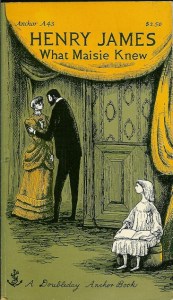
what maisie knew henry jamesWhat Maisie Knew by Henry James ~ 1897. This edition: Anchor Books, 1954. Paperback. 280 pages.
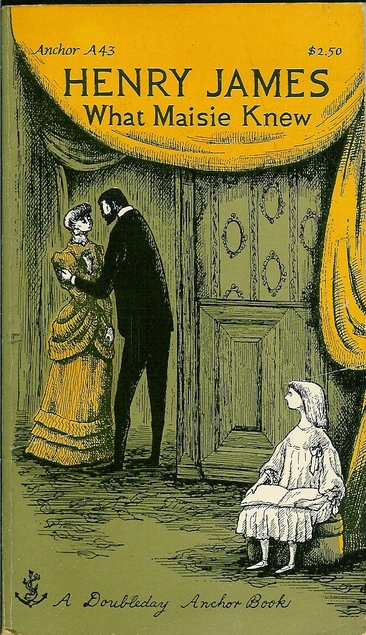
My rating: 6/10

Ah, Henry James. Master of the densely written social examination. In small doses, I rather enjoy him, though I am beyond grateful I’ve never had to approach his work in any sort of scholarly capacity.

What Maise Knew should be subtitled Adults Behaving Badly, as it portrays some of the least likeable parents imaginable.

Wee Maisie is the focus of her parent’s divorce trial, with each vying for possession of her small person in order to punish the other. A compromise is reached, six months per household, and Maisie shuttlecocks between mother and father, acquiring in the course of affairs two governesses, who shall feature strongly in her subsequent life.

In a few years, Maisie’s terms of residence turn from being maneuvered for to being something to be avoided; now the parental game is to see how long each can force the other to care for the increasingly unwelcome child. In the course of things, Governess Number One becomes Maisie’s stepmother, while Governess Number Two tries to imbue the child with at least a semblance of moral sense, while giving her a modicum of steadfast love and stability in a brutally uncaring world.

Parental partners come and go, until at last Maisie is disowned by both birth parents and ends up as the charge of two step parents, the kind but weak Sir Claude who has married and then been abandoned by Maisie’s mother, and the newly “freed” second wife of Maisie’s father.

Complicated doesn’t begin to describe the relationships in this morbidly fascinating concoction, thought be some critics to be Henry James masterwork. I found it hard to look away, while at the same time struggling with the bogging-down complexities of James’ über-wordy prose.

Pleasure reading?  Well, sort of. It felt like something of an accomplishment merely to make it to its odd and only vaguely optimistic (in my opinion) end.

And what did Maisie “know”? A heck of a lot, as it turns out. As a depiction of how an unwanted child remakes herself into a survivor, this is a telling little tale.

mermaids on the golf course patricia highsmithMermaids on the Golf Course by Patricia Highsmith ~ 1985. This edition: Penguin, 1986. Paperback. ISBN: 0-14-008790-7. 233 pages.
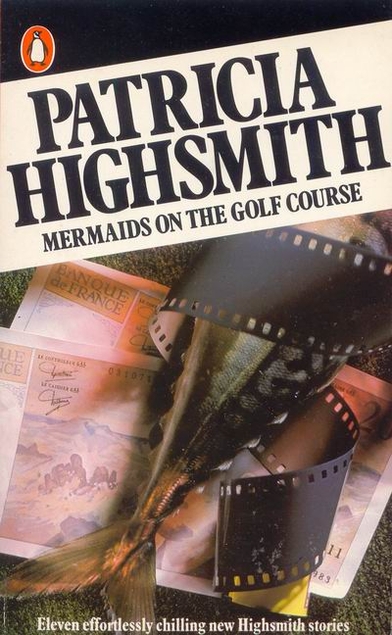
My rating: 5/10

A collection of eleven rather grim, sometimes macabre, only occasionally – and then only faintly – humorous short stories. Not really what I was in the mood for, as Highsmith here portrays her characters in the least positive light possible, and I just got sadder and sadder as I worked my way through these, hoping that the next one would strike short story gold. It wasn’t to be.

This rather twisted moodiness was something Highsmith made rather a thing of in her novels as well, come to think of it. Mr. Ripley being what he was, for one example.

Several of the stories end in suicide, and one of the most subtly disturbing concerns a Down’s Syndrome child’s secretly resentful father and a brutally random murder.

People in these gloomy tales generally wander about with festering grievances which precipitate the plot lines. Endings fade into grey, and most of them left me feeling a bit suspended in space, as if I’d missed that last step – but with no subsequent bang! of a landing. Just floating down, landing with a suppressed whimper.

Not a collection I’d whole heartedly recommend, though there are compensations in Highsmith’s more than competent styling.
TheYearTheYankeesLostThePennantThe Year the Yankees Lost the Pennant by Douglass Wallop ~1954. This edition: Norton, 1954. Hardcover. 250 pages.

My rating: 8.5/10

Now this was an unexpected pleasure. A happily romping fantasy concerning a middle-aged real estate salesman’s inadvertent pact with the devil, and his transformation into a younger baseball superstar who comes out of nowhere (literally!) in order to assist his favourite but dismally unsuccessful baseball team, the Washington Senators, break the clockwork-precise New York Yankees’ long winning streak.

Now, I’m not at all a baseball fan, but one doesn’t have to be to appreciate this cheerfully light tale.

Will our hero Joe be able to hold the devil to his bargain? And what of the middle-aged wife so staunchly dealing with her sudden loss of a husband with good natured stoicism? And then there is the most beautiful woman in the world, who falls in love with the reinvented Joe, and who has a Faustian dilemma of her own to work out.

This is the best-selling novel behind the successful musical Damn Yankees, which I must confess to never having seen. But now I want to!
bill bryson road to little dribbling 2015The Road to Little Dribbling: More Notes from a Small Island by Bill Bryson ~ 2015. This edition: Doubleday, 2015. Hardcover. ISBN: 978-0-385-68571-9. 384 pages.
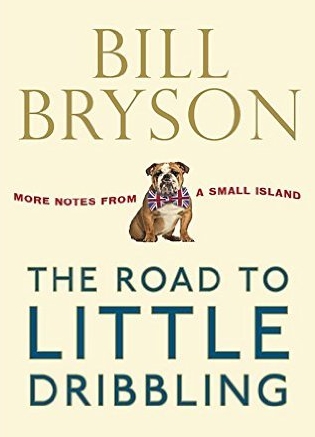
My rating: 7/10

Do I need to talk about this one? Surely not, for those interested will likely already have read it, and the internet will of course be rife with reviews, though I haven’t actually checked to see, having purchased the book as a Christmas gift to my husband merely on spec, seeing as how we have enjoyed (to various degrees) everything else the author has ever written.

Bill Bryson delivers the goods as expected, though this redux of the earlier Notes from a Small Island shows American-by-birth Mr. Bryson in full curmudgeon mode, versus his earlier honestly appreciative if frequently critical take on his adopted country, Great Britain.

Basically, England is going to hell in a handbasket, and our Bill is both mournful and moved to righteous annoyance. Occasionally he finds something to appreciate, and is honestly fulsome in his praise. I laughed out loud here and there, but I also occasionally cringed, because the author’s tone is so harshly judgmental. Well, generally with good reason, but still…

It was more than okay, but not one of his best. Has the Bryson bucket gone to the travel memoir well one time too many? I wonder.

*****

And I bailed out on two books. Just couldn’t get into them, though I may try again one day.

Iris Murdoch’s The Green Knight defeated me at page 80, after a long rambling set-up filled with the complicated back stories of way too many characters. Weird things going on with phrasing and punctuation, too, which had me stopping in confusion and re-reading whole paragraphs to see if I was missing something. I wasn’t, but the editor certainly was. Browsing ahead, there are some intriguing passages, and I hope to return one day to enjoy them. Perhaps.

One Winter in the Wilderness by Pat Cary Peek sounded extremely promising, being presented as the diary of Peek and her wildlife biologist husband one isolated winter in the Idaho back country at the Taylor Ranch Field Station. It might have picked up steam farther along, but the first few sections were just the tiniest bit plodding, as if the writer were trying a mite too hard – and mostly unsuccessfully – to turn her repetitious diary entries into something more literary. Apparently the Idaho Book of the Year in 1998. Fair enough. Back on the shelf, perhaps even into the giveaway box, for someone else to take a go at.
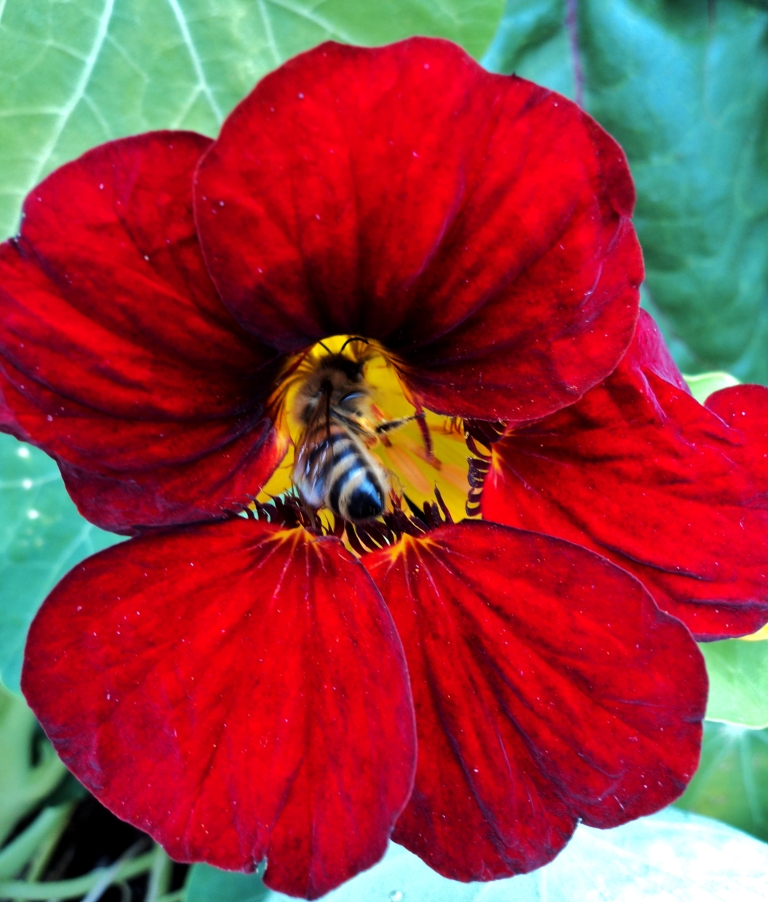
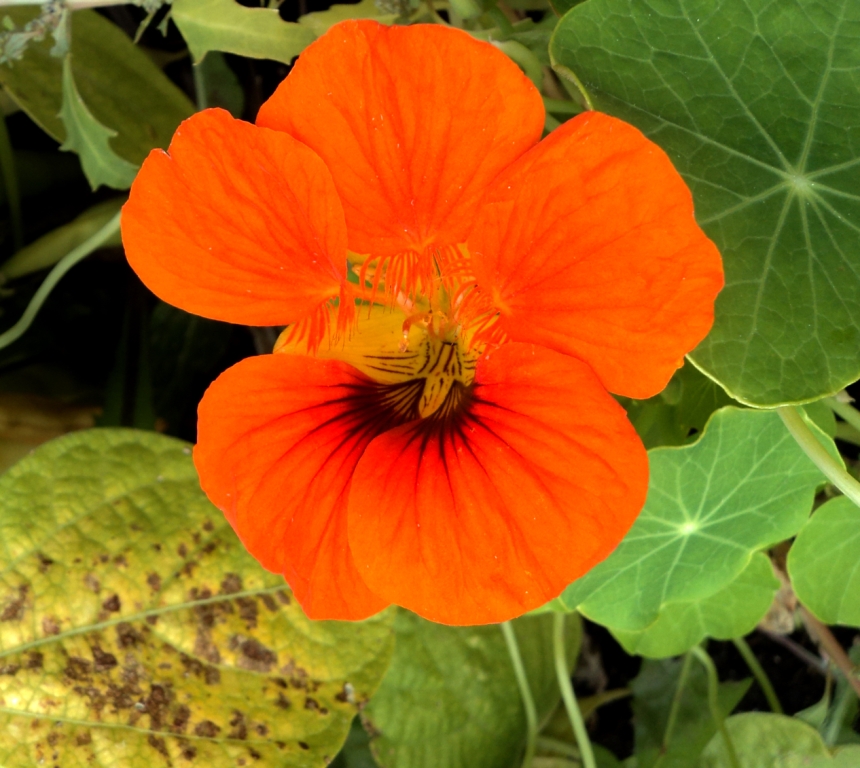
 

nasturtium, and bee september 2015 hill farm

BALMS


Hemmed in by the prim

deodorizing stare

of the rare-book room,

I stumbled over,

lodged under glass, a

revenant ‘Essay on Color’

by Mary Gartside, a woman

I’d never heard of, open

to a hand-rendered

watercolor illustration

wet-bright as the day

its unadulterated red-

and-yellow was laid on

(publication date 1818).


Garden nasturtium hues,

the text alongside

explained, had been

her guide. Sudden as

on hands and knees

I felt the smell of them

suffuse the catacomb

so much of us lives in-

horned, pungent, velvet-

eared succulence, a perfume

without hokum, the intimate

of trudging earthworms

and everyone’s last end’s

unnumbered, milling tenants.


Most olfactory experience

either rubs your nose

in it or tries to flatter

with a funeral home’s

approximation of such balms

as a theology of wax alone

can promise, and the bees

deliver. Mary Gartside

died, I couldn’t even

learn the year. Our one

encounter occurred by chance

where pure hue set loose

unearthly gusts of odor

from earthbound nasturtiums.


Amy Clampitt, 1980

nasturtium september 2015 hill farm


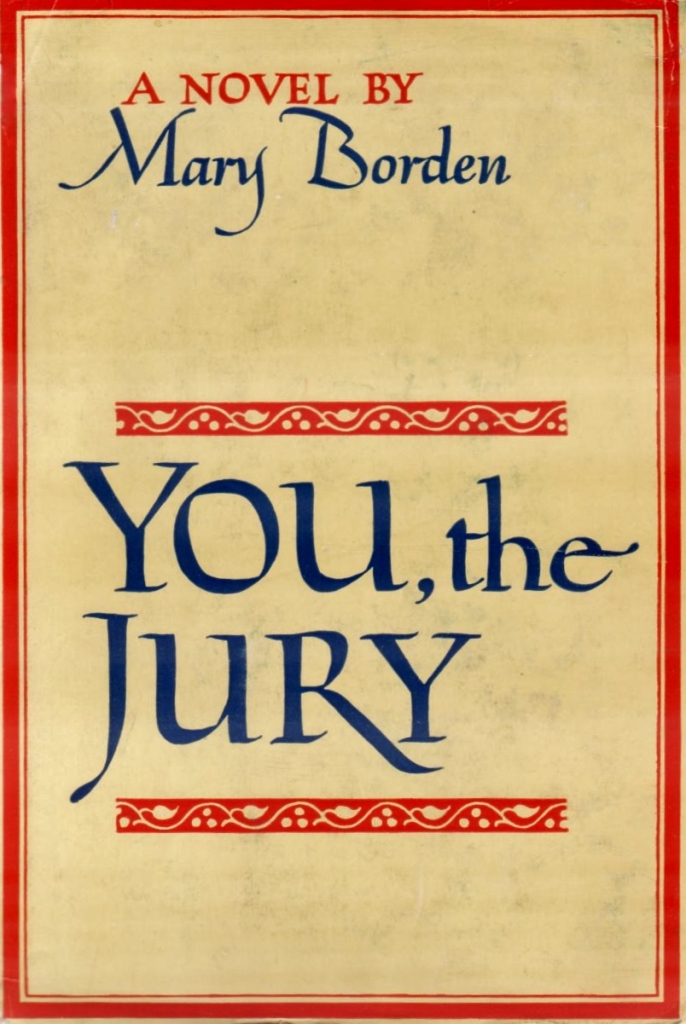
you the jury mary bordenYou, the Jury by Mary Borden, 1952. Alternate title: Martin Merriedew. This edition: Longmans, Green and Co., 1952. Hardcover. 346 pages.

My rating: 8/10

An unreliable narrator, a damning society, a haunting question.

We grew up together. I didn’t get on with him too well once the first excitement wore off (it was wonderful making a friend of our very own), but my brother Francis adored him, they were like David and Jonathan, so I had to go on being friends if I wasn’t to be left out of everything. And I wanted him to think well of me, he was a glorious boy, but he wasn’t the sort of person you could be comfortably fond of, he was too independent and expected too much. Eventually you either gave in to him and loved him blindly, or came to hate him; it was the same with almost everyone who knew him.

So speaks narrator Barbara Patche, looking back from 1951 to the childhood day in 1914 when she and her brother met seven-year-old Martin Merriedew, whose influence on them was to mark and change the expected pattern of their future lives.

Barbara and Francis are the blue-blooded children of an English earl and reside in a typically stately country home; Martin is the child of the newly arrived village doctor whose calm good sense proves a godsend to the Patche family, aiding as it does to the successful treatment of Francis’ crippled legs.

The boys grow up together, and swear an unbreakable oath to go out into the world and do some unspecified action of heroic good together; Barbara jealously looks on, never quite buying (she says, protesting perhaps too strenuously) into Martin’s charismatic appeal, but staying silent because of her beloved brother’s friendship which grows into something more complex and troubling as the boys grown to manhood. (It’s not the sort of male-to-male relationship you might think, either, but something much more complicated.)

Martin takes his medical degree, Francis steps into his father’s place as the new lord of the manor, and both set the countryside all agog with their eventual establishment of a medical clinic funded by Francis’ inheritance, and run along the lines of medical common sense mixed with a dash of faith healing.

For Martin is steadfast in his belief that he knows the will of God – at least as it applies to himself – and when the Second World War breaks over England, he steps forward boldly to proclaim his conscientious objection to taking life, and is posted as a medical orderly (he has since stopped practicing as a doctor for reasons I will leave up to the author to explain) to a front-line surgical station. He and Francis have become estranged some years previously; Francis has followed the way of his more mainstream peers and has joined the air force and is engaged in active combat.

Something happens at the front; Martin is charged with treason and sent back to England to stand trial as the war winds its way into its final days. The penalty, if a conviction is attained, is automatically death.

In a strange twist of fate, the judge who presides over Martin’s trial is Barbara’s husband. Barbara and Francis are shocked and silent spectators as Martin is tried for his life.

As you might suppose, this is not a cheerful sort of story, but instead a deeply thought-provoking examination of what it means to be a true pacifist. Though it can’t avoid a certain amount of sensationalism, the atmosphere throughout is tense with foreboding, and the importance of what isn’t being discussed looms larger than the charges of the village gossips and the headline writers.

I never felt that I got to really know any of the characters in a truly intimate way; too much is unsaid, and Barbara’s point of view is always just slightly open for interpretation. By the end of the story we know the most about her, and only what she allows us to know about the others in that forged-in-childhood triumvirate which has parted and which comes together so irrevocably those decades later.

I won’t detail the ending, but I will say that it was more than slightly ambiguous. Neat solutions and tidy wrap-ups not to be found here.

An interesting book, beautifully written in a tense, controlled, dispassionately stoic tone. It works, in this case, quite well. An author I will be reading more of, if I can.

This was a random acquisition at a book sale a year or so ago, added to the stack after a quick glance inside and the reading of a few paragraphs hinted at something promising. It has taken me some time to get around to reading it, and the paradoxical reward for my procrastination has been the discovery of yet another author-of-note to add to my list of look-for names while out upon the old-book hunt.

A modest amount of research reveals that Mary Borden was a woman of some accomplishment. Daughter of an American millionaire, against all expectations and with no medical training, she spent the Great War voluntarily and by all reports quite brilliantly and efficiently running a field evacuation hospital in one of the most active war zones in France. She wrote a damning (and suppressed – it was not published until some years after the war) memoir of the carnage she witnessed, the recently republished The Forbidden Zone, reviewed in detail here, at Open Letters Monthly.

Taking up writing after the war, Mary Borden produced a number of well-regarded novels, most with serious or suspenseful themes. (You, the Jury, was her last published work. Mary Borden died in 1968, at the age of 82.) She served again in Great Britain during the Second World War, financing and operating an ambulance unit. As well as her novels she apparently wrote at least one further volume of memoirs.

Why have I never come across this writer before? I am sure she must be – or was once – fairly well known; her books are in good supply in the used book trade, in multiple editions.

Is anyone else familiar with this writer? And if you’ve read this or any other of her books, what did you think?

I myself am quite impressed, though I hesitate to recommend this particular book without a caution that it’s not a very typically appealing sort of thing. Hard to classify, really. A product-of-its-time psychological drama?

Edited to add that someone else certainly knows about Mary Borden – Roger who has kindly commented below points us in the direction of an online appreciation and a link to a recent biography of Mary Borden here, as well as a fascinatingly pertinent blog which I spent a satisfying amount of time browsing this morning, Great War Fiction.

winter sunflower

Happy New Year’s Eve!

We’ve almost made it to the end of 2015, just a few more hours in the fading old year. Tomorrow brings a fresh new page, always a lovely thought, though I must say that 2015 has, on the whole, been good to us. A little (okay, a lot!) more hectic than we were perfectly comfortable with, but every bit of the busy-ness was self-created, and we accomplished the successful undertaking of some major farm and personal projects, and, tucked in here and there, enjoyed some immensely pleasurable travels as well.

Wishing you all a very happy 2016. Such a great pleasure to touch the lives of others through this forum; old friends and new have commented and shared their thoughts and kept me connected to the greater world outside our quiet valley in a very welcome way. I hope some of my ramblings here have given you some of the same enjoyment you’ve given me in your turn.

But what would the end of the year be without a wrap-up book post?!

So many such posts are popping up in my email inbox and through the WordPress Reader, reminding me that I am not at all up to my previous years’ standard in sharing round ups of my own personal Bests and Worsts of the year in reading just past.

To remedy this, here is a quick look back at some of the highlights of 2015. Not all are “best” books – oh, no! – not at all! – but each stood out from the crowd in some unique way. As I was very lax in posting reviews this past year, for a number of these this will be the only mention in 2015, but they may show up in future, written about in greater detail. (Or possibly not.)

In no particular order, as they are being pulled off the shelves.

#1 ~ A Book That Ended Much Too Soon

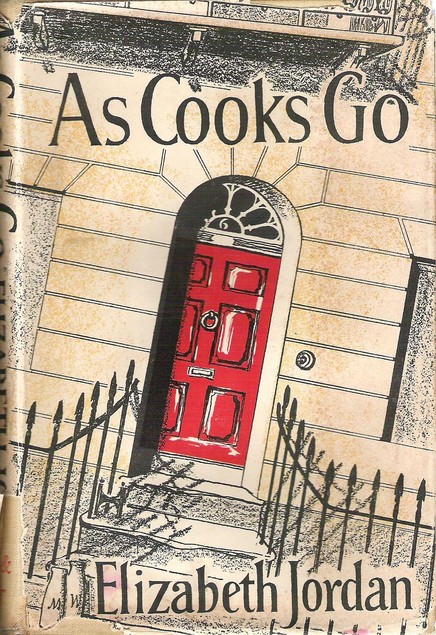
as cooks go elizabeth jordan 1950 (2)As Cooks Go by Elizabeth Jordan. 1950, Faber and Faber.

In immediately post World War II London, the author, her husband, and two young daughters take on a too-tall house. Struggling with the monotonous burden of housekeeping and all those stairs, upper-middle-class Elizabeth decides to hire a charwoman, whose wages necessitate Elizabeth herself finding paid employment to pay the cleaning lady. Elizabeth decides to peddle her kitchen skills as there is a notable shortage of cooks in London kitchens. She is able to earn not quite enough to pay the char, and her husband rather reluctantly ponies up the rest.

With such twisted logic on display, one proceeds to read this brusquely engaging tale with initial impatient annoyance at its author, which soon morphs into a growing reluctant affection, as she keeps her chin up through the breakup of her marriage, the placing of her children in her parents’ care, and her subsequent ambition to achieve professional cook’s training. Though I couldn’t help but think a lot of her woes were at least partially self-inflicted, I ended up firmly on her side in her sardonically documented adventures, and the abrupt ending of this one-woman’s-saga mid-stream as it were left me deeply disappointed, and yearning for more.

It appears that there is no more, and that this was the only book Elizabeth Jordan wrote, or at least had published. An engaging diversion,  something along the lines of Monica Dickens’ One Pair of Hands, though not nearly as hectically funny, as Elizabeth Jordan did not have the luxury of a comfy parental flat to retire to after her long days’ cooking as post-debutante Miss Dickens did. As Cooks Go is easily a 10/10 book, save for the chopped-off final chapter.

#2 ~ An Unexpectedly Mezmerizing Book

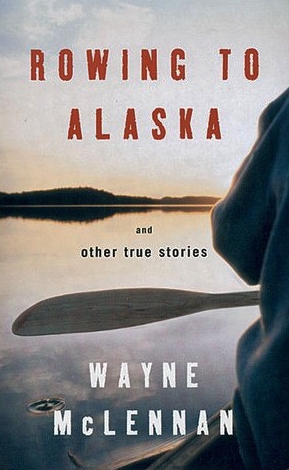
rowing to alaska wayne mclennan 2004Rowing to Alaska and Other True Stories, by Wayne McLennan. 2004, Granta Books.

This book of was a punchy surprise by Australian ex-professional-boxer, man-of-many-rough-skills McLennan, and I found myself completely drawn into his audaciously tell-all memoirs of life in rural Australia, gold mining in Costa Rica, commercial fishing in Nicaragua, and yes, rowing the hand-blistering 1000 miles from Seattle to Alaska.

Opinionated and gritty describe the prose, but there’s more than a dash of polish too, and some of the passages are absolutely inspired. Boxing leaves me utterly cold; I think it is an amusement for the brutish and I see no appeal for me there at all, but McLennan’s passion and analytically emotional enthusiasm for the sport and its adherents made me park my opinions for the duration. Another 10/10, blood, bruises, and graphically described porn night in the sheep shed included.


#3 ~ A Theatrical Memoir

Being George Devine's Daughter by Harriet Devine 2006Being George Devine’s Daughter by Harriet Devine. 2006, Barkus Books.

I do enjoy an interesting memoir, and this one, written by the daughter of British theatrical director and actor George Devine and stage designer Sophie Harris, was expectedly intriguing. But how does one do justice to analyzing for public sharing such a personal work, aware that the author will be reading what one has to say? If one is too fulsome in one’s praise, one feels sycophantic. If one feels at all critical, one cringes at inflicting a slight on a friend. I’ve been in this situation a number of times over the years (I have talented friends – what can I say?) and I find that I tend to hold off on commenting in any way, good or otherwise, due solely to social awkwardness.

But all this convoluted explanation of why I don’t really want to commit myself aside, I could not in good conscience pass over this one, because I enjoyed it immensely and it was one of my memorable books of 2015.

Published in 2006, Being George Devine’s Daughter can be found on Amazon and ABE, and is also available as an ebook. Check it out on the Amazon website, where one can read an excerpt. And Harriet, I honestly loved it. It’s firmly on the keeper shelf. Any thoughts of writing about your life in later years? I really want to know more of the details of What Harriet Did Next.

#4 ~An Elusive Quarry Found

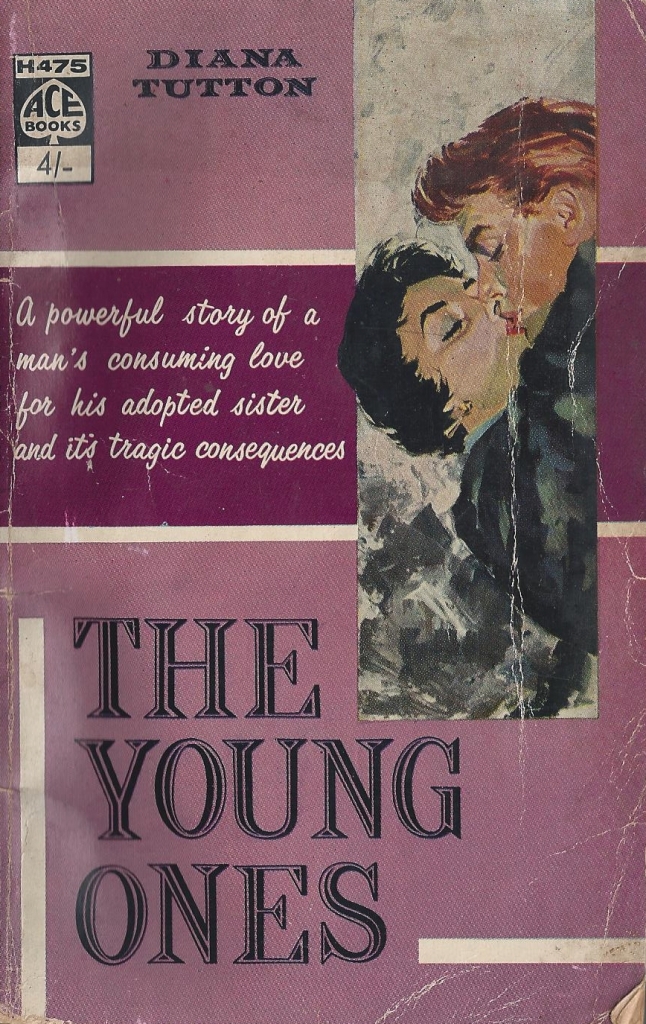
the young ones diana tutton ace paperback 001The Young Ones by Diana Tutton. 1959, Peter Davies Ltd.

Does anyone recall the buzz about Diana Tutton’s Guard Your Daughters a few years ago? I read it and reacted with mixed emotions, but felt it deserved a second chance, and I did indeed rate it higher the second time around, when I was able to distance it from its inevitable comparison to its contemporary shelfmate, Dodie Smith’s stellar I Capture the Castle.

I then managed, after some concentrated searching, to get my hands on Tutton’s second book, Mamma, which I thought was a rather fine (if slightly cynical) example of its mid-century, middlebrow, “women’s fiction” genre. One more book by this sadly unprolific writer exists, but a copy didn’t appear to be available anywhere, in all of my scanning through the used book sites and the extended Canadian library system.

Then, just a month or so ago, as I was doing one more wishful web browse, there it was. A tired little Ace paperback edition on the sales list of an Australian rare books dealer, and for a reasonably palatable price, too, all things considered. After a smidgen of negotiation, it was mine, and it arrived shortly thereafter, to my quiet delight.

So, was The Young Ones worth the effort involved in the search?

Yes, I think it was, with a small reservation – I think it is the weakest of Tutton’s three published novels, with an excessive amount of handy coincidence-based plot development leapfrogging us over some of the stickier bits. My curiosity about what Diana Tutton would do with a plot based on incest between siblings was satisfied, and the novel itself was acceptably engaging, after a rather stilted start a little too full of explanations regarding the set-up of the earnest drama to come. A memorable read, indeed, though perhaps more for its associations and its examination of the moral anguish of its narrator – the older sister of the two “young ones” of the forbidden relationship – than for its literary merit. This one will be getting a proper review when next I read it.

And oh yes – if you read the sensationalist cover of my paperback copy, you’ll see mention of one of the sibling-lovers being adopted. Let me just say that therein lies something of a crucial plot twist. An unusual novel for its era, and one that makes me disappointed that it was the last one that Tutton produced, as all three of her slightly uneven novels show her to be a writer of more than average ability and promise.

#6 ~ A Truly Awful Book

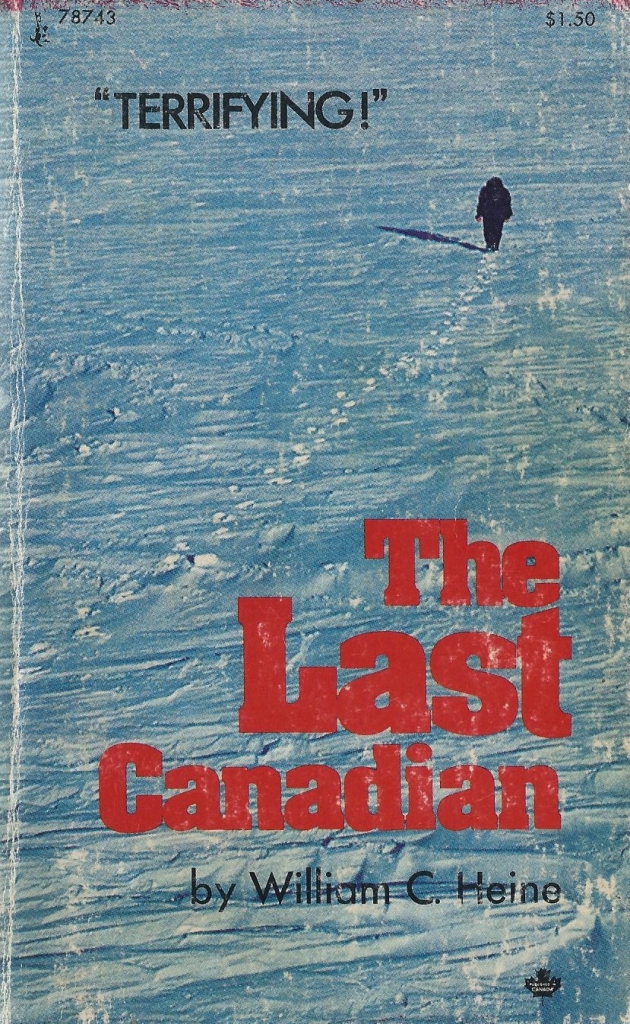
last canadian heine cover 001The Last Canadian by William C. Heine. 1974, Bantam.

How could I not mention this whopper of a so-bad-it’s-impossible-to-look-away Canadian non-classic? William C. Heine’s apocalyptic sci-fi thriller The Last Canadian was so over-the-top stupid that it was a whole lot of fun to rip into, and it led me to the discovery of another gem of potentially gawd-awful adventure fiction by its unlikely author, the long-time (seventeen years) editor-in-chief of Ontario’s respectable London Free Press.

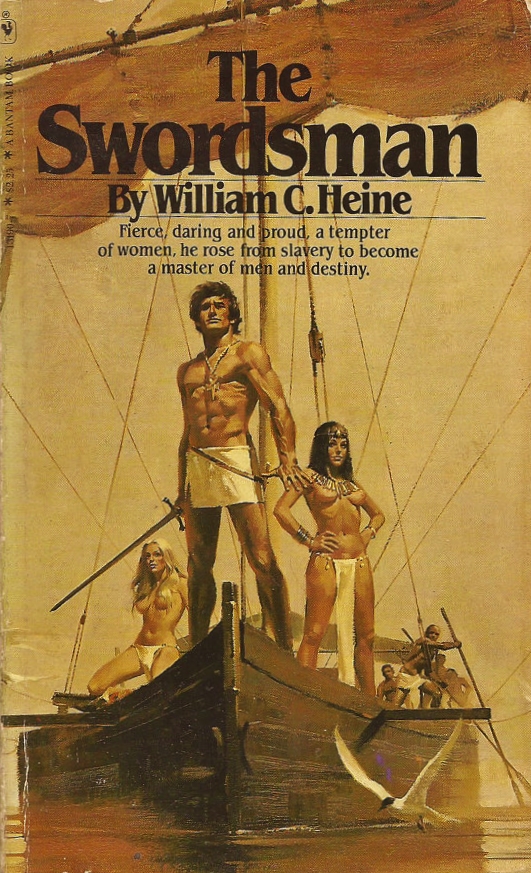
I won’t say a whole lot about The Last Canadian here, as my linked review goes into probably much more detail than most of you need to know, but I’d like to mention that second book, which has been sitting on the shelf above my computer for the last six months or so, beckoning with the promise of yet another Really Bad Book. Will I succumb to the macho call of The Swordsman in 2016? And will it be as deeply bad as its predecessor? Anyone care to take a guess? (And here’s a long shot – has anyone read it? If so, please do tell.)

the swordsman william c heine (2)

#7 ~ A Serendipitous Combination

Sometimes the books align in perfect harmony, and this pleasing combination is a gentle example of a bookshelf lucky dip. Reading these back-to-back, I couldn’t have planned it better if I tried.

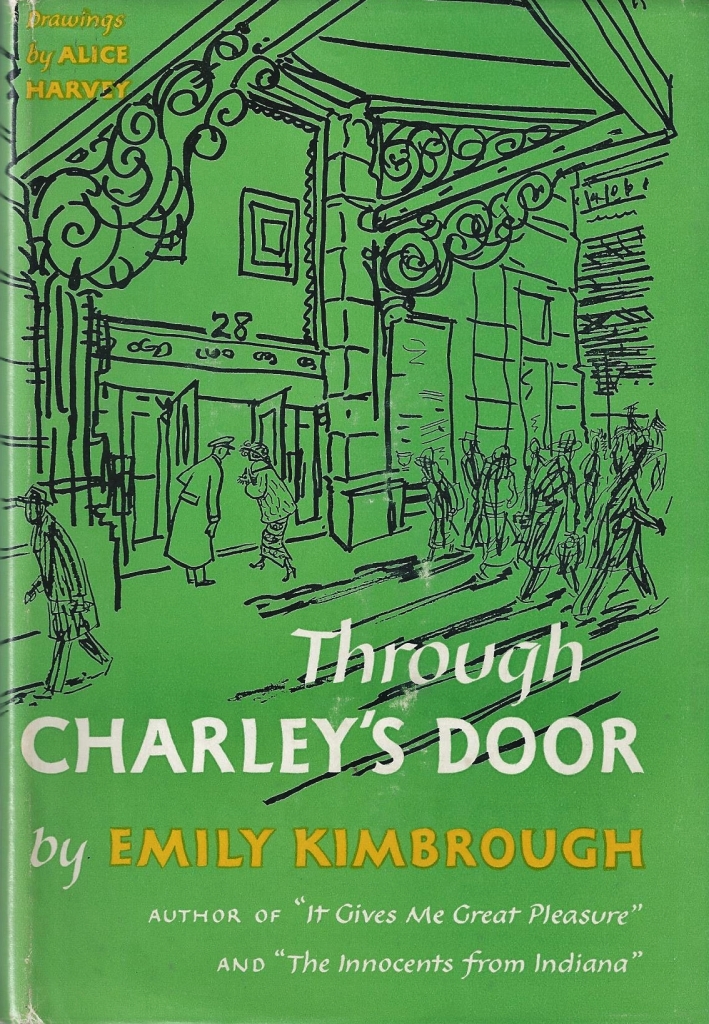
Through Charley's Door Emily Kimbrough 001 (2)Through Charley’s Door by Emily Kimbrough. 1951, Harper and Row.

Emily Kimbrough most famously teamed up with her old college friend Cornelia Otis Skinner on several collaborative memoirs – perhaps you’ve heard of Our Hearts Were Young and Gay, and Forty Plus and Fancy Free, to name the two best known – but Through Charley’s Door is Emily’s very personal story of her first job, the one that launched her journalism and writing career.

Kirkus had this to say:

Among Miss Kimbrough’s reminiscences (all the way from Our Hearts Were Young and Gay to The Innocents from Indiana) this is the special section devoted to her years at Marshall Field’s, beginning in 1923. Realizing that Cornelia Otis Skinner’s career in theater was not for her, harried by a mother who wanted her daughter to be independent, Emily took a fateful plunge (in a remarkable creation) for an interview for a job in the Advertising Bureau of the big department store. That her father’s secretary got her the job, that she muffed and fumbled her early assignments all added up to a tremulous, tentative attempt to be friends with the Buyers, the salespeople and her own department. She added to her vocational vocabulary in humiliation and some humbleness; she learned about deadlines and getting Fashions of the Hour, a magazine for charge customers, into print; she snooped through management organization and merchandise, and geographical, social and class barriers; there were petty skirmishes with the time clock, salary, fads and fashions; — and there was the discovery of all the ramifications that make up a big, important and energetic store. She even made the grade with Marcella Hahner, of the Book Department, and was alerted as to the problems of poet and toilet, author and goatishness, along with having the worries of the fading of mah jong, moths in the fur display, monkeys with diapers and a magician seen with mirrors…

A charming and deliciously funny, occasionally poignant, personal memoir, and a detailed insider’s look at the workings of a major American department store in its heyday.

So when I picked up the next book, set in a British versus an American department store of the early 1940s, I was pleased to recognize the many parallels between the two, and I felt rather like I was watching the action of the fiction with a privileged behind-the-scenes perspective.

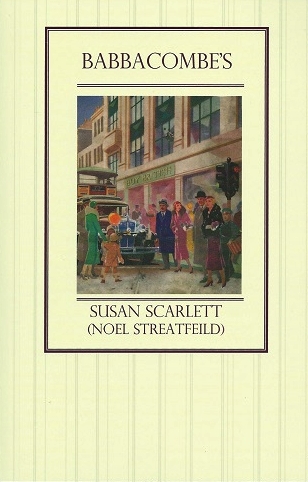
babbacombe's susan scarlett noel streatfeildBabbacombe’s by Susan Scarlett (Pseudonym of Noel Streatfeild). 1941, reprinted 2014 by Greyladies Press.

Babbacombe’s was completely marshmallow in flavour and texture, sweet and fluffy, and predictable as tomorrow’s sunrise, but sometimes that’s what one wants in a vintage comfort read, and I happily wallowed in the sweetness, second-guessing each development with comfortable accuracy.

Into the heart of the Carson family, close, hard-working and happy, comes their disruptive and selfish cousin Dulcie, with her decidedly cheap values. George and Janet try to make her welcome and treat her as one of their own; they find her work in Babbacombe’s department store where eldest daughter Beth is just beginning her first job in Gowns, but they struggle to make allowances for her outrageous behaviour. For it is Dulcie who takes pleasure in humiliating young Girda at her school concert; it is Dulcie who jealously tries to blight the blossoming romance between Beth and the new man in Cooked Meats, David Babbacombe himself.  But then it is not Dulcie, who doesn’t understand kindness and love, who lives happily ever after.

After reading Emily Kimbrough’s book, I certainly appreciated the verisimilitude and attention to detail regarding the workplace of heroine Beth and her blundering arch-nemesis Dulcie, who got her just desserts in the end.

Streatfeild is of course best known as a writer of popular mid-20th-century children’s novels – Ballet Shoes, anyone? – but she wrote a number of similarly formulaic adult romance novels under the pen name of “Susan Scarlett”, of which Babbacombe’s is said to be one of the better examples.

#8 ~ The Best Book of My Reading Year

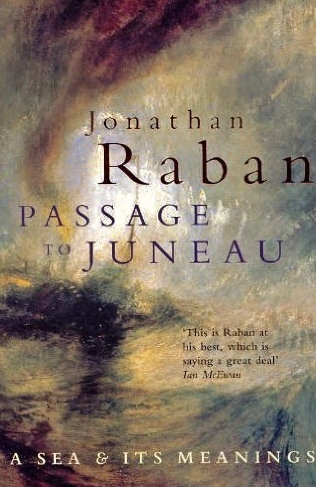
passage to juneau jonathan rabanPassage to Juneau: A Sea and Its Meanings by Jonathan Raban. 1999, Knopf.

Travel book, personal memoir, cultural examination, history lesson – what a thought-provoking and brilliantly written book. Hands-down my best reading experience of 2015.

The clock is ticking, only a few more hours in the year, so I’ll borrow this excerpt from the book itself to give an example of the content and the quality of Raban’s writing.

I am afraid of the sea. I fear the brushfire crackle of the breaking wave as it topples into foam; the inward suck of the tidal whirlpool; the loom of a big ocean swell, sinister and dark, in windless calm; the rip, the eddy, the race; the sheer abyssal depth of the water, as one floats, like a trustful beetle planting its feet on the surface tension. Rationalism deserts me at sea. I’ve seen the scowl of enmity and contempt on the face of a wave that broke from the pack and swerved to strike at my boat. I have twice promised God that I would never again put out to sea, if only He would, just this once, let me reach harbor. I’m not a natural sailor but a timid, weedy, cerebral type, never more out of my element than when I’m at sea.

Yet for the last fifteen years, every spare day that I could tease from the calendar has been spent afloat, in a state of undiminished fascination with the sea, its movements and meanings. When other people count sheep, or reach for the Halcion bottle, I make imaginary voyages—where the sea is always lightly brushed by a wind of no more than fifteen knots, the visibility always good, and my boat never more than an hour from the nearest safe anchorage.

When I moved from London to Seattle in 1990, the sea was part of the reason. The Inside Passage from Seattle to Alaska, with its outer fringes and entailments, is an extraordinarily complicated sea route, in more ways than one. In continuous use for several thousand years, it is now a buoyed and lighted marine freeway, a thousand miles long, and in places choked with traffic, as fishing boats, tows, barges, yachts, and cruise ships follow its serpentine course between Puget Sound and the Alaskan Panhandle. Parts of it are open ocean, parts no wider than a modest river. Some bits, like the Strait of Georgia, are small, shallow, muddy seas in their own right; others are sunken chasms, 1,200 feet deep. Where the tide is squeezed between rocks and islands, it boils and tumbles through these passes in a firehose stream. Water wasn’t meant to travel at sixteen knots: it turns into a liquid chaos of violent overfalls, breaking white; whirlpool-strings; grotesque mushroom-boils. It seethes and growls. On an island in midstream, you can feel the rock underfoot shuddering, as if at any minute the sea might dislodge it and bowl the island, end over end, down the chute.

Its aboriginal past—still tantalizingly close to hand—puts the Inside Passage on terms of close kinship with the ancient sea of the Phoenicians and the Greeks. A nineteenth-century Kwakiutl or Tsimshian Indian would find it easy to adapt to Homer’s sea, with its reigning winds and creaturely powers. He simply used other names for them. For homicidal tricksters like Zeus and Poseidon he had such counterparts as Raven, Killer Whale, Halibut. He could identify keenly with Ulysses in the Straits of Messina – though he might have found Charybdis a little tame after the canoe-guzzling whirlpools of his home waters.

I savoured this book, rationing my reading to stretch it out over days, into weeks – something I seldom do, being a greedy reader by nature – because the content was so gloriously dense, so rich and so worthy of measured consideration that I wanted it to last as long as possible, while at the same time wishing it to come to an end so I could see where Raban’s personal voyage was heading.

I’m an inlander by birth; my relationship with the sea is that of stranger facing a world unknown; this book has already enriched my relationship with the coastal waters I visit with trepidatious joy on every possible occasion, and I look forward to re-reading Passage to Juneau in the not too distant future.

Highly recommended.

And with that, I will bid you good night. See you all next year, in this space, as often as I can manage.

Cheers!


??????????????????????December 12, 2015. Originally posted a year ago, I offer you all this most seasonal book recommendation. It may be a challenge to come by – just two expensive copies show up on an ABE search – but it might still be in some library systems. This one would be a prime candidate for republishing – Slightly Foxed ?

Marijke, thank you once again for the making me aware of this lovely memoir.

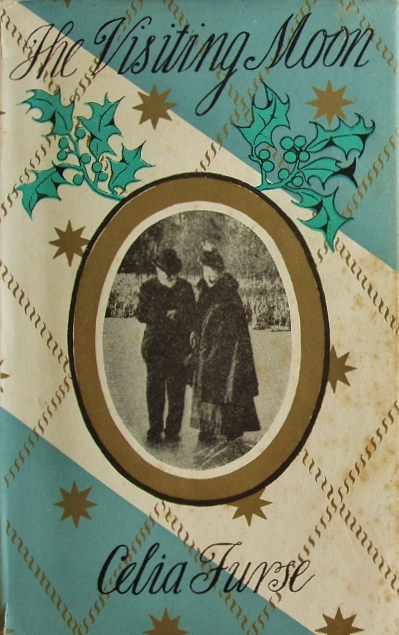
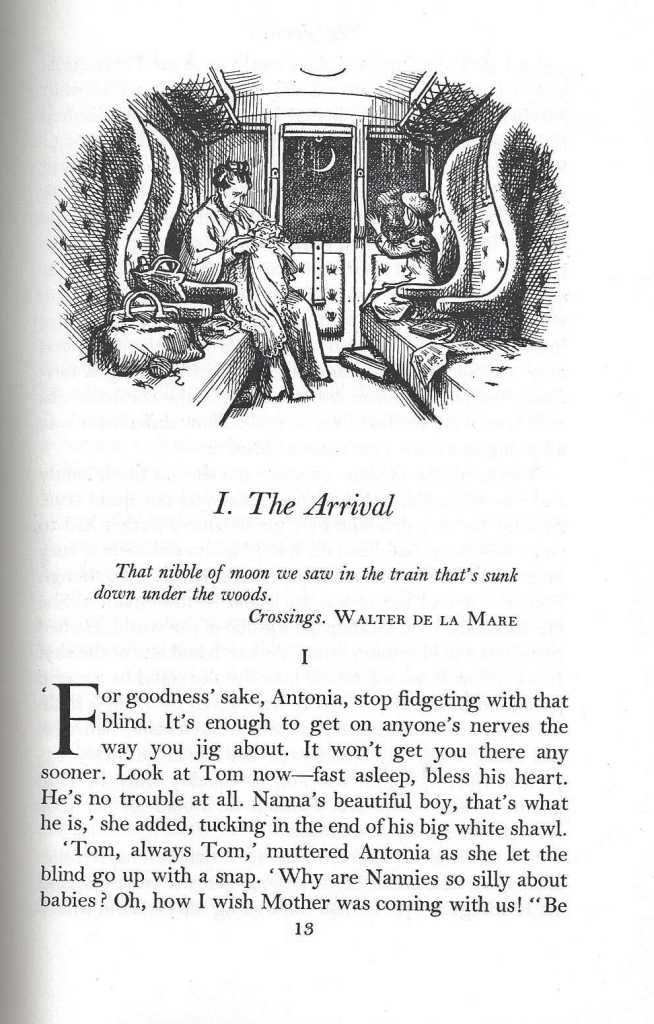
The Visiting Moon by Celia Furse ~ 1956. This edition: Faber & Faber, 1956. Chapter-head illustrations by Charles Stewart. Hardcover. 260 pages.

My rating: 10/10

I will tell the very recent history of how I came across this book here, inspired by the words of a fellow reader who recommended it to me.

On December 3rd, I received a comment on a post from Marijke in Holland, and in it she said:

…There is…one book… and as it is about Christmas and as Christmas is coming, I recommend it hereby “from all my heart”!

In 1966, when I was 22, I stayed for 4 weeks in August at a family in Cheadle, Cheshire, England. I had met them some 10 years before at my aunt’s bed and breakfast in my (then) hometown Nijmegen, where I was doing the washing up, and being a tolk for the family: father, mother and grownup daughter. They had come to Nijmegen because the father had fought in the battle around Nijmegen in the winter of 1944-1945, and he wanted to let his wife and daughter see the place. So I went around with them every day, even to some German places not far from our border, and they invited me to come and stay in England, and I went for the first time when I was 17, after finishing school, and, as I said before, again in 1966. Cheadle is near Manchester and I went there to the antiquarian bookshops, looking for Elizabeth Goudge and Beverley Nichols, and one of the bookshop-owners, a very nice and understanding man said, that when I liked these authors I might like THE VISITING MOON by CELIA FURSE (Faber 1956). I bought the book, merely because of the illustrations, and read it, at home again, in the week before Christmas, fell in love with it, and have read it since that time EVERY YEAR at Christmas. It is stained by candlegrease, because it is always lying under the Christmastree, and it has lost its cover and it is my very very best Christmas-story ever, and when you do not know it, look for it at Amazon or Abe-books immediately!

Celia Furse is the daughter of Sir Henry Newbolt, but that is another story and a very peculiar one indeed…

If you think I can resist a recommendation like this, you don’t know me very well 😉 so of course off I immediately went to ABE and ordered myself a copy from a bookseller in England and with wonderful serendipity it arrived well before Christmas.

What a grand book. I think I can safely add it to the “Hidden Gem” category, and I know it will become a favorite Christmas season re-read, though it is so good that one could pleasurably read in in any of the twelve months.

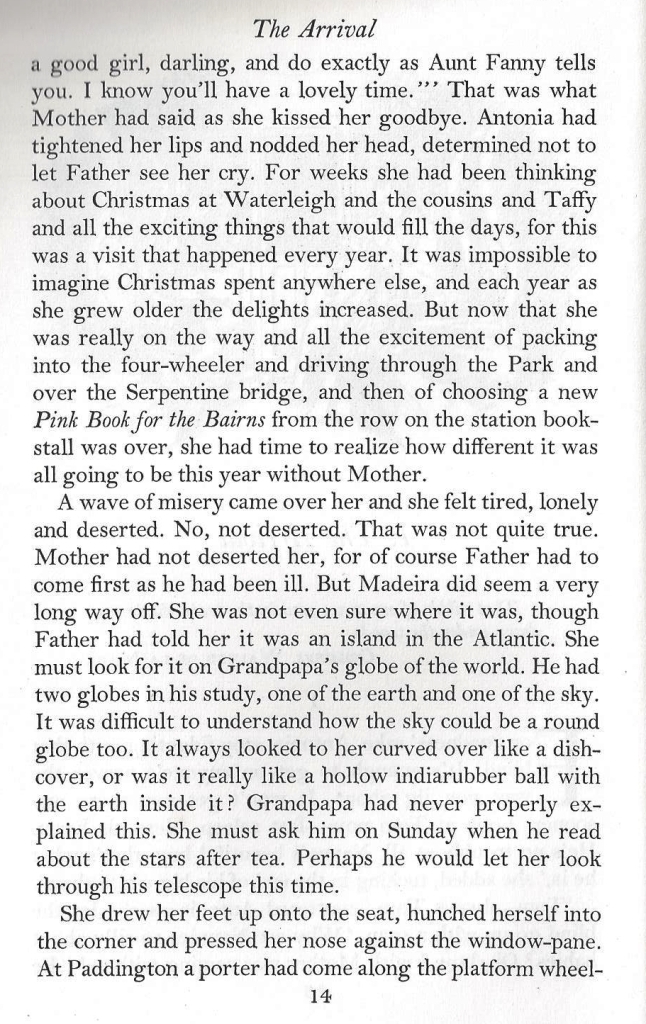
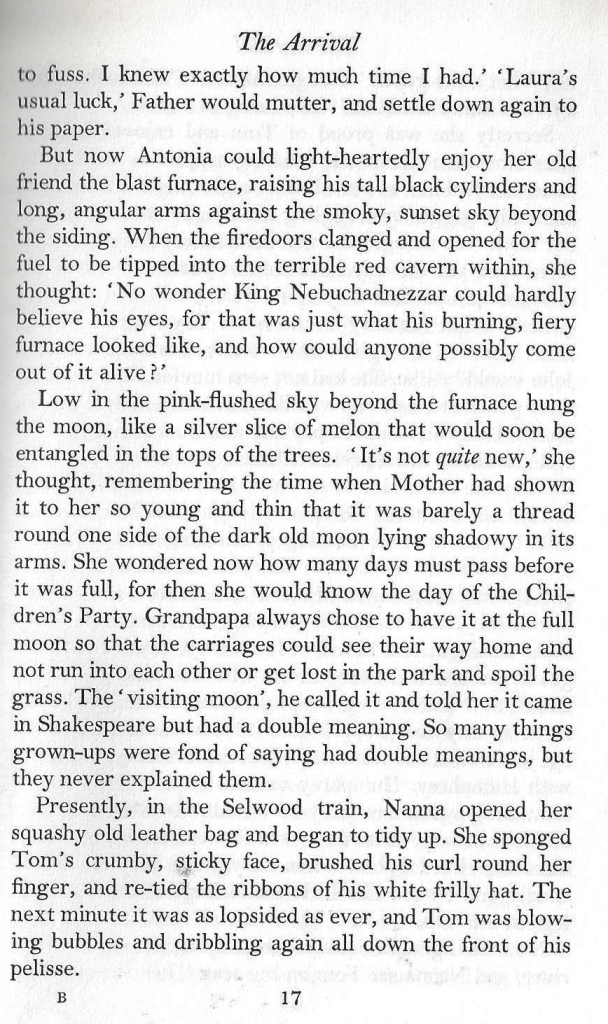
Lady Margaret Cecilia Newbolt Furse – her pen name a shortened version – writing in 1955 when she was 65 years old, tells of a two-week visit to a large English country home at the turn of the 19th Century. The 11-year-old girl in the story, “Antonia”, or “Tony” as she is called by almost everyone, is a boisterous tomboy of a girl, imaginative and occasionally pensive, and our omnipotent narrator (Celia Furse herself, as we are given confirmation of at the close of the story) follows her through a fortnight, recording the goings-on in a large Victorian household packed with visiting relations, and full of family tradition and local custom.

A detailed and loving remembrance of a moment in time now long past, deeply nostalgic but also wonderfully realistic. This is a charming book, but never sticky-sweet: Antonia/Celia has much too much forthright character for that to be a danger.

Here are the first 5 pages, so you can sample this for yourself. (Click each page scan to enlarge for reading.)

visting moon celia furse excerpt pg 1 001

visiting moon celia furse excerpt pg 2 001visiting moon celia furse excerpt pg 3 001 (2)visiting moon celia furse excerpt pg 4 001 (2)visiting moon celia furse excerpt pg 5 001

It just gets better and better – a perfect gem of its childhood memoir genre.

Highly recommended, though you may have a bit of a quest getting your hands on it. There are only 9 copies listed this morning on ABE, ranging from $2 US (plus $26 shipping to Canada from the UK, so not such a bargain as all that) to $60 US. (Edited to add: Only two copies on December 12, 2015, starting at $50 U.S. plus shipping – perhaps a mite too high-priced?)

This book cries out for republication – it has Slightly Foxed written all over it – spread the word!

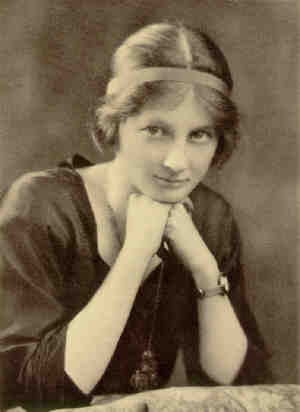
Margaret Cecilia Newbolt as a young woman.

Margaret Cecilia Newbolt as a young woman.

A little more information I picked up while (fruitlessly) looking for more by this writer. The Visiting Moon appears to be Celia Furse’s only published memoir (and what a shame that is, for it is really good), but it seems that she was a lifelong writer, as I did come across mention of her as a minor Edwardian poetess, including this rather twee example, circa 1919, from her only published (apparently, for I could not find mention of any more) book of poetry, The Gift.

The Lamp Flower

by Margaret Cecilia Furse

The campion white
Above the grass
Her lamps doth light
Where fairies pass.

Softly they show
The secret way,
Unflickering glow
For elf and fay.

My little thought
Hath donned her shoe,
And all untaught
Gone dancing too.

Sadly I peer
Among the grass
And seem to hear
The fairies pass.

But where they go
I cannot see,
Too faintly glow
The lamps for me.

My thought is gone
With fay and elf,
We mope alone,
I and myself.

Don’t let this put you off, though, for The Visiting Moon is good strong stuff, with prose much less sentimental than this poetic effort.

Celia Furse’s father was the poet Sir Henry Newbolt, as mentioned by Marijke, and I am most intrigued by his particulars.

I’m sure you will have come across one of his most well-known poems, the ubiquitous “Vitai Lampada”, beloved of Great War propagandists, though Sir Henry came to dislike his early effort greatly, as its lasting popularity eclipsed his later work:

There’s a breathless hush in the Close to-night —
Ten to make and the match to win —
A bumping pitch and a blinding light,
An hour to play and the last man in.
And it’s not for the sake of a ribboned coat,
Or the selfish hope of a season’s fame,
But his Captain’s hand on his shoulder smote
“Play up! play up! and play the game!”

The sand of the desert is sodden red, —
Red with the wreck of a square that broke; —
The Gatling’s jammed and the colonel dead,
And the regiment blind with dust and smoke.
The river of death has brimmed his banks,
And England’s far, and Honour a name,
But the voice of schoolboy rallies the ranks,
“Play up! play up! and play the game!”

This is the word that year by year
While in her place the School is set
Every one of her sons must hear,
And none that hears it dare forget.
This they all with a joyful mind
Bear through life like a torch in flame,
And falling fling to the host behind —
“Play up! play up! and play the game!”

Good strong manly stuff, what?

So here’s a rather salacious tidbit about its writer, and of the household set-up of our Celia Furse, who must have had some sort of inkling that her parents’ marriage was of an unconventional sort. (She does refer in The Visiting Moon to “Tony’s” mother’s “boyish” qualities, which the 11-year-old of the memoir feels she has inherited.)

When Sir Henry Newbolt proposed to his wife, Margaret Duckworth, she was already in love with her lesbian cousin, Ella Coltman. Margaret agreed to marry Henry only if she could continue in her relationship with Ella; Henry agreed and went a bit further, by setting up a ménage à trois with both women, and noting in his diaries the number of times he slept with each one, turn and turn about. This situation lasted out the life of the principles, and seemed reasonably successful for all of them, though there were reported to be some to-be-expected flurries of emotion upon occasion.

On my reading list for 2015: a biography of Sir Henry Newbolt. Luckily there appears to be quite a good one out there, 1997’s Playing the Game, by Susan Chitty.

Isn’t this sort of thing quite wonderful? One thing leads to another, and I know I will never run all of these meandering book-related questings and explorations!

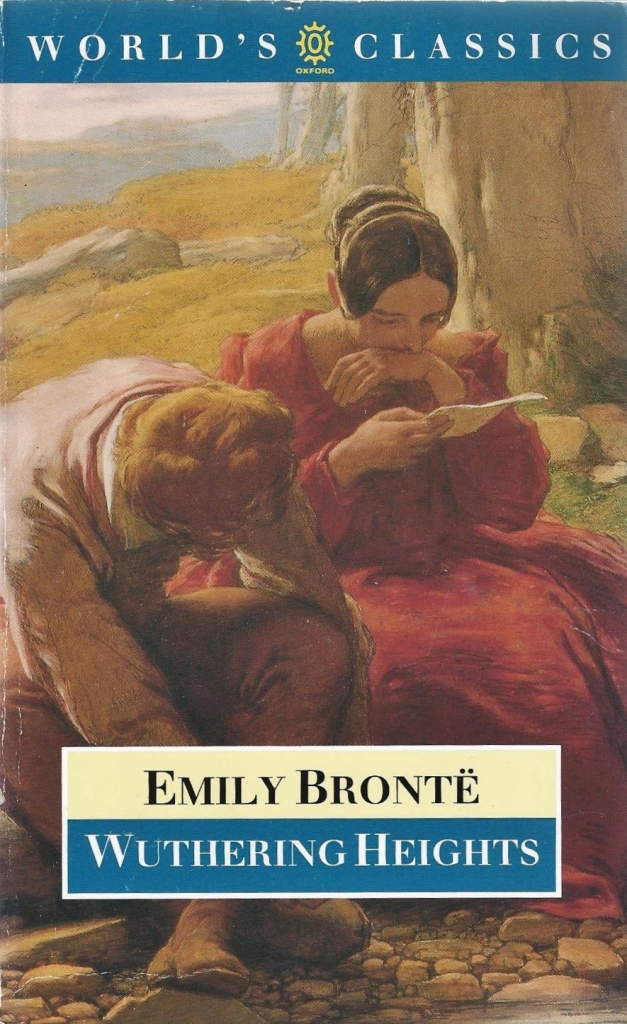
wuthering heights oup emily bronte 001Wuthering Heights by Emily Brontë ~ 1847. This edition: Oxford University Press, 1981. Edited and with Introduction by Ian Jack. Paperback. ISBN: 0-19-281543-1. 370 pages.

My rating: Hmmm…tough call. I appreciate that it’s a highly regarded “classic”, and Emily Bronte has my admiration for keeping me engaged all the way through, though I despised the vast majority of her characters on a personal level. Did I enjoy my read? Sort of. Okay, yes, I did. But more in a “I can’t believe this is happening!” way than in a “Oh, I’m putting this on the favourites shelf!” sort of way. So let’s try this: 6.5/10. Restrained recommendation, one might say.

What did I just read? This was the strangest book. I wonder if I can condense it into 100 words? I doubt it, but will try. Here goes.

  • Sullen foundling Heathcliff forms inseparable friendship with daughter-of-wealthy-house Cathy. Cathy’s father dies. Heathcliff is downgraded in status from foster-brother to mere farm worker. A rich neighbour courts Cathy. She accepts. Heathcliff runs away. He comes back, educated and financially solvent, but still sullen. More marriages take place, babies are born. People die, including Cathy. Heathcliff through shady dealing ends up lord of the local manor. He forces a marriage between his barely teenage son and Cathy’s daughter. Son dies. Heathcliff, haunted by memory of Cathy-the-first, starves himself to death. Cathy-the-second finds true love, thus negating Heathcliff’s revenge scenario. The End.

The key characters peopling this unlikely saga are totally without inhibition. They don’t bite back their words, they act on every dark impulse, they treat each other with casual cruelty. Most of the novel concerns the cut-and-thrust of “Oh, yeah, well I’ll make YOU sorry” parrying. They brawl continuously, both verbally and physically. Heathcliff in particular specializes in random acts of impulsive brutality. He smacks his wife around, until she escapes to a faraway refuge, and then the ultimate shelter of death. (He hangs her pet dog!!!) He beats up his lost-love-Cathy’s daughter and locks her up so she can’t attend her own father’s deathbed. He refuses to have a doctor to treat his own dying son.

Having never actually read Wuthering Heights before, and having my knowledge of it only through the references of others and the various filmed adaptations which I was mildly aware of but which I’d never personally viewed, I had always pictured Heathcliff as some sort of romantic hero. And yes, for a brief few chapters I was in sympathy with his young self, for he was treated very badly by his adoptive guardian’s successors, and “kindred soul” Cathy was blithely heartless in her blindness to Heathcliff’s deep devotion and how he would be affected when she decides to marry the money next door. Heathcliff’s subsequently warped nature is quite understandable, and his increasingly awful behaviour certainly keeps the reader riveted to the tale, wondering what nasty thing the anti-hero will pull off next.

Disappointingly, the women in Wuthering Heights never really reached full life for me. Even Cathy-the-first, instigator of the reason for the story, seemed puppet-like in her role. In my opinion, upon this first reading, the novel is basically a moving portrait of Heathcliff, over-the-top scenery-buster that he is. All the other stuff sounded like rackety background noise.

This isn’t at all a proper review, is it?

I’m not sure what one could say that hasn’t already been said elsewehere by literary scholars, and by the thousands of students worrying their way through this dense melodrama in their AP English classes, poor souls.

So, Heathcliff or Rochester? Well, Rochester is a bit arrogant, but he doesn’t hang pet dogs, or disinter his dead love’s coffin so he can lie down with her corpse. (That was just icky.) Heathcliff, off to the storm-tossed moor with you. Rochester, I suppose I will accept your redemption, and forgive your previously libertine ways.

Last word, and it has to do with the inevitable comparison of these two sisters’ novels. Charlotte Brontë’s Jane Eyre I know I will reread with pleasure. Emily Brontë’s Wuthering Heights, not so much, though I’m happy to have ticked it off my “you really should read” list.

Dear fellow readers, your own thought are most welcome. (And if you’ve read both Brontës, are you for Rochester or for Heathcliff?) 🙂


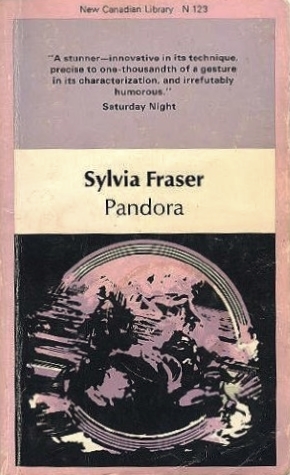
pandora sylvia fraser 1972Pandora by Sylvia Fraser ~ 1972. This edition: McLelland and Stewart, 1976. New Canadian Library No. 123. Introduction by David Staines.  Paperback. ISBN: 0-7710-9223-7. 255 pages.

My rating: 8/10

First of all, a comment regarding that high rating, for those of you who are familiar with my frequent habit of discussing vintage “cosy” books.

Pandora received its high marks because it is so intelligent, so stylistically interesting, and so very much of its era – the early 1970s, when stream-of-consciousness writing was having one of its recurrent moments of being all the rage. It is not a typical “pleasure” read in the accepted sense of the word, nor do I believe was it meant to be. Paradoxically, it is frequently (intentionally, darkly) humorous.

A heads-up note that some of the subject matter may be very disturbing to some, involving as it does several instances of adult-to-child sexual abuse, as well as an abundant amount of physical and psychological violence between children, by adults towards children, and, arguably, by children towards adults. Some very dark places are being explored here, which I will address more fully when I get to the bit about the author at the end of this post.

You will have gathered by now that childhood as a state of paradise is not what this novel is about. Though one might argue that it is all about juvenile innocence. And, inevitably, the loss thereof, and the attainment of a different state of being.

July, 1937. Fourth child Pandora Gothic is born into a hot, summer-weary bedroom in a gabled house on Oriental Street, small-town-could-be-one-of-many, Ontario. She has been preceded by five-year-old twins, Adel-Ada, and Baby Victor, who choked to death. Pandora was meant to be a boy.

Pandora’s mother sings hymns as she goes about her ceaseless round of domestic duties. Pandora’s mother smells of powdered milk and dead roses. Pandora’s father is a one-handed butcher, a bitter veteran of the First War. Pandora’s father smells of blood and rage. Pandora’s older sisters don’t think much of her, this cuckoo in the nest, as they see her. And as her parents increasingly see her, as she leaves babyhood behind and her at-odds personality begins to make itself known.

Over in Europe, the Second War thunders ominously on, permeating every aspect of Pandora’s world.

Pandora knows quite a lot about the Nazis.

If the NAZIS catch you they hang you, naked, on a hook, andd they shave off your hair, and they whip you. If the JAPS catch you, they stick hot needles up your fingernails and they pull out your teeth for the Tooth Fairy. Pandora learned that at Sunday School from Amy Walker who reads War Comics, inside her World Friends, while the other children nail Jesus to the cross and sing He Loves Me.

Pandora puts her hands over her ears. She closes her eyes. She burrows to the heart of what she knows is her problem:

Adel-Ada wont play with me because ... they don’t like me.

They don’t like me because ………… I scream.

Nobody likes me because ………… I scream and hold my breath.

I have to scream because …………… because ...

The answer comes in a rush: I have to scream because nobody likes me!

It is a futile insight, too bitter to sustain. Pandora shoves it back inside her head.

Pandora does this a lot, shoving her thoughts back inside her head, but occasionally she forgets, and her outspokenness brings her into direct conflict with her elders. Her father in particular seems to find her enraging; Pandora inadvertently triggers his sullen temper, and is continually shouted down, occasionally smacked, and at last resort bundled into locked places (the closet, the basement storage room) to consider her misdeeds. Pandora responds to this by developing an even deeper inner life; she also begins to consider her words before they leave her mouth.

In 1942, kindergarten-age Pandora is marched off to school between her sisters, and her world enlarges exponentially. Here are a new set of adults to be figured out, and the politics of schoolroom and, more crucially, schoolyard politics to be learned. Pandora finds that her bluntness and physical bravery can earn her a status and a fearful respect lacking at home; she becomes one of the leaders of her peers, though the hierarchy within the student group is constantly changing, albeit at a predestined level – the outcasts remain so, the leaders swap places, the masses in the middle section sway to and fro in sycophantic chorus. And Pandora is ever hyper-sensitive to the stink of fear – her own, that of fellow “top girls”, that of the outcasts, even that of the teachers who are only ever in varying degrees of conditional control of their volatile charges.

Pandora navigates her childhood with what seems to me to be more than the usual amount of emotional trauma. Both of her grandmothers die; it is a time of displaying the dead in the best parlour, and Pandora doesn’t do well with the “Give Granny a last kiss on the cheek” expectation. She and a friend encounter a man in the park, in their “safest place to play”, who approaches them and exposes himself. An attempted good deed, giving water to the breadman’s horse, results in an invitation to ride along on the wagon, and a persistent sexual assault ending in Pandora being choked with the hissed instruction not to tell, ever. (Pandora doesn’t.)

Playground politics get progressively more brutal, as the children grow both in stature and in increased potentiality of evil: a kitten is strangled, dismembered, dowsed with gasoline and burnt, and Pandora receives its tail in an envelope from one of the boys who resent her refusal to bow to them as natural lords of creation. Various schoolmates are shamed and bullied – heads doused in unflushed toilets, gang-beaten in the back allies, shunned on the playground, fingered as scapegoats in incidents of vandalism and juvenile crime by the perpetrators. Oh, it’s a wicked, wicked world.

Where are the adults? Trudging along in their own various personal ruts, all unaware that their actions are being studied and replicated by the younger generation.

Pandora finds that schoolwork is easy for her; she heads her class in academics; she is a social leader, though she shares that role with several others. The elaborate social dance of childhood continues. Pandora has several “best” friends; they plan and attend parties, go to the movies, roam about utterly unsupervised in summer, explore the mysteries of sexuality and where bavies come from. There is an explicit incident of girlish genital investigation with an older girl, culminating in a full-on neo-lesbian romp. (Don’t tell anyone, Pandora…)

The novel ends at Pandora’s graduation from Grade Two. She’s learnt at last to diplomatically keep her mouth shut on occasion, to judge her words carefully. (She’s always been good at keeping secrets.) Her mother, though still frequently bemused by Pandora’s passionate personality, appears to be making a sincere attempt to figure her out – those high marks in school have caught parental attention and have inspired a grudging respect. A gleam of optimism for Pandora’s future appears; her mother hints that there may be the possibility of a higher education one day, college and travel and a tantalizing something more…

So. Sylvia Fraser.

In a departure from her established career as a journalist, Pandora was Sylvia Fraser’s first fiction, published when she was 37 years old. The novel received favourable reviews; the Saturday Night excerpt cover blurb on my NCL paperback gushes: “A stunner – innovative in its technique, precise to one-thousandth of a gesture in its characterization, and irrefutably humorous.”

Pandora-the-character is said to be something of a childhood self-portrait of Sylvia-the-writer, and the setting apparently comes from life as well. The 1940s-era detail included in the novel is quite remarkable, and the snapshot given of wartime domestic life in Canada is clear and memorable.

What I didn’t know until after I finished the novel and did some further research on the author was that the incidents of sexual abuse in Pandora were inspired by Sylvia’s own recovered memories of apparent incestuous assaults upon her own childish self – from the age of seven years old – by her father. Fraser’s 1989 book My Father’s House: A Memoir of Incest and Healing details this aspect of her life and her belief that the scenes in Pandora – written before the incest memories surfaced – were manifestations of that repressed memory.

This would indeed account for the overall tone of Pandora, that of a confused, questing spirit continually finding itself at odds with everyone and everything around it. Even the more light-hearted episodes (relatively speaking – there were few truly joyful moments portrayed) have a woefully foreboding atmosphere, and I hasten to stress that I thought this before I was aware of the author’s back story.

I have subsequently come across an excellent review of Sylvia Fraser’s Pandora by Mark Sampson of Free Range Reading. My response was similar to his: Pandora is a troubling though worthwhile read. “Kafkaesque” describes it perfectly. An excerpt from Mark’s review:

Fraser is clearly interested in blowing apart our perceptions of childhood as a peaceful epoch of purity and innocence. Pandora has a hard go of it almost from the minute she becomes fully sentient: she is ridiculed by her older twin sisters who resent her very existence; she is sexually molested by the neighbourhood breadman; she is treated with scorn by her mother and cruelty by her father, the town butcher. Indeed, from her fellow students at school to her community church, Pandora encounters random, almost Kafkaesque acts of viciousness wherever she goes.

Sylvia Fraser has written five more novels, and an array of non-fiction books, on a variety of topics from incest and pedophilia to spirituality and psychic phenomena.


jane eyre charlotte bronteJane Eyre by Charlotte Brontë ~ 1847. This edition: Penguin, 1985. Edited and with Introduction by Q.D. Leavis. Paperback. ISBN: 0-14-043011-3. 489 pages.

My rating: 8.5/10

Let’s see if I can pull off a 100-word summation:

  • Wee orphan Jane is despised by her only (that she knows about) relations and ends up in a charity-girl’s school, where she emerges at the age of 18 to take on a governess post to the illegitimate ward of the moody Mr. Rochester. Romantic sparks fly, despite a series of disturbing nocturnal events, and Jane is at the altar when an appalling allegation is made and everything is off. She runs away, finds shelter with a stern clergyman’s family, inherits a fortune, has a moral crisis, and passionately races her way back to Rochester’s now-mutilated arms. (There was this conflagration…)

Confession time: I have never read this book before, not even in my library-haunting adolescence when I tackled so many of the weighty greats. I do wonder what my younger self would have thought about it? I suspect much the same as my older self does: Rochester is bad, bad news, and Jane, you’re a fool.

This initially harsh reaction is salvaged by the author letting both of her main characters disarmingly confess the above about themselves a number of times. (Okay, it’s more like Jane knows she’s a fool. Rochester knows he’s bad news but he rather thinks that he gets a pass on his bad behaviour because…well…he’s rich and upper-class. And a man. A man has needs, don’t you know? Hence the three mistresses and the attempted bigamy.)

If the voice of Jane wasn’t so ardently introspective, I would have absolutely despised this deeply melodramatic tale. As it was, I quite enjoyed it, especially the orphanage saga at the beginning, and the “Should I be a missionary wife and go to India?” complication near the end. Engaging, most of it, though it took some work to wade through the romantic twaddle in the middle, before the aborted wedding ceremony and the Big Reveal about the insane first wife locked away in the attic.

If you have so far dodged this novel, you’re likely backing away slowly, thinking life’s too darned short for this sort of antique concoction, but let me reassure you that the thing has classic status for a reason, and that it’s well worth taking a go at it, if only to be able to at last identify the hundreds of references you’ve no doubt bumped up against in your other reading.

Can I stop right here? Though I could of course go on for thousands of words, picking the novel to pieces and putting it back together again, rambling on about symbolism and feminist elements (or the opposite) and the merits and demerits of the styling and plot, and should we be relating to Miss Eyre or despising her, and is Rochester really for real.

But I won’t.

This would be an awesome book to tackle with a real-life group of like-minded readers. No shortage of conversational topics, and it would be great fun to wax eloquent about the more outrageous bits, and to bounce favourite characters and scenes around.

So if you haven’t yet read Jane Eyre, here’s your nudge. Do it. You’ll love some bits, you’ll cringe at others, you’ll laugh (for there are some funny bits, both deliberate and unintentional), you’ll want to rattle some sense into Jane at least once or twice, and you’ll also yearn for Mr. Arrogance – oops, Rochester – to receive his much-deserved comeuppance. (Or maybe you’ll find him wonderfully romantic?)

Then come back and tell me what you think.


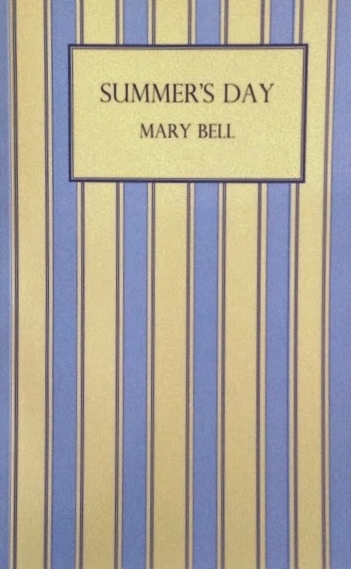
Summer's Day by Mary Bell 1951 Greyladies reprint 2008Summer’s Day by Mary Bell ~ 1951. This edition: Greyladies Press, 2008. Softcover. ISBN: 978-0-9559413-2-0. 281 pages.

My rating: 10/10

Craftsmanship of any sort is an admirable thing, and one of life’s greatest joys is coming unexpectedly upon an example of mastery in execution, no matter what the field.

Finding craftmanship in writing is perhaps rarer than one would hope, what with the amount of people practising the trade. A book can easily make it to the bestseller lists without this elusive element – I won’t be giving examples, leaving it to you, dear fellow reader, to nod in recognition of this rather cheeky assertion – and how ironic it is (I often think) that some of the most creatively or just downright cleanly styled books are to be found languishing all unapplauded in the out-of-print stacks.

A case in point is this minor novel in a minor key, brought to my attention by Scott of the always-dangerous-to-browse Furrowed Middlebrow (“Off the beaten page: lesser-known British women writers 1910-1960”). After reading his post regarding this book back in 2013, and the follow-up post regarding his search for the identity of the writer some months later, I decided that this was something I needed to investigate for myself.

Summer’s Day proved not that easy to access, for though it had been re-published in 2008 by Greyladies Press, it was no longer on the available list, having been sold out of its print run. (Which makes me wonder just how many copies a typical print run might be for this sort of thing. I’m guessing not particularly high, but it would lovely if I’m wrong, and if there were thousands of these second-life titles being snapped up by discerning readers like myself. But I suspect the number is in the hundreds, or even less. Ah, well, we do what we can to spread the word.)

I did find a used copy on ABE, and it arrived promptly, and I just as promptly dove into it, but sadly the timing of my reading was all wrong, as I took the book along to enhance and occupy my time in a surgical waiting room (not for any operation of my own, but for one of my family members) and, needless to say, I was not as focussed as I should have been, for the story did not take, and I set it aside to tackle in future.

Future having arrived, and an opportunity for quiet, mindful reading along with it (thanks to the sudden onset of bitterly cold weather and the temporary sidelining of a major outdoor project), I’ve now read the book.

Scott is right. It’s a gorgeous example of its sort of thing.

In an English girls’ boarding school, shortly after the end of World War II, on the first day of summer term, a variety of characters are assembling. We see them at first in delicately sketched vignettes, and as the novel progresses and the camera pans out, as it were, we discover the inter-connectedness of each to the others, and with each succeeding page our interest grows, as we become acquainted with what is going on inside each of the character’s heads, and how the others in their circle react to their words and actions, and what makes them all tick.

The plot is episodic and not terribly dramatic: a number of schoolgirls deal with the everyday issues of communal life and occasionally wonder what their future will bring; a number of schoolmistresses (and one schoolmaster) ponder the same – both for themselves and their charges; a number of supporting characters (the school gardener, the housekeeper, members of the auxiliary staff, assorted parents, a potential lover or two) weigh in with their own thoughts on the girls they are attached to or otherwise interact with.

The appeal of Summer’s Day is not in what actually happens in the course of the narrative, but in the picture it creates of this common-yet-arcane micrososmos. The author has her characters well in hand, and she parades them across her stage with competence and delicious humour and deeply relatable poignancy.

For such a short book, less than 300 pages, there are an unusually high number of fully formed characters created who take shape and live in the reader’s mind, though none of them are likely to trouble us much, with the exception of two who are bereaved of their beloved, and whose grief follows us after the book is closed. I found myself genuinely anxious on their behalf, and had to give mself a litle mental shake – “It’s fiction, you silly – these people aren’t real!”

But they could be, and that’s a sincere compliment to the writer’s art.

More detailed reviews are presented here (same Furrowed Middlebrow link as earlier on) and here (from Lyn, of I Prefer Reading) complete with a number of quotations. I am perhaps not quite as enamoured as Scott was – though everything he says I concur with – and I nodded happily throughout Lyn’s review, for in it she says everything I’d like to, saving me the trouble of a recap.

Both are correct in that you really do need to concentrate on this one – it rewards a close examination, and is perhaps not the type of thing to take up if one is in the midst of any sort of emotional turmoil in one’s real life. But once you enter in, so much to appreciate.

And – as I do believe I’ve mentioned once or twice – with a lovely vein of ironic humour. Good stuff. Thumbs up to Mary Bell, whoever the heck she was, and boo hiss that this was (apparently) her only foray into writing.

“Who’s that chap?” asked a small girl’s father as Mr. Walker went by, liking the look of him. “I don’t remember -”

“Oh, that’s Fishy Walker,” his daughter informed him. “He’s not anybody’s father. As far as I know,” she added with intent – a failure – to shock.

“Fish?”

“Yes. The drawing master.”

“And what do you draw?”

“Fish,” she explained patiently. “Do watch the bowling, dear.”

He did so, taking furtive glances at his daughter during runs. Did they really draw fish? he wondered. It seemed an odd reason for him to be scrounging for those fees. Perhaps it was a prelude to one of those modern careers, like girls looking after animals in the zoo, and he had a vision of himself creeping through the dim shades of some future aquarium to an assignation with his daughter among the octopuses.


As most of you know I’m not one to get all worked up about bestselling authors, choosing instead to let the hype die down for at least a decade or two (okay, maybe a generation or two might be more accurate) and then see if the prose holds up once the buzz dies down. But there are a few exceptions to that cynical personal rule, and Kate Atkinson is one of them.

I stumbled upon Atkinson’s first book, Behind the Scenes at the Museum, quite some time ago. It was a random shelf pull, absolutely serendipitous – for a number of years I had a long commute several times weekly to take my daughter to her faraway dance school and a goodly number of hours to kill while she was in session, so the public library was my refuge and source of much scope for readerly experimentation – and it (the book) was so brilliantly out there that I came back to the real world most reluctantly. That woman can write, I said to myself. That’s how it’s done. Give me more of that, please.

After Museum I of course went back to the A shelf and pulled everything else by Atkinson that I could find, which was not all that much – Human Croquet and Emotionally Weird – and though they were readable, they felt just slightly too raggedly experimental in comparison to the first book.  Third trip back, and I struck a vein of gold: a fairly traditionally structured suspense-murder mystery featuring (eventually, after a certain amount of build up) a retired police officer turned private investigator, one Jackson Brodie.

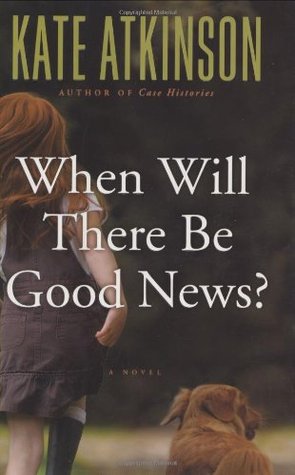
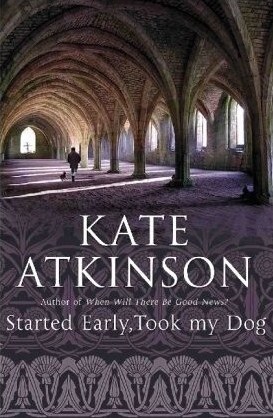
Case Histories hooked me, and One Good Turn reeled me in, leaving me chortling with glee at my good fortune in finding such a wickedly clever writer, and When Will There be Good News? nicked me where it hurt and the left me rejoicing with its several happily likeable strong females, and Started Early, Took My Dog had me poignantly amused and supremely satisfied and at the same time yearning for something, anything, more.

Then, game over on the novel front, until Life After Life – very much not featuring Jackson Brodie, but more in line with that mind-twisting first story – burst upon the 2013 book scene. (I have a copy, but I haven’t yet read it. Just waiting for the right time. This year’s Christmas break, perhaps? It’s mellowed for two years, and the buzz is quieter, as the companion book is now out.)

Kate Atkinson has said that her four Jackson Brodie novels may well have to stand alone – she’s written herself out in that area, at least for now. And I get that, and I am all for it, because heaven forbid such a stellar narrative deteriorate into an Elizabeth George-style endless saga that piles tragedy upon plot twist upon ever-more-bizarre murder until one forgets just how good the first books really were.

But I’ve just re-read all four of the Brodie novels, and all I can think of is that a really awesome Christmas treat in, say, 2016 or 2017 would be a fifth installment. Just sending that out into cyberspace. Kate Atkinson, did you catch that?

I will go ahead and list all the vital statistics as I usually do for books I talk about here. But I won’t get into details about plot and style and all that stuff. If you haven’t already read these, it might be fun to go into them cold, with no expectations. Definitely read them in order if you can, though it’s not absolutely essential – Kate Atkinson takes pity on the reader and does sketch in the back story just a bit, for those coming in part way through. (And if you’re really curious, the internet is jam-packed with analysis and reviews. Anything I say here will merely be a shadowy repeat of what others have already fluently said.)

The author’s website does have some excerpts, for firsthand exploration before committing.

Such good books. Such a good writer. Such a twisty, clever mind, and her coincidences click into place most satisfyingly, as we have cheerfully suspended disbelief early on. And very funny, too, though concerned throughout with the dismal awfulnesses of people to each other. But no wallowing.

Good stuff. Good, good, good.

Okay, I wasn’t going to say anything about the plots, but then I checked out the Kirkus reviews and I liked the first one quite well so I changed my mind and decided to crib from the pros. No true spoilers included, but you might wish to avoid going any further if you like your sagas unsullied by prior knowledge of details.

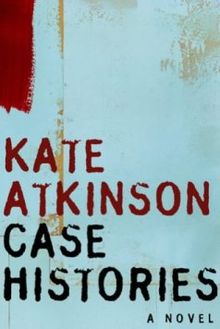
220px-CaseHistoriesCase Histories by Kate Atkinson ~2004. This edition: Doubleday, 2004. Hardcover. ISBN: 0-385-60799-7. 304 pages.

My rating: 10/10

Just looked up the Kirkus review from 2004, and by golly, the reviewer echoes my thoughts precisely, including my bemusement at Human Croquet and Emotionally Weird.

After two self-indulgent detours, Atkinson proves that her Whitbread Award–winning debut, Behind the Scenes at the Museum (1996), was no fluke with a novel about three interconnected mysteries.

They seem totally unrelated at first to private detective Jackson Brodie, hired by separate individuals in Cambridge, England, to investigate long-dormant cases. Three-year-old Olivia Land disappeared from a tent in her family’s backyard in 1970; 34 years later, her sisters Amelia and Julia discover Olivia’s stuffed toy in their recently deceased father’s study and want Jackson to find out what he had to do with the disappearance. Theo Wyre’s beloved 18-year-old daughter Laura was murdered by a knife-wielding lunatic in 1994, and he too hires Jackson to crack this unsolved murder. Michelle was also 18 when she went to jail in 1979 for killing her husband with an ax while their infant daughter wailed in the playpen; she vanished after serving her time, but Shirley Morrison asks Jackson to find, not her sister Michelle, but the niece she promised to raise, then was forced to hand over to grandparents. The detective, whose bitter ex-wife uses Jackson’s profound love for their eight-year-old daughter to torture him, finds all these stories of dead and/or missing girls extremely unsettling; we learn toward the end why the subject of young women in peril is particularly painful for him. Atkinson has always been a gripping storyteller, and her complicated narrative crackles with the earthy humor, vibrant characterizations, and shrewd social observations that enlivened her first novel but were largely swamped by postmodern game-playing in Human Croquet (1997) and Emotionally Weird (2000). Here, she crafts a compulsive page-turner that looks deep into the heart of sadness, cruelty, and loss, yet ultimately grants her charming p.i. (and most of the other appealingly offbeat characters, including one killer) a chance at happiness and some measure of reconciliation with the past.

Wonderful fun and very moving: it’s a pleasure to see this talented writer back on form.

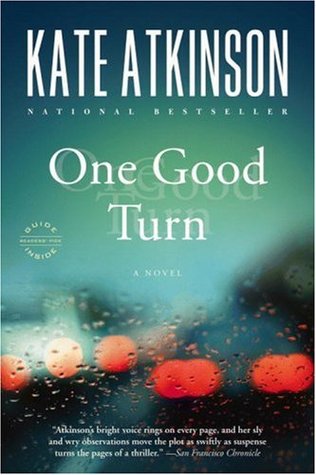
501124One Good Turn by Kate Atkinson ~ 2006. This edition: Anchor Canada, 2007. Softcover. ISBN: 9978-0-385-66261-1. 386 pages.

My rating: 10/10

Kirkus, again. Again, the reviewer mostly nailed it. Disregard the snarky “the author isn’t stretching herself” bit; it’s a grand book, says me. And I cried real tears at one point – a very rare response for me so noteworthy.

A murder mystery with comic overtones from the award-winning British storyteller.

Resurrecting Jackson Brodie, the private eye from Case Histories (2004), Atkinson confects a soft-hearted thriller, short on menace but long on empathy and introspection. Her intricate, none-too-serious plot is triggered by an act of road rage witnessed by assorted characters in Edinburgh during the annual summer arts festival. Mysterious possible hit man “Paul Bradley” is rear-ended by Terence Smith, a hard-man with a baseball bat who is stopped from beating Bradley to a pulp by mild-mannered crime-novelist Martin Canning, who throws his laptop at him. Other onlookers include Brodie, accompanied by his actress girlfriend, Julia; Gloria Hatter, wife of fraudulent property-developer Graham Hatter (of Hatter Homes, Real Homes for Real People); and schoolboy Archie, son of single-mother policewoman Louise Monroe, who lives in a crumbling Hatter home. Labyrinthine, occasionally farcical plot developments repeatedly link the group. Rounding out the criminal side of the story are at least two dead bodies; an omniscient Russian dominatrix who even to Gloria seems “like a comedy Russian”; and a mysterious agency named Favors. Brodie’s waning romance with Julia and waxing one with Louise; a dying cat; children; dead parents and much more are lengthily considered as Atkinson steps away from the action to delve into her characters’ personalities. Clearly, this is where her heart lies, not so much with the story’s riddles, the answers to which usually lie with Graham Hatter, who has been felled by a heart attack and remains unconscious for most of the story. There are running jokes and an enjoyable parade of neat resolutions, but no satisfying dénouement. Everything is connected, often amusingly or cleverly, but nothing matters much.

A technically adept and pleasurable tale, but Atkinson isn’t stretching herself.

3289281When Will There Be Good News? by Kate Atkinson ~ 2008. This edition: Doubleday, 2008. Hardcover. ISBN: 978-0-385-66682-4. 348 pages.

My rating: 10/10

Kirkus, Take Three. I strongly suspect that the reviewer phoned this one in, but it does sum up the key points of the action.

A third appearance for former police investigator and private detective Jackson Brodie in this psychologically astute thriller from Atkinson (One Good Turn, 2006, etc.).

In the emotional opening, six-year-old Joanna witnesses the brutal killing of her mother and siblings by a knife-wielding madman in the British countryside. Thirty years later, Joanna, now a doctor in Edinburgh, has become a mother herself. Her baby’s nanny is 16-year-old Reggie. To Reggie, whose own mother recently died in a freak accident, Joanna and her baby represent an ideal family (Joanna’s husband, a struggling businessman, seems only a vaguely irritating irrelevance to fatherless Reggie). When prickly, self-loathing policewoman Louise Monroe comes to call on lovely, warm-hearted Joanna, watchful Reggie (think Ellen Page from Juno with a Scottish brogue) is struck by the similarities between the two well-dressed professional women. Actually Louise has come to warn Joanna that her family’s murderer is being released from prison. Louise chooses not to mention her other reason for visiting, a suspicion that Joanna’s husband torched one of his failing businesses for the insurance. Jackson’s connection to the others is revealed gradually: Jackson and Louise were once almost lovers although they since married others; as a youth Jackson joined the search party that found Joanna hiding in a field following the murders. Rattled after visiting a child he suspects he fathered despite the mother’s denials, Jackson mistakenly takes the train to Edinburgh instead of London. When the train crashes near the house where Reggie happens to be watching TV, she gives him CPR. Soon afterward, Joanna’s husband tells Reggie that Joanna has gone away unexpectedly. Suspecting foul play, Reggie involves Louise and Jackson in individual searches for the missing woman and baby. While Louise and Jackson face truths about themselves and their relationships, Joanna’s survival instincts are once more put to the ultimate test.

Like the most riveting BBC mystery, in which understated, deadpan intelligence illuminates characters’ inner lives within a convoluted plot.

7307795Started Early, Took My Dog by Kate Atkinson ~ 2010. This edition: Doubleday, 2010. Softcover. ISBN: 978-0-385-67134-7. 350 pages.

My rating: 10/10

Kirkus, with errors. Another phone-in, is my verdict on the reviewer. The wee child has actually been left with his murdered mother’s body for a gruesome three weeks, and the questing adoptee Hope is from New Zealand. Otherwise the précis is more or less accurate.

British private detective Jackson Brodie, star of three previous Atkinson novels (When Will There Be Good News, 2008, etc.), finds himself embroiled in a case which shows that defining crime is sometimes as difficult as solving it.

Tracy Waterhouse, who is middle-aged, overweight and lonely, heads security for a mall in Leeds. Retired from the local police force, she remains haunted by one of her earliest cases, when she and her partner found a little boy abandoned in the apartment where his mother had been murdered days earlier. Although the murderer was supposedly found (but died before being brought to trial), Tracy never learned what happened to the child with whom she’d formed a quick bond. When Tracy sees a known prostitute/lowlife mistreating her child at the mall, she impulsively offers to buy the child, and the woman takes the money and runs. Tracy knows she has technically broken the law and even suspects the woman might not be the real mother, but her protective instinct and growing love for the little girl named Courtney overrides common sense; she begins arrangements to flee Leeds and start a new life with the child. Meanwhile, Jackson has come to Leeds on his own case. Raised and living in Australia, adoptee Hope McMaster wants information about her birth parents, who supposedly died in a car crash in Leeds 30 years ago. As he pursues the case, Jackson considers his relationships with his own kids—a troublesome teenage daughter from his first marriage and a young son whom DNA tests have recently proved he fathered with a former lover. Jackson’s search and Tracy’s quest intertwine as Jackson’s questions make the Leeds police force increasingly nervous. It becomes clear that the 1975 murder case Tracy worked on is far from solved and has had lasting repercussions.

The sleuthing is less important than Atkinson’s fascinating take on the philosophic and emotional dimensions of her characters’ lives.