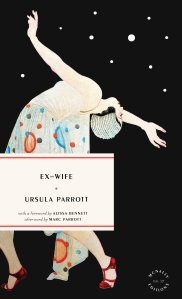
 Ex-Wife by Ursula Parrott ~ 1929. This edition: McNally Editions, 2023. Foreword by Alissa Bennett. Afterword by Marc Parrott. Softcover. 218 pages.
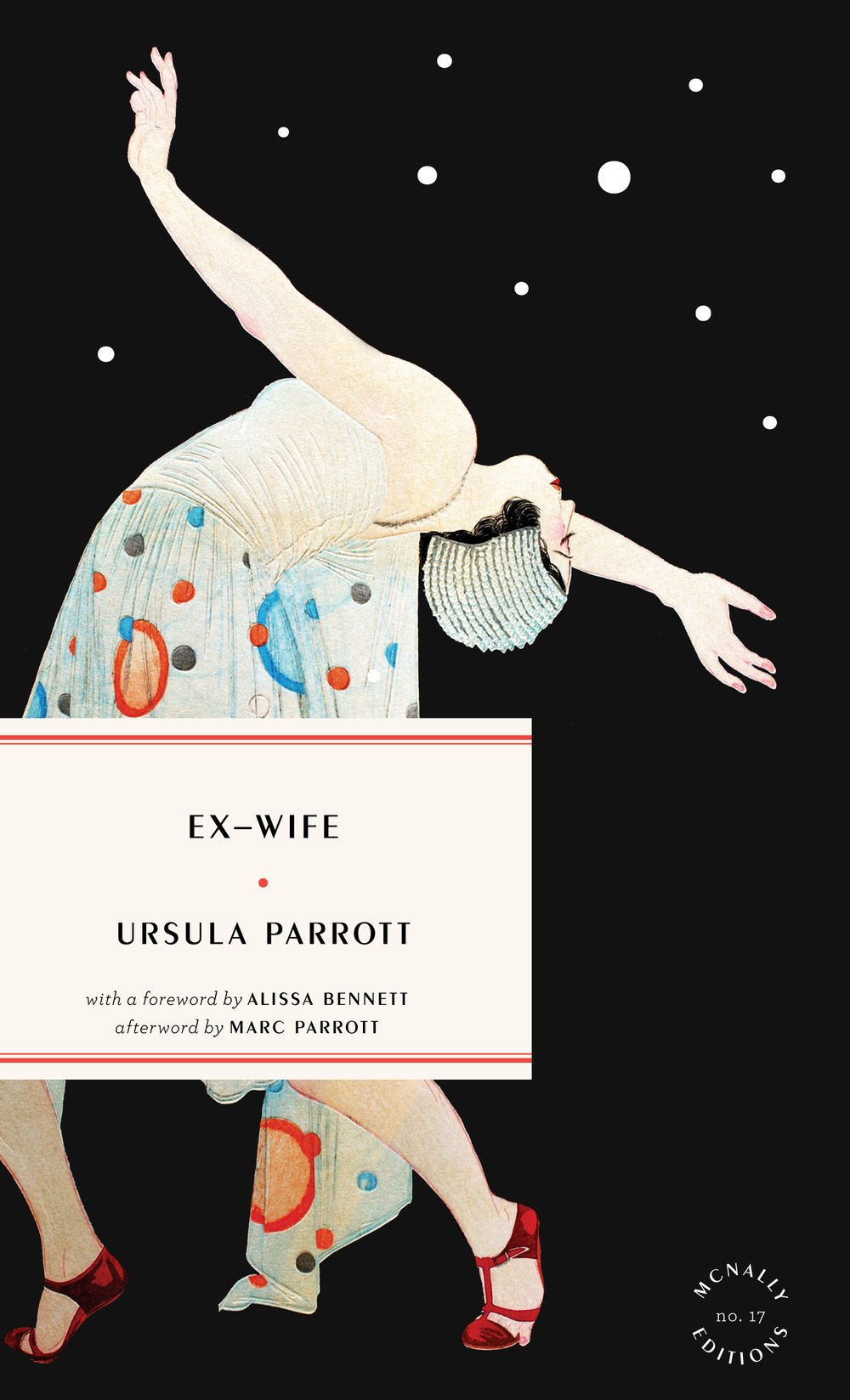
I wish I could recall which of my fellow readers recommended this punchy little autobiographical novel, a bestseller immediately upon its anonymous publication in 1929. Described as “scandalous” and “racy” in its time, it no longer carries the same weight as a “forbidden topic” tell-all, but has become something much more relatable, as the dissolution of marriage has become an unremarked commonplace in our North American culture, with, according to a quick internet search, something like 40% of formalized marital unions ultimately breaking down.
Here’s the flyleaf blurb from the most recent edition of this fascinating snapshot of a certain kind of cultural and personal life in the New York of the 1920s:
It’s 1924, and Peter and Patricia have what looks to be a very modern marriage. Both drink. Both smoke. Both work, Patricia as a head copywriter at a major department store. When it comes to sex with other people, both believe in “the honesty policy.” Until they don’t. Or, at least, until Peter doesn’t—and a shell-shocked, lovesick Patricia finds herself starting out all over again, but this time around as a different kind of single woman: the ex-wife.
An instant bestseller when it was published anonymously in 1929, Ex-Wife captures the speakeasies, night clubs, and parties that defined Jazz Age New York—alongside the morning-after aspirin and calisthenics, the lunch-hour visits to the gym, the girltalk, and the freedoms and anguish of solitude. It also casts a cool eye on the bedrooms and the doctors’ offices where, despite rising hemlines, the men still call the shots. The result is a unique view of what its author Ursula Parrott called “the era of the one-night stand.”
I wouldn’t exactly call this a “revenge novel”, though seen from Patricia’s viewpoint Peter does not come off well at all. He openly sleeps around, is endlessly and cruelly critical of Patricia’s looks or, when the effects of too much work and partying start to show, her lack of them. He quite openly has a casual antipathy to their baby and is both indifferent and, when the child dies, seemingly relieved to be stripped of the burden of fatherhood. When Patricia gets pregnant a second time, Peter turns physically abusive, at one point throwing her through a glass door. Whatever Patricia’s personal flaws might be, Peter’s seem to exponentially trump them.
Patricia makes many poor decisions in the time we get to know her, but the unforeseen awfulness of Peter as a life partner is something that takes all of us by surprise – Patricia included. It was a love match to start with and passion matched passion, but somehow something changed. Patricia indicts Peter thus: “He grew tired of me, hunted about for reasons to justify his weariness; and found them.”
After a drink-fueled one night stand with Peter’s best friend – Peter doesn’t know “who”, just that it happened, as Patricia after much mental turmoil tells him – Peter gets all dramatic about Patricia breaking his trust and destroying his faith in women. He rattles on at great length about her besmirching her freshness and cleanness and innocence. She’s absolutely dirty (in his eyes) for basically doing once what he’s been doing with unapologetically casual abandon all along. Apparently it’s different for her. Patricia pleads her case, Peter scorns her every word. Patricia wants a reconciliation. Peter absolutely doesn’t.
The marriage falls irrevocably apart, though years will pass before a divorce happens, with Peter resurfacing now and then to repeat his cutting critiques and knock Patricia out of whatever equilibrium she has attained.
Patricia, emotionally devastated, looks about for ways to dull her pain and finds them, in casual sexual encounters with many willing partners, in her success at her job, in relishing the material rewards of her work, in dressing well, dining out and dancing and and drinking, drinking, drinking. It doesn’t seem enough, though, and ultimately it isn’t.
Does this all sound too dreary for words? Initially I thought it might be, but I very soon became absolutely enthralled by Patricia’s navigation of her unwanted situation. While staying very aware that most of her issues were, at least partly, self-imposed, I soon found myself truly liking her. Her voice is by turns sad, angry, self-loathing, and absolutely cynical, but it’s also exceedingly self-aware, and genuinely humorous, as she muses on the inexplicable realities of being an unwilling “ex-wife” and everything that goes along with that designation.
Trigger warnings: This book contains frank (but not overly explicit) depictions of abortion, rape, and physical and mental abuse. It’s pretty tame stuff in comparison to what a lot of current bestsellers casually contain, but it was outspoken for its time. I felt that Parrott pulled off the tricky task of describing these experiences without crossing the line into needless titillation.
My rating: 9.5/10. The half point is deducted because the ending felt a bit uneven to me; I wanted a different resolution, though I’m not sure what that could have looked like.
An absolutely engaging story, and the characters came to life for me, sketched out and enlarged upon by a very competent writer.
The internet is abundant with elaborations on “the life she really lived”, though you might want to read Ex-Wife yourself before you drop down that particular rabbit-hole.
The afterword by Ursula Parrott’s son Marc is a bonus of the McNally edition. In real life the baby did not die, as the fictionalized child does. That said, the real-life tale of Parrot’s mothering is not exactly admirable. Marc pragmatically relates some aspects of his mother’s life and character with carefully balanced assessment, and appears to hold no grudges.






 Leaves & Pages