Archive for the ‘My World’ Category

Never Shoot a Stampede Queen: A Rookie Reporter in the Cariboo by Mark Leiren-Young ~ 2008. This edition: Heritage House, 2008. Softcover. 221 pages. ISBN: 978-1-894974-52-3

After a recent reading of Josie Teed’s British Columbiana, I found myself  scanning the shelves for something in the same genre. I was really looking for Will Ferguson’s I Was a Teenage Katima-Victim, but as it proved elusive,  I was pleased to find instead Mark Leiren-Young’s humour-infused collection of anecdotes from his year as a reporter for the Williams Lake Tribune.
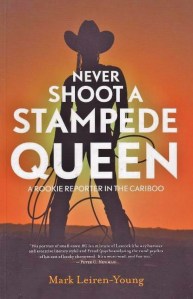
I grew up rural, in the central Cariboo-Chilcotin region of British Columbia, and Williams Lake was “town”, location of schools, shops, restaurants, public library and movie theatre, not to mention an impressive array of both churches and drinking establishments.

By the time Leiren-Young pulled into town for his newspaper gig in 1985, I had finished with high school, found true love, and relocated to places even more rural, so our paths did not cross, but it was enjoyable to time travel back with him to a place I once knew very well indeed.

Leiren-Young jotted down these memories in 1988, and polished them up enough to send out to friends and family as a holiday gift in December of that year. He resurrected and edited his collection of “true-life tall tales” in 2008, and this book was the result. Never Shoot a Stampede Queen was an immediate success, and, after spending months on the B.C. Bestsellers List, was awarded the 2009 Stephen Leacock Medal for Humour.

Here’s the publisher’s back cover blurb:

The cops wanted to shoot me, my bosses thought I was a Bolshevik, and a local lawyer warned me that some people I was writing about might try to test the strength of my skull with a steel pipe. What more could any young reporter hope for from his first real job?

The night Mark Leiren-Young drove into Williams Lake, British Columbia, in 1985 to work as a reporter for the venerable Williams Lake Tribune, he arrived on the scene of an armed robbery. And that was before things got weird. For a 22-year-old from Vancouver, a stint in the legendary Cariboo town was a trip to another world and another era. From the explosive opening, where Mark finds himself in a courtroom just a few feet away from a defendant with a bomb strapped to his chest, to the case of a plane that crashed without its pilot on board, Never Shoot a Stampede Queen is an unforgettable comic memoir of a city boy learning about—and learning to love—life in a cowboy town.

So, here’s the burning question. Did Leiren-Young get Williams Lake “right”?

In my opinion, that would be a quite solid “yes”, allowing for a certain amount of creative re-telling. The cliché of truth being stranger than fiction certainly applies here, and it is my belief that while enhancing some aspects of Cariboo-Chilcotin life for their laughability, he probably toned things down here and there in the interests of believability.

Leiren-Young states early on that his years of experience as a freelancing journalist, starting in his university days, polished his writing speed and economical-yet-engaging style to a high degree, and this quick read does hit all the buttons.

This collection of related stories starts with Leiren-Young’s hit-the-ground-running initiation into his new job in the “Crime Capital of B.C.”, as Williams Lake was at the time, and had been for some years past, by stopping for fuel and directions at a just-been-robbed gas station, police still in attendance. Leiren-Young scents a story unfolding, and hangs around and gets all the details from the cashier, with the bonus of earning himself the negative attention of the local R.C.M.P. detachment.

As junior reporter, Leiren-Young gets landed with all of the jobs no one else is keen on, but as the weeks go by, he finds himself increasingly immersed in local culture, and writing about some truly newsworthy topics, ranging from the farcically comedic to the very real-and-tragic.

It’s hard to truly do credit to a book written about a place and time one is personally familiar with, and I had to sit back and think hard about my response to Stampede Queen. As with Josie Teed’s British Columbiana, it was easy to identify a lot of the characters, and speculate about who the composites were based on, and it is always edifying to see places one knows in real life through another set of eyes. A major difference here was that though Leiren-Young doesn’t gloss things over, he was by and large quite kind to his co-workers and small town acquaintances in these tales, which isn’t always the case with Teed’s memoir.

Leiren-Young is also a more accomplished writer than Teed, but, to be fair, this account was not sent out into the world fresh from the young writer’s hand, but was allowed to mellow and mature and benefit from a re-working which undoubtedly accounts for its tightness and polish.

My rating: an overall approving 8/10.

A full point was lost by the presence of the raccoon on page 177, a brief reference which knocked Leiren-Young back a notch in my esteem, as it calls into question aspects of verisimilitude. (There were no raccoons in the Cariboo in 1985, though we do hear now, in the 2020s, that they are working their way up from the Coast as our winters warm.)

Another point taken away by what might be slightly excessive virtue-signalling. Leiren-Young comes across as mildly smug and morally superior on occasion, rolling his eyes at some of the un-woke folk north of Hope. (B.C. insider joke, referring to the vast under-populated regions outside of the Lower Mainland.) I get it, and I forgive the writer his understandable bias, but it was possibly a bit too underlined and bolded (figuratively speaking) here and there.

If you wish to explore further, the multi-talented Mark Leiren-Young has an active online presence, and reviews of Never Shoot a Stampede Queen are easy to find. The book is still very much in print, and readily available throughout B.C., and presumably points east as well.

Bonus links:
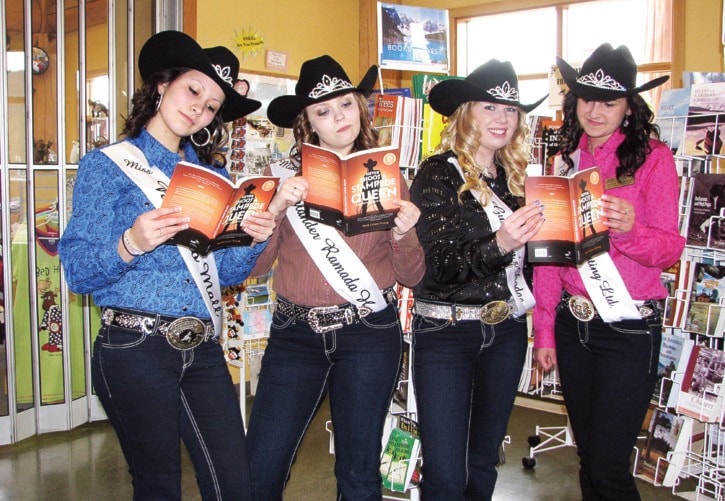
Williams Lake Stampede Queen Contestants, 2012. Photo by Gaeil Farrar, Williams Lake Tribune.


Read Full Post »

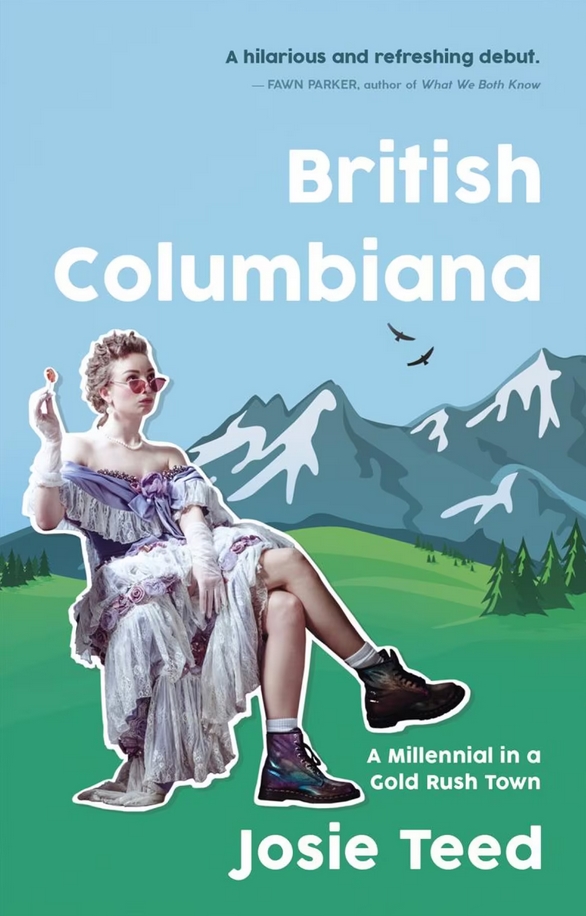
British Columbiana: A Millennial in a Gold Rush Town by Josie Teed ~ 2023. This edition: Dundurn Press, 2023. Softcover. 253 pages. ISBN: 9781459750210

Josie Teed has been sitting on my desk for the past week, giving me the suspicious side-eye while others line up behind her. Josie doesn’t really care what I think, but yeah, wait a minute, she kinda does, and I’ll bet she’s wondering who the heck am I to have the nerve to critique her, all boring old boomer versus woke and anxious millennial.

British Columbiana is causing me no end of angst as I write, erase and rewrite its review. I feel like I have a lot to unpack about what Josie Teed’s Edna Staebler Award nominated creative non-fiction had to say, but as the days roll by, I find myself still struggling with this one, so I’ll just get this thing posted and move on.

Here’s the blurb from the Wilfred Laurier University write-up on the award nominees:

In her first published work, Josie Teed represents her generation’s aspirations and anxieties. What should one do with one’s life? Are feelings trustworthy? Are people genuine? Does this go with that? What does my therapist think? With a sharp comic eye, Teed chronicles her own coming-of-age during a year spent working in the heritage village of Barkerville, deep in the BC interior, dramatizing daily life in a 19th century gold rush town. But the real drama arises from the cast of eccentric Gen-Xers and cliquey Gen-Zedders who spend the summer bringing Barkerville’s past to life while pursuing—much to Teed’s consternation—their own generational predilections. From Boomers to Zedders, Teed’s narrative will engage, bemuse, and amuse readers in equal parts.

Josie Teed, a twenty-four-year-old university grad, freshly delivered of her master’s thesis in medieval archeology, finds a winter gig as an archival intern in Barkerville, British Columbia’s largest “living history” heritage site, situated in a very rural area in British Columbia’s central interior Cariboo region, an hour’s drive by twisting two-lane highway from the small city of Quesnel.

Teed finds shared accommodation in Barkerville’s tiny next-door service community of Wells, permanent population 250-ish, and settles in to her new digs and new job with a mixture of optimism and trepidation. Will this be where she finds some useful resume-padding, insight into next steps after school, a place to find community, and maybe even a yearned-for chance for love?

By the end of what turns into a year-long sojourn, with the internship morphing into a summer position as a costumed reenactor mingling with tourists in the kitchen of a historical home and in the one-room schoolhouse, Josie Teed has had the opportunity to get down deep with exploring all of these goals, and I’ll skip right to the end and tell you know that she mostly finds out what she doesn’t want to do, which is hang around in Wells.

I’m all up for delving into an interesting memoir, and this one had the added attraction of coming from a fresh young voice, sharing a spanking new impression of a community I am rather well acquainted with. Just a few pages in, I found myself taken aback to find that Teed pulled no punches in her snap character assessments regarding her new Barkerville-Wells co-workers and acquaintances, and that some of them were immediately identifiable. I said to myself, “No way! She can’t be going there!”, and I scanned the front pages of the book for the usual disclaimer about the characters not being actual people, but it was nowhere to  be found.

Settling down to get a Josie’s-eye view of this corner of the world, another thing became very evident: it wasn’t about the place, or even the other people. It was all about Teed’s vision of herself, and her every reaction to each new person and experience, and all her various “feels” laid out for self examination.

A fellow reader of British Columbiana who I discussed this with rather sharply dismissed the whole thing as “over-the-top Millennial navel-gazing”, and I have to say they weren’t really wrong. But there were more than a few golden nuggets to be mined from amongst the pebbles of this particular literary stream-bed, certainly enough to keep me engaged and increasingly invested in figuring why some things about Teed annoyed me so much, and, paradoxically, how much I felt empathy with her intense and ongoing inner struggles with insecurity and social anxiety.

Upon finishing the last page, I headed straight to Google to find other insights on Josie Teed. I was immediately rewarded by finding this book review by Forrest Pass in The British Columbia Review, and what he had to say aligned so well with my own impression that I will refer the interested reader to him.

I wanted to love this book, and went into it with high hopes, as I personally have a long and mostly happy relationship with both Barkerville and Wells, and some of the people who live and work there. British Columbiana wasn’t what I had initially expected it to be, which was a more “place-based” sort of memoir, but it did turn out to be mildly compelling in a much different way.

British Columbiana almost went onto the giveaway pile after I finished it, but then I had a rethink. First novels – especially those self-described as “memoirs” – are notoriously about unpacking personal angst and getting in digs at the people who don’t really get you, so I’ll extend some grace to Teed, and I will be keeping an eye out for her next literary effort.

My rating: 6/10


Read Full Post »

Happy New Year!

Greetings, fellow readers, wherever you may be.

I break a too-long silence to send you best wishes for the year to come, and much pleasure in the books you’ll experience in 2025.

Though I have not been posting in far too long, I still try to keep up with everyone by reading your posts, and following up on your book recommendations. I appreciate each and every one of you, and I cherish being part of this community, with all of its varied voices.

Wishing you everything good in the new year, and much happy reading!

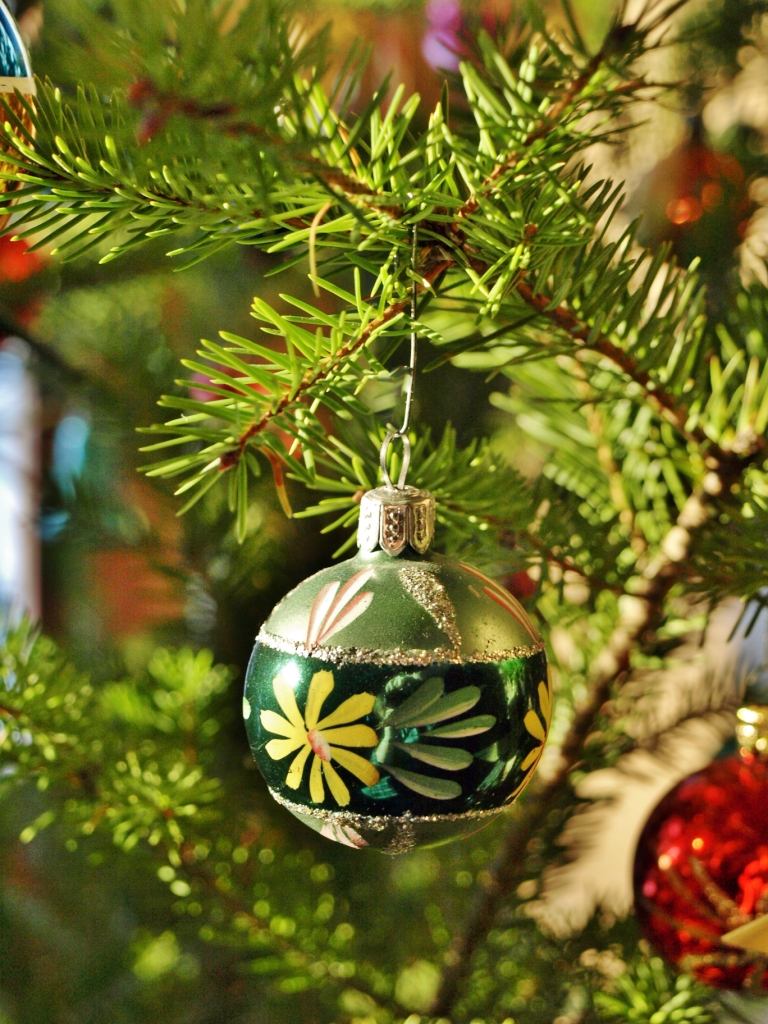
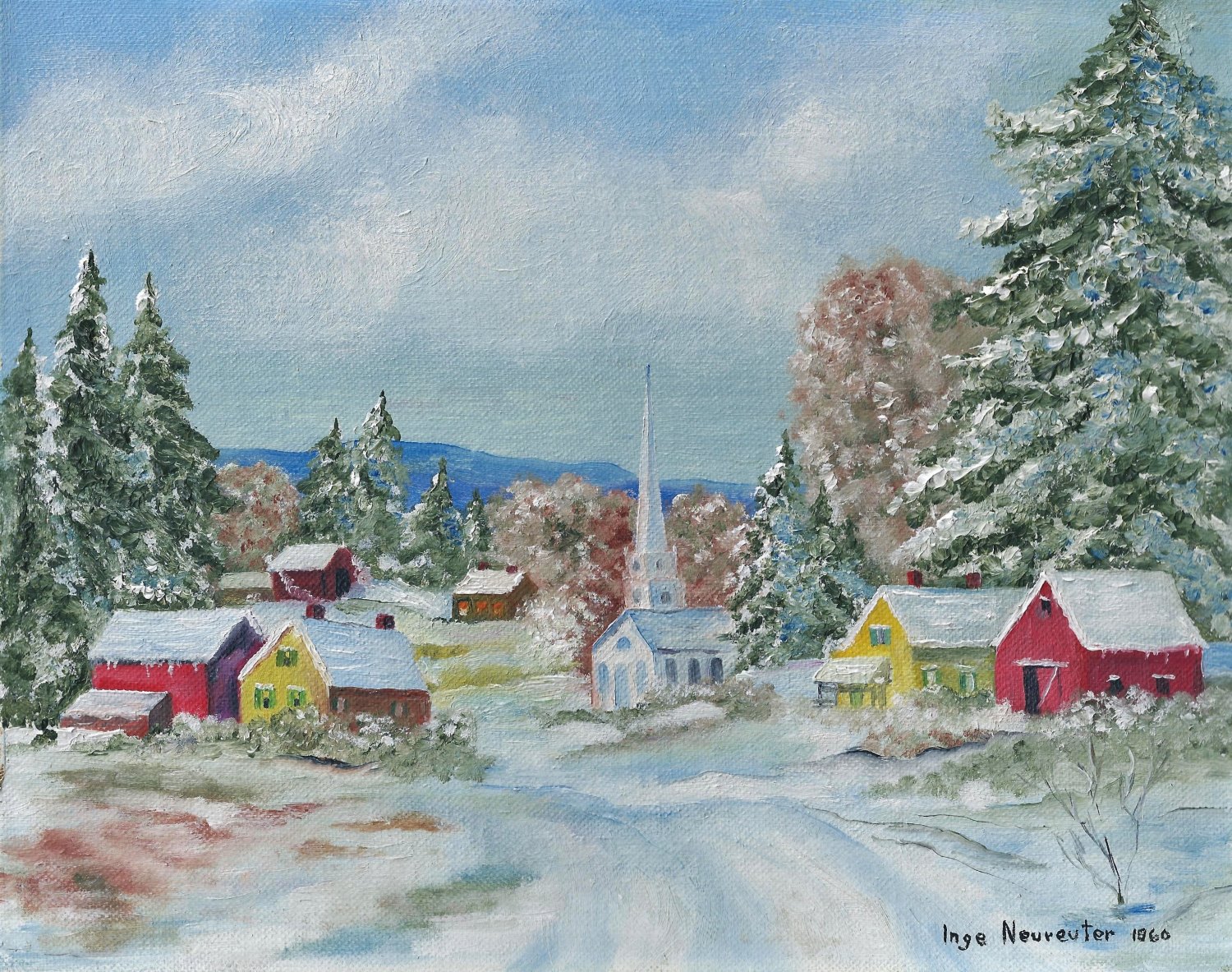
A seasonal picture bringing back many fond memories; this was on my mother’s bedroom wall for over 50 years; a gift from an artistic friend, to remind her of their shared girlhood days in Buffalo, New York.

Read Full Post »

It’s been quite some time since I’ve been active here, and I sure have missed you guys. Life got a little bit strange for me about eighteen months ago, and it’s taken me till now to get up the gumption to get a post out.

I have a long saga regarding these missing months, but I think I’ll condense it to the basics. I’ll probably be sharing more in the future, but this shall suffice for now.

I have joined The Club That Nobody Wants to Be In.

Yup. The big C. And yeah, it’s been hard. But we soldier on, as one does. There sure are a lot of us dealing with this stuff. It’s not as exclusive a club as one would wish it to be, but on the plus side, the support I’ve been finding from friends and strangers alike has been beyond positive. Adversity does indeed bring us together. All the cliches are true.

My particular situation was a double whammy. First, malignant melanoma – “This is the one that can kill you”, as the diagnosing doctor soberly said – and then, as a totally unexpected bad bonus, the discovery of a rather large brain tumour. That one came as an utter shock, though in retrospect the symptoms were certainly there, and had been worsening for some years, though I had never even contemplated “brain tumour” as a reason for my worsening eyesight and hearing, and some increasingly strange strength and mobility glitches.

In the past year I have had three unpleasant surgeries, including a craniotomy to attempt brain tumour removal, and several facial surgeries for removal of the skin cancer, and subsequent facial reconstruction from my right eye all the way to the corner of my mouth. (I had a marvelous plastic surgeon – I look good – better than any of us expected.) I also have had six intense weeks of radiation therapy to the tumour site at the back of my brain, my “lifetime dose”, which, if I’m one of the fortunate ones, should knock back regrowth of my cranial interloper, at least for some years. It will continue to be a journey.

I feel okay. Not great, but definitely okay. I will likely never feel really great in the “before” sense – brain surgery and then radiation is a pretty big deal and one sure feels it – but I am still standing. Still walking, albeit with a walking stick some days, still talking as coherently as I ever did, albeit with some speech lags when I get too tired, still enjoying cognitive capabilities pretty well what they were pre-surgery, and – big hurrah! – I can still see. I’ve lost about a quarter of my visual range, but things as of my last ophthalmology assessment show no significant changes, so I’m good with that.

I can still read, and books have played a crucial part in keeping me comforted and dare I say “grounded” during these surreal times.

So here’s to the brand new year, and the books we’ll all read in it, and the companionship of others and all of the good things that go along with that.

I have no idea how often I’ll be posting. Everything seems possible this first week of January. I see my friend Simon is once again tackling ACOB – A Century of Books – and I am mulling over joining him. I’ve completed this ambitious project once before, and partially completed two others, and it is a lot of fun.

For the past year and a half it’s been old favourites and “comfort reads” all the way. Nothing too dramatic, or edgy, or tragic. Real life has provided all of those elements, and books have been, and will continue to be, a respite from that.

I do hope to get a handle on my tendency to just ramble on and on once I do get settled at the keyboard. That’s a worthy challenge all by itself. I might set myself a word limit on future book posts, to force brevity. We shall see.

Cheers, book friends! You are all bright stars in sometimes-dark skies. Thank you for the companionship, and for sharing your words, and may this happily continue in 2024 and beyond.

Barb

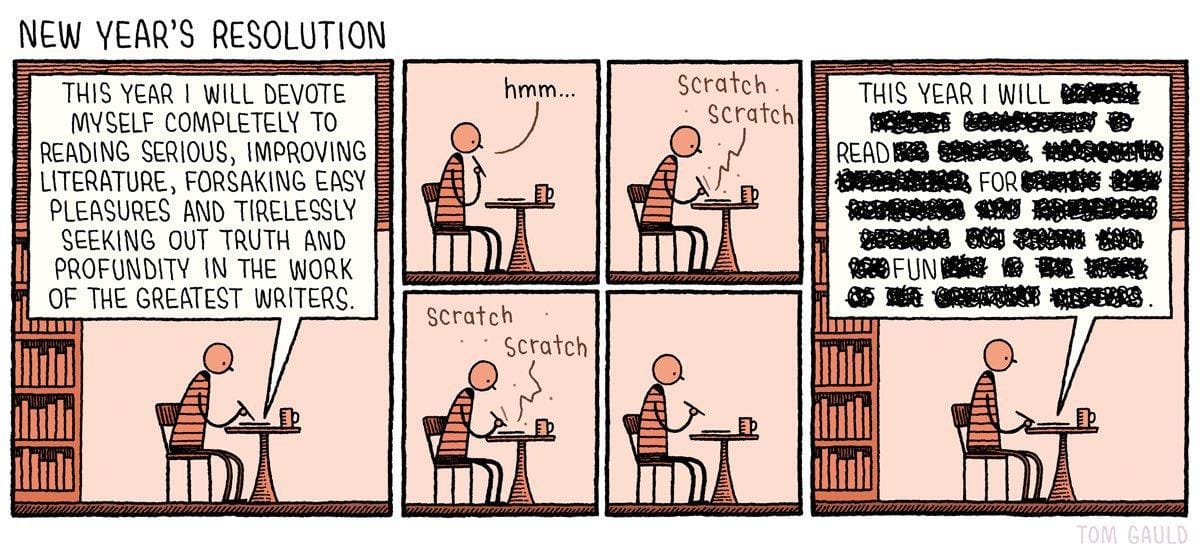
(Credit for the comic goes to Tom Gauld.)

Read Full Post »

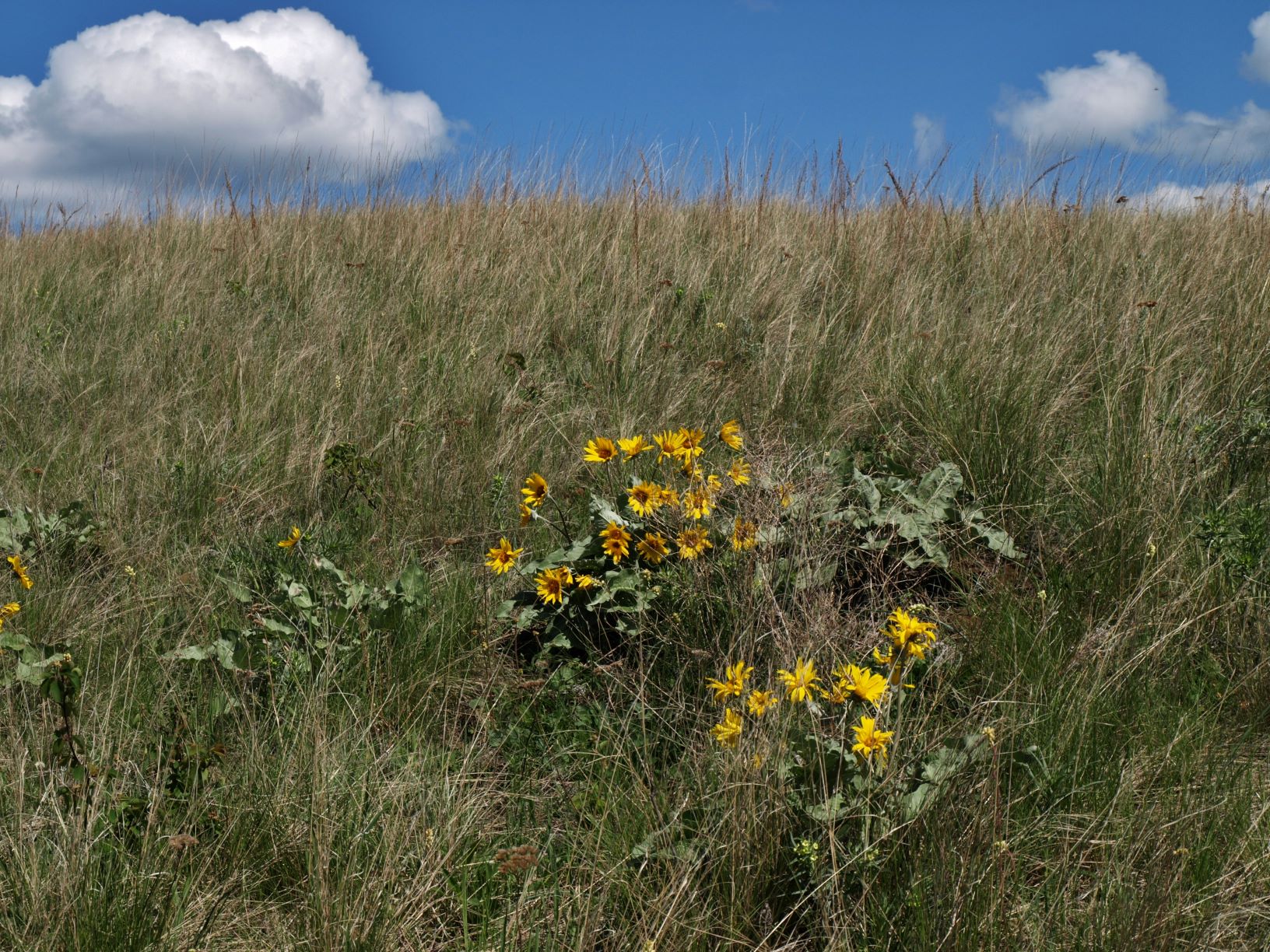
Arrowleaf Balsamroot blooming on a Chilcotin hillside, near Riske Creek, B.C., May 23, 2020

Hello my fellow readers.

This morning I fell for “click bait” while checking the CBC (Canadian Broadcasting Company) news, as I do first thing every morning when I fire the computer up for our connection with the rest of the world.

Here’s what I fell for: Think Books Make You Smart? Think Again.

And it’s not what you might think from that teasing title. It’s a brief synopsis of an hour-long ‘Ideas’ segment, and it’s an absolute delight.

For example:

Fran Liebowitz: I didn’t see myself in books when I was child, but it didn’t occur to me that you were supposed to. And I hate to say this because I know she’s the most beloved person on the planet Earth. But truthfully, Oprah Winfrey taught people to read this way. The great thing about Oprah Winfrey with her reading was that she got thousands and thousands and thousands of Americans to read books who never read a book before. She made it important to lots of people to whom it was never important. That’s very good.

But the way in which she read or talked about books is, I think, a very bad way. I would never think when reading [Herman] Melville to look for Fran, it would not occur to me. I’m pretty sure Fran’s not in there. And that wouldn’t be why I would read it.

And:

John Carey: An argument for reading…is not that it’s superior to other arts, but is different in that it deals in language ⁠— language without pictures encourages you to use your imagination. Language on the page is just a series of marks, ink marks. And yet what you have to do and what you do without thinking when you read a novel is transport yourself imaginatively to another place.

You imagine what the characters are like, what they looked like. And you can test the fact that you do that by when you watch a film made based on a book you’ve read. You think, at least I think, they got it all wrong. That’s not the way that I imagined the characters.

The fact that reading stimulates the imagination seems to me very important — stimulates the imagination in a way which visual art does not. Visual art belongs to a much older part of the brain, of course, than language, which is quite a recent part of the brain. And visual art is enormously powerful. The temptation just to sort of watch pictures and not read is very strong. 

So, yeah, I think imagination — trying to find a way into someone else’s situation, imagining it, imagining how their motives work. That, I think is something that the novel in particular since the 19th century, has cultivated. 

If you have an hour free – and I suspect that you might, in this pandemic limbo time – give the linked radio program a listen. You will find much to provoke thought, and it will make you, as a reader, smile and nod.

Happy Sunday. Enjoy!

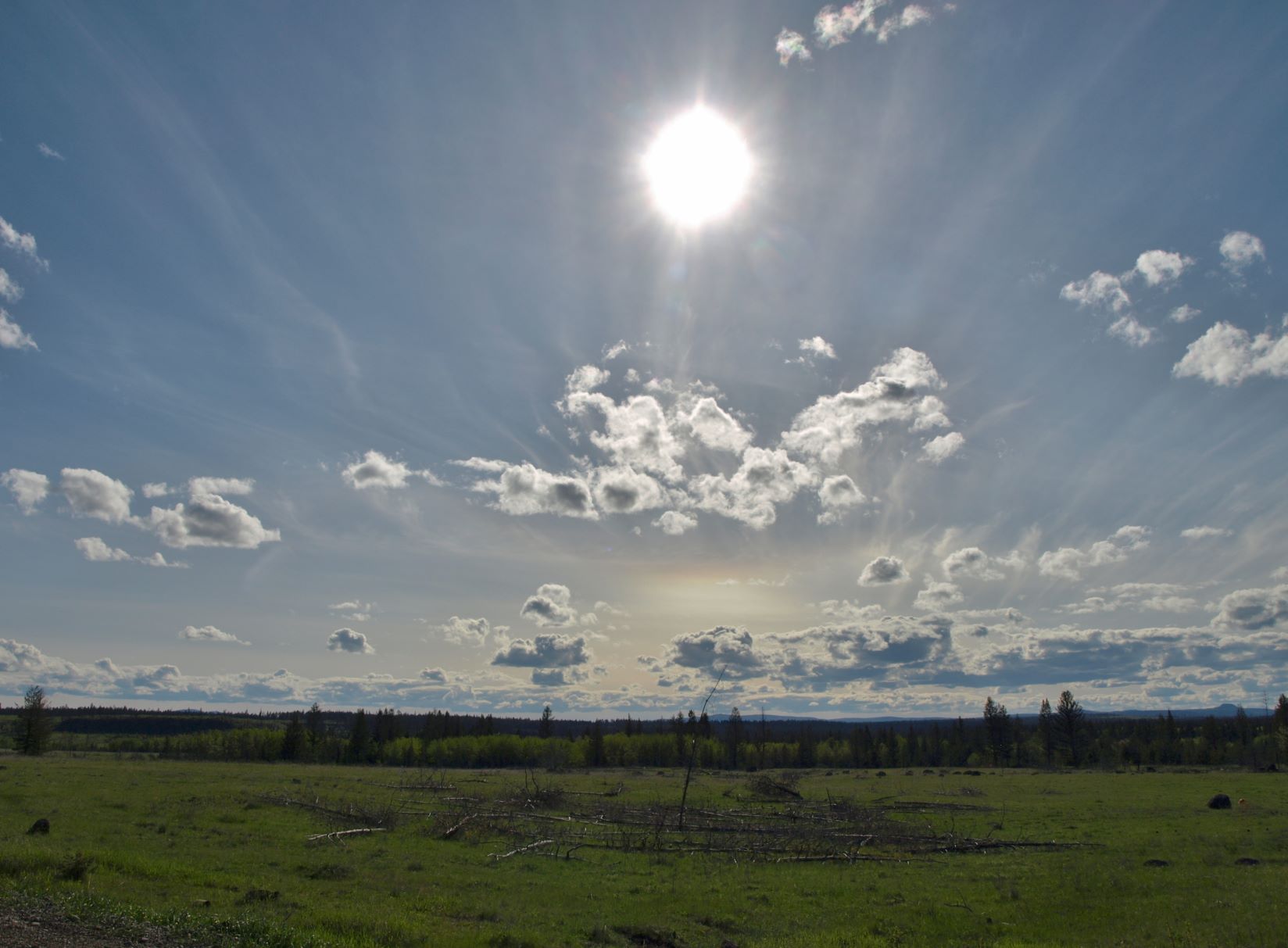
Hazy sun and sundog over the Chilcotin Plateau, near Riske Creek, B.C., May 23, 2020


Read Full Post »

Looking forward to 2020!

Seasonal greetings to those bookish friends who, despite my long blogging hiatus, still appear to be checking in to this sadly inactive site. (WordPress kindly updates me with viewing statistics, and people are always stopping by for a browse. Lovely to see, and I thank you all and hope you are finding things of interest.)

Well, another year has rolled on past, and with astonishing speed. It’s all a bit of a blur. We are all well and happy here. Ridiculously busy, all self inflicted, but it beats being bored, so no complaints.

I am hoping to be back on deck with some book posts this coming year, as I truly miss my interactions with all of you. I do receive a number of other people’s posts via email, so am not completely out of the loop, though my involvement has been very lurker-ish versus participatory. But one has high hopes for the near future…

Here comes 2020 – already! – and of course we are all making jokes about forward vision and the like. I personally am all set to roll forward, and my own vision is experiencing something of a renewal, as I recently splurged on a pair of prescription reading glasses, and have found them to be absolutely wonderful. What took me so long to do this???! Silly, silly me.

I am desperately short-sighted and have worn glasses from an early age, and for most of my life have managed to function quite nicely, but as my sixth decade trundles on I’ve found it harder and harder to read fine print on yellowing pages, which of course applies to a whole lot of my target literature. Well, with these new glasses, the words are jumping off the pages once again, opening up all sorts of possibilities in the way of reading material I had reluctantly been setting aside as “too hard to read” in a purely practical sense.

The only problem is that I now have TWO sets of specs to keep track of, but since my everyday glasses are more than adequate for everything else I do, I’ve been able to develop a new habit of keeping the readers with the current book. So far, so good. I find I am reading much more comfortably, no more squinting or stretching my arms way out to try to find the perfect distance for deciphering print. It has, in fact, been life changing, in a very good way. I highly recommend this! If you have been mulling over a similar decision, I would say “Do it!” Worth every penny.

I will close with warm wishes to you all for an optimistic turn-of-the-decade. Here’s hoping for good things to come, and a continued companionship of shared interests. Happy New Year to come!

Read Full Post »

Hi everyone. Remember me?!

Such a long blog hiatus I am having. Not intentional, I assure you. I write posts in my head quite frequently, usually while I’m driving or standing in my greenhouse potting up seedlings, far from a keyboard.

Life is super-extra-stupidly busy for me at present, mostly in a good way, though I am definitely missing having reading-writing time. Not to worry (she says optimistically) – things will eventually settle down.

I’m not reading at anything like my preferred rate at present, but a few books have been niggling away, demanding mention. Which is all they shall get here at present – a bare bones mention, so like-minded readers can perhaps do a bit of follow-up on their own.

At the Top of the Mule Track by Carola Matthews, 1971. In the late 1960s, British teacher and writer Carola Matthews was spending half her year in England with her parents, and half her year in Greece, mostly on a remote island. This book is not a travelogue (as I had assumed it to be when I picked it up a few weeks ago at a used book store in 100 Mile House, B.C.) but rather a personal memoir incorporating philosophy, societal observation and self examination in roughly equal proportions. I enjoyed it immensely. The author’s tone is frequently wry and mostly unemotional, but it works so well in her context, which is looking around at her Greek neighbours, and back on her own life-so-far and in particular at her struggles with completing her previous book, The Mad Pomegranate Tree (“An Image of Modern Greece”), published in 1968 to some acclaim.

Oops! Look at the time! I had hoped to include a few more titles, but that shall have to wait till later. I need to fly out the door shortly, so will leave it at just the one. For now.

Cheers! Hope you are all having a good spring wherever you are.


Read Full Post »

Hey there!

Yup, I’m still alive and reasonably well.

All of December and about a third of January seem to have rolled on by without me present in this particular venue, and I guess all I can say is, “Whew! Life!”

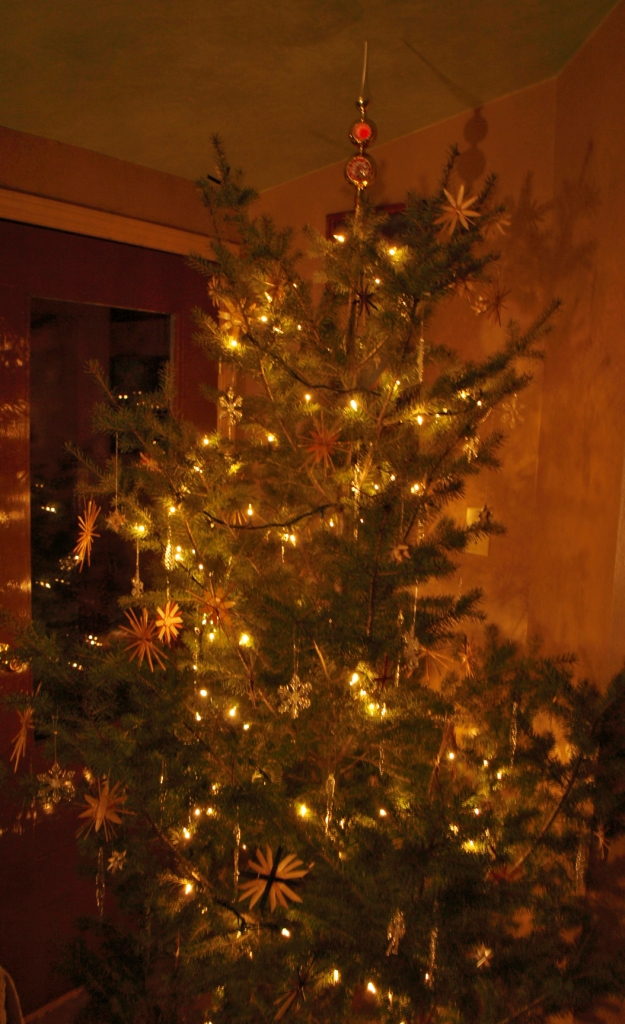
An utter avalanche of kind-of-unplanned-for paperwork landed in my lap that last week in November, and then I got sick with a virulent virus (I’m much better now), and just Plain Old Stuff kept cropping up. Christmas whooshed past. We got the tree up on December 24th (and it’s still up though not for much longer as it is starting to drop needles and become a fire hazard over there in the corner of the living room), but we didn’t actually have our family Christmas dinner till January 6, because my daughter-living-at-home was also ill, my husband worked through the holidays, and we told our living-elsewhere son to stay far away from the House of Plague until we weren’t quite so collectively contagious. So now I’m feeling more human, and things are starting to get under a bit of control, and I yearn to return to the blog. Which I shall do properly soonish, I hope.

In the meantime, I’ve been reading mostly old favourites. Pretty well every single D.E. Stevenson I own, plus the whole Megan Whalen Turner Eddis-Attolia quintet-so-far (the sixth and last book is due out in March – sob! – can’t believe it will be over), plus various other old friends. R.A. MacAvoy, Rumer Godden, Margery Sharp, some literary garden writers. This and that, mostly easy reading. Nothing too demanding.

I did read a new-to-me book, a reissue of the 1962 novel Four Days by John Buell (thank you for that, Brian Busby), and it was an intense little experience pushing the #10 end of the rating. I will write about it in the very near future.

Also Colin Thubron’s 1987 travelling-in-China book, Behind the Wall, which was absolutely excellent.

Great experiences with two writers I suspect I am in no way done with.

I sometimes wonder if I’m running out of writers to discover, and then another obscure door opens and off I wander into another dusty corridor lined with shelves full of delectable things by people I’d not yet heard of. And thank goodness for that! I will never run out of things to read, will I?

Here’s hoping you all have had a marvelous holiday season, and that 2019 is good to you!


Read Full Post »

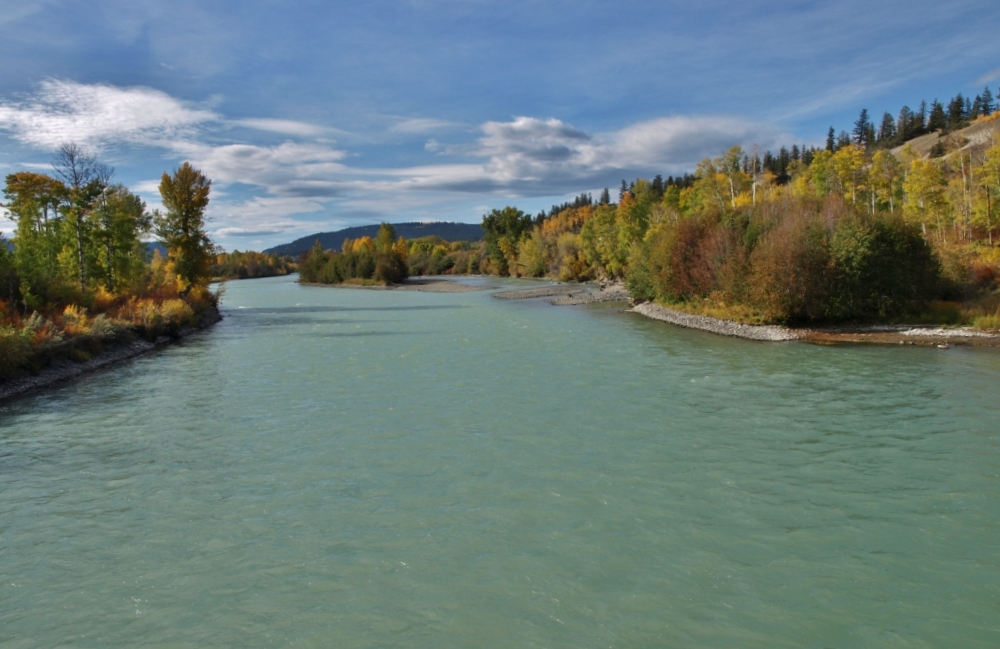
We were out visiting yesterday, and we stopped on the one-lane country bridge at Alexis Creek, B.C. to look down at the turquoise blue water of the rushing Chilcotin River. We do live in a lovely part of the world!

September 26, 2018 ~ Chilcotin River at Alexis Creek, B.C.

Read Full Post »

Hello, hello!

Can this be true?! My last post was on May 29th?

Oh, dear. How did that happen?

Life has been exceedingly busy, mostly in positive ways with a dash of challenge thrown in to keep me humble. In stolen moments here and there I’ve been reading some lovely things, and I really must write about them.

Soon.

But not tonight.

And probably not tomorrow night, either. Maybe on Sunday. So far that day is looking free. Tomorrow (Thursday) I need to be in town all day, ditto Friday, and Saturday is my niece’s wedding, so no prizes for guessing that nothing will happen blog-wise till I find myself at home and alone, or as alone as one can be with four others drifting in and out at unpredictable hours.

The pattern of my year to date, this has been. I do enjoy my solitude as a rule, but circumstances are working against me in this area of my life at present, so I’m having to adapt.

I did run away for five days last week, with the farm truck and camper, to attend a print-making workshop with Hans-Christian Behm at Island Mountain Arts in Wells, and what an astoundingly rewarding time that was. It brought home to me so very sharply how deeply satisfying it is to be amongst artists, with the conversations that ensue once everyone has settled into their groove, and the validation that those conversations give.

During the four evenings I was away, I ducked out of the many invitaions offered up to me of dinners and various other diversions after hours, and instead retreated to my house-on-wheels and made myself the simplest of meals, after which I read and read and read. Heaven.

I didn’t read anything overwhelmingly new-to-me and exciting, mostly some of the more sedate O. Douglas novels (Pink Sugar, Eliza for Common), and a disappointingly bland Ngaio Marsh I hadn’t read before – Hand in Glove – and a slightly obscure (and probably deservedly so) Rumer Godden – The Lady and the Unicorn. Also E.F. Benson’s very first novel, Dodo, 1893, which was a far, far different thing than the gloriously daft Lucia sequence of the 1920s and 30s. I then returned to Anna Buchan, with her autobiographical Unforgettable, Unforgotten, which is absolutely stellar and a must-read for any O. Douglas lover, as the originals of many of the characters and scenarios depicted in her books are described as they were in their first form.

Now I’m delving into Beverley Nichols, following him happily Down the Garden Path, and with that I will leave you for tonight, to read about a long-ago English garden, and perchance to dream about my somewhat neglected modern Canadian counterpart.

I do hope everyone is having a lovely summer! Wishing you all green thoughts in a green shade, which reference I am guessing many of you will “get”, and for those who don’t, the clues are Marvell and Perenyi.

Good-night, all!


Read Full Post »

Older Posts »