Archive for the ‘Century of Books – 2017’ Category

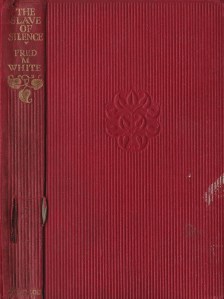
the-slave-of-silence-fred-m-whiteThe Slave of Silence by Fred M. White ~ 1906. This edition: Ward, Lock & Co. Hardcover. 252 pages.

My rating: 3/10

I regret to say that this highly improbable romantic melodrama was, despite its non-stop action, one of the most deeply boring things I’ve come across in recent years. Suitable for shelf adornment, perhaps, but not for actual reading. Just goes to show that some antique books are irredeemably blah, much as we are willing to reconcile old-fashioned, era-expected styling with contemporary interest level.

A beautiful young woman is forced into an appalling marriage with a wealthy scoundrel in order to save her father from disgrace (he’s been speculating financially with other people’s money and has come a major cropper) and the vows are just pronounced when the wedding is interrupted by the announcement that Dear Dad has been found dead.

Is she really married? Or not? It was all a blur – the shock, you know…

And when the paternal body disappears before a postmortem can be performed, things become very convoluted indeed.

Enter a crippled criminal mastermind in a wheelchair, a mysterious Lady in Grey (the Slave of Silence herself, that would be), a couple of interchangeable Scotland Yard/Senior Army Officer investigative chaps, the true lover of our confused heroine wandering about in various disguises, doors conveniently left open while key plot points are being discussed by the bad guys…you name it, this one has it.

I’ll save you reading it. The most villainous of the multiple villains all end up tidily (or messily, in at least one case) dead, and true love prevails.

A disappointing book by a potentially interesting writer, and despite my “Run away!” recommendation for this particular work, I think I may someday look a little further into Fred M. White.

Old-style sci-fi “Doom of London” disaster novels ring any bells? Our Fred was the writer of those, and I must admit my curiosity is piqued. Couldn’t be worse than this one, right? Right?!

Read Full Post »

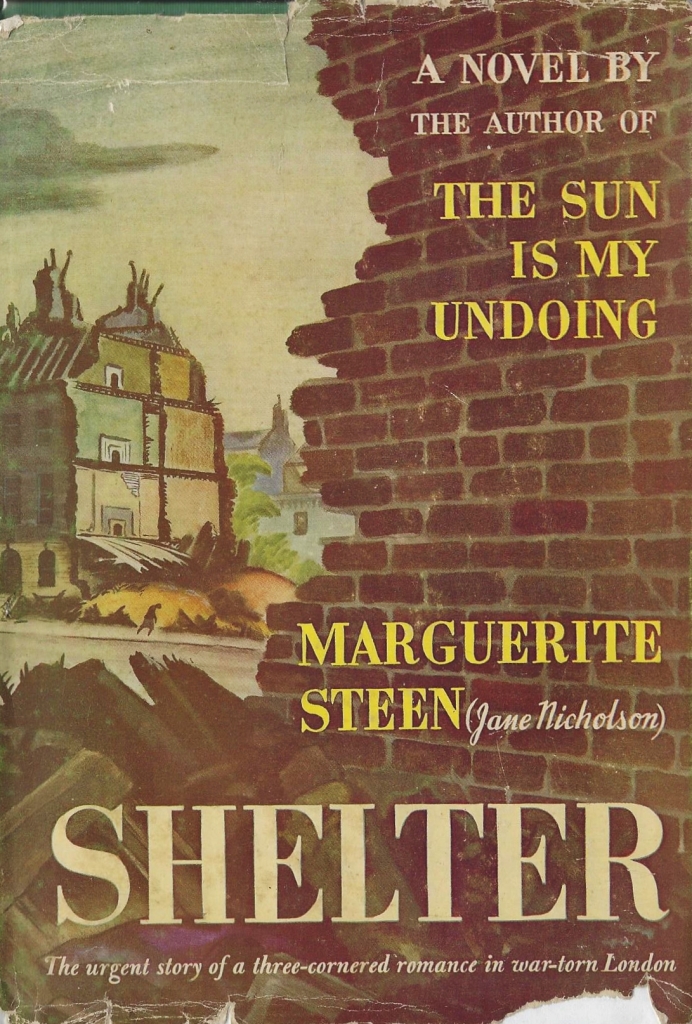
shelter-marguerite-steen-1941Shelter by Marguerite Steen ~ 1941. This edition: Sun Dial Press, 1942. Originally published under the pseudonym Jane Nicholson. Hardcover. 241 pages.

My rating: 6.5/10

I followed my reading of Frances Faviell’s superb London Blitz memoir, A Chelsea Concerto, with this rather unusually structured novel covering the exact same time period, in the same London borough.

It’s an interesting novel, and certainly not a bad novel, but I rather wonder what I would have made of it if it hadn’t been so much related to the Faviell memoir in setting and time period. The writing itself is much more than competent; I would go so far as to call it “fine”, in the highest-praise sense of the term.

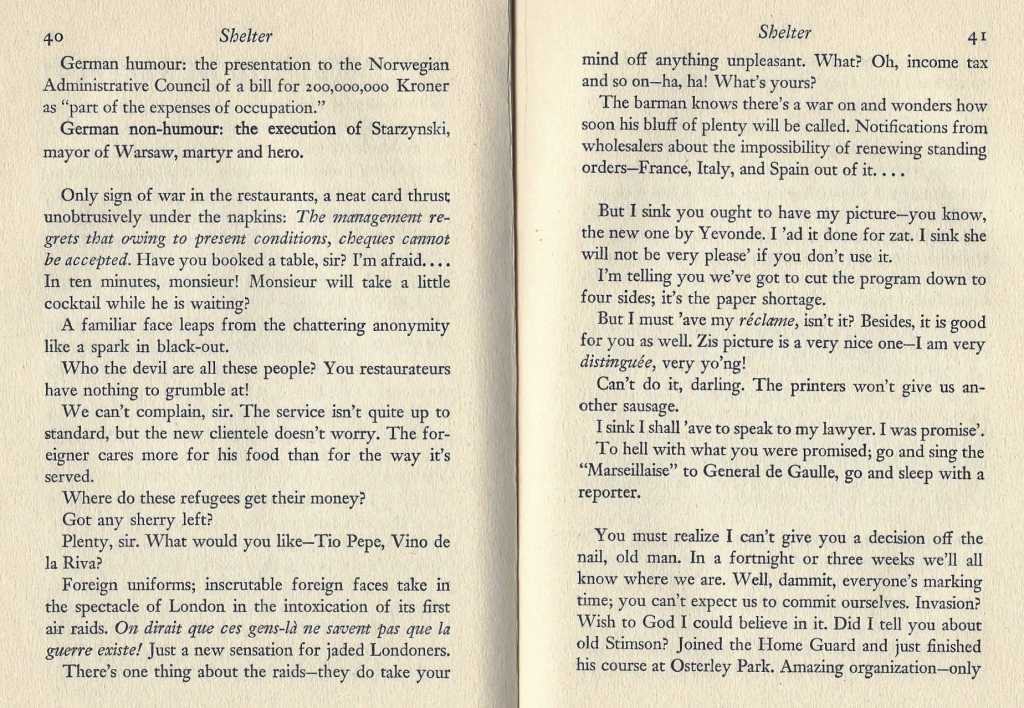
This said, I suspect I got more out of Shelter as a companion piece than I would have if it were a stand-alone read, for it is a bit of a jumble, written in what I would term a modestly “experimental” style, sections of straightforward storytelling interspersed with random vignettes, the thoughts of various unnamed characters, glimpses of newsreel dialogue, and what one must assume are the author’s own pithy comments, not directly related to her erstwhile story-plot, that of a troubled marriage which has turned into a delicately balanced ménage à trois.

Highbrow Louise is married to not-highbrow (but not quite lowbrow, either) Jos, and they are reasonably content within their 7-year-old relationship. Or so Louise thinks, until it becomes apparent that Jos has become infatuated with the fragile (and possibly hypochondriac?) Camma, who returns his interest with bells on.

Jos seems to be the kind of chap who hates fuss; he’d like to keep both wife and mistress, and the fact that the two women are well aware of each other, and carry on a brittle sort of almost-friendship, seems to indicate that his delicate balancing act may be succeeding.

But then Louise breaks the news: she’s pregnant. Now what?

Meanwhile the bombs are dropping, and emotions are being wound ever upwards to some future breaking point…

The relationship angle of the plot runs parallel to the wider story of a city, country and way of life in peril, and as dreadful thing succeeds dreadful thing one is left at a loss as to anticipate how – or if! –  the author is going to resolve, if not the major problem of surviving the war, at the very least her teetering love triangle.

By removing one of the principles, as it turns out, in a decidedly final way.

Curious?

Well, the book is readily available in the secondhand trade, and has recently been released as an e-book, so it’s not too hard to come by. My own first awareness of it was when I came across it at a small used book store I occasionally frequent and decided to gamble my $5 that it would be an interesting read.

It is all of that, but I hesitate to recommend it, because despite the writer’s sure hand, Shelter seems to me to be missing that elusive something which turns a perfectly adequate novel into something extra-special.

Forewarned, you are, fellow book hunters. (As Yoda might say.)

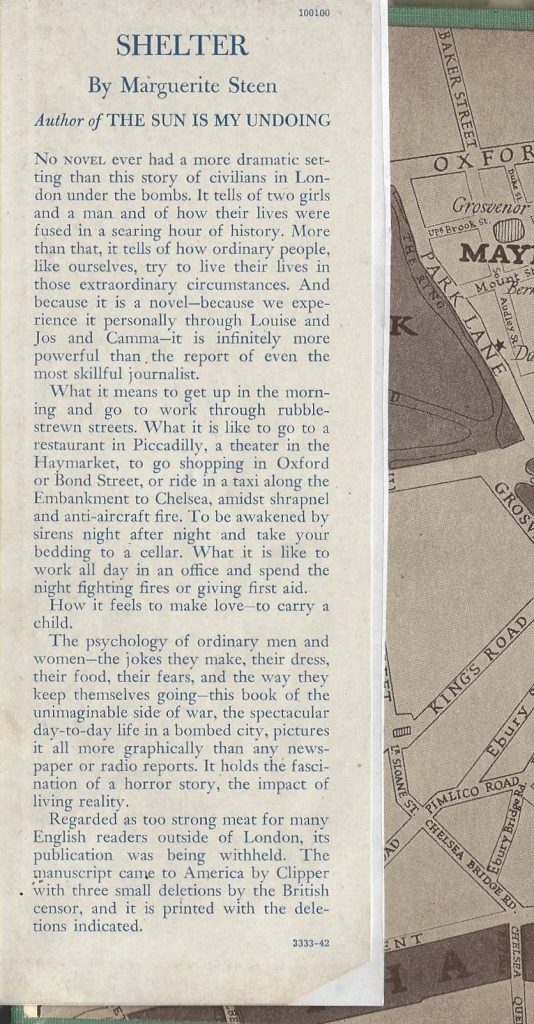
For further interest, here’s a look at the dramatic promotional blurb from the American-edition dust jacket, as well as a random scan of one of the vignette sections.

shelter-marguerite-steen-front-flyleaf

shelter-marguerite-steen-excerpt

Here’s the story on Marguerite Steen, courtesy Library Thing:

Marguerite Steen was adopted as a child and educated at a private school and at Kendal High School. At age 19, she became a teacher, but abandoned that career after three years and moved to London in an effort to find work in the theater. After failing at that, she became a dance teacher in the Yorkshire schools. This job enabled her to spend long periods travelling in France and Spain.

In 1921, she joined the drama company of Fred Terry and Julia Neilson, based at The Strand Theatre in London, and spent three years touring with them. She was befriended by Fred’s sister Ellen Terry, who suggested that she try to write a novel during a period of unemployment.

Marguerite’s first book, The Gilt Cage, was published in 1927. She went on to become a well-known author of some 40 books, mostly historical novels, having her greatest popularity in the 1930s and 1940s. She wrote biographies of the Terrys and of her friend Hugh Walpole, as well as that of 18th-century writer and actress Mary Robinson. Among her bestsellers were Matador (1934), for which she drew on her love of Spain, and The Sun Is My Undoing (1941). She also produced two volumes of autobiography, Looking Glass (1966) and Pier Glass (1968), which provide insights into the English creative set of the 1920s to 1950s.

She shared a home with artist Sir William Nicholson for about 15 years and wrote his biography as well. In 1951, she was elected a Fellow of the Royal Society of Literature.


Read Full Post »

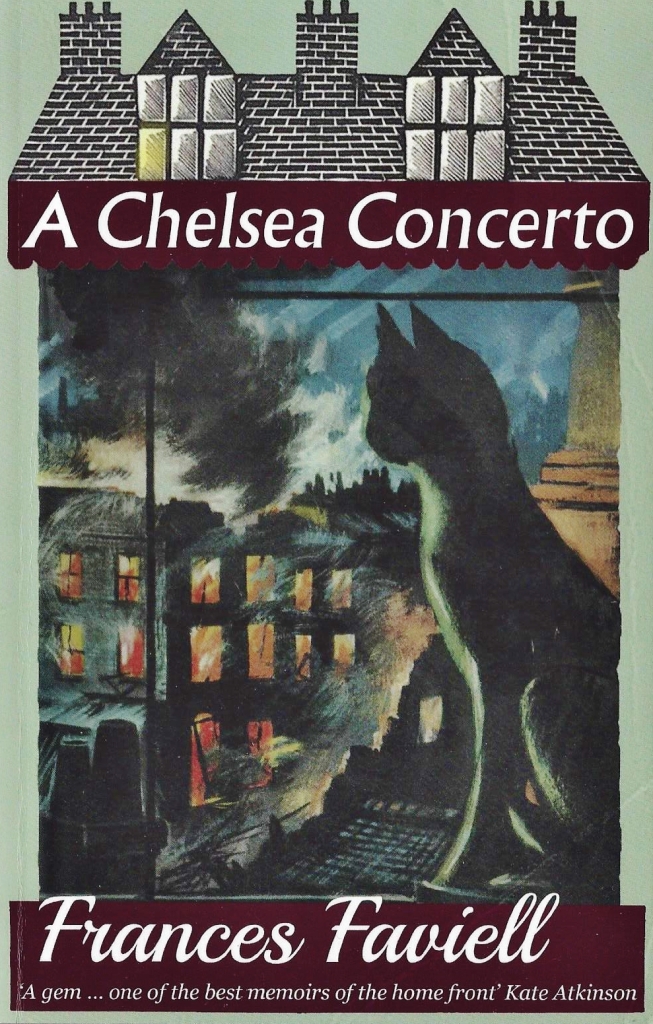
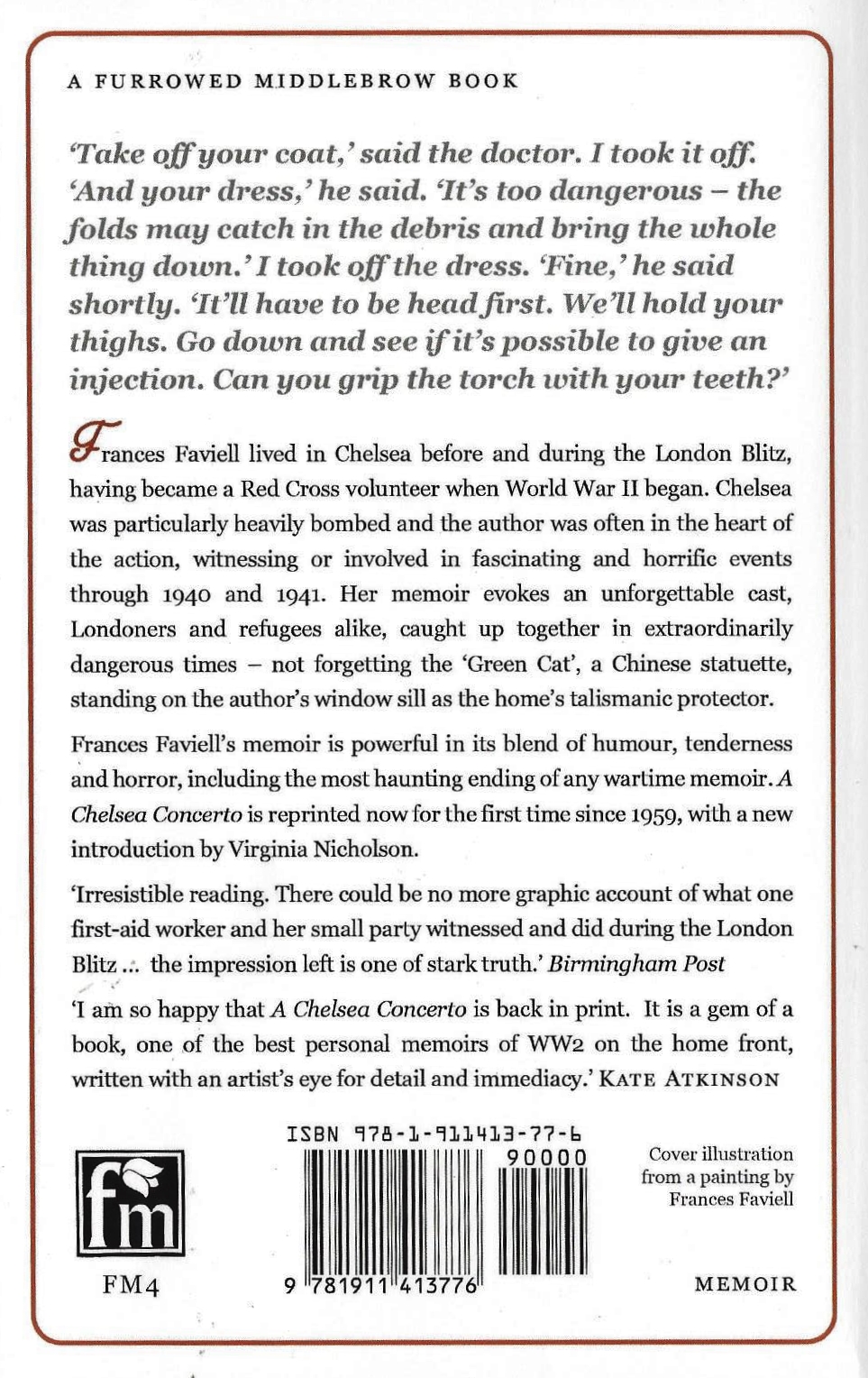
chelsea-concerto-front-cover-frances-faviellA Chelsea Concerto by Frances Faviell ~ 1959. This edition: Dean Street Press, 2016. Introduction by Virginia Nicholson. Softcover. ISBN: 978-911413-77-6. 236 pages.

My rating: 11/10

A stunning memoir.

I set this book gently down after my mesmerized reading, feeling emotionally battered, deeply moved, sorrowful and joyful at the same time, the last for what it revealed of abundant grace under extraordinary pressure.

Olivia Frances Faviell (Frances Faviell was her pen name) was a successful portrait artist living in London’s Chelsea District when the Second World War started. She had a pleasant flat in a lovely house, with a good view of the Thames through three long front windows, congenial neighbours in the upstairs apartment, and all amenities – shopping, restaurants, entertainment – within easy walking distance. Friends came in and out at all hours, for Frances kept open house, and her prior world travels had made her many acquaintances from various walks of life, many literary and artistic as she was herself.

No one was more awake to her good fortune as was Frances, particularly as she was also very much aware of the gathering clouds of war. Frances had been living in Shanghai in 1937 when the Japanese army invaded, and the influx of wounded soldiers and civilians and the panicked crowds of refugees seeking passage out of the battle area were still fresh in her mind as now, in 1938, European refugees in their turn crowded into England. Many of them, coming into Frances’ particular circle, were Jewish intellectuals and artists deemed personae non gratae in their homelands by the ever-more-powerful Nazi and Fascist regimes.

A year of “phony war” later, in 1939, everyone was just a bit dismissive of all of the preparatory fuss still being made, of the First Aid training and rehearsals, the rather rickety bomb shelters hastily erected in gardens and public parks, of the rumours of food shortages looming on the horizon. Many of the London children evacuated in panicked hurry into the country in 1938 had quietly returned to their homes as the bombs failed to materialize, and a vaguely ominous “normal” prevailed.

All this changed upon the night of September 7, 1940, when the German “blitzkrieg” – The Blitz – began, a relentless 8-month-long bombing of London carried out mostly at night (at first), and, later, almost 24 hours of the day. Though no region of the city was unscathed, Chelsea and its neighbouring districts were particularly hard hit, perhaps because of their location in the very heart of London, and relatively near the seat of government at Westminster.

Frances Faviell had volunteered for Red Cross duties during the build-up to the war, and she undertook first aid training, hoping to qualify as a Registered Nurse, and, though repeatedly turned down as a full-time nurse trainee because of health issues, she was deeply involved in refugee care, first aid response, and, to her dismay, in being assigned the task of piecing together dismembered bodies so they could be sewn into shrouds before burial. The bits and pieces didn’t necessarily have to belong to each other, but the general instruction was to make reasonably complete packets of what was left after explosions and subsequent building collapses.

Frances relates her experiences in a hyper-detailed, clinically accurate tone, but there is an underlying, very appealing, very human passion to her reminiscences of this concentrated and horrific episode of British wartime history.

As much as it is an unflinching recording of shared community experience – it is, as evidenced by its title, a very Chelsea-centric account – A Chelsea Concerto also gives a vivid portrait of the writer herself, her private thoughts and feelings, and those of the eclectic assortment of people in her wartime life.

Frances married her second husband, Richard Parker, in 1940. Her brief account of their wedding day is both poignant and humorous. Due to a sudden daylight raid, none of the guests nor – more importantly! – neither of the witnesses showed up for the ceremony. Out into the street Frances and Richard went, finding two stalwart taxi drivers, who cheerfully acted as signatories to the marriage documents, and then tossed a coin to see who would be the one to drive the newlyweds through the rubble-littered streets to the club where their wedding breakfast was to be held. The air raid having by then tapered off, most of the guest showed up for that, though some of their wedding finery was a bit battered and dusty from hasty passage through the besieged areas.

At a later point in the book, Frances rather casually mentions that she is now pregnant, though it doesn’t seem to affect her continuous activity much, for, in common with so many of the women of the time in similar circumstances, personal discomfort was stoically borne as more urgent activities took precedence.

This is a compelling book, and, I believe, a tremendously important one, for the detailed descriptions it gives of life under bombardment.

Check your squeamishness at the door, fellow readers, for Frances Faviell is not much for euphemisms, and the blood, guts, stench and filth of being on the receiving end of bombs is described in some detail, though never needlessly so; the author never wallows in the horrors, but as they are increasingly ubiquitous to the time and circumstances, they are a crucial element of this memoir.

If I can leave you with a final thought, it is that though this is a deeply sad book – so many people die, or go through heart-rending extremities of loss – it is also a supremely likeable memoir. Frances Faviell, along with her precise and analytical artist’s eye, possessed a strong if slightly caustic sense of humour, and also a certain understanding kindness of observation of her fellow-man which makes A Chelsea Concerto something a little bit extra in its class.

Very highly recommended.

chelsea-concerto-frances-faviell-back-copy

Back cover, Dean Street Press re-issue. I received this book as a review copy in 2016, and had been waiting to read it for a time when I could give it my full attention. I’m sorry it took me so long. Due to my profound admiration for what I found within A Chelsea Concerto‘s covers, I have just ordered (on my own dime), the other four titles by this author which DSP also released last year.


Read Full Post »

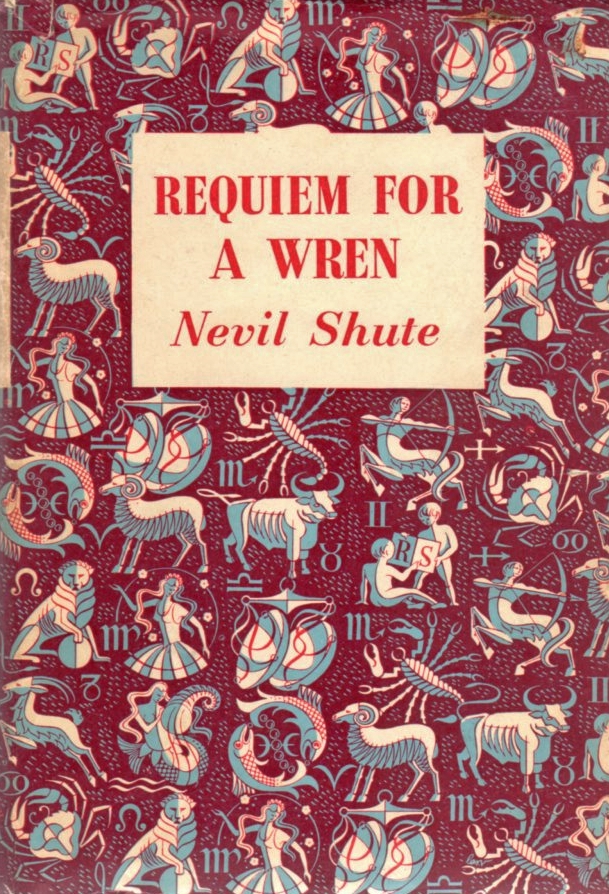
requiem-for-a-wren-reprint-society-1955-1956-nevil-shuteRequiem for a Wren by Nevil Shute ~ 1955. This edition: The Reprint Society, 1956. Alternative American title: The Breaking Wave. Hardcover. 250 pages.

My rating: 8/10

Nevil Shute has something personal to say in each and every one of his novels, and the essence of this one is that war, for some, can be very good indeed. The high point, in fact, of one’s life, encompassing as it were the greatest intensity of emotional and physical experience. In fact, Shute is credited with the following quotation, from a 1943 interview: “War is an activity both exciting and fulfilling, if you survive.”

This might seem to be deeply ironic in regard to this novel, as the entire plot of Requiem for a Wren turns on the emotional breakdowns of two members the British armed forces, due to their experiences during the build-up to the Allied invasion of Normandy in 1944.

But that is all gone into with sincere eloquence near the end of this very moving novel, which is otherwise told in Shute’s slightly flat and deeply earnest style.

Australian Alan Duncan had a reasonably good war, all things considered. At least until the fighter plane crash which resulted in the loss of both of his feet, and which turned him from being an important cog in the R.A.F. machinery to a mere bystander and user-up of precious resources.

After his recovery from the crash, with prosthetic feet more or less figured out, Alan goes through much personal turmoil as to what his new role in life should be, a position of choice made possible due to his family’s wealth, which makes it possible for him to wallow (his own term) in angst-ridden self-examination without the everyday concerns about actually earning a living.

***Having just re-read this post and realizing that I’ve discussed in some detail the main mystery of the plot, I’ve whited out the spoiler paragraphs. Mouse over the big white gap below to read, or just go ahead and pass over – your choice! Apologies. By the way, the suicide thing – it’s all there in Chapter One, so I’m leaving part that alone.

Alan’s brother Bill has not been so fortunate as Alan; he was killed in a hush-hush wartime operation involving underwater derring-do. Bill leaves behind his lover/potential fiancée, Janet Prentice, an Ordinance WREN who, due to a…(***potential spoiler section starts)… natural skill in marksmanship, has had a remarkable and disturbing experience, being directly responsible for the deaths of seven people who may or may not have been enemy combatants.

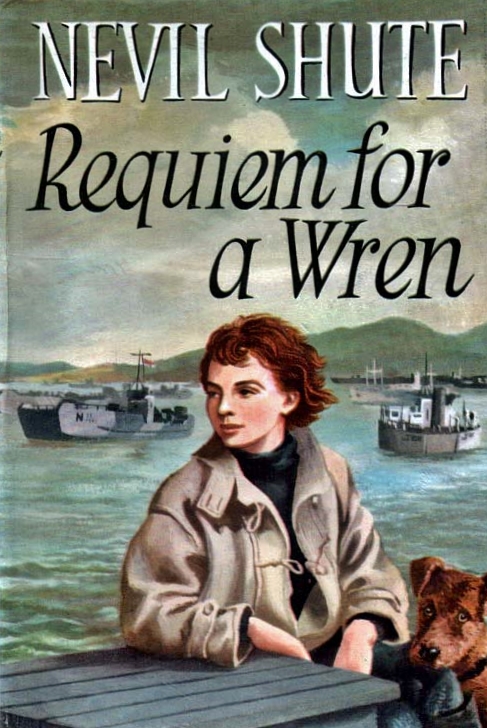
Portrait of our WREN Janet, from the first edition dust jacket illustration by Val Biro.

Portrait of our WREN Janet, from the first edition dust jacket illustration by Val Biro.

With the combined deaths of her lover, her father, and – final straw – Bill’s pet dog which he had bequeathed to her – the hitherto deeply pragmatic and competent Janet has a complete emotional breakdown, during which she comes to the conclusion that her killing of the seven alien airmen was a sin which could only be expiated by seven deaths affecting her personally, the final one being her own.

Yes, she commits suicide, in the spare bedroom of the Duncan family’s Australian manor house, in which she is living under an assumed name.

Which brings us to the very beginning of the story, as Alan walks in to that bedroom, and realizes that this seemingly anonymous dead girl is the key to his own desperate seeking for life-meaning after his personal wartime losses.

This is one of Shute’s “full circle” novels, in which he tosses us in at the ending, and then works us backwards through what brought his characters to that starting point. It’s a plot device which can get a little tiresome if encountered too often, but in this case it works very well indeed.

Recommended, emphatically, for Shute fans, and, speculatively, for those new to this author, who might appreciate a slightly simplistic but thought-provoking view of the effects of war on its participants, by a man who lived much of what he wrote about.

Those of you who’ve read this, I’d be interested in hearing your thoughts about Shute’s assertion that war is a desirable state for the young to truly “find themselves”. I thought it a troubling concept, but with a ring of truth. “Desirable” only for the survivors, of course!

Read Full Post »

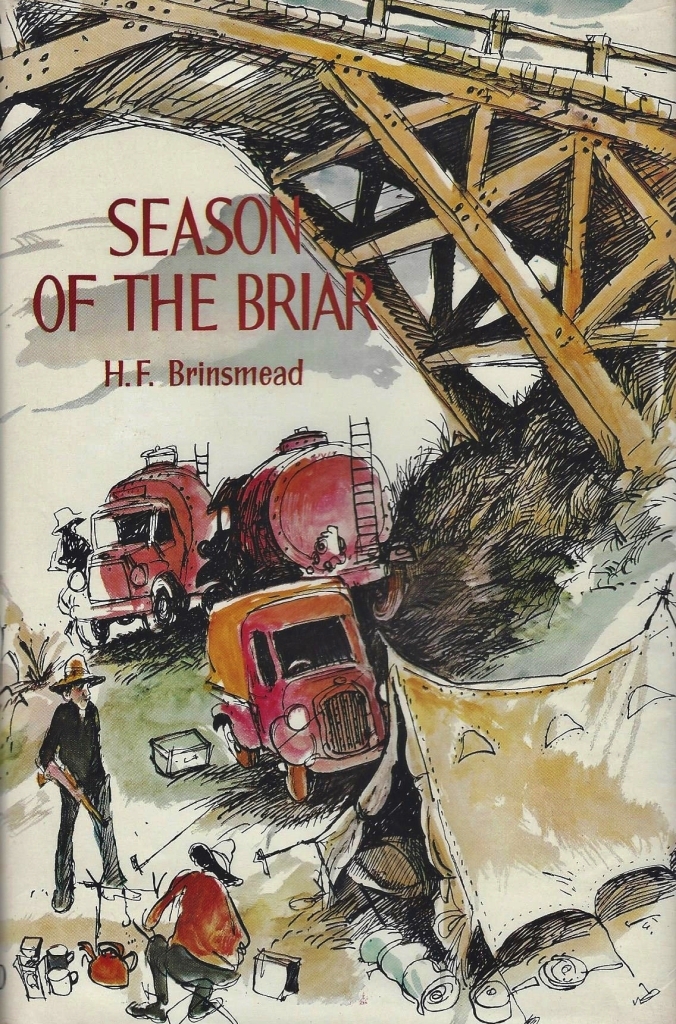
season-of-the-briar-h-f-brinsmead-1965-001Season of the Briar by H.F. Brinsmead ~ 1965. This edition: Oxford University Press, 1965. Illustrated by William Papas. Hardcover. 202 pages.

My rating: 3.5/10

Brutal rating, isn’t it?

I put it this low because I truly believe that even with full allowances given for Season of the Briar being aimed at a teenage audience, this highly capable author could do exponentially better. (Anyone else know and admire Pastures of the Blue Crane, written a mere year before this one?)

I had such high hopes for this novel, and there are bits and pieces which are wonderful, but the plot imploded early on and what might have been a fantastic “finding oneself” story got all improbable boy’s-own-adventure, with a highly manufactured dramatic fantasia about a young hiker lost in the Tasmanian wilderness, and her supernaturally tinged rescue.

Quickie overview:

Four young men find summer work on an Australian weed-spraying crew which is sent to Tasmania. They encounter and re-encounter a group of hikers heading for the alpine area surrounding as-yet-undammed Lake Pedder, and, when one of the hikers gets lost during a sudden change in the mountain weather, several of the weed sprayers decide to assist in her rescue, with mixed results.

Before the hiker goes astray, the spray crew has reached a hidden valley peopled by eccentric Euro-Tasmanian old-timers who are so desperately caricatured as to irretrievably shake this particular reader’s faith in the probability of the tale, even before the rescue mission episode. Even the beautifully written descriptions of the glories of the Tasmanian wilderness (Stunning Lake Pedder! An endless pink granite sand beach! ) weren’t enough to woo me back.

Laboriously comical pen and ink illustrations by William Papas detract rather than add to the overall effect.

To be fair, there are a number of good things going on with this book. Such as a certain amount of bildungsroman-style character development, and a believable depiction of the evolution of the relationship of a group of people thrust into close companionship 24/7 and subjected to some truly challenging work and living conditions. One of Brinsmead’s sons worked on a similar spray crew, and the versimilitude of this aspect of the tale has obviously come from some personal familiarity with the enterprise.

Brinsmead was an articulate and passionate naturalist and conservationist, and this comes through loud and clear in her written appreciation of the southern hemisphere wild country as depicted here. At first I found her approving view of the liberal application of herbicides to portions of this wilderness quite troubling, but it soon clicked that she was all about getting rid of exotic flora in order to preserve the native stuff, and, along with that, to improve the state of agriculture in the region.

It’s a very 1960s’ sort of teen/young adult-market story, and I should probably modify that rating to reflect its period, but, as I have said already, Season of the Briar disappointed me in how it so closely missed being something more than what it turned out to be.

P.S. – I still think highly of Hesba Fay Brinsmead! A fascinating, deeply earnest personality as well as a more than decent writer. I have a growing collection of her novels and memoirs; Season of the Briar is something of an anomaly compared to the others I’ve read.


Read Full Post »

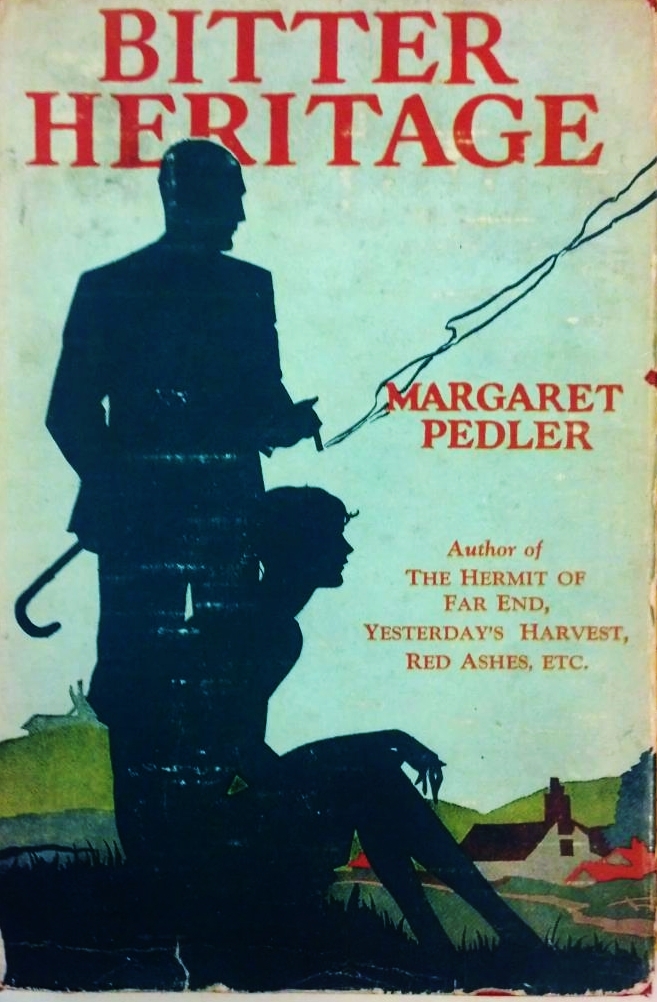
bitter-heritage-margaret-pedler-1928-2Bitter Heritage by Margaret Pedler ~ 1928. This edition: Hodder and Stoughton, 1928. Hardcover. 316 pages.

My rating: 4/10

A hugely predictable melodrama about a young woman whose father has disgraced himself, and by association her, by a massive financial gamble with other people’s money which failed. His subsequent suicide makes things even worse.

Our heroine Herrick -“a child-woman of seventeen” – is brutally dumped by her fiancé who fears disgrace by association – “I can’t put – forgive me – the daughter of a thief, of a swindler, in the place my mother’s held. Or” – his voice dropped a little – “make her the mother of my children.”

Oh, ouch.

But not to worry! Herrick is a plucky young thing (and beautiful, which is useful) and she goes out into the cruel harsh world and makes a new life for herself. We see her next a very few years later in Paris, working as a model for a famous dressmaker.

Herrick impresses all by her natural sweetness, including her money-minded employer (digression: are all Parisian dressmakers as deeply mercenary as vintage English novels make them out to be – think about that one, fellow readers – can you show me an exception?), and in particular an English client, Lady Bridget, who – quelle coïncidence! – turns out to have been the long-ago romantic flame of Herrick’s father, and the possessor of a letter written to her by him just before he pulled the fatal trigger instructing Lady Bridget to look after his darling daughter.

So now all is good. Correct? Herrick can leave her employment and enter into a mutually comforting relationship with Lady Bridget. Who just so happens to have a charming, handsome son…

No, wait. That would be too easy.

The son’s romantic feelings are engaged elsewhere, but he acts as a brother-like chum to Herrick, which comes in handy when she needs a masculine shoulder to cry on. As she does, because her life is soon complicated with not one but two impetuous would-be lovers. One being – all unknown, because Herrick and her sponsor are all being very cagey as to her familial origin – the son of a man who was ruined by Herrick’s father and who was only saved from disgracing himself by suicide by his sudden death by heart failure while written his goodbye letter, revolver on his desk.

When this comes out, hasty words are spoken, and it looks as though Herrick’s “bitter heritage” will stand in the way of her future happiness.

Another plot twist removes all obstacles. Shall I tell it? Or can you guess?

You know, I’m going to leave it unrevealed.

Just in case someone reading this with a view to reading Bitter Heritage wants a surprise.

And with that, I leave you. And this book.

Of “period piece” interest only, and forthwith shelved accordingly.

Note on the author, directly quoting from the very sparse Wikipedia entry which was all I could find about her on my web search:

Margaret Pedler (died 28 December 1948) was a British novelist, who wrote popular works of romantic fiction.

Initially Pedler studied piano and singing at the Royal Academy of Music, and published several songs for which she wrote both the music and lyrics. Over her career as a best-selling writer, from 1917 to 1947, she produced 28 novels.

  • The Splendid Folly: 1917
  • The House of Dreams-Come-True: 1919
  • The Hermit of Far End: 1920
  • The Moon out of Reach: 1921(?)
  • The Lamp of Fate: 1921
  • The Vision of Desire: 1922(?)
  • The Barbarian Lover: 1923
  • Waves of Destiny: 1924
  • Red Ashes: 1925
  • Tomorrow’s Tangle: 1926
  • Yesterday’s Harvest: 1926
  • Bitter Heritage: 1928
  • The Guarded Halo: 1929
  • Fire of Youth: 1930
  • Kindled Flame: 1931(?)
  • Desert Sand: 1932
  • The Greater Courage: 1933
  • Pitiless Choice: 1933
  • Distant Dawn: 1934 – published in England as “Green Judgment”
  • The Shining Cloud: 1935(?)
  • Checkered Paths: 1935(?)
  • Flame in the Wind: 1937
  • No Armour Against Fate: 1938(?)
  • Blind Loyalty: 1940
  • Not Heaven Itself: 1941
  • Then Came the Test: 1942
  • No Gifts from Chance: 1944
  • Unless Two Be Agreed: 1947

Read Full Post »

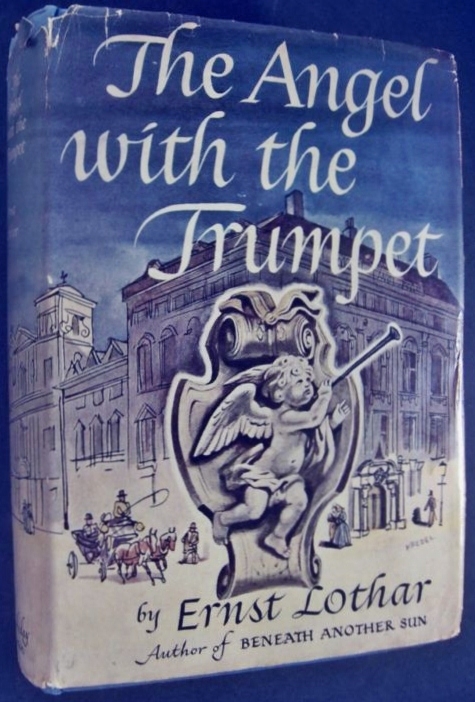
An early English-language edition, perhaps a little too "prettied-up", when one considered the darkness of much of the content...

An early English-language edition.

The Angel with the Trumpet by Ernst Lothar ~ 1942. First English language publication 1944. Alternate U.S. title The Vienna Melody. This edition: George C. Harrap & Co., 1946. Translated from the German by Elizabeth Reynolds Hapgood. Hardcover. 439 pages.

My rating: 7/10

This is a dense, clever, sometimes powerful, occasionally humorous, and ultimately deeply disturbing novel, based as it is on the author’s own experiences as a member of the Austrian artistic and dramatic community in the years leading up to Hitler’s Anschluss, the annexation of Austria into Nazi Germany in 1938.

It’s also an ambitious traditional-style family saga, following the stories of three generations of a prominent Viennese family, the piano-making Alts, and incorporating cameo appearances by various high-profile historical characters.

We have Mozart in a flashback scene of the performance in the Alt family music room of the composer’s personal rendition of Die Zauberflöte in its entirety, high soprano arias and all. The ill-fated Austrian Crown Prince Rudolf, who has carried on an illicit romantic relationship with a young woman who then marries into the Alt family; his dramatic suicide (real) takes place on her (fictional) wedding day. A highly unlikable Adolf Hitler appears first as a student who takes and fails an entry examination to art school alongside one of the Alt sons, and later in full dictator mode.

The rise and fall of the Alt family is something of an analogy to that of Austria itself, and it feels very deliberate. Lothar paints a damning portrait of a family, and by extension a people, who turn on their own for political expedience.

I am of course referring to the persecution of the Jewish population. Perhaps nowhere else in Europe had those of Jewish heritage become so much a part of existing society that their “Jewishness” was merely a descriptor, not a barrier to social standing, or to one’s career, and definitely not to one’s participation in the fine arts.

So how, in a few short years, did an entire society turn against a portion of itself, and why where “decent people” unable to prevent the tragedy of the ethnic-religious “cleansing” which accompanied the annexation of Austria into the Third Reich?

Troubling, indeed. But much more recent political events very close to home show that this is not an outdated possibility. Enough said.

Political and historical significance aside – and this is a valuable book to read for its documentarian atmosphere for anyone who is interested in the time period it covers, 1889 to 1938 – The Angel with the Trumpet is also an absorbing dramatic novel.

I did feel that the novel was just the slightest bit weak in its failure to fully engage me in the lives of its characters; there were few times when I completely identified with any of them, or cared deeply for their joys or despairs, though I certainly found myself deeply interested in what would happen next.

The ending is ambiguous, for the book was published before the conclusion of the war, but it shows a gleam of hope, that amongst all the evil of the time some people still cared for the wellbeing of others, and for their troubled, deeply changed, but still beloved country.

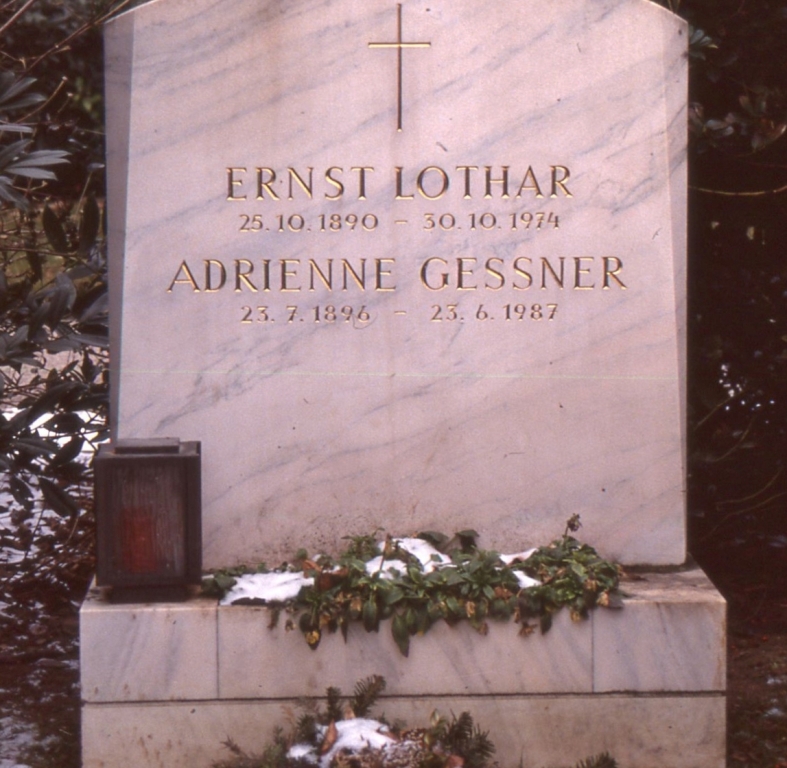
adrienne-gessner-ernst-lothar-2The author, Ernst Lothar, was a theatre director and producer as well as an established writer when he fled Austria for the United States in 1938, along with his wife, actress Adrienne Gessner. Lothar’s loving nostalgia and poignant despair for his lost homeland are very evident in this novel. The couple returned to Austria after the war, and continued to pursue their artistic endeavours. They are buried under the same headstone in a Viennese cemetery.

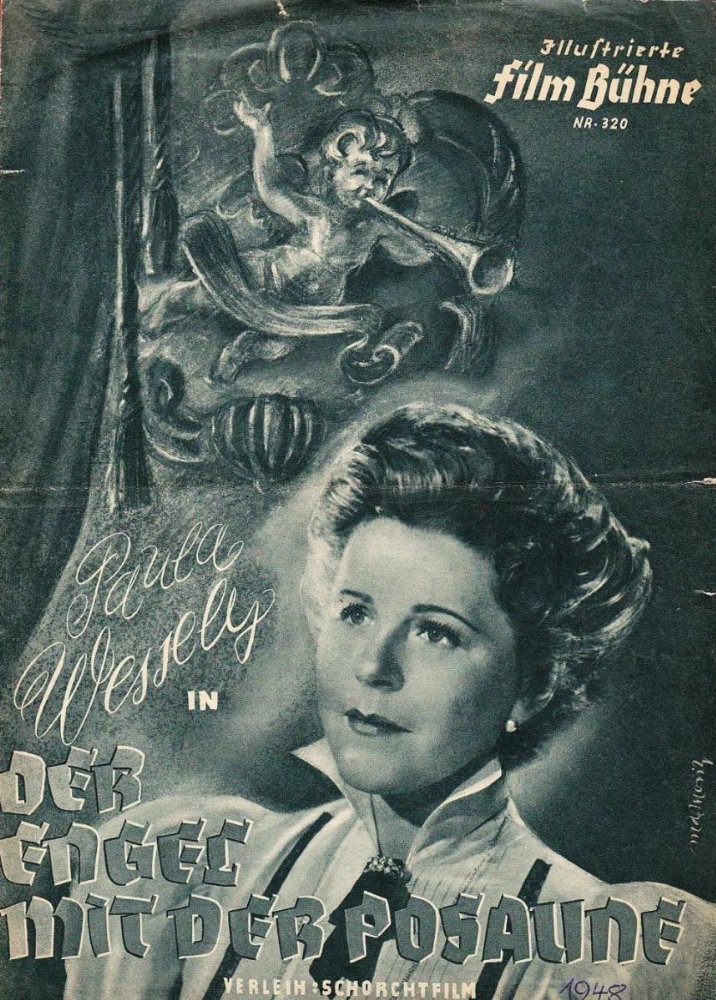
mv5bntk5zte2nzytyjrlmc00mwuwlwe4n2qty2flztc1mwm4yzy4l2ltywdll2ltywdlxkeyxkfqcgdeqxvyndy3mzu2mdm-_v1_sy1000_cr007161000_al_This novel was made into a 1948 Austrian film, with Adrienne Gessner filling one of the secondary roles. It was remade in Britain in 1950, starring English actors but using much of the Austrian-shot footage.

The Angel with the Trumpet was recently republished by Europa under its alternate title, The Vienna Melody. Those with experience in reading vintage novels will find much to enjoy, though its relatively slow pace and matter-of-fact portrayal of dramatic scenarios may fail to completely engage the modern reader.


Read Full Post »

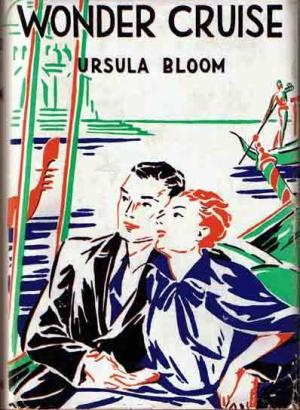
First edition dust jacket illustration, sadly not my copy.

First edition dust jacket illustration, sadly not my personal copy.

Wonder Cruise by Ursula Bloom ~ 1934. This edition: Corazon Books, 2016. Softcover. ISBN: 978-1909752269. 327 pages.

My rating: 7/10

My second-ever Ursula Bloom novel and I enjoyed it, though it never quite breaks into A-list status. Maybe A-minus?

Anyway, I liked it, and it’s a keeper, for those times when one requires an utterly effortless diversionary read. (I also own the equally engaging and so-close-to-A-list 1965 mild psychological thriller The Quiet Village, but I don’t think I have chatted it up here yet.)

I’m keeping my eyes open (in a casual sort of way) for more novels by this supremely prolific writer, and have been for some years. They are surprisingly rare in used book stores, at least on this side of the Atlantic, or at least in the ones I have frequented. There must be stacks of them out there somewhere.

From the About the Author page at the back of this Corazon edition:

Ursula Bloom was one of the most popular bestselling authors of the twentieth century. She wrote over 560 books, a feat which earned her a place in the Guinness Book of World Records for many years, as the world’s most prolific female writer. She also wrote short stories, radio and stage plays, and worked as a Fleet Street journalist.

During her long career, as well as writing books under her own name, Ursula used the pen names Sheila Burns, Rachel Harvey, Lozania Prole, Mary Essex and Deborah Mann.

So what I really want to know now is who bumped Ursula from her “most prolific female writer” spot? Danielle Steele, perhaps? Let’s see what Google says…and oh golly! This Wikipedia page is an astonishing (and slightly troubling) thing. In recognizable names of English-language writers, it looks like both Enid Blyton and Barbara Cartland have surpassed Ursula Bloom, with, respectively, 600+ and 722 published works. Who knew?!

This mind-boggling digression put behind me, here’s a quickie synopsis of Wonder Cruise.

An orphaned daughter of the vicarage, left destitute as is the tradition in these sorts of things, finds herself living in London under the thumb of a bullying older brother. She manages to attain independence through a secretarial job, but  begins to find that the daily grind is just that, with a long bleak vista a years-all-the-same stretching ahead, until a chance sweepstake win triggers a personal reinvention.

The usual sequence of events occurs, with the eventual finding of true love. Absolutely predictable, but decently readable. Sexual awakening is a great part the theme here, stated in those very words. The tiniest bit unexpected for a popular novel from 1934, but then again, not really, when one considers what else was going on in the actual and literary world at the time.

Corazon Books of London (“bringing you great stories with heart”), the republisher responsible for Wonder Cruise once again seeing the light of day, provides this enthusiastic blurb:

Ann Clements is thirty-five and single, and believes nothing exciting will ever happen to her. Then, she wins a large sum of money in a sweepstake and suddenly can dare to dream of a more adventurous life. She buys a ticket for a Mediterranean cruise, against the wishes of her stern brother, the Rev. Cuthbert, who has other ideas about how she should spend her windfall. Ann steps out of the shadows of her mundane life into the heat of the Mediterranean sun. Travelling to Gibraltar, Marseilles, Naples, Malta and Venice, Ann’s eyes are opened to people and experiences far removed from her sheltered existence in the offices at Henrietta Street, and Mrs. Puddock’s lodging house. As Ann blossoms, discovering love and passion for the very first time, the biggest question is, can there be any going back?

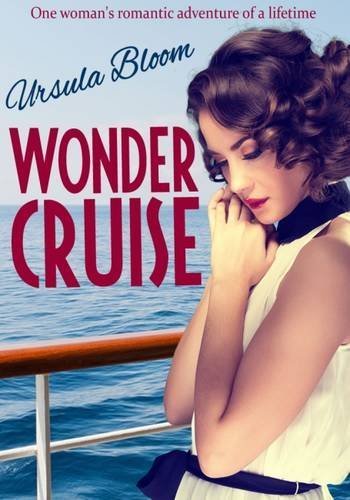
1909752266-01-_sx450_sy635_sclzzzzzzz_You’re going to want to have your brown paper handy if buying this new edition, because it has one of the most gosh-awful covers imaginable. Hard to have people take you seriously when you’re seen with this in your hands!

But the contents are prime, nicely produced and easy to read, with very few (if any?) typos. Whoever reset this did a grand job, and this reader thanks you!

I hope some more Ursula Blooms are forthcoming from this source. I see that Corazon has also republished Bloom’s 1959 wartime memoir (and that would be the First World War, by the way), Youth at the Gate, which I am about to order, because I know it will be readable, and likely wryly funny, if Bloom’s fictional voice remains the same for her reminiscences. Again, Corazon’s cover art leaves something to be desired, but I guess we should be grateful for what’s inside, instead of griping about appearances.

Here’s something extra, a link to a 1974 mini-documentary on Ursula Bloom produced by the BBC. Watch it, it’s a mere 4 minutes long, and it’s rather fascinating to see our author typing away at full speed, producing some of those 5000 eminently saleable words per day!

From the East Anglia Film Archive’s link page:

Author Ursula Bloom sits at her writing desk tapping away on a typewriter, opening this profile of her life and career with old photographs and newly filmed material. Beginning with her extensive bibliography, which ranges from romance novels to biographies, the report highlights her many non-de-plumes, including Mary Essex, Sheila Burns and Lozania Prole, and her prolific output, often averaging 5,000 words a day and easily able to complete a novel within three weeks.

The daughter of a parson who didn’t believe in school-based education, Bloom got an early start on her career, running a children’s magazine at age 10, and had a brief career as a cinema pianist before marrying a wealthy barrister and guards officer. Following his death during the influenza epidemic of 1918, Bloom and her young son continued living in the exclusive seaside resort of Frinton, the summer playground of the rich and famous during the 1920s. During this time she broke into journalism with a successful career as a court reporter, before meeting her second husband, naval lieutenant Charles Robinson Gower, in 1925. Fifty years later, the couple are shown in their sitting room, still happily married, both claiming it was the ‘best thing they ever did’.


Read Full Post »

wayward-bus-steinbeck-1947The Wayward Bus by John Steinbeck ~ 1947. This edition: Viking, 1947. Hardcover. 312 pages.

My rating: 8/10

I am gradually coming to terms with the fact that there is no way I can do full justice to the books I read in the manner in which they deserve. Even the most dismal of the period pieces I willingly engage myself in are worthy of a fuller discussion than I am able to provide in the limited discretionary time this writing-for-pleasure blog inhabits in my current lifestyle.

So rather than wallowing in guilt about not being able to go on for thousands of words regarding each and every one (yes, I tend to be long-winded at the keyboard or pen in hand, something I paradoxically rather enjoy in others and quietly deplore in myself) I’m going to be all firm with myself and try to pop out hyper-condensed “reaction pieces” to more things – reviewlets, as I think we were all calling them in a similar discussion on someone else’s writing space not that long ago.

Did you get through all that? More posts. Less words each.

Go!

Yeah, and I would decide to start with Steinbeck, an eminently discussable author. (In other words, “Ha!” to the short-and-pithy reviewlet. I predict I won’t be able to get out of this one quick-and-easy, though I’m going into it with the best of intentions.)

I like Steinbeck. Generally quite a lot. As do many others, so musings on his books (especially the headliner titles) are easy as pie to come by, thereby releiving the johnny-come-lately book blogger to get away with minimal effort, for what else really can one add? There are a fair number of reviews out there for this book, for though The Wayward Bus isn’t one of the Big Important Novels, it’s reasonably mainstream, and a rather decent example of what the man was capable of at his best.

Juan Chicoy, a competent, handsome, humorous, middle-aged, Mexican-Irish-American mechanic-philosopher type, runs a small gas station and lunch counter at a fictional spot-on-the-road in southern California. He is aided in this by his perpetually bitter, frequently angry, and not particularly attractive (or kind) wife Alice. He loves her and stays with her (though opportunities abound for moving on with others more attractive – Juan is rather a fine figure of a man both physically and intellectually) for deep and complicated reasons, not the least of which being that no one else likes her.

Alice in turn loves Juan, single-mindedly and jealously, and his easy manner with all and sundry triggers much inner turmoil which generally leads to her making a fool of herself, ranting away at the easiest targets in the room.

Those targets at this point in time are the Chicoy employees, teenage apprentice-mechanic Ed (“Kit”) Carson, more commonly called “Pimples” for obvious reasons – he has a truly stellar acne affliction, which Steinbeck spells out for us in some detail – and young waitress Norma, a shy and homely type who nourishes a secret infatuation for Clark Gable.

Among his other endeavours, Juan owns and operates an old bus, one “Sweetheart”, under contract with Greyhound to provide a shuttle service along a secondary road between two official main-highway stops. This is the literary device which is used to assemble the cast of players who people this novel, a disparate assembly of travellers who walk in with their backstories, bump against each other for the twenty-fours hours or so which Steinbeck describes in vivid detail, before dispersing again into the wider world.

When the titular bus finally hits the road, approximately half way through the novel, its passengers consist of a successful businessman, his prissy, sexually frigid wife, their athletic university-student daughter, a travelling “novelty products” salesman, a beautiful, sexually arousing stripper masquerading for purposes of peaceful travel as a “dental nurse”, a cranky rural rancher type who hates absolutely everybody, Pimples/Kit, who begs to come along ostensibly to help in case Sweetheart breaks down, but in reality in order to bask in the presence of the delectable stripper, and Norma, who has just quit her job after being seriously wronged and insulted by outspoken Alice.

Alice herself stays behind, locking up the lunchroom and then losing herself deeply in a series of bottles, a process thoughtfully and rather compassionately described by our author.

Each person in this random cast of players faces an inner crisis of sorts during their short journey, and the resulting interconnected character studies make up the novel.

Steinbeck makes no secret of who he sympathizes with and who he despises, and he uses his authorial powers to both reward and punish his pen-and-ink creations, leading us ultimately to a glimpse into the philosophical leanings of Steinbeck himself.

Good stuff, and a stellar example of John Steinbeck’s mastery of his particular genre, the “gritty American realism” school of writing, as I always think of it with just a hint of a lifted eyebrow. He knew exactly how good he was, too, and here he shows off his literary erudition by prefacing what is merely a humble road trip novel with a quotation from a 14th Century English morality play, Everyman:

I praye you all gyve audyence,
And here this mater with reverence,
By fygure a morall playe;
The somonynge of Everyman called it is,
That of our lyves and endynge shewes
How transytory we be all daye.

Or, put into slightly more modern English:

I pray you all give audience,
And hear this matter with reverence,
By figure a moral play;
The Summoning of Everyman called it is,
That of our lives and ending shows
How transitory be our days.

Indeed.

The Wayward Bus is, as its author points out, a contemporary morality play. Though it is decidedly a thing of its time, immediately post-war America, angst-ridden and brutally pessimistic and, also, cautiously optimistic, the personal dilemmas of its characters remain relatable today, some seven decades onward.

Note to self: re-read Steinbeck. My father’s personal library, now mine, included most of John Steinbeck’s novels and memoirs; I read these voraciously as a teenager and young adult, though not as much in recent years. There’s a lot to appreciate here, though occasionally the grit gets in one’s eyes.


Read Full Post »
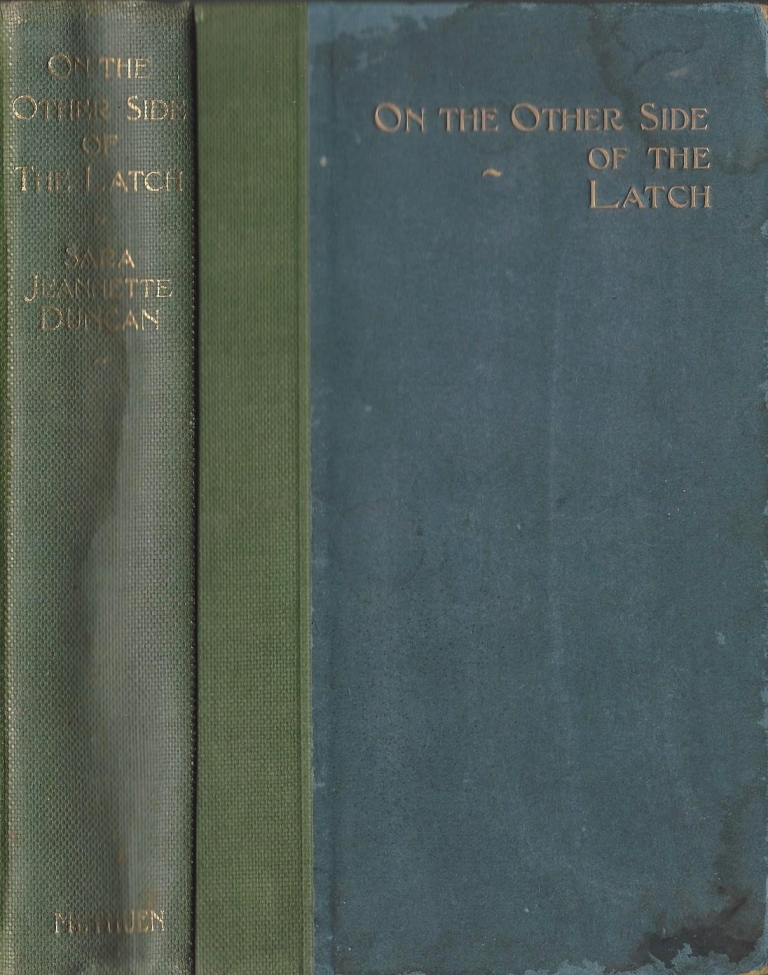
on-the-other-side-of-the-latch-sara-jeannette-duncan-1901On the Other Side of the Latch by Sara Jeannette Duncan ~ 1901. American title: The Crow’s Nest. This edition: Methuen & Co., 1901. Hardcover. 266 pages.

My rating: 7/10

I am very fond of Sara Jeannette Duncan, or, as she is styled in brackets on the title page of this and a number of her other books, Mrs. Everard Cotes. Duncan was a world-travelling Canadian who confidently pushed the gender limits of her time, despite that traditionally matrimonial sub-name which appears on most of her earlier works.

I recently read her 1890 travel book, A Social Departure: How Orthodocia and I Went Round the World by Ourselves, in which our Sara embarks upon an unchaperoned journey round the world with a female friend. I thoroughly enjoyed that journey-book, so much so that I won’t say anything more about it now, saving myself for a future re-read and review.

Looking around for my next Sara Jeanette Duncan – for in addition to A Social Departure I’d already read An American Girl in London and The Simple Adventures of a Memsahib – this one jumped out as me, concerning as it does the author’s time spent out in the garden of a mountain house in Simla, India, as she undergoes a rest cure for tuberculosis.

Whereas the other books I’ve read by Duncan are hectic with social activity, On the Other Side of the Latch is almost comatose in comparison, and this makes a lot of sense, as the lively traveller and always-busy career writer was forced to sit quietly from morning till night, unable to take part in whatever social whirl there might have been in that Anglo-Indian summer retreat.

There is an attraction about carpets and curtains, chairs and sofas and the mantelpiece, which is hard to explain and harder to resist. I feel it in all its insidious power this morning as I am bidding them farewell for a considerable time; I would not have believed that a venerable Axminster and an arm-chair on three castors could absorb and hold so much affection; verily I think, standing in the door, it was these things that made Lot’s wife turn her unlucky head. Dear me, how they enter in, how they grow to be part of us, these objects of ordinary use and comfort that we place within the four walls of the little shelters we build for ourselves on the fickle round of the world! I have gone back, I have sat down, I will not be deprived of them; they are necessary to the courage with which every one must face life. I will consider nothing without a cushion, on the hither side of the window, braced by dear familiar book-shelves and the fender. And Tiglath-Pileser [Duncan’s whimsical nickname for her husband throughout the book; her sister-in-law is styled “Thisbe”] has now come, and has quoted certain documents, and has used gentle propulsive force, and behold because I am a person whose contumacy cannot endure, the door is shut and I am on the outside disconsolate.

I would not have more sympathy than I can afterwards sustain; I am only banished to the garden. But the banishment is so definite, so permanent! Its terms are plain to my unwilling glance, a long cane deck-chair anchored under a tree, over-head the sky, on the four sides the sky, without a pattern, full of wind and nothing. Abroad the landscape, consisting entirely of large mountains; about, the garden. I never regarded a garden with more disfavour. Here I am to remain — but to remain! The word expands, you will find, as you look into it. Man, and especially woman, is a restless being, made to live in houses, roaming from room to room, and always staying for the shortest time moreover, if you notice, in the one which is called the garden. The subtle and gratifying law of arrangement that makes the drawing-room the only proper place for afternoon tea operates all through. The convenience of one apartment, the quiet of another, the decoration of another regularly appeal in turn, and there is always one’s beloved bed, for retirement when the world is too much with one. All this I am compelled to resign for a single fixed fact and condition, a cane chair set in the great monotony of out-of-doors. My eye, which is a captious organ, is to find its entertainment all day long in bushes — and grass. All day long. Except for meals it is absolutely laid down that I may not “come in.” They have not locked the doors, that might have been negotiated; they have gone and put me on my honour. From morning until night I am to sit for several months and breathe, with the grass and the bushes, the beautiful pure fresh air. I don’t know why they have not asked me to take root and be done with it. In vain I have represented that microbes will agree with them no better than with me; it seems the common or house microbe is one of the things I particularly mustn’t have. Some people are compelled to deny themselves oysters, others strawberries or artichokes: my fate is not harder than another’s. Yet it tastes of bitterness to sit out here in an April wind twenty paces from a door behind which they are enjoying, in customary warmth and comfort, all the microbes there are.

And so on.

After a chapter or two of rather wallowing in ever-decreasing stages of self-pity, Sara Jeannette Duncan then turns her gaze to the garden in which she is exiled, and the gardener who oversees it, Atma.

Into my field of vision comes Atma, doinjg something to a banksia rosebush that climbs over a little arbour erected across a path apparently for the convenience of the banksia rosebush. Atma would tell you, protector of the poor, that he is the gardener of this place. As a matter of fact his relation to it is that of tutelary deity and real proprietor. I have talked in as large a way as if it belonged to Tiglath-Pileser, because he pays for the repairs; but I should have had the politeness at least to mention Atma whose claims are so much better. So far as we are concerned Atma is prehistoric; he was here when we came, and when we have completed the tale of our years of exile and gone away he will also be here. His hut is at the very end of the shelf, and I have never been in it; but if you ask him how long he has lived there he would say “Always.” It must make very little difference to Atma what temporary lords came and give orders in the house with the magnificent tin roof where they have table-cloths. Some, of course, are more troublesome than others, but none of them stay. He and his bulbs and perennials are the permanent, undisputed facts; it is unimaginable that any of them should be turned out.

I am more reconciled to my fate when Atma is in the garden; he is something human to look at and to consider, and he moves with such calm wisdom among the plants.

This is a memoir of description, not of action, as the writer remains in her prescribed chair, doing as little as possible. She reads – and oh! how soon the pleasures of uninterrupted reading pale! – she naps, she cranes her neck to see who is passing on the precipitous road down the mountainside, she watches the birds and the insects, and she writes in her journal the passages which will become this book.

The narrative soon turns itself almost completely over to a sometimes-pithy appreciation of the changing seasons in the green world; it becomes a decidedly fascinating gardener’s account, for, much as Duncan gives credit to Atma for being the overseer and hands-in-the-soil, she herself has more than a little input into the ornamental plantings, and she reveals herself as being an opinionated plantsperson with undoubted years of experience of floral cultivation, with an artist’s eye for the larger effect, as well as a fine attention to details of petal and pollen. Days, weeks, months fall into pattern, faithfully described with abundant digressions of a mostly humorous sort.

This memoir reminds us of the pleasures of our own small patch of ground, the joys of our own set of rooms inhabited by our familiar things, our books, our most-cherished belongings, the chair that we most like to sit in, the cup that we most like to drink from, and – not least! – the people whom we most love.

original-10063

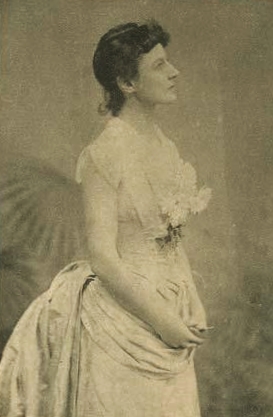
Sara Jeannette Duncan, date unknown.

I found I liked this book more and more as it went along, and after finishing it I felt I knew this witty and confidently opinionated writer on a much more intimate level, and my readerly affection for her, already well established, has grown accordingly.

And regarding that rest cure, it appears to have been reasonably successful, for after seven months of sitting outside under a cedar tree, through all sorts of weather including the annual monsoon, Sara Jeannette Duncan was allowed back into the “micobe”-infested house, and a return to the greater world.

She was to live another twenty-one years, dying in 1922 in England, at the age of 61, of “chronic lung disease”.

Sara Jeannette Duncan’s literary legacy was a respectable twenty-plus novels, as well as numerous journalistic articles. In 2016 she was designated a Canadian National Historic Person, a recognition which is decidedly well-deserved.


Read Full Post »

« Newer Posts - Older Posts »