Archive for the ‘Canadian Book Challenge #6’ Category

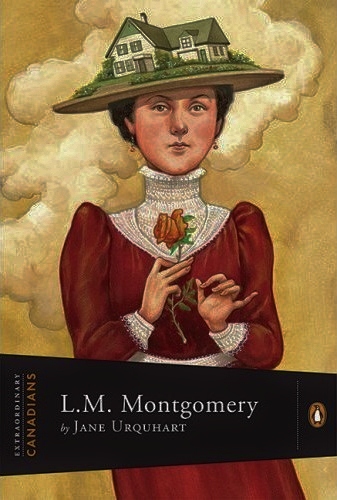
l m montgomery jane urquhartL.M. Montgomery by Jane Urquhart ~ 2009. This edition: Penguin Canada, 2009. Hardcover. ISBN: 978-0-670-06675-9. 161 pages.

My rating: 7.5/10.

A slender little biography which hits most of the high points of L.M. Montgomery’s life and career. Perhaps better as an overview or an introduction versus a definitive exploration of this Canadian literary figure.

A good addition to the many works about this iconic writer. Already familiar with the story of Montgomery’s life, I must say that the most interesting bits, to me, were where the author (Urquhart) writes about Montgomery’s influence on her own development as a writer.

Even if you have read other L.M. Montgomery biographies, Urquhart’s covers the same material in a very readable way, with a dash of creative flair.

*****

In the green master bedroom of a mock-Tudor house in the west end of the grey city of Toronto, a woman in late middle age lies dying, her pale arms almost as white as the sheet on which they are resting. It is April 24, 1942. Her failing body seems to her increasingly heavy, as if pulled by a great weight deeper and deeper into the flesh of the mattress. Outside, the air itself is weighted, saturated with the moisture of seasonal rain. Seeping into the room is the faintly discernible sound of the swollen river as it follows the path of the Humber Valley. The trees beyond the leaded windows have only just begun to show signs of spring.

In spite of what is about to happen, nothing in this room suggests struggle or discomfort: every cell of the woman’s body seems not so much in rebellion against life as dissolving into death, the way the rain outside her door is willingly dissolving into the earth…

The author almost lost me with her opening paragraphs. Urquhart’s biography of Lucy Maud Montgomery had received high praise when it was released several years ago as part of Penguin Canada’s 18-volume Extraordinary Canadians series, but this decidedly fictional opening shook me. Was this merely another “creative biography”? How on earth could Jane Urquhart have known any of these details, unless there somewhere exists a hyper-accurate account of Montgomery’s deathbed? There are no footnotes or references provided to suggest that this is the case.

The account of the expiration of Montgomery, and of her thoughts as she lies dying – the scene goes on for 9 pages – is purely speculative. Beautifully written, of course – it is Urquhart – but fiction.

Though the deathbed passages were pure fabrication, things improved considerably a bit further in. Though she never completely abandoned her occasional creative interpretations of Montgomery’s inner thoughts, those references became increasingly more plausible as Urquhart tells us of her reading of Montgomery’s diaries; we can more easily believe that the actual voice of Montgomery influenced Urquhart.

As I continued reading the biography, I appreciated the difficult task the author of it had taken on, to sort out the facts from the fictions of the life of this complicated, deeply troubled, rather tragically fated woman.

Urquhart cites Montgomery’s loss of her mother as a toddler, her cheerless upbringing by stoic grandparents, a dismal marriage to mentally disturbed husband, and beloved but disappointing children as reasons for her (Montgomery’s) continual efforts at reinvention of her own self through her personal writing. Montgomery’s diaries are known to have been continually edited and rewritten by the author as she progressed through her own life, which, though by no means devoid of joyful occurrences, close friends, and other good things, was so much less rosy than the fictional lives she created for her heroines.

Urquhart is a positively biassed – if occasionally “creative” – biographer in that she obviously admires her subject, and sympathizes with her, and seeks to understand what made her tick.

In spite of countless romantic references to moonlight and starlight in her fiction, and to rooms warmly lit by lamplight and by candlelight, it was shadow, not radiance, that most often claimed her once the sun had set. Her seeming addiction to detailing sunsets and twilights in her writing, if it sprang from anything at all beyond a poetic convention, may have come from a desire to hold on to the fading light. After the sunset came total, wide-awake darkness.

After my shaky initial start, I settled comfortably into reading the book, mentally sorting out the plums of fact from the lovely fictional bits and the author’s very interesting personal anecdotes. It was an enjoyable combination, but I would hesitate to rely on it as my only source of information on L.M. Montgomery’s life. It seems that Urquhart frequently assumes that the reader is already familiar with Montgomery’s body of work beyond the iconic Anne of Green Gables and its array of sequels; it assumes we are familiar with the era and the atmosphere in which the author lived and worked.

Keeping all of these things in mind, I would cheerfully recommend the book for those curious about L.M. Montgomery, and where she was “coming from” when she was crafting her overwhelmingly optimistic stories and novels. Montgomery’s truth, it turns out, is much darker and more compelling than her many fictions.

Read Full Post »

the strangers next door edith iglauerThe Strangers Next Door by Edith Iglauer ~ 1991. This edition: Harbour Publishing, 1991. Hardcover. ISBN: 1-55017-054-6. 303 pages.

My rating: 10/10 for her subjects – every one truly fascinating. Discounted heavily for the writing style, which I found frequently rather flat. I’m going to give this one a 7.5/10 overall. 10 for content, 5 for style. Worth a look; maybe you’ll find her easier reading than I did. Her topics are worth exploring.

Would I re-read it? Sure, bits and pieces of it. I wouldn’t tackle it cover to cover again, though. Once was enough for many of the articles, though I’m glad I read what Iglauer had to say. I find her prose hard to absorb – it certainly doesn’t “flow”, being more earnest than sparkling – and it’s a lot of work maintaining concentration, though she covers her subjects extremely thoroughly.

I hesitate to say too thoroughly, because I do believe that her tenacious peering into the heart of each of her topics is what enables her to include so many esoteric and absolutely fascinating details. I do wish that she had just a little more flair in her delivery, though.

Edith Iglauer was alive and well – though showing her age a wee bit, at 93 – and still actively writing the occasional article for Geist magazine in 2012. She was living in her own home with her third husband Frank on the B.C. Coast. Here is a vignette featuring Edith and Frank, by Ted Bishop. An inspiring note: Edith and Frank’s combined age was 189 at the time of the article, and they were both very much “with it” in every conceivable way, barring a few physical infirmities related to their age, like bad knees and failing hearing.

*****

Edith Iglauer is an American journalist with a long and varied history of being present during some very interesting times indeed. Born in Ohio in 1917, she decided while in college that she wanted to become a journalist, and persistently pursued that goal until she achieved it. Unable to stomach the requirements of a newspaper reporter’s job – she jibbed at inquiring of grieving parents as to how they felt about their young son’s tragic death earlier the same day – she was advised that free-lance writing might be her forte. Over the next fifty years Edith pursued interesting stories and people, meticulously researching them and becoming intimately familiar with every aspect of her subjects. Her work was published in leading periodicals of the time, such as The New Yorker, Harper’s, Christian Science Monitor, The Atlantic Monthly, Maclean’s, and many others.

The Strangers Next Door is a retrospective look at her long career, including excerpts from key articles and also her books, with added reflections as to how she came to write the pieces, and anecdotes about her subjects.

Several successful and well regarded books grew out of her articles and experiences, most with Canadian settings and themes. Edith travelled widely through Canada, found the country fascinating, and made her home permanently in British Columbia in the early 1970s, though she retained her American citizenship.

From the Introduction to The Strangers Next Door:

Looking over the pieces I have written, I realize that I have been like someone with family in two countries, attempting to acquaint them with one another. I am not just an American journalist writing in Canada for Americans, but a Canadian journalist writing about America for Canadan as well. Both countries, I have discoverd, still regard their neighbors across our common border as “the strangers next door”, and like any concerned relative, I want them to know and respect one another as much as I do.

The Strangers Next Door covers a broad range of topics.

From the 1940s, articles on:

  • Marian Anderson
  • Working in the radio-newsroom of the Office of War Information in Washington, D.C., which included weekly chats with Eleanor Roosevelt.
  • A posting as a post-World War II correspondent in Yugoslavia, during the rise of Marshal Tito
  • The UN Builds Its Home, 1947

From the 1960s, 70s and 80s:

  • The Mounted Men – an indepth look at the training of police horses and mounted policemen in New York City, 1962. (My favourite article in this book.)
  • The Biggest Foundation, 1972. The building of the World Trade Centre complex in New York.
  • Inuit Journey, 1963-1979. The development of Inuit co-operatives for the production and marketing of arts and handicrafts.
  • Baker Lake Art, 1964. A unique style of Inuit art from a remote corner of the Northwest Territories.
  • The Beautiful Day, 1966. A biographical short story inspired by Edith’s father’s death, published in The New Yorker.
  • Denison’s Ice Road, 1975. The article about the men and machines involved in winter-time road building and trucking across a frozen Arctic lake which grew into a bestselling book, and the inspiration for the current “reality” television series, Ice Road Truckers.
  • Don Snowden, 1929-1984. The detailed obituary of a man who worked to alleviate the poverty and hardships faced by Canadian Inuit peoples by helping them develop and profit from their unique skills and knowledge.
  • Prime Minister, 1969. A first-hand look at what makes Pierre Trudeau tick. Eight days travelling with the Prime Minister and countless hours of background research and interviews resulted in this indepth Profile.
  • The Strangers Next Door, 1973. An essay about Canada, for American readers.
  • “Capi” Blanchet. The mysterious author, M. Wylie Blanchet, of a British Columbia classic, the memoir The Curve of Time is researched and profiled for The Rainforest Chronicles # 8.
  • Seven Stones, 1979. A profile of British Columbia architect Arthur Erickson, the man who planned the University of British Columbia campus, and so many more unique structures . This grew into the 1981 book of the same title.
  • Hubert Evans, 1980. Another profile, this one of the esteemed B.C. writer and poet.
  • Bill Reid, 1982. A profile on the iconic Haida carver and goldsmith.
  • Bella Coola, 1975. Anecdotes of a visit to the fjord-side village, unlikely gem of the BC coast.
  • Fishing with John, 1987. An excerpt from the book. In 1974 Edith met and eventually married BC commercial fisherman John Daly. Their happy partnership ended with John’s sudden death only four years later. Fishing with John is Edith’s memorial, started while John was alive as a book about the salmon fishing way of life on the BC coast, and eventually becoming a personal saga.

Read Full Post »

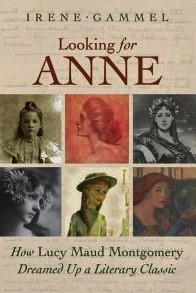
looking for anne irene gammelLooking for Anne: How Lucy Maud Montgomery Dreamed Up a Literary Classic by Irene Gammel ~ 2008. This edition: Key Porter, 2008. Hardcover. ISBN: 978-1-55263-985-6. 312 pages.

My rating: 4.5/10. I certainly wanted to like this book, and I picked it up with optimistic anticipation. Sadly I ended up feeling less than thrilled with my reading experience.

I did like bits and pieces – the factual bits and pieces – and I learned a few things about Lucy Maud Montgomery I didn’t know before, but the disjointed presentation and the frequent “It could have been like this” and “She must have felt like that” and the “I am certain that x was influenced by y, even though I have no proof” soon put me off.

While Irene Gammel is obviously a dedicated researcher and undoubtedly a well-informed Lucy Maud Montgomery scholar, I feel that her presentation of her theories in this book come across as unprofessional because of her continual admitted fabrications and assumptions.

Is it better if she admits it? Here’s a thought – why not stick to the facts? Or else drop the flowery, gushing, pseudo-Lucy Maud “voice”, which served merely to annoy rather than bewitch this particular reader.

*****

The questions Irene Gammel pose as the thesis statements for this book go something like this: What is the mystery behind the writing of Lucy Maud Montgomery’s magnum opus and incredibly successful book, Anne of Green Gables? Why did LMM not document the process of writing Anne much more thoroughly, and, while we’re on the topic, who actually inspired the red-haired heroine?

(Because of course it must have been a real person! There’s no way an author could just dream up a character out of her own head!)

Well, I must admit that such questions have never personally troubled me regarding Anne of Green Gables, a piece of entertaining fiction which I do indeed like a whole lot and which I re-read with deep pleasure every few years. I have always happily accepted that LMM just struck a lucky chord with this one, and that the character Anne was likely an amalgam of various personalities LMM knew in her daily life, with a good dash of artistic creativity rounding out the details.

Does it really matter if we don’t know the exact details of Anne’s origins? Well, it obviously bothered Irene Gammel enough so that she went ahead and assembled a vast array of evidence to support her own theories. Sometimes her enthusiasm carried her away. While the factual passages of this ambitious book are fascinating reading, they all too often degenerate into speculation. The author readily identifies her frequent forays into the imaginary, but they do detract from the value of the research.

evelyn nesbitGammel theorizes that Anne’s key ancestor was young photographer’s model Evelyn Nesbit, identified many years after the publication of Anne of Green Gables as “the face of Anne” in one of LMM’s journals. I’m including the photo in question for your edification – see left.

Gammel then goes on to speculate about a vast number of other celebrities, acquaintances and fictional characters who might have added their characteristics to embryo Anne as her creator formed her and defined her in writing.

Fair enough, but these are all speculation, as the Gammel admits over and over. She throws out a daunting array of possibilities and mulls each one over in detail, before admitting that she just can’t quite be sure. I ended up feeling like the writing of this book, much like my reading of it, was a bit of an exercise in futility.

I think I’ll end with this. I could go on and share all sorts of annoying examples from the text – as well as some quite lovely and informative passages concerned LMM which are actually documented and provable by genuine references – but I’m full up to here with this one, so this is all my enthusiasm amounts to.

As usual, Goodreads – Looking for Anne has a wide selection of interesting reviews. I am quite relieved to find that I am not alone in my somewhat faint enthusiasm – others appear to feel the same, though there are some fans.

And if you are a serious LMM fan, by all means go ahead and tackle this ambitious personal project – it’s certainly interesting enough, if one can keep focussed – but keep the salt-cellar handy!

On the plus side: Some unusual LMM photographs are included, and the biographer does manage to give a wide-ranging picture of the time in which LMM was working on the book, and the artistic, literary and cultural mood of the era.

Oh – and a little heads-up – speculation as to LMM’s sexual proclivities abound in this one, though Gammel doesn’t come right out and say the “L-word” except to paradoxically refute the insinuation which she herself seems to make. Many salacious references to Sapphic friendships!

Now, to be quite honest, it doesn’t matter to me one whit what LMM’s sexual orientation was, but obviously it matters a whole lot to Gammel, as she teasingly parades this theme throughout the book. It got tiresome.

Read Full Post »

friendly gables hilda van stockum 001Friendly Gables by Hilda van Stockum ~ 1960. This edition: Viking Press, 1960. Hardcover. 186 pages.

My rating: 6/10.

An average to good example of the vintage juvenile “domestic drama” genre. I’ve happily re-read this book a few times, though if it disappeared from the shelves I wouldn’t be heartbroken, just mildly regretful.

*****

Living in a large house in Montreal, shortly after a move from the United States, the six Mitchell children, Joan, Patsy, Peter, Angela, Timmy, and Catherine, ranging in age from fifteen (Joan) to three (Catherine), are joined by twin brothers. Their mother has had a hard time with the birth, and is weak and confined to bed, so a strict English nurse, Miss Thorpe, is engaged to care for the babies and help run the household until Mother can recover enough to take on her usual role.

There are immediate conflicts. Only Joan finds favour in Miss Thorpe’s eyes as she proves herself both willing and very capable in helping with the babies and taking on much of the meal preparation; but the younger five are considered much too selfish, rambunctious, noisy, messy and careless by the strict nurse. Father is busy working and is seldom home; cash flow is definitely an issue in the household; which though comfortably middle-class is far from wealthy. There is nothing left for any extras after paying Miss Thorpe’s wages, and several plot lines focus on the children trying to earn enough money for various crucial things they need or desire.

The American Mitchells are still adjusting to life in French Canada. The children attend Catholic school, and their struggles with learning a second language, getting along with the Québécois children who occasionally toss a scornful “You Yankee!” their way, and trying to conform to the strict standards of the nuns and priests at their schools are nicely depicted.

The story focuses on each child in turn, while giving a broader picture of the inner workings of the family. The only child not given a starring role is young Catherine; each of the others has some sort of adventure. Joan falls in love, and attends her first dance; Patsy loses her glasses and disgraces herself deeply with the nuns at school in numerous ways; Peter falls afoul of a schoolmate and in the resulting fisticuffs knocks down and smashes a large plaster statue given by an important supporter of the school; Angela gets lost while attending a maple sugaring-off party; Timmy becomes infatuated with a girl at nursery school, and attempts to come up with a perfect gift for her.

Mother eventually gets better, the twins appear to be thriving after the month or so that we are in touch with the family, peace is made with Miss Thorpe, and we leave the family celebrating at the christening party.

*****

A pleasant though minor story, from an author who then went on to write several more serious and very well-regarded historical fictions set in Holland during World War II – most notably The Borrowed House and The Winged Watchman. Though there are superficial similarities to Elizabeth Enright’s The Saturdays, Friendly Gables does not attain the appeal and overall excellence of Enright’s creation, which defines the genre and deserves every word of its frequent praise.

The formula is also much like that of the Eleanor Estes’ Pye Family books in that it mostly relates a family’s daily life, sometimes in microscopic detail. As with the Pyes, the Mitchells are far from perfect, which is pleasantly reassuring to the reader. The morals in Friendly Gables are predictable but not terribly intrusive. And everything always comes out right in the end.

This story does have some lovely vignettes of parent-child and sibling relationships. Something I particularly appreciated was how independent the children were in sorting out their various dilemmas, and how confident the parents were in their children’s abilities to cope. Occasionally a child would go to Mother of Father to report the current happenings, and perhaps ask for assistance or advice (always cheerfully given), but often it was merely to report that the problem was solved, whereupon the parent would basically say “Well done!” and that would be the end of it – no muss, no fuss.

Friendly Gables is the last book in a series of three about the same family, so there are occasional references to off-stage characters and previous happenings, which left me a bit out of the loop, but those would make perfect sense to someone with access to the whole set. It certainly isn’t a big drawback, as the author sketches in enough information to pin it all together.

Friendly Gables is set in urban Montreal, and was preceded by two other novels about the fictional Mitchell family: The Mitchells, published in 1945 and set in Washington, D.C., and Canadian Summer, set in rural Quebec, published in 1948.

These three books are autobiographical, according to both the author and her now-adult children, and were inspired by and record incidents in the very real Marlin family’s life. Hilda van Stockum published her juvenile books and her many illustrations of other authors’ works under her maiden name, but was in her “everyday” life  Hilda Marlin: accomplished painter, U.S. Civil Service wife, and dedicated mother of six children, all of whom subsequently attained rewarding and creative careers of their own.

Hilda was born in 1908, in Rotterdam, Holland, to a Dutch father and an Irish mother, and spent her youth in both Holland and Ireland. She attended art school, where she apparently received much praise for her realistic paintings. Hilda married her brother’s college roommate, American Ervin Ross Marlin, in 1932, and travelled with him to New York. The couple and their steadily increasing family lived in various cities in the U.S.A.. They then spent six years in Canada, before moving to Ireland, and eventually to England, where Hilda died peacefully at the age of 98, still living in her own home, in 2006.

Hilda, child and grandchild of scientists, artists, philosophers, writers and intellectuals, was raised in an atheist household, but she embraced the Anglican faith in her teen years, converting to Catholicism in adulthood. Her devout faith appears in her books, including Friendly Gables, but more as a background to the story than in a “preachy” manner.

Hilda van Stockum’s strong belief in the importance of family also permeates her writings, making her a decided favourite of those seeking “wholesome” books to share with their children. A number of her titles are still in print, some more than seventy years after their first publication, so there are still eager readers. Hilda van Stockum’s works seem to be particularly in favour with “traditional” homeschoolers, which is understandable due to the author’s positive views on “family values” and religion. And “secular” readers – do not fear! These books can be enjoyed by all.

I’m including this book in the Canadian Book Challenge because of the Quebec setting, though the author is not Canadian, but Dutch-American, and the family in the story is American. National identities and prejudices play an important role in Friendly Gables; the author handles the topic very well.

Read Full Post »

just add water and stir pierre berton 001Just Add Water and Stir by Pierre Berton ~ 1959. This edition: McClelland & Stewart, 1966. Paperback. 221 pages.

My rating: 8.5/10.

*****

Here’s another well-read paperback from my late father’s bookshelves, boxed up and brought home six years ago as my just-widowed, elderly mother was preparing to downsize from a huge, rambling three-story house to a much smaller bungalow. Both homes, incidentally, were built in their entirety by my father, who was a foundation-to-roof master carpenter, among his other jack-of-all-trades and master-of-many accomplishments and interests.

One of his interests was books. Dad did love to read, and I like to think that this collection of mostly humorous, often over-the-top satirical, sometimes sincerely thoughtful short essays made him smile as they did me when I finally read this briskly paced book over the course of this potentially dreary day spent recovering from a brief bout with the latest flu bug.

Being a random collection of satirical essays, rude remarks, used anecdotes, thumbnail sketches, ancient wheezes, old nostalgias, wry comments, limp doggerel, intemperate recipes, vagrant opinions and crude drawings …

So says the front page, and it describes the ensuing contents well. Most of these short pieces appeared as columns in the Toronto Daily Star in the 1950s, and they are definitely indicative of the time in which they were written. As a cynically humorous portrait of the era, this book is an excellent little period piece, but it’s an enjoyable read even for those of us not familiar at first hand with the context of some of the references. Berton’s opinionated prose is seldom dull, and the shortness of each entry makes it good for dip-into reading as well. I read the whole thing in one go, and that likely wasn’t such a great idea, as I’m now feeling a bit light-headed, but I’ll blame that on my current bug as much as on the flippant nature of my reading matter.

The book is arranged into groupings of similarly themed articles and essays. These can be read in order, or sampled at will.

Five Modern Fables ~ Pure over-the-top satire starts us off. Berton skewers modern advertising techniques and ploys in his first three fables, lampoons the vicious cycle of competitive Christmas card lists, and ends with a cautionary tale about not heeding the omens and building too close to the volcano.

Seven Men and a Girl ~ Brief character portraits of eight people Berton met and interviewed: Ex-convict John Brown, pianist Glenn Gould, aviator Russ Baker, evangelist-turned-politician Charles Templeton, Canadian Communist Joe Salsberg, poet and writer Robert Service, entertainer Milton Berle, and call girl Jacqueline (no last name given).A Woman of "Vogue"

The Wayward Periodical Press ~ “Six periodical publications deserving of comment” – Vogue, Time, Mayfair, Playboy (and the rest of the Bosom Books), Mad, and Justice. What an interesting combination of companions these are. Vogue is, well, Vogue, and it apparently hasn’t changed much at all.

My favourite magazine, next to Screen Stars and Mad, is Vogue. The day it appears, I rush eagerly to the newsstand and, with the help of a couple of weightlifters, lug it off to my den. For sheer escape reading it beats the old Blue Fairy Book hollow. It chronicles a world so foreign and unreal that I would not believe it existed, if there weren’t photographs to prove it.

The women who grace Vogue’s pages are like no women I have ever known. I have tried to sketch one or two of them here, but my brush does not do them justice for their absolute and utter sexlessness defies reproduction. If they came from a far corner of the solar system they could not be more different than the blousy creatures one finds romping through Esquire and Playboy.

Am I all wet in my theory that a bosom craze is sweeping the country? In Vogue, there isn’t a bosom in a carload. These women are all eyes and cheekbones, and they do something with their necks that I haven’t seen since Leona, the Giraffe Girl, went into retirement.

At the end of the neck one finds a face that has overtones of Buchenwald about it – chalk-white and haggard, Vogue women do not have noses, only nostrils. Their eyes are enormous and decadent, their lips are thin and solemn. Their hair is always quite odd. They are shown thrust forward in inscrutable positions that suggest some curious doe-like animal at feeding time.

Time sets off a passionate diatribe in defense of Canadian content in “Canadian” versions of American magazines; Mayfair is a “high society” periodical seething with anachronistic class consciousness. Playboy and the rest of the “men’s magazines” are investigated as to the number and degrees of exposure of female body parts posed artistically for masculine delectation; Berton claims to be overwhelmed by sheer numbers.

The Cult of the Bosom has now reached its zenith in this continent, as a glance at any newsstand will show. In the seventeen magazines I examined, there were 503 photographs of well-endowed young women displaying their endowments.

In 125 of these photographs, many of them in glowing colour, the young ladies’ torsos were entirely exposed. In the remaining 378 photographs there was a certain roguish attempt at concealment.

I did not bother to count any photographs of women dressed for the street, because there were so few.

I did not bother to count any photographs of flat-chested young women, because here were none.

I did, however, make a count of the numbers of photographs of women with no pants on. There were sixty of them.

Mad magazine receives an enthusiastic nod of approval, for the “sophistication of the humour”, while Justice, an arcane periodical dedicated to the practices of sadomasochism and corporal “discipline”, garners strong words of scorn.

The Broadcasting Arts ~ Television and radio – including the already-venerable C.B.C. – come in for their turn in Berton’s critical spotlight.

Verse, Blank and Otherwise ~ Several parodies in verse of current events of the time. The Sixty-Five Days of Christmas struck a modern chord, though nowadays it would need to be retitled The Ninety Days of Christmas to approach a closer accuracy!

Christmas began last Tuesday
Just three days after Hallowe’en,
By which time the big emporiums,
Having disposed of the comic ghosts and candy pumpkins
And having burned all the second-hand witches,
Replaced them with more seasonal symbols:
A reindeer with a crimson nose,
A talking snowman and a terribly cute bear,
Fifty-seven varieties of Santa Claus,
And here and there, an inconspicuous plastic replica of the Christ-child,
 
Entirely non-denominational.
 

Intemperate Recipes ~ A plea for a return to real cooking versus the pre-packaged growing norm in the titular Just Add Water and Stir, and a heartfelt rant against instant coffee, obviously a newly popular abomination in Berton’s world. Plus four quite decent-sounding recipes – or, more accurately, anecdotal instruction pieces on how to best prepare these Berton standbys – Tomato Soup, Baked Beans, Corned Beef Hash, and Clam Chowder. Pierre Berton in the kitchen – what a grand thought!

The Passing Show ~ A satire from the viewpoint of the future, and musings on the status significance of offices and office furnishing, smoking, and divorce. Shopping for a Coffin is thought-provoking and quite serious, while Several Openings for Novels will make the aspiring writer nod in rueful recognition. A few more observations – paying to be published, the confusion of children’s toy assembly instructions, and a modern Red Riding Hood round out this section.

Certain Vagrant Opinions ~ Full rant mode! On Dick and Jane (Berton is against), On Advertising and the Press, On Racial Origins (none of the government’s business), On Thought Control (shades of Orwell’s Nineteen-Eighty-Four), and most passionately, On Flags and Anthem and On Modern Torture (prison reform), which is the most serious piece of the lot, and describes an execution by hanging which Berton was assigned to attend as a young reporter.

Some Old Nostalgias ~ Memoirs, 1927 to 1941, of Berton’s earlier days. Fascinating and charmingly written.

Read Full Post »

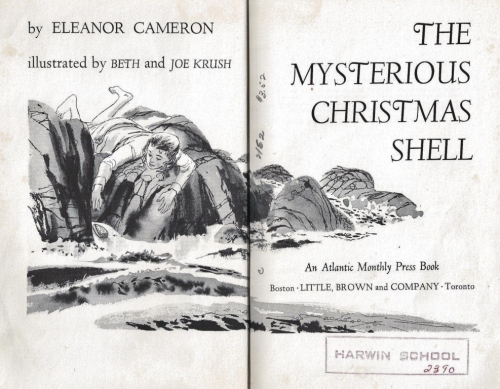
the mysterious christmas shell eleanor cameron 001The Mysterious Christmas Shell by Eleanor Cameron ~ 1961. This edition: Little, Brown & Co., 1961. First edition. Hardcover – Library Binding. Illustrated by Beth & Joe Krush. Library of Congress #: 61-9281. 184 pages.

My rating: 8/10. What a nicely written book this was! It restores my faith in the joys of reading juvenilia, sadly shaken by recent forays into several more modern disappointments in the youth-oriented fiction line.

This one was a recent impulse buy from the ever-changing and happily eclectic selection at the Bibles for Missions thrift store in Prince George. I try to get there once a month or so, and I always come away with a promising mixed bag of reading material. Some goes right back into the giveaway box, but there’ve been some small treasures found there, too.

The cover illustration was what grabbed my attention, though this grubby ex-school-library book showed much evidence of many readers, and was less than appealing at first glance. (It ultimately cleaned up nicely with a triple application of soapy cloth, rubbing alcohol and a tiny dash of benzene – not in combination, I hasten to add, but in delicately selective stages.)

“Those look like Krush children,” I thought to myself, and by golly, my instinct was right. Beth and Joe Krush were a husband-and-wife team of children’s book illustrators working industriously together from the 1950s through the following decades, and their marvelously detailed pen-and-ink-and-wash drawings perfectly depicted the characters of such classics as Mary Norton’s The Borrowers and its sequels, and Elizabeth Enright’s Gone-Away Lake books, among many others.

Here’s a sample. Isn’t this appealing?

the mysterious christmas shell frontispiece eleanor cameron 001

And Eleanor Cameron’s name chimed a little bell, too, though I didn’t really place it until I Googled her after I’d read the book. This is the famed Mushroom Planet creator, though those junior sci-fi fantasies were only one aspect of her widely varied output.

The Mysterious Christmas Shell is very much a plain and simple “domestic adventure” story, and it turns out that it is Cameron’s second book concerning the same brother-sister pair, Tom and Jennifer. Their earlier adventure, The Terrible Churnadryne, was published in 1959.

*****

Five days before Christmas, Jennifer and Tom arrive in the fictional town of Redwood Cove, California, on the Monterey Peninsula, to spend the holidays with their Grandmother Vining, and Aunts Vicky and Melissa. As soon as they walk into their aunts’ house, they realize something is terribly wrong. The tree hasn’t been decorated, the usual garlands are in a heap of green at the foot of the stairs, and everyone has a strained smile; occasionally they catch one or another of the adults huddled in a corner crying.

Turns out that the Vining family has had to sell its treasured piece of ancient redwood-forested seaside property, Sea Meadows, because of the year-ago death of the family partiarch, the children’s grandfather. Some investments have gone wrong, and outstanding debts needed to be paid. The purchaser, a boyhood friend of the family, was thought to want to keep the property unspoiled, to be the site of a single home, but recently troubling word has come that there will instead be major development. Hotels, a shopping centre, and a vacation community are planned; many of the ancient trees will be coming down, and No Trespassing signs will be going up barring the locals from their most pleasant seaside beaches and coves. The local townspeople are up in arms, and are angry at the Vinings for the sale; the Vinings are distraught at the prospective destruction of their well-beloved redwood forest.

An offer to re-purchase the property from the developer has been turned down, and a prospective reprieve of sorts has not come about. Grandfather Vining had intended to change his will to transfer Sea Meadows to the state as a nature reserve, but no one has any record of the will being registered, and no one knows if the envelope containing it was actually sent. If the will was indeed written, it would effectively cancel out the subsequent sale, and the property would go to the state once the buyer’s money was refunded. This seems like a way out of the dilemma, but where, oh where is the will?

As Jennifer and Tom ricochet around Redwood Cove looking for clues, we get a vivid picture of a large, loving family, each member trying to do the best for the others, though occasional misunderstandings occur.

The physical description of the California coastline, with its sea caves and pocket-handkerchief beaches, its tide pools and their glorious variety of sea life, is wonderfully well done; it is obvious that the author held the area in deep affection.

I do have an extra special reason for loving this story, having spent some weeks every year in California as a child, visiting grandparents, aunts, uncles and cousins in the Fresno area, and travelling out to San Jose, Monterey, and Carmel-by-the-Sea to visit family friends and to explore the still-unspoiled seashore along the more remote stretches of coastline. I even had my own similiar near-brush with death, once being washed out into the surf by a rogue wave; my father’s heroic rescue has become a piece of family folklore, and I blame my deep but reasonably well-disguised unease about any body of water much deeper than my knees on that terrifying childhood experience. Tom, Jennifer and Aunt Melissa’s being caught in the waves of the incoming tide sent chills down my spine! I could feel the sand burns …

The familiar setting was a marvelously unexpected surprise, but putting aside nostalgia and concentrating on the writing, I must say I was impressed by the quality of the prose, and by the author’s fine story-telling ability. While this is one of those stories where nothing huge really happens, with the adventures being small ones, and the solution to the mystery very apparent to the reader from early on – the Vinings, on the other hand, struggle on for strangely long time figuring out their clues – I found I couldn’t put the book down until the satisfyingly happy (though rather improbable) ending.

A grand vintage read for adults of a certain age wishing to revisit their youth through the pages of a book, though I’m not sure how much it would appeal to our more sophisticated 21st Century children.

Despite the Christmas-time setting, this is not really a Christmas book as such, though a glass tree ornament from Innsbruck plays a major part. Oops – just gave away a clue!

It was enjoyable to read about Christmas preparations in a place far from snow, and that brought back memories, too. We only spent one Christmas in California when I was a child, as most of our travelling took place in the early spring and the fall, but I remember how surreal it was that one time to be singing carols under the palm trees, with roses still blooming and lemons on the trees in my grandmother’s garden, while back at home, in interior British Columbia, icicles reaching the ground were our parting memory as we’d pulled out of the yard for the marathon three-day drive southwards. (Somewhere I have a picture from that trip of me and my sister standing, in our matching velvet-collared coats, in front of a huge Christmas tree at Disneyland, which was ornamented by coloured glass balls as large as our heads.)

This is an author decidedly worthy of further investigation. Investigating the titles and plots of some of her non-sci-fi “realistic” children’s/teens’ novels, I strongly suspect that I read some of those when I was in grade school, as two or three of the unusual plots sound very familiar, but The Mysterious Christmas Shell was an unfamiliar, unexpected and most welcome find, for all of the reasons detailed above.

*****

Oh – one more serendipitous thing. Eleanor Cameron turns out to be Canadian! She was born in Manitoba, and though she subsequently lived most of her life in California, she is widely identified in all of the material I was able to find online as a Canadian. So – another one, completely out of the blue, for the Canadian Book Challenge!

Read Full Post »

the autobiography david suzukiDavid Suzuki: The Autobiography by David Suzuki ~ 2006. This edition: Greystone Books, 2006. Hardcover. ISBN: 1-55365-156-1. 404 pages.

My rating: 5/10. Interesting to get some of Suzuki’s back story, but sadly my personal regard for this enviro-icon took a small step downward after reading it. It seems like the ego displayed here is as large as the legend.

*****

There’s a little comment someone made in my hearing years ago, which comes to mind right now: “If you want to know how good he is, just ask him”.

Packing a whole bundle of firewood on his shoulder (and understandably so) stemming from his family’s mistreatment during the World War II Japanese-Canadian internments and appropriation of property, David Suzuki grew up feeling like he had something to prove, and he’s succeeded to do just that, in spades. The depth of love/hate public feeling regarding this one soft-spoken and absolutely brilliant man goes to show how influential he has become.

The political right wing hates him, the lefties have made him their god. I tend to swing left, and I deeply admire David Suzuki for the focus on environmentalism he has forced into the public eye, but this autobiography shows all too clearly the god’s feet of clay.

This book looks back briefly to Suzuki’s childhood in B.C. Born in 1936, David Suzuki was six years old when he, his mother and sisters were interned in one of the camps for Japanese-Candians in the Slocan Valley. His father spent the war in a separate labour camp. After the war, the Suzukis moved to Ontario, where David completed his high school education before attending university in the U.S.A., attaining a PhD in Zoology in 1961.

Returning to Canada, Suzuki worked as a professor and researcher in genetics at the University of British Columbia. Branching out to participate in public education, he founded the popular CBC Radio science program Quirks and Quarks in 1974, and the iconic television series The Nature of Things in 1979. David Suzuki was a household name by the mid-70s, and his profile has grown exponentially through the years.

The Autobiography is honest enough in that Suzuki frankly discusses his two marriages and his shortcomings as a less than involved husband and father. His deep dedication to his work and his increasingly hectic public life often separated him from his family, and he freely admits that this is something he now regrets.

Most of this book is a listing of various events Suzuki has been involved in during the past twenty years; plenty of name-dropping of the celebrities he rubbed elbows with – Sting! Buffy St. Marie! John Denver! – and plenty of slightly patronizing commentary on how he brought this, that and the next thing to the public attention. True, so true, but the tone doesn’t feel very kind-spirited at times.

The writing is not the strong point here, either. The subject matter would be much more enthralling if it weren’t dealt with in such a flat “Then I said, then I did, then I said, then I did” manner. There are some personal anecdotes, mostly concerning his parents, and the death of his father, where he lets himself go, and these are the most poignant and memorable of this rather dull book.

I would say “read it” just to get a deeper understanding of this fascinating and frequently self-sacrificing man, but be prepared to come away feeling something like a member of the great unenlightened, living in the dark and waiting for The Master to flick the switch. You really want to know how good David Suzuki is? Read The Autobiography. He’ll tell you.

Read Full Post »

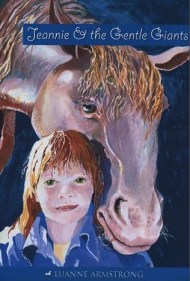
jeannie and the gentle giants luanne armstrongJeannie and the Gentle Giants by Luanne Armstrong ~ 2002. This edition: Ronsdale Press, 2002. Softcover. ISBN: 0-921870-91-4. 150 pages.

My rating: 4/10. A completely typical “problem novel” (single parenthood, mental illness, foster children) packed with contrived situations. An eleven-year-old heroine is placed in foster care after her mother has a mental breakdown.

Sadly this one didn’t quite fly. The horse bits were good – the best part of this novel, in my opinion –  but they couldn’t salvage the rest of the completely predictable, cookie cutter story. Despite the favorable back cover blurb by my up-the-hill neighbour, poet, writer, and horse-logger Lorne Dufour (aha! now here’s an interesting Canadian Reading Challenge author) it just didn’t click with anyone here. Too bad. Jeannie is set in Kelowna, B.C., and as a home-province, B.C. Interior-set youth novel I really wanted to love it. (Plus the cover image is fantastic.)

From the publisher’s website:

Jeannie and the Gentle Giants, a novel for readers eight to fourteen, deals with the problems experienced by children when they are taken from their parents and have to make a new life with foster parents in a new community. In Jeannie’s case, the problems begin when her mother falls ill and can no longer care for her. Taken from her home, placed with foster parents and unable to discover the whereabouts of her ill mother, young Jeannie withdraws into herself and can think only of running away.

Gradually her defences are breached by two immensely large and wonderful workhorses and their perceptive and humorous owner. Through the horses and her work on the farm, Jeannie develops new interests, learns to ride and becomes involved in the daily life of the farm, even helping with horse-logging. In turn, Jeannie learns about friendship, love and trust, and ultimately gains the maturity and self-confidence to accept the challenge of becoming herself a care-giver. In this sensitive and moving story, Luanne Armstrong draws us into a world of pain, growth and fulfilment.

Lorne Dufour’s back cover blurb:

In this story, the Gentle Giants slowly walk right through our hearts. We will forever remember their presence in Jeannie’s life and that the great Gentle Giants never forget.

 ~ Lorne Dufour, horse-logger & award-winning author

The author attempted an ambitious level of complexity here, by involving her young protagonist in a rather tangled combination of situations. We have: mentally ill mother, single-parent family with no father in sight, poverty, social stigma as child of mentally ill mother (handled quite well by author in providing heroine with staunch friends who immediately speak up in her favour to school bullies), foster parents who can’t have children, neighbour couple who find they are expecting a baby mid-way through book, heroine’s questioning as to what a family actually is and her conflicting desires to both be with her mother back in the city and to stay in her new, more fulfilling and interesting country life, doctors refusing to allow child to see ill mother – (this didn’t ring true – felt like a plot element to increase tension – mother was experiencing a psychotic episode, some mention of bipolar disorder/manic depression, but once the mother was capable of sending the first letters, why the heck WOULDN”T she be able to have visits from her daughter – wouldn’t that by emotionally beneficial to BOTH of them) – okay, moving on – learning to handle work horses, learning to ride, dealing with an injured horse all by herself, finding a lost child, guilt guilt guilt because heroine feels she has been the cause of the child being lost, feral stray dog tamed and made into pet …  My goodness, what a busy, busy girl.

As I said earlier, I really wanted to like this book, but it just didn’t ever feel “real”. Too much was chucked into the mix, Jeannie’s reactions were not very well portrayed – we were continually given the same set of outward clues that she was all bummed out – she had a “shy look”, “looked down”, “blinked to hold back tears”. The language throughout is overly simplistic, as if keeping it accessible to “poor readers” was a major goal.

Does this seem too critical? I feel like a big old meanie for picking this one apart, but, in all honesty, these were my thoughts as I read.

For the record, I really don’t care for “problem books”, for readers of any age, but in particular for young readers. “This is a book about DIVORCE! MENTAL ILLNESS! CEREBRAL PALSY! DOWN’S SYNDROME! BULLYING! ANOREXIA! ETHNICITY! PREJUDICE! BEING GAY! blah blah blah… If you, dear person/dear young child with a similar issue in your life, will only read this book you will feel so much better because you will see how this marvelous hero/heroine dealt with it in their fictional world and you won’t feel so alone.”

Dear youth authors: Write a STORY first. If there are side issues, so be it, for if naturally included those always interest, verisimilitude and richness to the mix. But don’t pick an “issue” and write a prescriptive “here’s how to deal with it, dear” contrived moral tale. Kids aren’t stupid. They don’t need to be told what to think in such a poorly written way. Yes, definitely acknowledge and include the issues, but don’t build a weak story around them, for the sake of marketing the book to the school library network! This whole “issue story” genre encourages sub-par story-telling.

In my opinion.

Jeannie and the Gentle Giants pushed a lot of my buttons, and not in a good way.

Rant over. (For today!)

Oh, hang on – not quite. “Foster” parents – I always thought that foster parents were those filling a long-term role in a child’s life. Jeannie is in what I would classify as “temporary care”, so the immediate (within days) placement of Jeannie with a new, albeit temporary, “mom” and “dad” didn’t ring true. It is continuously stated that Jeannie will be reunited with her mother once the doctors get her (mother’s) meds figured out. I mean, the actual family placement is okay, but the whole “this is your new family” thing felt rushed and phony. No wonder the poor kid is a basket case – “Here, Jeannie, meet your new mom!”

And another quibble, this with the publisher’s website and back cover plot outline. It sounds as though Jeannie doesn’t know where her mother is through all of this. She’s in the flipping hospital in Kelowna, people. Did you not read the book?!  Jeannie knows this, her social worker knows this, her “foster parents” know this – they make continual phone calls and Jeannie’s mom writes her letters, for crying out loud! So why is this presented in the promotional material as “child torn away from parent and searching for her”? The kid tries running away to go see her mother, but she knows where her mother is. She’s turned away as she tries to buy a bus ticket to Kelowna, to go to the hospital, to see her mother, because Jeannie knows she’s there.

Okay, now I’ll quit. I’d hesitated to review this book, because it let me down so sadly, but I did say I’d review and post every Canadian book I read, so here goes. There are a few more disappointing titles lined up for review, so a heads-up for those wondering why I’m so crabby today. I’ve just been pushing them back in the queue, but have decided to tick them off my deal-with list before 2013 hits.

Read Full Post »

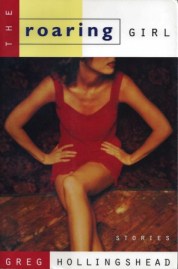
the roaring girl greg hollingshead 001The Roaring Girl: Stories by Greg Hollingshead ~ 1995. This edition: Somerville House, 1995. Softcover. ISBN: 1-895897-53-X. 196 pages.

My rating: 4/10. These are cleverly written, but a little too far out there for me. I wouldn’t re-read any of these anytime soon, and if I’d never heard of Greg Hollingshead it wouldn’t break my heart.

This collection won the 1995 Governor General’s Award for English Fiction – Short Stories, and the contents are undeniably well-written, but most of the stories left me feeling more than a mite confused, and usually a whole lot disturbed. Hollingshead has a creative mind and a grand way with words – some of his phrases lift up off the page and vigorously come to life – but it’s all kind of kinky. Often humorous, but definitely dark. Lots of sex – mostly of the “ew!” nature – and deeply twisted thoughts.

I’m not going to spend any time deeply reviewing this one, because it would require me to spend more time in Greg’s head (as it were) and, quite frankly, I don’t want to.  I’ll be moving The Roaring Girl along to see if it can find a more suitable home.

*****

  • The Side of the Elements – A couple rents out their home for the year they must be away. Stuff goes on in their absence. This one I rather liked.
  • The People of the Sudan – A family is maneuvered into taking temporary care of a box full of Canadian Christian Relief “supplies” for someone going to the Sudan; the rendezvous goes awry and the situation goes surreal. Another good one; downright humorous.
  • Rose Cottage – A young man becomes involved in trying to fix what he believes is an abusive relationship between a nurse and her elderly charge.
  • The Roaring Girl – A transient girl is given temporary haven by a family, deeply affecting the adolescent son.
  • The Age of Reason – Some sort of dysfunctional family saga. I have no idea what this was all about!
  • Rat With Tangerine –  Ditto.
  • A Night at the Palace – This one was a complete nightmare – couldn’t finish it. People behaving strangely. And badly. Hallucinogenic.
  • The Appraisal – Oh, thank goodness – an actual narrative arc! Well, relatively speaking. A cottage appraisal turns into a conversation on the nature of civilization, and its impending collapse. Awesome – loved it.
  • The Death of Brulé – A young boy becomes involved with the older girl next door. Ick.
  • The Naked Man – Another absolutely surreal family tale.
  • How Happy They Were – Sad people; love gone wrong.
  • Walking on the Moon – The view from a roof overlooking the people next door. Odd.

So – out of these twelve there were four I kind of, sort of, almost enjoyed reading. The Appraisal is the only one I’d willingly seek out again. Goodbye, Roaring Girl!

Read Full Post »

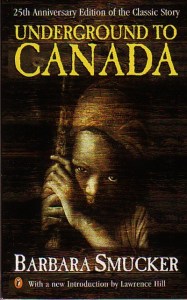
underground to canada barbara smuckerUnderground to Canada by Barbara Smucker ~ 1977. This edition: Puffin (Penguin), 1999. Introduction by Lawrence Hill. Paperback. ISBN: 0-14-130686-6. 144 pages.

My rating: 9/10  – A very good historical fiction novel for its intended audience, middle grade to young teen readers. Older readers may notice the simplified plotting and some plausibility gaps, but in general a well-written story with a gripping main character and dramatic situations, well-researched and well-presented.

*****

Author’s Note:

The escape from Mississippi to Canada by two fictitious characters, Julilly and Liza, could have happened. It is based on first-hand experiences found in the narratives of fugitive slaves; on a careful study of the Underground Railway routes; and on the activities of two Abolitionists: Alexander M. Ross of Canada and Levi Coffin of Ohio.

Twelve-year-old June Lilly – Julilly – is a slave on Massa Hensen’s Virginia plantation. He’s not a bad slave owner, comparatively speaking, but when he gets ill and can no longer oversee his cotton farm, his slaves are offered to a buyer from Mississippi, where conditions are notoriously the worst in the slave-owning states of the South.

Night music droned through the slave quarters of Jeb Hensen’s Virginia plantation. The words couldn’t be heard but they were there beneath the rise and fall of the melody.

Julilly hummed them as she sat in the doorway of her cabin, waiting for Mammy Sally to come home from cooking in the Big House kitchen. She was as still and as black as the night. The words of the song beat in her head.

When Israel was in Egypt’s land
Let my people go
Oppressed so hard, they could not stand
Let my people go.

Old Massa Hensen didn’t like this song. He said it came when there were whisperings and trouble around. There were whisperings tonight. They murmured beneath the chirping of the crickets. They crept from ear to ear as soundless as the flickering of the fireflies.

When the slave trader does indeed come, Julilly is separated from her mother and is sent with a group of other young slaves to a much harsher owner in Mississippi. When an opportunity to escape arises, Julilly and her new friend Liza grasp their chance and set out on an epic trek north, finding help through the network of the “underground railway”, hoping beyond hope to one day reach the far off land called “Canada”, where slavery is outlawed.

They succeed, but not without many hardships.

The ending of the story was realistic though rather optimistically contrived in its reconciliation scene between Julilly and her mother; I found it hard to accept so much “coincidence” in such widely separated characters reuniting with such apparent ease. That was really my only objection, though. Oh – and the lack of complexity with the secondary characters. Even though others share the stage, this book is very much centered on one character only – Julilly.

Julilly is a quite beautifully drawn character, and I found myself completely engaged with her story, much as I already knew the plot line both from previous readings and from the inevitability of the stereotyped story arc.

One of Barbara Smucker’s best novels for young readers, and the one which made her reputation as a writer. A very Canadian novel, though most of the action takes place in the United States. Canada’s presence as a destination for the escaping slaves, and the involvement of real Canadian Abolitionist Andrew Ross are key plot elements.

This would be good for independent readers 10 and older. This would also make a good Read-Aloud, for all ages, though the subject matter is intense and might not be suitable for sensitive younger listeners. Era appropriate use of the derogatory term “nigger” throughout; Lawrence Hill’s short Introduction is a must-read for its discussion of this aspect. Fast paced and engagingly written.

Recommended.

Read Full Post »

« Newer Posts - Older Posts »