Archive for the ‘2010s’ Category

Randy Bachman’s Vinyl Tap Stories by Randy Bachman ~ 2011. This edition: Penguin Canada, 2011. First edition. Hardcover. ISBN: 978-0-670-06579-0. 224 pages.

My rating: Oh boy. Another toughie to rate.

Because I’m already something of a Vinyl Tap fan, admittedly for Randy’s rambling anecdotes more so than some of the actual songs, and I’ve heard some – a lot! – of these stories before. The book perfectly captures his long-winded, continually-sidetracked, “Hey – I played with everyone you ever heard of” – and of course he did, he really DID! – very Canadian, very polite, and very funny style. I could hear his voice say every word I read.

Anyway, the rating. If I’d never heard a single episode of Vinyl Tap, I’d have to say a 6 or possibly a 7. Lot’s of name dropping, lots of references to both now-forgotten musicians and still-legendary rock stars, lots of eyes-glaze-over arcane musical stuff. As it is, and because I really like and admire Randy on a personal level – though I’ve never met the guy, and was definitely not a real fan of his music when growing up, except for the few chart toppers I inadvertently listened to – “American Woman”, “No Sugar Tonight” – you know, the standards – (I was always more into the Brits, like The Stones and The Who and Bowie and T. Rex, with a parallel affection for Jonie Mitchell and Bob Dylan and their ilk) – anyway, his voice on CBC Radio is a ton of fun to listen to, and the man seems genuinely nice.

Nice is good. We need way more nice in the world. And he’s a kid from Winnipeg. Who now lives in B.C. So he gets an 8.5/10. Rock on, Randy! Long may you ramble.

*****

I think maybe I already wrote my review. Let’s see, maybe a bit of background info for those of you Canadians who haven’t inadvertently or deliberately tuned into CBC Radio on a Saturday night driving along in the dark.

The Guess Who. Bachman Turner Overdrive. Ring any bells? If so, you may be a Canadian of a certain age.

Randy Bachman’s musical life started way back in his childhood, with violin lessons from the age of five. That was in the 1940s, and by the ’50s Randy had discovered another stringed instrument, the guitar – in particular the rock’n’roll guitar – and his future was set. Blessed with a hear-it-once-and-play-it mind – Randy calls it his “phonographic memory” – Randy forged ahead single-mindedly absorbing every new lick and chord and riff, and hanging out with the rest of the young wannabees in Winnipeg’s surprisingly fertile breeding ground for the rockers of the next few decades.

Teenage garage bands evolved and moved on, and the young musicians traded high school gyms for recording studios, doggedly saving their money to produce demos and singles and eventually albums, and one day, not too far into his musical journey, Randy found himself playing among the greats. Having converted to Mormonism when wooing his first wife, Randy was that rare figure: a rocker who embraced the third element of the stereotypical sex, drugs and rock’n’roll lifestyle while remaining a sober observer of the excesses of his compatriots in the first two departments. Perhaps that’s why his memory is so darned good?

And it – his memory – is amazing. The guy is a fount of trivial detail and anecdotes galore. To listen to him chatting away on Vinyl Tap, picking on his guitar to illustrate the details of what chord so-and-so played on his/her greatest hit/forgotten classic is mesmerizing. The guy is a literal sponge. He’s soaked up everything he’s ever heard or seen, music-wise. I repeat – amazing.

This book is a collection of Randy Bachman’s Vinyl Tap radio show monologues, expanded and cross referenced and generally polished up, with playlists of referenced songs at each chapter end, apparently available as collections on iTunes. (I haven’t checked this out personally, but I read that somewhere in the book end notes. It’s not prominently mentioned – a point in favour, in my opinion.) Another cool feature is the themed lists of songs at the end of the book, reflecting the themed Vinyl Tap shows where the featured “common thing” among diverse songs highlighted by Randy may be, say, cowbells, or songs for your funeral – how about “I Shall Be Released” by The Band, or “Wasn’t That a Party?” by the Irish Rovers, or “Another One Bites the Dust” by Queen, among all the sad and sobby tearjerkers also listed –  or food songs (“Catfish Blues”, “Cheeseburger in Paradise”, “I Want Candy”.) Sometimes a little bit silly, but a whole lot of fun.

Speaking of food, Randy shares some deep down and personal stuff here as well, like how his own appetite led him to the point where he weighed almost 400 pounds a few years ago, and his resolve to turn his life around. He opted for gastric bypass surgery, and it appears to have done wonders for him; he’s downright svelte in his later photos.

All in all, an interesting book for a Randy Bachman fan or a guitar aficionado – the guy’s a guitar monomaniac too, and there is a long, super-detailed chapter on rock guitars and their ins and outs and how to get various details of sound which, though fascinating in an “I’ll never use this information but it’s cool to see someone so passionate about it” way is something that was mostly lost on me, as I suspect it would be on most of us who aren’t aspiring rock band guitarists.

Would I recommend it? Hmm. Maybe one to check out from the library before buying it, though the song playlists are maybe worth having around, for those days with too much time on your hands and an iTunes gift card handy.

And here are some good links to recent interviews with Randy Bachman:

National Post – Randy Bachman Talks & Writes Vinyl Tap

Georgia Straight – Randy Bachman Remembers

Guitar International – Randy Bachman on Canadian Rock & Collecting Guitars

Read Full Post »

I’ve been on a lightning trip to the coast to take the dancer to choreography sessions and to pick up pointe shoes and other arcane neccessities. It was an enjoyable and productive – if rather rushed – excursion, but I’m glad to be back home.

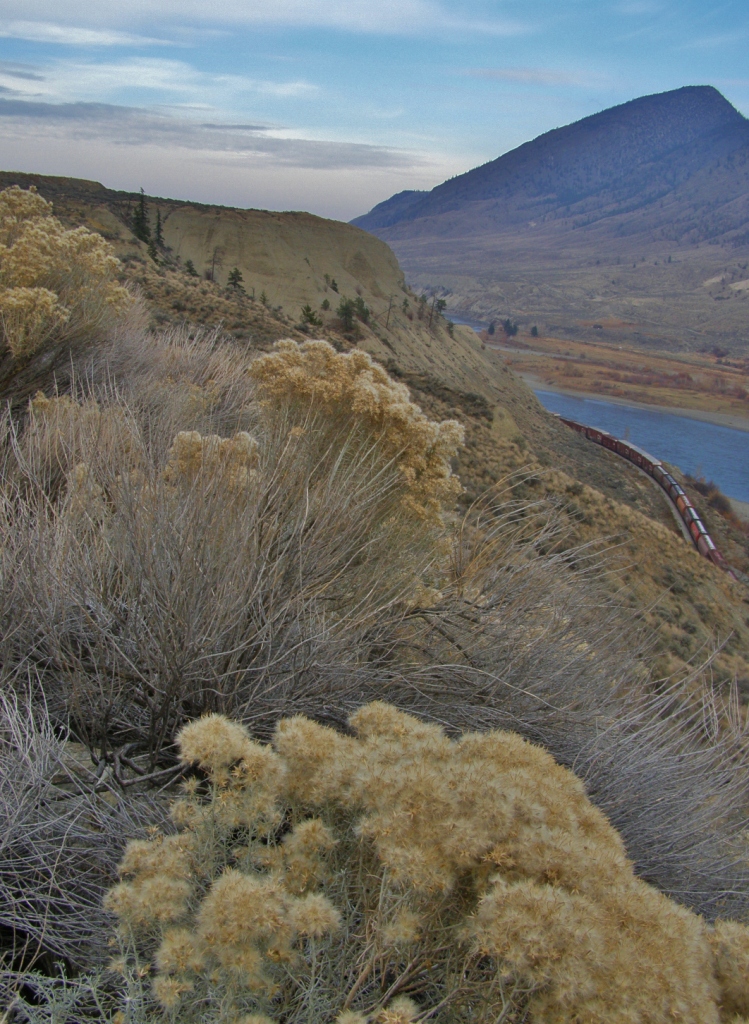
A few glimpses from the side of the road on the trip home today.

A frozen waterfall in the Fraser Canyon near Boston Bar; snow-dusted hills above Lytton; sagebrush above the Thompson River south of Ashcroft.

I would have liked to have stopped more often and taken many more photos. It was a beautiful day to be out and about –  the roads were quiet and the light was lovely – but dark comes quickly this time of year and we just made it home as dusk deepened into night as it was.

Read Full Post »

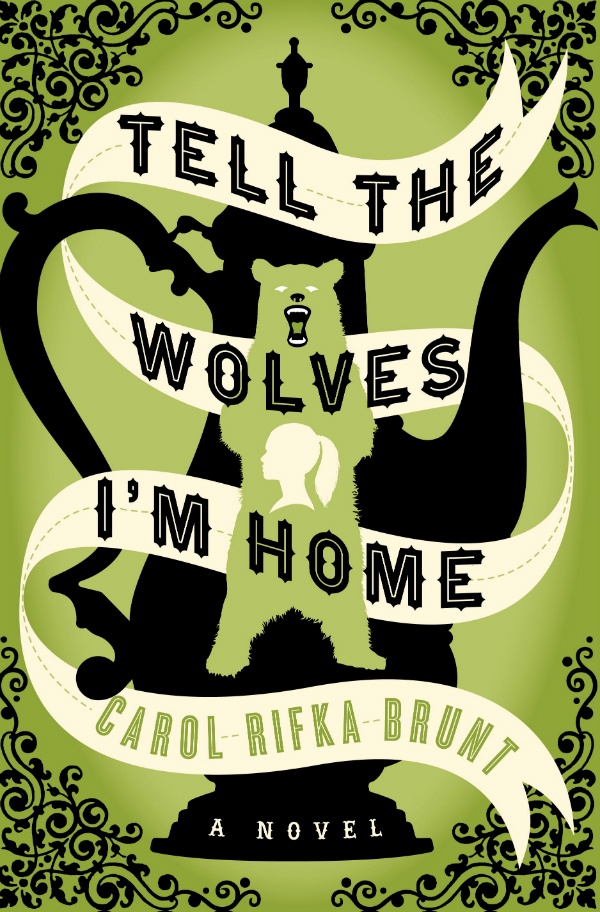
Tell the Wolves I’m Home by Carol Rifka Brunt ~ 2012. This edition: Random House, 2012. Hardcover. ISBN: 978-06796-4419-4. 355 pages.

My rating: 8/10. Very nicely done, especially for a first novel.

I’m sure this one will deeply appeal to the YA crowd, though I found it in the Adult section of the library. There’s nothing here that a modern teen couldn’t handle with one hand tied between her (or his, though this feels rather like a girl’s book, if I may be so bold as to stereotype it) back.

*****

I’m considering tagging this one historical fiction, because the sense of a very particular time is so strong, and it captures those early days of the AIDS epidemic so well, when we were all more than a little scared and confused, and traded rumours in whispers. The story is set in 1987, twenty-five years ago.

The internet is swarming with reviews on this one; I’ll try to keep this simple.

Young June Elbus, fourteen years old and deeply embroiled in the angst of adolescence, has one person she can count on unconditionally, her Uncle Finn. Finn, a renowned painter, now leads a semi-reclusive life in New York; he hasn’t exhibited anything for years, though he is still painting. He’s working, in fact, on a dual portrait of June and her older sister Greta.

The portrait is of supreme importance to everyone concerned; it is likely the last work Finn will ever complete, for he is dying of that mysterious and deadly new disease, AIDS.

Finn’s sister, June’s mother, is brutally shaken by Finn’s death early on in the story, as she has some unfinished business with her brother. She vents her anger at Finn’s lover, the unknown man who she claims has deliberately infected Finn and who is now, in her eyes, his murderer.

June has some baggage of her own. She has been secretly in love – full-blown romantic love – with her uncle, a middle-aged gay man (and June knows this), who, to further complicate things, is June’s godfather. The two share a deeply emotional connection, though Finn has many secrets which June is only to find out about after his death.

With Finn’s demise, and the entry of the mysterious lover, Toby, into the plot, things crank up a notch, and the narrative moves from completely believable to slightly fantastic, in the stretching-of-belief-and-probability sort of fantastic. But it makes for a good story, so allowances can easily be made.

All in all, a very likeable, suitably complex heroine and an interesting plot. I did find it quite predictable in many ways; people did what I thought they would, and the big secrets were telegraphed fairly clearly; clues were distributed with a generous hand.

Beautifully written, with an abundance of heart-tugging emotion. Though I didn’t personally tear up at all, old cynic that I am, as so many of the reviwers over on Goodreads did.

What else?

Good handling of the gay characters; this can be hard to get right without straying, even unintentionally, into parody, and I think Brunt did a very good job with that.

Absolutely gorgeous cover, which reflects the excellent content within. One to share with your teens, and borrow to read yourself.

Read Full Post »

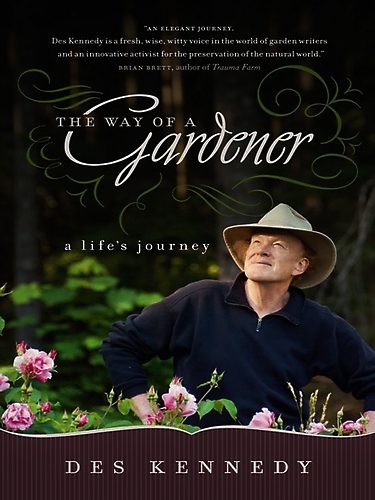
The Way of a Gardener: a life’s journey by Des Kennedy ~ 2010. This edition: Greystone Books, 2010. Softcover. ISBN: 978-1-55365-417-9. 271 pages.

My rating: 8/10. Beautifully written, but I found myself occasionally tuning out – just a tiny bit – in the later chapters. The author’s life has been so full that he just barely touches on many of the events in his later years. I would love to have seen this as a volume one of a multi-volume biography, ending at his leaving the seminary, or settling on Denman Island (one of the Gulf Islands in British Columbia’s Georgia Strait, between southern Vancouver Island and the mainland), because I think the last four decades on Denman plus all the environmental involvement could easily fill a book of its own.

*****

I remember when Des Kennedy first blipped onto my radar, through his 1990s columns in Gardens West magazine, a Canadian publication which is de rigueur reading in my fellow gardeners’ social circle. This was soon followed by my purchase of Kennedy’s first book, a collection of essays on unloved creatures – think rats, slugs, spiders and their ilk – called Nature’s Outcasts: Living Things We Love to Hate (1993),and the rest of his gardening books as they were published, the most recent, before this one, being 2008’s An Ecology of Enchantment, which hints at some of the backstory detailed in this current memoir.

He popped up here and there, speaking at a garden show, authoring an article in a gardening magazine, leading a well-advertised garden tour to Ireland – an instantly recognizable figure with his halo of unruly red hair, and his confident gaze straight into the camera.

Much has been made of his time spent as a Catholic seminarian and novice monk; Kennedy left the monastery before he took full vows after continually clashing with his superiors in matters concerning involvement with the secular and artistic world. (Kennedy was in favour of a degree of inter-mingling between the seminarians and the local population of artists, poets and musicians; his immediate supervisors were not.)

From the Greystone Books website:

A personal and revealing exploration of a life lived close to the earth, from one of Canada’s best-loved gardeners.

Called “a green-thumb rogue” (Star Tribune, Minneapolis), accomplished novelist, satirist, and garden writer Des Kennedy describes his life journey from a childhood of strict Irish Catholicism in Britain to a charmed existence amid the gardens of his Gulf Island home in British Columbia.

From his appearance as an innocent dressed in white for his First Holy Communion to his days as a young seminarian in black habit, through the Beat poetry scene in New York City and the social upheavals of the 1960s, this monk-turned-pilgrim pursues a quest for meaning and purpose.

After leaving monastic life and moving west, Kennedy takes up a new vocation in what has been called the Church of the Earth. On a rural acreage, he and his partner build their home from recycled and hand-hewn materials and create gardens that provide food as well as a symbiosis with the earth that is as profoundly spiritual as past religious rituals. Spiced with irreverence and an eye for the absurd, The Way of a Gardener ranges over environmental activism, Aboriginal rights, writing for a living, amateur wood butchery, the protocols of small community living, and the devilish obscenity of a billy goat at stud.

This book describes Kennedy’s childhood years in Liverpool, before his emigration with his family to Canada at the age of ten in 1955. Growing up in a strongly religious Roman-Catholic family, Kennedy convinced himself that a religious career was his vocation; he spent eight years studying and working towards this goal, and eventually graduated with a degree in Philosophy from the Passionist Monastic Seminary in New York in 1968.

He then left the religious life and drifted and travelled for a time, ending in Vancouver as a school teacher and social worker. There he met the love of his life, Sandy Lesyk, who has been his companion and partner ever since. In 1972 the couple moved to a rural acreage on quiet Denman Island, where they proceeded to pursue the not-terribly-simple “simple” life, building a house from salvaged materials and clearing the land to establish a large garden. The couple still live there today, and still pursue the same lifestyle, though the vegetables now share space with a unique and individualistic mature ornamental garden which has received many praises and was the site of a weekly television show in the 1990s.

Despite the title, this is most emphatically not a book about gardening. It is a highly personal memoir about the time before the gardener emerged, and a look backwards at the sometimes rough and twisted path the author travelled, before the arrival at the gates of the present very earthly “Eden”.

Those coming cold to this book, without knowing who the heck Des Kennedy is now, may wonder what it’s all about. I must confess that if I had not already had the context of knowing about the writer, I might not have found this partial autobiography as interesting as I did.

Definitely recommended for those already familiar with this author, as it gives a marvelous insight into the background of this mesmerizing British Columbia gardening and environmentally “green” figure.

Read Full Post »

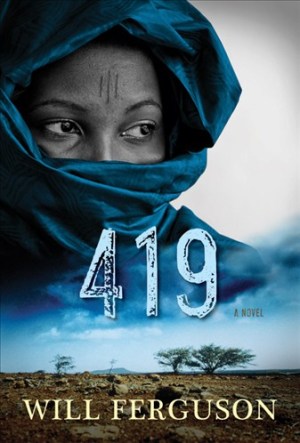
419 by Will Ferguson ~ 2012. This edition: Viking, 2012. Hardcover. First Edition. ISBN: 978-0-670-06471-7. Winner: 2012 Giller Prize, for best Canadian novel or short story collection published in English. 399 pages.

My rating: 8/10. Quite a lot better than I had anticipated. Ferguson’s last few efforts have left me mildly disappointed, but this new novel encouragingly shows that he is still growing as a writer. I haven’t yet read any of the other Giller Prize nominees, but 419‘s win a few nights ago no longer seems so far-fetched. This is a well-written and ambitiously plotted novel, and the writer exceeded my personal expectations this time around. I didn’t love this book, but I did like it – very much. Though I do have more than a few critiques, some of which I’ll address below.

*****

I like being pleasantly surprised, and this book did just that. I’d read quite a few reviews, and I’d heard that it was nominated for the Giller, but I wasn’t particularly eager to delve in, as I’d earlier found Will Ferguson’s last book, Canadian Pie, disappointing. It felt rather repetitive, with some of what seemed like reworked material from earlier books, though some bits were excellent entertainment, as always.

But the distinctive cover of 419 caught my eye on the “New Books” display as I was heading out of the library on Tuesday evening, so I impulsively stopped and added it to my pile. When I got to car, I heard the announcement on CBC that Ferguson had indeed just won the $50,000 Giller for 419, and I mentally shuffled it to the top of my to-read pile, and started it that same night.

I found the narrative initially confusing, as the author has a number of different storylines on the go from page one, but it soon started to jell, though I didn’t ever shake the feeling that I occasionally had too many windows open on my mental computer screen.

The first lines, the literal importance of which become clear later on, are suitably foreboding and mysterious:

Would you die for your child?

This is the only question a parent needs to answer; everything else flows from this. In the kiln-baked emptiness of thorn-bush deserts. In mangrove swamps and alpine woods. In city streets and snowfalls. It is the only question that needs answering…

And we are suddenly at a car accident scene in a snowy Canadian city. Then in a sweltering African airport. In a mangrove swamp with a fisherman and his son. Back to Canada as a family learns of their father’s sudden death. Africa. Canada. Africa. Canada. What’s the connection here?

Longer stretches of narrative are interspersed with mysterious vignettes, as the stage is set for the characters’ and events’ inevitable connections and intertwinings, and separate strands start to stand out.

  • In Calgary, a retired school teacher has died in a troubling car accident. Was it an accident, or something more sinister? A daughter seeks the truth, and justice.
  • In the same city, a police investigator tries to determine the truth about that death, and others, as he mulls over his own personal future.
  • In Nigeria, a self-confident young man haunts the internet cafés, sending out thousands of tempting emails, waiting for the inevitable but rare “bite”.
  • From peaceable beginnings in a fisherman’s family on the Niger Delta, a young boy becomes a man, moving into a vastly changed world as multinational companies start to extract the oily treasure hidden under the dense mangrove swamps.
  • A mysterious scar-faced young woman stumbles through the sub-Saharan desert, hiding a secret and searching for a refuge as yet unknown.
  • In Lagos City, a crime lord plays his victims like an obscene stage director, evil but ultimately doomed himself.

The plot is driven by the ubiquitous presence of the infamous Nigerian internet scam, the titular “419”, so named for the number of the article of the Nigerian Criminal Code dealing with fraud, which turns out to be a key – but not the only – plot element.

419 is a total departure from Ferguson’s usual shtick of out-and-out parody, folksy anecdotes, and very Canadian self-mockery, but there are still abundant traces of the “old” Ferguson throughout. Though the subject matter is often starkly tragic, there are laugh-out-loud moments of rather twisted humour, as here on an African road ferrying a tanker trunk filled with stolen fuel:

Nnamdi was gripping the wheel, eyes on the road, barely blinking, barely breathing. His first time driving.

“Speed up,” said Joe. “A baby crawls faster.”

Nnamdi swallowed down his nervousness, pushed a little harder on the accelerator.

“And don’t swerve for goats like that,” Joe said. “Go through them. It’s the only way. We can hose off the grill later…”

All in all, a blackly comedic suspense novel, but not to be taken too seriously, Giller Prize or not.

The reader absolutely must suspend personal disbelief, and here I give away a bit of a plot spoiler. (Though not more so than any of the other reviews I’ve read.)

What is the likelihood of a modern, middle class, apparently well-educated family being so totally unaware of the sophisticated nature of internet fraud? I could buy into the innocence of the father – sort of – because obviously people do fall for these scams or they could not continue to proliferate, and I know how trusting certain individuals can be, but the naïveté of the adult children, one an apparently financially savvy businessman, tests the reader’s credulity a little too far. The revenge element, the reverse fraud, the involvement of the now highly pregnant Saharan girl – these plot twists, and numerous others, had me shaking my head as the story reached its conclusion.

Viewed as a semi-farcical novel, the flaws of logic smooth out and the “hang on a minute” moments are much more forgivable, but I didn’t ever get the feeling that this was the Big Important Serious Novel that some mainstream reviewers have made it out to be. Sure, there are some serious elements, and those lend poignancy to the tale, but to me it seems just another diversionary read, to be consumed with a certain gusto and set back on the shelf among all of the other well-wrought entertainments of the semi-serious sort.

With this in mind, recommended.

Good job, Mr. Ferguson, and congratulations on your prize.

Read Full Post »

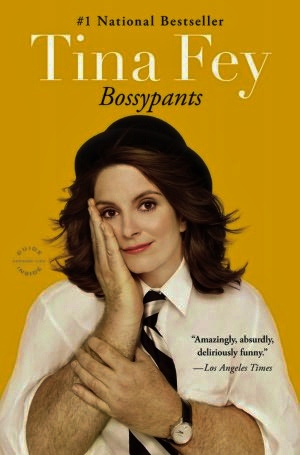
Bossypants by Tina Fey ~ 2011. This edition: Little, Brown & Co., 2012. Softcover. ISBN: 978-0-316-05687-8. 275 pages.

My rating: An easy 9/10. Loved it! Some parts are literally laugh out loud funny. Whips right along – a most enjoyable memoir of the childhood, teen, college and early career years of this exceedingly witty lady, up until the time of her notorious portrayal of Sarah Palin on Saturday Night Live.

*****

Picked this one up for a paltry dollar at the Sally Ann, shortly after I spent a happy ten minutes browsing it in front of its full-price display in one of the mega-marts. I couldn’t quite bring myself to spend the $17.50 sticker price, though I was seriously tempted, so finding it a few days later virtually free was one of those happy little serendipities of haunting the less posh side of the shopping world.

The first half of the book, the childhood-teen-college year memoirs, when Tina Fey was something of a self-described social outcast and romantic failure, is actually quite poignantly sad behind its comic mask. There is something – the only thing –  to be said for having a tortured school life; often it brings out the inner drive to “show them” that leads to stellar success later in life; the bitterness can be usefully channeled into humour, and Tina Fey does that perfectly. She keeps it from being mean-spirited, and I admire her for that; that line is a fine one.

I have only seen Fey’s Palin impersonation in short clips, not having actually owned a television for something over twenty years, but I saw enough to appreciate how darned good it was. The latter part of the book is very focussed on that charade, and I must say Palin herself comes out of it sounding much more likeable than I’d expected. Sarah Palin makes me shudder in real life, in so many ways, but after reading about how graciously she handled being parodied in full prime time view, I get a bit of what her admirers see in her. A very small bit, but it’s there. So Fey has done Palin something of a favour by her mocking portrayal, in my opinion.

This is a keeper; I’ll definitely read it again, which is saying a lot because I tend to be quite out of step on pop culture as a whole, and reading about people you aren’t a particular fan of, or even have much knowledge of, can be a bore. Not guilty in this case. Thumbs up; good read.

Bossypants Review – Time Magazine

Bossypants Review – New York Times

And of course, the Goodreads page, with a gazillion reviews.

Read Full Post »

A Hologram for the King by Dave Eggers ~ 2012. This edition: McSweeney’s Books, 2012. First Edition. Hardcover. ISBN: 978-1-936365-74-6. 312 pages.

My rating: 5.5/10. Most of the points are for readability – and  it definitely was that. And half a point for sheer physical gorgeousness – this is a very handsome piece of bookbinding. But I couldn’t rate it any higher – the gaps of logic in the storyline are as wide as the Sahara. Perhaps I am too far removed from the protagonist’s world to fully engage. Or something.

Would I read another book by this author? Sure, I’d give him another chance. From the library, though – wouldn’t shell out any sort of serious cash; feels like too much of a gamble.

*****

Picked up on a whim, this one was an all right light read, but it ultimately felt unmemorable. Just nothing there, like a mirage in the desert – intriguing at first but faded away. It was a very fast read – the prose was spare and clean and raced right along – stylish presentation. I’ve a large number of reviews I want to write piling up, so I thought this might be a good one to cheat on and to borrow someone else’s review of, but looking at some of the mainstream reviews –  The Globe & Mail, New York Times, The Boston Globe  – it appears that my take is in the minority. The “real” reviewers apparently thought this was a deep and important novel. Ah, well. Good thing I’m only a blip in the blog world!

Goodreads has a full range of opinions.

Read Full Post »

The Last Days of Summer Before the First Frost

Here at the wolf’s throat, at the egress of the howl,
all along the avenue of deer-blink and salmon-kick
where the spider lets its microphone down
into the cave of the blackberry bush—earth echo,
absence of the human voice—wait here
with a bee on your wrist and a fly on your cheek,
the tiny sun and tiny eclipse.
It is time to be grateful for the breath
of what you could crush without thought,
a moth, a child’s love, your own life.
There might never be another chance.
How did you find me, the astonished mother says
to her four-year-old boy who’d disappeared
in the crowds at the music festival.
I followed my heart, he shrugs,
so matter-of-fact you might not see
behind his words
(o hover and feed, but not too long)

the bee trails turning to ice as they’re flown.

Tim Bowling, 2011

Read Full Post »

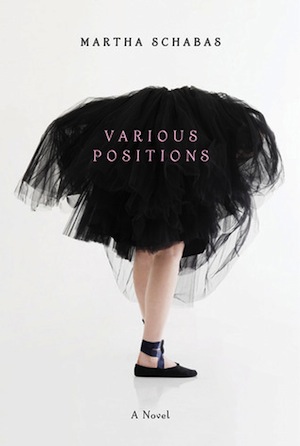
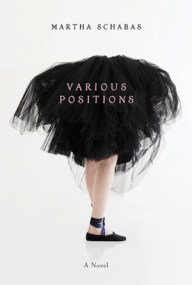
Various Positions by Martha Schabas ~ 2011. This edition: Farrar Straus Giroux, 2012. Hardcover. ISBN: 978-0-374-38086-1. 325 pages.

My rating: 5/10. Reasonably readable, but left me feeling queasy.

*****

Well, my last review was of a sensitive coming-of-age novel set in the late 1930s, Maureen Daly’s deliciously sensuous Seventeenth Summer. I have just read the contemporary counterpart, young Torontonian Martha Schabas’ highly praised (and seemingly as often highly damned) first novel concerning a fourteen-year-old facing a similar turning point in her life. The two heroines couldn’t be more similar in their focus on themselves and their emerging womanhood, or more different in their morals and actions.

“It was like sex was in everything,” writes Martha Schabas in her deeply unsettling first novel, “lodged in men’s heads and drowning in women’s bodies.” The thought is given to Georgia, a 14-year-old student at the Royal Toronto Ballet Academy, whose increasingly fraught and confusing reactions to her own burgeoning sexuality lead her into a horribly inappropriate and dangerous interaction with the academy’s artistic director. Schabas is unforgiving in her examination of the way sex and ballet collide, often with terrible consequences for the young women who are too innocent to comprehend the nature of the forces they are trafficking in. No lazy moralist, Schabas lays bare the misunderstandings and insensitivities on all sides: the well-meaning adults who want nothing more than to help Georgia in large part end up making things much worse. The great Japanese filmmaker Akira Kurosawa once said that being an artist means never averting your eyes. Schabas, to her enduring credit, resolutely refuses to do just that.

Steven. W. Beattie, Quill & Quire, November 14, 2011

First off, though I’ve tagged this story with a “dance” designation, it isn’t really about ballet. The dance academy background does allow for the extreme focus of the characters on themselves, their bodies, and the brutal competition between young teens to be better in every nuance than their peers, which is actively encouraged by the adults in charge of these fragile egos encased in steel-strong musculature tightly strung on still-growing bones and covered by the freshly dewy skin of early adolescence.

And though it’s also tagged “young adult”, and was found on the teen shelves at the library, I’m thinking it’s not really a story for many younger teens, even though the main character is just fourteen. There are very graphic passages describing pornography, and the pages of this deeply disturbing story are soaked in sex. Actual sex between teens, and the forbidden sexual yearnings between adolescents and adults. The student-teacher crush has doubtless existed since time immemorial, and has been frowned upon with very good reason. Outwardly repressed young Georgia is a seething mass of inner emotional conflicts, which find vent in the most inappropriate ways possible.

Here follow loads of spoilers.

Fourteen year old Georgia Slade is the daughter of an upper class, outwardly successful but deeply dysfunctional family. Her father Lawrence is a cold, emotionally distant psychiatric doctor who openly sneers at Georgia’s ballet fixation; her mother Lena is a much-younger university lecturer who became involved with Dr. Slade while in a student-professor position; their affair was the cause of Dr. Slade’s first marriage break-up. Lena is teetering on the edge of a mental and emotional breakdown; the marriage is fragile as eggshells and cold as ice. There is a vibrant, scholarly, Mediterranean first wife in the background, and a university student older stepsister, who turn out to be the most empathetic and likeable members of Georgia’s dreadful little world.

Georgia lives her life on a knife-edge, playing peacemaker and go-between at home, and carefully navigating the increasingly complicated waters of her school world. Everything there is all about peer pressure and implied and actual sexual relations; Georgia frigidly refuses to participate in any of the games, but is nonetheless very aware of the avid stares of the boys and the casual cruelty of the girls. The only place she can let down is in ballet class, though let down is perhaps an inapt term – Georgia’s quest for control and perfection have taken her to the head of her class, and her teacher recommends an audition with the prestigious Royal Ballet Academy.

Georgia passes her audition, and breathes a sigh of relief. Surely here there will be less focus on sex and more on the purity of the dance. To her dismay, the dancers are decidedly interested in all the usual teen girl preoccupations, including boys and sex. And Georgia now comes into contact with the cruelly demanding but physically attractive Roderick Allen, senior instructor and choreographer at the school.

As the dancers are pushed hard to achieve their highest potential, Roderick’s classes take on a special importance to Georgia. Every look, every fleetingly necessary placement touch from her instructor is analyzed and brooded upon, until she convinces herself that she and Roderick are involved in an unspoken mutual relationship. How best to bring it out into the open?

Georgia’s newly awakened curiosity about the possibilities of a sexual relationship with a much older man lead her – where else? – to the internet, where she discovers the pornographic permission for all sorts of illicit relationships. Looking at the poses of the nubile young women on her computer, Georgia is inspired to take similar self-portraits of herself. She prints these off, wraps them in her underwear, and, after confronting her instructor in his office with a passionate advance, slips the photos into his desk drawer.

Meanwhile a subplot has been going on regarding one of the other dancers. Not quite as slender as her peers, Chantal has been brought to tears by the comments of Roderick and the sneers of the inevitable clique of mean girls in the class. Georgia, in a mood of commiseration, decides to help Chantal out, and gives her advice on how best to starve herself to lose weight, information Georgia has used in her own turn to maintain her stick-thin dancer’s figure. Turns out Georgia has had a long-time obsession with Gelsey Kirkland, hardly a healthy role model, for all her undeniable talent and ethereal beauty.

Chantal comes back to school from Christmas break a mere skeleton of her former self; she is checked into an eating disorders clinic, and her parents talk of suing the Dance Academy. Roderick is pinpointed as the esteem-breaker of the students, and is under investigation on this matter when the photos of Georgia come to light, dramatizing the situation even further.

Roderick loses his job, and only avoids criminal prosecution by Georgia’s confession that she has made all the advances. Her parents separate, with Lena and Georgia moving to an apartment. Rejecting her stepsister’s caring advice, Georgia alienates herself from the one normal member of her family. She willingly surrenders her virginity to an old classmate at a drunken house party, and we find ourselves not really caring if her sexual inhibitions are fixed by this or not. Georgia leaves the Academy, and the last we see of her, she is auditioning for a place in yet another ballet school, along with none other than the very anorexic girl she previously “helped” into a hospital room.

There’s other stuff as well, but I think this is enough to give a broad picture of this dramatic little novel. What a soap opera!

*****

What are my conclusions regarding this one?

Well, first off, I’m not terribly bothered by all the sex. Teens, even those as young as (and often younger than) fourteen, think about, talk about, and (hide your eyes!) even have sex. We have no grounds to get all huffy and pretend that it’s not going on, because it is. It went on back in Maureen Daly’s time, it went on in my teenage years – and though I was one of the late bloomers myself, I had ears and eyes – nothing in Various Positions was all that shocking, seen it all before – and by golly, they’re still doing it today, albeit much more openly and possibly more inventively than in the immediately previous generations.

For every sexually precocious teen there are lots of more conservatively minded ones; from observing my own teen children’s friends and acquaintances I see the whole array, and I’m not seeing anything terribly worrisome – good sense is there in abundance, and our up and coming generation is fine and pure as gold in many ways.

Are the striving dancers painted as too competitive and cruel? No, not at all. My teen daughter has been heavily involved in dance for the last twelve years, and I’ve been privy to some shocking displays by the most sweetly innocent-looking creatures you can imagine. Again, this is not the norm – there is a wide range – but it certainly exists.

Anorexia and bulimia are still the elephants in the room; good teachers and studios deal openly with those issues, but the onus on private behaviour and how far to go does lie with the individuals. Dance, especially at the more advanced levels, can be a cruelly competitive world, especially if the career track is a possibility and a goal, and there are many pitfalls for even the best-nurtured teen in navigating that particular labyrinth. Bodies do matter tremendously, particularly in ballet, and the stick insects are still in vogue, thanks to Balanchine’s long reaching influence and his preference for the sylph-like form.

My biggest quibble was that I just did not like the character of Georgia. Even allowing for her dreadful home life, she made all the wrong choices, right up until the last pages. What was this obviously very bright, talented and focussed child thinking? Not just about the sexual thing with her teacher, but everything in her personal life seemed to have a serious kink. I’m not quite sure if this was deliberate, or if we’re supposed to understand the whys and wherefores and make allowances.

Martha Schabas certainly has writing talent, but I have some qualms at how she’s used it here. First novels are notoriously autobiographical, and much is made of the fact that Ms. Schabas seriously studied ballet herself, until being asked to leave the National Ballet School at age fifteen because of problems with her feet. While a number of critics have breathlessly gasped – and I here paraphrase – “How bold and daring! A courageous debut!” – I see instead perhaps something of an infatuation with the titillation of the sexual adventures of a Canadian Lolita-ballerina.

Would I give this book to my own sixteen-year-old dancer daughter? I had originally checked it out for her – she asked me to pick her up some interesting books, and this one looked like an easy winner. I read it and then offered it to her, and she asked what it was about, glanced through it and shrugged it off. “Too mainstream, too pop-fiction,” she said. “Too drama-queen for me.”

*****

And for the final word, to balance my rather dismissive review, here is Angela Hickman’s National Post review, from July 5, 2011, found here.

When Martha Schabas was five years old, she took her first ballet class, kicking off a decade of intense training and dreams of becoming a ballerina. Then, at 15, she was kicked out of the National Ballet School’s summer program for having bad feet — her arch wasn’t pronounced and she had a low instep. “I just didn’t fit into the ideal,” she says. “That very precise balletic ideal.”

Although she quit ballet after that, Schabas has now returned to the National Ballet School in her debut novel, Various Positions. Despite its setting and the balletic ambitions of Georgia, the 14-year-old central character, Schabas didn’t set out to write a ballet novel. Initially Georgia was older, but as Schabas started to dig into the issues of feminism that interested her, she says the character just started getting younger.

“I wanted to write about some facet of being a young woman in our so-called third wave feminist climate,” she says. From there, she adds, it made sense to place Georgia in a context that she was familiar with.

The novel opens in the middle of an unexplained disaster, with Georgia arriving at the ballet school in the morning and discovering it is closed for the day. Georgia feels responsible, but we don’t know what happened, which sets up a sense of dark uncertainty and unease that carries forward throughout the novel. After the initial scene, the story rewinds to the beginning before bringing us back to the steps of the school with a full understanding of what it is Georgia has done, and continuing forward into the aftermath.

But Schabas takes her time setting up Georgia’s life — her parents’ dysfunctional marriage, her idolization of her stepsister Isabel, and her all-consuming love of ballet. When Georgia is accepted into the National Ballet School, it is as if her life is just beginning. She wasn’t happy at her previous public school, where sex was starting to tint the air around her in a way she didn’t understand or like, and ballet seemed like a perfect escape from that.

“She starts off with this idea that she will pursue this very asexual, pre-adulthood aesthetic form of ballet, and that will be her means of staking out her own parameters for her body and for power,” Schabas says. “And then the real world slowly starts to seep back in: she’s inundated by ordinary, healthy teenage girls who have an interest in sex; she’s starting to piece together information about her parents’ marriage; she’s studying men on the subway and realizes that, you know, ‘I made a mistake. Ballet is not separate from sex. The two must go together because sex is in everything.’ ”

The tension between the body and power and sex propel the story forward as it climbs toward the crescendo you know is coming. When Georgia ties ballet and sex together, she begins to see her teacher, Roderick, as a sexual person; she also assumes he sees her the same way. Georgia becomes acutely aware of each time Roderick touches her or notices her, and she becomes fixated on the idea that if she can work out what Roderick wants, he can propel her career.

“When she’s pursuing Roderick in a sexual way, it’s more about getting at the heart of what it means to be a woman for her, and also a woman as a dancer,” Schabas say. “So the two things get conflated.”

Georgia is a dancer at a very high level, and her connection to her body and its movement is pronounced. In a way, Schabas says, Georgia tries to understand the world through her body, which means that every touch and movement takes on other dimensions. Georgia’s physicality means that she doesn’t just think about doing things, she does them, often without a thought about consequences.

“I think a lot of these issues haven’t really been written about much before,” Schabas says. “The idea that [Georgia] actually looks up porn and tries to recreate porn, thinking that this is OK. She actually pieces information together and thinks ‘This is a pretty logical way to pursue what I want to get.’ That can seem outrageous on the one hand, but at the same time, when we look at the millions of mixed messages that we send young women and … the idea of sexuality and the public sphere, maybe she’s a bit of a whistle-blower calling us on the real implications of our values.”

Much like the heroines of classical ballets, after the action, Georgia is left powerless, and it’s devastating to watch her grapple with what happened and then to be unable to take responsibility for what she did.

“Horrible things happen to ballet heroines and they die and go mad – it’s the mad, bad, sad thing – but [they] are ultimately victimized,” Schabas says. “In a way it’s Georgia who’s victimized by something of her own perpetration.”

Read Full Post »

Blackberrying

 
Although it would be nice to be prepared
with sun hat, strong shoes, bags galore,
it happens quite by chance –
you see them – a scrummage of brambles,
arching branches alongside an old quarry,
a hedge held hostage by thorns –
you follow a track off a dis-used road,
and there, gleaming through green leaves,
the luscious, shiny, sweet black fruit teases
your fingers with its abundance.
 
No matter how hard you try to fill
your makeshift bag, how far you stretch
to pick each tantalising treasure, you
never get quite enough to satisfy desire.
Next time, you promise, licking blue-black
fingertips and as many scratches as your tongue
can touch, next time we’ll do it properly –
you never do – somehow this furtive game
reaps its own sly pleasure.
 

Anne Clegg ~ 2010

Read Full Post »

« Newer Posts - Older Posts »