Archive for the ‘2010s’ Category

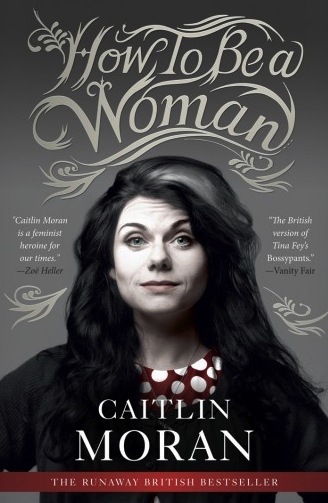
how to be a woman caitlin moranHow to Be a Woman by Caitlin Moran ~ 2011. This edition: Ebury Press, 2011. Softcover. ISBN: 978-0-06-212429-6. 305 pages.

My rating: This one was unrateable.

What can I say? It’s all been said. Multiple times.

Outspoken, thought-provoking, vulgar, romantic, profane, profound, controversial, brave, rude … and very, very funny. This is not a book I would give my mother! But I would leave it where my teenage daughter could find it.

I actually did just that, and she (the teenage daughter) dipped into it, and basically said “Ew. Too much information. And swearing. She’s a bit scary, Mom.” So that didn’t take. Which is just fine. We’ve already had all of the conversations that Caitlin missed with her mother. A lot of this one reads like a cautionary tale, a what-not-do-do manual, at least until Caitlin gets herself all grown up and out in the big world. Though even then her decisions aren’t exactly stellar one hundred percent of the time.

This is a big, bold, brassy memoir of British newspaper columnist and generally funny lady Caitlin Moran’s teenage years right up until the present. She has zero barriers; she discusses everything there is to discuss about being born with on the double X-chromosome side of the human sexual spectrum. This is Caitlin’s take on what it means to be a woman. While frequently prescriptive, it’s best taken with a good dash of salt. As one reviewer quipped, this one should perhaps have been titled How to be Caitlin Moran, because it certainly doesn’t apply – or appeal –  universally. Many are – and will be – sceptical, if not downright appalled, at Moran’s Technicolor rantings.

Menstruation, masturbation, obesity, body hair, pregnancy, childbirth –  full coverage of the biological range. Then there are drugs and alcohol and the over-the-top excesses these can lead too. Bad relationships. Good relationships. Marriage. Children. Abortion. Right along with the ethics of employing a cleaner.

And this is what seems to be getting all the attention in the reviews I’ve been reading. Capital-F Feminism. What it looks like today, and what Caitlin Moran thinks it should look like. In a nutshell, good old Golden Rule stuff. Do as you would be done by. Treat each other well.

I’ve been thinking about how to present this review for a few days now, ever since finishing the book, and since reading fellow blogger Claire’s take over on Captive Reader – How to Be a Woman . What I’ve decided is to not really say all that much about this one. The internet is crowded to overflowing with reviews; this one has received capital-H Hype, and some people are taking it really, really seriously.

Here’s the Goodreads – How to Be a Woman page. 2500 reviews. Go wild!

I’m not taking this one terribly seriously. I found it amusing, and I agreed with Caitlin Moran on her various opinions a good majority of the time. I particularly liked her chapters on marriage and motherhood, and the abortion chapter was something very unusual in its sincerity and refreshing lack of sensationalism. I don’t think I could be so detached and unemotional as Moran was, if it were me facing the same scenario, and my decision would likely have been the exact opposite, but her forthright acceptance of what she did felt genuine.

But I’m not about to bow down to her as our newest Feminist leader, our Womanly Great White Hope, as some enthusiastic fans seem to be. She’s not really breaking any new ground here, just repeating what’s already been said with a lavish dash of shazzam.

Moran is a very funny writer. I literally laughed out loud – a rarity for me when reading –  more than once – most notably during the bra and breastfeeding discussions – spot on! Loved it. I’ll likely purchase the book one day, but I’m in no rush. If I never read it again, no big deal. I’d never heard of the woman until a few weeks ago, and I strongly suspect I’ll not hear too much from her in future, but I’ve at least placed her in my personal “cultural literacy” file and can now nod knowingly if her name comes up.

And that’s good enough for me.

As a parting gift, here are some quotes I lifted from How to Be a Woman, courtesy of Goodreads. If anything here resonates, you’ll probably like this book.

*****

If you want to know what’s in motherhood for you, as a woman, then – in truth – it’s nothing you couldn’t get from, say, reading the 100 greatest books in human history; learning a foreign language well enough to argue in it; climbing hills; loving recklessly; sitting quietly, alone, in the dawn; drinking whisky with revolutionaries; learning to do close-hand magic; swimming in a river in winter; growing foxgloves, peas and roses; calling your mum; singing while you walk; being polite; and always, always helping strangers. No one has ever claimed for a moment that childless men have missed out on a vital aspect of their existence, and were the poorer, and crippled by it.

*****

I cannot understand anti-abortion arguments that centre on the sanctity of life.  As a species we’ve fairly comprehensively demonstrated that we don’t believe in the sanctity of life.  The shrugging acceptance of war, famine, epidemic, pain and life-long poverty shows us that, whatever we tell ourselves, we’ve made only the most feeble of efforts to really treat human life as sacred.

*****

Overeating is the addiction of choice of carers, and that’s why it’s come to be regarded as the lowest-ranking of all the addictions. It’s a way of fucking yourself up while still remaining fully functional, because you have to. Fat people aren’t indulging in the “luxury” of their addiction making them useless, chaotic, or a burden. Instead, they are slowly self-destructing in a way that doesn’t inconvenience anyone. And that’s why it’s so often a woman’s addiction of choice. All the quietly eating mums. All the KitKats in office drawers. All the unhappy moments, late at night, caught only in the fridge light.
Read Full Post »

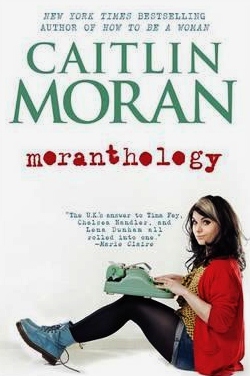
moranthology caitlin moranMoranthology by Caitlin Moran ~ 2012. This edition: Ebury Press, 2012. Softcover. ISBN: 978-0-06-225853-3. 237 pages.

My rating: 9/10.

*****

I searched this one out because of Claire’s intriguing posting about it on The Captive Reader recently. Click this link to read her take, and don’t forget to scroll down into the comments for an interesting side note onto the life of Charles Dickens. Here you go: Moranthology

I had never heard of Caitlin Moran before, but the lack of context was no barrier to enjoying this collection of columns originally published in the London Times. A previous book, How to Be a Woman, gets rave reviews on the back cover of Moranthology, and also, when I did my small bit of “research” for this review, all over the internet. One I may also seek out, because I liked Moran’s brash, cheeky and occasionally heart-rending voice in this later compilation.

Some articles are decidedly stronger than others, but every single one was more than readable. Moran works the pop culture beat, with frequent forays into personal memoir, and anecdotes about her own marriage and family life.

Caitlin Moran apparently had quite a counter-culture childhood and adolescence. Growing up in a self-described family of “hippies”, she frequently mentions her family’s poverty and the heavy-as-lead despair of the slow slide downward; the family lived on Moran’s father’s disability benefit, never quite enough to meet the basic daily needs, let alone afford any sort of advancement in life. Moran refers frequently to her youthful status as one of the lookers-on. As a homeschooled child, she remarks that she had zero experience in fitting in with her more conventional peers, and I suspect that it is this position outside of the norm which has helped make her such a sharp observer of the more ridiculous of the pop culture excesses splashed across our universal consciousness in this age of hyper-information.

There are poignant moments throughout Moranthology which I found most moving, in contrast to the aggressive humour of some of the pop culture critiques. Caitlin limping through London on her first visit there, astounded by the scale of the city and unable to find her way, on foot, to either the British Museum or Buckingham Palace, which she thought she’d just briefly visit before visiting the offices of The Observer; she’s won a “young writers” prize which includes a tour of the newspaper office and a chance to write a youths’ view article for publication. Caitlin and her brothers and sisters squeezed into the cab of their camper van, singing to drown out the sounds of their parents’ lovemaking in the back. Caitlin’s four years as a supremely heavy user of marijuana, and the gap in her life (and memories) this caused.

This is a strong collection with a wide variety of pieces; the range meant that it never blurred for me, as collections of newspaper columns sometimes may.

Outstanding pieces were a rather brutal observation of the ironies of Michael Jackson’s lavish funeral and the public response to it, and two interviews with rock and roll icons, Keith Richards and Paul McCartney. The Keith Richards piece is an absolute stand-out, jaw-droppingly frank and frequently very funny; a must-read for any long-time Stones fan such as myself. I learned nothing new – Keith’s excesses and the sordid details of his frequently wasted (in every sense) life are common knowledge to anyone who has been paying attention to the mesmerizing freak show of the Stones during the various stages of their rock royalty progression – but what Moran observes, and how she reports it makes for a brilliant piece of pop journalism. This article alone makes Moranthology worth buying, but there’s a lot more packed in here, too. Including, I must mention, a visit to a German sex club with Lady Gaga, a surprisingly gentle article which shows a strong affection and admiration for the blatantly controversial main character of the ongoing Gaga Saga.

Switching gears successfully from the pop world to social commentary, Moran also writes compelling, thought-provoking and serious pieces on such diverse topics as the importance of public libraries, the compassionate and economic benefits of a strong public welfare system, and the right of women to access safe abortion.

Cheeky, over-the-top, family-targeted humour abounds. Moran pens a scathing critique of the practice of providing goody bags at children’s’ parties, and gives a spirited defense of the occasional need for parental binge drinking. A slightly more serious, but exceedingly funny piece discusses the changing meaning of the word “special” to something rather dirty – references to “Daddy’s Special Lemonade” (it has limes in it!)  and playground requests for Daddy to “tickle me in my special place” (under the chin, for heaven’s sake!) – bring parental mortification and suspicious glances from other ever-vigilant parents on high alert for any shadow of anything smacking of sexual perversion.

All in all, a most entertaining read. Loved it.

Read Full Post »

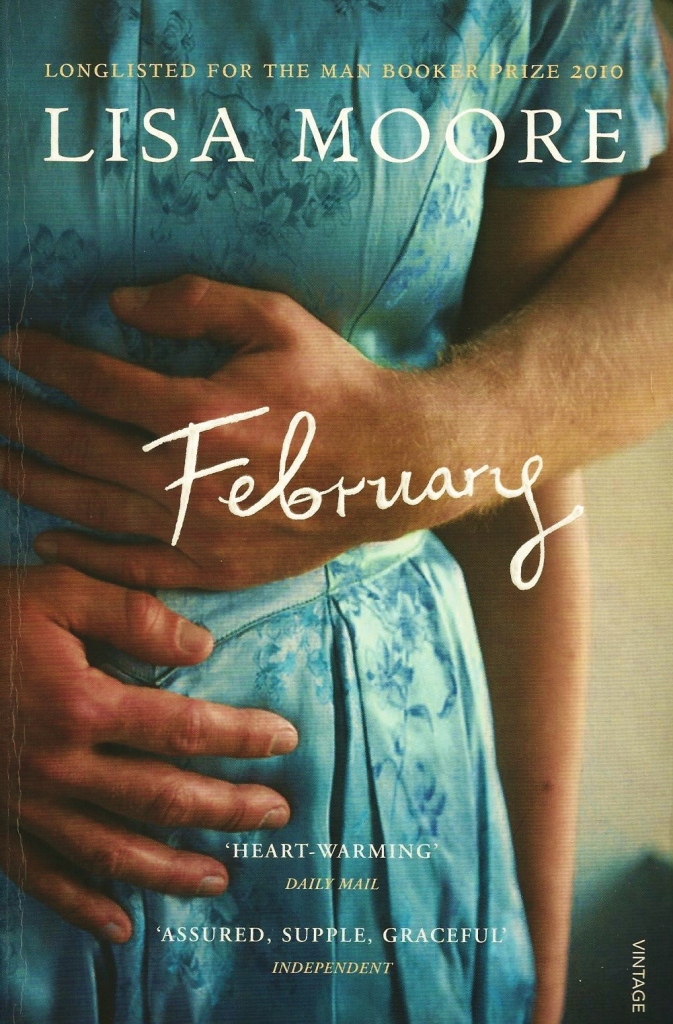
february lisa moore 001February by Lisa Moore ~ 2010. This edition: Vintage, 2011. Softcover. ISBN: 978-0-099-54628-3. 310 pages.

My rating: 9/10.

*****

An intense read. Absolutely impossible to put down.

February is a story about grief and memory and love and people coping with heartbreakingly dire situations the best way they can, which means not always particularly happily or successfully. The novel ends with optimism, but I could not call it happy. It is a keenly observant, uncomfortably bleak, very believable portrait of a woman and her family and their reaction to the brutally unexpected loss of their son, husband and father.

Lisa Moore has written, all clichés aside, a powerful book. Stark, often deeply uncomfortable, occasionally humorous, never maudlin, and, I suspect, one that will be quite unforgettable.

The novel is based on a true Canadian tragedy. On Valentine’s night in 1982, out on the Atlantic Ocean off Newfoundland, the oil drilling rig Ocean Ranger capsized and sank during a violent storm. All eighty-four men on board the rig died in the frigid waters, some apparently within hailing distance of a vessel which was unable to rescue them. The families of the dead learned of the disaster from news accounts on the radio; the oil company made no attempt to notify them.

Helen O’Mara loses her husband Cal that night. She has three young children and is pregnant with a fourth. Life for all of them becomes indelibly marked by their loss in ways both immediate and not always obvious until many years later.

The novel ranges from 2009 all the way back to the 1970s, when Helen and Cal were first married, in a series of memories, incidents, anecdotes, and flashbacks. A second storyline develops along with Helen’s, that of her now-adult son John, who has suddenly found out that he has fathered a child during a casual romantic encounter. As he attempts to come to grips with an adequate response to that situation, his story and that of his mother’s form a two-part composition of major and minor key, mingling and contrasting and bringing different incidents into sharp focus.

I thought this approach worked very well. A few reviewers have noted their irritation at John’s weakness as a character; I found him believable, though not at all likeable. Helen herself comes so vividly to life and we are taken so intimately into her thoughts, that everyone else pales just a bit in comparison. For that matter, I did not particularly like her, or most of the other characters, for that matter; many of their lifestyles are not at all in sympathy with my own, and I frequently caught myself getting all judgemental about some of their choices, but I will say that they all felt true and alive there on the page.

I’m cutting this review short right here, as other duties call, and I want to get it posted prior to this week’s Canada Reads debates on CBC Radio.

Would I recommend this book to “everybody”? No, definitely not.

It is an uncomfortable thing, and I’d want the reader to go in with expectations on high alert. In particular, women with husbands engaged in dangerous lines of work, heads up. This is a book you very likely should read, because it speaks bluntly to the situation and spotlights our every nightmare. The good thing about this is because it is fiction, it allows us to analyze the characters’ emotions and responses in relation to their fabricated stories, rather than agonize too deeply over what we would feel like if it were us instead.

Perhaps because it is one of the most contemporary and personally accessible of the five Canada Reads choices, I felt it was much the strongest. Every book on the list has its unique qualities, but for sheer emotional punch, this one wins hands down.

My ranking as of this evening:

  1. February by Lisa Moore
  2. Indian Horse by Richard Wagamese
  3. Away by Jane Urquhart (Actually, I’m undecided on how to place this one and Indian Horse. They’re running neck and neck, each with different strengths and types of appeal.)
  4. Two Solitudes by Hugh MacLennan
  5. The Age of Hope by David Bergen

I am going to work on completing Two Solitudes tonight and tomorrow, so a response to that one may be forthcoming in the next day or two as well, but no promises.

This is the first time I’ve attempted to read the Canada Reads contenders, and I must say that I have been introduced to novels I would not otherwise have chosen for myself. February I would likely have avoided because of the tragic storyline, The Age of Hope for its mediocre description as a novel of a “woman’s awakening”, and Indian Horse for its declared focus on hockey.

I’m glad I read them all. It will be interesting to see how they all fare in a “contest” situation. They are all quite different, though their universal bleakness is a point in common. So terribly sincere

Read Full Post »

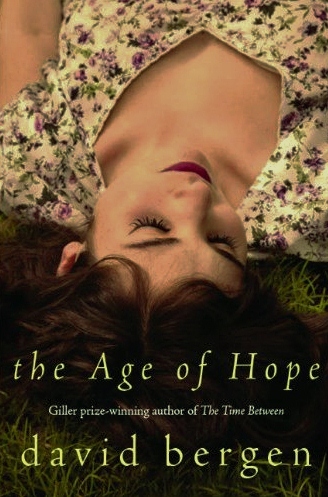
age of hope david bergenThe Age of Hope by David Bergen ~ 2012. This edition: Harper Collins, 2012. Softcover. ISBN: 978-1-44341-136-3. 287 pages.

My rating: 7/10.

A decent enough novel in that it is well written and readable, but is this really the best we could come up with for a Prairies (and “North”) regional choice for Canada Reads?

Here were the other choices for the Prairies and North region:

Okay, then, I guess the masses have spoken. We’ll work with what we’re given.

*****

This book is about my mother. No, seriously. It really is. My mom was born in 1925, to parents newly arrived during the second Mennonite diaspora from Russia, in a rural town in southern Manitoba. The titular Hope was born in 1930, in similar surroundings, and her young womanhood was much the same; the Mennonite Brethren picnics and bonfires for “young people” which Hope attended were a pleasant diversion from the usual round – school, household chores, church and Sunday visiting, potluck dinners and occasional movie nights – all of the trappings of the middle-class North American post-war world.

Hope is the representation of an entire generation of women who lived through one of the most change-filled centuries the world has yet known. Hope and her kindred fellow housewives are an almost extinct breed today; their everyday reality, so common for their generation, is almost completely foreign to the younger generations immediately succeeding them, and the tendency in many circles is to sneer a bit at the banal stay-at-home lives they appear to have lived.

What with the abundant Canada Reads 2013 discussions taking place right now in various literary venues right across Canada, I don’t think I’ll spend too much time going into the storyline of the novel. Here’s the promotional blurb:

Born in 1930 in a small town outside Winnipeg, beautiful Hope Koop appears destined to have a conventional life. Church, marriage to a steady young man, children – her fortunes are already laid out for her, as are the shiny modern appliances in her new home. All she has to do is stay with Roy, who loves her. But as the decades unfold, what seems to be a safe, predictable existence overwhelms Hope. Where – among the demands of her children, the expectations of her husband and the challenges of her best friend, Emily, who has just read The Feminine Mystique – is there room for her? And just who is she anyway? A wife, a mother, a woman whose life is somehow unrealized?

This beautifully crafted and perceptive work of fiction spans some fifty years of Hope Koop’s life in the second half of the 20th century, from traditionalism to feminism and beyond. David Bergen has created an indelible portrait of a seemingly ordinary woman who struggles to accept herself as she is, and in so doing becomes unique.

So this isn’t a proper review of The Age of Hope at all, I’m afraid. I’ll fast forward to my personal views on the book itself, my general feelings about it after having completed it a week or so ago.

Is this a book “every Canadian should read”? In a word, no.

To elaborate: it’s a fine domestic novel, and it does track the country’s historical progress through a good chunk of the twentieth century as a vague background to the progress of Hope, but it doesn’t really say anything terribly important about either the social group Hope was part of, or the country she lived in. There are many quite nicely drawn pictures of the settings and times Hope moved through, but really, she could have lived anywhere. This book could have taken place in any of the towns or small cities of the American mid-west, or the British industrial towns, or the suburbs of Sydney, Australia.

Though I recognized many of the references, because of my knowledge of my mother’s similar background, there is nothing that stands out as marking Hope’s nationality as Canadian. She’s the sub-fusc universal everywife-and-mother, moving in her little cloud of dull angst among the others of her kind. The unquestioning daughters, wives and mothers; the generation who did their duty, were all about self-effacement and not putting oneself forward, not imposing. And though Hope has a good friend who breaks away from the norm, to separate from her husband and live her life as an independent “liberated woman” in the city, Hope gently accepts that as what someone else does; I didn’t get that there was any sort of yearning coming from Hope for the same kind of “escape”. She nods and smiles and listens and plugs along in her same old groove. Which isn’t necessarily a bad thing, and I didn’t much like how it was implied that Hope’s was the less admirable choice. It was a viable option, was it not?

Hope’s mental anguishes, which land her in a psychiatric hospital to undergo shock therapy sessions, are not terribly well presented by the author, though I’m unclear as to what degree that is a deliberate literary choice in order to emphasize the constant dull fog that Hope walks in. It’s either a very clever choice by the author, or sheer authorial laziness.

This book is well written, and I appreciated the author’s stylistic skill. I “got” Hope, and I didn’t think her husband or children were all that unrealistically portrayed – well, except for the 6-foot tall, flagrantly gay, Olympic-athlete daughter – that was a bit of a plausibility stretch, I thought –  but none of them came to life for me. The whole novel had a distance about it, a very hands-off feel. I didn’t hate it, because that would be a strong emotion, and I don’t feel at all strongly about this one.  It’s such a mild drama. And I didn’t like or dislike any single character. I couldn’t care enough to invest my own emotions in any deep way. This is not a good thing in a novel.

I doubt The Age of Hope will have much of a shelf life after its brief prominence as a Canada Reads pick, though it may linger on for a year or two on the strength of that. And from reading this one, I have no urgent, burning desire to explore another work by the same author, though I understand he’s turned out a prizewinner or two. I’ll doubtless pick up his other novels at some point and read them with mild enjoyment, but my expectations are tempered.

Other reviews to peruse:

The Winnipeg Review – The Age of Hope – a generally positive review, highlighting the novel’s strengths.

Quilll & Quire – The Age of Hope  – nailed every negative thing I thought about the story and states them brutally succinctly.

Goodreads – The Age of Hope – a very broad range of opinions, all over the map, as the readers jump into the debate.

*****

With two of the Canada Reads books polished off and mulled over, I’d have to say that at this point Indian Horse by Richard Wagamese is strongly in the lead in my personal race.

I’m currently tackling Hugh McLennan’s Two Solitudes, and finding it rather dull going. It has its moments, but it’s very much a period piece, I’m finding. Perhaps too much so for a universally recommended “must read” choice?

I’m looking forward, though increasingly apprehensively, to the last two books in the Canada Reads Top Five. So far the choices have been just a bit ho-hum.

Read Full Post »


1982 jian ghomeshi1982 by Jian Ghomeshi ~ 2012. This edition: Viking, 2012. Hardcover. ISBN: 978-0-670-06648-3. 284 pages.

My rating: 4/10.

Sorry, Jian.

Love the radio show, and you’re a great interviewer, but as far as authoring memoirs goes, well, don’t quit the day job.

*****

Here’s the promotional material that had me all keen to read this memoir by star CBC Radio host Jian Ghomeshi.

In 1982 the Commodore 64 computer was introduced, Ronald Reagan survived being shot, the Falkland War started and ended, Michael Jackson released Thriller, Canada repatriated its Constitution, and the first compact disc was sold in Germany. And that’s not all. In 1982 I blossomed from a naive fourteen-year-old trying to fit in with the cool kids to something much more: a naive eyeliner-wearing, fifteen-year-old trying to fit in with the cool kids.

So writes Jian Ghomeshi in this, his first book, 1982. It is a memoir told across intertwined stories of the songs and musical moments that changed his life. Obsessed with David Bowie (“I wanted to be Bowie,” he recalls), the adolescent Ghomeshi embarks on a Nick Hornbyesque journey to make music the centre of his life. Acceptance meant being cool, and being cool meant being Bowie. And being Bowie meant pointy black boots, eyeliner, and hair gel. Add to that the essential all-black wardrobe and you have two very confused Iranian parents, busy themselves with gaining acceptance in Canada against the backdrop of the revolution in Iran.

It is a bittersweet, heartfelt book that recalls awkward moments such as Ghomeshi’s performance as the “Ivory” in a school production of Michael Jackson and Paul McCartney’s Ebony and Ivory; a stakeout where Rush was rehearsing for its world tour; and a memorable day at the Police picnic of 1982. Music is the jumping-off place for Ghomeshi to discuss young love, young heartache, conformity, and the nature of cool. At the same time, 1982 is an entertaining cultural history of a crazy era of glam, glitter, and gender-bending fads and fashions. And it is definitely the first rock memoir by a Persian-Canadian new waver.

All excited and looking forward to it – I’m a happy Q listener whenever I get the chance, and I too had (have!) a thing for the Thin White Duke – I requested this book for Christmas, and my family tried their best, but it was sold out at the local bookstore. So I was very happy last week to see it on the 7-day express shelf by the library door. (These are popular books available for one-week loan, no renewals. $1 a day for every day over the week, so there’s definitely an incentive to get them back asap.) My week is up on Tuesday, and I’ve made a concerted effort to push through it, but boy oh boy, it was tough going. (On the bright side, my family saved their $30.)

What’s wrong with it, you ask?

One word: Boring.

Boring, boring, boring.

And it wasn’t that Jian didn’t have an interesting teenage life. He did, in a tame sort of middle-class, upwardly mobile, successful immigrant family sort of way. In 1982, the year more or less profiled in this “creative autobiography”, Jian turned fifteen. He was in the throes of young love, was hanging out with a bunch of good friends, and was playing drums in a band – okay, it was the community band, but still… He was listening to all sorts of cool new music, had reinvented himself as a New Wave wannabe, and was having quite a time experimenting with hair dye and styling gel and eyeliner and dressing all in black. He had a loving and supportive family, abundant parental funding, and oodles of positive reinforcement from his teachers and the other adults in his life. He did stuff. He went places. He got into a few interesting situations, and made it through them in one piece. Easily enough stuff to write a memoir about.

A short memoir. A novella-length memoir. Not the almost-300 page thing that I have just gratefully slapped shut. Jian ran every single little incident of that year completely to death. And though it was interesting in bits here and there, ultimately I just couldn’t care.

Small sample of the prose to follow.

I will sacrifice a chunk of my evening and type this out, so you can read a bit and perhaps save yourself the heartbreak of discovering the banality that dwells within the covers of this book. Or, on the other hand, maybe you’ll love it, and wonder why I’m moaning on about the boringness of 1982. The book, that is. Not the year. Because, that would be, like, really tragic. If you like this kind of thing. And then didn’t read it. Because I was, like, panning it. Really badly. For some reason. Yeah.

Oh. No. It is catching. The prose style. You will see what I mean. In a minute. Uh huh.

Okay. Here’s Jian, describing his teenage Ontario home. Or sprinklers. Or middle-aged men. Or all three.

Thornhill was the quintessential suburb. I’ve never lived in any other suburb, but I imagine they all look like Thornhill, with people who act like they did in Thornhill. It was the kind of place where men watch sprinklers on their lawns. Have you ever noticed that men like to watch sprinklers? They do. Or at least, they did. But I think they probably still do.

When suburban men reach a certain age (let’s say, north of thirty-five), they like to stand at the foot of their front lawns and watch their sprinklers distributing water on them. This seems to be a biological need. It may look like a banal exercise, but men take it very seriously. You might expect that these men are involved in another activity while watching the lawn – like thinking. But I’m not so sure they are. I think they’re not thinking. Watching the lawn is like a middle-class, suburban form of meditation for men. It becomes more common as they age. Their heads are empty and they are just watching sprinklers. Sometimes men will rub their bellies while they watch their lawns. Perhaps these men are so tired from a busy week that this is their respite. Or maybe these men feel a sense of accomplishment and worth by looking at their lawns. Maybe, in the moments when their heads aren’t empty, they’re thinking, “This is MY lawn! Look what I’ve done. I’ve got myself a lawn with a working sprinkler! I don’t have to think. My belly feels good. I am feeling my belly.” Maybe that’s what suburban men are thinking…

This goes on, the sprinkler watching monologue, for three pages. It includes a list.

I have made a short list of the lawn sprinklers that were available in Thornhill in 1982:

  • stationary sprinkler
  • rotary sprinkler
  • oscillating sprinkler
  • pulsating(impulse) sprinkler
  • travelling sprinkler

As you can see, there were distinct and varied types of sprinklers to be utilized in the suburbs in the early ’80s…

There are a lot of lists in this book. Many more lists than there were types of sprinklers in Thornhill in 1982. And reading the lists are about as exciting as standing at the bottom of the lawn watching the grass get wet.

Okay, I guess you’ve twigged that I’m pretty underwhelmed by Jian’s little personal saga.

To be fair, it did have a certain time-travel charm; a certain nostalgia factor for those of us who shared that time on the planet with Jian. Yes, we remember Commodore 64s, and rotary dial phones and twisty phone cords, and some of the more intelligible words from the major AC/DC songs. We remember Boy George, and, yes, definitely David Bowie. But we now know, those of us who’ve read your teen years – oops, year – opus, way too much about what went on in your head, way back during the time span of your fifteenth trip round the sun.

Maybe this book is all avante garde ironic, and I’m just not hip enough to appreciate it. Maybe I’m not in the right demographic. It does seems targetted at a younger set of readers, because most of it is all, “Gee whiz, when I was a kid we didn’t have all these iPods and digital cameras and cell phones and stuff. Here, let me tell you about the pathetic technology of 1982.”

But I can’t imagine anyone younger than, say, thirty-five or forty or thereabouts finding it remotely interesting.

Anyone else read this one? Am I completely out of touch? Is is deeply cool and ironic? Or just deeply boring?

*****

I do forgive you, Jian. Just don’t do it again.

No 1983. Please.

(I still like the radio show.)

More reviews:

Goodreads – 1982 by Jian Ghomeshi

National Post – 1982 by Jian Ghomeshi

Read Full Post »

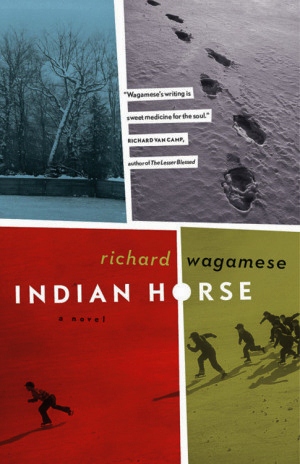
indian horse richard wagameseIndian Horse by Richard Wagamese ~ 2012. This edition: Douglas & McIntyre, 2012. Softcover. ISBN: 978-1-55365-402-5. 221 pages.

My rating: 7.5/10.

*****

Saul Indian Horse, a young Ojibway man in his thirties, has hit rock bottom and is crawling back up. He’s in a detox program after spending six weeks in hospital after collapsing in alcohol-induced tremors on a Winnipeg street. Part of the rehabilitation is bringing out old memories to get to the root of the issues behind the addictions, so Saul is writing down the story of his life.

Going back, waaaaay back, Saul starts with the anecdote about his great-grandfather which led to the family name.

The Ojibway were not people of the horse. Our land existed as an untamed thing, lakes, rivers, bogs and marshes surrounded by citadels of bush and rock and the labyrinthine weave of country. We had no need of maps to understand it. We were people of the manitous. The beings that shared our time and place were lynx, wolf, wolverine, bear, crane, eagle, sturgeon, deer, moose. The horse was a spirit dog meant to run in open places. There was no word for it in the old talk when my great-grandfather brought one back from Manitoba.

The traditional life of Saul’s immediate ancestors is changing, and the horse becomes a treasured and useful part of the tribal economy, pulling trees out of the bush to be floated down the river to the mill where they could be sold for cash, a necessity in the evolving way of things.

The negative side of progress is being felt as well. Children are being rounded up and forcibly taken away to mysterious locations where they are taught the ways of the Zhaunagush, the white people. The residential schools. Some – many – do not return. Those that find their way back are changed beyond comprehension of their parents and grandparents, and many, when they have children in their own turn, are emphatic in their fear of losing their own children to the schools. Saul’s parents were both residential school students, and the family  is constantly on the lookout for the floatplanes and motorboats carrying the armed white men intent on collecting the native children.

Despite their wariness, Saul’s sister Rachel is taken, and his brother Benjamin. Rachel never returns, but Benjamin runs away and finds his way home, though he is so sick from TB that he soon dies. The tragedy of finding and then losing their beloved son is too much for Saul’s parents. Against Grandmother’s pleas, they bundle up Benjamin’s body and set out by canoe to take him to the Catholic priest for “proper burial”.  Saul will never see them again.

Saul is only eight, and helpless to interfere. He and Grandmother are left behind, and as winter sets in and the parents do not return, are faced with a choice: stay in the bush and die during the winter, or travel out to the closest town, where there are relatives who will take them in.

Tragedy follows on tragedy, and Saul is eventually bereft of his grandmother as well; she freezes to death while sheltering Saul with her body. Saul is found and rescued, and is sent to “the school”, the regional Catholic residential school, where he joins the other traumatized native children who are in a state of walking apathy as everything they know is stripped away, and they are forcibly remade into “good, obedient, educated Christians.”

Saul already knows how to read and write in English, as his father had taught him from old schoolbooks, so that culture shock is minimized for him. But he desperately misses his family, and carries within him a core of grief that cannot be healed. Like most of the other children, Saul soon adapts to survival mode, learning how to avoid drawing attention to himself and cooperating in all demands made upon him.

A young priest joins the school the same year Saul is brought there, and his enthusiasm for the game of hockey brings interest and opportunity to the group of boys showing interest and ability. Saul is fascinated by the game, though he is considered too young to play. He sweeps the ice in the mornings, and surreptitiously teaches himself to skate and stick-handle, using to0-big skates stuffed with newspaper and frozen horse turds for pucks.

Of course, Saul is a natural. His progression is predictable, though fraught with emotional and physical challenges. Saul eventually gets too good for the Indian League, and is scouted, reaches Toronto, and plays for a top junior league team. Then it all blows up, as the stress of the constant racism – both brutally blatant and thinly veiled – he comes up against, and his deeply hidden bitterness about his tragic family and cultural losses finally push him over the edge.

*****

Richard Wagamese is an excellent writer, with an easy facility for words. I blazed through Indian Horse in one evening, willingly abandoning myself to Saul’s story. I’m not at all a hockey fan, and the description of this novel as a “hockey story” put me off much more than the residential school angle. My reluctance was needless; the saga of Saul did not require any stretch to understand in any of its elements.

I wonder if both the details of the game of hockey and the horrors of the residential schools are so ingrained into our combined Canadian psyches that we now immediately “get” the references? And does this therefore cushion the impact of a book detailing the atrocities done to First Nations people to a mere cultural reference, even when the author is most obviously a member of that cruelly wronged racial group?

For though I understood the points that the author was trying to wake us up on, I didn’t feel shocked. Nothing he brought up surprised me; the story of Saul is not unique, at least in the residential school survivor aspect. The hockey prodigy bit was where I had to stretch my “willing suspension of disbelief.” The kid was just a bit too awesome and magical through his whole short career. After a while his awesomeness, quite frankly, rather bored me. And then when he snaps, he beats up guys much bigger and stronger than he is, from sheer force of his rage. Yeah, okay. Fair enough. Next.

Wagamese himself says, about Indian Horse:

I think it is wonderful to be included in the top five [of Canada Reads 2013], mostly because it was Canadian readers who got me to the regional finalists and it shows me that they embraced a book that had a very dark, harrowing and hard theme.

I think it gives the opportunity for more clarity for the impact of residential schools on people, not only for the survivors themselves but the inter-generational impact on the children of the survivors. It allows Canadians the opportunity to have an emotional reaction to the story because it’s very direct and deliberately underwritten. It would have been really easy to go over the top and make it even more bleak and harrowing than it is, but my intention wasn’t to shock anybody or to cause anybody anger or anxiety.

The novel definitely didn’t feel over the top to me, though the atrocities are sprinkled liberally throughout. I guess what I’m feeling right now is that I should feel more “anger and anxiety.” What does it say about me, about our societal callousness, that stories such as this, even though fictional, do not stir us in a much deeper way?

Or maybe it’s just me.

I suspect this novel will do exceedingly well in the Canada Reads debates, both official and among the nation’s readers, because the topic is just so darned “politically correct”, especially with all of the recent “Idle No More” protests and rallies. I’m guessing that a collective “white guilt” will soften any criticism as to whether the book actually excels as a novel, a story.

It’s definitely engaging, and thought-provoking, and representative of an important Canadian issue, though I am not convinced it is better than the other four Canada Reads 2013 choices in being chosen as the book all Canadians should read. I’ll have more to say on that once I finish reading the five picks. I’m halfway through book number three. Not done with discussing this one quite yet!

Read Full Post »

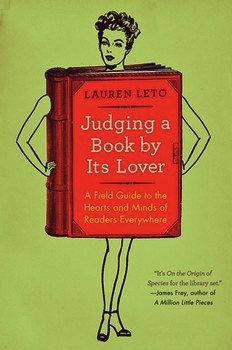
judging book by its lover lauren letoJudging a Book by Its Lover: A Field Guide to the Hearts and Minds of Readers Everywhere by Lauren Leto ~ 2012. This edition: Harper, 2012. Softcover. ISBN: 978-0-06-207014-2. 269 pages.

My rating: 4/10.

Quick verdict: Glad I didn’t buy this. Mildly diverting, but not a keeper.

The author is (apparently) a popular blogger. Fair enough. The chapters would indeed make fine blog posts. Read ’em and forget ’em. (Not that I would extend that attitude to those of you, my marvelous readers, who are also fellow bloggers. No, no, no! But blog posts are, by the very nature of the venue, rather in-the-moment, are they not?)

*****

I was going to condemn this novelty project by calling it pure fluff or something equally dismissive, but fellow-reader compassion for the author, an undoubted book lover, stays my hand. I’m mostly just glad I got this one from the library. It was mildly humorous in a pleasantly snarky way and I did frequently smile. Some sweetly tart anecdotes about a childhood of reading and a gentle ode to her book-loving grandparents enriched the whole.

I easily made it to the end, though I tuned out some at the mention of and rants about authors I’d never even heard of. Who the heck is Susan Wiggs? Chuck Klosterman? Augusten Burroughs?

The publisher is pushing this one with the following:

Want to impress the hot stranger at the bar who asks for your take on Infinite Jest? Dying to shut up the blowhard in front of you who’s pontificating on Cormac McCarthy’s “recurring road narratives”? Having difficulty keeping Francine Prose and Annie Proulx straight?

For all those overwhelmed readers who need to get a firm grip on the relentless onslaught of must-read books to stay on top of the inevitable conversations that swirl around them, Lauren Leto’s Judging a Book by Its Lover is manna from literary heaven! A hilarious send-up of–and inspired homage to–the passionate and peculiar world of book culture, this guide to literary debate leaves no reader or author unscathed, at once adoring and skewering everyone from Jonathan Franzen to Ayn Rand to Dostoyevsky and the people who read them.

Not a particularly broad field of authors covered within, I found, but the author did her best with her limited years of reading experience, for she’s a youngish bright young thing – I quickly googled her and found a reference to her being twenty-four in 2010 – and obviously feels most at home among the American bestseller and college reading list standards.

And that’s all the time I’m going to spend on this one. Should be in abundant supply in the used book stores in the next year or two, as all of the readers who’ve received this for Christmas of 2012 purge their shelves.

Read Full Post »

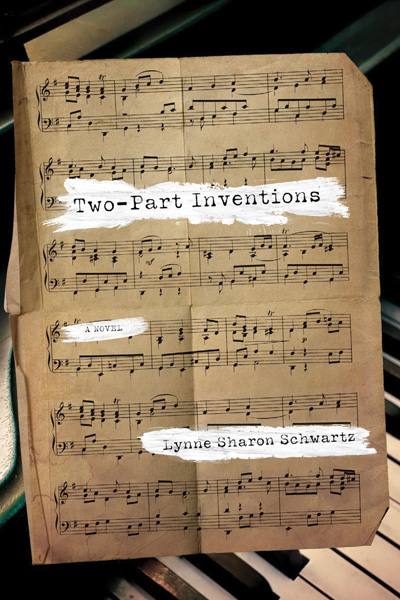
Two-Part-Inventions1Two-Part Inventions by Lynne Sharon Schwartz ~ 2012. This edition: Counterpoint, 2012. Hardcover. ISBN: 978-1-61902-015-3. 277 pages.

My rating: 8/10.

An interesting book. Deeply engaging, though just a bit cold and clinical in style, to match, perhaps, the deeply bottled up hangups of the main protagonists, pianist Suzanne Markon and her recording engineer husband, Phillip. The title is indicative of the contents, in numerous ways.

I liked it.

*****

As those of you who’ve been following my postings will already know, I’m presently very actively involved with preparing for our annual Regional Performing Arts Festival, which starts in early March. And though I didn’t mindfully consider the performing arts theme when I picked up this book, it was perhaps a Freudian impulse which prompted my plucking it from the display rack of New Releases at my last library visit.

That, and my remembrance of hearing good things about the book and the author. My impulse was rewarded; I’m glad I read the book, both because it was an engaging if rather sombre literary diversion from my mind-boggling pile of Festival paperwork, and because it has introduced me to an author I’d like to spend some more time with.

I’ve promised myself some personal catch-up time this morning to complete several blog reviews which have been simmering on the back burner, as it were, so I’m going to try to keep things short and to the point, especially in the case of those books which are recent and not at all obscure. The internet abounds with reviews for these books already, many of them so well-written that I am adding little to the conversation that is already taking place.

*****

The high piercing wail reached him even before he got to the front door. so jarring that he dropped his keys on the flagstones. The wail sounded like a small creature being tortured, a bird, maybe. A demented form of birdsong. But there was no pause for breath or change in tone, no hint of sputtering life. The shriek kept up at that bizarrely high pitch, the far end of the keyboard, while he fumbled at the door and finally rushed inside, dropping his briefcase and laptop on the shelf in the front hall.

Where was she? It couldn’t be Suzanne. It wasn’t a human sound. He followed it through the living room, past the grand piano with open sheets of music – Bartók, Poulenc, Stravinsky, he registered automatically – and into the kitchen, where billows of steam seethed and rose in clumps from the red teapot, already forming cloudy patches on the tiles behind it. He tripped over her body, stretched out flat on the floor, on her back. She looked like a ballerina who falls back in a firm, elegant line, confident that her cavalier will be there to break her fall and propel her on to her next step. But no one had been there to catch her. Before he knelt to see if Suzanne was still breathing, he stepped over her to turn off the flame under the screeching pot.

But Suzanne is not breathing. As her husband Phillip discovers in the next few moments, she is, though still warm – as Phillip discovers as he caresses her hands and face – finally, irretrievably dead.

The story that follows is the dual portrait of two ambitious and talented people, yoked together in a relationship that transcends mere marriage. Suzanne and Phillip are both damaged souls who find a certain respite in each other’s company since their first meeting in high school. Their love is certainly passionate, at least at first, but a longer acquaintance reveals the core of ice in the heart of each, which ultimately will determine their twinned fates.

Suzanne has been a brilliant pianist since an early age, something of a child prodigy. After a chance encounter with an eccentric neighbour leads to a musical mentorship and a stint at Juilliard, it seems that the concert hall is Suzanne’s undoubted destination. She suffers, however, from crippling stage fright, which worsens with every succeeding engagement, to her bitter dismay. For though she loves her music for itself, for the deep emotional need it fulfills in her life, what she desires even more is the adulation of an audience, the continual reassurance that she is indeed a worthy person, that she is “real”.

Phillip, musically gifted though not to the degree that Suzanne is, has built himself a succesful career in the recording industry, and from the first is Suzanne’s most passionate promoter. He sees his wife’s true talent, and has lofty ambitions for her performing career. As she chokes on performance after performance, and as word of her inability to pull off a concert hall quality presentation spreads, her choice of venues narrows to the most prosaic, to her deep inner shame, and to Phillip’s obvious despair.

The bookings were in smaller and smaller places: a party for a volunteer ambulance squad; a benefit for a local Little League team held in a high school gymnasium for an audience of unwilling teenagers and their teachers; once, a ticket to her recital was the reward at a silent auction for a nursery school. But the panic didn’t change, and this she could not get used to…

…This must stop, she thought…She’d tell Phil she needed a break She knew what his arguments would be, and his ceaseless encouragement, which was beginning to cause her mild nausea… “Why don’t you give it up?” she said to him once …There was no need to explain what she meant. He looked at her with a stunned face. He was holding a container of milk, about to pour some, and he put it down because his hand shook. “Give it up? This is what we planned from the very beginning. Things are moving along. All you need is patience. Do you want to waste your God-given talent?”

God-given. She’d never expected to hear a word like that from him. If anything, the talent had begun to feel demonic…

Soon Suzanne has given up completely, and has slid into a passive acceptance of her failure. She becomes reclusive, spending her days watching television while Phillip is at work, and preparing elaborate meals for him as she seeks to fulfill her creativity by concentrating on cooking. She still practices daily, and teaches a few students, but she refuses to perform for an audience. And now she has a legitimate excuse; she is pregnant.

But even in this Suzanne and Phillip are about to face a heartbreaking disappointment. The pregnancy ends in a miscarriage and in Suzanne’s inability to conceive again. She drifts even further into her introspectively passive state of acceptance. Phillip is bemused and disappointed, but his own career is steadily becoming more successful; he now owns a recording studio, and is turning out highly regarding classical music CDS. His performers are thrilled with how their work sounds in the recorded form, Better, in fact, than they thought it would while they were playing.

For Phillip has started tinkering with the possibilities of cutting and splicing and layering the recorded music, and though he insists to himself that he is merely augmenting the recordings to what they should sound like, the practice is gaining a hold on him, especially as no-one seems to notice. So one day he suggests that Suzanne might want to produce a CD of her own, playing privately in the recording studio, with no audience to cause her to freeze up …

*****

There is so much more going on in this novel than I’ve included above. We have an intriguing love triangle (or two), a tragic childhood accident which allows the character in question (Phillip) to justify his questionable moral behaviour, complicated family relationships and deeply complex friendships, and an endless array of intensely focussed (and sometimes slightly warped) creatively gifted people pursuing their various deeply personal goals.

The success that Phillip eventually engineers for Suzanne was inspired by, as the author discusses in her Author’s Note, by the real life example of pianist Joyce Hatto, whose sudden blaze of glory via stunning recordings of “her” works were found to be highly engineered by her husband.

From the flyleaf:

Two-Part Inventions begins when Suzanne, a widely-admired pianist, dies suddenly of a stroke. In the midst of his grief, her record-producer husband, Phillip, becomes deeply agitated: Suzanne’s reputation is based on a fraud which is about to be exposed in the classical music world. Phillip has built a career for his wife by altering her CDs using portions from recordings of other pianists. Syncing the alterations seamlessly, he has created a wide repertoire of flawless music with Suzanne getting sole credit.

In this psychological novel set in New York City, (the) author … guides the reader through a flawed marriage and calculated career. Beginning with Suzanne’s death and moving backwards in time, Schwartz examines Suzanne’s early years as a musical prodigy, her education at Juilliard, her life with Phillip and her unusual career, while contemplating the nature of truth, marriage, and the inner demon of thwarted ambition.

A sombre psychological novel describes this one well. There were occasional flat spots, though definitely not enough to mar the narrative. The overall tone, in my opinion, stylistically fits its characters quite perfectly.

Definitely an author worthy of further exploration: Lynne Sharon Schwartz

Read Full Post »

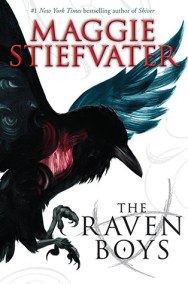
the raven boys maggie steifvaterThe Raven Boys by Maggie Stiefvater ~ 2012. This edition: Scholastic Press, 2012. Hardcover. ISBN: 978-0-545-42492-9. 409 pages.

My rating: It’s complicated. I’m giving it a 7/10, pending the next installment. Stiefvater’s a very fine wordsmith, and she’s showing some lovely talent here, but there were some issues I couldn’t ignore which had nothing to do with excellent quality of the prose.

If you want to read a proper review, the internet is alive with them. Goodreads has an abundance – over 7000 ratings and 2000 reviews. The ones I read on the first page alone were very nicely done indeed, so I won’t duplicate those here.

Here’s the blurb from the dustjacket; it’s as good an explanation of the premise of this book as any:

“There are only two reasons a non-seer would see a spirit on St. Mark’s Eve,” Neeve said. “Either you’re his true love . . . or you killed him.”

It is freezing in the churchyard, even before the dead arrive.

Every year, Blue Sargent stands next to her clairvoyant mother as the soon-to-be dead walk past. Blue herself never sees them—not until this year, when a boy emerges from the dark and speaks directly to her.

His name is Gansey, and Blue soon discovers that he is a rich student at Aglionby, the local private school. Blue has a policy of staying away from Aglionby boys. Known as Raven Boys, they can only mean trouble.

But Blue is drawn to Gansey, in a way she can’t entirely explain. He has it all—family money, good looks, devoted friends—but he’s looking for much more than that. He is on a quest that has encompassed three other Raven Boys: Adam, the scholarship student who resents all the privilege around him; Ronan, the fierce soul who ranges from anger to despair; and Noah, the taciturn watcher of the four, who notices many things but says very little.

For as long as she can remember, Blue has been warned that she will cause her true love to die. She never thought this would be a problem. But now, as her life becomes caught up in the strange and sinister world of the Raven Boys, she’s not so sure anymore.

From Maggie Stiefvater, the bestselling and acclaimed author of the Shiver trilogy and The Scorpio Races, comes a spellbinding new series where the inevitability of death and the nature of love lead us to a place we’ve never been before.

*****

And here are some ratings and personal opinions I’m jotting down, because I feel like I have to say something.

I liked this book. I didn’t love it, though. Steifvater’s last book, 2011’s The Scorpio Races – I think I can honestly say I loved that one. So my expectations for The Raven Boys, while high, were reasonable. I figured that this next one would be below the crest of the previous wave, and I was right.

So The Raven Boys was better than I’d really expected, but the author is going off an a totally different tangent here, and it’s a bit soon to see what the end result will be. With a four-book cycle projected, it could either get even better (oh, yes please!) or deteriorate. I can’t call it at this point. But I definitely would recommend The Raven Boys to the YA fantasy/paranormal romance crowd. I’m not in that demographic, though I do enjoy the odd well-crafted tale from the genre, but I appreciated this book enough to spend the better part of Christmas Day very happily power-reading through it.

Opening Chaper: 10/10. Nice set-up. Once a year, on St. Mark’s Eve, the dead-to-be – all those will die in the coming year – are visible as spirit manifestations along the mystical “corpse road”, to those with the psychic powers to penetrate the veil between the spirit and living world.  The members of the extended family of (all female) psychics living together in a rambling old house in Henrietta, Virginia have those powers. All except for a non-gifted daughter, 16-year-old Blue. Blue comes along because her one power is that she “boosts” the psychic powers of the others. In her many years tagging along on St. Mark’s Eve, she’s never seen one of the will-be-deads. Except tonight, when one boy appears to her and names himself – “Gansey.” When Blue finds out that this vision means Gansey is either her true love, or she will be the cause of his death, she files that startling bit of news with her other long-held bit of foreboding knowledge: if she kisses her true love, he will die. Needless to say, this severely cramps Blue’s style romance-wise. Too bad she’s about to meet some very tempting potential lovers – the Raven Boys – a group of four friends from the town’s exclusive boys’ school. One of whom is named, inevitably, Gansey.

Characterizations: 10/10 for the heroic leads – Blue and Raven Boys Gansey and Adam. A meager 6/10 for the villains – Whelk (“Whelk”?! Seriously?) and Adam’s brutal father. Too obviously bad. No shadings. The ones who we’re not sure of – Ronan and Neeve – let’s give them an 8/10. Could go up or down. Raven Ghostly Boy Noah – he started out as a 2 or something like that, crawled up to about a 7 or 8 once he started to de- and re-materialize and his whispers showed his sense of graveyard humour.

Family Stuff: We had the range, from really pretty tight and reasonably awesome (Blue’s, Gansey’s, Noah’s) to dysfunctional but trying hard (Ronan’s) to literally call-the-cops terrible (Adam’s). So I’ll give a 9/10. Lost a point for the convenient but kind of annoying extreme wealth of Ronan’s and Gansey’s tribes. (Sure, it’s just jealousy.) Oh – and the missing father (Blue’s) who I’m sure will turn out to be crucially crucial in a later episode – duly noted that he’s in the mix and will likely show up in person.

The Quest: 4/10. Ley lines and the North American burial-place of a mythically sleeping, potentially wish-granting Welsh King – meh. Cop out, Maggie. I’m a bit jaded with the whole Celtic mythology thing. Couldn’t you make something up? Or use some North American-based folklore?

Neat Little Details: 10/10 – Gansey’s choice of ride, the ’73 Camaro – unexpected. Especially the detail about the car perpetually smelling like gas. They really do. Verisimilitude = perfect points. The helicopter pilot sister – nice and handy. I liked. The warehouse digs. Very cool. Blue’s personal style. The “normal” of the matter-of-fact acceptance of Maura being the “town medium”. The psychic hotline.

The Pacing: 5/10. Pretty darned slow. I know it’s setting up the back story for – get this – THREE more books, but it felt like molasses on a cold January day. (And I’m a fast reader.) I wish this could be cleaned up, tightened up somehow. Less is so often more. (But I know how hard it is to edit – look at the horribly long reviews I write. It’s a definite fault in a professional she-gets-paid-for-it writer, though. Don’t get me started on J.K. Rowling’s too-much-detail verbosity in the later Harry Potter books.)

Sexual Tension: Oh, let’s see. About a 20/10. That should keep the main fan base (teen girls) fully engaged. No kissing allowed because of the whole death thing, so every tiny touch is magnified about a million-fold. Is it hot in here? Why yes, yes, it certainly is. Oh yes.

Annoying Little Things: The Latin-speaking trees. The baby raven – “Chainsaw”. Too cute. The backhoe in the last chapter. Too unlikely – I’m sure someone would notice the inevitable disturbance left by the amateur operator. The whole time-shift thing, because it wasn’t really that well done or, quite frankly, all that believable. The fact that the cops couldn’t seem to find Noah’s car, though you’d think that after they were tipped off to the human remains they’d be doing a fairly wide sweep through the woods. Just maybe? Other stuff I can’t be bothered to type out. So a 3/10 for those bits.

The Ending: Boo, hiss. Not exactly cliffhanger; more like “is a page missing?” Maddening. *** It. Just. Stops. *** C’mon. If it’s a great read, we’ll buy the next book even if you toss us some sort of a wrap-up to the action so far. The Dead Stop feels manipulative and disrespectful to the engaged reader. So a 1/10 for that.

The Actual Writing: It’s good. Very good. Plus it’s frequently very funny. 11/10. I think Stiefvater is already doing well, but I’m betting she can get even better. I’m rather disappointed that she’s doing such an ambitious series, because it feels really rambling already. I think the discipline of the solitary stand-alone novel (yes, like The Scorpio Races) would be a better way for her to refine her already more-than-decent style even more.

Read Full Post »

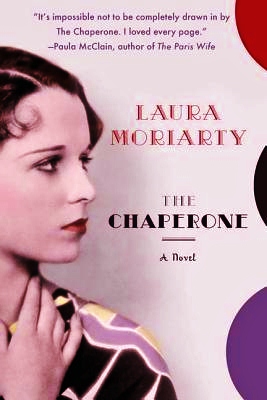
The Chaperone by Laura Moriarty ~ 2012. This edition: Riverhead Books, 2012. First edition. Hardcover. ISBN: 978-1-59448-701-9. 367 pages.

My rating: 6.5/10. You know, the only real surprise I found here was how mild it was. I’d expected something a bit more graphic, from all the hype. The several key sex scenes are safely veiled in allusion. A decently well-written addition to the “women’s fiction” shelf, which, if it feels like damning with faint praise, is how I’m feeling about this one right now.

*****

The Chaperone was all over the bestseller lists earlier this year, but seems to have faded quickly as readers seeking the latest literary thrill gobbled it up, found nothing worth spending much time digesting, and inexorably moved on. To continue with the food analogy, I was going to compare this one to a box of chocolates, or a big slice of layer cake,  but mulling it over just a mite more, I’ve settled on watermelon for my comparison. Sweet and refreshing and welcome while it’s being consumed, but once it’s down to the rind you realize it doesn’t really count as food. And there are always those slightly bothersome seeds…

I quite liked this book – I really did  – but the whole time I was reading I had that “you are being educated” feeling which is dreadfully difficult for the writer of historical fiction to completely avoid. Right from the very first scene, where our protagonist Cora Carlisle appears engaged in one of her civic-improvement projects – this particular one is collecting children’s book donations for the local library – the scene is being set up all around her, figurative stage hands pointing at clues and the authorial chorus monologuing away so we don’t miss a thing.

Here I was going to write out my own version of the plot outline, but, really, life’s too short. From the Goodreads page:

The Chaperone is a captivating novel about the woman who chaperoned an irreverent Louise Brooks to New York City in 1922 and the summer that would change them both.

Only a few years before becoming a famous silent-film star and an icon of her generation, a fifteen-year-old Louise Brooks leaves Wichita, Kansas, to study with the prestigious Denishawn School of Dancing in New York. Much to her annoyance, she is accompanied by a thirty-six-year-old chaperone, who is neither mother nor friend. Cora Carlisle, a complicated but traditional woman with her own reasons for making the trip, has no idea what she’s in for. Young Louise, already stunningly beautiful and sporting her famous black bob with blunt bangs, is known for her arrogance and her lack of respect for convention. Ultimately, the five weeks they spend together will transform their lives forever.

For Cora, the city holds the promise of discovery that might answer the question at the core of her being, and even as she does her best to watch over Louise in this strange and bustling place she embarks on a mission of her own. And while what she finds isn’t what she anticipated, she is liberated in a way she could not have imagined. Over the course of Cora’s relationship with Louise, her eyes are opened to the promise of the twentieth century and a new understanding of the possibilities for being fully alive.

Drawing on the rich history of the 1920s,’30s, and beyond—from the orphan trains to Prohibition, flappers,  and the onset of the Great Depression to the burgeoning movement for equal rights and new opportunities for women—Laura Moriarty’s The Chaperone illustrates how rapidly everything, from fashion and hemlines to values and attitudes, was changing at this time and what a vast difference it all made for Louise Brooks, Cora Carlisle, and others like them.

The Chaperone is crammed with a whole bunch of social issues, with our heroine Cora firmly on the side of right, of course, at least after her consciousness-raising is completed. Racial prejudice and segregation, women’s rights – namely access to contraceptives and care for unwed mothers, with a bit of figurative bra-burning (in this case corset dropping), Prohibition and the repeal of liquor laws,  and eventually gay rights are all featured.

This is an ambitiously crowded book, with the author attempting to cover the entire term of a woman’s life in 357 pages. The few weeks of summer with Louise in New York gets the most screen time, with flashbacks to childhood nicely detailed here and there. The rest of the story is painted with a very broad brush; we are told simply what happens and what Cora thinks of it all, but from an omnipotent distance.

A little way into the book I started thinking, “Hey, this reminds me extremely strongly of another author”, and eventually I had the “aha!” moment. This is a novel very much resembling one of Bess Streeter Aldrich‘s. The same short but detailed periods of a protagonist’s life, with stretches of “then this or that happened and she/he was really sad/happy/confused/vindicated/pick some emotion”, plus very obvious inclusions of historical snippets clumsily inserted to show the bigger picture. Sometimes the characters seem like paper cutouts stuck on a schoolroom timeline.

Possibly the Kansas setting of much of The Chaperone had something to do with it; Aldrich was also a writer devoted to the midwestern states and the decent farmers and gossipy small town denizens thereof. Despite the New York interludes and the growth of Wichita from sleepy town to bustling city in the course of Cora’s life, The Chaperone is at heart just another small town story.

The Louise Brooks connection serves merely as a skeletal framework to build Cora’s story onto; it actually works fairly well, and I must say it left me with a strong desire to learn more about the real life Louise, to see if she was indeed the self-centered egoist she appears to be here. Brook’s own collection of biographical essays, Lulu in Hollywood, is now on my list of things to read next, as is Edith Wharton’s The Age of Innocence (a re-reading, in that case); it is the book which Cora struggles with and is rather offended by throughout her New York summer.

This is not a great review – my thoughts are everywhere – I apologize. It’s been a busy week, with many things going on, and though I’ve stolen some time for reading my writing sessions have been fragmented and often interrupted.

I generally enjoyed The Chaperone and had no trouble keeping my mind engaged; its numerous flaws were slightly annoying but forgivable. Cora Carlisle has some unlikely adventures, and I can’t quite bring myself to completely believe in the complete success of her two lives – the public and the very private – especially as she has to keep a number of other people convinced to play along. I kept expecting her to get busted; she never was. And that’s my biggest spoiler.

Chick lit, but of a superior type. If you liked Kathryn Stockett’s The Help, this one should suit you just fine. Birds of a feather.

Read Full Post »

« Newer Posts - Older Posts »