Archive for the ‘2000s’ Category

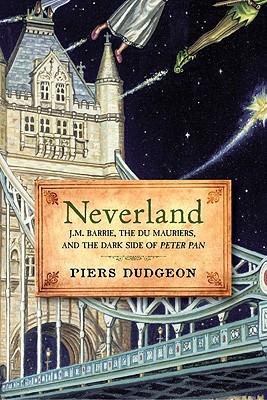
Neverland: J.M. Barrie, the Du Mauriers, and the Dark Side of Peter Pan by Piers Dudgeon ~ 2009. Originally published as Captivated: J.M. Barrie, the du Mauriers and the dark side of Neverland in Great Britain, Chatto and Windus, 2008. This edition: Pegasus Books, 2009. Hardcover. ISBN: 333 pages.

My rating: This is tough. I think 4.5/10. It certainly held my interest, but I have some issues with how the author presented some of his more far-fetched speculations as fact, without any of the language needed to make it clear that some conclusions were very much fabricated by the biographer. Not “good science”, if you get my meaning. Extra points for the vast amount of research that obviously went into this project. Points off for the blatant speculation, sometimes admitted to by the author, that makes “truth” out of shreds of fact.

*****

This was a recent library loan, picked up on a whim because of the du Maurier reference. I hadn’t realized there was any sort of connection, so was quite intrigued by the subtitle. And oh my gosh – what a can of worms this turned out to be.

It’s on the library stack for return today, so this will be a very brief summary.

In short, the author, Piers Dudgeon, has detailed the secret (or maybe not so secret?) obsession by the esteemed and exceedingly successful J.M. Barrie for the family of Arthur Llewelyn Davies and his wife, the former Sylvia du Maurier, and especially their five sons: George, John, Peter, Michael, and Nicholas. Whether the attraction was merely that of fascination for a vibrant and beautiful family, or whether the eventual focus on the five young boys was more sinister in nature, there was a decidedly – how shall I put it? – “focussed” situation going on there. After Arthur’s death of cancer in 1907, Sylvia leaned heavily on the family friend Barrie; her own tragic death three years later left the five children, then aged approximately from seven to seventeen, under the guardianship of Barrie, who, as “Uncle Jimmy”, became even closer in the pre-existing relationship to something of a foster-father.

All of this is clearly documented and not particularly newsworthy, but Dudgeon goes deeply into speculation and conjecture here about Barrie’s infatuation with the Llewelyn Davies family and the du Mauriers. Aside from the predictable insinuations about pedophiliac tendencies in Barrie, something that I was aware of, having read numerous references over the years to his infatuation with the real-life model(s) of his never-aging creation Peter Pan, Dudgeon goes even further into the murky psychological waters, claiming a sort of extra-sensory perception and an ability for “ill-wishing” that spelled doom to anyone upon whom Barrie became fixated. Dudgeon openly implies that Barrie had a hand in the deaths of Arthur and Sylvia L-D, as well as in the suicide of one of the boys as a young man, the death in action of another in World War I, and the suicide of a third as a middle-aged man.

Dudgeon goes out even further on his shaky limb and seems to claim that Daphne du Maurier in particular was deeply influenced by Barrie’s role in her life, and that her books reflect his deep (claimed by Dudgeon) importance in her world. Barrie did indeed come into (occasional) quite close contact with Daphne in her younger years, but I feel that Dudgeon has strongly overstated his influence, seeking to justify his own obsession with the “demonization” of Barrie.

I can easily believe Barrie was a man of morbid and unhealthy obsessions, though the muted accusation of  pedophilia has been emphatically denied by the very people who should know, the Llewelyn Davies sons themselves.

All in all, a rather disturbing read, in more ways than one. I’m not sure how reliable Piers Dudgeon’s conclusions are, though much of his research is quite fascinating when viewed with a disinterested eye. I certainly can’t recommend this book as the definitive account of Barrie and the Llewelyn Davies family, and definitely not as a Daphne du Maurier reference – I felt this was the most contrived part of the whole production. All I can say is that if you’re interested (and it is interesting to speculate and delve into Barrie’s dark world, behind the glitter of the stage productions) you should perhaps look into some more reviews – lots to choose from out in the cyberworld –  to get a clear idea of Dudgeon’s own infatuation with his theory, and then read away with an open mind.

A good place to start is here, the New York Times book review by Janet Maslin from October 25, 2009.
Read Full Post »

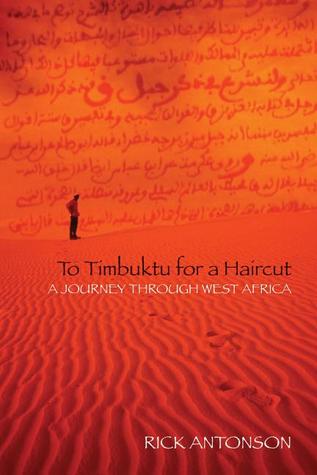
To Timbuktu for a Haircut by Rick Antonson ~ 2008. This edition: Dundurn, 2008. Softcover. ISBN: 978-1-55002-805-8. 256 pages.

My rating: 6/10.

Uneven. The cover blurb references Bill Bryson and Michael Palin, and Antonson himself refers to Paul Theroux an awful lot, but he’s not anywhere in their league. Travel lit lite. The navel gazing equals Theroux’s, but is not nearly as interesting to this reader as Paul’s deep and/or often twisted musings. Antonson is no Bryson, and he really is no Theroux.

*****

Rick Antonson, CEO of Tourism Vancouver, is absolutely exhausted by his grueling efforts working on the 2010 Vancouver Olympics bid. Desiring to get away from it all, he mulls over where he can escape to for a month or so. His wife Janice rather flippantly suggests Timbuktu, in reference to Rick’s childhood curiosity about the place his father often joked about. Apparently Antonson Senior, when questioned by his offspring as to where he was going each day, would retort: “I’m going to Timbuktu to get my hair cut!” So there you have it – a destination for the trip and a catchy title all rolled up in one neat package.

Doing his research as a good traveller should, Rick loads up on guide books and bones up on Mali and on West African history, in particular the history recorded by the early European explorers. He makes internet contact with a Malian travel service owner, one Mohammed, and arrangements are put in place for a fairly modest itinerary, with Timbuktu as the ultimate destination, with perhaps a bit of local exploring.

To condense the saga, Rick makes it to Mali, finds out that Mohammed is a bit of a shady character, eventually makes it to Timbuktu despite being annoyed by other pesky Caucasian tourists sharing his space and treading on his dreams of solitary travel. He stays there all of ONE WHOLE DAY and then goes hiking in the Dogon region for another week or so, accompanied by a mini entourage of local guide and personal cook. Everything costs way more than he has anticipated, and he goes on at great length about how Mohammed has ripped him off, and paradoxically, how darned generous he is being to the locals, scattering selective largesse as his whims take him.

If this sounds like I didn’t much care for Rick Antonson’s tone, you’re right. Something about him just rubbed me the wrong way. Maybe the word I’m looking for is “smug”? And his writing style is all over the map. Sometimes it was very readable, especially in the descriptive passages about present-day Mali, and when he discusses  the explorers’ experiences. When he focusses on his personal thoughts and feelings he writes like a cross between Hemingway and Bryson – monosyllabic sentences and witty asides mingled in a mish-mash of would-be literary exposition.

All of this panning aside, To Timbuktu is not exactly a bad book. I learned quite a lot about both present-day and historical Mali. Rick’s travelling adventures were entertaining, and he is general reasonably kind in his evaluations of his fellow travellers; he did look for – and often found – the best qualities of both the Europeans and the Africans whom he encountered and spent time with. He is very willing to give credit to the Malians for their good-natured tolerance of the tourists in their country, and, obviously because of his involvement in the tourism industry himself, has pragmatic and very sensible views on how the tourist trade affects the local way of life. He puts forth some observations on how an already mutually beneficial two-way traffic might be improved.

Rick does stay pretty hung up on the perfidy of Mohammed, though, which I thought was something of an over reaction from someone with, as he boasts several times, only one blank page remaining in his passport. Rick’s irritation was quite blatantly personal – he was never actually left high and dry – the promised arrangements were always more or less in place, though they ended up costing more than first negotiated.

There is something of a greater purpose to the book, which Rick claims was inspired by his desire to help save a large collection of native Malian munuscripts, and a portion of the book sales are dedicated to the conservation effort, but it felt like this was more of a manufactured excuse for the visit than a true passion for the project.

I soldiered on to the end of this self-congratulatory effort, enjoying it in a mild way between moments of wanting to howl in annoyance. I relieved my ambiguous feelings somewhat by reading the most obnoxious bits out loud, like the bit where Rick tells of how wonderfully choosy his wife Janice is – she apparently goes ftrom table to table when dining out to ensure she has the best seat in the house, and examines multiple hotel rooms to ensure hers has the best features – bet she’s a real treat to serve!

This one’s going in the giveway box. An okay effort, but for this reader, once through was enough.

Read Full Post »

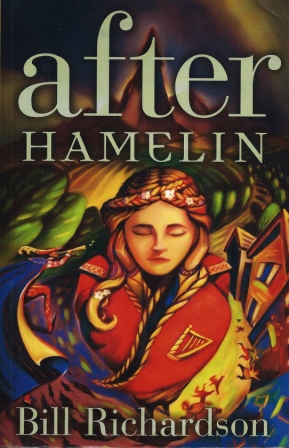
After Hamelin by Bill Richardson ~ 2000. This edition: Annick Press, 2000. Softcover. ISBN: 1-55037-628-4. 227 pages.

My rating: 6.5/10. Sorry, Bill. This one was a bit hit and miss with me. You got an extra point from me for old times’ sake, because I’ve been a (mostly) appreciative fan of yours since CBC Radio “Sad Goat” days.

I really liked parts of it, especially the character of Penelope, with her 101-year-old words of wisdom, and I admired the imagination of  the Frank L. Baum Oz-ish dream world, but I really had to push to see this one through to the end. I kept stopping and yawning and mentally saying “Where are we? Oh, yeah, she’s in the dream world now…”

And while the bizarre (and nicely imagined – I laughed at these) realms of the ski-footed flying creatures living in the land of perpetual ice and moonlight, and the rope-skipping, directionally challenged dragons next door were quirky and funny and sweet, the dark overtones of the menace waking from its sleep struck a harsh note. And I couldn’t really get what the Piper was all about. Even if he woke, what was going to happen? I mean, how bad was it going to be? Just another magician gone wrong…

And the whole turning-eleven thing. Obviously a puberty ritual, but surely a bit young for the whole “welcome-to-womanhood” chorus of the villagers? Or maybe I’m reading too much into that. Probably a cigar is just a cigar, and it’s merely a cute plot device.

This is not a bad book, and it had some great sequences, but I didn’t immediately love it. A pleasant, light diversionary read, for mature-ish children, say 10 and up, to adult. Well-constructed “after the end of the fairytale” story. Good discussion starter, or as part of an exploration of alternative fairy tales and such.

Oh, and an extra .5 point for the talking cat. (One of my personal weaknesses. I do so love a talking cat.)

Gorgeous cover art, too!

*****

Everyone knows the story of the Pied Piper of Hamelin. How, in a town plagued with rats, there appeared a mysterious man who promised to rid the town of the creatures, and, after being promised a lavish reward, did just that, piping out a magical tune that drew them from every nook and cranny, as the piper led them far away. Coming back for his promised reward, the greedy town councillors refuse his pay, at which point the piper takes revenge by calling all of the children of the town after him, save one crippled child, who cannot keep up and so is spared. This is where the story ends. But what happens after?

After Hamelin is Bill Richardson’s fantasy about the next stage in the story. In his version, not one but two children remain behind. Penelope, who has just woken to a sudden deafness on the morning of her eleventh birthday, and Alloway, a blind harpist’s apprentice, who gets lost as the horde of children travel through a forest. Between Penelope and Alloway, Penelope’s elderly cat Scally, the village wise man Cuthbert, and his three-legged dog Ulysses, a rescue is carried out, through the medium of a trance state – Deep Dreaming – and the liberal use of magical skipping-rhymes.

Narrated by Penelope herself, who, at the age of one hundred-and-one, still looks back on her long life and unbelievable adventures with clarity and humour, the tale is told through a series of flashbacks and reminiscences.

A children’s story for all ages.

And here is an interview with the author, which puts everything into context.

Bill Richardson Interview – After HamelinJanuary Magazine

Read Full Post »

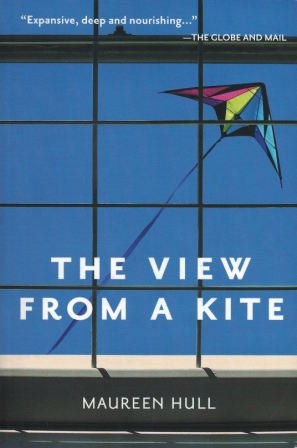
The View from a Kite by Maureen Hull ~ 2006. This edition: Vagrant Press (Nimbus Publishing, 2006. Softcover. ISBN: 1-55109-591-2. 338 pages.

My rating: Majority of the book: 9/10. Last few chapters: 7/10-ish. I found this book to be a compelling and sharply presented read, and, for a book about a tragically-backstoried teenager in a tuberculosis ward, unexpectedly funny. Occasionally the TB references felt a bit “teachable moment”-ish, but in general this aspect was handled well. (I had a bit of a chuckle when I later learned that the author had homeschooled her two daughters for seven years; I could definitely tell she was very familiar with the art of including information in a narrative in an interesting and almost flawlessly “natural” way – the mark of the very best historical fiction writers we homeschoolers love so much.)

I did feel the momentum dropped towards the end, as the author brought the strands of the story together. The ending felt a little too neat and predictable, not necessarily a bad thing, especially given the “young adult” nature of the novel, but I personally felt a rather vague disappointment, as if I had expected just a little bit more creativity from such an obviously capable author.

Overall recommendation: very well done. Well worth reading.

*****

I am a Dangerous Woman in a Dangerous Dress.

The gym is foggy with chiffon: rose, peach, aqua and mint, with dyed-to-match pumps spiked to the bottom, strings of pearls looped around the top – a pastel smear of background for the scarlet shout that is me.  Gwen. My dress is a lick of silk, the molten edge of a suicidal sun. I move through the crowd like a reckless kiss, a flash of crystal at my stiletto heels, nails enamelled in heart’s blood.

His hair is too long, dark curls thrown into confusion by the knife edge of his collar. He draws frowns but no direct criticism because he just doesn’t give a damn and can’t be made to. He pulls me into his arms, the band blasts me up off the bed, trumpets and trombones in a frenzy, some crazed person hammering the bells off her tambourine. I cling to the edge of the metal frame, tangled in the sheets, hyperventilating, what is that tune? Sweet Jesus, it is not, yes it is. “Onward Christian Soldiers.”

I see them through the half-open door, the Salvation Army Band, all dressed up in black wool, red collars, and shiny brass instruments. The leader winks at me as he whips the ensemble into a straight and narrow line, aims them at the crashing, metallic finale. Then, with the barest pause for breath, they fling themselves “Into the Garden Alone.”

I fall back onto the bed and stare at the ceiling. Check my pulse. One hundred and thirty, roaring and frothing through my veins and arteries. Check my watch – 9:30, still the same damn Sunday morning. I have napped for less than half an hour.

Meet 17-year-old Gwen MacIntyre, temporary resident of the Cape Breton County Sanatorium. It is the mid-1970s, and though tuberculosis is fast becoming an obsolete disease, there are still a few specialized treatment facilities dedicated to mopping up the final cases, and providing a home for the incurable “chronics.” Gwen’s TB is being dealt with, but the disease is only one of her pressing issues. Her family, once happy and united, is irretrievably broken, and with Gwen’s growing maturity comes the need to find a way to move forward into a more hopeful future.

The novel is written in the form of chapter-long diary entries. Gwen’s private voice is articulate and keenly humorous, with occasional lapses into poignant regret for what has gone before, and fear for the future.

Understandable, as Gwen is the survivor of a partially successful family murder-suicide episode…

A diverting and, dare I say it, “educational” – in the very best way – read which I enjoyed. The protagonist’s spirited voice kept the dire subjects addressed from being too pathetically sad, and there was a sharpness to the wit which felt very real and refreshing. Sex, friendship and religion, among numerous other compelling topics, are frankly discussed by Gwen in her conversations with herself.

Marketed as a Young Adult read, this is definitely cross-genre enough to find a home on the Adult bookshelves as well. Shades of Betty MacDonald’s autobiographical “The Plague and I” (1948), about another clever observer’s time in a post WW-II TB sanatorium. I found it interesting to compare the two accounts; they are ultimately very different but also quite similar in that sophisticated, self-aware humour is used to deal with the frightening and personally humiliating experience of battling the “dread disease.”

I found this review after I had written the rough draft of my own; I include it here because the reviewer’s take on this story was very similar to my own. By reviewer Marnie Parsons, Quill & Quire, November 2006:

Ambitious and well-written, Maureen Hull’s first novel tells the story of Gwen, a 17-year-old in a TB sanatorium, and later a TB hospital, on Cape Breton Island during the 1970s. Gwen’s natural curiosity and her talent for writing combine in the narrative, as she observes the characters in the sanatorium with thoughtful, often wry insight, and simultaneously acquaints herself with the history of TB, its treatment, and its more famous victims. Typical teen pressures of boyfriends and burgeoning sexuality are interwoven with Gwen’s stories of life in the San, of late-night escapes by patients, her own sometimes horrific treatments, pranks played on nurses, and lists of preposterous historical cures for her disease. Her dreams of an exotic writing life in Paris are that much more poignant because, as the reader discovers, her life outside the San is far from happy. As she recovers from her TB, Gwen must also come to terms with an almost unspeakable family tragedy.
Gwen is an engaging character; her voice is strong and compelling. However, there’s too much happening in this novel: Gwen’s illness and life in the sanatorium would have been quite enough without the added complexity of her grandmother’s long-ago illegitimate pregnancy and developing senility (not overlapping), her father’s shellshock, and her parents’ murder-suicide. Hull works hard to blend the divergent strands of narrative, and there’s much to recommend this novel, which is an admirable and enjoyable effort. But in the end it lacks a sense of proportion. Less would definitely have been more.

Maureen Hull is a life-long native of Nova Scotia, born on Cape Breton Island and currently living on Pictou Island. She seems to have had a diverse and experience-filled life, including studies at Dalhousie University and the Pictou Fisheries School, and stints in the costume department of the Neptune Theatre (Halifax), as well as twenty-two years in the lobster fishery. This is the author’s first novel, though she has been actively writing since 1992. Her other published work includes several children’s books, short story collections, poetry, and creative non-fiction.

A contemporary Canadian writer to keep an eye out for, if The View from a Kite is any indication, and worthy of further acquaintance. I will be looking for more of her work.

Read Full Post »

Sunshine by Robin McKinley ~ 2003. This edition: Penguin Speak, 2010. Softcover. ISBN: 978-0-14-241110-0. 405 pages.

My rating: 8/10. Points lost because it tends to ramble; points added because the author unapologetically lets herself go on rambling! And because the vampires perish messily and satisfactorily in sunlight. My son and I, both McKinley aficionados, like to refer to this one as the “anti-Twilight” – no sparkling vampires here, though Sunshine’s heroine gets all silly about her undead crush occasionally, which we agreed was one of our our biggest objections to Twilight – Bella’s sheer stupidity regarding the worst choice ever for boyfriend material. (That, and the terrible writing. And the sparkling.) But, as usual, I digress.

Ah, Robin McKinley. Something of a comfort read author for me, ever since I first read the Damar stories, The Blue Sword(1982) and The Hero and the Crown(1985) quite a few years ago. I have lost track of the number of times I have now read these two books, and I’ve also read everything else she’s ever produced with varying degrees of enthusiasm, with the lone exception of her 2010 novel, Pegasus. I might be losing a bit of my enthusiasm for McKinley’s more recent stuff; her editors are letting her spread herself out a bit too much, the drawback to being such a huge bestseller-producer;  too many times quantity becomes confused with quality, when what they really need to do is refine, cut, and tighten things up. (Someday I will share my opinions on J.K. Rowling and the later Harry Potter books…)

The internet abounds in reviews of all of McKinley’s works; Sunshine is no exception. If you want to see a various range of opinions, just check out the Goodreads page: Goodreads – Sunshine by Robin McKinley  Over 2000 reviews! So I don’t think I need to add to this in any substantial way.

McKinley creates an interesting alternative world to Earth as we know it; she uses much of what we are already familiar with and tweaks it just enough to keep us paying attention – a technique she uses in all of her novels. Her heroine is a bit of a loner and a social misfit – no surprises here – and she also owes some unsuspected abilities to her ancestral bloodlines, which no one has seen fit to tell her about, leaving her to discover her powers for herself. Again, very much a McKinley trademark. The setting is almost dystopian, but people have adapted to the new, post-apocalyptic normal, and go about their business for the most part cheerfully and optimisically, which is something else I like about this tale.

The first time I read Sunshine I was totally engrossed – it was a “stay up till it’s finished” enterprise; this week’s reading was my third, and I am now seeing flaws and tweakable bits here and there, but all in all the story is holding its own.

A heads-up to those familiar with McKinley’s earlier “young adult” novels. Sunshine has lots of sex, some of it graphic. Probably best for the older teenage crowd, and of course McKinley’s legions of adult fans. Oh, and lots of blood. And chocolate! Kind of a weird book, in retrospect. But I’m still a fan.

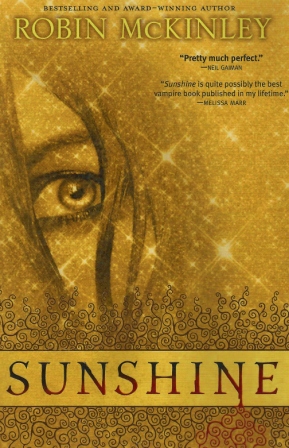
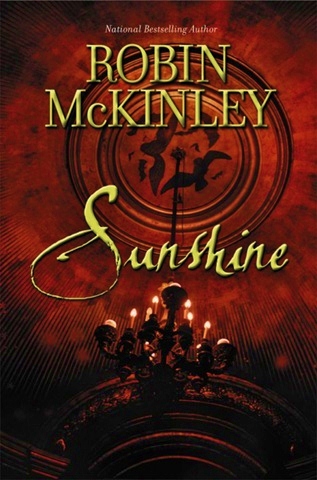
The cover at the top is from the latest edition, obviously aimed at the teen girl market. I much prefer the original cover art, which I’ve included here as well.

Read Full Post »

Candy’s Children by Sylvia Murphy ~ 2007. This edition: S.A. Greenland, 2007. ISBN: 978-0-9550512-1-0. Softcover. 316 pages.

My rating: 7/10. Possibly generous, but I liked it on several different levels, and thought its flaws were mostly editorial. It feels rather like a next-to-last draft, still very raw and not quite completely tweaked and perfected, but overall reasonably well done.

*****

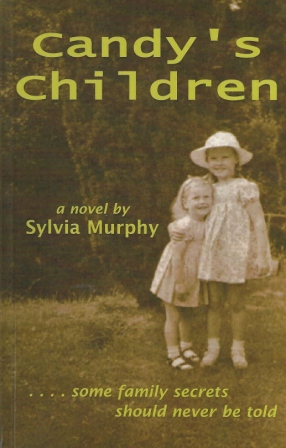
Don’t judge a book by its cover. This is a brutal story and this is an ironic cover; the two little girls are symbolic of the superficial sweetness which hides all sorts of dark emotions and human wickedness.

This book made me uncomfortable on a lot of different levels, but I read through regardless; Sylvia Murphy is a natural storyteller, and despite the flaws in this ambitious book (flaws which I feel could have easily been fixed by an interested editor) it held me to the very end, and surprised me often enough that I sat up and paid attention. Murphy does predictable with a twist than can leave you  shocked and appalled but still engaged; though I figuratively turned my eyes away a few times I readily turned them back.

Young Candice Hargreaves has grown up in pre-WW II Palestine, child of British expatriates. While the family is materially well-off, due to her father’s fruit importation business, and life is in the main easy and pleasant, there is a dark cloud forming over their fragile world. The political atmosphere was charged and ready to explode as the pro-Zionist movement which was eventually to see the annexation of Palestinian territory for the creation of Israel gained power. The British civil government of the region was increasingly challenged by grassroots Palestinian protest groups; open violence is a hairbreadth away.

The Hargreaves family, though outwardly normal enough, is deeply dysfunctional on an emotional level. Candice’s youthful troubles find no sympathy from her distant parents; as she reaches adolescence she turns more and more for comfort to her Palestinian nurse Leila, and, inevitably, to Leila’s handsome teenage son, Naseem, who works as the family’s houseboy. Candice and Naseem become infatuated with each other with predictable results; Candice’s passionate assertion that she wants to marry Naseem and settle down in the countryside to raise his babies engenders an unexpectedly violent response.

Candice – Candy – is very much a victim of circumstance for the rest of her life, but she refuses to acknowledge defeat; she’s a survivor. Her life turns and twists and ends up in unlikely places, but I found I readily suspended my disbelief and became fully engaged in seeing where this troubled heroine would end up next.

Not a masterpiece, but definitely a diverting read. I wouldn’t call it “pleasant” – graphic depictions of violence and sex (including rape) keep this from being a complacent read – but the actions fit the times and their inclusion took this tale to the next level. An interesting, seldom used setting. Boundary-pushing topics, including emotional and physical abuse of children and incest (though the incest is not at all what you’d expect, and is delicately handled.) I often found the characters a bit awkward and over-the-top; a good editor could have helped with that. We are “told” rather than “shown” a lot of the time; the novel’s best passages are those in which the author lets events flow without telling us what we should be thinking about them. The plot has enough twists to keep it from being totally predictable; I appreciated the boldness of the author in taking her heroine to the extremes that she did.

This is now the third book I’ve read by this author, the others being The Complete Knowledge of Sally Fry (reviewed earlier), and The Life and Times of Barly Beach, and I still hold her in high regard. Her voice is individual, wry, and often savagely funny. She has a lot to say, and I quite enjoy her perspective. I think that with a little backing from her early publishers she could easily have become a bestseller; she seems to have just barely missed a few of the final steps which would take her there, which is a shame, as she has an individual, quirky voice which appeals on numerous levels.

Here is the novel summary from the author’s website, sylviamurphy.co.uk/candys-children :

A wealthy Palestinian businessman, a middle-aged rock star, an Australian university lecturer, a nun, and an English aristocrat – why are these five ill-assorted people meeting up in a stately home in Yorkshire?

They are the children of Candy Price, one time film star and recently dowager Countess of Penmore. She has been murdered by an assassin’s bomb on a mysterious visit to Tel Aviv and they are gathering for her funeral  – an event that will change all their lives one way or another.  For they all have personal issues to resolve as a result of their mother’s colourful and defiant life. This has stretched from the partition of Palestine, through World War II in England and a miserable marriage to a fighter pilot, to being married to a Hollywood film star in the sixties, to having an affair with the heir to the Penmore title.

The story is told through action before, during and after the funeral. The five offspring have never all been gathered together before, as the Countess was prone to lose custody battles which led to her children being brought up by their different fathers. As we learn more about their disparate lives, it becomes apparent that each of the children has a different perception of their mother as a result of their upbringing.

And here is the author’s note:

Why did I write Candy’s Children?

Candy’s Children is a story that has haunted me for years, ever since, as a growing child, I listened to stories told by my grandparents, my mother and her sister, about events in Palestine before World War II. It was only when I was a grown woman that I realised how closely those events might have affected my life, and saw a way to write the story that was being related to me. This story is based on a true one about a British family of fruit importers who, by chance, had left for their annual leave in England just as the early months of the war began to affect the expatriate communities of the Middle East. These expatriate Europeans lived a comfortable life, either engaged in commerce or in the armed forces, and had very little idea of what was to come with the onset of the World War, and the implementation of the post-1918 agreement to turn Palestine into Israel. It became dangerous to go to parties, or to spend too much time at the lido – the part of the shore they made their own by anchoring two swimming rafts off the beach and installing a well-stocked bar on the landward side. How do I know? I have photographs and cine films of myself and about a dozen other suntanned toddlers laughing in the shallows, watched over by mothers and nurses. It was all fun and laughter until the time came when their cars were wrecked in riots (more photographs); British policemen were kidnapped and flayed alive; Palestinians who associated with Jewish people found their property looted.

Here my imagination takes over. In the midst of this chaos a young British girl, Candice Hargreaves, falls in love and becomes embroiled in events she doesn’t understand. The result is a still-born child, then a horrific war-time sea voyage to Liverpool, arriving in a country where nobody cares about her, or knows who she is. Abandoned by her awful family she learns to make her own way in a world that offers little in the way of comfort or security.

The next part of the story follows Candy through the years of World War II. The events are still picked out of the memories and stories that were told to me years later – sheltering from bombs under the table in Reading Station waiting room, life in the WAAF, a diet of potatoes, sharing lipsticks and nylons, wrecking a parked bomber with a carelessly driven lorry – it’s all true. And the tragedy of how the services dealt with the “welfare” of the girls who became pregnant by pilots who never came back.

Also true is the post-war period when Candy sets about making a fatherless family unit work, only to have it destroyed by the return of the father of her wartime child. There really was a job in a film studio, with all the attendant glamour and excitement, leading to a divorce and a new marriage and a life in Hollywood – okay, I made a lot of that part up, but we did know the film stars and directors personally – I still have their autographed photographs.

I didn’t have to make up London in the sixties, rock bands and music festivals, new styles of clothes, or the increasing muddle and terror in the Middle East that drove refugees like young Naseem Fahy to England. I did make up the identity of a young viscount who fell in love with a film star, but not the type – London was full of them as well – well-meaning, well-educated, dazzled, led astray…

Read Full Post »

SUMMER SOLSTICE

I wanted to see where beauty comes from
without you in the world, hauling my heart
across sixty acres of northeast meadow,
my pockets filling with flowers.
Then I remembered,
it’s you I miss in the brightness
and body of every living name:
rattlebox, yarrow, wild vetch.
You are the green wonder of June,
root and quasar, the thirst for salt.
When I finally understand that people fail
at love, what is left but cinquefoil, thistle,
the paper wings of the dragonfly
aeroplaning the soul with a sudden blue hilarity?
If I get the story right, desire is continuous,
equatorial. There is still so much
I want to know: what you believe
can never be removed from us,
what you dreamed on Walnut Street
in the unanswerable dark of your childhood,
learning pleasure on your own.
Tell me our story: are we impetuous,
are we kind to each other, do we surrender
to what the mind cannot think past?
Where is the evidence I will learn
to be good at loving?
The black dog orbits the horseshoe pond
for treefrogs in their plangent emergencies.
There are violet hills,
there is the covenant of duskbirds.
The moon comes over the mountain
like a big peach, and I want to tell you
what I couldn’t say the night we rushed
North, how I love the seriousness of your fingers
and the way you go into yourself,
calling my half-name like a secret.
I stand between taproot and treespire.
Here is the compass rose
to help me live through this.
Here are twelve ways of knowing
what blooms even in the blindness
of such longing. Yellow oxeye,
viper’s bugloss with its set of pink arms
pleading do not forget me.
We hunger for eloquence.
We measure the isopleths.
I am visiting my life with reckless plenitude.
The air is fragrant with tiny strawberries.
Fireflies turn on their electric wills:
an effulgence. Let me come back
whole, let me remember how to touch you
before it is too late.

Stacie Cassarino, 2009.

From Zero at the Bone, New Issues Press.

Read Full Post »

« Newer Posts