Archive for the ‘1990s’ Category

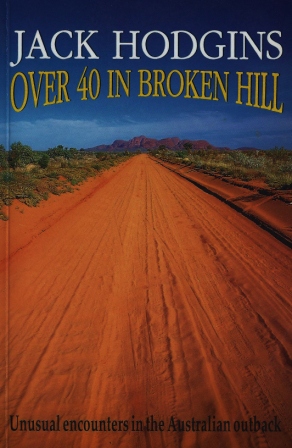
Over 40 in Broken Hill by Jack Hodgins ~ 1992. This edition: McClelland and Stewart, 1992. Softcover. ISBN: 0-7710-4192-6. 197 pages.

My rating: 8.5/10. Unpretentious and good-humoured, without stooping to farce. Jack can, as needed, poke a bit of fun at himself, but he keeps his self-respect and extends that regard to others.

*****

This is a book without a Great Big Purpose, which is too often rare in a travel book, into which category this work mainly falls. Over 40 is a rather elegantly presented account of two writers on the loose in Australia. One, Australian novelist Roger McDonald, is researching his next book, a non-fiction account of the politics and conflicts between New Zealand and Australian sheep shearers working the vast outback flocks, and the other is our own British Columbian Jack, tagging along with his friends and colleague for the four-week trip.

Jack finds himself taking notes throughout the journey, and ends by writing his own account of the fascinating people and unique places the two encounter. Quirky, often humorous, fair-minded and very readable. I enjoyed this travel memoir.

Jack Hodgins is well-known in B.C. literary circles for his fiction, from his now-iconic short story collection Spit Delaney’s Island in 1976 to his most recent novel, The Master of Happy Endings in 2010. Over 40 in Broken Hill was something of a departure from the fictional norm of this author, but it worked for me.

I’ve read a number of this author’s works over the years, and think very highly of his distinctive style. (He reminds me a bit of Robertson Davies, but without the aura of intellectual snobbery that Davies sometimes projects.) I am not alone in this regard, as Jack Hodgins was awarded an Order of Canada in 2010 for his lifetime contribution to Canadian literature. An author well worth exploring, if you are not already familiar with him.

Side note: The “40” referred to in the title has a double meaning. Think age, and then think degrees Celsius. There is a chapter midway through the book that clarifies the reference most engagingly.

Read Full Post »

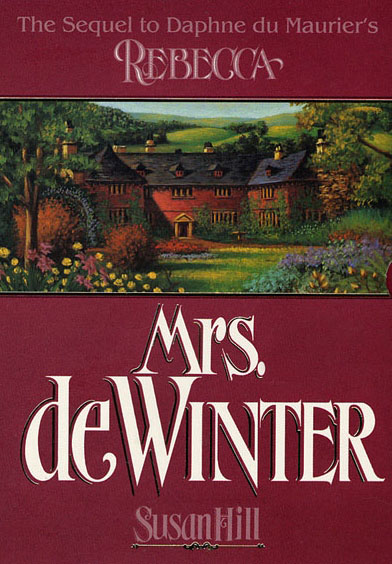
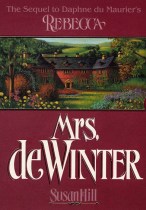
Mrs. de Winter by Susan Hill ~ 1993. This edition: William Morrow & Co., 1993. First edition. Hardcover. ISBN: 0-688-12707-x. 349 pages.

My rating: 3.5/10.

This is a book for fans of du Maurier’s now classic, noire-romantic-suspense novel Rebecca; I suspect anyone else would be completely bemused. Would this be what is termed as “fan fiction”?

Mrs. de Winter started off reasonably promisingly, but quickly got tedious. Susan Hill was very conscientious about channeling du Maurier’s voice as preserved in Rebecca, but in my opinion the greatest weakness of the book is that she stuck to that voice too strongly, instead of taking the characters to the next level.

I give Hill credit for trying, hence the (generous) 3.5 rating, and it is obvious that she holds Rebecca in great esteem, but I found this sequel ultimately boring and very depressing – wait! – no! – not merely depressing – downright sad is a better description. It was also about two hundred pages too long for the content, and very wordy and repetitive. The plot was contrived and unbelievable, and the ending, quite frankly, was deeply disappointing.

Rebecca ended on a tragic note, too, but it was a fitting conclusion to what had come before, and is likely one of the reasons why the story is so highly regarded. I tend to agree with those who say that Rebecca is du Maurier’s masterpiece. It is very much a polished and completed piece of work, and decidedly a stand-alone book, and a sequel written by another author should then at least be creative and take us in a new direction – “What if?” This just didn’t happen here. And that’s really too bad, because from what I’ve heard, Susan Hill can write.

*****

Mrs. de Winter continues the story that du Maurier so teasingly but perfectly tied up in 1938 in Rebecca. Fifty-five years later that book is still so widely read and admired that a sequel by a contemporary author comes in for much discussion and is greeted with high hopes. Interesting and cleverly imagined sequels are occasionally created on the coattails of classic novels, but they are rare creatures. Sadly this particular attempt was, in my opinion, quite decidedly a “miss”.

In Susan Hill’s take, Maxim and the first person narrator, his second wife so famously left unnamed in Rebecca, have not seemed to grow or emotionally develop in the ten years subsequent to the burning of Manderley. If anything, they have degenerated.

At the close of Rebecca, the second Mrs. de Winter has found a new maturity and confidence and faces her future with fortitude and a certain stubborn grace. Maxim himself has become a much more likeable character as he unbends enough to confess his failings to his new wife; their marriage looks like it may actually work, having weathered the storm of the murdered first wife and the malicious Mrs. Danvers and her revengeful arson.

In Mrs. de Winter, Maxim comes across as a boring, immature, moody manic-depressive, and his wife as just plain pathetic: still dowdy and unsure of herself, and acting much younger than her age. No wonder Maxim walks all over her, in this re-interpretation, even more so than in the original – she’s a true “Kick-Me-Charlie”.

Spoiler alert, for both Rebecca and Mrs. de Winter. If you want to be surprised, stop reading now.

Mrs. de Winter starts with a funeral in England. We don’t immediately know who has died; we find out on page 20, after much long-winded scene-setting and flashbacks, that it is Maxim’s sister, Beatrice.

It is now ten years after the burning of Maxim’s family estate, Manderley. As those of you who have read Rebecca will remember, Maxim has been emotionally scarred apparently beyond recovery by the whole saga of first having murdered his lovely but secretly treacherous first wife, Rebecca, and then narrowly escaping justice. Rebecca’s death has been officially recorded as a suicide, and Rebecca’s devoted ex-nanny, Mrs. Danvers, has set fire to Maxim’s beloved house in revenge – she knows the truth. Maxim has confessed all to his young second wife, and she in turn has forgiven him everything in her relief at finding out that Maxim is not still in love with his first wife, as she has been mistakenly thinking all along. (Interesting that Maxim can quite calmly deal with being a murderer, but the loss of his palatial estate sends him over the final edge. Not the most admirable of characters, when one steps back for some perspective, to put a house ahead of a human life, but in the original he shows enough character to allow us to conditionally forgive his numerous sins.)

The two have gone to live in Europe, to escape all the apparent gossip that is being generated by the complicated tragedy. Though Maxim is widely viewed as a bereaved husband and not a murderer, he is such a sensitive type that even a whisper about Manderley or Rebecca apparently gives him the jim-jams. His second wife meekly caters to his neuroses.

As the sequel begins, the second World War has just ended. Maxim and second Mrs. de Winter have apparently spent the war years safely ensconced in Switzerland. Maxim has no intention of going back to England, even for his sister’s funeral, but Mrs. de Winter convinces him that he must. It seems that she is dreadfully homesick and welcomes the chance to return to her homeland, even if the reason is the pathetically tragic death of a beloved wife and mother.

They get there, see Beatrice buried, and are reluctant spectators to her widower Giles’ deep distress. There is a terribly disfigured war hero son about as well. For a while I thought that was going somewhere, but it was a dead-end – he is merely part of the background colour. A mysterious funeral wreath appears, seen by Mrs. de Winter alone – the card is signed with dead(!) Rebecca’s signature initial. Oh my! What could this mean?! The note is hidden, but naturally not destroyed – and we know that it’s going to cause trouble later. (Cue foreboding music.)

Maxim is ready to head back to Europe, but Mrs. de Winter begs to stay in England for a while. He half-heartedly agrees, but pouts enough so that his wife starts viewing him with a certain distaste. After all, she has been a willing silent partner in his great deception, and has put up with his moody behaviour these past ten years. All she really wants to do is find a quiet corner in England, settle down and have a few babies.

Many pages pass. Eventually Maxim surprises his wife with the news that he has bought her a small country house. La la la – life is looking up! Mrs. de Winter sneaks away to London to inquire of a gynecologist why she’s not getting pregnant, which is kind of a strange little side story because I thought the implication in the original story was that Maxim chose to remain childless, so I’d assumed they were actively practising some sort of birth control. There were condoms in the 1940s, were there not? Well, according to Ms. Hill, Mr. and Mrs. de Winter were unable to have children due to bad luck, not from human preventative measures. The doctor tells the Mrs. that she’ll get pregnant once she learns to relax and be happy, and she is so thrilled by this she prances straight off home intending to break the good news.

But wait! Suddenly there appears on the scene the wicked Jack Favell, Rebecca’s cousin, who immediately announces his intention to blackmail Mrs. de W. With what I’m not quite sure. (My attention was wandering a fair bit at this point.) So much for less stress! Darn, no baby for you, Mrs. Maxim. (Yes, I’m being very facetious. I was strongly annoyed at the author by this point, and no longer enjoying the book in any way, shape or form.)

More pages about this and that. Shades of the Manderley costume ball in the original book – there is a party. Jack Favell shows up but is shot down. (Figuratively, not literally. Luckily for Jack, Maxim doesn’t have a firearm handy, as he did when Rebecca annoyed him severely in her turn.) Mrs. Danvers also shows up, but is coldly dismissed by Maxim. After the party, Maxim is all sad and angsty. “It is justice!” he moans, and proceeds to exit the scene and drive fatally into a tree.

The ashes are scattered, predictably, into the ocean off the coast of Manderley.

The book is gently put down, contrary to inner impulse. It is, after all, a library book, and we must return it in good condition.

Ick. Ick. Ick. Ick. Ick.

Why did I think this would be a desirable read?

Not recommended.

Read Full Post »
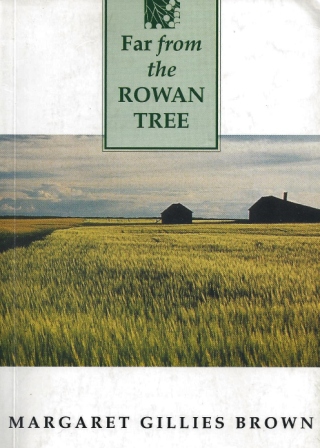
Far From the Rowan Tree by Margaret Gillies Brown ~ 1997. This edition: Argyll Publishing, 1998. Softcover. ISBN: 1-874640-696. 239 pages.

My rating: 8/10. I thought this quite an engrossing read, and an interesting perspective on a somewhat neglected era in Canadian history.

*****

In 1959 Margaret Gillies and her husband Ronald, with their three young boys, left Scotland to immigrate to Canada to try farming there. They left more for personal than financial reasons, seeking a new life and atmosphere far from what the stresses of working with Ronald’s demanding father, and with the sheltering hand of a Canadian Immigration program to encourage farm workers, they thought that their new life would be at least as congenial as the one they had just left.

This proved to be far from the case. Added to the environmental shock of landing in wintry Halifax in February, there was the unsettling trip by train across the vast stretch of country between the East coast and their first placement on a dairy farm in central Alberta, near Red Deer. This proved to be even more unsettling; the accommodation they were provided was an unfurnished shack with the barest amenities. There was electricity of a sort, but only an outside privy and hand-pump for water; Margaret, on top of having three children under six, was also half way through her fourth pregnancy. Ronald’s employer, whom they soon found was hard-pressed to find local help due to his foul temper and abusive manner, was of little assistance, and kept Ronald fully occupied except for a half day off a week.

Margaret and her family struggled through, and eventually were moved to a better situation on a mixed farm. Here they spent a happier summer, but found they were not able to manage on a farm labourer’s wages, especially with winter coming on and less pay because of reduced work hours. The family then moved to Edmonton, where Ronald took on a new career as a real estate salesman. This, though not a reliable income, allowed a rise in their standard of living, but there were still many challenges, and the family  returned to Scotland to take over Ronald’s family farm, as his father had in the meantime decided he was ready to retire and relinquish control to Ronald. The Canadian experiment had lasted three years.

The family, despite their dismal introduction to the country, had become happy in their adopted land, so this was not an easy decision. Margaret in this memoir speaks with great admiration and affection of the friends they made, and of the natural beauties that surrounded them, easing even the most uncomfortable of their several sub-standard homes.

A fifth baby was born in Canada, and it was with something like fond regret that the Gillies returned to their home country. Margaret would go on to have two more children, and several of her sons still operate the Scottish farm where she lives in retirement today.

Margaret had always been something of a writer, though she had set aside her “jottings” while training and working as a nurse, and later as a farmwife and busy mother. She had a few moments during her Canadian foray to create some poems, of which several are included in the book. Margaret took up her writing more seriously when her children grew up, and has become a highly respected Scottish poet and writer. Far From the Rowan Tree is the first in a number of memoirs and family histories she was inspired to write some thirty years after the Canadian years.

Margaret’s voice in this book is both romantic and vividly descriptive, as well as opinionated and matter-of-fact. It is most fascinating to see my own native country from an outsider’s eyes, especially as I am personally familiar with the areas of Alberta where the family resided, though their time their preceded my own by almost thirty years, and there were many changes in that time, as the oil industrry picked up speed and the standard of living even among the most struggling of the farms improved immensely.

Her story also reminds me in many ways of my father’s saga of coming to Canada as a German immigrant in the 1950s, working his own way across the country farm to farm until he ended up working in logging and construction in interior British Columbia. I am wondering now if perhaps he was involved in the same immigration program, placing farm workers? It is impossible to ask him, as he died several years ago, but I wouldn’t be at all surprised, as his experiences with various employers rather echo those of the Gillies’.

I found Margaret’s memoir hard to put down. It is nicely written, and kept my interest from start to finish. I would definitely read more of her literary works, as well as her poetry collections. I found some of her later poetry published online, and though it does not all appeal to my personal taste, some of it seems to me to be quite good, very evocative of setting and mood. Here is a sample from the frontispiece of Far From the Rowan Tree.

Emigrant Journey

There was the journey,
The endless coming on of the same wave,
The no-land time of ocean and high hopes
Until the icebergs rose
Like white snow palaces…
There were the moving days
And weary nights of train-hours overland,
The trees, the lakes, the straight and rolling plains
Until time stopped in sheer fantasy
Of a pre-dawn winter morning –
Gloved hand swinging the iron-hard handle
Of a frozen water pump
At the edge of a bark-rough cabin;
Above, the sky, moving strange magnificence,
Voile curtains of colour
Changing, shifting imperceptibly;
Below, the star-sparkled snow –
A virgin’s looking glass
Where spruce trees shot the only shadows
That made no movement –
Silence, immensity of silence,
Oil fires were burning brands
Reaching for chiffon robes
Of an aurora of dancers
Repeating dream sequences …
I tried to wake from unreality,
Felt my spine freeze,
Heard coyotes howling down the night.
 

~Margaret Gillies Brown~

Read Full Post »

Confessions of an Igloo Dweller by James Houston ~ 1995. This edition: McClelland and Stewart, 1996. Softcover. ISBN: 0-7710-4286-8. 320 pages.

My rating: 9/10. Enjoyable start to finish. Canadian by birth, the far-travelling Houston (1921-2005) was a great writer and storyteller, as well as an accomplished artist.

*****

Around here, I can tell if a book is really good because it often will disappear before I finish it. The usual culprits are my husband and my 18-year-old son. If it’s my son, no worries – he’s a speedy reader and I usually get it back in a day or two, but my husband has less free (meaning reading) time and he also tends to read a little more slowly, plus he also has a tendency to “hide” his current read (so he can find it again – he says we “move things” on him) – so, if he has the book, kiss it goodbye until he’s done.

I’ve been bugging him to let me have this one back for a few weeks now, as I wasn’t quite finished when he snuck it away from my reading pile.  He’s been working his way through it steadfastly, occasionally calling me to come and listen, and reading bits out loud. Something about this memoir really appealed to him, which is understandable, because it’s quite fascinating and very well written.

In 1948, 27-year-old James Houston managed to hitch a ride on a plane going on an urgent medical call from Moose Factory, Ontario to Canso Bay in northern Quebec. An experienced and talented artist, Houston had a keen interest in native peoples, and was in Moose Factory sketching and painting the local Indians. He had long wanted to travel further north into the Arctic, and he seized the chance when it came, staying behind in Canso Bay when the plane left to return to Montreal with the badly injured Inuit child it had come to evacuate.

This was the start of Houston’s fourteen or so years of Inuit artistic involvement. He had a keen eye for indigenous crafts, and was instrumental in the popularization of Inuit carvings for the southern markets, as well as introducing Japanese-style print-making to the Inuit, which was readily adopted as a new mode of expression for Inuit artistic vision.

Confessions of an Igloo Dweller is roughly chronological, and consists of personal anecdotes interspersed with vignettes from high Arctic life, and stories told to him during his travels.

Houston also wrote quite a number of novels for children as well as adults, most set in the Arctic or the far northern Canadian forests. Confessions reads like a novel, flowing seamlessly along from high point to high point. Houston was opinionated and extremely sure of himself; these qualities come through loud and clear, making for an especially strong narrative voice. The book is saved from shameless self-promotion by Houston’s ability to tell a humbling story on himself, and by his keen sense of humour.

We all liked it. Highly recommended.

Read Full Post »

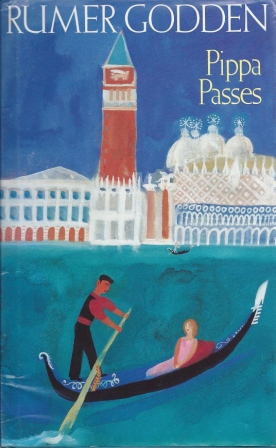
Pippa Passes by Rumer Godden ~ 1994. This edition: Macmillan, 1994. First Edition. Hardcover. ISBN: 0-333-60817-8. 172 pages.

My rating: 5/10

This was a really quick read, so I’ll give it a really quick review.

Seventeen-year-old Phillipa, “Pippa”, is a ballet dancer in a British troupe visiting Venice. Über-talented both in dance and voice, Pippa has led the sheltered life of a cloistered and protected performing arts student, so her first trip abroad, and to romantic Venice at that, finds her wide-eyed and naïve. She immediately encounters a handsome young gondolier, and falls deeply in love. He is attracted in turn, but his motivations are slightly different than purely romantic.

In the meantime, Pippa’s ballet mistress has become infatuated with her, leading to much scheming and heartache and culminating in an attempted lesbian rape scene; a bit of a shocker from this particular author, but in retrospect not all that surprising; Rumer Godden was never shy of acknowledging the power of sex and using it as a motivator for her characters over the years; I think that the fairly graphic incident here is merely the well-experienced 87-year-old author keeping up with the times.

This was Godden’s second to last published novel before her death in 1998, and while not one of her top-rank tales it is certainly competently written and acceptable as a light read. Don’t expect another House of Brede, though! This one is fluff straight through.

Very nice evocation of Venice; as usual Godden handles her setting with great skill.

Weakest point, aside from the rather lame plot, is that the characters are all quite one-dimensional. We are continually told that Pippa is wonderfully talented and oh-so-special; we must take the author at her word as we never really get too close to Pippa herself. Things seem to happen just a little too easily throughout; there is a lot of glossing over of motivations and actions. This almost feels like a moderately fleshed-out outline of what could perhaps be a much longer and more interesting story.

I wouldn’t recommend this novel as anything but a momentary diversion. It definitely belongs in a Godden collection, and is interesting enough to have limited re-read status, but it really isn’t up to the standard of some of Godden’s masterworks. As I’ve said before, Godden had a great range in her stories; this is on the pallid end of the spectrum. Still better than some of the present-day chick lit I’ve attempted, so extra points for that. Even at her worst, Godden is still good. If you can get this one cheap, take it to the beach, but don’t forget to tuck something else in your bag as well, because slight little  Pippa, at less than 200 pages, will pass by very quickly!

Read Full Post »

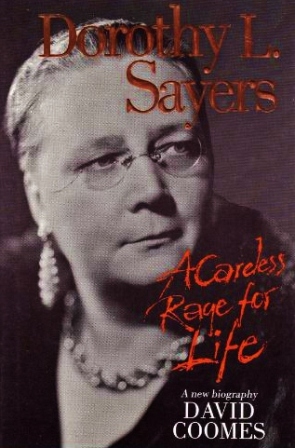
Dorothy L. Sayers: A Careless Rage for Life by David Coombes ~ 1992.  This edition: Lion Publishing, 1992. Hardcover. 242 pages.

My rating: 7/10. Occasionally a bit hard going; the writing is workmanlike versus enthralling. The best biographies, in my opinion, are both.

*****

A balanced and thoughtful biography. I especially enjoyed the many lengthy excerpts from Sayers’ letters and writings.

I  am a huge fan of Dorothy L. Sayers’ mysteries, which has made me continually eager to learn more about the author. My only regret with this book is that the Wimsey years are very much condensed into one small section, but, as the David Coombes emphasizes, this would be in line with how Sayers’ life was concerned with them, one short period with a long and productive literary period of various stage and religious projects after the mysteries made Sayers much more financially secure.

I would highly recommend this biography to those interested in Dorothy L. Sayers’ fascinating and ultimately tragic background; she was in many ways a woman who “had everything except what she most desired”, to paraphrase one of her own descriptions of Lord Peter.

Read Full Post »

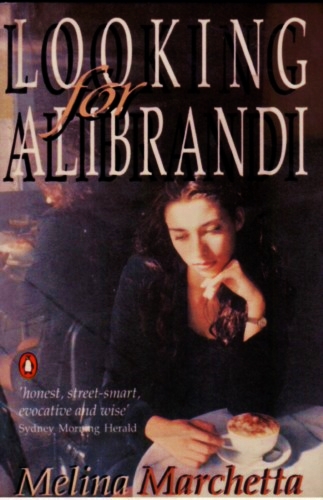
looking-for-alibrandi melina marchettaLooking for Alibrandi by Melina Marchetta ~ 1992. This edition: Penguin Australia, 1993. Softcover. ISBN: 0-14-023613-9. 261 pages.

My rating: 6.5/10.

This jumped of the shelf at me while used-book browsing the other day – one of my quick-shelf-scan rules is that anything with an orange spine and a penguin gets the pull-and-look. What I found this time round was this appealing first novel by Australian writer Melina Marchetta.

The plot is fairly standard stuff; no surprises here. Yet another coming-of-age story, but one well written with a distinctive and believable voice.

17-year-old Josephine is in her last year as a scholarship student in an exclusive Catholic girl’s school in Sydney. Josie fiercely negotiates a difficult year touched by social and racial prejudice: “Australian” versus “ethnic” – no, not Aboriginal “ethnic”, but first and second generation European immigrant “ethnic”.  Also academic challenges, difficult friendships, tragedy, first love, and family secrets revealed – most notably the unexpected discovery and entry into her life of her father, who had disappeared from her unwed pregnant 16-year-old mother’s life before Josie’s birth.

I appreciated the author’s matter-of-fact handling of Josie’s Catholic religion and the way that it played into her family dynamics, as well as that of the larger Australian-Italian community she has grown up in. The frank depiction of teenage (and adult) romantic and sexual yearnings, and how religion and social mores influenced behaviours in those areas was also well portrayed.

Josie is a sympathetic character, with all of her varied flaws, ambitions and ideals, and I enjoyed her relationships with her mother and grandmother – a realistic mix of impatience, resentment, and love. The setting is (naturally) dated (early 1990s urban Australia), and the pop culture references went right over my head for the most part, but those are not necessarily drawbacks – this is a very much a “slice of life” picture of a very specific time and place. It’s also a very Australian book; very matter-of-factly “this is where and how we live”.

I did some research on Marchetta, and was pleased to see that after a ten-year hiatus following the publication of Looking for Alibrandi she has strongly re-entered the YA scene with several more acclaimed “realistic” novels as well as a fantasy series. I will be keeping my eyes open for her other titles in my book browsing.

Check out this link:

http://www.melinamarchetta.com.au/main/page_home.html

Read Full Post »

« Newer Posts