Archive for January, 2025

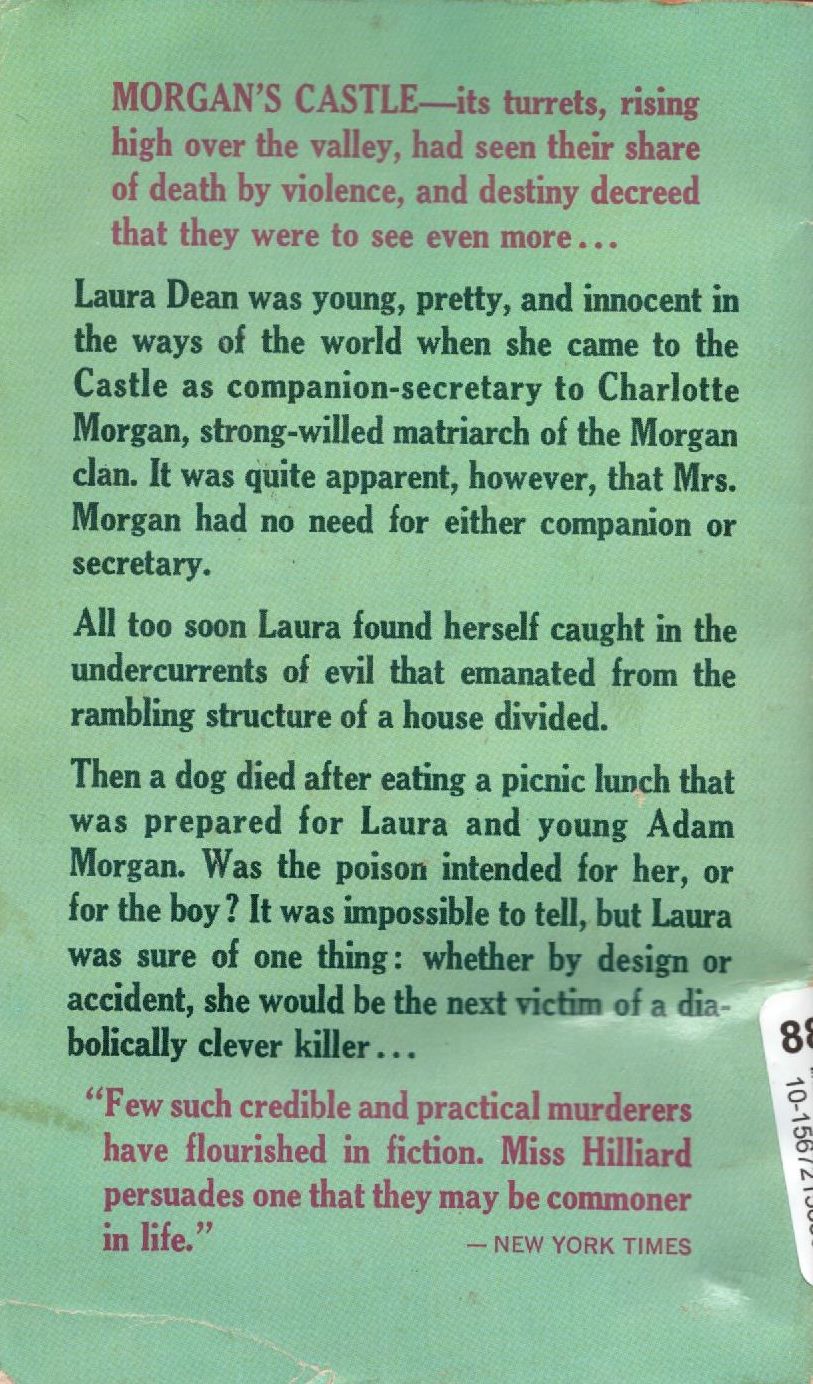
Morgan’s Castle by Jan Hilliard ~ 1964. This edition: Ace, circa 1960s/1970s. Paperback. 142 pages.

Look at that – it’s the last day of January already.

I have been reading quite lavishly all through the past month, but as for posting about those reads, I’m not doing so well. Let’s see if we can remedy that situation with some micro reviews, starting with this strangely entertaining bit of Canadian gothic – more specifically Ontario Gothic – written by the Nova Scotia-born Hilda Kay Grant, under her pen name of Jane Hilliard.

I’ve now read four of Hilliard’s six novels, missing only the Stephen Leacock Award winner The Salt Box, and the rather elusive Dove Cottage, and I have to say it’s been quite the enjoyable ride.

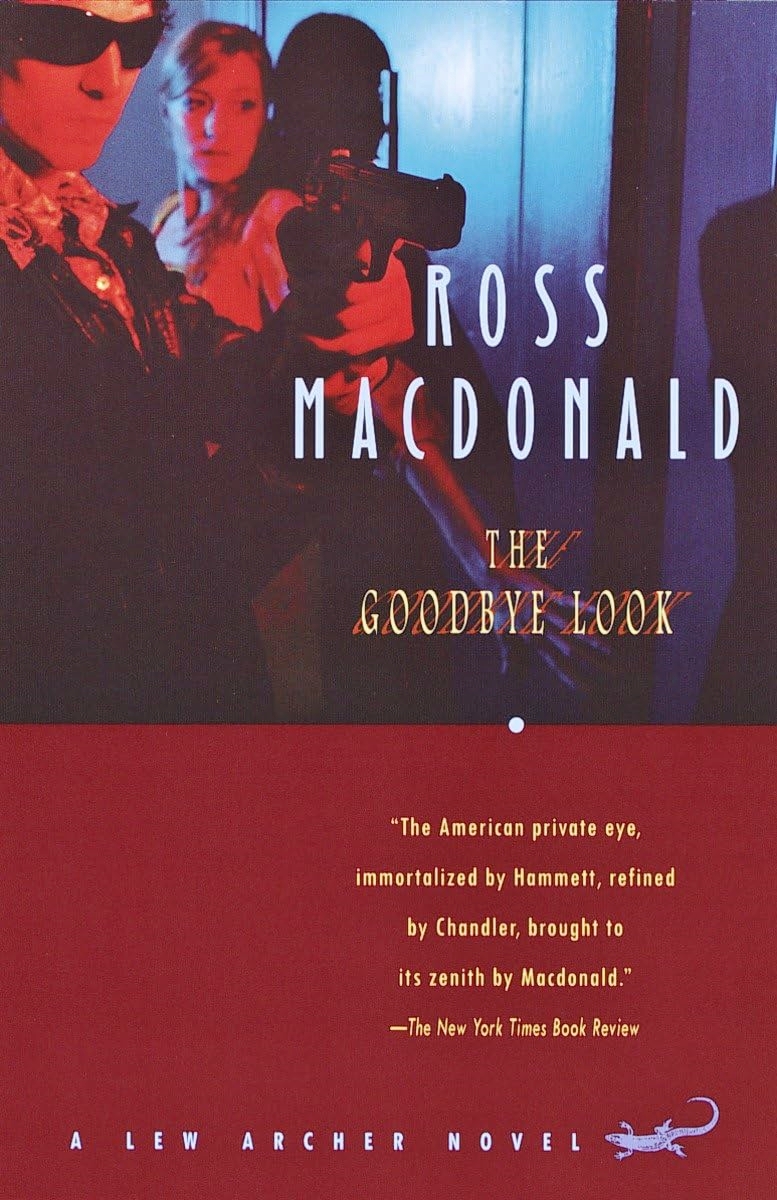
Let’s set the mood with cover scans of my recently acquired vintage Ace paperback edition. (Shout out to Thriftbooks, which I sometimes have recourse to when ABE fails me.)

Our heroine gets the full emotional damsel-in-distress cover portrayal, though that isn’t quite accurate, as sixteen-year-old Laura is remarkably pragmatic and level-headed all through this tale, though sudden death happens behind, in front, and all around her as a dark family secret unravels. This could be because she is a mere teenager, but more likely because, despite her tender age, she has been forced to take on the role of grownup in her relationship with her ne’er-do-well father, Sidney, a mediocre artist over-full of self-regard. Laura’s cynical and seldom-voiced-out-loud observances lend piquancy to this often flat-toned tale.

The Du Maurier comparison on the front cover is vastly inappropriate; this isn’t anything close to that. Hilliard wrote with tongue firmly in cheek, and my impression was rather that this was a full-on parody of the well-explored gothic genre, generously adorned with Canadian references.

I will stop right here; I did say “brief” was my goal.

Takeaway: it’s a Canadiana keeper. It made me heartlessly chuckle all the way through, as the murders got more and more outrageously unlikely. Hilliard shows herself to be divinely callous regarding her lavish disposal of innocent victims – including that dog, a lovable Irish Setter – and if that description intrigues you, and dark humour is your thing, this book might be for you.

My rating: 8/10. Engagingly daft in its predictably unlikely plot.


Read Full Post »

The Goodbye Look by Ross Macdonald ~ 1969. This edition: Vintage Crime/Black Lizard, 2000. Softcover. 243 pages.

The sins of the mothers and fathers are frequently visited upon their children in Ross Macdonald’s masterfully written, shades-of-gray novels concerning the cases of Southern Californian private investigator, Lew Archer. The Goodbye Look is no exception.

In this case, a burglarized safe and a missing golden box containing a son’s wartime letters to his mother leads Archer on a death-plagued pursuit from “California Spanish” mansions to barbed wire fences at the Tijuana border, and back again.

Set in the Los Angeles hills, featuring vivid details and descriptions of the landscape and architecture of a particular place and time, The Goodbye Look feels appropriate reading during this past week of wildfire, destruction and displacement in Macdonald’s beloved corner of the Golden State.

That’s all I’m going to give you of the plot, because what I really want to say about Ross Macdonald is how much of a writer-of-place he is, and how much sheer good writing he packs into these novels. Genre fiction for sure, of the species mystery-noir, but of a decidedly superior sort.

The Goodbye Look is fifteenth in a series of eighteen Lew Archer novels which were published from 1949 to 1976. If you’re not already familiar with Ross Macdonald, pseudonym of American-Canadian Kenneth Millar, I suggest exploring his work. Many of his books are still in print, or are widely available second hand. E-book versions are out there, if that is your chosen format.

My rating: 10/10. Caveat: I re-read Macdonald’s books every few years, so come to them with a certain set of expectations, which are always satisfactorily met. Thinking back to my first introduction to his work, in the late 1970s, as a bookish teenager discovering a well-read paperback copy of The Doomsters on the bookshelf of a family friend while visiting in Los Gatos, California, my recollection is of a doorway opening up into the world of yet another author to explore. Oh, to be ever on the threshold of such discoveries! Such an enduring source of pleasure.

I was enormously pleased to discover, from Brian Busby’s December 2015 post on Kenneth Millar/Ross Macdonald on The Dusty Bookcase, that Kenneth Millar was born in Los Gatos. A full circle moment, as I have a nostalgically good remembrance of that community, and of all of the areas of California I was lucky enough to experience during my childhood and teen years, traveling frequently from our home near Williams Lake, British Columbia (by car, three days each way) to visit my mother’s family and an eclectic array of family friends.

I suspect that one of the personal appeals of Ross Macdonald’s body of work is the evocative experience of recalling those golden days through his writing. Though even if I’d never set foot in California in my life, I’d still rate him as high. Good stuff.

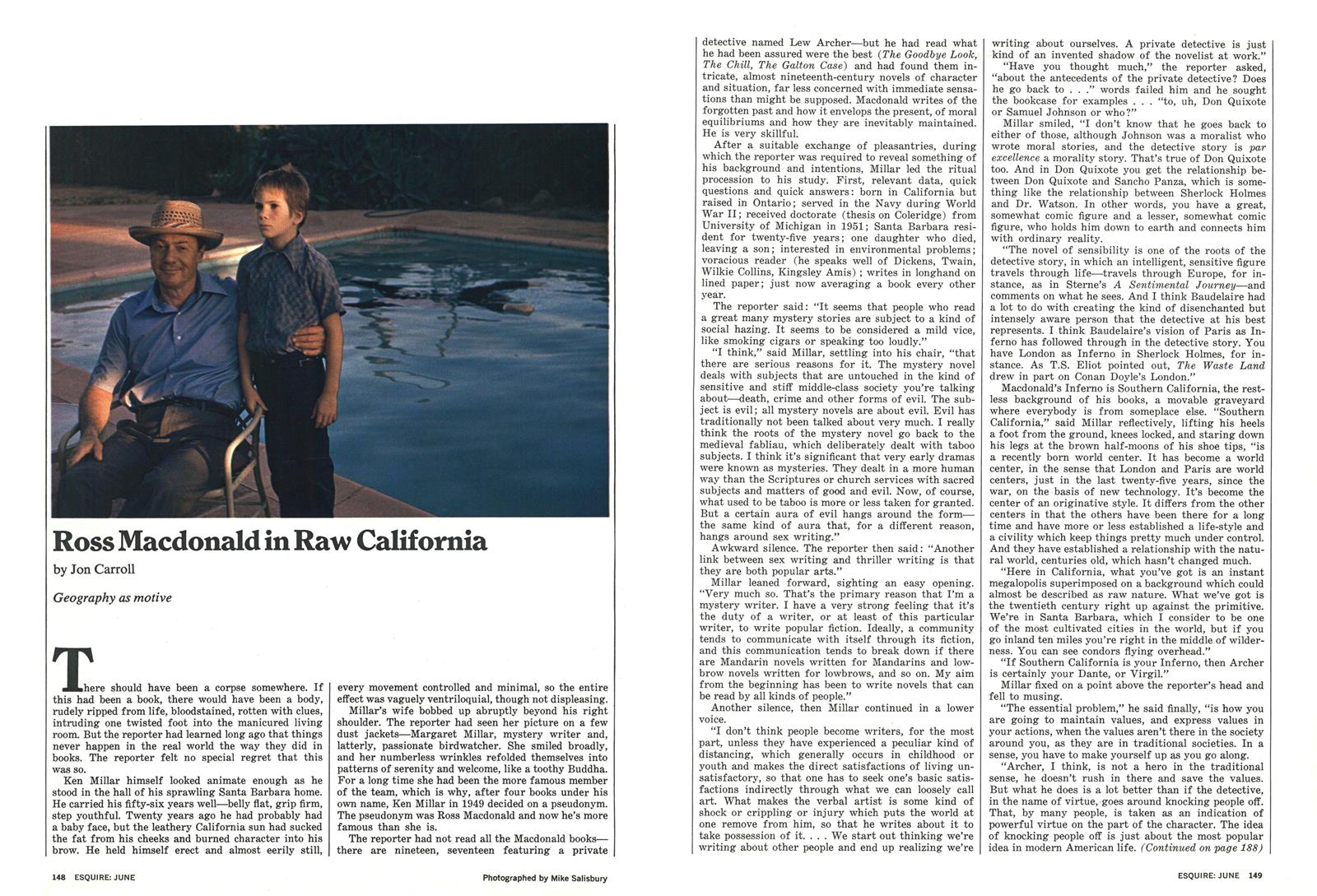
I will leave you with this excerpt from Jon Carrol’s June 1,1972 interview with Kenneth Millar in Esquire magazine. (WordPress is being fussy with linking this morning, but if you Google “Esquire June 1 1972” the whole magazine should pop up in page-by-page format. Be forewarned – you may find yourself reading much more than the Millar article. And possibly mourning the state that physical magazines have come to in these everything-online days.)

“The novel of sensibility is one of the roots of the detective story, in which an intelligent, sensitive figure travels through life—travels through Europe, for instance, as in Sterne’s A Sentimental Journey—and comments on what he sees. And I think Baudelaire had a lot to do with creating the kind of disenchanted but intensely aware person that the detective at his best represents. I think Baudelaire’s vision of Paris as Inferno has followed through in the detective story. You have London as Inferno in Sherlock Holmes, for instance. As T.S. Eliot pointed out, The Waste Land drew in part on Conan Doyle’s London.”

Macdonald’s Inferno is Southern California, the restless background of his books, a movable graveyard where everybody is from someplace else. “Southern California,” said Millar reflectively, lifting his heels a foot from the ground, knees locked, and staring down his legs at the brown half-moons of his shoe tips, “is a recently born world center. It has become a world center, in the sense that London and Paris are world centers, just in the last twenty-five years, since the war, on the basis of new technology. It’s become the center of an originative style. It differs from the other centers in that the others have been there for a long time and have more or less established a life-style and a civility which keep things pretty much under control. And they have established a relationship with the natural world, centuries old, which hasn’t changed much.

“Here in California, what you’ve got is an instant megalopolis superimposed on a background which could almost be described as raw nature. What we’ve got is the twentieth century right up against the primitive. We’re in Santa Barbara, which I consider to be one of the most cultivated cities in the world, but if you go inland ten miles you’re right in the middle of wilderness. You can see condors flying overhead.”

“If Southern California is your Inferno, then Archer is certainly your Dante, or Virgil.”

Millar fixed on a point above the reporter’s head and fell to musing.

“The essential problem,” he said finally, “is how you are going to maintain values, and express values in your actions, when the values aren’t there in the society around you, as they are in traditional societies. In a sense, you have to make yourself up as you go along.

“Archer, I think, is not a hero in the traditional sense, he doesn’t rush in there and save the values. But what he does is a lot better than if the detective, in the name of virtue, goes around knocking people off. That, by many people, is taken as an indication of powerful virtue on the part of the character. The idea of knocking people off is just about the most popular idea in modern American life. But I’m agin it.”

“Well,” said the reporter, “there isn’t anybody in your books who deserves to be knocked off. There aren’t any hiss-and-boo villains.”

“The hiss-and-boo villain died in the nineteenth century,” Millar said. “You know who killed him?” Pause. “Ibsen blamed everybody.”

Read Full Post »

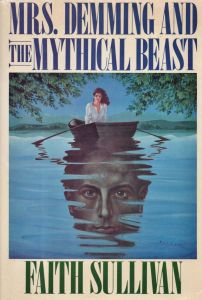
Mrs. Demming and the Mythical Beast by Faith Sullivan ~ 1985. This edition: Macmillan, 1985. Hardcover. 341 pages. ISBN: 0-02-615450-1
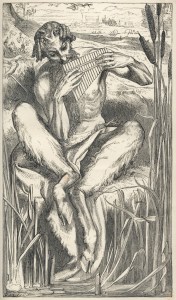
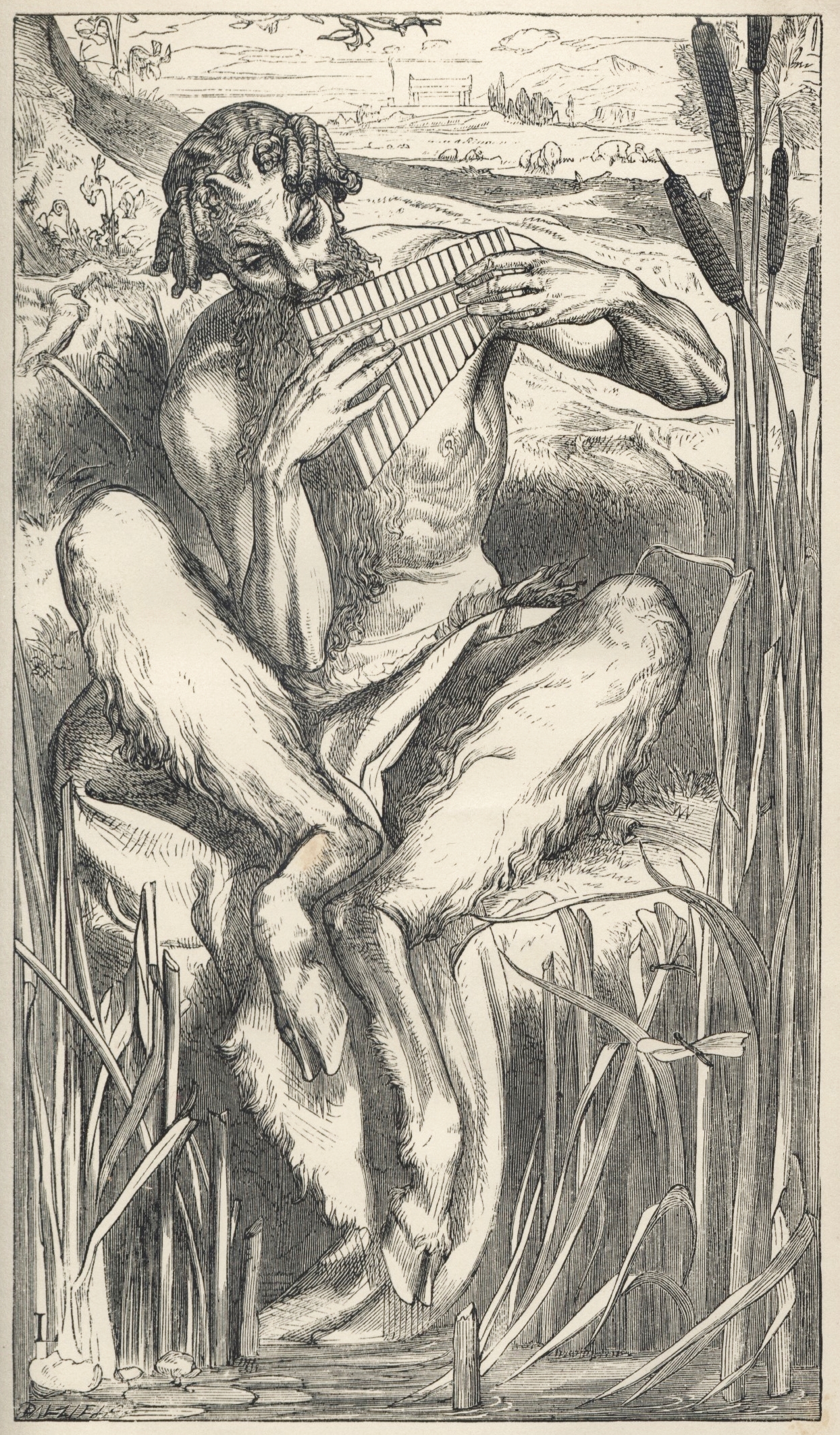
What was he doing, the great god Pan,
Down in the reeds by the river?
Spreading ruin and scattering ban,
Splashing and paddling with hoofs of a goat,
And breaking the golden lilies afloat
With the dragon-fly on the river…

From ‘A Musical Instrument’ by Elizabeth Barrett Browning

It’s my second time round tackling this somewhat wacky concoction by Minnesota writer Faith Sullivan. The first time round I abandoned it early on, before page 22 for sure, because I certainly would have remembered the erotic dream sequence between Larissa and her (so far) platonic (and also married) arms-length lover Harry, if I’d gotten that far along.

This book was recommended to me by a fellow book blogger whose name utterly escapes me – apologies to whoever that was – and I have to thank them for that lead, because this is how we discover hidden gems.

For some readers, this would be that. For me, not so much, though it was a great opportunity for mulling over where the various hits and misses were, always a very individualized response.

Here’s the blurb from Publisher’s Weekly, November 4, 1985:

Larissa [the titular Mrs. Demming] is approaching 50, her children are grown and marrying, her preoccupied husband, Bart, is engrossed in writing a book that threatens to take over his life. For her part, Larissa paints, reads, muses, rows across the river near their Minnesota cottage and picnics on the shore, murder mystery in hand. Until, one day, she looks into the woods and sees a pair of eyes staring back at her. They are the eyes of Pan, an ageless Greek satyr who has been living there since a lovesick Victorian lady brought him to America. Larissa and her Beast discover many affinities, including the satisfaction of sexual passion. Meanwhile, however, Larissa’s domestic life becomes chaotic: a daughter turns hostile; Larissa’s elusive father shows up; a grandchild is born; a love affair with an old friend seems inevitable; a developer threatens the family’s bucolic serenity. Escaping to Greece with her satyr, Larissa confronts the beast within and returns to take up life’s real dramas. Related in a witty, distinctive style and marked by subtle insights, the novel is a pleasure, although occasionally the plot seems contrived. Sullivan also wrote Watchdog and Repent, Larry Merkel.
The thing I liked most about this book was the conceit of a transplanted Olympian god – Pan himself! – who finds himself in exile in the New World, dallying with a series of Minnesota mortals, the latest of whom is our protagonist. How did Pan get to America, why is he stalking Mrs. Demming, and, most intriguing to my mind, though never addressed by Faith Sullivan, what the heck is happening back in the Old Country without his Pan-ic supervision of the Grecian woods?

Sullivan tiptoes around most of these queries – though she eventually gives more detail – and keeps re-routing things back to an oddly undeveloped plot based on the threat of a condominium development four miles upstream of bucolic Belleville, a fictional Minnesota town located on the banks of Belle Riviere River, as the locals insist on redundantly calling it, much to the secret annoyance of Larissa, who has some strong opinions, mostly kept well hidden and unvoiced.

Larissa is in a state of internal ferment these days, mostly to do with her daughter Minerva’s upcoming marriage. Minerva, in her twenties and a successful and rising investment banker in the Demming family’s hometown of Minneapolis, just an hour or so away from the Belle Riviere summer cottage where the main action of the novel occurs, is set to wed an absolutely suitable and upright attorney.

Larissa thinks this is a huge mistake, and has made the critical error of voicing this to Miranda. Not that she objects to the young man regarding his husbandly suitability. It’s just that Miranda is living such a safe and organized life, while her mother, projecting wildly, thinks that her beloved daughter should  engage in a year or two of bohemian living (meaning sexual flings, preferably abroad in some more exotic location than staid old Minneapolis) before she settles down.

Miranda disagrees. Strongly. And I found myself rather on her side, though I’m not quite sure if the author had that in mind.

This is a very busy book, and Sullivan throws a lot of things into the mix. It often feels like she loses track of some of her plot strands; they lay about all over the place, tripping up the reader as trot along madly in Larissa’s increasingly frenetic wake, murmuring, ‘Who?! What?! Where?! When?! WHY?!”

Beautifully written in places, not so much in others. Plot twists which fell very flat for me included a well telegraphed “surprise” denouement regarding Larissa’s relationship with her widowed Irish-American father Jamie. (Let’s just say they were very, very close during Larissa’s teen years, after her mother tragically died.) And there was the sacrifice of one of the novel’s most sympathetic characters to what I felt was an unfair demise. And a convenient solving of Larissa’s own too-staid-and-safe marriage issue, which I felt rather too contrived even for this very obvious fiction. And did I mention the cringe-inducing sex scenes? Including a loving description of Pan’s manly bits highlighted by the silky white curls of his goat legs. Ack! Too much, too much!

So, that goat-footed god thing. He’s quite obviously symbolically introduced into the mix to give Larissa the impetus to get her inner life sorted out, but he’s also presented as a very real entity, with the problems that come along with that, such as his transportation both to and from America, a century or so apart, using normal forms of public transit. Spoiler: Baggy pants and a wheelchair factor into this. Luckily no one is moved to pat down the handsome Greek guy at the airport on his repatriation journey…

My rating: 6/10. It did keep me engaged, once I committed to the story and made a conscious decision to disregard plot flaws, and to fast forward through the sexy bits, which I found embarrassing, on the writer’s behalf as much as the reader’s. Consider yourself forewarned.

Internet reviews are very sparse for Mrs. Demming and the Mythical Beast, though “cult classic” and “horror” pop up several times. I’m not sure about that first label, but the second is incorrect. No horror here. If this were published today, cleaned up a bit to rid it of its very occasional, era-expected political incorrectness, it would probably win accolades in certain circles, and get passed around with the bottle of red wine at evening book clubs patronized by those who don’t take these things too seriously.

Mrs. Demming appears to be out-of-print, though it went through several print editions, in hardcover and paperback, and is readily available second hand, and on Kindle.

Faith Sullivan went on to write a number of other novels, all set in Minnesota, and all reportedly well received. I have not read any of them, but would be happy to do so if they came into my orbit.

FAITH SULLIVAN – Biography and Bibliography from Encycopedia.com


Read Full Post »

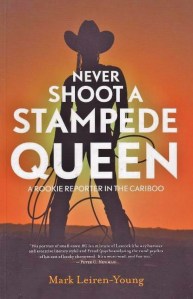
Never Shoot a Stampede Queen: A Rookie Reporter in the Cariboo by Mark Leiren-Young ~ 2008. This edition: Heritage House, 2008. Softcover. 221 pages. ISBN: 978-1-894974-52-3

After a recent reading of Josie Teed’s British Columbiana, I found myself  scanning the shelves for something in the same genre. I was really looking for Will Ferguson’s I Was a Teenage Katima-Victim, but as it proved elusive,  I was pleased to find instead Mark Leiren-Young’s humour-infused collection of anecdotes from his year as a reporter for the Williams Lake Tribune.

I grew up rural, in the central Cariboo-Chilcotin region of British Columbia, and Williams Lake was “town”, location of schools, shops, restaurants, public library and movie theatre, not to mention an impressive array of both churches and drinking establishments.


By the time Leiren-Young pulled into town for his newspaper gig in 1985, I had finished with high school, found true love, and relocated to places even more rural, so our paths did not cross, but it was enjoyable to time travel back with him to a place I once knew very well indeed.

Leiren-Young jotted down these memories in 1988, and polished them up enough to send out to friends and family as a holiday gift in December of that year. He resurrected and edited his collection of “true-life tall tales” in 2008, and this book was the result. Never Shoot a Stampede Queen was an immediate success, and, after spending months on the B.C. Bestsellers List, was awarded the 2009 Stephen Leacock Medal for Humour.

Here’s the publisher’s back cover blurb:

The cops wanted to shoot me, my bosses thought I was a Bolshevik, and a local lawyer warned me that some people I was writing about might try to test the strength of my skull with a steel pipe. What more could any young reporter hope for from his first real job?

The night Mark Leiren-Young drove into Williams Lake, British Columbia, in 1985 to work as a reporter for the venerable Williams Lake Tribune, he arrived on the scene of an armed robbery. And that was before things got weird. For a 22-year-old from Vancouver, a stint in the legendary Cariboo town was a trip to another world and another era. From the explosive opening, where Mark finds himself in a courtroom just a few feet away from a defendant with a bomb strapped to his chest, to the case of a plane that crashed without its pilot on board, Never Shoot a Stampede Queen is an unforgettable comic memoir of a city boy learning about—and learning to love—life in a cowboy town.

So, here’s the burning question. Did Leiren-Young get Williams Lake “right”?

In my opinion, that would be a quite solid “yes”, allowing for a certain amount of creative re-telling. The cliché of truth being stranger than fiction certainly applies here, and it is my belief that while enhancing some aspects of Cariboo-Chilcotin life for their laughability, he probably toned things down here and there in the interests of believability.

Leiren-Young states early on that his years of experience as a freelancing journalist, starting in his university days, polished his writing speed and economical-yet-engaging style to a high degree, and this quick read does hit all the buttons.

This collection of related stories starts with Leiren-Young’s hit-the-ground-running initiation into his new job in the “Crime Capital of B.C.”, as Williams Lake was at the time, and had been for some years past, by stopping for fuel and directions at a just-been-robbed gas station, police still in attendance. Leiren-Young scents a story unfolding, and hangs around and gets all the details from the cashier, with the bonus of earning himself the negative attention of the local R.C.M.P. detachment.

As junior reporter, Leiren-Young gets landed with all of the jobs no one else is keen on, but as the weeks go by, he finds himself increasingly immersed in local culture, and writing about some truly newsworthy topics, ranging from the farcically comedic to the very real-and-tragic.

It’s hard to truly do credit to a book written about a place and time one is personally familiar with, and I had to sit back and think hard about my response to Stampede Queen. As with Josie Teed’s British Columbiana, it was easy to identify a lot of the characters, and speculate about who the composites were based on, and it is always edifying to see places one knows in real life through another set of eyes. A major difference here was that though Leiren-Young doesn’t gloss things over, he was by and large quite kind to his co-workers and small town acquaintances in these tales, which isn’t always the case with Teed’s memoir.

Leiren-Young is also a more accomplished writer than Teed, but, to be fair, this account was not sent out into the world fresh from the young writer’s hand, but was allowed to mellow and mature and benefit from a re-working which undoubtedly accounts for its tightness and polish.

My rating: an overall approving 8/10.

A full point was lost by the presence of the raccoon on page 177, a brief reference which knocked Leiren-Young back a notch in my esteem, as it calls into question aspects of verisimilitude. (There were no raccoons in the Cariboo in 1985, though we do hear now, in the 2020s, that they are working their way up from the Coast as our winters warm.)

Another point taken away by what might be slightly excessive virtue-signalling. Leiren-Young comes across as mildly smug and morally superior on occasion, rolling his eyes at some of the un-woke folk north of Hope. (B.C. insider joke, referring to the vast under-populated regions outside of the Lower Mainland.) I get it, and I forgive the writer his understandable bias, but it was possibly a bit too underlined and bolded (figuratively speaking) here and there.

If you wish to explore further, the multi-talented Mark Leiren-Young has an active online presence, and reviews of Never Shoot a Stampede Queen are easy to find. The book is still very much in print, and readily available throughout B.C., and presumably points east as well.

Bonus links:

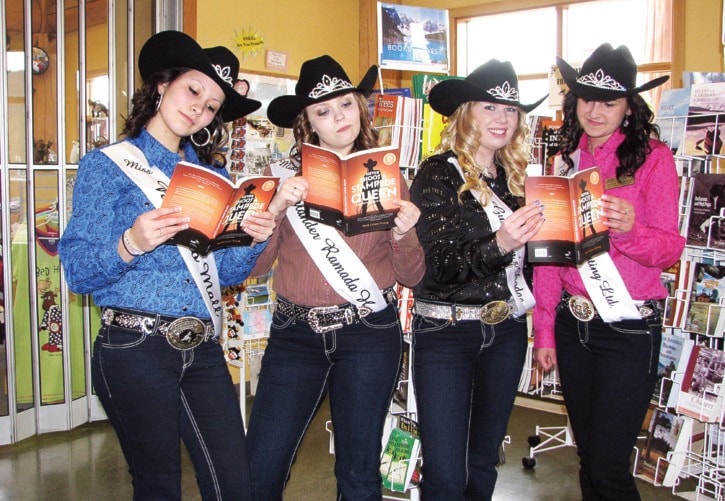
Williams Lake Stampede Queen Contestants, 2012. Photo by Gaeil Farrar, Williams Lake Tribune.


Read Full Post »

British Columbiana: A Millennial in a Gold Rush Town by Josie Teed ~ 2023. This edition: Dundurn Press, 2023. Softcover. 253 pages. ISBN: 9781459750210

Josie Teed has been sitting on my desk for the past week, giving me the suspicious side-eye while others line up behind her. Josie doesn’t really care what I think, but yeah, wait a minute, she kinda does, and I’ll bet she’s wondering who the heck am I to have the nerve to critique her, all boring old boomer versus woke and anxious millennial.

British Columbiana is causing me no end of angst as I write, erase and rewrite its review. I feel like I have a lot to unpack about what Josie Teed’s Edna Staebler Award nominated creative non-fiction had to say, but as the days roll by, I find myself still struggling with this one, so I’ll just get this thing posted and move on.

Here’s the blurb from the Wilfred Laurier University write-up on the award nominees:

In her first published work, Josie Teed represents her generation’s aspirations and anxieties. What should one do with one’s life? Are feelings trustworthy? Are people genuine? Does this go with that? What does my therapist think? With a sharp comic eye, Teed chronicles her own coming-of-age during a year spent working in the heritage village of Barkerville, deep in the BC interior, dramatizing daily life in a 19th century gold rush town. But the real drama arises from the cast of eccentric Gen-Xers and cliquey Gen-Zedders who spend the summer bringing Barkerville’s past to life while pursuing—much to Teed’s consternation—their own generational predilections. From Boomers to Zedders, Teed’s narrative will engage, bemuse, and amuse readers in equal parts.

Josie Teed, a twenty-four-year-old university grad, freshly delivered of her master’s thesis in medieval archeology, finds a winter gig as an archival intern in Barkerville, British Columbia’s largest “living history” heritage site, situated in a very rural area in British Columbia’s central interior Cariboo region, an hour’s drive by twisting two-lane highway from the small city of Quesnel.

Teed finds shared accommodation in Barkerville’s tiny next-door service community of Wells, permanent population 250-ish, and settles in to her new digs and new job with a mixture of optimism and trepidation. Will this be where she finds some useful resume-padding, insight into next steps after school, a place to find community, and maybe even a yearned-for chance for love?

By the end of what turns into a year-long sojourn, with the internship morphing into a summer position as a costumed reenactor mingling with tourists in the kitchen of a historical home and in the one-room schoolhouse, Josie Teed has had the opportunity to get down deep with exploring all of these goals, and I’ll skip right to the end and tell you know that she mostly finds out what she doesn’t want to do, which is hang around in Wells.

I’m all up for delving into an interesting memoir, and this one had the added attraction of coming from a fresh young voice, sharing a spanking new impression of a community I am rather well acquainted with. Just a few pages in, I found myself taken aback to find that Teed pulled no punches in her snap character assessments regarding her new Barkerville-Wells co-workers and acquaintances, and that some of them were immediately identifiable. I said to myself, “No way! She can’t be going there!”, and I scanned the front pages of the book for the usual disclaimer about the characters not being actual people, but it was nowhere to  be found.

Settling down to get a Josie’s-eye view of this corner of the world, another thing became very evident: it wasn’t about the place, or even the other people. It was all about Teed’s vision of herself, and her every reaction to each new person and experience, and all her various “feels” laid out for self examination.

A fellow reader of British Columbiana who I discussed this with rather sharply dismissed the whole thing as “over-the-top Millennial navel-gazing”, and I have to say they weren’t really wrong. But there were more than a few golden nuggets to be mined from amongst the pebbles of this particular literary stream-bed, certainly enough to keep me engaged and increasingly invested in figuring why some things about Teed annoyed me so much, and, paradoxically, how much I felt empathy with her intense and ongoing inner struggles with insecurity and social anxiety.

Upon finishing the last page, I headed straight to Google to find other insights on Josie Teed. I was immediately rewarded by finding this book review by Forrest Pass in The British Columbia Review, and what he had to say aligned so well with my own impression that I will refer the interested reader to him.

I wanted to love this book, and went into it with high hopes, as I personally have a long and mostly happy relationship with both Barkerville and Wells, and some of the people who live and work there. British Columbiana wasn’t what I had initially expected it to be, which was a more “place-based” sort of memoir, but it did turn out to be mildly compelling in a much different way.

British Columbiana almost went onto the giveaway pile after I finished it, but then I had a rethink. First novels – especially those self-described as “memoirs” – are notoriously about unpacking personal angst and getting in digs at the people who don’t really get you, so I’ll extend some grace to Teed, and I will be keeping an eye out for her next literary effort.

My rating: 6/10


Read Full Post »