Archive for February, 2013

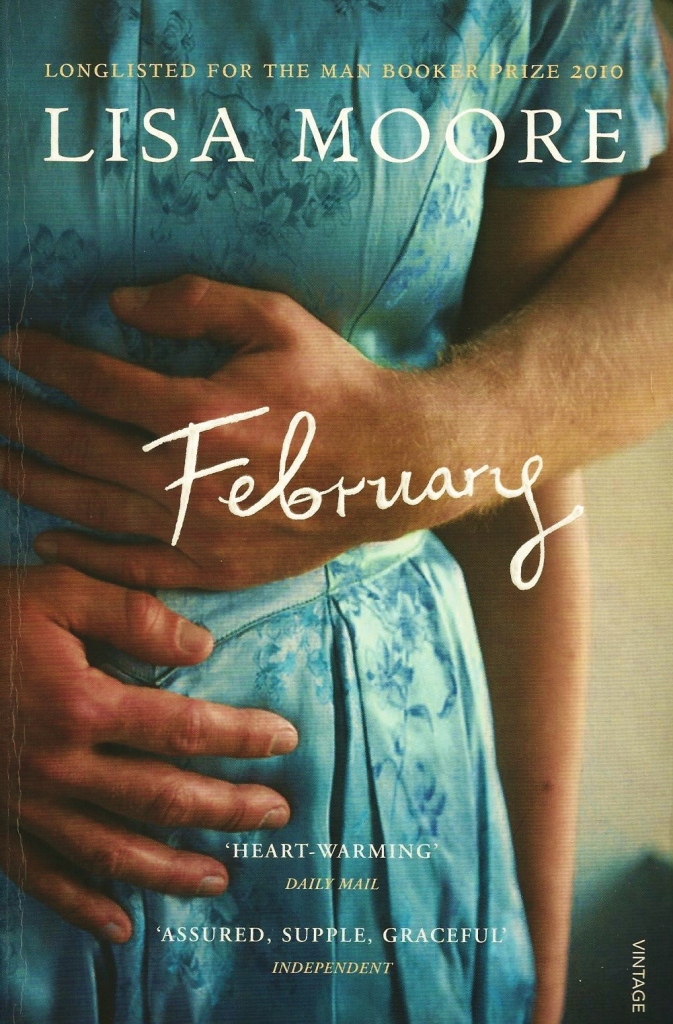
february lisa moore 001February by Lisa Moore ~ 2010. This edition: Vintage, 2011. Softcover. ISBN: 978-0-099-54628-3. 310 pages.

My rating: 9/10.

*****

An intense read. Absolutely impossible to put down.

February is a story about grief and memory and love and people coping with heartbreakingly dire situations the best way they can, which means not always particularly happily or successfully. The novel ends with optimism, but I could not call it happy. It is a keenly observant, uncomfortably bleak, very believable portrait of a woman and her family and their reaction to the brutally unexpected loss of their son, husband and father.

Lisa Moore has written, all clichés aside, a powerful book. Stark, often deeply uncomfortable, occasionally humorous, never maudlin, and, I suspect, one that will be quite unforgettable.

The novel is based on a true Canadian tragedy. On Valentine’s night in 1982, out on the Atlantic Ocean off Newfoundland, the oil drilling rig Ocean Ranger capsized and sank during a violent storm. All eighty-four men on board the rig died in the frigid waters, some apparently within hailing distance of a vessel which was unable to rescue them. The families of the dead learned of the disaster from news accounts on the radio; the oil company made no attempt to notify them.

Helen O’Mara loses her husband Cal that night. She has three young children and is pregnant with a fourth. Life for all of them becomes indelibly marked by their loss in ways both immediate and not always obvious until many years later.

The novel ranges from 2009 all the way back to the 1970s, when Helen and Cal were first married, in a series of memories, incidents, anecdotes, and flashbacks. A second storyline develops along with Helen’s, that of her now-adult son John, who has suddenly found out that he has fathered a child during a casual romantic encounter. As he attempts to come to grips with an adequate response to that situation, his story and that of his mother’s form a two-part composition of major and minor key, mingling and contrasting and bringing different incidents into sharp focus.

I thought this approach worked very well. A few reviewers have noted their irritation at John’s weakness as a character; I found him believable, though not at all likeable. Helen herself comes so vividly to life and we are taken so intimately into her thoughts, that everyone else pales just a bit in comparison. For that matter, I did not particularly like her, or most of the other characters, for that matter; many of their lifestyles are not at all in sympathy with my own, and I frequently caught myself getting all judgemental about some of their choices, but I will say that they all felt true and alive there on the page.

I’m cutting this review short right here, as other duties call, and I want to get it posted prior to this week’s Canada Reads debates on CBC Radio.

Would I recommend this book to “everybody”? No, definitely not.

It is an uncomfortable thing, and I’d want the reader to go in with expectations on high alert. In particular, women with husbands engaged in dangerous lines of work, heads up. This is a book you very likely should read, because it speaks bluntly to the situation and spotlights our every nightmare. The good thing about this is because it is fiction, it allows us to analyze the characters’ emotions and responses in relation to their fabricated stories, rather than agonize too deeply over what we would feel like if it were us instead.

Perhaps because it is one of the most contemporary and personally accessible of the five Canada Reads choices, I felt it was much the strongest. Every book on the list has its unique qualities, but for sheer emotional punch, this one wins hands down.

My ranking as of this evening:

  1. February by Lisa Moore
  2. Indian Horse by Richard Wagamese
  3. Away by Jane Urquhart (Actually, I’m undecided on how to place this one and Indian Horse. They’re running neck and neck, each with different strengths and types of appeal.)
  4. Two Solitudes by Hugh MacLennan
  5. The Age of Hope by David Bergen

I am going to work on completing Two Solitudes tonight and tomorrow, so a response to that one may be forthcoming in the next day or two as well, but no promises.

This is the first time I’ve attempted to read the Canada Reads contenders, and I must say that I have been introduced to novels I would not otherwise have chosen for myself. February I would likely have avoided because of the tragic storyline, The Age of Hope for its mediocre description as a novel of a “woman’s awakening”, and Indian Horse for its declared focus on hockey.

I’m glad I read them all. It will be interesting to see how they all fare in a “contest” situation. They are all quite different, though their universal bleakness is a point in common. So terribly sincere

Read Full Post »

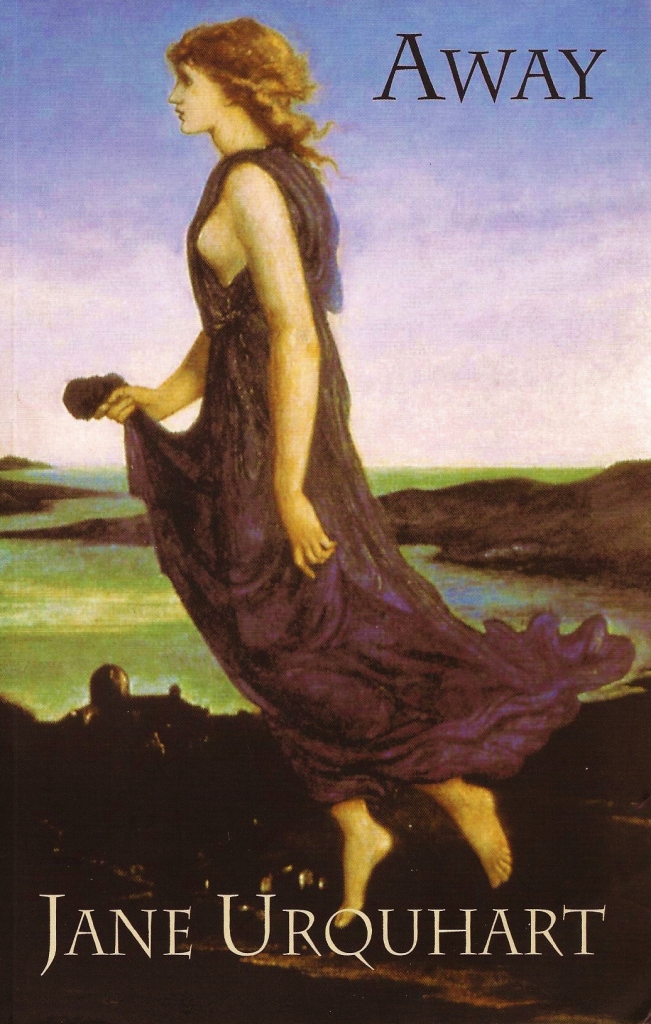
away jane urquhart 001Away by Jane Urquhart ~ 1993. This edition: McLelland & Stewart, 1997. Softcover. ISBN: 0-7710-8650-4. 356 pages.

My rating: 7.5/10

*****

What a beautifully written novel this one is. I am quite in awe of Urquhart’s lyrically gifted writer’s voice. But, I find myself musing, maybe a bit too much of a good thing? There is a story in this book as well, a normal narrative tale about an Irish family’s migration from the Old to the New World, which is in and of itself interesting and compelling, but which loses some of its power because of the gauzy, mystical clouds which the author shrouds her every scene in.

Away is a hybrid of historical fiction and magical realism, both genres which are notoriously hard to master all on their own, let alone in combination, as Urquhart has attempted ambitiously and generally successfully here.  The twin threads in this case do work surprisingly well. But – and here’s my biggest objection – so much is thrown at the reader both plot- and style-wise that it tends to dull one’s appreciation of the more delicate nuances of the intricate prose after a while.

Does one concentrate on the sober narrative for the story, or does one allow oneself to be swept away into the mystical bits? I tried to do both, but it felt an awful lot like work by mid-novel. I’m glad I read Away, because now I can tick it off my Must-Read Can Lit list, and I appreciated it as a work of art, but I’m not sure I will be re-reading it any time soon, if ever. I am definitely open to reading more by Jane Urquhart, but it would need to be at a time in my life when I could block off the necessary uninterrupted time to really concentrate and fully embrace the experience. Not quite sure when this magical time would be, though!

*****

The three most short-lived traces: the trace of a bird on a branch, the trace of a fish on a pool, and the trace of a man on a woman.

                                                                 -an Irish triad

The novel begins at the end of the story, with an elderly woman bidding farewell to her Ontario lakeshore home as it is about to be erased by the relentless expansion of a limestone quarry. As she wanders through the rooms of her doomed house, we see glimpses of artifacts of her life and the lives of her family and her ancestors. The author steps us back in time, one hundred and forty years before and thousands of miles away, to the storm-washed shores of an Irish island, where a teenage girl is about to stumble upon a scene which will mark her and her descendents irretrievably deeply, hence confounding the third line of the triad quoted at the beginning of the tale.

Irish Mary wades into the surf to pull out the body of a beautiful young man, barely alive and about to die. Before he expires, he opens his eyes and whispers a name – “Moira” – which the enchanted Mary embraces as her rightful new own. And when, some time later, Mary-now-Moira is found sleeping in the embrace of the dead man on the beach, she does not respond to the people around her, being lost in a dazed trance. The obvious explanation is that she has been bewitched by a daemon lover, and has lost her true soul, which has wandered “away” into the faery realm. She must be treated with care and compassion, in order that her soul may return to her one day.

Which it does, with the help of the local priest, who also sets her up with a suitably inclined husband, Moira-turned-back-to-Mary settles back into her normal life, though the edges of the other world are always visible to her. Mary has a son, and, when the potato famine inevitably strikes, sets sail for Canada with her husband and child. They go through all of the usual miseries, and fetch up eventually in the vast Canadian forest, where fellow immigrants surreally materialize from the woods to build the new family’s first shelter for them in a sort of dream sequence.

The family is successful in their new life, and a daughter joins the son, but Mary is being called by her other world once again, and one day slips away for good, following the call of the water wherein dwells her spirit lover.

More predictable historically fictional bits follow, as Mary’s children grow into adults and set off on lives of their own. Her son pragmatically moves ahead without bothering too much about the mystical heritage of his mother, but the daughter is a true creature of both worlds, and she finds her own beautiful young man, a charismatic Fenian rebel who has sworn himself to dance out the story of the Irish immigrants’ woes to the politicians deciding their fates. As may be supposed, this all ends most badly, but the line of daughters continues on, until we are back again in the doomed house with the rattlings of the quarry blastings shaking its foundations and its lone last inhabitant, Mary’s great-granddaughter.

*****

Is Away a book all Canadians should read? From the number of high school and college reading lists this one now appears on, it would seem that the powers-that-be would think so.

I don’t.

It’s certainly a gorgeous thing as a piece of literary art, but a rarefied type of read, I suspect best appreciated by those open to the fantastical elements so liberally used here. As a piece of historical fiction, the tale is flawed in that it assumes the reader will be coming to it from a place of prior knowledge, and is perhaps rather unreliable in its narration of actual events. It somehow misses feeling quite real. It could be tough going for many, especially those without the knowledge of context to separate fact from fantasy, or to fully appreciate the inferences the author relies on throughout.

Wonderfully lush and truly lovely, but too rich and paradoxically vague for everyday and everyperson consumption, I’m thinking.

*****

On to Lisa Moore’s February, for which I hold high hopes.

At present, here are my personal picks for the Canada Reads rankings.

For #1 spot, a tie between Indian Horse and Away. I may revise this once I’ve had some thinking time, but I’d better decide quickly, if I want to beat the debates!

Two Solitudes, in its half-read state, follows. It is rather too much of a period piece, but it is not necessarily a bad book, more of a product of its time in its earnest dullness.

The Age of Hope is at the bottom of the pile. It’s a common little thing, engaging and interesting enough, I willingly admit, but not worthy of the Canada Reads top laurels, in my opinion.

Dark horse February may shake things up.

Read Full Post »

This week has ended on a nicely high note. As you may have noticed, I’ve been very quiet on the blog posting front recently, because I’ve been deeply involved elsewhere. No worries, the involvement has been with good and enjoyable things, but oh my goodness, time consuming things, they all were.

This week I’ve put in an uncountable number of hours on the upcoming Performing Arts Festival preparations – I’m a member of the organizational committee – plus another 24 hours on the road driving the dancer of the family to classes (twice to Prince George and back, 5 hours driving each time), plus another 5 hours each day waiting around in town for her. That time was spent sitting at the laptop working on Festival stuff, so was not a complete waste of time. Yesterday off we went down to Vancouver to work with her choreographer – more hours waiting around tip-tapping on the laptop in between being summoned to watch progress – and then back home again this afternoon/evening – 14+ hours of driving for that little episode, of the 36 hours we were away. (I’m still moving. Must find my land legs …)

I was rewarded for my Super-Mom-ism when, on our single non-dance-related stop, in Hope for a flying visit to the great little secondhand bookstore there, I scored a tall stack of D.E.Stevenson paperbacks. And even better, guess what I paid? Listen to this. Two dollars each. Unbelievable. They’re all well-read, but in really decent condition.

Where should I start? I’ve read only a few of these before, and though I know these will vary widely in quality, I suspect the process of exploration will be highly enjoyable.

So the first thing I’m doing upon entering my own house and sitting down at the computer, even before checking my stacked-up email, is gloating to you, dear blog readers. I know there will be a few of you who will understand my deep inner thrill at this romantic little jackpot!

Here’s what I brought home:

  • The Baker’s Daughter (read it – loved it)
  • Vittoria Cottage
  • Crooked Adam
  • Shoulder the Sky (read it – very good)
  • Fletcher’s End
  • Rochester’s Wife
  • Green Money (read it – ho-hum)
  • The House on the Cliff
  • The English Air
  • Celia’s House
  • Katherine Wentworth
  • Spring Magic
  • Amberwell
  • Kate Hardy
  • The Four Graces (read it – liked it a lot)
  • Anna and Her Daughters
  • Music in the Hills
  • Smouldering Fire
  • The Tall Stranger

Logging off now, to go to bed. Not to sleep, though. I’ll be dallying for a while with a book, of course. Though not one of the new acquisitions quite yet. Still trying to make it through the Canada Reads books before the debates start on Monday. So far I’ve read Indian Horse and The Age of Hope, am halfway through the brutally tedious Two Solitudes, well into Away, and am frequently glancing hopefully at as-yet-unopened February, which, from all reports by fellow bloggers whose tastes I share, may well be the best of the bunch.

I’m thinking of dumping Two Solitudes unfinished, and concentrating on the other two. I think I’ve got McLennan’s theme figured out in Solitudes, and I honestly don’t really care what happens to any of his boring characters. Might be different in a less busy time, but right now the reading hours are even more precious than usual, and I’m resenting time spent on dullness. Engage me, authors, oh please!

Read Full Post »

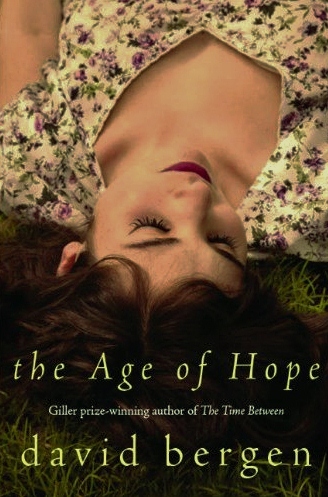
age of hope david bergenThe Age of Hope by David Bergen ~ 2012. This edition: Harper Collins, 2012. Softcover. ISBN: 978-1-44341-136-3. 287 pages.

My rating: 7/10.

A decent enough novel in that it is well written and readable, but is this really the best we could come up with for a Prairies (and “North”) regional choice for Canada Reads?

Here were the other choices for the Prairies and North region:

Okay, then, I guess the masses have spoken. We’ll work with what we’re given.

*****

This book is about my mother. No, seriously. It really is. My mom was born in 1925, to parents newly arrived during the second Mennonite diaspora from Russia, in a rural town in southern Manitoba. The titular Hope was born in 1930, in similar surroundings, and her young womanhood was much the same; the Mennonite Brethren picnics and bonfires for “young people” which Hope attended were a pleasant diversion from the usual round – school, household chores, church and Sunday visiting, potluck dinners and occasional movie nights – all of the trappings of the middle-class North American post-war world.

Hope is the representation of an entire generation of women who lived through one of the most change-filled centuries the world has yet known. Hope and her kindred fellow housewives are an almost extinct breed today; their everyday reality, so common for their generation, is almost completely foreign to the younger generations immediately succeeding them, and the tendency in many circles is to sneer a bit at the banal stay-at-home lives they appear to have lived.

What with the abundant Canada Reads 2013 discussions taking place right now in various literary venues right across Canada, I don’t think I’ll spend too much time going into the storyline of the novel. Here’s the promotional blurb:

Born in 1930 in a small town outside Winnipeg, beautiful Hope Koop appears destined to have a conventional life. Church, marriage to a steady young man, children – her fortunes are already laid out for her, as are the shiny modern appliances in her new home. All she has to do is stay with Roy, who loves her. But as the decades unfold, what seems to be a safe, predictable existence overwhelms Hope. Where – among the demands of her children, the expectations of her husband and the challenges of her best friend, Emily, who has just read The Feminine Mystique – is there room for her? And just who is she anyway? A wife, a mother, a woman whose life is somehow unrealized?

This beautifully crafted and perceptive work of fiction spans some fifty years of Hope Koop’s life in the second half of the 20th century, from traditionalism to feminism and beyond. David Bergen has created an indelible portrait of a seemingly ordinary woman who struggles to accept herself as she is, and in so doing becomes unique.

So this isn’t a proper review of The Age of Hope at all, I’m afraid. I’ll fast forward to my personal views on the book itself, my general feelings about it after having completed it a week or so ago.

Is this a book “every Canadian should read”? In a word, no.

To elaborate: it’s a fine domestic novel, and it does track the country’s historical progress through a good chunk of the twentieth century as a vague background to the progress of Hope, but it doesn’t really say anything terribly important about either the social group Hope was part of, or the country she lived in. There are many quite nicely drawn pictures of the settings and times Hope moved through, but really, she could have lived anywhere. This book could have taken place in any of the towns or small cities of the American mid-west, or the British industrial towns, or the suburbs of Sydney, Australia.

Though I recognized many of the references, because of my knowledge of my mother’s similar background, there is nothing that stands out as marking Hope’s nationality as Canadian. She’s the sub-fusc universal everywife-and-mother, moving in her little cloud of dull angst among the others of her kind. The unquestioning daughters, wives and mothers; the generation who did their duty, were all about self-effacement and not putting oneself forward, not imposing. And though Hope has a good friend who breaks away from the norm, to separate from her husband and live her life as an independent “liberated woman” in the city, Hope gently accepts that as what someone else does; I didn’t get that there was any sort of yearning coming from Hope for the same kind of “escape”. She nods and smiles and listens and plugs along in her same old groove. Which isn’t necessarily a bad thing, and I didn’t much like how it was implied that Hope’s was the less admirable choice. It was a viable option, was it not?

Hope’s mental anguishes, which land her in a psychiatric hospital to undergo shock therapy sessions, are not terribly well presented by the author, though I’m unclear as to what degree that is a deliberate literary choice in order to emphasize the constant dull fog that Hope walks in. It’s either a very clever choice by the author, or sheer authorial laziness.

This book is well written, and I appreciated the author’s stylistic skill. I “got” Hope, and I didn’t think her husband or children were all that unrealistically portrayed – well, except for the 6-foot tall, flagrantly gay, Olympic-athlete daughter – that was a bit of a plausibility stretch, I thought –  but none of them came to life for me. The whole novel had a distance about it, a very hands-off feel. I didn’t hate it, because that would be a strong emotion, and I don’t feel at all strongly about this one.  It’s such a mild drama. And I didn’t like or dislike any single character. I couldn’t care enough to invest my own emotions in any deep way. This is not a good thing in a novel.

I doubt The Age of Hope will have much of a shelf life after its brief prominence as a Canada Reads pick, though it may linger on for a year or two on the strength of that. And from reading this one, I have no urgent, burning desire to explore another work by the same author, though I understand he’s turned out a prizewinner or two. I’ll doubtless pick up his other novels at some point and read them with mild enjoyment, but my expectations are tempered.

Other reviews to peruse:

The Winnipeg Review – The Age of Hope – a generally positive review, highlighting the novel’s strengths.

Quilll & Quire – The Age of Hope  – nailed every negative thing I thought about the story and states them brutally succinctly.

Goodreads – The Age of Hope – a very broad range of opinions, all over the map, as the readers jump into the debate.

*****

With two of the Canada Reads books polished off and mulled over, I’d have to say that at this point Indian Horse by Richard Wagamese is strongly in the lead in my personal race.

I’m currently tackling Hugh McLennan’s Two Solitudes, and finding it rather dull going. It has its moments, but it’s very much a period piece, I’m finding. Perhaps too much so for a universally recommended “must read” choice?

I’m looking forward, though increasingly apprehensively, to the last two books in the Canada Reads Top Five. So far the choices have been just a bit ho-hum.

Read Full Post »

lake of the prairies warren cariouLake of the Prairies: A Story of Belonging by Warren Cariou ~ 2002. This edition: Doubleday Canada, 2002. Hardcover. ISBN: 0-385-25960-3. 318 pages.

My rating: 9/10.

A quite wonderful book, serendipitously unexpected. It’s only (very small) flaw was the very occasional not-quite-so-engaging historical passage, as Cariou delves into some of the histories of his ancestors. A little flat in those spots, a bit too much like sober research. Cariou quickly returned to his engaging anecdotal style. Very close to the perfect 10 of my ideal reading experience.

*****

And it was a real surprise, this one.

It was randomly chosen from the non-fiction stacks in close vicinity to the L.M. Montgomery biographies I was browsing, and I almost returned it without reading, due to the present supremely busy busy-ness of my life. However, quite fortuitously, I had a few minutes to fill while on hold on the phone, and this was the first thing I could reach, so I opened it up for what I assumed would be a mere few moments of casual browsing. Once started, I could not stop. It was much too good to put down unread. It’s taken several days to get through it, reading a chapter here and there, over lunch and tea breaks, but I was never tempted to abandon it, and found it very easy to jump back into each time.

Where do I come from?
 
The potato patch.
God in Heaven.
A falling star.
The stork.
A moonlit night.
A hole in the legs.
You were named for the doctor who delivered you.
 
Where, really?
 
From here. You’re from right here. The town of Meadow Lake, the province of Saskatchewan, the country of Canada, the planet of Earth. Just down the street at the Meadow Lake Union Hospital you were born, and we lived in the Carter Apartments until you were one, and then we moved to this house, and you grew like quackgrass in the backyard.
And that’s the story of you.

A beautifully written personal memoir, and a loving, often very funny, sometimes almost unbearably poignant, but never soppy ode to a town, region, and most importantly, a father and a family. As I was reading I found myself nodding in complete recognition of scenarios so many times. Flipping to the front of the book and examining the author’s information, I was not at all surprised to see that the author was born in 1966, only a year or so later than me; some of his memories of a childhood in rural Saskatchewan are stunningly similar to mine in rural B.C.

I too grew up along the rural fringes of a working class town. Cariou’s Meadow Lake and my own Williams Lake could almost be twin communities, though separated by an immense stretch of Canada. Northern towns, in relation to the cities hugging the 49th parallel, though not, of course, truly northern in a geographic sense, both being situated mid-province. North of us both the true bush country starts.

My town too had its fabulous (in every sense) rodeo, growing from a venue for the local cowboys to show off and celebrate their machismo and skills to another points-and-cash-prizes stop on the long summer tours of the professional rodeo circuit. Timber and ranching built and maintained both of our towns. His town had the Cold Lake military reserve, mine had Riske Creek. His town and mine were – are! –  a mix of “white people” – various European and pan-Asian bloodlines – and “Indians”. Meadow Lake is Cree territory; Williams Lake straddles the Carrier-Chilcotin divide.

The Indian kids chased the white kids in my schoolyard too, chock full of resentment for their demeaned social status of members of the oppressed race, the children of the reserves. Now, forty years later, the whites in both of our towns take open pride in their occasional Indian ancestors, basking in the trendy new cool status of First Nationhood, while in reality not much at all has changed, and the cultural divide betwen the races is as brutally deep as it ever was, with the occasional personal exceptions of individual friendships.

Perhaps this is why I identified so strongly with Cariou’s memoir; the parallels are strong in that and in other ways as well. Even when our general experiences diverged, as they did widely here and there, I remained fully engaged. This writer has a compelling voice.

Discovering as a young man that he was of Metís heritage, Cariou writes of that, and of how it changed all of his perceptions as to who he really was, where he really came from, and it is these passages which seem to have caught the attention of reviewers, making this out to be a book about First Nations identity. It is, and it isn’t.

There is no soapbox here, no grandstand. It remains a deeply personal story, and it feels genuine from start to finish. Those of us “whites” who grew up in similar settings through the ’60s, ’70s, and ’80s know exceedingly well what he is talking about, about our conflicted emotional relationships with the natives whose land we – the ancestral we as the descendants of immigrants and pioneers  – have taken over as our own. The reserve kids huddled at the back of the bus and the classroom, whispering together in indecipherable dialects, peering at the rest of us with well-deserved gleams of pure hatred, and we recognized that,  both the fact of the hatred and the reasoning behind it, and were terrified. Here was something bigger than us as individuals, and older, and more elemental. We’re still pretty scared, us grown-up white people, though we frequently hide it behind carefully political correct words – notice how I am now well-trained to put “Indian” in quotations, even though the “natives” I personally know call themselves “Indians” with no ironic inflection –  and a superficial acceptance and celebration of “First Nations” and “Aboriginal Pride”. Cariou captures that dichotomy brilliantly well.

This is such a small part of the narrative, though it does run through the entire book, as it rightly should. The majority of this memoir is personal reminiscences, gloriously focussed on Cariou’s father, and on the large extended family which sheltered and comforted and challenged and formed its younger generations, sending them out into the world to their various adult destinies with an ever-changing but ultimately supporting familial story behind them. I loved that atmosphere in this book. Cariou lovingly celebrates his family while fully recognizing their flaws, not always an easy task for a writer to pull off. He succeeds.

Here is a short excerpt from an early chapter that made me laugh out loud in joyful recognition. Holey gumboots and bread bags – oh yes, indeed! I have waded joyfully in those as well. “Flamingoed” – brilliant!

We stomped in puddles, waded across ditches, created little rivers between puddles, and sometimes made dams on the trenches that our parents had dug for drainage. We spent most of our time in rubber boots, which were largely ineffectual because either they were full of holes or we waded too deep in the puddles. Sometimes for whole summers we would have to put plastic bread bags on our feet before pulling on our boots. McGavin’s Bread bags were particularly popular for this. But they were prone to leaking, and worst of all, they made your feet slide around inside your boots, which were therefore more likely to slip off at the worst possible moment. The lost boot was a familiar sight: a kid standing one-legged, his bread-bagged foot held out tentatively, balancing himself there and staring back at he empty boot embedded in the muck. It was so common and so comical that we came up with a name for the predicament.

“Andrew flamingoed yesterday in Carlson’s ditch, you shoulda see him there crying for his boot. Lost his sock and his bread back too, and nobody;d get them for him so he had to step in, bare foot and all.”

And here are excerpts from two reviews. This first is by Allan Safarik, from the Books in Canada website.

Warren Cariou’s Lake of the Prairies is a beautifully written memoir about time and place and the nostalgia of a childhood growing up on the edge of the northern prairie in the parkland, a relatively uncelebrated area of Saskatchewan that is mostly dense forests, muskeg, rocky outcrops, marshes and lakes. Cariou’s maternal grandparents were immigrants who came to the harsh country near Meadow Lake and carved out pasture from the raw treed land. His family sank their roots into the place and Cariou grew up with his family legacy, particularly as remembered and influenced by his father, still relatively intact. Cariou is a skillful writer who weaves his father’s anecdotal adventures along with his own to recreate a marvelous pastiche …This is a book about nature as much as about anything. [Cariou] has a powerful lyrical way of describing the atmosphere and the details. He is an observer who is wonderfully educated about nature and as he grows up, he tells about his friendships and his adventures in an increasingly wider realm.

Cariou has given us a personal story about his family, skillfully injecting a second story about the way people live in his community and how they interact with one another. This incredibly crafted Canadian book might be about South Africa or many other countries. But no, this is Canada. Bustling Meadow Lake, Saskatchewan, a small town with big shoulders. Warren Cariou, in his coming-of-age memoir, writes like a naturalist/historian on a mission from God. The result is a distinctive style, a well-paced tale that leaves nothing out. Lake of the Prairie, a superb memoir about place, is also a powerful document about the human condition.

And from a review by Victor J. Raymond, University of Toronto Quarterly, 2004:

Place, family, history, belonging, home. Drawing on such ordinary words, Warren Cariou begins his memoir of growing up in northern Saskatchewan. The stories he recounts seem familiar: fishing, digging for arrowheads, moving to an old farm, learning about one’s family. But there are also deeper truths in these stories, rooted in hidden secrets, lost for generations.

One such story – Cariou’s discovery of his own Metís heritage – is central to the constellation of questions the author raises about identity and knowledge. But there is no thunderclap, no single moment of transition. Cariou’s heritage slowly emerges from his recounting of the stories others tell – his father, his uncles, his aunt, and others in his family. There is little remarkable about his initial self-description; at an early age, he is supposedly from ‘Norwayfrancenglandgermany.’… Interwoven with larger considerations of race and place is the author’s own story of growing up and leaving home. Beginning with his relationship with his parents and uncles, Cariou gradually reveals his own life growing up in Meadow Lake as a youth and then going to university and becoming a writer as an adult. Common life events … help reveal hidden complications of the seemingly easiest questions. Who am I? Where am I from?

Throughout Lake of the Prairies it is this sense of gradual revelation that shapes and reveals the landscape of identity, not only of what you know, but also of what you don’t know about yourself. In that, Lake of the Prairies is itself a story being told about our own identities and how we relate to one another – and we would be wise to listen carefully.

Read Full Post »

« Newer Posts